• If you love indie presses, follow a bunch of them on Twitter. This TweepML list will let you subscribe to a number of feeds at once. 

    Chuck Collins looks at the estate tax (which will disappear for one year in 2010) and why Congress should ensure its return after Bush's estate tax phase out expires.

    Ten years and 250,000 copies later, All Souls still resonates.

    Jay Wexler talks about the difference between prayer in the schools and prayer in the Senate.

    Does having a baby affect the political views of men and women differently?

  • Today’s post is from Wendy Kaminer, author of many books, including Worst Instincts: Cowardice, Conformity, and the ACLU and Free for All: Defending Liberty in America Today. Her articles and reviews have appeared in numerous publications including the New York Times, the Wall Street Journal, and the Nation, and she is a correspondent for the Atlantic, where this post originally appeared on Sept. 24th. 

    Book cover for Worst Instincts, links to Beacon Press page for book. When is thievery not a crime but a personal tragedy? When is lying for personal gain or political expedience a mere error in judgment? The answer is obvious to any partisan. Your political enemies engage in criminal or morally repugnant acts; your allies, friends, and relations make mistakes or bend the rules for the greater good. As Rudolph Giuliani remarked during his presidential campaign, the definition of torture “depends on who does it.”  Waterboarding was “aggressive questioning,” when Americans inflicted it. “It was a judgment call,” (not a criminal conspiracy,) ACORN president Maud Hurd said in 2008, describing the decision to cover-up the embezzlement of nearly a million dollars by Dale Rathke, the brother of ACORN founder Wade Rathke.

    No, I don’t mean to suggest that torture and embezzlement are moral equivalents. I do mean to state that activists, advocacy groups, politicians, and pundits, left and right, display equivalent moral hypocrisy when rationalizing illegal or unethical conduct by some of their own. It’s the hypocrisy bred by the self-righteousness of people convinced that they’re on the side of the angels, that their commitment to the right cause makes them incapable of doing wrong. It’s the hypocrisy that led the ACLU national board to trivialize, misrepresent, or conceal serious misconduct by its staff and lay leaders (the subject of my book, Worst Instincts.) It’s the hypocrisy that has consistently characterized the “progressive” response to recent and still unfolding ACORN scandals. By ignoring, minimizing, or rationalizing grossly unethical and even criminal conduct, ACORN’s left-wing friends have harmed it more than its right wing enemies ever could.

    (more…)

  • Today’s post is from Robert Kunzman, author of Write These Laws on Your Children: Inside the World of Conservative Christian Homeschooling. Kunzman spent ten years as a high school teacher, coach, and administrator and is currently an associate professor in the Indiana University School of Education. He is also the
    author of Grappling with the Good: Talking about Religion and Morality in Public Schools.

    Book Cover for Write These Laws on Your ChildrenLydia Rivera homeschools her two daughters in a tiny Los Angeles rental house. Ten-year-old Anna is progressing well in her studies, but seven-year-old Veronica struggles with reading, due in large part to hearing problems she had when she was younger. Lydia wants to provide a learning environment where her younger daughter can catch up on her literacy skills without fear of embarrassment, but it turns out that Lydia herself has difficulty maintaining a positive attitude when Veronica struggles. One morning while Veronica is reading aloud to her mom, Lydia’s frustration boils over.

    (more…)

  • With the war in Afghanistan occupying the news, Congress, and President Obama, we offer this dispatch from J. Malcolm Garcia, author of The Khaarijee: A Chronicle of Friendship and War in Kabul. Garcia has worked as a reporter for the Kansas City Star and a regular contributor to the Virginia Quarterly Review. His travel essays have appeared in Best American Travel Writing, and Best American Non-Required Reading.

    Book Cover for The Khaarijee, links to Beacon Press page for book.
    In August, I returned to Afghanistan for the seventh time since Sept. 11, 2001, to cover the presidential election in which 41 candidates were vying for the top post. When I arrived it was a lovely 100 plus degrees in Kabul, and the traffic was worse than ever. This is what happens when a city built to house 1.5 million people takes on 3 million. Unless it was absolutely necessary to take an automobile, I walked with my translator everywhere I went. It could take up to three hours to drive what was at most a 30 minute trip just two years ago.

    I could not go alone anywhere outside Kabul. Wardak, Logar and Ghazni provinces, minutes to a few hours outside the city, are now under Taliban control. So all the traffic and reconstruction activity in Kabul was weird; sort of an illusion of security and progress that in reality doesn’t exist at all.

    (more…)

  • The staff of Beacon Press mourns the passing of Forrest Church, author, friend, and long-time supporter of our work. Forrest Church (1948–2009) served almost three decades as senior minister and Minister of Public Theology at All Souls Unitarian Universalist Church in New York City. He was educated at Stanford University, Harvard Divinity School, and Harvard University, where he received his PhD in early church history. He wrote or edited twenty-five books, including God and Other Famous Liberals, Life Lines, Lifecraft, The American Creed, Bringing God Home, Freedom from Fear, So Help Me God, Love & Death, and, most recently, Cathedral of the World. He contributed this post to our blog earlier this year, and we thought it would be fitting to share it again now.

    Church

    I’m agnostic about life after death, but believe deeply in love after death. Not only do I believe in it, I experience it. We can arrange the pictures on the walls of our mind in any way we choose. As I slowly die of terminal cancer, blessed with the opportunity to rearrange those pictures more thoughtfully I fill my memory wall with images of love. The pictures that adorn my mind illuminate my life. Past and future disappear. Eternity, for me, is not a length of time extending on forever, but depth in time. In the time’s eternal depth, through love’s portals we enter heaven on earth. One with God, self and neighbor, we are saved.

    This lesson lies at the heart of my final book, Love & Death. As I reflect upon it further, it grows in both clarity and power. I know how deeply love can hurt and how sensible it seems sometimes to rip its recurring promise from the tapestries of our lives. I also know how tempting it can be to armor our hearts from the pain of being broken, not only the pain of betrayal but also the abiding pain of loss.

    Grief, you see, is love’s measure. The courage to die is nothing when compared to the courage of those who live on after us, their hearts broken by their loss. Yet it is precisely at these moments when we are invited to stand before love’s tribunal to be judged. Are you guilty of love or not guilty? That is life’s ultimate question. Again and again over the course of a lifetime we are brought before the Tribunal of Love, where the innocent are damned and the guilty are saved.

    (more…)

  • Maria J. Kefalas is the author, with Patrick J. Carr, of Hollowing Out the Middle: The Rural Brain Drain and What It Means for America. Kefalas held positions at the Brookings Institution, the University of Pennsylvania, and Barnard College before joining the faculty of Saint Joseph’s University, where she is associate professor of sociology.

    Kefalas
    With the nation’s unemployment rate closing in on 10 percent, its highest level since Ronald Reagan was president,  “celebrating the contributions of American workers to the nation’s prosperity” over the recent Labor Day holiday made about as much as sense as drinking a steaming mug of hot chocolate in 95-degree heat.

    And though every segment of the economy has been touched by what’s going on, working-class jobs for workers without college degrees, especially those in manufacturing, have been taking the biggest hits: Since the recession started, the nation shed 1.9 million manufacturing jobs and 136,000 manufacturing jobs disappeared in a single month, from May to June of this year.  Outsourcing and automation put downward pressures on the demand for blue-collar labor during the best of times. However, in the wake of this historic slow-down, positions that have been absorbed by other workers or taken over by computer robotic systems are never coming back.

    Next time you pick up groceries, take note of how many of the supermarket cashiers have been replaced by self-checkout stations, or how, when you call your doctor’s office, there’s an automated message system instead of a medical secretary getting you a prescription or test results. Experts warn that when this recession ends, we will most likely see yet another jobless recovery, a term used to describe this distinctively post-industrial phenomenon of economic growth that comes without firms hiring workers.

    During the nation’s recessions, the media pays most of its attention to the hardships of middle-aged workers getting laid off. The reality is that young workers struggle the most in an economic slowdown and face higher unemployment rates than the population as a whole. While 45 to 55 year olds have a lower jobless rate than the rest of the country (6.8 percent), 25 to 34 year olds, the largest segment of the labor force, face a 10.5 percent unemployment rate, experienced the greatest number of job losses since May 2008 (4.5 million), and remain the most likely to be underemployed (more than 2 million hold part-time jobs when they want to work full-time). The news for the youngest workers is actually worse: 15.2 percent of 20- to 24-olds and 24 percent of teenagers are out of work and seeking jobs.

    (more…)

  • As a companion to today’s post from Helene Atwan about attending a 75th birthday celebration for poet Sonia Sanchez, here is a poem from Sanchez’s forthcoming Morning Haiku, written for the poet Eugene Redmond.

    4 haiku
    (for Eugene Redmond)

    1.
    Blue atom
    poet transcribing
    our flesh

    2.
    your quicksilver
    words waterfalling in
    sweet confession

    3.
    you have taken down
    the morning turned it into
    a roar of blackness

    4.
    your poems…
    butterflies fluttering down
    to earth.

    Sanchez, Sonia. “4 haiku (for Eugene Redmond).” Morning Haiku. Boston: Beacon Press, 2010.

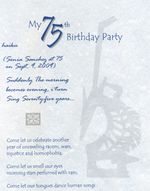
  • Today’s post is from Helene Atwan, Director of Beacon Press. She recently attended the 75th birthday celebration of Sonia Sanchez, an award-winning poet, playwright, activist, and scholar whose work includes Shake Loose My Skin and the forthcoming Morning Haiku.

    Soniasanchezinvite002

    On Saturday, September 12, I had the joy and privilege of sharing in poet Sonia Sanchez’s 75th birthday celebration, at her home in Philadelphia.

    The lovely old house and fall garden freshly planted with mums of all colors were jam-packed with celebrants. Some were crowded into the music room picking out tunes on Sonia’s baby grand piano, which had been given to her by Max Roach, the world-renown Jazz musician and composer, and which had traveled with her over five states before being planted here and covered with photos, awards, and precious memorabilia. When two musicians started playing Monk, poet Amiri Baraka came by to recite and even sing. Others were taking turns on Sonia’s native drum set, making wonderful music. Among the musical guests in attendance were Ursula Rucker, and Evan Solot, along with the two women to whom Sonia dedicated her book, Shake Loose My Skin, former lead singer Bernice Reagon and vocalist Adisa Douglas of Sweet Honey and the Rock.

    Guests were busy devouring spicy b-b-q wings and tangy collards, and admiring the art that crowds every wall, every surface, every nook and cranny in the 1940s Germantown house. African sculptures, all of women, from all over the continent, stood guard imposingly in the entry. In this photo, poet Eugene Redmond stands next to one of the most impressive in Sonia’s collection, a Nimba statue from the Baga people of Guinea.

    (more…)

  • Today's post is from David W. Moore, author of The Opinion Makers: An Insider Exposes the Truth Behind the Polls (out in hardcover now, paperback with a new afterword available this fall). Moore is a senior fellow of the Carsey Institute at the University of New Hampshire, and he is a former senior editor of the Gallup Poll, where he worked for thirteen years. He frequently contributes to Huffington Post, and blogs at SkepticalPollster.com, where this post also appeared.

    Book cover for The Opinion Makers by David W. MooreA recent series of polls brings to mind a bobblehead doll, whose head wags from side to side and from front to back in a random fashion. That disconnected movement seems to be a visual representation of what the polls have been saying about the general public and its views of President Obama's efforts to reform the health care system.

    Before the president's nationally televised speech to a joint session of Congress earlier this month, for example, several polls announced that either a majority or plurality of Americans disapproved of the president's performance on health care. They didn't tell us if the people were dissatisfied because he was trying to do too much, or because he wasn't trying to do enough. All we got was the dismal information about how the public felt let down by the president.

    Then, on the Friday after Obama's speech, a CBS poll declared that the public had rallied in favor of the president. A majority of the public now approved of his handling of health care by a 14-point margin, compared to a week earlier when a plurality disapproved by a 7-point margin. That represented a 21-point swing in opinion, which is no mean feat for one speech. (For all poll results, see pollingreport.com.)

    (more…)

  • Varda Polak-Sahm discusses the Mikveh, a Jewish rite of purification, at the Washington Post's OnFaith blog. The comments have been pretty lively.

    While you're there, read Eboo Patel's powerful reflections on faith since 9/11.

    The Kansas City Star calls The Khaarijee "heartbreakingly vivid." 

    The authors of Hollowing Out the Middle look at rural brain drain in the Chronicle Review, highlighting the disturbing similarities between inner city and rural downturns, and looking at the ways that small towns can be a key part of our country's economic recovery.

    Terry Galloway earns high praise for Mean Little deaf Queer in the Austin Chronicle.