• Today’s post is from David W. Moore, author of The Opinion Makers: An Insider Exposes the Truth Behind the Polls (out in hardcover now, paperback with a new afterword available this fall). Moore is a senior fellow of the Carsey Institute at the University of New Hampshire. A former senior editor of the Gallup Poll, where he worked for thirteen years, Moore also served as professor of political science at UNH and is the founder and former director of the UNH Survey Center.

    Book cover for The Opinion Makers by David W. MooreIf we believe the recent USA Today/Gallup poll, Sarah Palin’s standing among Republicans as a presidential candidate in 2012 has actually improved as a consequence of her stunning announcement that she would resign as Alaska’s governor at the end of July. So counterintuitive is this finding, it was picked up by many pundits and journalists, including Wolf Blitzer on CNN’s The Situation Room, and Frank Rich in last Sunday’s New York Times.

    As Rich noted, the poll reported that “no less than 71 percent of Republicans said they would vote for her for president.”

    Don’t believe it! The poll is typical of many media polls, whose major objective is to provide fodder for the news, quite often at the expense of an accurate picture of what the public is really thinking.

    After the jump, some reasons to be skeptical of the poll.

    (more…)

  • In the NY Times, Lani Guiner and Susan Sturm (Who's Qualified?) examine the Ricci decision.

    Alan Collinge explains the student loan industry to Daily Kos-ians. 

    Have you been wondering what the Sotomayor confirmation hearings would be like if they were conducted by the 1977 Kansas City Royals? Well, Jay Wexler has the answer anyway.

    Beacon author Jonathan Metzl was recently quarantined by the Chinese government in respose to an H1N1 scare. And regardless of what the Chinese government had to say about it, the accommodations were not five-star. 

    Meredith Hall's Without a Map was featured on O Magazine's list of ten recommended memoirs (along with Kelly McMasters, who wrote this post for Beacon Broadside a while back).

    The Bitch Magazine blog gives The Daddy Shift a thoughtful review. 

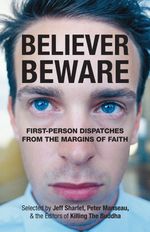
    Frank Schaeffer, author of Crazy for God, loves Believer, Beware. 

    Blurbs don't get much better than this: "I read Love and Death as
    soon as it came out.  The greatest gift I could give every one of you is
    to just tell you to go read this book."  President Bill Clinton
  • WinslowToday’s post is the latest in a Beacon Broadside series: Observation Post by journalist and foreign correspondent Philip C. Winslow. Over a career that has spanned more than twenty-five years, Winslow has reported on world events for the Christian Science Monitor, the Toronto Star, Maclean’s magazine, ABC radio news, CTV News, and CBC radio. He also served in two United Nations peacekeeping missions and worked for the UN in the West Bank for nearly three years. He is the author of Victory For Us Is to See You Suffer: In the West Bank with the Palestinians and the Israelis and Sowing the Dragon’s Teeth: Land Mines and the Global Legacy of War.

    Book Cover for Sowing the Dragon's TeethAngola’s decades-long terror often was called “the worst war in the world.” The civil war left as many as 1.5 million people dead and millions more maimed, orphaned and homeless. The description never seemed overstated.

    Following a bloody struggle that ended with independence from Portugal in 1975, Angola plunged into a Cold War-fueled regional conflict that eclipsed all that had gone before. The Marxist government of the MPLA (Popular Movement for the Liberation of Angola) was backed by the Soviet Union, with Cuban fighters and others on the ground. Jonas Savimbi’s UNITA (National Union for the Total Independence of Angola) rebels were armed and supported by the United States and an aggressive, interventionist South Africa. Hopes for peace flickered for an instant before ill-timed elections in 1992; UNITA lost, and Savimbi re-started the war with intensified brutality. This chapter of the tragedy lasted for the next ten years.

    (more…)

  • Katherine S. Newman is the Malcolm Stevenson Forbes, Class of 1941 Professor of Sociology and Public Affairs of the Woodrow Wilson School and Director of the Princeton Institute for International and Regional Studies. Newman is an expert on urban poverty, occupational mobility, and subjective dimensions of economic dislocation, and is the author of The Missing Class: Portraits of the Near Poor in America and several other books on poverty, downward mobility and school violence. This video was produced by the Woodrow Wilson School’s Office of External Affairs.

    If the video doesn’t appear in your reader, you can watch it here. And you can check out Beacon Broadside’s growing Video Log here.

  • Book cover for Believer BewareBeliever, Beware: First-person Dispatches from the Margins of Faith, the second collection to spring from KillingTheBuddha.com, presents true tales of sex ed in Catholic school, witches in Kansas, sects and the city, Buddhists in the barbershop, Sufis under your nose, an adolescent Jewish messiah in Queens, and more. In a world riven by absolute convictions, these ambivalent confessions, skeptical testimonies, and personal revelations speak to the subtler and stranger dilemmas of faith and doubt-of religion lost and found and lost again.

    Hear Irina Reyn read “I Was a Prepubescent Messiah" at the Believer, Beware release party on June 29, 2009. You can also read the essay here.

  • Book Cover for Nature's Second ChanceToday’s post is from Steven I. Apfelbaum, author of Nature’s Second Chance: Restoring the Ecology of Stone Prairie Farm. Apfelbaum is founder, president, and senior ecologist of the firm Applied Ecological Services, known for its international science-based ecological design and restoration work. He lives in Juda, Wisconsin, on Stone Prairie Farm.


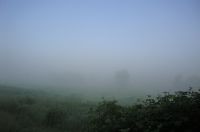
    Foggy morning at Stone Prairie Farm in Juda, WisconsinLast night seems like a dream now. So where do I start? What do I remember?

    This morning, as the sun slowly rose, the engulfing fog began to glow and my eyes opened to a dripping landscape, where coalescing dew slowly formed into earth-bound droplets from every plant leaf and flower around my head. The fog-muffled calls of birds were accompanied by the sound of these drips careening from upper leaves on the grape vines as I watched from my bed on our screen porch. On such mornings, my mind and the land are awash in this fog.

    About the time I was preparing to go to bed last night, our dog, Willow, started pacing in circles from room to room. He sensed the low grumble of a distant thunderstorm well before I did and probably couldn’t decide which bed to hide under. Driven by his need to be with his pack– me in this case– he followed me out to the screen porch where I would do some reading and then, hopefully, simply fall asleep. I placed his white fabric “fuzzy bed” next to mine and settled in to read about managing our apple orchard. His unsettled behavior amplified as the storm flashed its way closer and finally arrived at Stone Prairie Farm. After a single attempt to push under my blankets, the flashes and cracks of lightning sent him into the house to hide under a real bed. I turned off my reading light and lay back to experience the show.

    (more…)

  • Some Beacon Press mentions in the media over the past week:

    In the New York Times: The Land and Words of Mary Oliver, the Bard of Provincetown.

    Profile of Sophia Raday in the SF Chronicle: Peacenik, Military Man Prove Opposites Attract.

    Review of Holy Hullabaloos in the Boston Globe: Separation Anxiety: A traveling professor chronicles the church-state divide, with results that prove both comedic and unsettling. Also catch Holy Hullabaloos over at the Page 99 Test blog.

    An excerpt from Mean Little deaf Queer in the Advocate.

    U.S. News interviews Jeremy Adam Smith about the Rise of Stay-at-Home Dads.

    Kate Clinton interviews in both Edge and the Blade.

    AOL Health interview with Jennifer Culkin about her life as a critical care nurse.

    Digging With Doug Video with Nancy Gift talking about her love of weeds.

  • Kate Clinton congratulates Senator Al Franken on his new job. If the video doesn’t appear in your reader, watch it here.

    Sign up for Kate’s newsletter, get Kate’s latest dates, news, and Vlog archives at: http://kateclinton.com Kate also blogs at Bilerico Project: http://www.bilerico.com/

  • We celebrate Independence Day this weekend, and Nancy Rubin Stuart, author of The Muse of the Revolution: The Secret Pen of Mercy Otis Warren and the Founding of a Nation, honors the often overlooked women of the American Revolution.

    The Muse of the Revolution book cover Traditionally, we celebrate our nation's birthday on July 4th with parades, fireworks and tributes to the Founding Fathers. Rarely do we recall the women who supported our patriots, those forgotten Founding Mothers who watched their men march off to fight for American independence, leaving them to struggle to support children, homes and farms.

    Silence surrounds the lives of those nurturers. While we recall the names of "celebrity women" of that era– Abigail Adams, wife of John Adams; Mercy Otis Warren, author of anti-British propaganda plays and historian of the American Revolution; Betsy Ross, who stitched the American flag; Deborah Sampson, disguised as a soldier who fought against the British, and Margaret Corbin, who loaded cannons on the battlefield– we know relatively little about their personal sacrifices and those of their peers.

    Before the Revolution, Abigail Adams and her historian friend, Mercy Otis Warren, shunned tea and proudly wore homespun garments in lieu of British finery. Living miles apart south of Boston with their children, the two friends spun dozens of skeins of wool which they collectively donated to the poor. So, too, did countless other women who gathered in private homes for spinning parties or participated in public spinning contests. To stir patriotic sentiment even hotter, patriotic newspapers offered suggestions about North American substitutes for imported teas, among them sassafras, raspberry and mint.

    While patriotism required sacrifice, American women still needed certain manufactured goods and fabrics for their households. Since Abigail's husband, John, and Mercy's son, Winslow, lived in Europe during the last years of the Revolution, those matrons sent for certain household goods and fabrics which they sold or traded to friends and neighbors.

    Many women and their children, however, no longer lived in old neighborhoods. Among those who fled from Boston during the British occupation was Abigail and Mercy's friend, Betsy Adams, wife of Samuel Adams, who hid in a humble cottage far from the city.

    No less unnerving was the April 1775 flight of their friends, Hannah and Professor John Winthrop of Harvard College, as British soldiers stormed through Cambridge. After securing lodging in a "safe house," Hannah wrote about harrowing scenes of bloodshed in nearby fields and nights spent with weeping women and children crowded into a temporary shelter. Later, the Winthrops were transported in a rough wagon to rustic Andover. There, John Winthrop, 61, fell desperately ill from one of the epidemics then raging across Massachusetts emanating from the unsanitary conditions of the British soldiers in Boston. Months later, after Hannah finally called upon the Warrens to help her get him to Watertown, John recovered, but never fully regained his health.

    That same April of 1775, Hannah's kindly sister and brother-in-law of Charlestown dressed wounds and provided food for British soldiers fleeing from Lexington and Concord. In June 1775 that couple was stunned to watch their home go up in flames when the British burnt Charlestown. As the Revolution moved to New York and the South, still other women wrote letters or left diary accounts of British and Hessian soldiers who broke into their homes, plundered their valuables, raped them and set their homes on fire.

    Even those who escaped such a fate were plagued by loneliness. By the summer of 1775, Mercy's long absence from her husband, James Warren, the first Quartermaster General of the Continental Army and president of the Provincial Congress of Massachusetts, finally impelled her to leave her young sons with servants in Plymouth and ride thirty-five miles over rough roads to Revolutionary headquarters in Watertown. Shocked by James's harried and overwrought condition, Mercy made five solo trips that summer and fall to Watertown to serve as his private secretary and to write reports to their friend John Adams in Philadelphia.

    In Braintree, meanwhile, Abigail not only skimped and schemed to maintain her home, children and family finances, but became an astute manager of the Adams's farm. Hundreds, perhaps thousands of other Revolutionary-era women, whose husbands left home either to fight or serve in Congress, were similarly compelled to assume their husband's former responsibilities.

    Among them was Mary Bartlett, wife of a New Hampshire Congressman, who initially balked at running her husband's farm but later became so adept at it that she regarded it as "our farm." A still more famous and lonely "war widow" was Deborah Read, wife of statesmen Ben Franklin, who spent most of the Revolution abroad in his diplomatic duties, leaving her to live and die alone in Philadelphia.

    While Abigail's plea to "remember the ladies" fell on deaf ears during the Revolution, her vision has gradually, if grudgingly, become a reality. Nearly ninety years ago women achieved suffrage. Today, more than half of America's college students are women. Now too, in the midst of the Great Recession, women comprise nearly half of the work force.

    Nevertheless, women, especially single mothers with children, remain our most impoverished citizens— a condition strikingly similar to that suffered by women of the American Revolution.

    As we sing "Happy Birthday America" today, let us remember that women quietly baked the nation's cake. They did so with rationed flour and bartered candles, whose light has burned brighter and stronger through the centuries than have muskets, firearms and bombs.

  • Book Cover for A Weed by Any Other NameToday’s post is from Nancy Gift, an assistant professor of environmental studies and acting director of the Rachel Carson Institute at Chatham University in Pittsburgh, Pennsylvania, where she lives with her husband, two daughters, and a lawn full of weeds. She is the author of A Weed by Any Other Name: The Virtues of a Messy Lawn, or Learning to Love the Plants We Don’t Plant.


    The reel mower, photo by Nancy GiftAfter over three full summers of using my reel mower, I have come to love the click-click-click and the flying clippings, the instant sound of kids’ playing and birdsong when I stop for breath at the top of our backyard slope. I love the exercise of arms, core, and legs simultaneously, and have had visions of beginning a suburban biathalon, with the star event being mowing a mile-long course with a reel mower, following my nine-mile bike home from work.

    But, despite my purchase of one of the premier brands – Brill – and despite my affections for it, it seems to be dead, with wheels turning but little corresponding mower action to match. I suspect the gears are stripped, but I am no mechanic, and I can’t even seem to figure out how to break into the wheel machinery to check. I doubt many of these machines are used on as large a lot as ours – half an acre, minus gardens and house footprint – but I had always thought of them as indestructable, the kinds of machines which you find in an abandoned garage, oil a bit, and voila! Mow your way home to use them. Apparently my Brill is not that kind of reel mower.

    (more…)