• The King Legacy logoThe following is an excerpt of remarks made by Helene Atwan, Director of Beacon Press, at an event held Wednesday to celebrate The King Legacy, a new partnership between the Estate of Martin Luther King Jr. and Beacon Press. Beacon will print new editions of previously published King titles and compile Dr. King’s writings, sermons, orations, lectures, and prayers into entirely new editions, including significant new introductions by leading scholars.

    507645615_73fc0a101e Beacon Press traces its origins to the 1820s when the American Unitarian Association was founded and immediately began publishing books that reflected the Unitarian mission. By 1854, Ralph Waldo Emerson’s cousin George had collected money to start a formal publishing program, and the AUA Press began that year, initially largely with collections of sermons, but volumes which included, to quote historian Susan Wilson, “eloquent writings on such topic as temperance, women’s rights…, and the abolition of slavery.” By the time it was renamed Beacon Press in 1902, the legacy of enlightened, liberal religious thought that informs the list today, and which you’ll see reflected in the sampling of books on display here, was firmly engrained.

    Which is why we were so convinced that Beacon would be the perfect publishing home for the legacy of Dr. Martin Luther King, Jr.

    I have been rereading and listening to Dr. King a lot of late (as you might imagine) and what surprises me most is how current his thinking is, how he seems to be speaking not from the 1950s or 60s but from the post 9/11 era, even from the Obama era. What he has to say to us in an age of globalization, in a so-called “post-racial” age, is as valid and in some respects more urgent in a world where 25,000 children die in poverty every day; in a world where American soldiers are killing and dying in an unjust war, in a world where too many people are judged daily by the color of their skin, or the name they give their God, rather than the content of their character.

    As Senator Edward Kennedy has remarked, “Much of Dr. King’s broad and powerful message is in danger of being left behind, as new generations come to know him only through history and see him more as myth than man. His life and great works are still relevant to the complex realities of today’s social problems and if we allow the richness of his example to recede, we lose the opportunity to learn from him. There is still so much to learn from walking in his path.”

    Helene Atwan
    Helene Atwan speaking at Wednesday’s event announcing The King Legacy.

    It’s our plan to illuminate that path with brilliant books. This agreement is brand new, obviously, and we’ve just begun to dig into the archives, so to speak, so I can’t give you the exhaustive list of books we hope to publish over the years. But I can tell you that we will start by bringing back into print three books that Dr. King saw published in his lifetime and which have been unavailable for over a decade. The first is Stride Toward Freedom, Dr. King’s account of the Montgomery Bus Boycott, a book which should be read not only for it’s historic value, but for what it teaches us about community activism.  Like all of the books in the King Legacy, Stride will have a new introduction, which will not only place the book in its historic perspective, but will describe how the book speaks to the 21st century. Acclaimed King scholar Clayborne Carson will edit and introduce this volume. And I’m delighted to say that Dr. Carson has agreed to be General Advisory Editor for the entire series. We will also bring back into print Where Do We Go From Here, which was first published in paperback by Beacon Press in 1968, and are thrilled to announce that we will have an introduction by Dr. Vincent Harding for that volume. Dr. Harding was a close associate of Dr. King and is the author of many works about him. Finally, we have a new edition of Trumpet of Conscience, Dr. King’s stirring orations originally delivered just 6 months before his death. All these books, along with a new hardcover edition of Strength to Love, will be published on Dr. King’s birthday next January.

    After that, many new volumes will follow. Books that will collect Dr. Kings writings and orations on the subjects of peace and nonviolence; on poverty and global economic justice; on God and the role of religion in society; on all of the subjects which were so central to his work. And in issuing these new volumes, we hope to keep the message fresh and accessible for new generations, so that they, too, can learn from walking in his path.

    Beacon Broadside: Beacon Press Announces The King Legacy

    The King Legacy on Beacon.org

    The King Legacy announcement at UUA.org

  • At an event held yesterday afternoon at the Unitarian Universalist Association headquarters in Boston, Beacon Press announced its new partnership with the Estate of Martin Luther King Jr., “The King Legacy.” Beacon will print new editions of previously published King titles and compile Dr. King’s writings, sermons, orations, lectures, and prayers into entirely new editions, including significant new introductions by leading scholars. This partnership brings together the legacy of one of the most important civil rights and social justice leaders in the world with one of the oldest and most respected independent publishing houses in America.

    The event featured former chair of the Civil Rights Commission Mary Frances Berry, Unitarian-Universalist Association President William Sinkford, poet Sonia Sanchez, literary agent Michele Rubin (who through Writers House facilitated the agreement with the King Estate), and Beacon Press director Helene Atwan. You can read more about the announcement on the websites of Beacon Press and the Unitarian Universalist Association.

    The first three titles in the King Legacy series will be published on the Martin Luther King Jr. holiday in 2010:

    Stride Toward Freedom: The Montgomery Story. The classic story of nonviolent resistance in America, the Montgomery bus boycott of 1955–1956.

    The Trumpet of Conscience. Five lectures delivered by Marting Luther King Jr. in 1967 that reveal his most introspective reflections and last impressions of the movement.

    Where Do We Go from Here: Chaos or Community. King’s analysis of the state of American race relations and the movement after a decade of U.S. civil rights struggles.

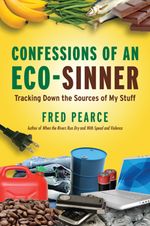
  • Today’s post is by Fred Pearce, author of Confessions of an Eco-Sinner: Tracking Down the Sources of My Stuff. Pearce is a freelance author and journalist based in the UK. He is environment consultant for New Scientist magazine, and his other books include When The Rivers Run Dry and With Speed and Violence. This post originally appeared at Yale Environment 360 (e360.yale.edu).

    Book cover for Confessions of an Eco-Sinner It’s the great taboo, I hear many environmentalists say. Population growth is the driving force behind our wrecking of the planet, but we are afraid to discuss it.

    It sounds like a no-brainer. More people must inevitably be bad for the environment, taking more resources and causing more pollution, driving the planet ever farther beyond its carrying capacity. But hold on. This is a terribly convenient argument– “over-consumers” in rich countries can blame “over-breeders” in distant lands for the state of the planet. But what are the facts?

    The world’s population quadrupled to six billion people during the 20th century. It is still rising and may reach 9 billion by 2050. Yet for at least the past century, rising per-capita incomes have outstripped the rising head count several times over. And while incomes don’t translate precisely into increased resource use and pollution, the correlation is distressingly strong.

    Moreover, most of the extra consumption has been in rich countries that have long since given up adding substantial numbers to their population.

    By almost any measure, a small proportion of the world’s people take the majority of the world’s resources and produce the majority of its pollution. Take carbon dioxide emissions– a measure of our impact on climate but also a surrogate for fossil fuel consumption. Stephen Pacala, director of the Princeton Environment Institute, calculates that the world’s richest half-billion people– that’s about 7 percent of the global population– are responsible for 50 percent of the world’s carbon dioxide emissions. Meanwhile the poorest 50 percent are responsible for just 7 percent of emissions.

    Although overconsumption has a profound effect on greenhouse gas emissions, the impacts of our high standard of living extend beyond turning up the temperature of the planet. For a wider perspective of humanity’s effects on the planet’s life support systems, the best available measure is the “ecological footprint,” which estimates the area of land required to provide each of us with food, clothing, and other resources, as well as to soak up our pollution. This analysis has its methodological problems, but its comparisons between nations are firm enough to be useful.

    (more…)

  • Today’s post is from Alexis Rizzuto, an assistant editor at Beacon Press

    David, a birding friend, called to say he knew of a spot where woodcocks were performing their spring mating dance. The woodcock is a short, stocky bird with a long bill and a dramatic way of courting. They hang out in fields where there is tall grass cover (their “singing grounds”) and come out only after sunset for their rituals, making them very hard to photograph or video. The dance consists of spiraling up very high, careening down, and stopping short only a couple of feet from the ground. The prospect of witnessing this was enticing indeed, so my husband Alex, my mother and I signed on for the trip.

    In preparation, David warned us that the area was known to be tick-infested, and we all wore knee socks pulled up over our pants– except Alex. I also sported my impenetrable rubber wellies just to be sure. We set off through the Sudbury River Reservation, giving ourselves enough time for a bit of a walk before dusk. Along the way we saw curled fiddlehead ferns, the calligraphy of spring; watched blackbirds chase each other, swooping and banking in formation, their red epaulets flashing in tandem; and excavated tiny jaw and leg bones from an owl pellet. The pond we came upon had beaver written all over it. Drowned trees, check. Gnawed stumps, check. Huge lodge across the pond, check. I often see all these signs but had yet to see a beaver in the wild. The sunset turned the still water’s surface gold, broken only the wake of something swimming just beneath. A loud slap! Beaver tail? There was the nose, then the face. Another slap and he dove again, the last we saw of him.

    Dusk approaching, it was time to position ourselves for the show. David had been here with a group the week before and knew just where the woodcocks would be. He directed us to a spot on the edge of an open field, across from a patch of tall grass, and there we waited. The birds’ call– a distinctive, buzzy “peent”– emanated from the cover. As it got darker, the peepers started their chorus and I thought, “Spring isn’t silent yet.” When a couple of bats flew overhead, I wanted to cheer them on for surviving the winter without succumbing to the fungal disease wiping out their populations.

    The “peents” kept coming, but no birds emerged. After a while, we heard a new call, a maniacal twittering which I found out later is actually caused by air moving through their outer wing feathers. So they must have been priming their wings, working up their mojo to burst into the sky and show off for potential mates. Unfortunately, however, the mojo never reached critical mass, and eventually we had to find our way back to the car with flashlights. Not too disappointed though– we did see the beaver.

    (more…)

  • WinslowToday’s post is the latest in a Beacon Broadside series: Observation Post by journalist and foreign correspondent Philip C. Winslow. Over a career that has spanned more than twenty-five years, Winslow has reported on world events for the Christian Science Monitor, the Toronto Star, Maclean’s magazine, ABC radio news, CTV News, and CBC radio. He also served in two United Nations peacekeeping missions and worked for the UN in the West Bank for nearly three years. He is the author of Victory For Us Is to See You Suffer: In the West Bank with the Palestinians and the Israelis and Sowing the Dragon’s Teeth: Land Mines and the Global Legacy of War.
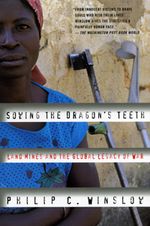
    Book Cover for Sowing the Dragon's Teeth

    Ten years ago this spring an historic international treaty came into force banning antipersonnel land mines. Although the U.S. has not joined the 156 nations who ratified the treaty, American forces have not used antipersonnel mines since 1992, and have destroyed three million stockpiled mines; call it a reluctant phasing out of an indiscriminate weapon that U.S. forces have used since the Civil War.

    Now a world movement to ban cluster weapons is gathering pace. It’s possible that this time around the U.S., which has not used cluster munitions since 2003 in Iraq, will join, helping make the weapons and their explosive sub-munitions a military artifact. So far 96 nations have signed the Convention on Cluster Munitions (CCM) and seven have ratified it. The treaty will enter into force on the thirtieth ratification.

    Civilian deaths and disabilities from antipersonnel mines have been well documented. The unnecessary suffering and a persistent international campaign brought about the 1997 Mine Ban Treaty, also known as the Ottawa Treaty. Cluster munitions casualties are less well known, in part because the weapons have been used in fewer countries, about 30. But where they have been used, the terrible wounds and denial of land access have led arms control experts, doctors and civil society groups, under the umbrella of the Cluster Munition Coalition, to demand that this weapon be added to the list of prohibited weapons along with antipersonnel mines, dum-dum bullets, poison gas and blinding lasers.

    Although antipersonnel mines and cluster munitions are in different military categories, they have one thing in common: catastrophic results for the civilians who come across them. America’s massive bombing of Laos from 1964 to 1973 still claims casualties today. One is Ta Douangchom. “I was living in a village called Ka Oy . . . in southern Laos. I was a farmer. One day, I was 28 years old at the time, I went out with my two sons to look for food and found a strange object. It looked green.” You can read the rest of Ta’s story here.

    (more…)

  • Sophia Raday lives in Berkeley, California, with her soldier/police officer husband, their two children, a bipartisan dog, and assorted firearms. She is the author of Love in Condition Yellow: A Memoir of an Unlikely Marriage, which chronicles her peacenik/warrior love story and provides insight on age-old political divisions in the United States.. This post originally appeared at Sophia Raday’s Love in Condition Yellow blog.

    Book cover for Love in Condition Yellow, links to Beacon Press page for book A while ago, my seven-year-old son’s feelings were hurt at school when a teacher criticized one of his drawings. She looked at my son’s drawing of his father and said, “Does my torso look like that?” The drawing was an in-class assignment to illustrate a homework project called “the personal timeline.” For every year of my son’s life, he wrote one sentence describing something important that happened.

    My son’s drawing is on a small white paper, about two inches square. Back in January, when he first showed it to me, he unfolded it from a tiny tight little bundle, as if he had tried to make it as small as possible. After I’d reassured him I thought it was a very good drawing, I asked if I could keep it. When he agreed, I tucked it among my credit cards.

    A week or so ago, I pulled it from my purse to show a friend who directs an arts education program, while telling her the story of his teacher’s reaction. She shook her head, murmuring, “but art is about creating meaning. . . ” She looked at the drawing intently, noting the simple figure, the flower-like hands, the black shoes, a long neck, a round head. A sun in the corner had been erased and then enlarged to take up about a quarter of the paper. “Did you ask him what it is?” My friend inquired.

    “It’s his father.” I said.

    “But what does it mean?” she said. “Look, the clothes are colored green. Do you think it’s a military uniform?”

    I leaned over to look at the drawing with her, an uneasy feeling growing within me. It had been weeks since my son came home, eyes downcast, and handed me this picture, asking, “Do you think this is any good?” Weeks since we lay together at bedtime and talked about his feelings of anxiety in his classroom.

    Why had I never thought to ask him what the picture meant?

    (more…)

  • Today's post is from Karen Kahn, the co-author, with her spouse Pat Gozemba, of Courting Equality: A Documentary History of America's First Legal Same-Sex Marriages.

    Book cover for Courting Equality links to publisher page for book As we approach the 40th anniversary of the Stonewall Riots, New England feels like a roller coaster hurtling toward equality. On April 6, two more states– Maine and New Hampshire– passed marriage equality legislation. The Maine bill has been signed into law by Governor Baldacci; New Hampshire awaits the governor's signature. In addition, this year Connecticut and Vermont joined Massachusetts in recognizing same-sex marriage. Thus, at the five-year anniversary of marriage equality, five New England states have at the very least expressed strong support for a vision of inclusiveness. In addition, Iowa– smack in the heartland– allows same-sex couples to marry.

    Will we have all five New England states with marriage equality on May 17? No, not yet. New Hampshire's Governor Lynch may yet veto the bill, though there is a strong chance that he will let the bill become law without his signature. In Maine, we face a dreaded referendum. Twice the voters of Maine turned back a gay civil rights law. Those opposed to the same-sex marriage law now have 90 days to collect signatures to put it before the voters. They may fail, as they did at their third attempt to overturn the gay civil rights law. But we can't count on it. When same-sex marriage goes to the ballot it is tough to win, as we saw in California last November.

    Admittedly California didn't have New England's secret weapon– GLAD. GLAD (Gay & Lesbian Advocates & Defenders) set out last year to bring marriage equality to the six New England states in a campaign called "6 x '12"– six New England states by 2012. Let's face it: they are way ahead of schedule. And I don't doubt that they have a plan for securing our rights in Maine.

    The galloping pace of progress in New England, however, isn't matched by the rest of the country. I got to see this firsthand this winter when I made my annual move from cold New England to tropical Hawaii. Hawaii jumpstarted the marriage equality movement in 1993, when its Supreme Court ruled that it was unconstitutional to exclude same-sex couples from civil marriage. Unfortunately, that ruling was followed by the passage of a state constitutional amendment giving the legislature the right to define marriage as the union of opposite-sex couples. In 1998, Hawaii passed a reciprocal beneficiaries law that gives any two unmarried adults, including same-sex couples, a few limited rights primarily associated with joint property ownership.

    (more…)

  • Geoffrey Canada was at the New Yorker Summit last week, discussing the problems facing poor school districts.

    If you have about forty minutes, watch Howard Zinn speaking at The Progressive’s 100th Anniversary celebration.

    If you have a little less time, listen to Danielle Offri discussing the process of becoming a doctor on the Journal Watch podcast.

    Mark Hyman was on Dateline NBC commenting on an eight-year-old girl who races cars.

    Helen Benedict talks to the Huffington Post about why she wrote about women serving in Iraq and Afghanistan.

    Alan Colinge talks about the core problems with our student loan system.

    In the President’s own handwriting: Obama is committed to repealing Don’t Ask Don’t Tell.

  • Today's post is from Kathryn Joyce, author of Quiverfull: Inside the Christian Patriarchy Movement. Joyce is a journalist whose writing has appeared in The Nation, Mother Jones, Newsweek, and other publications. She has received support from The MacDowell Colony and The Nation Institute and is former managing editor of The Revealer, a daily review of religion and the media published by NYU's Center for Religion and Media, a Pew Charitable Trusts "Center of Excellence."

    Book cover for Quiverfull, links to Beacon Press page for book I'd like to thank Doug Phillips and Vision Forum Ministries for awarding me and Beacon Press their "2009 Vulgaria Child Catcher of the Year Award" for the publication of my recent book, Quiverfull: Inside the Christian Patriarchy Movement, a journalistic investigation of a growing fundamentalist lifestyle that opposes all contraception and women's careers, proudly affirms biblical patriarchy, commands wives' and daughters' submission to husbands and fathers, and teaches homeschooling followers that feminism and gender equality– even women's suffrage– is the root of all modern social ills.

    As Phillips movingly writes, nothing captures the image of this feminist bogeywoman better than the Vulgarian Child Catcher, the bloodthirsty enforcer of the "self-indulgent" child-free state documented in the historical work, Chitty Chitty Bang Bang. This Child Catcher, who seems possibly on loan from The Protocols of the Elders of Zion, "with his net, hook, crooked black hat, odd funeral clothing, and protruding snozzola," sniffed out offending children and killed them. According to Phillips, I've done the same in my book (a "little book," he writes), which has been called by numerous critics (including evangelical flagship, Christianity Today) an empathetic and respectful entry into a lifestyle that would be easy to mock. Apparently, it takes someone with Phillips' "vision" to see that most of those reviewers are also "feminist leaders and 'child catchers' of many stripes," and that even Christianity Today has aligned itself with anti-family forces on a mission "to destroy biblical patriarchy and the Christian family."

    Vision Forum, as a homeschooling publisher that has released numerous books that inform its self-proclaimed patriarchy movement– such as Be Fruitful and Multiply, Passionate Housewives Desperate for God, So Much More: The Remarkable Influence of Visionary Daughters on the Kingdom of God, Manly Men Write Manly Letters, and the succinct Manliness– is among the subjects of Quiverfull. And I've read dozens of their titles, as well as listened to many hours of Phillips's sermons and recorded messages promoting submission and prolific motherhood to girls as young as five, and heard a number of his speeches in person in reporting this book. So it's quite an honor indeed to have beat out Barbara Walters (an also-ran nominated for scowling at the prolific Duggar clan), Speaker Nancy Pelosi (for proposing contraception coverage be included in the economic stimulus package), and even President Barack Obama (for easing stem cell restrictions). Nice tries all, but it takes a progressive press, publishing "titles too vile to name," and a feminist reporter– preferably one "trained to become a cultural revolutionary by one of the most significant radical feminists of the 20th century, Ellen Willis"– to fulfill the antifeminist stereotypes of Vision Forum and "[prepare] the liberal media elite to target for widespread censure and persecution those men, women, and ministries committed to historical Christian notions of male leadership, biblical femininity, and the importance that parents 'be fruitful and multiply.'"

    Part of me feels undeserving of the award. After all, as several reviewers and interviewers have pointed out, much space in the book is devoted to letting Phillips and his followers speak their piece. That so much of what Phillips and his fellow travelers have said about the roles they promote for women– that they should call their husbands "Lord," that they should view prolific motherhood to broods of ten and more children as a non-optional highest calling in life, that it's more important that their daughters are taught to serve than to read, that women shouldn't speak in church, and that those who fail in these roles are rebellious Jezebels who warrant church sanction– struck readers as appalling and nightmarish really seems like his doing, not mine. I hate to take the credit for merely documenting the work that Phillips and co. have done, but I'm loath to turn down an award. So thank you Vision Forum. An award like this from an institution like yours is cause for pride indeed.

  • Today’s post is from Amy Seidl, author of Early Spring: An Ecologist and Her Children Wake to a Warming World. Seidl has taught in the environmental studies programs at Middlebury College and the University of Vermont. She is currently a research scholar at Middlebury and associate director of the LivingFuture Foundation. She lives with her family in Huntington, Vermont, in a solar- and wind-powered home.

    Book Cover for Early Spring The celebration of Mother’s Day isn’t complete without flowers, bouquets of tulips and roses, clusters of violets and daffodils gripped in the fists of small children. Flowers capture the season, that time when we are relieved from winter and move decidedly into spring. Flowering azalea bushes, ephemeral wildflowers, and cultivated garden blossoms all confirm that the growing season is truly here.

    Except that all this is changing. As the planet warms and weather conditions change, flowering plants are responding. Lilacs, perhaps the floral archetype of the feminine, are blooming up to two weeks earlier than in the 1960s. Native plants like phlox, columbine, and milkweed flower earlier in the Wisconsin woods where Aldo Leopold first recorded their timing, a pattern that others are seeing across America’s natural landscapes. Fruit trees are responding too and in January 2007 apple trees bloomed in Boston’s Public Garden after a record-breaking warm December.

    What does this mean for Mother’s Day? What is the connection? First, because the celebration is strongly tied to season we have the opportunity to see the signs of this phenomenon in our everyday, local landscapes. We just need to take a look. Second, climate change is altering everything about life; ecosystems are entering flux as species respond to changing conditions, the risk of extinction has grown immeasurably, and humans and their built environments are threatened by extreme events they are not prepared for. Who better to demand that we stop global warming than the mothers, the givers and protectors of life? Who better to promote a future founded on clean energy, clean water, and healthy ecosystems? Who better to illuminate that not only the Arctic but our backyards are changing? Who better to say it with flowers?