• Link to Beacon Press page for Language is a Place of Struggle: Great Quotes by People of ColorYesterday is gone, but we must hold on to it anyway. Its meaning is the sense of our lives. We must be careful not to fictionalize and romanticize our stories. We must look at the beauty and the failures of our history with equal love and understanding.— Walter Mosley, Black novelist

    I learned a history not then written in books but one passed from generation
    to generation on the steps of moonlit porches and beside dying fires in
    one-room houses, a history of great-grandparents and of slavery and of the days
    following slavery; of those who lived still not free, yet who would not let their
    spirits be enslaved.— Mildred Taylor, Black writer

    The specificity of black culture—namely, those features that distinguish black culture from other cultures—lies in both the African and American character of black people’s attempts to sustain their mental sanity and spiritual health, social life and political struggle in the midst of a slaveholding, whitesupremacist civilization that viewed itself as the most enlightened, free, tolerant and democratic experiment in human history.— Cornel West, Black scholar

    These quotes are included in “Language is a Place of Struggle”: Great Quotes by People of Color edited by Tram Nguyen.

  • Today's post is from Susan Campbell, author of Dating Jesus: A Story of Fundamentalism, Feminism, and the American Girl. Campbell's writing has been recognized by the American Association of Sunday and Features Editors; National Women's Political Caucus; the Sunday Magazine Editors Association, and the Connecticut chapter of Society of Professional Journalists. She was also a member of the Hartford Courant's 1999 Pulitzer Prize-winning team for breaking news. Susan blogs at the Hartford Courant and at her Dating Jesus blog, where this post originally appeared.

    Dating Jesus: link to Beacon Press page for the bookThis past Sunday morning, for the first time in their 33-year relationship, Janet and Carol woke up within the state-sanctioned state of marriage. They got married Saturday night amid music and tears and bubbly.

    And after the ceremony, the dance music started (the DJ apologized for playing “I’m Coming Out” because it was such a cliche but she said she just had to) and even though the church of my origin didn’t allow it, I have left that church and now I dance. I don’t dance well, but I dance with heart. Even swinging around out on the dance floor, people kept saying they never thought they’d live to see the day… never thought in their lifetime… and they didn’t have to finish the sentence because, well, you just knew.

    Janet and Carol had to wait until the Connecticut Supreme Court said it was O.K. to marry and that august body did so last October, in a decision that bears reading. It was an emotional decision, and one that can still get an argument going, even if the relatively progressive state of Connecticut.

    Believe me, I get that. Growing up in the Anita Bryant era, I was on the side of Miss Florida Sunshine. As a teenager, I occasionally  joined with my fellows to park in a car outside what we thought was Joplin’s one gay bar, and we yelled… things. I guess you could call it hate speech, though at the time, I saw it strictly as a way to kill time on a Saturday night, and I didn’t give it another thought, not on Sunday morning in church, not on Monday morning at school. We just did it because, well, queers are queer.

    (more…)

  • Degenerative brain disease and negligent homicide charges: what is going on with high school football?

    Is DNA the most important aspect of parenthood? Of course not, says Nancy Polikoff.

    Eboo Patel calls on President Obama to promote religious pluralism.

    Will consumers spend our way out of the economic crisis? No, says Robert Reich, but the government should be spending money for the common good.

    With so many stores closing, what should we do with all those big, empty boxes?

    Thomas Friedman hopes that Obama has been palling around with that radical Bill Ayers.

    A disturbing number of women rally in support of the patriarchy movement.

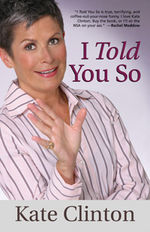
  • Today’s post is from Kate Clinton, author of I Told You So, forthcoming from Beacon Press. Clinton is a faith-based, tax-paying, America-loving political humorist and family entertainer. With a career spanning over 25 years, Kate Clinton has worked through economic booms and busts, Disneyfication and Walmartization, gay movements and gay markets, lesbian chic and queer eyes, and ten presidential inaugurals. She still believes that humor gets us through peacetime, wartime and scoundrel time. This post originally appeared on Clinton’s CommuniKate blog.

    Book Cover for I Told You So by Kate Clinton, links to Beacon Press page for book
    The Inauguration of Barack Obama was the first presidential inauguration I ever attended. Without protesting. On our inaugural pilgrimage to DC our train from NYC was on the track behind then President-elect Barack Obama’s train making whistle stops from Philadelphia through Wilmington and Baltimore, so we were delayed by “presidential activities on the route” by three hours. The conductor said, “Complain to the White House,” and usually grumpy commuters laughed. Already with the no-drama Obama!

    We stayed in Adams Morgan with our gracious hosts, Nancy Polikoff and Cheryl Swannack. They had been studying inaugural road maps in the Washington Post for weeks and were our unerring GPS advisors. In addition to the thrill of the inauguration, the big DC topic was logistics – surface roads, alternate routes, estimated travel time, metro closings, car pooling, taxi hopping. Our hosts were so expert, I am confident they could handle the logistics of getting us out of Iraq.

    On Sunday we attended the MCC DC church for a Martin Luther King Day concert with their Gospel Choir. Founded in 1992, the choir is composed of people of varied religious experiences who love to sing and share God’s love through song. And can they sing! Choir Director Shirli Hughes, in her selection of songs and soloists, completely captured the full circle joy of the life of Martin Luther King and the inauguration of Barack Obama. In their gorgeously simple church, Michele Lanchester ripped through We Shall Not Be Moved. After the service she agreed to sing it at our saging ceremony the next night at Dupont Circle. “If it’s not too cold,” she added. Her pipes are a gift, so I understood.

    The brilliant community organizer Jose Rodriguez had the foresight to get a park permit for an inaugural week of actions in Dupont Circle. At one entrance he and his cohorts had installed a giant blowup of George Bush and provided shoes for people to toss. Shoe Bush was a huge cathartic hit. Jose let us use the stage for an hour and at 6 pm Dupont Circle began to fill. Park police estimated 2,000. We kept the crowd warm with some world dance music, playlisted by my in-house deejay and girlfriend.

    (more…)

  • Thomas DeWolf made the trip to Washington after meeting Obama's train in Baltimore: see posts and pics here, here and here.

    Bill Ayers embraces the "magic of the moment."

    Danya Ruttenberg offers an appropriate Jewish blessing for the occasion.

    Kate Clinton thinks the White House needs a "saging."

    Courting Equality and Susan Campbell both discuss the Gene Robinson invocation that was left out of Sunday's welcoming concert on HBO.

    A couple of Beacon books (Gandhi's autobiography and James Baldwin's Notes of a Native Son) make Obama-inspired recommended reading lists.

    Harvard's Humanist Chaplain noticed a rare moment in the inaugural speech: acknowledgment of non-believers.

    Concerned that the Justice Roberts swearing-in flub means we don't really have a President today? SCOTUS blog explains why the "faithfully" issue won't cause a constitutional crisis.

    Graywolf Press will release Elizabeth Alexander's inaugural poem as a chapbook in a couple of weeks. Speedy!

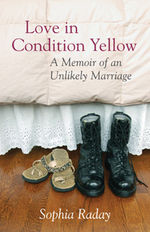
  • Today's post is from Sophia Raday, author of Love in Condition Yellow: A Memoir of an Unlikely Marriage, forthcoming from Beacon Press this May. Raday lives in Berkeley, California, with her soldier/police officer husband, their two children, a bipartisan dog, and assorted firearms. A founding editor of Literarymama.com, Raday's writing has recently appeared in The New York Times and in two anthologies.

    Book Cover for Love in Condition Yellow, links to Beacon Press page for book
    At various points during Election Day I briefly let myself think that Obama might actually win. If he did, I was going to do something BIG. I was going to run naked down the street with an American flag streaming behind me. I was going to dance (clothed) with throngs of people— all shades of brown and black and white. I was going to kiss random strangers. But at some point in my imaginings, about when the tears started to form in my eyes, I always stopped myself, not sure it was time yet to let all the frustrations of the past eight years, the voicelessness, the demonization, all these bottled emotions come gushing out. Not yet. Not until it was sure.

    I knew my husband would not share in the festivities. He is no Obamaniac. The way I feel about Obama, he feels about mmm… Ronald Reagan, maybe, or better yet Theodore Roosevelt, whom he refers to simply as “T.R.” I have become accustomed, in my bipartisan marriage, to not sharing the same perspective on electoral politics. But still, my husband encouraged me to go to Ohio in October because he knew it was important to me to volunteer for Obama in a battleground state. On Election Day he humored me by taking my photo at the voting booth, my grinning face next to the big check mark by Barack Obama/ Joe Biden.

    But around 6 pm, as Ohio was declared for Obama and I opened my front door and whooped like a banshee, my husband seemed annoyed by my joy. He chided our seven-year-old son and three-year old daughter who were taking my revelry as a sign it might be a good time to start leaping off our furniture. My husband’s reproach was almost churlish, which is very unlike him. After putting our daughter to bed, my husband did the same, at his usual time of 7:30 pm, before the victor was even announced. He gets up at 3:15 am to start his shift as a sergeant of police in nearby Oakland. He is also a West Point graduate and a colonel in the Army Reserves. He returned from Iraq this past May after fifteen months separation from our family. Politically, he is what I call “a Republican like the Republicans used to be:” fiscally conservative, small government, pro-defense. For a while my husband supported John McCain. But McCain’s choice of Sarah Palin completely disillusioned him. He decided not to vote at all, but at the end he grudgingly admitted checking the box for Obama.

    (more…)

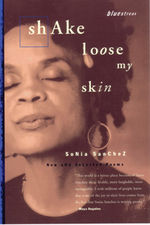
  • Today’s post, a poem written in honor of Dr. Martin Luther King, Jr.,
    is from poet, activist, and scholar Sonia Sanchez. Sanchez, one of the
    most important writers of the Black Arts Movement, is Laura Carnell
    Professor of English and Women’s Studies at Temple University. She is
    the author of thirteen books, including Shake Loose My Skin: New and
    Selected Poems
    , where this poem appears.

    Book Cover for Shake Loose My Skin by Sonia Sanchez
    Morning Song and Evening Walk

                        1.

    Tonite in need of you
    and God
    I move imperfect
    through this ancient city.

    Quiet. No one hears
    No one feels the tears
    of multitudes.

    The silence thickens
    I have lost the shore
    of your kind seasons
    who will hear my voice
    nasal against distinguished
    actors.

    O I am tired
    of voices without sound
    I will rest on this ground
    full of mass hymns.

                            2.

    You have been here since I can remember Martin
    from Selma to Montgomery from Watts to Chicago
    from Nobel Peace Prize to Memphis, Tennessee.
    Unmoved along the angles and corners
    of aristocratic confusion.

    It was a time to be born
    forced forward a time
    to wander inside drums
    the good times with eyes like stars
    and soldiers without medals or weapons
    but honor, yes.

    And you told us: the storm is rising against the
    privileged minority of the earth, from which there is no
    shelter in isolation or armament
    and you told us:
    the storm will
    not abate until a just distribution of the fruits of
    the earth enables men (and women) everywhere to live
    in dignity and human decency.

                            3.

    All summerlong it has rained
    and the water rises in our throats
    and all that we sing is rumored
    forgotten.
    Whom shall we call when this song comes of age?

    And they came into the city carrying their fastings
    in their eyes and the young 9-year-old Sudanese
    boy said, “I want something to eat at nite a
    place to sleep.”
    And they came into the city hands salivating guns,
    and the young 9-year-old words snapped red
    with vowels:
    Mama mama Auntie auntie I dead I dead I deaddddd.

                            4.

    In our city of lost alphabets
    where only our eyes strengthen the children
    you spoke like Peter like John
    you fisherman of tongues
    untangling our wings
    you inaugurated iron for our masks
    exiled no one with your touch
    and we felt the thunder in your hands.

    We are soldiers in the army
    we have to fight, although we have to cry.
    We have to hold up the freedom banners
    we have to hold it up until we die.

    And you said we must keep going and we became
    small miracles, pushed the wind down, entered
    the slow bloodstream of America
    surrounded streets and “reconcentradas,” tuned
    our legs against Olympic politicians elaborate cadavers
    growing fat underneath western hats.
    And we scraped the rust from old laws
    went floor by floor window by window
    and clean faces rose from the dust
    became new brides and bridegrooms among change
    men and women coming for their inheritance.
    And you challenged us to catch up with our
    own breaths to breathe in Latinos Asians Native Americans
    Whites Blacks Gays Lesbians Muslims and Jews, to gather
    up our rainbow-colored skins in peace and racial justice
    as we try to answer your long-ago question: Is there
    a nonviolent peacemaking army that can shut down
    the Pentagon?

    And you challenged us to breathe in Bernard Haring’s words:
    the materialistic growth–mania for
    more and more production and more
    and more markets for selling unnecessary
    and even damaging products is a
    sin against the generation to come
    what shall we leave to them:
    rubbish, atomic weapons numerous
    enough to make the earth
    uninhabitable, a poisoned
    atmosphere, polluted water?


                            5.

    “Love in practice is a harsh and dreadful
    thing compared to love in dreams,” said a Russian writer.
    Now I know at great cost Martin that as we burn
    something moves out of the flames
    (call it spirit or apparition)
    till no fire or body or ash remain
    we breathe out and smell the world again
    Aye-Aye-Aye Ayo-Ayo-Ayo Ayeee-Ayeee-Ayeee
    Amen men men men Awoman woman woman woman
    Men men men Woman woman woman
    Men men Woman woman
    Men Woman
    Womanmen.

  • Today’s post is from Steven I. Apfelbaum, author of Nature’s Second Chance: Restoring the Ecology of Stone Prairie Farm. Apfelbaum is founder, president, and senior ecologist of the firm Applied Ecological Services, known for its international science-based ecological design and restoration work. He lives in Juda, Wisconsin, on Stone Prairie Farm.

    Book Cover for Nature's Second Chance, links to Beacon Press page for book
    This morning at first light, our dog Willow walked out the front door nonchalantly, as though he expected warm spring weather outside. Not so on a mid-January day in Wisconsin. Before the front half of his lanky body was out, his back half was already trying to scramble back into the warmth of the farm house.

    Arctic birds have moved in, pushed ahead by the Alberta clipper’s very strong cold front to become our winter birds in southern Wisconsin. Snow buntings and tree sparrows, have replaced the ever present cardinals, blue jays, song sparrows and other common freeloaders at the bird feeder. Some are foraging vigorously, landing on stalks and attempting to shake out the few remaining plant seeds from the prairies plant stems.

    It’s very cold today, and is supposed to continue for the entire week. It’s during these cold winter days when the howl of the wind and swirl of snow covers over the life and vibrancy of the dormant insects and plant life below. It’s also really snowy—nearly 40 inches now cover the ground, and another four inches are coming in tonight.

    (more…)

  • Today’s post is from Thomas N. DeWolf, the author of Inheriting the Trade: A Northern Family Confronts Its Legacy as the Largest Slave-Trading Dynasty in U.S. History, published by Beacon Press. Tom speaks regularly at schools, conferences, and other events around the country. For further information go to: www.inheritingthetrade.com, where you can also read find his Inheriting the Trade blog.

    Book Cover of Inheriting the Trade, links to Beacon Press page for book
    The inauguration of Barack Obama represents hope but not simply for a change from the policies, actions, and directions of the recent past with which I’ve disagreed and found offensive and disheartening. My hope is for the healing of wounds that have been inflicted and experienced over centuries in America. Our nation has a complicated and checkered past. While building a nation based on the ideals of freedom, equality, and justice, and offering high hopes and dreams to people from around the world, those in power have also stolen land from, and annihilated, indigenous people. They enslaved African people. They have oppressed people of Asian and Hispanic descent and discriminated against people based on their religious beliefs, gender, sexual orientation, and disabilities. This historic moment of change, when Barack Obama takes the oath of office and becomes our president, offers great opportunity.

    My own family’s history mirrors that of America’s in many ways. I’m a white man whose ancestors terrorized and killed American Indians in King Philip’s War in the 17th century. I’m related to the most successful slave-trading family in American history. Three generations of DeWolfs from Rhode Island, over the course of five decades, in the late 18th and early 19th centuries, brought 10,000 African people in chains to the Caribbean islands, and North and South America. They received a political favor from President Thomas Jefferson that allowed them to continue their evil commerce in human flesh long after Rhode Island declared the slave trade illegal. The most successful, James DeWolf, became a United States Senator from Rhode Island in 1821. When he died in 1837 he was reportedly the second richest man in America.

    Others of my ancestors were active abolitionists. Calvin DeWolf helped found the Anti-Slavery Society of Illinois in 1839 and was indicted in 1858 for aiding in the escape of a fugitive slave. They’ve been farmers, carpenters, ministers, lawyers, writers, secretaries, and sales people. Like so many other families they were the mothers, fathers, daughters and sons of America.

    (more…)

  • Today's post is from Stephen Puleo, author of the critically acclaimed Boston-area bestseller Dark Tide: The Great Boston Molasses Flood of 1919. A former award-winning newspaper reporter and contributor to American History magazine, he holds a master's degree in history and is also the author of The Boston Italians: A Story of Pride, Perseverance, and Paesani, from the Years of the Great Immigration to the Present Day. His website is http://www.stephenpuleo.com/.

    Book Cover for Dark Tide, links to Beacon Press page for book
    At first, the woman in front of me jumped a bit when I popped my head over the seatback and said, "Would you like me to autograph that?"

    We had just taken off from Charlotte, on a connector flight from Boston to Hilton Head, and her movement had caught my eye when she pulled a copy of Dark Tide from her bag and settled in to read. When I asked the question, she glanced quickly from me to the book and back to me again, and said, "No – you're not…are you?" But there's no author's photo on the paperback, after all, so she wasn't entirely sure. I whipped out my driver's license to convince her I wasn't a stalker, and more importantly, that I was who I claimed to be. "Wow, this is great," she said. "I love the book and you're coming to speak to my book club." Of course, I responded, and named the town and date, further verifying my identity. Now we were friends. She introduced me to her husband, and after we landed, we took pictures at the airport so she could e-mail them to her book-club colleagues. When I spoke to the club a week or so later, the story of our meeting had made the rounds.

    When the 90th anniversary of the Great Boston Molasses Flood of 1919 occurs on January 15, Dark Tide will be close to celebrating its own five-and-one-half year anniversary. The blink-of-an-eye passage of time is astounding enough to me, but even more amazing (and gratifying) has been the book's continued popularity and appeal. I have been truly blessed and humbled by the chord it has struck with readers, and my book-club friend on the plane was representative of the enthusiastic response Dark Tide has generated. I have made more than 150 appearances on this book alone since its publication, and at least 40 book clubs have selected it as their choice. In the winter and spring of 2009, the Massachusetts cities of Beverly and Medford will be reading Dark Tide as part of town-wide reading programs, bringing to six the number of communities that have selected the book for this honor.

    (more…)