• Today's post is from Marilyn Sewell, senior minister at the First Unitarian Church in Portland, Oregon. Sewell is the author of Breaking Free: Women of Spirit at Mid-Life and Beyond and Resurrecting Grace: Remembering Catholic Childhood, and the editor of two collections of poetry, Claiming The Spirit Within: A Sourcebook of Women's Poetry and Cries of the Spirit: More Than 300 Poems in Celebration of Women's Spirituality. This post also appeared on her personal blog, Reflections.

    Cover of Breaking Free: Women of Spirit at Midlife and Beyond. Link to Beacon Press page for book.
    People are mad at Greenspan. Yes, the Lord of the Stock Market, the One True God we worshiped, has failed us, we see. Alan Greenspan, almost three years after retiring as chair of the Federal Reserve, is realizing that free markets don't always self-correct. Last Thursday he told the House Committee on Oversight and Government Reform, "Those of us who have looked to the self interest of lending institutions to protect shareholders' equity, myself included, are in a state of shocked disbelief."

    Lawmakers asked him to say, "I was wrong, and I'm sorry." Pretty simple. But Greenspan declined. At a time when unprecedented numbers of people all over the nation are losing homes and now losing jobs, as well, the former Chair refused to accept responsibility for the crisis. He did say, however, that his faith in deregulation has been shaken. We were hoping you might have noticed sooner, Mr. Greenspan. And since you have fiercely opposed deregulation for almost 15 years, one would hope that you would at least apologize for letting ideology rather than market realities determine our economic policy. "The whole intellectual edifice . . . collapsed in the summer of last year," he said.

    (more…)

  • Today's post is from Glenn Branch, deputy director of the National Center for Science Education, a non-profit organization that defends the teaching of evolution in the public schools. With NCSE's executive director Eugenie C. Scott, he edited Not in Our Classrooms: Why Intelligent Design is Wrong for Our Schools.

    Not in Our Classrooms: Why Intelligent Design Is Wrong for Our Schools book cover
    When the distinguished philosopher Philip Kitcher recently addressed the creationist movement in his Living With Darwin, he judiciously assessed creationism in its latest incarnation as historically respectable but currently bankrupt, and proposed to describe it as "dead" science. "In light of its shambling tenacity," I replied, "'zombie science' is perhaps a preferable label." (I was writing in a scholarly journal, so I resisted the temptation to add a reference to "Romero 1968" or "Wright 2004".)

    I guess that Halloween came early to Texas, for the zombies are out in force. Three creationists were just appointed to a six-member committee to review a draft set of Texas state biology standards, which determine what is taught in Texas's public school science classrooms and the content of the biology textbooks approved for use in the state. And since Texas is one of the largest textbook markets in the country, what happens to textbooks there is relevant to the content of textbooks everywhere.

    With all that at stake, why would anyone appoint a creationist, let alone three, to such a committee? Oh, right: the chair of the board, Don McLeroy, is a confessed creationist, who offers folksy criticisms of evolution like, "Given all the time in the world, I don't think I could make a spider out of a rock. However, most of the books we are considering adopting, claim that Nothing made a spider out of a rock." The far-right faction on the state board of education, including McLeroy, presently holds seven of its fifteen seats.

    (more…)

  • Today’s blog post is part two of two (part one is here) by Mark Winne about the environmental and social impact of factory dairy farming. Winne is the author of Closing the Food Gap: Resetting the Table in the Land of Plenty.

    This is part two of a two-part story. Read part one here.

    The Power and the Politics of Big Dairy

    Nothing gets as big as the dairy industry in New Mexico without political support and the strategic exercise of economic power.  The hardhat adorned photo of New Mexico’s Governor Bill Richardson, proudly displayed by the New Mexico Dairy Producers Association at statewide agricultural expositions, breaking ground at the Clovis cheese plant is testimony to political support for the industry. In the words of Cindy Padilla, [former] Director of the Water and Waste Management Division of the NM Environment Department (NMED), the state agency responsible for issuing and monitoring dairy wastewater discharge permits, “our agency must balance the need for economic development with environmental protection.”  The question, however, is precisely where is that balance.

    Under the provisions of the U.S. Clean Water Act a prospective dairy operator in New Mexico must first obtain a wastewater discharge permit from the NMED. The evaluation of the application is based solely on the conditions at the proposed site of the dairy farm and representations made by the applicant. The NMED does not evaluate conditions in the surrounding area such as the number of dairy farms already in existence, the proximity of those farms to that of the permit applicant, or the total impact that a certain number of farms could have on the public’s health or environment.  In fact, according to Ms. Padilla, there is no upward limit on the number of permits the department can issue, which means the number of dairy farms is only limited by the amount of land and water rights dairymen can purchase.

    Air quality oversight fares even worse. In spite of the concerns raised by residents of Curry and Roosevelt counties, including the high rates of asthma, the NMED does not monitor air quality anywhere in New Mexico except in the state’s southern-most region. According to department spokesman, John Goldstein, “we have no plans to monitor air quality in dairy areas at this time.”

    (more…)

  • Today's blog post is part one of two (part two is here) by Mark Winne about the environmental and social impact of factory dairy farming. Winne is the author of Closing the Food Gap: Resetting the Table in the Land of Plenty.

    Just an hour west of Texas, the gentle swells of New Mexico's high plains calm to a pancake flat sea of grass. Crossing into Curry and Roosevelt counties at the state's eastern edge, the empty landscape, broken only by the occasional grain elevator and abandoned village, quickly gives way to a discomfiting motion. Strung out along the highway's edge in a nearly unbroken chain are cow pens filled with thousands of black and white Holsteins slithering in the summer heat like giant schools of beached eels.

    Got milk? Eat Taco Bell cheese? Slurp Yoplait yogurt? Chances are pretty good this is where the main ingredient comes from. Curry and Roosevelt counties now enjoy the dubious distinction of being at the heart of the Great American West's dairy industrial complex. With barely 20,000 dairy animals in 1992, the two counties now feed, milk, and clean up after 120,000 cows at 58 operating dairy farms, a number that by all accounts will double in a few short years. And to sop up all this milk (only 30% is used for fluid consumption), Curry County is now home to North America's largest cheese plant, which extrudes a Velveeta-like product at the rate of one truckload per hour.

    What do these many farms do to a place? At four tons of manure per cow annually, 120,000 cows produce as much excrement as the city of Los Angeles. The odor in the surrounding communities is bad enough to knock a buzzard off a shit wagon, and the hordes of flies stop outdoor picnics before the potato salad is uncovered. Besides being a nuisance, the winged insects are also disease vectors for a variety of bacteria-related illnesses. They may be one reason why Curry County's asthma rate is three times higher than New Mexico's statewide average.

    But the dairy industry's most problematic contribution is not easily seen or sniffed. Since large dairy farms – labeled by the U.S. Department of Environmental Protection as concentrated animal feeding operations (CAFOs) – and milk processing facilities use more of the region's limited water supply than other users, they present a serious threat to the counties' main water source, the Ogallala Aquifer. And at the same time that the industry is sucking the ground dry, nitrates from the manure are finding their way back into the ground water in such concentrations as to alarm public health workers and state officials.

    (more…)

  • Billy Beane, Newt Gingrich, and John Kerry write an op-ed. (No, that's not the beginning of a joke.) Here's the link to the piece, which uses baseball to discuss health care.

    Fred Pearce (Confessions of an Eco-Sinner: Tracking Down the Sources of My Stuff) launched his new Greenwash column for the Guardian this week. Also check out Pearce's interview with Emily Rooney on Greater Boston.

    Tom DeWolf ponders race and political endorsements.

    The Cleveland Plain Dealer
    looks at the Blue Cotton Gown.

    "Who would you vote for if the election were held today?" David Moore explains how to improve on what is seemingly the simplest of polls.


  • Today’s post is from Garry Leech, author of Beyond Bogota: Diary of a Drug War Journalist in Colombia. Leech is an independent journalist and editor of Colombia Journal. For the past eight years his work has primarily focused on the US war on drugs and Colombia’s civil conflict. He is the author of several books including Crude Interventions: The United States, Oil and the New World (Dis)Order (Zed Books, 2006) and Killing Peace: Colombia’s Conflict and the Failure of US Intervention (Inota, 2002). He also teaches international politics at Cape Breton University in Nova Scotia, Canada.

    Beyond Bogota: Link to Beacon Press page for the book
    In the final presidential debate, the South American country of Colombia briefly became a central theme in the U.S. election campaign, not so much because of its infamous history of drug trafficking and civil conflict, but because of international economic policies. In November of 2006, the Bush administration signed a free trade agreement with the Colombian government. However, its ratification in Congress has been stalled because many Democrats oppose the pact on human rights grounds. During the debate, Republican candidate John McCain decided to take the offensive against his opponent Barack Obama by attacking the Democratic candidate’s opposition to the U.S.-Colombia free trade agreement. The arguments presented by each candidate are telling with regard to the degree of difference between the two of them on international economic issues.

    In the debate, McCain repeatedly made Colombia a topic of discussion. In fact, as Hendrik Hertzberg of The New Yorker put it, McCain appeared to have a “strange preoccupation” with the South American country. In actuality, McCain was preoccupied with suggesting that Obama’s opposition to the U.S.-Colombia free trade agreement exemplified the Democratic senator’s protectionist tendencies and that such an economic approach would be bad for Americans. “I just recited to you the benefits of concluding that agreement, a billion dollars of American dollars that could have gone to creating jobs and businesses in the United States, opening up those markets,” McCain argued.

    Obama responded by suggesting that the United States should ensure such agreements contain adequate human rights and environmental protections, particularly in the case of Colombia where more unionists are killed each year than in the rest of the world. “We have to stand for human rights and we have to make sure that violence isn’t being perpetrated against workers who are just trying to organize for their rights,” Obama declared, suggesting that human rights trump U.S. trade interests.

    Not surprisingly, McCain’s position on free trade agreements is consistent with that of President George W. Bush, who again urged Congress to ratify the U.S-Colombia pact the day after the debate. McCain, like the Bush administration and many other Republicans, advocates the expansion of the neoliberal, or “free market,” global economic order that has been established over the past quarter century. But is Obama’s position markedly different?

    (more…)

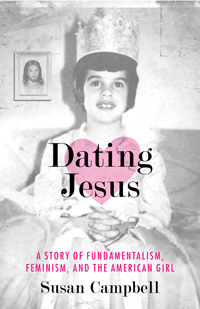
  • Today's post is from Susan Campbell, author of Dating Jesus: A Story of Fundamentalism, Feminism, and the American Girl. Campbell's writing has been recognized by the American Association of Sunday and Features Editors; National Women's Political Caucus; the Sunday Magazine Editors Association, and the Connecticut chapter of Society of Professional Journalists. She was also a member of the Hartford Courant's 1999 Pulitzer Prize-winning team for breaking news.

    Dating Jesus: link to Beacon Press page for the book

    When did Sarah Palin become a fundamentalist?

    I'd like to know, because I never once saw her in the pews of my own fundamentalist church in southwest Missouri, where I came to Jesus, taught Sunday school, and worked a church bus route.

    When precisely did Sarah join the Elect, for whom the media has the strangest reaction, like at any moment we're going to reach into our satchels and start handling snakes.

    (We aren't, I promise. At least, my church isn't. I can't speak for Palin's.)

    Maybe Palin joined the flock about the time that video of her old church began circulating on the Internet, the one where they talked about "cell phone anointing." For people who treat their religions like a Sunday coat – take it out of the closet once a week, wear it and look pretty, and then slip it back onto a hanger until next Lord's Day – this was wacky stuff.

    And so the media and the culture reach into its own satchel and pulled out the worst descriptor they could think of, religion-wise. She became "fundamentalist." Except a Pentecostal is emphatically not a fundamentalist. A Pentecostal's faith is open to latter-day revelations. A fundamentalist's faith is contained within the pages of the Holy Bible. There is no speaking in tongues. There is no laying on of hands, cell phone anointing, or – yes! – snake handling. No matter how rousing our song service might be, we cannot compete with the lively and loud charismatic worship of the Pentecostals.

    In fact, Sarah Palin is no more a fundamentalist than Barack Obama is a Muslim. The faith-reassignment of both candidates (she's non-denominational evangelical with roots in Roman Catholicism and Pentecostalism; he's a Congregationalist) is based in an ignorance that is, like the Sunday school song we used to sing, deep and wide.

    (more…)

  • David Moore explains the good and bad of polling in the AARP Bulletin.

    Many people pray for their favorite sports teams—surely there were many prayers in Boston last night—but is it okay for a high school coach to lead his team in prayer before a game?

    Articles in support of Bill Ayers keep appearing in major news outlets such as Time, the Wall Street Journal, the Chicago Sun-Times, Inside Higher Ed, even Chicago Business News.

    Compelling reading: Jeremy Adam Smith interviewed Stephen Pinker and Michael Gazzaniga about trust in science over at Greater Good magazine’s blog. While you over there, and especially if you’re a parent, check out Greater Good’s Half Full blog.

    Are you on Facebook? Become a fan of Beacon Broadside and Beacon Press.

    Recent Posts on Beacon Broadside:

    Averting Their Eyes from an Assault on Women’s Health by Carole Joffe

    A Green Bailout by Van Jones

    The Puck Stops Here: A Hockey Coach Analyzes Palin’s Brand by Michelle McAteer

    In Markets We Trust by Rev. Peter Laarman

    In The Exam Room: Unexpected Pregnancies and Hard Choices by Patricia Harman

    Nobel Prize – Is There an American Eligible? by Rick Ayers

    The Shelter of Each Other: Comfort in a Crisis by Jeremy Adam Smith

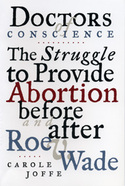
  • Today’s blog post is from Carole Joffe, author of Doctors of Conscience: the Struggle to provide Abortion before and after Roe v Wade (Beacon Press, 1996) and a professor of sociology at the University of California, Davis.  She is currently at work on a book about contemporary abortion provision.

    Joffee“Nothing in this section shall be construed to prevent a pregnant woman from averting her eyes from the ultrasound images required to be provided to and reviewed with her.” This is the “good news” of an egregious law recently passed in Oklahoma making ultrasounds mandatory for abortion patients. But though I read the law carefully (available here in its entirety), I couldn’t find anything allowing women to also cover their ears during the ultrasound. This is unfortunate, because the law requires that those performing the ultrasound “provide a simultaneous explanation of what the ultrasound is depicting,” and also “provide a medical description of the ultrasound images, which shall include the dimensions of the embryo or fetus, the presence of cardiac activity, if present and viewable, and the presence of external members and internal organs, if present and viewable.” Even those women who are aborting a pregnancy caused by rape or incest are compelled to undergo such mandated ultrasounds.

    Ultrasounds have become one of the key weapons of anti-abortion legislators. A number of states require abortion providers to make ultrasounds available; a handful of others make viewing mandatory, but Oklahoma is the first state, according to the Center for Reproductive Rights, that requires a woman to hear the description of an ultrasound image.

    The Oklahoma law has the added perverse feature of preventing a woman from suing her doctor if he or she intentionally withholds other information about the fetus, such as an anomaly. So, women are forced to hear something they may not choose to hear, but are not entitled to information that would be presumably of critical importance to them. Such is the state of public policy when it is in the hands of anti-abortion fanatics.

    (more…)

  • Today's post is from Van Jones, founder and president of Green For All, a national organization dedicated to building an inclusive green economy strong enough to lift people out of poverty. The Green Collar Economy, published by HarperOne, is his first book. Jones blogs regularly on politics, the environment, and economics at Huffington Post.

    VanJones
    Maybe the Wall Street bailout package is a good idea.

    But the only thing I know for sure is this: even if we avert a total economic meltdown, we will still be in a recession. Millions of Americans still will be without jobs — or in real fear of losing their job. Worse, we will still be dependent on dirty fuels like oil and coal, which are draining our monetary resources and cooking the planet.

    The Earth and everyday people will still be suffering.

    At this point, I am willing to concede that Wall Street and the big bankers need some propping up. But while we are at it, we should find a way to bail out the little people — and the planet, too.

    So how about a green bailout — to help both? We already took an important step in that direction. Perhaps the only thing in the whole bailout package that is inarguably good is the support for the U.S. clean energy sector.

    (more…)