• by Stephen Puleo

    Stephen Puleo’s latest book is The Boston Italians: A Story of Pride, Perseverance and Paesani, from the Years of the Great Immigration to the Present Day. His previous books include Due to Enemy Action: The True World War II Story of the USS Eagle 56, and Dark Tide: The Great Boston Molasses Flood of 1919, a critically-acclaimed Boston-area bestseller.

    Puleo As the paperback edition of The Boston Italians is released this month, I wanted to make a few observations about readers’ reactions to the book since the hardcover’s debut a year ago. I have received hundreds of e-mails and spoken to nearly two thousand people at presentations throughout the Boston area; the response has been overwhelmingly positive and heartwarming – from Italian-Americans and others – and has fallen into two main categories.

    First, there is the resounding opinion that the book was long overdue; that it’s simply about time Boston’s second largest ethnic group was the subject of a "non-Mob" book. That the real story – one of Italian immigrants overcoming enormous odds and paving the way for their children and grandchildren to achieve remarkable success – needed to be told.

    (more…)

  • Since Wednesday night’s Pennsylvania Democratic Presidential
    Debates, Beacon author Bill Ayers has been in the news for his connection to
    Barack Obama, after George Stephanopoulos pressed Sen. Obama to discuss his
    association with Ayers. Ayers is a widely respected and admired writer,
    activist, and professor of education, whose opposition to the war in Vietnam led
    him to be active in the Weather Underground 40 years ago. In media coverage
    over recent days, his record and career have been distorted. Here are some
    guides to setting the record straight.

    Kind and Just ParentThe Washington Post investigated the relationship and Ayers’
    activities in a comprehensive article.
    Post reporter Peter Slevin writes:

    The two men served for three years on the board of the Woods
    Fund, an anti-poverty group. The board, which Obama has since left, was small
    and collegial, said chair Laura Washington, who served with them. It met four
    times a year for a half-day, mostly to approve grants, she said. The atmosphere
    was "friendly but businesslike."

    Washington praised Ayers as "an admired and respected member of Chicago’s civic community" and "a very big proponent of self-determination in education: Community schools and for the community to have a role in improving education."

    (more…)

  • Frederick S. Lane is an expert witness, lecturer, and author who has appeared on The Daily Show with Jon Stewart, CNN, NBC, ABC, CBS, the BBC, and MSNBC. His fourth book, The Court and
    the Cross: The Religious Right’s Crusade to Reshape the Supreme Court
    , is forthcoming from Beacon Press this spring; he is beginning work on People in Glass Houses: American Law, Technology, and the Right to Privacy (Beacon 2009). For additional information, please visit www.FrederickLane.com.

    LaneIt’s been a busy couple of weeks for the Ten Commandments. The big news, of course, was the death of actor Charlton Heston, best known for his leadership of the National Rifle Association and his 1956 portrayal of Moses in Cecil B. DeMille’s epic film, The Ten Commandments.

    Attracting somewhat less attention was the announcement by the United States Supreme Court a few days before Heston’s death that it had decided to review the ruling in the case of Pleasant Grove City v. Summum, a long-running legal battle over the public display of the Ten Commandments in a city located 45 minutes south of Salt Lake City. But the two events, surprisingly, are not unrelated.

    (more…)

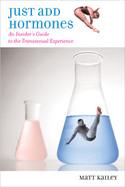
  • Matt Kailey is the author of Just Add Hormones: An Insider’s Guide the Transsexual Experience (Beacon Press, 2005), the editor of Focus on the Fabulous: Colorado GLBT Voices (Johnson Books, 2007), and the managing editor of Out Front Colorado, Colorado’s oldest and largest GLBT publication.

    KaileyAnd now for the latest transsexual travesty (there’s at least one a week nowadays, isn’t there?): a transman is pregnant. Female-to-male transsexual (born female, now male) Thomas Beatie is bearded, breastless, and with child, and although he is not the first transman to become pregnant, nor will he be the first to give birth, the situation is causing a major blip on the media’s sensationalism sonar. Beatie has been interviewed on Oprah, told his story to The Advocate, and had his picture passed around like a bottle of Boone’s Farm all over the Internet, with his pregnant abdomen prominent below his reconstructed chest. He’s been called everything from “freak” to “fabulous,” and everyone with an opinion has made it known. Forgive me if I yawn.

    (more…)

  • I am almost reluctant to mention it, since I don’t want to clue their
    editors in if they didn’t notice, but Beacon Press was all over the
    Boston Globe this weekend. A review of Renée Bergland’s
    Maria Mitchell and the Sexing of Science, an interview with Suzanne Strempek
    Shea about her book Sundays in America, a feature on Stephen Puleo’s The Boston Italians, and a mention of Mary Oliver’s new book Red Bird in Shelf Life. Three of these authors have already appeared on Beacon Broadside: Mary Oliver on
    Edna St. Vincent Millay, Renée Bergland  on misconceptions regarding the historical acceptance of women as scientists, and Suzanne a handful of times: here, here and here. Look for a post from Stephen Puleo later this week.

  • Faith in Public Life are hosting the Compassion Forum this Sunday, April 13th. The discussion of "wide-ranging and probing discussions of policies related to pressing
    moral issues that are bridging ideological divides now more than ever,
    including poverty, global AIDS, climate change and human rights," as well as the crisis in Darfur, will include Hillary Clinton and Barack Obama (but not John McCain, who declined his invitation). The event will air on CNN at 8pm. Among the members of Faith in Public Life who will be asking questions at the event is Eboo Patel, author of Acts of Faith and director of the Interfaith Youth Core.

    Of interest on other blogs:

    Nancy Polikoff explains that the tax advantages of marriage aren’t all they’re cracked up to be.

    Penguin Bookshop in Sewickley, Pennsylvania, has been documenting the green overhaul of their store on their blog.

    Patricia E. Bauer posts a memorial to Melissa Riggio, the daughter of Barnes & Nobel CEO Steve Riggio. who died of leukemia recently at the age of 20. "Ms. Riggio, who had Down syndrome, was the inspiration for Barnes &
    Noble’s creation of a special section of books about children with
    special needs."

    Wendy Kaminer on the lawsuit pending in Indiana that requires bookstores that sell "sexuality explicit material" to register with the state.

    Harlyn Aizley agonizes over what to do with her poem-a-day emails.

    Dictionary-phile Ammon Shea on how dictionaries ruined his Scrabble game.

  • by Allison Trzop

    Boston recently hosted an assembly of smart and passionate people focused hard on the buzzword "change." The event wasn’t a political rally, but the 2008 Nieman Conference on Narrative Journalism, themed "Storytelling in Many Voices, Many Media." The three-day conference ably met one of the goals of new Director Constance Hale: “Showcasing journalists who are creating exciting work in digital forms while at the same time celebrating those whose work reflects the intelligence, integrity, depth, and creativity that have long been the hallmarks of the best of traditional media.”

    From the Pulitzer-Prize winning veterans to J-school students, there was an undercurrent of job anxiety, peppered with optimism, at the conference. Speakers and attendees together tackled tough issues including declining print subscriptions, rapidly evolving technology, and what exactly today’s consumers of news want. There were few definitive answers to that question, but some exquisitely well-informed guesses. Senior Producer at nytimes.com Derrick Henry helpfully pointed to the concise and prescient report, "Creative Destruction: An Exploratory Look at News on the Internet" (pdf). Henry spoke on a panel alongside Russell Contreras, multimedia reporter for the Boston Globe, who also hosts the Globe podcast on minority issues called "Across the Divide." Both Henry and Contreras are doing amazing audiovisual work online and, most importantly, training others–which is crucial to satisfying twenty-first century news’ consumers. It seems today that slideshows and sound are important tools in storytelling that are only starting to be used to full advantage.

    I was struck by how often I saw the ID "multimedia journalist"–Jane Ellen Stevens was one prominent example–and how many of the speakers’ bios began with a website, like Jessie Scanlon, senior writer for BusinessWeek.com. I think it’s a powerful sign when the nation’s top journalists say that they regard their stories placement on the home page as the equivalent to front page, above the fold. And I was excited by the wide range of online work I saw, impressive and varied content beyond the static page–including James Pindell’s politicker.com; Josh Benton’s blog; and Brian Storm’s multimedia production studio.

    Like everyone in book publishing, I think often about the future of the written word, and the viability of our current forms of print. As a book editor, I go to conferences like the Nieman to look for potential projects, and I find journalists–who are working with shorter and shorter word counts as print editions are trimmed–invariably attracted by the length and depth that a book can offer. I’m most encouraged by the journalists who are adapting to new technology with integrity, but who also overwhelmingly continue to find value in what is still one of the fullest and most satisfying forms of storytelling–the printed book.

    For more about the conference, check out Charles Donelan’s write-up over at the Santa Barbara Independent.

    Allison Trzop is an assistant editor at Beacon Press.

  • by Joan Murray

    Murray1
    No matter what we believe, we seem to share a human inclination to speak to someone or something greater than ourselves–someone we like to think is in control of things. Prayers arrive like a spiritual emergency kit in times of need. "Oh, God, help them," we say when we pass an accident scene. Even if we haven’t prayed for years.

    Some of us feel lucky to know God. And we stay on regular speaking-terms with him–sometimes in ways that might seem petty to the creator of billions of solar systems. (What must he have thought of all my adolescent prayers for boyfriends and basketball victories?) But whether we pray every day, or only in times of need, where do we find the words? One surprising source is poetry.

    Poets have always talked to God–and they’re happy if we listen in. In fact, some prayer poems are best said out loud–like "O Sweet Irrational Worship" by Thomas Merton, with these beautiful lines: "By ceasing to question the sun / I have become light." Another to recite under the sky is "Eagle Poem" by Native American Joy Harjo, which begins: "To pray you open your whole self / To sky, to earth, to sun, to moon, / To one whole voice that is you / And know there is more."

    (more…)

  • Kai Wright, author of Drifting Toward Love: Black, Brown, Gay, and Coming of Age on the Streets of New York, wrote a piece for the American Prospect online in remembrance of Dr. Martin Luther King Jr.'s assassination on April 4, 1968. "Dr. King, Forgotten Radical," is a call to rescue King's legacy from a narrative that undervalues his role as a radical activist for change.

    We've all got reason to avoid the uncomfortable truths King shoved in the nation's face. It's a lot easier for African Americans to pine for his leadership than it is to accept our own responsibility for creating the radicalized community he urged upon us. And it's more comfortable for white America to reduce King's goals to an idyllic meeting of little black boys and little white girls than it is to consider his analysis of how white supremacy keeps that from becoming reality.

    Take, for instance, his point that segregation's purpose wasn't just to keep blacks out in the streets but to keep poor whites from taking to them and demanding economic justice. There's a concept that's not likely to come up in, say, the speech John McCain was rumored to be planning for today. "The Southern aristocracy took the world and gave the poor white man Jim Crow," King lectured from the Alabama Capitol steps, following the 1965 march on Selma. "And when his wrinkled stomach cried out for the food that his empty pockets could not provide, he ate Jim Crow, a psychological bird that told him that no matter how bad off he was, at least he was a white man, better than a black man."

    Wright's words aren't falling on deaf ears: the piece has already been cited in op-eds, at Utne Reader and, according to Technorati, on forty-three different blogs so far, including Alas, a Blog, War and Piece, and Crooked Timber.

    You might also want to look back in our archives to read Kai Wright on helping teenagers who come out and the continued relevance of James Baldwin's understanding of race.

  • by Helene Atwan

    Ferris
    I have the honor to serve as the Hemingway Foundation/PEN Award administrator for PEN-NE (please visit the web site if you don’t know this wonderful organization, devoted to the causes of literacy and freedom of expression). Last Sunday was the day that the award was conferred, this year to novelist Joshua Ferris for Then We Came to the End (Little, Brown), a remarkably witty and deeply affecting book about the world of work in an era of downsizing. The Hemingway is for a first work of fiction, and the judges also named two finalists, Rebecca Curtis for Twenty Grand (Harper Perennial) and Ravi Howard for Like Trees, Walking (Amistad). In the same ceremony, at the magisterial John F. Kennedy Library in Dorchester, Mass., PEN-NE handed out the L.L.Winship Award for fiction to Rishi Reddi for Karma and Other Stories (Harper Perennial), in Poetry to Ann Killough for Beloved Idea (Alice James Books), and in nonfiction to Kristin Laine for American Band (Gotham Books).

    (more…)