• I was on a semi-vacation last week, so this week’s link roundup is a bit larger than normal. Enjoy!

    Howard Zinn is adding to his People’s History of the United States with a new graphic novel, A People’s History of the American Empire. Read about it at Tom Dispatch, and check out this Viggo Mortensen-narrated clip featuring Mike Konopacki’s artwork and Zinn’s words. 

    Fantastic review of Eboo Patel’s Acts of Faith at Beliefnet. And don’t miss Patel’s excellent post on pluralism vs. diversity over at OnFaith.

    …[I]t’s not about whether diversity is good or bad. Diversity is a fact,
    and in America it’s not going away. The question is how to best engage
    the fact of diversity in a way that builds social capital and increases
    civic engagement. And when the pluralists don’t engage diversity by
    building positive social bonds, then we leave a vacuum that is often
    filled by extremists or bigots.

    In light of the recent Obama/Wright controversy (read Chris Bracey’s take at BlackProf), Terri Gross talked with James Cone, author of Risks of Faith: The Emergence of a Black Theology of Liberation, 1968-1998, about Black Liberation Theology. Also listen to the other interview from that show, with Rev. Dwight Hopkins, for a better understanding of the context Rev. Wright’s comments were ripped from.

    Kai Wright is in the American Prospect on starting over in AIDS research and in the Dallas Morning News about the danger of the high rate of teen STDs.

    Penny Coleman attended the Winter Soldiers’ conference, and her thoughtful analysis is appearing on Alternet. Be sure to check out her article about Stop/Loss: "Pentagon Holds Thousands of Americans ‘Prisoners of War’."

    Rabbi Arthur Waskow urges Jews and others to observe a green Passover.

    Kevin Jennings, author of Mama’s Boy, Preacher’s Son, is a hockey fan. And he doesn’t appreciate the homophobic atmosphere at Rangers games.
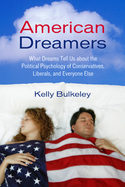
     

  • by Kelly Bulkeley

    AmericandreamersAs of today a total of 116 dream reports about Barack Obama and 104 about Hillary
    Clinton have been posted on the metaphysicalpoll.com website. Here are some of the questions I’ve heard people
    asking about these intriguing political fables from the nocturnal
    imagination.

    Can we accept these as real dreams? Cautiously, yes. Some of the reports could easily be fake, but
    most sound genuine to me. (For more on
    the limitations of this kind of anecdotal data, see my posting of March 19.)

    Why are so many people having dreams of
    Hillary and Barack?
    It’s turning
    into a perfect storm of political dreaming. First, the core supporters of both candidates (older white women for
    Hillary, multicultural youth for Barack) tend to be especially active
    dreamers–they are exactly the kinds of people who show up most often in dream
    classes and workshops, and I think it’s natural their political hopes and fears
    would find expression in their dreams.  Second,
    many Democrats are genuinely torn in both directions, and one thing we know
    from modern dream research is that people often experience an upsurge of
    dreaming during times of uncertainty and indecision. And third, the feverish campaign coverage by
    the 24-hour news media has prompted unusually intense feelings of familiarity
    and intimacy with the candidates’ personal lives, to the point where we hear
    and think and talk about them almost non-stop. In this kind of cultural environment, it would be surprising if we did not find at least some people dreaming
    about these omnipresent figures in the public eye.

    (more…)

  • by E. Kay Trimberger

    TrimbergerLast fall, I began to study single women in India in preparation for  attending a Women’s Studies conference in New Delhi in January 2008. I knew beforehand that marriage was even more dominant there, and that the number of single women was proportionally much smaller. I found census figures as confirmation: 89.5% of Indian women between the ages of 25-59 are married, as compared with 65% of American women in the same age group. As for the unmarried women in that age group, the "never marrieds" account for 2.5% in India versus 16% in the U.S., while the percentage of divorced women in that population is 17% in the U.S. as opposed to a mere 1% in India. The percentage of Indian widows is 7%, higher than the 2% rate in America. (Sources: 2000 U.S. Census, 2001 Indian Census).

    I expected to find  feminist organizing of Indian widows, since their plight has been widely publicized. Nor was I surprised to find that the long-standing, large, and diverse Indian women’s movement focused on issues such as marriage/family reform and ending violence against women (including rape, wife-beating and wife-burning), as well as addressing women’s poverty, and caste and class differences. I was startled, however, to discover concrete examples of Indian feminists bringing together diverse groups of single women (e.g., the never-married, divorced, deserted wives and widows), agitating for  recognition of their common interests as singles. In America, our women’s movement has never done so. In reflecting on the possible reasons why Indian feminists have organized singles while we in the U.S. have not, I gained  insights into how our women’s movement could initiate a new campaign to address the  needs of U.S. women who spend an increasing percentage of their life span single.

    (more…)

  • by Renée Bergland

    MariamitchellWhen I started my book on the nineteenth-century scientist Maria Mitchell, I expected to find that she had triumphed against impossible odds.  “Bias and Barriers” against women’s achievement in the science are pretty intense in the twenty-first century, and I presumed that the obstacles must have been much harsher nearly two hundred years ago. My presumptions were bolstered by earlier accounts of Mitchell that tended to emphasize her exceptional qualities and minimize the encouragement she received from her family and her community. The great surprise for me was that Mitchell faced relatively little bias. In her time, girls were thought of as naturally scientific—and science itself was considered a feminine pastime.

    The shocks of history can be hard to parse. On one hand, it’s exciting to realize that there was a time (not that long ago) when a girl like the young Maria Mitchell grew up believing that there was nothing preventing her from achieving scientific greatness. On the other hand, it’s a bit discouraging to realize that when I was born in New York City in the late twentieth century, the odds were worse for girls in astronomy than they had been when Mitchell was born on Nantucket more than a hundred and fifty years before. To add to the depression factor, I worried that uncovering Mitchell’s advantages might make her achievements seem less impressive.

    (more…)

  • For those of you who have been enjoying Suzanne Strempek Shea’s posts from the roadtrip that inspired Sundays in America: A Yearlong Road Trip in Search of Christian Faith, tune in to Weekend Edition on NPR tomorrow, Easter morning, to hear an interview with Shea conducted by Liane Hansen. [UPDATE: Here’s the link to the story on the NPR website.]

    And if you haven’t read the posts, here they are:

    Celtic Celebrations
    Barack Obama’s church
    Christmas Eve in Bethlehem

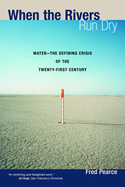
  • Fred Pearce is the author of When the Rivers Run Dry: Water the Defining Crisis of the Twenty-First Century, March 22nd is World Water Day, an initiative that grew out of the 1992 United Nations Conference on Environment and Development (UNCED) in Rio de Janeiro.

    Whentheriversrundry
    Water consumption has
    tripled in the past 30 years and there’s a growing danger that disputes
    over the most necessary of resources could erupt into violence

    Water is rapidly becoming
    one of the defining crises of the 21st century. Climate change is
    making its availability increasingly uncertain. And we are using ever
    more of the stuff. In the past three decades the human population has
    doubled but human use of water has tripled — largely because,
    ton-for-ton, modern ‘high-yielding’ crop varieties often need more
    water than the old crops.

    A typical Westerner
    consumes, directly and through thirsty products like food, about a
    hundred times their own weight in water every day. That is why some of
    the great rivers of the world, such as the Nile, Indus, Yellow River
    and Colorado, no longer reach the sea in any appreciable volume. All
    their water is taken.

    Many parts of the world,
    notably the Middle East, are running out of water to feed themselves.
    In response, a vast global trade is emerging. Not in water itself, but
    in thirsty crops like grains and sugar and cotton. Europe is a major importer of thirsty crops. Meanwhile the US, along with a handful of other countries, like Australia, Argentina, Thailand and Canada, are major exporters.

    Economists call this the ‘virtual water trade.’ Many countries would starve without it. But as
    more and more countries run short of water, the trade will be
    disrupted. And the threat of wars over water will grow.

    (more…)

  • by Kelly Bulkeley

    Americandreamers
    At the conclusion of a recent New Yorker story about her new
    website posting people’s dreams of Barack
    Obama
    and Hillary
    Clinton
    , Toronto novelist Sheila Heti said, "I sort of hope that the
    campaign managers will change the way candidates give speeches as a result of
    people’s dream lives. It must be telling
    them something."

    These dreams do have the potential to reveal meaningful facets of people’s political
    beliefs. The frequency and intensity of
    a politician’s appearance in people’s dreams can be taken as an accurate index
    of his or her personal charisma. The
    more people dream of a politician, the more likely that politician has made a
    deep emotional impact on them (both positively and negatively–Heti’s website
    has instances of both).

    In 1992, when I first studied dreams of politicians during that year’s Presidential
    election, I heard numerous dreams of Bill Clinton and Ross Perot, and almost
    none of George H.W. Bush–no doubt where the charisma lay in that contest! As of
    March 18th, Heti’s website contains 73 dreams of Obama, 67 of Hillary, and four
    of John McCain (to be fair, the space for McCain dreams was just created on March
    10th). Now, as then, the dreams offer a mix of the bizarre and the trivial, the profound and the absurd, the personally idiosyncratic and the socially relevant. From a research perspective, the value of Heti’s website is that it provides further evidence that people dream not only about their private lives
    but also about public affairs like political contests. Dreaming is not purely inward-looking; it
    also has the capacity to look outwards and express our feelings about the major
    concerns, conflicts, and challenges of our communities.

    (more…)

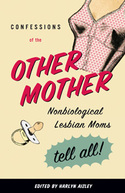
  • by Harlyn Aizley

    Aizley
    Oh sure I’m a daughter/ sister/ mother/ partner/ friend/ Jew/ writer/ runner/ painter/ cook/ researcher. But when it comes to my daughter’s kindergarten all I’m aware of being is a LESBIAN.

    "Yoo-hoo, you in the carpool line, aren’t you a LESBIAN?"

    "Hey you in the front row at the winter concert, I hear you’re a LESBIAN."

    This is mostly my problem. Apparently the majority of the other parents at this unnamed, posh private school are not thinking about my sexual orientation every time they see me.
    The problem is I think they are.

    (more…)

  • by Suzanne Strempek Shea

    Allsaints
    Want to celebrate St. Patrick’s Day in an authentic manner, but without having to pay ever-rising trans-Atlantic airfares or swallow a startling dollar-to-euro exchange? Skip the trip to Ireland and stay stateside for a journey to All Saints Parish in Brookline, Massachusetts.

    After all, a holy day is what the holiday is first and foremost. St. Patrick’s Day parades now meander down the lanes even of Ireland’s smallest villages, and Dublin’s to-do now rivals New York City’s or Boston’s, but until recent years St. Patrick’s Day in Ireland was a day off for church and family. Prior to your pub visit, or post-parade, consider a visit to this 111-year-old Anglican church, which holds a Celtic Eucharist service each Wednesday and Saturday evening.

    It’s offered as part of a Celtic spirituality focus that began in 1989 at All Saints, a stately Protestant church located down the hill from the birthplace of this country’s only Catholic president. “Celtic worship seeks to heal the wounds of centuries,” All Saints Rector David A. Killian writes in the 20-page black-on-gray liturgy booklet. “Celtic Spirituality is committed to caring for the earth, promoting equality between men and women, securing justice and freedom for all, and working for peace in the world."

    (more…)

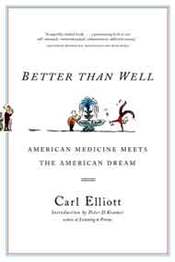
  • by Carl Elliott

    Betterthanwell
    In his 1967 book, Human Guinea Pigs, Maurice Pappworth
    tells the story of a poor student who had volunteered for a number of
    medical
    experiments in exchange for cash. As the student was undergoing a
    highly complex cardiac catheterization, he went into profound shock
    and his heart stopped. Only after several minutes was the researcher
    able to resuscitate him. Pappworth wrote, "The experimenter
    then continued with the experiment as though nothing had happened." Then the researcher turned to all those present
    and said, "He must be a fool to repeatedly come back to us."

    I have heard that thought expressed many times, although not quite
    so bluntly. Why does anybody take untested drugs for money, much less
    earn their
    living by doing it? Clinical research is regulated far more strictly
    now than it was in 1967, but it still rests on the willingness of
    thousands of human subjects to test the safety of new drugs. Many of
    these subjects are guinea
    pig pros
    ,
    who spend a good part of each year in private, for-profit research
    units, submitting themselves to invasive
    medical procedures in exchange for cash. Nobody today calls them fools,
    of course. But many observers assume that guinea pig pros
    must have something wrong with them — that they are psychologically
    disturbed, or that they like to live on the wild
    side, or as the current jargon has it, they enjoy "engaging in
    risk-seeking behavior." Nobody seems to consider the more
    obvious explanation: that they are desperate for the money.

    (more…)