• Soaring With Fidel by David Gessner
    I think it’s funny how often people use place as a metaphor for their state of being.  "I’m not quite there yet." "I’m getting there." "I’m feeling unsettled." Everyone wants to get there and be there but even the most superficial survey of the animal world will tell you that there’s no there there. Everyone is moving, everyone is busy going somewhere else; it’s a world in movement, a decidedly unsettled world.   

    Migration and movement have long been themes of my writing, but never more so than since I moved to the South four years ago. This was an odd decision in some ways, given that Cape Cod had been the main subject of both my writing and life.  Rather than buy a house, my wife and I decided to rent an apartment very close to the beach, the caveat being that it was a "winter rental" and we would be expelled each summer. That was okay with us in one way, since we would be heading back north to rent in Maine or on Cape Cod for the summer, and we have stuck with this arrangement ever since, putting our whole lives in storage in May and taking them back out in late August. 

    (more…)

  • Halloween is a time for "gallows humor," but macabre displays of fake bodies swaying from trees are not a laughing matter for those who understand the legacy of lynching in America.

    From Crystal Lake, Florida, to Stratford, Connecticut, hanging dummies have been stirring up debate and protest. This year, however, we’ve had almost non-stop news coverage of noose-related incidents following the events in Jena, Louisiana. Could it be that we still need a primer on one of the more violent chapters of America’s history?

    An article in the SF Gate talks more generally about the spate of noose incidents that have made news recently. Sherrilyn Ifill, a Beacon author whose book On the Courthouse Lawn chronicles the history of lynching in America, addresses the disconnect between white and black perceptions of the image of the noose:

    "Many white people are unaware of the incredible power of the lynching story for African Americans," said Sherrilyn Ifill, a professor of law at the University of Maryland and a former civil rights attorney. "Lynching was a message crime. It served to tell the black community that there were boundaries. Don’t get too educated. Don’t vote. Don’t get too wealthy. Don’t look at a white woman.

    "It was not just used to punish an individual, but to serve as a threat to others."

    What can you do to be more sensitive to the racial overtones of certain types of Halloween imagery? Diary of an Anxious Black Woman offers a few tips on how to avoid racist subtexts in your Halloween decorations, costumes, and how you interact with trick or treaters. It’s an excellent, informative read.

    Happy Halloween!

  • They Take Our Jobs! by Aviva Chomsky
    As I’ve been doing interviews and talks over the past several months about my book, "They Take Our Jobs!" And 20 Other Myths About Immigration, I’ve become more and more convinced that a key, central issue that’s hampering those of us who support immigrant rights is the absence of a basic, fundamental ability to say “immigrant rights are human rights.” No politician or talk-show commentator is going to risk saying this—but we have to.

    Although I stand by my arguments about the myths I try to deconstruct in the book (Immigrants DON’T take American jobs! Immigrants DO pay taxes! Immigrants ARE learning English!) I also, deep down, think these arguments miss the point. Immigrants are human beings who have arbitrarily been classified as having a different legal status from the rest of the country’s inhabitants. The only thing that makes immigrants different from anybody else is the fact that they are denied the basic rights that the rest of us have. There is simply no humanly acceptable reason to define a group of people as different and deny them rights.

    (more…)

  • Rubin60onupA few weeks back, the New York Times had a great piece on "the greying of the Web." Older people are giving the lie to the grey-haired Luddite stereotype and taking the ‘Net with blogs and their own social networking sites where they connect, share stories, gripe, and cheer just like the younger folks do.

    At Beacon, we’re happy to see the elder blogs giving some attention to 60 On Up: The Truth About Aging in America. Lillian Rubin takes a candid look at the problems and promise of longevity, and her “sharp, brazenly honest exposé” has struck a chord with many people out on the elder blogs and in the more traditional media venues.

    (more…)

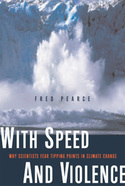
  • With Speed and Violence by Fred PearceNobel prizewinner Al Gore and I go back a long way. True, I’ve only met him once. I shook the hand of the man who used to be the next President of the United States, the latest controversial recipient of the Nobel Peace Prize, when his climate-change roadshow came to Cambridge in the UK earlier this year.

    I was impressed by his first environment book, written before he was even Vice President. But my optimism turned to dust when he failed to turn his knowledge into action while sharing power with Bill Clinton. Gore claims that he did what he could back then, but when the Kyoto Protocol was being negotiated in 1997, Gore dropped by for a few hours and then found something more important to do back home.

    Still, I admire his reinvention as a film star with a message. By and large, whatever the British judge Michael Burton said last week, An Inconvenient Truth is backed up by sound science. Gore would probably admit that it contains some fairly substantial simplifications, even occasional over-simplifications. Of course, this is a film made by a politician for a broad audience, not a scientific thesis, but did he exaggerate the science, as the judge alleged?

    (more…)

  • Winslowvictory
    Driving north out of Jerusalem after twelve months away was like settling back to watch a favorite film. The olive trees and stony hills baked under the late summer sun and the eroded limestone cliffs at Wadi Harimiya— “thieves,” in Arabic—looked as smooth as they must have thousands of years ago. There used to be a tough Israeli army checkpoint at Harimiya, and Israeli settlers once fired a few shots at me and my assistant just south of there when I was a field operations officer with the United Nations Relief and Works Agency (UNRWA).

    The September air smelled hot and clean, and we made it to Qalqilya, in the northern West Bank, with no delays. I even spotted a hoopoe, my favorite bird, with its exotic flight and plumage. As a foreign visitor I could afford to watch birds. Palestinians, who still queued for hours at the grimy checkpoints, wouldn’t have cared whether I was enjoying the scenery. Their lives had not changed for years, and in this territory, about the size of Delaware, more than 500 obstacles of various types, plus the formidable West Bank barrier, kept them from moving freely.

    (more…)

  • Mary Oliver, winner of the Pulitzer Prize for Poetry, was described by the New York Times as “far and away, this country’s best-selling poet.” Her poetry collections include Swan;  Blue Iris; Why I Wake Early; Thirst; New and Selected Poems, Volume One; and New and Selected Poems, Volume Two. Her prose includes Our World, which is a collection of photographs by Molly Malone Cook accompanied by Oliver's writing.

    Millay_house
    Edna St. Vincent Millay's library at Steepletop. Photo by Molly Malone Cook from the book Our World.

    Edna St. Vincent Millay died on October 19, 1950; she was 58. It was a too short, turbulent, diligent life—a life of life, a life of work. She was the first woman to win the Pulitzer Prize in Poetry. She was the chosen representative figure of the ’20s, beautiful, flamboyant, honorable to the spirits of love and of art, yet, in those early years, mischievous, even racy. In book after book, she wrote more deeply, more quietly, with a lyrical finery, a feminist stance, an affinity with the natural world, an understanding of the necessity in the world for kindness, for participation.

    The critics, with the exception of Edmund Wilson, have mostly hashed her work, making it smaller by emphasis on the early poems. Who remembers her libretto for Deems Taylor’s opera The King’s Henchman, or the plays, or the many elegant sonnets and poems in later books such as Buck in the Snow; Huntsman, What Quarry; and the posthumous Mine the Harvest? Or the essay Fear, really an open letter to the Governor of Massachusetts on behalf of Sacco and Vanzetti? That she had some bad times in a good life seems of higher interest to her biographers (so far) than the audacity of her spirit, the breadth of her work. Well, hundreds of readers—thousands of readers—young as well as old, do remember. Time will bring its balance, its more just correspondence between the poet and the work. To which she gave such unflagging effort, until the moment of her departure which was altogether too early.

    A Personal Note: When I was still in high school, in 1953, I wrote to Norma Millay, the poet’s sister, asking if I might visit the poet’s home, where Norma Millay was then living. The answer was yes. So, sometimes, the emboldened young fly into their lives. I lived there, off and on, for a good number of years. I don’t know if spirits always haunt their earthly homes, but I know that sometimes they do. Her presence was everywhere.

    Related articles

    Riding with Edna St. Vincent Millay: A Love Story
    Beacon Buzz: Gather at the Table, Faitheist, and more!
    Beacon Books at Audible: Outlaw Marriages by Rodger Streitmatter
    Sexually Empowered Poetry
  • Ourworld
    Beacon’s own beloved Mary Oliver has a poem in the Boston Globe about  baseball, more specifically about our own, beloved Red Sox. It seemed appropriate to send you all to read it today, as the office buzzes with anticipation/dread (in typical Sox fan fashion) over tonight’s do-or-die game.

    We are also buzzing about tomorrow’s blog post, by Mary Oliver about Edna St. Vincent Millay, who died fifty-seven years ago tomorrow. Millay’s house is one of many locales featured in the beautiful Our World, a collection of photos taken by the late Molly Malone Cook and accompanied with journal entries and essays by Oliver.

    Use the comments field to share your own favorite sports poems, or just to say, "Go Sox!"

  • This week, we’ve been thinking about families, and in particular relationships between generations. Today, Clare Dunsford talks about the specific challenges and rewards of raising a child with special needs and his own special way of looking at the world.

     title=

    “What do you want to be when you grow up?” I ask my eighteen-year-old son with some hesitation one day, suddenly aware of his strong jaw with its newly fledged beard. Looking at my handsome son, I’m not so sure I want to hear the answer to my question. J.P.’s options for the future are limited by the genetic mutation that colors everything in his life. J.P. has Fragile X syndrome, a mutation on a gene on the X chromosome that suppresses the production of a vital protein, dubbed FMR-1. The lack of this protein causes a short attention span, speech and language deficits, behavioral problems, anxiety and unstable moods, and learning impairment, often resulting, as in J.P.’s case, in mental retardation.

    On this particular day, my son startles me with his reply to my mundane question: “I want to be just who I am.”  I am used to his gnomic pronouncements—“my Zen-baby,” I used to call him when he was younger. But this time his words take my breath away.

    (more…)

  • Jonathan Silin wrote My Father’s Keeper: The Story of a Gay Son and His Aging Parents to chronicle his experiences learning to care for his elderly parents when their independence began to slip away. Although his years of intimate daily contact with his parents ended with their deaths, his relationship with and understanding of them continues to grow and change.

    I fell this summer. SilinfatherskeeperNot a public spill, like the one an old friend took when the heel of her shoe broke off as she stepped up to the podium to say a few heartfelt words at my partner’s memorial service. No, this was more like the fall, instantaneous and without warning, that my 89 year-old father experienced while standing at the sink and brushing his teeth, and which was either the cause of the broken hip diagnosed the following day or the result of an already existing fracture.

    (more…)