• Gateswealth
    In Wealth and Our Commonwealth: Why America Should Tax Accumulated Fortunes, William H. Gates (dad of Bill Gates) and Chuck Collins argue that large fortunes should be taxed, both because of the societal benefit of wealth redistribution, and because it’s appropriate payback to the society that provided the mechanisms for wealth.

    Wealthy philanthropist Warren Buffett has been in the news the last couple of days arguing for the estate tax on just those grounds.

    Buffett, the second-richest man in America after Bill Gates, according
    to Forbes magazine, said recent tax law changes have tended to benefit
    people like him.

    "Dynastic wealth, the enemy of a meritocracy, is on the rise. Equality
    of opportunity has been on the decline," Buffett said. "A progressive
    and meaningful estate tax is needed to curb the movement of a democracy
    toward plutocracy." (Reuters)

    Dirk McQuigley at DailyKos picked up on the story, highlighting the tendency of Estate Tax-repeal supporters to refer to the tax as a "Death Tax," and praising what is, in his opinion, a more accurate term: "The Paris Hilton Tax."

    Paying taxes IS an obligation of citizens. IMO it is an integral patriotic duty as money paid to the treasury helps pay for our military, homeland security, coast guard, etc. Wing nuts who feel the income tax is unconstitutional ignore that our constitution was ammended to include an income tax.(Link)

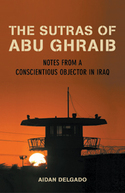
  • The Sutras of Abu Ghraib by Aidan Delgado
    I still think of Veterans Day as Armistice Day, its original name, commemorating the end of World War I. The nations that founded the holiday did so to celebrate the end of what they believed was the "war to end all wars" and thus to symbolize the end of war itself. In America, Veterans Day is now associated with honoring US war dead and remembering the sacrifices of veterans in all our conflicts. This is good and very much in keeping with the original spirit of the holiday; for remembering the terrible cost of war is the best way for us to appreciate the peace we now enjoy. For me, Veterans Day embodies two moods at once: somber reflection on the sacrifices of soldiers and gratitude for the blessing of peace.

    Yet these days, Veterans Day often makes me sad. It seems that this holiday in particular almost can’t help becoming politicized, particularly in the midst of a controversial war. This is a holiday about celebrating the end of war; I don’t want to see it become something like a "Support the Troops" bumper-sticker. I want people to look at all the tremendous sacrifices made by veterans and draw the right lesson from them: that war is terrible and we must do everything we can to prevent it. In honoring the warrior, we should take care not to honor war in itself. Remember that beneath the memorials to individual soldiers, the laurels for their courage, there is a subtle message to the younger generation: you should grow up and become soldiers too. I don’t think that’s the message that should be sent on Veteran’s Day. This should be a holiday about remembering the price of peace, for no soldier joins to perpetuate war. All veterans served and fought in the expectation of eventually regaining the peace, and enjoying a measure of it themselves. If we want to truly thank veterans, then we should not only honor them as individuals but honor the thing they fought and died for: the return to a peaceful society. We should remember that Veterans Day was once Armistice Day.

    Aidan Delgado served with the U.S. Army Reserve in Iraq and is now an active member of Iraq Veterans Against the War and the Buddhist Peace Fellowship. He is the author of The Sutras of Abu Ghraib: Notes From a Conscientious Objector in Iraq. Listen to an interview with Aidan Delgado on WAMC.

  • Over
    this past year, I have talked to forty or so women soldiers for my forthcoming
    book, The Lonely Soldier: Women at War in Iraq, and it has become clear
    to me that they have a set of needs quite different from those of men. All
    soldiers must deal with the roadside bombs, mortar and grenade attacks, and
    gunfire that are a part of daily life in this war, where the front line is
    everywhere and not even bases are safe; and all soldiers must cope with seeing
    the dead and wounded close up and with, perhaps, having killed. But women have
    additional burdens: they are sexually harassed by their male comrades day in
    and day out; one in three is sexually attacked or raped; and they are pressured
    every minute to conform to a military culture that is intractably male. "The
    Army consistently tries to make women into men," as Sergeant Sarah Scully of
    the Military Police wrote to me. "Any sign that you are a woman means you are
    automatically ridiculed or treated as inferior."

    (more…)

  • Penny Coleman, the author of Flashback: Posttraumatic Stress Disorder, Suicide, and the Lessons of War and Village Elders, lives with her family in New York City. For more information, visit her website at www.flashbackhome.com.

    Flashback by Penny ColemanOn November 6, the Joshua Omvig Suicide Prevention Bill became law. The bill was named for a 22-year-old Iowa reservist who took his own life eleven months after coming home from Iraq. Though Josh is one of hundreds of combat veteran suicides since the wars began in 2001, it is his name that has become symbolic of this campaign. Thanks in no small measure to the advocacy of his parents, Randy and Ellen Omvig, the Department of Veterans Affairs will soon be required to develop and implement a comprehensive suicide prevention program at each of its medical facilities, including mandatory staff training in suicide awareness and prevention, a designated suicide prevention counselor in each facility, and a 24-hour suicide hotline.

    With the exception of the unspeakable images of Abu Ghraib, which were e-mailed home by soldiers themselves, for six years Americans have been effectively insulated from the human cost of our wars. This insulation is not an accident: it is policy. Images from the Vietnam years, like the naked child trying to outrun her own burning skin, or the anguished women and children waiting their turn to be executed at My Lai, were catalysts that helped turn public opinion against that war. This time, the government wanted to ensure that would not happen. On the eve of the invasion of Iraq in 2003, the Pentagon issued a directive to the media forbidding any coverage of returning American coffins. No coffins, no funerals, no wounds, no tears. No empathy.

    Randy and Ellen Omvig’s success in drawing long overdue attention to the issue of veteran suicide in an environment that has dismissed or derailed other worthy causes, can be explained, I believe, by their insistence on going public with the most intimate details of their tragedy. They complicated and humanized a debate that has been stalled for decades in a morass of misinformation, disinformation and other evasion tactics.

    They described how his tour in Iraq had changed him, how he suffered all of the symptoms they now recognize as classic PTSD: the nightmares, the shaking, the dark moods and consuming fears. They admitted that they had failed to convince him to go for counseling, accepting his argument that the stigma would wreck his career plans. And then came the morning when Ellen discovered him locked in his pick up truck. He had a gun. As she tried frantically to reason with him, he put the gun to his head and pulled the trigger. It's a horrific image: she, banging on the window, terrified, pleading, while, on the other side of the glass, her son tells her he will always love her, but that now she must leave. "Go!" he says, and when she refuses, he raises his gun, angles his head so the bullet will not hit her, and fires. She was powerless to stop anything, the hand, the gun, the bullet, the blood. There must have been a lot of blood.

    In spite of a suicide rate among solders that has now reached a 26-year record high, and contradicting the evidence of their own increasingly ominous studies, the Army continues to insist that they have yet to find a connection between combat stress injuries (PTSD) and suicide. They trot out self-serving anecdotes about "Dear John" letters, incompetent parents, and what they call "underdeveloped life coping skills" to blame active duty soldiers for their own deaths. As for veteran suicides, there has never been any official attempt to track or count them.

    The virtual epidemic of veteran suicides that followed the war in Vietnam has remained largely beneath the radar of public awareness because there is still such irrational fear and shame attached to a self-inflicted death. Families, military and otherwise, have far too often tried to cover up the circumstances of such deaths, hoping to shield both the living and the dead from blame and condemnation. What has often been called the "most secret death" has afforded the military a convenient and virtually impenetrable cover for decades, allowing them to keep combat-related suicides a theoretical, statistical, deniable issue.

    Josh Omvig was not able to keep his war theoretical. He and hundreds of other veterans of the wars in Afghanistan and Iraq and thousands of Vietnam vets carried home memories of friends lost, bodies blown apart, and lives touched by real horror. Their wars were up close and personal, and when their memories became too much to bear, they chose to die.

    Both as a war widow and as the mother of a boy who, like Josh, is in his 20's, I heard the Omvigs' story, saw it and felt it, through the lens of my own experience. My husband Daniel returned from Vietnam with memories he could never bring himself to share. They haunted him and they haunted our relationship. Was his death an execution? Euthanasia? Or was it my fault? What did I do to that poor man? In the years since, unbidden memories of the swirling red lights, the sirens, the pumps, the drains, and the blood have infiltrated who I am. I rarely if ever talked about Daniel, but I learned to tiptoe around everyone I love, hoping not to do it again, hoping not to kill someone else by mistake.

    So I am enormously grateful to Ellen and Randy Omvig. I do not find their story inappropriately intimate. I do not think it is in bad taste. Or exploitative. Or sensationalist, though those are all excuses that are proffered in defense of the bloodless numbers, the numbing statistics and the endless slogans. It is, in fact, a vital antidote to the guilt, the silence, and the isolation that is typically experienced by the families of suicides. It invites empathy, which is the corner stone of common cause activism. It makes the personal political.

    The Omvigs let their grief feed their activism. They insisted that behind the statistics there are real human beings whose suffering is monumental, and monumental as well for the people who love them. For me, and I imagine for a host of others who have been moved to help push this legislation forward, the impetus came, at least in part, from the courage it took for them to share the raw emotional intimacies of a son’s death. The bill that bears Josh’s name is perhaps a small victory, but it will make more of a difference to veterans than any parade.

    Note: The bill, as currently written, no longer requires the VA to screen all its patients for suicide risk factors and make an effort to keep track of at-risk veterans, an important element that was dropped because otherwise one senator, Tom Coburn (OK-R), threatened to block its passage indefinitely. Coburn feared that such a database could also be used to deny veterans who have sought help at the VA for mental health issues the right to purchase a gun. Too bad, but even so, it's a start.

  • Repeated and long deployments, post-traumatic stress disorder (PTSD), and traumatic brain injuries are contributing to high rates of homelessness among veterans returning from Iraq and Afghanistan. The numbers are disturbingly high for a war that’s still being waged:

    Some advocates say the early presence of veterans from Iraq and Afghanistan at shelters does not bode well for the future. It took roughly a decade for the lives of Vietnam veterans to unravel to the point that they started showing up among the homeless. Advocates worry that intense and repeated deployments leave newer veterans particularly vulnerable.

    “We’re going to be having a tsunami of them eventually because the mental health toll from this war is enormous,” said Daniel Tooth, director of veterans affairs for Lancaster County, Pa.

    With such a high number of homeless veterans, “advocates say more financial resources still are needed.” Also adding to the financial costs of American fighting overseas: health care. The mental and physical health care needs of returning vets is likely to strain our health care system, according to Physicians for Social Responsibility, who estimate the long-term costs of caring for returning vets as over $650 billion.

    The liberal group, which shared the 1985 Nobel Peace Prize, estimated that the long-term financial burden to care for a new generation of veterans will far outstrip the amount of money spent on combat operations in Iraq. (From The Boston Globe)

  • Eriksenvetsday_2
    Veterans Day seems pointless, just a bunch of old vets telling war stories.  There is no Hallmark set of instructions to hint to a gift you might submit to your favorite war hero.  It’s partly a recycled holiday due to another, Armistice Day, rendered obsolete by time.  But to this veteran it has a point. Veteran’s Day is years of pride and pain softened to a plea.

    On Feb. 24, 1991, a truck filled with a dozen marines making a steady beeline for Kuwait City stopped the convoy when I yelled, “Hey look a body!”  The paralyzed figure of an Iraqi soldier lay 50 feet from the incinerated jeep he was blown from.  His knees were bent, eyes and mouth open, and his intestines poured out from under his shirt.  Both he and I were covered with specks of oil from the fires nearby, and soaked by the rains that made me miserable, yet washed his face clean.  Before he died he must have waved his arms, like the way kids make snow angels. He made wings in the sand.  My angel in the desert.

    (more…)

  • The Missing Class
    Katherine Newman appeared on Bill Moyers Journal last week (you can watch the show here) to talk about the subjects raised in her new book (with Victor Tan Chen), The Missing Class. The book (reviewed recently in the Boston Globe) focuses on the struggles nearly 50 million American families cope with as they try to survive just above the poverty line.

    The Moyers Journal website is fantastic. Rather than providing just a cursory description of each show, the site has an extensive summary, video, transcript, links to related content both on their website and around the web, and a blog with a vibrant comments section. It’s an excellent example of how the web can continue the conversations started in traditional media (something we care a bit about around here as well!).

    We’re gearing up for a full week of Veteran’s Day Coverage beginning tomorrow. With posts from Marcus Eriksen on his experiences in the Gulf War, Helen Benedict on women in the military, Penny Coleman on preventing vet suicides, and more, we hope to use this week to foster discussion of the difficult issues facing veterans. We hope you’ll tune in and spread the word.

  • I was asked to write a few words in honor of Jewish Book Month, which takes the Jewish world by storm every November.  It’s a wonderful celebration of the written word and a reaffirmation that the People of the Book know how to push limits, challenge, surprise, teach, and delight us anew each year.

    Lion's Honey by David GrossmanIt’s daunting to have to pick one title to celebrate when there are so many important classics—whether Abraham Joshua Heschel’s The Sabbath or Maimonedes’ Guide For the Perplexed—that all merit much time and attention.  And yet, if I had to think of one recent book that’s really moved me, I’d have to mention David Grossman’s Lion’s Honey: The Myth of Samson.

    Grossman is one of Israel’s most highly regarded living authors, known both for his fiction and essays.  Here, he strikes out into unfamiliar territory—an analysis of the Samson story from the Biblical Book of Judges—but with quite a payoff. His reading of the strange, four-chapter epic is incisive and quite brilliant, digging deep into the text for literary and psychological insights. He weaves together seemingly incongruous strands and the story’s strangest, smallest details, somehow constructing a startlingly cohesive whole. In the end, Grossman paints the story of a Samson who is alienated from his parents and incapable of intimacy, desperate to connect and yet determined to seek out women who shatter his trust and repeatedly betray him.

    (more…)

  • Hallwithoutamap
    When I wrote my memoir, Without a Map, I understood that I was breaking unspoken but powerful rules of silence.  Pregnant at sixteen in 1966, I was one of the thousands (or are there tens of thousands of us?  Hundreds of thousands?  I have heard millions.  Even the number seems to be a secret) of girls who "surrendered" their babies into adoption in the 1950's, ‘60’s and ‘70's.  I was sent away, and hidden away.  After my baby disappeared, I was allowed to creep back into the world on very stiff terms: I was never to speak about this grievous loss.  I followed those terms until I was fifty-five years old, when I made the decision to write a book.  Had anyone asked me through the years to convey my experience, to tell my stories, I would have struggled to name the unique and unceasing kind of grief that comes when a baby dies to you but moves somewhere in the world, not yours but yours in every cell.  The kind of grief that comes when you are outcast from your small and safe world, shamed and very alone. When you are, apparently, the only person who has ever lost a child in this way.  I never heard anyone tell a story anything like mine.

    I wrote Without a Map believing that a tiny handful of people would ever read it, and so I wrote a very intimate book. I found words that speak about a frightened girl, a mother's love, how love can fail in the face of shame. I wrote about profound sorrow, and perfect isolation.  I wrote about the miracle of reunion with a lost child after twenty-one years.  And I wrote about the ways in which the grief does not subside, the defining events carved into me forever.  I felt as I wrote that I was whispering my secret stories finally, that a kindly old woman leaned in quietly and calmly and heard me, my first listener.

    (more…)

  • Dowexecuted David Dow, the author of Executed on a Technicality: Lethal Injustice on America’s Death Row, is a professor at the University of Houston Law Center. He is also the founder and director of the Texas Innocence Network (TIN), which helps inmates,  including many convicted of capital crimes in a state where the death penalty is enforced far more often than in any other state, appeal their convictions.

    TIN and other groups like it have helped to overturn numerous death penalty convictions, but earlier this week, one of Dow’s clients, Michael Richard, was executed when a judge refused to accept a last-minute appeal. Dow weighs in on this case, and about the Kentucky lethal injection challenge before the Supreme Court, which has prompted a virtual moratorium on lethal injection, in the Washington Post. While the judge in question, Sharon Keller, has rightly come under fire, Dow asserts that there is plenty of blame to go around.

    (more…)