• Menorahsecondtnight_2
    On the first night of Chanukah, I was in a coffee shop when the candles were lit; on the second night, I was in Ace hardware, awaiting the movers who would pick up my new bookcases and bring them to my home. I don’t know anywhere else in the world in which Chanukah candles are lit publicly at nightfall in coffee shops and hardware stores, but then again, there is no place in the world like Jerusalem.         

    I suppose I forgot, when I planned my week, that the custom in Jerusalem is to light candles immediately at nightfall. I forgot that everyone rushes home to light between the afternoon and evening service, "before the last feet have returned home from the market," as the Talmud puts it. And so I was meeting my friend Daniel for our weekly date to read poetry together on Tuesday at 5pm in a coffee shop, when all of a sudden, a group of men burst through the door, placed a menorah on the counter next to the espresso machines, and began reciting the blessings over the candles. Everyone in the shop, from the freelance writers with their laptops to the awkward couples stammering through blind dates, looked up, and many sang along. I confess that I was mostly annoyed—we were in the middle of a Tennyson poem, and the rousing chorus of Maoz Tzur was ruining the rhythm!
    (more…)

  • For over five years, the United States has held hundreds of people at Guantanamo Bay. The system for legal recourse has been criticized by human rights activists and political leaders around the world. Monday’s Boston Globe has an exceptionally moving opinion piece from Sabin Willett, a lawyer representing prisoners in Guantanamo. The prisoner Willett writes about, whom he calls "Joseph," is not guilty of any crime, even by the standards of the military court who tried him: "The military told him in 2002 he was innocent. Again in 2003. Again in 2006."

    Unsurprisingly, Joseph has given up hope of ever being released.

    (more…)

  • Kai Wright, a writer and editor living in Brooklyn, New York, previously wrote for Beacon Broadside on Taking Care of Out Teens. His writing has appeared in Essence, Mother Jones, The Progressive, and the Village Voice. His new book, Drifting Towards Love: Black, Brown, Gay, and Coming Out on the Streets of New York, will be published in January by Beacon Press. He is also publications editor for the Black AIDS Institute and author of two previous books on African American history.

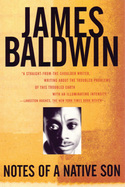
    Baldwinnotes Author and essayist James Baldwin died 20 years ago on Dec. 1.

    Baldwin's biographer and close friend, David Leeming, called his essays "prophetic," as they articulated an eerily clear-eyed view of America's peril at the hands of what, in Baldwin's day, was politely called the "race problem."

    Perhaps Leeming has it right and Baldwin was a soothsayer. But a more plausible explanation is that Baldwin's work remains contemporary because America's racial caste system changed so little over the generations that his writing spans.

    Baldwin considered race America's poison pill. And he deftly portrayed Americans of all colors struggling to concoct their own individual antidotes—solutions that are temporary at best and always crazy-making because, at root, the problem is structural not individual.

    Today, we still have not reached Baldwin's understanding of race and racism. It remains a collective problem that we insist upon dealing with on an individual basis. As a result, even our greatest triumphs—the end of legal segregation, broadened opportunity for the slim black middle class—are undermined by broader forces.

    (more…)

  • Chimpanzee photo by MartinOC
    Last summer, around the time that Leona Helmsley’s dog inherited 13 million dollars, an Austrian chimp named Hiasl got stiffed. Hiasl stood to come into a few thousand Euros, but a court ruled that he could not own property, being a chimp and all. (Technically, the Helmsley dog does not own her millions either; Trouble Helmsley inherited her money through a human proxy.)

    Surely, Hiasl’s advocates could have found the same sort of legal workaround to provide him the stipend he needed for his upkeep in a shelter. But the activists wanted to make a point: why shouldn’t a chimp have some limited rights of person under the law? This summer, a judge outside of Vienna weighed the question of whether a chimp might be human enough to own property. If he won, Hiasl himself would receive the money, although his legal, human guardian would make all financial decisions.

    And here’s the thing about chimps with money: while a dog like Trouble can’t grasp the idea of currency at all, a chimp might actually be capable of shopping. The great apes can use language; and some researchers believe they can string together sentences. Furthermore, they understand the fundamentals of market exchange. Econ 101: I give you the dollar bill; you give me the banana.

    (more…)

  • In Defense of Childhood
    A national study just released by the National Endowment for the Arts warns that the sustainability of American culture is at risk because our society is turning more and more toward electronic media for information and entertainment and we are reading less and less as a result. Big surprise, right? However, as NEA Chairman Dana Gioia comments in the preface to "To Read or Not to Read: A Question of National Consequence," we all should be shocked by the magnitude of the decline of reading for pleasure in this country, especially among young people.

    Among the study’s more dire findings:

    • Only 30% of 13-year-olds read for pleasure on a regular basis.
    • The number of 17-year-olds who never read for pleasure increased from 9% in 1984 to 19% in 2004.
    • The average American between ages 15 and 24 spends only 7 minutes a day reading and half never read books for pleasure.

    There are numerous causes for alarm, says the NEA. To begin with, a strong correlation exists between reading for pleasure and overall reading proficiency. Reading test scores for 9-year-olds—who show no declines in voluntary reading—are at an all-time high, while scores for 17-year-olds began a steady downward trend in 1992. Today, little more than a third of high school seniors read proficiently and even among college graduates reading proficiency is declining at a 20-23% rate.

    (more…)

  • The Broadside took a couple of days off for turkey, stuffing, and family fun. We’re back today with a reminder of why we shouldn’t spend our holiday shopping dollars without thinking about the impact of our choices.

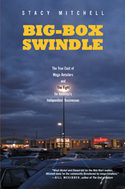
    Big Box Swindle by Stacy MitchellWhether to patronize a chain or a locally owned business is not top of mind for many holiday shoppers, but it should be.  It’s a choice that has profound implications for our economy.

    If you shop at an independent toy store, such as Be Beep in Annapolis, Maryland, you will likely see products made by Beka, a small toy manufacturer in St. Paul, Minnesota.

    A family-owned business, Beka has opted not to sell to chains like Target and Wal-Mart. Doing so, explains co-owner Jamie Kreisman, would require moving production to low-wage factories overseas, which would eliminate what he and his brothers most love about the business: their relationships with their employees and working hands-on with their products.

    Beka is healthy, but its future depends entirely on the survival of independent toy stores. Over the last decade, Wal-Mart and Target have aggressively overtaken this sector and now capture 45 percent of U.S. toy sales.

    (more…)

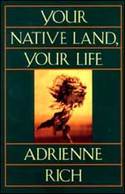
  • AdriennerichYou can find Adrienne Rich in anthologies of Jewish American poetry, but most of her many admirers do not think of her first (if at all) as a Jewish poet: they think of her as a feminist poet, as a political poet, as a GLBT activist, as a talented artificer in traditional metrical forms (during the 1950s) as a maker of  harshly original free verse (during the 1960s), as a woman who challenged herself to overcome "the fact of being separate" (as she put it in the early 1970s) in order to speak to and about other people’s needs. Though Rich’s father was Jewish (as was her late husband), she did not identify herself with any religion for most of her writing life: in high school, she recalled, "I am quite sure I was seen as Jewish (with a reassuringly gentile mother) in that double vision that bigotry allows." Her ambitious, assimilationist father, however, "did not give me the choice to be a Jew."

    Rich’s 1982 essay "Split at the Root," from which those sentences come, describes her long-delayed decision to call herself Jewish in print. If you read Rich’s poem "Jerusalem" (1966) you will see her view religious heritage as an excuse for violence and a trap: "What I dream of the city," she writes, "is how hard it is to leave." An even earlier poem, "At the Jewish New Year," insisted on Rosh Hashanah that "this day is merely one/ Of thirty in September," and that "whatever we strain to forget/ Our memory must be long": "we" here means not Jews but assimilated Jews, Jews who want to distance themselves (but cannot distance themselves enough) from their shared religious past.

    Rich’s later poems, by contrast, show her reclaiming Judaism as something to which she says she might want to belong. These poems often address the Baltimore family in which she grew up. "Grandmothers" (1980), for example, pays belated tribute to Hattie Rice Rich, the poet’s father’s mother, whose "sweetness of soul was a mystery to me," but in Rich’s youth "a convenience for everyone": "you rose with the birds and children, boiled your own egg," "took the street-car downtown shopping/ endlessly for your son’s whims, the whims of genius," and "All through World War Two the forbidden word/ Jewish was barely uttered in your son’s house."

    (more…)

  • 6523_2Singles during the Thanksgiving and Christmas/Hanukkah seasons—quintessential family holidays in the U.S.—are stereotyped as lonely, isolated and pathetic. While popular entertainment is now as likely to depict family conflict as well as joy during the holidays, we have noticeably fewer images for singles.

    Contrary to stereotypes, my study of long-term, middle-aged single women, found little holiday loneliness and angst. Many of these baby boom single women have large families. They range from Wynona, a divorced single mother in her fifties with four grown children and seven grandchildren to ever-single Emily, in her late thirties with no children of her own, but with meaningful ties to her five siblings and their children.

    For other single women with fewer family members—or family who live far away—holiday tension focuses on building new traditions with friends in a culture where friendship is more fluid and less valued than family relationships. I discovered that a network of supportive friends is one of the most important factors that lead to satisfaction with single life. But, at the holidays, family obligations still trump any commitment to friends. Rather than being isolated, single women often face conflicts that are both similar to and different from those in family-based holidays. My own experience is a good example.

    (more…)

  • Closing the Food Gap by Mark Winne
    Mark Winne, author of Closing the Food Gap: Resetting the Table in the Land of Plenty, will be participating in a live chat about the shortcomings of our food bank system today at 1PM ET on the Washington Post website.

    The discussion is related to his opinion piece from yesterday’s WaPo about the problems of food banks and our lack of attention to the underlying causes of poverty. He draws on his experiences in the Hartford food bank system to illustrate the waste inherent in the system and to suggest that we redirect some of our energies to trying to end poverty instead:

    My experience of 25 years in food banking has led me to conclude that co-dependency within the system is multifaceted and frankly troubling. As a system that depends on donated goods, it must curry favor with the nation’s food industry, which often regards food banks as a waste-management tool. As an operation that must sort through billions of pounds of damaged and partially salvageable food, it requires an army of volunteers who themselves are dependent on the carefully nurtured belief that they are "doing good" by "feeding the hungry." And as a charity that lives from one multimillion-dollar capital campaign to the next (most recently, the Hartford food bank raised $4.5 million), it must maintain a ready supply of well-heeled philanthropists and captains of industry to raise the dollars and public awareness necessary to make the next warehouse expansion possible.

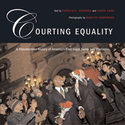
  • Courting EqualityAs we approach the fourth anniversary of Goodridge v. Department of Public Health, the Supreme Judicial Court decision that granted marriage equality to same-sex couples in Massachusetts, I find myself reflecting on the profound impact of this decision in my life. Before November 18, 2003, I had not considered marriage as anything more than an outdated, sexist institution. With the energy of the spurned outsider, I rejected marriage and all its trappings. I had no expectation that, in my life time, same-sex couples would be allowed to participate in this exclusively heterosexual ritual.

    So it is with utter surprise that I find that the last two and a half years of my life have been "all marriage, all the time": first writing Courting Equality: A Documentary History of America’s First Legal Same-Sex Marriages—and then, over the last six months, talking about marriage equality to audiences from Portland, Maine, to Blue Ridge, Georgia. What’s clear to me, from all these conversations, is that the marriage equality movement is changing the landscape for same-sex couples and their families across America.

    (more…)