• DewolfAmericans love to celebrate. We commemorate historic events (Thanksgiving, Independence Day) and people (Presidents Day, Dr. Martin Luther King, Jr. Day). But few are aware of the significance of January 1, 2008: the 200th Anniversary of the abolition of the slave trade in the United States. We tend to remember the end of the institution of slavery as one result of the Civil War. African Americans have commemorated Juneteenth, a celebration of the day, on June 19, 1865, when slaves in Texas were finally told about the Emancipation Proclamation two and a half years after it was implemented. But America has all but ignored the date that marks the end of the slave trade.

    This past year, Great Britain spent the equivalent of $40 million to remember their 200-year old abolition law from 1807. They educated students, invested in museums and commemorative services, and considered the legacy of slavery and the impact it still has today. They taught anew the heroic actions of historic figures like Wilberforce, Newton, Equiano, and Clarkson, who led England’s fight to end their evil commerce in human flesh.

    Here in the United States we are doing precious little to mark the occasion of our equivalent historical watershed event. To my knowledge, the only official action toward commemorating the date, a bill to establish a commission to “ensure a suitable national observance of the bicentennial anniversary of the abolition of the transatlantic slave trade” (H.R. 3432), was introduced in August 2007, passed in the House (October) and the Senate (December 19 ), but with all funding eliminated. It remains to be seen whether this remains an ineffectual symbolic gesture or if funding will be forthcoming in 2008, obviously after the January 1 anniversary. Beyond that, the only government-sponsored event planned, of which I'm aware, is a public symposium hosted by the National Archives on January 10.

    One can reasonably argue that the law to end the slave trade was less than effective. Enforcement efforts were often half-hearted; those who continued trading illegally did so with vigor, particularly prior to 1820 when the penalty for conviction of slave trading became death. (Even this change to the law was largely toothless, as the penalty was only applied once, during the Civil War). Yet the 1808 law was a turning point. It helped energize the abolition movement and provided government affirmation that slave trading was not only immoral but criminal.

    (more…)

  • The Altar at Central Moravian Church in Bethlehem, PA

    This time last year, I was headed to Bethlehem

    Bethlehem, Pennsylvania, that is.
    As part of a year I spent worshipping at a different Protestant church each
    Sunday to research my book, Sundays in America: A Yearlong Road Trip in Search of Christian Faith,
    Bethlehem seemed the perfect choice for a service on the Sunday that was
    Christmas Eve, 2006.

    Shea2Growing up Catholic, I was warned time and again never
    to enter a Protestant church. I would be headed straight to hell, I was told,
    right after the roof caved in on me. I’m thrilled to say I lived to tell the tale
    of my year of visits, and that Sundays in America will be published by Beacon
    Press in March of 2008. I’m now looking back on what was a fascinating year of
    travel and services from coast to coast, and out to Hawaii.

    My trip to Bethlehem last Christmas Eve Day included worship at Central Moravian Church in
    what’s now known as Christmas City USA. The city of
    Bethlehem
    was founded on Christmas Eve, 1741, by Nicolaus Ludwig Zinzendorf
    of Germany and a group of
    Moravians who named the hilly spot after the Biblical village in Judea. If 1741
    sounds eons ago, consider that the Worldwide Moravian church was founded 449
    years ago, in 1457. That’s 60 years before Martin Luther nailed his thesis to a
    church door and one hundred before the Anglican Church began. From the start, Moravians flocked to
    missionary work, often finding themselves in forgotten corners of the world.
    (The contingent that founded Bethlehem was interested in saving the souls of
    Native Americans and unchurched Colonists.) As a result, more than a quarter of
    its current 600,000 members worldwide live in Tanzania.

    Shea1If you want to
    worship with the ones in Bethlehem, Christmas Eve is an excellent time to do
    so.  I hope you get to hear the dozen
    members of the bell choir who chimed in with hymns prior to the service I
    attended last Christmas Eve Day. In her sermon, Pastor Carol A. Reifinger talked
    about Christmas in Tanzania,
    where the preparations take all year and new shoes for Christmas worship are
    the big thing. In Tanzania,
    she said, the faithful say, “If we are going to see Jesus, we must look our
    best.”

    Pastor Carol reminded
    the congregation about the expansiveness of the Christian faith. “You can’t put a fence around Christianity,”
    she said that morning. “What is the Christmas story but the hovering of peace
    above a dark and conflicted world?”

    SheasundaysinamericaSuzanne Strempek Shea,winner of the 2000 New England
    Book Award for Fiction, is the author of five novels, Selling the Lite of Heaven , Hoopi Shoopi Donna, Lily of the Valley, Around Again
    ,
    and Becoming Finola, and the memoirs Songs from a
    Lead-Lined Room
    ,
    and Shelf Life. Her next book, Sundays in America, from which she adapted this post, will be released by Beacon Press this coming
    Easter. She lives
    in Bondsville, Massachusetts, and sells books at Edwards Books in Springfield, Massachusetts.

  • Hajj1_4

    As millions of Muslims around the world converge on Saudi Arabia to perform the Hajj, I want to share with you the story of millions of women in Mali, babies in tow, who recently made their own hajj.  Muslims go on Hajj to Mecca, Saudi Arabia, to save and purify their souls and to fulfill a major religious right.  These Malian women made a pilgrimage to health centers across Mali to get bed nets to save their childrens’ lives.

    Eid-ul-Adha, or the Feast of Sacrifice, marks the Hajj season. It commemorates
    the time that God, in the ultimate test of faith, asked the Prophet Ibrahim to sacrifice
    his son, Ismael. Ibrahim wrestled with
    God’s request of him, but when Ismael heard what had been asked of his father,
    he demanded that Ibrahim surrender to the God’s will; as Ibrahim prepared for
    the sacrifice, Ismael comforted his father and encouraged him to close his eyes
    to make it easier. As Ibrahim touched the sword to Ismael’s throat, in an act
    of God’s infinite mercy, Ismael was transported to safety and a sheep was
    slaughtered in his place. Millions of Muslim slaughter animals during
    Eid-ul-Adha to remember Ibrahim and Ismael’s willingness to surrender to God’s
    will and God’s mercy.

    Ismael’s mother also
    figures prominently in the primary text of Islam. Ibrahim was an elderly and
    childless man by the he time he took Hajar as a junior wife. When Hajar finally
    gave birth to their son, Ismael, the miraculous birth was received with great
    joy and happiness, but soon after God asked
    Ibrahim to leave Hajar and and the infant Ismael in a distant, isolated desert
    location. Mother and child quickly depleted their small supply of water and a
    few dates. Realizing that her life and the life of her baby depended on finding
    sustenance, Hajar called out to God for help. No answer. She ran to a nearby
    mountain named and called again to her Lord for help. She ran in the valley to the next mountain, ,
    calling on God for sustenance. Seven
    times, she ran back and forth, praying all the while to God for help. At last,
    an angel appeared in human form and kicked his heels in the dry desert
    sand. Up from the spot he furrowed into
    the desert floor sprang a well of water, which immediately nourished Hajar and
    her son. The story is a powerful example of how a woman, relying solely on her
    faith in God, saved her life and the life of her son.

    (more…)

  • Lane
    Forty or so years ago, a U.S. Senator from Vermont by the name of
    George Aiken wisely advised both Lyndon Johnson and Richard Nixon that the United States should simply declare victory in Vietnam and bring its troops home. Unfortunately, neither listened to him. His advice,
    sadly, is still relevant. When President George W. Bush landed on the USS
    Abraham Lincoln in 2003 and declared "Mission Accomplished," he only
    got it half right; he overlooked the bit about bringing the troops home.

    And then there’s Bill O’Reilly, the bombastic host of Fox News’s "The O’Reilly Factor," and
    a cultural warrior who finally seems to have taken Aiken’s advice to heart. In
    the December 13 episode of his show, O’Reilly announced that Fox News had won
    the so-called "war on Christmas." Well, that is a relief. The only
    question is whether O’Reilly will follow all of Aiken’s advice and call home
    the Fox troops scouring the countryside for the last signs of the
    anti-Christmas resistance.

    "The
    far left secular progressive community is furious, furious, I tell you about
    losing the war on Christmas…. [A]ll over the country, the sights and signs of
    Christmas are on display. Few department stores are telling employees not to
    say a ‘Merry Christmas.’ And the Taliban-like oppression of the holiday has
    largely ceased, but the SPs are not happy about that."

    (more…)

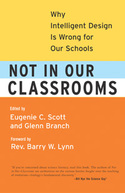
  • Branch I send a lot of e-mail in the
    course of the average day, and ordinarily nobody is fired as a result. But I’m
    not always so lucky.

    I work at the National
    Center for Science Education
    , a non-profit organization that defends the
    teaching of evolution in the public schools. Even eighty-two years after the
    Scopes trial, that’s a job that keeps us busy. In a 2005 survey
    conducted by the National Science Teachers Association, for example, 30% of the
    science teachers responding indicated that they experienced pressure to omit or
    downplay evolution and related topics, while 31% indicated that they
    experienced pressure to include nonscientific alternatives to evolution, such
    as “creation science” or “intelligent design,” in their science classrooms.

    Sometimes the pressure isn’t so quiet, either. In 2004,
    after efforts to have a creationist textbook adopted were stymied, a
    creationist majority on the school board in Dover, Pennsylvania, passed a
    policy misleadingly describing evolution as “a theory … not a fact” and
    recommending “intelligent design”—the latest incarnation of creationism—as a
    scientifically credible alternative, and tried to force the science teachers to
    read a disclaimer to that effect.

    (more…)

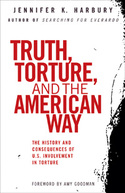
  • Truth, Torture and the American Way by Jennifer Harbury
    The issue of water-boarding has become quite the political
    flashpoint in recent weeks. First there was an uproar when Michael Mukasey, now
    our Attorney General, stated his uncertainty as to whether or not this “interrogation”
    technique constituted torture. Shamefully, he is not alone. Many officials in
    our intelligence community insist that it does not. (Perhaps they should give
    it a try.) Next, Congressional leaders urged that this and other special CIA
    methods be banned for good, with predictable protests from the White House. Now
    we learn that the CIA has destroyed secret videotapes of two high value
    detainees being subjected to water-boarding. Jose A. Rodriguez Jr., who gave
    the order, is a colleague of Terry Ward, who covered up my husband’s ongoing
    torture and eventual murder in Guatemala years ago. There are too many historical ironies here.

    To begin with, the sanitized and highly deceptive language
    being used should itself be banned. Duping the American public is hardly the
    proper solution to international charges of war crimes. Our intelligence
    leaders tell us that water-boarding consists of placing a cloth over the
    prisoner’s face, then pouring water over him until he "thinks he is going to
    drown." This sounds like little more than a scare technique. The description is
    so benign, in fact, that one wonders how the method could convince any prisoner
    to talk.

    A number of my friends survived water-boarding sessions in Latin America, and they give a rather different description. As my friend "O," a former POW in Guatemala tells me, his army
    tormentors immersed him in a vat of water. He tried desperately to hold his
    breath, but finally the water rushed into his head, causing terrible pain. He
    remembers gagging and choking, and a mounting pressure that made him think his
    eardrums would burst. He felt himself vomiting and going into convulsions. He
    awoke on the floor to find his torturers administering CPR. We shared this
    description with the United Nations Committee Against Torture last year. The
    Committee members had no difficulty in declaring this technique a form of
    torture, and banning it outright. Senator John McCain, himself a torture
    survivor, has long said the same. Water-boarding is a slow and very painful
    mock execution, in short, "exquisite torture."

    (more…)

  • Mitt Romney’s speech on Faith in America was both encouraging and disappointing. I appreciate the tone of his speech and the fact that he seriously addressed the issue of religious liberty. I commend him for clearly stating that religious tolerance is not reserved only for faiths with which we agree and for warning against imposing a religious test on any candidate for public office.

    At the same time, I’m concerned with how much of the speech was designed as red-meat for conservative Christian voters. He equated the right to life movement with the struggle for civil rights and abolition. He warned of the secularist boogeyman who would take religion out of the public square. And he completely ignored the values, rights, and contributions of millions of non-religious Americans.

    By saying, “freedom requires religion, just as religion requires freedom,” Mr. Romney showed a clear misunderstanding of American history, our Constitution, and the nature of religion. Fortunately, those who founded this nation and wrote the Constitution understood that freedom would endure and religion would thrive only if the institutions of religion and government were kept separate. Too many of our elected officials today believe in their religious freedom but not yours; they want to use government to impose their narrow religious values on the rest of us.

    (more…)

  • Doctors of Conscience
    After nearly seven years of the George W. Bush presidency and its regressive sexual and reproductive politics, it is no surprise that this administration continues to staunchly support "abstinence-only sex  education."  The fact that study after study—including one commissioned by Congress itself has shown these programs to be ineffective does not trouble this president, who, in the face of inconvenient findings, has consistently allowed  ideology  to trump science.  Whether the issue is global warming or weapons of mass destruction or condom effectiveness, this administration is infamous for, as a Bush administration official—famously and unapologetically—put it, "creating its own reality." (New York Times magazine, October 17, 2004).

    And it is no surprise that the Republican candidates for president support abstinence-only programs. This issue remains of great symbolic importance to the Religious Right base of the Republican Party. Though some observers say this movement is in decline, evangelicals remain very influential in the nominating process (witness Mike Huckabee’s recent meteoric rise), and candidates cannot afford to offend them on this issue. (And to be sure, abstinence-only is more than just symbolically important to many on the right; as The Nation so ably detailed, in "The Abstinence Gluttons," those  who receive  contracts to deliver these programs are raking in millions).

    But Democrats supporting "abstinence-only," especially after the November 2006 election, when they regained control of the House and Senate?!  A powerful Democratic committee chair proposing to give even more to these programs than the Bush administration has asked for?!  No, this is not a Saturday Night Live or Jon Stewart parody. This is Washington politics. In a move that stunned advocates for "comprehensive" sex education—that is, programs that include discussion of both abstinence and birth control options—Congressman Dave Obey of Wisconsin, the chair of the House Appropriations Committee, proposed increasing by $28 million the current abstinence-only allocation of $113 million. Obey made this move in order to lure Republican votes for Congress’s main domestic spending bill.    (In fairness, an equal increase was suggested for Title X, a federal family planning program that has been consistently under-funded during the Bush years.)

    (more…)

  • The Court and the Cross
    Last week, Republican presidential candidate Mitt Romney traveled to
    College Station, Texas, to deliver a major address on faith to an
    audience at the George H.W. Bush presidential library. Given the fact
    that the speech was so clearly an attempt to emulate President John F.
    Kennedy’s famous speech on faith forty-seven years ago, it’s a little
    surprising that Romney didn’t deliver the speech at the Kennedy
    Library in Boston instead. But context is everything, and the backdrop
    of the Boston skyline would not have been reassuring to Romney’s true
    audience—Christian evangelical voters who have grave reservations
    about electing a Mormon (and former Massachusetts governor)—as
    president.

    It is not likely, however, that Romney’s speech will resonate as
    deeply into history as Kennedy’s has. That’s not entirely Romney’s
    fault, of course: Kennedy was a particularly charismatic speaker, and
    no candidate since, with the possible exception of Ronald Reagan, has
    had such eloquent speechwriters. But Romney and his campaign are
    certainly responsible for his speech’s two main failings: its timing,
    and its content.

    Romney enjoyed little of the drama surrounding Kennedy’s speech to
    Greater Houston Ministerial Association (GHMA) on September 12, 1960.
    The hotly-contested election between Kennedy and the Republican
    nominee, Vice-President Richard Nixon, was less than two months away.
    Kennedy was vying to become the nation’s first Catholic president, and
    had endured months of insult, including repeated charges that the
    Kennedy White House would be subject to the orders of the Pope.
    Kennedy’s stirring affirmation of his independence and America’s
    commitment to religious freedom were a stern reminder to the nation’s
    Protestant majority in general and the GHMA in particular that no one
    in this country should be the target of religious intolerance. And
    unlike Romney, who chose a safe venue for his oration, Kennedy strode
    onto a stage in front of some his most skeptical critics.

    (more…)

  • Lisa Couturier is the author of The
    Hopes of Snakes & Other Tales from the Urban Landscape
    (Beacon Press,
    2006), a collection of essays that explores the relationship between the human
    and the nonhuman. She holds a master's degree from New York University and is a
    former articles editor and environmental writer. Her articles and essays have appeared in
    numerous national magazines and anthologies. In 2006 she was listed as a
    notable essayist in Best American Essays. She lives within the Agricultural Reserve in
    the countryside of Maryland.

    Couturier
    Being the holiday season, it's a good time to share stories. I'd like to tell the story of my friends who
    congregate in our city near the Bed, Bath and Beyond. They know a good deal when they see it and will follow one another from Bed, Bath and Beyond to a free doughnut here or some French fries there, which will prompt them to fight and chase and play and scream at one another. Though they prefer to sleep in the city this wintry time of year, they spend the daylight hours out where I live now, in the country, where they work in the cornfields and in the woods. They commute, like many of us. A good chance to visit with them is in the late afternoon, when, on their way home, they stop here and there in and around the city's strip malls, where, though generally it's a good idea to avoid such chaos, I also occasionally stop, and spend time
    with my friends—these resourceful commuters, the crows.

    I have two kids: I do a lot of stopping along the long list of things to do and places to be that my life has become. But stopping can be good. It forces me to attend to what is there. My daughter Madeleine’s ballet school, which was and still is buried behind franchise restaurants, boutiques, and the usual smattering of mega-stores, was also near Starbucks—how convenient—for my fill up of gingerbread latte. And of course the ubiquitous Bed, Bath and Beyond. It was after my scurrying through the autumn rains and winds, from store to store, with my younger daughter Lucienne, first as a baby, then a toddler, then a preschooler, in the carriage, on my hip, or riding piggy back, and it was after stocking up like a mama squirrel on all the treats the city stores offered, that Lucienne and I came to a different sort of stopping. While Madeleine pirouetted into the early evening, Lucienne and I piled our packages into our car parked behind Bed, Bath and Beyond, where we could sit. Where we could sip latte and suck lollipop. Where we could visit with our friends the crows.

    (more…)