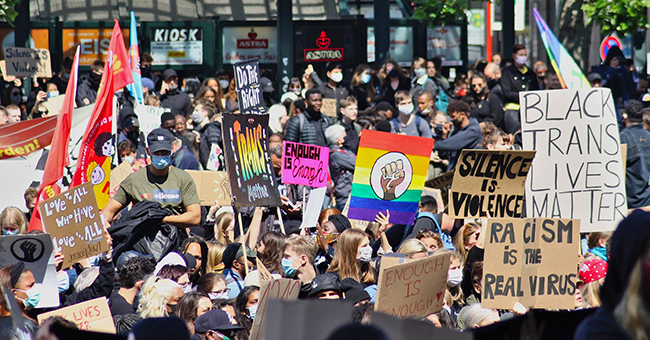
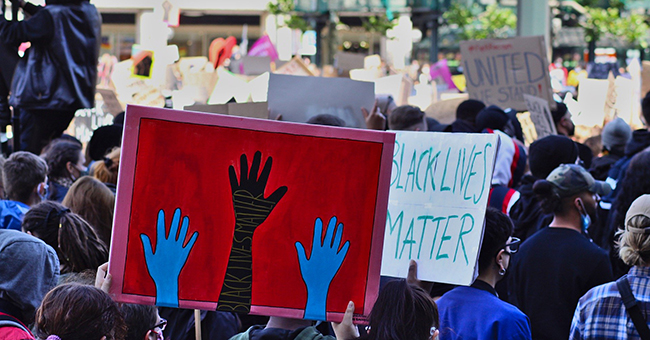
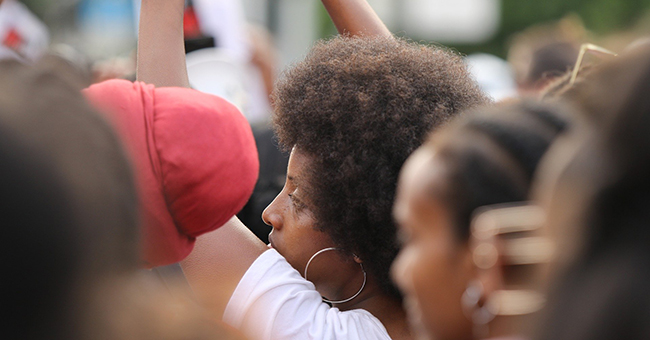
• Black Lives Matter protestors. Photo credit: Patrick Behn

    Black Lives Matter protestors. Photo credit: Patrick Behn

    We support our authors, Black communities, and all those fighting against racial injustice and police violence. We can’t stop thinking of the murders of George Floyd, Breonna Taylor, Ahmaud Arbery, Tony McDade, and of too many Black lives before and after them, and as such, we recognize this is an extremely traumatic time for many. This is exacerbated by the fact that the coronavirus pandemic rages on, disproportionately affecting communities of color. We remain committed to publishing resources to help expose and dismantle the systems of white supremacy and the carceral state. With this in mind, we put together this list of racial justice resources.

    Antiracism is a lifelong commitment. These resources are a good starting point, but remember that BIPOC (Black, Indigenous, and people of color) have been suffering in this country for centuries before you decided it was time to get involved. Don’t expect your Black friends, colleagues, or acquaintances to do the emotional labor for you, or to instruct you on how to behave. Channel your grief and outrage beyond the internet. Educate yourself. Read Black authors. Support Black communities. And if you are white, get uncomfortable with your privilege. There is a lot of work to be done.

    ***

    Donate


    Check Your Privilege

    This is a collection of resources for white people to educate themselves and to further deepen their commitment to antiracist work.

    Reach Out to Your Elected Officials

    This public database lists contact information to help you connect with your political representatives to demand action and accountability.

    Support Protestors

    These websites allow you to find a local chapter or organization to work with, be it virtually, monetarily, or in person.

    Support Black-Owned Bookstores

    You can show support for the ongoing protests against police violence by buying books from any of these Black-owned bookstores.

    Listen to Others Doing the Work

    This is a small collection of work from Beacon authors writing about systemic injustice, racial inequity and police violence in this country. Use these pieces as a starting point to do your own research, and to find other authors and activists who are doing anti-racist work that resonates with you.

    • A Warrant to Search Your Vagina, Andrea Ritchie’s New York Times op-ed, exposes the ways women of color are targeted in drug cases and subject to abuse or assault by police officers
    • When Police Stand Their Ground by Caroline Light, explains the robust legal immunities that 'Stand Your Ground' grant to law enforcement professionals

    Educate Yourself

    We have collected a list of titles from our catalog that amplify Black voices, examine this country’s history of systemic racism, and show us how we must work to dismantle these systems.

  • By Philip Warburg

    Airplane seats

    Photo credit: Ty Yang

    Despite its momentous impact on global warming, air travel continues to fly beneath our environmental radar. Plastic straws and idling cars draw righteous ire, but how many of us take to the skies with unthinking abandon?

    Left unabated, commercial aviation by mid-century may produce up to a quarter of the carbon emissions that our planet can tolerate if we are to avert the more devastating impacts of climate change.

    In a recent Beacon Broadside post, I pointed to the current lull in plane flights as a time to reflect on air travel’s place in a post-pandemic world. Responses to this article were passionate and widely varied.

    One friend, Michelle Graham, is the administrator of a large commercial wind farm in Cloud County, Kansas. Though she took her son on a salmon-fishing trip to Alaska to celebrate his high school graduation several years ago, she and her husband Bruce seldom venture far from the family farm, Bruce’s childhood home and the place where he and Michelle raised their three kids. “We are willing to never fly again🙂,” she wrote, perhaps only half in jest. 

    At the other end of the spectrum is Lakshmi Reddy Bloom, born in Bangalore, India, a friend I met in graduate school here in the United States. “It hit me with a loud, ‘jumbo-jet-sized’ thud that I am a person whose entire life has been defined by movements across the globe,” she admits. Aside from her husband and two adult children in America, her closest family members “are scattered across the globe and are only embraceable after a long plane journey.” Her greatest sadness these past months came with the cancelation of a planned visit to Bangalore for her mother’s ninety-first birthday. “The smells, the sounds, the joy of that physical togetherness . . . I do not believe there is a virtual substitute.”

    Lakshmi makes it clear, though, that her devotion to plane travel goes beyond maintaining family ties. “It has also enabled me to become the person I truly am, someone who deeply believes in the goodness of people and in their fundamental similarities. I have had the privilege of traveling to far corners of the world and eating, drinking, talking, and laughing with people of all walks of life.” She recalls the young mother in Beijing whom the Communist Party assigned to her family as a guide while her husband David, an economist and demographer, attended a health policy conference. Three days passed before the guide revealed her distress at being separated from her newborn child. “Her pain is with me to this day,” Lakshmi acknowledges.

    Then there was Lakshmi’s visit to the Vatican. “I shook hands with the Pope! I found myself in tears, trying to summon up something to say to him after his moving speech about the importance of education that can transform the work of the hands, the heart, and the mind.”

    Next Lakshmi recalls a family in Mexico, hosts to her daughter, Sonali, on a study trip abroad. The visits continued in both directions, and the family, Lakshmi says, has become “our family.” She owes these bonds to jet travel. “I couldn’t have come to truly know them—so that I hold them close to my heart—without this.”

    The Blooms’ son, Sahil, has a less idyllic view of jet travel, at least as it relates to his work as vice president of Altamont Capital Partners, a private equity firm in Palo Alto, California. Before COVID-19, his travel schedule was relentless. “Last year, I made twelve separate trips to Europe, as well as countless domestic trips, generally spending three to four days per week on planes to different locations,” he says. “I accumulated something like 400,000 miles on United [Airlines] last year alone.”

    Sahil readily tallies the monetary and human toll of his European trips. “Each of these trips would cost about $20,000 (flights, hotels, food, etc.) and take a week of my life. I had twelve such trips last year for a total cost of about $240,000 and twelve weeks of life.” The wasted time and money were enormous.

    This changed radically once COVID-19 brought domestic and international travel to a near-halt. “During the lockdowns, I have been able to accomplish the same such meetings in a virtual context in the span of a single day (albeit a tiring one). While it might be perhaps eighty to ninety percent as effective—being in person is always a bit better, on the margin—that is a massive savings of time and expense.”

    Even once a vaccine is developed and travel constraints ease, Sahil anticipates that his long-distance journeys will be cut by about half. “As an industry, we have realized that many of the meetings we forced ourselves to fly to were perhaps unnecessary and could be handled virtually, so I do expect there to be a reset.”

    For some, air travel is the glue that holds far-flung families together. To others, it offers outdoor adventure, natural exploration, a window onto history, and an opportunity to reach across national, cultural, and religious boundaries in search of greater human understanding. To others still, it can be a useful but time-consuming cost of doing business. Whatever the motivation, scaling back air travel will take conscious and conscientious recalibration, aided by our growing awareness that climate change poses a global menace, to be ignored at our collective peril.

    Lakshmi framed this challenge beautifully. “Maybe what you are asking me to do is to commit to love the earth and its inhabitants more, through an investment in their environmental future. And out of love, yes, I can embrace and commit to this . . . . And also work for a future with my nuclear family where we are able to stay in close proximity!”


    About the Author 

    Philip Warburg, a Senior Fellow at Boston University’s Institute for Sustainable Energy, is the author of two books published by Beacon PressHarvest the Wind and Harness the Sun.

  • By Crystal Marie Fleming
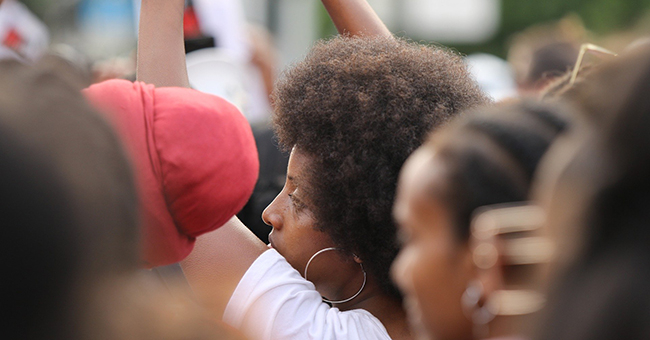
    Black Lives Matter protest

    Black Lives Matter protest. Photo credit: Orna Wachman

    While each person’s individual path will differ, here are ten suggestions for steps we can all take, right now, to build a less racist—and racially stupid—society. Most of these recommendations can also be implemented by organizations, communities of faith, businesses, and other groups that are ready to begin the hard work of undoing racism.

    1. RELINQUISH MAGICAL THINKING.

    This one’s hard. Really hard. But it’s so important that I’m listing it first. People often tell me things like “You’d think our society would be over racism by now!” I want to respond, “Why? Because you’ve been personally working to end it? Or because you thought someone else would do the work you’re not doing?” Listen. I know it’s tempting to wish racism away—to just sort of assume that there’s an inevitability to progress. But if you want to be less stupid about race, you need to let that shit go right now. There is no quick fix for racism. Go back and read that sentence. Then tell a friend. There’s! No! Quick! Fix! None.

    Racial oppression is so intrinsically violent, so ghastly and inhumane, that facing it in its full, catastrophic splendor is almost more than the mind can handle. And so, given that it’s human nature to avoid what’s unpleasant, many minds do not handle it at all. And then there are those who cling to the fantasy that racism can be easily eradicated simply because they’ve never studied it—and so they are unfamiliar with the scope of its historical, economic, psychological, sociological, environmental, and health dynamics.

    If you want to pursue the cause of social justice, give up the need for quick fixes and gird your loins for a long struggle. To sustain your work for the long haul, you’ll have to build up your reserves of resilience, self-care, community care, and courage. You’ll have to nurture your capacity for hope, humor, love, and connection, even, and especially, in the midst of oppression. What keeps me going, personally, is a deep and abiding commitment to spiritual practice and my experience of God’s presence—not in a specific church, temple, or other place of worship but in every face and every situation I encounter in this life. Laughter helps too. As does friendship. And meditation. And spending time in nature. And really good wine.


    2. CRITICALLY ASSESS YOUR RACIAL SOCIALIZATION.

    If you want to be an antiracist change agent, you’re going to have to think long and hard about your own racial socialization. Most of us were not taught to acknowledge the impact of racial ideas, scripts, and behavior on our upbringing and values, but that’s the kind of internal work that’s required for addressing racism. It’s easier to pretend that racism is someone else’s problem, but the truth is that none of us is immune. I like to joke that many whites, perhaps especially liberals, are prone to believing this myth: I am magically untouched by the racist society that socialized me. But there are also minorities who pretend to be exempt from the dynamics of internalized oppression or the scourge of colorism and prejudice. We have all been in the sunken place, and it does us no good to claim otherwise.

    Although these questions are primarily geared toward white women’s racial consciousness-raising, I think they could be useful to folks from a wide variety of backgrounds—including people of color. Examples include

    • When were you first aware that there was such a thing as race and racial differences? How old were you? Recall an incident if you can.
    • What kind of contact did you have with people of different races?
    • How did you first experience racism? From whom did you learn it? How did it function in your perception of yourself?
    • When were you first aware that there was such a thing as anti-Semitism?
    • What kind of messages did you get about race as you entered adolescence? Did your group of friends change?  
    • When you were growing up, what kind of information did you get about Black people through the media? How much of it was specifically about Black men?

    The more aware we are of our racial socialization, the more empowered we are to challenge our biases and our conditioning. This is life-long work, and I recommend using the tools of mindfulness and meditation to cultivate compassion for yourself and others as you embark on this journey.


    3. START OR JOIN AN ANTIRACIST STUDY GROUP AND SHARE WHAT YOU LEARN ABOUT SYSTEMIC RACISM.

    Making a long-term commitment to challenging racism also requires a lifetime of learning. Even as an educator and an expert on racism, I am constantly seeking out new information to address gaps in my knowledge and am humbled by how much more I have to learn. Just the other day I learned that the first Europeans were brown-skinned Africans who arrived from the motherland forty thousand years ago and that “white” or pale skin did not become widespread among Europeans until about eight thousand years ago. This completely upends our conventional thinking about whiteness and Europeanness. Recent DNA analysis also indicates that the first British settlers had dark skin, dark curly hair—and blue eyes. I mean, damn. The more you know.

    If you have a leadership role in an organization, institution, or corporation you can help by investing in educational resources. As part of your antiracism curriculum, be sure to integrate an intersectional approach. Antiracists must draw connections between systemic racism and other axes of domination (e.g., class oppression, (hetero)sexism, and ableism to name a few). As you commit to learning about systemic racism, you should also think critically about the links between racial injustice, capitalist oppression, and sexism.

    Look into your local histories of slavery and abolitionism to get a sense of whether and to what extent racist violence, segregation, or restrictive covenants favored whites and excluded people of color in your town. Just as important? The history of antiracist struggles and mobilizations in your locality. Were there activists or rebellions that stood up against the racial power structure? Take a trip to your neighborhood library or bookstore (assuming it has not yet been put out of business by Amazon) and see what you can find out.

    As you learn about systemic racism, you can begin to take an active role in combating racial denial by raising racial awareness (and most importantly, racism-awareness). Think about your own community and social connections and look for opportunities to share resources.

    Consider bringing in antiracist experts and activists to educate members of organizations to which you belong. Through consciousness-raising, we can collectively move from an epistemology of racial ignorance to an epistemology of racial awareness.


    4. EMPOWER YOUNG PEOPLE TO UNDERSTAND SYSTEMIC RACISM.

    The question of whether and when to address the harsh realities of racism with children is a tricky matter, but many experts agree that it is important to provide young people with age-appropriate information about the existence of racism. In part, this is because research has demonstrated, time and time again, that children begin to pick up society’s harmful prejudices at an early age. An actionable step might include seeking out educational resources for addressing racism with children. (Hint: Ask them questions about their own experiences and observations before launching into a history lesson!) And, perhaps most importantly, help ensure that children and adolescents in your sphere of influence understand that race is not just about “skin color” or “seeing race.” It’s a systemic problem that’s going to require collective mobilization to bring about enduring change—and youth have an important role to play in dismantling white supremacy.


    5. RECOGNIZE AND REJECT FALSE EQUIVALENCIES.

    The myth of color blindness, which rose to prominence after the civil rights movement, relies on erasing the difference between those who benefit from white supremacy and those who suffer from its pathological effects. The most prominent form of this false equivalency is the dumbass idea of “reverse racism,” the notion that people of color who hold prejudiced views or even behave in a discriminatory manner are “racist” in the same way that white people are racist.

    Of course, anyone can be prejudiced. Anyone can be a jackass. But in a white supremacist society, only people socially defined as white—those who benefit from white supremacy—can occupy the structural position of a racist. With that said, it is absolutely true that nonwhites can perpetuate racist ideas, can cooperate with white supremacy, and can express prejudiced beliefs. Nonwhites can also exercise dominance and oppression along related axes of oppression (e.g., class, gender, sexuality, and ability). But nonwhites, at the present time, do not have the economic or political power to exercise or collectively benefit from systemic racism in the United States, and this, after all, is what it means to be racist. In order to promote the cause of racial justice, antiracists need to recognize and actively reject false equivalencies between dominant and dominated groups.


    6. DISRUPT RACIST PRACTICES. GET COMFORTABLE CALLING SHIT OUT.

    If you’re not making powerful white people uncomfortable, you’re doing antiracism wrong. Many people of color are already accustomed to not only experiencing racism but also bearing the burden of calling the shit out. And quite frankly, we’re tired of this shit. This is particularly true for those of us who study or work in predominately white institutions. Let the record reflect: white supremacy persists, to a great degree, because of white folks’ refusal to aggressively challenge other whites on their racism. Because most whites live highly segregated lives, they typically face great social pressure to maintain smooth relations with white friends, family members, and coworkers—including those who routinely express racist views and behave in a discriminatory manner.

    So, white people: y’all need to team up with your antiracist homies, leverage your social influence, stand up against racist behavior, and be willing to make your racist family members, friends, and/or colleagues uncomfortable. Even more to the point: white folks need to make a proactive decision to do this work, rather than rely on people of color (who are already subject to the terror of racial violence) to pick up your slack and carry the burden of dismantling oppression. Make heroes out of antiracists.


    7. GET ORGANIZED! SUPPORT THE WORK OF ANTIRACIST ORGANIZATIONS, EDUCATORS, AND ACTIVISTS.

    The most intelligent way to address a systemic problem is to approach it systematically, which involves organizing and mobilizing collective action. It’s important to know that we cannot effectively bring about racial transformation through individual action alone—we have to work together with like-minded people. Even if you aren’t a big fan of joining groups, you can certainly learn about and support their work. I recommend identifying organizations that draw intersectional connections between racial oppression, class inequality, and other axes of domination, such as Project NIA (which works to radically reduce the detention and incarceration of young people), Black Lives Matter, the African American Policy Forum, and the Transgender Law Center.

    White readers may want to specifically seek out a white antiracist organization, such as SURJ (Showing Up for Racial Justice). You might support the intellectual and political labor of freedom fighters and radical dreamers organizing to abolish capitalist oppression, prisons, and even the police. If all of this sounds extreme or naive to you (as it did to me, initially), at least take the time to learn more about why imagining a way of relating to each other and solving our social problems without economic parasitism, prisons, state violence, or policing is valuable.


    8. AMPLIFY THE VOICES OF BLACK WOMEN, INDIGENOUS WOMEN, AND WOMEN OF COLOR.

    You may be wondering why I didn’t just say “Amplify the voices of black people and people of color.” Well, the reality is that men’s voices are (still) amplified over women as a matter of course. If we’re going to get serious about disrupting racism, we’re going to need to center intersectionality. This means lifting up and learning from nonwhite women and femmes, particularly disabled women, queer women, trans women, and working-class and poor women of color. We can no longer afford to collectively treat the unique oppression of black women and women of color as a side issue or keep on crowning an uninterrupted series of black and brown men as the spokespeople for the Race Problem.

    Read and support the work of a wide variety of racially marginalized women like Shailja Patel, Sara Ahmed, Janet Mock, Audre Lorde, Lorraine Hansberry, Kimberlé Crenshaw, Ijeoma Oluo, Issa Rae, Mona Eltahawy, and Rokhaya Diallo. Stop treating black women and women of color like afterthoughts. You can challenge a great deal of racial stupidity today simply by centering women’s experiences in discussions about racial oppression. Say our names.


    9. SHIFT RESOURCES TO MARGINALIZED PEOPLE.

    Institutions, organizations, politicians, and everyday citizens can all make it a regular, ongoing practice to look for ways of disrupting the status quo by investing material, cultural, social, and political resources into vulnerable communities. This kind of transformation might take the form of reparations or innovative policy proposals like baby bonds. But it can also look like creating opportunities to hire and increase the salaries of minorities, rolling back the excess greed that drives neoliberalism, expanding the safety net, providing Medicare for all, and ensuring that we invest more in education and our collective well-being than in warfare, policing, and mass incarceration. All too often, businesses, universities, and political groups content themselves with diversity at the lowest levels of power and normalize the continued dominance of white men at the top. This needs to change. Political and economic resources should be redistributed throughout our society—and this includes shifting away from the norm of white male hegemony to a new norm of shared prosperity and diverse leadership.


    10. CHOOSE AN AREA OF IMPACT THAT LEVERAGES YOUR UNIQUE TALENTS.

    When students ask me for direction, I try to convey to them the importance of choosing an area of impact that bridges their interests with their unique talents. But in order to do this, you have to invest some time and energy in self-exploration. Perhaps you have a knack for artistic expression, a facility with numbers, a photographic memory, or an interest in history. How can you leverage your set of skills and talents to help improve society? Answering this question can help you figure out what piece of the social justice puzzle you want to focus on, knowing that you can’t do everything. You should also remember that your answer to this question can change over time. Maybe you get involved with political activism for a while and then move on to empowering communities of color through education or health-care advocacy. You don’t have to be a “single-issue” antiracist, but I do recommend selecting a few areas to build your knowledge and maximize your impact.

    ***

    Want to learn more about taking down white supremacy and becoming more racially literate? Get yourself a copy of Crystal Marie Fleming’s How to Be Less Stupid About Race and read on!


    About the Author 

    Crystal Marie Fleming, PhD, is a writer and sociologist who researches racism in the United States and abroad. She earned degrees from Wellesley College and Harvard University and is associate professor of sociology and Africana studies at Stony Brook University. Fleming writes about race, sexuality, and politics for publications including The RootBlack Agenda ReportVox, and Everyday Feminism, and she has tens of thousands of followers on social media. She is the author of Resurrecting Slavery: Racial Legacies and White Supremacy in France and How to Be Less Stupid About Race: On Racism, White Supremacy, and the Racial DivideConnect with her at crystalfleming.com and follow her on Twitter at @alwaystheself.
  • By Imani Perry

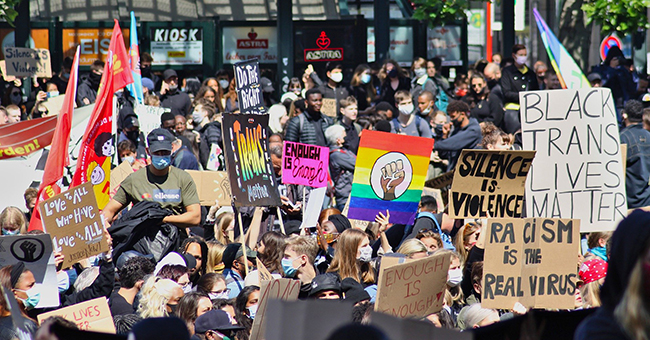
    Breathe

    Image credit: Ekua Holmes

    This article appeared originally on PowellsBooks.Blog.

    I turned eight the year Stevie Wonder’s album Hotter Than July was released. My favorite song from that album was “Master Blaster.” Like most people, I imagine, I called it “Jammin,’” from its refrain, “Nobody ever told you that you / would be jammin’ until the break of dawn.” A reggae-influenced jubilant song, it makes you want to dance and laugh. And I was listening to it, nostalgically, the day before I heard that the former and first Zimbabwean prime minister, Robert Mugabe, had died.

    I cried. Not over Mugabe’s death, but over his loss. Before he was a despot, he was a freedom fighter. In “Master Blaster," Wonder sings, “Peace has come to Zimbabwe / Third World’s right on the one / Now’s the time for celebration / ’Cause we’ve only just begun.” It’s a party song, and a revolutionary one. I was raised a child of leftist intellectuals. So I knew why Zimbabwe was called out in the song, who Mugabe was, and how his political organization, ZANU, beat back the British colonial forces, just as I knew about the New Afrikan People’s Organization in the US South, that shouted the mantra “Free the Land,” and the Sandinistas in Nicaragua, and the ANC in South Africa. Around me, adults talked about Algeria, Guinea-Bissau, Chile, El Salvador, and so on.

    One of the stories that I tell in Breathe: A Letter to My Sons is about me in second grade. A classroom globe had Zimbabwe’s colonial name, Rhodesia, on it, and I told my teacher that the name was incorrect. It was the colonizer’s designation. She taped over it, at my request, and wrote Zimbabwe.

    That was just under forty years ago. And raising children now, I can’t help but think the unfinished or distorted business of freedom fighting from my youth leaves all of us by turns confused, bitter, or confounded. The music is not so hopeful now. And I’m not so sure about where and how to point my kids towards freedom.

    When I was a child, many of my white peers talked about the environment: Greenpeace and the Audubon club. Back then, I was skeptical of them, people who seemed to care more about the trees than human suffering. Now, I know that there is no separation between saving the planet and loving its people. I remember the Iran Contra hearings, the sleazy Cold War deals that fed religious fundamentalism abroad, as well as guns to those who would tamp down socialism in favor of authoritarianism. I remember the sanctuary given to undocumented people in my father’s friend’s church. I remember the rise of crack cocaine before opioids and meth. I remember when good industrial jobs disappeared, dropping the bottom out of working-class Black life, and the Black lung disease settlements for men who had once been proud to work in the mills and mines of Alabama. Thick wads of cash in exchange for breath that grew shallower and shallower until they choked to death.

    This season of reaping is devastating. When I titled the book, Breathe, as many people have guessed, I was thinking of Eric Garner’s dying repetition, “I can’t breathe.” I was also thinking about my own days of sleeping with an oxygen tank when my lupus flared badly. I was born in Birmingham, an industrial city that at the time had the worst air quality of anyplace in the nation, and I carry diseases that are likely evidence of the consequences of that air.

    Despite all of this, I want to remind my children, and all children, to breathe deeply where we can, to hold on to sustenance. It is at once a necessity for life and a form of refusal. Black Americans traditionally say, “As long as I have breath in my body . . . ” before announcing the greatest of commitments. A fight to the last breath. The music that my generation made, hip hop, is about both the mastery of language and the control of breath. Even in the most breathless of circumstances, the task is to hold it, to control it, to make meaning and beauty out of it. Still.

    We’ve failed in so many ways. The nation we Americans live in was founded on a contradiction. As Fannie Lou Hamer once called it, this is the “Land of the Free, Home of the Slave.” After generations of hard-fought correction, the logic of slavery seems to be encroaching more deeply into the fabric of our lives as we idle before our own despotic leader. Trump is worse than Mugabe. There is no moment that we can point to from the past of a once-good self now distorted when it comes to Trump. His past is ugliness: housing discrimination, misogyny, exploitation. Unabashed racism and anti-Semitism. His present is violent chaos here and there and everywhere.

    All of us who are parents, educators, or the family members of young people are leading our children despite evidence that our capacities are limited and our breath is shallow. We have not prepared the table for them as we should. They know that we allow Central American children—their peers—to be ripped from their parents and kept in detention camps, hungry and vulnerable, their trauma growing with each passing day. They may not know, but they should now, that we allow children—their peers—to be locked in cages as punishment for infractions born from poverty and cruelty, kids tried in court as adults and treated as less than human. They know that there are children who sleep on the street, who live in slums, whose lives are grounded down before they even get started. They know the guns are everywhere, and more are made every day.

    Those of us who are unafraid to tell the truth about these failures carry an enormous responsibility. As long as we have breath in our bodies, we must fight with our young for their inheritance: neither status nor a mess of pottage, but a life-giving earth; and the earth itself; and its people; the best ideas; the virtues of justice; the deepest kindness; the examples of love and beauty beyond measure.


    About the Author 

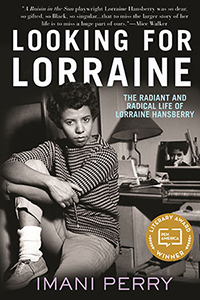
    Imani Perry is the Hughes-Rogers Professor of African American Studies at Princeton University, where she also teaches in the Programs in Law and Public Affairs, and in Gender and Sexuality Studies. She is a native of Birmingham, Alabama, and spent much of her youth in Cambridge, Massachusetts, and Chicago. She is the author of several books, including Looking for Lorraine: The Radiant and Radical Life of Lorraine Hansberry. She lives outside Philadelphia with her two sons, Freeman Diallo Perry Rabb and Issa Garner Rabb. Follow her on Twitter at @imaniperry.

  • By Philip Warburg

    Sky

    Photo credit: Sofia Papageorge

    Before the age of COVID-19, a steady drone of jets could be heard on a typical spring morning outside our home, a dozen miles from Boston’s Logan Airport. Today, we hear a chorus of birds. 

    With air travel down ninety-four percent and half the US commercial plane fleet grounded, members of my family—like millions of other Americans—have sought new ways to communicate and connect. Once the pall of this pandemic has lifted, will we resort less readily to the hypermobility that, until recently, was so integral to our lives?

    Zoom and other online platforms have their frustrating aspects, to be sure, but they have shown us how much we can do without flying across the country or halfway around the world to meetings and conferences. My wife, director of sustainability at an architecture firm, now spends her workdays in a succession of online meetings with coworkers and clients near and far. 

    Would she benefit psychically and professionally if some of those meetings were face-to-face? Certainly. Along with closely observing project sites, she would find it easier to bond informally with her colleagues. At the same time, she appreciates not having to cope with plane trips, jet lag, and all those idle hours in airport lines and hotel lobbies.

    Our family has logged more than its fair share of air miles for personal travel, too. Last year, one of our daughters traveled to Mexico City for a long weekend with a friend. A highlight of that short trip was her visit to Frida Kahlo’s Blue House—an intimate museum featuring the flamboyant artist’s life and work. On Mother’s Day, she treated our whole family to a Blue House tour. Zooming in from a rented cabin in New Hampshire, our virtual docent led us through the rooms and courtyards of Kahlo’s iconic villa while describing the artist’s polio affliction, her love affairs, and the intensely autobiographical focus of her paintings. 

    Was this the same as experiencing all the sounds, sights, and smells of Kahlo’s Mexico City neighborhood? No, but it was its own kind of informed adventure—a mode of tourism that may grow increasingly common as we search for ways to explore this extraordinary planet without racking up thousands of air miles.

    Reducing air travel has a major benefit beyond cost-cutting and time-saving: it will help rein in our out-of-control greenhouse gas emissions. Commercial aviation in 2018 generated 2.4 percent of global CO2 emissions from fossil fuels, with eighty-one percent of those emissions coming from passenger transport. We Americans accounted for nearly a quarter of air miles traveled that year, mainly for domestic flights.

    Extrapolating from recent trends, carbon emissions from commercial aviation are expected to triple by mid-century, consuming twenty-five percent of the global carbon budget that we must not exceed if we are to keep global average temperatures within 1.5°C of pre-industrial levels. That’s the internationally accepted threshold for slowing sea level rise and averting other potentially catastrophic impacts of climate change.

    In an effort to rein in greenhouse gas emissions, the International Civil Aviation Organization (ICAO), a UN agency, has focused on boosting aircraft energy efficiency and switching to biofuels. An all-out conversion to biofuels might cut aircraft carbon emissions by as much as sixty-three percent, the ICAO estimates, but thousands of industrial-scale biofuel refineries would have to be built to bring about this transformation, and vast farm acreage would have to be converted to produce the necessary crops.

    What the ICAO has failed to consider are the prospects for reducing, or at least stabilizing, airline ridership as a means of curbing carbon pollution. Instead, it has assumed that global air travel will continue growing at roughly five percent per year, fueled substantially by upward economic mobility and urbanization in many of the world’s less affluent nations.

    Here in the US, the Federal Aviation Administration (FAA) has similarly shunned any discussion of reduced air travel in its future planning. Will that change in the aftermath of the coronavirus pandemic?

    In the coming months, politicians will bicker over how much federal money should be spent salvaging the US airline industry. Ultimately, though, it will be up to us, the millions whose lives are newly grounded, to set a saner pace for air travel’s future.


    About the Author 

    Philip Warburg, a Senior Fellow at Boston University’s Institute for Sustainable Energy, is the author of two books published by Beacon Press: Harvest the Wind and Harness the Sun.

  • A Q&A with Dan C. Goldberg

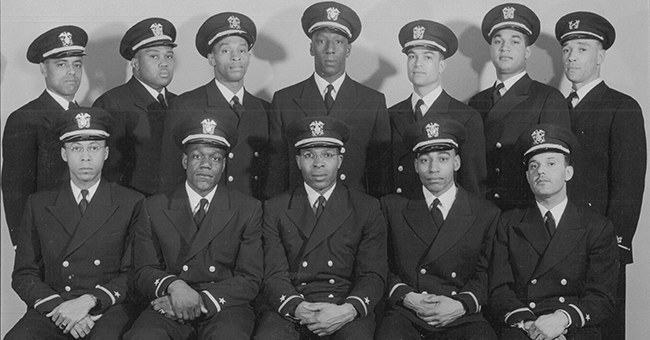
    Recently commissioned black officers: front row (left to right): Ensigns George Cooper, Graham Martin, Jesse Arbor, John Reagan, and Reginald Goodwin; back row (left to right): Dennis Nelson, Phillip Barnes, Sam Barnes, Dalton Baugh, James Hair, Frank Sublett, and Warrant Officer Charles Lear. William Sylvester White was commissioned but is not pictured in this photo. February 1944.

    Recently commissioned black officers: front row (left to right): Ensigns George Cooper, Graham Martin, Jesse Arbor, John Reagan, and Reginald Goodwin; back row (left to right): Dennis Nelson, Phillip Barnes, Sam Barnes, Dalton Baugh, James Hair, Frank Sublett, and Warrant Officer Charles Lear. William Sylvester White was commissioned but is not pictured in this photo. February 1944.

    At the start of World War II, Black men in the Navy could only hold menial jobs as cooks and cleaners. A relentless civil rights campaign forced the Navy in 1942 to reconsider a Black man’s role. It would take another two years before the Navy would reluctantly select the first Black men to undergo officer training. Facing prejudice and discrimination as civilians and on duty, thirteen courageous men broke the color barrier and set an example that would inspire generations to come. But they were given little accord once commissioned, and their story has too often been overlooked when recounting the saga of World War II and the coming civil rights movement. Until now.

    Award-winning journalist Dan C. Goldberg brings these thirteen forgotten heroes out from the margins of history in The Golden Thirteen: How Black Men Won the Right to Wear Navy Gold. Isabella Sanchez, our assistant to the director of sales and marketing, caught up with Goldberg to chat with him about it and to ask what we can learn today from this hidden history.

    Isabella Sanchez: How did you initially come across the Golden Thirteen?

    Dan C. Goldberg: I stumbled upon an obituary for one of the men, and it mentioned the Golden Thirteen. It was not something I had ever heard of before, and I was curious. I had passing familiarity with the Tuskegee Airmen and the Buffalo soldiers but never heard of the Golden Thirteen. I looked for a book on the subject and realized that the only substantive work was Paul Stillwell’s oral history. That’s a fascinating book but it didn’t answer the question that gnawed at me. Namely, how did the Navy go from only allowing Black men as messmen in March 1942 to commissioning Black ensigns in March 1944? The president was the same, the Navy secretary was the same. What changed? And why? I wanted to answer those questions so that these men could be placed in the context of their time.

    IS: You researched the Golden Thirteen for eight years, digging through military records and newspaper clippings. What was that process like? Were there any roadblocks along the way?

    DCG: I often liken the process to making whiskey: there is a lot of distilling. I would spend days researching an event, a conversation, a moment, so that it could turn into one paragraph, or maybe even one sentence in the book. Sometimes it was cut entirely. The biggest roadblock was often my own ignorance. I didn’t always know where to look but kept trying different approaches, and one opened door led to another and, hopefully, that led to a worthwhile finished product.

    IS: You write about how many Black Americans found the role of the US in World War II incredibly hypocritical, considering the racism, violence, and discrimination they faced at home. Tell me more about that.

    DCG: In the course of my research, I came across Lee Finkle’s Forum for Protest, in which he describes a survey of Harlem residents that found most African Americans said they’d be treated better or the same under Japanese rule while only eleven percent believed conditions would improve for Blacks if the US won the war. These sentiments have been reported on and written about before, but it was distinct from the history I, a white kid from New York, was taught in school. We learned that everyone rallied around the flag, because the Nazis were so evil and the Japanese so treacherous. Well, that popular history isn’t the whole truth.

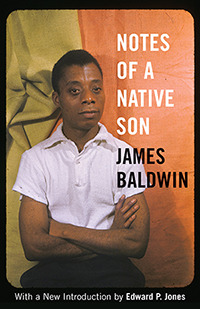
    James Baldwin, in Notes From a Native Son, spoke of the “peculiar relief” Black families felt when their sons went overseas, because it meant that if they died, it would be by the hands of the enemy instead of from being lynched by their own countrymen.

    I really wanted to explore that theme and remind readers that segregation and humiliation were having real effects on morale, which pushed the question of equality in the Navy to the fore. This wasn’t an academic debate. Black men burned draft cards and wondered why they should care all that much who won the war and why they should fight for a country that treated them as inferior. These were the arguments made by civil rights leaders and white liberals, which eventually persuaded the Navy to change its course.

    IS: The Golden Thirteen had to fight an uphill battle in order to become commissioned officers. What discrimination did they face in training, and how did their experience differ from those of white recruits?

    DCG: Discrimination, of course, didn’t start when they enlisted. Many of these men had lived with it their whole lives. James Hair’s brother-in-law was lynched in Florida, beaten to death by a white mob. The FBI told Syl White that they had no need for Black agents. Graham Martin grew up in segregated Indianapolis. When they first enlisted, they were segregated during boot training and during their service school training. The uniform gave them no protection from racism. Racial slurs were common.

    Even after the Navy decided to send them to officer candidate school, they were segregated. The Navy wasn’t ready to integrate the station where they trained. George Cooper described it as a “letdown off the bat.” Then, they had to deal with instructors who, in the eyes of Graham Martin and Frank Sublett, seemed certain that training Black men was a waste of time. The racism they faced came in many forms. There was even physical abuse but often it was far more subtle. George Cooper said it best: “There are so many subtle ways of demonstrating prejudice, but as a black person, you just have antennas out, and you sense it and you feel it instinctively.”

    IS: After these men became officers, their treatment didn’t change overnight. They were still disrespected on a daily basis, and white men refused to acknowledge their authority. Describe what the Golden Thirteen faced once they completed their training.

    DCG: The Navy, at first, didn’t know what to do with these Black officers. Commanding white men in battle still seemed too radical. So, for the first few months, they were given menial chores. They ran drills, lectured on venereal diseases, patrolled the coast in a converted yacht. They were denied housing on base and prohibited from entering officers’ clubs. White men would cross the street to avoid saluting. Through it all, these thirteen officers never lost their cool. They knew that they were being watched. Excelling during officer candidate school was only the first step.

    IS: The Golden Thirteen recognized their position in history and felt a personal responsibility to be successful in order to integrate the Navy. You describe the camaraderie these men felt toward each other, and their mission to succeed as a group. What were their relationships like and how did they support each other?

    DCG: They decided the very first night that they would work together and swore off any competition. They figured that the only way to succeed was to help one another, so they took turns sharing their backgrounds and determining who was most fit in every discipline. And that person volunteered to help the others. In a sense, they were fortunate the Navy chose such a variety of men. White was a lawyer, Sublett a mechanic, Baugh an engineer. Martin, Cooper, and Barnes were natural teachers. Yes, they pushed each other to study hard, but the real benefit was in how they were there for one another when times got tough, when the pressure seemed too intense to bear. That’s when Jesse Arbor or James Hair might tell an off-color joke to break the tension. The bond they forged remained strong until the day they died.

    IS: The United States Armed Forces is still an organization that is frequently criticized for their lack of inclusion and unequal treatment of its members based on race, ethnicity, gender, religion, sexual orientation, and other factors. How have things changed or not changed today? What lessons can we learn from this hidden history?

    DCG: Every generation has a version of this fight. Blacks, women, gays, and transgender people are told that their inclusion in the Army, the Navy, the Marines, the military, will hamper efficiency and morale. It just can’t be done, they are told. Time and again, that’s been proven false. There are a couple lessons I take away from the Golden Thirteen. The first is that the nation is only as democratic as its least democratic institution. The second is that capability and honor aren’t limited by color. The third, and my favorite, is that, in the midst of struggle, the road can seem impossibly long and arduous, but if you keep pushing and fighting you can change the world.


    About Dan C. Goldberg

    Dan C. Goldberg is an award-winning journalist for Politico. Goldberg has researched the Golden Thirteen for eight years to restore these men to their rightful place in history. Follow him on Twitter at @DanCGoldberg.

  • By S. Brent Plate

    Geraldine Weichman, handprint Passover towel, 1981. Los Angeles. Photo credit: Jodi Eichler-Levine.

    Geraldine Weichman, handprint Passover towel, 1981. Los Angeles. Photo credit: Jodi Eichler-Levine.

    “Let’s get in touch.”

    “I feel like I’m losing touch with you.”

    “That was a touching tribute.”

    The English language is littered with metaphors of touch that tend to revolve around connection between people. Such word use creates an almost psychic understanding that communication, even when conducted over Wi-Fi and satellite transmissions, can still allow us, as the old AT&T commercial had it, to “reach out and touch someone.” We “touch” each other even when we are a thousand miles away.

    Many of us have rediscovered this during the coronavirus lockdown, reconnecting with friends and family over the phone, Skype, and Zoom. We see and hear those we love through a screen, and we are touched. Of course, this experience has also shown us the limitations of communication, that ultimately, our metaphors are not reality.

    We’ve been craving touch. And we want more than what AT&T promised. We want actual physical touch: a hug, a hand held, a kiss on the cheek, a casual brush of the finger on the back of the hand. Touch begs us to move beyond the metaphorical. It is a sense that needs to be fed, and when there is a shortage, we get what researchers refer to as “skin hunger,” while lack of touch in infancy has dramatic effects on human development. If touch only remains in the symbolic, linguistic realm, we eventually get out of touch and go hungry.

    Touching Things

    Even so, human touch is not the only touch we need. Human-human touch, in one form or other, is crucial to human flourishing, yet we also touch objects, things that are seemingly inanimate, and those experiences shape our spiritual and social lives.

    In an essay on Medium, my colleague Jodi Eichler-Levine points to the new activities many of us have taken up during the coronavirus lockdown—baking bread, gardening, crocheting, playing guitar. She makes the astute observation that these activities directly relate to our hunger for touch. Since we can’t physically touch so many of our loved ones, we are turning to other practices that get us back in touch. She says, “we are re-learning touch, buildings nests of soft blankets, clutching our warm coffee mugs.”

    In a brilliant new book to be released this fall called Painted Pomegranates and Needlepoint Rabbis, Eichler-Levine has explored contemporary Jewish life in the United States, and the ways Jewish identities are “crafted,” through quilting, paper collage, carving, knitting, amulet making, as well as the communities that often form around the physical activities. In a discussion of the importance of handmade gifts, she says, “Objects are not just objects; they are objects that have touched other hands, carrying with them the essence of another living being.”

    Touching Stones

    I, too, have long been impressed by the ways human senses are enacted in, by, and through religious traditions. In my book A History of Religion in 5½ Objects: Bringing the Spiritual to Its Senses (Beacon Press, 2014), I look at the role of various objects—stones, incense, drums, crosses, bread—and how humans sensually engage them in spiritual ways. In reference to touch, at the start of the chapter “Stones,” I suggest:

    Stones are set, cut, clutched, chiseled, and hurled. They ride in our pockets for luck on journeys, or climb into our boots turning travels into travails . . . . Stones solicit attention, usually subtly, almost inaudibly. Among the vast number of stones, rocks, pebbles, and gravel on the planet earth and beyond, a handful are occasionally selected, unearthed, transported, and repurposed for sacred means, becoming talismans, amulets, altars, or memorials . . . . In each case, stones are objects sensed, felt with fingertips, seen with the eyes, and felt deeply within. Stones show us the way.

    Touching a stone might strike one as contrary to what we need when we have a hunger for touch, as if stones could begin to speak and respond. Yet, history tells us a different story, and across time and tradition stones have rooted people in memory, stood as markers of our sacred spaces, and connected us with others.

    Buddhists set stones in meditation gardens. Jews place them on gravestones. At the geographic center of Christianity, in Jerusalem’s Church of the Holy Sepulchre, is the “Stone of Anointing,” and the faithful travel to touch and kiss this stone. At the geographic center of Islam is the Black Stone, in the eastern corner of the ka’ba in Mecca, and during the hajj, Muslims aim to touch and kiss it as they walk around in the Great Mosque.

    Stones, and our endemic need to touch them, has become a vital, if often overlooked, component to religious life across the world. As I note in the book, “People feel connections with stones; they fondle them, touch them, kiss them, and tell stories by them.”

    Touching Keys

    From human hands to knitting needles to stones, humans crave touch. There’s a time to touch the plush fur of our cat, a time for a warm hand of another, a time to feel the soil as we plant tomatoes, and a time to hold firm our stones. We clutch and caress and carry as we reach out and touch something, reaffirming our interconnection with the world.

    Which brings me back here, and now, alone in a room in rural Central New York. As I write this, I touch keys on a keyboard, a familiar feeling at the edge of my fingertips. For me, writing has always been a profoundly physical sensation: sitting in a particular position, at my desk, fumbling for words and sensing the location of keys on the keyboard, from eye to screen to brain to muscles to fingers to keyboard and back again through cycles of stroke, sensation, and significance. Writing keeps me in touch.

    About the Author

    S. Brent Plate is a writer, editor, and part-time college professor at Hamilton College. Recent books include A History of Religion in 5½ Objects: Bringing the Spiritual to Its Senses (Beacon Press) and Religion and Film: Cinema and the Re-creation of the World (Columbia University Press). His essays have appeared at Salon, the Los Angeles Review of Books, America, the Christian Century, and the Islamic Monthly. More at www.sbrentplate.net or on Twitter @splate1.

  • A Q&A with M. V. Lee Badgett

    M. V. Lee Badgett and The Economic Case for LGBT Equality

    What if production in factories, shops, restaurants, and other services suddenly sank by one percent? If the downturn lasted long enough, economists would call it a recession, and policymakers would rush to course correct. But what happens when the economy is dragged down for decades, caused by society’s prejudices and hostilities toward lesbian, gay, bisexual, and transgender people? Not much. And that needs to change.

    In The Economic Case for LGBT Equality: Why Fair and Equal Treatment Benefits Us All, economist M. V. Lee Badgett asserts that homophobia and transphobia not only harm individuals in many aspects of their lives—education, health, employment—but also damage economies in costly and often invisible ways. She presents data and real stories to show that the exclusion of LGBT people from full and equal participation in society reduces everyone’s well-being and that it is in all our interests to fix it. Beacon Broadside editor Christian Coleman caught up with Badgett to chat about her book and what we can learn from it during our current administration.

    Christian Coleman: What was the inspiration behind writing The Economic Case for LGBT Equality?

    M. V. Lee Badgett: The inspiration came from the many LGBT activists I’ve met and worked with who wanted to use the economic case to promote human rights. I have been making that economic case for LGBT equality for a long time and have seen the argument also appeal to policymakers, businesses, development agencies, and other groups. I decided to write this book to reach all of these audiences with the evidence and stories that show how stigma and discrimination against LGBT people hold back economies. The book gave me room to present a wide range of evidence about those links, and I could show how this idea is helping to expand rights for LGBT people.

    CC: You’re a professor of economics and co-direct the Center for Employment Equity at the University of Massachusetts Amherst. Tell us a little about your background and what interested you in focusing on economic inequality for LGBT people.

    MVLB: My main professional identity is being a feminist labor economist, and I mostly study inequality and discrimination against LGBT people. The roots of my choice of profession and research are in my own experiences. As a cisgender white woman, I’ve experienced discrimination and seen race and gender segregation in the workforce—even today in my male-dominated profession. As a lesbian, I had some on-the-ground knowledge that made me question economic stereotypes about LGBT people as affluent, educated elites. Those experiences led me to study what happens to LGBT people in our economies and to learn how we can move toward equality.

    CC: You write that human rights declarations and compliance processes haven’t been enough to stop discrimination and violence against LGBT people. Do you get any pushback from people who resistant to thinking about LGBT rights in the context of business and the economy? I can imagine some would be turned off by the idea that fair and equal treatment is dependent on businesses thinking about their bottom line.

    MVLB: Some people prefer to make human rights arguments for LGBT rights, and those are excellent arguments for change. In my view, though, the economic case makes the human rights argument stronger. It adds up the harms of human rights violations in concrete terms and shows how our economy suffers as a result. The economic case can start conversations and open doors in places that aren’t likely to be motivated by human rights concerns, like businesses or economic development banks.

    CC: Was there any research that took you by surprise as you were writing the book?

    MVLB: The volume of research on LGBT people available now is much broader and deeper than I realized! The academic study of LGBT people has really blossomed over the last decade or two, especially in North America and Europe. In addition, many LGBT organizations in a wider range of countries have started collecting data about the LGBT people they work with. Those studies sometimes use different methods than academic researchers do, but they produce incredibly important insights into the lives of LGBT people in those countries.

    CC: You cover not only the effects of homophobia and transphobia on our economy, but also on economies outside the US, including Canada, Australia, India, and Philippines, and the UK. Why was it important for you to bring in a global perspective?

    MVLB: I think globally about this issue for several reasons. For one thing, every country has a lot of work to do to ensure full inclusion of LGBT people, including the US. Many of the people I talk with about using the economic case live in countries with little protection of LGBT human rights; they often live in low-income countries where economic development is crucial. Furthermore, we are all connected to each other globally, as we’ve learned with the COVID-19 pandemic. So positive news about one country allowing same-sex couples to marry might be seen in another country as an inspiration (to LGBT people) or a threat (to opponents of LGBT rights). Finally, LGBT issues are on the agendas of multilateral bodies, such as the UN and World Bank and multinational companies.  

    CC: What are some business organizations taking a stand against anti-LGBT policies, locally or globally, that have caught your attention?

    MVLB: Some large multinational businesses, like IBM, are speaking out on LGBT issues in multiple countries against anti-LGBT policies. Businesses are also coming together in coalitions to push for change, as in the Open for Business initiative or Out Leadership. For example, marriage equality is an issue that has been supported by both multinational and local businesses in countries like Australia, Ireland, Taiwan, and the US.

    CC: What would you like readers to take from the book, especially as we continue to learn about how the current administration tries to axe nondiscrimination protections for LGBT Americans?

    MVLB: While we’ve made big strides on some LGBT issues in the US, like marriage equality, we’ve been slow to enact explicit laws protecting LGBT people from discrimination. Among other anti-LGBT actions, the current administration has been trying to weaken and dismantle nondiscrimination protections policies that protect LGBT people in schools, health care settings, public housing, employment, and other areas. This political moment is a good reminder that the economic case for LGBT equality does not mean that change is inevitable or permanent. As the book shows, the economic case can be used to argue that inclusive policies will be good for our economy, but the converse also works: regressive changes that enhance inequality will be bad for our economy. We have to keep making the case.


    About M. V. Lee Badgett 

    M. V. Lee Badgett is a professor of economics and the former director of the School of Public Policy at the University of Massachusetts Amherst. She is also a Williams Distinguished Scholar at the Williams Institute for Sexual Orientation and Gender Identity Law & Public Policy (UCLA School of Law), where she was a co-founder and the first research director. She has also taught at Yale University and the University of Maryland. Connect with Lee Badgett at leebadgett.com and follow her on Twitter at @LeeBadgett.

  • Books

    Who says books are not essential? Where would we be without them during the pandemic? In the fallout of all but “essential” businesses being shutdown or closed to the public, books were deemed “nonessential.” So. Not. True. Along with the shows and movies we binge-watch, books are helping us keep our sanity. They are a lifeline as we continue to shelter in place. Don’t let anyone tell you differently. Not to mention, we cannot forget all the bookstores working hard to make sure we get the books we order delivered to our homes or ready to collect at curb-side pickups. The COVID-19 pandemic may have curbed our contact with the outside world, but it won’t curb the importance of reading.

    We want to thank Publishers Weekly for starting their #BooksAreEssential campaign to drive this point home. Hopefully, as businesses start to reopen, bookstores will be ranked as the essential businesses they have always been. Some of our staff members took part in the campaign. Here’s what they had to say. Yes, we’re obviously biased.

    ***

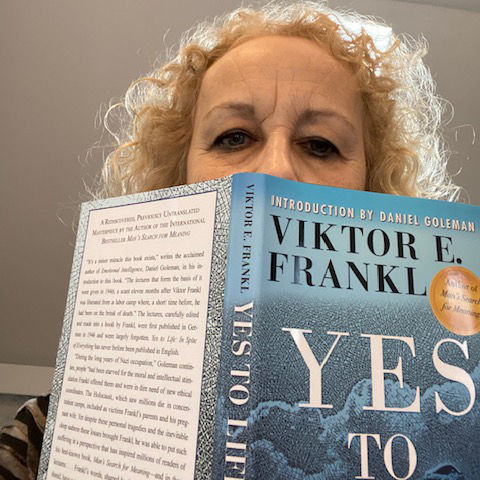
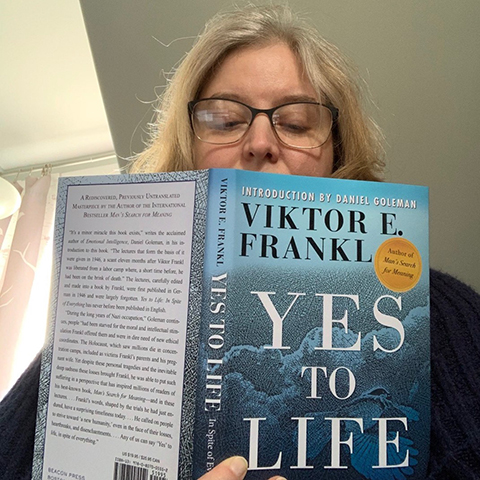
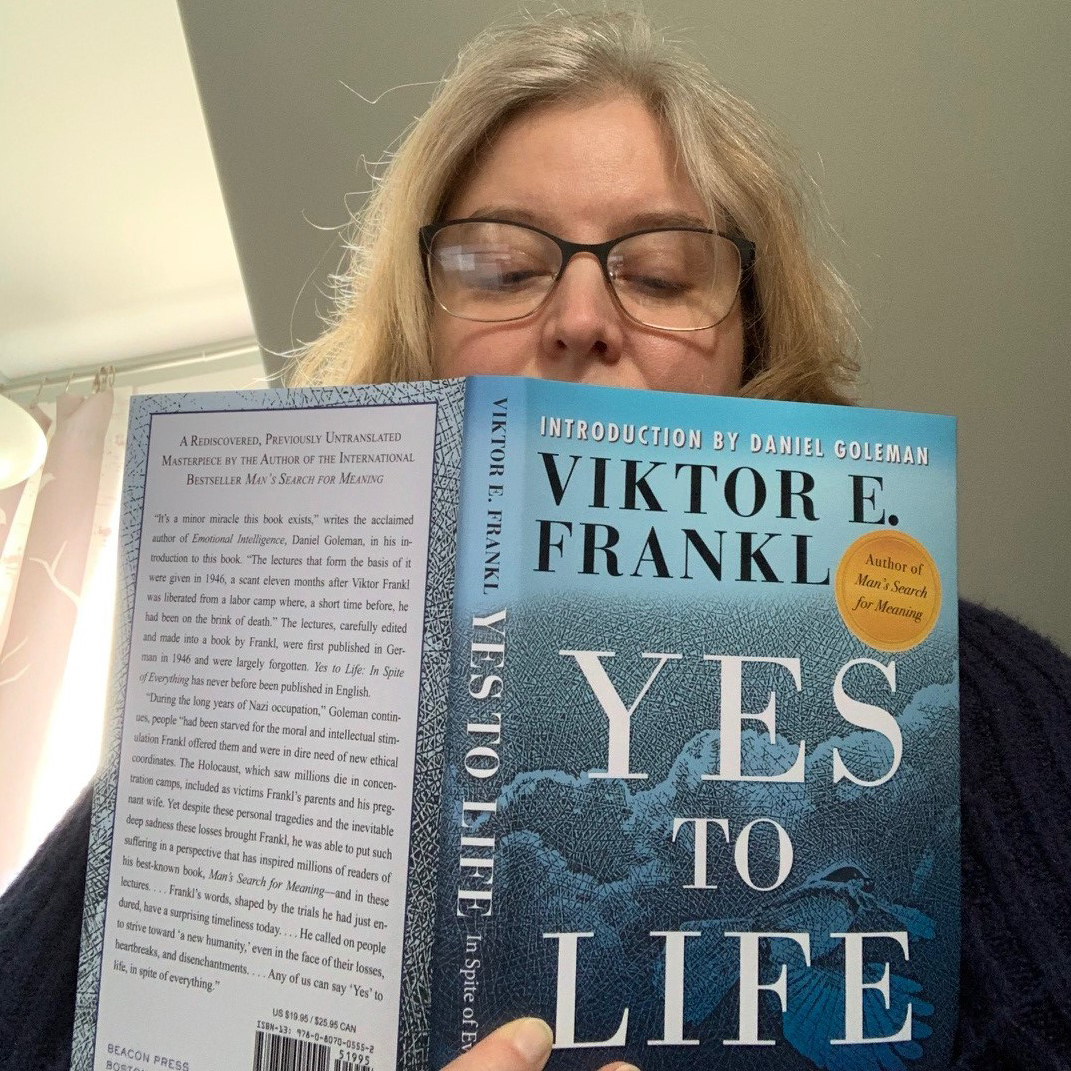
    Helene Atwan reading Yes to Life

    “Today, more than ever, we need great books to console and inspire us. There’s a good reason that Viktor Frankl’s Man’s Search for Meaning has sold sixteen million copies, and why 65,000 Americans have turned to it since the pandemic began. We’re so lucky to have Yes to Life, this newly discovered work, out right now.”
    —Helene Atwan, director


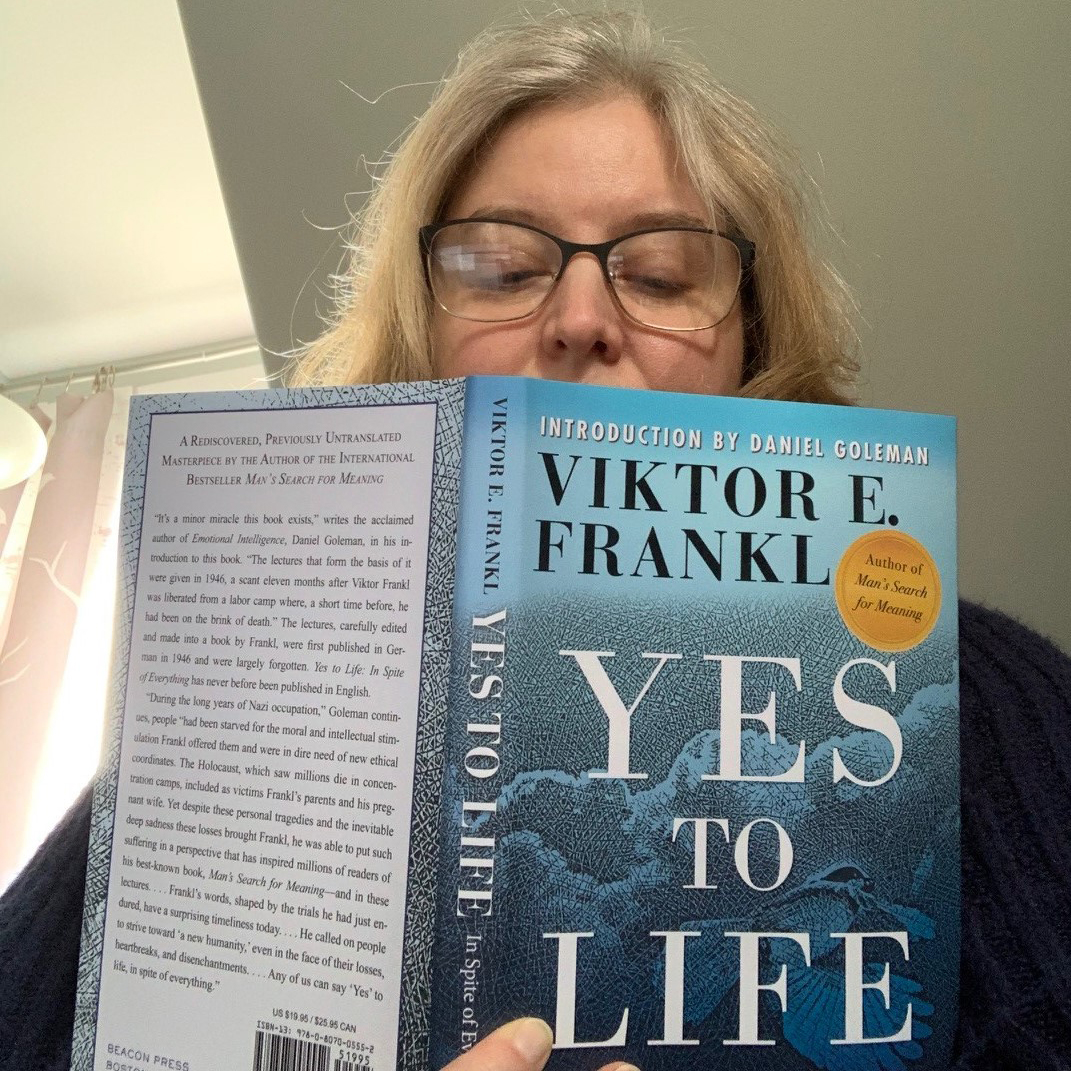
    Marcy Barnes reading Yes to Life

    “[H]uman beings are able to give meaning to their existence, firstly, by doing something, by acting, by creating—by bringing a work into being; secondly, by experiencing something—nature, art—or loving people; and thirdly, human beings are able to find meaning even where finding value in life is not possible for them in either the first or the second way—namely, precisely when they take a stance toward the unalterable, fated, inevitable, and unavoidable limitation of their possibilities: how they adapt to this limitation, react toward it, how they accept this fate . . .”
    Marcy Barnes reading an excerpt from Viktor E Frankl’s Yes to Life

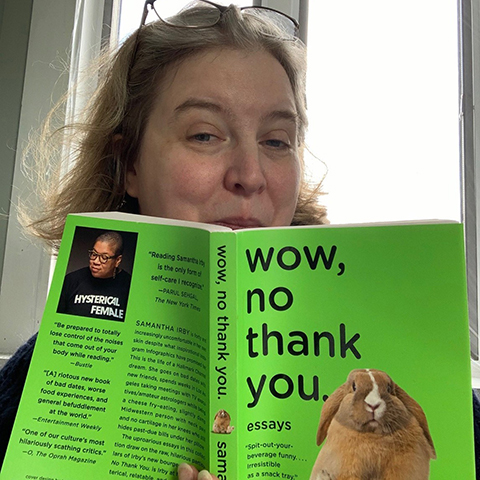
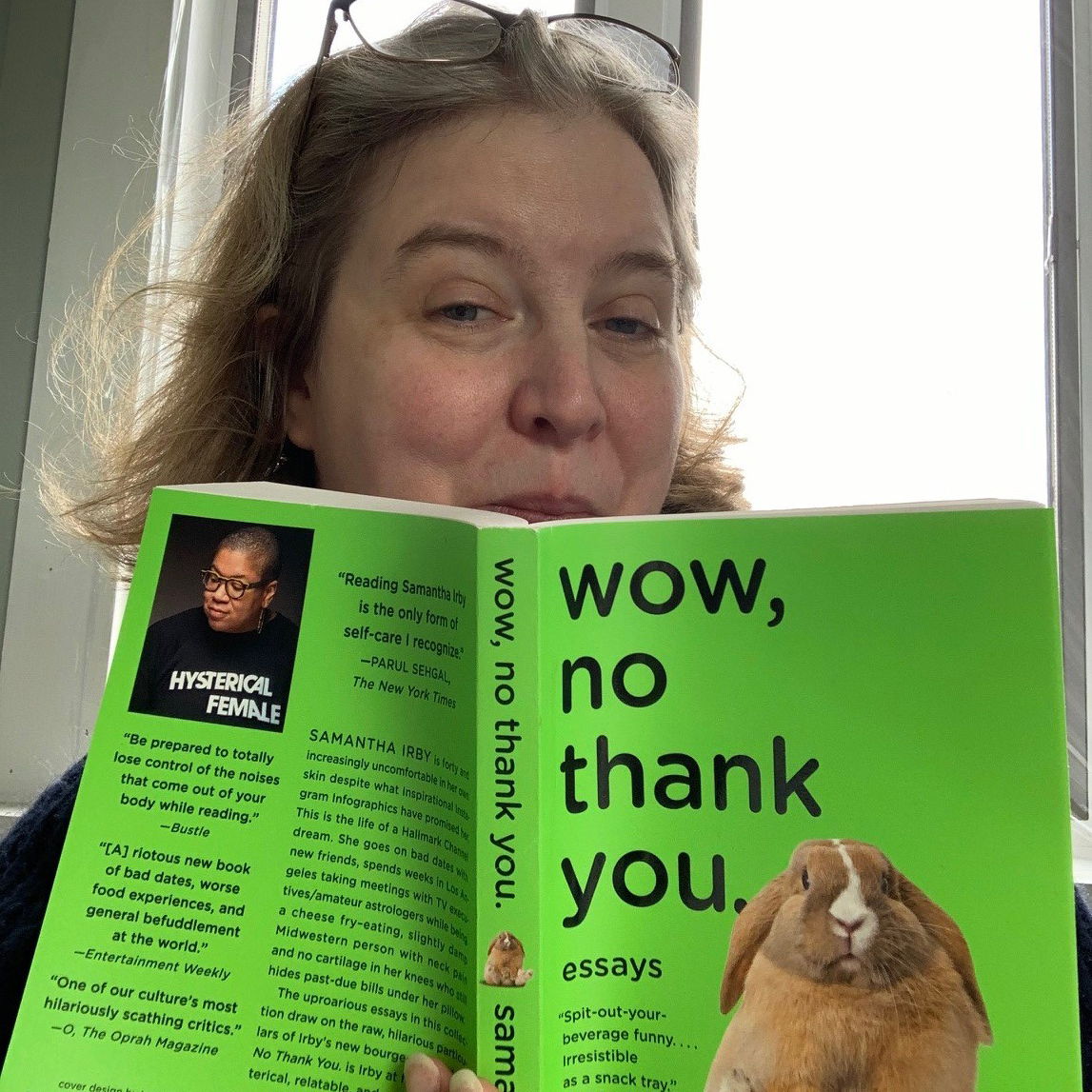
    Marcy Barnes reading Wow, No Thank You

    “The timing of this book coming out at the moment we all began to quarantine is almost a divine level of intervention. She makes me laugh harder and longer—and shed a few tears too—more than any other writer. Yes, thank you, Sam Irby.”
    —Marcy Barnes, production director


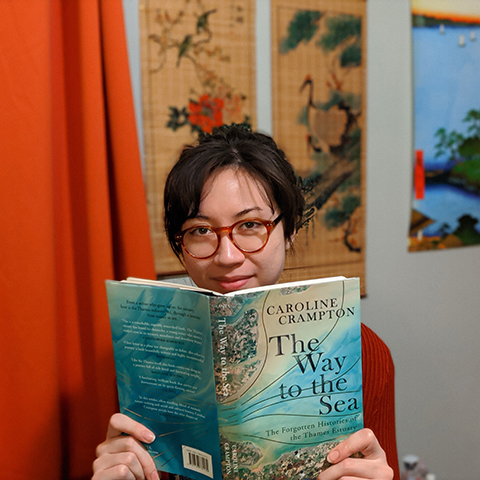
    Nicole-Anne Keyton reading The Way to the Sea

    “Since early childhood, I’ve always considered books essential. Books have made me smarter, more inquisitive, and more open-minded to other perspectives and worlds outside my own lived experience. Without them, I would not be the constantly curious and verbosely inquiring person I am today. My quarantine read right now is schooling me on the history of a river that I’m also currently writing about in my own fiction, and every time I crack open this book, I’m transported to another era and another land entirely that I find fascinating. Thank you, Caroline Crampton and Granta Books!”
    —Nicole-Anne Keyton, editorial assistant


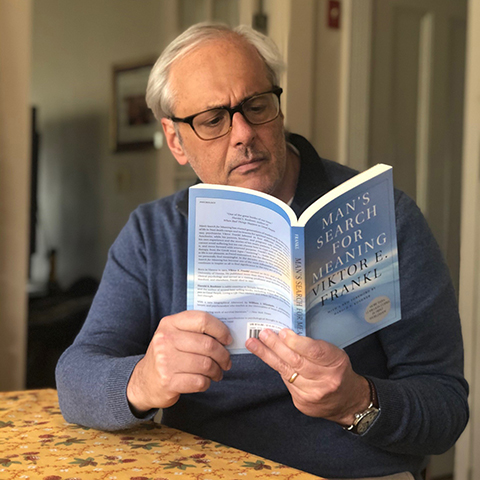
    Cliff Manko reading Man's Search for Meaning

    “We learn from those who persevered through hard times.”
    —Cliff Manko, chief financial officer


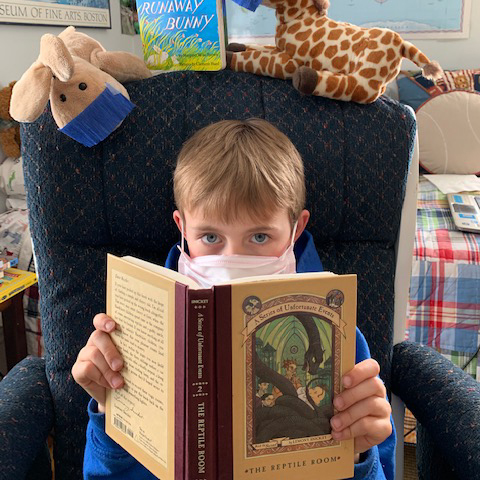
    Gayatri Patnaik’s son Matthew reading The Reptile Room

    Publishers Weekly launched their #BooksAreEssential campaign. So grab a book and post!”
    —Gayatri Patnaik, associate director and editorial director 

    Books

  • By Rosemarie Day

    Rosemarie Day book with flowers

    This piece appeared originally on MomsRising.org.

    As Mother’s Day approaches, this year feels different. In a time of coronavirus, we need more than flowers and a day off. We need more than traditional self-care. We need recognition, deep and lasting recognition, that the work we do as caregivers is invaluable. We need recognition from society as a whole, not just our families. The pandemic has shown everyone that we are essential—women make up over half of the workforce deemed “essential,” including 77% of healthcare workers. Our lives are on the line as frontline healthcare workers: the CDC reports that 73% of healthcare workers who have contracted coronavirus are women. On top of all of this, our stress is through the roof with the roles we play at home: women were already making 80% of the healthcare decisions in families, and now, as at-home caregivers, we are juggling even more, with home-schooling added to our paying jobs. 


    Read more at MomsRising.org.


    About the Author 

    Rosemarie Day is the founder and CEO of Day Health Strategies, which helps to implement national health reform. She’s been working in healthcare and related fields for more than 25 years, including as the founding deputy director and chief operating officer of the Health Connector in Massachusetts, where she helped launch the award-winning organization that established the first state-run health insurance exchange in the state. She also served as the chief operating officer for the Massachusetts Medicaid program. Rosemarie lives in Somerville, MA; Marching Toward Coverage: How Women Can Lead the Fight for Universal Healthcare is her first book. Connect with her @Rosemarie_Day1 or at rosemarieday.com.