• Alison Rodriguez

    In these times when readers are responding to our books “more than ever,” when our authors—including Richard Blanco, Imani Perry, Robin DiAngelo, Dina Gilio-Whitaker, Daina Ramey Berry, and Kali Nicole Gross—are appearing in the media, their ideas going viral on social media, their voices being heard on so many platforms, we thought it might be good to take a break to focus on some of the staff who work hard to find, shape, edit, produce, and promote those works. Our blog series “Beacon Behind the Books” introduces to you a member of our staff and gives you a behind-the-scenes look, department by department, at what goes on at our office.

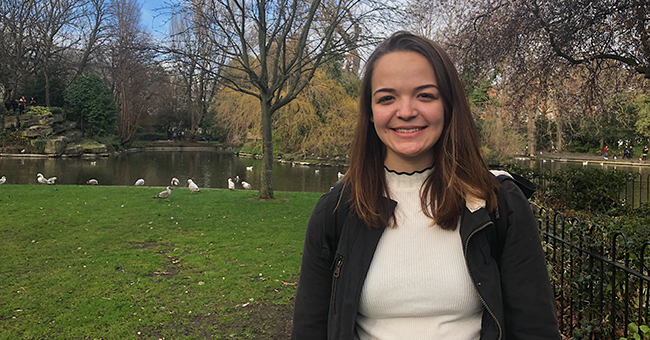
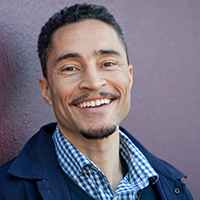
    For the month of May, we introduce you to our editorial assistant, Alison Rodriguez! 

    What drew you to publishing, Alison? How did you find your way to Beacon?

    Like many people in publishing, I’ve just always loved reading and have always been interested in the entire book publishing process. I had my first internship in publishing when I studied abroad in college. That solidified my interest, and it became what I actively wanted to pursue. While that internship was in children’s editorial, I also worked as a publicity and editorial intern at PublicAffairs and was able to learn a lot more about the different sides of publishing, specifically in serious nonfiction. This led me to Beacon when I noticed an opening for an editorial assistant position last fall and applied. The timing ended up working out perfectly for me to start right after I finished school in January.

    How much of what you learned in college have you found vital to your work?

    I know a lot of publishing consists of English majors, but I actually majored in journalism. I think it has helped me in anything I have to write, including any type of copy that needs to be clear and concise. Also, the importance of deadlines has been drilled into me in all my courses, which helps me prioritize certain tasks and manage my time at work—even if they are self-made deadlines that I make for myself throughout the day!

    What upcoming projects are you excited about?

    I’m excited about Ace by Angela Chen coming out in the fall. It was the first full manuscript I read when I started at Beacon, and I think it will be an important resource that everyone can learn something from. I’m also excited for What We Don’t Talk About When We Talk About Fat by Aubrey Gordon. I also learned a lot from this book, and I think it will spark a lot of important conversations that are long overdue.

    What helps you focus when you’re at work?

    I like to listen to music whenever I really need to focus and get something done. I’ve also found that taking a break by either walking outside at lunch or even just getting up from my desk to get coffee at the office can really help whenever I’ve been staring at something for too long.

    What are you reading right now?

    I just started reading Everything I Never Told You by Celeste Ng. I’m also reading We Should All Be Feminists by Chimamanda Ngozi Adichie and listening to Normal People by Sally Rooney on audio. Enjoying all three so far!

    Favorite book ever?

    It really always changes, but one of them is Eleanor Oliphant is Completely Fine by Gail Honeyman. I bought this book in the UK and read it on my plane ride home. It had me laughing and crying and always reminds me of that trip!

    Favorite podcasts?

    I really enjoy true crime podcasts. Recently, I’ve listened to Dr. Death and To Live and Die in LA. I also love listening to The Daily every morning.


    About Alison Rodriguez 

    Alison Rodriguez joined Beacon Press in January 2020 after graduating from Boston University with a Bachelor of Science in Journalism and a focus in Women, Gender, and Sexuality Studies. Prior to joining Beacon, Alison interned at Hachette Book Group and Simon & Schuster UK.

  • Reading

    Can you taste it? The taste of joy when quarantine ends, the panic shopping eases up, and we can get on with the new reality of civilian life. The coronavirus pandemic will change the way we live. However the new reality takes shape, we’ll be ready and eager to get back outside. Not to mention delirious with relief. Until then, safety first. But at least we have plenty of books to turn to as resources and for escape as we shelter in place!

    We pulled together a list of titles from our catalog that speak to our homebound times. Whatever your fancy, there are three categories to choose from. Inspiring books to help find meaning and solace during this period of stress and despair. Books on remaking society to show how the pandemic affects many aspects of our day-to-day living and what we want to make better when this whole situation is behind us. And books to get lost in, because we could use a breather from the COVID-19 craziness, right? Scroll down to take a look! You can check out our website to see more titles as well.

    ***

    Inspiring Reads

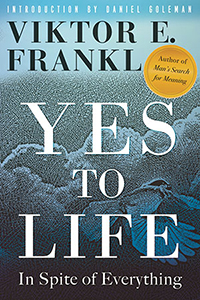
    Yes to Life

    Yes to Life: In Spite of Everything
    Viktor E. Frankl
    Introduction by Daniel Goleman

    “This slim, powerful collection from Austrian neurologist and psychiatrist Frankl (Man’s Search for Meaning) attests to life’s meaning, even in desperate circumstances.”
    Publishers Weekly, Starred Review


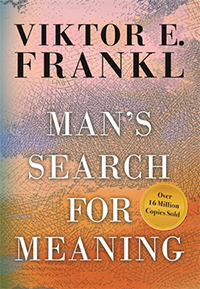
    Man's Search for Meaning

    Man’s Search for Meaning
    Viktor E. Frankl

    “This is a book I reread a lot . . . it gives me hope . . . it gives me a sense of strength.”
    —Anderson Cooper, Anderson Cooper 360/CNN


    The Miracle of Mindfulness

    The Miracle of Mindfulness: An Introduction to the Practice of Meditation
    Thich Nhat Hanh

    “Thich Nhat Hanh’s ideas for peace, if applied, would build a monument to ecumenism, to world brotherhood, to humanity.”
    —Martin Luther King Jr.


    The Stars in Our Pockets

    The Stars in Our Pockets: Getting Lost and Sometimes Found in the Digital Age
    Howard Axelrod

    “Poetic, ruminative, and never preachy, this book is a game changer for readers who yearn to see beyond 240 characters.”
    Booklist, Starred Review


    Remaking Society 

    Marching Toward Coverage

    Marching Toward Coverage: How Women Can Lead the Fight for Universal Health Care
    Rosemarie Day

    “Day makes the case for why activism by women for our health and healthcare is the path forward for a resilient nation.”
    —Juliette Kayyem, former assistant secretary, Department of Homeland Security, author of Security Mom


    Natural

    Natural: How Faith in Nature’s Goodness Leads to Harmful Fads, Unjust Laws, and Flawed Science
    Alan Levinovitz

    “Explores the power of that word and the often highly consequential ways in which it has been appreciated, appropriated, distorted, hyped, commodified, consecrated, and weaponized.”
    —Robert M. Sapolsky, John A. and Cynthia Fry Gunn Professor of Neurology and of Neurosurgery, Stanford University, and author of Behave: The Biology of Humans at Our Best and Worst


    Proud Boys and the White Ethnostate

    Proud Boys and the White Ethnostate: How the Alt-Right Is Warping the American Imagination
    Alexandra Minna Stern

    “An important study that extends the knowledge from other recent books that have demonstrated a stubbornly pervasive network of white nationalists.”
    Kirkus Reviews


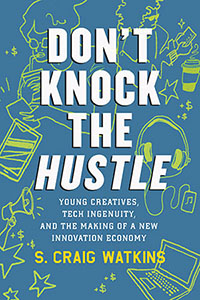
    Don't Knock the Hustle

    Don’t Knock the Hustle: Young Creatives, Tech Ingenuity, and the Making of a New Innovation Economy
    S. Craig Watkins

    “An insightful guide to the humane potential of new ways of working and sharing. Ignore this book at your peril.”
    —Juliet Schor, professor of sociology, Boston College


    Books to Get Lost In 

    Why I Wake Early

    Why I Wake Early
    Mary Oliver

    “The gift of Oliver’s poetry is that she communicates the beauty she finds in the world and makes it unforgettable.”
    Miami Herald


    Odetta

    Odetta: A Life in Music and Protest
    Ian Zack

    “A thoughtful portrait of an artist who never quite became as famous as she deserved to be . . . A much needed biography of a crucial American artist and activist.”
    Booklist, Starred Review


    Being Heumann

    Being Heumann: An Unrepentant Memoir of a Disability Rights Activist
    Judith Heumann and Kristen Joiner

    “Judy’s vision of a society that embraces all aspects of the human condition and where we face adversity with wisdom is truly transformative. . . . All who read her book will be better for it.”
    —Sheryl Sandberg, COO of Facebook, author of Lean In


    Me Dying Trial

    Me Dying Trial
    Patricia Powell

    “Powell shows us the living within the dying, the foreigner within the native born, the male within the female. Her tales unfold like dreams spread out on a table.”
    —Danzy Senna, author of Caucasia

    Reading

  • Teaching

    And then COVID-19 shut the classroom doors. Nationwide, many schools are closed for the rest of the academic school year for in-person classes. Who knows what the new reality of education will look like when the pandemic is behind us? As teaching has moved online and as parents have taken up the role of at-home educators for little ones, one thing awaits at the end of quarantine: our appreciation for all educators who help guide the new generation to their futures. This Teacher Appreciation Week, we asked some of our authors to tell us about the teachers who made a difference in their lives. Here’s what they had to say.

    ***


    M.V. Lee Badgett

    “A high school English teacher, Mrs. Fryzel, was the one who got me to think that I could be a writer. As she walked me through a very imperfect essay I’d written, she paused at one sentence. Looking me in the eye, she told me that someone who could write that sentence should think about being a journalist. It’s not the career I ended up with, but I am definitely a writer.”
    —M. V. Lee Badgett, The Economic Case for LGBT Equality: Why Fair and Equal Treatment Benefits Us All 


    Naomi McDougall Jones

    “The great teacher of my life was an acting teacher, Tracy Trevett, that I had at The American Academy of Dramatic Arts in New York City. She was the very best kind of instructor. I’d watch her, and as each student got up to perform in class, she would completely modulate her teaching style and feedback to fit exactly what she could see that student needed—be it tough, coddling, pushing, inspirational, etc. She had a nearly preternatural ability to see right through to the core of people. I think she was the first person who ever really saw me for all of who I am.”
    —Naomi McDougall Jones, The Wrong Kind of Women: Inside Our Revolution to Dismantle the Gods of Hollywood


    Zach Norris

    “One teacher who I am especially appreciative of is Mr. Lawrence Puck. He consistently engaged us to think differently, as he would have us breakdown movies that were popular at the time. He is tremendously funny and insightful. He encouraged me to run for student body president and apply to colleges I would not have dreamed of attending. I am thankful for the paths that I might not have seen without his wit, insight, guidance, and belief in me as a student.”
    —Zach Norris, We Keep Us Safe: Building Secure, Just, and Inclusive Communities


    Danielle Ofri

    “In the very beginning of first grade, my teacher firmly taught us to write the following four words: ‘Written and Illustrated by.’ Ms. Zive conveyed to us, right from the start, to take ownership of our writing. I’ve never forgotten that lesson, and after I published my first book, I embarked on a years-long odyssey to track down Ms. Zive. Even if we can’t all find our early teachers, we owe them a collective debt, because they set us down the pathway that defined our lives.”
    —Danielle Ofri, When We Do Harm: A Doctor Confronts Medical Error


    Ian Zack

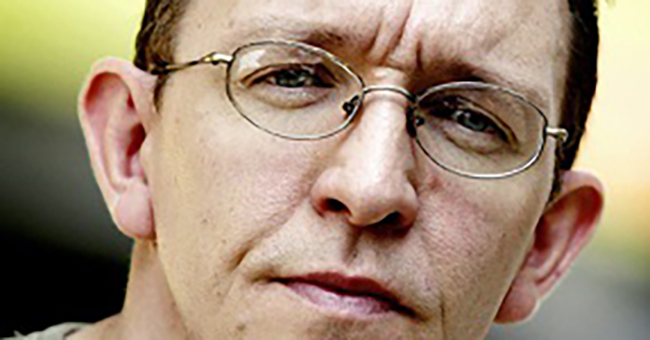
    “In eleventh grade, books lit a fire in my beleaguered belly. Words became, suddenly, as thrilling as roller coasters, as palpable as flesh, as infinite as space-time. Thank you, Mr. Macekura, for Joyce, and Eliot, and Pound, and for standing up from your too tiny desk to deliver your mustachioed, bespectacled incantation: ‘Isn’t that cool?’ It was. And here I am.”
    —Ian Zack, Odetta: A Life in Music and Protest

    Teaching

  • By Jonathan Rosenblum

    Amazon workers gather to strike

    Amazon workers gather to strike. Photo credit: Nicajo

    May 1 is here, which means rents and mortgages are due, and tens of millions of Americans will be unable to pay.

    Officially, thirty million people are newly unemployed. But the real number is higher, as government statistics fail to account for the 1.5 million-plus app-based drivers, other gig economy workers, independent contractors, and workers in the informal economy who have suddenly found themselves without work or income.

    The COVID-19 pandemic began as a worldwide public health crisis, but here in America, where the social safety net has been shredded over the decades by leaders of both political parties, and where today the vast majority of residents lack even three months of savings, the crisis has quickly mushroomed into a housing and income emergency for tens of millions of Americans.

    American political leaders and economic elites from Trump on down intone, “We’re all in this together,” as if forceful repetition will make it true.

    No, we’re not all in this together.

    While one-time federal relief checks arrive and quickly sieve through the fingers of millions of working class people, the combined wealth of America’s billionaires increased by $282 billion in the just first month of the pandemic lockdown, according to the Institute for Policy Studies.

    The privatized, decentralized, profit-driven American healthcare scheme—you can’t honestly call it a system, because that would imply a level of national coherence that simply doesn’t exist—has proven itself to be manifestly incapable of mobilizing the scale of response needed, notwithstanding the tremendous heroics of frontline healthcare workers and scientists. Indeed, even while patients suffer and workers struggle with inadequate equipment, supplies, beds, and medicine, the healthcare profiteers are still angling to cash in on the misery.

    There is a stark color line to the pandemic, too. In Georgia, where the governor blithely proceeds with “re-opening” the state in the face of scientific evidence that doing so will only worsen the crisis, African Americans are thirty-two percent of the population but fifty-six percent of the COVID victims. In Wisconsin, where less than seven percent of the population is Black, thirty-six percent of the coronavirus deaths are African American.

    Meat processing plants, disproportionately staffed by low-wage immigrant workers, have become hotspots of COVID outbreaks. So far twenty meatpacking and food-processing workers have died of COVID, but last week, USA Today reported, “given the choice between worker safety and keeping meat on grocery shelves, the nation’s slaughterhouses will choose to produce food.” In other words, industry bosses will let workers die before they harm their profits.

    The Democratic Party elite offer no countervailing blueprint. Democratic leaders obsequiously cling to healthcare and insurance industries that prize profits above people and a benefits structure that conditions access to care on tens of millions of jobs that no longer exist. They have no compunction handing out trillions to Wall Street while claiming, as Nancy Pelosi has, that there’s no money to fund a transition to Medicare for All. Their anointed nominee has assured rich donors that if he’s elected, “nothing would fundamentally change.” On this point, at least, you can believe Joe Biden.

    Contrast this to the COVID response in other industrialized countries, where government payroll subsidies, nationalized healthcare systems, and relatively robust testing and tracing programs are making for a more coherent, if still far-from-perfect, response that is saving lives and lessening human misery.

    If the COVID crisis has revealed anything about the state of America, it’s that we’re not “all in this together” in today’s gilded age. The rich and powerful will take care of themselves, as they always have. So, the rest of us must band together and fight for our interests. Working people increasingly recognize that and have begun to organize in new, creative, and militant ways.

    May Day has become a national kickoff for the #RentStrike movement.

    Under the banner, “No job? No rent!” Sami Bourma and hundreds of tenants at the Southern Towers in Alexandria, Virginia, most of whom are immigrants and many already practiced in organizing as members of Unite Here Local 23, are organizing a rent strike. They are demanding rent relief now, landlord-paid improvements to the buildings, and a commitment to tie future rent to tenant income.

    In Seattle, tenants at one building controlled by a large property management company, Cornell and Associates, signed up a majority of their building-mates on a set of demands and took them public. They had help from City Councilmember Kshama Sawant, who sponsored an online #RentStrike town hall, featuring the tenant activists. [Disclosure: I work as a community organizer for Sawant.] The ensuing media attention has led tenants at other Cornell and Associates buildings to begin to organize around similar demands.

    The tenants at Southern Towers and Cornell and Associates are geographic bookends of a national wave of rent resisters.

    What will build this wave is tenant solidarity around longer-term demands that go beyond simply not paying the rent, and an unwavering commitment to tenant-by-tenant, building-by-building organizing. A rent strike won’t succeed if it’s merely a cathartic reaction to the economic crisis.

    Where is this headed? As Mordechai Lyon wrote recently in the Boston Review, “one tenant withholding rent will almost certainly be evicted, but if an entire building strikes, tenants may well get the landlord to cede to their demands. So, what if an entire country goes on rent strike? That’s uncharted territory.”

    Workers at Amazon, Instacart, big box retailers Walmart and Target, and FedEx also are planning May Day worksite strike actions, demanding pay for time off, hazard pay for going to work, protective equipment and cleaning supplies, and corporate honesty in reporting worksite COVID cases. As with the #RentStrike movement, success will depend on basic one-on-one organizing that builds to majority actions. The demonstrations this past month at warehouses, stores, and other workplaces, while modest in size, have laid a promising foundation. Increasingly, workers recognize they have to act, because neither industry, nor government, nor mainstream political leaders are coming to their rescue.

    All of these spring uprisings are the promising seeds of a formidable new movement, one that recognizes that our power lies in uniting workers, tenants, small business owners, people experiencing homelessness, immigrants, and more, to act collectively to force concessions from the wealth-hoarding elites.

    We have been here before, as a people. It must have been dismal in the winter of 1930, with tens of millions out of work, homeless, hungry, and despondent after Wall Street speculators crashed the world economy.

    But desperation also is the incubator of new alliances, bold demands, creative tactics, and a deeper understanding of power and class and the need to act. In the years that followed Black Friday in 1929, mass movements in the US of veterans, the unemployed, industrial workers, and farmers—led by socialists, communists, and other radicals—waged militant struggles and wrested historic wins from the political elites. They fought for and won Social Security, union rights, minimum wages, jobs programs, public housing, and more.

    And yes, that organizing took years and unmeasured blood, sweat, and tears. But if we look at harnessing the energy of today, at uniting the workplace and community struggles born of the necessity of the present moment, we can imagine a powerful new movement that demands a reordering of society to put people and the planet before private profit.

    This spring is a time of death, anxiety, and sadness. Most of us know someone who has succumbed to the coronavirus. But it’s also a time of great possibility. What happens this May Day and in the weeks to follow, in workplaces and community around the country, should give us all hope that out of the ashes of this pandemic we can see the possibility of building a powerful movement to force the radical change that this country, and the world, so desperately need.


    About the Author 

    Jonathan Rosenblum works as a community organizer for Seattle City Councilmember Kshama Sawant. He is the author of Beyond $15: Immigrant Workers, Faith Activists, and the Revival of the Labor Movement (Beacon Press, 2017), and a member of the National Writers Union/UAW 1981. Find him online at https://jonathanrosenblum.org/ or Twitter: @jonathan4212.

  • By Wen Stephenson

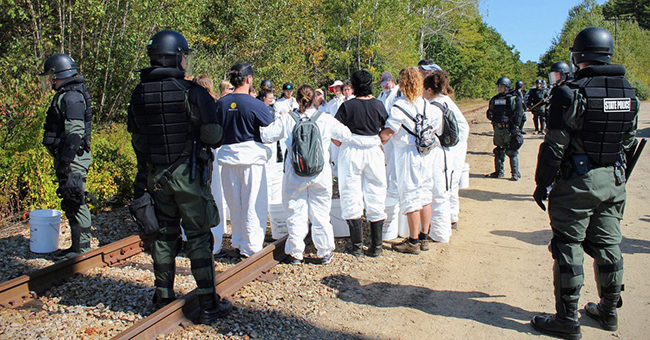
    New Hampshire State Police in full riot gear arrest peaceful protesters with the grassroots #NoCoalNoGas campaign at Merrimack Station in Bow, NH, the last major coal-fired power plant in New England, on September 28, 2019. Sixty-seven were arrested, with hundreds more supporting.

    New Hampshire State Police in full riot gear arrest peaceful protesters with the grassroots #NoCoalNoGas campaign at Merrimack Station in Bow, NH, the last major coal-fired power plant in New England, on September 28, 2019. Sixty-seven were arrested, with hundreds more supporting. Photo credit: #NoCoalNoGas, NoCoalNoGas.org

    Editor’s note: Read about the #NoCoalNoGas campaign, pictured above in the image header, in Wen Stephenson’s most recent piece in the Nation.  

    This article appeared originally on Medium.

    ***

    Dear friends and allies,

    As I write, it is six weeks since everything changed where I live, in eastern Massachusetts, when the schools closed and businesses began sending their employees home. Today the Boston Globe reports 39,643 confirmed cases of COVID-19 in the state, and at least 1,809 deaths, more than 400 of them in my county. The US now has more than three-quarters of a million confirmed cases and at least 37,000 deaths, most likely far more, with 2,000 or more dying per day—and unconscionably disproportionate losses in Black and Brown communities. Globally, at least 166,000 people have died. The old and infirm, the poor, the vulnerable, the racially marginalized, suffer most. As always.

    At the same time, the US economy alone has lost more than 22 million jobs since the social-distancing “stay at home” orders began—an incomprehensible number in so short a span, so far off the charts that the only comparison, as we keep hearing, is to the economic collapse of the 1930s. How long it will be before the pandemic comes under control, no one knows. A year? More? For now, there is no end in sight.

    But you already know all of this, so why dwell on these grim facts?

    Here’s why. As we’re all too aware, this week of April was set to be a major moment for our swelling movement in the midst of this most consequential election year—what might have been our most important mobilization as a movement to date, building on the historic surge of momentum since 2018, when the Green New Deal exploded onto the national stage. And yet here we are, faced with this fearful, disorienting new reality.

    Like anyone else who’s written and agitated on climate and climate justice for the past decade or more, I’ve always known that we’d have to keep working in the face of adversity and increasing instability in the coming years—but I’ll admit that I never anticipated anything so sudden and near-totally immobilizing as this. Because let’s face it, despite our best digital efforts, the coronavirus has all but taken us out of action—even as the fossil-fuel industry and its political servants exploit the crisis, doubling down on brazen climate destruction under cover of the pandemic.

    I believe it has to be said: this all-consuming health and economic emergency is the most dangerous and uncertain moment we have ever faced as a movement. There’s a real anxiety among many of us, a sense that all the hard-won momentum, all the power that’s been built—as seen in the unprecedented Green New Deal coalition that helped power the transformative Bernie Sanders campaign and forced climate justice into the national debate—is in danger of stalling and ebbing away.

    As a movement, we face a moment of decision. When the pandemic crisis recedes, as it eventually will, we can choose to fall in line with a corporate-political establishment, including the Democratic Party, that wants nothing more than a “return to normalcy” and politics as usual—in which the fossil-fuel economy is rescued and the climate emergency is again relegated to second- or third-tier priority. Or we can refuse to go along, remove our consent—and recommit to an escalated and intensified nonviolent struggle.

    ***

    At a time like this, it seems important to remind ourselves where we’ve been and how we got here. Take yourself back to where it began for you. Remember the moment or moments—most of us have them—when you knew in your sinews that the climate crisis meant your life must change, and you decided to commit yourself to this work. Maybe it was last year, or maybe, if you’re among the rare few (I know some of you), last century. Remember what it felt like, the visceral realization of all that’s at stake and all that must be done if current and future generations are to have a fighting chance.

    And then remember the moments—surely we’ve all had them—when the weight of it all was just too much, and you wanted nothing more than to wash your hands of it and walk away.

    For myself and others I know, those latter moments came in the year following Trump’s election, when overnight we careened from the Obama-Clinton Paris Agreement, which at least paid lip service to climate reality, to Trump’s and Tillerson’s nihilistic denial—and the future went from dusk to darkness. Some of us fell into despair, turned inward, and all but gave up on the climate movement—which is not, I assure you, to judge; I was one. But in time, like many of you, I was able—with the help of friends and a caring movement community—to climb my way out of the pit.

    And what I found was that the movement of movements we were building for climate justice and human rights had re-emerged—bigger, stronger, more energized—coalescing powerfully around the vision of a Green New Deal. It was led, conspicuously, by young people, some of whom I’d known and worked alongside for years, and by Indigenous and frontline climate-justice groups for whom walking away was not an option and climate justice not an abstract concept. For a decade and more, many of these leaders and organizers, of all ages and circumstances, had been throwing themselves into the fights against fossil-fuel extraction and infrastructure—tar-sands, fracking, oil refineries, coal plants—and into the global campaign for fossil-fuel divestment, signaling to financial markets that carbon reserves are stranded assets and fossil-fuel companies are the walking dead.

    It seems safe to say that there would be no movement today for a Green New Deal had these fights of the past decade not taken place—if many thousands, young and old, had not been willing to confront the fossil fuel industry, put their bodies on the line, and commit themselves to building a genuine nonviolent resistance demanding a just transition to a green and democratic economy. If anyone wants to know where the Green New Deal came from, tell them it was born of resistance. Tell them to ask Alexandria Ocasio-Cortez, who was galvanized at Standing Rock.

    Now, just as we’ve begun to feel and flex our power, we find ourselves unable to mobilize—that is, actually mobilize, together, physically, in the streets and on campuses, on the pipeline routes and railroad tracks, in the bank offices and halls of government, all the places where we cannot be ignored. There are some things we can do digitally, of course, but we all know a hashtag echo chamber offers little resistance to a ruthless industry willing to capitalize on a global health emergency.

    And in this state of suspension—and, frankly, fear—as we approach the November election and (whatever may happen) try to think beyond it, there may be an impulse to let resistance slide, and to focus on the economic and public health agenda of the Green New Deal, with its positive message of jobs, clean energy, universal health care, and education. And of course this inspiring and reality-based vision is essential, especially in an election year when the stakes are no less than democracy and Earth’s climate itself. Indeed, that’s the political promise of the Green New Deal—the way it offers an affirming, broadly appealing agenda to organize around, the way it meets the vast majority of Americans where they are, addressing their daily needs, in terms of economic, social, and environmental justice. To all of these, it offers a resounding “Yes.”

    But in the struggle for a livable world—and it must be a struggle—in the face of the entrenched forces lined up against us, all the organizing and advocacy our movement can muster on behalf of this positive vision, while absolutely necessary, will never be sufficient. Indeed, precisely because of this pandemic and economic collapse, our collective nonviolent resistance to the fossil fuel industry, its financial backers, and its political allies, in both parties, is more important than ever. To win anything like a Green New Deal, “Yes” will never be enough.

    ***

    In her influential 2017 book, No Is Not Enoughwritten in the immediate wake of Trump’s election, my friend and colleague Naomi Klein made the compelling argument (building on 2014’s This Changes Everything) that to confront our political and climate crises together requires that positive vision, that “Yes,” and not only resistance. “We have to tell a different story,” she wrote, one that offers “a plan for the future that is credible and captivating enough that a great many people will fight to see it realized, no matter the shocks and scare tactics thrown their way.” Drawing from her experience as an instigator and co-author of the popular “Leap Manifesto” program in Canada, the northern precursor to our Green New Deal, this argument has become a kind of gospel for younger Green New Dealers to whom Klein, as Bill McKibben has noted, is something of an “intellectual godmother.”

    But Naomi never argued that our movement of movements can afford to relegate resistance to the back burner. Quite the opposite. In that same book she argued, as she has long argued, that recognizing the necessity of a positive agenda “doesn’t mean that resisting the very specific attacks—on families, on people’s bodies, on communities, on individual rights—is suddenly optional. There is no choice but to resist.” It has never been an either/or. Both “yes” and “no” are equally necessary—not only morally, I would add, but strategically. It would be an historic mistake for the Green New Deal movement to de-emphasize or retreat from the kind of escalated nonviolent resistance we’ve seen in the past. After all, it was the Sunrise Movement’s large civil disobedience action, their occupation of Nancy Pelosi’s Capitol Hill office, that forced the GND into the national conversation—and we know that far more direct and disruptive action is possible.

    Clearly, a pandemic is not the time for fossil-fuel resisters to be filling the jails—which would recklessly endanger our own and others’ lives. But this is also not the time to lose resolve and give up on nonviolent resistance as a strategic tool. Electoral organizing around the Green New Deal vision is, of course, essential—and at the same, it’s imperative to prepare now for an intensified nonviolent struggle against the fossil-fuel industry and our corporate-controlled political system when the pandemic recedes.

    To be sure, there’s already a sense of urgency among movement thinkers making the case that we must not repeat past mistakes and waste this crisis, but use it to press for large-scale Green New Deal policies as part of the economic recovery. And yet, strong as this argument is, when the pandemic crisis has passed and the economic rebuilding begins in earnest, we’ll still find ourselves under the same political system as before, controlled by the same corporate lobbies, none more powerful than the carbon lobby. And while it may be true that fundamental change never happens without a crisis, it’s also the case that the political establishment wants no part of a crisis-level response to climate catastrophe, and that there will be (and already is) overwhelming pressure from establishment Democrats and mainstream liberals to restore “normalcy” and stick with a positive, “unifying” message—one that doesn’t “demonize” the industry and its backers, some of whom are Democratic Party funders. But normalcy is precisely what the climate justice movement urgently needs to upend. Normalcy equals catastrophe.

    Those who control and profit from the status quo, both Democrats and Republicans, have worked for years to prevent any true sense of a climate crisis, much less emergency, because they know it means the end of business as usual. That’s why it’s all the more important that our social movements across a broad progressive front are prepared to create the crisis that the political establishment is desperate to avoid. Otherwise, this “crisis moment,” and the opportunity it contains, will disappear—and our best chance at pushing forward with any sort of Green New Deal agenda, to transform the economy as we rebuild it, may very well be lost.

    History shows us that nonviolent resistance is more than mere protest, more than merely performative or expressive (“speaking truth to power”); it is essentially strategic. It goes beyond words and symbols. As Gandhi and King and countless others have shown—from the Salt March to the Freedom Rides, from sit-down strikers and draft-card burners to tar-sands blockaders and water protectors—there is no more powerful means of exposing the forces a movement is up against, and no more effective way of forcing an issue, maybe even a reckoning, than sustained and strategic nonviolent direct action.

    Is this too much to ask of people emerging from a pandemic and pressed by economic hardship and anxiety? Maybe so. The psychological and material impact of this current crisis is already immense—and our mutual empathy, compassion, and aid is needed. But it’s worth reminding ourselves that social movements have often maintained their struggles in the face of extreme adversity—none more so than the radical labor movement of the 1930s (an era increasingly on our minds), when workers fought successfully under harrowing conditions few today can imagine; and the Black freedom movement of the 1960s, when people gave their lives for basic civil and human rights. Given the hardship, and the incalculable injustice, we know the climate catastrophe will bring and is already bringing to the poorest and most marginalized in our society, perhaps the time has come when we need to find a comparable resolve.

    Or perhaps there’s an analogy with our current situation: Even as scientists race to develop a COVID-19 vaccine and end this pandemic (a positive vision if there ever was one), doctors and nurses on the front lines are fighting day and night under extreme conditions to save as many lives as possible, putting themselves at risk. Likewise, even as we push for a Green New Deal, our movement needs more front-line resisters—especially those of us with privilege of various kinds—who are willing and able to throw themselves into the breach, to run toward danger, putting their bodies and freedom on the line. And we need many more people, including corporate and political and cultural leaders, ready and willing to support these people and this resistance. We not only need youth climate strikers filling the streets, we need more and more people willing to stand in the way—literally—of the carbon-industrial machine.

    recent report from the Yale Program on Climate Change Communication found that 31 percent of Americans would support the use of nonviolent civil disobedience “against corporate or government activities that make global warming worse,” and 20 percent would be willing to engage in it themselves. Those are very large, significant numbers. Support for nonviolent resistance in the climate struggle is not marginal or fringe—it’s going mainstream. Which is to say, our movement is in fact building the necessary power, if we will use it, to prevent a return to business and politics as usual, end the carbon regime, and prove that another world is possible.

    Please stay safe and be well.


    Your brother in this struggle,
    Wen Stephenson


    About the Author 

    Wen Stephenson, an independent journalist and activist, writes for The Nation and is the author of What We’re Fighting for Now Is Each Other: Dispatches From the Front Lines of Climate Justice. Follow him on Twitter at @wenstephenson.

  • By Melanie Brooks

    Hand

    Photo credit: Jackson David

    In the last couple of weeks, as the story of novel coronavirus has continued to shroud the globe and taken central stage in the news, I’ve uncharacteristically turned to Twitter for the latest headlines. Bite-sized pieces of information concerning the climbing numbers of cases and deaths, the state of the curve, the plummeting economy, the revised lockdown stats, and the conflicts in management at the state and federal levels are all I can digest amidst the restless charge of uncertainty lighting up my nerves.

    So, on Sunday, April 19, when I scrolled through my feed, anticipating barely palatable scraps about the president converting daily briefings into political rallies, I was surprised to see Nova Scotia, the Canadian province I once called home, trending. My curiosity turned to shock and then heartbreak as I learned how, in the late night hours of Saturday, April 18, Portapique, a small coastal town just eighty miles north of where I’d lived in Halifax, became the epicenter of the deadliest mass shooting in Canadian history. A lone gunman, one of the hundred or so permanent residents of the community, went on a brutal, fourteen-hour shooting spree that left at least twenty-two people dead—a number that could still climb as the Royal Canadian Mounted Police continue to investigate the sixteen different crime scenes. For anyone with ties like mine to this place and its people, trying to fathom the horror of this tragedy against the backdrop of this peaceful and picturesque landscape is nearly impossible. And trying to locate this particular story against the backdrop of a global pandemic feels like a puzzle I can’t quite solve. How can something so terrible happen when there’s something so terrible already happening?

    And yet, it’s this puzzle that reminds me that hard stories are still all around us. Just because our day-to-day routines and activities have come to a grinding halt, life has not. Life—with its joys, sorrows, and tragedies—is still moving beneath the endless breaking news of COVID-19. You’re likely to know people, like I do, who are confronting experiences that are not defined by this virus. Joys: people having babies; people preparing to get married; people celebrating birthdays and milestone anniversaries. Sorrows: people dying from the final impacts of chronic illness; people trying to hold together crumbling marriages; people coping with addiction; people navigating disabilities; people struggling with mental illness. Tragedies: people on the receiving end of catastrophic medical diagnoses; people victimized by domestic and sexual violence; and, unimaginably, people gunned down by a once trusted neighbor who, late on Saturday night, knocked at their door.

    What do we do with these hard life stories? What do we do with all of the stories that are enveloped in this moment? The answer is simple. We lean in, listen closely, and we tell about them. Writing my own hard story has taught me that giving voice to difficult experiences can have deep personal value. Taking charge of the narrative helps us to more fully understand what we’ve been through and to take back ownership and regain a sense of control of a situation that can (or once did) leave us feeling without any.

    However, what I have also learned from doing this kind of work and engaging with other writers, especially memoirists, in the journey that led to Writing Hard Stories: Celebrated Memoirists Who Shaped Art from Trauma, is that there is powerful collective value in sharing our stories. The world needs them. Clear, honest narratives that don’t look away from the truth of suffering have the potential to offer the gift of community and nurture empathetic connections. Putting words to what we have gone through in an intentional, creative, and artistic way enables us to shape it into something we can give to others facing adversity and say, “I understand.”

    With the current mandates to self-isolate and to social distance, our standard ways of connecting have been suspended. Our common spaces are collapsing, and it’s easy to feel like we are stranded without support. Narratives like these that show how others have coped and found meaning reassure us that we are not alone. They provide grounding, expand those collapsed spaces, and clear enough room for each of us to enter, balancing all that we carry, including the losses, heartbreaks, and despair. They reach out a gentle hand in our present darkness and give us reason to hope.


    About the Author 

    Melanie Brooks is the author of Writing Hard Stories: Celebrated Memoirists Who Shaped Art from Trauma (Beacon Press, 2017). Her work has appeared in Ms. Magazine, Washington Post, Huffington Post, Creative Nonfiction, and other notable journals. She received her Master’s in Fine Arts in creative nonfiction from the University of Southern Maine’s Stonecoast MFA program. She teaches college writing at Northeastern University in Boston, Massachusetts, and Merrimack College in Andover, Massachusetts. She also teaches creative writing at Nashua Community College in New Hampshire. Melanie is completing a memoir, All the Things I Couldn’t Say, about the lasting impact of living with the secret of her father’s HIV status. She lives in New Hampshire with her husband, two children and two Labs. Connect with her online at melaniebrooks.com and on Twitter at @MelanieJMBrooks.

  • Moon

    As we spend more time indoors at the behest of shelter-in-place advisories, we find ourselves renegotiating and rediscovering our personal space in the company of others—often loved ones—or finding a new sense of solitude. Thus, in the best of circumstances, intimacy invites itself in moments of silence, of stillness, of understanding, of passion, of tenderness, of inner reflection. When we are at a loss for words to express how it makes us feel, we turn to the poets. In our fourth installment of this year’s National Poetry Month series, cocoon yourself in the poetry of Sonia Sanchez, Mary Oliver, and Sasha Pimentel.

    ***

    Sonia Sanchez’s “5 love haiku” from Morning Haiku

    1.
    Under
    a sexual sky you
    coughed swords

    2.
    your smell
    slides under my
    fingernails

    3.
    love
    walking backwards
    towards assassinations

    4.
    locust man
    eating the grain
    of women

    5.
    your tongue
    jelly on my
    lips.

    ***

    Mary Oliver’s “In the Evening, in the Pinewoods” from Red Bird

    Who knows the sorrows of the heart?
    God, of course, and the private self.
    But who else? Anyone or anything else?
    Not the trees, in their windy independence.
    Nor the roving clouds, nor, even, the dearest of friends.

    Yet maybe the thrush, who sings
    by himself, at the edge of the green woods,
    to each of us
    out of his mortal body, his own feathered limits,
    of every estrangement, exile, rejection—their
        death-dealing weight.

    And then, so sweetly, of every goodness also to be remembered.

    ***

    Sasha Pimentel’s “While My Lover Rests” from For Want of Water

    Night divides from my pillow
    as a man and a woman, one taking

    breath, and the other, moving
    to the pattern of his sleep. The soft

    palate clicks as measure, and the dead
    drip through the window. Here,

    the plates of our women’s hips surface
    from memory with my nakedness, like a body

    and its reflection meeting at the point
    of water, and I watch the man alone

    in my bed curl, returning. In sleep
    we are always aware of the presence

    and absence of bodies, and he swims
    in delicate ballet to the sheeted

    center, knowing the lack of my weight
    there. The wind buries herself

    against the pane in this lovely, terrible
    hour, and all the immigrants I know

    of evening are coming to
    gather themselves around. Tonight

    I am swimming in this
    inhalation—exhalation—and the wind,

    larger than ever, is wailing, and his
    throat relaxes, his uvula aquiver,

    and I am listening now and learning
    how little my need, in night, to speak.

  • Odetta

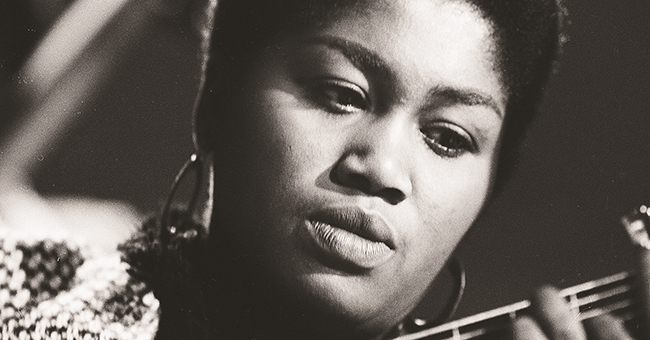
    If you’re jamming and head-bobbing to Bob Dylan, Joan Baez, Woody Guthrie, Pete Seeger, Jewel, Rihannon Giddens, and Miley Cyrus, you’re listening to the one and only Odetta. These folk roads lead back to her. She’s one of the most important singers of the last hundred years who’s influenced a huge number of artists over many decades, like the ones listed here. Where’s her Grammy?

    A leader of the 1960s folk revival, Odetta channeled her anger and despair into some of the most powerful tunes the world has ever heard. Through her lyrics and iconic persona, she made lasting political, social, and cultural change. She used her fame and opera-trained voice to bring attention to the civil rights movement, working alongside Joan Baez, Harry Belafonte, and other artists. Yet as influential as she and her sound have been, she never got her due or became as famous as she deserved to be. Now journalist Ian Zack has brought her back into the spotlight in the first full-length biography on her!

    Odetta: A Life in Music and Protest follows her from her beginnings in deeply segregated Birmingham, Alabama, to stardom in San Francisco and New York. Reading along, you’ll come across these facts about the “Voice of the Civil Rights Movement.”

    ***

    Fact 1: In the early 1950s, Odetta made the brave decision to stop straightening her naturally kinky hair and wear it in what would come to be known as an afro: “I was the only black woman going around with nappy hair then…and I looked so exotic, so unlike other black American women, that people assumed I was African.” She had an afro decades before Angela Davis, who credits Odetta for influencing her style. 

    Fact 2: Odetta’s rendition of “Take This Hammer” was selected as one of TIME magazine’s All-TIME 100 songs, a collection of the most extraordinary English-language popular recordings. 

    Fact 3: In 1958, Bob Dylan found Odetta Sings Ballads and Blues in a record store. From that moment on, he was heavily influenced by her sound, which lead him to transition to folk music.  

    Fact 4: Odetta was a classically trained singer. She began her voice training at thirteen. 

    Fact 5: Odetta experienced her first brush with folk music in 1950, after being cast as a member of the chorus in the musical Finian’s Rainbow

    Fact 6: Miley Cyrus used Odetta’s arrangement when she sang Bob Dylan’s “Baby, I’m In the Mood for You” on The Tonight Show with Jimmy Fallon. 

    Fact 7: Odetta was slated to perform at Barack Obama’s inauguration in 2009. She died just a month prior on December 2, 2008, at seventy-seven. 

    Fact 8: Odetta sang at the March on Washington beside Martin Luther King, Jr.

    Fact 9: At the height of her fame, Odetta performed at Carnegie Hall and the Newport Folk Festival.  

    Fact 10: In 1999, President Bill Clinton awarded her the National Medal of Arts, the highest award given in the arts in the United States. 

    Fact 11: In 2003, the Library of Congress named her a Living Legend. 

    Fact 12: She would burn incense off her guitar head.

    Fact 13: She was nominated for a Grammy in 1999 for “Blues Everywhere I Go.” 

    Fact 14: She performed with Langston Hughes in the CBS religious series Lamp Unto My Feet

    Fact 15: She received the key to the city of Birmingham, AL, in 1965 during the early stages of desegregation. 

    ***

    You can listen to Ian Zack’s top five Odetta hits from this playlist while you read:

    1. Spiritual Trilogy” (“Oh Freedom”/“Come and Go with Me”/“I’m On My Way”)
    2. “I’ve Been Driving on Bald Mountain”/“Water Boy”
    3. “Take This Hammer”
    4. “The Gallows Pole”
    5. “Muleskinner Blues”
  • By Gayatri Patnaik

    Patrick J. Carr

    Patrick J. Carr, Associate Professor of Sociology and an Affiliated Professor to the Program in Criminal Justice at Rutgers University, passed on April 16, 2020. I had the privilege of being Pat’s editor on Hollowing Out the Middle: The Rural Brain Drain and What It Means for America that Beacon published in 2009. He coauthored it with sociologist Maria Kefalas, who is also his wife, and I loved working with this duo immediately. They were an immensely talented and vibrant couple. Pat was warm and intense and tended to be quieter than Maria, who was equally warm with a vibrant presence and who more frequently shared her thoughts. What I noticed about Pat right away was how perceptive he was, how he was totally without pretense and someone who certainly didn’t suffer fools gladly.

    Hollowing Out the Middle had an unusual genesis. With funding from the MacArthur Foundation, in 2001, Pat and Maria moved to Iowa to understand the rural brain drain and the exodus of young people from the countryside. They met and followed “stayers” who tended to be working class; there were college-bound “achievers,” and also “seekers” who headed off to war to see what the world offered. Finally, there were “returners” who eventually circled back to their hometowns. Pat and Maria were struck that the adults in the community played a pivotal role in the town’s decline by pushing the most talented young people to leave. With blurbs by Thomas Frank and William Julius Wilson, the book was timely and impactful. For years, Pat traveled all over the Heartland to give keynote addresses on rural brain drain and redevelopment. Pat appeared on NPR to talk about Hollowing Out the Middle and his other books, and his work has been featured in various venues, including the Wall Street Journal, Newsweek, the Root, Huffington Post, and The Atlantic

    When I think of Pat, I also think of The Calliope Joy Foundation, which he and Maria founded in 2013 and named after their youngest child. Their daughter, nicknamed “Cal,” was diagnosed with late-infantile onset metachromatic leukodystrophy (MLD) at age two. A rare, serious, and progressive genetic disease, MLD currently has no cure. Pat was a passionate patient advocate for Cal and for other children with MLD. Since 2013, he and Maria and their two older children, Camille and PJ, have sold 45,000 cupcakes and raised nearly $800,000 to support families and to champion MLD research. Maria will be sharing their experience in a forthcoming book Beacon will be publishing next spring called Harnessing Grief: A Mother’s Quest for Meaning and Miracles.

    Today, I find myself thinking so much of this extraordinary couple and of this special man who meant so much to so many people. He’s left an amazing legacy and will be profoundly missed.


    About the Author 

    Gayatri Patnaik is Associate Director and Editorial Director of Beacon Press. Previously an editor at both Palgrave Macmillan and Routledge, she has been at Beacon Press over fifteen years and has published authors including Imani Perry, Cornel West, Kate Bornstein, Roxanne Dunbar-Ortiz, and Jeanne Theoharis. She acquires in US History, with a focus on African American History and race/ethnicity/immigration, and began Beacon’s award-winning “ReVisioning American History” series. Gayatri occasionally signs memoir, began Beacon’s LGBTQ series, “Queer Action/Queer Ideas,” (edited with Michael Bronski) and developed books in “The King Legacy,” with Joanna Green, in a series about Dr. Martin Luther King, Jr. Follow her on Twitter at @gpatnaik1

  • Books

    It’ll be a while before we can go back to bookshops in person to browse the shelves, but that doesn’t mean we still can’t get excited about the next book to dive into! Our editors came together to assemble a list of titles they’ve worked on that have been released this season and ones lined up later this year. Biography, history, criminal justice reform, queer equality . . . take your pick! We can’t wait for you to read them!


    Gideon's Promise

    Jonathan Rapping’s Gideon’s Promise: A Public Defender Movement to Transform Criminal Justice  (August 2020)

    Jonathan Rapping’s book on the key role of public defenders in criminal justice, Gideon’s Promise, is one I inherited from our recently departed and much mourned senior editor Rakia Clark. (I don’t mean she departed this world; she's hard at work at Houghton Harcourt these days. Hi, Rakia!) Rap is one of a kind, and his ideas are game changers. I don’t take credit for helping him make the book as sharp as it is, but I did do the blurber part with him. That consisted of my saying, “Would any of the big thinkers in the field maybe want to read the book for possible comment, do you think?” And then my receiving glowing endorsements from Paul Butler, James Forman, Ben Crump . . . and then Michelle Alexander, and then Bryan Stevenson, and then–hoping she wasn’t too late to the party—Stacey Abrams. But I’m also hearing from people he trained, and now from people his organization saved from the maw of the beast of our current system. Did I say I feel lucky that we're publishing this book? I’m humbled to be working with this guy. And adding this book to one we just published, Zach Norris’s We Keep Us Safe, feels like we’re really in the conversation about recognizing the humanity of all people and creating safer communities by ensuring justice and opportunity for all.
    —Helene Atwan, Director


    The Economic Case for LGBT Equality

    M. V. Lee Badgett’s The Economic Case for LGBT Equality: Why Fair and Equal Treatment Benefits Us All (May 2020)

    I’m excited about this book because it’s doing something fresh and urgent. As we know, the human rights argument for queer equality is often made, including in books we publish at Beacon. And that’s important. Badgett agrees that, first and foremost, LGBTI equality is a human rights issue. But Badgett is also an economist who’s been working on issues of LGBTI equality for twenty years and she realized there are spaces where the human rights argument isn’t seen as persuasive or respected. In those spaces, what matters is the bottom line. What Badgett has found is that fair and equal treatment of LGBTI people is not only good for them and the ethical thing to do—it's also good for the bottom line.

    The three things Badgett covers in the book are: first, that LGBT discrimination hurts individual incomes. In short, there are financial costs to not having the same opportunities as cisgender people. Secondly, discrimination hurts companies. More and more companies, including Fortune 500 ones and global companies, now recognize this. And finally, homophobia and transphobia are harmful to economies. Did you know that countries with more rights for LGBT people also have higher GDP per capita than other countries with similar economic characteristics?

    Part of what’s effective about Badgett’s argument is that in addition to the US, she has conducted research in a number of other countries—including Canada, the UK, Australia, India, and the Philippines—so this is a global argument. 

    The Economic Case for LGBT Equality will be in Beacon’s “Queer Ideas” series, which we’ve had for over fifteen years ago now, with Michael Bronski as the series editor. Michael and I are thrilled with this groundbreaking new addition to the series.
    —Gayatri Patnaik, Associate Director and Editorial Director


    Reconsidering Reagan

    Daniel S. Lucks’s Reconsidering Reagan: Racism, Republicans, and the Road to Trump (August 2020)

    In 1980, Reagan ran for president, and his campaign slogan was “Let’s Make America Great Again.” Sounds familiar, right?! Trump took much more than that from Reagan’s playbook, and Daniel Lucks gets into some of that in this book.

    I’ve been wanting to sign a book on Reagan and race for about twenty years now. Of course, there are many books on Reagan, including a number of hagiographies, and it’s striking that none of them focus on his views and policies on race, which were devastating.

    We know Reagan had this cheerful and upbeat persona, but this book brings out an observation that Anthony Lewis once made about Reagan. He said, “. . . beneath the affability, there is a void.” This book is about that. Lucks’s goal is to help create dialogue around a new and sober reckoning of Reagan’s legacy which is long overdue.

    This biography covers Reagan’s childhood and his surprising early liberalism. He traces Reagan’s gradual embrace of conservatism, his opposition to landmark civil rights legislation, his coziness with segregationists, and his skill in tapping into white anxiety about race. And using words like “welfare queen,” “law and order,” and “states rights” for political gain. Lucks argues that Reagan rode the wave of the “white backlash” all the way to the Presidency and was what we might call a polite racist. Never overt, but effective because he had this sunny demeanor and charm.

    As president, Lucks argues Reagan had the worst civil rights record of any president since the 1920s. He supported the South African apartheid regime, packed the courts with conservatives, targeted laws prohibiting discrimination in education and housing. This book covers a number of Republicans, including Newt Gingerich, Jeff Sessions, Trent Lott, Rehnquist, and others, so there’s a lot of rich historical context.

    Lucks feels that one important reason we need to have this reckoning about Reagan is because we’re still facing the effects of his presidency today. Reagan’s policies established the foundation for the current attacks on voting rights, assaults on Affirmative Action, and the demonization of poverty. And, of course, Reagan launched the war on drugs that targeted African Americans, Latinos, and the poor, leading to the carceral state.

    The last point I want to make is that Lucks notes that Trump’s election caused many conservatives to lament Trump’s takeover of the Party of Reagan, and claim he is an aberration. But Lucks shows that Trump is not an anomaly but in fact the logical continuum of where the Republican Party has been trending since Reagan. I think this is a worthwhile and urgent book and hope it’ll find the large readership it deserves.
    —Gayatri Patnaik, Associate Director and Editorial Director


    Being Heumann

    Judith Heumann and Kristen Joiner’s Being Heumann: An Unrepentant Memoir of a Disability Rights Activist (February 2020)

    Every editor will recall humbling moments of receiving a proposal that promises to profoundly impact peoples’ lives. For me, one of those moments was receiving a proposal by Judy Heumann and Kristen Joiner, which became Being Heumann: An Unrepentant Memoir of a Disability Rights Activist. Candid, poignant, and written in her unforgettable cheeky voice, it recounts Judy’s remarkable and lifelong fight for equal access—from education to the workplace to inclusion in society. One climactic moment in Judy’s life, when she and other people with disabilities took over a governmental building, is portrayed in Comedy Central’s “Drunk History,” starring Ali Stroker as Judy. It was powerful and set an example not only because it presented a relatively unknown yet significant piece of US history that should be widely taught, but also because it featured disabled performers. Later, Ali Stroker would make history as the first wheelchair user to win a Tony. When searching for a voice actor for the audiobook, we were delighted and honored when Ali Stroker agreed to once again play Judy. Upon reading the book, Stroker endorsed it, writing, “Judy’s story has shaken me to the core. For the first time, I see myself in someone else.” We hope others will, too.
    —Joanna Greene, Senior Editor


    Odetta

    Ian Zack’s Odetta: A Life in Music and Protest (April 2020)

    We’re so excited about Odetta, an inspiring biography of the well-known and beloved singer. The book follows her humble beginnings on the west coast to her shy entry into entertainment through her activism and emergence as the “Voice of the Civil Rights Movement,” all the way to her tumultuous later years. It’s the first definitive biography of the singer, and the book feels that way. Lots of interviews, lots of information revealed from her personal papers (housed at the New York Public Library), etc. Ian Zack has written a narrative book that rightly uplifts this iconic figure. Originally acquired and edited by former Beacon Press senior editor, Rakia Clark, this book fills a gap in our historical understanding and appreciation for the folk singer who inspired so many others, including Bob Dylan, Joan Baez, Mavis Staples, and Janis Joplin.
    —Maya Fernandez, Assistant Editor

    Books