• Trees

    Shelter-in-place advisories may be restricting the time we spend outdoors, but that doesn’t mean we still can’t enjoy it. With a face mask and a good six feet of distance, we can luxuriate in walks along the river, afternoons in the park, hikes in the woods—even if it’s only for a few hours. For the rest of the time indoors, the words of poets bring us back outside in the mind’s eye, revealing corners of the natural world we may have missed. In our third installment of this year’s National Poetry Month series, marvel at the beauty of nature in the poetry of Melissa Range, Jay Parini, and Mary Oliver!

    ***

    Melissa Range’s “Cento: Natural Theology” from Scriptorium 

    Partly like the sun and partly like the air,
    the earth—just like a body
    if it had no bones. As if by veins
    it is held together so it does not crumble.
    Like a lamb sucking milk, the plants
    suck up the green; place the emerald
    in their mouth and the spirit will revive,
    a fire of burning mountains
    which is difficult to put out,
    like the thunder’s eye. It cannot be caught.
    It ministers to those who bear it,
    coming from the mystery of God
    like limestone from stone, one drop
    of dew found on clean grass. All its matter
    is from the fresh greenness of the air,
    the sharpness of the water, flame
    in the heavens. God does not wish to cure it.

    ***

    Jay Parini’s “A Night in the Field” from New and Collected Poems: 1975-2015

    I didn’t mean to stay so late
    or lie there in the grass
    all summer afternoon and thoughtless
    as the kite of sun caught in the tree-limbs
    and the crimson field began to burn,
    then tilt way.
                      I hung on
    handily as night lit up the sky’s black skull
    and star-flakes fell as if forever—
    fat white petals of a far-off flower
    like manna on the plains.

    A ripe moon lifted in the east,
    its eye so focused,
    knowing what I knew but had forgotten
    of the only death I’ll ever really need
    to keep me going.

    Did I sleep to wake or wake to sleep?

    I slipped in seams through many layers,
    soil and subsoil, rooting
    in the loamy depths of my creation,
    where at last I almost felt at home.

    But rose at dawn in rosy light,
    beginning in the dew-sop long-haired grass,
    having been taken, tossed,
    having gone down, a blackened tooth
    in sugary old gums, that ground
    where innocence is found, unfound,
    making my way toward the barn,
    its beams alight,
    its rafters blazing in the red-ball sun.

    ***

    Mary Oliver’s “When I Am Among the Trees” from Thirst 

    When I am among the trees,
    especially the willows and the honey locust,
    equally the beech, the oaks and the pines,
    they give off such hints of gladness.
    I would almost say that they save me, and daily.

    I am so distant from the hope of myself,
    in which I have goodness, and discernment,
    and never hurry through the world
          but walk slowly, and bow often.

    Around me the trees stir in their leaves
    and call out, “Stay awhile.”
    The light flows from their branches.

    And they call again, “It’s simple,” they say,
    “and you too have come
    into the world to do this, to go easy, to be filled
    with light, and to shine.”

  • A Q&A with Alan Levinovitz

    Alan Levinovitz

    What exactly do we mean when we talk about eating naturally? Being naturally gifted? Curing what ails us with natural medicine? “Natural” is a loaded term that’s actually religious below the surface. Our belief that it means “good” spells trouble for science, economics, and other domains of our culture, because the myths wrapped up in it oversimplify our complex realities and spread misinformation. Take the condemnations of “unnatural” sexual activity. The guilt that attends not having a “natural” birth. Economic deregulation justified by the inherent goodness of “natural” markets.

    Scholar of religion Alan Levinovitz picks apart our fantasy and worship of nature in Natural: How Faith in Nature’s Goodness Leads to Harmful Fads, Unjust Laws, and Flawed Science. And the result is a new perspective that shatters faith in Nature’s goodness and points to a better alternative. Beacon Broadside editor Christian Coleman caught up with Levinovitz to chat with him about it and what our fixation on living naturally bears on the COVID-19 pandemic.

    Christian Coleman: What inspired you to write Natural?

    Alan Levinovitz: While researching people’s attitudes towards food, I found that the idea of naturalness came up constantly. The “right” diet was a “natural” diet. And yet, despite widespread agreement on the goodness of what’s natural, there was complete disagreement about the meaning of the term. As I started paying more attention to the term, I realized that using “natural” as a vague synonym for “good” or “right” was omnipresent in virtually every aspect of human culture. It was clear that in order to really understand the meaning of “natural,” I would need to look not only at food, but also at everything from economics (“natural” markets) to sports (“natural” talent).

    CC: You’re associate professor of religious studies at James Madison University. Tell us a little about your background and how it informed your writing.

    AL: Although the words “natural” and “nature” look secular, it was immediately clear to me that they had the same kind of significance as “holy” and “God” in traditional religions. People ascribed intentionality and benevolence to Nature, with a capital N. This theological foundation is hidden by seemingly scientific explanations. “We evolved to do X” certainly sounds scientific, but often it’s a theological claim that uses Nature to bridge the gap between is and ought. If nature “made” us a certain way (that’s the is), then we should obey Nature (that’s the ought).

    CC: You traveled to several locations to do research: the Peruvian rainforests on the topic of natural births, a Dutch research facility on natural vanilla, the backcountry in Yellowstone Park on natural conditions (genuine wilderness), to name a few. Did you have a favorite location or a favorite trip?

    AL: Well, I have a favorite story about a trip that didn’t make it into the book. When I arrived in Montana, I had to take a cab to an equipment rental store before heading to Yellowstone. Looking down, I saw that the cab driver’s phone had a bunch of conservative apps on it: there was a Fox News app and an Infowars app. Along with the NRA sticker, this made me assume that he would be very anti-conservation, resentful of the reintroduction of wolves to Yellowstone—that kind of thing. We made small talk, but I didn’t mention my research because I didn’t want to get into an argument. Then, as we neared the destination, he said to me, “You know, if you’re driving around the park, you might run into some bison on the road. You know what you should do?”

    “What?” I answered, half-expecting him to say I should honk or shoot them or run them down.

    He gave me a very serious look.

    “You wait for them to cross. This is their home. Respect it.”

    I felt terrible. I’d made an assumption based on politics that was completely off base. In fact, care for the natural world frequently transcends politics, which makes me very hopeful.

    CC: Throughout the book, you explain the variety of dangers caused by faith in Nature’s goodness. But you also bring up the fact that we keep returning to this faith because it gives us a holistic, existential grasp of a complicated world, which is something modern science doesn’t do. Why was it important to include this argument?

    AL: Too often, you’ll find beliefs like the “appeal to nature” dismissed as irrational or stupid. Only an idiot would fall for a “natural” cancer cure, or waste money on “natural” water, right? But that kind of dismissive attitude is unhelpful and inaccurate. We do not always choose our beliefs by collecting evidence and then sorting through it with dispassionate logic, like Spock—especially when those beliefs are theological. For many people, their concepts of nature and naturalness are shaped by the same kinds of questions that shape religious attitudes: Where did we come from? Why is the world so harmonious but also home to suffering? Without exploring how beliefs about nature answer these questions, it’s impossible to fully understand the meaning and power of the word “natural”.

    CC: Do you think it’s possible for humankind to turn to other ideological frameworks rather than faith in nature’s goodness during pandemics like the COVID-19 outbreak we’re getting through now?

    AL: I’ve been heartened by how I’ve seen people react to the pandemic. There have been some “humans are the virus” takes, which are both understandable and awful. Those are in a minority, though. Instead, I find that humanity—kindness, community, empathy—are the dominant ideals brought out right now. For me, that represents a great ideological framework: an emphasis on virtues in the face of uncertainty. The truth is that we don’t know exactly how to live in harmony with nature. We don’t have a set of transcendent rules about how to be “natural”. What we do have, though, is a sense of what it means to be good people on a very basic level.


    About Alan Levinovitz 

    Alan Levinovitz is associate professor of religious studies at James Madison University. In addition to academic journals, his writing has appeared in Wired, the Washington Post, the AtlanticAeonVoxSlate, and elsewhere. Connect with him at alanlevinovitz.com and on Twitter at @AlanLevinovitz.

  • Pearl

    Photo credit: Shaun Finn

    Poetry isn’t only a source we turn to for healing; it’s also a source we turn to for wisdom. Wisdom discovered from experience. Wisdom passed down from one generation to the next. Wisdom that surprises us in an instant of keen insight. No matter the occasion, it’s there whenever we need it, laid out in verse like strings of pearls. And since we find ourselves in a moment of uncertainty during the COVID-19 pandemic, we need it now, more than ever. In our second installment for this year’s National Poetry Month series, discover the truth in the poetry of James Baldwin, Dominique Christina, and Sasha Pimentel.

    ***

    James Baldwin’s “Amen” from Jimmy’s Blues

    No, I don’t feel death coming.
    I feel death going:
    having thrown up his hands,
    for the moment.

    I feel like I know him
    better than I did.
    Those arms held me,
    for a while,
    and, when we meet again,
    there will be that secret knowledge
    between us.

    ***

    Dominique Christina’s “The Chil’ren Might Know” from Anarcha Speaks 

    we once was warriors
    bone sharp and tangling up
    wit whatever wild was in the world
    before some ships rolled in
    wit folk we ain’t never seen
    brandin iron and bullet men
    claimin everythin
    leavin misery

    maybe
    they know we ain’t always
    been so lowly
    so feverish wit brokenness
    so in  fil   trated
    maybe they can look past

    the bruises
    to see when we
    were bigger underneath
    and forgive us our frailty
    we was overcome
    wit the kind of
    meanness that don’t care
    about nothin but
    feedin itself

    we had hands once
    and a river to bathe in
    and names
    full names
    that called us home.

    the chil’ren might know that
    if they lookin at us right

    we lost our mouths
    ’cross a mighty mighty ocean.
    coulda died but we don’t know how . . .

    ***

    Sasha Pimentel’s “The Kiss, on Gustav Klimt’s painting, 1907-1908” from For Want of Water

    Do you really think if you bend
    me, I will love you? You
    crack my chin up, your hands
    brown pigeons scheming reunion

    at my cheek and temple, your jaw
    cragged at the end of your thick neck
    of longing. I claw onto you
    as the only tree here, your

    swing. I’m mad for gravity though
    I’m bound, diagonally, to
    you. Let me. Push from your trunk towards
    the edge and my freedom. Leave me

    to wither while moss weeps
    in the corners, our halo liquid
    as yolk, waving from our bodies’ heat,
    our divinity melting. My dress

    blossoms loudly. You are still
    wrestling me closer. If only I could
    release to you my mouth just this
    once and you would leave me,

    but the shadows of your robe are
    so haphazard. I know you will try
    to smother me again. The poppies scratch. My feet
    reach beyond spring.

  • By An Xiao Mina

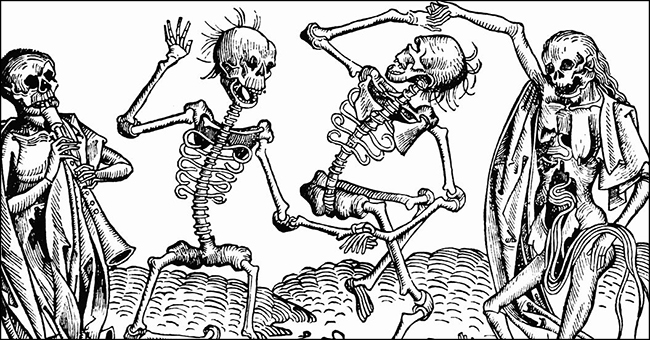
    “The Dance of Death” (1493) by Michael Wolgemut, from the Nuremberg Chronicle of Hartmann Schedel.

    “The Dance of Death” (1493) by Michael Wolgemut, from the Nuremberg Chronicle of Hartmann Schedel.

    “Is it true?” a friend asked me through a text message. “Is there already a cure?” They sent me a video purporting to announce a cure for COVID-19 through various treatments. It was just one of many floating around online, amidst rampant memetic misinformation promoting conspiracy theories and misconceptions alike.

    “Look at this amazing video of Italians singing to each from balconies,” another friend said. And yet another friend showed me videos of Chinese people yelling Wuhan Jiayou, or “Let’s go, Wuhan!,” from their windows in solidarity during the city’s historic shutdown. In New York City, people clapped from their buildings in solidarity with health care workers.

    One friend has been sending me hilarious videos of people trying to find toilet paper in the midst of an unexpected shortage. Another sent me mashups of people adding Corona beer bottles to the spiky points of the coronavirus, so named for its crown-like shape.

    It is impossible to summarize the wide range of memes related to the novel coronavirus that causes COVID-19. Memes joke about how hard it is to not touch your face. Some cast blame at certain races for spreading the disease. Others simply try to make light of a grim situation, helping ease the tensions of a difficult moment. Even Vietnam’s Ministry of Health sparked a series of memes with a catchy tune that caught the attention of comedian John Oliver and saw numerous remixes. 

    In the Middle Ages, the genre of danse macabre—the dance of death—emerged in response to the ongoing threat of the bubonic plague. In it, a skeleton takes turns dancing with men (and they are always men) from all walks of life, whether the Pope, a king, a laborer, or a child. It became a meme of sorts, reproduced in countless paintings, prints, and frescos by artists riffing on the genre. Ranging from satirical to allegorical to poetic, the artistic genre represents the equalizing force of death and, more specifically, the fact that the plague struck down people of all social classes.

    It’s important to remember that the danse was not isolated to the hallways of power but was instead a message accessible to everyone and remixed regularly by other artists. According to Bethany Corriveau Gotschall at Atlas Obscura, the first known visual depiction of the danse macabre comes from 1424, in a cemetery fresco in Paris:

    Located in a busy part of Paris near the main markets, the cemetery wouldn’t have been a quiet, peaceful place of repose like the burial grounds we’re used to today, nor would it have been frequented only by members of the clergy. Instead, it was a public space used for gatherings and celebrations attended by all sorts of different people. These cemetery visitors, on seeing the Dance of Death, would certainly have been reminded of their own impending doom, but would also have likely appreciated the image for its humorous and satirical aspects as well. The grinning, dancing skeletons mocked the living by poking fun at their dismay and, for those in positions of power, by making light of their high status. Enjoy it now, the skeletons implied, because it’s not going to last.

    Today, as everyone from Boris Johnson and Tom Hanks to homeless people, prisoners and refugees in camps contract COVID-19, we face a pandemic with such remarkable contagion that half of the world’s population is now locked down in an ostensible effort to stop its spread. Global human activity has come to such a standstill that the natural world is making an unexpected comeback. At the same time, more than half the world now has some sort of access to the internet, through mobile phones, desktop and laptop computers, and shared services like internet cafes. As we isolate ourselves physically, we congregate digitally at a new scale, with Zoom gatherings and chat threads. The memes of this moment function as a digital danse macabre, a space for us to process the ongoing threat and its effects on seemingly everyone in the world, from the most powerful to the most humble.

    Where do memes come from? In Memes to Movements, I argue that digital technology enables our current memetic moment but that the act of remixing, mashing up, and modifying media has many historic precedents. The internet researcher Whitney Phillips often likens internet expression to digital folklore, and memes function a lot like folk art for our times:

    First, given that folklore is most simply understood as “the stuff people share,” such a framework sidesteps the definitional fuzziness of fake news by embracing that fuzziness. It reflects the fact that questionable digitally mediated content can take a variety of hybrid forms (from professional articles to semi-professional YouTube videos to individual social media posts); can be amplified through a variety of hybrid media (from Facebook to email to traditional journalism outlets); and can be underscored by a variety of hybrid motivations (from malevolence to playfulness to who knows what). Folkloric content can, of course, accurately reflect the world, i.e. be true. But the frame doesn’t begin and end with veracity. It begins and ends with participation.

    In my book launch talk last year at the research institute Data & Society, I looked to history. I honed in on the activism surrounding HIV/AIDS, a pandemic that continues to ravage much of the world. In 1987, a collective of artists started the NAMES Project Memorial Quilt, a folk art piece consisting of contributions of quilts that are three feet by six feet, each panel representing a person who had died from the disease. Looking carefully at these quilts, they maintain a collective quality and yet are deeply personal. They reference each other; they reference the person who’s passed. Some celebrate famous people like Freddie Mercury. Others celebrate the humble and anonymous. These quilts are a pre-internet form of memetic media, estimated to be the largest form of folk art in the world.

    From the AIDS quilt to the danse macabre, art and media have always helped us process plagues, pestilence, and pandemics. These art forms consist of a simple concept and framework that allows many people to process the complex emotions that surround a moment like this one, from fear and uncertainty to levity, hope, and anger. Sometimes creative media can heal, sometimes it can harm. Sometimes it soars with hope. Sometimes it just lets us giggle for a second. 

    Today, unable to gather in public, we do so through TikTok videos, balcony singing, hashtags and funny text message chains. I fully expect that one day, our creative expression will spill over into the physical world once more. For now, our COVID-19 memes dance macabrely through digital streets, a reminder of the full complexity of human expression and experience during a time of pestilence.


    About the Author 

    An Xiao Mina is an American technologist, researcher, and artist. She served as a contributing editor for the book Ai Weiwei: Spatial Matters, and her own work has been exhibited in museums and galleries across the US and around the world. Her writing has appeared in the AtlanticWired, the New Inquiry, the Los Angeles Review of BooksAl Jazeera English, and Hyperallergic. A 2016–17 research fellow at the Berkman Klein Center for Internet and Society at Harvard University and product director at the technology company Meedan, her home is wherever the Wi-Fi is.

  • By Christian Coleman

    Walter Brister as Armmah Sotanki, leader of the Sotanki’s troupe of “Hindoo” fakirs starting in 1898.

    Walter Brister as Armmah Sotanki, leader of the Sotanki’s troupe of “Hindoo” fakirs starting in 1898.

    Once upon a Gilded Age, Americans treated Islam and Muslims with both fascination and respect. Hard to believe in our post-9/11 timeline, but it’s true. Swept by romanticized images of Muslims found in most popular entertainment at the time and Arabian Nights, thousands of Americans were enthralled by the Islamic Orient. Some, in fact, saw Islam as a global antiracist movement uniquely suited to people of African descent living in an era of European imperialism, Jim Crow segregation, and officially sanctioned racism. Some, like enigmatic circus performer John Walter Brister, who would found the Moorish Science Temple of America in 1925, the prequel to the Black Muslims of the Nation of Islam. By then, he was known as Prophet Noble Drew Ali. Thus, at this moment in US history, the Black Muslim movement in America began.

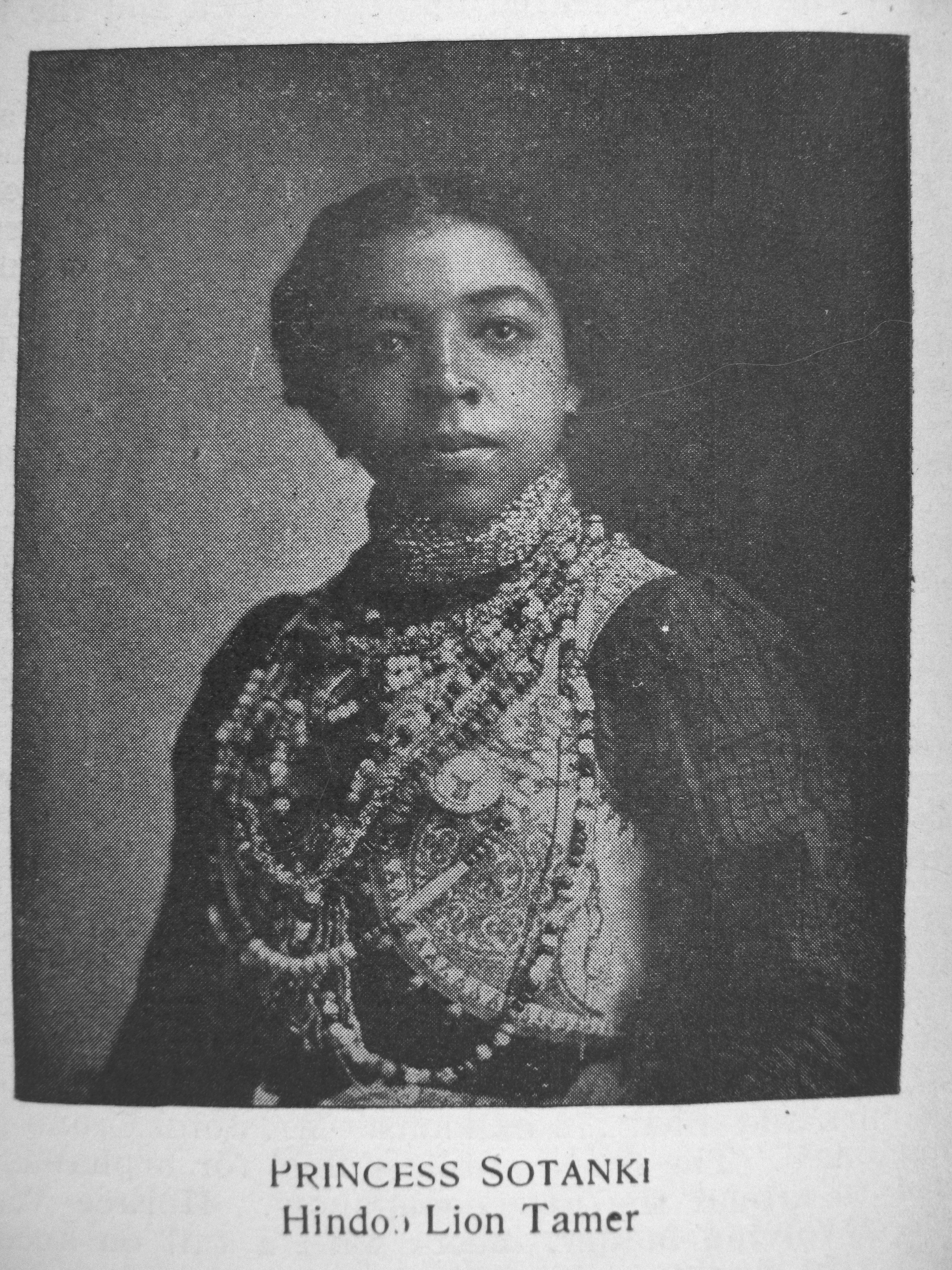
    The story of Brister’s transformations from the first Black child star on Broadway in 1893 to Noble Drew Ali is staggering, and historian Jacob S. Dorman vividly brings it to life in The Princess and the Prophet: The Secret History of Magic, Race and Moorish Muslims in America. Dorman traces Brister’s winding path through the world of Arabian acrobats and equestrians, Muslim Fakirs, Wild West shows, and eventually, Chicago politics. Working as a “Hindoo” magician, Brister traveled across the country to perform feats of strength and escape magic. This is how he met his wife Eva, who performed as Princess Sotanki. Famous as the first Black woman lion tamer and for her “Sacred Indian Snake Dance,” she would play a vital role in helping him found the Moorish Science Temple. Throw in a faked death, a new identity, and the anti-immigrant “America First” politics of the time—sound familiar?—to the mix of circus acts, and you have a life story that has to be read to be believed.

    The Princess and the Prophet also features photos and poster art from the era. One curious thing becomes clear while looking them. Dorman writes, “As the first Black child star on Broadway, and then the founder of the first Muslim mass movement in America, Walter Brister was incongruously both the forerunner of the blond tap-dancing cherub Shirley Temple and of the militant Black Nationalist icon Malcolm X.” Take a gander at the life and times of Noble Drew Ali! You can take a deeper dive into the archives at princessandprophet.com.

    Wangdoodles Bridgeman SSI 2428026 copyThe Woodlawn Wangdoodles, the Black juvenile band that starred in the hit Broadway show In Old Kentucky starting in 1893. Note diminutive bandleader Walter Brister holding a cornet.


    Walter Brister Hindu Fakir 1900

    A photo of Walter Brister as “Armmah Sotanki,” a “Hindoo Magician,” used for the Pawnee Bill Wild West Show and the John Robinson Circus 1900-1902.


    Princess Sotanki Hindoo Lion TamerPrincess Sotanki, aka Eva Brister, from the 1902 route book of the John Robinson Circus. The picture is the same as the one that ran in the 1900 Pawnee Bill Wild West Show route book, which identified her as E. Brister. This one is notable in that the book identifies her as a “Hindoo lion tamer.”


    Ali Brothers

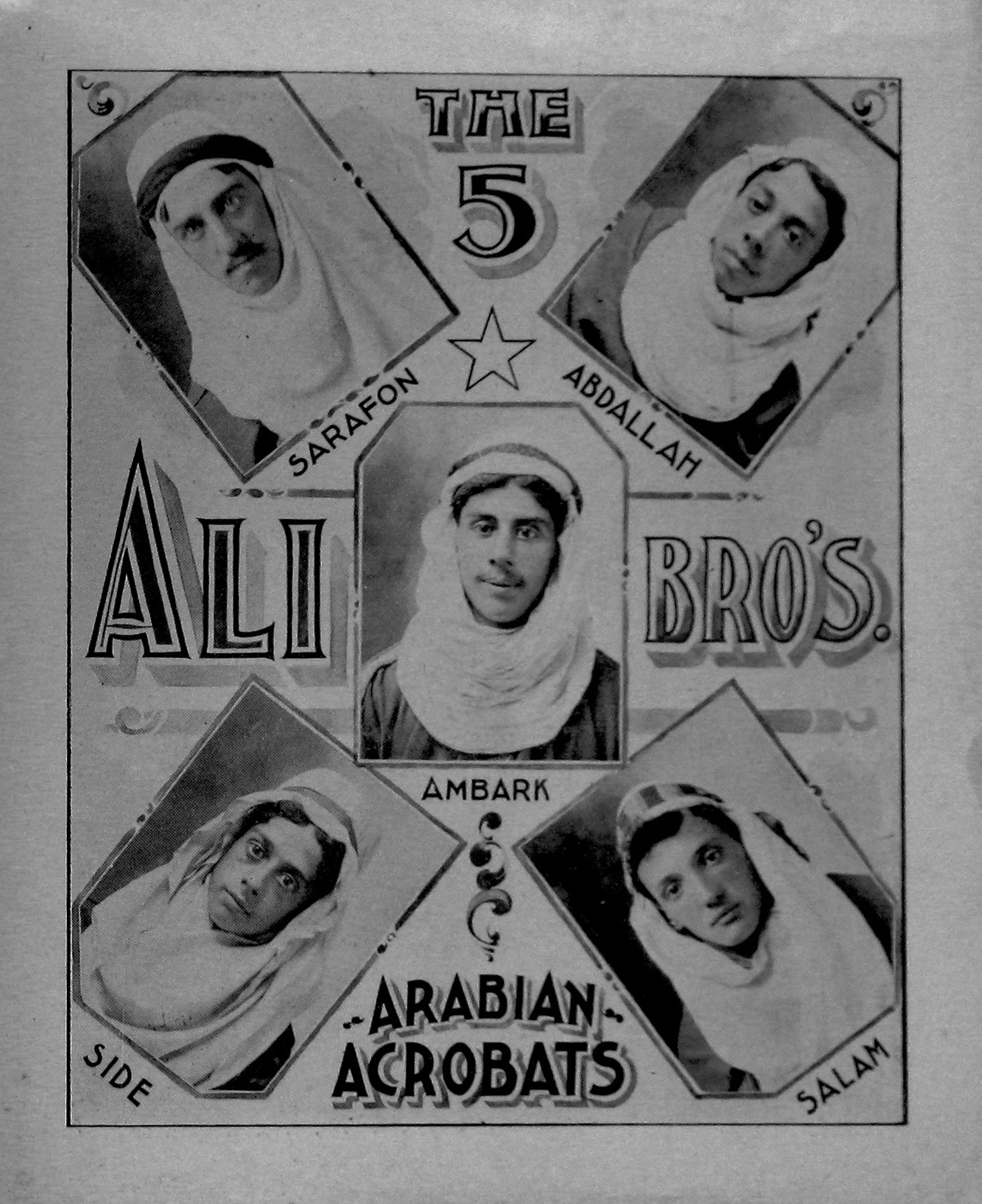
    The five Ali Brothers, members of the Pawnee Bill Wild West Show of 1899, and a typical group of Arab acrobats and equestrians commonly found in American and European circuses near the turn of the twentieth century.


    1928 Convention Small Version nypl

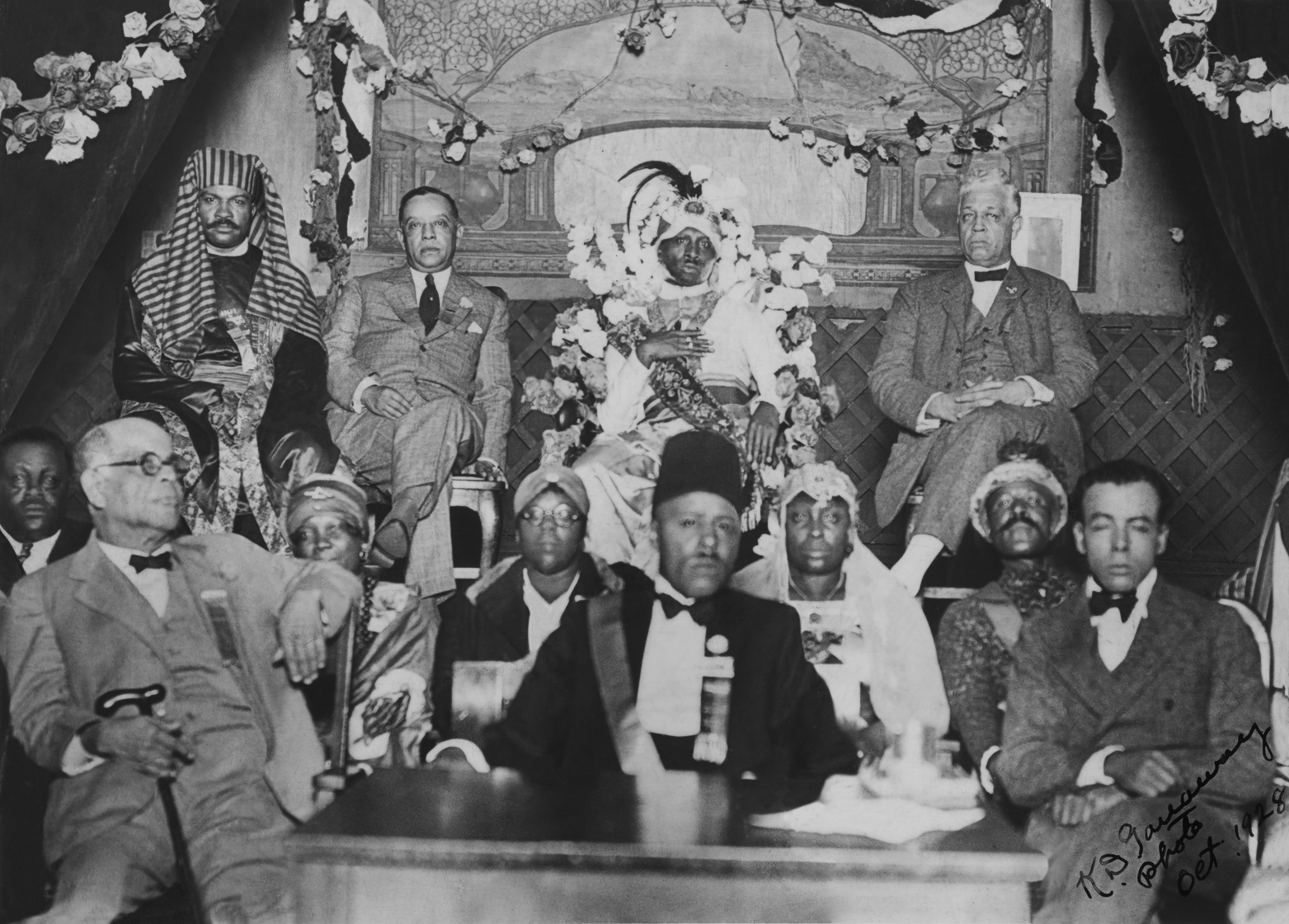
    Members of the Moorish Science Temple of America posing before Unity Hall during their first annual convention, October 1928. Note Prophet Noble Drew Ali, founder of the MSTA (first row, standing, fifth from left), and Eva Allen, the former Eva Brister, a.k.a. Princess Sotanki, seated next to him.


    NDA with Politicians Retouched BW

    Prophet Noble Drew Ali (back row) seated between leading South Side politicians Louis B. Anderson (left) and Oscar DePriest (right). Aaron Payne is seated at bottom right. First Annual Convention, October 1928.


    About the Author

    Christian Coleman is the associate digital marketing manager at Beacon Press and editor of Beacon Broadside. Before joining Beacon, he worked in writing, copy editing, and marketing positions at Sustainable Silicon Valley and Trikone. He graduated from Boston College and the Clarion Science Fiction & Fantasy Writers’ Workshop. Follow him on Twitter at @coleman_II.

  • Colorful spheres

    Photo credit: Jill Wellington

    National Poetry Month is just around the corner! When we don’t have to hunker down in the middle of the COVID-19 pandemic anymore, we should look back on these days and remember how often we rely on the arts to keep our sanity during challenging and difficult times. And it’s always there for us in the best times, too. It goes without saying, but without the artists, the poets, we wouldn’t have it. So to kick off National Poetry Month, dive into the verses and lyrical imagery of three beautiful poets: Sonia Sanchez, Jon Sanchez, and Richard Blanco!

    ***

    Sonia Sanchez’s “Haiku and Tanka for Harriet Tubman” to appear in Collected Poems (2021)

    1

    Picture a woman
    riding thunder on
    the legs of slavery    …    


    2

    Picture her kissing
    our spines saying no
    the eyes of slavery  …  


    3

    Picture her rotating
    the earth into a shape
    of lives becoming   …  


    4

    Picture her leaning
    into the eyes of our
    birth clouds   …  


    5

    Picture this woman
    saying no to the constant
    yes of slavery  …   


    6

    Picture a woman
    jumping rivers her
    legs inhaling moons   …


    7

    Picture her ripe
    with seasons of
    legs   …   running   …


    8

    Picture her tasting
    the secret corners
    of woods   …


    9

    Picture her saying:
    You have within you the strength,
    the patience, and the passion
    to reach for the stars,
    to change the world   …


    10

    Imagine her words:
    Every great dream begins
    with a dreamer   …


    11

    Imagine her saying:
    I freed a thousand slaves,
    could have freed
    a thousand more if they
    only knew they were slaves   …


    12

    Imagine her humming:
    How many days we got
    fore we taste freedom   …


    13

    Imagine a woman
    asking: How many workers
    for this freedom quilt   …


    14

    Picture her saying:
    A live runaway could do
    great harm by going back
    but a dead runaway
    could tell no secrets    …


    15

    Picture the daylight
    bringing her to woods
    full of birth moons    …


    16

    Picture John Brown
    shaking her hands three times saying:
    General Tubman. General Tubman. General Tubman.


    17

    Picture her words:
    There’s two things I got a
    right to: death or liberty   …


    18

    Picture her saying no
    to a play called Uncle Tom’s Cabin:
    I am the real thing   …


    19

    Picture a Black woman:
    could not read or write
    trailing freedom refrains   …


    20

    Picture her face
    turning southward walking
    down a Southern road   …


    21

    Picture this woman
    freedom bound     …     tasting a
    people’s preserved breath     …


    22

    Picture this woman
    of royalty    …    wearing a crown
    of morning air   …    


    23

    Picture her walking,
    running, reviving
    a country’s breath   …


    24

    Picture black voices
    leaving behind
    lost tongues   …

    ***

    Jon Sands’s “Before the Bloom” from It’s Not Magic

    One hundred fourteen days since last felt by touch.
    Still alive, even that gentle, shy touch.

    In order to hold, I’d have to reach—grab.
    Love your smell in a room, won’t even try touch.

    Need a coat thicker than my body—
    Like this whole city’s a gone awry touch.

    Calls move to voicemail, romance in poems.
    All I feel is air, like my skin denies touch.

    Woman in California, neck like an oasis:
    keeps her heart in a box when she thinks of my touch.

    Four miles this morning, sweat like baptism.
    Take one deep breath, feel the whole sky touch.

    Could spend my life pretending it’s a long time.
    Ripe for the pluck, either live or die touch.

    ***

    Richard Blanco’s “Imaginary Exile” from How to Love a Country

    Dawn breaks my window and dares me
    to write a poem brave enough to imagine
    the last day I’ll ever see this amber light
    color the wind breathing life into the dark
    faces of these mountains I know by name,
    risen from the bedrock of the only country
    I’ve truly lived, resting on the same earth
    as this house in which I’ll never rise again—

    a poem that captures me making my bed
    one last time as the sun climbs the maples
    I’ll never again watch burst like fireworks
    into fall, or undress themselves, slip into
    snow’s white lace. Never again the spring
    giggles of my brook, or creaks of my floor.
    Never the scent of my peonies or pillows.
    Never my eyes on my clouds, or my ears
    to the rain on my rooftop in this country—

    a poem that finds a word for the emptiness
    of suddenly becoming a stranger in my own
    kitchen, as I sip my last cup of coffee, linger
    with the aroma of my last meal, my hands
    trembling as I toss leftovers, wash dishes,
    eat one last piece of bread I’ll never break
    again, and cork a half-empty bottle of wine
    I’ll never finish, a vintage I’ll keep savoring
    like memories through my mind’s palate—

    a poem that lists which parts of me to part
    with, or take: Give up my orchids and dog
    to my neighbor Jewel, but keep our stares
    goodbye. Leave the china and crystal, but
    box the plastic souvenirs. Forget my books,
    but pack every letter and card I’ve saved.
    Not the gold chains that won’t buy back
    my life, but stuff all the loose photos like
    crumbs in my pockets I’ll need to survive—

    a poem that brings daisies for my mother,
    holds her as I swear I’ll return to hold her
    again, though we both know I never will.
    That speaks with my father one last time
    at his grave, and forgives his silence again,
    forever. That hopes my husband can flee
    with me, knowing he can’t—our last gaze
    a kiss meaning more to us than our first,
    as I hold his hand and hand him my keys—

    a poem ending as I walk backwards away
    from his love at my door to open another—
    step into some strange house and country
    to harden into a statue of myself, my eyes
    fixed and crumbling like the moon, and like
    the moon, live by borrowed light, always but
    never quite, dying in the sky, never forgiving
    my fate, in a poem I never want to write.

  • By Rosemarie Day

    Marylanders marching in Healthcare Justice March, October 26, 2013. Photo credit: United Workers

    Marylanders marching in Healthcare Justice March, October 26, 2013. Photo credit: United Workers

    Ninety-two percent of working-age adults believe that affordable healthcare should be a right in this country. Regardless of party affiliation, the vast majority of Americans support this position. And yet, this election cycle, the political messaging surrounding healthcare has been dominated by rhetoric that divides us. From a president who claims (falsely) that he is protecting people with preexisting conditions, to one of the two remaining Democratic candidates (Sanders) who champions Medicare for All (“he wrote the damn bill!”, after all), Americans can feel trapped by these polarized positions. And that can be a scary place, particularly with the explosion of fear around the coronavirus epidemic. But we don’t have to be trapped. There is a path forward that can unify us.

    We first need to commit to making healthcare a right in this country, like K-12 education is. Our lives depend on it—the coronavirus scare is reminding us of how interconnected we are, and that our health is not an individual matter. Other countries have gotten to universal healthcare, and they all found a way that fits their culture and values. So can we.  

    As the presidential election moves forward, we need to step up and demand that every candidate supports making healthcare a right, as other countries have, and that they’ll take a pragmatic path to get there. We need to, because we need universal healthcare in America.

    While pushing to make healthcare a right in this country, candidates cannot ignore the facts. Most Americans say healthcare is one of their top priorities in this election. For many Americans, this means they want their out-of-pocket costs reduced. They are deferring needed care because they can’t afford their prescriptions and deductible payments. (One-fourth of insured Americans who are taking prescription drugs struggle to afford their prescriptions and one-third of insured Americans have trouble paying their deductibles.) Any health reform plan needs to address affordability to gain broad-based support.

    Moreover, many Americans like and want to keep their current coverage. They don’t want to be told it’s going to be replaced by a government-run program. Polls show that this is particularly true for the over 150 million Americans (close to half of the population) who are covered by their employer. 

    Americans also want freedom of choice. Their healthcare is currently delivered in a marketplace that gives them choices. A government-run program would be the opposite of this, and they don’t support that. (Even those who love Medicare are often unaware that Medicare is government-run.) Also, most Americans have voting preferences that lie in the middle of the political extremes. There are actually more Americans registered as independents than as either Democrats or Republicans.

    We can move toward realizing our shared belief in the right to affordable healthcare by recognizing these facts and building on what we already have in place, not eliminating it. The details don’t have to be worked out before the election—indeed, they can’t be without knowing the full makeup of Congress.

    As a first step, we can build on the Affordable Care Act (ACA) by expanding subsidies to bring the program more in line with Massachusetts, which has the highest rate of coverage in the country (only 3% are uninsured). The ACA already has the support of the majority of Americans and allows working Americans to keep the insurance they have. Joe Biden has proposed something similar to this.

    We can then supplement the ACA by creating a limited public option that could serve as a safety net for people who lose their coverage or don’t enroll in another public program. That way, people who don’t have job-based insurance, or who can’t afford that insurance, have another alternative. Versions of this have been called “Medicare for those who want it” or “Medicare for America.” There are many variations of these ideas, all with the potential to improve coverage and affordability. Joe Biden has proposed a version of this.

    The bottom line is that Americans want affordable healthcare coverage and the peace of mind that it won’t disappear. Every candidate, including the incumbent in the White House, should support making healthcare a right. Democratic candidates, in particular, need to unify around this message, and then commit to acting on that during their first term. Detailed plans aren’t necessary at this stage of the process. But candidates need to show that they’ve learned the lessons of our health reform history, and that they are willing to compromise and take pragmatic steps. As the coronavirus scare reminds us, we need a leader who can unify our country around our collective health and well-being. That should include unifying more voters around a shared vision of healthcare for all.


    About the Author 

    Rosemarie Day is the founder and CEO of Day Health Strategies, which helps to implement national health reform. She’s been working in healthcare and related fields for more than 25 years, including as the founding deputy director and chief operating officer of the Health Connector in Massachusetts, where she helped launch the award-winning organization that established the first state-run health insurance exchange in the state. She also served as the chief operating officer for the Massachusetts Medicaid program. Rosemarie lives in Somerville, MA; Marching Toward Coverage: How Women Can Lead the Fight for Universal Healthcare is her first book. Connect with her @Rosemarie_Day1 or at rosemarieday.com.

  • By J. A. Mills

    Tiger

    Photo credit: Edo Emmerig

    What happened after the book ended? Did China finally bend to international will and stop farming tigers, rhinos, and bears like cows and pigs? Readers still write to ask me five years after Beacon Press published Blood of the Tiger: A Story of Conspiracy, Greed, and the Battle to Save a Magnificent Species. My answer, as of this moment—when COVID-19 has shut down much of the world—is this: You can watch the rest of the story unfold in real time.

    As I write, President Donald Trump has blamed China for not stopping the spread of COVID-19, renaming it the “China virus” and provoking racist assaults on Asian Americans. Chinese authorities have suggested that a member of the US military brought the virus to the disease’s epicenter in the city of Wuhan. Politicians and conservation organizations are pointing the finger at teeming “wet markets” across Asia, where all manner of wildlife is dragged from forests and kept in squalid conditions before being butchered by sundry inhumane and unsanitary means. If there ever were a petri dish for spawning emerging diseases, these markets fit the bill.

    Scientists have concluded that COVID-19 was not manmade in a laboratory. Rather, the virus somehow jumped from animals to humans, who spread it worldwide. Much like the scenario in the 2012 Hollywood movie Contagion, which many homebound people are watching in astonishment and horror these days.

    Researchers surmise that the 2003 SARS coronavirus may have originated from bats infecting civets, a favorite bush meat cuisine in China. They’ve pinned the 2012 MERS coronavirus on camels, perhaps in the Middle East. Scientists haven’t pinpointed the exact origin of the Ebola virus, but they suspect bats and non-human primates in the Democratic Republic of Congo–yet another zoonotic transfer of disease from animals to humans. Scientists speculate the 1918 flu pandemic that killed some 50 million people worldwide jumped from birds to humans, perhaps originating in the United States. Seasonal flu viruses generally come from somewhere in Asia, sometimes linked to livestock.

    “Historical data show that all pandemic influenza occurrences originated from animals,” according to the World Health Organization. The nonprofit organization Freeland recently launched a campaign urging people to “write to your government and ask them to ‘protect people and wildlife by banning wildlife trade as a matter of public health and environmental security in light of the COVID-19 pandemic.’”

    In truth, no one can identify, beyond the shadow of a doubt, the genesis of COVID-19 at this time, although Chinese scientists confirmed it is a close relative of SARS. Nonetheless, faulting China has become a global meme. Chinese authorities, if only for the sake of the country’s self-preservation, have acted accordingly.

    “The Standing Committee of the National People’s Congress, or China’s top legislature, during a session Monday adopted a decision on thoroughly banning the illegal trading of wildlife and eliminating the consumption of wild animals to safeguard people’s lives and health . . . including those that are bred or reared in captivity . . . ,” China’s official Xinhua news agency reported on February 24.

    “There has been a growing concern among people over the consumption of wild animals and the hidden dangers it brings to public health security since the novel coronavirus disease (COVID-19) outbreak,” Zang Tiewei, spokesperson for the Commission of Legislative Affairs of the National People’s Congress, said after the ban was approved.

    Sounds promising for tigers, rhinos, bears, and other endangered wild animals now commercially farmed in China. But here’s the rub, as spelled out by Xinhua: “The decision also stipulates that the use of wild animals for non-edible purposes, including scientific research, medical use and display, shall be subject to strict examination, approval and quarantine inspection procedures in accordance with relevant regulations.” Tigers are farmed for their bones, rhinos for their horns, and bears for the bile in their gall bladders, all for use in traditional Chinese medicine. So, while wet markets in China may be closing, factory farms for endangered species appear to be carrying on as usual, despite the inherent disease risk.

    Here’s the potentially good news, as I see it. This is the moment—perhaps the last, best moment—for the world to finally put an end to commercial wildlife farming promoted by China and growing across Southeast Asia, South Africa, and elsewhere. Farming that has raised demand for wildlife parts and products and put a price on the head of every tiger, rhino, and bear in the wild, because many consumers believe those taken from the wild are of superior quality—not unlike wild versus farmed salmon.

    While China may or may not be the origin of the current pandemic, its people were hit hard by both SARS and COVID-19. “The COVID-19 pandemic has pushed the issue of wildlife trade into the global spotlight as a threat to our public health, global economy and security,” wrote Grace Ge Gabriel, regional director for Asia at the International Fund for Animal Welfare. “I am encouraged to see China step up to curtail wildlife trade. Breaking the petri dish that grows epidemics needs global coordination and vigorous enforcement along every link in the trade chain.”

    Still, powerful political and economic interests, inside and outside the Chinese government, will push back on China’s new ban as soon as the immediate dangers of COVID-19 have passed, just as they did after similar moments of inflection detailed in Blood of the Tiger. They may already be doing so. The Environmental Investigation Agency (EIA) just reported that China’s National Health Commission is recommending a traditional medicine treatment for COVID-19 that contains bear bile. This brings to mind the insistence by Chinese wildlife authorities that tiger bone was essential for treating SARS.

    “Restricting the eating of wildlife while promoting medicines containing wildlife parts exemplifies the mixed messages being sent by Chinese authorities on wildlife trade,” EIA China specialist Aron White said in a statement posted Monday.

    Chinese wildlife authorities charged with regulating—and promoting—China’s wildlife farms balked at President Xi Jinping’s 2015 deal with President Barack Obama to end ivory trade. But Xi prevailed. I joined my fellow conservationists in hoping that Xi and Obama’s successor would broker similar agreements on ending all commercial trade in parts and products from tigers, rhinos, bears, and other endangered species coveted in Chinese medicines and prestige cuisine. Trump’s election dashed those hopes.

    Now we have COVID-19, which has brought China’s commercial wildlife trade to the attention of billions of people around the world who are currently living in fear for their lives and livelihoods. If the world continues to blame China—rightly or wrongly—for spawning this health and economic crisis that spans the planet, Xi will have to demonstrate containment of his country’s breeding grounds for future pandemics. Permanently shuttering wet markets, bush meat restaurants, and massive wildlife farms would be one highly credible, verifiable way for China to regain the trust and good graces of the world.


    About the Author 

    J. A. Mills has worked for TRAFFIC, World Wildlife Fund, Conservation International, and Save the Tiger Fund. She is the author of Blood of the Tiger: A Story of Conspiracy, Greed, and the Battle to Save a Magnificent Species and lives in Washington, DC. Visit her website at jamillsauthor.com. Follow her on Twitter at @JAMillsAuthor.

  • Women protesting

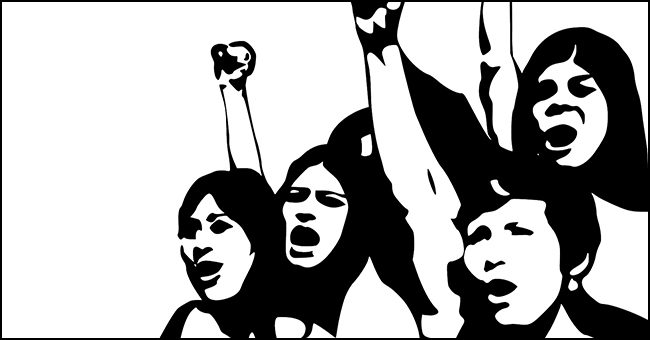
    She led a sit-in to ensure protections for people with disabilities and laid the groundwork for the Americans with Disabilities Act. She’s calling on all of us to act radically and build a different kind of future for cinema—not only for the women being actively hurt inside the industry but for those outside it, whose lives, purchasing decisions, and sense of selves are shaped by the stories told. She’s proving how a groundswell of activism, led by everyday women, can create the incentives our political leaders need to change course and make affordable healthcare accessible for everybody. She’s advocating an out-loud, unapologetic feminist manifesto to teach women and girls to smash the patriarchy by embracing qualities they’ve been trained to avoid. She made her guitar talk, went electric before many guitarists did, and defined what we know as gospel, R&B, and rock music today. She went to fight on the battlefield because she wanted to, because she had to, because she simply could.

    These are the women who have made and are making history, because they spoke up, even when the annals of history tried to silence them. By speaking up and speaking truth to power, they’re showing us the societal change that we’re capable of, that we need. Right now. Let’s give up it for these heroes! You can read their stories in these selected titles from our catalog.


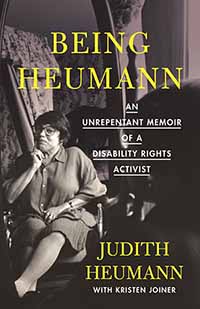
    Being Heumann

    Being Heumann: An Unrepentant Memoir of a Disability Rights Activist
    Judith Heumann with Kristen Joiner

    “A moving chronicle of social change, Being Heumann will restore your hope in our democracy and the power of our shared humanity.“
    —Darren Walker, president, Ford Foundation


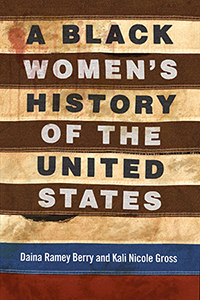
    A Black Women's History of the United States

    A Black Women’s History of the United States
    Daina Ramey Berry and Kali Nicole Gross

    “A powerful and important book that charts the rich and dynamic history of Black women in the United States. It shows how these courageous women challenged racial and gender oppression and boldly asserted their authority and visions of freedom even in the face of resistance.”
    —Keisha N. Blain, author of Set the World on Fire: Black Nationalist Women and the Global Struggle for Freedom


    Marching Toward Coverage

    Marching Toward Coverage: How Women Can Lead the Fight for Universal Health Care
    Rosemarie Day

    “Day offers a simpler remedy for fixing healthcare. If we want a healthcare system that’s more humane, more practical, and gets the important things right, turn to women. Read it and let’s get going.”
    —Andy Slavitt, former administrator of the Centers for Medicare and Medicaid Services


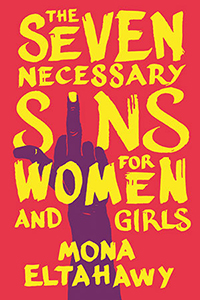
    The Seven Necessary Sins for Women and Girls

    The Seven Necessary Sins for Women and Girls
    Mona Eltahawy

    “Incredibly direct and fiercely intelligent . . . . A book for those who don’t wait for permission.”
    —Marwa Helal, author of Invasive species


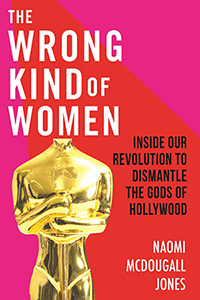
    The Wrong Kind of Women

    The Wrong Kind of Women: Inside Our Revolution to Dismantle the Gods of Hollywood
    Naomi McDougall Jones

    “A call to arms for both men and women who desire the industry to be more equitable and inclusive.”
    —Melissa Silverstein, founder and publisher, Women and Hollywood


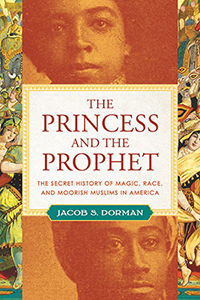
    The Princess and the Prophet

    The Princess and the Prophet: The Secret History of Magic, Race, and the Moorish Muslims in America
    Jacob S. Dorman

    “A prodigious feat of detective work and archival magic. A spectacular book in so many ways.”
    —Robin D. G. Kelley, author of Thelonious Monk: The Life and Times of an American Original


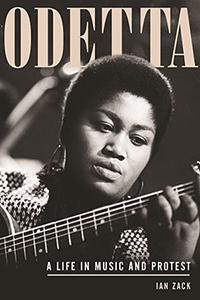
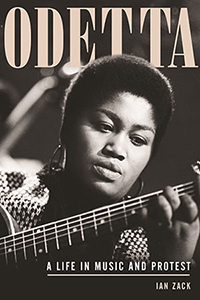
    Odetta

    Odetta: A Life in Music and Protest
    Ian Zack

    “An absorbing portrait of a seminal artist. Odetta was my Queen.”
    —Joan Baez, musician and activist


    Unashamed

    Unashamed: Musings of a Fat, Black Muslim
    Leah Vernon

    “I love the fierce, unflinching honesty and integrity in Unashamed . . . . I laughed and cried and read this book in awe of Leah Vernon’s brave, bold, and beautiful voice.”
    —Randa Abdel-Fattah, author of The Lines We Cross and Does My Head Look Big in This?


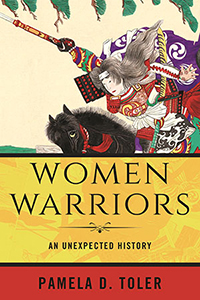
    Women Warriors

    Women Warriors: An Unexpected History
    Pamela D. Toler

    “Toler blows past all expectations with this thoroughly delightful, personable, and crucially important history of women warriors.”
    Library Journal, Starred Review


    Shout  Sister  Shout

    Shout, Sister, Shout!: The Untold Story of Rock-and-Roll Trailblazer Sister Rosetta Tharpe
    Gayle F. Wald

    “She blazed a trail for the rest of us women guitarists with her indomitable spirit and accomplished, engaging style. She has long been deserving of wider recognition and a place of honor in the field of music history.”
    —Bonnie Raitt


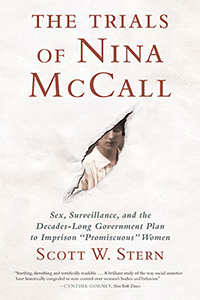
    The Trials of Nina McCall

    The Trials of Nina McCall: Sex, Surveillance, and the Decades-Long Government Plan to Imprison “Promiscuous” Women
    Scott W. Stern

    “In our own era, when harassment is a great national topic, this book could not be more timely.”
    —Mary Pipher, author of Reviving Ophelia and Women Rowing North


    The Rebellious Life of Mrs. Rosa Parks

    The Rebellious Life of Mrs. Rosa Parks
    Jeanne Theoharis

    “In the first sweeping history of Parks’s life, Theoharis shows us…[that] Parks not only sat down on the bus; she stood on the right side of justice for her entire life.”
    —Julian Bond, chairman emeritus, NAACP

    Women protesting

  • Igniting Hearts and Minds

    The coronavirus is an unprecedented crisis that is impacting our lives in significant ways. In our ongoing efforts to promote public safety during the COVID-19 outbreak, Beacon Press staff started working from home last week and will continue to do so until further notice.

    While some things are in flux, you should know that we are continuing to work hard—and creatively—on getting the books we publish in front of the right audiences. We are up for the challenge and every Beaconite is committed to this effort. We continue to monitor the situation and are in regular communication with all our partners—printers, retailers, and distributors—so we can make the best decisions for our books.

    We recognize this is an especially challenging time for independent booksellers and we are proud to have made a matching gift challenge to support the Book Industry Charitable Foundation (BINC). BINC is an organization the provides financial assistance to booksellers who become ill or are unable to work due to a mandatory quarantine.

    We’re so proud that our books can be resources for people in troubled times, and that we have so many classics and new titles to offer solace and support. We are in an uncharted territory together, but we will overcome these challenges together.


    The Staff at Beacon Press