• By Dina Gilio-Whitaker

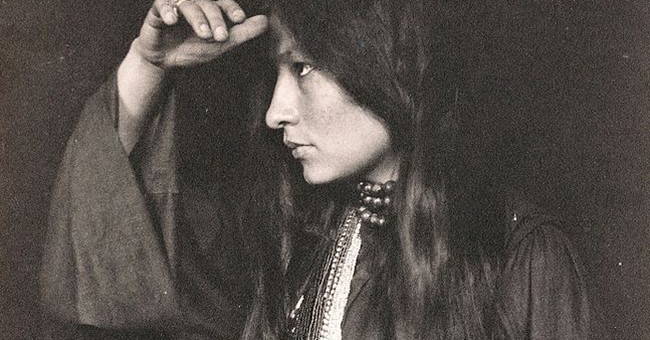
    Zitkála-Šá, aka Gertrude Simmons Bonnin. Photo credit: Gertrude Käsebier

    Zitkála-Šá, aka Gertrude Simmons Bonnin. Photo credit: Gertrude Käsebier

    Modern environmentalists have a lot to learn from the history of Indigenous resistance for wisdom and inspiration in our common fight for a just and sustainable future. And not just environmentalists, but also the western feminist movement as we know it today. As Dina Gilio-Whitaker explains in this selection from As Long As Grass Grows: The Indigenous Fight for Environmental Justice from Colonization to Standing Rock, women’s power was already recognized and acknowledged in Native American communities—a concept very foreign to the white settlers bent on colonizing the nation and keeping women subjugated as property.

    ***

    Long before there was ever a concept called “feminism” in the US settler State, there was the knowledge of women’s power in Indigenous communities. The imposition of foreign cultures, and Christianity in particular, was corrosive to societies that were typically matrilineal or matrifocal, were foundationally equitable in the distribution of power between the genders, and often respected the existence of a third gender and non-hetero relationships. As Christianity swept over the continent, it instilled Indigenous societies with patriarchal values that sought not only to diminish women’s inherent cultural power but also to pathologize alternative gender identities, relationships, and marriage practices outside the bounds of monogamy, establishing a general pattern of gender and relationship suppression that constructs modern American society and reordered Native societies.

    Feminism as we know it today is a concept that emerged primarily from the experience of white settler women in the mid-nineteenth century. Historically, European women were little more than the property of men and did not have the same political rights as men did, such as the right to vote or own property. Once they were married, they had no rights to their own bodies or even to their children, amounting to no legal existence, as feminist historian Sally Roesch Wagner recounts. So, it was logical that their struggles focused on the ability to achieve equality, which would mean, among other things, legal standing and rights. Less well recognized today is the way early women’s rights activists were shaped by American Indians. Studying the writings of some of the earliest recognized founders of the feminist movement, such as Lucretia Mott, Elizabeth Cady Stanton, and Matilda Joselyn Gage, Wagner noted the ways they were influenced by Haudenosaunee (Iroquois) cultures with whom they were neighbors in the Northeast. These settler women observed that Haudenosaunee women were free from constrictive, torturous clothing, were farmers, played sports, owned property, and were free from rape and other violence. They were not the property of men. Haudenosaunee women were highly respected in their societies, and a Clan Mother society guided much of the governance of the Haudenosaunee Six Nations Confederacy (Mohawk, Oneida, Onondaga, Cayuga, Seneca, and Tuscarora) by choosing and overseeing the male chiefs. In Haudenosaunee society, children’s identity was inherited through the mother’s clan (compared to Western societies, which trace identity patrilineally), making the concept of illegitimate children completely foreign. This meant that women had far more control over their bodies than did their white counterparts. While there were norms that governed Haudenosaunee life, women’s sexuality was not policed and condemned the way white women’s was.

    White women, in other words, were fighting for the social equity that most Native women traditionally enjoyed in their societies. The work of white women activists in the nineteenth century, often referred to as “first-wave feminism,” gradually bore fruit, and by 1920 white women had won the right to vote. But paradoxically, while white women were gaining rights, Native women’s rights were still being eroded through centuries of forced assimilation into the US political landscape. The bestowal of citizenship upon American Indians in 1924, for example, was (and still is to an extent) controversial in Indian country. For the federal government, citizenship was a strategy of assimilation, but it was also advocated by the Society of American Indians, the first Indian-run rights organization, which was in existence from 1911 to 1923. Citizenship was one of SAI’s primary agenda issues and was viewed as a mechanism to advance Indians’ status beyond “wards of the government” and a “fight for a place as full, modern, and dynamic participants in American life.” But as Wagner also points out, many Haudenosaunee women opposed citizenship because it would subject Native women to the same legal system that continued to oppress white women even after suffrage.

    ~~~

    The mid-twentieth century brought with it intense social unrest as traditionally marginalized communities fought to end oppressive policies like segregation and combat poverty borne of their marginalization. The women’s liberation movement, firmly rooted in the white middle class and now referred to as “second-wave feminism,” pressed forward with demands for equality, which would ideally be solidified into an Equal Rights Amendment to the constitution and was first unsuccessfully proposed in 1923. A renewed movement to pass the ERA in the 1970s failed in large part due to obstacles imposed by conservative women. In the meantime, as the feminist and ethnic nationalist movements advanced through the 1970s and beyond, women of color activists and scholars articulated differences between their struggles and those of middle-class white women. Their struggles, they said, were inseparable from their particular histories of racial and colonial oppression. Not all American Indian women, however, agreed that feminism was an appropriate framework, claiming that it opposed traditional practices and forms of social organization. Many of today’s Native feminists counter the claims that feminism was inappropriate, however, and argue for an Indigenous conception of feminism, which recognizes their cultural diversity and that what they do share is their histories of colonial domination. In the words of Native feminist scholars Shari Huhndorf and Cheryl Suzack, an Indigenous feminism “centers on the fact that the imposition of patriarchy has transformed Indigenous societies by diminishing Indigenous women’s power, status, and material circumstances.” Patriarchy, in other words, is inseparable from colonialism.

    Indigenous feminism foregrounds Indigenous relationships to place and dominant society, which on a global scale vary from country to country. In the US this is articulated in the language of tribal sovereignty and Native nationhood. This wave of modern rights-based American Indian activism began with SAI, a collection of Western-educated Indian professionals who embraced the Progressive Era values of reform that tended to believe education and government action were key to improving Indian lives. Their work influenced what led to positive change in federal Indian policy in the 1930s with the passage of the Indian Reorganization Act of 1934. It was progressive for its goals to promote self- determination, but also for the way Native women worked side by side with Native men at a time when white women were still barred from many leadership organizations.

    The women of SAI are remembered to this day for their bold leadership and fearless voices. There are many noteworthy examples, but a few women stand out as significant players. One of SAI’s founding members was Laura Cornelius Kellogg of the Wisconsin Oneida tribe. She was widely traveled and well educated and taught at two Indian boarding schools. As a public intellectual she was known for her visionary ideas to transform the Indian Service (also known as Office of Indian Affairs, predecessor of the Bureau of Indian Affairs), advocacy for preserving traditional Native knowledge, and fighting for land rights of her tribe and others in Southern California. The Los Angeles Times in 1904 described Kellogg as “one of the most interesting Indian women in the United States.”

    Marie Louise Bottineau Baldwin, Turtle Mountain Ojibway, was the first American Indian woman to become an attorney. At a time of extreme pressure for Indian people to assimilate into white society and when women were fighting for the vote, Baldwin—a respected employee of the Indian Service—was publicly outspoken on the equity built into Native cultures and “went even further, claiming the cultural superiority of Native societies, especially in terms of the position of women.” Her strong Indigenous feminist stance was highly influential on mainstream suffragists when she participated in a suffrage parade the weekend of President Woodrow Wilson’s inauguration.

    Gertrude Simmons Bonnin, also known by her Lakota name Zitkála-Šá, is one of the most widely written about women of SAI. Bonnin was a multitalented Native renaissance woman who wrote several books and was an accomplished musician (she wrote the first Native American opera, The Sundance Opera), teacher, editor, and political activist. Perhaps her greatest influence during the Progressive Era came through her leadership in the National Council of American Indians. Formed after the dissolution of SAI in 1923, Bonnin was chosen as president and remained in that post until the end of her life in 1938.

    ~~~

    Referred to as the Red Power movement, the activism of the 1960s and ’70s was cultivated largely by young urban Indians, and while women were involved, it was visibly dominated by men who had become so acculturated to dominant white society they had limited knowledge of their tribes’ matrilineal and matriarchal cultures. This translated into sexist, repressive behavior toward women. One of the most profoundly destabilizing aspects of colonization on Native life has been in the relationships between men and women. This “patriarchal colonialism” is particularly applicable to the 1960s and ’70s and led to a new generation of Native women’s organizing. By 1974 some of the AIM women came together and formed the Women of All Red Nations (WARN). Lorelei De Cora Means, Phyllis Young, Janet McCloud, Madonna Thunderhawk, and others organized WARN based on earlier concepts of tribal women’s traditions. Some of these women are still involved in activist organizing; Phyllis Young was instrumental from the beginning of the Standing Rock resistance as a council member who was present and very outspoken in SRST’s meeting with Energy Transfer Partners in September 2014, and Madonna Thunderhawk was at Oceti Sakowin for much if not all of its duration.

    ~~~

    Native women’s activism was always distinctly connected to environmental activism in order to protect communities from toxic development and was part of a larger pattern of organizing that led to the international arena. The International Indian Treaty Council, for example, was not a women’s organization, but American Indian women played significant roles throughout its history and IITC became the first Indigenous entity to achieve United Nations nongovernmental organization status in 1977. Andrea Carmen joined the staff of IITC in 1983, and since 1992 she has been the organization’s executive director. On the international scene another visible shift began to occur with the rise of the climate justice movement. Indigenous peoples worldwide became more visible as it became apparent that they, along with more vulnerable peoples in the undeveloped, Indigenous, and fourth world, were on the frontlines of climate change, even though they had been excluded from international processes like the Kyoto Protocol. Grassroots movements and organizations emerged from Indigenous communities all over the world, bringing attention to the effects climate change, the fossil fuel industry, and government collusion were having on their communities. And women were conspicuously at the forefront of those movements and organizations. With the rise of the internet, mass organizing became infinitely easier, enabling people to connect across international and cultural lines. For instance, in 2004 a group of thirteen international Indigenous women came together from communities as diverse as the Dakotas, the Alaskan Tundra, Oaxaca, Tibet, and Nepal to form an “alliance of prayer, education and healing for our Mother Earth, all Her inhabitants, all the children, and for the next seven generations to come.” Calling themselves the Council of Thirteen Indigenous Grandmothers, the council held gatherings every year for thirteen years in the home territory of each member.


    About the Author 

    Dina Gilio-Whitaker (Colville Confederated Tribes) is a lecturer of American Indian Studies at California State University San Marcos, and a consultant and educator in environmental justice policy planning. Her research interests focus on Indigenous nationalism, self-determination, environmental justice, and education. She also works within the field of critical sports studies, examining the intersections of indigeneity and the sport of surfing. She is co-author with Roxanne Dunbar-Ortiz of Beacon Press’s “All the Real Indians Died Off” and 20 Other Myths About Native Americans, and author of As Long as Grass Grows: The Indigenous Fight for Environmental Justice from Colonization to Standing Rock. Follow her on Twitter at @DinaGWhit and visit her website.

  • By Nicole Aschoff

    Smartphone

    Remember what life was like before smartphones? Younger generations won’t, because our pocket computers have become such a fixture in our societal landscape, we can’t imagine life without them. We marvel at the clickable-tappable-swipeable conveniences they bring us. But as Nicole Aschoff writes in The Smartphone Society: Technology, Power, and Resistance in the New Gilded Age, now is the time to take control of our phones, repurposing them as pathways to a democratically designed and maintained digital commons that prioritizes people over profit. She challenges us to imagine a new way to incorporate smartphones into society that goes beyond delinking or decommodification. As a starting point, she offers these three principles.

    ***

    Principle 1: Our Phones Shouldn’t Be Used to Perpetuate and Obscure Coercive and Unjust Relationships.

    Many of the critiques about smartphones stem from the myriad ways they are used to perpetuate and obscure coercive and unjust relationships. Our pocket computers are used in ways that reconfigure, and often reinforce and renew, existing power inequalities. We see this power inequality most starkly in the relationship between corporations and workers, and between corporations and consumers. In the gig economy our hand machines mediate the employment relationship, encouraging app workers to view their phones as their boss. But our phones are not the boss; companies are. Right now, many high-tech companies are flagrantly violating existing independent-contractor laws. We need to radically update our laws regarding employment relationships for the smartphone age to give workers the dignity, pay, and protection they deserve. The relationship between tech companies and consumers needs an even bigger overhaul. Companies shouldn’t have the right to either collect and/or sell our data or access to our data, and the data broker industry is ripe for elimination. At the very least, we should have the right to easily delete forever any text, videos, or photos that appear about us on private platforms.

    These demands are part of a much broader discussion about our right to privacy. Privacy is a fundamental right that needs to be reemphasized and reconsidered in the smartphone age. Instead of privacy being an afterthought, or worse, purposefully violated, in the design of our technology its importance should be written into the design of the software, algorithms, and apps that make the modern world go round. Free-software pioneer Richard Stallman argues that we need to redesign computer systems to have limited data collection ability, not just to regulate how the data is used once it is produced: “If we really want to secure our privacy, we’ve got to stop the collection of the data. Rules to limit how the collected data may be used may do some good, but they’re not very strong protection. The privacy issue is broader.”

    The question of privacy also highlights the role of governments, especially the US government, as major purveyors of coercive and unjust behavior. Governments shouldn’t have the right to monitor our every keystroke, swipe, and tap, to take photos and video of us to use with facial recognition software. They shouldn’t be able to surreptitiously use this data to monitor, harass, arrest, and even kill, either in the United States or abroad. This includes local police departments that use social media to quash civil disobedience and community organizing. It feels daunting to demand a stop to a pattern of government surveillance that seems to know no bounds, but it can be done. The US government was forced to rein in its surveillance practices after the 1975 Church Committee revelations of illegal CIA surveillance of groups and individuals. With concerted effort it can be forced to again.

    Finally, our phones are also used to perpetuate and obscure unequal power relationships between people. If we’re serious about restoring privacy, we need to get serious about enforcing repercussions for those who publicize information shared in confidence in an attempt to humiliate, discredit, or otherwise harm another person. For example, instead of shaming teenage girls who sext, we should hold the people who publicize private messages accountable. At the same time, people shouldn’t be able to hide behind their apps and platforms to bully and harass others. We need to have a public conversation about free speech and what we expect from the applications that we use. Twitter, Facebook, Google, and other websites are not democratic organizations run in the interest of the communities they serve; therefore, it shouldn’t be up to them to decide or mediate the shape and content of public speech.

    Principle 2: We Shouldn’t Use Our Phones to Mask Bad, Selfish, or Immoral Behavior.

    One of the most amazing things about our phones is how they empower us as consumers. With a tap and a swipe, we can beckon life-easing services and access a mind-boggling range of consumer goods. Indeed, it’s so easy to consume that our phones often facilitate unthinking consumption. But Americans should think hard about our consumption norms because they are underwritten by privilege—for example, the power that comes from elevated social status or living in a wealthy country—and this privilege often comes at the expense of others.

    We may be able to get a head of broccoli delivered from Postmates in an hour, but this doesn’t mean we should. We can make do with what’s in the pantry or walk to the store. The new consumption norms encouraged by our smartphone economy are not ecologically sustainable, and although we may not see the ancillary cost when we tap our apps, there is a price to be paid. This doesn’t mean we should depend on lifestyle politics as a solution to climate change and habitat destruction. It means that as a society we must have concerted conversations about the kind of future we want. What do we value more, millions of products available on demand and a private car that arrives in three minutes, or a planet that’s suitable for human life?

    Just as our phones hide unequal relationships, they also can encourage bad behavior. We witness and participate in this behavior when we watch a video of someone overdosing on fentanyl, a video shot by a bystander who’s filming rather than helping the person or the screaming toddler standing next to them. The internet abounds with evidence of bad phone behavior—outing nannies who dare to check their phone while working, real-time photos and comments about unsuspecting plane passengers taken surreptitiously by the person sitting behind them, virtue signaling pile-ons, and infinite varieties of trolling.

    Our bad phone behavior isn’t usually a matter for the police. It is evidence of a society whose norms are in flux. It’s time we develop new social norms for the smartphone age to protect people’s dignity and privacy, as well as our own. Developing new social norms about acceptable smartphone behavior will enable us to update our concept of privacy, a crucial objective that will give us standards for acceptable behavior and practices, whether between ourselves and our own device, between people, or between institutions and people. It will also encourage more reflexivity about our own motivations and agendas when we use our phones, a necessary process if we’re going to get control of the machine in our pocket.

    Principle 3: Our Phones Should Be a Pathway to a True Digital Commons Where Life Isn’t for Sale.

    After two shouldn’ts here is a should. The internet is an interesting, hilarious, and occasionally wondrous place. It is a great human invention. So are smartphones. The 1999 report “Funding A Revolution: Government Spending for Computing Research” demonstrates how the federal government played a central role in building the nation’s computing and communications infrastructure through taxpayer funded research and development. Mariana Mazzucato points out in her award-winning book The Entrepreneurial State, “Apple was able to ride the wave of massive State investments in the ‘revolutionary’ technologies that underpinned the iPhone and iPad: the internet, GPS, touch-screen displays, and communication technologies.” Moreover, our unpaid, appropriated work is what makes these platforms so valuable and central to modern life. As such, we have the right to demand what kind of digital society we want—the right to demand that our smartphones be a pathway to a true digital commons, a place where our data, inseparable from our life, is not for sale at any price.

    One of the greatest tensions of our smartphone society is the disconnect between the motivations shaping how ordinary people use their phones and the motivations of the tech titans who control our phones. One group is interested in socializing, learning, doing politics, and being entertained, while the other is primarily interested in making a profit through extracting user data to sell to other companies. These conflicting drives are ultimately irreconcilable. Omaha farmers captured this underlying contradiction in the first Gilded Age: “We believe the time has come when the railroad corporations will either own the people or the people must own the railroads.” We’re at a similar crossroads. If we want expanded privacy and dignity as technology advances today, we need to create spaces that allow for privacy and dignity. Right now, the platforms and apps that both individuals and society have come to rely upon are not those spaces.

    Does that mean we should build a People’s Facebook or Google? Perhaps. It might mean running these companies as utilities, recognizing their centrality to everyday life and thus regulating them as such. Or it could mean advocating that every person receives a digital baby box, riffing on Finland’s practice of sending expectant mothers a box with everything she needs for her new baby. Instead of diapers and onesies, each person would be given an encrypted email account, access to taxpayer funded broadband internet, secure server space, and a library of web and social media tools that follow free-software principles and don’t collect and sell people’s data.

    In the present climate, goals like these might seem out of reach. But the barriers to achieving them are not technological or financial. The digital architecture that undergirds our smartphone society is surprisingly lean in terms of manpower and capital costs. Recall that Instagram only employed thirteen people when it was acquired by Facebook. Moreover, the knowhow to build a public system subject to democratic design and control is widely available. The biggest barrier today is the “common sense” cultivated by Silicon Valley that our country’s digital architecture should be discussed and decided by the people who own the tech companies rather than by the ordinary people who use the technology, provide the data and the taxpayer funding, and are impacted so profoundly by the priorities and proclivities of the tech titans.

    Instead of giving in to techno-determinist impulses designed to keep us in our place we should encourage a broad and hearty debate about what a true digital commons should look like. It should be a debate that’s not afraid to make big demands and isn’t dominated by software engineers and elites. Our smartphones have brought digital technology into the most intimate spheres of life. It’s time to take control of them and repurpose them as pathways to a democratically designed and maintained digital commons that prioritizes people over profit.


    About the Author 

    Nicole Aschoff is the editor at large at Jacobin magazine, where she writes about capitalism, technology, and labor. Her writing has also appeared in the Guardian, the NationDissent, and Al Jazeera. Aschoff is the author of The New Prophets of Capital, and she contributes frequently to podcasts, radio shows, and documentaries about corporate power. Aschoff received her PhD in sociology from Johns Hopkins University and previously taught at Boston University. Connect with her on Twitter (@NicoleAschoff) and online (nicoleaschoff.com).

  • Haley Lynch

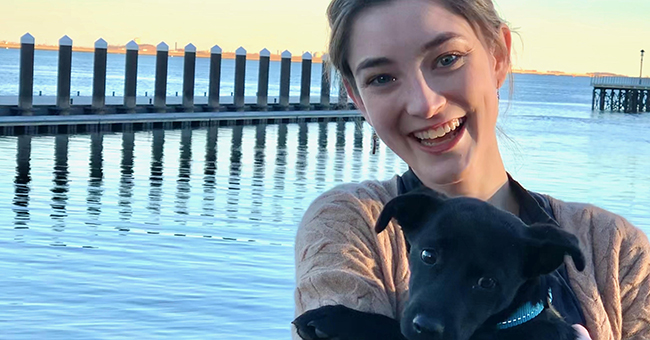
    Haley Lynch with her sister’s puppy, Rae.

    In these times when readers are responding to our books “more than ever,” when our authors—including Richard Blanco, Imani Perry, Robin DiAngelo, Dina Gilio-Whitaker, Daina Ramey Berry, and Kali Nicole Gross—are appearing in the media, their ideas going viral on social media, their voices being heard on so many platforms, we thought it might be good to take a break to focus on some of the staff who work hard to find, shape, edit, produce, and promote those works. Our blog series “Beacon Behind the Books” introduces to you a member of our staff and gives you a behind-the-scenes look, department by department, at what goes on at our office.

    To kick off 2020, we introduce you to our assistant editor, Haley Lynch!

    What drew you to publishing, Haley? How did you find your way to Beacon?

    I’ve always loved finding that perfect seed at the heart of a story, and thanks to my mom’s early guidance (thanks, Mom!), I’ve had my sights set on a career in publishing for a long time. I spent a few summers working as an intern at a literary agency where my main job was to dig through slush piles full of unsolicited manuscripts, trying to discover the Next Big Thing. It was a great way to practice spotting not just the obviously great stuff, but the stuff that could be great with a little more shaping. That’s where I really learned how to argue for a book’s potential, which is one of my favorite parts of the job I have now.

    What current or upcoming projects are you excited about?

    I’m thrilled about Rosemarie Day’s Marching Toward Coverage, which published at the beginning of this month. This book breaks down America’s historical trouble with health coverage and assesses a few paths toward universal healthcare in really accessible terms. The author makes her arguments through a feminist lens, showing us how and why women will lead this fight. It is just the right combination of info and motivation—a perfect book for everyone of all genders to read right now.

    Meanwhile, I’m currently working on a few projects I’m really excited about, especially Jess Zimmerman’s very personal and real new book, in which the female monsters of Greek mythology turn out to be feminist icons we’ve all been overlooking. Put it on your To Be Read list for Spring 2021, and tell your scariest friends to read it, too!

    I’m also looking forward to publishing Rae Nudson’s All Made Up, which looks at the ways women throughout history and across cultures have used makeup to define and defy their roles in a patriarchal society. It’s a very thoughtful book, relevant to anyone who thinks about how others perceive them.

    What’s your advice to someone interested in entering the publishing field?

    This may be cliché, but the best thing you can do is to network. I like to use my own path as an example of how networking can actually work out.

    It took me a year to get a full-time job in my chosen field and city after I graduated from college, and that year was full of awkward coffee dates and “thank you for meeting with me” emails. I found out about the job I have now because a friend from college introduced me to their literary agent friend who introduced me to an editor who gave me a stack of free books and promised to tell me if they heard about any job openings. I was committed to living in Boston rather than moving to NYC right after college, which limited my options somewhat, but finally that editor did hear of a job. She connected me with Beacon’s Design Director, Carol Chu, who put me in touch with my now-boss, Helene Atwan, for an interview. I feel very lucky to have landed at Beacon—and I realized that everyone in publishing knows exactly how hard they worked to get into this industry, and everyone wants to help the next folks get in, too.

    What’s the next queued song on your music player?

    “Seven Minute Mind” on The Bad Plus’s album Made Possible. It’s one of my all-time favorites. I like to listen to something a little upbeat during my walk home from work. Snarky Puppy and Haitus Kaiyote are my go-to’s lately.

    What are you reading right now?

    I’m currently reading Chimamanda Ngozi Adichie’s Americanah. I’m a little late to the party on this one, but if you also haven’t got around to reading it yet, consider this your official reminder. I’ve also just finished Home Fire by Kamila Shamsie, which is an utterly tragic and very powerful book. And I’m re-reading an old favorite called Evening is the Whole Day by Preeta Samarasan. It might have ghosts, and I like the fact that I can’t say for sure.

    Hobbies outside of work?

    I started boxing classes a few months ago, which I’m loving. It’s a fabulous workout and demands a style of energy and focus so different from the kind I use all day at work. I’m also a weekend saxophone player and bread baker. Most importantly, my younger sister recently adopted a pup named Rae, so I’m looking forward to visiting her frequently, playing fetch, and showing endless photos to my dog-loving coworkers. Just look at her sweet face!


    About Haley Lynch 

    Haley Lynch earned a BA in Comparative Literature at Hamilton College and graduated from the Columbia Publishing Course in 2017. She was with the Zachary Shuster Harmsworth literary agency, Da Capo Press and Seal Press, and worked at the Kneerim & Williams literary agency, before joining Beacon Press in July 2018. She acquires narrative nonfiction with an emphasis on intersectional feminism and lifting up marginalized voices. Her areas of particular interest include public health and policy, social activism, cultural studies, neurodiversity, and food waste.

  • Judith Heumann on The Daily Show with Trevor Noah. Photo credit: The Daily Show

    Judith Heumann on The Daily Show with Trevor Noah. Photo credit: The Daily Show

    We’re going two for two—our second author to appear this year on The Daily Show! On March 4, Trevor Noah interviewed disability rights activist Judith Heumann in honor of Women’s History Month. And we’re squeeing again like the book groupies we are!

    “Reading this book, I expected to be impressed by it, but I wasn’t quite expecting how much of a badass you would be,” Noah told Heumann. And he’s right: she’s a total badass! He went on to say, “You don’t just advocate for human rights and rights for people with disabilities; you fight for them and you fight for them with a passion.”

    She gave powerful and inspiring anecdotes from her life, her experiences organizing demonstrations, which she wrote about with Kristen Joiner in Being Heumann: An Unrepentant Memoir of a Disability Rights Activist. By sharing her personal story of fighting for the right to receive an education, have a job, and just be human, she shed a light on the long-overlooked history of the Disability Rights Movement in the United States. She also spoke about how her story isn’t just hers alone.

    Here are some highlights from the interview.

    ***

    Trevor Noah: I specifically have taken for granted so many things in life that I’ve always felt have been there: ramps for getting into stores, for buses—all the measures we put in place to help everybody be part of society. You lived in a world where this wasn’t true, and you fought to make those changes. What was that world like?

    Judith Heumann: I was born in 1947. I had polio in 1949. There were no federal laws that made it illegal to discriminate against many people. Obviously, the Civil Rights Act in the US didn’t come about until 1964, and the disability community was not included in that. There were no motorized wheelchairs at that time, because the technology wasn’t there. The school I went to wasn’t accessible.

    ~~~

    TN: This has been the story of your life: defiantly reminding people or exposing to people how many obstacles so many people in our society face. As an able-bodied person, I take so many things for granted.

    JH: I call you nondisabled, because the likelihood of your acquiring a disability, temporarily or permanently, is statistically very high.

    TN: Did you just threaten me?

    JH: Yes. Definitely!

    (LOL!)

    ~~~

    TN: It’s been thirty years since the Americans with Disabilities Act was passed. Many would feel like everything has been done and everyone has access to what they need. What do you still feel needs to be improved, specifically in the United States?

    JH: One of the big issues is that people with disabilities need to feel proud of who we are. We need not to be ashamed of who we are. What we find when we start speaking up about who we are, with pride and ownership that we have a right to be equal members of our society wherever we live, is that really makes a change.

    ~~~

    Other gems of wisdom from Judith Heumann

    My story isn’t my story; it’s really the story of many other people. Kristen Joiner, who helped me write this book—because it wouldn’t have come into being without her—friends of mine with disabilities living in different parts of the world are also talking about how this is their story. The issue of discrimination and oppression and how our lives have been limited and how people are really gaining back our voices.

    I live in DC. In the Metro there, some of the most frequent users of the elevators are men and women who have babies and baby carriages. I think we really need to look at the kinds of accommodations that theoretically have been made for disabled people actually benefit so many other people. And people don’t even realize why they’re there!

    ***

    Watch her full interview here:

    Maybe we should have made the subtitle of her memoir “An Unrepentant Memoir of a Disability Rights Badass.” Because her lifelong battle to achieve respect, acceptance, and inclusion in society invites us all to imagine and make real a world where we all belong.

    Want to see how much of a badass she is? Check out Drunk History’s wonderful enactment (her other Comedy Central cameo!) about her leading the Section 504 sit-in and her 1977 portrait in Time’s 100 Women of the Year series!


    About Judith Heumann 

    Judith Heumann is an internationally recognized leader in the Disability Rights Independent Living Movement. Her work with a wide range of activist organizations (including the Berkeley Center for Independent Living and the American Association of People with Disabilities), NGOs, and governments since the 1970s has contributed greatly to the development of human rights legislation and policy benefiting disabled people. She has advocated for disability rights at home and abroad, serving in the Clinton and Obama administrations and as the World Bank’s first adviser on disability and development. Connect with her on Twitter (@judithheumann) and Facebook (TheHeumannPerspective).

  • By James W. Russell

    Prescriptions

    If the Bernie Sanders momentum continues, his signature Medicare for All proposal will become an even more intense subject of national debate than it already is.

    Attaining universal health insurance has never been a technical problem in the United States. We know that because every other major country and a number of minor ones have attained it at much lower cost and with better health outcomes than the private health insurance system that we have. If they can do it, so too could the United States.

    It is rather a political problem that has two sides: opposition from the private health insurance industry that profits excessively from the existing system and opposition from members of the public who fear losing their existing private insurance.

    There is very little that the proponents of Medicare for All can do about the first source of opposition. It is what stopped the Clinton health reform and resulted in the Affordable Care Act being considerably weakened in return for the support of the private health insurance industry—the political lesson learned from the Clinton debacle.

    The private health insurance industry has at its disposal a powerful arsenal of political contributions, lobbyists, and public relations firms to fight any reform to the health care industry that it sees as inimical to its bottom-line interests.

    A part of its strategy, beyond direct influence of politicians, has always been to use public relations firms to mold public opinion so that it will be on their side in any fight over health insurance reform. Even if opinion polls show majority support for some form of Medicare for All, having a significant active minority opposition will make passage of enabling legislation very difficult.

    Then there is partisan Republican opposition to anything Democrats do to reform healthcare. Witness the town hall near riots that greeted the Affordable Care Act (Obamacare) that Democrats had carefully crafted to have the support of the private health insurance industry.

    Winning significant progress toward universal quality health insurance will require being willing to proceed against the inevitable opposition of the private health insurance industry while diminishing public opposition, even if that is already a minority sentiment.

    That’s where a transitional Medicare for All proposal comes in as opposed to an all-or-nothing, all-at-once one.

    A transitional proposal is not to be confused with the current public option ones. Those proposals diminish public opposition at the cost of effecting the needed transformation of health insurance. There are multiple ways that private insurance companies can manipulate risk pools to make sure that public option plans get the sickest most expensive patients, what is called adverse selection.

    A transitional plan would lead to the transformation of the health insurance system in a way that would diminish sources of public opposition, thereby making it more politically possible.

    A transitional Medicare for All would allow people to keep their existing private insurance if they wanted to or join a new Medicare for All plan with equal or better benefits.

    At the same time, all new health insurance participants would be enrolled in Medicare for All.

    This is similar to when employers soft freeze a pension plan. Existing pension participants continue with the plan but all new employees receive a 401(k) instead.  The difference is that while soft freezes represent benefit cuts, enrollees in Medicare for All would receive equal or better benefits.

    Requiring new enrollees, who would be mostly young, to join Medicare for All would solve the risk pool adverse selection problem.

    Put differently, everyone would automatically be enrolled in Medicare for All with the right to opt out if they had a private plan they preferred.

    Having quality Medicare for All or keeping existing private insurance as options will quickly diminish public opposition from those who, rightly or wrongly, fear losing their private insurance. They may not become in favor of it, but at least they would not continue to actively oppose it. Removing that source of public opposition would, in and of itself, greatly enhance the legislative prospects for passage of Medicare for All.

    And what person without insurance would be opposed to automatically receiving free or low-cost quality Medicare for All?


    About the Author 

    James W. Russell (jwr5@pdx.edu) is the author of Social Insecurity: 401(k)s and the Retirement Crisis. An authority on retirement policy in the United States, Europe, and Latin America, he led one of the first employee movements to successfully challenge the dominant trend and replace a 401(k)-like plan with a more secure traditional pension plan. He has taught at universities in the United States and as a Fulbright professor in Mexico and the Czech Republic. He currently teaches Public Policy at Portland State University. Connect with at jameswrussell.com and on Twitter at @jwrpdx.

  • By Kristen Joiner

    Judith Heumann and Kristen Joiner

    Judith Heumann, left (Photo credit: Rick Guidotti for Positive Exposure), and Kristen Joiner, right

    Judy Heumann isn’t nice.

    Let me be clear.

    Judy Heumann, one of the most transformative disability rights leaders of our time, is very friendly. Just take a walk around her Washington, DC, block. You’ll see that she’s on a first-name basis with everyone, from the doorman to the bus driver. But she is not nice.

    For the past three years, I’ve had the privilege of waking up and imagining myself into Judy Heumann’s shoes. I co-authored her story, Being Heumann: An Unrepentant Memoir of a Disability Rights Activist, and as a nondisabled person, I’ve learned (and am still learning) an enormous amount about life with a disability. Equally important, despite having spent my entire career leading NGOs and working for social change, I’ve also learned an enormous amount from Judy about activism.

    Judy Heumann became a quadriplegic from polio at the age of one and grew up in 1950s Brooklyn—an era known for locking disabled people in institutions, segregating them into inferior special education programs, and shunting them into sheltered workshops as a proxy for “employment.” People with disabilities, stigmatized and ignored, were considered a burden. In the face of this discrimination, Judy became an activist for disability rights. In 1977, she and others led 150 disabled people into the San Francisco Federal building and refused to leave until the Carter administration enacted the first civil rights legislation for disability. This protest, the Section 504 Sit-In, is recognized now as the longest takeover of a federal building in US history. It paved the way for the American Disabilities Act

    In other words, Judy is a badass.

    Judy speaks the truth. Unapologetically. Now, in case you don’t know good-girl lexicon, speaking the truth unapologetically is not considered nice. Nice is what girls are asked to perform to be considered desirable. Nice girls are soft, compassionate and, above all, agreeable. Nice girls don’t complain, have needs, ask for what they want, say no, get angry, refuse to do something, or make a fuss. Nice girls apologize when they get the wrong drink order.

    Nice, however, is not just about gender. It is about power. When interacting with people with less power, sociologists have noted, people with power expect the less powerful to display considerate, cooperative, and nice behavior. When they don’t, people with more power aren’t just surprised—they’re annoyed and, even more, threatened. Not acting nice toward people with power is an inherent challenge to their privileged status.

    When Judy and the protesters first rolled into the San Francisco Federal Building, they were offered punch and cookies as if they were children. But when they refused to leave the office, they suddenly became a threat. Overnight, they flipped to being called “an army of cripples” by the media, holding the potential of violence.

    For people trying to remain in the nice box, there is no recipe for addressing any kind of inequity, discrimination, or blatant wrong. When people with less power speak up, the easiest way to shoo us back into our box is to ignore or diminish us into silence. When a high-level funder sexually harassed me on a trip, the colleague I was traveling with dismissed it, said, “He didn’t mean it, I’m sure you’re mistaken,” and chuckled. I got it and, as a twenty-five-year-old entry-level employee, shut up. When dismissed, the burden is on us to navigate a landmine of social norms nicely.

    When President Trump called Greta Thunberg an angry little girl, he was trying to pull this lever. Nice, by definition, doesn’t insist on being heard. If we speak up or push to be heard, we’re policed, often with shame, bullying, and exclusion.

    As a woman with a disability, Judy has repeatedly been shamed, bullied, and excluded. The outrageous situations she’s been forced to confront are nothing short of dehumanizing.

    In response, however, she has always refused to be silenced.

    And when she refused to be silenced, she stepped out of the nice box and never went back.

    Writing Judy’s story, this is what I’ve learned: there is no path to challenging abusive societal norms that allows us to stay in the nice box. Speaking the truth about and taking on the wrongs of the world is never going to be nice. It is always going to be about challenging and dismantling power structures, and privilege will do anything it can to shame, bully, and exclude truthtellers. Talking about being a victim of sexual assault, being discriminated against, being violated—none of it is nice. The dehumanization of people is ugly business. Period.

    Of course, the idea of not playing by the rules of social norms is hard. We are human, after all. We want to be liked. We want to meet social expectations because they make us feel like we belong and, if you’ve ever been a teenager, you’ve certainly been shamed, bullied, or excluded for breaking the strict rules of gender norms, white privilege, ableism, and the list goes on. It’s scary.

    But I’ve also learned that once you step out of the nice box, you’re not alone. Suddenly, you realize there are all these other people out there who are also tired of being told who they should be, tired of being told how they are wrong, tired of inequality, privilege, and power.

    When Judy gave up on trying to be what the world told her she should be, she found her people on her own terms. Together, they created a disability community characterized by acceptance and authenticity. And when they reached across movements, they connected with other marginalized groups, like the Black Panthers and the Butterfly Brigade.

    And with those allies, they took on the power structure and changed the world.


    About the Author 

    Kristen Joiner is an award-winning entrepreneur in the global nonprofit and social change sector. Her writing on empowerment, inclusion and human rights has been published in numerous outlets including the Stanford Social Innovation Review. Connect with her on Twitter (@kristenjoiner).

    About Judith Heumann 

    Judith Heumann is an internationally recognized leader in the Disability Rights Independent Living Movement. Her work with a wide range of activist organizations (including the Berkeley Center for Independent Living and the American Association of People with Disabilities), NGOs, and governments since the 1970s has contributed greatly to the development of human rights legislation and policy benefiting disabled people. She has advocated for disability rights at home and abroad, serving in the Clinton and Obama administrations and as the World Bank’s first adviser on disability and development. Connect with her on Twitter (@judithheumann) and Facebook (TheHeumannPerspective).

  • By Daina Ramey Berry and Kali Nicole Gross

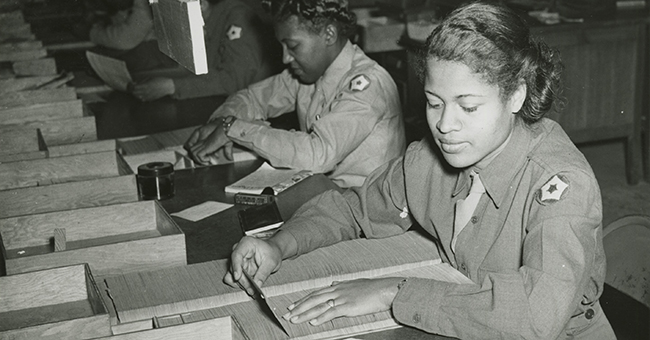
    Members of the Women’s Army Corps identifying incorrectly addressed mail for soldiers, Post Locator Department, Camp Breckinridge (1943).

    Members of the Women’s Army Corps identifying incorrectly addressed mail for soldiers, Post Locator Department, Camp Breckinridge (1943).

    Before 1619, Black women have made undeniable and substantial contributions to our country in spite of centuries of exploitation and victimization. And they continue to do so! Historians Daina Ramey Berry and Kali Nicole Gross came together to weave the wondrous tapestry of history through the perspective of those who’ve been left out of history books in A Black Women’s History of the United States. The US wouldn’t be what it is today without the Black women who were cisgender and transgender, rich and poor, educated and uneducated, reformers, enslaved, artists, activists, imprisoned, leaders, and everyday folks. These are some of the badasses you’ll meet in the book who, nevertheless, persisted in a country run by systemic racism and sexism.


    Nannie Helen Burroughs (1922) - Public Domain NYPL

    (1922)

    Nannie Helen Burroughs

    It is true that we [Black women] embody the motto coined by Nannie Helen Burroughs for the school she headed in 1909: “We specialize in the wholly impossible.” The motto, together with Nannie’s own history, stands as evidence that a Black woman could, and did, push past daunting obstacles to live a life decidedly less ordinary.

    “We must have a glorified womanhood that can look any man in the face—white, red, yellow, brown, or black—and tell of the nobility of character within black womanhood,” Nannie proudly declared in a December 1933 address. Those ideals reflected her education and professional pursuits. Born in 1879, Nannie, who studied in Washington, DC, and later in Kentucky, would go on to become the president of the National Trade and Professional School for Women and Girls in the nation’s capital. Throughout her stewardship of the institution, the school went from standing on a rough clay hill to an eight-building compound resting on several acres of land estimated to be worth $225,000. Ideologically, Nannie refused to be limited by the extremes of her day. Though many referred to her as “Mrs. Booker T. Washington,” because of her emphasis on work and self-reliance, she embraced both industrial and classical education, and expressed early Black Nationalist and feminist ideologies. She encouraged race pride by celebrating dark skin, and she remained a champion of Black women’s voting and labor rights. Three years after her death, in 1961, the educational institution she served for decades was renamed the Nannie Burroughs School. Nannie’s life and the fact that so many know so little about her touch upon the complicated threads that are interwoven into African American women’s history.


    Gladys Bentley

    Gladys Bentley, “America’s Greatest Sepia Player—The Brown Bomber of Sophisticated Songs, 1946-1949.”

    Gladys Bentley

    African American female performers took to stages in cramped bars and grand halls alike, scenes awash in cigarette smoke, thinned gin, and explicit sexual entanglements. In cabarets, Black women engaged the personal in the blues to talk about issues such as domestic violence and incarceration but also to give voice to the erotic. Songs like Ma Rainey’s “Black Eye Blues” told the tale of Miss Nancy, whose man beat her, cheated on her, and took all of her money. It also told of her efforts to fight back by warning, “You low down alligator, just watch me/Sooner or later gonna catch you with your britches down.” Gertrude “Ma” Rainey’s performances also brazenly flouted heterosexual norms. With songs such as her 1928 hit “Prove It on Me Blues,” she crooned, “I went out last night with a crowd of my friends/ They must’ve been women, ’cause I don’t like no men/Wear my clothes just like a fan/Talk to the gals just like any old man/’Cause they say I do it, ain’t nobody caught me/Sure got to prove it on me.” The lyrics and performances exploded respectable concepts of how to be Black women and men in the world, and it opened up a space for a variety of sexual identities to emerge.

    Black lesbians like Gladys Bentley donned tuxedos and played before raucous crowds eager to drink in Bentley and bathtub gin by the mouthfuls. Headlining clubs such as the Clam House, in top hat and coattails, Gladys in particular had a commanding presence that made her a top-selling artist in Jazz Age Harlem. As renowned poet Langston Hughes described: “Miss Bentley was an amazing exhibition of musical energy—a large, dark, masculine lady, whose feet pounded the floor while her fingers pounded the keyboard—a perfect piece of African sculpture, animated by her own rhythm.” Hughes beautifully captured the essence of Gladys, who made no secret of her intimate relationships with women.


    WACs

    Members of the Women’s Army Corps

    Black women rushed to fill vacancies left by soldiers headed to fight in World War II. To be clear, the shifts in policy did not automatically translate into a better quality of life for Black women and their families, as racist attitudes persisted. However, as historians Sharon Harley, Francille Rusan Wilson, and Shirley Wilson Logan explain, “World War II brought a brief exhilarating period when six hundred thousand Black women got industrial jobs with good salaries, making army vehicles, riveting aircraft and tank parts, working in ship and rail yards, in munition plants, and in the arsenals.” Even so, Black women battled white women workers who refused to share shop floors with them, and in Detroit, white women led hate marches to prevent African American women from obtaining jobs. Labor unions and the NAACP launched concerted efforts that finally opened ten thousand jobs for African American women, though another twenty-five thousand stayed unemployed. Yet Black women remained ready to seize new career options. For example, when the Army recognized and incorporated the Women’s Army Corps (WAC) in 1943, even though the WACs would be segregated, four thousand Black women quickly signed up.

    If any Black servicewomen believed their primary adversary was abroad, events in 1945, the year the war ended, would have caused them to rethink the notion. Many enlisted Black women hoped to serve their country, earn money, and benefit from valuable job training. Alice Young, of Washington, DC, who already had a year of nursing school, joined the “colored WACs” after a recruiter said her experience would qualify her for more medical training. But when she arrived at Fort Devens, in Massachusetts, after basic training, Young and the rest of the Black female soldiers learned that they were there to “scrub and wash floors, wash dishes, and do all the dirty work.” White WACs learned nursing skills, in addition to being spared the cleaning tasks assigned to African American women. Black women voiced their concerns, but the only available Black woman officer, Lieutenant Tenola Stoney, a supply officer for the Black WACs, had little power. The white officers, Colonel Walter Crandall and Lieutenant Victoria Lawson, isolated Black WACs rather than, as scholar Sandra M. Bolzenius writes, “incorporating them into the post’s regular functions.”

    Marginalized, degraded, and largely ignored, Black women at Fort Devens reached their breaking point and decided to strike. The decision reflected months of indignities, which were compounded by an especially cold, dreary winter and traumatizing events such as the attempted suicide of one of their ranks, Private Beulah Sims, in February 1945. When the women failed to report for duty, officers tried to reason with them. The exchanges became heated and negotiations broke down. On the second day of the strike, General Sherman Miles informed the striking Black WACs that if they did not immediately return to work, they would face a court-martial. He did add that he would investigate their concerns. Most then returned to work, reluctantly. But an upset and despondent Alice Young declared to Lieutenant Stoney, “I’m reporting back from my ward, and I feel like I’d rather take a court-martial than go back under present conditions, unless conditions are changed.” She was not alone.


    About Daina Ramey Berry and Kali Nicole Gross 

    Daina Ramey Berry is the Oliver H. Radkey Regents Professor of History and associate dean of the Graduate School at the University of Texas at Austin. She is the author or co-editor of several previous books, including The Price for Their Pound of Flesh: The Value of the Enslaved, from Womb to Grave, in the Building of a Nation, winner of the 2017 SHEAR Book Award for Early American History. Connect with her at drdainarameyberry.com or @DainaRameyBerry on Twitter.

    Kali Nicole Gross is the Martin Luther King Jr. Professor of History at Rutgers University, New Brunswick. Her previous books include Hannah Mary Tabbs and the Disembodied Torso: A Tale of Race, Sex, and Violence in America, winner of the 2017 Hurston/Wright Legacy Award in nonfiction. Learn more at kalinicolegross.com or connect with her on Twitter @KaliGrossPhD.

  • By Adrienne Berard

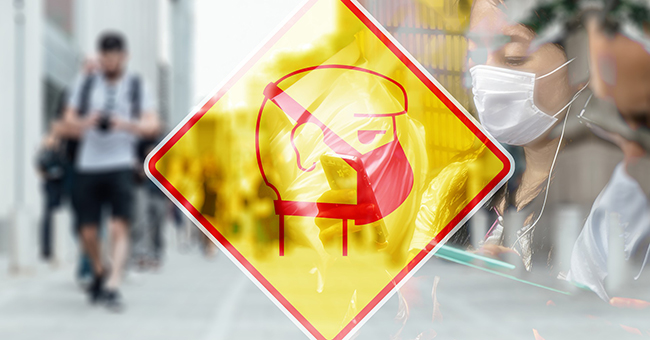
    Mouth guard

    Image credit: Gerd Altmann

    “I say to this country that we know not when the next wall will be erected, nor where its foundations will be laid.”
    —Rep. Ezra B. Taylor on the Chinese Exclusion Act, Congressional Record, March 16, 1882 

    The new virus emerged in December. The coronavirus, or COVID-19, originated in Wuhan, a city of 11 million located in central China. Since the initial outbreak, more than 76,000 people have been infected globally, in as many as twenty-seven countries, with more than 2,200 deaths being reported, mostly in China.

    Concerns over the spread of the virus prompted the World Health Organization to declare it a “public health emergency of international concern.” The global response was swift, as nations hurried to harden borders and restrict travel.

    On January 31, the Trump administration announced a strict travel ban, barring foreign nationals who’d recently been to China from entering the US and warning Americans to stay out of China. The Atlantic reported that the measures broke with guidance from the WHO, which did not recommend curbs on travel or trade.

    Physicians nationwide have noted that the flu is a much greater threat to Americans than the coronavirus. The Centers for Disease Control estimates that, so far, there could be as many as 41 million cases of influenza in the US alone this flu season—and as many as 41,000 deaths as a result of infection.

    For me, the coronavirus outbreak has put into sharp relief the American tradition of conflating immigration and infection. In fact, America’s fear of the “diseased immigrant” dates back to the nation’s first major wave of immigration and our initial understanding of disease itself.

    The turn of the twentieth century saw an unprecedented surge in immigration. In one year alone—1904—a million immigrants left their homelands for the United States, the most in the nation’s history up to that point.

    At the same time, scientific and public consciousness regarding the nature of bacteria and illness was growing. In the 1860s, Louis Pasteur conducted experiments showing the relationship between germs and disease. By the 1880s, Joseph Lister had fully articulated the germ theory of disease and developed practical applications to mitigate contamination.

    With this new understanding came fears that immigrants would bring disease into the United States. Fear of disease fused with fear of newcomers, and nativists used that fear to restrict foreign immigration by any means necessary.

    On May 6, 1882, President Chester A. Arthur signed into law the Chinese Exclusion Act and with it fostered the creation of the nation’s first “illegal” race. For the first time, Federal law proscribed entry of an entire ethnic working group on the premise that the presence of Chinese in America “endangers the good order of certain localities within the territory.”

    The act effectively halted all Chinese immigration for a minimum period of ten years, barring any Chinese laborer from coming to the United States and forbidding all federal, state, and local courts from admitting Chinese to citizenship.

    With the passage of the act, America entered into the era of Chinese exclusion. The act, renewed and amended in 1892,1902, 1904, 1917 and 1924, ushered in immigration restrictions based on race and nationality that would endure for more than half a century.

    The nation’s restrictive immigration policies created invisible borders, much larger than physical ones, that narrowed desirable races into subgroups eligible for citizenship. There was a sense that the American identity deserved protection, that it was somehow under threat, and government agencies were created and funded to aid in such protection. The exclusion era, as historian Roger Daniels wrote, was “a time when nativism and racism gained strength and acceptance at all levels of society.”

    I see echoes of the past today, when Trump tweets that open borders bring “large scale crime and disease.” The belief that immigrants bring crime to the country has continuously been disproven, but the fear that they bring disease seems harder to shake.

    landmark study from 2018 found that immigrants don’t bring disease into their new countries. In fact, the researchers found that an increasing immigrant population correlated with healthier host countries.

    It’s clear the coronavirus needs to be taken seriously, as does every global public health concern. What’s also clear to me is that we, as a nation, have a troubled history of conflating fear of maladies with fear of migrants. I don’t want to see us fall into that trap again.


    About the Author 

    Adrienne Berard is an award-winning journalist and graduate of Columbia University’s Graduate School of Journalism. She has been the Writer-in-Residence at Delta State University in Mississippi and currently works in research communications for William & Mary in Virginia. She is the author of Water Tossing Boulders: How a Family of Chinese Immigrants Led the First Fight to Desegregate Schools in the Jim Crow South. Connect with her at adrienneberard.com and follow her on Twitter at @AdrienneBerard.

  • Zach Norris

    Photo credit: Eurydice Thomas

    We’re in a time when the most powerful institutions in the United States are embracing the repressive and racist systems that keep many communities struggling and in fear. As the effects of aggressive policing and mass incarceration harm historically marginalized communities and tear families apart, how do we define safety? It is time to reimagine what it means.

    Community leader, Harvard-trained lawyer, and executive director of the Ella Baker Center for Human Rights Zach Norris does in We Keep Us Safe: Building Secure, Just, and Inclusive Communities. His book lays out a radical way to shift the conversation about public safety away from anxiety and punishment and toward growth and support systems for our families and the most vulnerable members of society. When he was in Boston earlier this month, he spoke at Brookline Booksmith about it and his groundbreaking new vision.

    Norris began the evening by reading this selection:

    1823, month unknown

    A seven-year-old boy stood on the auction block in Richmond, Virginia. His mother was in the crowd, begging her master not to sell her son. But the boy would fetch a good price. Slaveholders from the Deep South were more desperate for slaves since the abolition of the Atlantic slave trade in 1808, and since the cotton gin, invented in 1794, had allowed the production of cotton to really take off. The prices of enslaved African people had risen. In this period, one in every ten enslaved persons was relocated from the states of the Upper South to the Lower South. They were “sold down the river” into brutally hard labor in the Deep South with no means of staying connected to the families and communities they had known. Slightly over half of them experienced major family separations, meaning children were separated from their parents, or spouses were separated from each other.

    The little boy was just at the cusp of his years of highest output too, the ages from eight to fifteen years, according to popular wisdom among slaveholders. Children in these sought-after ages were often bought alone. On the auction blocks, enslaved people were lined up by height, making it even more likely that children would be separated from their parents.

    The buyers examined the little boy as though he were livestock, pulling his mouth open to see his teeth, pinching his arms and legs to find out how muscular they were, walking him up and down to detect any lameness, making him bend and stoop. In the end, he was sold to another slave master in Mississippi. His mother followed him to the wharf where he was put on a ship. When the ship launched into the water, his mother was left standing on the wharf, crying. She never saw him again.

    The boy’s name was Joseph Norris. He was my grandfather’s grandfather.

    Hearing him read this passage aloud drove home the fact that our country’s fear-based discrimination, othering, and punishment goes back. Way back.

    He went on to explain that in order to truly be safe, we have to dismantle our mentality of Us vs. Them. The root of this mentality is what Norris calls the “he keep us safe” lie, which is where the title of his book comes from. (His title flips the lie on its head, making it affirming and empowering.) Here’s what he told the audience.

    “We live with the lie today. It is the lie of an abuser. It is the lie that would have us believe that our neighbor around the block, our neighbor at the border, our neighbor in a distant land is the enemy, when in fact those folks want the same things for their families as we want for ours. It is an abusive lie, because it tells us not to trust not those closest to us. That’s what abusers do. They isolate us from those who would be our network of support. And the lie also hides the harms the abusers themselves are creating. That’s easy enough to understand when it comes to the president, but what I draw attention to in the book is the way in which the criminal injustice system reinforces that lie. Because our definition of crime is limited and limiting. By that, I mean that how we define crime and how we enforce criminal law tends to reinforce an unjust status quo.

    “The police reinforce an unjust status quo rather than not doing so. In addition to that, the criminal justice system has tended to deflect, defuse, and outright ignore both interpersonal and institutional harms. Interpersonal harms that happen behind closed office doors, that happen behind the doors of our homes. Harms that hurt women and gender-nonconforming folks, first and worst. We’ve seen their visibility raised as a result of the #MeToo movement. We’re talking about harms that are also institutional. I don’t mean to pretend that they’re strictly interpersonal, because we’ve seen the way in which powerful men are protected by institutions. But there are other forms of institutional harms unaddressed by our criminal injustice system—harms associated with poverty and inequality; harms associated increasingly with climate change, where people of color and poor people are hurt first and worst.

    “That is the lie. But the lie helps explain somewhat paradoxical things. Crime rates are actually at historical lows, but our anxiety is at historical highs. If you understand the difference between crime and harm, that starts to make more sense. We have architects of anxiety, the president being one of them, who stokes racial animus and fear, who scapegoats women and people with disabilities. That’s part of the reason why anxiety is going up. But it’s also because we’re not addressing all the harms. We’re not addressing the institutionalized and the interpersonal harms that are so prevalent and increasing in our society. This is a lie that doesn’t just relate to public safety. It threatens our very democracy. Because the idea that one person would keep us safe diminishes the actions we would need to take to have a democracy. If we’re allowing this president to do whatever he wants because he’s the greatest purveyor of crimes, then we’re basically handing over our safety, our security, our democracy to one individual.”

    Real safety begins when we bridge the divides and build relationships with one another. We can dedicate ourselves to strategic, smart investments—meaning resources directed toward our stability and well-being, like healthcare and housing, education and living-wage jobs. It also begins when we hold people accountable for the harms they commit and when we afford humanity and agency to everyone who has been dehumanized and traumatized so they can participate fully in life and society. We Keep Us Safe, with its heartrending case studies and interviews, shows us the paths we can take to get there. Thank you, Zach, for writing such an eye-opening, inspiring, and intersectional book!


    About Zach Norris 

    Zach Norris is the executive director of the Ella Baker Center for Human Rights, which creates campaigns related to civic engagement, violence prevention, juvenile justice, and police brutality, with a goal of shifting economic resources away from prisons and punishment and towards economic opportunity. He is also the cofounder of Restore Oakland and Justice for Families, both of which focus on the power of community action. He graduated from Harvard and took his law degree from New York University. Connect with him at zachnorris.com and on Twitter (@ZachWNorris).

  • African American  woman

    First, the American Dirt snafu. Now this? Barely into the beginning of Black History Month, we already had a teachable moment. Yes, that kind of teachable moment. To celebrate the month, Barnes & Noble Fifth Avenue announced the launch of their Diverse Editions. Alice in Wonderland, Romeo and Juliet, The Secret Garden, and nine other classic novels—“classic” meaning, of course, older works of fiction from the white literary tradition, as though other cultures don’t have longstanding literary traditions of their own, tut-tut—would have custom designed covers, each one illustrating the main characters with multiethnic backgrounds. We’re talking about a dark-skinned Frankenstein’s monster with a fade and Dorothy Gale done up in dark skin and braids.

    Um . . . Welp! Can we not? Sigh.

    Hours later, Barnes & Noble withdrew the series. Such prominent authors as Angie Thomas, Roxane Gay, Nnedi Okorafor, and others rightfully criticized Diverse Editions—thank you, social media!—for dolling up the books in blackface and for not promoting works by Black writers. This is what you call fake diversity. Is it too much to ask to have a Black History Month without a rash of blackface? Is it? Because it happened last year, too.

    It comes down to this: Race-swapping covers on books about canonically white characters is a colorblind move. In our fraught and touchy times, we’re far better off being color conscious, not colorblind, if we’re serious about inclusion and racial equity. More importantly, celebrating Black History Month means reading and promoting books about and by Black writers. It’s that simple! Or is it? We’ll see what the diversity fail cat drags in next time.

    Anyway, there are plenty books by Black writers, and our cup runneth over. Here’s a handful from our catalog. And you can click here to see more.


    A Black Women's History of the United States

    A Black Women’s History of the United States
    Daina Ramey Berry and Kali Nicole Gross

    “This book is a font of inspiration . . . A compact, exceptionally diverse introduction to the history of black women in America.”
    Kirkus Reviews, Starred Review


    Full Dissidence

    Full Dissidence: Notes from an Uneven Playing Field
    Howard Bryant

    “A series of forceful, justifiably angry essays connected by the theme of white supremacy negating the full citizenship of black Americans . . . . Another illuminating social and cultural critique from an important contemporary voice.”
    Kirkus Reviews, Starred Review


    Breathe

    Breathe: A Letter to My Sons
    Imani Perry

    “Imani Perry shows deep compassion for both parents and children while incisively underlining the realities of raising Black boys in a country that will inherently betray them. It is a book filled with love and insight for difficult times.”
    —Tarana Burke


    How To Be Less Stupid About Race

    How to Be Less Stupid About Race: On Racism, White Supremacy, and the Racial Divide
    Crystal M. Fleming

    “Fleming offers a crash course in what will be a radically new perspective for most and a provocative challenge that should inspire those who disagree with her to at least consider their basic preconceptions . . . . A deft, angry analysis for angry times.”
    Kirkus Reviews, Starred Review


    If I Can Cook You Know God Can

    If I Can Cook/You Know God Can: African American Food Memories, Meditations, and Recipes
    Ntozake Shange

    “This book is the first one I recommend to all cooks to understand the soul of our food. . . . It’s as indispensable as hot sauce.”
    —Michael W. Twitty, author of The Cooking Gene: A Journey Through African American Culinary History in the Old South 


    Reclaiming Our Space

    Reclaiming Our Space: How Black Feminists Are Changing the World from the Tweets to the Streets
    Feminista Jones

    “A godsend that will inform not only how we are approached and regarded by others through social media platforms but how we interact with each other and value ourselves.”
    —CaShawn Thompson, creator of #BlackGirlMagic


    Unapologetic

    Unapologetic: A Black, Queer, and Feminist Mandate for Radical Movements
    Charlene A. Carruthers

    “Anyone seriously interested in the struggle for Black liberation in this country needs to listen carefully to what she has to say.”
    —Barbara Ransby, author of Ella Baker and the Black Freedom Movement and Making All Black Lives Matter 


    Me Dying Trial

    Me Dying Trial
    Patricia Powell

    “One of the most exciting writers living and writing on the island that is the Caribbean-American hyphen.”
    —Edwidge Danticat, author of Breath, Eyes, Memory 


    Notes of a Native Son

    Notes of a Native Son
    James Baldwin

    “He named for me the things you feel but couldn’t utter . . . articulated for the first time to white America what it meant to be American and a black American at the same time.”
    —Henry Louis Gates Jr.


    The Price for Their Pound of Flesh

    The Price for Their Pound of Flesh: The Value of the Enslaved, from Womb to Grave, in the Building of a Nation
    Daina Ramey Berry

    “Berry is now seen as a breakthrough writer who completed the herculean task of filling in the blanks of one of the darkest episodes in American history.”
    Essence Magazine 


    Kindred

    Kindred
    Octavia E. Butler

    “In Kindred, Octavia Butler creates a road for the impossible and a balm for the unbearable. It is everything the literature of science fiction can be.”
    —Walter Mosley


    Where Do We Go from Here

    Where Do We Go from Here: Chaos or Community?
    Martin Luther King, Jr.

    “In this book—his last grand expression of his vision—he put forward his most prophetic challenge to powers that be and his most progressive program for the wretched of the earth.”
    —Cornel West

    African American  woman