• By Dr. Stephanie Pinder-Amaker and Dr. Lauren Wadsworth

    Barnes and Noble

    Cringeworthy. Adjective: causing feelings of embarrassment or awkwardness. “The Barnes and Noble launch of classic novels with covers promoting diversity is cringeworthy.” 

    On February 5, Penguin Random House and Barnes & Noble Fifth Avenue announced a bold plan to “kick off Black History Month” by giving “twelve classic young adult novels new covers, known as Diverse Editions.” The reimagined classics would include Alice in Wonderland, Moby Dick, Romeo and Juliet, Dr. Jekyll and Mr. Hyde, Treasure Island, Emma . . . well, you get the idea. Incredibly, “each title would have five culturally diverse custom covers designed to ensure the recognition, representation, and inclusion of various multiethnic backgrounds reflected across the country . . . as part of a new initiative to champion diversity in literature.” They created the diverse custom covers by darkening the complexions of these iconic literary figures. Yes, it gets worse. Imagine Frankenstein and Peter Pan in blackface. The public backlash was swift and fierce, garnering more than two thousand comments in twenty-four hours. 

    Borrowing from another classic: What’s wrong with the Barnes & Noble effort? Let me count the ways. Recurring themes among the comments included but were not limited to: “Why not just promote diverse authors?” ; “Blackface is racist”; “These stories are not representative of the African American nor other people of color’s experience.” And a personal favorite, “Who actually signed off on such a bad idea?

    Finally, notice that Black voices have been historically underrepresented in our bookstores? Why not cover it up? (Pun intended.) Really, what could be more insulting than an erasure of the issue? Literature goes colorblind. Paint the roses red.

    What should Barnes and Noble do next?

    1. Re-tract. Apologize, quickly and non-defensively. They did this, quickly withdrawing the campaign. The Barnes & Noble retraction noted, “The booksellers who championed this initiative did so convinced it would help drive engagement with these classic titles.” Really? Why not first acknowledge the colossal failure to truly value Black History Month?
    2. Reflect. It is pivotal that Barnes & Noble take time to understand how this mistake was born. The answer is whiteness—a history of white CEOs and leaders who are not forced to think about race on a daily basis. Because of that, they did not anticipate how this could be so hurtful. We are so accustomed to the dominance of white voices (white authors) writing what we come to understand as ‘‘normal” and universally true. It’s not. 
    3. Re-train. While we may know the answer, the ways that whiteness infiltrates Barnes & Noble specifically must be addressed. This is an excellent time to hire an external diversity expert. This is not the time to ask the people of color at the company to explain why this is wrong and how it happened. A painful start to Black History Month is not the time to heap the emotional burden of explaining and teaching on the staff of color. (Bonus tip: there’s never a good time for that.) Take a lesson from the American Dirt debacle and ensure that a full range of diverse voices are at the table. 
    4. Re-approach. Make an informed attempt to address the issue they originally sought to highlight. Barnes & Noble has a gargantuan platform that could elevate and amplify the countless talented Black authors who have been waiting too long to be recognized. 

    Lest we think this is an isolated instance of a good idea gone bad within the publishing industry, consider that the American Dirt dustup is still swirling. Sadly, this isn’t the first, nor will it be the last attempt to “promote diversity” that misses the mark—and here’s why. Toni Morrison famously said, “Definitions belong to the definers, not the defined.” In other words, the most effective, authentic, and sincere way of promoting diversity is to actually have diverse decision-makers and authors sitting at the publishing boardroom table and in critical leadership positions throughout the industry. When that happens, the concepts that were abundantly obvious to people of color and to the hundreds of white people who felt compelled to post their dissenting comments will become intuitive. Strategies like promote Black writers or feature classics about diverse experiences will simply roll off the tongue, and companies like Barnes & Noble won’t have to suspend their cringeworthy initiatives. 


    About the Authors 

    Dr. Stephanie Pinder-Amaker and Dr. Lauren Wadsworth are psychologists, co-owners of Twin Star Diversity Trainers, and coauthors of Did That Just Happen?!, a forthcoming book on cultural humility in the workplace from Beacon Press.

  • Oscar

    Image credit: Mohamed Hassan

    Announcing the Oscars nominee lineup for best director with John Cho, Issa Rae threw the best shade at the Academy. “Congratulations to those men.” We feel you, Issa! In all the Oscars’ ninety-two years, only five women have ever been nominated for the award, Katheryn Bigelow being the only one to win it for The Hurt Locker. Yet Bigelow’s win was in 2009. Why were no women nominated for best director this year? Or perhaps the better question is how. How does this keep happening? Because it’s symptomatic of a much larger issue.

    Actress, writer, and producer Naomi McDougall Jones takes Hollywood to task in The Wrong Kind of Women: Inside Our Revolution to Dismantle the Gods of Hollywood. Drawing on her personal experiences, hundreds of hours of interviews with industry professionals, and cold, hard research and data, McDougall Jones exposes the machinations behind Tinseltown’s systemic exclusion of women from roles on and behind the camera. She also makes a business case for financing and producing films by female filmmakers. All that glitters on the red carpet sure as hell ain’t gold for women working their damnedest to make an impact in the medium. And when you factor in the number of stories about abuse and degradation, it’s painfully apparent that the cutthroat, scandal-laden industry has to become an equitable industry yesterday!

    So if you tune in to the Oscars to cheer on your favorite nominees, to marvel at the red carpet catwalk of designer dresses, or to take shots every time a man goes on stage to accept an award, keep in mind these facts about gender inequality in Hollywood, courtesy of McDougall Jones.

    ***

    Fact 1: In the top-grossing films released between 2007 and 2016, 25.9 percent of female characters were scantily clad (compared to 5.7 percent of men), and an additional 25.6 percent of female characters got partially or fully naked (compared to 9.2 percent of men), meaning that roughly 51 percent of the time that you saw a female character on screen, she was in a state of full or partial undress.

    Fact 2: In 2017, of the one hundred top-grossing domestic films, only 24 percent had female protagonists, which is actually a 5 percent decline from 2016, when 29 percent of films had the same. This number rebounded in 2018 to 31 percent female protagonists, though this may have been a temporary up-trend in response to public pressure related to #MeToo, a phenomenon whose endurance remains heavily in question in terms of representation of women on-screen.

    Fact 3: As a reality check, women are 51 percent of the US population.

    Fact 4: Research from the Geena Davis Institute on Gender in Media shows that, in films, there are only one-third as many women on-screen as men. For every 2.3 men on-screen in a film, there is 1 woman. This holds true for leading characters, supporting characters, and, somewhat inexplicably, the nonspeaking background characters in crowd scenes.

    Fact 5: The Geena Davis Institute revealed in another study that in 2015 films, male characters received twice the amount of screen time as female characters. This is consistent with the proportional amount of time female characters get to speak. According to an analysis by the University of Southern California’s Viterbi School of Engineering, of a representative sample of 1,000 screenplays of films released in 2017, 4,900 male characters had 37,000 lines of dialogue, while 2,000 female characters had only 15,100 lines of dialogue. In 82 percent of films, at least two of the three characters with the most dialogue are male.

    Fact 6: Out of thirty Disney movies analyzed in 2016, twenty-two of them have majority-male dialogue—including Mulan, a movie whose (female) main character’s (male) pet dragon, Mushu, has 50 percent more lines of dialogue than Mulan herself.

    Fact 7: A study by the University of Southern California’s Annenberg School for Communication and Journalism looked at the top-grossing narrative features from 2007 to 2016. Of the 1,114 narrative feature film directors, 1,069 were men and 45 were women.

    Fact 8: Of the partners running the dominant talent agencies, 96.7 percent are white, as are 90.8 percent of the agents brokering deals. Of the partners running the dominant talent agencies, 71.4 percent of partners were male and 68.1 percent of agents are male.

    Fact 9: Data from the one thousand top-grossing films between 2007 and 2016 also reveals that for women who do get to direct any films at all, they make fewer over their careers than their male peers. In fact, as the following chart indicates, the highly elite club of women who got to direct a film during those ten years, 80 percent only got to direct one movie.

    Fact 10: Films that pass the Bechdel test—not a serious indication of a strongly feminist film but at least a general indicator of the presence of more female characters in a film—make an average of $0.23 more in revenue per dollar spent than films that don’t. A study conducted by Gracenote, a Nielsen company, examining the 350 top-grossing films released between 2014 and 2017, found that, on average, female-featured films led global box-office revenue at every budget level. Oscar-nominated films with a “clearly definable female lead” were 33 percent more profitable than male-led films. Despite that, only 28 percent of Oscar-nominated films have a female lead.

    Fact 11: Wonder Woman, released in 2017, was widely heralded as the harbinger of real change for women in Hollywood because it starred a woman and was directed by Patty Jenkins. This is progress. But Wonder Woman was also written by four men and produced by eleven men and only two women.

    ***

    To find out more about The Wrong Kind of Women, listen to McDougall Jones’s interview on CultureShift/WDET, read her op-eds on Ms. Magazine and Literary Hub, read excerpts on Bitch, Salon, and Ms. Magazine.

    Watch her TED Talk “What It’s Like to Be a Women in Hollywood.”

  • Latinx family

    Photo credit: Quinn Kampschroer

    Fiction can be a rich go-to venue for walking in someone else’s shoes, to transport yourself to another place or time or mindset through the power of expert wordsmithing. Most often, what you read in novels is based on real-life stories. And when these stories are rendered in works of memoir, historiography, biography, journalistic exposés, or even poetry, we feel the same narrative power as we do in fiction. This is especially important when reading about the diverse and complex lives of Latinx communities. In a time when their voices are more crucial than ever, we can’t thank our authors enough for taking the time to wield their prose to share these experiences with us. Because in their stories, you can learn, or find a piece of yourself there along with a feeling of recognition and kinship. Such is the power of masterful writing. To that end, here’s a list of recommendations from our catalog to stoke the conversations we need to have.


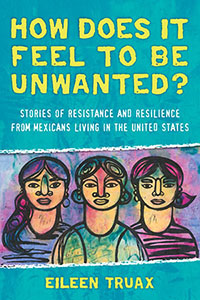
    How Does It Feel to Be Unwanted

    How Does It Feel to Be Unwanted?: True Stories of Mexicans Living in the United States
    Eileen Truax

    “When immigrant voices are being silenced, when immigrant families are being torn apart, when immigrant youth are being denied their right to dream of a better future, this book inspires us to see, to listen, and to understand.”
    —Reyna Grande, author of The Distance Between Us 


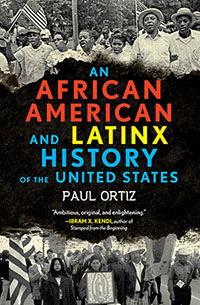
    An African American and Latinx History of the US

    An African American and Latinx History of the United States
    Paul Ortiz

    “A challenging and necessary approach to understanding our history. A must-read for those who want a deeper perspective than is offered in the traditional history textbook.”
    Library Journal 


    The Weight of Shadows

    The Weight of Shadows: A Memoir of Immigration and Displacement
    José Orduña

    “Orduña’s book probes the underside of the American dream while offering a fierce vision of the way race and class continue to shape government policy in a country that still bills itself as the land of opportunity for all. Sharp-eyed and unsparing.”
    Kirkus Reviews 


    A Cup of Water Under My Bed

    A Cup of Water Under My Bed: A Memoir
    Daisy Hernández

    “A striking and illuminating memoir of stark beauty that challenges our notions of identity and feminine power; absolutely riveting and unforgettable.”
    —Patricia Engel, author of It’s Not Love, It’s Just Paris 


    Hunting Season

    Hunting Season: Immigration and Murder in an All-American Town
    Mirta Ojito

    “Pulitzer Prize–winning journalist Ojito achieves another award-worthy feat, this time for her treatment of the minefield issue of immigration.”
    Booklist, Starred Review


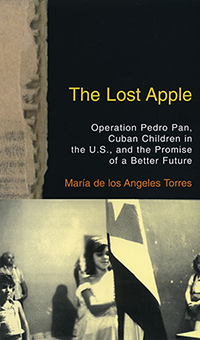
    The Lost Apple

    The Lost Apple: Operation Pedro Pan, Cuban Children in the US, and the Promise of a Better Future
    María de los Angeles Torres

    “Torres manages to keep a healthy historical balance in a tricky political landscape, never losing her footing along the way . . . The Lost Apple moves along like a good novel [and] Torres even makes politics come alive.”
    Miami Herald 


    How to Love a Country

    How to Love a Country: Poems
    Richard Blanco

    “Blanco’s power as a poet lies in the singular intimacy, structural craft, intoxicating imagery, and inner rhythms of his verse.”
    New York Journal of Books

    Latinx family

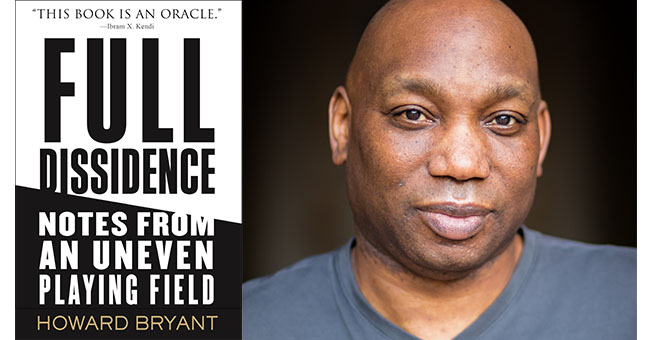
  • By Christian ColemanHoward Bryant and Full Dissidence

    Two years ago, award-winning sportswriter and culture critic Howard Bryant explored the rise, fall, and resurgence of Black activism in the sports arena in The Heritage: Black Athletes, a Divided America, and the Politics of Patriotism. He’s back with a new book, and this time, he gets deeply personal. Full Dissidence: Notes from an Uneven Playing Field, a collection of ten essays, is an impassioned reflection on how Black citizens must always navigate the sharp edges of whiteness in America—as citizens who are often at risk of being told, especially during times of increasing authoritarianism, to go back where they came from. And in each essay, Bryant does not hold back.

    The idea of writing Full Dissidence came to Bryant while he was writing The Heritage. As he tells Tiziana Dearing on Radio Boston, he asked himself:

    “How much power do these athletes actually have when you risk everything, when you lose your career simply by opening your mouth and advocating for a Black position? I started to think about the different way that sports may have been a piece of that book. But it was time to go outside of it and think much more broadly about the different ways that you could see the culture changing, combining what was taking place both with the election and what was happening with policing, militarization, wealth inequality. It was something I couldn’t ignore anymore.”

    It can never be ignored when the political is personal. Bryant draws directly from his life to reflect on the casual betrayal in his white friendships, uncovered by the results of an election that was actually about race rather than economic anxiety. “Trump’s election ended relationships and friendships, with family and romantic,” he writes, “and the referendum was not on him but on the dozens of millions people who voted for him, people whose lives, whether directly or indirectly, would become part of mine.”

    For Bryant, Trump’s election as president signaled a reclaiming by white America, sending a clear and unmistakable message about whom this country really belongs to. Certainly not to the former Black president. That’s because, as Bryant writes, “Black success . . . has always led to white retribution, whether that success was something as revolutionary as Barack Obama addressing the crowd at Grant Park that night in 2008 or the unremarkable victory of an average black person scoring a decent job. What died was the belief that a day without white retribution was ever possible.”

    White retribution—or backlash—also flies in the face of Black grievance. Just look at the fight for effective labor unions, in which celebrity NFL players, fearful of their owners and the white fan base, were more timid than last year’s striking teachers. We’ve seen what happened when Colin Kaepernick took a knee and to any Black athlete pigeonholed into an apolitical stance far from any hint of Black advocacy. “If you embrace a Black position,” he tells Dearing on Radio Boston, “your very presence, by caring about your community, puts your career in jeopardy.” This is how white supremacy negates full citizenship of Black Americans.

    Just as the very presence of a Black athlete on the field is a political act, so it goes for the presence of a Black citizen in America. As he explains to Scott Simon on NPR’s Weekend Edition, “The minute you say something, anything that questions anything about this country, whether it’s policing or beyond, people say, ‘Well, maybe you don't belong here.’ And that's the reason why the first sentence of the book is ‘To be black is to be a dissident,’ because whenever you speak, one of the reactions is invariably, ‘Go back where you came from.’”

    And we’ve come full circle.

    If it wasn’t already evident that a postracial America is an illusion, Full Dissidence lays bare the systemic injustice and anti-Blackness in our country and confronts the dangerous narratives that are shaping the current dialogue in sports and mainstream culture.


    To find out more about Full Dissidence, check out Bryant’s podcast interview on Why Is This Happening? with Chris Hayes. Read another excerpt on Literary Hub.


    About Howard Bryant 

    Howard Bryant is a senior writer for ESPN the Magazine and is a correspondent for NPR’s Weekend Edition. He has won several awards for his commentary writing. His books include The HeritageJuicing the Game, and The Last Hero. He lives in Northampton, Massachusetts. Connect with him at howardbryantbooks.com and on Twitter (@hbryant42).

  • By Keeanga-Yamahtta Taylor
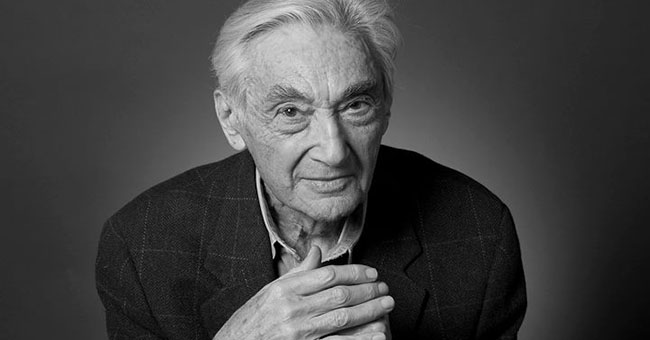
    Howard Zinn

    Ten years ago, on January 27, 2010, inspirational historian and activist Howard Zinn passed away. A champion of history told from the ground up, as lived by the oppressed and marginalized people fighting for change, Zinn and his words are needed, now more than ever. We have his words and his wisdom, and as writer Keeanga-Yamahtta Taylor wrote in the foreword of his autobiography You Can’t Be Neutral on a Moving Train, they’re the hope in the dark to transform the world.

    ***

    Howard Zinn wrote one of the most popular books on American history ever. A People’s History of the United States has sold an astonishing two million copies since its first publication in 1980. The success of the book can also be measured by the way that it spawned a new genre of “people-centered” renditions of history. Zinn’s approach to history essentially inverted the traditional approach that placed the rich and powerful, along with the institutions they governed, as the central motors in the development of society. It was history told from above. Alternatively, Zinn championed an approach to history from the bottom up or from the perspective of “the people.”

    The implications were radical. History was no longer seen as reducible to the expressed will of the elite but as a process elucidated through the actions of ordinary people in their confrontations against the powerful. To tell history from the perspective of the oppressed and marginalized was to recognize that to the degree there has been any progress in the United States, it has come from the struggles of regular people demanding rights, justice, democracy.

    This was not a scholastic endeavor for Zinn, even though he was a professor of history. But history was not academic exercise; it was a means to make sense of the world we live in and, if necessary, a guide to action. Zinn, a prolific writer and scholar, tore down the wall intended to separate activism—or partisanship—from the professed objectivity of scholarship. Instead, Zinn told his students that he did not “pretend to an objectivity that was neither possible nor desirable. ‘You can’t be neutral on a moving train,’ I would tell them. . . . Events are already moving in certain deadly directions, and to be neutral means to accept that.”

    Zinn eschewed neutrality, choosing to write reports, news stories, and multiple books from the perspective of the movements that he was active in. Prolific and without pretension, Zinn chronicled the civil rights and anti–Vietnam War movements for the general public. His writing exposed the broader world to the realities facing ordinary Black people across the South while also challenging the assumptions that the United States, by the sheer volume of its bombing campaign in Vietnam, could impose its will on that tiny country.

    Zinn’s magnificent autobiography, You Can’t Be Neutral on a Moving Train, is his own telling of the events and experiences within those movements that shaped his people-centered rendering of his history. It is a thin volume, barely two hundred pages, belying Zinn’s extraordinary life from his days as a bombardier in the Air Force during World War II, to his arrest as a civil rights activist in the South, to his negotiating the return of prisoners of war during the Vietnam War. The power of Howard Zinn the writer has overshadowed his fascinating history as an active participant in these powerful social movements. As Zinn said in an interview, “[I] had begun to wander out of the classroom to go see some history.”

    This is a book written with a purpose that goes beyond touting the lifetime achievements of a well-known and influential person. What makes this an essential read is that Zinn is writing in response to the timeless questions that burn within anyone who cares about creating a more just society and world. Is change possible? Where will it come from? Can we actually make a difference? How do you remain hopeful? Zinn returns to these questions graciously and with humility by exploring his own journey toward radicalism. There are times when leftists disparage liberals for their continued faith in the system, becoming exasperated when they have not yet come to radical conclusions. Zinn makes the simple yet critical point that people make their own way to political consciousness: “You read a book, you meet a person, you have a single experience, and your life is changed in some way. No act, therefore, however small, should be dismissed or ignored.” For Zinn, this fluidity of political consciousness—people who may be completely passive in one moment but can be moved to act in a different moment—was the key to the emergence of a mass movement. To write off the possibility of change was to essentially write off the possibility of building the kind of movement necessary to change what was wrong in the world.

    The power of Zinn’s story lies in its familiarity or even ordinariness. Howard Zinn was the son of Jewish immigrants, growing up in the hard poverty of the Great Depression era. He wrote fondly of how his parents’ hard work kept him and his brothers alive despite crushing poverty. These experiences challenged the regular refrain that people are poor because they don’t work hard. He writes in great detail about the backbreaking work of his mother and father to stretch nothing into something. Zinn’s family poverty was foundational to his empathy and affection for the daily struggles of ordinary people. It is also vital to his spirited belief in the abilities and intellect of regular people to be their own fiercest advocates in the struggles to change the circumstances of their lives.

    Zinn’s involvement with the Communist Party in his youth made a lifelong impression on him, both in terms of the members’ knowledge and in their confidence about the promise of socialism. It was not only their willingness to argue for what they believed but their commitment to their struggles. The Communist Party in Harlem in the 1930s made a name for itself when its mostly white membership marched in the streets against police brutality and often intervened to stop Black people from being evicted from their homes during the Depression. Zinn’s involvement with the Communist Party in his youth certainly shaped his politics and ideas, as did his experiences of poverty and hardship at home. Sometimes, though, there are more acute shocks to the system that force you to look at the world in a different way.

    Zinn recalled the memory that was at the core of his political awakening. He wrote about his innocent arrival at a demonstration organized by the Communist Party, about carrying a banner and then experiencing confusion while being set upon suddenly by police. Recalling his first political demonstration being violently broken up, Zinn wrote, “I was astonished, bewildered. This was America, a country where, whatever its faults, people could speak, write, assemble, demonstrate without fear. It was the Constitution, the Bill of Rights. We were a democracy.” Zinn explained further,

    From that moment on, I was no longer a liberal, a believer in the self-correcting character of American democracy. I was a radical, believing that something fundamental was wrong in this country . . . something rotten at the root. The situation required not just a new president or new laws, but an uprooting of the old order, the introduction of a new kind of society—cooperative, peaceful, egalitarian.

    It’s an image that immediately evokes memories of the violent sacking of the Occupy encampments in the winter of 2012 or of the police siege in the summer of 2014 that turned the protests of the murder of Michael Brown Jr. into an uprising for the right to protest. Though the faith that regular people have in American democracy has certainly waned since the 1930s or ’40s, the deep belief in the right to free expression and protest is ingrained. These violent and, often, unprovoked responses of the state to very ordinary displays of protest are shocking and call into question one’s assumptions about our society. The shock is an awakening and then an impetus to act.

    Even when looking at the struggles of ordinary people, there has been a tendency to reduce those struggles to the heroism or particular genius of a “charismatic leader.” This has certainly been the case with the civil rights movement, which is continuously reduced to the actions or speeches of Martin Luther King Jr. while the broader context within which he operated or the thousands of others who made “the movement” an actual movement is ignored. Zinn, who was one of two “adult advisers” for the Student Nonviolent Coordinating Committee (along with Ella Baker), provides a different perspective.

    For example, Zinn chooses the little-discussed campaign against racial segregation in Albany, Georgia, in 1961 and 1962 to make a broader point about judging “success” or “failure” in social movements. It’s an interesting choice, because historians and, indeed, even some movement activists have long considered the Albany campaign to have been a failure. In one respect, this is true. The sheriff in that town avoided the spectacle of physical violence against local activists by simply arresting anyone involved in anything resembling protest. While making it difficult, if not impossible, to garner the attention of the media and federal officials, the arrests were hardly the exercise of restraint media and public officials claimed it to be.

    Zinn uses the Albany experience to show that all political experiences have meaning for the participants, regardless of how others ultimately view them. For ordinary Black people in Albany, who had been living under a vicious regime of racial terrorism, to resist at all—even though segregation in the town was not immediately ended—changed the people there. Moreover, when the federal government refused to intervene because of the lack of a violent spectacle, people in the town, along with grassroots civil rights activists, were forced to develop their own networks and means for supporting each other. Zinn wrote,

    For an aggrieved group to learn it must rely on itself, even if the learning is accompanied by bitter losses in the immediate sense, is to strengthen itself for future struggles. The spirit of defiance that appeared in Albany in that time of turmoil was to outlast the momentary “defeat” that the press and the pundits lamented so myopically.

    In similar fashion, Zinn wrote about the development of the antiwar movement during the United States’ war in Vietnam. He described the disappointment with the small rallies in 1965 but noted how the efforts of grassroots activists slowly and methodically worked to build a mass movement against the war. Zinn’s observations will be familiar to activists, who must often contend with their own disappointments when particular struggles are not far along enough given the scale of the problem they arise from. But it’s instructive to those who may be new to activism to get a close view of how movements are actually built. The inspiring speeches that punctuate large or even small gatherings is the last thing that has happened—the harder work is convincing people to get over their sense of isolation and powerlessness. Organizing was critical, but so was political clarity—and Zinn contributed to both. Zinn’s writings and speeches throughout the Vietnam War era not only exposed the hypocrisy of the American state, which, at the time, could not even protect African Americans from the wanton violence of racists across the South. But more importantly, Zinn challenged the entire premise of war itself, including the idea that poor and working-class soldiers enlisted to murder each other for the benefit of the rich had anything to do with democracy or freedom.

    Zinn’s writing is a gift to be shared with a new generation of activists and ordinary people who search for hope in the darkness of the times we are living through. There is no end to the list of horrors and atrocities that face us today and which many of us feel simultaneously overcome and angered by. Whether it is the awful continuation of police abuse and violence in Black and Brown communities or the vicious attacks on immigrant communities as dictated by American policies and law. In the face of these, and what feels like a million other challenges, it is all too easy to be pessimistic or cynical about the possibility of change and overwhelmed into doing nothing. Zinn’s lessons from history are never about names, dates, and the actions of this or that hero. Zinn’s focus was always on how the collective action of regular people—our neighbors, workmates, classmates, friends, family—was the most important ingredient in creating social change. In other words, change always comes from below and not from the altruistic genius of elected officials. Change is neither linear nor is it guaranteed, but without struggle and resistance we will never get to the world that we want to live in—a world free from oppression, war, and inequality. Realizing the idea that “another world is possible” and that the struggles of ordinary people are the only way to get there is a tall order, but, in fact, this is what history tell us. Zinn’s indefatigable optimism and hope for a better world were not about blind faith or religiosity; they were grounded in his deep historical knowledge and personal experiences.

    We need Howard Zinn now more than ever. Not for the sake of romance or to construct another hero in history. We need his insights, his politics, and his commitment to the struggle for a better world. But he would be the first to tell you that he developed those insights from his intimate collaboration with hundreds of others. We no longer have him, but his words will live forever.


    About the Author 

    Keeanga-Yamahtta Taylor is an assistant professor in Princeton University’s Center for African American Studies and the author of From #BlackLivesMatter to Black Liberation.

  • By Peter Jan Honigsberg

    A Navy guard assigned to Joint Task Force Guantánamo’s Navy Expeditionary Guard Battalion patrols Camp Delta’s recreation yard.

    A Navy guard assigned to Joint Task Force Guantánamo’s Navy Expeditionary Guard Battalion patrols Camp Delta’s recreation yard. Photo credit: Joint Task Force Guantánamo

    Guantánamo, situated on a forty-five-mile spit of land on the southeastern coast of Cuba, has become more than a detention center for alleged terrorists, in reaction to the attacks on September 11, 2001. It is more than a naval base housing nearly ten thousand soldiers and personnel, complete with McDonald’s, Pizza Hut, KFC, Subway, Starbucks, Jamaican jerk chicken, a movie theater, and navy exchange, or NEX, shops. Guantánamo is a metaphor for much that has gone wrong after 9/11.

    A Place Outside the Law highlights the human side of Guantánamo. People who were held captive in the prison or who worked at the base saw their lives deeply transformed by the experience. I learned this firsthand in my role as founder of Witness to Guantánamo. Starting in the fall of 2008, I set out to film and document the stories and the voices of Guantánamo. The people we interviewed took important time out of their lives to sit down with us and tell their stories.

    For a decade, my team and I filmed their stories. We were a small operation with a filmmaker, creative director/editor, fundraiser/media outreach person, producer, and me as director/interviewer. Everyone was part-time. We interviewed 158 people across twenty countries, recording more than three hundred hours of film. Fifty-two of the interviewees were former detainees. We also interviewed prison guards, interrogators, interpreters, chaplains, medical personnel, military and civilian lawyers representing the detainees, prosecutors, journalists, high-ranking military officials, high-ranking government officials, and family members of the detainees. Witness to Guantánamo gives the most comprehensive picture to date of life at Guantánamo.

    Our films are the only records for many of the people we interviewed. That is, some interviewees only recorded their stories with us, and with no one else. Since we began this project, some of the people featured have died. There will come a time when these filmed stories will be the only ones we have of many of the people who were in Guantánamo. Their voices will speak to future generations. And their witness will remind future generations not to repeat what has happened there.

    These are the stories of people affected by America’s response to that fateful day. They are the stories of the human toll when America strayed from honor.

    In November 2008, when Barack Obama was elected president, I completed Our Nation Unhinged, a book on the war on terror. I examined human rights and rule-of-law violations post-9/11, at home and abroad, in five parts. One part was on Guantánamo. The book was a natural complement to my articles, blog pieces, and classes on terrorism, national security, international law, and human rights. It also chronicled my visit to Guantánamo in May 2007.

    Once Our Nation Unhinged was published, my friends thought I would move on to other issues. The attacks on 9/11 and America’s response were fading in the sunlight of the new, inspiring president. But I was still restless.

    In those early days of Obama’s presidency, many of us believed that his administration, elected on a theme of hope and change, would return our nation to its former position as the defender of human rights and the rule of law. During his campaign, President Obama had advocated for closing the Guantánamo prison camp. And on his second day in office he said he would close the prison within a year.

    We believed that America’s policies of torture, cruel interrogation, and indefinite detention would come to an end. We would return to our core values and principles. Under President Obama, the world would again recognize America’s exceptionalism and its position as the shining light to the world.

    However, the post-9/11 issues I had been studying and writing about were still unresolved. And I was afraid that our newly elected president would not fully address and resolve them.

    During Obama’s transition to the office, when we were all optimistic, I was reminded of how my parents had escaped from the Nazis at the last moment possible. My Jewish parents were born and raised in a small town in Austria. When they married, they moved to Vienna. In 1939, my father received two notices from the Austrian authorities to appear at the train station to be taken to a concentration camp. He ignored them. The authorities sent a third notice instructing him to appear at the train station the next morning. If he did not show up, the Nazi officers wrote, they would seize him and take him directly to the station. That same day, he and my mother received visas to America.

    The University of Southern California Shoah Foundation interviewed my father about his experiences in Austria. The Shoah Foundation was established to document the Holocaust, as well as to reply to Holocaust deniers. My father was one of more than forty-eight thousand survivors whose stories were told on camera to the foundation.

    The work of the Shoah Foundation was my inspiration. Witness to Guantánamo was born. Even if President Obama closed Guantánamo, the stories of the people who lived and worked at the Guantánamo Bay, Cuba, detention center needed to be filmed and documented for history. It was not the Holocaust, of course. But Guantánamo was a shameful moment in the history of America.
    Unlike renowned film director and producer Steven Spielberg, who was behind the creation of the Shoah Foundation, I had neither filmmaking nor interviewing experience. But no one else was documenting the first-person narratives of Guantánamo detainees on film. And the work had to be done before the memories faded and the voices disappeared.

    A student in one of my classes had connections to a local family foundation. Through the student’s contact, the director of the foundation generously financed the germination of the project. With the seed money, we were able to travel to five countries and interview sixteen former detainees during the first summer of our work, in 2009. Those interviews gave us credibility. We then could apply to larger foundations for continued funding.
    Like Spielberg’s videos of Holocaust survivors, the interviews recorded for Witness to Guantánamo will be here long after we are gone.

    After Obama was elected in November 2008, a member of the Obama transition team informed me that Obama would create a truth commission and that I did not need to undertake my proposed Witness to Guantánamo project. I replied that I hoped the president would establish the commission, because he had the resources and the connections. I added that I was not convinced he would do it. But if he did, I would discontinue my work immediately. I was still interviewing people for Witness to Guantánamo after President Obama left office.

    Throughout the years, people have asked about our work: how we found and encouraged people to interview and why we use film as the medium. As the years went by and we told people what we were doing, we would sometimes get the response, “But isn’t Guantánamo closed?” In fact, several habeas attorneys told us that they had similar reactions when they told people that they were working on Guantánamo issues.

    I am not sure why people believed it was closed. I am guessing that when President Obama announced on his second day in office that he would close Guantánamo, many people assumed that he had accomplished his mission.


    About the Author 

    Peter Jan Honigsberg is a professor at the University of San Francisco School of Law and the founder and director of Witness to Guantánamo. His research and teaching focuses on the rule of law and human rights violations that occurred in the detention center in Guantánamo, as well as on the study of terrorism and post-9/11 issues. His books include Our Nation Unhinged and A Place Outside the Law. Honigsberg lives in Berkeley, CA.

  • By James W. Russell

    Golden piggy bank

    Democrats, looking forward to possible Congressional and White House victories in 2020, have embraced expanding Social Security after years of defensively fending off privatization and cutback threats. The Social Security 2100 Act, with 209 co-sponsors, is waiting in the wings. It would make needed revenue increases, including raising the cap on labor income taxed, to stabilize Social Security’s finances for seventy-five years. It would also mildly expand benefits.

    On the campaign trail, all of the Democratic Party candidates have addressed Social Security. Elizabeth Warren has proposed going beyond the Social Security 2100 bill by adding a tax to investment income, which is a bigger portion of the income of the rich than labor income.

    What’s missing, though, from the Democratic proposals is a way for people to use their 401(k), IRA, and other retirement savings to increase their Social Security benefits.

    The rule of thumb among retirement experts is that retirees need seventy percent of their final preretirement income to maintain their standards of living. Social Security, everyone agrees, comes nowhere near replacing that amount for the vast majority. Social Security studies tell us that it replaces forty-one percent of the average person’s income.

    But note well: this is replacement of the average career, not final earnings. Social Security calculates average earnings, factoring in inflation, over the highest thirty-five earning years and bases retirement incomes on that average.

    For many people—but not all—average career incomes approximate their final earnings. If you’ve always been a low or medium or high earner, the two are close.

    But what if your work career started out with minimum wage jobs and then you worked your way up to average- or high-income salaries? All of those low earning years will pull down your career average earnings to much lower than your final earning. If you make it up to an average salary in your final year, instead of having forty-one percent of it replaced, you will have just thirty-one percent replaced. If you make it up to high income, instead of thirty-four percent, only twenty-five percent will be replaced.

    Meanwhile, you probably saved money in your higher earning years through 401(k), IRAs, and other retirement savings plans. Can you use those savings to compensate for your lowered Social Security benefit?

    Yes, sort of. You could use them to purchase a commercial annuity or continue to invest them while making periodic withdrawals. But commercial annuities are very expensive, and investing always carries risks that you might not want to have to manage and bear during your elderly years.

    What if there were a way, instead, to voluntarily roll over some or all of your savings to Social Security to purchase earnings credits to compensate for your low earnings years? Consider the person who starts at a minimum-wage job and ends with an average high-paying job. Using the way that Social Security calculates retirement benefits, for a cost of $130,970 in savings rolled over to Social Security, she could increase her initial yearly benefit from $20,328 to $28,147, a benefit that would rise each year with cost-of-living adjustments. That investment would have a yearly payout of 6.0 percent, compared to the average commercial annuity payout of 4.6 percent for men and 4.3 percent for women—who receive less because they live longer on average. Social Security pays men and women with the same earnings histories the same.

    This is only the beginning of possibilities if people were allowed to use Social Security to transform their retirement savings into increased life incomes. Another possibility would be to purchase life annuities from Social Security. That was in the original 1934 draft legislation and has been endorsed by Nobel Prize economist James Thaler. They could also use their savings to defer taking their Social Security benefits to older years when they would be higher.

    Right now, most people approaching retirement have savings from token to substantial amounts. What they don’t have are very good ways to use those savings to finance their retirement years. Social Security could resolve that problem if were opened up to voluntary rollovers of part or all of those savings in return for higher benefits.


    About the Author 

    James W. Russell is the author of Social Insecurity: 401(k)s and the Retirement Crisis. An authority on retirement policy in the United States, Europe, and Latin America, he led one of the first employee movements to successfully challenge the dominant trend and replace a 401(k)-like plan with a more secure traditional pension plan. He has taught at universities in the United States and as a Fulbright professor in Mexico and the Czech Republic. He currently teaches Public Policy at Portland State University.

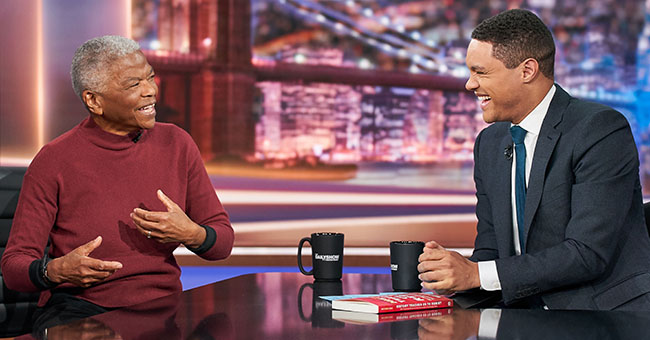
  • Mary Frances Berry on The Daily Show with Trevor Noah

    Mary Frances Berry on The Daily Show with Trevor Noah. Photo credit: Sean Gallagher

    It’s not often that our authors appear on The Daily Show, but when they do, we flip out and rejoice! Mary Frances Berry, former Chairwoman of the US Commission on Civil Rights and lifelong activist, was invited to speak on the show on January 20, in honor of Martin Luther King, Jr. Day. 

    You’d think that this meeting of the minds would have happened sooner. How fitting that host Trevor Noah, whose parents’ interracial relationship was illegal at the time of his birth under apartheid law in South Africa, would speak with Dr. Berry, one of the antiapartheid protestors who started the Free South Africa movement! But timing is of the essence. As we find ourselves in an era of fear and despair, we have a lot to learn from Dr. Berry.  

    With Noah, she spoke about misconceptions people still have about Dr. King (after all this time), the civil rights movement, and her book History Teaches Us to Resist: How Progressive Movements Have Succeeded in Challenging Times. Filled with firsthand accounts of putting herself on the line, this is the book to read if you want to see how to enact progressive change. As executive director of the American Civil Liberties Union Anthony D. Romero said, there is “no one more qualified than Dr. Mary Frances Berry to write this crucially needed and powerful book.”

    Here are some highlights from the interview.

    ***

    Trevor Noah: What do you think is the biggest misconception people have about Dr. King?

    Mary Frances Berry: The biggest misconception is that Martin Luther King was a dreamer who had a dream. Martin Luther King believed in the right to vote . . . . But over the years as he evolved, he saw the vote is important and he continued to fight for it . . . . But voting by itself isn’t going to give us justice. And he concluded that nonviolent protest is an essential ingredient of politics.

    ~~~

    TN: If you could organize a protest today, what would you say would be the most pressing issue people need to protest for?

    MFB: Climate change. Because climate change affects all of us without regard to race or class. We may not understand that it does, but it does. So I would do it in a way to try to explain to people not just the morality of it but how their lives are endangered and the lives of their children and so on. And find messaging that would help to do that. And the messaging takes time.

    ~~~

    Mary Frances Berry on key points from History Teaches Us to Resist

    Every generation has to make its own dent in the wall of injustice. Young people have to pick up the torch and move forward with it. Martin Luther King stood for all of that.

    What you have to do when you protest is keep changing what you do. Don’t do the same thing over and over and over again. People get tired. If you did the same thing on your show every night, people wouldn’t watch you. Change it up!

    You have to be present in the moment. You have to do something yourself. You have to put your body on the line. You have to be willing to go to jail. You have to be willing to say, “Here I stand, and you will go no further, because I have moral authority in what I’m doing.” If there’s a change you want to have made, sure vote, but don’t just vote and then go home. That won’t end inequality and that won’t change us and get us justice in this country.

    ***

    Watch their full conversation here.

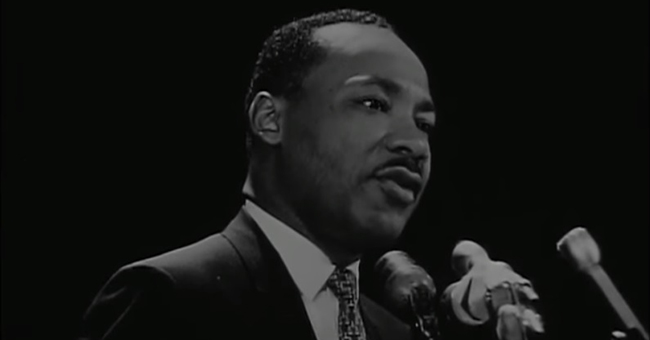
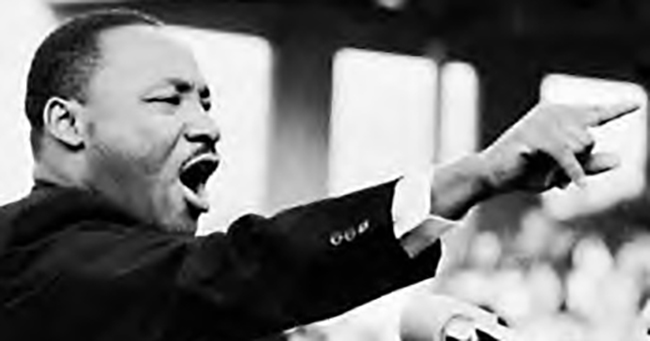
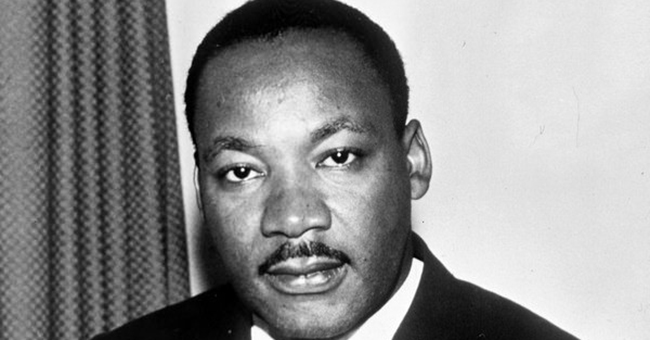
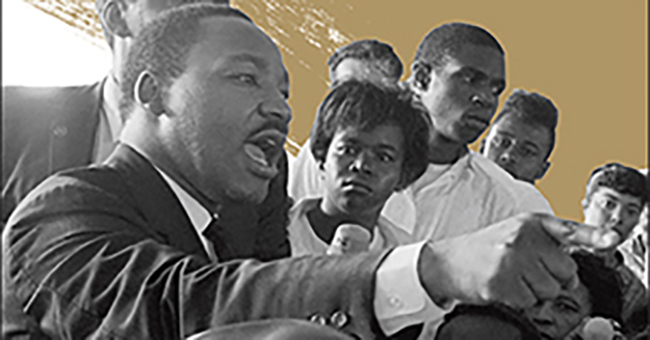
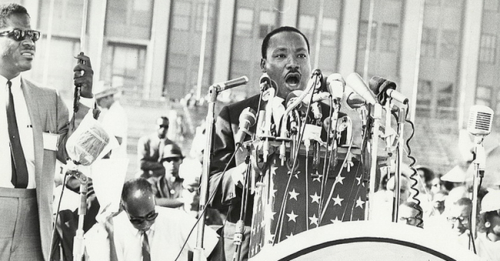
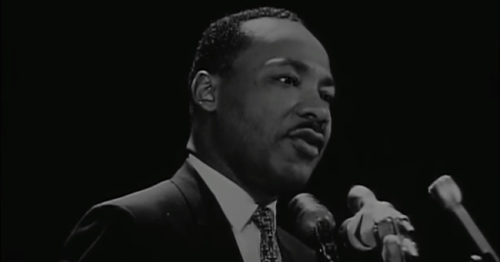
  • Martin Luther King, Jr.

    Photo credit: Library of Congress

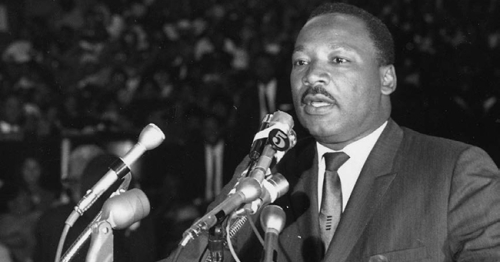
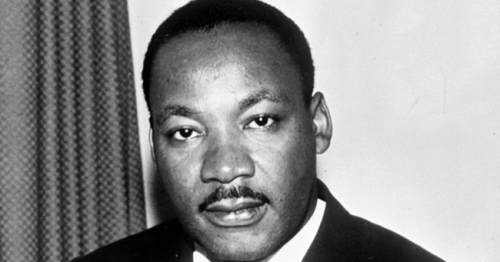
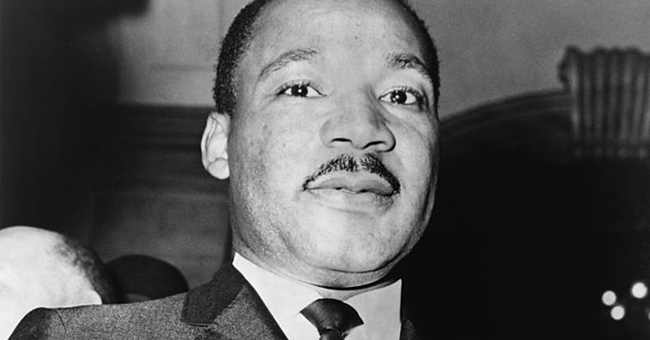
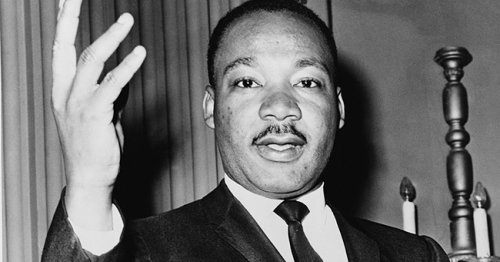
    As Coretta Scott King wrote in the introduction to Martin Luther King, Jr.’s Strength to Love, “Love, truth, and the courage to do what is right should be our own guideposts on this lifelong journey. Martin Luther King, Jr., showed us the way; he showed us the Dream.” He sure did! The entirety of Dr. King’s speeches and activism embodies love, truth, and the courage to do what is right. It’s a radical vision of ridding the world of what he identified as the triple evils of poverty, racism, and war—which we still have to work very hard to make a reality. Whether it be in dark times or times of progress, the passion of his words and actions inspires us to keep going in our fight for social change. We at Beacon have the honor of publishing his speeches. In honor of his birthday, here’s a rundown of what we’ve featured on the Broadside so that, as Coretta Scott King put it, we can respond with full hearts.


    MLK delivers Mountaintop Speech

    50 Years Later, Martin Luther King, Jr.’s ‘To the Mountaintop’ Speech Still Inspires Us

    Somewhere I read of the freedom of speech. Somewhere I read of the freedom of the press. Somewhere I read that the greatness of America is the right to protest for right. And so just as I say, we aren’t going to let any injunction turn us around. We are going on.


    MLK_All Labor Has Dignity

    The 50th Anniversary of Martin Luther King, Jr.’s “All Labor Has Dignity”

    “You are demanding that this city will respect the dignity of labor. So often we overlook the work and the significance of those who are not in professional jobs, of those who are not in the so-called big jobs. But let me say to you tonight, that whenever you are engaged in work that serves humanity and is for the building of humanity, it has dignity, and it has worth.”


    The Other America

    Martin Luther King, Jr.’s “The Other America” Still Radical 50 Years Later

    “And the other thing is we’ve got to come to see that however much we’re misunderstood or criticized for taking a stand for justice or for peace, we must do it anyway. The arc of the moral universe is long, but it bends toward justice.”


    Martin Luther King Jr.

    Martin Luther King, Jr.’s “The Drum Major Instinct” Sermon Turns 50

    “If you want to say that I was a drum major, say that I was a drum major for justice. Say that I was a drum major for peace. I was a drum major for righteousness. And all of the other shallow things will not matter. I won’t have any money to leave behind. I won’t have the fine and luxurious things of life to leave behind. But I just want to leave a committed life behind.”


    MLK 1964

    Martin Luther King, Jr.’s “A Christmas Sermon on Peace” Still Prophetic 50 Years Later

    “Now let me say that the next thing we must be concerned about if we are to have peace on earth and goodwill toward men is the nonviolent affirmation of the sacredness of all human life. Every man is somebody because he is a child of God. And so when we say ‘Thou shalt not kill,’ we’re really saying that human life is too sacred to be taken on the battlefields of the world.”


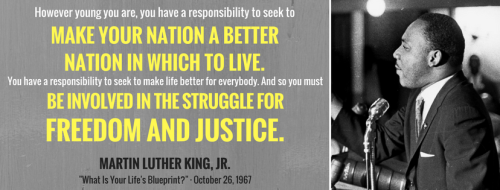
    What Is Your Life Blueprint

    The 50th Anniversary of Martin Luther King, Jr.’s “What Is Your Life’s Blueprint?”

    “Number one in your life’s blueprint should be a deep belief in your own dignity, your own worth, and your own somebodiness. Don’t allow anybody to make you feel that you are nobody. Always feel that you count. Always feel that you have worth. And always feel that your life has ultimate significance.”


    Martin Luther King  Jr.

    Martin Luther King, Jr’s “Where Do We Go from Here?” Sermon, 50 Years Later

    This is no time for romantic illusions and empty philosophical debates about freedom. This is a time for action. What is needed is a strategy for change, a tactical program that will bring the Negro into the mainstream of American life as quickly as possible. So far, this has only been offered by the nonviolent movement. Without recognizing this we will end up with solutions that don’t solve, answers that don’t answer, and explanations that don’t explain.”
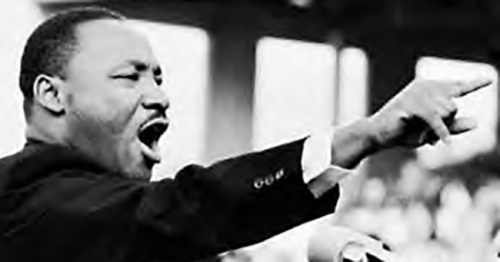
     

    A Time to Break Silence

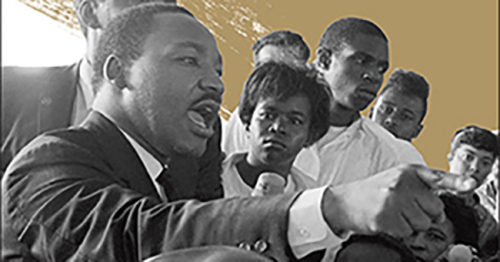
    “The Burning Truth in the South:” Martin Luther King, Jr. on Peaceful Student Protests

    “The key significance of the student movement lies in the fact that from its inception, everywhere, it has combined direct action [and] nonviolence. This quality has given it the extraordinary power and discipline which every thinking person observes. It has discredited the adversary, who knows how to deal with force but is bewildered and panicky in the face of the new techniques. Time will reveal that the students are learning lessons not contained in their textbooks. Hundreds have already been expelled, fined, imprisoned, and brutalized, and the numbers continue to grow. But with the punishments, something more is growing.”

    Martin Luther King Jr

  • A Q&A with Howard Axelrod

    Howard Axelrod

    Author photo: Sophie Barbasch

    For the past forty thousand years, the human brain’s ability to adapt has been an evolutionary advantage. But now, for the first time in human history, we’re effectively living in two environments simultaneously—the natural and the digital—and many of the traits that help us function successfully online don’t help us offline, and vice versa.

    Drawing on his research and his experience of acclimating to a life of solitude in the woods and then to digital life upon his return to the city, Howard Axelrod delves into the human brain’s impressive but indiscriminate ability to adapt to its surroundings. His book, The Stars in Our Pockets: Getting Lost and Sometimes Found in the Digital Age, is a portrait of, as well as a meditation on, what he comes to think of as inner climate change. It’s the idea that just as we’re losing diversity of plant and animal species due to changes in the climate, so too are we losing the diversity and range of our minds due to changes in our cognitive environment. Beacon Broadside editor Christian Coleman caught up with Axelrod to chat with him about it.

    Christian Coleman: Would you consider The Stars in Our Pockets to be a kind of sequel to your first book, The Point of Vanishing? Or a companion book? Something else entirely?

    Howard Axelrod: Companion is a good word. Stars considers the questions I’ve wrestled with since returning from the Vermont woods: How do environments, both natural and digital, change our orientation in the world? And if adapting to the digital environment means losing traits that you value, how do you determine which trades are worth making?

    CC: You begin the book with your concept of inner climate change. When did you become aware that this idea was coming together for you?

    HA: At first, it just seemed a helpful metaphor. But then I was reading Oliver Sacks’ book The River of Consciousness, and what he wrote about Gerald Edelman’s theory of “neural Darwinism” amazed me. It was in perfect accord with the metaphor I’d been using and offered a scientific justification for it. That was an exciting day!

    CC: Now that we find ourselves in 2020, why do you think inner climate change is helpful to talk about adapting to both digital and physical environments?

    HA: We’re disoriented in our very disorientation—we haven’t known what maps to look to; we haven’t had a unified theory of digital life’s impact on the cultural convulsions of our times. Using the theory of inner climate change as a way of understanding what’s been happening, we can have more practical conversations about the lenses through which we see the world and what shape we do or don’t want them to have.

    CC: You begin each chapter with endangered traits. For example, the first chapter begins with lostness, memory place, and survey map. Chapter two begins with event time and flow. Where did you get this idea?

    HA: On some of its endangered species lists, The World Wildlife Federation uses this poignant and practical structure: endangered species, background, why it matters, threats, what you can do. So I adopted that structure for my chapters. It was a framework within which I could associate, reason, ruminate, and try to understand as deeply as possible the trades we’re making.

    CC: What I like about The Stars in Our Pockets is that you’re never prescriptive about how to find a balance between life lived online and offline. When you’re making your case about the traits that we’re losing or trading as we habituate ourselves toggling digital technology and the physical world, the tone is contemplative and invites the reader to come to their own conclusion. How do you decide to take this approach to writing the book?
    That’s just how I think. It was a question I was trying to figure out, a question to which I didn’t have the answers for myself, and trying to convince readers of something as a way of trying to convince myself clearly would have been laborious to write and dreadful to read!
    CC: And lastly, why did you dedicate the book to Oliver Sacks?

    HA: He was a friend. And I miss him. And I hope, hope, that he would have loved this book.


    About Howard Axelrod 

    Howard Axelrod is the author of The Point of Vanishing: A Memoir of Two Years in Solitude, named one of the best books of 2015 by Slate, the Chicago Tribune, and Entropy Magazine, and one of the best memoirs of 2015 by Library Journal. His essays have appeared in the New York Times MagazineO MagazinePoliticoSalon, the Virginia Quarterly Review, and the Boston Globe. He has taught at Harvard, the University of Arizona, and is currently the director of the Creative Writing Program at Loyola University in Chicago. Connect with him at howardaxelrod.com.