• A Q&A with Howard Axelrod

    Howard Axelrod

    Author photo: Sophie Barbasch

    For the past forty thousand years, the human brain’s ability to adapt has been an evolutionary advantage. But now, for the first time in human history, we’re effectively living in two environments simultaneously—the natural and the digital—and many of the traits that help us function successfully online don’t help us offline, and vice versa.

    Drawing on his research and his experience of acclimating to a life of solitude in the woods and then to digital life upon his return to the city, Howard Axelrod delves into the human brain’s impressive but indiscriminate ability to adapt to its surroundings. His book, The Stars in Our Pockets: Getting Lost and Sometimes Found in the Digital Age, is a portrait of, as well as a meditation on, what he comes to think of as inner climate change. It’s the idea that just as we’re losing diversity of plant and animal species due to changes in the climate, so too are we losing the diversity and range of our minds due to changes in our cognitive environment. Beacon Broadside editor Christian Coleman caught up with Axelrod to chat with him about it.

    Christian Coleman: Would you consider The Stars in Our Pockets to be a kind of sequel to your first book, The Point of Vanishing? Or a companion book? Something else entirely?

    Howard Axelrod: Companion is a good word. Stars considers the questions I’ve wrestled with since returning from the Vermont woods: How do environments, both natural and digital, change our orientation in the world? And if adapting to the digital environment means losing traits that you value, how do you determine which trades are worth making?

    CC: You begin the book with your concept of inner climate change. When did you become aware that this idea was coming together for you?

    HA: At first, it just seemed a helpful metaphor. But then I was reading Oliver Sacks’ book The River of Consciousness, and what he wrote about Gerald Edelman’s theory of “neural Darwinism” amazed me. It was in perfect accord with the metaphor I’d been using and offered a scientific justification for it. That was an exciting day!

    CC: Now that we find ourselves in 2020, why do you think inner climate change is helpful to talk about adapting to both digital and physical environments?

    HA: We’re disoriented in our very disorientation—we haven’t known what maps to look to; we haven’t had a unified theory of digital life’s impact on the cultural convulsions of our times. Using the theory of inner climate change as a way of understanding what’s been happening, we can have more practical conversations about the lenses through which we see the world and what shape we do or don’t want them to have.

    CC: You begin each chapter with endangered traits. For example, the first chapter begins with lostness, memory place, and survey map. Chapter two begins with event time and flow. Where did you get this idea?

    HA: On some of its endangered species lists, The World Wildlife Federation uses this poignant and practical structure: endangered species, background, why it matters, threats, what you can do. So I adopted that structure for my chapters. It was a framework within which I could associate, reason, ruminate, and try to understand as deeply as possible the trades we’re making.

    CC: What I like about The Stars in Our Pockets is that you’re never prescriptive about how to find a balance between life lived online and offline. When you’re making your case about the traits that we’re losing or trading as we habituate ourselves toggling digital technology and the physical world, the tone is contemplative and invites the reader to come to their own conclusion. How do you decide to take this approach to writing the book?

    That’s just how I think. It was a question I was trying to figure out, a question to which I didn’t have the answers for myself, and trying to convince readers of something as a way of trying to convince myself clearly would have been laborious to write and dreadful to read!

    CC: And lastly, why did you dedicate the book to Oliver Sacks?

    HA: He was a friend. And I miss him. And I hope, hope, that he would have loved this book.


    About Howard Axelrod 

    Howard Axelrod is the author of The Point of Vanishing: A Memoir of Two Years in Solitude, named one of the best books of 2015 by Slate, the Chicago Tribune, and Entropy Magazine, and one of the best memoirs of 2015 by Library Journal. His essays have appeared in the New York Times Magazine, O Magazine, Politico, Salon, the Virginia Quarterly Review, and the Boston Globe. He has taught at Harvard, the University of Arizona, and is currently the director of the Creative Writing Program at Loyola University in Chicago. Connect with him at howardaxelrod.com.

  • By Reza Aslan

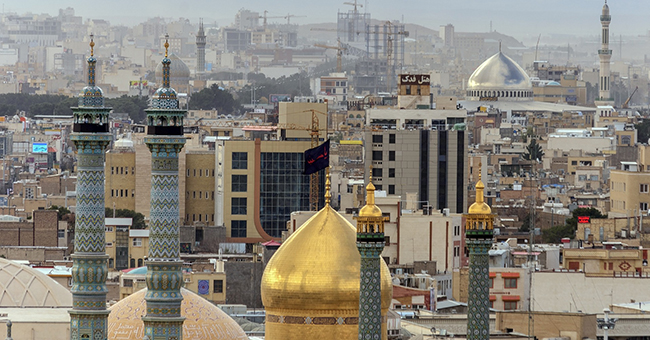
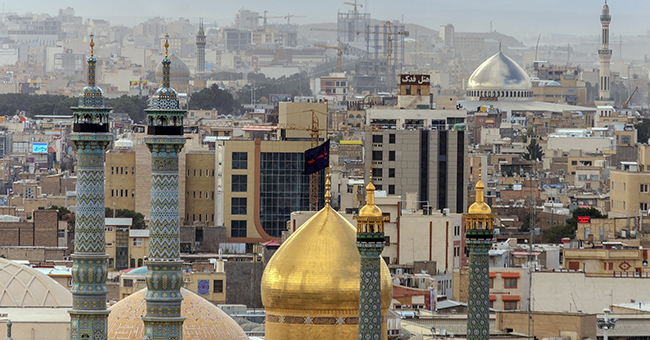
    Landscape of Qom, Iran

    Landscape of Qom, Iran. Photo credit: Mostafa Meraji

    When escalations between the US and Iran heat up, times are rife with America’s skewed perceptions of the country. As editor Lila Azam Zanganeh writes in the introduction of her essay collection My Sister Guard Your Veil, My Brother Guard Your Eyes: Uncensored Iranian Voices, “[t]here are those who believe, at times too hastily, that Iran is at core a Western-loving nation that can hardly wait for America to save it from its own bloodthirsty leaders. And there are those who are convinced that Iran, by and large, is a nation of Allah-worshipping, gun-toting terrorists.” Later on, she points out that “Iranians live in a far more complex and schizophrenic reality,” which isn’t always apparent to us based on what US news outlets show us. Especially when it comes to Islam’s role in Iranian society. Who better to show us the reality of living there than Iranians themselves? In his essay from the book, Reza Aslan chronicles a trip to Qom, the Rome of mullahs, and uncovers why Iran is not a theocracy but a mullahcracy.

    ***

    At least once a month, my cousin Afshin drives a carload of British or German tourists from Iran’s sprawling capital, Tehran, to one of the country’s many tourist destinations—either the glorious, lyrical city of Shiraz, the ancient ruins of Persepolis, or the palatial gardens of Isfahan. Few people ask him, as I have done, for a ride to Qom, the religious capital of Iran. The very name of the city makes Afshin squirm. He suggests a trip to Mashad, instead.

    “Why not visit Imam Reza?” he says, referring to that city’s patron saint.

    I remind him that his brother, Saleh, lives in Qom and that he would be happy to see us. Afshin grunts, starts the ignition, and pulls onto the dry desert highway, reluctantly heading south toward Qom. It is a scorching morning; the heat rising from the asphalt casts an eerie nimbus on the road before us.

    I can’t blame Afshin for not wanting to go to Qom. It is difficult to describe the anger and contempt that most Tehranis feel toward the clerical regime. In Tehran the word akhoond—Persian for “cleric” or “mullah”—is a swearword. One might say to someone acting in a shady or despicable manner: “Don’t be such an akhoond!” Before the revolution, clerics were pushed to the head of the line in grocery stores and given the best seats in restaurants. Now, people push roughly past clerics in stores, whispering obscenities; a cleric enters a restaurant in Tehran and one can practically hear the hiss rising from the tables. There was a time when taxis would be emptied so a cleric could ride comfortably. These days, a taxi is almost as likely to run a cleric over than pick him up.

    But Qom is a city crawling with clerics, confident and in control of the country. For centuries this dusty provincial town and its famed Feyziyeh Seminary have served as the “Vatican” of Shiism. The Ayatollah Khomeini studied in Qom, as did Iraq’s Grand Ayatollah Ali al-Sistani. In fact, nearly every Shiite cleric in the world has at one time or another passed through the hallowed gates of the Feyziyeh to be taught the traditional Shiite sciences: Quranic exegesis, Islamic jurisprudence, philosophy, rhetoric, and theology. What they do not teach in Qom, however, is politics, or economics, or government administration, or international affairs, which is odd, since Qom’s graduates no longer just run Iran’s mosques and madresehs (religious schools); they now run Iran. 

    Too often, Iran’s baffling, bi-polar government is dismissed as a “theocracy.” But Iran is actually not a theocracy. A theocracy suggests rule by God, and, as any Iranian will tell you, God is noticeably absent in Iran. In a theocracy, particularly an Islamic theocracy like Saudi Arabia or Afghanistan under the Taliban, the Quran is the only constitution. Yet the Islamic Republic is constructed upon a remarkably modern and surprisingly enlightened constitutional framework in which are enshrined fundamental freedoms of speech, religion, education and peaceful assembly. Iran’s constitution calls for equality under the law with regard to race, ethnicity, language, and even sex. It provides for a comprehensive amendment process as well as the opportunity to launch national referendums to decide the course of the country. Most importantly, Iran’s constitution stipulates that all domestic affairs must be administered “on the basis of public opinion expressed by means of elections,” thus establishing an empowered legislature and a strong, independent executive. All of this exists under the moral guidance of a single clerical authority—the faqih—who is appointed by an “assembly of experts” based in Qom, which, in turn, is directly elected by the people (if no single religious authority is qualified for the post, then the assembly chooses a “Supreme Court” of three to five clerics).

    In theory, the faqih was intended to be a Papal figure who would ensure the “Islamic character” of the state. However, in the chaotic aftermath of the revolution, the parameters of the office were dramatically altered as Iran’s powerful clerical establishment – helmed by the overwhelming charisma of Iran’s first faqih, the Ayatollah Ruhollah Khomeini (who himself invented the post) – put into effect a series of constitutional amendments and judicial rulings that spectacularly extended the scope of their power. They then relied on their control of personal militias and extensive numbers of Orwellian sub-committees to wrest control of the provisional government from the hands of the rather capable, if dour, technocrats who had been appointed to lead Iran after the fall of the Shah. By the time Saddam Hussein invaded in 1980, the time for debate and dissent over the nature of the Republic was over. What had begun as a vibrant experiment in Islamic democracy quickly deteriorated into an authoritarian quagmire– a state ruled by an inept clerical oligarchy with absolute religious and political power. Qom is the heart of that power.

    Afshin and I arrive in Qom during the noon prayers. The streets are deserted, save for a few late stragglers shuffling into the mammoth Hazrat-e Massoumeh Mosque anchored in the center of town. The shops encircling the mosque are shut and bolted. There is an expectant stillness in the air. Not even the grey-and-white flecked pigeons galumphing across the plaza emit a sound. It is as though the mosque has inhaled the city into itself in a long, bated breath. A few moments later, a rumble echoes through the square and all at once a mass of worshippers is exhaled onto the streets. The city bursts to life. And suddenly, Qom appears like any other college town: overrun with cheap, bustling restaurants, open-air markets and dark, smoky coffee shops where students are crammed in every nook . . . Except these students are clad in the elegant dark robes and regal turbans of clerical privilege.

    Afshin parks the car and together we make our way through the bustling streets toward the Feyziyeh. The school is usually closed to visitors, but Saleh, who is a cleric and teacher here, meets us at the gates and escorts us inside. Right away, I can tell Afshin is uncomfortable. He resents seeing Saleh in his clerical garb. He’d rather imagine his brother dressed in the drab slacks and uncollared shirts they liked to wear so long ago, when they were Marxists on the front lines of a promising revolution that sought to rid Iran of the loathed regime of Muhammad Reza Shah.

    These days, there is a tendency, both in the West and in Iran, to view the revolution of 1979 as an Islamic revolution instigated at the behest of the Ayatollah Khomeini. This is an historical fiction that emerged out of two and half decades of post-revolutionary propaganda. The truth is, there were dozens of voices raised against the Shah; Khomeini’s was merely the loudest. In fact, a full 10% of Iran’s population actively took part in the overthrow of the Shah, thus making it the largest popular revolution in modern history. Feminists, communists, socialists, Marxists, secular democrats, westernized intellectuals, traditional bazaari merchants, die-hard nationalists, religious fundamentalists, Muslims, Christians, Jews, men, women and children; nearly every sector of Iranian society was represented in the revolution of 1979. Khomeini’s genius was his intuition that in a country steeped in the faith and culture of Shiism, only the symbols and metaphors of Shiite Islam could provide a collective language with which to mobilize a disparate coalition that had little in common save its virulent hatred of the Shah.

    By the time the Shah was ousted and the Islamic Republic was born, both Afshin and Saleh had been lured away from their Marxist roots by Khomeini’s mystifying Shiite populism. In the 80s, Saleh entered the Feyziyeh spurred by the dream of establishing a new kind of nation—one both democratic and Islamic, both quintessentially Muslim and uniquely Iranian—while Afshin fought on the front lines of the battle against Saddam Hussein to ensure that dream would survive. In the 1990s, Afshin and Saleh were brought together again, this time as leaders in the energizing reform movement that gripped Tehran in the wake of the stunning presidential election of Muhammad Khatami in 1997 and whose goal was to unearth the democratic principles of the constitution that had been blithely ignored for more than a decade. But Khatami proved unable (some say unwilling) to propel the reform movement to its fruition. He withdrew his support, allowing the movement to disintegrate under mass arrests, torture and murder. The reform movement fractured and Afshin and Saleh went their separate ways. Saleh returned to the Feyziyeh to fight for democracy from within the system; Afshin now claims that the system itself is the problem and must be abandoned.

    Inside Saleh’s cramped apartment, the three of us sit on a thick Persian rug, well worn from centuries of students crouching at the feet of their teachers to exchange questions and answers in an ancient Socratic method that has served as the foundation of Shiite training for generations. We sip tea through sugar cubes lodged between our teeth and I ask Saleh to explain the theory behind clerical rule.

    “There are many ways to get from Tehran to Qom,” he says. “We could take a car, a bus, a plane, or we could walk. But the cleric is the one who has spent a lifetime studying the map. He has taken the trip many times. He knows with certainty which is the best way. And if he declares ‘by plane,’ then everyone follows him.”

    “But if I choose to walk, won’t I still get to Qom?” I ask.

    “Of course. However, the path will be longer and more arduous.”

    “And if two clerics differ on the best path, which one is right?”

    “Technically the senior-most cleric—the one who has taken the trip most often. But really, they are both right. It is up to you and I to decide which one to follow.”

    And therein lies the central paradox of the Islamic Republic. Shiism is a religion founded upon open debate and rational discourse. In its nearly fourteen hundred-year history, no Shiite cleric has ever enjoyed unconditional authority over another Shiite cleric of equal learning. Nor has any cleric ever held sole interpretive powers over the meaning of the faith. The Shiah have always been free to follow the cleric of their choice, which is in part why Shiism has blossomed into such a wonderfully eclectic faith. It is also why the majority of Shiah both inside and outside Iran no longer view the Islamic Republic as the paradigm of the Shiite state, but rather its corruption.

    In truth, the Islamic Republic is neither Islamic nor a Republic. It can be described neither as a theocracy nor as a democracy. Iran is something else entirely. It is a “mullahcracy,” a bizarre hybrid of religious and third world fascism that, like the fascisms of the past, has become an embarrassing example of populism gone awry.

    Before rising to leave I ask Saleh one final question. “Is this the Islamic Republic you had dreamed of? Is this what you fought for?”

    Saleh shoots a quick glance at Afshin before stretching his gentle, bearded face into a gloomy half-smile. “No,” he shakes his head. “This is something else entirely. I can’t even remember what happened to that dream.”


    About the Author

    Reza Aslan is a renowned writer, commentator, professor, Emmy-nominated producer, and scholar of religions. A recipient of the prestigious James Joyce award, Aslan is the author of three internationally best-selling books, including the #1 New York Times Bestseller, Zealot: The Life and Times of Jesus of Nazareth. His producing credits include the acclaimed HBO series The Leftovers and the upcoming Chuck Lorre comedy, United States of Al. He is the host and Executive Producer of Rough Draft with Reza Aslan.

  • Champagne glasses

    Now this is how you round off a year and a decade. Just look at all these books on all these Best-Of lists! Our authors absolutely killed it. And they’ll kill it again in 2020. Let’s give them a round of applause into the new year! And while we’re doing so, let’s take a look at some highlights of the lists their books appeared on. (Someone pop open a bottle of bubbly while we’re applauding here. This calls for celebration!)


    Memes to Movements

    Memes to Movements: How the World’s Most Viral Media Is Changing Social Protest and Power
    An Xiao Mina

    “Essential reading. . . . An’s work demonstrates why we should be taking [memes] seriously.”
    —Jonny Sun, author and illustrator of everyone’s a aliebn when ur a aliebn too


    Reclaiming Our Space

    Reclaiming Our Space: How Black Feminists Are Changing the World from the Tweets to the Streets
    Feminista Jones

    “If you want to understand the rising preeminence of black women in our modern day sociopolitical landscape, you would be smart to start with Feminista Jones.”
    —Ijeoma Oluo, author of the New York Times bestseller So You Want To Talk About Race


    As Long As Grass Grows

    As Long As Grass Grows: The Indigenous Fight for Environmental Justice from Colonization to Standing Rock
    Dina Gilio-Whitaker

    “A masterpiece and a vital road map for the ongoing fight for Indigenous sovereignty.”
    —Roxanne Dunbar-Ortiz, author of An Indigenous Peoples’ History of the United States


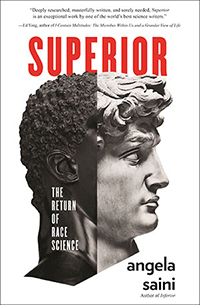
    Superior

    Superior: The Return of Race Science
    Angela Saini

    “Angela Saini’s Superior: The Return of Race Science is nothing short of a remarkable, brilliant, and erudite exploration of what we believe about the racialized differences among our human bodies..”
    —Jonathan Metzl, author of Dying of Whiteness


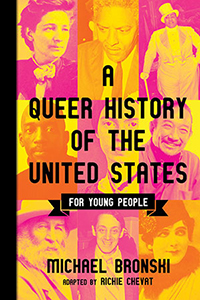
    A Queer History of the United States for Young People

    A Queer History of the United States for Young People
    Michael Bronski, adapted by Richie Chevat

    “A touchstone for LGBTQ readers seeking proof of the greatness that preceded them and confidence in the success that awaits in their future.”
    —Shelf Awareness


    An Indigenous Peoples History of the US for Young People

    An Indigenous Peoples’ History of the United States for Young People
    Roxanne Dunbar-Ortiz, adapted by Debbie Reese and Jean Mendoza

    “An important corrective to conventional narratives of our nation’s history.”
    —Kirkus Reviews, Starred Review


    Breathe

    Breathe: A Letter to My Sons
    Imani Perry

    “Combines rigor and heart, and the result is a magic mirror showing us who we are, how we got here, and who we may become.”
    —Tayari Jones, author of An American Marriage


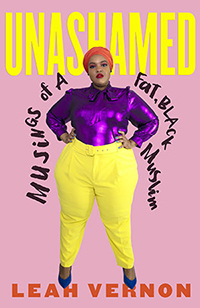
    Unashamed

    Unashamed: Musings of a Fat, Black Muslim
    Leah Vernon

    “I laughed and cried and read this book in awe of Leah Vernon’s brave, bold, and beautiful voice.”
    —Randa Abdel-Fattah, author of The Lines We Cross and Does My Head Look Big in This?


    White Negroes

    White Negroes: When Cornrows Were in Vogue . . . and Other Thoughts on Cultural Appropriation
    Lauren Michele Jackson

    “Incisive and richly detailed. A vital text—one that offers new ways of seeing, hearing, and consuming.”
    —Hanif Abdurraqib, author of They Can’t Kill Us Until They Kill Us


    Champagne glasses

  • By Philip Warburg

    Power plant

    Though Congress has ample reason to impeach President Trump for his self-serving machinations in Ukraine, we all know that the Senate’s blind Republican partisanship will block his removal from office. Given this inevitable outcome, it’s worth considering whether Congress could have targeted a far more consequential cause for impeachment: his utter failure to engage the climate crisis.

    Trump’s reckless mishandling of climate change threatens America’s environment, public health and economic security, but is it an impeachable offense? Article II of the Constitution declares that “the President, Vice President, and all civil officers of the United States shall be removed from office on Impeachment for, and Conviction of . . . High Crimes and Misdemeanors.” Due to the paucity of federal law clarifying these offenses, it has been left to jurists, legal scholars, and legislators to plumb their intended meaning. James Iredell, a leader of the North Carolina Ratifying Convention of 1788 and later a Supreme Court Justice, described impeachment as arising from “acts of great injury to the community.” Removal from office was the prescribed remedy, framed in the 1797 impeachment proceeding against US Senator William Blount as “not so much designed to punish an offender, as to secure the State.”

    The Constitution also demands that our nation’s chief executive “faithfully execute the Office of the President.” Modern commentators interpret this as requiring “diligent, careful, good faith, honest, and impartial” fulfilment of official duties. 

    Rather than joining other leaders in combating climate change, President Trump has signaled America’s withdrawal from the historic Paris climate accord, severing the US from the community of nations that are grappling with (if not always agreeing on) ways to defuse this global menace. Likewise, in his domestic policies, the president has advanced an agenda that systematically weakens our efforts to rein in greenhouse gas emissions.

    Neutralizing President Obama’s Clean Power Plan is just one of the steps Trump has taken to prop up US production and burning of “beautiful clean coal” and other fossil fuels. He has scrapped protections against toxic runoff from coal mines and coal-fired power plants while failing to rein in oil and gas companies’ release of methane, a super-potent greenhouse gas that spews unchecked from wells, pipelines and storage facilities. In the automotive sector, Trump has rolled back Obama-era standards aimed at reducing CO2 pollution from our cars and trucks. Adding insult to injury, he now seeks to strip California and other states of their longstanding authority to adopt motor vehicle standards more stringent than the federal government’s.

    Trump’s destructive policy moves are matched by statements intended to undermine public confidence in well-established climate science. Before becoming president, he repeatedly labeled climate change a “hoax.” As president, when experts from his own administration issued a climate assessment predicting hundreds of billions of dollars in annual economic losses from climate change by the end of this century, his flat response was: “I don’t believe it.”

    Isn’t the president’s rash dismissal of climate experts’ warnings a violation of his duty to exercise diligence, care, honesty and impartiality as our nation’s chief executive? And shouldn’t Trump’s reckless policies be considered “acts of great injury” to present and future generations—not just of Americans but of an increasingly vulnerable global community?

    We are already witnessing the human and environmental toll of climate change, with wildfires destroying entire communities in California, extreme storms flooding coastal and riverfront towns and cities, and warming seas feeding hurricanes that rage through the Gulf of Mexico, the Caribbean, and on up the Atlantic seaboard. These are just the first signs of much greater hardships that lie ahead globally: widespread desertification induced by global warming; food and water shortages; sweltering cities rendered uninhabitable by extreme summer heat; massive human displacement and colossal economic losses as hundreds of millions flee storm surges and rising seas.

    It may be time to take a more expansive view of the safeguards that the Founders enshrined in the Constitution to protect our nation from the transgressions of a dangerously wayward president.


    About the Author 

    Philip Warburg, author of two Beacon Press books on renewable energy, is an environmental lawyer who writes about energy policy. Follow him on Twitter at @pwarburg.

  • 2019

    You won’t find corny-ass statements here proclaiming that the year 2020 will usher a time of clearer vision. Puh-lease. That’s tired. What’s worth saying here, however, is we need to keep our eyes on the issues that matter to us as we begin a new decade. Now that’s wired. We can get a picture of what matters by looking back at some of the top read blog posts on the Broadside in 2019. Clearly, we’re still coming to terms with our cultural identity as it pertains to race and injustice and the chokehold of whiteness on liberation, among other issues. And as always, we’re grateful to our authors for giving us the context and critique to understand these issues and where to go from here.

    So here are the highlights of the Broadside this year. See you in the new decade with more insightful blog posts from our authors!


    Carol Channing

    “Before Passing Away, Carol Channing Passed for White”
    Lisa Page

    “Americans like stories like [Carol Channing’s], because racial and ethnic passing is ubiquitous inside a culture known for self-invention. But being Black is about more than biology, one drop rule be damned. Being Black is not just about singing and dancing, and shucking and jiving. Being Black goes beyond complexion—it’s a cultural thing.”


    Robin DiAngelo Security

    “Robin DiAngelo Talking White Fragility in My Town, with Security Guards”
    Thomas Norman DeWolf

    “Let me be as clear with my readers as Dr. DiAngelo was with us that night. It is up to white people to understand that our ancestors created racism. We have inherited it. Our denial and deflection and fragility perpetuate it. It is on us to eradicate it.”


    Black Girl Magic

    “For CaShawn Thompson, Black Girl Magic Was Always the Truth”
    Feminista Jones

    “Black Feminism can be a protection and a guide, and as more of us become parents, we have a responsibility to change the narrative, minimize the harm, and shift our culture and communities toward appreciation and respect for Black women and girls everywhere. Bringing our daughters up believing in and never questioning the existence of their own ‘magic’ is restorative and promising, electrifying and declarative, radical and hopeful.”


    Nathan Phillips at the 2017 Indigenous Peoples March

    “Cutting to the Chase of the Covington Catholic Fiasco”
    Dina Gilio-Whitaker

    “The entire incident is a classic display of settler privilege and fragility. Only in a society that systematically and simultaneously denies and justifies its genocidal foundation can an elderly Native man singing and playing a drum surrounded by hundreds of frenzied white males dressed in attire that to American Indians represents the colonial wrecking ball be construed as menacing.”


    The Other America

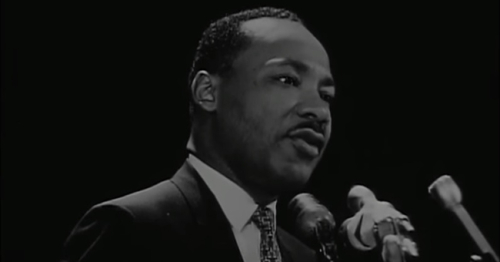
    “Martin Luther King, Jr.’s ‘The Other America’ Still Radical 50 Years Later”

    “The fact is that freedom is never voluntarily given by the oppressor. It must be demanded by the oppressed—that’s the long, sometimes tragic and turbulent story of history. And if people who are enslaved sit around and feel that freedom is some kind of lavish dish that will be passed out on a silver platter by the federal government or by the white man while the Negro merely furnishes the appetite, he will never get his freedom.” (Originally posted in March 2018)


    Slave trade

    “Breaking Up Families of Color, an American Tradition as Old as the Slave Trade”
    Daina Ramey Berry

    “The sounds, sights, and smells of slave auctions contributed to the horror of enslaved children’s lives. Loud, rhythmic bid calls echoing from the mouths of auctioneers competed with chatter from potential buyers, the rattling of chains, and the everyday noises of a town center. Joining these audible oddities was another unpleasant sound that could be heard above all others at the end of a sale: the cries of wailing mothers, overcome with grief after being separated from their children.” (Originally posted in June 2018).


    Racism Is Not Patriotic It's Idiotic

    “Getting to We: Ten Points for Understanding Racism in the Trump Era”
    Deborah L. Plummer

    “We, as Americans, do not have a shared understanding of the definition of racism. We live segregated lives and are deeply divided along political lines. Relying on politicians and the media to unravel racial dynamics does not serve us well. Fully understanding racism requires deep understanding of history and the social sciences, and a lot of multiracial living, which most of us do not engage in.”


    Candles

    “In the Wake of El Paso and Dayton, Beacon Press Offers Free eBook Resources”
    Helene Atwan

    “Like most of us living in the US, I was sickened by this weekend’s news of shootings in El Paso and Dayton. Coming into work, feeling so stricken by these events, I was heartened by the fact that I could turn to a group of colleagues and immediately begin talking about what kind of resources we could offer in the wake of these senseless tragedies. I feel, as I often do, heartened to be working in an environment where it is our job to try to create these resources.”


    Gregory Peck and Mary Badham in To Kill a Mockingbird

    “White Fragility and ‘To Kill a Mockingbird’”
    Linda Schlossberg

    “There’s a reason Mockingbird is assigned to thirteen-year-olds. The moral message of the novel is a simplistic one: Racism is bad. Very, very bad.  Also, bad people are racists. Good people, the reader is assured, are not racists . . . As readers, we are aligned with Scout and by extension Atticus, who embodies rational, educated “racial tolerance,” in sharp contrast to the novel’s depiction of an angry, ignorant, racist mob. Everything in the reading experience of the novel confirms a white reader’s sense of herself as open-minded, tolerant, woke. ‘If I lived in 1930s Alabama, I would never do that,’ the white reader thinks. ‘I am one of the good white people.’” (Originally posted in December 2018)

    2019

  • Holiday gifts

    Well, that was fast. Can you believe the holiday season (and snow) is here again? Time to go on the hunt for gifts to inspire someone in your life! Save 30% on everything at beacon.org through December 31 using code HOLIDAY30.

    By the way, orders must be submitted by 1 PM, EST, December 16, if you want them to be shipped before the holidays. USPS media mail takes 7-10 business days. To ensure delivery by December 24, choose one of our expedited shipping options.

    Oh, and we’ll be closed Monday, December 23, 2019 through Thursday, January 2, 2020. Orders placed during this time will be fulfilled when we are back in the office on Thursday, January 2, 2020.

    And now, without further ado, for our inspirational holiday picks, the categories are . . .


    Radical Women

    Reclaiming Our Space

    Reclaiming Our Space: How Black Feminists Are Changing the World from the Tweets to the Streets
    Feminista Jones

    “A godsend that will inform not only how we are approached and regarded by others through social media platforms but how we interact with each other and value ourselves.”
    —CaShawn Thompson, creator of #BlackGirlMagic

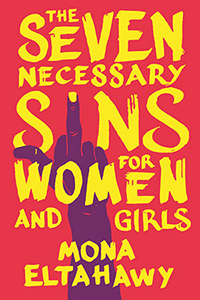
    The Seven Necessary Sins for Women and Girls

    The Seven Necessary Sins for Women and Girls
    Mona Eltahawy

    “Reading it will free you, and acting on it will free us all.”
    —Gloria Steinem, writer and feminist activist

    Unapologetic

    Unapologetic: A Black, Queer, and Feminist Mandate for Radical Movements
    Charlene A. Carruthers

    “She reminds us that bringing all of ourselves and our people with us is the only way any of us will get free.”
    —Janet Mock, author of Redefining Realness and Surpassing Certainty 

    Unashamed

    Unashamed: Musings of a Fat, Black Muslim
    Leah Vernon

    “Unashamed is everything Leah Vernon embodies on a daily basis: authenticity, resiliency, and, most of all . . . unquestionable courage.”
    —Jes Baker, author of Things No One Will Tell Fat Girls and Landwhale 


    Indigenous Resistance

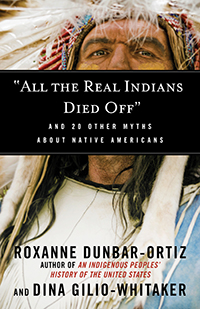
    All the Real Indians Died Off

    “All the Real Indians Died Off”: And 20 Other Myths About Native Americans
    Roxanne Dunbar-Ortiz and Dina Gilio-Whitaker

    “A much-needed and excellent introduction to American Indian history and contemporary life for a broad audience.”
    —Against the Current 

    An Indigenous Peoples History of the US

    An Indigenous Peoples’ History of the United States
    Roxanne Dunbar-Ortiz

    “This may well be the most important US history book you will read in your lifetime. Spoiler alert: the colonial era is still here, and so are the Indians.”
    —Robin D. G. Kelley, author of Freedom Dreams 

    An Indigenous Peoples History of the US for Young People

    An Indigenous Peoples’ History of the United States for Young People
    Roxanne Dunbar-Ortiz, adapted by Debbie Reese and Jean Mendoza

    “An important corrective to conventional narratives of our nation’s history.”
    —Kirkus Reviews, Starred Review

    As Long As Grass Grows

    As Long As Grass Grows: The Indigenous Fight for Environmental Justice, from Colonization to Standing Rock
    Dina Gilio-Whitaker

    “Not only does Gilio-Whitaker look at the history of Indigenous resistance to environmental colonization, but she points to a way forward beyond Western conceptions of environmental justice—toward decolonization as the only viable solution.”
    —Nick Estes, author of Our History Is the Future


    Cultural Realness

    Breathe

    Breathe: A Letter to My Sons
    Imani Perry

    “Deeply cathartic and resonant for parents attempting to raise their children with intention and integrity.”
    —Tarana Burke

    Me Dying Trial

    Me Dying Trial
    Patricia Powell

    “One of the most exciting writers living and writing on the island that is the Caribbean-American hyphen.”
    —Edwidge Danticat, author of Breath, Eyes, Memory 

    A Treasury of African American Christmas Stories

    A Treasury of African American Christmas Stories
    Ed. Bettye Collier-Thomas

    “Gives us all the gift of engaging our hearts and minds in the true stories of Christmas.”
    —Nikki Giovanni

    White Negroes

    White Negroes: When Cornrows Were in Vogue . . . and Other Thoughts on Cultural Appropriation
    Lauren Michele Jackson

    “Miraculously, Lauren Michele Jackson is able to write about cultural appropriation in a way that doesn’t make you want to drink a glass of sand.”
    —Eve L. Ewing, author of Electric Arches and Ghosts in the Schoolyard

    Holiday gifts

  • A Q&A with Patricia Powell

    Patricia Powell

    Patricia Powell

    Patricia Powell made a splash, in 1993, as a major voice in Caribbean literature with her debut novel Me Dying Trial. Her protagonist, Gwennie Glaspole, a schoolteacher trapped in an unhappy marriage, fights to resist Jamaican cultural expectations and for her independence. Now in the new century, we saw it was time to introduce her masterful story and signature voice to a new generation of readers. So we’ve reissued her novel in our Celebrating Black Women Writers series! Our assistant editor, Maya Fernandez, caught up with Powell to chat with her about it. 

    Maya Fernandez: Is it true the you originally wrote Me Dying Trial while you were in undergrad? What inspired you to write it?

    Patricia Powell: It is indeed true. I was initially an economics major but when I took my first creative writing class, everything changed. All my bottled-up feelings of loss came undone. I was twenty at the time and had only been in the States for four years. Writing had already stirred up so many feelings about home and the people I had left behind, those I had loved with all my heart and would never see again—my great aunt who raised me, for example, and who died shortly after I left. Writing then became a way to bring her back to life—her laughter, her stories, her larger than life love. As long as I was writing, there she was, close to me, filling my imagination, and this was the case, too, for many of the other characters: the men at the shop talking and drinking and smoking; the people in the village; the village itself. Writing was a way, too, of knitting myself back together with all these memories that I could then carry forever. 

    MF: One of the reasons I personally love this book is that the characters feel full and actualized. Complicated in that good, human way. Are any of them based on people in your own life?

    PP: Yes, some of the characters are based on real people and some on a number of people folded into one. But Me Dying Trial was really a story I made up about my origins since no one in my family would confirm the truth of where I had come from. A new place, a new country often requires a new identity. But even in the old place, I didn’t know who I was. I had always heard stories that my father wasn’t really my father, and that was why I was given away. My mother had one story, my great aunt had another, my grandmother had yet a third. Not to mention my cousins and their many speculations. It was impossible to know what was true, and in those days when you were a child that asked too many difficult questions, the adults were always quick to tell you, Don’t stir that up now, that was a long time ago, leave it, or even worst, Why are you asking about things that don’t concern you! Me Dying Trial was a way to invent an origin story for myself. With each word, I was weaving my own tale. I don’t know if it is the truth of my birth—my mother still won’t say—but it is a truth I created from bits of stories I overheard and a version I have chosen to live with.

    MF: Though Gwennie is the central character of the book, Me Dying Trial also focuses on her daughter, Peppy, and her aunt, Cora, and the tumultuous relationships the exists between the three of them. Why did you choose to share these three different women’s stories together?

    PP: Peppy, Gwennie, and Cora represent three generations of Jamaican women. I was curious to know what values, what gifts, what insights about life each could impart to the other. Peppy, of course, the youngest, had the most to learn. From her mother, she would learn both bravery and perseverance. Gwennie was brave in so many ways. For one, she went outside of her loveless marriage to seek affection. The consequences, of course, were grave, as women are not often expected to self-realize; but for a moment she allowed herself a little joy and a little intimacy. Then she not only left her marriage, she moved with her children to an entirely new country to start her life over, which is no small accomplishment. And though she had lived a middle-class existence in Jamaica as a teacher, she took the housekeeping jobs that were available to her to provide food and housing for her children. In many ways, Gwennie had gone further than the women in her lineage. None had moved away to seek their fortune in another country. Leaving her marriage had given her this freedom. From Aunt Cora, Peppy learned the true meaning of love and security. These were attributes her mother could not provide, but Cora could. She believed in the fullness and richness of all life. She had already adopted several children, providing them a home and love and abundance. Clearly, she had room to raise one more child. Cora was also a woman of the land. She owned a farm. She was an independent businesswoman and ran a successful store. She served her community in various ways, even building them a place for worship with her own funds. She was generous to everyone. Neither Cora nor Gwennie is without flaws, but together they will have given Peppy invaluable resources to make her own way into the world. 

    MF: This book touches on important topics such as identity, sexuality, immigration, gender expectations, and abuse. When writing the book, did you imagine that the issues the characters face would remain relevant more than twenty years later?  

    PP: I had no idea these topics would be relevant today. But the truth is they’ve been relevant for a long time. When I think of some of my favorite writers who have now passed—Virginia Woolf, James Baldwin, Michelle Cliff, Paule Marshall, among others—these were also some of the topics they explored. I think each generation adds not only a new perspective to the conversation but also contributes to the evolution of the topic. I don’t think Jimmy Baldwin could ever have imagined gay marriage in the US when he was writing Giovanni’s Room, but just by writing the story of their love, he was already infusing the world consciousness with that possibility. I doubt he could have imagined a Black president, but I also believe that his fiery essays were already making room for a Barack Obama to happen. I believe that when we write the truth of our experiences we are already weaving the possibility for a new and different outcome.

    MF: How do you feel about the reissue of Me Dying Trial?

    PP: I’m excited that a whole new generation of readers will get to read it and experience the characters and develop their own relationships with them. And I hope, too, that they’ll be inspired to write their own stories, adding new insights to the conversations about identity and abuse and immigration and sexuality. I’m also excited about up-and-coming literary scholars who will read the novel with new eyes and offer even newer interpretations of the material.

    MF: What would you like to say about the Celebrating Black Women Writers series? How do you feel about having your book included in it?

    PP: OMG! What an honor! To be celebrated amongst writers such as Gayl Jones, Sonia Sanchez, Ntozake Shange, Octavia Butler, Sindiwe Magona, Alina Troyano … I have no words. These writers are my literary ancestors and mentors. They taught me how to read, how to think, how to listen, how to write, how to dream. They taught me how to love. Their books are like old friends. I return to them again and again for inspiration, for comfort, for guidance, for renewal.

    MF: Why do you think it’s important to read Black women’s work, stories, books, words, etc.?

    PP: For Black people who might not often see ourselves reflected in literature, Black women’s work can be a mirror, an evaluation, and a celebration of our experiences. And their work can offer us alternate ways of seeing and interpreting those experiences as well as new possibilities for living and loving. Black women’s stories are important for all readers, as they can illuminate all those places where our shared humanness overlaps, no matter race, gender, religion, economic class, or sexual orientation, and also where our shared humanness diverges based on those very same categories. Because we don’t often occupy seats of power, at least in North America, Black women’s writings can reflect back to those at the center what life is often like on the outskirts, and whether or not social policies are effective in improving living and social conditions. Black women’s voices and perspectives are also vital to our ongoing national conversations about wealth redistribution, environmental health, racial and gender equality, food and housing and employment justice, safety and freedom of movement through the streets, and so much more. They are also vital to the way we think about our bodies and our relationships to each other and to the Earth. In Balm Yard, the new book I am writing about healing practices in rural Jamaica rooted in older West African religions, I explore the spiritual worldviews of Black women that are grounded in nature and in the realms of spirit. I am learning that Black women’s spiritualities have much to teach us about how to respond to our present moment. Because we are living through such chaotic times, where everything we have taken for granted is being upended and reevaluated, the very earth is shifting underneath us, my hope is that our work can continue to offer new ways of thinking, alternate ways of being in this changing world, medicine to soothe our aching hearts and minds, and new dreams that can birth new possibilities and realities.   

    MF: What would you like readers, especially those just being introduced to Me Dying Trial, to take away from your book?

    PP: I would like new readers to enjoy the book, to appreciate the details, the humor, the intricate ways the characters are portrayed. My hope, too, is that new readers might be able to see themselves or their families’ stories reflected here, and that this resonance brings new insights and deepens curiosity. I would like readers new to Caribbean or women’s literature to allow themselves to be enriched by these new perspectives so that their own lives might be transformed by the reading experience.


    About Patricia Powell 

    Novelist Patricia Powell was born in Jamaica and moved with her family to the United States in 1982. Powell has taught creative writing at Harvard University, Wellesley College, MIT, and Standford University, and is currently Professor of English at Mills College in California. She is the author of A Small Gathering of Bones, The Pagoda, and The Fullness of Everything.

  • Isabel Tehan

    In these times when readers are responding to our books “more than ever,” when our authors—including Richard Blanco, Imani Perry, Robin DiAngelo, Dina Gilio-Whitaker, and Bettina Love—are appearing in the media, their ideas going viral on social media, their voices being heard on so many platforms, we thought it might be good to take a break to focus on some of the staff who work hard to find, shape, edit, produce, and promote those works. Our blog series “Beacon Behind the Books” introduces to you a member of our staff and gives you a behind-the-scenes look, department by department, at what goes on at our office.

    To wrap up 2019, we introduce you to our business operations assistant, Isabel Tehan!

    What drew you to publishing, Isabel? How did you find your way to Beacon?

    Like many people who work at Beacon, I have always loved books and reading, and I studied English as my major in college. Though my mother worked as an editor for a number of years, I did not consider a job in publishing for myself until later in school. I was worried that a lack of publishing-specific internships might make it more difficult to get a job in this industry but figured it was worth a shot! I found the listing for my position at Beacon during one of many frantic late-night job searches as a second-semester senior. As I looked further into the job, I realized Beacon published several books I had already read and found meaningful. I was lucky that timing worked out for me to begin at Beacon right after graduation.

    What’s your advice to someone interested in entering the publishing field?

    Be open to roles outside of departments that don’t immediately jump to mind when thinking about publishing. Since Beacon is a small press, I am able to learn about what people in other departments do on a day-to-day basis. 

    What other departments does your department interact with? And how?

    I work with the sales department regularly by helping to fulfill orders from different organizations and individuals. I enjoy this part of my job, because it is fascinating to see the different groups and people who are buying our books.

    What are you reading right now?

    I’m behind the times on this but I’m finally reading Educated by Tara Westover. I love memoirs and reading about others’ real-life experiences, and this is a really incredible story. I’m also strongly considering rereading the Twilight saga if I can manage to find my old copies anywhere.

    Hobbies outside of work?

    When it’s not freezing outside and dark at 4 p.m., I love most outdoor activities, especially any that bring me close to the beach. This winter, though, I am working on getting more advanced with my knitting. I’m hoping to make myself a sweater before it’s too warm outside to wear it.

    Favorite thing about Boston?

    Walking/running/biking along the Charles never gets old. I love the views from the Cambridge side of the river. In general, I love a waterfront view. The one down the street from the Beacon office in the Seaport is pretty great, too!


    About Isabel Tehan 

    Isabel Tehan earned a BA in English Literature and Spanish Language from the College of the Holy Cross. Before joining Beacon in June 2019, she worked as a research assistant at the Digital Transgender Archive and served as the Editorial Intern at the Dana-Farber Cancer Institute.

  • By Raj Kumar

    Bill and Melinda Gates

    Bill and Melinda Gates. Photo credit: Kjetil Ree

    If you saw the latest episode of the Netflix show Patriot Act with Hasan Minhaj, you heard Minhaj say we have to tax that ass . . . of the ultra-rich, that is. Minhaj asked if billionaires and big philanthropy can save us. He doesn’t think so, and nor does writer Anand Giridharadas. They believe billionaires’ wealth needs to be taxed. Devex founding president Raj Kumar doesn’t see it that way. In this passage from his book The Business of Changing the World: How Billionaires, Tech Disrupters, and Social Entrepreneurs Are Transforming the Global Aid Industry, Kumar argues that the debate on taxing the rich is shallow, that there are more factors to consider. Instead, we should have results-oriented metrics in place in addition to laws to keep Richie Rich donors accountable and transparent about their investments.

    ***

    As much as billionaires might like to think of their giving as an unalloyed good, their philanthropy will increasingly be a subject of controversy and a political issue itself.

    In the United States, where more than half of all billionaires live, even our president among them, there is growing concern that our political system is being undermined by the divide between the billionaire class and everyone else. That has, in turn, put major US philanthropy in the spotlight, as three recent books make clear.

    In his book The Givers, David Callahan, a philanthropy critic, worries that massive private philanthropy is diminishing the role of government when it comes to public policy. Rich donors shaping society the way they like through tax-deductible political campaigning in the guise of charity and direct provision of social services runs counter to a democratic American society making its own choices. Similarly, Robert Reich, a Stanford University professor and author of Just Giving, sees the fast growth in private philanthropy as a subversion of government: the charitable-giving tax deduction reduced government revenue in the US by $50 billion in 2016. All that philanthropic giving could have been directed by government according to the democratic wishes of citizens. Finally, Anand Giridharadas’s book Winners Take All examines how billionaire giving is part of a pernicious elitism that stops questions about inequality in their tracks. Writing big checks to good causes can take attention away from problems elites themselves are causing, he worries.

    ~~~

    As we face a coming wave of billionaire philanthropy, what’s required are rules for the road, an example of which would be an admonition against anonymous giving. This is a historic opportunity to fundamentally change the world for the better, but we can only seize that opportunity if billionaire philanthropy is held to high standards of transparency and effectiveness. Those standards might need to be enshrined in law if billionaire philanthropists don’t act quickly to demonstrate they are engaged in responsible giving.

    Those seeking solutions to broader inequality are on the right track. Left unchecked, inequality can lead to “state capture”—a situation where a few wealthy people or interest groups effectively control the government. That can happen even in countries that hold elections and are technically democracies. As a result, there are tax, regulatory, and campaign finance reforms that may be required to mitigate the worst aspects of our current “gilded age.”

    But even if, for example, funds could be raised from a billionaire tax, governments would certainly not deploy the money entirely to end extreme poverty or achieve other critical zero goals. Already we face the problem of governments in rich countries dedicating too little funding to foreign aid—in the United States, it makes up just 1 percent of the federal budget. Mark Zuckerberg and Priscilla Chan have pledged their massive future giving to education and human health. If more of their money were to be taxed by the US government, according to its current budget priorities most of it would be spent on defense, entitlement programs, and interest on the debt.

    That’s why the debate about billionaires paying more taxes versus donating more to charity is important, but too shallow on its own. We can’t focus only on the amounts. Just as there is scrutiny of what governments spend tax revenues on, there needs to be scrutiny of what billionaires do with their philanthropic investments. What kind of impact are they actually having?

    Zuckerberg and Chan’s initiative is a case in point. Organized as a limited liability corporation, CZI is able to operate with little transparency, even though it is growing to become one of the largest philanthropic organizations in the world and could one day even eclipse the Gates Foundation.

    The operating model Zuckerberg and Chan have in mind is also unusual and potentially problematic: they don’t focus on giving grants to achieve their objectives—as nearly all other foundations would. Instead, they want to launch and operate programs themselves. This means that rather than maintain a small staff for grantmaking and advocacy, they will need to build a large in-house implementation team. Already CZI has a staff of 250, two and a half times the staff size at Bloomberg Philanthropies, even though the funding levels are nearly identical. That team includes 125 engineers, as CZI aims to build technology tools to advance scientific discovery in the medical field and improve learning outcomes in education.

    As CZI scales to an organization that spends billions of dollars per year, its staff size could end up in the thousands. Funds that could have gone to social entrepreneurs and NGOs competing against each other to present the best ideas and results may instead end up building a massive institution that faces no competitive pressures and can’t easily be scrutinized by the public. The approach might be practical, given CZI’s central focus on technological innovation and the unique skill sets of its founders, but it could also be a mistake that distorts the aid market. Ultimately the public will need to be able to have an open and transparent debate about CZI’s approach, even though CZI is organized as a private corporation.

    The debate over whether billionaires should spend more on philanthropy or taxes isn’t restricted to the rich countries where most of them live. A big part of the global development challenge is increasing the tax base in low-income countries, improving the capabilities of governments there, and pushing those governments to spend more of their limited resources on health, education, and infrastructure. Part of this agenda entails better tax enforcement, especially for the richest citizens of the poorest countries. But that’s hard to achieve, and alone won’t close the gap. And there are some foreign aid programs that have these goals, but private philanthropy has the most flexibility to attempt to influence and incentivize the governments of countries where most extreme poverty exists.

    Mo Ibrahim’s foundation does something no government aid program could: the African billionaire offers a $5 million prize to any African president or prime minister who leaves office when his or her term ends. It’s an incentive to prioritize democracy and the rule of law, and just this year it was awarded to the outgoing president of Liberia, Ellen Johnson Sirleaf.

    Like the Gates Foundation’s funding of FAO and WHO and Ibrahim’s prize, private philanthropy might just be able to make United Nations agencies, international organizations, and governments more effective in a way that just increasing taxes on billionaires can’t.

    The idea that trillions of dollars in new funding could soon become available to end extreme poverty, eliminate disease, and improve our planet and our lives strikes me as a good problem to have. That some of the most talented new economy leaders like Bill Gates, Michael Bloomberg, and Mark Zuckerberg would use their credibility, political clout, and expertise to move the needle on polio, smoking eradication, and education is a good thing. We need to both push more billionaires into that column and hold accountable those who don’t act. We need to call out billionaires who give just to popular causes or pet projects and encourage those who instead fund proven, cost-effective interventions that maximize impact.

    It won’t be enough to sit back and watch more billionaires slowly sign up to the Giving Pledge and make their mark against the issues they care about. We’ll need a highly engaged public encouraging results-oriented philanthropy and holding billionaires accountable when their giving isn’t generating or even targeting the results the world needs. And we may well need laws and rules around transparency that allow us to do that. In the quest to end poverty, nearly eight hundred million ultrapoor adults and children are urgently counting on our ensuring their lives are on top of the global agenda.


    About the Author 

    Raj Kumar is the founding president and editor in chief of Devex, which the Washington Post compared to a “Bloomberg-style” media platform for the aid industry. A media leader for the World Economic Forum, Kumar is a noted commentator on global development. He lives in Washington, DC. Follow him on Twitter at @raj_devex and visit his website.

  • By Roxanne Dunbar-Ortiz and Dina Gilio-Whitaker

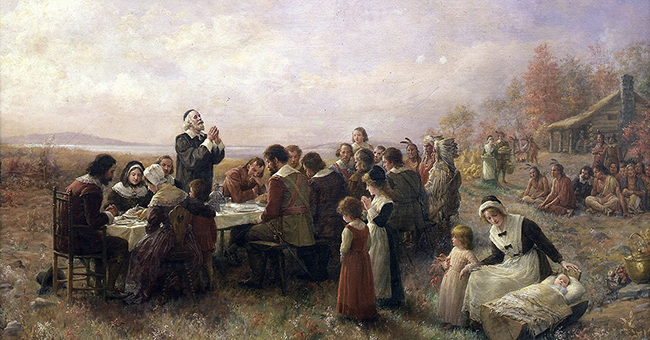
    Jennie A. Brownscombe’s “The First Thanksgiving at Plymouth,” (1914).

    Jennie A. Brownscombe’s “The First Thanksgiving at Plymouth” (1914). Ugh! See how the artist centered the colonists to push the settler-centric mythos of Thanksgiving? This has settler-colonial Hallmark nonsense written all over it.

    Editor’s Note: I don’t know about you, but what you’re about to read is not what I was taught about Thanksgiving—and I wish it was. In school, I got the Hallmark card mythos. The following excerpt from “All the Real Indians Died Off”: And 20 Other Myths About Native Americans by Roxanne Dunbar-Ortiz and Dina Gilio-Whitaker busts the myth of this holiday. Spoiler alert: the history is much more complicated.

    ***

    Second only to the Columbus discovery story, the Thanksgiving tale is the United States’ quintessential origin narrative. Like the Columbus myth, the story of Thanksgiving has morphed into an easily digestible narrative that, despite its actual underlying truths, is designed to reinforce a sense of collective patriotic pride. The truths are, however, quite well documented. Their concealment within a simplistic story inevitably depicts a convoluted reality about the Indigenous peoples who played crucial roles in both events, and it presents an exaggerated valorization about the settlers’ roles. The result is a collective amnesia that fuels the perpetuation of Native American stereotypes, playing out over and over again in the classrooms and textbooks of American schoolchildren, generation after generation. This only masks the complexities of the relationships between settlers and Indians, and thus the founding of the United States.

    The Thanksgiving story as we know it is a story of unconditional welcome by the Indigenous peoples, a feel-good narrative that rationalizes and justifies the uninvited settlement of a foreign people by painting a picture of an organic friendship. A more accurate telling of the story, however, describes the forming of political alliances built on a mutual need for survival and an Indigenous struggle for power in the vacuum left by a destructive century of foreign settlement.

    The Backstory

    The offenses of the Thanksgiving story stem from lack of historical context. For example, it often gives the impression that the Mayflower pilgrims were the first Europeans to settle on the land today known as the United States. But by the time the Mayflower arrived at Plymouth, Massachusetts, in December 1620, Europeans had been traveling to the North American continent, and founding colonies there, for well over a century. Armed with information about the region—made available by the knowledge and mapping of predecessors like Samuel de Champlain—the Eastern Seaboard was dotted with numerous European enclaves and towns. Jamestown, for example, was founded in 1607, while Florida had been populated by the Spanish since the founding of St. Augustine, in 1565. Some colonies, such as the one in Roanoke, Virginia, had failed. The Mayflower immigrants, who came to be known as the Pilgrims, were thus, in December 1620, only the latest newcomers to the land, all of which was known at the time to the English as Virginia. Exposure to European diseases had resulted in pandemics among the Natives up and down the coast from Florida to New England throughout the sixteenth century, exacerbated by the Indian slave trade started by Columbus. Between 1616 and 1619 the region that would soon become Plymouth Colony underwent an unknown epidemic that decimated the Indigenous population by at least one third to as much as 90 percent—a fact the Pilgrims knew and exploited.

    The settlement the Pilgrims called New Plymouth was the ancestral land of the Wampanoag (Pokanoket) people, who called the place Patuxet. Contrary to the popular myth that the Pilgrims arrived to an unoccupied “wilderness,” it had for untold generations been a well-managed landscape, cleared and maintained for cornfields and crops like beans and squash, as well as for game. Also contrary to popular mythology, the Wampanoags, like most eastern Indians, were farmers, not nomads. Up until the epidemic, the Wampanoag nation had been large and powerful, organized into sixty-nine villages in what is today southeastern Massachusetts and eastern Rhode Island. Their exact population is unknown, but estimates range from twenty-four thousand to upwards of one hundred thousand. The epidemic decimated their population, however, and destabilized relations with their traditional enemies, the neighboring Narragansett, Mohegan, and Pequot peoples, among others. In 1620 the Wampanoags were in a state of military tension, if not full-scale war with the Narragansetts.

    When the Pilgrims arrived at New Plymouth in the depth of winter, food was the first concern. From colonists’ journal entries we know that right after their arrival Native homes and graves were robbed of food and other items. Written accounts describe taking “things” for which they “intended” to pay later. Ever pious and believing in divine predestination, the religious separatists attributed their good fortune to God, “for how else could we have done it without meeting some Indians who might trouble us.” Thus, the Pilgrims’ survival that first winter can be attributed to Indians both alive and dead.

    Before the epidemic, Patuxet had been a village with around two thousand people. Months after their arrival, the colonists had their first serious encounter with an Indian. In March 1621 they came face to face with Samoset, a Wampanoag sachem (leader) of a confederation of about twenty villages. In rudimentary English learned from English fisherman and trappers, Samoset explained about the plague that had just swept through the area. He also told them about Massasoit, who was considered the head Wampanoag sachem, also known as a sagamore. Within a few days, Massasoit appeared at the Plymouth colony accompanied by Tisquantum (Squanto), eager to form an alliance with the colonists in light of the shifting balance of power in the Indigenous world due to the plague. A formal treaty was immediately negotiated, outlining relationships of peace and mutual protection. Massasoit sent Squanto as a liaison between the Native confederation and the colonists, and Squanto taught them Native planting techniques that ensured the bountiful harvest they would enjoy in the fall. Squanto had been kidnapped as a child, sold into slavery, and sent to England, where he learned how to speak English. Having escaped under extraordinary circumstances, he found passage back to Patuxet in 1619 only to find himself the sole male survivor of his village.
    The First Thanksgiving

    The facts about the first Thanksgiving come from two primary written sources, Edward Winslow’s Mourt’s Relation and William Bradford’s Of Plimouth Plantation. Neither of the accounts are detailed enough to surmise the familiar tale of Pilgrims hosting a feast to thank the Indians for their help, certainly not enough to imagine Englishmen teaching the Indians about thanksgiving as we are sometimes led to believe. The English had an ancient custom of harvest festivals that had been secular, not religious affairs. Spiritual ceremonials of gratitude had always been central cultural attributes among Indigenous peoples who believed in relationships of reciprocity, so the concept of thanksgiving was not new to either group.

    Only Winslow’s account, written several weeks after the event, mentions the Indians’ participation. He wrote:

    Our harvest being gotten in, our governor sent four men on fowling, that so we might after a special manner rejoice together, after we had gathered the fruits of our labors; they four in one day killed as much fowl, as with a little help beside, served the Company almost a week, at which time amongst other Recreations, we exercised our Arms, many of the Indians coming amongst us, and amongst the rest their greatest king Massasoit, with some ninety men, whom for three days we entertained and feasted, and they went out and killed five Deer, which they brought to the Plantation and bestowed on our Governor, and upon the Captain and others. And although it be not always so plentiful, as it was at this time with us, yet by the goodness of God, we are so far from want, that we often wish you partakers of our plenty.

    Not all historians agree as to what actually happened that day. It is clear that the colonists decided to have a harvest celebration (note that nowhere is the word “thanksgiving” used). As can be deduced from the account, one widely espoused interpretation holds that the Indians were not initially invited to share in the celebration. They came when they heard in the distance the discharge of guns, fired in the exuberance of the festivities. Wondering if there was trouble, the Wampanoags entered the English village with around ninety men. It was only after arriving well-intentioned but uninvited that an invitation to stay was extended. Since there wasn’t enough food to go around, the Indians went out and caught some deer, which they ceremonially presented to the English.

    Throughout Mourt’s Relation (written over a period of one year from November 1620 to November of 1621) references are made to the affection and camaraderie between the Plymouth colonists and Massasoit and Squanto, but the tenuous peace was to be short-lived. Acting independently, Squanto had developed rogue tendencies in an apparent power struggle with Massasoit. He increasingly undermined the authority of Massasoit and other sachems, eventually driving a fatal wedge between himself and Massasoit and straining the relations between Massasoit and the colony. By the spring of 1622, Massasoit had ended trade between the confederation and the English, and the colony held on desperately to their relationship with Squanto. In October Squanto died under mysterious conditions. Nataniel Philbrick wrote that although it is difficult to document, he may have been poisoned in an assassination plot masterminded by Massasoit.

    Within a few months Massasoit had reestablished diplomatic relations with the colony. He appointed Hobamok as his intermediary, and an uneasy alliance was maintained with the colony until Massasoit’s death around 1661. He would be succeeded by his son Wamsutta, and by 1662 his second son, Metacom, known to the English as King Philip, was in charge. Because of the unrelenting pressure of the English demands for land, relations would deteriorate so severely between the English and the Wampanoags that by 1675, war broke out. Called King Philip’s War, it has come to be seen as the bloodiest, most violent conflict ever fought on American soil. Thus, in light of the larger history, the simplistic idea that Thanksgiving proves that the Indians welcomed the Pilgrims can be more accurately seen as a temporary chapter characterized by maximized political self-interest on all sides.

    ***

    The sooner we disabuse the next generations of the settler-centric mythos of Thanksgiving, the better. For that, we have the young-adult adaptation of Roxanne Dunbar-Ortiz’s An Indigenous Peoples’ History of the United States for Young People, adapted by Debbie Reese and Jean Mendoza. For middle-school teachers, we have a complementary lesson plan about Thanksgiving.


    About the Authors 

    Roxanne Dunbar-Ortiz grew up in rural Oklahoma, the daughter of a tenant farmer and part-Indian mother. She has been active in the international Indigenous movement for more than four decades and is known for her lifelong commitment to national and international social justice issues. After receiving her PhD in history at the University of California at Los Angeles, she taught in the newly established Native American Studies Program at California State University, Hayward, and helped found the Departments of Ethnic Studies and Women’s Studies. Her 1977 book The Great Sioux Nation was the fundamental document at the first international conference on Indigenous peoples of the Americas, held at the United Nations’ headquarters in Geneva. Dunbar-Ortiz is the author or editor of seven other books, including Roots of Resistance: A History of Land Tenure in New Mexico. She lives in San Francisco. Follow her on Twitter at @rdunbaro. 

    Dina Gilio-Whitaker (Colville Confederated Tribes) is a lecturer of American Indian Studies at California State University San Marcos, and a consultant and educator in environmental justice policy planning. Her research interests focus on Indigenous nationalism, self-determination, environmental justice, and education. She also works within the field of critical sports studies, examining the intersections of indigeneity and the sport of surfing. She is co-author with Roxanne Dunbar-Ortiz of Beacon Press’s “All the Real Indians Died Off” and 20 Other Myths About Native Americans, and author of As Long as Grass Grows: The Indigenous Fight for Environmental Justice from Colonization to Standing Rock. Follow her on Twitter at @DinaGWhit and visit her website.