• A Q&A with Carlos A. Ball

    Walmart at Fresno Rainbow Pride Parade and Festival, June 2015.

    Walmart at Fresno Rainbow Pride Parade and Festival, June 2015. Photo credit: David Prasad

    Nowadays, it’s commonplace to see Apple, Facebook, Google, Walmart, and other big businesses marching in Pride parades. You wouldn’t see them there several decades ago. In fact, you wouldn’t see them cosigning domestic partnerships benefits, marriage equality, or LGBTQ rights either. Corporations were openly hostile or indifferent to sexual minorities and transgender people until years’ worth of LGBTQ activism changed their understanding and treatment of queer people. Legal scholar Carlos A. Ball wrote about this little-known history in The Queering of Corporate America: How Big Business Went from LGBTQ Adversary to Ally. Beacon Broadside editor Christian Coleman caught up with Ball to chat with him about it.

    Christian Coleman: What was the inspiration behind writing The Queering of Corporate America?

    Carlos A. Ball: I was struck, a few years ago, by the ways in which large corporations were coming out (no pun intended) against the passage of anti-LGBTQ laws, such as so-called religious freedom laws and transgender bathroom laws. Partly in response to strong criticism by corporate America, several states, including Arizona, Indiana, and North Carolina, rescinded the anti-LGBTQ laws. That made me start wondering why corporations were taking such public stances in favor of LGBTQ equality, while remaining generally neutral on other so-called hot button social issues. What I uncovered was a long history of LGBTQ activism aimed at corporations that began shortly after the Stonewall riots and that played an instrumental role in pushing large companies to embrace policy positions favoring equality for sexual minorities and transgender individuals. 

    CC: You’re a law professor at Rutgers University and an expert in constitutional law. How did your background inform and determine the way you approached the subject matter and wrote the book?

     CAB: I’ve written several books on the history of the LGBTQ movement. Before this project, I had focused, like most commentators, on the movement’s demands of the government, either to stop discriminating itself or to prohibit the private sector from discriminating. But as I started doing my research for this book, I realized my focus up until then had been too narrow, and that I had not paid sufficient attention to the ways in which early activists in the 1970s and 1980s sought to apply pressure directly on large companies to stop discriminating and to support LGBTQ equality positions. So I would say that I was already attuned to the effective pressure tactics of LGBTQ activists; what I did with this project was to expand the lens to cover activism aimed at the corporate sector.

    CC: Would you say the 1990s were a watershed moment of big business, by and large, changing its attitude toward the queer community? It seems from this point on and through the 2000s that corporations were pretty much publicly on board with supporting LGBTQ equality.

    CAB: Yes, I would say the 1990s were a tipping point of sorts. By then, LGBTQ activists already had spent about two decades pressuring large companies and educating them about the importance of LGBTQ equality for their employees. It was in the 1990s, especially with the adoption by many Fortune 500 companies of domestic partnership benefits, that many big businesses accepted the basic proposition that the relationships and families of their LGBTQ employees were as worthy of recognition and respect as those of their married heterosexual employees. And once large companies embraced that basic point, it became natural for them to care about not only how their LGBTQ employees were treated inside corporate walls, but outside of them as well.

    CC: Do you think the stories in The Queering of Corporate America will help those who feel skeptical about corporate representation at Pride parades?

    CAB: My book is not aimed at trying to reduce progressives’ skepticism of large corporations. I think it is important, for example, that Pride parades do not become simply a vehicle for corporate marketing. So I think it is healthy for activists to question excessive participation by corporations in the parades. I also think that progressive activists of all stripes should criticize corporations when they pursue or defend policies that harm society. For example, it is commendable that many large energy companies have LGBTQ-friendly policies, but that should not immunize them from forceful criticism when they pursue profits in ways that endanger the future well-being of the planet. The bottom line is that it is difficult to generalize. Sometimes corporations act responsibly and correctly, and they should be praised for that. My book praises large corporations for their general embrace of LGBTQ equality policies. But corporations should also be questioned and criticized when they pursue harmful policies in the name of maximizing profits.

    CC: I was so touched reading about your daughter in the acknowledgments. You wrote that she was in the process of socially transitioning genders when you were working on the book and that she deepened your understanding of some of the transgender issues you address. What were some of those issues?

    CAB: It is one thing to understand an issue politically and intellectually; it is another to live it. Over the last few years, I have seen my teenage daughter make her way in a world that repeatedly tries to put people in boxes depending on their assigned gender. Resisting those efforts by living according to one’s own definition and understanding of gender, rather than society’s, takes time, energy, commitment, and courage. Viewing that process from the inside, so to speak, has given me a new appreciation for what transgender individuals go through on a daily basis and has confirmed for me just how morally wrong and harmful discrimination on the basis of gender identity can be. 

    CC: The publication of your book couldn’t be more timely. Seeing the news of the Trump administration erasing civil rights protections for LGBTQ health programs, what would you like readers to take away from it?

    CAB: I agree with Martin Luther King, Jr., that “the arc of the moral universe is long, but it bends towards justice.” The struggles for civil rights in this country have always entailed some steps forward and some steps backwards. While it is important to resist the Trump administration’s rollbacks in civil rights in every way that we can, we should take solace from the progress that we have made over the last few decades. My book provides part of that story of progress. I think that activists in the 1970s could have never imagined that, for example, hundreds of large American businesses would file a brief with the US Supreme Court in 2015 supporting marriage equality. That was a socially transformative change that resulted from decades of effective and committed LGBTQ activism. Change is possible, but it takes both time and hard work. In the end, I have little doubt that the Trump administration will be on the losing side of history when it comes to LGBTQ civil rights issues. 


    About Carlos A. Ball 

    Carlos A. Ball is Distinguished Professor of Law and the Judge Frederick Lacey Scholar at Rutgers University. An expert on LGBTQ rights, he is the author of several books, including The First Amendment and LGBT Equality and From the Closet to the Courtroom. He lives with his family in Brooklyn, New York.
  • By Peter Jan Honigsberg

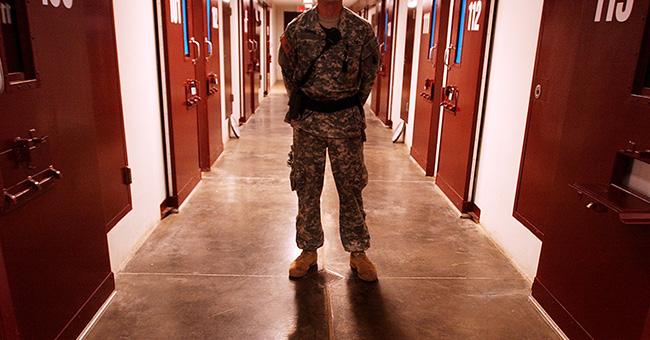
    A soldier stands guard on a cell block inside Camp Five at Guantánamo Bay.

    A soldier stands guard on a cell block inside Camp Five at Guantánamo Bay. Photo credit: Staff Sgt. Jon Soucy, National Guard Bureau

    University Press Week runs each year in November and was first established in 1978 by President Jimmy Carter to recognize “the impact, both here and abroad, of American university presses on culture and scholarship.” This year’s theme is Read. Act. Think., which emphasizes the role that scholarly publishers can play in moving national and international conversations forward on critical and complex issues. As a member of the Association of University Presses, Beacon Press is proud to participate in this year’s blog tour. In our contribution, we are sharing two selections from Peter Jan Honigsberg’s A Place Outside the Law: Forgotten Voices from Guantánamo about Guantánamo Bay prison guards who went off script and saw the humanity in the detainees.

    The content of A Place Outside the Law comes from the interviews filmed by Witness to Guantánamo, an organization Hongisberg founded in 2008 to collect and preserve the personal stories from Guantánamo Bay Naval Base. The full-length interviews are held in perpetuity at the Duke University Human Rights Archive in Durham, North Carolina. Clips of them appear on the Witness to Guantánamo website.

    ***

    Brandon Neely’s Story: Facebook Friends

    When Brandon Neely sat down to interview with us in Houston, Texas, he brought his wife. She knew much of his story, but it seemed that he wanted her to hear him share his story with us. Maybe he would recall something new, something he had not told her before.

    Neely had signed up with the military before the events of 9/11. “When I joined, it was quiet. There was nothing going on around the world. I wasn’t doing much. I was stocking groceries forty hours a week and I knew I needed change. I wanted really to go to college. I’ve been out of school almost two years. Because, you know, I grew up in a military household, so I figured I’d go get some training, something I want to do.”

    Neely received his military training. But everything changed after 9/11. As a private, he was assigned to be a prison guard in Guantánamo. (Later, he was elevated to private first class.) Neely was part of the first wave of soldiers to arrive at the detention center before it opened on January 11, 2002. His job was to escort the second detainee off the bus.

    One of Neely’s duties during the six months he was in Guantánamo was to walk through the cellblock each day and check on the prisoners. Military officials instructed the guards not to speak to the men. But when Neely heard several detainees speaking English, he could not resist. Perhaps conversing with the men would reduce his boredom. In his conversations, he discovered that the young men in the cells were similar in age and “were doing the same thing I was doing just two weeks ago.”

    “I spoke to Ruhal [Ahmed, a detainee from Tipton, a town outside London]. We were talking about girls, nightclubs, music and that we had listened to a lot of the same music. I mean, this could be a guy that I would probably hang out with back in the States, but here he is in Guantánamo. At the time I thought everybody was guilty, so I was just like, he just had to do something to get here. Here we were at Guantánamo, but on opposite sides of the cage.”

    Neely also conversed with several other English-speaking detainees, including Shafiq Rasul, who was also from Tipton.

    Two years after he had completed his military service, Neely returned home and joined the Houston police force. Because he continued to be interested in Guantánamo, he noticed a story in the media about the Tipton Three. Neely turned to his Facebook account.

    “I was like, yeah, I remember those guys. Just for kicks, I put in Shafiq [Rasul’s] name, and there it was. It just popped up with his picture and I said, man, no way this guy is on Facebook. So, I sent one message and we just started talking through [Facebook]. It was just weird.” Neely said, “You find everybody on Facebook now.”

    I asked him whether he still communicated with them.

    “I talk to Ruhal [Ahmed] and Shafiq [Rasul] through Facebook and text message, you know, maybe a couple of times a week, and we exchange photos of the kids, just normal conversation. Since we’re past the whole awkward stage, I would say that we’re friends.”

    Neely flew to London in January 2010 for what he described as a reunion with the men he used to guard. That meeting is memorialized on YouTube.

    When I asked Brandon Neely whether he was surprised in how he had once been a prison guard and had now become a good friend of the former detainees, he replied, “I used to be very close-minded. I’ve always said if I could change—anybody could change. I now look at stuff differently. I try to look at the whole picture instead of just one side of it. I really realized like not everything that the media says is what it is, and I’ve kind of opened myself up to different ways of life, ’cause not everything was the way they do it in Texas or any other place. I don’t know anything about their religion or kind of people. But now I’m just open to it all. I guess I’m more open to change and different cultures and different people and that part of it was positive. . . . I just look at it all different.”


    Watch a clip of Brandon Neely’s interview from Witness to Guantánamo.

    ~~~

    Terry Holdbrook’s Story: Convert

    Before arriving in Guantánamo, Terry Holdbrooks’s military police unit went to visit Ground Zero in New York City, where the towers fell.

    “I can only imagine that the purpose behind that was for propaganda, you know. Take us to the place where 9/11 happened, then tell us that Islam and Muslims are to blame. Take us to Guantánamo, obviously everyone is going to be riled up and it’s going to be an effective means of getting the job done,” he told us.

    When Private Holdbrooks became a Guantánamo prison guard in summer 2003, the military described the prisoners as “the worst of the worst and a bunch of towel heads and dirt farmers and such.” He explained why the military used such phrases.

    “They didn’t want us to trust them or develop any kind of friendship or relationship with them whatsoever. . . . Don’t have conversations with them. Don’t befriend them.”

    However, many of the detainees were friendly to Holdbrooks, and he was encouraged by their openness to strike up conversations.

    “I spent most of my time talking with detainees. If I was ever going to have an intelligent conversation, it was with a detainee. So, you know, talking about their lives, about where they came from, what society, education, and religion is like in the rest of the world. How often are you going to be in a place where you can meet people from forty some-odd different countries? It just wasn’t something I was going to pass up. I had to, you know, I had to take use of the opportunity,” he said.

    Similar to the realizations of prison guard Brandon Neely, Holdbrooks recognized that “these individuals maybe listen to some of the same music that I do or they’ve watched the same movies, you know, we speak the same language, we’re really not all that different. So, I don’t understand why everything the military has told me is not equally up here.”

    Becoming friendly with some of the detainees, observing their practices and learning about their lives and their Muslim faith had a powerful effect on Holdbrooks. He began to limit his drinking, changed his diet by eliminating pork and greasy foods, and cut down on the number of cigarettes he had each day. His health improved. He also tried to change his speech, using more descriptive words and eliminating profanity. And he worked on being more positive about others. “These are important in Islam,” he added.

    At the time he was becoming more interested in the lives of the detainees and in their faith, it was also “right about that time my wife and I had truly hit our lowest point in our marriage.” It caused him to wonder what he was missing in life, and how other people dealt with life-affecting and life-transforming issues. He was feeling miserable during this period in his life, he told us.

    But while feeling miserable, he would look at the detainees and observe that they were “always smiling and happy despite the interrogation, the abuse, and the being away from their families. They are still happy.”

    Holdbrooks would wonder, “What are you guys so happy about? What do you have to be happy about? You have the same food, seven days a week. It’s awful. It’s hot out here, you don’t have any air-conditioning. What are you happy about?”

    And he would answer his questions: “They got faith. It’s just a test. It’s all it was for them—a test. and seeing them have that cohesion, that brotherhood, that unity, that I didn’t even have with the military.”

    Islam began to “make sense” to him. It felt right. “so, I should really just go with this wholeheartedly,” he thought.

    He talked with a man known as the “General,” one of the leaders of the detainees in the prison, about converting to Islam. “He blew me off the first time,” Holdbrooks said. Holdbrooks persisted, and ultimately the General consented.

    It happened on a midnight shift in December 2003, six months after Holdbrooks had arrived in Guantánamo. The prison was quiet and no other guards were around. Holdbrooks stood in the hallway outside the General’s darkened cell and said his Muslim statement of faith, his Shahada.

    Holdbrooks was in Guantánamo for another six months. During that time, many of the detainees knew of his conversion. He kept it secret from the military, but he did reveal it to two of his closest friends. Holdbrooks left the military with the rank of specialist.

    Holdbrooks wrote to me in spring 2019 that he is still practicing his Muslim faith.

    Watch a clip of Terry Holdbrooks’ interview from Witness to Guantánamo.


    About the Author 

    Peter Jan Honigsberg is a professor at the University of San Francisco School of Law and the founder and director of Witness to Guantánamo. His research and teaching focuses on the rule of law and human rights violations that occurred in the detention center in Guantánamo, as well as on the study of terrorism and post-9/11 issues. His books include Our Nation Unhinged and A Place Outside the Law. Honigsberg lives in Berkeley, CA.

  • By Jeanne Theoharis

    John Conyers

    Since John Conyers’ death at the age of ninety on October 27, many have extolled his leadership in Congress on reparations, his indefatigable fight to get a national holiday for Martin Luther King, and his clarion voice for police oversight. But he also should be remembered for ending a decade of suffering for Rosa Parks and her family.

    Five weeks after her courageous bus stand, Rosa Parks lost her job at Montgomery Fair; shortly after, her husband Raymond was forced to give up his job. They never found steady work in Montgomery again. Eight months after the boycott’s successful end, still facing death threats and unable to find work, the Parks family moved to Detroit where Rosa’s brother Sylvester and cousins lived. The Parks family continued to struggle in Detroit to find a steady job or decent affordable housing. In 1959, they moved into a two-room apartment to serve as building caretakers for the Progressive Civic League—their income tax records speak to the poverty of that year. The Parks registered only $661 of annual income. (By contrast, the Parks had registered $3,749 in annual income in 1955, the year of her arrest; the Parks were certainly not well-off then: she worked as an assistant tailor in the men’s shop at Montgomery Fair while Raymond barbered at Maxwell Airforce Base, and they lived, along with her mother, in an apartment in the Cleveland Courts Projects.) In 1961, Rosa Parks finally got a job doing piecework for Stockton Sewing Company, a glorified sweatshop; the work was grueling, and she typically worked ten hours a day.   

    Rosa Parks had continued her activism in the “Northern promised land that wasn’t”—finding “not too much difference” in the systems of school and housing segregation, job discrimination, and police brutality in Detroit from what they’d left in Montgomery. In 1964, she volunteered on Conyers’ upstart campaign for Congress. The Supreme Court had ruled in 1962 in Baker v Carr that urban voters were dramatically undercounted through the ways Congressional districts had been drawn (a key form of Northern Black voter disfranchisement). The Court called for the redrawing of those maps—leading to a new Michigan Congressional First District that seemed poised to send a second Black representative to Congress (Charles Diggs represented Detroit’s east side). 

    It was a crowded primary, and the thirty-five-year-old civil rights lawyer was a longshot. His “jobs, justice, and peace” platform appealed to Parks. Appreciating his work on behalf of the Southern civil rights movement, she—like Conyers—was an early opponent to US intervention in Vietnam and a lifelong labor supporter. She began attending campaign meetings, not saying much but willing to do various campaign tasks. “Everyone was frozen in their tracks,” Conyers recalled. “Rosa Parks is supporting Conyers.” Many had tried to get Martin Luther King, Jr. to come to Detroit on Conyers’ behalf (King had purposefully chosen to stay away from any political races), but Conyers credited Parks as the decisive factor in convincing King to come.

    Conyers was seen as more progressive and more independent, making him the choice of many politically-minded Black people like Rosa Parks, and backed, according to the Los Angeles Sentinel, with the “largest volunteer organization ever seen in Michigan.” In September, Conyers won the Democratic primary in a field of eight candidates by a slim margin. It went to a recount, and Conyers emerged the victor by only 43 votes. He won the general election handily, becoming the sixth Black person in the House of Representatives and the first to serve on the House Judiciary Committee.

    One of the first things he did after being elected, in March 1965, was to hire Parks for a position doing constituent work and office support in his Detroit office—her first paid political job after more than two decades of activism.

    The health insurance was precious. Parks had developed ulcers during the boycott that had landed her in the hospital in 1959 (with a bill she could not pay). After a year of work for Conyers, the Parks family finally registered an annual income on their 1966 taxes comparable to the year of her arrest. Longtime freedom fighter Mabel Williams (wife of Robert Williams) recalled talking to Parks about the “hard, hard times” the family encountered and how if it had not been for John Conyers they might have perished. “John was a real hero to me and other who knew [what he did].”

    The decision to hire Parks was politically savvy, according to Conyers aide Larry Horwitz. Parks was “a presence. John gave her a job and economic security. She gave John prestige and stature. When he was very junior, after a bitterly divided primary, he needed this.” Over the years, her position became more ceremonial (particularly after Raymond got sick and died in 1977), but in the first years, Parks served as Conyers surrogate in the city, doing community work, keeping a pulse on the most pressing issues and demonstrating the congressman’s commitment to community struggle. 

    It was also controversial. The office got a river of hate mail and calls criticizing the Congressman for hiring a “traitor.” People sent rotten watermelons, voodoo dolls, and hateful cards and letters to the office calling her an “evil woman” and “troublemaker.” Conyers aide Leon Atchison said the calls were “quite threatening,” but Rosa Parks would listen and say “have a nice day… She was cool—and didn’t seem stressed about it.”

    As Black Power grew across the city and the country, Parks took part in many meetings, actions, conferences and mobilizations. Calling her “a true activist,” Conyers recalled the variety of issues Parks was involved in, particularly “ones that didn’t get the media attention.” She was so busy that at one point she went to Congressman to suggest he reduce her wages since she was away so much. “The only wage reduction conversation I’ve ever had,” Conyers said he scoffed at the idea, telling her he was honored by all the speaking and traveling she doing on behalf of the Black freedom struggle. 

    Rosa Parks worked for Conyers till she retired in 1988. She described her work for him as “one of the highlights” of her life. Rest in power, John Conyers.


    About the Author 

    Jeanne Theoharis is Distinguished Professor of Political Science at Brooklyn College of CUNY and the author of The Rebellious Life of Mrs. Rosa Parks and A More Beautiful and Terrible History: The Uses and Misuses of Civil Rights History. Follow her on Twitter at @JeanneTheoharis and visit the Rosa Parks biography website.

  • By Kyle T. Mays

    Red and Black Power

    This Native American Heritage month, I want to bring a moment of historical clarity to the topics of solidarity and tension as they play out in the contemporary connection between African American and Native American peoples. I am Black American and Saginaw Chippewa. My mother’s side of the family is from Cleveland, my dad’s side of the family from Detroit. I am the descendant of Indigenous peoples in North America and Indigenous peoples from Africa. I know the former; I have yet to find out about the latter. Coming to terms with the relationship between these peoples, their histories in the US—and recovering these histories—is important to me and surely to Native people committed to ending antiblackness and uplifting the voices of their relatives. 

    From the moment the first Indigenous Africans were brought to a settler colony to work in lands that Europeans were taking from Native peoples, their futures would be embroiled in the ongoing twin oppressions of dispossession and enslavement. As we celebrate Native American Heritage Month, we should at least recall an important point: that the Africans kidnapped from their homelands were and remained Indigenous peoples. They had their own cultures, languages, spiritual beliefs, and above all, a deep tie to their lands. If that ain’t Indigenous, then I don’t know what is!  

    In our telling of mainstream colonial history, we assume that African (Indigenous) selves were completely shattered during the Middle Passage. Yes, lives were changed, in some fundamental ways, but not in every way. As the saying in the Black Oral Tradition goes, they made a “way outta no way.” They still remembered their homelands. We know from numerous accounts, including the posthumously published Barracoon, written by Black literary genius, Zora Neale Hurston, which has become a New York Times best-seller, that Indigenous Africans kept the remnants of their languages, which still remain in, for instance, as Geneva Smitherman taught us, the form of US Black English. Moreover, as Black radical theorist Cedric Robinson argues in Black Marxism, Africans, though forced by Europeans to toil in dispossessed lands, maintained their humanity in the form of  “African cultures, critical mixes and admixtures of language thought . . . of habits, beliefs, and morality.” These African forms of language did not disappear. I now want to discuss the pits of linguistic solidarity.

    Solidarity in general is fleeting, and Black and Indigenous solidarity has been up and down since the era of Black and Red Power. Since at least the Resistance at Standing Rock and the formation of Black Lives Matter, there have been numerous demonstrations of Black and Indigenous solidarity. Over the last year, I’ve seen numerous Native people comment on non-Black-Indigenous people using the N-word. The social media version goes something like this: if you’re not Afro-Indigenous (here meaning someone who is African American and Native American), then you should not be using the term. Here is a good example that resurfaced from 2015, during Indigenous Peoples’ Day (formerly Columbus Day; The only Christopher we now acknowledge is Wallace).

    On November 26, 2015, The Daily Mail, a United Kingdom online news source, did a series of short videos featuring a variety of Native Americans on the topics of Christopher Columbus, Thanksgiving, and the term r*dsk*n (hereafter the ‘R-word). While the point of the videos was to offer Indigenous voices on these issues, perhaps the most intriguing one was on the R-word.

    The interviewer asked one person about the use of the R-word. Here is the dialogue:

    Offensive. Whenever you use the term nigger or redskin or whitey or ch*nk, it’s definitely not a good thing to use.

    Interviewer: Has anyone ever called you a “redskin” or anything else insulting?

    Respondent: “A river n****r.” I’ve been called that all throughout high school. I was like, 1 out of 4 Native Americans. So, I experienced a lot of racism. And I still do. I definitely speak up. I definitely, in a good way, let people know that using offensive words is not something that will help us progress as a nation.”

    The issue that people had was her use of the N-word. She is correct in being offended. Both R-word and the N-word are steeped in white supremacy. Arguably, Black folks have more sway in the public sphere in getting attention on issues (from white people?), and so the comparison makes sense. The R-word is racist, demeaning, and, as far as I can tell, in general, Indigenous people don’t use it as a term of endearment. However, the missing part of the analysis is that, while both are steeped in white supremacy, the N-word is slightly more complicated.

    Black people use the N-word in a variety of contexts. Black people don’t “call” each other the N-word. As Smitherman points out, to “call implies name-calling, a linguistic offense.” It can be used positively, negatively, or neutrally. The N-word is used, as Smitherman notes, “to address another African American, as a greeting, or to refer to a Brotha or Sista.” We hear the word in hip-hop music. And it’s a fact that some Black people allow for non-Black people to use it. However, Kendrick Lamar didn’t allow this white woman to use it last year. So, we can’t say that hip-hop is to blame for why non-Black people want to use it.

    What we can learn from these lessons is that context matters. The question people should ask is this: Who can say what to whom and with what consequences? Another question we should ask, is should we even compare the two words in the first place? If we do, who benefits and who does not? Native people have been fighting racist epithets and mascots for a long time, most recently in the documentary More Than A Word, by Standing Rock Sioux brothers, John and Kenn Little.

    The words we use matter. How and why we make comparisons matter. Most importantly, it is not simply the use of the comparison, but it is important for solidarity. The discourse we use and how we talk about racism and oppression are just as vital the actions we take. If we are going to engage in solidarity, then language must be a crucial part of our liberation.

    As we celebrate Native American Heritage Month, let us remember that coalitions are not easy. Solidarity is hard work. As Black queer feminist Audre Lorde stated in ‘Learning from the 60s,’ “any future vision which can encompass all of us, by definition, must be complex and expanding, not easy to achieve.” There is no guarantee that we will get along. We are not “natural” allies. We will definitely make mistakes. But if we are going to defeat racial capitalism and Indigenous dispossession, we need solidarity. We need what Leanne Betasamosake Simpson calls a “radical resurgence” and what Robin D. G. Kelley calls “freedom dreams.” We need radical resurgent freedom dreams that recover histories and help us achieve the decolonial future we want. In this hour, at this moment, our very lives depend on them.


    About the Author 

    Kyle T. Mays, PhD (Black/Saginaw Anishinaabe) is an Assistant Professor in the Department of African American Studies and the American Indian Studies Center at the University of California, Los Angeles. He is the author of Hip Hop Beats, Indigenous Rhymes: Modernity and Hip Hop in Indigenous North America (SUNY Press, 2018). He is currently writing An Afro-Indigenous History of the United States with Beacon Press.

  • By Jude Casimir

    Little Miss Flint (Amariyanna “Mari” Copeny) leads the March for Science, April 14, 2018

    Little Miss Flint (Amariyanna “Mari” Copeny) leads the March for Science, April 14, 2018. Photo credit: Hillel Steinberg.

    By now, you’ve probably heard of Greta Thunberg, the sixteen-year-old Swedish activist who’s credited with bringing much-needed attention to the climate crisis and reinvigorating youth environmental activism. You’ve most likely heard about how she passionately and bravely took the stage in September in the midst of the worldwide climate strikes to address the highly esteemed attendees of the United Nations Climate Action Summit. You’ve probably seen the #HowDareYou hashtag echoing throughout social media over the past few weeks. If you read Beacon Broadside regularly, you’ve definitely been introduced to her.

    Point is, you probably know who Greta Thunberg is.

    But you’ve probably heard much less about young people like Mari Copeny, otherwise known as Little Miss Flint, who has been bringing attention to the Flint water crisis since she was eight years old. You probably don’t know a lot about Anna Lee Rain Yellowhammer and the Indigenous youth activist group ReZpect Our Water that formed back in 2016 in opposition to the Dakota Access Pipeline. You probably aren’t tuned in on the Brown and Black kids and youth around the globe, from Myanmar to Brazil, who were out striking along with Greta.

    If you didn’t know about these activists and groups, it isn’t your fault. There’s a reason why these groups haven’t been given as great a platform as Greta, and that has to do with the media’s consistent whitewashing of climate activism and White Environmentalism being framed as the only answer. And whether you’re ready to acknowledge it or not, you’re probably complicit in it. If you’ve shared the aforementioned coverage of Greta, you’re probably complicit. If you’ve said something along the lines of “the kids are alright” in response to your exposure to her, you’re probably complicit.

    Whitewashing activism of any kind isn’t new. It wasn’t new when the abolition of slavery was centered around the morality of white people rather than the violent and systematic dehumanization of the actual slaves. It wasn’t new in the 1960s or 70s during anti-war movements, nor was it new last year in the wake of the Parkland shooting when the white child survivors were the ones centered and spotlighted as gun violence heroes.

    It’s hardly surprising either. In a world shaped by subjugation at the hands of white supremacy, in systems built to uphold white injustice, it really shouldn’t come as any shock that this is the case. White supremacy is so prevalent it permeates through good intention and often perverts any good effort. So, it doesn’t surprise me. But it does infuriate me. As a Black disabled woman, it does wear me down. It’s exhausting that Black and Brown people who have been speaking and shouting and screaming about issues like this must constantly and consistently wait for white people to realize the value of nature before they can act and take anything seriously. It’s further dehumanizing to be ignored only to have white people be heard over you. Our message just isn’t digestible if it doesn’t come from white people.

    And I’ve observed that the value white environmentalism extracts from nature is always abstract. It’s always rooted in a vague sense of being “out there,” and it never addresses very real environmental injustices like environmental racism. It never addresses the fact that pollution follows the poor most closely. It isn’t rooted in decolonization and anticapitalism as it should be. Rarely does it ever go deeper than veganism being super great and the idea that plastic straws should be banned even though disabled and chronically ill people, myself included, have spoken out repeatedly about the harm in pushing these as actual solutions. But, honestly, why should it? Middle- and upper-class white people, the people who are always placed at the forefront of these movements, the loudest ones, don’t have to worry about these things, so why should they care beyond abstractions?

    I should stress that none of this is Greta Thunberg’s fault. The entirety of the impact of white supremacy and the media’s insistence on pushing white activism doesn’t fall on this one teen’s shoulders. In fact, she has been in the news recently for reaching out to Indigenous activists like Tokatawin Iron Eyes of the Lakota people, who participated in the Standing Rock protests and has engaged in climate activism for many years prior. Greta is paying the attention forward. But this isn’t enough. Greta may have a team behind her, but she is still only one person. Just as it isn’t her fault that white supremacy exists, it also shouldn’t all be on her to bring attention to environmental injustices that go beyond her reach as a middle-class white girl who has barely begun life. 

    As Greta herself mentioned, this climate crisis shouldn’t be on any young person’s shoulders. But it is. And if you call yourself an environmentalist, if you take yourself seriously as an activist, you better be working on recognizing your complicity in white supremacy and listening to all the youth climate activists involved. If you truly think the climate crisis is an important issue, you need to uplift the voices of Black and Brown youth as much as you do the already megaphoned white ones.


    About the Author 

    Jude Casimir sometimes writes things, and her passions include movies, books, TV, (especially American Vandal, the best show Netflix has put out), and socialism. She lives in a small town in Central Massachusetts and is desperately hoping to get back to the city sometime soon. She graduated from Worcester State University, and she ultimately wants to start her own online publication for marginalized people. For now, though, you can find her on Twitter: @itsjustjude.

  • Simran Rohira

    In these times when readers are responding to our books “more than ever,” when our authors—including Richard Blanco, Imani Perry, Robin DiAngelo, Dina Gilio-Whitaker, and Bettina Love—are appearing in the media, their ideas going viral on social media, their voices being heard on so many platforms, we thought it might be good to take a break to focus on some of the staff who work hard to find, shape, edit, produce, and promote those works. Our blog series “Beacon Behind the Books” introduces to you a member of our staff and gives you a behind-the-scenes look, department by department, at what goes on at our office. And not only our staff, but our interns, too! 

    This month, we introduce you to our production intern, Simran Rohira! 

    What drew you to publishing, Simran? How did you find your way to Beacon?

    With an undergraduate degree in design and six years of teaching in a centre for speech and drama, I needed something that would amalgamate my interest in design and literature. After some research, I realised the design and production department of the publishing industry is the place for me. 

    In summer 2019, I was looking for a production internship in a publishing house whose ethics would match mine. After viewing the books published by Beacon and the inclusive nature of the publishing house, I applied and was called for an interview. And now I am a production intern. 

    What’s a typical day in the life of a production intern?

    I love how busy it is here at Beacon. As a production intern, I always have something to do. Proofing revised manuscripts and jacket covers is something I thoroughly enjoy. Looking for the details and perfecting pieces has been a forte since I was eight years old, and I am glad to have found that in my career.

    How much of what you learned in college have you found vital to your work?

    In my first two semesters, I took applications in print publishing, copyediting, and book design and production, which are all very important skills for a production intern. I planned my classes in a way that I could hone all skills that are required to pursue a career in design and production. 

    What’s your advice to someone interested in entering the publishing field?

    One must know that the publishing field has more departments than just editorial. One should browse through the departments and see where their skill set fits in, especially if you’re going to go to grad school to specialise in publishing. Interning before choosing a department also helps, and the number of internships in the publishing field is endless. (But so is the competition, so be on top of your game.)

    What do you wish someone had told you about publishing when you were entering the industry?

    That it’s highly competitive and there are too many people with the same skill sets. One has to plan out a way to stand out.

    Favorite thing about Boston?

    The public garden. It’s very soothing. And all the beautiful brides out around fall getting their pictures clicked.

    Favorite food?

    Chinese! Dumpling Cafe, in Chinatown.

    Favorite book ever?

    A Thousand Splendid Suns by Khalid Hosseini.

    What’s your commute like? What do you do to pass the time on your way into the office?

    I travel by the MBTA (Maybe Bus or Train will Arrive), so a book is a must while I am travelling. I also catch up with parents, as they live in India, and that’s the only time I can speak with them (time difference and all that).

  • By Jonathan Rosenblum

    Kshama Sawant speaking at the Affordable Housing Town Hall  April 2015

    Kshama Sawant speaking at the Affordable Housing Town Hall, April 2015. Photo credit: Seattle City Council

    This article appeared originally in Jacobin.

    If you want a preview of how corporate America intends to play in the 2020 elections, look no farther than what’s happening in Seattle’s municipal elections right now.

    Amazon just dumped $1.45 million into the local Chamber of Commerce political action committee, a record political buy aimed at radically remaking city government to suit the desires of the behemoth that now dominates the region’s economy. The money bomb exceeds all independent expenditures in Seattle’s last municipal election cycle, and it comes to more than $3 for every single registered voter in the city—equivalent to Amazon dropping $480 million in the national election.

    While Amazon’s spokesman offered blandishments about the company simply wanting “a council that delivers results,” in truth, the money aims to neutralize and destroy a growing social movement demanding that the city tax Amazon in order to build affordable housing, enact rent control and renters’ rights legislation, and institute Green New Deal policies. Amazon intends to mute the movement by defeating progressives and socialist candidates running in the city’s district elections. This includes Democratic Socialists of America (DSA) candidate Shaun Scott, and Democrats Tammy Morales and Councilmember Lisa Herbold.

    But the biggest prize by far for Amazon is twice-elected socialist city councilmember, Kshama Sawant, a rank-and-file union member who through movement building in the last six years has pushed a reluctant City Council to adopt a $15 minimum wage—the first major US city to do so—enact landmark renters’ rights legislation, and take up issues like free public transit, indigenous rights, and anti-gentrification measures.

    Sawant’s track record illustrates how a single socialist in city government, backed by a vibrant, diverse, outside movement, can change the entire political dynamic of a city. Previously staid City Council meetings have now become packed, boisterous affairs of diverse activists with occasional bursts of nonviolent direct action: Sawant and movement activists led a one-night takeover of City Hall two years ago to protest inaction on combating homelessness, helping set the stage for the Tax Amazon movement.

    Amazon recognizes this sea change, which is why in addition to the record PAC contribution, at least eleven members of Amazon’s senior leadership team have donated to pro-corporate city council candidates and pro-big-business PACs.

    ~~~

    Seattle is fast becoming a company town. From a relatively low profile when it opened its headquarters in Seattle in 2009, Amazon today employs more than 53,000 people in the region—plus another 10,000 open positions. It controls a staggering 25 percent of downtown Seattle real estate, and has gobbled up almost all available commercial space in nearby Bellevue.

    Amazon’s meteoric growth, combined with a Democratic Party–dominated political establishment that approaches virtually any social problem with a “the-market-will-fix-it” mentality, has produced a housing crisis that is crushing working people. Average apartment rents—up 69 percent in the last eight years, three and a half times the inflation rate—are now well over $2,000 per month. Nearly half of all Seattle renters struggle to make rent payments along with other basic necessities. Countless workers—especially people of color and immigrants—have been economically evicted from the city, forcing them into long commutes, and a record number of people are dying homeless on the streets.

    There are no limits on how much landlords can raise rents, because decades ago a bipartisan state legislature enacted a ban on local rent regulations.

    Make no mistake, “the market” has produced plenty of housing in Seattle during this Amazon boom—but it’s luxury apartments and swanky condominiums with sticker prices upwards of $5 million that all too often serve not as residences but, as the Institute for Policy Studies recently documented, as expensive piggy banks for the ultra-wealthy.

    Two years ago, Sawant and her Socialist Alternative organization assembled a community coalition to push a tax on Amazon and the top 3 percent superrich corporations. The money would go to build social housing in Seattle—built with union labor, publicly controlled, and permanently affordable.

    Under pressure, the political establishment set up a task force of elected officials and community leaders to develop recommendations. The task force, while admitting that Seattle faced a shortage of at least 30,000 affordable homes, costing $5.1 billion to build, nonetheless only recommended a modest $75 million tax on Amazon and other big businesses. The mayor, elected the previous year thanks to $350,000 in political backing from Amazon, whittled the proposal down to $48 million—a tiny sum compared to the need, but at least a start.

    In May 2018, the City Council unanimously adopted this modest Amazon tax, which would have cost the company less than one-one-hundredth of 1 percent of their revenue.

    Apparently even this budget dust was too much for Amazon CEO Jeff Bezos to part with. Amazon, along with the Chamber of Commerce, Starbucks, and other big businesses, went to war.

    They launched a tax-repeal campaign with swarms of paid petitioners, citywide advertisements, and editorials that blamed homeless people for their own problems, and claimed frontline social service workers and their agencies were wasting money. Big developers enlisted building trades union leaders to decry the attack on jobs, at one point shouting down Sawant and housing proponents. Right-wing talk radio lit up with red-baiting and baseless claims that the tax would force Amazon to leave Seattle.

    This was not a campaign to win over hearts and minds. It was a show of brute force, the equivalent of a boss’s anti-union intimidation campaign scaled up from a workplace to encompass an entire city. Within weeks the City Council caved, repealing the Amazon tax 7–2.

    The election now underway in Seattle is a continuation of the war that Amazon declared eighteen months ago. Mail ballots were sent out last week, and are collected through November 5.

    ~~~

    Last Saturday, with a steady drizzle and temperatures in the upper forties, some eighty-five people gathered at Cal Anderson Park. Renters, union members, socialists, low-wage workers, students, and left-wing Democrats were there to canvass for Sawant, whose diverse, majority renter district encompasses working-class communities of color, the historic home of Seattle’s LGBTQ community, and also some of the uber-wealthy, including Starbucks founder and failed presidential candidate Howard Schultz. (Sawant has quipped, “Billionaire Howard Schultz lives in my district—I don’t represent him!”)

    Calibrating their smartphones to a door-knocking app, they headed out to talk to residents after reviewing the core campaign messages. Sawant and Socialist Alternative recognize that the best defense against Amazon is to stay on the offensive. From her City Council post, Sawant has launched a grassroots movement to win rent control, is fighting for a Green New Deal in Seattle, including free public transit, for police accountability in black and brown communities, and of course for renewal of the Amazon tax to fund social housing.

    Canvassers also got briefed on Sawant’s signal organizing victories in past months—building a movement to win restoration of a neighborhood Post Office, blocking huge public housing rent increases, organizing with low-income tenants to win relocation guarantees and more than $100,000 in cash from a developer, stopping another developer from evicting seniors in a nearby mobile home park, and securing new funding for a high school LGBTQ health center.

    Some canvassers headed out to single-family home neighborhoods, while others went to the denser apartment blocks, including places that have identified pro-Sawant “building captains” that have been organizing their neighbors.

    It’s the combination of this powerful ground-game, strong grassroots fundraising with 5,800 donors—more than double any other City Council candidate—and a fighting message and strategy that provide the hope for Sawant and the movement to overcome Amazon’s tsunami and hold onto the socialist beachhead in City Hall.

    Facing off against Sawant on the ballot is Egan Orion, a local businessman, organizer of the annual LGBTQ Pridefest celebration, and first-time political candidate. Orion boasts of progressive values in his literature and in candidate forums, claiming he is “almost completely aligned” with Sawant politically but will be less “divisive.” Yet he has flipped-flopped on core issues, telling community groups he’s for progressive taxation, and telling the Chamber of Commerce—whose PAC money he eagerly sought out—that he opposes taxes on big business. He’s also come out squarely against rent control, calling it a “horrible policy.”

    Behind Orion’s campaign gloss lurks a more menacing reality: He is one of the largest beneficiaries of corporate PAC money in Seattle history, and his own campaign donor list is filled with a who’s who of top corporate executives, venture capitalists, high-end developers, union-busters, and several major Trump donors.

    While Sawant has the large majority of union support, with twenty unions endorsing, Orion has managed to peel off a number of unions—like the building trades, police, firefighters, and Teamsters—whose leaders shamefully see their interests more aligned with the political establishment and big developers. But Orion has struggled to establish progressive bona fides. King County Young Democrats and the local Democratic legislative district committee, Sierra Club, and a broad number of progressive community organizations and publications have endorsed socialist Sawant over him.

    Yet as with the “tax Amazon” fight, Orion’s corporate backers aren’t trying to win hearts and minds as much as shock and overwhelm the electorate with a brute-force anti-Sawant blitz. For the executives, this election is about disciplining an unruly working class that is questioning their political and economic hegemony.

    ~~~

    The backlash to Amazon’s money bomb has drawn sharp reaction in national progressive circles. Both Bernie Sanders and Elizabeth Warren have denounced the company’s hostile takeover attempt of the Seattle election. Robert Reich has weighed in. In Seattle, local electeds have spoken out and two additional Democratic councilmembers, Lorena González and Teresa Mosqueda, have now endorsed Sawant. Homemade posters—one featuring the face of Bezos with the words, “All I ever wanted was everything, including city council”—have been showing up on telephone polls, and Sawant’s canvassers report that voters are enraged. Significantly, some Amazon tech and logistics workers have begun to speak out, organizing a rally at the headquarters to denounce the election buy.

    The coming days in Seattle will be a test of the movement’s resilience, what labor author and organizer Jane McAlevey calls a “structure test.” It will be the biggest challenge that Sawant’s movement has faced in Seattle, and the results will reverberate nationally.

    But it can be won: New York activists proved in the last year that strong organizations deeply embedded in working-class communities can overcome even the most powerful corporation on the planet. A victory in Seattle will push back against the corporate power-grab, and just as significantly demonstrate that notwithstanding the efforts of the richest man in the world, support for socialism and socialist elected leaders is on the rise.


    About the Author 

    Jonathan Rosenblum is a writer and union and community organizer based in Seattle, WA. He is the author of Beyond $15: Immigrant Workers, Faith Activists, and the Revival of the Labor Movement (Beacon Press, 2017), and a member of the National Writers Union/UAW 1981. Find him online at https://jonathanrosenblum.org/ or Twitter: @jonathan4212.

  • By Leah Vernon

    Leah Vernon

    Photo credit: Velvet d’Amour

    When you nope your way out of stifling expectations of others to live life on your own terms, you find freedom to be your full, authentic self. Leah Vernon was often told she was too fat, too Black, too Muslim, too slutty, too angry. She broke free from the naysaying and found her calling as a plus-size Hijabi model, social media influencer, public speaker, and freelance writer. In this selection from her debut memoir, Unashamed: Musings of a Fat, Black Muslim, she tells us about her identity battle with her hijab.

    ***

    The identity battle with my hijab continued well into adulthood. As I started to come to terms with it, that it was in fact my choice to wear it or not, others’ disdain for it mounted.

    I was hyperaware of my surroundings when I wore it, especially around white folks—they were the ones doing the most when it came to assaults and verbal attacks. I was lucky that I didn’t live in the south where bigots gave zero fucks about putting their hands on you if they thought in their little minds that you were Muslim. Although I was Black, ancestors straight from slavery, I was still visibly Muslim. The more “Islamic” I dressed, the more people would side-eye me. I’ve had people in waiting rooms get up from their seats and move away. I’ve had people stare me down, make me feel like nothing. I’ve had comments made about my hijab, whether or not I was concealing a bomb underneath it. One day, I was asked if I was wearing all black to work because of Osama bin Laden’s death.

    I once met this girl from the Middle East my freshman year of college. “I didn’t know you were Muslim,” I said and gave her the Islamic greeting.

    “Yeah, it’s okay.” She shrugged. “My sister and I don’t wear it anymore, you know, cuz 9/11.”

    I nodded. I got it, but then again, I didn’t. I wasn’t taking off my hijab. Not for other people’s ignorance. If I was going to take it off, it’d be because I wanted to. Not because I was pressured by society’s ill view of Muslims.

    People wear their hijabs (or don’t) for many different reasons, but the majority of people, including Becky at the restaurant, believe that it is a universal sign of oppression. The media has made it so that close-minded individuals have been brainwashed to think that when they see a Muslim woman covering her hair and body, it automatically equates with her being forced to by her evil Arabic-speaking father. They have all these notions of you being bald, forced into an arranged marriage, being subservient to a man, and that you absolutely, unequivocally, couldn’t be a feminist. All hell would break loose if a hijabi was a feminist.

    Deciding, really deciding, to unapologetically wear my hijab for me has been the most freeing and rebellious and feminist thing I could possibly do.

    I didn’t wear my hijab for others, so they could think that I was a good, practicing Muslim. Nah. I did it because it was me, my crown, my shield. It told people that I was strong in my belief, whether I said it or not. I was proud and loud of who I was. And because I was so “out there” with it, it made individuals (like Becky) very, very uncomfortable. They just couldn’t figure out how a girl like me continued to defy odds, being different, being openly true, while getting beat down daily for being a minority Muslim.

    I went through a phase when the pressures of being a “poster girl” Muslim got to me. I was visibly hijabi, fat, and Black. I thought that I had something to prove. I wanted acceptance and validation from everyone. Fat girls were seen a certain way, so I needed to dispel those stereotypes. Black girls from Detroit were seen a certain way, so I needed to rise above and be totally non-ghetto, code-switch the hell out of my vocabulary. And Muslims were seen as homophobic extremists. So I had to be cool, and out-of-the-box, and most of all, nonthreatening.

    All of that identity shit weighed on me. With all that bending and reshaping, I began to lose a sense of self. I didn’t have anyone to let me know that it was perfectly fine to be who the fuck I wanted to be. No one told me that I didn’t owe shit to anyone. I didn’t have to be a poster child, spokesperson, or representative for any one of the minority groups that I belonged to. I could be me. Unapologetically.

    As Muslims, we are taught to be perfect. In front of our peers, in the media, at work, at that nearby coffee shop. We are taught that we are being watched by not only God, but others, and that we need to be amazing individuals who aren’t touched by mental illness, sexual abuse, or homosexuality. We’ve created these ridiculous ideologies that we can only fit nicely into these frames.

    I stopped caring about unattainable expectations. I stopped striving for a level of perfection that I was never going to bask in. And every day, I worked on finding me. Not allowing stereotypes to define me.

    For one thing, I knew I was Muslim. Wasn’t really sure what kind of Muslim I was, but I was Muslim. I knew I was probably always going to be fat. And I couldn’t change that I was Black, and I wasn’t going to start bleaching and looking like the new Lil’ Kim. So, I swam in the greatness of what those individual things meant to me. They meant originality, they meant power, they meant hope.

    ~~~

    Before the internet, real-life trolls, aka haters, would shame me. My earliest memory was at the mosque for Friday prayer. When a Muslim makes salat, it is a sacred time, a quiet time; one must not break concentration and one must not talk or touch the person who makes salat. When I knelt down to put my head to the prayer rug, someone, some-fuckin-body, thought that my outfit was obviously not up to prayer standards and proceeded to grab the bottom hem of my shirt and yank it down over my lower back and butt. As you can only imagine, all concentration was lost, and my link to our creator was broken as anger grew around my soul like vines. I wanted to break my prayer and be like, “Which one of y’all touched me?”

    Muslims don’t show their skin! I imagined one of the old heads saying, once I found out who the culprit was. Needless to say, I never found out who inadvertently policed my body, even during something as sacred as prayer.

    My Muslim girl indecencies only grew from there.

    I started to wear short sleeves. Was scolded for that. I wore pants instead of skirts. Was scolded for that. I wore sundresses instead of an abaya. Was scolded for that.

    Muslim men made me feel the most uncomfortable in my own skin. They’d secretly call me names like “slut” and “whore” and “bitch,” because a girl who dressed the way she wanted couldn’t have been good news. The interesting thing was that many of them would’ve slept with me (and a few tried), yet I was all the bad things in the holy book and labeled as a “hoejabi.”

    I first heard the term “hoejabi” when I was a teenager. A hoejabi wore red lipstick, and with her hijab rocked tight jeans with rips in them exposing her thigh meat. She partied just as hard and went on dates with non-Muslim men. She cussed and did as she pleased. All secretly, of course. A lot of us Muslim women live double lives out of fear of the term, being deemed a hoejabi. Being outed in the community and ostracized for doing the same as men.

    I used to be one of those women. Delving into the hoejabi lifestyle, yet checking over my shoulder for brothers in the community in the same damn club waiting to uncover a Muslim sister doing the same wrong as them. One time I was at the club with two of my Muslim girlfriends. It was New Year’s Eve. Neither of them wore their scarves, and as for me, I had the most un-Islamic dress on ever. My boobs were out, as well my legs and arms. I gave zero fucks. I just wanted to see what it was like to not be all covered up. In the crowd, one of my friends suddenly pointed, and I ducked when I saw who it was.

    “Girl! That’s ole dude from the mosque.” I grabbed her wrist, trying to pull her into the other direction. “We can’t go over there. I don’t have any clothes on!”

    She rolled her eyes. “It’s whatever.”

    “Fuck,” I said under my breath, as I followed behind.

    I crossed my arms over my chest trying to maintain some form of modesty, and barely made eye contact as they gave hugs and Islamic greetings.

    One of them had alcohol in his hand. “So, what are y’all sisters doing at the club with no scarfs on?”

    “What are you doing here in the same club with a drink in your hand?” I cocked my head to the side.

    He laughed uncomfortably.

    “I’m out,” I said, squeezing back into the crowd. At that moment, I knew he was going to go back to the community and tattle on us.

    Not only are Islamic communities policing and playing into this one-size-fits-all hijabi stereotype, but the media is as well. now, folks are confused as to what a real Muslim woman looks like. We’ve turned the common hijabi into a one-dimensional caricature. And, once again, anyone else who doesn’t fit into that mold is quickly discredited, and if we don’t shut up, we get trolled and dismissed.

    Look around you. The rise of the Instagram hijabi blogger has swept the internet for the last decade. She is usually a size four, her aesthetic is pastels; either she wears her hijab wrapped traditionally or, if she’s a little edgy, she may even wear a loosely tied turban that she claims is so cutting-edge, when Africans have been wearing turbans for hundreds of years. She’s either a pale Middle Easterner or white-passing, with a hubby with an amazing beard that he obviously conditions weekly cuz like, wow, it’s incredibly shiny. He makes corny cameos in her YouTube videos. She has someone take photos of her making salat in a very New York chic way. Can beat her face, travels the world, expenses paid. And bills? What’s a bill? Owns a fancy Bengal cat named Sahar. Usually a virgin, even though she has two kids, because Muslim women definitely don’t have sex and are just impregnated by sheer will and the divinity of God.

    If you look at all the diversity and inclusion campaigns meant to fight against Islamophobia or from companies wanting to jump on them Muslim millennial dollars, you will see the cookie-cutter Muslimah. Tell me, where is the lie here?

    As a fat, Black Muslim who definitely doesn’t wear pastels and may or may not cuss like someone’s disgruntled uncle, I am overlooked. My voice unheard. My stories discredited. and my faith constantly questioned. Muslims as a whole are fighting today for equality and proper representation in the media and within non-Muslim communities. Funny how they seem to forget the in-betweenies, the dark Muslim, the alternative Muslims, and Muslims who are queer. How do you fight for justice for one and not for all?


    About the Author 

    Leah Vernon is a plus-size Hijabi model, social media influencer, public speaker, and freelance writer. She’s been featured by Buzzfeed, Yahoo, CBC, Cosmopolitan, Marie Claire, Seventeen, and the New York Times, and she’s worked with brands including Adidas, Lululemon, and Universal Standard. She speaks at universities and organizations across the country on topics of intersectional feminism, race, religion and spirituality, cultural sensitivity, social media, and branding. She grew up in Detroit but currently resides in New York City. Connect with her on Instagram (@Lvernon2000) and on her website (Leahvernon.com).

  • Jude Casimir

    In these times when readers are responding to our books “more than ever,” when our authors—including Richard Blanco, Imani Perry, Robin DiAngelo, Dina Gilio-Whitaker, and Bettina Love—are appearing in the media, their ideas going viral on social media, their voices being heard on so many platforms, we thought it might be good to take a break to focus on some of the staff who work hard to find, shape, edit, produce, and promote those works. Our blog series “Beacon Behind the Books” introduces to you a member of our staff and gives you a behind-the-scenes look, department by department, at what goes on at our office. And not only our staff, but our interns, too! 

    This month, we introduce you to our editorial intern, Jude Casimir! 

    What drew you to publishing, Jude? How did you find your way to Beacon?

    I’ve always loved reading, but I came to realize that the publishing industry’s lack of diversity was shaping the types of books that were picked up and being pushed on readers including myself. As a queer Black disabled woman who only rarely saw myself represented well or represented at all in my favorite medium, I got fed up and decided that I guess I gotta be part of that diversity myself. I want to eventually become a novelist or some other type of professional writer who gets to tell my own stories about characters that may be marginalized but are also fully realized, and I’d also like to help open and keep open and possibly even break down the doors for other writers like me to have that chance as well. Which is why I’m now here at Beacon! When I found out about this internship through Twitter, I was super excited to apply because I appreciated the dedication to marginalized voices and the attention to quality that this press prides itself on. It’s a great fit for me.

    What helps you focus when you’re at work?

    The fear of disappointing myself. Admittedly, I get distracted quite often, but if I tell an editor or my supervisor I’m gonna do this thing by a certain time, that doesn’t matter. I have this thing I have to do, and if I procrastinate, that’s on me, but I really don’t wanna give myself anymore reasons to contemplate any further on how much of an imposter I already feel like.

    What’s your advice to someone interested in entering the publishing field?

    Learn to curb your idealism. Optimism isn’t bad at all, but it’s gotta come with practicality as well, especially when you’re dealing with books that you may feel strongly either way about. I’m actually learning that right now.

    Favorite thing about Boston?

    I like that I may never have to learn how to drive. I don’t mind walking around the city, because it’s beautiful and exciting, and the MBTA is . . . often a pain, but public transport is my problematic fave. It gets you to where you wanna go. At least, eventually.

    What are you reading right now?

    I’m reading three things right now. I’m in the middle of rereading Octavia Butler’s Kindred and I’m making it through An Indigenous Peoples’ History of the United States by Roxanne Dunbar-Ortiz. I’m also listening to Stephen King’s It piece by piece. I should probably pick one so I might actually have a better chance of finishing something sometime soon, but who’s gonna make me? Me?

    In an alternate universe, what career would you have?

    I’d be an animator. I used to draw a lot when I was younger and wanted to be an artist of some kind. But somewhere along the way l dropped it. I’d like to think there’s some version of me that’s kept at it and made something out of it.

    What’s the next queued song on your music player?

    “Reverse Faults” by Sampha. On a loop.

  • By Maya Fernandez

    Ntozake Shange

    Photo credit: Peter Monsanto

    To know Ntozake Shange was a privilege. Like many Black women, I was first introduced to her brilliance in college when I read her choreopoem for colored girls who have considered suicide/when the rainbow is enuf and found myself in her words. As I immersed myself in her other written work, I learned that she wrote boldly with a heartbreaking and beautiful honesty that centers the stories and lives of Black people across the diaspora, and particularly, Black women and girls. She never dulled her experience or language for the sake of making a mainstream white audience feel comfortable, and instead, wrote plays, poetry, novels, and essays that affirmed Black lives, culture, and being. Her writing exuded pain, joy, warmth, brilliance, and she was constantly moving beyond the written page and letting her art take multiple forms, especially on the stage. In both her writing and life, Ntozake Shange practiced a mesmerizing authority that required those around her to make space and take in her dynamic presence, intelligence, and artistry.

    I began working with Ntozake Shange on the reissue of If I Can Cook/You Know God Can for Beacon’s Celebrating Black Women Writers series. When we first reached out to her about reissuing the book, she was thrilled to hear we were refreshing her collection of recipes, memories, and stories from the Black diaspora and eagerly offered to write new material. What I anticipated as being limited interactions with a literary icon quickly turned into frequent communication, as she started to call me regularly to discuss her ideas for the reissue. Ms. Shange (and, no, I never called her “Ntozake” or even her nickname “Zake,” because my mother would not have approved of that, and I couldn’t bring myself to refer to the Ntozake Shange by her first name) began each of our conversations with, “Hi Maya, it’s Ntozake.” It was always a short and direct greeting, and before I could fully respond she was already ahead of me, discussing her most recent drafts and thoughts for the book, leaving me to quickly scribble notes.

    As a young assistant and then editor, I relished in these phone calls, soaking up her words and grasping onto each sentence knowing that this was an artist at work. When she couldn’t reach me, I’d return to my desk to find a voicemail waiting with her signature, “Hi Maya, it’s Ntozake,” followed by a flurry of information I’d have to listen to a few times in order to I catch every word.

    Once we covered the business in our calls, she would take a moment to catch up. The conversation would shift to discussing topics such as the origins of my last name or her recent trip to Brooklyn for an Afropunk festival, which she very much enjoyed. I am forever grateful for these casual conversations with a woman whose work impacted me so personally.

    Last year on her seventieth birthday, Ms. Shange left me a voicemail that ended up being our last correspondence. At the time, she was in the midst of preparing for the release of the new edition of If I Can Cook and working on several new projects. Her excitement was palpable. Something I learned while working with her, was her unrelenting need to always create and write. Her work never ceased, regardless of the health issues she experienced during her later life, exemplifying her innate artistry. Though shortly after her birthday, she passed away in her sleep on October 27, 2018.

    One of the new projects she was working on her next book, which focuses on Black movement and dance. As a dancer and performer herself, Shange’s written work often coincided with the stage, and her love of Black dance was something that she believed needed to be shared widely. Originally signed to Beacon by former editor Tisha Hooks, in 1997, the book was put on hold for two decades, because Shange suffered from two strokes and needed time to recover. But following the completion of the new material for If I Can Cook, she was determined to pick the project back up and share her personal history of Black dance with readers.

    I am pleased and honored to share that in October 2020, Beacon Press is publishing Dance We Do: A Poet Explores Black Dance. Told through a series of portraits and interviews with prominent Black dancers and choreographers, along with her personal journey as a dancer, Ntozake Shange welcomes us into a world of movement, culture, and expression. She documents her early beginnings as a student learning from those who trained her, moved with her, and inspired her, as she shares the exquisite power of the Black body. In her authoritative tradition, she places these often-overlooked Black stories at the center of her writing, affirming that Black dance is a life of a people, and argues that it passes along the intergenerational history of the diaspora. Though she couldn’t complete the book in its entirety, this is one of the many gifts she has left behind. Dance We Do commands space while also welcoming readers into her early rhythmic beginnings.

    The loss of Ntozake Shange affected so many of us. Her writing gave solace, her art inspired, and her poetry provided guidance. But like she lived, Ms. Shange acted with a purpose, and her determination to create work that we can enjoy after she is no longer with us was intentional. In a 1995 interview with Rebecca Carroll for Mother Jones, she said, “I write for young girls of color, for girls who don’t even exist yet, so that there is something there for them when they arrive . . . I concentrate on giving this to young people because they are the treasurers of black culture.”

    So today, on what would be Ms. Shange’s seventy-first birthday, I would like to thank her for doing exactly that. She leaves behind a collection of work that each day impacts a new reader. Her timeless art continues to be enjoyed through multiple mediums. This is definitely true with the exciting revival of for colored girls that is currently onstage at the Public Theater from October 8 to December 1. With the upcoming publication of Dance We Do, her legacy continues to tell the untold stories of Black culture and provide space for those who have yet to come. If you are interested in updates about the book, please subscribe to our newsletter.

    In the 2018 epilogue of the new edition of If I Can Cook/You Know God Can, Ms. Shange signs off saying she is “Somewhere in the Diaspora.” With her work findings new readers each day, I like to think that with her writing and spirit remains somewhere in the diaspora. Happy Birthday, Ms. Shange!


    About the Author 

    Maya Fernandez, assistant editor, joined Beacon Press after graduating from American University in 2016.