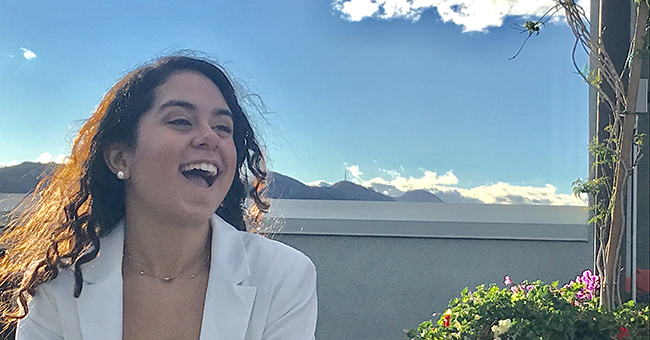
• Victoria Torres

    In these times when readers are responding to our books “more than ever,” when our authors—including Richard Blanco, Imani Perry, Robin DiAngelo, Dina Gilio-Whitaker, and Bettina Love—are appearing in the media, their ideas going viral on social media, their voices being heard on so many platforms, we thought it might be good to take a break to focus on some of the staff who work hard to find, shape, edit, produce, and promote those works. Our blog series “Beacon Behind the Books” introduces to you a member of our staff and gives you a behind-the-scenes look, department by department, at what goes on at our office. And not only our staff, but our interns, too! 

    This month, we introduce you to our digital and social media intern, Victoria Torres! 

    What drew you to publishing, Victoria? How did you find your way to Beacon?

    When I first started college, I saw myself working in magazine publishing or doing political writing. But the more I talked to people in my classes about why they were passionate about book publishing, the more drawn to it I became. I always knew I wanted to work somewhere at the intersection between art and public policy, and Beacon felt like exactly that place. The mission statement and the books they have published line up perfectly with so many of the issues I’m passionate about.

    How much of what you learn in school applies to your work at Beacon?

    I’m a double major in English and Political Communications, so I find that both my literature classes and my communications classes have taught me a lot of the skills I use at Beacon. Everything from audience analysis to digital user experience and digital publishing trends are all things I talk about in my classes and use at Beacon every day.

    What skills have you taken from previous jobs to help you do your work at Beacon?

    A lot of the more technical, hands-on things I do at Beacon I learned through past internships and jobs rather than in my classes. Things like using Adobe Creative Cloud to create content for social media, gathering analytics, and the best ways to promote blog content.

    What’s your advice for someone interested in entering the publishing field?

    The biggest piece of advice I can give for someone wanting to enter the publishing field is to use your resources. Your professors, mentors, and university’s career center all have a wealth of knowledge and contacts that you can tap into in order to break into a new industry. Also keep in mind that publishing is so vast, so look into all of the different departments to find what the best fit is for your goals and skills.

    How do you stay focused at work?

    In true millennial fashion, I get super distracted by my phone if I’m not careful, so turning it on airplane mode is super helpful. That way I can still use all the essential functions without getting distracted by notifications.

    Favorite podcast?

    As a political communications major, I love the Crooked Media podcasts. Since the company was started by former members of Obama’s communications staff, it has a specific communications perspective I don’t always find in other news podcasts. They also have a huge variety of podcasts and are constantly releasing new ones focused around specific issues, so there truly is something for everyone.

    Best vacation destination?

    Before working at Beacon, I actually took a semester off from college to work as a performer on a cruise ship, and it sparked a huge love of travel in me! My favorite port we visited was Aruba, because the port itself has a beautiful, walkable shopping district; and I was able to rent an ATV for the day with some co-workers and go off-roading around the island.

    Favorite book ever?

    My favorite book of all time is actually The Great Gatsby. I feel like a lot of people think it’s kind of a cop-out answer since it’s required reading in most high schools, but I find the language in it so beautiful and feel like I discover something new every time I re-read it.

    Favorite thing about Boston?

    I love what a big arts scene Boston has! I love walking through the theater district and seeing what shows are in town or searching on Facebook for film screenings, panels, and new exhibits at museums, or even just running into a street performer on my walk home. It always feels like there’s something new and exciting going on.

    What are you reading now?

    I’m currently about halfway through The Brief and Wondrous Life or Oscar Wao by Junot Díaz.

  • By Wen Stephenson

    Stones

    This article appeared originally on Medium. (Adapted from remarks given at the Rubin Museum in New York City for the program “We Are Doomed. What Would Buddha Do?”)

    Speaking honestly about the climate catastrophe is hard. One reason for this at times excruciating difficulty is that it requires us to acknowledge and to live with what we know—as well as what we don’t know.

    As one who writes and speaks about climate and politics, perhaps I’m not supposed to admit this, but the fact is, most days I don’t know what to say—much less do—as I stare into our climate and political abyss. Frankly, I wonder if any of us really do. The situation is unprecedented. It’s overwhelming. All bets are off. And for a lot of us who are trying to face this, there can be a kind of paralysis—a blank, frozen, deer-in-the-headlights feeling.

    Which, as it turns out, is a pretty good description of how I oftentimes feel when I’m sitting face to face with my longtime Zen teacher—a respected Zen master whose own teacher, Seung Sahn Soen-sa, always emphasized what he called “don’t know mind.” (“What am I? Don’t know! What is the meaning of my life? Don’t know! Only go straight—don’t know. Try try try, ten thousand years non-stop. Save all beings from suffering.”) And so I’m sitting there, and my teacher has given me a kong-an, or koan, one of those Zen riddles or impossibly paradoxical questions that the student is supposed to answer without hesitation—and I’m stuck, unable to answer, unable to move or speak, until after several seconds, as is the custom, I hit the floor with the palm of my hand—boom!—and grunt, “Don’t know!” And my teacher smiles at me compassionately and shakes his head. “You think too much. You read too many books. Put it all down. You already have the answer. Show me. Teach me.” Which, of course, is no help at all, given my attachment to words and thinking—and, yes, knowing—and I fail again. (I don’t always fail, but mostly I do.)

    I’m still relatively new at this. I’ve only been a student of Zen Buddhist teaching and practice for about a dozen years, and I hasten to add, not a very “good” one. I’m a “bad” Buddhist. In fact I’m such a bad Buddhist that I’m actually—dare I say it?—a Christian, of sorts. (The not very “good” sort.) Like other spiritually restless types—Thomas Merton comes to mind—I find the two traditions, when held in balance, to be mutually supporting.

    So it’s with a keen awareness of my own attachments and limitations and constant failings that I approach the topic at hand and the whole question hanging over it—itself a kind of koan, an unanswerable question that nevertheless demands an answer: Is it too late? Are we, to put it politely, doomed? And what would Buddha do?

    ***

    First of all, what does “too late” even mean? Too late for what? And what is “doom”? And who’s the “we” in that statement? In what sense have “we”—as humans, as living creatures—ever not been doomed? Isn’t “doom” just another word for impermanence? I mean, the Earth itself will someday no longer exist.

    But even if we’re only speaking specifically in terms of the topic at hand, climate catastrophe, is “doom” really the word for it? Is it really a simple binary, doomed or not doomed? Of course, according to most climate scientists, it’s almost certainly too late to prevent “catastrophic” climate change on some scale, at least by any humane definition; indeed it’s already happening in many parts of the world, starting with the poorest, most vulnerable, and least powerful. But the same scientists tell us there’s still a wide range of possible outcomes within this century and beyond. Just how catastrophic the human situation will get, and how fast, is unknown—and still depends a great deal on what human beings do, most importantly what we do politically, right now and in the coming years. And no matter what happens, many billions of human beings, and countless non-human, will live into the coming decades and centuries, however catastrophic they may be—and precisely because of that, our choices and actions still matter a great deal. Perhaps more than we can imagine. Perhaps more than ever before in human history. Because we don’t know exactly when it will be “too late” (again, too late for what?), or what may prove to be possible—politically, technologically, humanly—if enough of us have the resolve to keep pushing hard enough, relentlessly enough. We simply don’t know. That’s the point.

    Perhaps, then, it’s better to say that we’re both “doomed” and “not doomed,” that it’s both “too late” and “not too late”—or, at least, not entirely too late, quite yet.

    ***

    What, then, would Buddha do? It’s a question that might interest anyone, not only Buddhists, but in order to answer it, one needs to know what “Buddha” is. I don’t mean the Buddha, the quasi-historical figure who sat beneath a tree, woke up to the morning star, and founded Buddhism, but rather, Buddhism’s ultimate truth, the ineffable essence of its teaching. And, as it happens, the question “What is Buddha?” turns out to be one of the oldest of koans in the Zen (or Chan) Buddhist tradition—which means, admittedly, that we may not get very far with this line of inquiry. When a monk asked the great Chan master Yun-men, who lived a thousand years ago in China, this very question—“What is Buddha?”—Yun-men answered: “Dry shit on a stick!”

    OK. But maybe that’s not all Buddha is. Hopefully not.

    Maybe another way to pose the question, “What is Buddha?”—and here I go thinking too much again—is simply to ask, “What is compassion?” After all, no compassion, no Buddha; no compassion, no Buddhism. What is Buddha? What is compassion?

    Surely compassion is more than just a word, more than just an abstract concept. What is it, then? Don’t know? As my teacher would tell me, just saying the words “don’t know” won’t cut it. “Show me. Right here in this moment. You already have the answer.”

    Even a child knows what compassion is. Someone is sad and needs a hug, you give them a hug. Someone is thirsty, you give them something to drink. Someone is sick, you tend to them. Someone is in danger, you protect them. Someone is suffering as a direct result of your actions, or inaction, you change your behavior so that they will no longer suffer. Someone is suffering because of your government’s actions or inaction, or because of the oppressive political system under which you live, you work with others and try to change your government or your whole political system.

    Maybe Buddha is simply compassionate direct action. Maybe compassion is as easy as a hug and as hard as a revolution.

    There’s an old saying: “Zen is sitting, Zen is walking, Zen is lying down.” So, what would Buddha do? Don’t know. But maybe Buddha would be sitting-in. Maybe Buddha would be walking, marching, in a crowd. Maybe Buddha would be lying down—or locking down—in front of pipelines and bulldozers and militarized police. Maybe Buddha would be shutting shit down. Maybe Buddha would revolt.

    Maybe Mahatma Gandhi, and everyone with Gandhi, was Buddha. Maybe the Reverend Dr. King, and everyone with King, was Buddha. Maybe everyone at Standing Rock was Buddha. Maybe Black Lives Matter and the Poor People’s Campaign and #AbolishICE—maybe all the kids walking out of school to join the climate strikes and demand that we face up to the facts—are all Buddha. Maybe all of us, including the police, are Buddha—if we only wake up and realize it.

    Are we doomed? Yes! No! Don’t know! What would Buddha do? Don’t know! But as my teacher would tell me, just saying “don’t know” won’t cut it. “Try try try, ten thousand years non-stop. Save all beings from suffering.”

    Near the end of my book about the climate-justice movement, I note how the American poet Gary Snyder, a Zen Buddhist, wrote a short prose-and-verse piece in 2001 called “After Bamiyan,” about the destruction of the ancient Buddhas of Bamiyan in Afghanistan. In this piece, Snyder recalls his correspondence at the time with a fellow Buddhist who remarked that since Buddhism teaches the impermanence of all things, what did any of it really matter?

    To which Snyder replies, “Ah yes . . . impermanence. But this is never a reason to let compassion and focus slide, or to pass off the sufferings of others because they are merely impermanent beings.”

    And then Snyder quotes a famous haiku by the Japanese poet Issa, which he translates:

    This dewdrop world
    Is but a dewdrop world
    And yet—

    Snyder adds: “That ‘and yet’ is our perennial practice. And maybe the root of the Dharma.”

    Is it too late? Are we doomed? What would Buddha do?

    [Boom!]

    Don’t know!

    And yet—


    About the Author 

    Wen Stephenson, an independent journalist and activist, writes for The Nation and is the author of What We’re Fighting for Now Is Each Other: Dispatches From the Front Lines of Climate Justice. Follow him on Twitter at @wenstephenson.

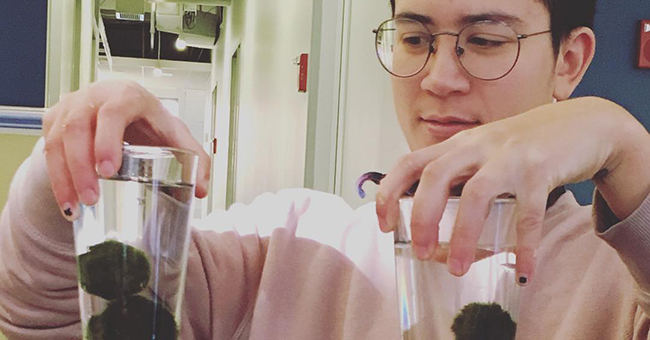
  • Louis Roe

    In these times when readers are responding to our books “more than ever,” when our authors—including Richard Blanco, Imani Perry, Robin DiAngelo, Dina Gilio-Whitaker, and Bettina Love—are appearing in the media, their ideas going viral on social media, their voices being heard on so many platforms, we thought it might be good to take a break to focus on some of the staff who work hard to find, shape, edit, produce, and promote those works. Our blog series “Beacon Behind the Books” introduces to you a member of our staff and gives you a behind-the-scenes look, department by department, at what goes on at our office.

    For the month of October, we introduce you to our designer, Louis Roe!

    What drew you to publishing, Louis? How did you find your way to Beacon?

    It feels like a cliché, but I’ve always been interested in books and bookmaking. My dad ran a print shop in Cambridge for many years, so I had what felt like limitless access to paper in a rainbow of colors, giant staplers, laminators and plastic binding. I made my first book when I was five or six and called it “Beautiful Birds,” a collection of bird illustrations for my grandma. When I started thinking about college ten years later, it was pretty much a toss-up whether I’d study writing or art. Designing books is a career where I get to be excited about both, so I set my heart on it early.

    As far as I’m concerned, landing at Beacon was an act of fate, or perhaps dumb luck. I sort of stumbled out of college into a content marketing job I found very difficult. It wasn’t a good fit. I wrote my resignation letter on the flight home from a vacation where my relatives had convinced me it’d be worth it to leave the job, even without having my next move lined up. But a couple of days later, I lost $1,000 to a scam; leaving the job was no longer an option. Perhaps a month later, I answered a job listing for a designer at Beacon. It was exactly what I wanted. The interviews were already under way, but there was still time to squeeze me in. My interview turned into a four-hour conversation with the creative director about aesthetics, politics and music—an immediate connection! I was offered the job the next day.

    What are some of the challenges of being a designer? What do you find most rewarding?

    The challenges are similar to those of any creative job: inspiration, creative freedom, and budget. Juggling deadlines. Tempering perfectionism with trust. Knowing when to defer to others’ expertise and when to stand by your decisions. Now that I’ve been designing covers for four years, I’ve been learning to present my designs more from a place of authority. It can be a daunting task when the people judging your work have been in the business much longer, and have the memory of you coming onboard as an assistant—will they take my input seriously? But one of the most rewarding things about my experience as a designer at Beacon is learning that my comments are heard and respected, and that’s a direct result of the work I’ve put in. It’s pushed me to trust my instincts more and more.

    In an alternate universe, what career would you have?

    I’ve always wondered what might’ve happened if I’d taken a more technical route, like working with printers. Or perhaps cabinet making, or forensic science. Lately, I’ve been dreaming about what it’d be like to work in ecology or environmentalism. Probably quite frustrating! I suppose in my ideal alternate universe, I could try them all. Then master each one in a series of branching universes.

    What’s the next queued song on your music player?

    I’m currently listening to an artist called A Beacon School. I know it sounds made up, but his song “It’s Late” recently popped up on Spotify radio and I’ve been listening to the Cola album more or less on repeat since then. It’s dreamy and sweet, sort of an aural comfort food for dreary fall days and trying political times.


    About Louis Roe 

    Louis Roe has been designing at Beacon Press since 2015, after graduating from Emerson College’s Writing, Literature, and Publishing program and a brief stint in content marketing. He previously interned at Wind Ridge Books in Shelburne, VT.

  • By Paul Ortiz

    Latin American flags

    Latin American flags. Photo credit: Steven Damron

    I wrote An African American and Latinx History of the United States because I believe that history has an indispensable role to play at a time when many of our leading politicians are again invoking anti-Latinx and anti-Black hatred in order to garner votes. I was born in 1964. I grew up in the 1970s, a time of “backlash” against the Mexican American and African American civil rights movements. Politicians like California’s Pete Wilson, Arizona’s Joe Arpaio, and New York’s Donald Trump rose to political power by blaming immigrants and African Americans for society’s problems. (Many white citizens were genuinely angry at what they perceived to be a loss of status in the society. As a boy, my Chicano friends in San Leandro, California, and Bremerton, Washington—the two towns of my youth—were called “spics” and “wetbacks” so often that we often internalized degrading ideas about our identities and families.) African American children had it even worse.

    School did not help us. Our history textbooks loudly praised Thomas Jefferson, Alexander Hamilton, and John Adams for giving us our liberties. The US Constitution was extolled as the greatest document in the history of the human species even though it strengthened slavery, limited naturalization to whites, and all but guaranteed the outbreak of a bloody civil war a few generations later. The same history textbooks were silent about our contributions as Latinx and African American peoples to the country’s institutions. Frankly, we were taught to be white nationalists from an early age. No wonder so many people in this country believe that building a wall between the United States and Mexico will solve many of our problems!

    In this time of national and global crisis, we need a new, more intersectional, and inclusive Hispanic Heritage Month. A month where young and old, and people from all walks of life can come together to learn the lessons of solidarity, mutual aid, and emancipatory internationalism—the idea expressed by generations of organizers that our liberties are best secured when the ideals of self-determination and equality are enacted within and between nations.

    An African American and Latinx History of the United States re-envisions American history as a global narrative where people of Latin America, the Caribbean, and Africa resisted assimilating to a debilitating status quo and instead played invaluable roles in creating this nation’s democratic traditions. Readers will learn how the Haitian Revolution fueled anti-slavery struggles and independence movements from the United States to South America. In subsequent generations, independence struggles in Cuba, Mexico, Nicaragua, and other nations fired the imaginations of anti-slavery activists in the United States and led to the creation of cross-border solidarity movements. The abolition of slavery in Mexico opened a new front in the war for freedom. Mexicans offered sanctuary and liberty to escaped slaves from the United States and this set in motion the fatal events resulting in the US invasion of Mexico in 1846, known incorrectly as the “Mexican-American War.”

    Even after the US triumphed in the war, American diplomat Nicholas Trist discovered that “[T]he Mexicans not only understood the project of forcing slavery into the territory sought to be acquired from them, but viewed it with an abhorrence which strangely contrasts with the pro-slavery proclivity of [the United States].” When Mexicans traveled to El Norte later in the century, they brought this love of liberty with them.

    Understanding that Mexicans, Haitians, and Latinx people have much to teach us about the struggle for freedom requires a new framing of US history, one that does not relegate Black and Brown people to colorful sidebars in textbooks. Many of the students I work with at the University of Florida, as well as in antiracist workshops, are first-generation immigrants. They are frustrated that their high school history books are silent on the sacrifices and the contributions made to this nation by their ancestors and elders from Puerto Rico, the Dominican Republic, Venezuela, and other nations. In conducting history workshops in high schools using the teaching guide to An African American and Latinx History of the United States, I have been deeply moved by students’ excitement when they discover connections between movements for justice in their countries of origin and the traditions of revolutionary internationalism in the United States.

    If we decry the narrow nationalism of today’s political debates, we must begin to write histories that demonstrate how individuals in the United States have tried to build linkages to struggles in other countries. In 1927, in his essay “The World in Ferment,” Black journalist William Jones wrote: “Now let your vision travel in a circle as the world whirls and passes over Mexico, South America, South Africa, India, Haiti and some of the islands of the sea, and you get the real significance of what is happening in China.” The Afro-American newspaper writer capitalized his next sentence for full effect: EVERYWHERE UNDER DOG NATIONS AND GROUPS, MOST OF THEM COLORED ARE TRYING TO PRY LOOSE FROM THE STRANGLE HOLD OF WHITE GREED.”

    Half a century later, Howard Jordan, New York Assemblyman Jose Rivera, and Congressman Roberto García founded Latinos for a Free South Africa (LAFSA) in 1985. “Growing apartheid repression in South Africa ‘mandates a collective response by the Latino community,’” Rivera said at the time. “‘Our new organization represents the first endeavor to bring isolated initiatives together under one banner for freedom.’” In a collective statement given to the press, the founders of LAFSA noted that, “Latinos who along with their African-American brothers have been the victims of discrimination and racism in this nation, are particularly repulsed by this South African system of apartheid where resources are allocated on the basis of color.” Jordan stated that, “we want to foster Black-Latino unity through an understanding of the relationship between the struggle in South Africa, Central and Latin America and the domestic situation affecting Blacks and Latinos in the US.” Learning how Latinx organizers built political alliances in the past can help us today as we recognize that it is impossible to make progress unless we can forge new intercultural, interracial, and intergenerational coalitions.

    When the history of Latinx people is placed at the center of our national narrative, US history becomes profoundly a working class affair. It is the history of Mexican American steelworkers, copper miners, and sharecroppers forming the bedrock of the Congress of Industrial Organizations and driving the rebirth of the industrial unionism of the Great Depression. The foundations of this nation’s wealth have been built not by the billionaires beloved by mainstream media, but by centuries of unpaid as well as profoundly under-paid labor of African Americans and Latinx people—slaves, braceros, sharecroppers, undocumented workers and many others.

    Exploring the complex relationships between African Americans and Latinos during the past two centuries is also a necessary precursor to creating a new kind of multicultural society that does not rest on racial scapegoating and victim blaming. In recent antiracist workshops sponsored by remarkable social justice organizations like the South Florida People of Color and the Broward People of Color, I participated in candid discussions of antiblack racism within Latinx communities. We should use Hispanic/Latinx Heritage Month to challenge racism of all forms and to acknowledge that British, French, Portuguese, and Spanish colonialism thrived for centuries by using the divide-and-conquer strategies of racial and caste distinctions to fuel self-hatred and conflict.

    Today, we live in a culture where one group’s gain is perceived as another’s loss. Yet, cooperation under duress has been a major theme of our shared histories. More than a century after Mexico freed itself from Spanish rule, Mexican American railway men in Austin, Texas, were still telling stories of the African-descent heroes of the Mexican War of Independence, particularly about Vicente Guerrero, a man of mixed African, Indigenous, and European ancestry. “I’ve just come back to my typewriter after listening to tales of [Vicente] Guerrero told me by citizens of the Mexican-American community here in my Texas home town,” Harold Preece, a white journalist, noted. “After hearing those tales of that knight of humanity, I am planning to get a picture of Vicente Guerrero to hang alongside the picture of Abraham Lincoln in my den.” A man who worked as a section hand for the Missouri Pacific Railway told the journalist: “My great grandfather fought with him, barefooted and bareheaded, in the hills of Mexico, when all the white leaders of the revolution had surrendered and accepted pardons from the King of Spain. You see, Guerrero would never make peace with the King because the King would not grant any reforms that ended discrimination against Guerrero’s people, Los Negroes de Mexico.” Mexican railway workers taught Preece that Black struggles for freedom had helped to liberate an entire nation. What a great lesson to learn and to teach during Hispanic/Latinx Heritage Month!

    Sharing each other’s stories is more important than ever in a time when we have been encouraged to return to racial scapegoating and animosity between nations. Building bridges of communication is a more effective technique for getting along in the twenty-first century than in building walls. We must demand that our historical narratives reflect the rich diversity and connections between the peoples of the Americas and beyond.


    About the Author

    Paul Ortiz is director of the Samuel Proctor Oral History Program and a professor of history at the University of Florida. He is the author of Emancipation Betrayed: The Hidden History of Black Organizing and White Violence from Reconstruction to the Bloody Election of 1920, An African American and Latinx History of the United States, and coeditor of the oral history Remembering Jim Crow: African Americans Tell About Life in the Segregated South. He lives in Gainesville, Florida.

  • By Eileen Truax

    How Does It Feel to Be Unwanted

    Image credit: Favianna Rodriguez

    The day after her detention, on February 9, Lupita, thirty-five and the mother of two US-citizen children, was deported to Nogales, Sonora. Her children and her husband, also undocumented, stayed in Arizona. Lupita’s case received wide media coverage, since she had the dubious distinction of being the first Mexican to be deported by the Trump administration.

    Throughout his presidential campaign, Trump said that if elected, he would prioritize deporting criminals. But under the executive orders he signed five days after taking office, modifying immigration guidelines, almost any undocumented person who had ever used false documents to get a job would have been categorized as having committed a crime, whether or not they had a criminal record. By this criterion, people like Lupita became targets for deportation.

    Although no large-scale deportations took place in the following months—which of course does not guarantee that they will not happen in the future—Lupita’s case illustrated one of the biggest and least discussed problems in the immigration debate: there are nine million people living in the United states with mixed-status families. Of those, four million are undocumented parents, and a half million are children who lack documentation, even though they grew up here. The remaining four and a half million are citizen children who enjoy the benefits that come with being born in the US every day. What happens in a family when the parents are undocumented while the children aren’t, or when children in the same family have a different immigration status? What is it like for families when one member has access to all the services and privileges that come with citizenship, but another does not? Journalist Eileen Truax tells their story in this selection from How Does It Feel to Be Unwanted?: Stories of Resistance and Resilience from Mexicans Living in the United States.

    ***

    I first met the Romero family in 2013 on a trip to Arizona. In this household, the three children were taught that everyone was equal. they were raised to respect their elders, to be proud of their country of origin, and to love the United States, where they had lived for twenty years. But deep down, they all knew they were not the same: though Cynthia, the youngest, was a US citizen, her older siblings, Steve and Noemí, were undocumented.

    In recent years, the number of children born in the US to undocumented parents has risen, and as a result more families are living with the tension that comes when members of mixed status are living under the same roof. though older children may lack documents because they were brought to this country when they were small, the youngest children tend to be citizens. According to the most recent data available, as of 2013 there were more than five million children in the US with at least one undocumented parent. Eight out of ten of those children, a little more than four million, are US citizens.

    Of the three Romero children, Noemí, then twenty-one years old, was the first to understand what their different status meant. When she was fifteen and her friends from school started taking the test to get a driver’s license, Noemí asked her parents why she couldn’t get one. María, her mother, explained the situation and why Noemí would be denied access to other privileges in the years to come.

    Noemí found out what some of those other privileges were when she decided she wanted to continue her education after high school. She found that colleges opened their doors to her only to slam them shut when she let them know she did not have a social security number. Then she realized that of the three children in her family, getting a higher education would be a privilege reserved only for Cynthia, who was thirteen years old at the time.

    “There’s so much tension you feel,” María Gómez, the mother of the Romero children, told me. Like her husband, María was undocumented. We met in Phoenix at an event organized by Puente, one of the most visible pro-immigrant activist groups in Arizona. Originally from the Mexican state of Tabasco, in 1995 the couple and their two small children, three-year-old Noemí and one-year-old Steve, came to live in Glendale, Arizona. Cynthia was born five years later.

    “As they got older, they figured it out,” María said of her two oldest kids. “I told them we couldn’t go to Mexico for a few reasons. Well, okay, we could go, but how would we get back? They didn’t understand it very well at first, but they accepted it.”

    The Romero children went to school and grew up as Americans, like everyone else. But once they entered adulthood, the difference between being documented and being undocumented took a toll on the family’s stability: compounding the frustration generated by opportunities denied to her siblings, Cynthia lived with the fear that someone in her family, including her parents, could be deported at any moment.

    Children in families where one or both parents are undocumented grow up with certain disadvantages. Much has been written about how the children of undocumented parents tend to score lower on cognitive development and achievement tests in school compared to their peers because their family incomes tend to be low. Families have fewer resources to devote to their children’s activities and supervision, and they have less autonomy because they depend on whatever jobs they can get, which are not necessarily those they are best qualified for. Children of undocumented immigrants tend to have fewer years of formal education than children of documented immigrants.

    Ever since she was little, Cynthia, the youngest Romero child, had to serve as a bridge between her family and the outside world. As is common in Latino communities, Cynthia’s primary language is English, but she understands Spanish perfectly well since her parents speak it at home. This means she plays an important role in her family’s communications. As we were talking, even though I asked her every question in English, Cynthia answered me in Spanish, out of courtesy to her mother, who was with us.

    “I help my mother, for example, when she goes to make a deposit at the bank or when we go to see her lawyer, who doesn’t speak Spanish,” Cynthia said. “I want to be a lawyer too, to help out our . . .” she paused, searching for the right word in Spanish. “to help our community.”

    Although Cynthia still had several years before she would need to decide on a career path, at that moment her choice of future profession was certainly influenced by what her family had experienced in recent years. In 2010, María was arrested and taken to an immigration detention center in Arizona, where she was held for four weeks.

    Deportation proceedings were opened, and María’s case had still not been resolved in court. Her lawyer had told her clearly from the beginning that the deportation process takes years to be completed and informed her that a delay wins time so parents can be with their children and the family can be together in the United States. But if María’s final court date was not postponed by 2015, María would be deported.

    According to Immigration and Customs Enforcement (ICE) data, in 2013 one of every six people deported, more than seventy thousand people, said they had one or more children who had been born in the US. Their deportations not only separated families but deprived one or more US citizens of the right to live in their country with their parents.

    “Since then, and even today, Cynthia thinks about what will happen when that moment comes, because she really doesn’t want to go to Mexico,” María tells me, worried. “The weeks when I wasn’t here were very hard for her. I told her to think positive, that something good was going to come of this, so she wasn’t overwhelmed, because it is really stressful. But then with what happened to Noemí, that made everything worse.”

    Noemí had lived in the US for seventeen of her twenty years when, on June 15, 2012, President Obama announced the implementation of the Deferred Action for Childhood Arrivals (DACA) program. This was wonderful news for Noemí, who met all the requirements to apply. The only problem was the application fee, $465, which she did not have. She did not have a work permit either.

    She decided to get a job to save up the money for the application. She starting working as a cashier at a convenience store, using a false name, earning $7.65 an hour. She had only been working there for a few weeks when an immigration raid put her behind bars at the Eloy Detention Center, under threat of deportation.

    “It was awful. I wondered how they were doing at home, if the only one working was my father, to support the whole family, pay the rent, the bills, and on top of that, the lawyers to get me out,” Noemí said. “I thought about my brother, that someday they’re going to get him too. or my dad, he’s undocumented too. And I thought about Cynthia, what’s going to happen to her if they send us all back to Mexico?”

    María was desperate. Noemí was locked up in detention for four months while the family tried to find lawyers to help. Cynthia translated from English into Spanish so her parents understood. The family also grappled with the uncertainty of what to do if Noemí was deported. Could they leave her on her own in Mexico, where she did not know anyone?

    Thanks to help from Puente, Noemí was released. But in a bitter irony, her situation worsened: since she had pleaded guilty to using a false name to get a job and save up money to apply for DACA, she now had a criminal record, making her ineligible for the program. “Now, there’s nothing for me,” she said with a look of profound sadness.

    Facing the dismal prospects of her own case, Noemí is concerned that an eventual move by her family to Mexico would shut down Cynthia’s chance at the education she and her brother could never have because of their undocumented status. “It’s not fair that Cynthia, who was born here with all the rights of a citizen, would have to go with us just because we can’t be here legally. Sometimes I do feel bad that I don’t have those privileges, and that there are people here who have them but just don’t take advantage of them. I just want my sister . . .”—Noemí pauses and starts to cry, overcome with emotion—“to appreciate what she has, what my brother and I couldn’t do. I want her to do it for us.”

    A few minutes later, after Cynthia has left the room, María expressed her worries a bit more openly. “At home we talk about it very clearly, because my process ends in 2015. Then we had Noemí’s situation, and my husband could be detained at any time, like any of us, and what do we do? I can’t be separated from any of my three children, either we all go, or we all stay. Cynthia gets upset and says, ‘Why me, Mom?’ she says she is not going, and that’s it. But then, what do we do? That’s a battle we have at home right now. I’ve thought about how we’re going to need to get Cynthia some psychological help. I tell her not to think about it so much, because sometimes she’ll say all day, ‘Listen, I’m not going. What am I going to do over there?’ talking about Mexico. I know it’s not fair not only for her but my other two children, who are practically from here too. Sometimes the sense of guilt their father and I have, especially when Noemí was in prison . . . It’s very hard to realize my daughter was locked up because I brought her here. I didn’t consider the consequences of coming to a place that didn’t want us.”

    After seeing what happened to her sister, Cynthia decided she wants to be a lawyer, like all the lawyers she had to talk to who helped get her sister out of prison. When I ask her what it feels like to be the only documented person in her family, she says, “Having papers is a privilege.”

    Two years after our conversation, in the summer of 2015, I tried to track down the Romero family to find out what had happened to them. I called the only contact number I had for them, María’s cell phone. No one ever answered.


    About the Author

    Originally from Mexico, Eileen Truax is a journalist and immigrant currently living in Los Angeles. She contributes regularly to Hoy Los Angeles and Unidos and writes for Latin American publications including Proceso, El Universal, and Gatopardo. Truax often speaks at colleges and universities about the Dreamer movement and immigration. Follow her on Twitter at @EileenTruax.

  • A Q&A with Andrew S. Lewis

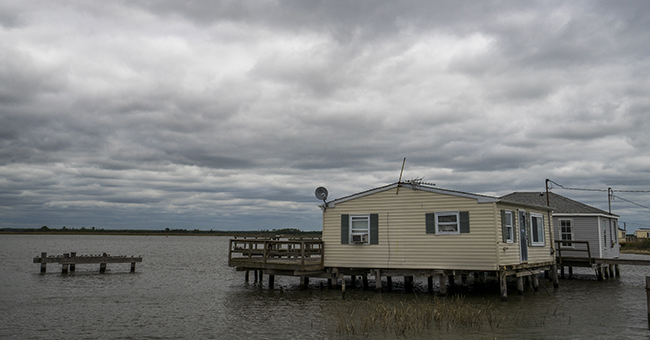
    Money Island home

    Photo credit: Andrew S. Lewis

    How much longer can they stay? That’s a question to ask about the last working-class residents of the Bayshore holding out as the state of New Jersey buys out the homes of their rural community, ransacked by Superstorm Sandy and rising sea levels. You meet them and others in journalist Andrew S. Lewis’s The Drowning of Money Island: A Forgotten Community’s Fight Against the Rising Sea Forever Changing Coastal America. In his book, the realities of climate change, state politics, class, and memories of a home disappearing in real time intersect and clash in a future glimpse of how climate change is already intensifying preexisting inequalities. Beacon Broadside editor Christian Coleman caught up with Lewis to ask about climate science denial in the Bayshore, displacement, and what he hopes readers take away from reading his book. This is part two of their two-part Q&A. Click here to read part one.

    Christian Coleman: In the news, we’ve seen reports of climate refugees from Syria and other countries impacted by global warming. Your book makes it clear that we’re already feeling the effects of global warming in the States, yet some of the residents you write about see climate change as a hoax and hunker down to fight the Department of Environmental Protection and keep their homes. How did you approach writing about these residents? Because I think they give us insight into why some deny the evidence that climate change is real.

    Andrew S. Lewis: This was a challenging aspect of reporting on the book. I am a person—an American—who believes in climate change. (I hate that we even have to say “believe,” as if it were a religion and not a simple fact of science that’s been proven for decades.) More difficult was the fact that I was writing about people from my hometown, people who knew people in my family, people who members of my family have to see on a regular basis. It’s a small place. But structuring the book in an investigative way, which allowed me to lean on the core tenants of journalism, offered me the opportunity to extract myself from large sections of the narrative and to simply listen objectively. Then, at strategic points, I could interject with moments of subjectivity that were informed by my intimate—non-journalistic—knowledge of the Bayshore and its people.

    And whereas prior to reporting the book I was unsure of the source of the denial in my hometown, after spending so much time with several of the characters in the book, simply listening objectively, I was able to finally get at some answers to that denial. The answers, again, have to do with many Bayshore residents and local politicians’ deep feeling of being forgotten by the rest of the country.

    Politics, which are unfortunately conflated with human-caused climate change, have never really served Bayshore residents well. Delaware Bay oystermen have been in conflict with regulators since colonial times—in 1719, the colonial government imposed catch restrictions, which are some of the earliest regulations in this country’s history. In the 1970s, the Army Corps of Engineers largely turned their backs on Bayshore towns that were pleading for the kind of coastal infrastructure that was being built to save Jersey Shore towns. And then, after Sandy, instead of getting money and encouragement to rebuild, those same Bayshore towns got attention from only the state’s Blue Acres program.

    Bayshore residents and local politicians are watching Jersey Shore beaches actually expand rather than contract like their own waterfronts. That expansion, of course, is only because of the fact that the state has pumped a staggering 177 million cubic yards of sand on Jersey Shore beaches in order to slow the encroachment of the ocean. But if you’re not privy to all the details of infrastructure investment and annual beach replenishment, or don’t have the time to read journal articles about the collapse of Arctic and West Antarctic ice sheets, all you see is one coastline thriving and the other dying, which makes messages from already-distrusted politicians about things like four or six or even twelve feet of sea level rise seem inaccurate, or at least overly alarmist. 

    The irony now, of course, is that politics, in the form of the Trump Administration rolling back environmental standards, actually are intertwining ever tighter with human-caused climate change. Such neglect is only going to cause sea levels to rise faster, and drown the Bayshore faster.

    CC: In the beginning of The Drowning of Money Island, you introduce us first to Mike and Kate Nelson, a couple who live in one of the fishing villages. Then you introduce us to other locals, such as aquaculture entrepreneur Tony Novak, and township mayor Bob Campbell, who sees “tree huggers” as the enemy. How did you decide on who to interview to tell the Bayshore’s story?

    ASL: When you start reporting for a book of journalism, you have to cast as wide a net as possible. Your goal is to find people who represent the various ideologies and life experiences that define the place you are reporting on. In one sense, it’s a simple matter of access—this kind of reporting takes tremendous commitment from subjects; they have to be willing to tolerate you constantly calling or texting them, showing up to their homes unannounced, expecting you to invite them to family gatherings or to sit down and talk with their family members about intimate things. Not everyone is willing to sacrifice that kind of intimacy with a stranger who constantly has the notebook out, recording God-knows-what about their lives.

    Other times, a subject is wonderful but there’s only so much page space to fit short, specific anecdotes from your time spent with them. In the end, if I had had unlimited time and page space, I might have channeled my inner Joyce or Tolstoy and written a voluminous account. But that wasn’t an option—so you really home in on the characters that best convey the story you want to tell.

    CC: For Money Island, it wasn’t cost effective to invest public funds in protecting and repairing the many homes facing erosion and future storms. The Department of Environmental Protection’s Green Acres program was a voluntary homeowner buyout for people who owned those homes. But it didn’t seem like the residents had much choice. Why would the state and federal government give them the illusion of having a choice when in reality they were buying these residents out and effectively displacing an economically disadvantaged community?

    ASL: Well, ultimately, every homeowner maintains their right to choose—Mike and Kate Nelson are examples of this. They may not have the community they loved so much surrounding them anymore, but they did get to stay by the water, which is what they love most.

    The problem, of course, is most people are not willing to endure the hoop-jumping required to prevail against the years of mixed messages from state and local officials, who promise you help in the form of permitting lenience or beach replenishment or a new centralized sewage collection system but at the same time are issuing you notices of violation for problems that would be remedied by those promises. Government moves slowly, even in the best of circumstances, but in the case of the Bayshore—or any low-income area that contributes little to the economic engine of a state or the federal government—progress is truly Sisyphean. Most cannot endure the red tape and leave.

    And in the case of the Bayshore, my reporting showed miscommunications between both state and local authorities, as well as between state agencies, in the wake of Sandy. The Blue Acres program, however, had a specific mandate and they got to work—they wanted to target communities where they could buy out large clusters of homes, not one home here and another home there. The fatal flaw of such a mandate in New Jersey is that it only works where home prices are modest to low and going down because of flooding—i.e. middle-to-low income neighbors on rivers, creeks, back bays, and bays. Certainly not the Jersey Shore, where billions of federal dollars were and continue to be distributed to build up beaches and properties—which in turn results in real estate values rising and rising. 

    So this is the fundamental conundrum of managed retreat policy going forward. As long as the federal government, via the National Flood Insurance Program and FEMA disaster relief, continue to rely on traditional cost-benefit equations to determine whether a community should be saved or not, managed retreat is always going to be inequitable and unfair. Lower income communities equate to low hanging fruit—if your mandate, if the funding of your program is predicated on the amount of homes and properties you can acquire and demolish, then you’re going to go for the low hanging fruit and ignore the fact the most at-risk properties, the Jersey Shore properties, cannot be touched for the very simple reason that they have the money and the power to be untouched.

    CC: And what would you like readers to take away from reading The Drowning of Money Island?

    ASL: I want readers to see the story of the Bayshore as a clear and present foreshadow of the future for huge swaths of America. While climate change, and sea level rise specifically, is already having deep impacts on the Bayshore, it is just a fragment of impacts to come. If sea levels rise to the upper ends of some scientists’ estimates—six, eight, or even twelve feet—no one is immune from managed retreat. Rich and poor, it won’t matter—there will be mass migration from much of this country’s coastlines.

    This country was founded on the ideal that all men are created equal. Every day, school children from New Jersey to Alaska salute the American flag and say the words, “indivisible and justice for all.” God knows that America has not lived up to those ideals, not in the past and not right now. And we know this failure has too often landed squarely on the shoulders of America’s middle class and poor, black and brown citizens and immigrants. If we can move beyond arguing over a science that is settled, and accept the fact that the earth is sick, that it is our fault, and that we need to take steps to make it better, than perhaps we can get to the real work of enacting policies informed by an attention to equality and equity.

    The story of the Bayshore offers us an opportunity to plan for a future in which managed retreat does not have to fall victim to the kind of inequities that stain the narrative of our past.


    Read part one.


    About Andrew S. Lewis 

    Andrew S. Lewis is a contributing writer for Outside and has also written for the New York Times Magazine and Guernica. He received an MFA in nonfiction writing from Columbia University. In 2018 he was awarded a CATWALK Art Residency. He lives in South Jersey, between the ocean and the bay. Connect with him at andrewslewis.com and on Twitter at @andrewslewis1.

  • A Q&A with Andrew S. Lewis

    Disappearing shoreline_Delaware Bay

    Photo credit: Andrew S. Lewis

    How much longer can they stay? That’s a question to ask about the last working-class residents of the Bayshore holding out as the state of New Jersey buys out the homes of their rural community, ransacked by Superstorm Sandy and rising sea levels. You meet them and others in journalist Andrew S. Lewis’s The Drowning of Money Island: A Forgotten Community’s Fight Against the Rising Sea Forever Changing Coastal America. In his book, the realities of climate change, state politics, class, and memories of a home disappearing in real time intersect and clash in a future glimpse of how climate change is already intensifying preexisting inequalities. Beacon Broadside editor Christian Coleman caught up with Lewis to ask about the inspiration behind the book, what it feels like to return to only the memory of a former home, the deep impacts of global warming yet to come, and more. This is part one of their two-part Q&A. Click here to read part two.

    Christian Coleman: Tell us a bit about what inspired you to write the book.

    Andrew S. Lewis: It was a succession of factors.

    I grew up on the Bayshore, and my family was deeply connected to the water and wetlands that surrounded us. We fished the bay, went crabbing in the creeks. I understood that we lived within a beautiful, ecologically diverse natural space. I always wanted to be a writer, and one of my favorite books as a kid was The Adventures of Tom Sawyer. One of the main reasons that it was my favorite book was because the Mississippi River landscape Twain evokes reminded me a lot of the Bayshore. Later, in my teens, my grandfather would tell me stories about the Prohibition years, when bootleggers paid off his father to use his Bayshore land to transport booze smuggled in from the bay. For years, I toyed around with fictional stories about the Bayshore during Prohibition, just believing there was a story there.

    When I moved away from New Jersey, I always surprised people when describing my hometown. To them, New Jersey was highways and factories and pollution. No one could believe such a pristine, rural place existed there. Growing up, the adults were always talking about how the Bayshore—and Cumberland County, where the Bayshore is located—had been forgotten. Then, as an adult myself, describing the Bayshore to incredulous listeners, it seemed that the adults of my youth were indeed right.

    So when I visited home after Sandy and discovered the bayfront communities—Bay Point, Money Island and others—had been just as decimated as communities on the Jersey Shore (though no one would have known that since no media beyond the local came to document it), I immediately began to wonder how recovery would play out. Sure enough, the Jersey Shore got the bulk of New Jersey’s federal disaster relief money, not to mention state lawmakers’ attention, while Cumberland County was, at least for the first year after Sandy, given no federal public emergency funding at all.

    The idea for this book fully matured in my mind on November 8, 2016. That day, on my way to vote, I took a detour through the Bayshore. So many yards had “Make America Great Again” signs. I remember thinking about how, despite a very clear preference for Trump here in a slice of rural America, it just wouldn’t hold up against the urbanized Democratic centers of America. Then I was proven wrong. Trump had won largely on the backs of rural Americans who had felt forgotten. I’d been hearing that line my whole life. And for people on the Bayshore, they’d felt forgotten by the Democratic Party via its strong support of environmental policy, and they’d felt forgotten by then New Jersey governor, Chris Christie, who prioritized Sandy recovery on the Jersey Shore and had done nothing to help the Bayshore. They hadn’t voted for a Democrat and they hadn’t voted for a Republican—they’d voted for someone who they felt could upend the entire political system.

    CC: What was your initial reaction to returning home to the Bayshore after having been gone for so long and seeing how much it had changed?

    ASL: On the Bayshore, it was a combination of extremes. Culturally speaking, economically speaking, nothing had really changed. Old friends had gotten older, married, bought themselves homes and secondhand fishing boats, but we shared the same old fishing and hunting stories, frequented the same places. People always talk about how the Bayshore is stuck back in time—and I guess that’s true.

    But on the other hand—environmentally—radical change had happened between when I left, in 2000, and returned in 2016. In this regard, I’m reminded of a small peninsula of marshland that separated the last bend of a local creek from the bay. We used that creek to access the bay to go fishing, and, when I was a kid, the peninsula was dry at both high and low tide. My father and uncles used to hang out there when they were kids. Today, that peninsula is completely gone, underwater. The creek is literally one bend shorter now. The Bayshore marshland is losing a football field’s worth of land a year.

    And, because of the same forces that are eating away the marsh, the bayfront communities are either greatly diminished or, in the case of Sea Breeze and Bay Point, pretty much gone. As the water rises, and the land subsides, the State of New Jersey has been systematically buying out property owners in these small, flood-prone hamlets, demolishing their homes and preserving the land for open space. So, the communities that I remember from my childhood are no longer—instead there are just a few holdouts that have kind of hunkered down and keep to themselves. The festive, boisterous communities that once existed have been relegated to memory only.

    CC: In addition to writing about the aftermath of Superstorm Sandy, you write about the history—geological and social—of your hometown, anchoring us in a very rich sense of place. Tell us why it was important to include it in the narrative of the book.

    ASL: In a sense, the deep history included in the book was a visceral reaction to this idea that the Bayshore, and so many small, rural, climate-change-impacted communities like it, have largely been forgotten by both modern society and the politicians who run it. And also, quite frankly, I wasn’t aware of a lot of the history that’s included in the book until I began writing and reporting. In that way, I myself am a reflection of American society today, which I think is, to borrow a recent line from Ta-Nehisi Coates—“addicted to forgetting.” So, by including so much history of the Bayshore was me kind of shouting from the rafters to anyone who may listen, urging us—Americans—to remember our history, all of it, so that when we confront future societal crisis, we confront them with an eye to the mistakes of the past so that they may not be repeated.

    Regarding the geological history, it just so happens that what’s happening on the Bayshore is a clear example of how complex sea level rise is. The water is not rising on the Bayshore only because of anthropogenic forcing. It’s also “rising” because the land is sinking, due to the fact that South Jersey sits on a coastal plain that is still settling from the final glacial retreat, about 8,000 years ago. Additionally, South Jersey sits on top of a 17-trillion gallon aquifer that is being drained faster than it can be replenished—this is also causing the land to sink. The confluence of rising water and sinking land is a perfect example of what scientists call relative sea level rise, and the reason why some areas of the world, like the mid-Atlantic US, have higher rates of sea level rise than other parts of the US and world.


    Read part two.


    About Andrew S. Lewis 

    Andrew S. Lewis is a contributing writer for Outside and has also written for the New York Times Magazine and Guernica. He received an MFA in nonfiction writing from Columbia University. In 2018 he was awarded a CATWALK Art Residency. He lives in South Jersey, between the ocean and the bay. Connect with him at andrewslewis.com and on Twitter at @andrewslewis1.

  • By Fred Pearce

    Amusement park at Pripyat near the Chernobyl Plant, now abandoned, Ukraine, September 2013.

    Amusement park at Pripyat near the Chernobyl Plant, now abandoned, Ukraine, September 2013. Photo credit: Stephen J. Mason.

    Did you watch the Emmys? HBO’s historical drama miniseries Chernobyl won awards for Outstanding Limited Series, Outstanding Directing, and Outstanding Writing out of its nineteen nominations! Environmental journalist Fred Pearce also wrote about the Soviet Union’s infamous nuclear disaster and the ensuing cleanup efforts in Fallout: Disasters, Lies, and the Legacy of the Nuclear Age. This excerpt from his book goes beyond the end of the series, showing how life went on when people known as self-settlers returned to their homes in the exclusion area after their forced evacuation. How safe is it to live in all that radiation? Apparently safe enough to enjoy vodka.

    ***

    The exclusion zone that has stretched for twenty miles around Chernobyl’s stricken nuclear reactor since the 1986 accident is not quite the inaccessible dead zone often portrayed. Thousands of Ukrainians commute there every day to work on making safe and dismantling the plant and managing the zone itself. Yes, I needed an official permit to pass through the guarded gates on the road north from Kiev and a radiation scan before I could leave. But the scientists I was with had no trouble arranging my entry—and thankfully I was allowed to go home afterward.

    First on my list was meeting some of the people who defied the government and returned to live in the exclusion zone in the months and years after their forced evacuation. Many live off the land in their old homes or have simply moved into abandoned buildings. After checking into Chernobyl’s only hotel, I headed down the road to a high door that opened onto a small yard. It was opened by Markeyevych Federovych, one of the tribe of aging authority-defying returnees known locally as self-settlers. It was several hours before we were allowed to leave, a little unsteady on our feet.

    Federovych, you see, is an effusive host and serves good vodka. He flavors it with herbs picked in the exclusion zone. Who knows how radioactive it is. He certainly didn’t care, as we sat in his cozy front room, emptying his bottle and discussing his three decades of life as a radioactive outlaw. He was, he said, one of almost two thousand self-settlers who snuck back to their villages after the accident because they didn’t like life as evacuees. They grew vegetables in radioactive gardens, hunted radioactive animals, gathered radioactive herbs in the radioactive forests, and sometimes drew water from radioactive wells. They were getting old now, but many were hale and hearty. It was good evidence, he insisted, for their claim that life was good in the radioactive zone.

    Many of the self-settlers had been outlaws once before, he said, as members of the resistance movement fighting the Nazis in the Second World War. So when they went on the run in the early days of the exclusion zone, they knew where to hide to evade police and guards. Some, in their advancing years, spend the winter in cities but return in summer to live in their radioactive dachas. Some, like Federovych, live permanently in Chernobyl town, cheek by jowl with the workers and scientists maintaining the exclusion zone. Others live in distant parts of the zone; somewhere out there is a monastery of self-settling monks.

    All self-settlers live in a shadowy world, officially tolerated in recent years, but outside the normal rules of state law. Some scavenge radioactive scrap metal and barter it for meat and potatoes from the clean world outside. I read before my trip that “the Chernobyl landscape is a space of exception.” A research paper by sociologist Thom Davies, of the University of Birmingham, England, argued that “the sense of abandonment is matched by an intensification of social networks, unofficial risk understandings, and informal activities, making possible life within this nuclear landscape.”

    Federovych laughed at such language. His life was not governed by academic abstractions. When the accident happened, he told me, he was a handicraft teacher at a school in Chernobyl. He joined the evacuation, taking his nine-year-old son on his motorbike to Kiev. Like many other evacuees, he took a summer break to the Black Sea, awaiting events. “But I was curious,” he said. “I just wanted to see what was going on. So I visited. It was illegal, but I had a friend who was a captain on a small boat that went up and down the River Pripyat, past the power station. I borrowed a policeman’s uniform and hopped off the boat when nobody was looking.”

    Somewhere he seems to have lost touch with his wife and children. Perhaps there were hidden motives behind his return, but if so he wasn’t letting on: “I came back to my old house here in Chernobyl. It is a hundred years old and was built by my grandfather. It was sealed up. There was no water or light. So for a few months I lived in hiding, just with a few candles. But I felt at home. I soon realized there were quite a few of us doing this, both in Chernobyl and out in the villages.” The police patrols guarding the exclusion zone knew about them, he said, but didn’t know what to do.

    The critical time for the self-settlers was 1989, three years after the accident. The government decided to clear a cadre of them out of a small, remote village called Ilinci. The police turned up en masse. But close to the village there was a military camp, and the commander there was friendly with the self-settlers. He intervened. There was a standoff, and the military won. “After that, the government’s attitude changed and we became ‘officially registered self-settlers,’” Federovych said, raising his glass to celebrate the triumph. “We got some electricity in our old homes.”

    In the early 1990s, there were an estimated 1,800 self-settlers. “But we are getting old. Now we are down to about two hundred, with fifty of us in Chernobyl town,” Federovych said. “Some villages are empty again.” He had no intention of departing “except in a box,” he said, his clipped mustache twitching at the absurdity of his own mortality. Until then, he will take on anyone who tries to stop him living his life as he wants. Such as the policeman who had recently accosted him as he sat on the bank of the Pripyat River and told him to stop fishing because the water was radioactive. “I just told him that my father and grandfather fished here and I have fished here since I was a boy. He had no right to stop me. He went away.”

    Wasn’t he afraid of the radiation in the fish, wild mushrooms, and berries that all the self-settlers ate? Not to mention the herbs in our vodka. No, he said. Chemical additives in the food eaten by outsiders were far more dangerous. “Anyway, look at me; don’t I look healthy?” he asked. “There’s nothing wrong with my fitness.” He called his new wife from the kitchen and embraced her in a bear hug to reinforce the point. She seemed a little startled.

    “Of course I know a lot of people who have died of radiation,” he said. “But they were people cleaning up the contamination. The liquidators handled highly radioactive material. The rest of us have done fine. We only die of old age.” Was this bravado? I don’t think so. All the evidence is that the self-settlers are living longer and often healthier lives than the many evacuees who languish unhappily in distant towns—free of radiation but often consumed by angst, junk food, and fear. As Federovych leapt from his chair to bid me goodbye with another bear hug, I could not deny it. After three decades consuming the radioactive produce of a radioactive landscape, he looked remarkably well on it.


    About the Author 

    Fred Pearce has reported on environmental, science, and development issues from eighty-five countries over the past twenty years. Environment consultant at New Scientist from 1992 to 2018, he also writes regularly for the Guardian newspaper and Yale University’s prestigious e360 website. His many books include The New Wild, When the Rivers Run Dry, With Speed and Violence, Confessions of an Eco-Sinner, The Coming Population Crash, and The Land Grabbers.

  • By Ruth Behar

    Ruth Behar, November 2012 at the American Anthropology Meetings in San Francisco

    Ruth Behar, November 2012 at the American Anthropology Meetings in San Francisco. Photo credit: Monroem.

    This excerpt appears in Women Writing Resistance: Essays on Latin America and the Caribbean, edited by Jennifer Browdy.

    ***

    If I had to choose one aspect of my life that had the greatest impact on me as a thinker and a writer, it would be that I was born a Jew in Cuba. And after that, it would be that I came to the United States as an immigrant child, carrying this doubled sense of identity which would eventually be articulated in an American context in the English language, but always with a longing for the native Spanish that was spoken in my family. As a girl and a young woman growing up in New York, I struggled to find a way to give voice to the experience of being a Cuban immigrant, while always yearning to know the island that my family remembered nostalgically, but to which I was told we would never again return to live.

    Like other young Cubans of my generation who came of age in the United States in the 1960s and 1970s, I was politicized by the leftist and multiculturalist movements of the era. I searched for a way to take pride in my Cuban identity, while trying not to internalize the epithet of being a gusana, “a worm of the revolution,” as those of us who left Cuba after the revolution of 1959 had been branded. The young Cubans of the era chose the slogan, “Not all Cubans are gusanos,” and that’s how I would have described myself at the time. Later, I refused to see myself in such negative, self-annihilating terms, when I came to understand that such an epithet was part of a long Latin American legacy of disowning and declaring traitorous those who dared leave their homelands for “the other America” across the border. I decided that I would find a way to celebrate my identity as a woman of the diaspora, while still reclaiming my bond with the island that it was my destiny to lose as a child, before I knew what it meant to have a country.

    As a girl, I thought that the best vehicle to express my feelings about these complex yearnings would be poetry and fiction, and I went off to college with the hope of becoming a writer. But I soon lost confidence in my voice as an artist. I was, then, the “Obedient Student” of my poem by that name, and when my teachers discouraged my efforts at poetry, I gave it up. Perhaps, ultimately, it was a good thing that I put aside my artistic ambitions, because it was a moment when I was searching for an intellectual framework in which to examine issues of language, culture, and belonging, issues I didn’t yet know how to ground in social and political reality. In my last year in college, an inspiring anthropology teacher convinced me I had the potential to become an anthropologist. Following his advice, I decided to turn my creative impulses to the study of anthropology.

    Anthropology offered me a crucial intellectual and philosophical framework for my explorations of identity, memory, home, and the crossing of borders, the dislocations that are at the root of anthropological thinking and that are part of the lived experience of those who live in the diaspora. It was through anthropology, as well, that I was able to undertake the magical, and also politicizing, journeys into the everyday reality of people living in the Spanish-speaking world. My anthropology took me to a rural village in northern Spain, a small town in northern Mexico, and eventually, and essentially, back to Cuba, the root of all my wanderings.

    I believe that the dreams of our youth never leave us. Even as I tried hard to conform to the norms of academic writing in the discipline, my anthropology became increasingly haunted by my longing for poetry. I told myself I was creating a poetic anthropology, that I was an anthropoeta, unveiling the poetic underpinnings of the anthropological quest for home in a world of homelessness and homesickness.

    And then, as I began to travel regularly to Cuba beginning eleven years ago, I found myself needing to actually write real poems again. Returning to the homeland I lost as a child made me want to claim poetry again as an essential part of my life. I found that initially, being back in Cuba, I could not do anthropology, I could not speak in the voice I had acquired through my schooling in the United States. I didn’t want to turn Cuba into an ethnographic field site. I didn’t want to be an anthropologist in Cuba. The experience of being in Cuba was emotionally so moving, so heart wrenching, so beautiful and so painful at the same time, that I struggled to find a language in which to express who I was and who I had become through my journeys as a woman of the Cuban diaspora.

    I began to find the language I was seeking in poetry. Although I wrote primarily in English, I would create Spanish versions of the same poems that were more often new renditions of what I was saying in English rather than literal translations. Often, snatches of a poem would come to me fist in Spanish and I would move from Spanish back into English. Through this writing, I realized that my need to have a voice in the Spanish language was motivated not only by my desire to return to Cuba, but that it came as well from a yet more distant past, from my father’s Sephardic ancestors who refused to stop speaking the language of those who exiled them. My poems embraced a doubled sense of loss, a language of exile that had deep roots as it sought to express the immediate and current emotional impact of being back in my childhood home as a grown woman, with a fierce longing to belong, even though I had no memories of my native land.

    My return to poetry would have been impossible without the anchoring provided by my intellectual and artistic collaboration with the Cuban artist Rolando Estévez, the artistic designer of Ediciones Vigía, a publishing house founded in 1985 that produces handmade books in Matanzas, Cuba, in editions of two hundred copies. These books have become collector’s items, not simply because of their small print run, but because of their excellent literary quality, their charming, whimsical designs, and the original way in which the artistry is produced on plain brown paper, proving that beautiful books can be made even within an economy and aesthetic of scarcity. Ediciones Vigía books are now known throughout the world, and major collections exist in Spain, Britain, Mexico, and the United States.

    Reading and savoring the books of Ediciones Vigía opened my eyes again to the power of poetry, and of literature more generally, to speak the unspeakable, to soften our hard hearts. I was fortunate that Estévez and my friends at Ediciones Vigía encouraged my efforts at writing poetry, giving me opportunities to present my poems in Spanish to curious and compassionate audiences in Matanzas, who want to understand the desire for the island of Cubans like me, who live in the diaspora. I have had two books of poems published in Cuba by Ediciones Vigía, a small collection entitled Poems Returned to Cuba/Poemas que vuelven a Cuba, and recently a more ambitious collection of forty prose poems in English and Spanish entitled Everything I Kept/Todo lo que guardé.

    Everything I Kept was inspired by and dedicated to the Cuban poet Dulce María Loynaz. The daughter of an illustrious general who fought for Cuban independence, Dulce María lived in a Havana mansion of faded elegance until her death at the age of ninety-four in 1997. Although she could have easily left Cuba after the revolution, her sense of patriotism kept her rooted on the island. Yet she wrote all of her major works before the revolution, and her wistful, meditative poems and intimate womanist fictional writing were not the kind of literature initially encouraged by the revolutionary process. She did not receive major attention for her work until advanced old age, when a younger generation of Cuban writers and artists began to seek her out as a model of artistic integrity. Later, in 1992, the Cervantes Prize was bestowed upon her by Spain, and this brought an international group of readers to her work.

    It was Rolando Estévez who introduced me to the poetry of Dulce María Loynaz. When we first met, he was producing stunning watercolors in which he used fragments of her poetry in combination with artistic renderings of her work. His artistic vision drew me to the humble and yet bold quality of Dulce María’s voice, the mixture of melancholy, regret, and simplicity that pervaded her writing and which has often been likened to the work of Emily Dickinson. I was especially impressed by Dulce María’s volume of prose poems, Poemas sin nombre, published in 1953. Acclaimed at first, it was soon forgotten, even, it seemed, by Dulce María herself, who feared her work had become irrelevant in the wake of the historical transformations wrought by the Cuban revolution.

    I decided to write a series of prose poems that would evoke the mood and yearning of Dulce María’s poems. Th e majority of my poems poured out of me in desperate haste in the last months of my thirty-ninth year and in the first days after turning forty. I was able to read many of these poems aloud to Dulce María, whom I got to know, and I was especially lucky to be present at a literary event that was held in Havana in honor of her ninety-fourth birthday, just months before her death. There is no greater gift than being heard by a poet you love, a poet who has moved you to want to be a poet.


    About the Author 

    Ruth Behar, ethnographer, essayist, poet, and filmmaker, is professor of anthropology at the University of Michigan. The recipient of a MacArthur Fellows Award and a John Simon Guggenheim Fellowship, Behar is the author of several books, including The Vulnerable Observer. She lives in Ann Arbor, Michigan. Follow her on Twitter at @ruthbehar and visit her website.

  • By Gayatri Patnaik

    Imani Perry

    Author photo: Sameer Khan

    Several months ago, when I was in the midst of editing Imani Perry’s biography of Lorraine Hansberry (Looking for Lorraine), I remember stopping and thinking about how special Imani’s voice was. She is extremely knowledgeable and intellectually sophisticated, but she also had this ability to write about Hansberry in an intimate way, and with an eloquent simplicity. A few minutes later, I happened to read a Facebook post from Imani about one of her sons and I immediately thought, How lucky her kids are to have Imani as their mother. And then I became curious and wondered, How is she educating them? What is Imani telling them about life and about coming of age as Black men in America? That led to my asking her if she’d write a book about it . . . and it’s almost as though Imani were waiting to be asked, because Breathe: A Letter to My Sons literally poured out of her in two months!

    Breathe is a profound take on parenting and mothering. It’s moving, tender, gut wrenching, wise, and intense. Most of all, it’s fresh and authentic. To me, Breathe feels like spending time with a brilliant, thought-provoking, and true friend—one who never shies away from harsh realities but simultaneously refuses to succumb to despair. Imani effectively conveys how terrifying it is to be Black in America; however, she also instructs her sons to refuse to be cowed by fear and injustice, insisting they live a robust and full life.

     I wanted to mention that the cover art here is original and was created for the book by Ekua Holmes, a Roxbury-based artist. Using Ms. Holmes’s art, a suggestion by assistant editor Maya Fernandez, was a good one; her art hangs in many collections, and Imani happens to be a fan of her work as well. Ms. Holmes’s goal was to create a bold, rich, meditative, elegant, and rhythmic design. We think she succeeded!

    Finally, I would say that this is a book you’ll want to re-read, discovering something new each time. It’s truly a remarkable book and an original one, and I can’t wait for more readers to discover it.


    About the Author 

    Gayatri Patnaik is associate director and editorial director at Beacon Press. She was previously an editor at both Palgrave Macmillan and Routledge, has been at Beacon Press over fifteen years and has published authors including Imani Perry, Cornel West, Kate Bornstein, Roxanne Dunbar-Ortiz, and Jeanne Theoharis. She acquires in US History, with a focus on African American History and race/ethnicity/immigration, and began Beacon’s award-winning “ReVisioning American History” series. Gayatri occasionally signs memoir, began Beacon’s LGBTQ series, “Queer Action/Queer Ideas,” (edited with Michael Bronski) and developed books in “The King Legacy,” with Joanna Green, in a series about Dr. Martin Luther King, Jr. Follow her on Twitter at @gpatnaik1.