• By Rakia Clark

    Mona Eltahawy_The Seven Necessary Sins for Women and Girls

    Author photo credit: Angel García.

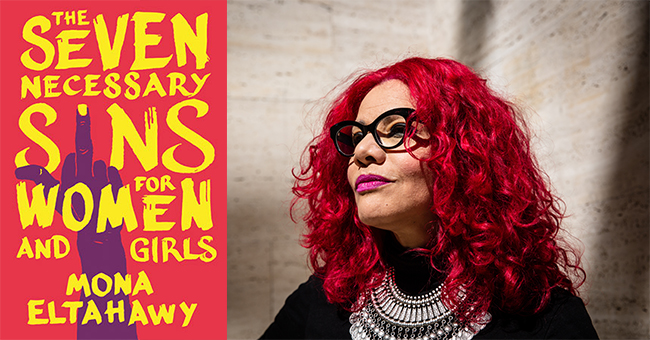
    Meeting Mona Eltahawy for the first time is like a bolt of lightning. Bold, vibrant, bright red hair, tattoos on both forearms, big, big smile, the works. Sitting down for the first time to discuss what would become The Seven Necessary Sins for Women and Girls, I was captivated by the powerful simplicity of the book’s central questions: What would happen if girls around the world were trained up to embrace the same qualities we encourage in boys? What if women around the world lived their lives with the same freedom men felt?

    These are not difficult questions and yet they don’t get asked enough, much less implemented. Mona’s been asking these questions for years, of course, through her journalism and through her activism. But never have the questions felt as important as they do today.

    In a moment when the rights of women worldwide are slowly being rolled back and the cultural markers of progress are being relitigated, The Seven Necessary Sins for Women and Girls feels like a much-needed breath of fresh air. Mona’s advocacy for the tactical use of anger, attention, profanity, ambition, power, violence and lust feels provocative and daring, because she is unapologetic in her demands for equality. It becomes clear why she is one of the loudest, most followed voices on feminism today. She weaves in her personal experience as a woman of color and as a Muslim throughout. And I was particularly heartened to read stories of foreign activists whose struggles are often portrayed as distant or unrelated to Western feminism. They’re not as different as you think. Mona connects it all.

    Both Mona and the book are fantastic. (This is not the only F word you’ll find associated with either!) The writing is lively, energetic and utterly compelling. There are passages where you will cheer. You will take out your highlighter. And you will share this book with women and men so that they, too, can feel what you feel after reading it: that, to paraphrase Mona, the book is not a roadmap to peace with patriarchy; rather, it is a Molotov cocktail to throw at it.


    About the Author 

    Rakia Clark was former senior editor at Beacon Press and the editor of Mona Eltahawy’s The Seven Necessary Sins for Women and Girls. Follow her on Twitter at @rakiathegreat.

  • By Lyn Mikel Brown

    Greta Thunberg, outside the Swedish parliament.

    Greta Thunberg, outside the Swedish parliament. Photo credit: Anders Hellberg.

    Unless you’ve been living under a rock, you know that sixteen-year-old Swedish climate activist, Greta Thunberg made her way to New York City a few weeks ago via an emission-free racing yacht. She’s here to tell us, as she’s been doing since she was eleven, that “our house is on fire.” The climate crisis is urgent. We dismiss it at our own peril.

    You don’t have to believe her. You don’t have to believe photos of starving polar bears rummaging through piles of garbage or videos of Greenland’s glaciers transformed to rushing water. You don’t have to believe NASA or the Academies of Science from eighty countries or 97% of climate researchers. You can dismiss non-sharpie-altered maps of sea level rise and floods devastating the Midwest and South, wave aside the significance of fires burning in the Amazon rainforest, roll your eyes at UN rights chief, Michelle Bachelet’s assessment that climate change is an unprecedented global threat to human rights.

    No, you don’t have to believe any of it. But if you are a parent or a teacher, if you raise or educate or care for a young person, you have a responsibility to listen and understand why they do and why this matters so much to them. Because if there’s any chance, any chance in hell, that this is all really happening, it’s in their lap, and trust me, they are plenty worried and plenty angry. 

    I’ve been listening to and working with young activists for a long time. Guess what? They don’t need adults to believe in their causes. But they do need us to support them, to have faith in them, to care that they believe enough to act. And we should. It is good for all of us when youth feel they are in the world to change the world. It is good for a world rife with wicked problems to have a young generation filled with energy that hasn’t yet been dispersed, drained, or redirected.

    Activism isn’t something anyone does alone. For Greta and fellow US youth climate activists like Xiuhtezcatl Roske-Martinez, Isra Hirsi, Jerome Foster II, and Jamie Margolin, indeed for any young person working for social change, there’s always a network of adults and fellow activists supporting. And make no mistake, youth want us in their corner, helping them to create the conditions for movement. But being the kind of adult youth activists need isn’t easy. The hardest thing of all is learning how not to be a well-intentioned version of what feminist scholar Sarah Ahmed calls “the wall”: how not to be the barrier between youth and their passions; how not to interrupt the flow of energy and ideas; how not to be the force that cuts them off from the deepest parts of themselves.

    When I ask young activists what advice they would give adults who want to support them, they say, “Let us be creative and have our strong feelings.” Give us “the opportunity to speak out and have our opinions heard.” Don’t “dim down our energy and excitement,” don’t “take control over a lot of things.” The list goes on: “be honest,” “be a decent person,” “show that you care,” “be open,” “listen,” “check your adult privilege.” And, most of all, “show up!”

    As Rebecca Solnit says, “perfection is a stick with which to beat the possible.” What makes youth activism especially powerful—its rich, organic imperfection—can turn adults off. But I can say from experience that showing up is not only vital to the success of youth movements, it’s good for us. Youth have a way of teaching us unexpected things, helping us rediscover the value of openness, of messiness; they reveal truths we’ve forgotten. Listening to young people is mind-altering. As they learn to care deeply and act to make the world better, as they bravely step into the fray, as their willfulness reveals the wall, we learn how to be more porous, more open; we learn to let go, to use our power to create more space and opportunity.

    As we speak, Greta and team are marshalling a youthful army of climate activists via Instagram, Twitter, and Facebook to join a global climate strike on Friday, September 20. They are hoping adults everywhere believe enough in them and in this cause to walk out of our homes and work places in support.

    I hope you believe. I hope you take your kids out of school, arrange carpools and class trips, and attend Friday’s march-out with the young people in your life. If you don’t buy it, I hope you engage in a little willing suspension of disbelief and support them on this issue they feel so passionate about. They can’t vote, but they can march; they can be visible and heard. If you do nothing else, just write the permission slips, purchase the markers and posters, pack the lunches, and make sure they get on the bus.


    About the Author 

    Lyn Mikel Brown is professor of education at Colby College, founder of SPARK Movement, and author of Powered By Girl: A Field Guide For Supporting Youth Activists. Follow her on Twitter at @LynMikel and visit her website.

  • Isabella Sanchez

    In these times when readers are responding to our books “more than ever,” when our authors—including Richard Blanco, Imani Perry, Robin DiAngelo, Dina Gilio-Whitaker, and Bettina Love—are appearing in the media, their ideas going viral on social media, their voices being heard on so many platforms, we thought it might be good to take a break to focus on some of the staff who work hard to find, shape, edit, produce, and promote those works. Our blog series “Beacon Behind the Books” introduces to you a member of our staff and gives you a behind-the-scenes look, department by department, at what goes on at our office.

    For the month of September, we introduce you to our assistant to the director of sales and marketing, Bella Sanchez! 

    What drew you to publishing, Bella? How did you find your way to Beacon?

    As most people in publishing will say, I’ve always really, really, loved reading. English was the only subject throughout school that I truly cared about, and the idea of getting to work with books all the time always seemed like an absolute dream to me.

    What’s your advice to someone interested in entering the publishing field?

    Intern anywhere you can! Even if you don’t get one of those elusive publishing internships that four hundred people apply to, find an internship that will help you get the skills that you need.

    What helps you focus when you’re at work?

    I like listening to some mellow music to help block any distractions. I’m currently into Clairo and Omar Apollo. I particularly recommend Clairo’s newest bop, “Sofia,” which I’ve listened to an unhealthy amount of times.

    What do you wish someone had told you about publishing when you were entering the industry?

    When I was first thinking about working in publishing, I only had my sights set on editorial. Once I began working at Beacon, however, I realized just how many other jobs there are within the industry. What I enjoy the most about books is convincing other people to read them, and my role within marketing, sales, and foreign rights lines up well with that. Keep your mind open to other jobs and tasks outside of editorial! You might find something that you enjoy even more.

    What’s your commute like? What do you do to pass the time on your way into the office?

    My commute is a solid hour from Brighton, but I don’t mind it too much. I always read or listen to audiobooks on the ride and end up at work before I know it. There are usually frequent delays on the green line, but I find that it really puts things into perspective. It makes you ask yourself questions like, “If I never get off this train, can I say I have lived a life worth living?” or “Do I have enough snacks in my bag if my train derails and I’m stuck for five hours in a tunnel?”

    Hobbies outside of work?

    I teach yoga outside of work, and I work out quite a bit—anything from yoga, to spin, to weightlifting. It really helps me destress but it also means that I have the back of an 82-year-old. But in the words of Elle Woods, “Exercise gives you endorphins. Endorphins make you happy. Happy people just don’t shoot their husbands, they just don’t.” The last part truthfully does not apply to me, but I can appreciate the sentiment.

    Current favorite books?

    I read a quite a bit, to the point that my librarian has asked me if I am “going through something.” I did feel a little judged, but that has not stopped me from requesting an obscene amount of books from the library every week. My current favorites are:

    Normal People by Sally Rooney. This book will absolutely break your heart, but it’s worth it. I rarely read something where the characters feel completely, wholly real. I highly recommend it!

    Red, White, and Royal Blue by Casey McQuiston. This is a great book to read immediately after you have fallen into a Sally Rooney-induced depression. It’s very fun and adorable, and you’ll have a smile on your face the entire time you read it.


    About Bella Sanchez 

    Bella Sanchez joined Beacon Press in 2018 as the assistant to the director of sales and marketing. She received her BA in English from Boston University in 2018, where she worked as a research assistant for the director of Museum Studies and as a Writing Fellow. She is particularly fond of podcasts and reading five books at once.

  • By Michelle Oberman

    Planned Parenthood

    This is bad news. Since the Trump administration finalized a gag rule banning organizations that get money through Title X from providing or referring patients for abortions, Planned Parenthood has withdrawn from Title X. This sort of rule will seriously impact low-income women, because all Planned Parenthood centers will be barred from getting funding that helps provide affordable contraception, STI testing, and other services in addition to abortions. In Her Body, Our Laws: On the Front Lines of the Abortion War, from El Salvador to Oklahoma, Michelle Oberman has written about the damning hurtles and obstacles poor women face when dealing with an unplanned pregnancy or seeking reproductive health care. This excerpt shows what their reality looks like.

    ***

    None of the laws Oklahoma passed were new. They simply passed every measure enacted by other pro-life states, along with the occasional model bill drafted by Americans United for Life.

    The laws cover a broad range of issues. Some of the laws, such as a ban on sex-selective abortion, are plainly symbolic. Women seeking abortions in Oklahoma, as in other states, need not provide a reason for terminating their pregnancies. There is no way to enforce this provision.

    Other laws have had a direct impact on the delivery of reproductive health care in the state. For example, one state law forbids the use of public funds or facilities for the provision of abortion services. This law bars doctors at the University of Oklahoma hospital—the state’s leading health-care center—from providing abortions for any reasons other than rape, incest, or medical necessity. The ban’s most dramatic consequences are seen in cases involving poor women, who learn, typically halfway through their pregnancies, that their fetuses have severe anomalies.

    Consider what happens when a poor woman finds out that her fetus has trisomy 18, a condition that causes severe developmental delays due to an extra chromosome. As anomalies go, it’s fairly common—one in 2,500 pregnancies, and one in 6,000 births. Most of the time, the woman miscarries. For those who survive, life is precarious and profoundly limited. Only 10 percent will reach their first birthday. Those who live require full-time, institutionalized care.

    Yet unless this pregnant woman has money to pay for a private abortion—which by mid-trimester, when these anomalies typically are discovered, will cost thousands, rather than hundreds, of dollars—she must continue her pregnancy.

    ~~~

    At the national level, there’s a bitter dispute about whether restrictive abortion laws lead to lower rates of abortion. Since 2008, abortion rates have been declining all over the country. The leading pro-life economist says this decline proves the laws are working to deter women from having abortions. The pro-choice economists respond that he’s wrong, because abortion is declining throughout the country, including in states without pro-life laws.

    For our purposes, though, the question is not necessarily how often or how much the laws deter abortion. What we want to know is how the law might tip the balance away from abortion.

    Sociologist Sarah Roberts has undertaken a deep inquiry into how abortion restrictions affect women’s actual decisions. After Utah enacted a seventy-two-hour waiting period, one of the longest in the country, Roberts surveyed five hundred women who sought abortions in Utah. Her study found that the waiting period had an impact on women’s decisions, but in a surprisingly indirect manner:

    The 72 hour waiting period and two-visit requirement did not prevent women from having abortions, but it did burden women with financial costs, logistical hassles, and extended periods of dwelling on decisions they had already made. The wait also led some women to worry that they would not be able to obtain abortion drugs, and pushed at least one beyond the clinic’s gestational limits for abortion.

    Roberts found no evidence suggesting that the three-day waiting period led women to change their minds about abortion. But it is clear that the law had an impact on the woman contemplating abortion: it increased the costs of having an abortion.

    Laws restricting abortion by banning insurance coverage or requiring waiting periods don’t target any particular set of pregnant women. The laws are neutral on their face. Yet poor women disproportionately feel the impact of these laws.

    Take, for example, a hypothetical low-income single mother in Wisconsin. In recent years, that state enacted a law requiring a twenty-four-hour waiting period, and another law banning the use of telemedicine by abortion providers. The state has only three abortion providers, all in Madison or Milwaukee. The abortion procedure itself costs, on average, $593. For a single mother in rural Wisconsin, though, the actual costs are much higher. To the cost of the procedure, she must add the costs triggered by the waiting period and the distance she must travel. Gas, lodging, child care, and missed work add up, so that in the end, an abortion actually costs her $1,380.

    In the end, abortion laws aim to nudge women away from abortion by raising the costs of getting one. And the women most likely to be nudged away from abortion because of the costs are those who are poor. Ironically, and to my mind most cruelly, these are the same women who were nudged toward abortion because of the high costs of motherhood.

    Our policies on both ends of the scale leave poor mothers so constrained by their options that it is hard, in good faith, to see either motherhood or abortion as a “choice.”


    About the Author 

    Michelle Oberman is the Katharine and George Alexander Professor of Law at Santa Clara University School of Law and an internationally recognized scholar on the legal and ethical issues surrounding adolescence, pregnancy, and motherhood. She works at the intersection of public health and criminal law, focusing on domestic and international issues affecting women’s reproductive health. Her book When Mothers Kill (2008) won the Outstanding Book Award from the Academy of Criminal Justice Sciences. She is also the author of Her Body, Our Laws: On the Front Lines of the Abortion War, from El Salvador to Oklahoma.

  • By Jonathan Rosenblum

    “One job should be enough!” Marriott workers on strike, New York City, NY, 2018

    “One job should be enough!” Marriott workers on strike, New York City, NY, 2018

    With the seemingly endless marathon of presidential electioneering approaching full stride, we now get to experience that quadrennial ritual of Democratic establishment candidates queuing up to pledge how they are going to save the labor movement by raising wages and making it easier for workers to organize into unions.

    But talk is cheap. Take Joe Biden, for instance. The darling of Democratic Party insiders claims to be “a union man, period,” but has no problem taking money from union-busters and consorting with big business lobbyists helping Trump pass new job-busting trade deals.

    This Labor Day, those truly interested in building a powerful worker movement should discount those throwaway candidate pledges and instead focus on the hopeful signs of growing organizing in workplaces throughout the country, a nascent resistance to the grotesque inequality and inequity of our Gilded Age.

    Workers are showing greater readiness to flex the strike muscle. Last year saw the largest number of major strikes in the US since 1986—not nearly the level of walkouts of the 1970s and earlier, but a welcome generational return to labor militancy following the union-busting unleashed in 1981 when President Reagan famously fired 11,000 workers and broke the air traffic controllers strike.

    Workers are courageously fighting back for more than just for better pay, from the 31,000 Stop and Shop supermarket workers in southern New England, who struck for health benefits and basic rights, to the wave of #RedForEd teacher strikes defending the principle of quality public education against those who would privatize and strip public school funding, to the eight-city walkout, from Oahu to Boston, led by 7,000 Marriott hotel and restaurant workers demanding that “one job should be enough.”

    I’m not arguing we should ignore candidate statements. They have a role in setting the terms of debate. Bernie Sanders’ promotion of “sectoral collective bargaining,” in which unions would bargain for standards across entire industries, not just employer-by-employer, establishes an important political marker.

    Yet we must recognize that the salvation of workers and our unions depends not on hitching our fortunes to a political liberator who will deliver the goods, but on the painstaking, methodical grassroots organizing that builds collective power sufficient to force concessions, whether against employers or in the political arena. There are, as organizer and author Jane McAlevey notes, no shortcuts to movement building.

    You can trace the recent uptick in labor militancy to last year’s West Virginia educators’ strike, an inspiring uprising by 35,000 teachers, janitors, cooks, bus drivers, and other rank-and-file school workers. They took on state power, rejected half-measures offered by the political establishment (and initially backed by their own union leaders), and delivered a stunning victory not just for themselves and not just for all West Virginia state workers, but for workers everywhere. And, significantly, at the same time they defeated efforts to privatize schools and undermine basic workers’ rights.

    This was a noteworthy display of sectoral bargaining in action, a powerful win achieved through worker and community direct action.

    The West Virginia educators didn’t rely on political leaders or the law to save them. Indeed, the strike itself was illegal. Rather, they raised bold demands for themselves, their students and communities; organized a majority, militant strike with mass direct actions; insisted on strong union democracy; and prevailed against a billionaire governor and an entrenched political establishment beholden to the gas, oil, and coal industries.

    The West Virginia strike inspired similar educator uprisings—Oklahoma, Arizona, Los Angeles and Oakland, and elsewhere—in the last eighteen months. Combined, these strikes are advancing the fight for workers’ rights and quality public education in our country.

    Compare that experience to the last major political push for labor law reform. Remember EFCA, the Employee Free Choice Act? As a presidential candidate in 2008, Barack Obama pledged to make it a top priority, so that unions could more easily organize workers. But once in office, Obama spent his political capital instead on trying to appease Wall Street banksters and health insurance executives. EFCA died an ignominious death, an especially appalling development when you consider that Democrats held a super-majority in the Senate at the time.

    The enduring truth is that organizing and building mass movements produces political change, not the other way around. No presidential candidate’s declaration, no matter how laudable, is as valuable to movement-building as is the bravery of workers who, having decided they’ve endured enough abuse from their masters, step across the workplace threshold and onto the picket line.


    About the Author 

    Jonathan Rosenblum is a writer and union and community organizer based in Seattle, WA. He is the author of Beyond $15: Immigrant Workers, Faith Activists, and the Revival of the Labor Movement (Beacon Press, 2017), and a member of the National Writers Union/UAW 1981. Find him online at https://jonathanrosenblum.org/ or Twitter: @jonathan4212.

  • By Jacy Reese

    Impossible burger

    Mmmmm. I can’t believe it’s not beef! Photo credit: Sarah Stierch.

    It’s a savory, juicy way of saving the environment, and it tastes no different from meat! The plant-based Impossible Burger from Impossible Foods made its debut sizzle on the griddle at Burger King this month, and meat-lovers are eating it up. Om nom nom! Seriously though, the animal-free alternative to fast-food chomping is a significant step toward reducing the toll of agriculture on the planet to feed us beef. And at this rate, we may not need beef at all in the future. Just ask Jacy Reese. In The End of Animal Farming: How Scientists, Entrepreneurs, and Activists Are Building an Animal-Free Food System, he writes about taking his first bite of the wonder patty, and he says the same thing. Guess that means we can have our burger and eat it, too. Pass the ketchup, please! This excerpt comes with a side of fries.

    ***

    When I met Oliver Zahn in 2015, he was director of the Center for Cosmological Physics at the University of California, Berkeley. Zahn was a fellow member of the local effective altruism community, a social movement and philosophy based on trying to maximize one’s positive impact on the world. In July 2016 I helped the German-born scientist and his family pack up some of their possessions as they prepared to move out of their California home. By this time, Zahn had transitioned to apply his expertise to a mission-driven startup, working as chief data scientist at Impossible Foods, one of the most famous animal-free food companies today. Instead of mapping out the stars to trace the origin of the universe, he was now mapping out plant ingredients to build an animal-free food system.

    As the team helping with the move grew hungry, Zahn pan-fried burgers for us with some frozen plant-based beef that he had brought home from work. This was my first encounter with an Impossible Burger, what was already being referred to in media outlets as the food of the future. The pink, raw patties were visually unmistakable from animal-based ground beef. The first thing I noticed in the cooking process was the distinctive color change to the grayish- brown color of a typical beef burger. The Impossible Burger’s outside char was a little crispier than that of beef, and overall the patty looked a little dry, but I worried that I was just imagining differences because I expected the product to be imperfect in some way.

    When it was my turn to try one, I opened my mouth wide and posed for a picture, then took my first bite. To be honest, I actually couldn’t distinguish what the patty tasted like apart from the bread, lettuce, and condiments packed together, so I took out the patty and bit into it alone. I was blown away by the complex, rich flavors and truly meaty texture. I’ve enjoyed plenty of ersatz burgers, because I lost my taste for meat after being vegetarian for so long, but this is the first one I tried that captured the unique culinary experience of animal flesh. The patty was a bit thin and dry, but overall, I couldn’t complain, and I knew that those issues could be fixed in future iterations. As a meat eater who was enjoying the Impossible Burger along with me said, “I wouldn’t be able to tell this apart from animal flesh.”

    When people taste new animal-free foods, they often fail to appreciate the significant variation that exists within a single food category like a beef burger. How much and what kind of seasoning was mixed into the meat? Exactly how long was it cooked? What was the fat ratio of the ground beef? Was the cow grass-fed? I would guess that the difference between the Impossible Burger and the average beef burger was similar to that between any two beef burgers the average American eats in a year.

    Zahn heavily qualified our tasting with his own view of the product’s issues, especially the imperfections that had been fixed in more recent versions. His critiques were precise, highlighting all the specific tastes and aftertastes of the burger, like how long the iron flavor persisted in your mouth. I wouldn’t have noticed any of those issues on my own, but surely Impossible’s taste-testers—some are vegetarian, but most aren’t—have much more refined palates.

    The Impossible Burger is built from the ground up using isolated plant fats and proteins to fill the same culinary niche that animal flesh does. It aims to satisfy even the most voracious carnivore. That “meat hunger” has been described by chefs, food scientists, and hunter-gatherer tribes over the millennia. Some cultures differentiate meat and plant hunger, such as the Mekeo tribe of Papua New Guinea, which uses aiso etsiu, translating literally to “throat unsweet,” to refer to meat hunger, and ina etsiu, meaning “abdomen unsweet,” to indicate a desire for plant-based food. There’s no scientific evidence of a hunger specifically for animal meat driven entirely by biology, but the social forces behind it are very real—from “Beef: It’s what’s for dinner” ads to the historical association of meat with wealth and prosperity.

    Impossible Foods and Hampton Creek represent a huge leap from VegeBurgers and Tofurky. In 2008, Tofurky’s founder, Seth Tibbot, explained his product’s popularity: “People are happy to have something that is easy to prepare and that can cook right alongside the turkey and is served alongside the turkey. Now everybody’s got something to eat. It’s kind of a peacemaker product I guess.” Contrast that with a 2017 statement by the founder of Impossible Foods: “My company’s goal is to wipe out the animal farming industry and take them down.”

    This bold founder is Patrick “Pat” Brown, a former Stanford University biochemistry professor who left academia and committed himself to solving what he sees as the world’s biggest environmental problem. Like many vegans these days, he decided, “it’s easier to change people’s behavior than to change their minds.” Brown felt the food industry was decades behind the curve in biotechnology, leaving wide room for innovation. “The stuff we’re doing now that’s new to the food system was old news 40 years ago in the biotech world.”

    His first challenge was to identify the compounds in animal flesh that construct its meaty flavor, so that he could replicate them in plant form. This is no easy task. You can find dozens of active chemicals from hexanal to 4-hydroxy-5-methyl-3(2H)-furanone in beef alone, and these vary widely by the breed of the slaughtered animal, where on their body the meat came from, and even the cooking method. Impossible narrowed its scope by focusing on a specific meat product, Safeway 80/20 ground beef.

    The search revealed a key compound that Impossible claims is the holy grail of plant-based beef. It’s called “heme,” and it’s an organic compound with diverse biological function, most well known for its role in hemoglobin, the iron-containing compound that carries oxygen in our blood. Apparently heme is responsible for over 90 percent of beef’s flavor, and that gives Impossible a huge advantage in the vegetarian marketplace. Ground beef is around ten parts per million heme, while chicken flesh clocks in at only two. In fact, heme is so beefy that adding it to chicken leads taste testers to think it tastes like beef. On the other hand, a 2011 meta-analysis associated heme in red meat with colon cancer, which adds concerns about Impossible’s use of the molecule instead of other plant-based ingredients. The Impossible Burger also has much more saturated fat than other plant-based meats, which could be both a necessary taste factor and a health concern for some people.

    Impossible originally found heme in soy root nodules, which are actually colored red from its presence. However, harvesting these and extracting the heme would leave an environmental footprint too big for Brown’s taste and would likely come with a prohibitive financial cost. The solution the company found was yeast. If you add heme-coding soy DNA to yeast, the yeast microorganisms dutifully produce the compound for easy harvest. This is the same technology that’s been used for decades to produce insulin for diabetics and rennet for cheese.


    About the Author 

    Jacy Reese is the research director and cofounder of Sentience Institute, a nonprofit think tank researching the most effective strategies for expanding humanity’s moral circle. He previously served as board chair and a researcher at Animal Charity Evaluators. Reese’s writing has appeared in Vox, Salon, and the Huffington Post, and he has presented his research to academic and nonprofit audiences in fifteen countries. Follow him on Twitter at @jacyreese and visit his website.

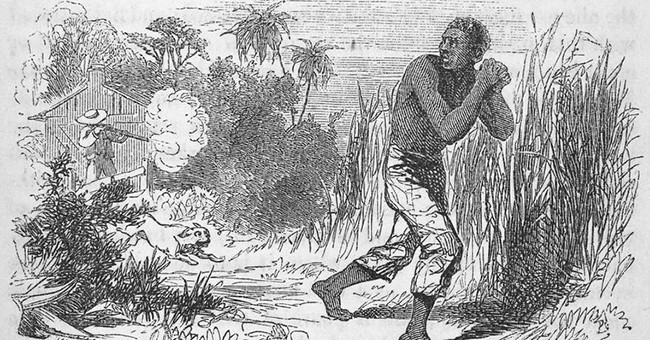
  • Slave-owner shooting a fugitive slave (1853). New York Public Library, “Five hundred thousand strokes for freedom; a series of anti-slavery tracts, of which half a million are now first issued by the friends of the Negro.” by Armistead, Wilson, 1819?-1868 and “Picture of slavery in the United States of America” by Bourne, George, 1780-1845.

    Slave-owner shooting a fugitive slave (1853). New York Public Library, “Five hundred thousand strokes for freedom; a series of anti-slavery tracts, of which half a million are now first issued by the friends of the Negro.” by Armistead, Wilson, 1819?-1868 and “Picture of slavery in the United States of America” by Bourne, George, 1780-1845.

    This letter, published in the North Star on November 5, 1850, reprinted in several other papers, and read in Congress, was adopted at a gathering known as the Fugitive Slave Convention in Cazenovia, New York, on August 21–22, 1850. More than two thousand people—among them Frederick Douglass and some fifty fugitive slaves—attended the meeting to galvanize opposition to the Fugitive Slave Act, proposed federal legislation that mandated the capture and return of fugitive slaves, even those found in the North, where slavery was illegal. It also imposed stiff penalties for harboring a fugitive slave. The controversial measure was passed by Congress on September 18, 1850, and helped energize the abolitionist movement and the Underground Railroad.
    —Pamela Newkirk, from Letters from Black America: Intimate Portraits of the African American Experience

    ***

    The following passages come from “Fugitive Slaves to Enslaved Brethren” from Letters from Black America, edited by Pamela Newkirk.


    Afflicted and Beloved Brothers:

    The meeting which sends you this letter, is a meeting of runaway slaves. We thought it well, that they, who had once suffered, as you still suffer, that they, who had once drunk of that bitterest of all bittercups, which you are still compelled to drink of, should come together for the purpose of making a communication to you.

    The chief object of this meeting is, to tell you what circumstances we find ourselves in—that, so you may be able to judge for yourselves, whether the prize we have obtained is worth the peril of the attempt to obtain it.

    The heartless pirates, who compelled us to call them “master,” sought to persuade us, as such pirates seek to persuade you, that the condition of those, who escape from their clutches, is thereby made worse, instead of better. We confess, that we had our fears, that this might be so. Indeed, so great was our ignorance that we could not be sure that the abolitionists were not the friends, which our masters represented them to be. When they told us, that the abolitionists, could they lay hands upon us would buy and sell us, we could not certainly know, that they spoke falsely; and when they told us, that abolitionists are in the habit of skinning the black man for leather, and of regaling their cannibalism on his flesh, even such enormities seemed to us to be possible. But owing to the happy change in our circumstances, we are not as ignorant and credulous now, as we once were; and if we did not know it before, we know it now, that slaveholders are as great liars, as they are great tyrants.

    The abolitionists act the part of friends and brothers to us; and our only complaint against them is, that there are so few of them. The abolitionists, on whom it is safe to rely, are, almost all of them, members of the American Anti-Slavery Society, or of the Liberty Party. There are other abolitionists: but most of them are grossly inconsistent; and, hence, not entirely trustworthy abolitionists. So inconsistent are they, as to vote for anti-abolitionists for civil rulers, and to acknowledge the obligation of laws, which they themselves interpret to be pro-slavery.

    We get wages for our labor. We have schools for our children. We have opportunities to hear and to learn to read the Bible—that blessed book, which is all for freedom, notwithstanding the lying slaveholders who say it is all for slavery. Some of us take part in the election of civil rulers. Indeed, but for the priests and politicians, the influence of most of whom is against us, our condition would be every way eligible. The priests and churches of the North, are, with comparatively few exceptions, in league with the priests and churches of the South; and this, of itself, is sufficient to account for the fact, that a caste-religion and a Negro-pew are found at the North, as well as at the South. The politicians and political parties of the North are connected with the politicians and political parties of the South; and hence, the political arrangements and interests of the North, as well as the ecclesiastical arrangements and interests, are adverse to the colored population. But, we rejoice to know, that all this political and ecclesiastical power is on the wane. The callousness of American religion and American democracy has become glaring: and, every year, multitudes, once deluded by them, come to repudiate them. The credit of this repudiation is due, in a great measure, to the American Anti-Slavery Society, to the Liberty Party, and to anti-sectarian meetings, and conventions. The purest sect on earth is the rival of, instead of one with, Christianity. It deserves not to be trusted with a deep and honest and earnest reform. The temptations which beset the pathway of such a reform, are too mighty for it to resist. Instead of going forward for God, it will slant off for itself. Heaven grant, that, soon, not a shred of sectarianism, not a shred of the current religion, not a shred of the current politics of this land, may remain. Then will follow, aye, that will itself be, the triumph of Christianity: and, then, white men will love black men and gladly acknowledge that all men have equal rights. Come, blessed day—come quickly.

    ~~~

    Numerous as are the escapes from slavery, they would be far more so, were you not embarrassed by your misinterpretations of the rights of property. You hesitate to take even the dullest of your master’s horses—whereas it is your duty to take the fleetest. Your consciences suggest doubts, whether in quitting your bondage, you are at liberty to put in your packs what you need of food and clothing. But were you better informed, you would not scruple to break your master’s locks, and take all their money.  You are taught to respect the rights of property. But, no such right belongs to the slaveholder. His right to property is but the robber-right. In every slaveholding community, the rights of property all center in them, whose coerced and unrequited toil has created the wealth in which their oppressors riot. Moreover, if your oppressors have rights of property, you, at least, are exempt from all obligations to respect them. For you are prisoners of war, in an enemy’s country—of a war, too, that is unrivalled for its injustice, cruelty, meanness—and therefore, by all the rules of war, you have the fullest liberty to plunder, burn, and kill, as you may have occasion to do to promote your escape.

    We regret to be obliged to say to you, that it is not everyone of the Free States, which offers you an asylum. Even within the last year, fugitive slaves have been arrested in some of the Free States, and replunged into slavery. But, make your way to New York or New England, and you will be safe. It is true, that even in New York and New England, there are individuals, who would rejoice to see the poor flying slave cast back into the horrors of slavery. But, even these are restrained by public sentiment. It is questionable whether even Daniel Webster, or Moses Stuart, would give chase to a fugitive slave; and if they would not, who would?—for the one is chief-politician and the other chief-priest.

    We do not forget the industrious efforts, which are now in making to get new facilities at the hands of Congress for re-enslaving those, who have escaped from slavery. But we can assure you, that as to the State of New York and the New England States, such efforts must prove fruitless. Against all such devilism—against all kidnappers—the colored people of these States will “stand for their life,” and, what is more, the white people of these States will not stand against them. A regenerated public sentiment has, forever, removed these States beyond the limits of the slaveholders’ hunting round. Defeat—disgrace—and, it maybe, death—will be their only reward for pursuing their prey into this abolitionized portion of our country.


    About Pamela Newkirk 

    Pamela Newkirk is the editor of A Love No Less: More Than Two Centuries of African American Love Letters and the author of Within the Veil: Black Journalists, White Media. An award-winning journalist and professor of journalism at New York University, she lives in New York City.

  • By Fred Pearce

    Castle Bravo mushroom cloud, the first in a series of high-yield thermonuclear weapon design tests conducted by the United States at Bikini Atoll, Marshall Islands, March 1, 1954.

    Castle Bravo mushroom cloud, the first in a series of high-yield thermonuclear weapon design tests conducted by the United States at Bikini Atoll, Marshall Islands, March 1, 1954.

    Insensitive much? Texas-based Manhattan Project Beer Company—yes, you read that correctly—named one of their cold ones “Bikini Atoll” after the nuclear testing site in the Marshall Islands. Marshall Islanders are rightfully incensed, as it trivializes the impacts of the high-level radiation they’re still living with to this day. The company said the name was meant to raise awareness of the implications of nuclear research. Needless to say, it seems like they knocked back too many before thinking this through, and their name isn’t helping.

    America’s love affair with all things atomic goes further back. In Fallout: Disasters, Lies, and the Legacy of the Nuclear Age, environmental journalist Fred Pearce explains why nuclear technology looms like a kaiju in American culture. Call it a serious problematic fave. This excerpt is on the house.

    ***

    America’s iconic nuclear landscape is the Nevada National Security Site, a fenced-off and largely deserted tract of sand, cactus, and Joshua trees that is bigger than Rhode Island. Once, when America was testing its atomic bombs here, it was the site of high jinks and revelry. Everything new and exciting in America was labeled “atomic,” and Nevada was the place to experience the cutting edge of the new age.

    The flashes could be seen 350 miles away in San Francisco. But in the up-and-coming desert resort of Las Vegas, less than seventy miles from the test site, the bombs were a weekend tourist attraction. The Chamber of Commerce tagged Las Vegas “Atomic City, USA” and distributed calendars giving detonation times. Staying up all night drinking atomic cocktails and then driving down Highway 95 for a closer look at the dawn blasts was the height of fashion. Or you could see the mushroom clouds and feel the ground shake from your hotel room. They charged premium prices for suites facing the test site.

    Even the stars felt the allure of the atomic. When a young Elvis Presley took the stage, Vegas billed him as “America’s only atomic-powered singer.” To add to the glitz, the city for several years crowned a Miss Atomic Bomb. Nuclear bombs, Elvis, and showgirls—what could be more Vegas? What could have been more emblematic of modern America?

    There were four Miss Atomic Bombs. They reigned through the heyday of the desert tests, from 1952 to 1957. First was Candyce King, a dancer at Vegas’s Last Frontier Hotel “radiating loveliness instead of deadly atomic particles,” as one caption writer put it. Technically, she was Miss Atomic Blast, and there was no actual beauty contest. It was just a publicity shot of her wearing a mushroom cloud as a cap.

    Next came Paula Harris, who sat on a parade float beside a mushroom cloud to depict the Oscar-nominated movie The Atomic City. Released in 1952, the film told the story of the kidnapping of a scientist’s son in the secret bomb-making town of Los Alamos. She was followed in early 1955 by Linda Lawson, a singer at the Sands Hotel. She was said to have been crowned “Miss Cue” in ironic honor of the much-delayed Operation Cue, a series of blasts that year that tested the impact of atomic bombs on buildings, bridges, and other urban infrastructure.

    Finally, and most famously, in 1957 there was another showgirl from the Sands Hotel who went by the name of Lee Merlin. She was photographed in a swimsuit largely consisting of a cotton mushroom cloud. That was the picture that did it. Blond curls in the breeze, arms spread high, red lips—and a white mushroom cloud. Oddly, to this day nobody knows what happened to her or whether that was her real name. She disappeared almost as quickly as the cloud itself.

    So sexy was the bomb that, just as women got named after bombs, so bombs got named after women. A blast in June 1957—during which seven hundred pigs were deliberately exposed to massive radiation burns and flying glass to see how they got on—was called Priscilla. That was reputedly the name of a favored prostitute from Pahrump, a small town near the testing ground where many site workers were billeted.

    Kids were brought into the celebrations too. In 1954, St. George, a Mormon town in Utah downwind of the test that later suffered high cancer rates, crowned a young girl with a mushroom cloud on her skirt “Our Little A-Bomb.” But bizarrely, says Robert Friedrichs, a radiation safety technician at the time who later researched the phenomenon for the test site’s oral history project, the first Miss Atomic Bomb was not in Nevada at all. Not even in America. She was crowned after a beauty contest organized by the occupying US military forces in Nagasaki in 1946, just months after an American bomb had destroyed that city. Pictures published in a women’s journal of the day showed four finalists, all wearing kimonos rather than swimsuits, with a bunch of GIs standing behind them grinning.

    ~~~

    After [World War II], bomb makers initially decided not to besmirch the American landscape with atomic tests. To conduct their continuing tests into ever larger bombs, they headed for the Marshall Islands in the Pacific Ocean, which had been recently liberated from Japan, and to one of its most remote atolls, Bikini Atoll. That’s how we got the bikini. The first two-piece swimsuit began as the “Atome,” excitedly marketed by French fashion designer Jacques Heim in early 1946 as “the world’s smallest bathing suit.” But after the first US atom test at Bikini that summer, a French automobile engineer named Louis Reard, who had just taken over his mother’s lingerie business, brought out his own even smaller two-piece, named the Bikini. The Vatican called it “sinful”—not the bomb test, but the swimsuit.

    After the Soviet Union went nuclear in 1949, the pace of testing heated up, and the convenience of the Nevada desert brought the atomic bombardiers back home. From January 27, 1951, when the ABLE “device” was detonated at Frenchman Flat, a dried-up lake bed in the middle of the new Nevada Test Site, the early-morning skies were regularly illuminated by the tests, which often received live national TV coverage.

    That’s when the whole nation became enthralled by the atomic spectacle. Everything from clocks to lamps to corporate logos soon adopted “atomic” designs, such as a mushrooms cloud or the nucleus of an atom circled by electrons. High school football teams were renamed the Atoms. (One school team near the Hanford plutonium complex still has a mushroom cloud as its symbol.) The thrall was spiced with fear. This was the McCarthy era, when public hearings chaired by Senator Joe McCarthy into suspected Communist infiltration of the government led to a period of political paranoia. But there were real spies, too, such as the recently imprisoned Fuchs. And the fear of an all-out nuclear war between America and the Soviets led to scarily methodical preparations.


    About the Author 

    Fred Pearce has reported on environmental, science, and development issues from eighty-five countries over the past twenty years. Environment consultant at New Scientist from 1992 to 2018, he also writes regularly for the Guardian newspaper and Yale University’s prestigious e360 website. His many books include The New Wild, When the Rivers Run Dry, With Speed and Violence, Confessions of an Eco-Sinner, The Coming Population Crash, and The Land Grabbers.

  • 19th Century woodcut depiction of the Southampton Insurrection

    19th Century woodcut depiction of the Southampton Insurrection

    Nat Turner’s confession provides a chilling example of Christian inspiration that sets it apart from any slave narrative recorded. The leader of the largest and most significant slave revolt in American history, Turner was brought up by his mother, a slave who had been kidnapped from Africa, to believe that great things were expected from him. As a child he learned to read, and from the teachings of the Bible grew up associating religion with freedom. Turner grew up to become a charismatic preacher whose religious visions even led some blacks to consider him a prophet. In fact, one such vision—a solar eclipse that Turner took to be a sign from God—inspired his final and most historic act.

    On the night of August 22, 1831, Turner, in an ill-fated attempt to free his people, led four accomplices on a three-day rampage through Southampton, Virginia. Going from house to house, the fugitives murdered every white person—regardless of sex or age—whom they encountered. Their destination was the arsenal in Jerusalem, Virginia, and along the way Turner’s army swelled to as many as seventy slave rebels. However, a militia intercepted the army and killed more than one hundred blacks. Turner escaped but was apprehended weeks later.

    Turner’s narrative, dictated to his attorney as a confession made shortly before his execution in November 1831 , demonstrates how his fanatical devotion to God led to a “divinely inspired” killing spree that left fifty-seven whites dead. But, just as significantly, Turner’s rebellion attests to the extreme lengths slaves were prepared to go to in order to achieve their freedom by any means necessary.
    —Devon W. Carbado and Donald Weise, The Long Walk to Freedom: Runaway Slave Narratives

    ***

    The following passages come from The Confessions of Nat Turner, excerpted in The Long Walk to Freedom.

    CONFESSION

    By this time, having arrived to man’s estate, and hearing the scriptures commented on at meetings, I was struck with that particular passage which says : “Seek ye the kingdom of Heaven and all things shall be added unto you.” I reflected much on this passage, and prayed daily for light on this subject—As I was praying one day at my plough, the spirit spoke to me, saying “Seek ye the kingdom of Heaven and all things shall be added unto you.”

    Question—what do you mean by the Spirit. Ans. The Spirit that spoke to the prophets in former days—and I was greatly astonished, and for two years prayed continually, whenever my duty would permit—and then again I had the same revelation, which fully confirmed me in the impression that I was ordained for some great purpose in the hands of the Almighty. Several years rolled round, in which many events occurred to strengthen me in this my belief. At this time I reverted in my mind to the remarks made of me in my childhood, and the things that had been shewn me—and as it had been said of me in my childhood by those by whom I had been taught to pray, both white and black, and in whom I had the greatest confidence, that I had too much sense to be raised, and if I was, I would never be of any use to any one as a slave. Now finding I had arrived to man’s estate, and was a slave, and these revelations being made known to me, I began to direct my attention to this great object, to fulfil the purpose for which, by this time, I felt assured I was intended. Knowing the influence I had obtained over the minds of my fellow servants, (not by the means of conjuring and such like tricks—for to them I always spoke of such things with contempt) but by the communion of the Spirit whose revelations I often communicated to them, and they believed and said my wisdom came from God. I now began to prepare them for my purpose, by telling them something was about to happen that would terminate in fulfilling the great promise that had been made to me—About this time I was placed under an overseer, from whom I ran away—and after remaining in the woods thirty days, I returned, to the astonishment of the negroes on the plantation, who thought I had made my escape to some other part of the country, as my father had done before. But the reason of my return was, that the Spirit appeared to me and said I had my wishes directed to the things of this world, and not to the kingdom of Heaven, and that I should return to the service of my earthly master—“For he who knoweth his Master’s will, and doeth it not, shall be beaten with many stripes, and thus, have I chastened you.”

    ~~~

    Ques. Do you not find yourself mistaken now? Ans. Was not Christ crucified. And by signs in the heavens that it would make known to me when I should commence the great work—and until the first sign appeared, I should conceal it from the knowledge of men—And on the appearance of the sign, (the eclipse of the sun last February) I should arise and prepare myself, and slay my enemies with their own weapons. And immediately on the sign appearing in the heavens, the seal was removed from my lips, and I communicated the great work laid out for me to do, to four in whom I had the greatest confidence, (Henry, Hark, Nelson, and Sam)—It was intended by us to have begun the work of death on the 4th July last— Many were the plans formed and rejected by us, and it affected my mind to such a degree, that I fell sick, and the time passed without our coming to any determination how to commence—Still forming new schemes and rejecting them, when the sign appeared again, which determined me not to wait longer.

    Since the commencement of 1830, I had been living with Mr. Joseph Travis, who was to me a kind master, and placed the greatest confidence in me; in fact, I had no cause to complain of his treatment to me. On Saturday evening, the 20th of August, it was agreed between Henry, Hark and myself, to prepare a dinner the next day for the men we expected, and then to concert a plan, as we had not yet determined on any. Hark, on the following morning, brought a pig, and Henry brandy, and being joined by Sam, Nelson, Will and Jack, they prepared in the woods a dinner, where, about three o’clock, I joined them.

    Q. Why were you so backward in joining them.

    A. The same reason that had caused me not to mix with them for years before.

    I saluted them on coming up, and asked Will how came he there, he answered, his life was worth no more than others, and his liberty as dear to him. I asked him if he thought to obtain it? He said he would, or lose his life. This was enough to put him in full confidence. Jack, I knew, was only a tool in the hands of Hark, it was quickly agreed we should commence at home (Mr. J. Travis’) on that night, and until we had armed and equipped ourselves, and gathered sufficient force, neither age nor sex was to be spared, (which was invariably adhered to.) We remained at the feast until about two hours in the night, when we went to the house and found Austin; they all went to the cider press and drank, except myself. On returning to the house, Hark went to the door with an axe, for the purpose of breaking it open, as we knew we were strong enough to murder the family, if they were awaked by the noise; but reflecting that it might create an alarm in the neighborhood, we determined to enter the house secretly, and murder them whilst sleeping. Hark got a ladder and set it against the chimney, on which I ascended, and hoisting a window, entered and came down stairs, unbarred the door, and removed the guns from their places. It was then observed that I must spill the first blood. On which, armed with a hatchet, and accompanied by Will, I entered my master’s chamber, it being dark, I could not give a death blow, the hatchet glanced from his head, he sprang from the bed and called his wife, it was his last word, Will laid him dead, with a blow of his axe, and Mrs. Travis shared the same fate, as she lay in bed. The murder of this family, five in number, was the work of a moment, not one of them awoke; there was a little infant sleeping in a cradle, that was forgotten, until we had left the house and gone some distance, when Henry and Will returned and killed it; we got here, four guns that would shoot, and several old muskets, with a pound or two of powder. We remained some time at the barn, where we paraded; I formed them in a line as soldiers, and after carrying them through all the manoeuvres I was master of, marched them off to Mr. Salathul Francis,’ about six hundred yards distant. Sam and Will went to the door and knocked. Mr. Francis asked who was there, Sam replied, it was him, and he had a letter for him, on which he got up and came to the door, they immediately seized him, and dragging him out a little from the door, he was dispatched by repeated blows on the head; there was no other white person in the family. We started from there for Mrs. Reese’s, maintaining the most perfect silence on our march, where finding the door unlocked, we entered, and murdered Mrs. Reese in her bed, while sleeping; her son awoke, but it was only to sleep the sleep of death, he had only time to say who is that, and he was no more. From Mrs. Reese’s we went to Mrs. Turner’s, a mile distant, which we reached about sunrise, on Monday morning.


    About the Editors 

    Devon W. Carbado, is professor of law and African American studies at the University of California at Los Angeles and the coeditor of several books, including Acting White? Rethinking Race in "Post-Racial" America (with Mitu Gulati). 

    Donald Weise is an independent scholar in African American history and coeditor of The Huey Newton Reader (with David Hilliard). He lives in New York.
  • Slave auction block at Green Hill Plantation, Pannill family plantation, Long Island vicinity, Campbell County, Virginia.tion block

    Where our societal trauma began. Slave auction block at Green Hill Plantation, Pannill family plantation, Long Island vicinity, Campbell County, Virginia.

    It’s a clear-cut case of PTSD: Post-Traumatic Societal Disorder. The centuries-long trauma wrought by our nation’s history of slavery requires intensive therapy, because everybody is affected. Even our author, Daina Berry, said, “We are still living in the aftermath of slavery. It’s the stain on our flag and the sin of our country. Once we recognize this, face it, study it, and acknowledge the impact it has on all Americans, then we will be in a position to determine how we can move forward.” One of the ways to come to terms with it and move forward is to take in the full history, unabridged—free of sugar-coating, mythmaking, and claims of “American exceptionalism.” (What’s “exceptional” is the amount of damage done.) What better occasion than the 400th anniversary of this inhumane industry? Working back to 1619 and before, here’s a list of titles from our catalog to get us on the path to recovery . . . and hopefully, reparations.


    African Voices of the Atlantic Slave Trade

    “Bailey is not afraid to ask difficult questions . . . [She] expands and troubles our understanding of the African diaspora. In this fine and accessible study of the slave trade, Bailey places African voices of this era at the center of the writing of history.”
    —Atlanta Journal Constitution


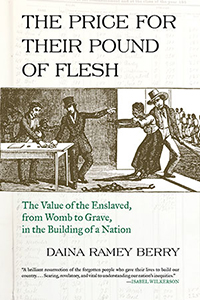
    The Price for Their Pound of Flesh

    “A brilliant resurrection of the forgotten people who gave their lives to build our country. Rigorously researched and powerfully told, this book tallies the human price paid for the nation we now live in and restores these unrecognized Americans—their hopes, loves, and disregarded dreams—to their rightful place in history. Searing, revelatory, and vital to understanding our nation’s inequities.”
    —Isabel Wilkerson, author of The Warmth of Other Suns: The Epic Story of America’s Great Migration


    A Black Women's History of the United States

    “A powerful and important book that charts the rich and dynamic history of Black women in the United States. It shows how these courageous women challenged racial and gender oppression and boldly asserted their authority and visions of freedom even in the face of resistance. This book is required reading for anyone interested in social justice.”
    —Keisha N. Blain, author of Set the World on Fire: Black Nationalist Women and the Global Struggle for Freedom


    Kindred

    “In Kindred, Octavia Butler creates a road for the impossible and a balm for the unbearable. It is everything the literature of science fiction can be.”
    —Walter Mosley


    The Long Walk to Freedom

    “This book is a must-read for anyone who wants to understand the historical reality of the slave experiences. Carbado and Weise have diligently selected narratives that will challenge readers’ presumptions and cut against the mythology that slaves were passive, that mostly men (and not women) ran away, that slaves typically ran North (not South), and that gender and racial passing were rare occurrences. A landmark achievement, The Long Walk to Freedom allows fugitive slaves to speak for themselves—on their own terms and in their own voices.”
    —Dr. Mary Frances Berry, author of History Teaches Us to Resist: How Progressive Movements Have Succeeded in Challenging Times 


    Anarcha Speaks

    “Dominique’s poems paint brutal truths. Beautiful truths. They seek to uncover a history hidden under the skin. In an era in which such truths are in danger of being forgotten, Dominique’s voice is an essential. Her stories are an unearthing, the soil that connects us to our past, a lens through which, if we look close enough, we may see something that directs us to a kinder future.”
    —Staceyann Chin, author of The Other Side of Paradise 


    Inheriting the Trade

    “DeWolf’s intimate confrontation with white America’s ‘unearned privilege’ sears the conscience.”
    —Kirkus Reviews 


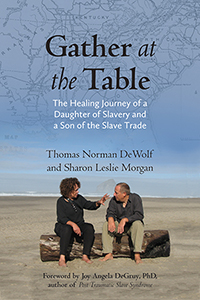
    Gather at the Table

    “What a courageous journey-communicated in an engaging, readable style with candor, humor, and deep feeling. This book shed light on the thoughts, questions, and feelings I have about race, society, culture, and historical, generational, and structurally induced trauma—and the human ability to transcend. In reading it, I realized there are questions I’m still afraid to ask about race, things I’m afraid to say, and yet I realized anew the power of acknowledgment, mercy, justice, and conflict transformation. I’m grateful to DeWolf and Morgan for not just taking the journey but for sharing their story with us.”
    —Carolyn Yoder, founding director of STAR: Strategies for Trauma Awareness & Resilience 


    An African American and Latinx History of the United States

    “An African American and Latinx History of the United States is a gift. Paul Ortiz wields the engaging power of a social historian to bring vividly to life so many Black and Brown fighters for human rights in the Americas. Ambitious, original, and enlightening, Ortiz weaves together the seemingly separate strivings of Latinx and Black peoples into a beautiful tapestry of struggle.”
    —Ibram X. Kendi, National Book Award–winning author of Stamped from the Beginning: The Definitive History of Racist Ideas in America 


    Epic Journeys of Freedom

    “This book shines because of Ms. Cassandra Pybus’s stellar research. Her description of the upheaval surrounding the American Revolution is sound . . . Cassandra Pybus’s book adds much needed historical documentation to a group of people who have largely been forgotten by history. Every school and public library should own a copy of this book.”
    —Christina Maria Beaird (PLA), Plainfield Public Library District, Plainfield, IL


    The Fearless Benjamin Lay

    “A modern biography of the radical abolitionist Benjamin Lay has long been overdue. With the sure hand of an eminent historian of the disfranchised, Marcus Rediker has brought to life the wide-ranging activism of this extraordinary Quaker, vegetarian dwarf in a richly crafted book. In fully recovering Lay’s revolutionary abolitionist vision, Rediker reveals its ongoing significance for our world.”
    —Manisha Sinha, author of The Slave’s Cause: A History of Abolition 


    The Sounds of Slavery

    “A fascinating book . . . that brings to life the historical soundscape of 18th- and 19th-century African Americans at work, play, rest, and prayer . . . This remarkable achievement demands a place in every collection on African American and US history and folklife.”
    —Library Journal

    Slave auction block