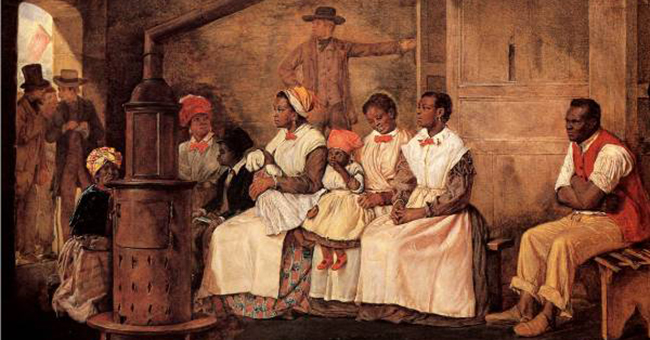
• Eyre Crowes’s oil painting “Slaves Waiting for Sale – Richmond, Virginia,” 1861.

    Eyre Crowes’s oil painting “Slaves Waiting for Sale – Richmond, Virginia,” 1861.

    1619, a year to go down in infamy like 1492. 400 years ago this month, a ship reached a coastal port in the British colony of Virginia, carrying more than twenty enslaved Africans. Stolen from their homes, these men and women were sold to the colonists in what would become known as the United States. The Atlantic Slave trade would feed this vicious cycle of reducing Africans to commodities through the brutal bondage of forced labor and sexual coercion, the repercussions of which we live with centuries later. How do we as a country reckon with and heal from this history? We asked some of our authors to reflect on this and share their remarks below.

    ***
    Mary Frances Berry“Now is the time, 400 years after the beginnings of slavery in what became our nation, to acknowledge the origins of the perpetuation of white racism. What better time than the ascendancy of another white supremacist, president Donald Trump, to move seriously to become an anti-racist nation.”
    —Mary Frances Berry, History Teaches Us to Resist: How Progressive Movements Have Succeeded in Challenging Times
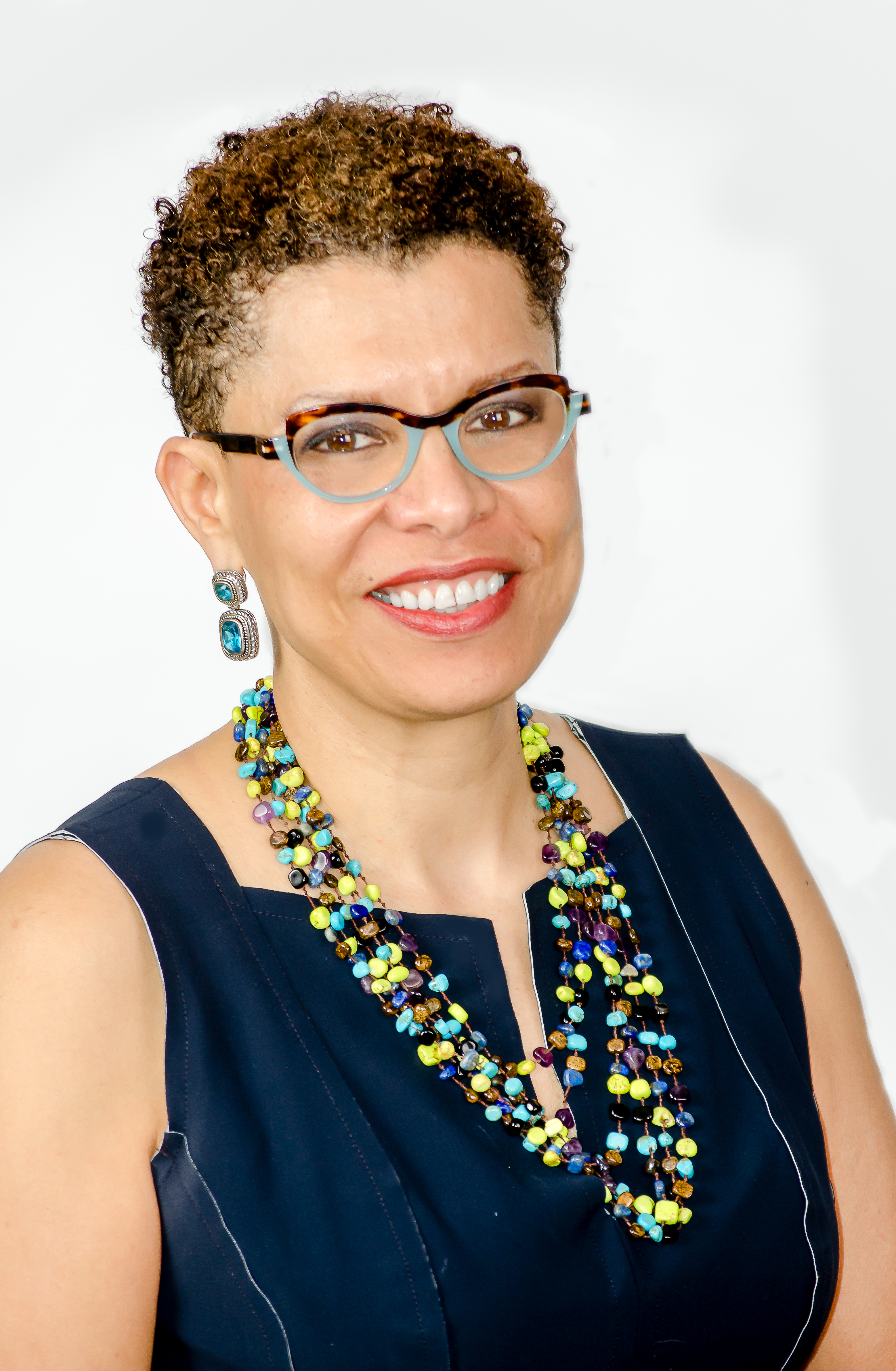
     

    Sheryll Cashin“Early generations of white property-owning men told stories of black inferiority to justify slavery. Later generations cast black men as sexual predators to justify Jim Crow and residential segregation. Politicians, most recently Donald Trump, told myths about the ghetto America created and still maintains. Inferior, nigger, rapist, thug. Such rhetoric was critical to maintaining supremacist institutions, and each time this nation seemed to dismantle a peculiar, black-subordinating institution, it constructed a new one. Four hundred years on, the past is not past.”
    —Sheryll Cashin, Loving: Interracial Intimacy in America and the Threat to White Supremacy


    Thomas Norman DeWolf“‘Now more than ever’ is such a cliché, and yet . . . Now more than ever, it is critical we know and understand our history, the legacies and aftermaths of 400 years of slavery and its present-day consequences. Now more than ever, it is critical that we understand our power to effect change, beginning with ourselves and extending to our children, grandchildren, friends, colleagues, communities and our nation. Now more than ever, it is time (way past time) for racial healing.”
    —Thomas Norman DeWolf, Inheriting the Trade: A Northern Family Confronts Its Legacy as the Largest Slave-Trading Dynasty in US History and Gather at the Table: The Healing Journey of a Daughter of Slavery and a Son of the Slave Trade


    Roxanne Dunbar-Ortiz“By 1619, when enslaved Africans were sold to English colonizers in Jamestown, Virginia, the 15,000 Indigenous Powhatan Confederacy had been decimated, survivors forced to the margins of the homeland in a decade of genocidal attacks on their villages and farm lands, their fields of corn, beans, and squash turned into commercial agriculture—plantations of tobacco to be worked by the enslaved. The original crimes against humanity—genocide and slavery—were thereby baked into the founding of what would become the United States.”
    —Roxanne Dunbar-Ortiz, An Indigenous Peoples’ History of the United States


    Kali N. Gross“Last week, images taken at the farm of the current GOP leader of the Senate, Mitch McConnell, featured a group of white boys smiling as they surrounded, choked, and groped a cardboard cut-out of one of the newest congressional members elected to the House of Representatives—a woman of color, Alexandra Ocasio-Cortez. The photograph captures everything that is wrong with America and its current administration, as it spotlights the national legacy of enslavement, white supremacy, racist violence, and misogyny. The GOP response, which attempted to depict the boys as victims once citizens rebuked their conduct, summons the willful, self-excusing denial enslavers relied upon to dismiss the humanity of Africans. 400 years later, that kind of reasoning jeopardizes US democracy; yet that we have unabashedly diverse, progressive women in Congress contains answers for the country’s way forward past bigotry, violence, and political corruption.”
    —Kali N. Gross, A Black Women’s History of the United States


    Sharon Leslie Morgan“More than a dozen of my ancestors were enslaved. The youngest was sold away from her mother at the age of nine. As I contemplate the 400th anniversary of slavery in North America, I am abhorred. Millions of descendants are permanently scarred by this historical harm and the racism it inflamed. America has a race wound that will never be healed until contemporary society comes to terms with the past. As we endure the latest politically-driven assaults on our moral values, we must resist descent into an abyss of hate. I am hopeful that the commemoration of the signal moment when African people were first sold into bondage at Jamestown, Virginia, in 1619 will inspire a wake-up call that leads toward a society in which ALL people are treated equally and with respect. As Alice Walker said, ‘Healing begins where the wound was made.’”
    —Sharon Leslie Morgan, Gather at the Table: The Healing Journey of a Daughter of Slavery and a Son of the Slave Trade


    Marcus Rediker“The twenty-plus enslaved Africans who arrived in Virginia aboard the White Lion in 1619 were the first victims of an enduring national nightmare. The 400th anniversary of that momentous arrival provides an excellent opportunity for soul-searching about the meaning and legacy of slavery in America’s past. Slave ships are ghost ships that haunt us still. It is high time to repair the deep and violent damage they have done, and continue to do, to all generations of Americans, past and present.”
    —Marcus Rediker, The Slave Ship: A Human History


    Crowe-Slaves_Waiting_for_Sale_-_Richmond _Virginia

  • Lillie Ahearn

    In these times when readers are responding to our books “more than ever,” when our authors—including Richard Blanco, Imani Perry, Robin DiAngelo, Dina Gilio-Whitaker, and Bettina Love—are appearing in the media, their ideas going viral on social media, their voices being heard on so many platforms, we thought it might be good to take a break to focus on some of the staff who work hard to find, shape, edit, produce, and promote those works. Our blog series “Beacon Behind the Books” introduces to you a member of our staff and gives you a behind-the-scenes look, department by department, at what goes on at our office. And not only our staff, but our interns, too!

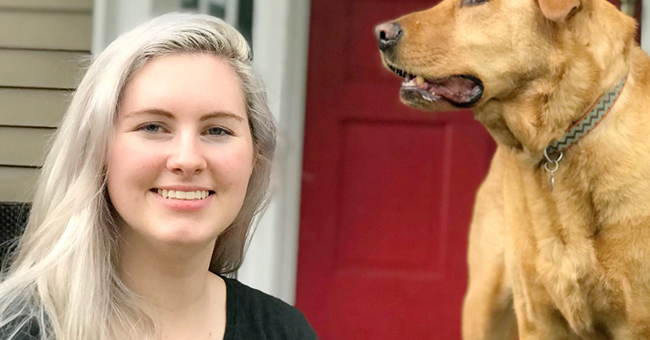
    This week, we introduce you to our publicity intern, Lillie Ahearn! 

    What drew you to publishing, Lillie? How did you find your way to Beacon?

    It’s probably no surprise to hear that I, like much of the staff at Beacon, have always been a book nerd. My mom loves to embarrass me by recalling all the times she would check on me during childhood playdates, only to find me steadfastly ignoring my friends in favor of getting in one more chapter. It wasn’t until I landed a job at a local indie bookstore when I was seventeen that I became interested in the work that goes into transforming a person’s idea into a book on a shelf (shout-out to An Unlikely Story for continuing to indulge my coffee and book addictions after all these years!). My first experience with the publishing industry was an internship in the sales department at Candlewick Press for a semester, and I enjoyed their small size and focus on children’s literature. I poked around online looking for a similar internship this summer. Though I hadn’t considered working with a nonfiction publisher, Beacon’s commitment to truth and equality really stood out to me. The work they do here is so important, now more than ever, and I’m lucky to be a part of it!

    How much of what you learned in college have you found vital to your work?

    I’m pursing a double major in Spanish Literature and Classical Studies, so literature is kind of my jam. Working with an ancient Greek drama and a contemporary nonfiction book might sound like two very different tasks, but they require a similar attention to detail and ability to process large amounts of text efficiently. I also write a lot of papers, so my command of language has improved a lot since entering college—an invaluable skill in a writing-heavy position.

    This isn’t specific to publishing, but organization and time management are important in any workplace. I used to be the kind of person that could only be productive with a deadline looming over me, but one instance of waking up on a Saturday morning with two papers, a presentation, and a hand-coded replica of the game 2048 all due on Monday was enough to change my ways. I learned the hard way that taking a few minutes to plan things out never hurts.

    In an alternate universe, what career would you have?

    I think if I had any numerical aptitude at all, I would definitely have a career in planetary science. I can’t help but be enticed by the countless discoveries waiting to be made in the vast expanse of our universe. Unfortunately, my dismal performance in physics and calculus in high school was enough to put that career path out of my mind, so now I mostly stick to reading articles from Science magazine and the occasional visit to a planetarium.

    What are you reading right now?

    I’m often juggling a few different reads, since I can never commit to just one genre at a time. Right now, I’m halfway through volume two of Alice Oseman’s adorable graphic novel Heartstopper. It takes me back to my first middle-school crush in the best way. I also started Jonathan Harris’ The Lost World of Byzantium a few days ago. I took a class on Byzantine history last fall with an amazing professor and have been itching to read more about the Byzantines ever since. Lastly, I’m currently on my second read of The Song of Achilles by Madeline Miller, since I can’t resist her gorgeous prose.

    Hobbies outside of work?

    I’m on the fencing team at my university, so despite the treadmill being my mortal enemy, I spend a fair amount of time practicing or working out. Aside from that, I’m a huge video game fan and I occasionally try my hand at cooking. Whether or not I’m successful is neither here nor there.

  • By Helene Atwan

    Toni Morrison

    Like so many thousands, hundreds of thousands of others, I was deeply saddened by the news of Toni Morrison’s death. Like others, I had been moved and changed by reading her work over many years. And like hundreds of others, I was fortunate to have worked with her oh so briefly over the years, once as a publicist at Knopf, when Song of Solomon was coming out. She still worked at Random House as an editor in those days and would take the elevator up to visit us at Knopf. The power and mastery of the novel was unlike anything I’d worked on before (and remember, I was working at Knopf, with many masterful writers). I was, I admit, awed by her. But at that time, she had just published a second novel by Gayl Jones (Eva’s Man, which followed Corregidora), and so her skills as an editor and mentor were also on display. Many years later I would become Gayl’s editor and thus all the more aware of how acute Toni’s eye was. The last time I saw Toni was at a tribute for Nikki Giovanni, and I was especially happy to be in company with both of them at that great occasion, and with my daughter, who was, as you can imagine, thrilled to meet these legendary writers. Toni was walking, but with difficulty, and she asked my daughter, Emily, to serve as her crutch. I know she will feel Toni leaning on her shoulder for all the years to come, as we all have been pushed and guided by her will and her work. When my friend Anita Hill reached out to me to add a tribute to the growing swell, she asked me to speak to the literary loss: it’s both incalculable, and it’s illusionary. Her work stands, and though we could have asked for more books, we have a deep trove that will deeply influence writers from all races and ethnicities, all along the gender spectrum, and over the centuries to come. I could go on, but I defer to the many who knew her better, understood her work more intimately, and who will miss her more keenly.


    About the Author 

    Helene Atwan has been the director of Beacon Press since 1995.

  • By Helene Atwan

    Candles

    Like most of us living in the US, I was sickened by this weekend’s news of shootings in El Paso and Dayton. Coming into work, feeling so stricken by these events, I was heartened by the fact that I could turn to a group of colleagues and immediately begin talking about what kind of resources we could offer in the wake of these senseless tragedies. I feel, as I often do, heartened to be working in an environment where it is our job to try to create these resources.

    And as a nonprofit, we can make some of these resources available for free, or at least donate our profits to other nonprofits working on these issues more directly, as is the case with 2 of our books that address gun violence: “Guns Don’t Kill People, People Kill People”: And Others Myths About Guns and Gun Control, by Dennis A. Henigan, and the landmark poetry anthology, Bullets into Bells: Poets & Citizens Respond to Gun Violence, coedited by Brian Clements, Alexandra Teague, and Dean Rader. Both books are now available for free wherever eBooks are sold.

    Gun books

    We also have resources for better understanding the rhetoric of hate, white supremacist groups that continue to spread hatred, several books about the contributions of immigrants to our society, and the struggles immigrants endure today. Please see the books and blog posts below. And join us not merely in empathy, but in pressing for action.

    Dismantling White Supremacy and Hate


    About the Author 

    Helene Atwan has been the director of Beacon Press since 1995.

    Candles

  • Toni Morrison

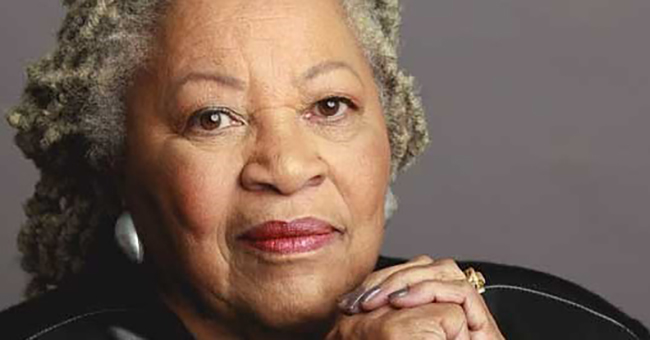
    Toni Morrison speaking at “A Tribute to Chinua Achebe – 50 Years Anniversary of ‘Things Fall Apart.’” The Town Hall, New York City, February 26th, 2008. Photo credit: Angela Radulescu

    Another legend gone. And more than a legend, she was a force! Novelist, editor, professor, and Nobel laureate Toni Morrison died on August 5 at age eighty-eight. Pick any book from her bibliography, and you will be mesmerized by her command of prose, her power to conjure up the ambience and lived-in feeling of Black communities and their heroines and heroes to the finest, vibrant detail. She was Black love, Black resilience, and Black brilliance personified. There won’t be another writer like her.

    She meant a lot to our authors. Poet Sonia Sanchez was interviewed in the latest documentary Toni Morrison: The Pieces I Am and spoke reverently about her and her work. If you haven’t seen the documentary yet, you’re missing out! Sanchez also wrote fifteen haiku in honor of Morrison in her collection Morning Haiku. Here are a few of them:

    3.
    in the beginning
    there wuz we and they and others
    too mournful to be named;

    4.
    or brought before elders
    even held in contempt. they were
    so young in their slaughterings;

    5.
    in the beginning
    when memory was sound. there was
    bonesmell. bloodtear. whisperscream;

    6.
    and we arrived
    carrying flesh and disguise
    expecting nothing;

    For award-winning pop music critic and culture journalist Rashod Ollison, Morrison was an incredible source of inspiration. “Toni Morrison’s work gave me permission to write,” he said in his Q&A about his memoir Soul Serenade: Rhythm, Blues, and Coming of Age Through Vinyl. “She assumed the centrality of being Black and steeped the narrative in all these cultural nuances that were very familiar to me, which enriched the humanity of the characters. I knew I wanted to write like that.” Ollison’s first introduction to her work was in a class for advanced students when he was middle school. In his memoir, he wrote about how life-changing reading The Bluest Eye was.

    When I was moved to advance classes, I was assigned a Talented and Gifted coordinator, Mrs. Baugh, whose trailer we reported to twice a day—first thing in the morning and later in the afternoon. In the sparsely decorated room, we worked on artsy projects and assignments from other classes, and we talked about current events, like the Gulf War, to which I paid no attention

    Toward the end of class on the Friday before winter break, she called me to her desk and explained that she was taking a course in African American literature.

    “I have a few books here I think you’d like, Rashod.”

    There on her desk was a small stack of paperbacks: a slim short-story collection by Alice Walker, The Women of Brewster Place by Gloria Naylor, and a dog-eared copy of The Bluest Eye by Toni Morrison.

    “It’s not homework,” she said, smiling. “But I think you’d like these books.”

    During the time off I devoured all three, but The Bluest Eye left the deepest impression. The story of Pecola Breedlove, a girl nobody validated and who ultimately surrendered to insanity because of a woeful lack of affirming love, wasn’t my story. But I was able to engage it—the pain of isolation, of loneliness, of longing for a parent to shine a light your way.

    Pecola had no one, and I often felt that I had no one, but music was always a harbor. And there was music in the way Morrison wrote—a prose suffused with a blues impulse, beautiful lines weaving an ugly tale. The oppressive funkiness of the people in the novel’s Ohio city reminded me of Happy Street and all the sad-eyed neighbors who streamed in and out of Mama Teacake’s. What she sold helped them get from day to day—a fifth of brown liquor in which to down their sorrows and fried pork skins drenched with her homemade barbecue sauce, among the many salty and fatty foods that pacified them.

    After reading The Bluest Eye, I knew what I was going to do one day: tell stories. In the meantime, I continued writing poems and reciting them in front of the dignified congregation at Emmanuel Baptist.

    And tell stories he did. Ollison dedicated his life to journalism up until he died from non-Hodgkin’s lymphoma last year at forty-one.

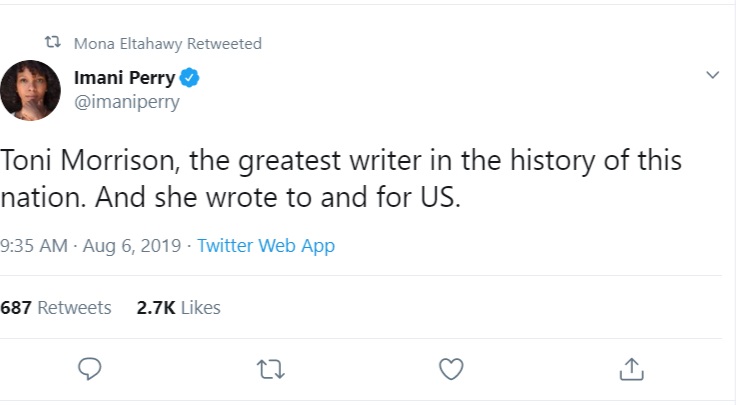
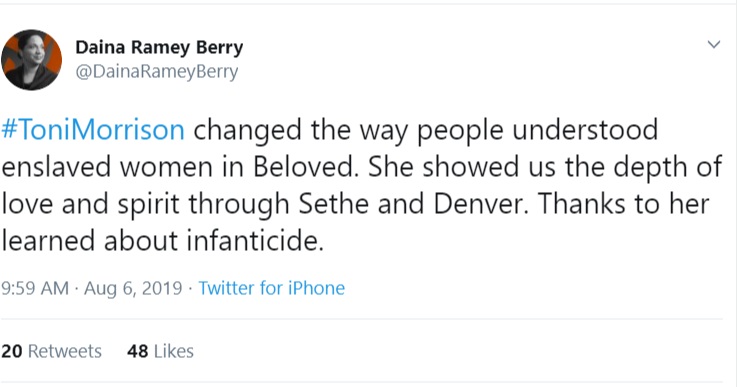
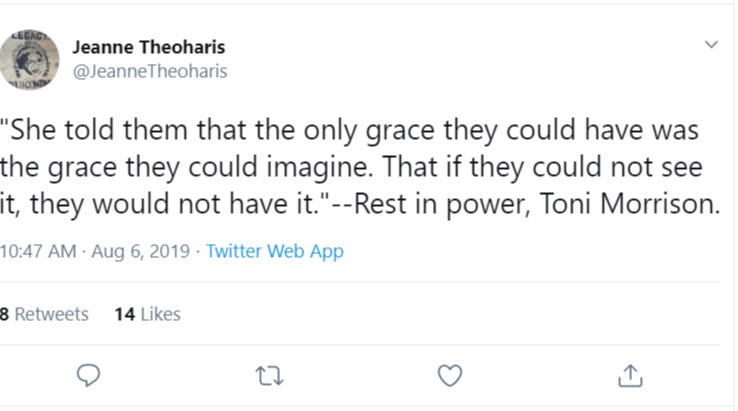
    Some of our authors took to Twitter to pay their respects.

    Imani Perry_Toni Morrison Daina Berry_Toni Morrison Jeanne Theoharis_Toni Morrison Richard Hoffman_Toni Morrison

    Rest in power, Toni Morrison. We’ll close our tribute with a few more haikus from Sonia Sanchez.

    13.
    in the beginning
    there was a conspiracy of blue eyes
    to iron eyes;

    14.
    new memory falling into death
    O will we ever know
    what is no more with us;

    15.
    O will weselves ever
    convalesce as we ascend into wave after
    wave of bloodmilk?

    Toni Morrison

  • Mona Eltahawy at Beacon Press

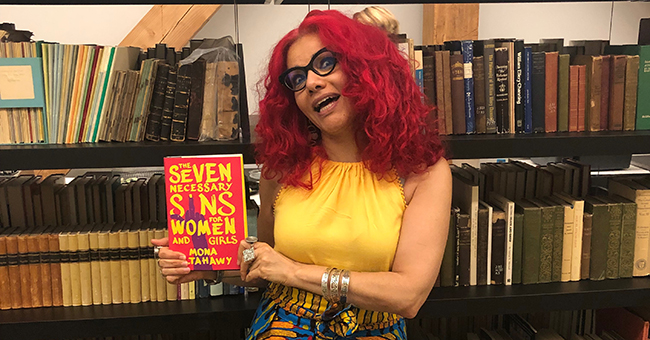
    Mona Eltahawy gives us feminist realness during her visit to the office.

    The patriarchy is going down!

    Why? Because last week, we had the immense pleasure of having feminist giant Mona Eltahawy, author of The Seven Necessary Sins for Women and Girls, for a visit at the office! We couldn’t wait to meet her in person and can’t stop talking about her book. Her many many fans and followers on social media can’t stop talking about it, either. Eltahawy is fed the hell up with the patriarchy, and in her book, she calls on all women and girls to embrace the qualities they’ve been trained to avoid: to be angry, ambitious, profane, violent, attention-seeking, lustful, and powerful. Rather than teaching women and girls to survive the poisonous system they find themselves in, her intersectional feminist manifesto arms them to dismantle it. Every chapter is fire, a fierce and furious middle finger to oppression. (The brilliant cover art by our designer Louis Roe is a big tip off.) We are so here for it!

    One of the highlights of her visit was the recording of the audiobook of The Seven Necessary Sins for Women and Girls. None other than Eltahawy herself narrates every word, and we wouldn’t have it any other way. It’s one thing to read the text; it’s quite another—and much much more!—to hear her passionate words in her voice. Here’s a little taste of the beginning.

    And the recording comes with an Easter egg. Two Beacon staff members will be making their audiobook debut! Four of us auditioned to narrate the intro and outro credits: associate publicist Perpetua Charles; marketing manager Emily Powers; assistant to the director of marketing and sales Isabella Sanchez; and editorial assistant Molly Velázquez-Brown. Here’s what they had to say about why they love her book and why they auditioned:

    “Mona’s book rages against the evils done unto women and girls across the world. Everyone should read this book, hear this book, and be outraged at the system that allows these things to occur. I don’t get to work on or contribute to every book as a publicist, so it’s always a fun and gratifying treat to get to do so when an opportunity arises.”
    —Perpetua Charles

    “Mona’s book is so exciting because it is angry, loud, and unapologetic. She doesn’t side-step or equivocate on anything. I know that her audiobook will reflect her passion and fiery personality, and I’m glad I got the chance to be a part of it.”
    —Isabella Sanchez

    Once the auditions wrapped up, it was up to Eltahawy to choose which ones would make the cut.

    She made her decision.

    The envelope, please.

    The winners are . . . 

    Intro: Isabella Sanchez!

    Outro: Molly Velázquez-Brown!

    Congratulations to the winners! And thank you to Mona Eltahawy for such a lovely visit! We hope you come back to Boston soon.

    The Seven Necessary Sins for Women and Girls comes out on September 17. If you can’t wait and want in on the book and some patriarchy-smashing swag, we have a pre-order offer going on. The first fifty pre-orders will receive a special gift pack: a Seven Sins T-shirt, a 5×7 art print with a quote from the book, and a signed bookplate from the author. Enter now!

  • Noelle Blog Photo

    In these times when readers are responding to our books “more than ever,” when our authors—including Richard Blanco, Imani Perry, Robin DiAngelo, Dina Gilio-Whitaker, and Bettina Love—are appearing in the media, their ideas going viral on social media, their voices being heard on so many platforms, we thought it might be good to take a break to focus on some of the staff who work hard to find, shape, edit, produce, and promote those works. Our blog series “Beacon Behind the Books” introduces to you a member of our staff and gives you a behind-the-scenes look, department by department, at what goes on at our office. And not only our staff, but our interns, too!

    This week, we introduce you to our marketing intern, Noelle Tardiff! 

    What drew you to publishing, Noelle? How did you find your way to Beacon?

    I feel like so many people I’ve spoken to who work in publishing have always known they wanted to be a part of this industry, but that’s definitely not the case for me! When I was in high school, I thought I wanted to pursue some sort of health science career, but then I had the classic “I don’t know what I want to do with my life” freak-out just before it was time to apply to schools. My mom encouraged me to think about the subjects I truly enjoyed studying, and those were always my English and Latin classes. I ended up connecting with a family friend who works in publishing, and she was the person who showed me how much you really can do with an English/Liberal Arts degree!

    In terms of how I found my way to Beacon, I had a lot of help from my boss (also my amazing publishing mentor) from another internship. I was searching for summer internships, and she knew that Beacon would be a great fit for me because of its meaningful mission and incredible staff!

    What is one book on our list that has influenced your thinking on a particular issue?

    Mona Eltahawy’s The Seven Necessary Sins for Women and Girls is absolutely amazing. It was the first book I got to work with this summer, and I ended up reading the whole thing in about a day! Women are so often told that we shouldn’t be angry, ambitious, profane, violent, attention-seeking, lustful, or powerful, but that’s not true at all. Owning those qualities and defying the patriarchy is so important, and you can’t help but to want to do so after reading this book.

    What helps you focus when you’re at work?

    I have a playlist I like to listen to when I’m working on designs or more creative projects. I get super distracted if I listen to music while I’m reading or writing, though. I’ve been a dancer my entire life, so sometimes I’ll find myself making up dances to music in my head rather than actually doing what I’m supposed to be doing.

    How much of what you learned in college have you found vital to your work?

    So much of what I do in school has been useful to me during my internship. I’ve taken book publishing classes that focus on designing covers and writing marketing plans, so getting to see all of that happen with real books is so fun! I’ve even found that a lot of my extracurricular work has been helpful. I’m the marketing director for my dance company, so knowing how to use Photoshop and InDesign was great. I’m able to get a little more creative with my work than I would be if I had to learn those programs now.

    What’s your advice to someone interested in entering the publishing field?

    Something that has been helpful to me is having a mentor in the field. It’s great to have someone to go to for advice about internships, jobs, and school! Not being afraid to ask about opportunities has been an important part of my experience as well. I got my first internship in publishing after my freshman year of college just by sending an email! If I hadn’t done that, I don’t think I would have learned as much as I have about the aspects of publishing that I like, dislike, and would consider pursuing as a career.

    In an alternate universe, what career would you have?

    I always say that in an alternate universe, I would be an interior designer. I’ve always been pretty creative and visual, and walking through the pillow section of HomeGoods is just the best.

    Hobbies outside of work?

    My favorite hobby outside of work is dancing! I’ve been a dancer since I was two and have studied styles like tap, jazz, ballet, modern, pointe, and lyrical. About two years ago, I started choreographing for my school’s dance company, and that’s been an exciting new challenge for me. I’m very lucky that I got to continue dancing throughout college.

    Favorite podcast?

    I have two right now: Getting Curious with Jonathan Van Ness and Why Won’t You Date Me? with Nicole Byer. Getting Curious is fun for a lot for a lot of reasons, but I love it because it dissects complicated political, cultural, and historical topics in a way that’s funny and intriguing. Why Won’t You Date Me? is hilarious, and I feel like most people can relate to the crazy dating stories Nicole tells.

    Favorite food?

    I found my favorite food this year when I went to New Orleans for Mardi Gras. It was at a breakfast restaurant called The Ruby Slipper and it was so good that my friends and I got up early the day of our flight so that we could eat there one more time. My friend didn’t want to leave her leftovers behind, so she somehow got them through airport security and ate them on the flight home. I would go back to New Orleans just for the food.

    On a normal day, though, anything involving buffalo chicken is my favorite.

    Favorite thing about Boston?

    My favorite part about Boston is that it has a little bit of everything. I’m from New Hampshire, so I appreciate that I’m still not far from the beach and the mountains, and we still get to experience all four seasons (except when New England decides to skip over spring). I also love that it’s small enough to walk around so that I don’t always have to take the T.

  • By Lori L. Tharps

    Womenfriends

    This essay appeared originally on My American MeltingPot.

    I’m coming at you live and in-person from the sunny south of Spain. It is absolutely gorgeous here—clear blue skies, radiant sun, palm trees, flowers flaunting every color from the deepest purple to the sharpest pinks. We’re currently staying with el esposo’s [Tharps’ husband] family and they live in a beautiful home that is within walking distance of the beach, plus they have a swimming pool in the backyard. So, yes, I’m living in paradise. But everything that glitters is not quite gold.

    Let me begin by saying that what I’m about to write here is neither a complaint nor is it coming from a place of anger or malice. These are simply my observations of being the Black body in a white family. It’s been almost ten years since I’ve visited my in-laws and so some of these things I’m noticing feel brand new. Even though, they probably aren’t. What is different is that I’m in Spain for the first time with all three of my children and it is clear to me that my presence as the outsider in this Spanish family is causing some identity issues.

    Don’t Touch ‘Mi Pelo’ 

    So, I’ve known for a very long time that I’m never going to be able to go incognegro in Spain. In other words, I’ll never be mistaken for a Spaniard as long as my melanin levels stay the same and the kinks in my hair stay put. And I’m fine with that. So fine, that I happily shaved the sides of my head to the lowest levels and added colorful thread-wrapping to my locs before I arrived to my in-laws house. I love the look, but it is always a conversation starter with my Spanish relatives. And when I met one of new 5-year-old nieces, the first thing she did before even an hola was to put her little white hands all over my head and pull on my locs with her eyes growing wide. The response from the family, “Oh, look, she’s attracted to your hair.” I wanted to remind my well-meaning family that pulling on someone’s hair is neither acceptable nor normal when you’ve never met a person before. But I held back. I know there was no bad intent, but if she tries to touch my hair again, I will definitely share with her that she should ask permission before touching anyone’s hair. And pulling is no bueno. Side note: My eldest son has had his own share of “hair touching” because his curls are “amazing.” So . . .  sigh

    The Last (Black) Wife Standing 

    So, this isn’t really about being Black, but because I am Black it feels even more obvious. So, el esposo has two brothers—one younger and one older. They all get along really well and as they age, begin to look more and more alike. Here’s the thing: both brothers divorced their first wives within a year of one another and they both re-married younger women who are both tall, blonde, and very attractive. I have only gotten to know one of the new wives, and she’s a lovely person inside and out, and I look forward to our evolving friendship. But I’d be lying, dear readers, if I didn’t admit that I feel like a little chocolate dumpling compared to these Spanish glamazons. From their nails, to their highlighted hair, to their very fashionable clothes, I feel like Cinderella. Let me be clear: I don’t draw my self worth from my exterior appearance, nor do I feel like I have to compete with these other women; it’s more like I can’t get the Sesame Street refrain, “one of these things is not like the other…” to stop looping through my head every time they come over. LOL! I find myself contemplating outfit changes when I know they’re coming over, or maybe trying to teach myself how to apply makeup and then I’m like, who am I kidding? I just gotta be me.

    Mama or Mamá? 

    I had to check in with my favorite psychotherapist for this one (Thanks, Mom), but it seems that Babygirl is having trouble figuring out how to be Black and Spanish or maybe, it’s just American and Spanish. Ironically, before we left the United States, I was telling el esposo that babygirl [their daughter] knows how to codeswitch. I noticed when she’s with her friends from dance class, who all happen to be Black, she uses different vocabulary and accent than she does with her white friends at school. But here in Spain, Babygirl seems to be struggling with how to love me and “be Spanish” at the same time. So, she’s decided to reject me. If I wasn’t so aware of what was going on, I might be hurt, but I get it. Since we’ve arrived at her grandparents’ home, Babygirl stays away from me, runs to her father, and corrects me whenever she can about all the things. I believe she is trying to figure out how I fit into her Spanish identity when I’m so clearly “not Spanish.” I know she has to figure this out for herself, and I am confident she will, but it is compounded by the fact that her American mom is also Black. I just can’t blend in. Sorry. My boys aren’t having the same level of identity crisis, but I can tell they too want me to fit in with their Spanish family and not be too . . . you know, Black Panther mom like I am at home. I am doing my very best, dear readers, because my kids’ feelings matter. I want them to feel like there is a place for them . . . and me in Spain.

    Blessings Not Burdens 

    At the end of the day, dear readers, I feel so blessed to have such a warm and loving family on the other side of the Atlantic. My life is so much richer for them. What’s more, they have never made me or my children feel anything less than welcome in their home and in their lives. But being the only Black body in a white family will always come with unique challenges and experiences. That’s life, at least that’s been my life.

    What about yours? What has your experience been like as the only person of color in an all white family? Or the only (fill in the blank) in the (fill in the blank) family? The more we share, the easier it becomes for everyone.

    You know I’m listening.

    Peace!


    About the Author 

    Lori L. Tharps is an associate professor of journalism at Temple University and the coauthor of Hair Story: Untangling the Roots of Black Hair in America, Kinky Gazpacho: Life, Love & Spain, and Same Family, Different Colors: Confronting Colorism in America’s Diverse Families. Her writing has also appeared in the New York Times, Washington Post, and Glamour and Essence magazines. She lives in Philadelphia with her family. Follow her on Twitter at @LoriTharps and visit her website.

  • By Deborah L. Plummer

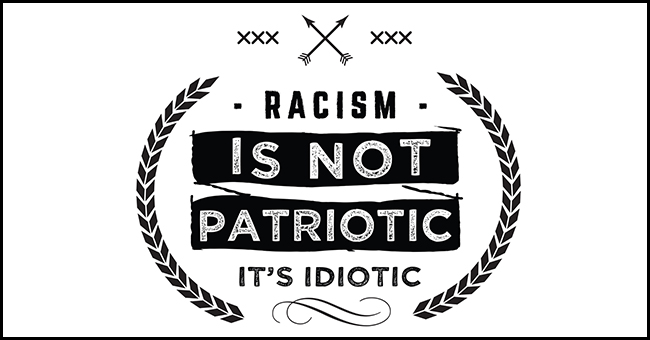
    Racism Is Not Patriotic It's Idiotic

    The recent vote of the House to condemn Trump’s tweets underscores the deep political and racial divide that exist in the United States. Many Americans find it appalling that there is even confusion and believe his tweets to be blatantly racist. Yet Senate majority leader Mitch McConnell stated that the President’s remarks were not racist, and most Republicans saw nothing wrong with his remarks. New polling even suggests that Republicans actually like Trump more, following these tweets.

    What is clear from this controversy is that we, as Americans, do not have a shared understanding of the definition of racism. We live segregated lives and are deeply divided along political lines. Relying on politicians and the media to unravel racial dynamics does not serve us well. Fully understanding racism requires deep understanding of history and the social sciences, and a lot of multiracial living, which most of us do not engage in. So, here are ten points for understanding racism offered with the hope of changing the narrative even ever so slightly:

    1. It can be overt and intentional as in white supremacist groups who advocate for and work to eliminate people of color. Think Charlottesville.
    2. It can be covert and intentional as in redlining, gerrymandering, housing segregation, confederate statues, and symbols—a criminal justice system where Black and Brown men have a greater chance of going to prison than their white counterparts committing the same crimes.
    3. It can be overt and unintentional as in racial jokes and racially offensive Halloween costumes.
    4. It can be in modern forms such as in racial slurs, hiring practices, discriminatory selling of goods, services and business practices. Think Starbucks incidents.
    5. It can be passive tolerance of others who espouse discriminatory beliefs or practice. Think Republicans who did not vote to condemn Trump’s racist remarks.
    6. It can be policies and practices designed to keep the status quo of whites in control and in dominance. Think voter suppression and how immigration laws are being tailored.
    7. It can be denying racism, because it is not your lived experience. Think Mitch McConnell stating that Trump isn’t racist. It’s like someone punches you and then they tell you it didn’t hurt you. The person next to you, who saw you get punched, agrees with the puncher that it didn’t hurt. You, on the other hand, experience the pain. After the growing list of definitive racist remarks and behaviors by this President, if you still believe he is not racist, you obviously are not the target of his racism or you have no empathy for those who are affected by racism. Examine your social privilege.
    8. It is determined not by intentions but rather by its impact. People of color experience real fear and consequences as a result of this President’s words, actions, and behaviors. It affects the quality of our daily lives. Telling women of color to “go back to the country they came from” is different than saying “if you don’t like America, leave.” Trump certainly didn’t leave under Obama’s administration and he had lots of negative things to say about America then. No one said he “hated America” or told him to go back to Germany.
    9. It differs from personal negative prejudices or biases that we might hold toward certain groups. It is not just someone’s opinion. It is systematic, structural, and holds the power to interrupt, interfere with, and possibly destroy the quality of Black and Brown people’s lives. It is not just Trump’s remarks or his behaviors or nasty attitude toward people of color. It is the power he holds in the highest office to be able to make policies, practices, and set up conditions that adversely and disproportionately affect people of color. He is working to do that.
    10. Having friends of a different race, being married to someone who is an immigrant, hiring people of color aren’t proof that you are not racist. Recall that the principal author of the Declaration of Independence, Thomas Jefferson, had five Black children with enslaved Sally Hemings. Jefferson was publicly silent on issue of slavery and emancipation, yet his five children and Sally were slaves. Trump does have friends of color, is married to an immigrant, and has Ben Carson in his cabinet. He is still a racist.


    About the Author 

    Deborah L. Plummer, PhD, is a practicing psychologist, university professor, chief diversity officer, and speaker on topics central to racial equality, inclusion, and mutual respect. She currently serves as vice chancellor and chief diversity officer at UMass Medical School and UMass Memorial Health Care, and she has written for Diversity Executive and the Boston Globe Magazine. Her books include Handbook of Diversity Management, Racing Across the Lines: Changing Race Relations Through Friendships, and Some of My Friends Are. . .: The Daunting Challenges and Untapped Benefits of Cross-Racial Friendships. Follow her on Twitter at @DebbiePlummer and visit her website.

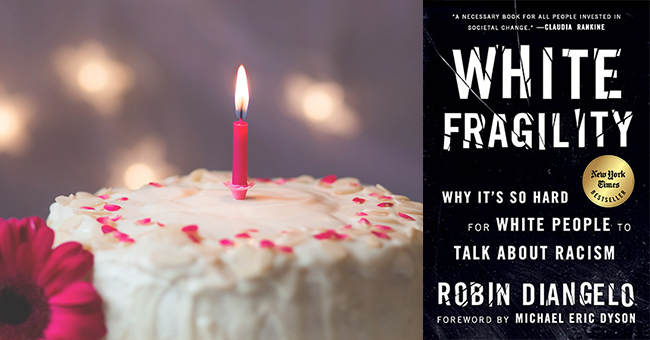
  • White Fragility anniversary

    It’s time to bring out the cake and blow out the candle! Robin DiAngelo’s White Fragility has spent one full year on the New York Times Best Seller List! This has been an incredible year for DiAngelo, her book, and Beacon. White Fragility is only a year old and has been a bestseller since it went on sale!

    The book has been spotlighted on independent bookstore bestseller lists, too! For twenty-nine weeks, it’s been on the Indie Bestsellers List (it’s currently #9), and for most of the year has popped up on nine regional lists, such as New England, the Pacific Northwest, Southern, New Atlantic—just to name a few.

    What does this amazing year mean to Robin DiAngelo? “While I knew there was interest in developing the concept, I could not have expected this level,” she said. “Having language to describe a very familiar experience (white emotional irrationality, ignorance, arrogance and resistance on issues of racism) has been incredibly important for people of color and helped counter the white denial and gaslighting. It has also been important for white people to have these patterns named and challenged, making it harder to engage in them without accountability. Making it harder to engage in white fragility interrupts a key way that racism is protected and minimizes the pain we inflict on people of color. While racism is a highly adaptive system, right now I do feel some hope about that!” Doing the work of confronting white fragility is the way forward if we want to make the just society we want a reality. Because as DiAngelo wrote in her Guardian essay, “niceness does not bring racism to the table and will not keep it on the table when so many of us who are white want it off.”

    Our director, Helene Atwan, is just as thrilled with the success. “All of us at Beacon feel very lucky, as well as very proud, to have published Robin DiAngelo’s culture-rocking book. It’s not only thrilling to have a book on the New York Times Best Seller list, almost all 52 weeks in the top 5, but to have a book which has so much to offer readers, and so many correctives for addressing our white supremacist culture. I would say we’ve all learned from the book, and we’ve heard from hundreds of readers who have valued it as well. Finally, the book has contributed to the strengthening of the press in immeasurable ways.”

    Rachael Marks, the book’s editor, reflected on what working on it and readers’ interactions with it have meant to her. “I learned a great deal about myself from editing White Fragility, and it’s been rewarding and heartening to see readers have similarly illuminating experiences. This is a challenging book that demands to be wrestled with, and we’ve seen readers do just that. I’ve particularly enjoyed seeing readers post pictures of their copies on social media. Their well-loved books—replete with notes in the margins, highlighted text, Post-it Notes on various pages—are a testament to how readers are engaging with the ideas in the book.”

    During its first year in print, the very term DiAngelo coined, “white fragility,” was officially added as an entry on Dictionary.com. “Dictionaries catalog new words that reflect the national conversation,” DiAngelo said in USA Today. Naming and defining “white fragility” helps increase the public’s understanding of systemic racism and disrupts the way it’s upheld.

    Now that we have the language to talk about it, more people want to know how to dismantle it, and that requires guided and constructive discussion. Guides developed for the book are available on our website and will help facilitate these discussions for various audiences. One audience is educators. In a school system in which the teaching population remains primarily white and the student population continues to become more racially diverse, it’s necessary for them to develop skills to engage in conversations about bias, race, and racism—especially their own. Our discussion guide for educators is designed to help them work through these conversations. For Unitarian Universalists who want to disrupt racism in their communities, we have a discussion guide that opens paths for white participants coming to terms with their own and others’ fragile, defensive, and coded responses when a conversation turns to race. Other groups can download our guide for readers with questions that will deepen reflection and understanding of the chapters and constructively inform responses to white fragility. This guide makes recommendations for group size, group composition, how to monitor the group, and more.

    Guess who else is seeking her book to face white fragility head on? Organizations! Many have reached out to us and to DiAngelo to make copies of it available as a resource to their staff. We’ve heard from Google, Amazon, The Seattle Times, Teach for America, MIT Press, Teaching Tolerance, and sixty more, including schools and other companies.

    There’s another way to check your white fragility. Remember the quiz we posted on our website? Since launching it last year, it has received over 20,000 responses. If you still haven’t taken it, you can celebrate the book’s anniversary by doing so!

    Other ace-level public figures have taken notice of the book, too. Actor and comedian John Roberts, famous for his role as Linda Belcher on the animated series Bob’s Burgers, added it on his summer reading list. Actor Matt McGorry from Orange Is the New Black and How to Get Away with Murder shared with his followers on Instagram that he was reading the book. Comedian and actor DL Hughley regrammed a post featuring the book. Moms Demand Action founder Shannon Watts added it to her Introduction to Activism reading list.

    And to add to the confetti, let’s run through some of the incredible media coverage she’s received since publication date! It all started with a Q&A from USA Today, The New Yorker’s in-depth review, and an interview on NPR’s Morning Edition. One topic from the book that received a lot of attention was the role of white women in systemic racism, and pieces from Elle and Harper’s Bazaar explored that issue in detail. DiAngelo’s op-ed with NBC.com's Think discussed racial illiteracy in white people, while her Q&A on Slate focused on why progressives find it so hard to confront their own contributions to racism in America. The book has also received extensive coverage in other outlets: Weekend Edition, Pacific Standard, Sojourners, Washington Post, Vox, the Call Your Girlfriend podcast, MPR News, and The Record on KUOW Seattle. Michel Martin interviewed DiAngelo to ask her what she recognized as her own unconscious bias on PBS’s Amanpour & Company. She spoke in featured video pieces on Refinery29's online program Strong Opinions Loosely Held, The Big Think, and NBC.com. And Teaching Tolerance had a Q&A with her to discuss why working against one’s own fragility is a necessary part of white anti-racist work. Whew!

    So, what’s coming up next? We’re expecting to see White Fragility make an appearance this fall on Chelsea Handler’s upcoming docuseries Chelsea Does, which will follow Handler’s journey of understanding white supremacy and privilege. We’re publishing DiAngelo’s next book, which is about the need for white people to break with white solidarity in order to better support efforts toward racial equality. It’s tentatively scheduled for release in late fall 2020 or spring 2021. And, of course, DiAngelo’s work is never done. She remains as busy as ever, touring with the book and giving workshops around the country and abroad.

    Happy anniversary to Robin DiAngelo and her culture-rocking book!