• A Q&A with Alexandra Minna Stern

    Suit and smartphone

    Networked in virtual communities that disseminate their ideology, the alt-right is more international, suited-up, and image conscious than its predecessors.

    How deep does the rabbit hole of the alt-right go? And how long has it been here? In 2016, back when the term was couched in scare quotes, we witnessed the alt-right’s breakthrough in the mainstream as it heralded the era of a bigoted presidential candidate. Years later, we’re wondering how this ideology insinuated itself in our public consciousness. Historian Alexandra Minna Stern ventured down the rabbit hole to mine its memes, screeds, and history and reveals them in Proud Boys and the White Ethnostate: How the Alt-Right Is Warping the American Imagination. Our blog editor Christian Coleman caught up with her to ask her about the book and about the machinations of this movement.

    Christian Coleman: What was the inspiration for writing the book?

    ​Alexandra Minna Stern: I wrote this book to bear historical witness to disturbing and reactionary political and cultural changes that were afoot in the United States in the mid-2010s. Specifically, I became interested in how and why eugenic ideas from the early 1900s, including race suicide—repackaged today as white genocide—were making a comeback and being disseminated by what came to be called the alt-right. Once I started writing the book, I became more and more interested in understanding the transnational dimensions of the rise of populist nationalism, and how this connects to the resurgence of white nationalism in the United States. 

    CC: Tell us a little about your background. You’re a scholar well-versed in the history of eugenics and white nationalism in the United States. What drew you to these fields of study?

    ​AMS: My academic training is in social and medical history, and I have written extensively on the history of eugenics, examining how it shaped twentieth-century ideas and policies in both the United States and Latin America. In recent years, I have expanded this work into a collaborative project on eugenic sterilization in several US states, looking at demographic patterns of state-mandated reproductive control. In addition, I have studied the emergence of the field of genetic counseling, demonstrating how it bifurcated from eugenics starting in the 1960s but has continued to be fraught with complex bioethical quandaries. Although these projects took me in different directions, they are driven by a deep interest in studying how genetic essentialism can inform categories and identities. I have tracked how such concepts have been used in divergent ways: to justify the most egregious forms of social engineering and population control, to guide meaningful medical decisions, and to provide individuals with seemingly irrefutable truths about their heritage and ancestry.  

    CC: What was it like for you to spend hours online mining alt-right literature to do research for the book? What was running through your mind as you took it all in and studied it?

    ​AMS: It was intense and upsetting, but a necessary task to map the discursive field of the alt-right. Sometimes I needed to take a break to detoxify and decompress. Given that I have written about eugenics and white supremacy, I was familiar with salient alt-right tropes. However, there are multitudinous rabbit holes online, and it's not hard to encounter viciously misogynistic, xenophobic, and racist memes. Once you see these images, you cannot “unsee” them. Overtime, I became adept at deciphering more obscure and euphemistic alt-right memes, which are crucial boundary objects given that they can slip with greater ease into the mainstream. 

    CC: Alt-right memes and tropes have appropriated what would be considered left-leaning or innocuous tropes of popular culture. We’ve seen what happened to Pepe the Frog. You write about ‘red-pilling,’ a concept taken from the film The Matrix. And alt-righters have seized on Wakanda from Black Panther as a possible paradigm. Why do they use appropriation to promote their ideology?

    ​For a brief moment, the alt-right successfully seized upon and commandeered tropes circulating in popular culture and discourse. They continue to try to do so. Lately, they seem taken with clown memes to convey the idea that the Western world has become a “clown world” in which the perverse and corrupted values of liberalism, feminism, and multiculturalism reign supreme and have upended normalcy. Yet such techniques of pastiche and reassemblage are not particular to the alt-right. That simply is what millions of people do on social media and can help explain why the traffic between “left” and “right” memes can be relatively fluid. In 2015 and 2016, the alt-right's meme factory was operating at full tilt and they pushed tropes into full view. Since then, waves of deplatforming, despite their inconsistency and randomness, have shrunk but certainly not closed the virtual space for effective alt-right meme-making. 

    CC: You have a chapter on white nationalists’ take on history. What is archeofuturism and how does it figure into their notion of a white ethnostate?

    ​AMS: Archeofuturism is an idea proposed by the late French ethnonationalist Guillame Faye in his book with the same title. He rhapsodized about a marriage of the traditional past with a technologized future in which peoples of white and European descent would be able to reclaim their lands, control their boundaries, and have boundless babies, using scientific tools to their advantage. The archeofuture is aspirational and saturated in nostalgia for an idealized past. ​

    CC: Media coverage familiarized us with the alt-right, but we aren’t as familiar with the alt-light. How do you define it and who are some if its key spokespersons?

    ​AMS: As I have worked on this project, the line between the alt-right and alt-light has become blurrier. I increasingly view them as having more in common than not. The conventional distinction is that the alt-right is synonymous with white nationalism, while the alt-light refrains from embracing an explicitly white nationalist agenda. What they share, however, is a palpable disdain for liberalism and diversity, as well as unbridled misogyny and transphobia. One of the best examples of a prominent alt-light social media celebrity is the self-proclaimed Canadian philosopher Stefan Molyneux, who on Twitter and YouTube espouses exceedingly rigid ideas about gender roles and eugenically-minded theories about race and intelligence. I have noticed that over time his posts and vlogs increasingly have become focused on the dangers of multiculturalism and endorse, often in coded language, the viewpoint that whites are facing demographic extinction. The back-and-forth dynamic between the supposed alt-right and alt-light will continue to evolve; even if the alt-right likes to scorn the alt-light, the latter has proven to be more effective at reaching and red-pilling “normies.”

    CC: And lastly, why are misogyny and transphobia prevalent features in their rhetoric and what does that say about their worldview?

    ​AMS: One of the main takeaways from Proud Boys and the White Ethnostate is that misogyny and transphobia (and in more fraught ways homophobia) are not secondary aspects of the alt-right but sit at its core. If the alt-right is anything, it is deeply patriarchal and beholden to traditional gender and sexual norms. In this sense, the alt-right expresses a neo-fascist fixation with order and hierarchy, systems for which the binaries of gender and sexuality almost always are foundational beliefs.


    About Alexandra Minna Stern 

    Alexandra Minna Stern is the author of the award-winning Eugenic Nation: Faults and Frontiers of Better Breeding in Modern America (2d. ed., 2015) and Telling Genes: The Story of Genetic Counseling in America (2012). In addition to dozens of scholarly essays, she regularly contributes to the popular media through opinion pieces, blog posts, and interviews. She leads the Sterilization and Social Justice Lab at the University of Michigan whose work on eugenic sterilization in California has been featured in The Atlantic, the New York Times, and NPR, and many other media venues. Stern is a Professor of American Culture, History, and Women’s Studies at the University of Michigan, where she leads the acclaimed Sterilization and Social Justice Lab. 

  • By Christian Coleman

    In the crowd

    Do you want to play a game? No, not the one in the Saw movie franchise. Let’s play the word association game. Come now. It’ll be fun!

    Peanut : Butter.

    Instagram : Celebrity.

    Identity politics : Divisive.

    Wait. Let’s back up. Divisive? That word has been coming up lately when presidential candidates make identity politics a talking point in public discourse. At an LGBT gala in Las Vegas, Indiana mayor Pete Buttigieg, the first openly gay candidate, said identity politics have created a “crisis of belonging,” leading us to get “divided and carved up.” Vermont senator Bernie Sanders has criticized identity politics for focusing only on the endgame of diversity—another word with contentious associations and dubious meanings depending on who’s defining it—and neglecting the needs of working people. And attorney and philanthropist Andrew Yang tweeted that “it’s kind of a stupid way to try to win elections.”

    First off, what do they mean by identity politics? Some clarification is in order. Let’s turn to Robin DiAngelo’s White Fragility to shed some light on the subject: “The term identity politics refers to the focus on the barriers specific groups face in their struggle for equality.” Why would Buttigieg, Sanders, Yang, and others be averse to speaking about those barriers?

    In Buttigieg’s case, it’s because of precedent. He has seen how it has been used before to unite people for an opposing cause. At the same LGBT gala, he argued that Donald Trump and his party won the White House by exploiting “the most divisive form of such politics, which is white identity politics.” He is right, here, but Trump and his ilk are not the first or the last to do so. In fact, sociologist Crystal Fleming points out in How to Be Less Stupid About Race how white identity politics has ensured that white Americans benefitted from the spoils of settler colonialism:

    “[T]he nation’s first affirmative action programs and government handouts were conceived by white Americans for white Americans. From using racially justified mass murder, land theft, and labor exploitation to enacting racist citizenship laws, people socially defined as “white” have built generations of wealth and political power by playing the race card and founding an entire nation on white identity politics. To take just one example, the 1862 Homestead Act gleefully gave away millions of acres of stolen land almost exclusively to whites. And, quiet as it’s kept, white people continue to be the number-one beneficiaries of affirmative action today.”

    This is how white supremacy remains firmly rooted in a legal, political, and cultural system rigged to disempower anyone outside of the social definition of white. The point Buttigieg misses with his statement is that our white supremacist system makes no room for others to have the same rights and livelihood. In order to get a seat at the table, disenfranchised communities have had to make a stance, as women, as African Americans, as LGBTQ people, as disabled people, to demand equality and to be treated as fellow human beings. That’s how any progress has been made on the civil rights front. Case in point, DiAngelo brings up the example of women’s suffrage in White Fragility:

    “Take women’s suffrage. If being a woman denies you the right to vote, you ipso facto cannot grant it to yourself. And you certainly cannot vote for your right to vote. If men control all the mechanisms that exclude women from voting as well as the mechanisms that can reverse that exclusion, women must call on men for justice. You could not have had a conversation about women’s right to vote and men’s need to grant it without naming women and men. Not naming the groups that face barriers only serves those who already have access; the assumption is that the access enjoyed by the controlling group is universal.”

    Now, after decades of civil rights history that have afforded us civil and voting rights written into law, it’s easy to think we should move beyond identity politics. We should focus on “the things that bring us together and not the things that are going to make us seem like we’re living different lives” as Yang insists, right? What greater unifying force to focus on than our “postracial” boon—the election of a Black president. By electing Barack Obama twice, we were supposed to have arrived. However, in her book A More Beautiful and Terrible History, historian Jeanne Theoharis states that this sort of thinking not only obscures the truth of the matter but also clouds our understanding of civil rights history.

    “No better proof of the country’s progress was the election and presidency of Barack Obama . . . . Many trumpeted Obama’s victory as the culmination of the civil rights movement and a testament to a “postracial America”—an America that had largely moved past its history of racism. Even those who did not share such a rosy view of American progress were awed by the immensity of seeing the election of a Black man to the presidency of the United States. Given the momentous nature of his victory, referencing the history of the [civil rights] movement became more central to the presidency of Barack Obama than that of any of his predecessors—and the president himself, his supporters, and many commentators regularly appealed to its legacy . . . The election of President Obama made many of his supporters feel like we had overcome. It had delivered us. And therein lay the danger—rather than a rung on a steep ladder, the election became the zenith, the top of that climb, where all who wished could take credit for the triumph.”

    Not only take credit for the triumph, but also regard the civil rights movement as something that has happened in the past and is over and done with. This history is still in the making, a history that proves how white supremacy affects various communities differently. It would be folly to ignore the reality of how differently many of us live, especially under white supremacy. 

    About that deliverance Theoharis wrote of: we received a broad slap in the face after finding out that the election of Obama didn’t deliver us at all. And that slap knocked us on our backside during the 2016 presidential election.

    The call to eschew identity politics is an ahistorical approach to envision means of achieving equality for everyone. It assumes we’ve moved past the barriers and conflicts of race, gender, sexual orientation, ability, class, and other identity markers, which we clearly have not. Seen another way, it’s tantamount to sawing off your foot just like the victim of Jigsaw’s wicked game in the first Saw film. Sanders’ mission to mobilize us in order “to change society and create an economy and a government that work for all people” requires more than just narrowing in on class; it requires an intersectional lens that critiques white supremacy’s impacts on all the communities it oppresses. And that means, yes, giving voice to the identities within those communities. Diversity be damned. Because as DiAngelo put it, “Naming who has access and who doesn’t guides our efforts in challenging injustice.” Take note, presidential candidates.

    That said, ready for another round of the word association game?


    About the Author

    Christian Coleman is the associate digital marketing manager at Beacon Press and editor of Beacon Broadside. Before joining Beacon, he worked in writing, copy editing, and marketing positions at Sustainable Silicon Valley and Trikone. He graduated from Boston College and the Clarion Science Fiction & Fantasy Writers’ Workshop. Follow him on Twitter at @coleman_II.

  • By Jacy Reese

    Veggie burger

    Photo credit: Melissa Rae Dale

    What’s in a name? That which we call a plant-based meat by any other name would taste as sweet. But there’s a lot to a name when the labeling seen in your local grocery story could be punishable with jail time. In Mississippi, a new law that bans plant-based meat providers from using such labels as “veggie burger” or “vegan hot dog” on their products has gone into effect. The argument is that said labels confuse consumers, which actually isn’t the case; it has more to do with getting rid of competition. Consumers know what they’re buying. Just take it from Jacy Reese. In this passage from his book The End of Animal Farming: How Scientists, Entrepreneurs, and Activists Are Building an Animal-Free Food System, he argues that we should call a veggie burger a veggie burger. More importantly, he also points out that the terminology we use should signal social information about the products we eat.

    ***

    One roadblock that is probably slowing down mainstream acceptance of plant-based products, even artisan ones, is labeling. When the California Department of Public Health inspected Schinner’s production facility, the agent saw that the product was labeled only according to flavor, such as Aged English Fresh Farmhouse. It couldn’t be categorized as cheese, so the agent asked her for the actual name of the product. Schinner, on the spot, decided to call it a cultured nut product.

    While this was a snap decision, it has stuck, though Schinner is now moving toward mainstream dairy titles for her products when possible. For example, when her company launched its first butter in 2016, the name was unabashedly European Style Cultured Vegan Butter. This name does include the word “vegan,” but that more reflects Schinner’s desire to “hold the vegan banner high” than reservation about using the term “butter” alone.

    Plant-based milk producers are already facing legal challenges. The standard of identity for milk defines it as “the lacteal secretion, practically free from colostrum, obtained by the complete milking of one or more healthy cows, which may be clarified and may be adjusted by separating part of the fat therefrom; concentrated milk, reconstituted milk, and dry whole milk. Water, in a sufficient quantity to reconstitute concentrated and dry forms, may be added.”

    These laws are necessary to help consumers easily identify different food products. If there were no criteria defining what makes ketchup, for example, we would have to constantly watch out for companies trying to peddle ketchup products made with improper ingredients or production methods.

    ~~~

    In 2011, two Spanish businessmen were sentenced to prison for selling “olive oil” that was actually 70–80 percent sunflower oil. In 2008, Chinese fraudsters added water to cow’s milk used to produce infant formula while using the chemical melamine to increase the apparent protein content of the formula when tested. Nearly three hundred thousand babies fell ill, approximately fifty-three thousand were hospitalized, and six died. Eleven countries stopped dairy imports from China after the incident.

    Such profit-driven food crimes are good reasons to enforce strict labeling standards. But the animal agriculture industry has also tried to twist the intent of these laws to drive up their own profits. Take “soy milk,” for example. This is an established product name that identifies a white, milky beverage made from soy. I’ve never heard anyone wonder whether “soy milk” refers to soy-flavored cow’s milk. Nonetheless, the dairy industry is waging a campaign to prevent plant-based milk producers from using “milk” to describe products such as soy and almond milk. They want the standard of identity enforced, seemingly just because it would harm their upstart competitor. It also seems the cow’s milk industry is willing to throw other animal products under the bus: because the definition of milk specifies that it must come from a cow, the implication is that the beverage that comes from goat udders needs to be called something like goat juice.

    These labeling efforts are supported by US congressional representatives from high dairy production states. As of this writing, they have received little support from other legislators, but this serves as a reminder of how industry affects policy and should make us hopeful about the support we can obtain for animal-free meat, dairy, and eggs once they become significant parts of at least some state economies.

    The fact is that the public’s perception of “milk” is no longer aligned with its outdated legal definition, and food standards should be updated to reflect that. When the media reported on the 2016 and 2017 efforts by US congresspersons from agricultural states to enforce the strict definition of the term, they spent less time in their articles discussing the proposed rule change than they did on the growing popularity of plant-based milks. An article by the Los Angeles Times editorial board used the headline “Got ‘Milk’? Dairy Farmers Rage Against Imitators but Consumers Know What They Want,” and Yahoo! Finance reported, “Dairy Farmers Are Losing the Battle over ‘Milk.’”

    In 2015, there was 9 percent growth in plant-based milk compared to a 7 percent decrease in dairy milk sales, making the plant-based milk market 10 percent the size of conventional milk. The dairy industry feels threatened, and it’s lashing out by any means possible.

    ~~~

    In the meat market, the leading plant-based products have nutritional and culinary profiles quite similar to animal-based products. Ethan Brown, CEO of Beyond Meat, argues that it makes sense to call his products “meat.” In an interview with TV personality Dr. Oz, he explained: “We like to use the language of plant-based meat, and what we’re doing is, we’re taking all of the core constituent parts of meat. We’re taking those directly from plants: basically protein, fat, and water. We’re assembling those in the architecture of meat or muscle, and we’re providing it to consumers in that form. So they’re getting a piece of meat in terms of its constituent parts. It just doesn’t come from an animal.”

    The only differences, Brown argues, will be the nutritional benefits of the Beyond Burger. For example, it lacks cholesterol, which despite being a common feature of animal meat, has no noticeable impact on taste or texture.

    There’s also historical and contemporary precedent for using terms like “meat” outside of animal products, such as coconut meat, nut meat, and even the “meat of the matter” to refer to the substance of an issue. We also say “peanut butter” and “cocoa butter,” terms that certainly aren’t confusing consumers. To refer to plant-based meats as “fake” or “alternative” is not more accurate; it implies that animal-based meats are the gold standard in a way that doesn’t properly reflect the ethical, health, and taste considerations, and doesn’t reflect the commonsense use of the relevant terms. In fact, a few years or decades down the road, we can hope to see labels and terminology that help consumers understand the harms of animal-based foods, similar to the cautionary text on cigarette cartons. We’ve already seen some restrictions on the misleading positive labels like “humanely raised,” though this is usually done without an explicit label, such as with picturesque farm images that in no way actually reflect the appearance of the vast majority of modern farms.

    Overall, I think there’s a good case for calling the Beyond Burger “meat” without qualification. However, it would be concerning to me at this time if companies called soy milk, almond milk, and especially a product with a significantly different nutritional profile like coconut milk—tasty as it is—simply “milk” without identifying the plant it’s derived from. But remember, that’s not important for the current debate over the term, which concerns products such as those that are labeled “almond milk” and have pictures of almonds on the packaging. In those cases, it seems clear that consumers know what they’re buying and the dairy industry is simply trying to hassle a competing industry in an effort to bolster its tumbling sales. If the dairy industry has a genuine concern that consumers are missing out on protein, I’d note that the average American consumes far more than the Recommended Daily Allowance of protein, around 145 percent the RDA for women and 176 percent for men.

    We should also consider that our terminology is a way for producers to convey important social information about their product. By using “meat” to refer to plant-based foods with the same taste, texture, mouthfeel, and nutritional profile as animal flesh, we are telling people that they can get all those features without the animal cruelty, environmental devastation, and negative health impacts.

    At the time of this writing, Beyond Meat labels its burgers as plant-based without using the term “meat.” Ethan Brown told me that the company’s current focus is on perfecting the product, and once it does that and public opinion data shows consumers are on board with this use of the term, they might switch. This seems like the right call because consumers are still getting familiar with plant-based meats, and regulatory issues at this stage would be a big hassle. As the industry establishes itself and public attitudes shift, updated labeling will be an important stepping-stone on the path toward an animal-free food system.


    About the Author 

    Jacy Reese is the research director and cofounder of Sentience Institute, a nonprofit think tank researching the most effective strategies for expanding humanity’s moral circle. He previously served as board chair and a researcher at Animal Charity Evaluators. Reese’s writing has appeared in Vox, Salon, and the Huffington Post, and he has presented his research to academic and nonprofit audiences in fifteen countries. Follow him on Twitter at @jacyreese and visit his website.

  • Summer reading

    The summer solstice has graced us with its yearly cameo. Time to bask in the warmth and light (and that charming humidity when it gets here) of longer nights! Which means more time to enjoy reading outside! Our staff has some recommendations for the season. Now, we know what you’re thinking: You already have a to-be-read pile that’s about ready to topple over and bury you up to your ears. But another recommendation won’t hurt. Trust us. After you’ve dug yourself out of your book avalanche, you’ll thank us later.

    ***

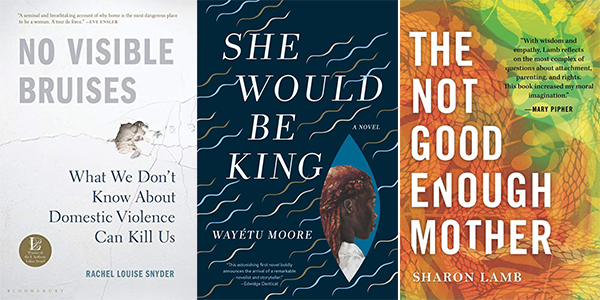
    Snyder_Moore_Lamb

    No Visible Bruises: What We Don’t Know about Domestic Violence Can Kill Us by Rachael Louise Snyder, published by Bloomsbury. Maybe not the perfect beach read, but a riveting, narrative driven book that is oh so important. Not to be missed, even if you do have to read it on the beach.

    She Would Be King by Wayétu Moore, from Graywolf. A breathtaking debut about the founding of Liberia, blending historical fiction with a bit of magical realism. Read this anywhere!

    The Not Good Enough Mother by Sharon Lamb, from us! A completely unique look at the complex and fraught job of evaluating families, skillfully blending narrative, factual background information, memoir, and even humor. This one you’ll want to read in one gulp, wherever you may be.
    —Helene Atwan, director

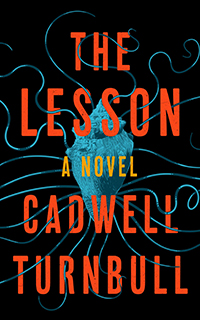
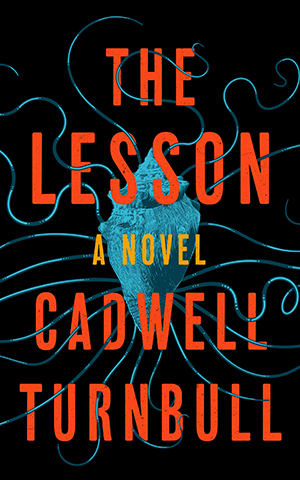
    The Lesson
    If you’re an Octavia Butler fan and you’re exasperated with Hollywood blockbusters for showing only the US mainland getting all the first-contact action, crack open Cadwell Turnbull’s debut novel The Lesson. This is the first book I’ve read where an alien invasion takes place in the Caribbean—St. Thomas, actually. Turnbull leans into the influences from Butler’s Xenogenesis trilogy and Ursula K. Le Guin’s anthropological approach while spinning a story completely his own that delves into Caribbean history, occupation, cycles of violence, and the complicated mess of different cultures interacting and struggling to find common ground. Extra points if you find all the Butler references!
    —Christian Coleman, associate digital marketing manager

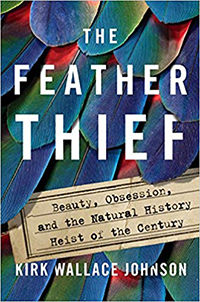
    The Feather Thief

    The Feather Thief by Kirk Wallace Johnson starts with a question: Why would anyone want to steal old, dead birds from an obscure museum? The answer is fascinating, complex, and sad.
    —Beth Collins, production manager

    Carty-Williams_Brathwaite

    I have two!

    #1: Queenie by Candice Carty-Williams. I read this book expecting to laugh a lot (which I did), but I also found myself so emotionally invested in the protagonist’s journey. For all of my fellow twenty-somethings who are attempting to figure out their lives, only to realize that things are kind of a mess, and for those with the added experience of being a Black woman, this book is an affirming must read.

    #2: My Sister the Serial Killer by Oyikan Braithwaite. Funnily enough, my sister gifted me with this gem, but lucky for me, she is not a serial killer . . . I think. Braithwaite’s novel takes place in Lagos where two sisters with a complicated relationship and bond is tested, as older Korede is tasked with the burden of cleaning up her celebrated younger sister Ayoola’s habit of murdering her boyfriends. This dark and surprisingly humorous novel is a combination of crafted writing, witty characters, and a thrilling storyline that is difficult to put down. I would recommend taking this with you if you’ll be stuck in a car, train, or a plane, as it is a quick and engrossing read.
    —Maya Fernandez, editorial assistant

    Whisper Network

    Chandler Baker’s Whisper Network is a super timely “workplace thriller”—I don’t know another way to describe it—set firmly in the #MeToo era. A version of the “Shitty Media Men” list begins to circulate around an office, changing the company and a group of friends forever. I couldn’t stop reading this, and it brings up some really tough questions about gender politics at work, but it’s still a great book to read outdoors with a glass of wine (and then text your work friends about after!).
    —Emily Powers, associate marketing manager 

    Summer reading

  • By Philip Warburg

    Crowd

    Photo credit: James Cridland

    For all their ideological differences, progressives and conservatives share an aversion to dealing with global population growth. 

    Progressives commonly argue that privileged white people from the Global North shouldn’t meddle in the reproductive politics of poorer nations. To many in this camp, efforts to slow population growth conjure up past coercive efforts to limit fertility in places like India, with its forced sterilization programs dating back to the 1970s, and China, with its recently modified one-child policy.

    Conservatives have their own concerns, tied largely to religious doctrines that treat certain kinds of contraception—abortion in particular—as apostasy. This has translated into restrictions imposed by successive US Republican administrations, barring aid to organizations working abroad that call for legalizing abortion or provide abortion information, referrals, or services.

    Environmental groups likewise tend to avoid grappling directly with population growth. They assert that urbanization and the rise of a global middle class are creating social and economic conditions that favor fewer children per family. Yet especially in societies with deeply embedded religious beliefs and cultural norms favoring larger families, change comes more slowly than simple demographic shifts might suggest.

    Another common argument is that overconsumption by wealthier nations, not overpopulation in poorer ones, is the ultimate environmental culprit. Calling out resource gluttony is surely valid, but it need not cause us to ignore the effect of billions more people inhabiting our planet by the end of this century.  According to the United Nations, the world’s population will likely reach 10.9 billion by 2100, up from 7.7 billion today. How can these numbers not place an enormous added strain on the earth’s already overtaxed resources?

    Finding constructive ways to engage population growth isn’t easy, but one group that has forged ahead is the Population Media Center (PMC). Headquartered in South Burlington, Vermont, its staff works closely with in-country counterparts, mainly in the Global South. Together they produce radio serial dramas that help reshape popular norms about family planning, sexual and maternal health, and reproductive choice. Since its founding twenty-one years ago, PMC claims that its broadcasts have reached half a billion listeners in more than twenty languages.

    PMC scriptwriters refrain from telling people what they should and shouldn’t do. Instead, they use storytelling to leverage behavioral change, based on a methodology first developed for Mexican telenovelas in the 1970s. 

    Here’s one of the threads in a multi-episode radio drama that recently aired in Rwanda:

    Bacyenga, a young villager, presses his girlfriend Rosine to marry him. She agrees but tells him that she does not want to get pregnant right away and only wants two children. Bacyenga counters that, to honor his father and prove himself a real man, he must have at least seven kids.

    Just before their wedding, Rosine becomes pregnant. The strains between them deepen when he refuses to take her to the local health clinic for prenatal care. 

    Following the birth of their child, Bacyenga is full of remorse for having kept Rosine from getting proper medical attention. They meet with a family planning counselor and he agrees to have just two children.

    PMC launched its first Rwandan radio serial in 2006, with a show called Umurage Urukwiye (Rwanda’s Brighter Future). During the show’s revival several years later, twenty-six percent of the Rwandans polled said they listened regularly to its broadcasts. When the second revival aired last year, one in five listeners said they were motivated by the show to seek family planning assistance, reproductive health services, child protection, nutrition guidance, or help in addressing gender-based violence.

    There’s a reason why these radio dramas reach so many Rwandans.  While 64 percent of households have at least one radio, televisions are rare and smartphone access is still limited.

    Umurage Urukwiye isn’t just influencing its radio audience. Jean Bosco Kwizera, PMC’s resident representative in Rwanda, acknowledges the program’s impact on his own family. “As you write these scripts, you are also training yourself . . . . My wife and I discuss family planning, and how we can do birth spacing, and how many kids we’re going to have.” So far, they have a two-year-old son, and they want two more children—about one child less than the average Rwandan family. Jean Bosco, now age thirty-three, has seven brothers and sisters—a typical family size when he was growing up.

    Alfred Twahirwa has been writing Rwandan radio scripts for PMC since 2007. He describes the difficulties he has had getting his sister to tune in to the broadcasts. She already has six children. “I know she used to follow my program but when I asked her, she said, ‘No, my radio is not working.’ So I said, ‘I will give you a radio!’  She is now following our programs and has decided to stop having children.”

    Rwanda today, with 12.6 million people, is already one of the world’s most crowded nations. By 2050, its numbers are expected to reach 23 million, and by 2100, this small country’s population is likely to top 33 million. With such rapid demographic growth, Rwanda will have a tough time surmounting the poverty that now afflicts 39 percent of its population. 

    If the UN is right, Africa’s population will more than triple by 2100, approaching 4.3 billion by 2100. For many African nations, the resource strains of population growth will be compounded as climate change takes its toll, flooding heavily settled coastal areas, turning marginal farmlands to desert, and exhausting already strained freshwater resources. 

    Slowing population growth in traditional and transitional societies is no small challenge. Breaking the radio silence on reproductive choice is one important step in this transformation.


    About the Author 

    Philip Warburg, an environmental lawyer and author, is former president of New England’s Conservation Law Foundation. His two books, Harvest the Wind and Harness the Sun, were published by Beacon Press. Follow him on Twitter at @pwarburg.

  • Stonewall Inn

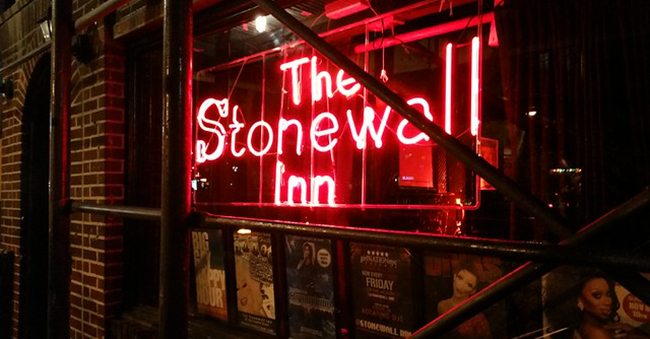
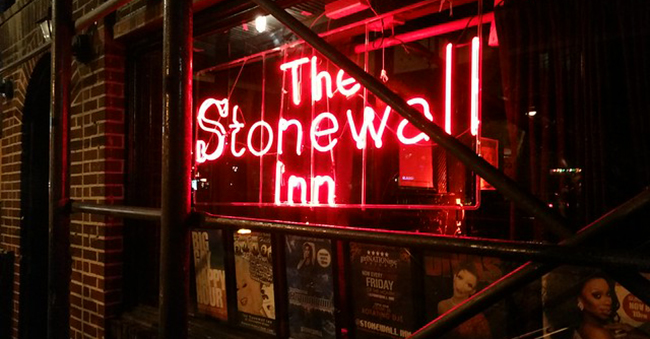
    Stonewall Inn. Photo credit: Flickr user NicestGuyEver

    Today marks the fiftieth anniversary of the Stonewall riots. We reached out to some of our authors to reflect on the impact of this landmark and turning point in the centuries of queer history in America and in the ongoing fight for queer equality. We share their statements with you below.

    ***

    Carlos Ball 2018_Arturo Rolla“Given that I was four years old at the time of Stonewall, the riots and their aftermath have had a profound influence on both my personal life as a gay man and my professional life as a scholar of LGBTQ rights. I have been fortunate to benefit from the changes to American politics, law, and culture that Stonewall helped to foment. I only hope, for my transgender daughter and others of her generation, that the next five decades are as transformative and exhilarating as the last five have been on matters related to gender and sexuality.”

    —Carlos A. Ball, The Queering of Corporate America: How Big Business Went from LGBTQ Adversary to Ally 


    Michael_Bronski-credit-Marilyn Humphries“In the fifty years since the Stonewall riots, we have seen enormous progress in the acceptance of LGBTQ people in mainstream society. We have not witnessed the most radical impulses of the Gay Liberation Front—which arose immediately after Stonewall—to challenge and change a wide range of injustices in our society. Despite the enormous amount of HIV-related deaths of gay men, there has never been a sustained effort in the LGBTQ community to systemically reform and humanize our health care system. Despite the clear, anti-LGBTQ biases of the criminal legal system—including in past decades men going to jail for consensual sexual activity—carceral reform has never been prioritized by national LGBTQ organizations. In the long run of history, fifty years is a small fraction of time. We can begin deep, lasting change now.”

    —Michael Bronski, A Queer History of the United States 


    DRAFT mindy author photo credit Tracey Primavera“Stonewall was a riot. Police violence and police indifference to violent acts committed by homophobic and transphobic citizens won’t be solved with palliatives like ‘it gets better’ or with ‘sensitivity training’ for the police. What will work, what is working, can be seen in the next generation of queers who, in solidarity with their forebears, have disavowed respectability politics and gender conformity. They’re queers who don’t care about the liberal political agenda of national LGBTQQIA organizations, who critique proposed federal laws prohibiting discrimination against LGBT people on the grounds that only ‘respectable’ citizens will benefit from them. That’s why I won’t be ‘gay’ on June 25. I’ll be holding up a red umbrella for the rights of sex workers and a protest sign demanding the end to police violence.”

    —Melinda Chateauvert, Sex Workers Unite: A History of the Movement from Stonewall to SlutWalk 


    image from www.beaconbroadside.com“Coming of age in New York in the eighties, the Stonewall Veterans were our heroes, mentors, protectors. First among them, to me, was Storme DeLarverie, the biracial drag king who always claimed to have thrown the first punch. When I talk about the Queer Virtues of courage and risk, Storme leaps to mind: her tall, confident frame standing at the door of Fat Cat or Cubby Hole, nodding silent greetings to her girls as we’d walk in, her presence itself the signal that we were safe—safe to gather, safe to be ourselves; her presence itself embodying the gift, the legacy, of Stonewall.” 

    —Rev. Elizabeth M. Edman, Queer Virtue: What LGBTQ People Know About Life and Love and How It Can Revitalize Christianity 


    Gilder_credit to Jim Garner_BOOK JACKET ONLY“As individuals, we exercise agency every day, whether we realize it or not: we can wait for change or agitate for change; wish or engage. Challenging the status quo only happens when individuals act, modeling courage and inspiring others to join them. The Stonewall riots provide an apt lesson in generating change. Having spent fifteen years in the darkness of my own personal closet before I mustered enough courage to step out into the light, I am one of the countless many whose life course has been profoundly altered by those who refused to wait and wish. #DeeplyGrateful.”

    —Ginny Gilder, Course Correction: A Story of Rowing and Resilience in the Wake of Title IX 


    Laura A. Jacobs“We are living through a moment of physical and political assault, and our communities are under siege. Those of us with privilege in any of its forms have an obligation to resist by all means available. 

    We have overcome before and we will overcome again, but I urge everyone to stay visible, to make clear that we are here, that we are queer and trans and genderqueer, and that those who would see us returned to the shadows and closets had better get used to it.”

    —Laura A. Jacobs, LCSW-R, “You’re in the Wrong Bathroom!”: And 20 Other Myths and Misconceptions About Transgender and Gender Nonconforming People 


    Kevin Jennings“Andy Warhol once famously said, ‘They always say time changes things, but you actually have to change them yourself.’ The changes that have swept America in the half-century since Stonewall did not occur because time passed but because people fought (and in some cases died) for change to occur. As we celebrate this June, let us not forget what it took for us to get to where we are now, nor take it for granted, as these gains are fragile and can easily be swept away.”

    —Kevin Jennings, One Teacher in Ten in the New Millennium: LGBT Educators Speak Out About What’s Gotten Better . . . and What Hasn’t 


    Martin Moran“When Stonewall unfolded, I was a nervous nine-year-old Catholic school kid living in Denver, Colorado, utterly unaware of the fierce queer souls paving the way. It took many years, but I learned to uncover and to love my queer self. Now I feel the full measure of gratitude I hold for my beautiful brave ancestors.”

    —Martin Moran, All the Rage: A Quest to Understand Anger, Loss, and Forgiveness 


    Ritchie Andea-credit_W._C. Moss-FINAL“Fifty years later, the ghosts of Stonewall we describe in Queer (In)Justice continue to haunt us. Patterns of homophobic and transphobic police profiling, harassment, and abuse, increasingly focused on those who led the Stonewall uprising—trans women of color, queer and gender nonconforming people of color, homeless queer youth—persist in spite of apologies, rainbow patrol cars, and cop contingents in Pride. Today is a day to honor the power of our resistance and to recommit to building a world where the queer and trans people of color who sparked movements for LGBTQ liberation at Stonewall, the Compton Cafeteria, Coopers’ Donuts, and beyond can not only survive, but thrive, safe from police, prison and community violence.”

    —Andrea Ritchie, Queer (In)Justice: The Criminalization of LGBT People in the United States


    WHITLOCK author photo  credit to Phoebe Hunter“On the fiftieth anniversary of the Stonewall Uprising, I am simultaneously paying my respects to the queers, drag queens, transgender women, who fought back against police violence and rolling my eyes at the NYPD ‘apology’ for raiding Stonewall Inn. An apology that counts would have come decades sooner and been accompanied by structural changes in the raced/classed/gendered policing of queers and all marginalized communities. But no. I don’t fall for performance and feel-good symbolism over structural transformation and hope you won’t, either. Oh, and by the way: we should also honor August, 1966, when trans people and drag queens and gay hustlers fought back against police at Compton’s Cafeteria in San Francisco’s Tenderloin district; like Stonewall, this was not gay, white respectability protesting, but rather furious, fed-up people, especially trans women, drag queens, and queers of color who’d been fucked with one too many times.”

    —Kay Whitlock, Queer (In)Justice: The Criminalization of LGBT People in the United States 

    Stonewall Inn

  • A Q&A with Sharon Lamb

    Sharon Lamb

    A mother’s parenting is always under scrutiny. This is especially true in high-stakes cases concerning the termination of parental rights. Psychologist and expert witness Dr. Sharon Lamb evaluates mothers struggling with mental illness and poverty in these cases and in the conclusions of her forensic evaluations must ask: Do they understand their children’s needs? Have they turned their lives around under child welfare’s watchful eye? Are they good enough? There are never easy answers. Lamb turns the last question on herself when her son’s struggle with opioid addiction comes to light and she starts to doubt her right to make judgments about other mothers. She reflects on these points in her latest book The Not Good Enough Mother. In this Q&A, she tells us about the inspiration for the book, how she got started as an expert witness, what she’s learned about addiction, and more.

    Q: What inspired you to write this book?

    A: I don’t know whether it was inspiration or necessity. I wrote this book because I had to. When I would come home from a parent interview or an observation during a visit with a mother who maybe could lose her child, I had to get my thoughts down on paper. And I couldn’t write up my report in that dry, impersonal, professional style. I needed to express the enormity of what I was witness to that day. Then, when my own parenting came into question, via my son’s addiction, I started to compare myself to the mothers I saw. Was I good enough? What is good enough? Writing helps me to structure wildly incompatible thoughts and feelings. It was a kind of therapy.

    Q: How did you get started evaluating the fitness of parents whose children had been removed from their custody?

    A: I began being called as an expert witness in the early nineties because of some research I was doing on sexual abuse. When I moved to Vermont, lawyers began to seek me out to perform what they called “attachment” evaluations, to assess the amount of attachment a child still had to a birth mother (or father) after being in the foster care system for many years. At that time, parents’ attorneys were arguing that because of attachment, a child would be harmed if freed for adoption. I was seeing children in therapy and knew the field of developmental psychology from my graduate work with Jerome Kagan, one of the early critics of attachment theory, and from teaching Human Development. I knew I would be able to use what was good and solid about attachment research and assessment and throw out the rest. I’d also had some significant assessment training. And finally, as a feminist, I am wary of all the mother-blaming that goes on and am able to have empathy for the plight of mothers dealing with trauma and poverty.

    Q: And were you successful?

    A: Although there are tens of thousands of psychology articles on attachment theory and research, I think attachment between a mother and child is very hard to measure, but I think I am open-minded, knowledgeable, and curious, and that helps. The chapters in the book about assessment show how suspicious I am about traditional methods. Regarding mother-blaming? God, I try, but as the book shows, my self-blame and underlying beliefs that I should have been better than “good enough” are something I need to always keep an eye on.

    Q: Do you think you are ever biased in your approach?

    A: I don’t. Not really. We all have hidden biases, I guess, but I’m beholden to ethical guidelines of my profession that state that no matter who hires me for an evaluation, I need to be true to what I’m observing and assessing. I write about how I have to watch myself around the charming fathers, who look good in comparison to the bedraggled and often traumatized mothers. And I do have a belief, though I wouldn’t call this a bias, that older children who are separated from their parents would do well to continue to have some contact with them if they are being raised by someone else.

    Q: Your book follows the form of a braided memoir. Can you explain a bit what that means?

    A: The core of the book is the individual chapters that describe a mother, sometimes a father, sometimes a child, at some part of the evaluation process. I might describe what I was seeing in an interview or at an observation I was doing at a supervised visit. Then “braided” throughout is the discovery of my son’s addiction and how that unfolded—first, my blindness to it, then my frantic search for the right treatment navigating the “big business” of addictions treatment, then the experience of attending one of these “family weekends” at a rehab, and coming to understand the biology of addiction and relapse. But there’s another plait in this braid and that’s a description of Vermont, its rural poverty, and my own class consciousness having grown up in a poorer family with uneducated parents. I try to take readers down the long empty Vermont roads that I drive down to do home visits, inside trailer parks, small homes, abandoned homes, and reflect on my prejudices borne of my own strivings to overcome my beginnings.

    Q: Evaluating other mothers, do you evaluate your own?

    A: Attachment is a theme in the book, and I do, in the end, have to look at my own attachment to my own mother. There are no big revelations, but an authentic self-inquiry throughout, grounded, unfortunately, in the burden of motherguilt that most mothers carry.

    Q: What did you learn about addiction and how did that change you?

    A: I finished this book a couple of years ago, writing most of it in 2016. We now know how addiction has ravaged many states and over time, I learned more about how drugs became an answer to underlying mental health issues like anxiety, attachment issues, and trauma. But I think the most important thing I learned was that relapse is part of the process of recovery. People relapse an average of seven to nine times, and this is the norm. The longer the time between relapses and the shorter the relapse, the better. Cravings, as I understand them, are so much more powerful than we think, and our blaming individuals for lack of willpower is damaging and a way to let the state and insurance companies off the hook for treatment.

    Q: Are there any stories in the book that are particularly important to you?

    A: I like the story I tell of the observation I did in a church basement of a child I call Mirabel visiting her mother. This story shows the ambivalence in a child who both loves her mother and who is angry at her, who is happy in her current foster home, and wants to be kept safe but who also wants to run away with her mother and hide. I also like my description of Family Weekend at a Texas rehab because I got to throw in some Texan witticisms I heard there, and to use a bit of humor about this dark subject.

    Q: Is there a message you’d like readers to take from the book?

    A: Oh, I think there are many messages, but I like best the takeaway message about “othermothers.” “Othermothers” is a phrase coined by Patricia Hill Collins to discuss the legacy of how Black motherhood involved the support of and reliance on other mothers. When children have multiple supportive adults who truly care about them, and are concerned about their welfare, they are better off. And if mothers mothered within a network of supportive others, if their responsibility could be shared, not only with fathers but with a variety of other adults, mothers would be relieved of the enormous individualized and unrealistic burden society places on them.


    About Sharon Lamb 

    Sharon Lamb, EdD, PhD, ABPP, is a professor of counseling psychology at UMass Boston. An experienced clinician, she sees children, adolescents, and adults at her therapy office in Shelburne, Vermont. She’s the author, editor, and coauthor of many books and articles about children, women, and trauma. Visit her website and follow her on Twitter at @drsharonlamb.

  • By Melinda Chateauvert

    Marsha P. Johnson

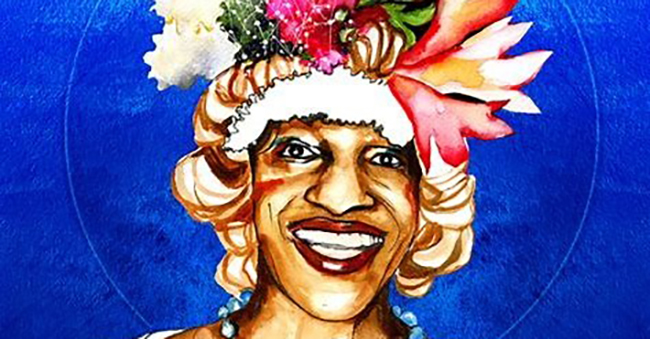
    Marsha P. Johnson. Artwork reprinted with permission from Micah Bazant.

    This year on the fiftieth anniversary of Stonewall, I won’t be participating in the parties and parades that celebrate a movement for LGBTQ equality. It’s not JOMO (Joy Of Missing Out), really. I won’t be “gay” on June 25, because I want to honor the transwomen of color who started this protest and still haven’t gotten what they wanted. Stonewall was a riot. It was led by sex workers, street kids, drug users and hustlers, by marginalized African Americans and Latinx who were pissed off with police harassment and police violence. As World Pride approaches, I’m going to remember what caused that 1969 riot, and refuse to participate in the historical amnesia.

    A very vocal younger generation are demanding the LGBTQ movement acknowledge that Stonewall was a riot led by sex workers of color against the police. It’s shameful that it has taken a half-century for LGBTQ leaders to only now begin to contemplate what a riot against police brutality means for queer activism. From the first Christopher Street Liberation Day March held in 1970, white gay and lesbian leaders have commandeered the event, whitewashing the actions of those courageous—and camp—queers of color who threw the first bricks while publicly reading those helmeted cops. Sylvia Rivera, Marsha P. Johnson, Miss Major, with their fellow street kids and hustlers, had been harassed and fighting back for years. And Stonewall was not the first trans-led riot against the police: in 1966, transwomen in San Francisco’s Tenderloin smashed windows and burned a building outside Gene Compton’s Cafeteria after yet another night of harassment by the SFPD. And there were other riots even before that. Frankly, as observers noted at the time, “the Village’s established gay community” arrived rather late to the party, joining only after they “rushed back from vacation rentals on Fire Island” (and they were treated rather nicely too). The establishment may (or may not) have been mourning the death of Judy Garland, but the transwomen of color who later founded Street Transvestite Action Revolutionaries were standing up for their murdered, imprisoned, and missing sisters and brothers.

    Those victims of police violence and police indifference numbered in the hundreds, even tens of thousands. In the context of New York’s history of state violence, Stonewall was only one of many riots led by black and brown people. In 1712, enslaved Africans burned buildings and attacked white settlers while during the Civil War; white mobs hunted down and lynched black people in riots against the Union Army draft. Black folks rioted in 1935 and again in 1943 because of beatings by the police. In July 1964, Harlemites rioted for a week when fifteen-year-old James Powell was shot by a white off-duty officer. In nearby Newark, NJ, five days of riots erupted in 1967 when police arrested John William Smith, a black taxi driver, and rumors flew he had been beaten to death. Riots and “racial outbreaks” in large cities and smaller town were frequent in the long hot summers of 1966 and 1967. Amid the Kerner Commission’s extensive documentation of deaths, arrests, and destruction, was an indictment of the police violence that was the source of almost every riot. In this context, the Stonewall uprising—in which no one was killed, injuries were few, little was property damaged, and most of the arrests were for minor offenses—six nights of “riots” seemed to be rather orderly.

    How did a riot, started by Blacks and Latinx fed up with police brutality during a decade that experienced more than a hundred major race riots, get reframed as a “gay rights” uprising? The deracination was a deliberate strategy. “Homophile” groups had been organizing for several years. They believed assimilation into “straight society” was key to acceptance and equality. The politics of respectability commanded that members distance themselves from public markers of “deviant” sexuality, including “transvestitism” in formal public spaces. (In fairness, black-led civil rights organizations made the same demands on its leaders.) They thought their strategy to show gay people as “heteronormative” rather than as sexual deviants and prostitutes was working. But it came at a price: the erasure of transwomen, of sex workers, drug users, street kids and hustlers, most of them black and brown. When Philadelphia veteran activists from the Mattachine Society allied with some New Yorkers as the one-year anniversary of Stonewall approached, they decided to rechristen June 25 as “Christopher Street Liberation Day” with a march up Sixth Avenue to Central Park.

    The problem with respectability is that some queers and gender nonconformists will always be “out.” The “T” and “Q” in LGBTQ is almost never at the beginning of movement strategy. The construction of a heteronormative cis-gender appearance depends on both class aesthetics and the racial privileges of the able-bodied. Since the 1970s, lesbian and gay male leaders in the of the movement expected transwomen of color and other queers to follow to this “white picket fence” strategy, sometimes going so far as to discourage trans participation for political expediency (for example, the Millennium March on Washington for Equality). It is grossly unjust to expect transwomen of color to “pass” for their safety and freedom.

    It is because of perceptions of “deviancy” or “freakishness” that transwomen remain always at the risk of civil vigilantism and police violence. The NYPD is under court order to change their practice of arresting transwomen on charges of prostitution merely for being on public streets at night. For Layleen Palcano, detention at Rikers on June 10, 2019 was her death sentence; the Department of Corrections has yet to explain why another Latinx transwoman died. The death toll is much greater: the murders and uninvestigated disappearances of transwomen of color that have yet to be reckoned with—including the unexplained death of Marsha P. Johnson in 1992.

    For these reasons and more, an apology from Police Chief James P. O’Neill for the actions of the NYPD fifty years ago will never be enough. Will the Chief, along with the City of New York, apologize for the deaths of James Powell (Harlem, 7/16/1964)? For Eleanor Bumpurs (Bronx, 10/29/1994), or Kawaski Trawick (Bronx, 4/16/2019)? For other black and brown people killed by the NYPD? Where’s the apology for the “New Jersey 7”? In 2006, the NYPD arrested seven lesbian and gender-nonconforming women for “gang assault” after a man physically assaulted them and threatened them with “corrective” rape. For that matter, when will national LGBTQ leaders joining with #SayHerName, #BlackLivesMatter and #SexWorkersRightsNow to disavow the respectability politics of the past?

    Stonewall was a riot. Police violence and police indifference to violent acts committed by homophobic and transphobic citizens won’t be solved with palliatives like “it gets better” or with “sensitivity training” for the police. What will work, what is working, can be seen in the next generation of queers who, in solidarity with their forebears, have disavowed respectability politics and gender conformity. They’re queers who don’t care about the liberal political agenda of national LGBTQQIA organizations, who critique proposed federal laws prohibiting discrimination against LGBT people on the grounds that only “respectable” citizens will benefit from them. That’s why I won’t be “gay” on June 25. I’ll be holding up a red umbrella for the rights of sex workers and a protest sign demanding the end to police violence. 


    About the Author 

    Activist Melinda Chateauvert has been involved in many grassroots campaigns to change policies and attitudes about sex and sexuality, gender and antiviolence, and race and rights. As a university professor she has taught courses on social justice organizing, the civil rights movement, and gender and sexuality. She is a fellow at the Center for Africana Studies at the University of Pennsylvania and author of Sex Workers Unite: A History of the Movement from Stonewall to SlutWalk. Follow her on Twitter at @whorestorian and visit her website.

  • By Carlos A. Ball

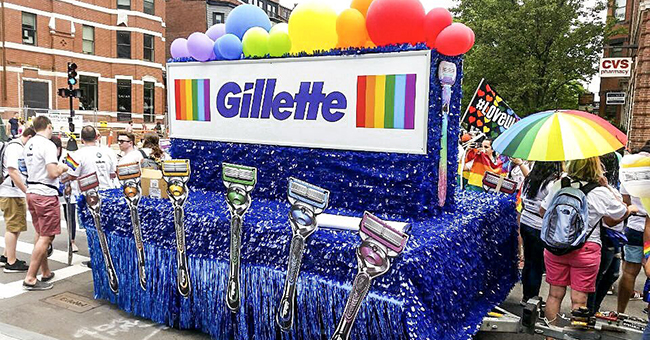
    Gillette at the 2018 Boston Pride Parade

    Gillette at the 2018 Boston Pride Parade. Photo credit: Gillette Twitter account

    There has been much commentary on the internet and social media about a recent Gillette ad showing a father helping his transgender son shave for the first time. The ad gives a whole new meaning to Gillette’s long-time slogan “The Best a Man Can Get.” The ad also reflects the extent to which corporate America has fully embraced LGBTQ visibility and equality. In many ways, large corporations have become crucial allies of the LGBTQ rights movement.

    It has not always been like this. Back in the 1970s and 1980s, large corporations repeatedly discriminated against LGBTQ people. For example, in 1971 the Pacific Bell Telephone Company, one of the largest private employers in the country at the time, announced that it would not hire open “homosexuals” because doing so would “disregard commonly accepted standards of conduct, morality, or life-styles.” For its part, the Coors Brewing Company until 1978 routinely asked job applicants, while attached to lie detector machines, whether they had engaged in same-sex sexual conduct and denied them jobs if they had. (The company also asked applicants whether they were communists or had committed crimes.)

    At around the same time, Eastern Airlines fired Karen Ulane, who had flown its airplanes for more than a decade, when she returned to work after having gender confirmation surgery. In 1985, Boeing fired a transgender engineer—who was contemplating but had not yet undergone gender surgery—after she insisted in using the company’s female bathrooms and wearing feminine clothes to work. Although Boeing claimed it was willing to accommodate the employee after the surgery, it warned her that the company would fire her if she persisted in flaunting her femininity at work before the surgery. Shortly after that, Boeing fired the engineer when she reported to work wearing a strand of pink pearls that her supervisor believed was “excessively feminine.” Although both Ulane and the Boeing engineer sued their employers for discrimination, they both lost their cases.

    Most historical accounts of the LGBTQ movement have focused on activism directed at the government to show how the movement tried to either end discrimination by the state itself or to persuade government officials to prohibit private-sector discrimination. Commentators have paid relatively little attention to LGBTQ activism aimed at the policies and practices of corporate America. This is an unfortunate omission because, as I seek to show in my forthcoming book The Queering of Corporate of America, some of the earliest, most important, and most successful LGBTQ rights activism focused on the actions of corporations.

    LGBTQ activism aimed at corporations through the decades has been extensive and varied, and included the street protests and “zap actions” of the early 1970s targeting high-profile companies, such as television networks and regional telephone monopolies; the boycott of the Coors Brewing Company starting in the late 1970s; the AIDS activism targeting pharmaceutical companies in the 1980s; the concerted push for corporate LGBTQ nondiscrimination policies and domestic partnership benefits in the 1990s; and the criticizing of corporations like Chik-fil-A, after the turn of the century, that opposed marriage equality.

    LGBTQ rights activism in the United States aimed at corporations played a vital role in persuading many large businesses to ban discrimination on the basis of sexual orientation and gender identity in their workplaces and to recognize (primarily through the provision of domestic partnership benefits) the relationships and families of their LGBTQ employees before a significant number of government entities did the same. The fact that these gains in the corporate sphere frequently preceded gains in the government sphere has also received insufficient attention. In the decades following Stonewall, it was easier for the LGBTQ rights movement to persuade corporate board members and executives to adopt LGBTQ equality measures than to convince government officials to do the same.

    The progress made by the LGBTQ movement in the corporate sphere contributed in crucial ways to the progress that came later in the public sphere. That activism, by the early twenty-first century, helped turn many companies from targets of activism to sources of activism by persuading their board members and executives that the same types of LGBTQ equality measures that were working so well within company walls, and that reflected important corporate commitments to values of diversity, inclusion, and equality, would also benefit the country as a whole. Indeed, the political and policy debates involving LGBTQ rights in the public sphere implicated precisely the same issues—fairness, competiveness, discrimination, and relationship recognition—that LGBTQ activists had been raising with corporations for several decades. It was therefore not particularly surprising that companies which had already decided that issues of LGBTQ equality were important to their objectives as private firms became increasingly willing to advocate on behalf of that equality in the public sphere.

    By the turn of the new century, most large companies in the United States had instituted policies prohibiting sexual orientation discrimination and many offered domestic partnership benefits. Years of experience proved to corporate board members and executives that these LGBTQ-friendly policies helped companies attain diversity objectives, bolster morale, hire and retain qualified employees, and attract business from members of LGBTQ communities. Many corporate leaders were also persuaded that considerations of fairness and equality required that their firms adopt LGBTQ-friendly policies. All of this meant that by the time LGBTQ rights issues in the 2000s reached a level of national prominence they had never enjoyed before, corporations began to more frequently and vigorously promote LGBTQ equality, not only within their institutions but in the public sphere as well. They did so primarily by urging governments at the federal, state, and local levels to adopt laws prohibiting discrimination on the basis of sexual orientation and gender identity; by pushing for marriage equality throughout the country; and by strongly opposing laws, such as so-called religious freedom measures proposed in response to marriage equality and so-called transgender bathroom regulations, which harm LGBTQ individuals.

    Large corporations across the country joined forces with civil rights groups and other liberal advocacy organizations to criticize a 2016 North Carolina law, which required people to use bathrooms in government buildings and public schools according to the gender markers on their birth certificates, on the ground that it targeted transgender individuals for discrimination. Some corporations went so far as to announce that they would rescind pre-existing plans to invest in North Carolina or refuse to make new plans for such investments. Corporate activism on behalf of LGBTQ equality in North Carolina proved instrumental in framing the public debate over a law that sought to render LGBTQ people second-class citizens. In the end, corporate activism persuaded the Republican-controlled legislature in North Carolina to partially repeal the transgender bathroom law. Similarly, corporate opposition convinced the GOP-dominated Texas legislature to reject a transgender bathroom bill in 2017.

    All of this history tells us that the recent Gillette ad showing a loving father helping his transgender son shave for the first time is both welcomed and moving, but not particularly surprising. It is a natural continuation of the growing corporate embrace of LGBTQ visibility and equality over the last few decades, an embrace that has helped transform not only corporate America, but the nation as well.


    Carlos A. Ball is Distinguished Professor of Law at Rutgers University. His book The Queering of Corporate America will be published by Beacon in November. He is also the author of, among other books, The First Amendment and LGBT Equality and From the Closet to the Courtroom.

  • A Q&A with Michael Bronski

    Rainbow American flag

    Even though some states have recently passed legislation requiring inclusive curricula in public schools, many LGBTQ students still grow up without ever seeing themselves reflected in textbooks and history lessons. According to a 2017 report by GLSEN, less than twenty percent of LGBTQ students in the United States are taught positive representations of queer people or queer history in their schools. That’s where Michael Bronski’s A Queer History of the United States for Young People comes in. Adapted by Richie Chevat, the book shows that queer people have long been vital to shaping our understanding of what America is today. Our blog editor Christian Coleman caught up with Bronski to ask about the inspiration behind the book, what’s new in this edition, and more.

    Christian Coleman: How did the idea of publishing a young adult edition of A Queer History of the United States come about?   

    Michael Bronski: The idea for YA versions of books in Beacon’s ReVisioning American History series largely came from educators and librarians. My editor, Gayatri Patnaik, and I learned that teachers were looking for resources, and Gayatri suggested we answer their call with a young reader’s edition. With support from the Fund for Unitarian Universalist Social Responsibility, senior editor Joanna Green reached out to educators, librarians, and adapters, who generously and enthusiastically collaborated on this effort. At the moment, Beacon is releasing my book A Queer History of the United States for Young People as well as Roxanne Dunbar-Ortiz’s An Indigenous Peoples’ History of the United States for Young People. There have been, in the past five years or so, a surge in YA nonfiction publishing, particularly adaptations of adult non-fiction for younger readers. So, the time seemed right, and the fiftieth anniversary of Stonewall seemed to be perfect timing.

    CC: What about the project excited you?

    MB: I think what excited me most about the project was having the chance to rethink so much of this material. Not only because it was for younger readers—although that was a challenge—but rather going back to the original sources and finding new insights. This material is so rich that there are always fresh angles to be discovered. For example, I discovered, after I had published the original book, that the emotional relationship between George Washington and the Marquis de Lafayette was so intense—as we see in their letters in the book—that Lafayette named his son after Washington (Georges Washington Louis Gilbert de Lafayette), and when he died was buried with coil from Mt. Vernon that he had transported back to France for this purpose. I included this information in the YA version of the work.

    CC: What are some examples of changes made from or added to the original publication?

    MB: Aside from new details I discovered—such as Lafayette naming his son after George Washington—the major change in the YA version is that I take the history up to the present. A Queer History of the United States essentially ended in 1992 with a nod to the activism that had happened since then. But this book includes people and events that are still in today’s headlines. I write about Aiden DeStefano’s lawsuit against his high school for not allowing trans-inclusive locker rooms. He won the first round of the suit, and just last week he won an appeal. So, the book is very much up to date.

    The other big change is that this is not the usual narrative history that covers 500 years in sweeping strokes. Because it is a YA book, the format had to be different, and I break the story down to thirty-four short chapters that focus on individuals or themes, so the sweep of 500 years is now more personalized through a series of short, detailed portraits and vignettes. It is a different way of telling history and it gave me more freedom to explore the lives of these incredible people—such as Public Universal Friend, Victoria Woodhull, Bayard Rustin, and Marsha P. Johnson—many of whom only got a sentence or two in the original book.

    CC: Were there any challenges with adapting the text for a younger readership?

    MB: Yes, challenges that Joanna and I never even imagined when we began. The main challenge was that a YA book is completely different from an adult book, and we were enormously helped and guided by Richie Chevat—listed as the adapter—who has written and adapted numerous books for young people before. The main challenge was to tell the entire story through the lens of smaller stories and to always keep in mind that each piece of the mosaic had to tell an important part of the larger story. There was no problem with the material—this is not a “cleaned up” version of LGBTQ history for kids—and all of the individuals in the book are presented as complicated, complex people who have faults and sometimes serious problems. Young people today are sophisticated and intelligent to know that people, even heroic people who change the world, are complicated.

    CC: Who are some of your favorite historical figures that you’ve written about in the book?

    MB: One of my favorite people in the book is Charlotte Cushman, who was one of the most famous and critically acclaimed actors of the nineteenth century. She lived a very public life with a series of women partners who were accepted as her spouses. Elizabeth Barrett Browning, one of the leading British poets of the time, said that Cushman and Matilda Hayes “made vows of celibacy and of eternal attachment to each other—they live together, dress alike . . . it is a female marriage.” However, we know from Cushman’s letters that they were certainly not celibate. Cushman played many roles but was famous for playing male parts and was celebrated for playing Romeo to her sister Susan’s Juliet.

    I also am intrigued by Felix Gonzalez–Torres, a Cuban-American artist who did some of the most important work reflecting the loss and pain of HIV/AIDS epidemic. His 1991 installation Untitled (Placebo) consisted of a pile of hard candies the exact weight of a human being in a corner of the museum. Visitors are urged to take a piece of candy, and during the day the pile becomes increasingly diminished like the body of a person who is suffering from HIV/AIDS. The installation was inspired by the death of Gonzalez–Torres’s lover, Ross Laycock, who died shortly before the piece was conceived.

    CC: Why do you think it’s important for educators to have a resource like this in the classroom?         

    MB: In both this book and the original A Queer History of the United States, I say, counter-intuitively, that there is no such thing as gay American history: there is only American history. Unfortunately, historically, many LGBTQ people, as well as other minoritized people, have been left out—erased—from the “official” history of America. All I have tried to do in each of these books is to give a fuller, more complete picture of how the United States evolved and who took part in that. Most, if not all, educators want to give their students the most rounded, full education possible. The problem is that they do not have all the resources easily available. And let’s not forget that middle-school and high-school teachers are incredibly over worked, underpaid, and generally unappreciated. It would take a prohibitively large amount of time to do the research required to bring all of this “erased” material into the classroom, as it is not in the assigned history texts that are used. I hope that both of these books will be useful tools for teachers—as well as students—to see the full range and scope of American history.

    CC: And what would you like for educators and kids to take away from the book, especially now with the news of Marsha P. Johnson and Sylvia Rivera getting statues made in their honor in NYC?

    I think there is an easy lesson to take away from A Queer History of the United States for Young People. LGBTQ people have always been a part of American history. They helped shape it, move it forward, and are integral to it today. They are not separate from American history but rather they are part of it. This is slowing changing, and we now see historians considering how the sexual identity of historical figures may have played a part in their lives. Also, we as a culture are coming to a better understanding of what is important in our history. Just recently, New York City announced it was going to erect a memorial to Silvia Rivera and Marsha P. Johnson, two of the founders of transgender activism just after the Stonewall riots. This is great and should be applauded. But we also need to remember—and teach—their lives in the full tapestry of American history and how important they were in shaping and improving the lives of so many people in their time and later.


    About Michael Bronski 

    Michael Bronski has been involved in gay liberation as a political organizer, writer, and editor for more than four decades. The author of several award-winning books, including A Queer History of the United States, he also coauthored “You Can Tell Just by Looking”: And 20 Other Myths about LGBT Life and People. Bronski is Professor of the Practice in Activism and Media in the Studies of Women, Gender, and Sexuality at Harvard University and lives in Cambridge, Massachusetts.