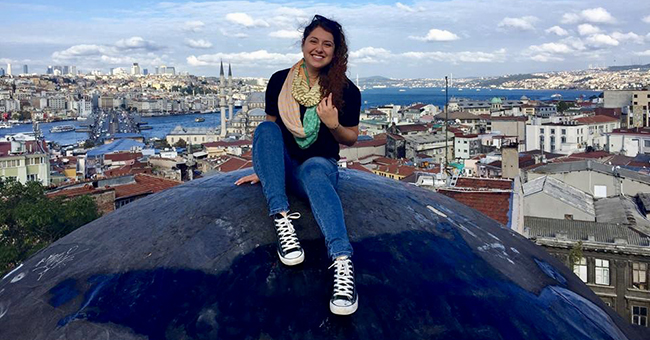
• Molly Velazquez-Brown

    In these times when readers are responding to our books “more than ever,” when our authors—including Richard Blanco, Imani Perry, Robin DiAngelo, Dina Gilio-Whitaker, and Bettina Love—are appearing in the media, their ideas going viral on social media, their voices being heard on so many platforms, we thought it might be good to take a break to focus on some of the staff who work hard to find, shape, edit, produce, and promote those works. Our blog series “Beacon Behind the Books” introduces to you a member of our staff and gives you a behind-the-scenes look, department by department, at what goes on at our office.

    For the month of June, we introduce you to our editorial assistant, Molly Velázquez-Brown! 

    What drew you to publishing, Molly? How did you find your way to Beacon?

    I want to say my passion for book publishing is because I have always loved to read, but that is just not true. When I was growing up, my family pretty much exclusively spoke Spanish, so when I started first grade and was asked to learn to read in English—a language that already felt out of place on my tongue—it was a BIG no from me. I hated it. It took me longer than the other kids to read a Magic Tree House book, and I was embarrassed, which put me off reading for pleasure for years. It wasn’t until sixth grade when I had an amazing English teacher—Shout-out to Emily! I went to a hippy-dippy middle school where we called our teachers by their first name—that I finally enjoyed reading. From then on, I was hooked. I loved falling into the worlds authors created and trying to create my own. I majored in Writing, Rhetoric, and Communication in college and was lucky enough to have a fantastic publishing internship during that time with New City Community Press, which is where I discovered my love for editorial work. Being allowed to uplift, develop, and help refine stories by incredible authors truly makes my heart sing.

    My newfound love for editorial work was solidified when I received a job offer from Beacon Press a few weeks before graduating college. The luxury and extreme relief of having a job lined up before finishing undergrad is not lost on me: the stars really aligned for this opportunity to come to me at that time. I found my way to Beacon thanks to my good friend of almost ten years and assistant editor, Maya Fernandez, who recommended I apply for the position as soon as it was posted. Flash forward to today (two years into my time at Beacon) and I am still doing what I love: working editorially on books that energize, reveal truth, uplift marginalized voices, and encourage change.

    What current/upcoming projects are you excited about?

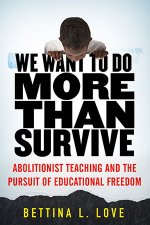
    Two books that recently came out that I love are We Want to Do More Than Survive: Abolitionist Teaching and the Pursuit of Educational Freedom by Bettina L. Love and Women Warriors: An Unexpected History by Pamela D. Toler.

    We Want to Do More Than Survive is an incredible book that draws on personal stories, research, and historical events. Dr. Bettina Love offers a vision of educational justice inspired by the rebellious spirit and methods of abolitionists. Working on this title and with Bettina was an absolute joy. Not only is Bettina a complete powerhouse of an educator and activist, but she is also one of the kindest and most charismatic people I have had the pleasure of meeting. If you ever have a chance to hear Bettina speak live, get in there! You won’t be disappointed.

    Women Warriors recounts the stories of numerous fierce women who fought for what they believed. From Vikings and African queens to cross-dressing military doctors and WWII Russian fighter pilots, these are the stories of women who fought because they wanted to, because they had to, or because they could. Dr. Toler breathes incredible life into these historic women. This book was exciting and revelatory to work on and is a constant reminder that women are always, and have always been, total badasses.

    One last book that is coming out September 17, 2019 that I’m obsessed with is The Seven Necessary Sins for Women and Girls by Mona Eltahawy. This book is all about the sins society and the patriarchy have convinced women and girls they need to avoid. Mona lets out a rallying cry to all women to embrace their power and all their sins; anger, attention, profanity, ambition, power, violence, and lust. I cannot wait for it to come out! This book is a big middle finger—check the cover if you don’t believe me—to the patriarchy and something every woman should read!

    What helps you focus when you’re at work?

    Music and snacks mostly. I have a few playlists I rotate between depending on what I’m doing at work. For reading and editing, I mostly listen to my “workin with no words” playlist, which consists of instrumentals of pop songs and a lot of Lindsey Sterling and Maya Beiser. While researching, writing letters, or organizing, I listen to my “feelin good” playlist, which has more than 400 songs in it, so I’ll spare you all the details. But some of my favorite artists in that playlist are: Dounia, Childish Gambino, J Balvin, Kehlani, Jessie Reyez, and Bad Bunny. Snack wise, I always keep a box of Annie’s cheddar bunnies in my desk and a selection of dark chocolate. Do not bother asking me where they are hidden. It is a secret.

    I also find that switching up work locations helps keep me focused. During the Spring and Summer, I try to do as much work as I can outside. Fresh air and sunlight can really improve my productivity after being inside for a while. During the colder months (most months in Boston), I usually find a quiet space in the office away from my desk to work. Even just a little change of scenery can work wonders to stay focused.

    What are you reading right now?

    I started Conversations with Friends by Sally Rooney yesterday! It came recommended to me by so many friends, I can’t wait to dig in more. Only five chapters in, but I am loving Rooney’s writing style and the characters I have been introduced to thus far. I finished up Paradise Rot by Jenny Hval a few days ago, which I completely adored. Hval writes in the most beautiful and engaging language, which comes as no surprise, as she first came on the scene with her music and visual art. I honestly couldn’t put her book down—dark vibes and a little magical realism with beautiful writing is my book genre of choice, and Paradise Rot was just that.

    What’s the next queued song on your music player?

    The next few songs I have queued are for my commute home. I try to keep the energy up on my T ride home after work so I do things instead of just napping—though generally, I would always prefer to be napping.

    Best vacation destination?

    Best vacation destination I have been to is Copenhagen, Denmark. I went a few years ago to visit some friends that were living there at the time and everything was just gorgeous. The weather was perfect, the food was delectable as everything was fresh, there were so many museums to explore, they have trampolines in some of the sidewalks (how fun, right?), and we got to have a picnic on a boat down the main canal that runs through the city into the ocean. Copenhagen is known as the “happiest city on earth,” and honestly, after visiting, I understand why.

    Vacation destination I imagine to be the best but have yet to go to is Greece. I’ve always wanted to visit some of the islands, because I adore anywhere with water I can swim in and sunshine. Plus, I am a huge fan of Greek food and culture. Thanks to some close friends of mine who are very in touch with their Greek heritage, I learned a lot about it over the last few years. Fingers crossed someday I make it to Santorini.


    About Molly Velázquez-Brown 

    Molly Velázquez-Brown joined Beacon in 2017 as an assistant to Editorial Director, Gayatri Patnaik and Executive Editor, Amy Caldwell. Originally from Cambridge, MA, she earned her Bachelors of Arts degree in Writing, Rhetoric, and Communications as well as Psychology from Syracuse University.

  • By Chris Gabbard

    A Life Beyond Reason

    Image credit: Carol Chu

    Enlightenment scholar Chris Gabbard used to believe in Socrates’ philosophy that “the unexamined life is not worth living.” All that changed when his son, August, was born. August was born with a severe traumatic brain injury as a likely result of a medical error and lived as a spastic quadriplegic who was cortically blind, profoundly cognitively impaired, and nonverbal. But he was a happy child and, during his fourteen years of life, opened up Gabbard’s capacity to love. Gabbard also experienced a philosophical transformation. This excerpt from Gabbard’s memoir, A Life Beyond Reason, will challenge anyone to reexamine their beliefs about who is deserving of humanity. 

    ***

    August’s blithe pterodactyl shrieks mingled with the sounds I heard when dropping him off at the Mt. Herman Exceptional Student Center. each morning, I would drive six miles northwest on I-95, crossing the fuller-Warren bridge spanning the St. Johns river and skirting the western edge of downtown. Just off eighth Street, it sat on the opposite side of I-95 from UF Health Shands Hospital. once parked, I would wheel him in the front door and sign him in with Miss Beverly, the front-desk secretary. It was a short walk from there to his classroom.

    The first day, I was overwhelmed to see so many medically fragile children assembled in one place. The student population was about 160, and a number of them had tracheotomies, feeding tubes, and oxygen tanks, and lived with severe cognitive impairment, cerebral palsy, blindness, and other conditions. Three full-time nurses had to be on the grounds to attend to their medical needs, and they were never idle. Every year, one or two students died—sometimes more—from natural causes, always at home, never at the school. That first day I found not just the sight but also the soundscape distressing, with its cacophony of idiosyncratic noises, the screeching and squawking. That our son would be included in this population was devastating. My heart sank.

    This feeling didn’t last, though. I soon settled in and, before I knew it, was seeing the world anew. The squawking and screeching, I quickly learned, were cheerful sounds. Despite their problems, these were kids just being kids, doing silly kid things. Mt. Herman turned out to be a wonderful school for August. Its teachers and administrators showed good morale and strove to do excellent work. The teachers who couldn’t handle the situation quickly transferred out, while the ones who stayed became deeply committed to serving the students.

    Many of Mt. Herman’s teachers remained even though they were penalized for choosing to work in this school. No way existed for them to earn the bonus that Florida rewarded its teachers whose students showed sufficient progress according to certain metrics. They remained because they were dedicated to the school’s mission. Mark Cashen, the school’s inspirational principal, and the Mt. Herman teachers treated August with dignity and never gave up on him.

    Again, my wife, Ilene, and I weaned August off the antiseizure medications, and this time we had far better results. Afterward he experienced only minor and infrequent seizures, ones lasting for up to twenty seconds at most and occurring months and sometimes years apart. Such short and infrequent ones did not threaten his health.

    In February 2002 a three-track CD of Winnie the Pooh songs appeared in our house. It had accompanied a diaper promotion. one day I popped it into the CD player. August was on the playroom floor secured onto his tumble forms wedge, a larger one now because he had grown a little bigger. When the music began playing, he threw his head back in a roar of delight. The CD’s opening song was “Winnie the Pooh,” with a lush chorus of voices, and after it finished August settled down. I played the opening track again, wondering what was up, and when the first strains burst forth, he once again threw his head back and chortled so hard he could barely breathe. August loved music! Over the years he developed other favorites. He particularly enjoyed Dan Zane’s “All Around the Kitchen,” Raffi’s “Bananaphone,” the Muppets’ “Life’s a Happy Song,” and Oscar the Grouch’s “I Love Trash.”

    August also loved Cocoa, a pony. Riding this small, cream-beige-and-gray horse provided extraordinarily happy moments beginning in March 2002 and continuing for at least four years. Every Monday in the late afternoon (except in winter), I drove him to a large, fenced-in, grassy field now owned by Jacksonville University in the Arlington neighborhood. There, for thirty minutes a week, he underwent hippotherapy with physical therapist Lisa Federico and her volunteers. By this point we had tried myofascial release, acupressure, cranial sacral work, and sensory stimulation (we avoided hyperbaric chambers, which turned out to be of questionable value). At least with hippotherapy, we found something August liked immensely.

    “How’s Augie going to ride a horse?” asked his wise pediatrician, Stephen Cohen, when I asked him to sign a form allowing him to participate. August riding a horse would require three people to assist, I told him. One would place a thick four-inch strap with two large handles around August’s middle (a handle would be on each side). Next they would hoist him onto Cocoa’s back. Lisa would take the bridle while two volunteers, one on each side, would walk along and hold onto the handles so that August wouldn’t fall off. The horse’s motion made him giggle, beam, and crow. For thirty minutes, the four humans and the horse would saunter around the field’s fenced perimeter like Chaucerian pilgrims journeying toward a distant shrine.

    In late July 2001 August started going to the DLC Nurse & Learn in the Murray Hill neighborhood under the auspices of its early intervention program, of which there were remarkably few in northeast Florida. In March 2002, when he turned three, he “aged out” of early intervention, as is typical for such programs. Just at that time our finances required Ilene to start working again as a physical therapist. It was easy to find a good child-care arrangement for our daughter Clio, but having a kid such as August was like having an elderly parent with Alzheimer’s disease and needing 24-7 care. We had to find coverage for the after-school hours, the days school was not in session, and holiday breaks. Day-care facilities wouldn’t accept him. If you go to IKEA and wheel your severely impaired little boy to its Småland play area, no staff member there is going to let him in. Ilene began looking for a day-care facility, but August was completely shut out. And there was no equivalent to Cynthia Godsoe of the Child Care Law Center to help us. Fortunately for us, the DLC Nurse & Learn was willing to accept children with severe impairments into its regular day-care program.

    In the years to come, the DLC was where August would go every day after school and all day during the summers. Whenever August was there, Ilene and I could relax, knowing that he was in caring hands. Amy Buggle, the founder and chief administrator, and her staff treated him with respect and loving attention, recognizing his dignity as a human being. If it had not been for the DLC, Ilene or I would have had to stop working and stay home, and this was something we could not afford to do. The DLC proved to be a great boon because it allowed parents and guardians of children with severe and multiple impairments to continue working.

    ~~~

    When August was born and for several years afterward, his condition did little to challenge my belief in reason and progress. I never doubted that, were I to dig down deeply enough and be granted access to all the facts, the question of what had happened to him at his birth could be answered. At first this rationalistic stance served me well, for I remained confident that the world was ultimately explainable. On some level everything still made sense. of course, I still had to wrestle with the reality of August’s physical and mental state. On account of his catastrophic birth he was a spastic quadriplegic (cerebral palsy paralyzed almost all of his body), lived with cortical blindness (the cortex could not process the images coming from the optic nerve), was profoundly cognitively impaired, and was nonverbal. He also was incontinent; he would forever wear a diaper. He could take food and drink by mouth, but he could not use his arms, so Ilene and I had to deliver every spoonful of food and sip of liquid to his lips. We could have had a feeding tube implanted (a G-tube) and saved ourselves the trouble, but he so loved to eat that we did not want to deny him this pleasure.

    When we were feeding him, he could not just sit in a chair the way that a typically developing child would. He needed upper trunk support, so he had to be secured in his wheelchair with straps holding his shoulders and chest in place. Propped upright, his head lolled, falling forward and backward: the muscles in his neck never developed properly. He also drooled, and this occurred because the spasticity affecting his mouth prevented him from being able to swallow his saliva efficiently. When he was lying on the floor, he was unable to crawl, scoot around, hold himself up, roll over, or even touch his toes. If someone were to put him in one spot and leave him, he would be found in the same location an hour later, give or take a few inches.

    Overall, I continued to believe that the unexamined life is not worth living. But blebs of doubt had begun forming in the glass of my worldview, and eventually secure assumptions started to give way to questions for which no answers seemed possible. Why had everything gone wrong at August’s birth? Why was my beautiful boy so impaired? Why was he so deprived of the basics of life? Why had this calamity happened to him? And beyond these questions concerning the past were others about the future: Who would take care of him after Ilene and I died? Most importantly, how would I ever find peace, knowing that terrible things had befallen my boy?

    Like a strong wind at my back, the force of these questions began to propel me forward in a new, unexpected direction. I found myself increasingly grasping for something. Were I to miraculously receive all the answers about August’s birth, find the empirical truth, the scientific basis, would this really make a difference? That my boy remained nonverbal, non-ambulatory, visually impaired, and diaper-reliant was a reality I had to face. But science and reason couldn’t help me do that. Because they provided cold comfort, a bigger problem was at hand. I began to suspect that modernity—heir of the Enlightenment—this brave new world, was hollow at the center. There was no there there. It offered nothing but incessant change and vague promises of a better tomorrow.

    And so I, the least likely of pilgrims, suddenly found myself embarking on a spiritual journey, that category of narrative that I as a young man had dismissed. My Enlightenment clockwork universe lay shattered on the ground, and I had to ask myself, How did I get here?


    About the Author 

    Chris Gabbard is an associate professor of English at the University of North Florida. He serves on the editorial board of The Journal of Literary and Cultural Disability Studies, and his writing about disability, literature, and the Enlightenment has appeared in numerous academic publications and journals. He lives with his family in Jacksonville, FL. Follow him on Twitter at @Chris_Gabbard and visit his website. 

  • A Q&A with Angela Saini

    DNA

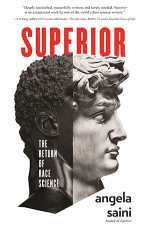
    Why are we seeing a resurgence of race science in the twenty-first century? Weren’t we supposed to be over this after World War II? The notion of “race” has been debunked in the world of science and is understood to be a social construct, but the idea of research-based racial differences is still with us—and has been with us since The Enlightenment. Science journalist Angela Saini tells this disturbing history in Superior: The Return of Race Science. Our blog editor Christian Coleman caught up with her to ask her about her book, the inspiration for it, and how to recognize the subtle signs of race science today.

    Christian Coleman: Tell us a little bit about the inspiration behind writing Superior.

    Angela Saini: For me, this is a book that has been bubbling since I was a child. I became a journalist in the first place because I became involved in antiracism movements at university while studying Engineering. But the time for this book was now, with the rise of the far-right and ethnic nationalism around the world. I wanted to put the rise of intellectual racism in historical and scientific context.

    CC: Both Superior and your previous book, Inferior, explore how science can be used to misrepresent people in the name of upholding societal hierarchies and oppression. What drew you to this topic?

    AS: My job as a science journalist is to understand the motivations of scientists just as much as it is about communicating their research. Science, while an empirical and ostensibly objective means of understanding the world, remains at heart a human endeavour. And being human, scientists are prone to bias and error. We desperately need to understand the mistakes that scientists have made and continue to make in order to make science better, and to make sure we don’t fall prey to those who misuse science for their own ends.

    CC: Some readers will be surprised to find out that there are scientists today who believe in biological differences between races. What kinds of research are these scientists doing, and where are they publishing?

    AS: By and large, race has been dismissed by most scientists as nonsensical, and therefore, of no utility in biology. But it remains a strong social and political force, impacting us every day, which means that there are also some researchers who are unconvinced that the human species is quite as united as we are told. These are some of the scientists I meet in Superior.

    CC: Are there ways scientists have accidentally reinforced the ideas of race science when researching our origins as a species?

    AS: Historically, a lot of this reinforcement has not been accidental at all. In the nineteenth century, it was unremarkable for white European scientists to believe in a racial hierarchy, even that different races were different breeds. This spoke to their political worldview. Today, while this is debunked, there are still some geneticists and medical researchers who keep invoking racial categories in their research, even when it is inappropriate or unnecessary. There are some subtle statistical variations between some population groups, but no biological basis to what we call race.

    CC: What are some subtle examples of how we buy into the belief of biological racial differences today?

    AS: I think it happens most clearly in medicine and DNA ancestry testing. When doctors tell us that certain groups are more susceptible to certain illnesses, without making clear that this may sometimes just be for cultural or socioeconomic reasons, it suggests we are biologically different. When firms say they can tell us where we are from by analysing our spit, without explaining how they do this or what it actually means, they also reinforce the idea of biological race.

    CC: What would you like readers to come away with after reading Superior, especially when we’re living in times where high-ranking public figures like Clarence Thomas compare women who obtain abortions to eugenicists?

    AS: We need to understand where our ideas of race come from and how they have been manipulated over the centuries to control and suppress certain people. The origins of the modern-day birth control movement, which has liberated millions of women, does indeed lie in the eugenics movement, but that doesn’t make birth control evil. Women want and need birth control and the right to abortion. Being associated with eugenics in the early days doesn’t detract from that. Technologies and scientific ideas can be used to liberate or to oppress. It’s up to us to decide how we use them.


    About the Author 

    Angela Saini is an award-winning science journalist whose print and broadcast work has appeared on the BBC and in the Guardian, New Scientist, Wired, the Economist, and Science. A former Knight Science Journalism Fellow at MIT, she won the American Association for the Advancement of Science’s Kavli Science Journalism gold award in 2015. Saini has a master’s in engineering from Oxford University, and she is the author of Inferior: How Science Got Women Wrong—and the New Research That’s Rewriting the Story and Geek Nation: How Indian Science Is Taking Over the World. Follow her on Twitter at @AngelaDSaini and visit her website.

  • By Adam Eichen

    There is no Planet B

    This article appeared originally in The Progressive.

    “You can love two children at once,” a colleague once told me. He meant that advocates for a single issue can integrate other reform efforts into their agenda without being subsumed—and are often more powerful for it.

    In my work promoting democracy reform I’ve repeated this message hundreds of times across the country, advocating for automatic and same-day voter registration, public financing of elections, and independent redistricting commissions—all measures that bulwark the power of the people against that of big money and unlock the possibility of progressive change.

    Recently, though, the Sunrise Movement forced me to confront the uncomfortable truth that, as an activist, I was failing to live up to the “love two children at once” bargain. I had been so committed to improving democratic process that I neglected the growing climate justice movement. I battled climate change via a bank shot, never directly, in part because the oncoming catastrophes—droughts, floods, wildfires, unlivable habitats, not-so-natural disasters, mass species extinctions, and millions of climate refugees—engulfed me in existential despair.

    But at the Sunrise Movement’s Road to a Green New Deal Tour in Boston on April 16, I realized my mistake.

    Along with 1,400 other people I learned not only of the horrors to expect should the United States fail to immediately decarbonize its economy, but also how collective action could make a real difference, now.

    After all, it wasn’t that long ago that humanity, tackling the threat posed by a depleted ozone layer, banned many chlorofluorocarbons. And it worked.

    Confronting climate change is a truly different, much larger and more complex problem than the depletion of the ozone layer. Nevertheless, much like banning CFCs, there are clear steps we can take. Doing a better job managing forests, grasslands and soils, for example, could “offset as much as 21 percent of the country’s annual greenhouse gas emissions,” according to a Science Advances study. And even without any legislation, governors have broad power over emissions, and can act via executive order if pressured.

    ~~~

    Collective action is already affecting the country. Climate change is now the top issue for Democratic voters and candidates are competing to release the most innovative plans to tackle the crisis—a stark contrast from 2016.

    And this momentum is leading to new legislation. Just recently, New York City and Los Angeles adopted municipal Green New Deal plans. Washington state passed a law to make its electricity supply carbon-free by 2045 and another to ban fracking. New Mexico and Nevada required utilities to reach carbon-free electricity by 2045 and 2050, respectively. And though efforts in Minnesota to codify carbon-free electricity by 2050 will likely fall short due to Republicans in the state senate, the state’s largest electric utility, Xcel Energy, recently announced a plan to speed up its exit from the coal market and transition to 100% carbon-free electricity. 

    Other states may soon adopt even bolder plans. New York, for instance, is currently debating “the most progressive climate-equity policy we’ve seen,” according to Heather McGhee and Robert Reich. The bill—the Climate and Community Protection Act—would transition New York’s economy to carbon-free by 2050 with climate justice oriented redistributive measures.

    The Sunrise Movement is planning a mass demonstration in Detroit during a Democratic presidential candidates debate scheduled for July 30, aiming to force presidential candidates to grapple with the climate issue and galvanize further reform efforts.

    Of course, isolated, regional victories will not be enough. We need bold, transformative policies on a national and global scale—the Green New Deal is a model. By joining together the climate crisis and profound redress of racial and economic inequalities, the Sunrise Movement has created a platform for such change. But these smaller victories are critical, each one a step in building an intersectional movement attending to our climate crisis and to our desperate need for democracy reform as well.

    Though the world is far from on track to meet climate goals, as my colleague and Diet for a Small Planet author Frances Moore Lappé often says, “I’m neither an optimist nor pessimist. I’m a possibilist. As long as the possibility for change exists, there is more than enough reason to keep fighting for what we want.”

    ~~~

    Fired up by the Green New Deal Tour event, I attended a Sunrise monthly Boston area meeting in April. On the fourth floor of the historic Old South Church in downtown Boston, I joined seventy-some people, overwhelmingly young—including middle and high schoolers—and brimming with optimism. Beginning with a song, organizers urged everyone to spend ten minutes getting to know others, after which we got into the nitty-gritty of organizing.

    “These meetings—getting together with all these amazing people—is the highlight of my month. It keeps me going,” one young organizer told me.

    On May 3, I joined middle and high school students, who, with assistance and training from Sunrise Boston, engaged in a second climate strike in front of the Massachusetts State House.

    I stood with the some sixty young strikers gathered in a crowd, while speakers—ranging from state representatives to a group of fourth graders—spoke passionately about why it was time for young people to do what adults had neglected: Act. Signs demanding climate legislation were raised to the sky, cheers erupted after each speaker finished, and adults passing by in their cars watched, if for only an instant.

    Soon, everyone sat down for an eleven minute moment of silence—symbolizing the number of years within which a drastic reduction in greenhouse gas emissions must take place if warming is to be kept under 1.5 degrees Celsius. Organizers implored attendees to use this time to reflect upon the reasons we fight and to envision the brighter future for which we are striving.

    At the end of the silence, those in the crowd rang bells to “sound the alarm” on the climate crisis, and a band started to play. The mood lightened. Participants started to relax, laugh, and, at least for a moment, cast off existential angst.

    Oncoming climate catastrophe is, needless to say, sobering, but moments like these, full of love and hope, are a reminder that, no matter the odds, there is always reason to keep fighting, together. And in a couple days, I’ll once again make my way to the statehouse to stand with youth strikers—and will continue to do so, until transformative change is won.


    About the Author 

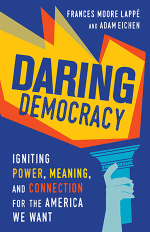
    Adam Eichen is the Communications Strategist at Equal Citizens and coauthor of Daring Democracy: Igniting Power, Meaning, and Connection for the America We Want with Frances Moore Lappé. Follow him on Twitter at @AdamEichen.

  • The Rev. Dr. William J. Barber  II at Wheaton College, Norton, Massachusetts, May 18, 2019

    The Rev. Dr. William J. Barber II at Wheaton College, Norton, Massachusetts, May 18, 2019. Photo credit: Keith Nordstrom and Nicki Pardo.

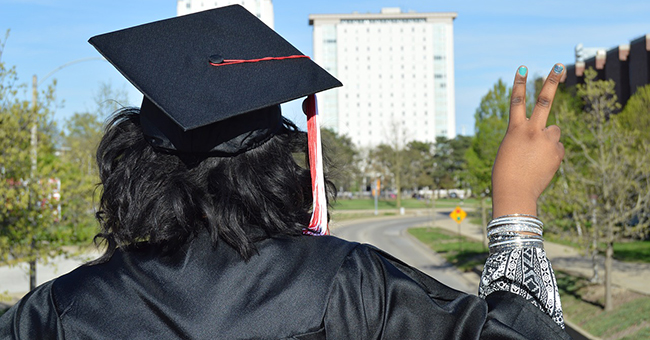
    When graduating in fraught times of division and fear, it’s not always easy to look to the future. Especially when mulling over how we got here and where we go from here while planning for the next stage in your life. Thankfully, we have a beacon of hope and action to look to: cochair of the Poor People’s Campaign and MacArthur fellow Reverend Dr. William J. Barber, II. On Saturday, May 18, Rev. Barber delivered a mesmerizing commencement speech at Wheaton College in Norton, Massachusetts. Not a smartphone in the students’ hands lit up while he inspired the next generation to step forward in our times of moral crisis for love, justice, and truth. A true testament to the power of his words, words that all of us should heed, no matter what stage of life we are at.

    Here are some selections from his speech.

    ***

    I have come today to issue both a caution and a call. And it is that you must graduate today, but get up, get together and get involved tomorrow.

    There are some that want to promote the lie that all is OK. But as Chancellor Jonathan Bennett, or Chance the Rapper, says, “Sometimes the truth don’t rhyme. Sometimes the lies get millions of views.”

    And, in this moment, you have to question the Trumpalistic slogans we hear about bull markets and booming economies. Yes, that’s the message from the White House and from Wall Street. We do live in a time when some people who put their names in gold plating on new buildings like to talk big talk. They collude with lies and obstruct the truth and say everything is fine when it is not.

    Many others engage in inattention violence and refuse to even look at the realities around us. And others see the problems, but just throw up their hands and say ‘nothing can be done.’

    The truth is life is hard for most folks in America, and something must be done. For many of you here, you are only the first or the second generation in your family to even go to college. And no matter how you look on the outside, it was hard to get here, hard to stay here, and it’s hard out here, and in many places, it’s getting harder.

    And that’s why John Legend, my friend—as we talked not too long ago—said in his latest song, ‘Preach’:

    “I can’t sit and hope, I can’t just sit and pray,
    that I can find a love, when all I see is pain.
    I try to do the things, I say that I believe.
    I can’t just preach, baby, can’t just preach, can’t just preach.
    Falling to my knees, I can’t just preach.”

    I must do something.

    I have been traveling all over this land for the past two years organizing people for the Poor People’s Campaign: A National Call for Moral Revival. And I want to invite each one of you to join it, to Google it, to be a part of it.

    ~~~

    When a president loses the election by 4 million votes but is selected president by an Electoral College that is a relic of racism and slavery, and 100 million people chose not even to vote in 2016, you must graduate today, but then get up, get together and get involved tomorrow.

    When mass incarceration is the new Jim Crow, when too often shooting unarmed black people goes unpunished, when indigenous people on reservations face cruel decisions to frack and drill on their sacred land, we need you to graduate today and then get up, and get together and get involved tomorrow.

    When a country of immigrants is weaponizing deportation to rip families apart and reject people, brown immigrants at our southern borders have had families snatched, and mothers and children put in cages. When just last week I visited sister Rosa Gonzalez, who in Maryland was separated from her family, she’s in sanctuary now because of the president’s policies that want to deport her, leaving her three children, one with Down Syndrome, despite the fact that she came here to get away from violence that was created in El Salvador by United States paramilitary policies. People were trying to kill her with machetes. And when you have people in office now trying to put immigration policies in place, and if they were in place when their great-grandmas tried to come here, they wouldn’t be able to get into this country, you must graduate, get up, get together and get involved tomorrow.

    And when some people still feel that they have a right to hate and then discriminate against people because of their sexual orientation and who they choose to love, you must graduate today, get up, get together and get involved tomorrow.

    When some say our economy is good and the unemployment is down to 3 percent, but they don’t tell you that most of those jobs are low-wage jobs and part-time jobs. When there are right now, as you sit here today, 140 million people in this country that are poor and low wealth, 43.5 percent of this nation. When there are 400 families that make an average of $97,000 an hour while we lock people up who go in the street for $15 and a union. When plus-60 million people work for less than a living wage, less than $15 and a union, and 250,000 people die every year from poverty, yes, I want you to graduate today, but I want you to get up, get together and get involved tomorrow.

    When 37 million people go without health care, and people pray not to get sick because they can’t afford treatment, and when politicians try to block people from getting health care when those same politicians, when they get elected to Congress, get free health care paid for by our money. When two weeks ago the current administration had a prayer day, and on that same day, members of that administration were preying—p-r-e-y-i-n-g—and trying to roll back the policies that protect people with pre-existing conditions and protect pregnant women, you must graduate today, but you must get up, get together and get involved tomorrow.

    When we see the hypocrisy of an Alabama state governor who has refused to expand health care, who is against health insurance companies having to cover pre-existing conditions and pregnant women, who is against living wages, even though thousands of people die every year from poverty, who is for sinful voter suppression laws and now says she’s signing a law because she cares about life and morality and signed a so-called ‘heartbeat’ bill to take away a woman’s right to choose, when the reality is, shamefully, she is claiming to care about a heartbeat inside the womb, but doesn’t care about heartbeats outside the womb.

    When families, Mr. President, in Flint, Michigan, to . . . Louisiana, and all over this country, people can get up every morning and buy unleaded gas but can’t buy unleaded war. When a war economy drains social programs and impoverished communities here at home to destroy and pollute poor countries around the world. When a combat soldier makes less than $35,000 a year and a weapons company CEO makes $19 million a year as an average, and people are making a killing off a killing. When we are putting that 62 cents of every discretionary dollar into the war economy, but only 15 cents of every discretionary dollar into education and health care and infrastructure at home, you must graduate today, get up, get together and get involved.

    ~~~

    When we have a false narrative that says God blesses those who are cursing the poor and defending racism and wage and senseless wars and hating Muslims and gay people and destroying the Earth and loving tax cuts and guns, this is such a lie that you must graduate today, but then get up, get together and get involved tomorrow.

    We need you. America needs you. The world needs you on the front lines for love and justice and truth. Class of 2019, you are graduating during a moral crisis in America. And I must tell you the truth, but I must also say you are not the first. Truth is, it has always been young people who have stepped forward at moments of crisis in this nation’s history to offer the leadership that can push us toward a more perfect union.

    ***

    You can read Rev. Dr. William J. Barber, II’s commencement speech in full here or watch him deliver it here.

    To find out about how he helped build the Moral Mondays movement, read his book The Third Reconstruction: How a Moral Movement Is Overcoming the Politics of Division and Fear, written with Jonathan Wilson-Hartgrove. To learn about his vision for intersectional organizing in the new Poor People’s Campaign, read Revive Us Again: Vision and Action in Moral Organizing, written with the Rev. Dr. Liz Theoharis and the Rev. Dr. Rick Lowery. And read and watch his MacArthur Foundation profile, prepared in honor of his induction in the 2018 Fellows Program.


    About The Reverend Dr. William J. Barber, II 

    The Reverend Dr. William J. Barber II is the president and senior lecturer of Repairers of the Breach, cochair of the Poor People’s Campaign: A National Call for Moral Revival, and pastor of Greenleaf Christian Church in Goldsboro, North Carolina. A visiting professor of public theology and activism, Rev. Dr. Barber is also the author of The Third Reconstruction and Revive Us Again. Follow him on Twitter at @RevDrBarber.

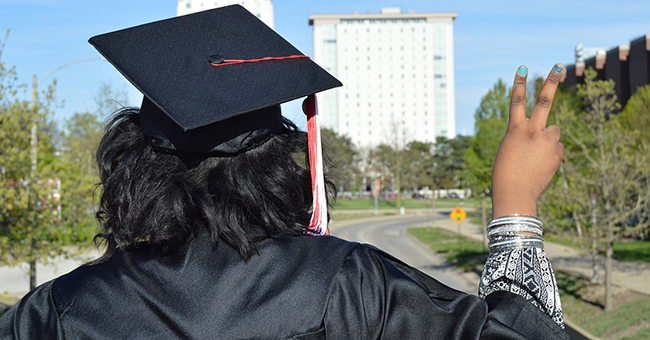
  • Graduation

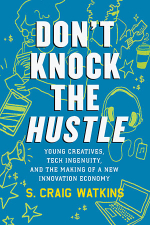
    With the diploma in hand and the graduation cap thrown jubilantly into the air, the question remains: What’s the next step? Graduation heralds new beginnings and transition. But where and how to start? How should we prepare for the future when the world around us changes on a compulsory basis? In his book Don’t Knock the Hustle, S. Craig Watkins asks the same question and says we should plan to be future-ready. “What should schools be doing? Instead of preparing students to be college-ready or career-ready, schools must start producing students who are what I call ‘future-ready.’ The skills associated with future readiness are geared toward the long-term and oriented toward navigating a world marked by diversity, uncertainty, and complexity . . . a future-ready approach prepares students for the world we will build tomorrow.”

    Inspired by Watkins, we put together this inexhaustive list of book recommendations from our catalog for the graduate in your life. Remember that you can always browse our website for more inspirational and future-ready titles.

    For Graduates Getting Science Degrees


    InferiorInferior: How Science Got Women Wrong—and the New Research That’s Rewriting the Story

    Angela Saini

    “If you have ever been shouted down by a male colleague who insists that science has proven women to be biologically inferior to men, here are the arguments you need to demonstrate that he doesn’t know what he is talking about.”
    —Eileen Pollack, author of The Only Woman in the Room


    SuperiorSuperior: The Return of Race Science
    Angela Saini

    “Deeply researched, masterfully written, and sorely needed, Superior is an exceptional work by one of the world’s best science writers.”
    —Ed Yong, author of I Contain Multitudes: The Microbes Within Us and a Grander View of Life 


    For Graduates Gearing Up for Activism

    Daring DemocracyDaring Democracy: Igniting Power, Meaning, and Connection for the America We Want
    Frances Moore Lappé and Adam Eichen

    “This book, perhaps better than any other, shows Americans that the democracy they want is possible.”
    —Lawrence Lessig, author of Republic, Lost 


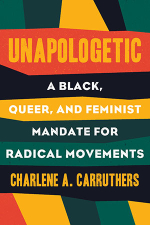
    UnapologeticUnapologetic: A Black, Queer, Feminist Mandate for Radical Movements
    Charlene A. Carruthers

    “This brilliant and powerful book is a clarion call to keep alive the Black radical tradition in these reactionary times.”
    —Dr. Cornell West


    For Graduates Getting an Education Degree

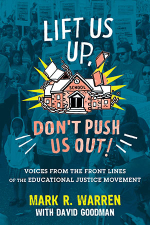
    Lift Us UpLift Us Up, Don’t Push Us Out!: Voices from the Front Lines of the Educational Justice Movement
    Mark R. Warren with David Goodman

    “A bold and exciting book that presents the stories we never hear—powerful stories of successful grassroots organizing in schools and communities across the nation led by parents, students, educators, and allies.”
    —Karen Lewis, president of the Chicago Teachers Union


    We Want to Do More Than SurviveWe Want To Do More Than Survive: Abolitionist Teaching and the Pursuit of Educational Reform
    Bettina L. Love

    “This book is a treasure! With rigorous intersectional theory, careful cultural criticism, and brave personal reflection, We Want To Do More Than Survive dares us to dream and struggle toward richer and thicker forms of educational freedom.”
    —Marc Lamont Hill, author of Nobody: Casualties of America’s War on the Vulnerable, from Ferguson to Flint and Beyond 


    For Graduates Seeking Other Future-Ready Paths

    Don't Knock the HustleDon’t Knock the Hustle: Young Creatives, Tech Ingenuity, and the Making of a New Innovation Economy
    S. Craig Watkins

    “A compulsively readable ethnographic study of new innovation spaces that shows how young creatives—especially youth of color—are excelling at difference-making endeavors, from hip hop, coding, and game design to activism.”
    —Juliet Schor, professor of sociology, Boston College


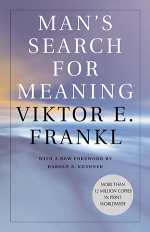
    Man's Search for Meaning_tradeMan’s Search for Meaning
    Viktor Frankl

    “One of the great books of our time.”
    —Harold S. Kushner, author of When Bad Things Happen to Good People 


    Miracle of Mindfulness 2016The Miracle of Mindfulness: An Introduction to the Practice of Meditation
    Thich Nhat Hanh

    “Thich Nhat Hanh’s ideas for peace, if applied, would build a monument to ecumenism, to world brotherhood, to humanity.”
    —Martin Luther King Jr.


    How to Be Less Stupid About RaceHow to Be Less Stupid About Race: On Racism, White Supremacy, and the Racial Divide
    Crystal M. Fleming

    “For those looking for a distinctly smart, humorous, and intellectually challenging read on a much-needed complex racial conversation, How to Be Less Stupid About Race is essential reading.”
    —Angela Nissel, author of The Broke Diaries and Mixed


    White FragilityWhite Fragility: Why It’s So Hard for White People to Talk About Racism
    Robin DiAngelo

    “This is a necessary book for all people invested in societal change through productive social and intimate relationships.”
    —Claudia Rankine 


    Graduation

  • By Crystal M. Fleming

    Prince Harry and Meghan Markle with other members of the Royal family going to church at Sandringham on Christmas Day 2017

    Prince Harry and Meghan Markle with other members of the Royal family going to church at Sandringham on Christmas Day 2017. Photo credit: Mark Jones

    The world couldn’t wait to find out about the name Meghan Markle and Prince Harry chose for their newborn. Archie! And the couple’s journey as an interracial family is just beginning. Take it from Crystal Fleming, who has been obsessed about the royal couple since their dating days. She wrote about them in her book How to Be Less Stupid About Race. Here’s what she had to say about the complexity of interracial relationships and the importance of working toward antiracism with an interracial partner, using her own relationship with her girlfriend as an example. Royal couple, take note as you raise your little one.

    ***

    I’m going to let you in on a dirty secret.

    Back when news first broke of Prince Harry dating biracial actress Meghan Markle, I became quietly obsessed. I knew it made no sense whatsoever to get excited about a woman of African descent marrying into the decrepit, elitist, white supremacist British royal family. I mean, Harry was the same guy who once got caught wearing a Nazi costume at a Halloween party, for God’s sake. I knew all of these things. And yet, every headline about Meghan Markle made me beam with racially problematic happiness. I’d never heard of her—or her show Suits—but I suddenly couldn’t get enough of the headlines chronicling her romance with the prince. How did they meet? What were his blonde exes saying? How did Meghan get into yoga? What did her black mother think of Harry? And OMG she’s besties with the only queen I recognize—­Serena Williams!

    There was just one thing: I couldn’t publicly admit to being caught up in this madness. When I periodically updated my girlfriend about their romance, she rolled her eyes. She couldn’t care less.

    “Why are you interested in these people?”

    “I can’t explain it. I know it’s wrong. I’m ashamed.”

    “I’m telling Twitter.”

    “Nooooooooo!”

    And so we laughed and joked about my covert obsession. I knew my interest was racially stupid. For all I knew, Meghan was walking into a Get Out situation. (By the way, wouldn’t that make a fire sequel? An interracial horror flick set in Buckingham Palace . . .) Every time another tidbit from Meghan and Harry’s adventures hit the Daily Mail or People, I was here for it. I felt like the GIF of Michael Jackson eating popcorn at the movie theatre—you know the one—from Thriller.

    But I wouldn’t dare admit any of this to my thirty thousand followers on Twitter. What could be more problematic than getting irrationally excited about a mixed girl dating a rich white dude who got caught “playfully” wearing a swastika at a party way back when? Of course their relationship didn’t prove anything about the state of race relations in Britain or the “evolution” of his views on race. And yet I found myself quietly cheering for them—and judging myself accordingly.

    ~~~

    Being in an interracial relationship within a racist society is always going to be a complicated affair. As sociologist Amy Steinbugler shows in her brilliant 2012 book Beyond Loving: Intimate Racework in Lesbian, Gay, and Straight Interracial Relationships, couples approach racial matters in a variety of ways. Some decide to avoid addressing racism while others attempt to confront racial oppression head-on. But the bottom line, according to Steinbugler, is that interracial couples exist in a matrix of domination. They are affected by the politics of the racial hierarchy in which we all live. This is the case whether the lovers involved want to face reality or not.

    In my relationship with my girlfriend, intersectional oppression is something we talk about and deconstruct on a daily basis. She reads my Twitter rants against racial stupidity—and drafts of my scholarly manuscripts. I love the fact that she brings up white supremacy over coffee on a Saturday morning. Topics like “cultural appropriation” and “scientific racism” are literally pillow talk in our household. Sometimes we go to sleep discussing the history of eugenics or slavery, and then I wake up like “According to Chomsky . . .” We are really living this life. But there are other interracial “friendships” and relationships in which all involved sign a gentlemen’s agreement to sweep racism under the rug. In the midst of Ferguson, Black Lives Matter, and uprisings in Baltimore, I often wondered how (or, really, if) interracial couples across the nation were discussing racial trauma. All too often, interracial couples don’t even bother talking about how racism shapes their lives because they can’t do that kind of intimate work. And sometimes the white partner intentionally or unintentionally subjects their nonwhite lover to interpersonal racism or fails to protect the person from the racist behavior and comments of their white friends and family members.

    Increasingly, black women and women of color are using social media and blogs to speak up about their experiences of racism and sexism within interracial relationships. In the wake of Trump’s election, a twenty-five-year-old black woman posted a Facebook video of her white (then) boyfriend saying, “What Trump should do, the second he’s elected, give all you motherfuckers tickets back [to Africa]. You don’t like it? Peace! Black Lives Matter? Go matter to fucking Ghana.” Writing in The Establishment, TaLynn Kel indicated that her white husband’s “unconscious racism nearly destroyed” their marriage. Their painful attempts to forge an antiracist path together has involved careful attention to the way they discuss race and racism.

    My girlfriend and I have had to think long and hard about how to address our different perspectives on racial oppression effectively and lovingly. In the beginning, this was difficult work. It isn’t easy being vulnerable about the pain of antiblackness with someone who will never experience it, no matter how much that person loves you. Looking back, my apprehension made perfect sense. Racial vulnerability can’t be shared with just anyone at any time; it requires trustworthiness and true intimacy. But, because I didn’t know how to be vulnerable with my nonblack bae, sometimes our “conversations about race” turned into uncomfortable exchanges and, at times, gut-wrenching arguments. I had to learn how to teach her what I know about racism in a way that is loving and honors the sanctity of our relationship. And she had to learn how to listen and show support in a way that felt loving to me. When I talk about my experience of racial pain, I mostly desire her compassion, validation, and care. If I’m moved to tears reading the latest racially traumatic news or watching a film about slavery or civil rights, I want her to pass the tissues and show concern. With practice we’ve found ways to draw connections between different kinds of intersectional oppression—what we might think of as an “intersectional sensibility”—without pretending that our experiences are exactly “the same.” They aren’t.

    Quite honestly, it took a skilled couples counselor to help us find ways to communicate authentically about racial oppression without hurting each other unnecessarily. And it took a great deal of commitment on both of our parts to do this intimate “racework” without running away from each other—even when we wanted to. Over time, we deepened our friendship and began building true interracial intimacy. Because we trust each other and share the same racial politics, I can bring up concerns about her responses to antiblackness, unintended racism, or the dynamics of white privilege, and she can bring up concerns about how I express my views or talk about how she experiences the racial hierarchy. As a biracial woman, my girlfriend’s racial and ethnic experiences are very different from mine. She’s often perceived as “just” white. People generally react with surprise when they learn that her mother is Japanese and that she spent half her childhood in Tokyo. As someone racialized as a white woman, she acknowledges her white privilege. Her family’s Japanese heritage has further sensitized me to anti-Asian racism and xenophobia. And her experiences living in black communities from Harlem to Senegal and working with marginalized populations as a social worker and therapist have sensitized her to the intertwined realities of racism and colonialism. We’re both committed to acknowledging our differences and challenging our own biases. Neither one of us views interracial relationships as “the cure” to white supremacy.

    ~~~

    To be sure, interracial intimacy has its challenges. But there can also be particular joys as well. I find that discovering common ground with someone of a different racial or ethnic identity can be a surprisingly delightful experience. I’ve had fascinating discussions with my white Jewish friends about our unexpected cultural similarities despite our otherwise divergent experiences. And with my lady, I’ve been astonished to learn that a black bi girl from Tennessee could have so much in common with a half-white, half-Japanese lesbian who grew up between two continents. We both feel like citizens of the world and know what it’s like to live outside the United States. We’ve bonded over our shared experiences of social exclusion—even though the causes of our exclusions were different. We both love being outside in nature, have an interest in synchronicity, and listen to random music like Deep Forest. Our tastes in wine, food, aesthetics, and humor largely overlap. When we moved into together, we discovered that we had many of the same books. We’ve created our own shared language composed of broken Japanese, Franglais, and ridiculous inside jokes.

    But what we have is unique to us and involves an ongoing, daily commitment to nurturing our personal growth and contributing to our communities. It also involves telling the hard truths about power and oppression—and finding ways to sustain the trust required to bridge our differences.

    Looking back on my own experiences with interracial intimacy, I no longer blindly romanticize interracial or intraracial dating. That’s just plain stupid. But I do recommend antiracist dating and friendship, regardless of the background of the folks involved.

    ~~~

    This morning, as I slept-walked to the bathroom to brush my teeth, Bae called out:

    “Are you awake?”

    “Huh?” I stopped in the hallway and peered at her with half-open eyes. She paused and smiled at me like a Cheshire cat.

    “Are you still sleeping?”

    “I mean, I need my coffee. What’s going on?”

    “Have you read the news?”

    “Why baby? Why? What’s going on?”

    “I’ll let you check the headlines.”

    “No! Just tell me, dammit. I’m awake now. What’s up?”

    “Did you hear about Meghan Markle?”

    “DID SOMETHING HAPPEN TO HER?”

    “Well—”

    “Oh man, I hope nothing—”

    “She’s engaged to Prince Harry!”

    “Oh my god!”

    Suddenly I was awake as fuck. I squealed with delight, jumped for joy, and starting clapping like a maniac. Then I walked over to Bae, who was laughing hysterically, and hugged her.


    About the Author 

    Crystal M. Fleming, PhD, is a writer and sociologist who researches racism in the United States and abroad. She earned degrees from Wellesley College and Harvard University and is associate professor of sociology and Africana studies at Stony Brook University. Fleming writes about race, sexuality, and politics for publications including The Root, Black Agenda Report, Vox, and Everyday Feminism, and she has tens of thousands of followers on social media. She is the author of Resurrecting Slavery: Racial Legacies and White Supremacy in France. and How to Be Less Stupid About Race.

  • By S. Craig Watkins

    New York Rep. Alexandria Ocasio-Cortez at SXSW 2019

    New York Rep. Alexandria Ocasio-Cortez at SXSW 2019. Photo credit: nrkbeta

    When the media covered New York Representative Alexandria Ocasio-Cortez’s victory in Congress, they focused on the demographics of her voter base. That’s part of the picture. Other complex details of her grassroots campaign were at play—mainly the way she leveraged such digital platforms as YouTube, Twitter, and Instagram to connect with the public. She’s part of the trend of millennials who are building a creative, entrepreneurial, and civically engaged innovation economy. S. Craig Watkins outlines her rise in this excerpt from his book Don’t Knock the Hustle: Young Creatives, Tech Ingenuity, and the Making of a New Innovation Economy.

    ***

    For more than a year Alexandria Ocasio-Cortez had been waiting for this precise moment: 8:59 p.m., June 26, 2018. That was when the polls in her Democratic Party primary contest against incumbent Joe Crowley in New York’s Fourteenth District would start to close and the final votes would be tallied. Ocasio-Cortez had campaigned for ten months to win an election that virtually nobody thought she could win. That morning her staff still did not know where they would hold her watch party. It was yet another sign of what a long shot her campaign was. They finally settled on a billiards hall in the Bronx.

    On the way to the watch party Ocasio-Cortez was so nervous that she did something out of character for a twenty-eight-year-old: she turned off her phone, refusing to check any of the polls or social media chatter. “Everybody in the car we were in was so nervous,” she said later. “We were just like, ‘Don’t check it, don’t check.’”

    Ocasio-Cortez had already convinced herself that even if she lost the election, she and the legion of supporters her campaign had ignited to get involved had already won. In order to force a primary, they’d needed 1,250 signatures. She and her supporters easily exceeded that figure, generating more than 5,000 signatures in the cold and snow of wintertime in New York City to force the Fourteenth District’s first primary in fourteen years. On the day of the election, she thanked her supporters via her primary communication platform, Twitter (@Ocasio2018): “No matter who the vote is for, every single vote cast today is ours—because we made this election happen.”

    The young self-described “girl from the Bronx” was not just challenging Crowley. She was practically taking on New York’s entire Democratic Party machine. During the campaign her opponent outspent her thirteen-to-one and received endorsements from New York State power brokers like US senators Chuck Schumer and Kirsten Gillibrand, as well as Governor Andrew Cuomo. “Lots of these folks were mad that I didn’t ask for permission to run, that I also was not using the traditional structures of power in New York City to try to run,” she said. “In my opinion, if women and gender-expanding people want to run for office, we can’t knock on anybody’s doors. We have to build our own house.”

    As her car pulled up to the watch party, she noticed a few reporters rushing into the billiards hall. She did not know what was happening, but she sensed something was going on. When she saw one reporter running—“a big dude,” she recalled—Ocasio-Cortez rushed out of the car. “I just started running,” she said. “I literally ran and I busted through the doors.”

    The energy was high inside the billiards hall. A young female reporter from NY1, a local cable news station, grabbed the candidate for a quick interview. As Ocasio-Cortez was talking with her, she looked up at a television monitor. Suddenly, her eyes opened wide, and she let out an uncontrolled scream, covering her mouth with both her hands to conceal what can only be described as equal parts shock and elation. The results were in. She had beaten the incumbent and one of the most connected politicians in New York. In true social media fashion, the video went viral via Twitter, Facebook, and several online news outlets the next day marked with the caption “The Moment You Realize You Just Won.”

    The Rise of Young Creatives and the New Innovation Economy

    Ocasio-Cortez reflects the rise of young creatives—artists, designers, media makers, techies, educators, civic leaders, political activists, social entrepreneurs—who are building a new innovation economy in the face of unprecedented social, technological, and economic change. The new innovation economy is a dynamic sphere of creative, entrepreneurial, and civic activity that expands how we think about innovation in three important ways. First, it expands whom we think of as innovators. Whereas innovation hubs like Silicon Valley tend to be homogeneous—that is, white and male—women, African Americans, and activists in sectors like tech and education are among the principal actors in the new innovation economy.

    Second, the new innovation economy expands what is defined as innovation. This economy is embodied by enterprises to, for example, design better STEM learning opportunities for low-opportunity youth, mobilize new modes of political activism through savvy engagement with social media, make independently produced games, or create new forms of television and film that reflect sensibilities traditionally ignored by Hollywood.

    Third, in this economy young creatives expand innovation into unconventional spaces. The new innovation economy is active in the underserved neighborhoods of Detroit, despite the largest municipal bankruptcy in US history and a downtown-based gentrification machine that neglects the city’s Black residents. Innovation is happening in old buildings that offer cheap rent and plenty of opportunities for young creatives to connect, collaborate, and make things. The new innovation economy is also thriving across digital platforms like YouTube, Twitter, and SoundCloud. These physical and virtual spaces make up what I call “the innovation labs of tomorrow.”

    Ocasio-Cortez took full advantage of such unconventional spaces during her campaign. Two months before the primary election date, she was still holding fundraisers on Facebook Live to raise money to find space for her campaign staff. Her team used her tiny apartment while also sharing a back room with a livery cab company to conduct her campaign for the US House of Representatives.

    Ocasio-Cortez’s story is powerful not because it is unique but because it is universal and parallels the story of many young creatives nowadays. Her run for Congress was a classic side hustle. She was pursuing her passion project—political office—with very few traditional resources and alongside a string of gigs that paid her bills.

    “I started this race, nine, ten months ago. I was working in education, and I was working in a restaurant, and I started this race out of a paper bag. I had fliers and clipboards, and it really was nonstop knocking doors and talking to the community,” Ocasio-Cortez told Joe Scarborough and Mika Brzezinski on MSNBC’s Morning Joe the day after her primary victory.

    The political neophyte had no money or name recognition. She did not come from a political dynasty. She had no paid staff. Ocasio-Cortez did not even have money to run any media advertisements. After bartending shifts, she would attend meetings, small gatherings in the homes of her constituents, and modest fundraising parties as part of her bare-bones campaign.

    Like so many young creatives, rather than focus on what she did not have, Ocasio-Cortez focused on what she did have. And that was tenacity, tech savvy, a vibrant social network, and the recognition that people like her have to build the world they want to live in. Faced with an economy in which long-term employment and a secure economic future is less than certain, many young people are electing to pursue a different and more creative entrepreneurial path. Among the young creatives I have met, the goal is not to pursue wealth or celebrity but rather dignity and opportunity. A generation ago, choosing to build your own future would have felt unnecessarily risky, but not for today’s young creatives.

    This was certainly the case with Ocasio-Cortez. For her and many other young people, the 2016 presidential election was a turning point. She launched a GoFundMe campaign on December 18, 2016, to raise money to drive to Standing Rock to support activists on the ground. The $1,000 she raised was used to offer Standing Rock activists supplies, such as bundles of wood, cots, and subzero sleeping bags. She and two friends hopped in an old Subaru and drove more than 1,600 miles to the heartland. Along the way, they stopped and spoke with people in Ohio and Indiana. They also visited Flint, Michigan, the site of one of the worst water crises in US history. Eventually, they made their way to Standing Rock.

    The journey was a personal transformation for Ocasio-Cortez. Each of these states and their respective struggles were unique, but they had something in common: they comprised everyday working-class people who were fighting valiantly just to be treated with dignity in the face of powerful corporate and political interests. Ocasio-Cortez found resolve in the face of daunting circumstances. “I felt like at this point we have nothing to lose. And even in a race that just seemed impossible . . . Even on long odds, that doesn’t mean we shouldn’t try,” she recalled.

    Her reflections remind me of the many young creatives I met during the course of my research for this book. In the face of dwindling employment prospects, economic uncertainty, and widening inequality, many have decided to pursue a side hustle, entrepreneurial ambition, or civic endeavor. Many have arrived at a similar conclusion: building their own future is not nearly as risky as it may have once been. Like Ocasio-Cortez, they feel they have nothing to lose.


    About the Author 

    S. Craig Watkins studies young people’s social and digital media behaviors. He is a Professor at the University of Texas, Austin and the author of three books, including The Young and the Digital: What Migration to Social Network Sites, Games, and Anytime, Anywhere Media Means for Our Future and Hip Hop Matters: Politics, Pop Culture, and the Struggle for the Soul of a Movement. Watkins is a member of the MacArthur Foundation’s Connected Learning Research Network, where he continues his research about young people and dynamic innovation ecologies. He lives in Austin, TX. Follow him on Twitter at @scraigwatkins. 

  • By Rebecca Todd Peters

    Abby Johnson, subject of the film “Unplanned.”

    Abby Johnson, subject of the film “Unplanned.” Photo credit: American Life League

    On Saturday, a close friend walked out of her local Catholic church with her family in protest of the priest’s blatantly propagandistic pro-life homily. Apparently, he was praising the story of Abby Johnson’s conversion from Planned Parenthood clinic director to pro-life activist and the new film Unplanned, which tells her story. The film, released by a company that focuses on producing “Christian films,” received a nationwide release, was in fourth place after its first weekend in box offices, and has gone on to gross almost $18 million since opening day.

    I had recruited this same feminist friend to go with me to see the film because I wasn’t sure I could make it through on my own. What initially struck me as the two of us sat in the theatre and watched people filter in was the makeup of the audience. While it was a relatively small crowd of about thirty people, everyone but the two of us were white, heterosexual couples in their fifties or older. Some of that may have been due to the fact that it was a Saturday matinee, but as soon as the movie opened, it was clear that these people, nonetheless, were the target demographic.

    From the opening scene of Abby Johnson’s breakfast in her perfectly clean, well-tooled kitchen to listening to her voice-over describing her life as the camera pans through her white, upper middle-class town, it is clear that this movie is for people like Abby Johnson, people who live in homes, and neighborhoods, and towns that are white, clean, crime-free, and innocent. There is nothing terribly surprising or shocking in the film; it is full of all the pro-life messages one would expect from a movie in this genre including: Johnson’s mommy guilt for being a working mother; stock, super-supportive husband and parents who hate her job but love her so much it doesn’t matter; an incompetent doctor who perforates a uterus and then refuses to send the patient to a hospital in order to cover up his mistake. All of this is backdrop for the main story – a pro-choice protagonist who has had two abortions, directs an “abortion clinic,” and undergoes a miraculous conversion while assisting with an abortion procedure that opens her eyes to the evil she is perpetuating.

    This film is rightly identified as propaganda, not because it is pro-life and seeks to persuade people toward a particular perspective. It is propaganda because it is filled with tired tropes and stereotypes about abortion, physicians, Planned Parenthood, and women who terminate pregnancies. It is propaganda because it willfully misrepresents abortion procedures—repeatedly. It eschews any evidence-based argument. From the opening scene reminiscent of Silent Scream, where a thirteen-week fetus is depicted as struggling and fighting for its life to the bloody and life-threatening perforated uterus scen(sc)ario, this movie could easily be placed in the genre of horror.

    But, the most offensive scene depicted Johnson’s second abortion, which was an early medication abortion. Not because this scene portrays the clinic staff as callous and incompetent, or because the gory, tortured images of Johnson’s experience are intended to frighten and shock. What is so objectionable is that the end of the scene pans away from Johnson lying naked in a lump on the floor of her blood-stained bathroom in a way that so clearly mimics the notorious photo of Gerri Santoro that galvanized pro-choice support across the country that it cannot be coincidental. The fact that Santoro died from a self-induced abortion when abortion was illegal while the scene in Unplanned depicts a legal, early, and ultimately safe abortion procedure makes the evocation of Santoro’s experience even more abhorrent.

    Just about the only thing that the movie gets right is the fact that abortion is bloody. You know what else is bloody? Menstruation, childbirth, miscarriage, polyps, fibroids, hormonal imbalances, menopause, cancer, hysterectomies, ectopic pregnancies, even healthy pregnancies—there are so many things in women’s lives that can cause women to bleed. But this film attempts to use blood, women’s menstrual blood, in a frenzy of gore meant to titillate and terrify. That is also why it is propaganda. Because this film seeks to make people afraid.

    So, just remember the facts.

    • Abortion is one of the most common medical procedures in the country and it is also far safer than childbirth.
    • 25% of women in the United States will have an abortion by the age of 45.
    • 60% of women who have abortions already have at least one child.
    • 62% of women having abortions report a religious affiliation.
    • Most Christians believe that abortion should be legal in all or most cases.

    Attitudes on Abortion Legality by Religion

    White Evangelical Protestants and Roman Catholic clergy are the most vocal anti-abortion advocates in the country and many engage in deception, emotional manipulation, misdirection, intimidation, and stereotypes—not factual evidence—to sway people to their point of view. This is the very definition of propaganda.

    The head of the parish council followed my friend out of the sanctuary and asked her if she was okay. She explained that she was angry about the priest’s approach to the issue of abortion and his blatant presentation of urban legends about fetuses surviving abortions presented as truth. Most importantly, though, she was angry that it was likely that one-quarter of the women who were sitting in that sanctuary had had an abortion themselves and were being subjected to these lies and the religious shaming of their priest. The church lay leader expressed his own disappointment with the message, apologized for the incident, and said that he planned to take it up with the parish council later that week.

    In the midst of the “heartbeat bill,” urban legends, propaganda, and attempts to use legislation as fear-mongering, we need a better conversation about abortion and reproductive justice in our country. Unplanned adds nothing to our public understanding or discussion of the issue of abortion.

    Trust me, we can do better than this.


    About the Author 

    Rebecca Todd Peters is Professor of Religious Studies and Director of the Poverty and Social Justice Program at Elon University. Her work as a feminist social ethicist is focused on globalization, economic, environmental, and reproductive justice. Her books include In Search of the Good Life, Solidarity Ethics, and Trust Women. Ordained in the Presbyterian Church (USA), she received the 2018 Walter Wink Scholar-Activist Award from Auburn Seminary in recognition of her work on reproductive justice and poverty and economic justice. She is currently a Public Fellow at the Public Religion Research Institute (PRRI). Follow her on Twitter at @toddiepeters and visit her website.

    Abby Johnson

  • By Dina Gilio-Whitaker

    Dina Gilio-Whitaker_As Long As Grass Grows

    Author photo: Banana Bugz Photography

    This essay appeared originally on Powells.com.

    For many years now I have been studying, writing, and thinking about what environmental justice means for Indigenous peoples. In my most recent book, As Long as Grass Grows: The Indigenous Fight for Environmental Justice From Colonization to Standing Rock, I take on the topic in very broad but specific ways. I see United States settler colonialism as a history of environmental injustice; in other words, colonization and environmental injustice go hand in hand for Native people.

    In general, the field of environmental justice (EJ) refers to injustice as the ways people of color are disproportionately exposed to toxic development and other processes that place them at higher risk of illness and other attendant harms (such as lower property values and gentrification). EJ is based on the concept of environmental racism. That’s a pretty narrow way of understanding environmental injustice, I argue, and as the scholarship and activism becomes more sophisticated, it is becoming more nuanced in the ways environmental injustice is understood. This is where my book fits in.

    In the book, I contend that for Indigenous people, environmental injustice is an entirely different animal, because it involves far more than toxic development. For Native people, it begins as processes of invasion that historically have often removed them from their ancestral lands and resulted in the subsequent disruption of communities to maintain themselves according to their own “original instructions.” This kind of social death is part of the genocidal structure of settler colonialism.

    The original instructions are based on worldviews and philosophical paradigms far different than those of the dominant (Eurocentric) society. Eurocentric ways of living on the land stem from a domination framework. The domination framework descends from religious imperatives that separate humans from the environment and justify the violent intrusion into other people’s lands—what we today call colonization. Think of the story where Adam and Eve are commanded by God to go out and dominate the world, and the Cain and Abel story in which murder and the taking of land are justified. At the same time, it has laid the foundation for a relationship to land and place that only sees land for how it can be put to human use. This is always already an exploitative, extractive relationship. 

    Indigenous worldviews, on the other hand, are based on concepts we sometimes refer to as the four R’s: relationality, reciprocity, respect, and responsibility. In a world based on relationships, all life is seen in terms of kinship (we often refer to this paradigm as “kincentrism”). This is a non-hierarchical orientation to the world in which other life-forms are relations who have agency. 

    In a world of relationships, all beings are bound by reciprocity and responsibility based on respect. Since time immemorial, these principles ensured viable, diverse communities of humans and their nonhuman relations, and are what made Indigenous North American societies inherently sustainable.

    Relationships to the natural world based on domination and exploitation are what construct today’s world of fetishized hypercapitalism in a logic of never-ending growth. Like cancer, endless growth on a finite planet can only lead to death—death of other people and societies, other species, and eventually the self. 

    This is why efforts to reverse the death spiral the human race is currently on must begin with a reorientation to the natural world and other human beings. It cannot generate solely from a different orientation to economics, as the Green New Deal implies. “Green capitalism,” as is it sometimes called, falls far short of guarding human and biological diversity from further destruction. Reimagining societies based on sustainability demands that we think relationally and spatially. 

    I am talking about two different but intertwined concepts here. First, environmental justice for Indigenous peoples must proceed not from a framework of environmental racism, but from a history of colonialism which is maintained in an ongoing structural relationship of domination and paternalism between the US and tribal nations, to which the nations have never consented. This includes but is ultimately beyond racism because colonization begins with ideas of cultural and religious superiority (i.e. the doctrine of Christian discovery), not racial superiority. 

    Furthermore, environmental justice policy and law must be capable of acknowledging Native people’s very different religious paradigms and relationships to land. It currently does not, and that results in gross and ongoing violations and lack of protection of sacred sites, especially on lands outside reservation boundaries or those of tribes not recognized by the federal government. 

    The most obvious examples of these kinds of violations are the desecration of Standing Rock Sioux burials that occurred during the construction of the Dakota Access Pipeline and the inability of Southwest peoples to stop the desecration of sacred sites through snowmaking with treated sewage wastewater at the Snowbowl ski resort on the San Francisco Peaks mountain in Arizona. Countless others can be named.

    Secondly, unless there is major paradigm shift in mainstream settler society and its governing institutions, the future is questionable at best and catastrophic at worst. Learning to think relationally opens space to imagine different kinds of answers to the most difficult existential issues, instead of different versions of the same unworkable solutions we keep returning to over and over again.

    An orientation to land and place based on the four R’s must also take into consideration society’s relationship to Indigenous peoples and its domination-based paradigm. Settler society can then finally be accountable for its genocidal and whitewashed historical narratives.

    In these ways, settler society can construct a land- and place-based ethic that affirms life in all its forms and help ensure the futurity and diversity of all human and nonhuman communities.  Indigenous cultures have always had important things to teach settlers. It’s not too late.  


    About the Author 

    Dina Gilio-Whitaker (Colville Confederated Tribes) is a lecturer of American Indian Studies at California State University San Marcos, and a consultant and educator in environmental justice policy planning. Her research interests focus on Indigenous nationalism, self-determination, environmental justice, and education. She also works within the field of critical sports studies, examining the intersections of indigeneity and the sport of surfing. She is co-author with Roxanne Dunbar-Ortiz of Beacon Press’s “All the Real Indians Died Off” and 20 Other Myths About Native Americans, and author of As Long as Grass Grows: The Indigenous Fight for Environmental Justice from Colonization to Standing Rock. Follow her on Twitter at @DinaGWhit and visit her website.