• Michelle Betters

    In these times when readers are responding to our books “more than ever,” when our authors—including Richard Blanco, Imani Perry, Robin DiAngelo, Dina Gilio-Whitaker, and Bettina Love—are appearing in the media, their ideas going viral on social media, their voices being heard on so many platforms, we thought it might be good to take a break to focus on some of the staff who work hard to find, shape, edit, produce, and promote those works. Our blog series “Beacon Behind the Books” introduces to you a member of our staff and gives you a behind-the-scenes look, department by department, at what goes on at our office.

    For the month of May, we introduce you to our publicity assistant, Michelle Betters! 

    What drew you to publishing, Michelle? How did you find your way to Beacon?

    I studied poetry in college and worked a handful of odd publishing jobs around New York. Through both good and bad experiences in that world, I developed a genuine passion for promoting work by both new and underrepresented writers. I was always That Person telling my friends, “You need to read this new book! You need to read this new poem!” Yelling about new books is fun, you know? It’s a celebration, which, for me, always felt like a natural extension of being a super nerdy reader. So when I applied to graduate schools and Emerson’s publishing program offered me a funded spot, I leapt at the chance to explore publishing outside of New York. After that, my path became a little circuitous. I drove an author and his dogs around the northeast for his book tour. I worked at Ploughshares Literary Journal and a local indie bookstore. I taught college composition. I was a freelance writer. I traveled up and down the east coast researching early twentieth-century women pilots for someone’s book-in-progress. (That book is Fly Girls by Keith O’Brien, and you should read it! Amelia Earhart was not the only woman flying tiny, fragile planes around the world!) Now I’m working at Beacon, where I somehow get paid to say, “You need to read this new book! You need to read this new poem!”

    What’s a typical day in the life of a publicist?

    Emails! I send so many emails. Today, I’m following up with radio producers to confirm interviews, pitching events to bookstores, and corresponding with authors about various parts of the publicity process. Not to say the most millennial thing ever, but I honestly can’t imagine working in publishing before the internet. Aside from emailing everyone all the time, a typical day for me might also include reading samples of next season’s books, researching new media opportunities, writing press releases, and—one of my personal favorites—tracking down email addresses for elusive magazine editors. Oh! And I mail so many books! I’ve accidentally memorized mailing addresses for a lot of the outlets we work with regularly. It’s so weird. Last time I was in New York, I was like, “Oh, I know three magazines on this block.”

    What upcoming projects are you excited about?

    We’re releasing some radical books by women this year! I’m so excited about all of them. Angela Saini’s Superior: The Return of Race Science is such a fascinating, chilling investigation of the history of race science and its contemporary interlocutors. I couldn’t put the book down. She knows exactly how to make scientific and historical analysis accessible. Then there’s Mona Eltahawy’s The Seven Necessary Sins for Women and Girls, which is like a punch in the face, but in a good way. I wish I could go back in time and give the book to my young queer self. And Lauren Michele Jackson’s book White Negroes: When Cornrows Were in Vogue and Other Thoughts on Cultural Appropriation!! I’ve told everyone I know how much I love her work, especially her essay on digital blackface, but honestly, she’s The Culture Writer to read right now.

    What’s your advice to someone interested in entering the publishing field?

    My first piece of advice would be this. In my experience, you don’t necessarily have to study publishing to get a job in the industry. That probably sounds silly coming from someone who did. Don’t get me wrong: it definitely helped. But I’ve met so many people who pursued other things—literature, history, political science, religion, hospitality—and they’re stellar at their jobs. In fact, I’d venture to say that at a nonfiction publisher like Beacon, experience in other fields is super helpful. If you just started applying to jobs in publishing, think about how to translate your knowledge to working at a publishing house. Maybe you’re a meticulous researcher, and you could use those skills as an editor or a publicist, or you’ve got customer service experience, which primes you for the sales department.

    Another thing I’d suggest, especially to anyone applying to internships, is to experiment with roles in different departments. There are so many ways to be involved in the book-making process. If you’re just starting out, make a list of all the ways you engage with books aside from reading, whether it’s social media or planning poetry readings in your living room. There’s probably a publisher that’ll pay you to do that. Also! Publishing doesn’t just happen in New York or Boston. If you feel like these cities might not be for you, that’s okay. There are cool independent publishers across the country. Minneapolis is booming right now!

    In an alternate universe, what career would you have?

    Paleontologist? Campaign manager? Screenwriter? Podcaster? Running a dog rescue? Action movie hero? Probably a paleontologist. I’m going through a second dinosaur phase right now.

    Hobbies outside of work?

    I started rock climbing a little over a year ago and I’m hooked. Beyond it being a (actually, seriously) fun way to work out some stress, it’s also intellectually challenging. It’s like solving a puzzle. You have to decide where your hands and feet need to go and when. Plus, I feel like I’m that much closer to being an action movie hero.

    I love going to the movies, especially at indie theaters like the Brattle in Harvard Square. They have this monthly event called Trash Night where they show an “F-grade,” straight-to-VHS movie, and it’s exactly my thing.

    I also co-host an event series with my partner called We Met Online, which features (and pays!) local poets, musicians, artists, performers, and activists. So I try to spend some time every weekend going to shows and zine fairs and DIY markets in search of those people. Because I had a hard time finding a community when I first moved to Boston, one of my goals for the series is nurturing/contributing to the community I’ve found. If you live in the area and want to come to the next thing, find me on Twitter!


    About Michelle Betters 

    Prior to joining Beacon in 2018, Michelle Betters worked at Ploughshares Literary Journal, Boston Review, and Trident Booksellers. She holds a Master’s degree in publishing and writing from Emerson College and a BFA in poetry from Pratt. She tweets about books and dogs at @mbetterpeaches.

  • By Shani Robinson and Anna Simonton

    School corridor

    Teacher Appreciation Week reminds us to thank our educators who play a pivotal role in our children’s lives, who make a difference in their development and well-being. We need to give a huge shout-out to the Atlanta teachers who tried to help out the Black kids whose neighborhoods and communities were devastated by a history of urban renewal and Nixon’s “War on Drugs.” As Shani Robinson and coauthor Anna Simonton illustrate in this excerpt from None of the Above: The Untold Story of the Atlanta Public Schools Cheating Scandal, Corporate Greed, and the Criminalization of Educators, this is the context in which the Atlanta Cheating Scandal happened. Robinson was one of the teachers wrongfully convicted in the scandal.

    ***

    The concerted efforts by Atlanta’s political and business leaders to diminish the stability of black neighborhoods for their own gain undoubtedly had a lasting impact on the schools. Both the children who were uprooted and those who remained were increasingly deprived of the things a healthy community offers—accessible goods and services, economic opportunities, vibrant public spaces, and a supportive social fabric. Teachers and school employees were left to fill in the void, which would only expand in the years following urban renewal.

    As Atlanta’s black neighborhoods were still reeling from urban renewal—or as James Baldwin aptly called it, “Negro removal”—in the late 1960s, a new threat was forming. Civil rights victories had shaken the apartheid social order of the United States, and, in response, conservative politicians sought to leverage the rage and fear of whites who thought their world was falling apart. Richard Nixon exemplified this tactic in his 1968 presidential campaign, which he built around the claim that the nation faced a crisis of law and order.

    In his speech accepting the Republican presidential nomination in 1968, Nixon linked the supposed lack of law and order to the revolutionary fervor of the moment. He referenced the civil rights and antiwar movements, painting both as lawless, practically in the same breath that he vowed to “open a new front against the filth peddlers and the narcotics peddlers.” Years later, a top Nixon aide (who was by that time working at an engineering firm in Atlanta) told a journalist that Nixon’s subsequent crackdown on drugs was aimed at quashing political dissent. In stunningly blunt terms, he explained: “We knew we couldn’t make it illegal to be either against the war or black, but by getting the public to associate the hippies with marijuana and blacks with heroin, and then criminalizing both heavily, we could disrupt those communities. We could arrest their leaders, raid their homes, break up their meetings, and vilify them night after night on the evening news. Did we know we were lying about the drugs? Of course we did.”

    During his presidency, Nixon declared a “War on Drugs” and poured federal funds into ramping up a law enforcement offensive against drug crime. He created the Drug Enforcement Agency (DEA), pushed a bill through Congress allowing “no-knock warrants” so that police could raid homes without announcing themselves, and rejected the recommendation of a congressional commission to decriminalize marijuana. In so doing, Nixon laid the groundwork for a racialized blitzkrieg on drugs during the Reagan era.

    Under President Ronald Reagan, who announced his continuation of the war on drugs in 1982, federal budgets for antidrug law enforcement swelled. Between 1980 and 1991, the annual FBI antidrug budget went from $8 million to $181 million, and both the Department of Defense and the Drug Enforcement Administration saw increases from tens of millions of dollars to over one billion each. Meanwhile, federal funding for drug treatment programs shriveled up, as did funding for a slew of social welfare programs that the Reagan administration cut.

    Reagan justified his “war on drugs” with alarmist rhetoric that often focused on the boom in crack, a solid, smokable form of powdered cocaine. It was so potent that small doses could be sold for extremely low prices, opening a market for a robust street trade in poor areas.

    Crack hit the streets at a time when black communities in Atlanta and throughout the country were in turmoil. Their social fabric had been shredded by urban renewal projects, and corporations were boosting profits by sending manufacturing jobs overseas, where they could exploit cheaper labor. Black men were hit hardest by this economic shift, as nearly half of black men in the workforce in 1980 held blue-collar jobs. Income inequality between black people and white people, which had narrowed during the 1960s, expanded again. In 1980, the median income for white people was more than three times greater than that of black people; by 1990, it was more than five times higher.

    It was in this context of displacement and economic insecurity that crack entered black communities like Mechanicsville, with disastrous results. There were a few teachers who had worked at Dunbar Elementary School for decades, and they told me that the advent of crack demarcated two completely different eras for the school and the Mechanicsville neighborhood. Before crack, parental involvement was high, students were more or less studious, and the school had a “gifted” program for kids who excelled. Once crack took hold, that all began to change. Parents became estranged, and there were more single moms who didn’t have time to be involved in their kids’ education. Children started coming to school unprepared, falling asleep in class, and were generally losing interest in learning, seemingly because their lives at home were increasingly volatile. The world between their homes and school was changing too. One teacher told me she used to walk through the neighborhood with kids and visit their families until the drug trade became so heavy that walking around Mechanicsville was no longer safe. Some of the elementary school students were drawn into the drug scene, recruited as lookouts or as couriers carrying drugs from one person to another.

    As waves of despairing, destabilized people became addicted to crack, Reagan turned a public health crisis into a purported crisis of “law and order” designed to put black people in cages. With the 1986 Anti-Drug Abuse Act, the Reagan administration established mandatory minimum sentences for drug crimes involving crack and cocaine that created a huge disparity in how the two were punished. Crimes involving just five grams of crack, which was associated with black people, carried the same minimum sentence—five years—as crimes involving five hundred grams of cocaine, which was associated with white people, even though the two drugs are virtually the same. Follow-up legislation two years later would deepen the disparity, establishing a maximum sentence of twenty years in prison for simple possession of more than five grams of crack, while the maximum sentence for simple possession of any amount of cocaine was only one year in prison. The 1986 law also channeled $2 billion into antidrug policing, permitted the death penalty for some drug crimes, and militarized narcotics control.

    The effects were swift in coming. By 1991, the United States incarcerated more people than any country ever before in history, and most of the people behind bars were black. That year, one in four young black men were under the control of the criminal justice system.

    This was the world my students inhabited. A world of close-knit black communities unraveled by city planners and their corporate influencers, black homes lost to expressways, black parents in despair succumbing to addiction and locked in cages for profit, black children left to fend for themselves and treated like hardened criminals, a court system with a penchant for theatrics and an acquiescent media industry to feed it spectators, white politicians suppressing black votes and gunning for the criminal justice system to swallow black families whole, and an education system telling black students to forget all that, just bubble in the right answer.


    About the Authors 

    Shani Robinson, an alumna of Tennessee State University, is an advocate for troubled youth and their families. She taught in the Atlanta Public Schools system for three years. Follow her on Twitter at @ShaniAuthor.

    Anna Simonton is an independent journalist based in Atlanta and is an editor fo r Scalawag magazine. Her work has been published by the Nation, In These Times, and AlterNet, among others.

  • Hands and cellphone

    Many of today’s philanthropic startups and organizations are disrupting the global aid industry with apps and cellphone technology.

    As a child in India, Devex founding president and editor in chief Raj Kumar witnessed desperate poverty, an experience that has fed his interest in how the global aid industry can better meet the needs of the world’s nearly eight hundred million ultrapoor children and adults. Today, with a wave of billionaire philanthropy and the rise of tech disruption in the aid industry, Kumar argues that ending extreme poverty by 2030, a United Nations Sustainable Development Goal, is increasingly possible.

    In his new book The Business of Changing the World: How Billionaires, Tech Disrupters, and Social Entrepreneurs Are Transforming the Global Aid Industry, Kumar examines the aid industry at a pivotal moment—including how market forces and cutting-edge startups are pushing the industry away from big-budget, multiyear projects, run by agencies like USAID, to a retail approach, in which individuals and communities in need are viewed as customers and partners, not voiceless “beneficiaries.”

    Sometimes seemingly simple but innovative approaches can have the biggest impact on poor people’s lives, observes Kumar, which means “you have to talk to them and deeply understand how they make the decisions they do.” Thus, it’s not enough to have billions of dollars to donate and good intentions. Here are seven fascinating examples he shares of small initiatives that have had big impacts.

    1. Unilever, understanding that even very poor people with specific needs represent a substantial market, developed the hugely popular Wheel, a low-suds soap detergent designed for those who wash clothes by hand that is sold in cheap, individual packets and is now available throughout Bangladesh. 
    2. Tala, a loan company founded by a twenty-four-year-old former UN employee, Shivani Siroya, developed a proprietary algorithm to determine who is creditworthy and who is not. It delivers small loans (1.5 million so far) directly to cell phones of customers in Kenya, Tanzania, Mexico, and the Philippines, allowing people who could not get a traditional bank loan to develop credit history over time. In fact, for Tala’s potential customers—there billion unbanked people in the world—often the only alternative is to visit a loan shark.
    3. Hello Tractor, an Uber-like app developed by former investment banker Jehiel Oliver, rents tractors to farmers in Nigeria who formerly had to cultivate fields by hand—leading to huge leaps in productivity. The app provides a variety of reporting and data analysis features so that owners can check usage, schedule maintenance, and calculate income generation. It can also provide financing to help farmers purchase their own machines, which can then become part of the sharing system.
    4. One Acre Fund, founded by Northwestern University MBA student Andrew Youn, is an NGO operating in East Africa that provides farmers access to high-quality seeds and more effective fertilizer to increase their yields and cover the higher costs of the materials. Its main innovation isn’t software engineering but financial engineering. Youn decided to create a microfinance institution that would offer seeds and fertilizer to farmers rather than cash, because farmers did not have access to the very small amounts of credit they would need to buy seeds.
    5. GiveDirectly, founded by four MIT and Harvard graduate students in economics, is an East Africa-based nonprofit organization that identifies people living in poverty and sends them money. One of its most powerful innovations is sharing the voices of its customers on its website. Donors can see a steady stream of feedback from thousands of aid recipients, something heretofore nearly unheard of and unlike anything you’d come across in a glossy report from an NGO’s communications department. This direct feedback is raw and unfiltered. Aid recipients share their stories about how the donations have changed their lives.
    6. M-Pesa, a Kenyan mobile money platform, gives people the option to transfer money among family and friends through their mobile phones, and increasingly is used for sophisticated financial services like insurance and savings. Today, it processes transactions for at least one individual in 96 percent of the country’s households—that includes the vast majority of households living in extreme poverty.
    7. Kiva, an online peer-to-peer lending network founded by Jessica Jackley and Matthew Flannery, generates funding from people anywhere in the world for projects posted by entrepreneurs anywhere else. The lender doesn’t earn any interest on the loan but can follow the progress of the project and get the great feeling of helping someone, usually at no cost to the lender.


    About Raj Kumar 

    Raj Kumar is the founding president and editor in chief of Devex, which the Washington Post compared to a “Bloomberg-style” media platform for the aid industry. A media leader for the World Economic Forum, Kumar is a noted commentator on global development. He lives in Washington, DC. Follow him on Twitter at @raj_devex and visit his website.

  • By Adele Barker

    At Sainthamaruthu Beach, Eastern Sri Lanka, where the militants detonated themselves on the Easter Sunday Sri Lanka bombings.

    At Sainthamaruthu Beach, Eastern Sri Lanka. The militants would detonate themselves in this city the Friday after Easter Sunday. Photo credit: Shamli071.

    I still crush garlic with the back of a wooden spoon. And once a month, I look up at the moon and say to myself, “it’s a poya,” the Sinhalese word for ‘full moon.’ I carry the island inside me, though it has been years since we lived there. I haven’t been back to Sri Lanka since 2012 and am struggling as many are to explain the Easter Sunday horror in churches and hotels where people were celebrating the holidays.

    In 2001-2002, my son and I lived in the city of Kandy, and I taught at the University of Peradeniya. In the hills around Kandy, Buddhists, Christians, Muslims, Hindus, and Burghers lived and worked side by side. Muslim merchants ran their tea and spice shops and on Fridays went to mosque. The venerable St. Paul’s Anglican Church, built under the British in 1845, stood in the center of town just off to the side of the Temple of the Tooth (the Dalida Maligawa), one of the sites most sacred in Buddhism. A Catholic Seminary lay up the street from where I lived. Friends who are Buddhists gave offerings at the Hindu kovil/temple down the street.

    We drank tea together. We lived in peace.

    Buddhism in Sri Lanka often surprised me. Leading every political demonstration on campus or in town were young monks in their saffron robes. I came to understand that Buddhism here was not a philosophy of retreat and contemplation I had thought it to be, but rather one of political and social engagement. Buddhist friends told me that the island was sacred since the Buddha himself was reputed to have visited it several times. The island must be protected, I was told, because it was sacred to Lord Buddha.

    As the news of the past two weeks unfolded, a town called Sainthamaruthu on the eastern side of Sri Lanka made the news. Here, several militants detonated themselves, taking with them women and children and leaving a cache of weapons they had stockpiled. The name of the town sounded familiar. I got out a detailed map of the island and found it. There it was, just north of Arugam Bay. I remembered that I had written about it. It was one of the places most heavily damaged in the 2004 tsunami. It had taken a direct hit.

    The east coast of Sri Lanka sustained the worst damage in the tsunami. Its shallow shores couldn’t hold the wave back. That part of the island is also heavily Muslim. When the wave receded, the dead (if found) were buried, and the clean-up began, civil war between the Tamil Tigers and the central Singhalese government regained its momentum. The western side of the island where the tourist beaches are located were the first to be rebuilt. The north and east had to wait their turn. These were not tourist areas. Besides, they still had a war to fight.

    That war ended in 2009 in a bloody battle with both sides accusing the other of genocide. The wounds of the past twenty-six years still festered on all sides. By 2012, things were beginning to look up on the island. I went back to a country where tourism was on the rise, where the economy was beginning to recover, and where hope that the nightmares of the past twenty-six years were behind it was rekindled. One day, I was attending a conference in Colombo on the post-war situation. Sri Lanka’s Muslims were bitter. They had been chased off 2,000 acres by the Tamil Tigers during the war, expelled from Jaffna in the north, and given twenty-four hours to leave. What were the Tamils (who are predominately Hindu) even doing in the eastern part of this country? they asked. There are mosques and Sufi shrines here, even Buddhist statues. What were they doing here? They had no business being here; they were taking our land.

    It was just about that time that a nationalist Buddhist group calling itself Bodu Bala Sena, known locally as BBS, began to raise its voice on the island calling out Sri Lankan Buddhists for selling their souls and capitulating to foreign influences. But it was Muslims who were their real targets. It was Muslims taking their land, Muslims taking their jobs. It was Sri Lankas’s Muslims funding international terrorist organizations with money from Halal-certified food businesses. For BBS, it is Sri Lanka for the Sri Lankans, and for them that means Buddhists.

    Right now, the government of Sri Lanka, itself the target of much criticism over its failure to share the information that could have prevented the Easter Sunday bombings, is working along with foreign intelligence agencies to put the pieces of what happened together. I have done little else but think of this over the past week and a half. This is what I remember.

    I remember the monks in Kandy leading the political protests in 2001-2002. Did I miss its implications? I remember walking as much of the circumference of the island as was possible two years after the tsunami. I remember the Muslim east coast where the rubble of war was indistinguishable from that of the tsunami. All of it came to the same thing: Lives lost. I remember Muslim bitterness at that conference. And the growth of Bodu Bala Sena that trained its sights on Muslims. Bitterness, loss, and being told that the country you are living in is not yours create spaces of despair. Into those spaces, radicalization can easily take hold.         

    On this small island shaped like a tear drop, I believe that is exactly what happened.


    About the Author 

    Adele Barker is a Professor of Russian at the University of Arizona and the author of Not Quite Paradise: An American Sojourn in Sri Lanka (Beacon, 2010). She returned from a year teaching in Pakistan and is currently at work on a book on teaching post 9/11 in Pakistan

  • By Jonathan Rosenblum

    Workers at the Marriott Hotels in San Francisco, October 2018

    Workers at the Marriott Hotels in San Francisco, October 2018. Photo credit: Bastian Greshake Tzovaras

    This article originally appeared in Tikkun: the Jewish/interfaith/and secular-humanist voice of prophetic activists and love-revolutionaries. www.tikkun.org

    In this season of commemorating the Exodus, the first general strike in recorded history, let us praise the return of the strike weapon to the American political landscape.

    Workers in 2019 are showing greater readiness to flex the strike muscle. Just look at the 31,000 Stop and Shop supermarket workers in southern New England, who struck for 11 days and beat back company demands for healthcare and retirement concessions. The pickets came down Sunday night after the union announced that the company had met their demands to boost pay and preserve healthcare and pension coverage.

    Earlier this year, teachers in Los Angeles and Oakland staged strikes, defending the principle of quality public education against those who would privatize and strip funding from our public schools.

    That followed shortly on the heels of last fall’s eight-city walkout, from Oahu to Boston, led by 7,000 Marriott hotel and restaurant workers.

    This latest strike wave commenced just over a year ago, when the #55Strong educators in West Virginia defied the law, walked out demanding proper funding for schools and for all public workers, occupied the state capitol, and forced concessions from political elites. The West Virginia teachers inspired similar strikes in Kentucky, Oklahoma, Colorado, and Arizona.

    Indeed, last year saw the largest number of major strikes in the US since 1986—not nearly the level of walkouts of the 1970s and earlier, but a welcome generational return to labor militancy following the union-busting unleashed in 1981 when President Reagan famously broke the air traffic controllers strike by firing 11,000 workers.

    The Stop and Shop strike crested just as Jewish people around the world began celebrating the historic strike that defines us as a people: Exodus.

    At Seder tables around the world, this past week we’ve been recounting how our ancestors walked out of slavery in Egypt and began the long 40-year march to freedom.

    Most Passover Haggadot inspire us with Moses’ stirring call to Pharaoh to “Let my people go!” But that’s not the way things went down, according to our own Torah.

    When Moses and Aaron first go to Pharaoh, they demand not an end to the Hebrews’ enslavement, but merely a weekend off: “Let us go, we pray thee, three days’ journey into the wilderness, and sacrifice unto the Lord . . .” [Exodus 5:3]

    Pharaoh refuses, of course, and what follows is the first plague—the Nile turning to blood—followed by more rounds of negotiations and escalating plagues, until the 10th and final plague and the slave walkout. Modern-day organizers will recognize the cycles of bargaining followed by pressure action as a classic union escalation strategy.

    In hindsight, some might argue that Pharaoh made a stupid choice—had he given the slaves their initial demand of three days off, perhaps he would have preempted the wholesale rebellion.

    I suspect, however, that Pharaoh refused because he understood that agreeing to a holiday weekend for the slaves would be perceived as a concession of power and would only whet their appetites for more. So he held firm.

    It’s really no different from the calculus of our latter-day Pharaohs. The Dutch parent company of Stop and Shop took in $70 billion last year and reaped net profits of more than $2 billion. The workers’ bargaining demands would barely have nicked the company’s bottom line. And yet the company obstinately provoked a walkout, costing them, by their own estimates, about $10 million for every strike day.

    The Marriott workers fighting for basic living wages are employed by a CEO who pays himself $6,400/hour and whose company made nearly $2 billion in profits last year.

    The West Virginia educators struck against their deadbeat billionaire governor, whose main political credential has been to protect oil and gas corporations from having to pay their fair share in taxes.

    These brave workers—and also their adversaries—recognize the same thing that the Hebrew slaves and Pharaoh did thousands of years ago: The strike is not just about specific demands, but more profoundly it’s a call to reorder the distribution of societal power; it’s about workers’ social and economic liberation. That’s why strikes are so threatening, both to the Pharaohs of the Torah, and of today.

    Today we live in a new Gilded Age, where billionaires reap staggering profits while nearly 80 percent of full-time workers are living paycheck-to-paycheck, one job loss or health emergency away from full-blown financial crisis.

    In my hometown of Seattle, as Amazon has inexorably expanded its headquarters footprint, executives have dreamt up an eye-popping crystalline biosphere—three enormous interlocking glass globes that today house 40,000 trees and plants from more than 50 different countries. Modern-day pyramids, the Amazon Spheres stand as a totem of the priorities of the billionaire class—stunning, elegant, temperature-controlled palaces for plants while nearby thousands of people shiver under makeshift plastic and canvass tents and record numbers of people die on our streets. This is the priority-setting of the sick, immoral Pharaohs of our time.

    The Stop and Shop workers have won specific demands in the new collective bargaining agreement—secure benefits and better pay. But they and the other contemporary strikers are waging a battle that is about more than what you can read on a paystub. They are lashing out against our modern-day Mitzrayim, the obscenity of 21st Century capitalism. They are reclaiming power by demonstrating that you can take on Pharaoh. In doing so, they are showing all of us the path to our own liberation.


    About the Author 

    Jonathan Rosenblum is a writer and union and community organizer based in Seattle, WA. He is the author of Beyond $15: Immigrant Workers, Faith Activists, and the Revival of the Labor Movement (Beacon Press, 2017), and a member of the National Writers Union/UAW 1981. Find him online at https://jonathanrosenblum.org/ or Twitter: @jonathan4212.

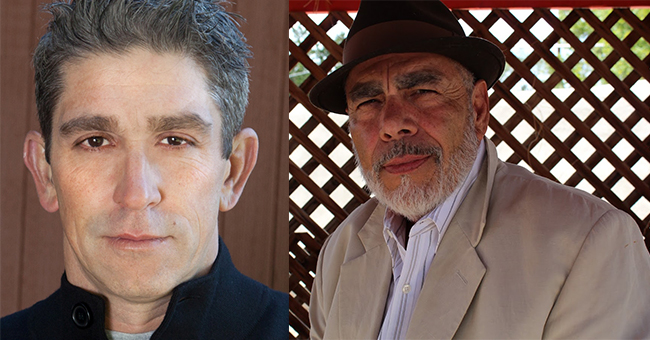
  • A Q&A with Richard Blanco and Jimmy Santiago Baca

    Richard Blanco and Jimmy Santiago Baca

    Richard Blanco and Jimmy Santiago Baca

    Now, more than ever, we’ve discovered that we need poetry not just to delight and uplift us, but poetry that interrogates our past and present, grieves our injustices, celebrates our ideals, and clings to our hopes. That’s what the poetry we publish does. For National Poetry Month, our publicity assistant, Michelle Betters, caught up with poets Richard Blanco and Jimmy Santiago Baca to chat about their latest books of poetry, How to Love a Country and When I Walk Through That Door, I Am respectively, and why poetry matters in our politically fraught times.

    Michelle Betters: Both of your books explore, in some way, the experiences of immigrants and first-generation Americans in the United States, whether it’s through examining our present moment or looking back into this country’s past. What makes poetry the right medium for this kind of exploration?

    Richard Blanco: What makes poetry the right medium for this kind of exploration? I’ve always considered that part of a poet’s role is to be an emotional historian. By this, I mean that poetry records what it feels like to live (or to have lived) in a particular moment in time. A poem is emotionally centered and reports on the psyche of experiences, not merely facts and statistics we find in newspapers and on twenty-four-hour newsfeeds. As such, poetry grounds sociopolitical issues in real lives of people with real names and real faces. It bears witness to the self and to others. It tightens the focus and makes us pause and pay attention. This act of humanizing issues, which can otherwise be highly abstracted, persuades and affects readers by fostering a certain empathy that generates a different understanding, another conversation, a new perspective. Think about it: art, in all its manifestations—including poetry—is one thing that survives all civilizations, and we continuously turn to it, because it tells the real story of a people.

    Jimmy Santiago Baca: The boundaries of a poem can be as close as your nose or distant as the farthest star. If you preempt the poem, you impose limits, and hence your subject. Approach the matter with an open heart and allow it to designate the environment in which you’ll be traveling. Flow with the sounds, flow with the images, flow with being boundless, flow with loving what you encounter no matter how foreign it may seem at first, teach yourself to know nothing until you learn what it is you’ve encountered. Once you pluck the thread you’re drawn to, craft follows it, attracts other words to it, a line forms, a metaphor shapes, the mist clears and you’ve found the deer path crossing the field. The imminent force of your poem is fearlessness and it takes over structure. Learning where its agency is best nurtured––where the tree goes, the rock, the feet, the heart—allow the poem to guide you, with its instinctive stellar compass that is sensitive to what the poet cannot predict but feels. Freedom is ultimately the poem’s request, to be set free.

    MB: As readers, we often only see the final draft of a poem, which is the product of hours and hours of work. Can you tell us a little bit about the research that went into writing your book? Was there a person you spoke to or a text you read that still stands out in your mind?

    JSB: I integrate. I demolish policy and official practice, use my life to lure and invite by being a witness, being present, being part of the poem I am writing. Books, social media, news in general arrive at my door, but more important is the sublimation of the poem into my own life. Wrest it from public domain, wring from it what I may with my own hands and breathing and living, merge it raw into my being where I sit at my desk and start to play with the pieces, the stanzas, moving lines and sharpening metaphors, listening to its open appeal to me to reveal its inner working and intent.

    RB: How to Love a Country was my most heavily researched book to date, because I was writing poems that extended beyond my autobiographical authority and experience. In particular, there are two poems that stand out, because I believe they involved more time conducting research than actually writing the poems. 

    For “Listening to Aspens: A History Lesson,” I spent countless hours researching various sources to familiarize myself with the history, culture, and language of the Navajo and their Long Walk, when 8,500 Navajos (from 1864 through 1866) were forced to walk nearly three hundred miles from their traditional lands in the eastern Arizona Territory and western New Mexico Territory to Fort Sumner (in an area called the Bosque Redondo or Hwééldi by the Navajo). This included reading history books, watching videos, and reading other poets’ poems on the subject.

    For “Letter from Yí Cheung,” I spent even more hours surveying dozens of Chinese immigrant stories from Angel Island, which was an immigration station from 1910 to 1940. As a result, I made the artistic choice to write a persona poem in the voice of a young Chinese girl detainee, not to appropriate her story, but because it seemed the most authentic and visceral way to honor that history and bring it to life for readers. In the end, however, all this research wasn’t just to get the facts right (which was important), but to also connect emotionally with these stories and feel I had the emotional authority to speak to and for them.

    MB: In addition to being poets and advocates, you’re also educators in classrooms of all kinds, from youth detention centers to colleges and writing workshops. What do you think the role of poetry is in those spaces? How does it empower students?  

    JSB: Poetry does what breath does, and it depends on how far you need to swim to reach shore. In other words, a poem for a kid at Los Prietos Youth Authority facing serious time in prison understands poetry in a different more intense and personal way than someone living in San Francisco on a trust-fund allowance and who doesn’t need to bother with paying bills or buying food or oppression. The kid’s breathing is infused with life and death issues, the Trust-funder’s breathing is worry-free and playfully unperturbed yoga-lifestyle, unencumbered by life’s deadly storms beyond the yoga mat.   

    RB: I think poetry enriches and empowers students’ lives in two distinct, yet related ways: reading and writing. As an educator, I try my best to curate selections of poems by poets whose work reflects the lives of the students or group that I’m teaching. There is tremendous power and validation in seeing/reading about themselves in a poem and realizing that their lives and their stories matter. That’s exactly what happened to me when I first read Sandra Cisneros. Her work made me realize that I had a story to tell and gave me emotional permission to tell it with urgency. Hence, the importance of not only reading, but the act of writing poetry, which makes students investigate their lives and question the world, refusing to accept the status quo. What’s more, in that process, students learn to write through and transcend their losses, their pains, their misfortunes; as well as celebrate and honor their unique stories and move forward with more pride and confidence.


    About the Poets

    Selected by President Obama to be the fifth inaugural poet in history, Richard Blanco joined the ranks of such luminary poets as Robert Frost, Maya Angelou, Miller Williams, and Elizabeth Alexander. Standing as the youngest, first Latino, first immigrant, and first openly gay person to serve in such a role, he read his inaugural poem, “One Today,” as an honorary participant in the official ceremony on January 21, 2013. Blanco was made in Cuba, assembled in Spain, and imported to the United States, meaning that his mother, seven months pregnant, and the rest of the family arrived as exiles from Cuba to Madrid, where he was born. Only forty-five days later the family emigrated once more and settled in Miami, where Blanco was raised and educated. The negotiation of cultural identity and universal themes of place and belonging characterize his three collections of poetry, which include City of a Hundred Fires (awarded the Agnes Starrett Poetry Prize from the University of Pittsburgh Press), Directions to the Beach of the Dead (recipient of the Beyond Margins Award from the PEN American Center), and Looking for The Gulf Motel (winner of the Patterson Poetry Prize, a Maine Literary Poetry Award, and the Thom Gunn Award). His poems have also appeared in the Best American Poetry, and Great American Prose Poems series, and he has been featured on CBS Sunday Morning, and National Public Radio’s All Things Considered and Fresh Air, as well as major US and international media, including CNN, Telemundo, AC360, the BBC, Univision, and PBS. Blanco is a fellow of the Bread Loaf Writers Conference, recipient of two Florida Artist Fellowships, and a Woodrow Wilson Visiting Fellow. A builder of cities as well as poems, he is also a professional civil engineer currently living in Bethel, Maine. Follow him on Twitter at @rblancopoet and visit his website.

    Jimmy Santiago Baca is an American poet, teacher, and activist of Apache and Chicano descent, and holds a number of awards for his easily accessible writing style and activism. He is the author of A Place to Stand, which was developed into a documentary film about his life, airing on PBS. He is also the author of When I Walk Through That Door, I Am. Follow him on Twitter at @poet52 and visit his website.

  • Evan Kuh

    In these times when readers are responding to our books “more than ever,” when our authors—including Richard Blanco, Imani Perry, Robin DiAngelo, Dina Gilio-Whitaker, and Bettina Love—are appearing in the media, their ideas going viral on social media, their voices being heard on so many platforms, we thought it might be good to take a break to focus on some of the staff who work hard to find, shape, edit, produce, and promote those works. Our blog series “Beacon Behind the Books” introduces to you a member of our staff and gives you a behind-the-scenes look, department by department, at what goes on at our office. And not only our staff, but our interns, too!

    This week, we introduce you to our marketing intern, Evan Kuh! 

    How did you find your way to Beacon, Evan?

    While reading The Condemnation of Little B by Elaine Brown for a class, I saw that Beacon had published it and remembered a friend telling me about the organization and her great experience interning there. The Condemnation of Little B is one of the best and one of the most unorthodox books I have ever read. It combines memoir, investigative journalism, and history into a cohesive and rousing book, detailing the societal and historical events leading up to the arrest and incarceration of Michael Lewis. I knew that any publisher willing to publish such an unusual book with such pointed critiques of typically deified historical figures was exactly the type of publisher I wanted to work for. I sent in my application, and here I am!

    What is your favorite part of your job?

    I have really enjoyed designing postcards and other marketing materials (it helps that all of our books have amazing covers, so designing collateral for them is very easy!). I’ve never really used InDesign or Photoshop before, so it has been quite fun to learn how to use them. I’ve even decided to take a course on graphic design next semester!

    In an alternate universe, what career would you have?

    I often feel like I am actually in the alternate universe, because I had never imagined that I would pursue publishing. While I developed an interest in publishing in high school, it was a fantastical idea for me at the time, because I was a hazardously slow reader. It would take me around three hours to finish and annotate a thirty-something-page reading.

    I started off college thinking I would go into environmental science, but after accidentally taking a geology course (it was called introduction to the dynamic earth, so not 100% my fault), I developed an interest in rocks (it sounds exhilarating, I know). I enjoy hiking, so I toyed with the idea of becoming a hydrogeologist, someone whose job is essentially to hike for a living and check the health of the groundwater along the way, but as I learned more about the field, the idea seemed less and less possible. Jobs for fossil-fuel companies make up a large portion of the available work for geologists, and because my first semester coincided with the election of Trump and, thus, the shrinking of the EPA, I decided to take some other courses to see if I had other interests.

    I decided to take computer science, because it’s all the rage with the kids these days, and, to my surprise, I found myself enjoying it. While introductory courses in other STEM fields are often formulaic and memorization based, computer science is very sandbox-esque, allowing you to design and build your own solutions to the given problem. I started playing with the idea of working in tech, and I stumbled on some tech companies that help other companies and buildings model for more efficient energy consumption, so working for one of those companies was my end goal for a period.

    Finally, in the second semester of my sophomore year, I took a course on literature from colonized countries, because I missed my high school English classes and needed to fulfill my university’s non-western civilization requirement. A couple of books into the class, I had to start forcing myself to finish my other work before I started the readings, because I would just sit and read for hours and hours otherwise. It eventually dawned on me that I could essentially just read for my major and, later, I came to a similar conclusion about my career if I pursued publishing.

    What are you reading right now?

    Unfortunately, I’m not currently reading anything purely for pleasure, but I am reading Frankenstein by Mary Shelley for a class on the intersection of early science and literature, Blood Meridian by Cormac McCarthy for a class on American fiction, and The Divine Comedy and De vulgari eloquentia by Dante Alighieri for an Italian class on the formation of the Italian language.

    What are your five star books on Goodreads?

    (From most to least favourite)

    1. The Goldfinch by Donna Tartt and The Book Thief by Markus Zusak
    2. No Telephone to Heaven by Michelle Cliff
    3. Crick Crack, Monkey by Merle Hodge
    4. A Small Place by Jamaica Kincaid
    5. Drinking Coffee Elsewhere by ZZ Packer
    6. Nine Stories by J.D. Salinger
    7. The Secret History by Donna Tartt
    8. The Brothers Karamazov by Fyodor Dostoyevsky
    9. The Condemnation of Little B by Elaine Brown

    Why did you spell “favorite” wrong in the last question?

    I was born in the US, but before I was one years old, my family moved to London. I lived there until I was about nine and a half, and then we moved to Hong Kong. After one year, we returned back to the US, where I have lived ever since. My high school and middle school friends (lovingly) bullied and teased my British vocabulary out of me, but I’ve given up on rewiring my brain to spell things according to American English.

  • A Q&A with Sasha Pimentel

    Sasha Pimentel / For Want of Water

    Now, more than ever, we’ve discovered that we need poetry not just to delight and uplift us, but poetry that interrogates our past and present, grieves our injustices, celebrates our ideals, and clings to our hopes. That’s what the poetry we publish does. For National Poetry Month, our blog editor, Christian Coleman, caught up with poet Sasha Pimentel to chat about her collection, For Want of Water, from our National Poetry Series and why poetry matters in our politically fraught times.

    Christian Coleman: When you were putting together the poems for For Want of Water, did you know right off the bat that you wanted this collection to address the social issues you bring up?

    Sasha Pimentel: No, I learned early on that a poet doesn’t start a poem, nor a book, with an idea. Following ideas stunts a poet from following associations in repeating sounds (rhyme, anaphora, assonance, etc.), or repeating imagery, which is how language startles us into the territory of the unexpected. Which is often where a poem will most dare, or risk.

    When we set out to write something specific governed by an issue, or an idea, we use language claustrophobically, no matter our intention. We end up knowing only what we started out already knowing, which doesn’t do anyone any good. It arrests us from experiencing language’s great reach; and anything that has a chance of moving towards social justice must be steeped in reaching out, in human solidarity, in trying to connect to what is larger than what we think we know.

    I trusted that if I focused on teasing out an image or a phrase, what I cared about would come through too. Instead, I worked the manuscript under two post-it notes: 1) no sentiment, and 2) compassionate with others, ruthless with self, which is also how I try to daily live.

    I didn’t yet have the language I later learned by listening to Kwame Dawes at a panel in 2017. Dawes says that in writing his own poems, he is searching for how “to give dignity to the everyday individual, looking for elegance in the people around me, and looking for the beauty. And beauty is not always pretty; beauty can be brutal, but it’s the looking for the language to give to what moves me.” I didn’t yet have Dawes’s articulation, only my own nebulous impulse and what moved me, but I wanted to write out what I saw around me as honestly as I could, even if I failed. And such honesty requires having reverence for the people moving with dignity around you, even when everyone is hurting.

    CC: Pulitzer Prize-winning poet Gregory Pardlo selected For Want of Water as a winner for the National Poetry Series. In his foreword, he notes that a number of your poems deal with borders and boundaries, one of which is the border between the United States and Mexico. Could you tell us a little about your relationship with/to this particular border?

    SP: First, I am forever grateful to Greg, to Beacon Press, and the National Poetry Series for seeing something worthwhile enough to publish in this book. I know I owe you all the widened path in poetry that this book has since allowed.

    We’re in a time when the México-US border is being heavily scrutinized by the nation and the rest of the world as either a space of limitation (often accompanied by racism, the fear of our brown bodies), or a space of possibility.

    A border between nations is a construction: borders are drawn and continue to be redrawn because of such reasons as who wages genocide, where colonists’ ships land, the treatises made after wars, which armies march through where, and even how rivers (as our Río Bravo did) shift, as water does. Those constructions seem so utterly arbitrary, because they’re deeply context-driven: In 1945, two thirty-six-year-old US officers, fearing Russian advancement there, though they’d never been to Korea, divided the country into what is “North” and what is “South” at the 38th parallel, and five million Koreans, over half of whom were civilians, died in a proxy war between the US and China and Russia. A pope one day in 1555 drew on a map of Rome, a wall was built, and the Jewish community, which predated the Christian Romans, were forced into a ghetto where they wore a yellow cloth or veil—a rule that chillingly repeated into The Shoah almost 400 years later across Europe. We should never forget that what we now call the United States was stolen by European foreigners who immigrated to this area and claimed as their own territory even that which is unceded Native land. How those same colonial nation-states violated oceanic, tribal, and bodily borders for slavery. Or that in this country, President Roosevelt drew borders for concentration camps, then relocated and incarcerated the nation’s own Japanese American citizens. Borders are historically in flux, though people who see them through a limited present insist on the asymmetries of power which transform border to boundary.

    But I don’t see this place in which I live, which lifts with the scent of creosote when it rains, as a space of limitation. We insist that our here, our border, is a space of possibility: a space that understands itself as Juárez-El Paso, El Paso as the step, our borderland a place that tethers together the Americas, that defines “American” as inter-American, and that understands itself as a human place that can hold—in its landscape—joy and heartbreak, all.      

    CC: The title poem draws from the reported case of a thirteen-year-old boy, Julio Hernández, who, while trying to immigrate, dragged his mother’s body across the desert after she’d died of dehydration and heat exposure. What inspired you to explore this harrowing true story in verse?

    SP: Only that I didn’t know how to write it any other way, but I needed to try.

    CC: The poem “If I Die in Juárez” explores the femicides of an estimated 400 women in that city. How did you decide to approach this topic by centering on the main image of the violin?

    SP: Poems start out really literally for me: a nail juts from a plank of wood, or crossing the street, I catch the way a person’s neck turns away from a partner’s palm. Sometimes a detail from the physical world in which my body lives buries into my consciousness, because that’s how sight works: what the retina sees gets signaled to multiple places in the brain which interpret, attend, and maybe even turn to memory, so depending on when we see something, and where it flickers in the brain, an image can bob in us.

    It’s through trying to write out that lingering image that, if I’m patient enough, I’ll hear in the language a connection to an emotion or subject I hadn’t anticipated: something else, deeper, that’s taken root in me, too, which I was incapable of talking about directly. But which reveals itself as the under-subject through the simpler thing.

    I was trying to write about the violin because my roommate at the time collected broken ones from thrift stores, beautiful old violins propped up around the house: on the dining room floor against a wall, or on the mantel. It seemed so sad to me every time I saw them, these objects made with care, meant to be touched and cradled into a neck and shoulder, made to—with touch—sing. The word violins, said aloud, is so close to violence. Then there are the components of the violin called the waist, the neck, the bridge. It’s the word bridge which stung, typing it, because it’s the bridge on a stringed instrument which raises the strings, supports air as the strings stretch from one part of the instrument to another: the air, that distance, necessary for sound. And our border bridges connect and raise their own distances, too, show the spaces between one life and another as attached to the where the body is placed.

    I like to recite aloud Clare Cavanagh’s translation of Wisława Szymborska’s poem “Photograph from September 11,” especially the sentence that, though it’s about people falling, may also speak here too: “They’re still within the air’s reach, / within the compass of places / that have just now opened.” It’s a language trying desperately to keep people alive, “still complete,” if only in that imagined narrative, if only in that smallest space of the linebreak between “reach,” and “within.” Szymborska’s use of the sentence here is one of the highest moments of compassion a poet can try for, because it’s a usage of language that tries to keep alive the dead, or the dying, even in the face of such impotence in, and the absurdity of, the context of their deaths. It matters that people have lived, it matters so much that Szymborska tries to take a past event and turn it, through language, into the present, so at least in this poem, they haven’t lived; they live. 

    That word bridge at the time uncovered in me, as I typed it out, the real sadness, the real grief that had been swirling around my community of the femicides, the news of women’s bodies as they were discovered, sometimes in mass graves. Many of the women who died were made more vulnerable because they had migrated from rural areas to work in terribly abusive factories—these powerful institutions of Capital that even today refuse to pay their many workers living wages. The maquiladoras’ enforced poverty and the physical isolation are part of what so badly hurt these women. And my community and I were aware of their lives, what they had lived, and what other women are still living, because of the activists and the journalists who perhaps do much more important work than the poets, certainly more present and dangerous work in places and times of great social asymmetry and war. I’m grateful to the activists and the journalists who refused to let those lives disappear, who surfaced such living in my own small poem, because when it is untethered from language, or narrative, too much of our lives, and our histories, disappear.

    CC: Last year, the Atlantic published an article about the resurgence of poetry across various media and how poetry, despite numerous predictions of its death, is more than alive and well and is finding more readers who are younger (18-24), women, and people of color. What’s your take on this and on the state of poetry in our politically fraught times? 

    SP: Poetry is language distilled to its inner song and gifted between strangers, whether or not people share mutual points-of-view or experience. That will always be vital, and especially when we most need it.

    If anyone who has stumbled across this webpage is looking for poems to read, please Google these awesome necessary voices: Aldo Amparán, Chen Chen, Dominique Christina, Asa Drake, Elidio La Torre Lagares, Lupe Mendez, Deborah D.E.E.P. Mouton, Alessandra Narvaez-Varela, Ladan Osman, Natalie Scenters-Zapico, Mahtem Shiferraw, and Danez Smith.   

    CC: And lastly, how do you see poetry raising awareness around social issues or being an agent of change?

    SP: This is a time of heightened nationalism, when many nations’ administrators and citizens are using language through paper and through our screens to assault and reduce, to turn in on ourselves as societies and as individuals. Every day, this mass of language is deployed to simplify, guard and separate. They are the languages of enforcement, the languages of policy, the languages of blame which entrap us.

    But because whitespace is embedded into the poem’s form, poetry is a special form of language that is generous, and which moves with a certain regard. It’s a form of language that bows to listen before it speaks.

    Poetry demands a sensitivity: it asks us to hear nuance, and from such careful attention, then try speech. It asks us to reckon in silence what we cannot fully name as we grapple the irreconcilable. It asks us to heed attention to space; to where we must break, against the margin, and where, despite the poem’s breaks, we can continue.

    Sensitivity— nuance— care—reckoning—attention—these aren’t things we normally want to do because all that, together, is hard work. It taxes us intellectually and emotionally. But a poem asks of us all this, and we do it, whether we are its readers or its writers, because a poem’s rhythms and images are so pleasurable too that we ride it, even if where it takes us to is soaked in silence, shame, or grief.

    And a poem gives whatever it is, and all that is stirring inside it, freely. And to anyone.

    In his essay “I’ve Known Rivers: Speaking to the Unspoken Places in Poetry,” Martín Espada writes:

    There are “unspoken” places all around us, places we never see, or see but do not see. There are hidden histories, haunted landscapes, forgotten graves, secret worlds surrounded by high walls, places of pilgrimage where pilgrimage is impossible. Sometimes, these places are “unspoken” because the unspeakable happened or continues to happen there; sometimes, because the human beings dwelling in the land of the unspeakable find a way to resist, and their example is dangerous.

    Speaking of the unspoken places means speaking of the people who live and die in those places. These are people and places condemned to silence, and so they become the provinces of poetry. The poet must speak, or enable other voices to speak through the poems. Indeed, poets continue to speak of such places in terms of history and mythology, memory and redemption. They pose difficult questions: Who benefits from silence and forgetting? Who benefits from speaking and remembering?

    Poetry invites even Whitman’s venerealee into a discourse of who we are, and who we can be—which is our humanity—and broadens how we understand ourselves as interconnected peoples. Poetry, Adrienne Rich says (connected beautifully in this piece by Claudia Rankine) “can remind us of all we are in danger of losing—disturb us, embolden us out of resignation.” Poetry listens, questions, dares speech: in reaching into what it does not yet know, extends both its arms out.


    About Sasha Pimentel 

    Sasha Pimentel is the author of two collections of poetry: For Want of Water (2017, Beacon Press), winner of the National Poetry Series (selected by Gregory Pardlo), winner of the Helen C. Smith Award, and longlisted for the PEN/Open Book Award; and Insides She Swallowed (2010, West End), winner of the American Book Award. She has published poems and essays in The New York Times, PBS News Hour, ESPN, The American Poetry Review, New England Review, and Literary Hub, and other literary publications. She was the 2018-2019 Picador Guest Professor for Literature at Universität Leipzig in Germany, and the recipient of a 2019 NEA fellowship in poetry. Born in the Philippines and raised in the United States and Saudi Arabia, Pimentel is an Associate Professor in the Department of Creative Writing at the University of Texas at El Paso, on the border of Ciudad Juárez, México. Follow her on Twitter at @SashaRPimentel and visit her website.

  • Majumder Beacon Broadside pic

    In these times when readers are responding to our books “more than ever,” when our authors—including Richard Blanco, Imani Perry, Robin DiAngelo, Dina Gilio-Whitaker, and Bettina Love—are appearing in the media, their ideas going viral on social media, their voices being heard on so many platforms, we thought it might be good to take a break to focus on some of the staff who work hard to find, shape, edit, produce, and promote those works. Our blog series “Beacon Behind the Books” introduces to you a member of our staff and gives you a behind-the-scenes look, department by department, at what goes on at our office. And not only our staff, but our interns, too!

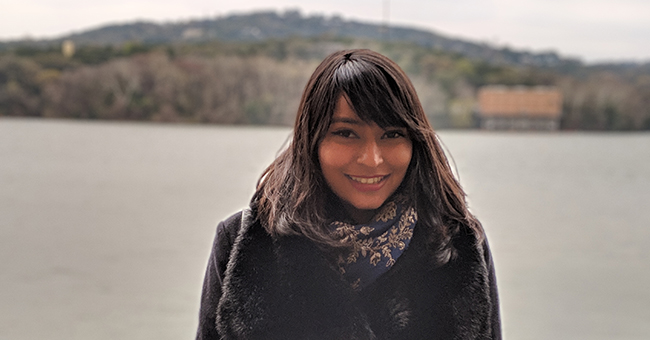
    This week, we introduce you to our editorial intern, Maitreyi Majumder! 

    What drew you to publishing, Maitreyi? How did you find your way to Beacon?

    I only realized publishing was a career path much later in my life—halfway through my undergrad degree in business administration, in fact. I’d always been a creative kid, but I never realized that the books I hoarded so ardently could be something that I could actually dedicate a career to. I finished up that business degree and went on to an apprenticeship program in an academic publishing house, where I trained in all their departments: editorial, production, accounting, etc. I was senior marketing executive there by the time I left, four years later, to do my masters in publishing at Emerson College. Beacon is the second editorial internship I’ve done while at my program; the first was at a literary agency. It’s been so great to be back working at a publishing house doing the kind of work I’ve always wanted to be doing.

    How much of what you learned in graduate school have you found vital to your work?

    I would say it’s a combination of the things I learnt on the job and at graduate school that aid me the most. I’ve taken courses on literary agents and book editing, which have helped me understand how to craft strong proposals and queries and have helped me write reader’s reports on manuscript submissions. The depth of research required to publish nonfiction in today’s world is not lost on me, and that’s something that I picked up from my previous internship. Another important thing I learnt at my previous job is how much you need to network within a publishing house and how essential that is for everyone to do so that things move along smoothly.

    What upcoming projects are you excited about?

    There are two upcoming projects I’m looking forward to seeing. One is Susanne Althoff’s Launching While Female. I’m actually taking a class with Ms. Althoff this semester at Emerson and am learning a lot from her; I’m sure her book will be essential reading for people interested in business. Another upcoming project I’m interested in is a book by Robin Broad and John Cavanagh. I was in the acquisitions meeting for that proposal and it sounds absolutely thrilling. It’s a book about the people’s struggle against gold mining companies in El Salvador and how they fought a legal battle to prevent these companies from poisoning their main water supply—and won, although at a personal cost. That’s all I’m going to say about the project for now, but it is an absolutely fascinating story.   

    What helps you focus when you’re at work?

    This may sound silly, but I listen to a lot of tropical house, to be honest. The beats are quick and the words are nonsense, so it keeps my energy up but doesn’t distract me. When I REALLY need to concentrate, though, it’s white noise all the way. I have a plethora of nature sound apps and websites that are my go-to, and something about having the sounds of a storm blocking everything out does wonders for my productivity!

    Oh, by the way, you also go by Molly, and I hear there’s an interesting story behind it?

    Yeah! So I’m from Calcutta, India, and my state has this custom of having long, officious names that hardly ever get used and short family nicknames that most people know you by. My nickname is Molly—I don’t think I’ve ever even heard my parents address me by my actual first name—and I’ve gone by it my whole life, because my name is hard to get right even back home! It would definitely take me a few minutes to respond if someone actually used my official name. I mostly only use it for paperwork.

    In an alternate universe, what career would you have?

    Would it be weird if I had two options that were diametrically opposite?? I would either be an event planner, because I love hosting and creating experiences for my close friends. Else I would be the librarian in a sleepy town on a tropical island, and be a very happy and stereotypical cat lady. 

    Favorite thing about Boston?

    The summer’s coming up, and I love how Boston absolutely changes gear with it. Last year, I was caught off guard by just how quickly things change and how the city really blossoms in the summer, and I can’t wait to have a whole host of new experiences again this year!

  • Sarah Khalil

    In these times when readers are responding to our books “more than ever,” when our authors—including Cornel West, Anita Hill, Robin DiAngelo, Charlene Carruthers, Howard Bryant, and Christopher Emdin—are appearing in the media, their ideas going viral on social media, their voices being heard on so many platforms, we thought it might be good to take a break to focus on some of the staff who work hard to find, shape, edit, produce, and promote those works. Our blog series “Beacon Behind the Books” introduces to you a member of our staff and gives you a behind-the-scenes look, department by department, at what goes on at our office. And not only our staff, but our interns, too!

    This month, we introduce you to our digital and social media intern, Sarah Khalil! 

    What drew you to publishing, Sarah? How did you find your way to Beacon?

    I’ve always had a passing interest in publishing going as far back as my last couple years of high school when I joined (and then became the editor in chief of) my high school newspaper. And then when I was in college, I became a staff writer at our college paper in my first year and worked my way up to copyeditor in my last couple of years while working part time as an assistant at a boutique publishing house. 

    That was that for a while—after I graduated, I took a break to get some work experience before applying to law school—but plans changed (I have had an absolutely insane year moving my family and myself across the world from Beirut, Lebanon) and I decided instead to get my MA in Publishing and Writing at Emerson College. Emerson is where I first heard about Beacon; I started making my way through its catalog, and when my graduate program chair circulated an email about Beacon hiring interns, I leapt at the opportunity. 

    What is one book on our list that has influenced your thinking on a particular issue?

    Reading We Wear the Mask, a collection of essays on passing edited by Brando Skyhorse and Lisa Page, was a revelatory experience for me. I grew up in a mixed household and to this day harbor varied and conflicting understandings about my race and ethnicity. Ethnically, I am Indo-Caribbean on my mother’s side (from Trinidad and Tobago), and Middle Eastern on my father’s (from Lebanon), and I myself am a kind of pale olive and clearly not white—from an American perspective, at least. When I was growing up in Brooklyn, I identified most strongly as a Muslim Arab American, and it was clearly that, because I wore a hijab and spent a lot of time around other Muslims.

    When I moved to Lebanon, things became complicated. I became “white”—almost entirely neutral. I say “almost,” because there is no true lack of self-awareness in Lebanon like there is for a cis white person in the US, because religion as an identifier carries its own baggage and can frequently be discerned through one's surname, but there is still plain old racism within Lebanese society as well. I also stopped wearing the hijab. However, because my Arabic was not up to par with that of a born-and-bred Lebanese, I sent a lot of mixed signals to most people; no one really knew quite what to make of me. But I was never quite “foreign” enough to “pass” in expat circles (and rightfully so; I was not an expat). Even more than that, my mother and siblings have darker skin and different enough features and subpar-enough Arabic that they did not pass as Arabs, so we all had very different experiences despite being a family, which was really quite uncomfortable a lot of the time.

    Now that I’m back in the US, I’m in a weird space where I am seeing myself as a Muslim and a person of color, but because I am not obviously either of those things, I pass for something that is Not That (something more American than the weird amorphous way I feel inside) until my lived experience clashes with that of my peers, over and over, regardless of whether I’m among Americans or Arabs. So I’m in this continuous process of realizing that I am “other.” This is all to say that We Wear the Mask gave me a lot of answers there, even though I have even more questions now (and really, the situation is even more complex than what I’ve talked about here, but I’ve really gone off). But I really felt seen while reading it.

    How much of what you learned in school have you found vital to your work?

    Surprisingly very little I could actually put my finger on, but such is the way with English degrees. It’s all about being an excellent communicator and thinking critically. Which I guess are definitely skills I honed during undergrad.

    What’s your advice to someone interested in interning in the publishing field?

    Even if you have your heart set on only one area of publishing, you should still be flexible with what internships you’re willing to take. Everything in the industry is interconnected, and you’ll learn a lot, no matter what type of internship you’re doing. 

    Which department would you like to work in at a publishing house? And why?

    If you’d asked me a few months ago, I would have said editorial, hands-down, but now that I’ve been warming up to the industry within the last year, I think I wouldn’t mind working in sales. Editorial is still my first choice, though, because I love the back-and-forth with authors when editing a text; one of my hobbies is beta-reading for friends, and I’ve also recently learned how to professionally copyedit and I really enjoy that, too.

    Best vacation destination?

    In terms of places I’ve been already, probably Istanbul. In terms of where I’d love to go, Tokyo, hands down.

    What are you reading right now?

    A Supposedly Fun Thing I’ll Never Do Again by David Foster Wallace when I’m home, and Meander, Spiral, Explode by Jane Alison when I’m not.

    Hobbies outside of work?

    Other than reading and beta-reading (my two greatest loves): baking, traveling, writing bad poetry that I never intend to publish, and going on walks when the weather’s good (maybe that’s a hobby everyone has, but the point is that I am opposed to running). Also, I’m nurturing a burgeoning photography hobby and will be starting ice skating lessons in the summer.