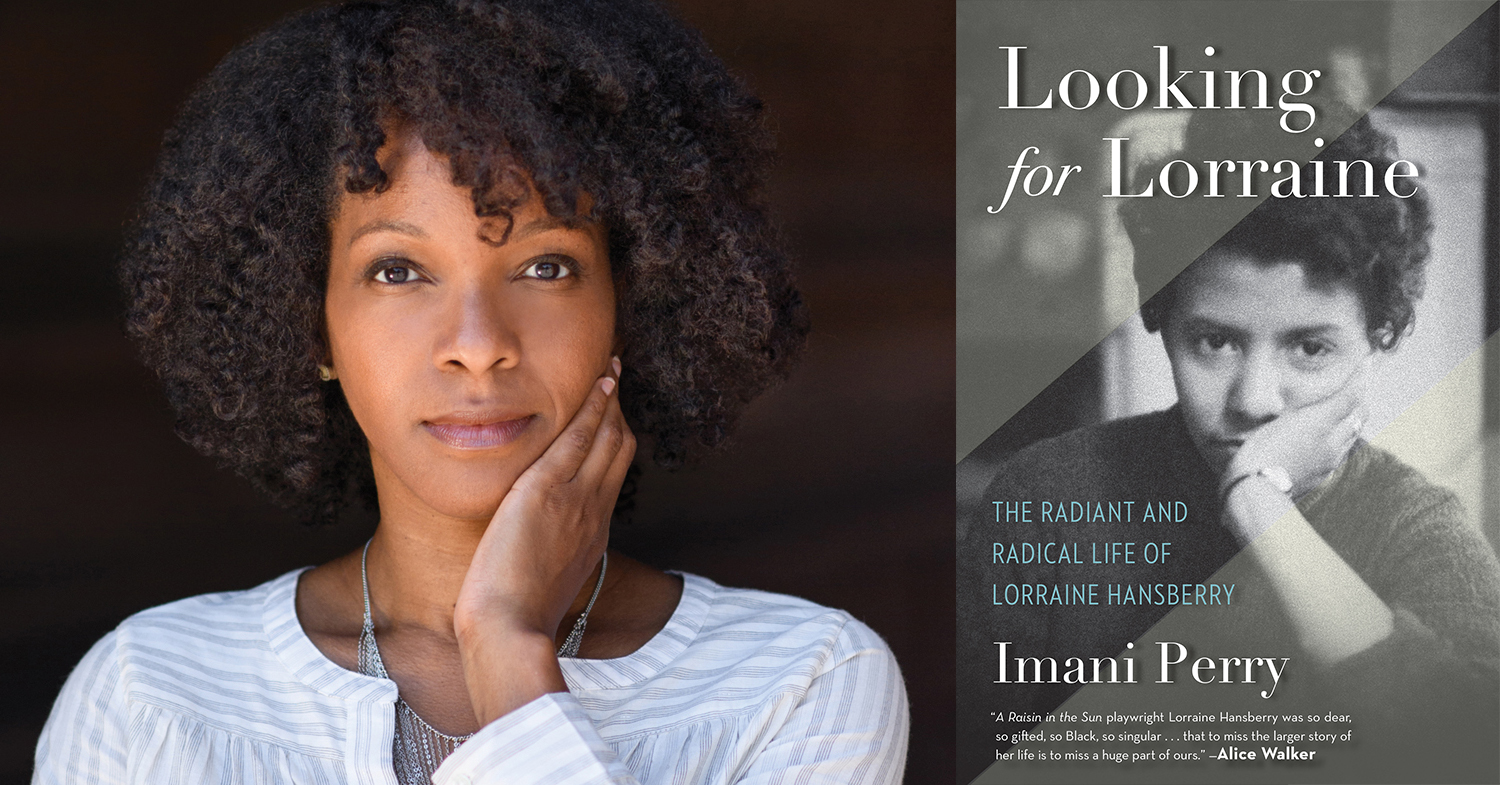
• A Q&A with Dominique Christina

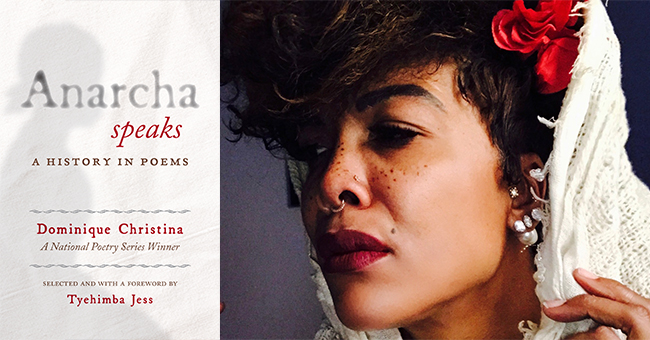
    Dominique Christina / Anarcha Speaks

    Now, more than ever, we’ve discovered that we need poetry not just to delight and uplift us, but poetry that interrogates our past and present, grieves our injustices, celebrates our ideals, and clings to our hopes. That’s what the poetry we publish does. For National Poetry Month, our blog editor, Christian Coleman, caught up with poet and artist Dominique Christina to chat about her collection, Anarcha Speaks: A History in Poems, from our National Poetry Series and why poetry matters in our politically fraught times.

    Christian Coleman: When you got into poetry, did you know at the start that there were social issues you felt the urge to talk about and address in verse? And if so, which issues did you have in mind then?

    Dominique Christina: No. When I got into poetry, I was just trying to expel my own ghosts. No lofty notions about saving the world or addressing the ills therein. I just didn’t want to get off the planet with all of those skeletons hanging on my neck. I realized pretty quickly, though, that my personal traumas reflected my/our historical traumas, and in that regard, whatever medicine I am offering to myself, I am also hoping to speak into the dis-ease in such a way that there is balm enough for all of us. 

    CC: You said in our previous Q&A that you wrote Anarcha Speaks because Anarcha, an enslaved Black woman who was subjected to medical experiments by Dr. J. Marion Sims, needed a reckoning. You also shine a light on an aspect of American slavery history that isn’t popularly discussed: medical experimentations on the enslaved. Did you have other goals in mind for the collection, other things for readers to take away from Anarcha’s story?

    DC: I would hope that readers would be inclined to examine the history of medical experimentation on colonized bodies from the medical treatment of slaves during the Atlantic Slave Trade, to experiments done on enslaved women who suffered labor and delivery trauma with focused attention (obviously) paid to Anarcha, to Samuel Cartwright’s coining of the term “drapetomania” to describe the phenomena of slaves running away and deeming it a mental condition, to human zoos and the legacy of Saartjie Baartman (Hottentot) to the Tuskegee experiments, to the connection between the eugenics movement and medical apartheid in America, to experiments of black prisoners in the 1990s and present-day realities for African Americans who are still subjected to medical disparities and “othering.” Oh yes. I want folks to be willing to examine all of it. I do. 

    CC: Were you surprised after finding out in your research that the gynecological treatments that are still in practice today resulted from the experiments Anarcha endured?

    DC: I was not surprised to learn the history of gynecology. Anybody who has ever had a pap smear will likely understand my lack of surprise. It is torturous. It is. Procedurally, gynecological exams are incredibly triggering and counter-intuitive to women and how our bodies work. So no. Not surprised. Just deeply sad and perpetually offended. 

    CC: How do you see Anarcha Speaks speaking to today’s issues of medical racism? I’m thinking about the CDC’s findings of Black women in the US being three to four times more likely to die during pregnancy than white women.

    DC: I would hope that Anarcha’s story illuminates the terrifying and maddening reality that these things still occur. A brilliant black poet named Walela Nehanda experienced this first hand recently in Los Angeles when they went into the emergency room with a bronchial infection as a result of being immunosuppressed from chemo and cancer. They were disregarded, mishandled, and misdiagnosed in such a way that it was actually life threatening. My sister Rachel McKibbens, Chicana poet, went to the hospital with pneumonia and bronchitis. She was given albuterol. Multiple treatments. And somehow the doctors didn’t notice she was having an obvious allergic reaction to the albuterol which was causing her lungs to actually close. I recognize that not every medical mishap is nefarious but there is a necessary conversation about how often women of color are ignored in those situations and how their bodies are still participated on in a way that dehumanizes and devalues them. 

    CC: Last year, the Atlantic published an article about the resurgence of poetry across various media and how poetry, despite numerous predictions of its death, is more than alive and well and finding more readers who are younger (18-24), women, and people of color. What’s your take on this and on the state of poetry in our politically fraught times?

    DC: Listen. Don’t pay attention to ANYBODY who says poetry is on the decline. Poetry is the people. We are the real translators and legislators of this world. We show you how possible language is. How magic it is. I’m a heathen but . . . what’s the Bible say? “In the beginning was the word?” That part. Poetry is forever.

    CC: And lastly, how do you see poetry raising awareness around issues of social justice or being an agent of change?

    DC: I am about raising consciousness. And again, poetry is language without a life jacket. It is dangerous. It is witchcraft. It takes risks. It offers much. It redeems. It convicts. And we need that. The culture needs that. That’s what poetry does. It raises consciousness. It is a culture keeper and a culture creator. And . . . we’re gonna win.


    About Dominique Christina 

    Dominique Christina was a classroom teacher at the secondary and post-secondary level for ten years. She was the National Poetry Champion in 2011 and Women of the World Slam Champion in 2012 and 2014. She is the author of The Bones, The Breaking, The Balm; They Are All Me; and This Is Woman’s Work. She has been a featured speaker at hundreds of colleges and universities nationally and internationally. Follow her on Twitter at @nyarloka and visit her website.

  • By Rebecca Todd Peters

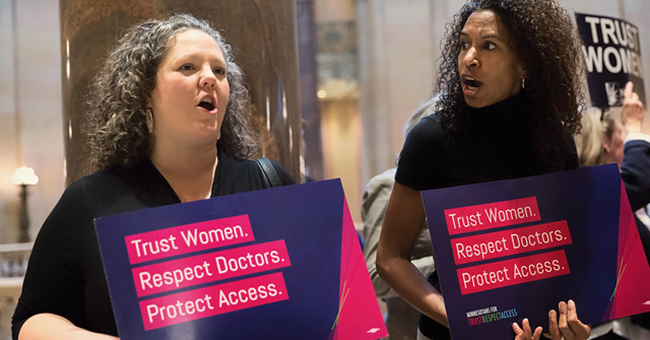
    Stand up Fight Back Rally at the Minnesota State Capitol Rotunda. Photo credit: Lorie Shaull

    Stand up Fight Back Rally at the Minnesota State Capitol Rotunda. Photo credit: Lorie Shaull

    It’s like what Rebecca Todd Peters writes in her book Trust Women: A Progressive Christian Argument for Reproductive Justice. Margaret Atwood’s classic dystopian novel The Handmaid’s Tale continues to strike a chord because of the antiabortion bills we see passed in real life during our current administration. Georgia Senate recently approved a strict ‘fetal heartbeat’ bill. So have Kentucky and Mississippi, and other states like Ohio are considering similar bills. It’s polices like these, as Peters explains in the following passages from her book, that serve as ways to punish and police pregnant women and their bodies.

    ***

    Imagine a society with widespread stillbirths, miscarriages, and genetic deformities linked to sabotage and accidents at nuclear facilities, chemical and biological toxins leaking into the water supply, and the uncontrolled use of chemical insecticides and herbicides. Imagine now that in addition to dropping birth rates from this environmental apocalypse, a new strain of syphilis and rapidly increasing death rates from AIDS wipe out large segments of young, sexually active people from the reproductive pool. Could you imagine that in such a world, the fertility of the ruling class becomes so completely compromised by these disasters that many women can no longer conceive and bear children and the whole social order threatens to fall apart? This is the background of Margaret Atwood’s iconic dystopian novel The Handmaid’s Tale. In the story, a coup by patriarchal, right-wing Christians leads to the suspension of women’s rights and the absolute control of the lives of fertile women.

    Like all good dystopian literature, Atwood’s tale is chilling because the social problem she describes is so plausible. The absolute social control of women and their bodies is neither fictional nor solely historical. Rather than inventing new horrors for her society, Atwood adopts aspects of the reality of women’s lives around the world and incorporates them into her fictional society of Gilead. The shock value comes from seeing the US as a society where women are stripped of their legal and human rights and subject to the absolute authority of a fundamentalist Christian theocratic state. In this new society, sex is reduced to procreation and fertile women are forced to bear children for the elite members of society. The sexual servitude of the “handmaids” is justified by invoking the biblical practice of surrogacy, where matriarchs like Sarah, Rachel, and Leah “gave” their servants or handmaids to their patriarch husbands for the purpose of childbearing.

    Though written more than thirty years ago, The Handmaid’s Tale remains a cultural touchstone in the US. And no wonder: women’s access to safe, legal, and affordable abortion is under siege by conservative Christian politicians who have had increasing success in using public policy to promote a patriarchal and pronatalist agenda. In the five years between 2011 and 2016, there were 334 abortion restrictions enacted at the state level, far exceeding the 189 enacted in the previous ten years. The bulk of these recent regulations affect the most vulnerable women in our society, namely, poor, young, and minority women. In addition to restricting access to abortion services, the state has increasingly sought to legislate sexual morality through abstinence-only campaigns in public schools and by increasingly impeding women’s access to contraception. In a country where pregnant women are being detained, arrested, and prosecuted for “crimes” related to their pregnancies; where some female prisoners are shackled during childbirth; and where pregnant women can be compelled to undergo surgery and other medical procedures against their will, we have to recognize how state and federal laws, judicial decisions, and law enforcement agencies are sanctioning and engaging in the public abuse of women. And the government’s actions are often conducted at the behest of conservative Christian activists and politicians.

    This abuse is possible because the justification framework has shaped a cultural atmosphere where the public tacitly accepts the idea of pregnancy as punishment for assumed immoral or irresponsible behavior. Let’s stop and think about that for a moment, because the idea is quite remarkable—pregnancy as punishment. Having a child as punishment. As a Christian, a woman, and a mother, I find the notion of childbearing as punishment abhorrent. Parenting should be willfully and joyfully entered into. But in an atmosphere that accepts the idea of pregnancy itself as punishment for women’s sexual activity, it is a short step to allowing, even encouraging the adoption of public policies that police, control, and punish women for their sexual activity and their reproductive decisions.

    ~~~

    In June 2015, twenty-three-year-old Kenlissia Jones was arrested in Georgia on suspicion of murder after she took medication and self-induced an abortion to end her twenty-two-week pregnancy. The charges were dropped three days later (and Jones was released from jail) after authorities clarified that women could not be prosecuted for abortions involving their own pregnancies.32 In Indiana, Purvi Patel was not so lucky. Just weeks earlier, in April, Patel was sentenced to twenty years in prison for her self-induced abortion under that state’s feticide law. Then, six months later in December, Anna Yocca used a coat hanger to self-induce an abortion at twenty-four weeks in Tennessee. After her extensive blood loss, Yocca’s boyfriend took her to the hospital, where she delivered a 1.5-pound baby boy via C-section. In January 2017, after serving one year in jail and having two sets of charges dismissed without her release, Yocca agreed to plead guilty to a nineteenth-century law criminalizing any “attempted procurement of a miscarriage.”

    These three cases represent high-profile public stories. They do not, however, represent the majority of women who have abortions or even most women who have second-trimester abortions. These women were clearly desperate and unable to access safe and comprehensive medical care, including legal abortion procedures. Despite claims by proponents of feticide laws that the laws are not intended for putting women in prison, the Patel and Yocca cases demonstrate the very real threat that feticide laws pose to pregnant women.

    Women attempting to self-induce abortions are not the only ones who have been under scrutiny in recent years. In December 2013, Bei Bei Shuai, a Chinese immigrant who was eight months pregnant and living in Indiana, ate rat poison in an unsuccessful suicide attempt. A week later, she gave birth to a daughter. When the baby died three days later, prosecutors charged Shuai with murder and feticide. The case was eventually settled when Shuai pleaded guilty to the lesser charge of criminal recklessness after it was revealed that drugs she had received at the hospital might have played a factor in the baby’s death.

    In 2010, Christine Taylor fell down a flight of stairs in her Iowa home while pregnant with her third child. After voluntarily going to the hospital to check on the health of her prenate, she confided in the nurse that she had been thinking about either abortion or adoption because of the stress of her separation from her spouse and the prospect of raising three children as a single parent. When the nurse promptly told a doctor that she suspected Taylor had thrown herself down the stairs, the doctor called the police, who arrested and jailed Taylor on charges of “attempted fetal homicide.”

    Several states, including Virginia, Georgia, and Kansas, have proposed legislation that would require women to report and explain their miscarriages to police within twenty-four hours. While none of these bills have yet been enacted into laws, the bills, and the cases above, are a further indication of increased suspicion of pregnant women and increased public tolerance for monitoring and controlling the behavior of pregnant women. In some places the negative public-health implications of other laws that seek to punish women for problems like drug addiction are slowly being recognized, but only after serious damage has already occurred. In 2016, Tennessee legislators allowed a 2014 fetal-assault statute to expire after legislators recognized the profound damage the law inflicted on pregnant women and their newborn babies, as many women avoided prenatal care rather than risk incarceration.

    If we accept that public policy ought to set broad moral guidelines for society, then the goal of that policy ought to be justice and the common good. While public policy sets the boundaries that shape our moral lives together as a society, public policy is not usually used to monitor or control individual citizens’ moral choices.

    The US government is built on the principle of social contract theory as developed in the seventeenth- and eighteenth-century philosophical tradition of Thomas Hobbes, John Locke, and Jean Jacques Rousseau. The idea of the “social contract” begins with a recognition that nature is a primitive state without any laws or morality. Human capacity for reason, cooperation, and organization has allowed us to create governmental systems that provide for a more orderly state of existence for humankind. The principle behind the social contract is that citizens agree to give up some measure of freedom or individual liberty to secure a more civil and safe social environment. Most of our contemporary political debates are about the nature of the social contract: First, how much individual liberty should we concede to the government in return for security? And what role do we collectively agree is acceptable for the state to play, particularly in issues that begin to encroach on personal liberty? US citizens have generally rejected perceived infringements of civil liberties, including actions like mass surveillance or attempts to curtail free speech or the right to bear arms. Despite this rejection, women’s ability to exercise their legal rights to abortion has increasingly fallen victim to the patriarchal desire for control of women’s sexuality and women’s bodies.

    Public policy about controversial social issues is fraught with the difficulty of creating legislation that reflects the public’s best sense of moral good for society in the midst of differing perspectives. Since 2011, Americans United for Life (AUL) and its conservative allies in state legislatures across the country have had some success in pushing through various laws that ultimately restrict women’s access to abortion in the United States. However, the public also bears some responsibility for this shift, either for electing these politicians or for accepting the argument that these laws are reasonable and that they function to protect women. While the Whole Woman’s Health decision was a critical victory for women’s health, the public’s interest in the morality of abortion will not be resolved through the courts. As a nation, we must attend to deeper questions related to the morality of abortion—questions that go beyond the questions of legal access. Our public-policy struggles reflect an anxiety about the issue of abortion, and this anxiety confounds productive public debate and often allows us to accept restrictive policies that we would not tolerate under other circumstances.

    The most important factor for many people in assessing the morality of abortion is the reason why a woman wants to end her pregnancy. This focus, in and of itself, is evidence that how we think about abortion is shaped by our judgment of women and their motivations. If a woman wants to end her pregnancy because her life is in danger or because she was raped, it is deemed tragic but acceptable and this woman is viewed as a victim in need of support. If a woman wants to end her pregnancy because she cannot afford a child or she wants to finish school or it’s not a good time for her professionally to have a child, she is viewed as selfish and is scorned by society. If she is addicted to drugs or didn’t use birth control, she is judged irresponsible and shamed for her careless attitude and behavior. But a woman who seeks an abortion for sex selection is condemned in the most hostile terms of all.

    While some people may find the decision to have an abortion for sex selection repugnant or the decision to terminate a pregnancy in order to finish school selfish, the reality is that women are basing their decisions to terminate for countless social reasons. Women consider abortions within a complex set of social factors that include the individual woman’s life circumstances (including her health, mental state, financial situation, intimate relationship with the father, existing responsibilities, and the actual or potential health of the prenate) and the sociopolitical and cultural circumstances in which she lives. Denying individual women the ability to control their fertility and make decisions to positively affect their future is a punitive and harassing strategy that only succeeds in punishing women (and their existing or future children). It does not address the larger social problems that often prompt women to seek abortions.

    Social attitudes that compel women to desire a child of a particular sex, so much that they are willing to terminate a pregnancy of the “wrong” sex, is a larger social problem that needs to be addressed. Likewise, if 73 percent of women obtaining abortions indicate that they cannot afford a child (or another one), we could enact social policies to assist women in having and caring for these children. However, as we know from public-policy debates about welfare, there is very little political will and public support of financial assistance for poor women and their children. If women are deciding to abort because of social pressures they face, those pressures need to be addressed rather than sanctioning women who are basing their personal decisions on the social climate that they inhabit.

    If we are truly concerned about the health and well-being of pregnant women and their children, then we ought to be addressing through our public policy the social problems that women cite as contributing to their decisions to terminate a pregnancy. We have seen that these problems relate to many aspects of a woman’s life: affordable housing and daycare, free and dependable access to reliable birth control, a culture of racism that threatens the health and well-being of black and brown children, prejudice against people with disabilities, and social attitudes that cause families to prefer boy children over girl children. Whatever problems women are facing, we need to tackle the social problems themselves rather than punishing women for the responsible decisions they make within their social worlds. Although abortion is legal, the majority of public-policy decisions related to abortion since Roe v. Wade are rooted in a basic distrust of women. The patriarchal desire to control women prevents us from trusting women’s ability to assess their circumstances and make good and moral decisions about their families and their futures.


    About the Author 

    Rebecca Todd Peters is Professor of Religious Studies at Elon University. Her work as a feminist social ethicist is focused on globalization, economic, environmental, and reproductive justice. Her books include In Search of the Good Life and Solidarity Ethics. Ordained in the Presbyterian Church (USA), she has been active denominationally and ecumenically for more than twenty-five years and currently represents the PC (USA) as a member of the Faith and Order Standing Commission of the World Council of Churches. Follow her on Twitter at @toddiepeters and visit her website.

  • By Jeanne Theoharis

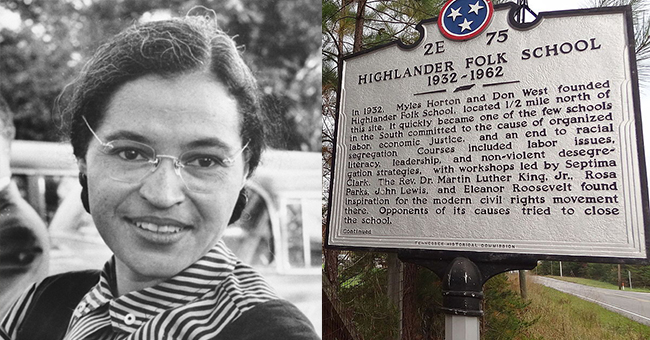
    Rosa Parks and Highlander Folk School Center

    We were devastated by the news of the fire that destroyed a building that housed the executive offices of the Highlander Research and Education Center. All those archives of civil rights history . . . gone. The loss is especially devastating, because Highlander Center, formerly known as Highlander Folk School, hosted Rosa Parks at workshops and training sessions. This excerpt from Jeanne Theoharis’s The Rebellious Life of Mrs. Rosa Parks shows just how pivotal and transformative the center was in Parks’s development as an activist.

    ***

    At the urging of both E. D. Nixon and Virginia Durr, in the summer of 1955, Parks decided to attend a two-week workshop at the Highlander Folk School entitled “Racial Desegregation: Implementing the Supreme Court Decision.” The Durrs had worked with Nixon on various civil rights cases, and on Nixon’s recommendation, Parks had started sewing for the Durr family, one of Montgomery’s most liberal white families. Due to their politics, the Durrs had been ostracized by many white friends and colleagues, Clifford giving up a position at the Federal Communications Commission in Washington because he refused to sign a loyalty oath. Virginia was even more of a firebrand, chairing Henry Wallace’s 1948 Virginia campaign (Wallace was the Progressive Party’s candidate for president), running for Senate herself on the Progressive ticket, and going head-to-head with Senator James Eastland when he called her in front of the Senate Internal Security Subcommittee on charges of having Communist ties. The Durrs moved back to Montgomery in 1951 (both Virginia and Clifford had grown up in Alabama). Most white Montgomerians wanted nothing to do with them, making Clifford’s law practice in these years somewhat precarious and Virginia quite isolated. The Durrs had three daughters and not a lot of money, in part stemming from this red-baiting, and their relatives would send them old clothes to help out. Needing more income for her family, Parks began sewing for them in 1954, altering the clothes to fit the three girls and fashioning some of the garments for the Durrs’ daughter Lucy’s wedding trousseau. Durr and Parks spent a lot of time sitting and talking. Despite and alongside the gulf between white and black women in 1950s Alabama, the two grew friendly, though Parks maintained a certain formality with her employer.

    A member of Highlander’s board of directors, Durr had seen the work Parks was doing with the NAACP Youth Council and knew how discouraged Parks had grown. As Parks recalled, “After that, I began getting obscene phone calls from people because I was president of the youth group. That’s why Mrs. Durr wanted me to come up here and see what I could do with this same youth group when I went back home.”

    Myles Horton had cofounded the Highlander Folk School in Monteagle, Tennessee, in 1932 as a grassroots, interracial leadership training school for adults. The school held workshops to help local people develop strategies for pursuing social change and cultivate their own leadership skills. In the mid-1950s, Highlander, which had been integrated from its beginnings in the 1930s, had started to turn its attention to civil rights, having previously concentrated on labor and anti-poverty organizing, largely with white Appalachians.

    Though blacks had previously numbered about 10 to 15 percent of Highlander’s participants and had not spoken much at the meetings, the workshop Parks attended signaled a change. About half the participants at that workshop were black, and people participated avidly.

    Horton had called Durr to tell her he had a scholarship for someone from Montgomery to attend the desegregation workshop. Durr immediately thought of Parks and how Highlander might help renew her embattled spirit. Nixon also urged Parks to go. Durr also called her friend Aubrey Williams, another liberal white Southerner and the publisher of the Southern Farmer, for further financial support because Mrs. Parks could not afford the roundtrip bus ticket to Tennessee.

    Parks described her state of mind as she embarked for Highlander as “rather tense and maybe somewhat bitter over the struggle that we were in.” She was “willing to face whatever came, not because I felt that I was going to be benefited or helped personally, because I felt that I had been destroyed too long ago.” Parks’s language reveals the toll that more than a decade of civil rights work had taken on her. Seeing little possibility for racial justice in her life and frustrated with attempts to pursue any form of school desegregation in Montgomery, she placed her hope in the younger generation and in trying to ensure that the Supreme Court’s decision was carried out “as it should have been.” Increasingly, she focused her efforts on the youth chapter, from which she hoped more determined action might come.

    Upon receiving the Highlander scholarship, Parks wrote a thank-you letter conveying her eagerness to attend the workshop and mentioning that she knew two of the speakers, Dr. Charles Gomillion of Tuskegee Institute and Ruby Hurley, NAACP regional field secretary. Parks took two weeks off from her job as an assistant tailor at Montgomery Fair to attend, a significant request and economic sacrifice.

    Parks tried to get her husband to go to Highlander with her, but he refused. According to Brinkley, Raymond was “irate” about Rosa going because he considered the school suspect. This may have stemmed from his work with Communists and former Communists in the Scottsboro case. Rosa’s mother was not well, but this did not stop her from going: “Parks and my mother could get along without me. He would cook.” As a young person, Raymond had taken care of his own mother and grandmother and, as Rosa’s activities took her away from home more often, he assumed some of the caretaker role for her mother.

    Because Parks was fearful of being discovered going to Highlander, Durr accompanied her part of the way. “Just getting on the bus,” Parks recalled in language that even decades later reveals how nervous she had been, “I found myself going farther and farther away from surroundings that I was used to and seeing less and less of black people. Finally I didn’t see any black people and was met by this white person. I said to myself that I didn’t know where I was going, but they seemed to be nice enough . . . I was somewhat withdrawn and didn’t have very much to say. Finally I relaxed and enjoyed the stay there very much throughout the entire workshop.” The county where Highlander was located was all white—and though the school was integrated, Parks was initially nervous at being surrounded by white people.

    From July 24 through August 6, forty-eight people—teachers, union activists, civic leaders, and college students, about half of them black and half white—participated in a workshop designed, according to Highlander’s report, “for men and women in positions to provide community leadership for an orderly transition from a segregated to a non-segregated school system in the South.” The first few days, Rosa Parks barely talked at all, nervous about whether the whites in the group would actually accept her perspectives and fearful about describing the difficult situation activists faced in Montgomery. But she admired Highlander’s founder Myles Horton’s spirit and sense of humor. “I found myself laughing when I hadn’t been able to laugh in a long time.” And she started to grow more comfortable.

    White and black people at Highlander lived, ate, discussed, and debated together—which was, by Southern standards, unimaginable. Parks particularly liked Horton’s tongue-in-cheek response to reporters who repeatedly asked how he managed to get blacks and whites at Highlander to eat together. “And he says, ‘First, the food is prepared. Second, it’s put on the table. Third, we ring the bell.’” Parks found herself “cracking up many times” at Horton’s way of pointing out the absurdity of segregation. Her spirits lifted. The variety of ways that Highlander subverted racial custom delighted Mrs. Parks. One of her favorite aspects of the two-week workshop was waking to up to “the smell of bacon frying and coffee brewing and know[ing] that white folks were doing the preparing instead of me.”

    Septima Clark, a former South Carolina teacher, ran a number of the workshops. Two years earlier, she had attended her first Highlander workshop. Like Parks, Clark was friendly with a handful of white civil rights supporters, yet the interracial living impacted her as well. “I was surprised to know that white women would sleep in the same room that I slept in,” Clark observed, “and it was really strange, very much so, to be eating at the same table with them, because we didn’t do that.” Cobb echoed Clark’s feelings. “The eating together . . . I’ve always felt that eating together is a social sacrament.” For Parks and others, the naturalness of the Highlander’s integration—evident but not belabored—was key. Parks had participated in integrated groups and meetings, in particular Montgomery’s integrated Council of Human Relations. But she had disliked those meetings, telling Virginia Durr, “Every time I went to one of those meetings, I came away blacker than I was before, because everything was discussed in terms of race.”

    Septima Clark had lost her teaching job of forty years when she refused to give up her membership in the NAACP. After the Supreme Court’s decision in Brown v. Board, many states red-baited the NAACP as a foreign and potentially subversive organization; the state of South Carolina required all employees to renounce their membership or lose their jobs. Clark had chosen to retain her membership and forfeit her position—and in 1955 had come to work at Highlander full-time. Parks was “very much in awe” of Clark. Despite her own political history, Parks believed Clark’s activities made “the effort that I have made very minute” and hoped for a “chance that some of her great courage and dignity and wisdom has rubbed off on me.” Parks noted how Clark “had to face so much opposition in her home state and lost her job and all of that. She seemed to be just a beautiful person, and it didn’t seem to shake her. While on the other hand, I was just the opposite. I was tense, and I was nervous and I was upset most of the time.” Parks found Clark’s calm determination remarkable.

    The respite she found at Highlander was evident in her descriptions from a 1956 interview in which she described its “relaxing atmosphere” that was “more than a vacation but an education in itself.” She found “for the first time in my adult life that this could be a unified society, that there was such a thing as people of all races and backgrounds meeting and having workshops and living together in peace and harmony.” The atmosphere proved a salve for some of the psychic exhaustion she had been feeling and began to transform what Parks imagined was possible, a society not riven with racism. “I had heard there was such a place, but I hadn’t been there.”

    The school had a strong Christian sensibility. As with Parks, Horton’s revolutionary inspiration was Jesus who, Horton observed, “simply did what he believed in and paid the price.” This Christian view of social justice—that Christianity required activism and also buttressed it—squared with Parks’s worldview. Christian social thinker Reinhold Niebuhr, one of Martin Luther King’s theological inspirations, would be one of the school’s strongest supporters.

    Johns Island organizer Esau Jenkins explained the purpose behind Highlander’s workshops. “Well, we was talking about civil rights, constitutional rights, the Bill of Rights, and anything that is your right—if you don’t fight for it, nobody going to fight for it. You going to have to let people know, I’m not going to let you do this to me or do this to my people without . . . my opinion against it.” Even though she didn’t speak much during the workshops, Parks took copious notes during the sessions, detailing what each speaker said. On one page, she framed the question of gradualism versus immediacy, a key issue in school desegregation implementation. “Gradualism would ease shock of white minds. Psychological effect. Disadvantage—give opposition more time to build greater resistance. Prolong the change.” She then outlined how to formulate a social action program:

    1. Policy not to use persons with record of trouble with law. Give them something to do where they will not be in forefront of action.
    2. So people should be, as far as possible, economically independent. Not owe too many debts or borrow money from certain places.

    In another section, she described how teachers lost their jobs if they worked for school desegregation. Parks was thus more than aware of the economic ramifications of being publicly identified as an advocate for desegregation. And then with a prescience she could not have imagined, she wrote, “Desegregation proves itself by being put in action. Not changing attitudes, attitudes will change.” The point was to act and through that action, societal transformation would occur. Tellingly, Parks uses the term desegregation rather than integration—as many of her civil rights peers would—to signify that it was not a matter of having a bus seat or a school desk next to a white person but dismantling the apparatus of inequality.

    Participants in the workshop were encouraged to contextualize the problems facing their communities within a global movement for human rights and to come up with concrete steps to create change locally. According to Horton, Parks was “the quietest participant” in the workshop. “If you judge by the conventional standards,” Horton observed, “she would have been the least promising probably. We don’t use conventional standards, so we had high hopes for her.” Despite her reticence, the visit to Highlander was a transformative one for Parks, who had grown increasingly weary of pressing for change with little result.

    I was 42 years old, and it was one of the few times in my life up to that point when I did not feel any hostility from white people. . . . I felt that I could express myself honestly without any repercussions or antagonistic attitudes from other people . . . it was hard to leave.

    Highlander workshops always ended with a closing discussion called “Finding Your Way Back Home.” Clark asked participants what they planned to do once they returned home. “Rosa answered that question by saying that Montgomery was the cradle of the Confederacy,” Clark recalled, “that nothing would happen there because blacks wouldn’t stick together. But she promised to work with those kids, and to tell them that they had the right to belong to the NAACP . . . to do things like going through the Freedom Train.” Esau Jenkins recalled Parks referring to many in Montgomery as “complacent” and not likely to do anything bold. Many of the workshop participants agreed with her on the futility of trying to mount a mass movement in Montgomery. Parks worried about how blacks in Montgomery “wouldn’t stand together.” Horton could see how worn down Parks was. “We didn’t know what she would do, but we had hopes that this tired spirit of hers would get tired of being tired, that she would do something and she did.”

    Parks found it difficult to return to Montgomery, “where you had to be smiling and polite no matter how rudely you were treated.” Because Mrs. Parks feared white retaliation for her participation in the workshop, Clark accompanied her to Atlanta and saw her onto the bus to Montgomery. Parks also insisted on being reimbursed for her travel in cash, fearing that a check from Highlander would draw harassment. A black teacher from Montgomery who also attended the workshop had not even told people at home where she was going, saying she was going somewhere else in Tennessee, for fear that she would lose her job if anyone found out.

    “Rosa Parks was afraid for white people to know that she was as militant as she was,” Septima Clark recalled. Clark’s observation in many ways summed up one of the paradoxes of Parks’s character. Parks often covered up the radicalism of her beliefs and her actions. Her reticence was evident even at a place like Highlander, where she was still reluctant to talk about the Freedom Train visit to Montgomery. Nonetheless, while she was scared of it being discovered she went to Highlander, she still was willing to be listed in a press release that highlighted her attendance at the school desegregation workshop.

    Parks looked to Clark and Ella Baker as role models as she sought to figure out how to be a woman activist when much of the visible leadership was made up of men and how to continue the struggle despite the vitriol of white resistance and the glacial pace of change. In spite of many years of political organizing, Parks still felt nervous, shy, and at times pessimistic about the potential for change. This process she went through is often missed in the romanticization of her bus stand as a spontaneous action without careful calibration. When Clark heard that Rosa Parks had refused to give up her seat on the bus five months after returning from the workshop, she thought to herself, “‘Rosa? Rosa?’ She was so shy when she came to Highlander, but she got enough courage to do that.” Indeed, the popular view of Parks as either an accidental or angelic heroine misses the years of gathering courage, fortitude, and community, which then enabled her to refuse to give up her seat. To be able to understand how Parks could have said aloud in front of other political organizers that nothing would happen in Montgomery, return to her political work in the community, and then five months later refuse to get up, demonstrates the political will at her core. She might not believe that anything would happen in Montgomery, but that didn’t mean she would not try to demonstrate her opposition to the status quo.


    About the Author 

    Jeanne Theoharis is Distinguished Professor of Political Science at Brooklyn College of CUNY and the author of The Rebellious Life of Mrs. Rosa Parks and A More Beautiful and Terrible History: The Uses and Misuses of Civil Rights History. Follow her on Twitter at @JeanneTheoharis and visit the Rosa Parks biography website.
  • Jill Dougan

    In these times when readers are responding to our books “more than ever,” when our authors—including Cornel West, Anita Hill, Robin DiAngelo, Charlene Carruthers, Howard Bryant, and Christopher Emdin—are appearing in the media, their ideas going viral on social media, their voices being heard on so many platforms, we thought it might be good to take a break to focus on some of the staff who work hard to find, shape, edit, produce, and promote those works. Our blog series “Beacon Behind the Books” introduces to you a member of our staff and gives you a behind-the-scenes look, department by department, at what goes on at our office.

    For the month of April, we introduce you to our business manager, Jill Dougan! 

    What drew you to publishing, Jill? How did you find your way to Beacon?

    When I was looking for my first job in 1989, I knew I wanted to work in Boston but hadn’t decided on a specific career path. I applied to be an administrative assistant at several companies and chose Houghton Mifflin, partly because my grandfather had worked for the company in the 1930s as a printer operator. I was drawn to the legal and financial aspects of the business and worked in various roles that helped me further my career with the company and later to run my own freelance publishing services business. I kept in touch with many of my wonderful colleagues, including Cliff Manko. Flash-forward to 2016: Cliff had recently joined Beacon Press and was looking to hire someone with royalty accounting experience. I jumped at the chance to work with Cliff again and to work for such an important publisher. I instantly felt at home at Beacon and look forward to coming to work every day.

    How much of what you learned in college have you found vital to your work?

    I took a winding path to complete college. After high school, I enrolled in an associate’s degree program, because I was not sure what I wanted to do for a career but knew I needed some basics to get my foot in the door. After working at Houghton Mifflin for four years, I went back to school at night and received my bachelor’s degree in Business Administration. Working and going to school full-time was very challenging but doing both at the same time allowed me to understand and apply what I learned in school to my real-life job immediately. The symbiotic context allowed me to succeed at both and is a technique I still use today when learning new tasks at Beacon.

    What skills have you taken from previous jobs to help you do your work at Beacon?

    I feel extremely fortunate that I had wonderful opportunities and mentors over my career. I have accumulated knowledge and a diverse set of skills in finance, management, operations, contract negotiation, rights and permissions, and royalty accounting—all of which play a role in my work here at Beacon.

    What is one book on our list that has influenced your thinking on a particular issue?

    I was very moved by The Good Death. We have come to believe that living as long as possible is living our best possible life. Medical technology can treat health issues and prolong life, but is that always ‘healthful’? We are so separated from death as a part of life that we are afraid it, automatically doing whatever medically possible to delay it. This book influenced me to believe that death—in comfort, at a person’s chosen time and terms—is a good death, especially when someone is suffering or has a terminal condition. Death in a hospital on medications and machines to keep a person in a state that meets the definition of ‘alive’ is not a good death. This book influenced me to explore volunteer opportunities in hospice care, which is something I would like to pursue.

    What are you reading right now?

    I have a habit of reading more than one book at the same time, which isn’t always ideal, but I can’t help myself! Right now, I’m reading an upcoming Beacon title, The Not Good Enough Mother by Sharon Lamb; her words are very relatable for all mothers. I’m also reading Beautiful Boy: A Father’s Journey Through His Son’s Addiction by David Sheff, and Humanimal: How Homo Sapiens Became Nature’s Most Paradoxical Creature by Adam Rutherford, which isn’t actually published yet, but I was lucky enough to acquire an advanced reading copy, and it is fascinating.

    In an alternate universe, what career would you have?

    I would be one of those people on the Travel Channel who go to exotic locations for a living, or I would be the Phantom Gourmet. How do you get one of those jobs?

    Favorite type of music?

    I love all kinds of music. Music was a big part of every day in my family, so I love everything from Nat King Cole to Georgia Florida Line. I’m still a big fan of the 80s metal bands, though. Motley Crue, G&R, Def Leppard—you name it. The bigger the hair, the better the band.

    Hobbies outside of work

    While I’m rocking out to Aerosmith and Van Halen, I like to run, especially in the warmer months when I can run outside. I also do weight training several days a week. On weekends, my husband and I like to try new restaurants or plan fun activities with our friends. We have two daughters in college, so it’s difficult to do things as a family, but when we are together, we love to travel. Finally, as all my colleagues at Beacon Press know, I am a huge New England Patriots fan!


    About Jill Dougan 

    Jill Dougan has twenty-nine years of experience in publishing, previously working with Houghton Mifflin, Pearson Education, and MPS North America. Jill’s previous experience includes rights and permissions work, author royalty management, contract negotiation and administration, and other financial capacities. Jill has a BS in Business Administration from Eastern Nazarene College. She lives in Abington with her husband and two daughters.

  • By Ben Mattlin

    Dr. Phil Interabled couples episode

    In early March, an angry, dysfunctional couple spewed their venom on the Dr. Phil show. That’s not unusual. What was, however, was that the young man—Bailey—was quadriplegic and the young woman—Harley—was not. She was the principal provider of his personal care.

    “You can be his caregiver or you can be his lover. You can’t be both,” declared the host, whose full name is Phillip Calvin McGraw and who holds a PhD in clinical psychology from the University of North Texas but is not actually a medical doctor. “This won’t work,” he concluded. “One hundred out of one hundred times, this won’t work.”

    The Internet reacted (#100OutOf100). People like me were offended. It was a patently absurd generalization. And I know that for a fact, because I wrote the book on it.

    In In Sickness and In Health, I interviewed more than a dozen interabled couples. Many of them used outside help or didn’t need much personal-care assistance at all, but in some cases, one partner provided for the other one hundred percent—for decades. So much for this won’t work.

    I admit I questioned them about this. The conventional wisdom says that having a lover provide all the help is a recipe for disaster. But these couples insisted that it works for them. In fact, they said it brings them a higher, deeper degree of closeness, understanding, and intimacy than many other couples enjoy.

    Sometimes couples have no choice. They can’t afford to hire aides, and there is nobody else to help. Yet they make it work. For others, though, it’s the most desirable option. They choose it.

    As a rule, I don’t watch Dr. Phil. But I watched this episode. I’d heard about it in advance from a friend—a couple whom I profiled in my book, actually. Hannah and Shane. They had been invited to be part of the program, but when they heard what it was about, they refused. Indeed, they were so offended they posted a vlog about it.

    “The girl was dealing with caregiver burnout, having trouble taking care for him all the time. And he was dealing with mental health issues and sadness and guilt, and apparently was taking out his anger on her. So, it was a really toxic relationship. [The producer] wanted us to give advice to them about how we make it work,” Hannah and Shane explained.

    They decided that it sounded as if the couple in question was dealing with “way more than just [being in] an interabled relationship. Being abusive and having those issues has nothing to do with having a disability.”

    Hear, hear! It’s too easy to blame disability for all of one’s difficulties. Disability is a terrific scapegoat.

    Hannah and Shane knew they weren’t qualified to give advice to the TV couple. They also understood that Dr. Phil’s guests are frequently “exploited and sensationalized [to make] drama for television,” they said.

    Most of all, they were concerned about the program’s message vis-à-vis disability.

    They made the right choice, I think, though I’d be awfully tempted to confront Dr. Phil head-on.

    My wife, ML, and I have often been tempted to get rid of all hired assistants. They never do as good a job as she can do. We often find ourselves working around their schedules and limitations, which is unpleasant and invasive. It would be nice to preserve our privacy.

    We even did it once. When our daughters were small, we figured that the only way ML could stay home with the kids was if we fired my helpers. People warned us that it was a mistake, but we knew it would only be temporary, till the kids were in school.

    Was it tough? You bet! ML had to do everything around the house and was constantly pulled between the kids’ demands and mine (let alone her own). I suffered too. I had always had outside help. Without it, I couldn’t always get my needs met. I lost a great deal of my sense of autonomy.

    ML and I did fight a lot during that time. She became increasingly depressed.

    After two or three years, however, I insisted that we hire someone part-time to help me. I had to ask my father for extra financial support. It felt like a good compromise.

    Once the kids were safely in preschool, she took a part-time job that was close to home. I increased my attendant’s hours. As the kids spent more time in school, ML spent more time at work. We survived the period of no-outside-help, of one hundred percent interdependency, and came out feeling closer and happier and stronger than ever.

    So I agree that having one partner provide one hundred percent of the custodial care for the other may not be ideal. It isn’t easy. It’s an arrangement that probably shouldn’t be entered into without a lot of communication and understanding—without some parameters, so it doesn’t feel like an endless trap. But it’s not necessarily a death sentence.

    Essayist Melissa Blake wrote in the blog Rooted in Rights that the show contained “more ableist tropes than should ever be allowed in 2019 . . . Why are we still buying into the ‘burden’ narrative when it comes to people with disabilities?”

    I agree. As a society, we should’ve learned by now that there are many flavors and colors and shapes of love. As long as no one’s getting hurt or abused, there are no hard and fast rules. It’s wrong to try to limit the bonds of affection, the types of love that we deem acceptable.

    Dr. Phil should know that. He should know that sometimes the worst obstacles that troubled couples face are the burdens of prejudice and smallmindedness. Saying that only couples that fit a certain model—a Dr. Phil model—are acceptable is nothing short of bigotry. It’s like saying that interracial couples are doomed because, well, they might not share certain traditions or the kids won’t know which tribe they belong to. These are arguments that used to be made and have by now been debunked.

    I only hope that the notion of interabled romance is becoming better understood and more accepted, despite trash TV like this. Shame on Dr. Phil for trying to set the clock backward.


    About the Author 

    Ben Mattlin is the author of Miracle Boy Grows Up and In Sickness and In Health: Love, Disability, and a Quest to Understand the Perils and Pleasures of Interabled Romance, and a frequent contributor to Financial Advisor magazine. His work has appeared in the New York Times, Los Angeles Times, Washington Post, Chicago Tribune, USA Today, and Vox, and on NPR. He lives in Los Angeles, California. Follow him on Twitter at @benmattlin and visit his website.

  • By Michael Klein

    American Civic Association Memorial Park at dusk. Photo credit: Michael Marsland

    American Civic Association Memorial Park at dusk. Photo credit: Michael Marsland

    Ten years ago today, the thirteenth-deadliest mass shooting in US history took place. Thirteen people were killed in the mass shooting at the American Civic Association immigration center in Binghamton, New York, during a class on citizenship. In response to the tragedy, poet Michael Klein wrote “The Talking Day.”

    ***

    Some lunatic with a gun killed some people at an
    immigration center in Binghamton, New York. Liz
    Rosenberg and her family live up there and David, her
    husband, teaches in the middle school which is close to
    all the action (the way, in any smallish town, everything is
    close to all the action). I called Liz to see if everyone was
    all right and she was in her car driving to the elementary
    school to pick up Lily, her young daughter she brought
    back from China a few years ago. Lily was fine, but
    Liz wanted to move her outside the question of how to
    make sense of the broken pieces of “someone” with a
    gun walking into a public space and then firing. There’s
    something called (I learned from a news report the day of
    the shootings at Virginia Tech) The Talking Day which
    refers to the day immediately following the day when
    something wildly violent happens. No one quite grasps
    the reality of the situation and everyone spends that first day
    talking about what happened and reliving it as language—
    not so much to understand the violence but to make a
    kind of recording of it: talking about it, letting go of it,
    putting it down. And so I imagine it must be with Liz and
    Lily and David in Binghamton, New York today: letting
    “something” go. Liz is in her car after having just picked up
    Lily at school and driving back home through a town that
    suddenly makes no sense and she is telling the story about
    what happened when a young man walked into a building
    with a gun. And for Lily, who’s had a pretty serene, un-
    violent United States time so far and whose endless joy
    has made her an adorable chatterbox, tomorrow could be
    her first talking day. Or, if not tomorrow, some other day.
    We live in a talking day world.
     
    ***

    Michael Klein’s “The Talking Day” appears in his collection The Talking Day and in Bullets into Bells: Poets & Citizens Respond to Gun Violence, edited by Brian Clements, Alexandra Teague, and Dean Rader.


    About the Author 

    Michael Klein is a Lambda Literary award-winning fiction writer, poet, and faculty member of the English department at Goddard College and The Frost Place Conference on Poetry. 

  • By Michael Coogan

    Sunshine

    Throughout history, many groups have thought of themselves as divinely chosen, exhibiting what has been called a “holy nationalism.” For the ancient Egyptians, the divine gift of the annual inundation of the Nile was proof they had been specially chosen; the Egyptians’ neighbors, whom they called “the vile Asiatics,” had clearly not been chosen, because their equivalent of the dependable Nile was unpredictable rain. Roman poets such as Virgil and Ovid celebrated the divine plan that had brought Aeneas from the burning ruins of Troy to Italy, from where eventually the emperor Augustus would rule the Mediterranean world. But one ancient people’s claim of divine chosenness has profoundly affected religious and political self-identification for thousands of years, especially in the West: the biblical view that God, the only God, has a favorite people, the Israelites. Beginning in the early chapters of the book of Genesis, chosenness is attached to individuals whom God supposedly preferred—Abraham, Isaac, and Jacob—and is inherited by their descendants, who have a special status because God chose their ancestors. Although in the pages of the Bible some of those originally chosen eventually became excluded, the concept of chosenness continued to be applied to subgroups within the original chosen people. Subsequently, still others applied the concept to themselves, asserting that those originally chosen had been divinely rejected because they had proven unworthy.

    From antiquity to the present, the idea of being divinely chosen has had powerful and often pernicious effects. If only one group has been divinely chosen then others have not been, and that justifies subjugating them and taking their land. Such rationalization has been used repeatedly, in the most virulent forms of anti-Semitism, in the enslavement and even extermination of aboriginal peoples, and in the confiscation of land by force from those not chosen—be they Canaanites, Jews, Muslims, Africans, Native Americans, Palestinians, and too many others.

    The concept of chosenness—often called election—is a difficult theological problem. Does God—the one god of Judaism, Christianity, and Islam—have favorites? Does God really prefer some individuals and groups over others? Are not his love and his mercy universal? Does God in fact choose at all? Philosophers and theologians have wrestled with this issue since biblical times.

    What is not always admitted by both Jewish and Christian biblical scholars is that historical-critical investigation of their respective scriptures is fraught with tension. Most were, and continue to be, drawn to their specialization because of their religious background. Many were, and continue to be, active participants in their respective religious traditions. Many were, and also continue to be, ordained rabbis, priests, and ministers. That in itself is not surprising, but it has consequences. One is that many—if not most—scholars who are also believers suffer from what I would diagnose as a kind of intellectual schizophrenia. Here is an example: for the biblical writers, monotheism was neither obvious nor present from the beginning. However, monotheism, the belief in only one god, the biblical god, still informs the perspective of most biblical scholars. Although most of them do not think that the world was created in six days, that millions of Hebrews escaped from Egypt under Moses’s leadership, or that Jesus was born in Bethlehem, and although most of them do not think that God is the author of the Bible, many of these scholars—along with most members of the religious communities to which they belong— continue to believe that God made at least one people, the ancient Israelites, his chosen people. Thus, they accept, at least implicitly, the authoritative status of the Bible as a kind of record of divine revelation, despite their professed objectivity.

    When I teach, I try to be careful not to promote my own views. My goal is not to get anyone to believe something or to stop believing something. I want to get students to think about what a text says, to consider what it meant when it was written, rather than what they presume it means. I also ask students to think about how the Bible is, or is not, relevant for today. At the end of one semester of teaching an introduction to the Hebrew Bible/Old Testament, a student asked me, “Are you Jewish or are you Christian?”—a question that to me at least indicated that I had succeeded in presenting the scriptures of ancient Israel and early Judaism objectively. In this sense, the study of the Bible is like the study of religion more generally. One does not need to be a Hindu to interpret the beliefs and practices of Hinduism, nor a Muslim or Jew or Christian to interpret Islam or Judaism or Christianity, respectively—although some believers in those traditions might disagree.

    Complete objectivity, however, is an impossible ideal, for we are all influenced by our backgrounds. Here is my story. I was raised a Roman Catholic. In my childhood, we Catholics, attending parochial school, thought of ourselves as superior to our Protestant and Jewish neighbors who attended public school. We, after all, had the truth, by divine grace and divine choice. The others languished in partial knowledge or even in assured damnation.

    The time was the 1950s, when the sense of being divinely chosen was a national, not just a denominational conviction. “Under God” was added to the Pledge of Allegiance to distinguish us Americans from our mortal enemies, the godless Communists of the Soviet Union. “Savior of the world, save Russia!” was a frequent prayer. I went to an all-boys Jesuit high school in New York City whose motto was Deo et patriae (“For God and the fatherland”). It had a very good Renaissance curriculum: four years of Latin, three of ancient Greek, two of German or French, plus English, theology, and some—not much—mathematics and science. It was very Catholic, with the smug intellectual superiority that Jesuits often display.

    After high school, I joined those Jesuits, and over the course of the next ten years found my calling: the study of the Bible. I learned Hebrew and Aramaic, and with my superiors’ blessing began graduate school in the Department of Near Eastern Languages and Literatures at Harvard University. I was swaddled in layers of chosenness and privilege, not a doubt in my mind.

    All that changed, quickly, in May 1969. As a witness to and occasional participant in both the campus and the national opposition to what we call the Vietnam War (which the Vietnamese call the American War), I lost my faith in the institutions that had reinforced my sense of chosenness—the United States, the Roman Catholic Church, the Jesuits, and the university. At the same time, in my own intellectual development I was retracing the development of the historical-critical method. I came to realize that the Bible was not God’s word but the words of men, mostly, and a few women who lived long ago, with assumptions often very different from ours. The Bible was not unique, and its claims of chosenness were also to be found in texts of its neighboring cultures. I stopped believing in the biblical god, or in any god. I left my swaddling clothes behind.

    Let me digress briefly on the nature of the biblical god. In the Bible, God is in many respects a literary character, frequently described anthropomorphically. Like us—and like gods and goddesses in other ancient literatures—he can be angry, jealous, loving, vengeful, capricious, forgiving, and so on. He is only sometimes the more abstract god—the all-powerful, all-knowing, all-good supreme being—of philosophers and theologians. Still, this more abstract god is at least partially derived from the Bible, in whose various layers the more congenial and more sublime character of God can also be found. As I discuss the biblical god’s choices of individuals and groups in the chapters that follow, I will focus mostly on how the Bible itself presents him, but I will also suggest that that presentation is not always consistent with how we would like God to be.

    So, I wrote God’s Favorites as a biblical scholar, fairly confident that I have brushed away the cobwebs of dogmatism and set aside my own presuppositions. As we work our way chronologically through representative biblical passages and their appropriations by later groups, we will find that chosenness is a self-designation for political and personal aggrandizement: just because individuals or groups assert that they have been chosen by God does not make it so, and just because it is in the Bible does not make it true. But I will further suggest that some biblical ideas and ideals might continue to inform our thinking and our actions today.

    I also wrote God’s Favorites in the perhaps naïve hope that just as many of us—scholars and students, believers and nonbelievers, Jews and Christians and others—have given up creationism, patriarchy, and homophobia (despite what the Bible says), so too (despite what the Bible says) might we abandon the tribalisms that lead one group to claim superiority over all others, tribalisms that are in effect unholy nationalisms that have had and continue to have lethal consequences. We should, I think, give up the myth of divine election, a myth that has caused so many walls to be built and wars to be waged between members of our human community rather than uniting it.


    About the Author 

    Michael Coogan is Lecturer on Old Testament/Hebrew Bible at Harvard Divinity School and Director of Publications for the Harvard Semitic Museum. He is the author of The Old Testament: A Historical and Literary Introduction to the Hebrew Scriptures, The Old Testament: A Very Short Introduction, and A Reader of Ancient Near Eastern Texts: Sources for the Study of the Old Testament. His most recent book is The Ten Commandments: A Short History of an Ancient Text. He is currently a professor of religious studies at Stonehill College.

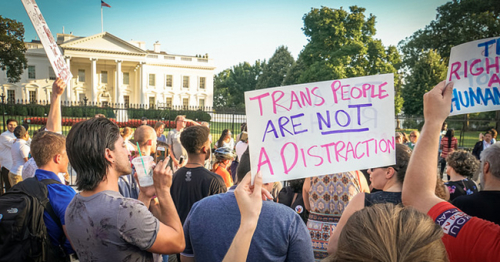
  • Transgender pride flag

    In uncertain times like these, publishing progressive and thought-provoking books at Beacon Press becomes ever more urgent. “One of my great joys at Beacon Press is being able to sign progressive books . . . [that] deserve to be read and debated,” said our editorial director Gayatri Patnaik. Crucially, we sign progressive books to lift up the voices of our marginalized communities. This is true for the continued support needed for the transgender community.

    Since the start of the Trump administration, we’ve seen LGBTQ rights come repeatedly under attack, especially when it comes to human rights for the transgender community. Just look at the multiple bans on trans people serving in the military and anti-trans bills. Attacks like these are fueled by the all-too-common misconceptions about the community and transgender issues that persist today. What better way to disabuse ourselves of these myths than to read about their experiences in their own words? This is the important part for Transgender Day of Visibility: visibility is not a substitute for equality, but an important starting point. In order for people outside of the trans community to become allies, we need to understand and listen to their stories as they have lived them, which requires empathy and learning what to fight for.

    Now more than ever, we are committed to providing resources that speak to our current political climate and social activism. See below for some recommended reading from our Transgender Perspectives category that helps to make sense of the issues and also provides ways for us to take action and to advocate for transgender voices to be heard. You will also find additional blog posts by our trans authors as resources.


    Books


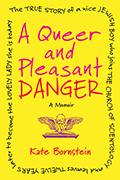
    A Queer and Pleasant DangerA Queer and Pleasant Danger: The true story of a nice Jewish boy who joins to Church of Scientology and leaves twelve years later to become the lovely lady she is today

    Kate Bornstein

    “A singular achievement and gift to the generations of queers who consider her our Auntie, and all those who will follow.”
    —Lambda Literary


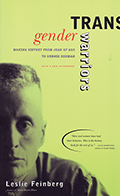
    Transgender WarriorsTransgender Warriors: Making History from Joan of Arc to Dennis Rodman
    Leslie Feinberg

    “Men and women have had their histories. This is the history book for the rest of us.”
    —Kate Bornstein


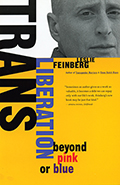
    Trans LiberationTrans Liberation: Beyond Pink or Blue
    Leslie Feinberg

    “Trans Liberation brings together a diversity of agendas, giving a fresh, urgent twist to everything from the politics of national health-care reform to debates about infant genital mutilation and queer history.”
    —Rachel Mattson, Village Voice Literary Supplement


    You're in the Wrong Bathroom“You’re in the Wrong Bathroom!”: And 20 Other Myths and Misconceptions About Transgender and Gender Nonconforming People
    Laura Erickson-Schroth, MD and Laura A. Jacobs, LCSW-R

    “Amid all the misinformation about trans lives and people, this is a refreshingly accurate book that covers the most pernicious myths and also has the virtue of being written accessibly. Everyone from therapists and teachers to parents and young people will find the book invaluable.”
    —Carol Bernstein, former president of the American Psychiatric Association


    At the Broken PlacesAt the Broken Places: A Mother and Her Trans Son Pick Up the Pieces
    Mary Collins and Donald Collins

    “When one person in the family transitions, everyone transitions. At the Broken Places is a profoundly vulnerable and brave account of a son struggling to be seen by his mother, and a mother learning to see her child as he sees himself. A necessary and beautiful book.”
    —Jill Soloway, creator of Transparent  


    Nina Here Nor ThereNina Here Nor There: My Journey Beyond Gender
    Nick Krieger

    “In our media context, where only one kind of narrative about transition seems to be allowed, this alternate personal story can feel pretty revolutionary . . . He writes incredibly perceptively about issues like gender and class, approaching them through storytelling and subtle personal exploration instead of explaining through standard social justice language . . . Nina Here Nor There offers an honest, personal take on many aspects of identity…”
    —Feministing


    Just Add HormonesJust Add Hormones: An Insider’s Guide to the Transsexual Experience
    Matt Kailey

    “This is the perfect primer for those of us with transsexual friends and loved ones, those on their own path of self-discovery, and those who simply have questions about it all. For all of us, Kailey has the answers.”
    —Michael Thomas Ford, author of My Big, Fat, Queer Life


    Additional Resources


    Sylvia Rivera

    Donald Collins’s “The Great Work Continues: A Trans Boy Reflects on Transgender Day of Visibility”

    “While Trans Day of Remembrance demands we recognize trans lives lost to aggression and hate, Trans Day of Visibility elevates our collective history (including said deaths), and calls us to consciously partake in movements to address physical, emotional, cultural, and political violence towards trans folks.”


    Tdor

    Donald Collins’s “My Reflections on Transgender Day of Remembrance”

    “Recognition of trans lives gets stronger when we communicate. Strengthening familial bonds, having friends we trust. Making workplaces, schools, doctor’s office and places of worship safe through education and funding. Talking about where gender meets race, sexual orientation, class, and ability. All this starts with conversations, showing up and being present.”


    Trans People Are Not a Distraction

    Laura A. Jacob’s “‘Trans Troops Disrupt Military Readiness’ and Other Busted Myths About Transgender People”

    “But we will not be legislated into nonexistence. We will not accept faulty logic, or discriminatory speechifying, or even the violence used against us. We’ve been there, we’ve done that. We’ve seen the harm. Falling victim to bombast and falsehoods are what weakens our society, not diversity. And the trans community refuses to be the next scapegoat.”


    Bathroom

    Laura Erickson-Schroth and Laura A. Jacobs’s “Barred from Bathrooms, Barred from Rights: The Dragnet of Anti-Trans ‘Bathroom Bills’”

    “The bulk of criticism about trans people using bathrooms is directed at trans women. It often focuses on their potentially being sexual predators who would target cisgender women and children. Fears of trans women as sexual predators stem from myths about trans women transitioning for sexual gratification.”

    Transgender pride flag

  • By Dennis A. Henigan

    M4A1 Carbine

    When will we follow New Zealand’s example? After the tragedy of the mosque shootings in Christchurch that took the lives of fifty Muslims, Prime Minister Jacinda Ardern announced that sales of assault and semi-automatic weapons are banned. If only our country could be so bold, so brave. While that prospect continues to be a long way off on a national scale, Dennis A. Henigan points to what has happened at the state level in his book “Guns Don’t Kill People, People Kill People”: And Other Myths About Gun Control. These three states have enforced policies to ban assault weapons. Are they successes? Yes. Do they solve our systemic nightmare with gun control in the long run? If only . . .

    ***

    California

    Gun control forces also have an impressive list of victories in the states. Since 1989, they have succeeded in passing Child Access Prevention (CAP) laws in eighteen states. These laws hold gun owners criminally responsible for leaving guns accessible to children. During that same period, the NRA also suffered key legislative defeats in New Jersey (legislation requiring that guns be “childproofed”), Maryland (legislation requiring internal locks on guns and limiting handgun sales to one per month), and Illinois (legislation requiring background checks for private sales at gun shows), while Colorado and Oregon (two states traditionally unfriendly to gun control) extended background checks to private sales at gun shows, both by voter referendum. Since the Newtown shooting, Connecticut, Colorado, Delaware, New York, and Washington State have extended background checks to all gun sales; Washington State did so by a referendum that won with 60 percent of the vote. Maryland enacted licensing and fingerprint identification for handgun sales.

    The gun control movement has found its most fertile ground in California, where the NRA and its allies have suffered repeated setbacks. Since 1989, in addition to enacting a CAP law, California passed legislation to ban semiautomatic assault weapons, require background checks for all gun sales from all sources, restrict handgun sales to one per month to curb gun trafficking, require gun dealers to sell child-safety locks with guns, require handgun buyers to pass a safety test and be fingerprinted, mandate certain safety features on handguns, and ban .50 caliber sniper rifles. After most states had acceded to NRA demands to immunize gun sellers from lawsuits brought by municipalities, in 2002, California went in the other direction and repealed a twenty-year-old law protecting the industry from certain lawsuits. Considering that one of every eight Americans resides in California, and that it is the largest gun market in the United States, this record is deeply embarrassing for the NRA.

    Also promising is an even newer technology known as “microstamping.” This involves the use of lasers to make microscopic engravings on the firing pin or breech face of a gun. When the gun is fired, these engravings are transferred to the discharged cartridge and can identify the make, model, and serial number of the firearm. This would permit the gun to be traced based on the spent cartridges left at a crime scene, but without the need for a database of ballistic fingerprints of all guns sold. California now requires all new semiautomatic pistols manufactured or sold in the state to be equipped with microstamping technology. Obviously, a federal law imposing such a requirement would be far superior to any state law.

    Despite these state victories for gun control, it is fair to say that the nation is at a stalemate on the gun issue. To explain our inability to move decisively toward sensible gun regulation entirely in terms of raw political power, or the perception of that power, somewhat begs the question. Surely the NRA could not command such strength if there weren’t something in its message that resonates with large numbers of people. Is there something about the gun control debate itself that contributes to the policy paralysis on the gun violence issue? Speaking as a longtime participant in that debate, I believe the answer is yes.

    ~~~

    New York

    The NRA cites New York City as another example of “registration leads to confiscation,” but actually New York’s gun laws prove the opposite. The city adopted a licensing and registration law governing rifles and shotguns in 1967, under Mayor John V. Lindsay. Confiscation allegedly arrived in 1991, but even the NRA’s own description of the 1991 law makes it clear that it only applied to “certain semiautomatic rifles and shotguns,” that is, assault weapons. The New York City assault-weapons ban required registered assault-weapons owners to surrender their weapons, render them inoperable, or move them out of the city. It would appear that the police were in pretty good position to enforce the ban against continued possession, given that the guns already were registered.

    But legislation restricting assault weapons was passed only because its proponents were successful in arguing that assault weapons are fundamentally different than conventional firearms in terms of their greater fi repower, which makes them a greater threat to public safety in the hands of criminals, as well as inappropriate for self-defense in the home. The question for the NRA is this: If there is such a slippery slope from registration to confiscation, why hasn’t New York City banned continued possession of all the rifles and shotguns that are registered, instead of just the small minority of them that qualify as assault weapons? (During the early 1990s, ATF estimated that about one percent of the guns in circulation were assault weapons.) To the extent that the New York City experience teaches anything, it is that the registration of guns does not necessarily lead to their confiscation.

    Many other examples can be offered of registration laws that have been on the books for decades without having prompted any move toward banning civilian gun possession or confiscating guns. The State of Pennsylvania, for example, has maintained records of handgun sales since 1931. The Pennsylvania State Police currently maintains a database of persons who lawfully purchase handguns in Pennsylvania. Although in theory Pennsylvania’s database would make it “easier” to confiscate guns should the state enact such radical legislation, nothing about Pennsylvania’s registration of handgun sales has moved the state even close to doing so.

    Other states with some form of registration include New Jersey, Massachusetts, Michigan, Maryland, and California. Not one of those states has banned or tried to confiscate all handguns or long guns. Despite the fact that the authorities in those states have a pretty good idea of who owns the guns, all have been able to resist the temptation to demand their surrender.

    ~~~

    Illinois

    District of Columbia v. Heller has no doubt been a disappointment to pro-gun partisans who viewed it as the beginning of the end of gun control. Indeed, the disappointment has been keenly felt within the Supreme Court itself. Two months before his death, Justice Scalia joined an opinion, written by Justice Clarence Thomas, dissenting from the Court’s decision not to review an appeals court ruling upholding the Illinois ban on semiautomatic assault weapons and high-capacity magazines. Their frustration with the lower courts’ application of Heller, and with their own Court’s consistent refusal to review those rulings, is palpable. After noting that several courts of appeal had upheld similar bans, Justice Thomas wrote that “noncompliance with our Second Amendment precedents warrants this Court’s attention as much as any of our precedents.” Supreme Court review is necessary, he wrote, to prevent the lower court “from relegating the Second Amendment to a second-class right.” In light of this dissent by Justices Thomas and Scalia, it now seems clear that the language in Heller affirming the presumptive constitutionality of broad categories of gun restrictions was a concession Justice Scalia was forced to make to achieve a narrow majority. It may well be a concession that nullified much of what Justice Scalia was trying to achieve in that landmark case.


    About the Author 

    Dennis A. Henigan is director of legal and policy analysis at the Campaign for Tobacco-Free Kids and formerly vice president of the Brady Center to Prevent Gun Violence. He is the author of “Guns Don’t Kill People, People Kill People”: And Other Myths About Guns and Gun Control. Follow him on Twitter at @DennisHenigan and visit his website.

  • Imani Perry

    Imani Perry is having a moment in the limelight, and we hope she’s relishing every minute of it. When she first came to our offices to talk about her Lorraine Hansberry biography, Looking for Lorraine, we knew it was going to be special. Fast forward to this year’s PEN/America Awards, and we delighted in seeing just how special her book is. She won the PEN America/Jacqueline Bograd Weld Award for biography! Nell Irvin Painter, Sam Stephenson, and Rachel Syme were the judges for the award. Here’s what they said about her book:

    “Lorraine Hansberry packed a lot of ambition into a short life. When she died in 1965, at only 34 years old, she was already a New York legend: her award-winning drama, A Raisin in the Sun, about a black family living in segregated Chicago, became the first ever play by a black woman to debut on Broadway. But she did much more than write plays: Hansberry was also a devoted civil rights activist and venerated public intellectual, and a friend and colleague of James Baldwin, W. E. B. Du Bois, Nina Simone, and Malcolm X. Imani Perry’s Looking For Lorraine celebrates Hansberry, in all her accomplishments and appetites, but it does not shy away from the complexities and entanglements that made Hansberry’s life story as dramatic and serpentine as one of her plays. Perry approaches her subject with both empathy and a sharp, critical eye; this is a biography that exercises several muscles at once. Perry’s sentences are intimate, warm, and crisp; in considering Hansberry in all of her prismatic multiplicities, Perry has written a singular book.”

    Hansberry’s life, notably her literary and political life beyond her play A Raisin in the Sun, remained largely unknown, and Perry aimed to change that with Looking for Lorraine. Perry accepted the award in honor of Hansberry, saying that the playwright herself was the constant driver and inspiration for the book. She thanked Hansberry for her courage, for living proudly as a Black, lesbian feminist long before any of those identities were recognized as things to be proud of in the public arena. Toward the end of her acceptance speech, Perry said, “I thank her for giving me the opportunity to become more fully [me] . . . . In many ways, Lorraine brought me to the fullness of who I am.”

    (Boost the volume to hear Imani Perry’s acceptance speech: it’s very low.)

    The accolades don’t end there. The New York Times named Looking for Lorraine one of the 100 Most Notable Books of 2018. The Black Caucus of the American Library Association named it an Honor Book for nonfiction. And it’s a finalist for the Lambda Literary Award for LGBTQ nonfiction, the 2019 Pauli Murray Book Prize for the best book in Black intellectual history, and the Triangle Award for best achievement in LGBTQ literary works. Keep the awards and nominations coming! We’ll be keeping an eye on them and rooting for her when the award ceremonies are held later this year.

    Oh, and then this happened. Were you watching Jeopardy! on March 15? Looking for Lorraine was a clue in the category of New York Times 100 Most Notable Books. Not only has Perry’s book made its mark in literary canon, but in Jeopardy! canon, too! It isn’t even a year old yet and it’s already showing the cultural impact Perry is having.

    Looking for Lorraine on Jeopardy

    Who is Lorraine Hansberry?

    If you can’t get enough of Perry’s writing, you’ll be ecstatic to know that she has a new book coming out this September. In Breathe: A Letter to My Sons, Perry writes from the heart as a Black mother and feminist to share her meditations on Black resistance and resilience and how to live fearlessly in an unjust world with her children. “Imani conveys how terrifying it is to be black in America but instructs her sons to refuse to be cowed by fear and injustice, insisting they live a robust and full life,” our editorial director Gayatri Patnaik said. “It’s truly a remarkable book and an original one, and I can’t wait for readers to discover it.” We can’t wait either.

    Imani Perry