• A Q&A with Susan Katz Miller
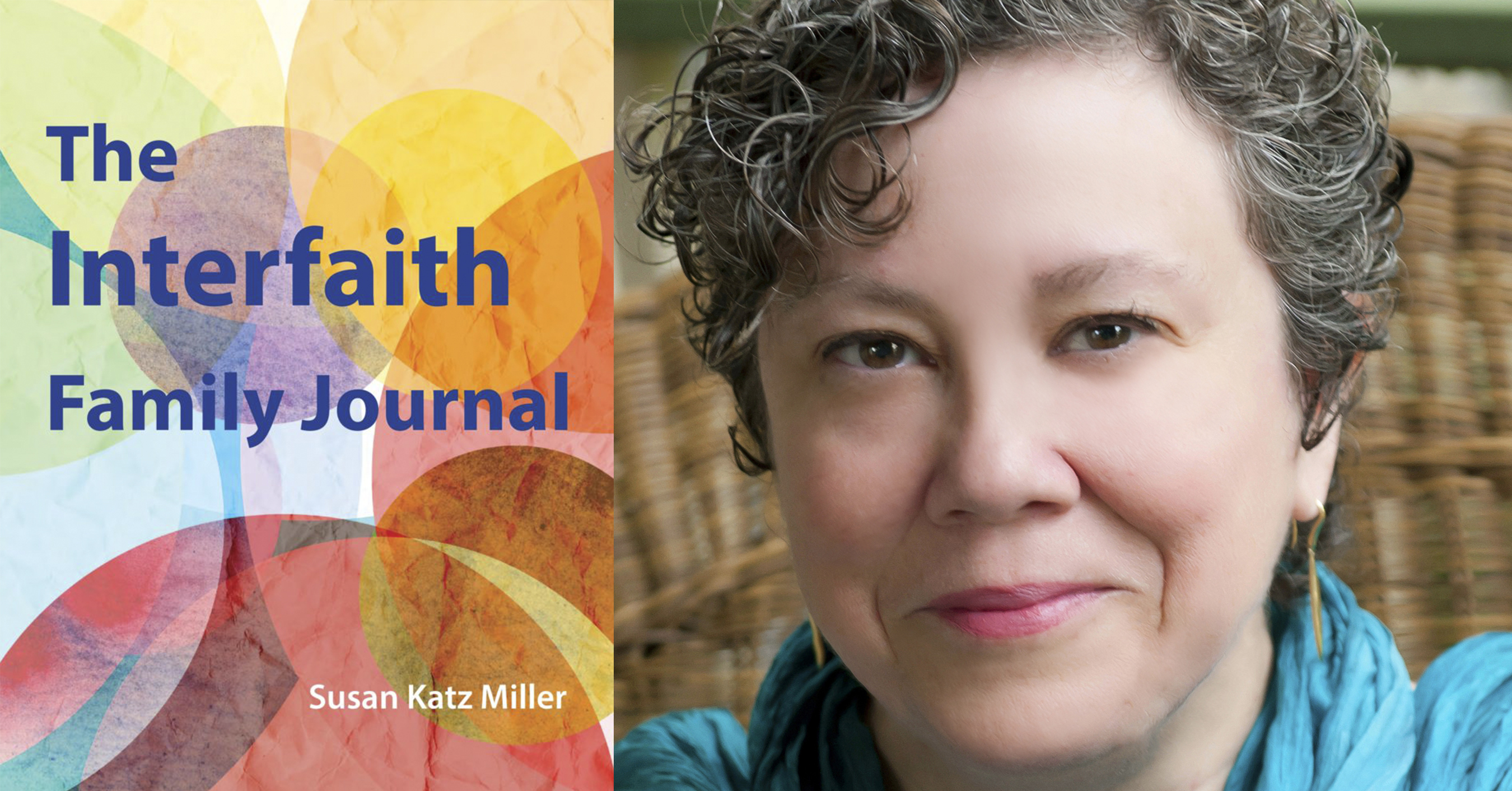
    Susan Katz Miller

    According to a recent study by the Pew Research Center, one in every five Americans now grows up in an interfaith family. For some, solving the puzzle of what and how to celebrate in an interfaith family can be stressful. Susan Katz Miller, author of Being Both: Embracing Two Religions in One Interfaith Family, has written a new book for this reason.

    Published by Skinner House Books, The Interfaith Family Journal is a resource containing interactive exercises and creative activities to help interfaith families decide how they want to honor their histories, cultures, and beliefs in ways that nurture joy, creativity, and empowerment. Beacon Broadside editor Christian Coleman caught up with her to ask about the inspiration of the book, how it can help interfaith families in our times of continued attacks and shootings at houses of worship, and more.

    Christian Coleman: What was the inspiration behind writing The Interfaith Family Journal?

    Susan Katz Miller: Since the publication of Being Both, I have been traveling the country, speaking about interfaith families in churches and synagogues, universities and national conferences. And a steady stream of interfaith couples and families, from all over the world, started to contact me to ask for support. Often, they come to me because they do not have supportive clergy, or they cannot find counselors who have experience in interfaith issues. And they appreciate my perspective as both an adult interfaith child, and the parent of adult interfaith children. At some point I realized that I cannot coach everyone individually, but with the Journal, I can support families everywhere. And at exactly that moment, Skinner House actually came to me, looking for an author to write a book like this, because there is no other workbook for interfaith families out there. 

    CC: How much does The Interfaith Family Journal build upon or reference your previous book, Being Both?

    SKM: Being Both was a work of memoir, journalism, and quantitative and qualitative research, describing interfaith families choosing to celebrate both family religions. In contrast, The Interfaith Family Journal is an interactive resource designed to support any and all interfaith families in figuring out their own best pathway, whether that means choosing one religion, or two, or all religions, or none. No one pathway is going to work for all interfaith families. And while Being Both focused primarily on the religions in my own background—Judaism and Christianity—the Journal works whether you are atheist and Christian, Hindu and Jewish, Buddhist and Pagan, or UU and Muslim and Zoroastrian. So the Journal references Being Both as one resource for one of the pathways available to interfaith families, but also provides resources for those who choose to be secular humanists, and/or Unitarian Universalists, and/or any other religious or secular pathway.

    CC: In the introduction, you write that the book “begins with the assumption that interfaith families, so often characterized as problematic, can actually be inspiring and successful.” Why are interfaith families often characterized as problematic? Is that still really the case today?

    SKM: A lot of Americans under age forty no longer see interfaith relationships as problematic, which is great news. But they still have to deal with the expectations of parents and grandparents and clergy and society at large, and the Journal helps families to do that. And the reality is that many religious institutions still have policies that forbid interfaith marriage. And in many countries, interfaith marriage is still illegal, and may even be dangerous.

    But let's return to a young American interfaith family content to be, for instance, secular humanists. They may not experience interfaith heritage as an issue. But the exercises in the Journal create a framework that will still support them in making decisions, big and small. For instance, how do your religious backgrounds and cultural expectations impact your decisions on holiday celebrations, or on birth or death rituals? And these families still benefit from the creative activities in the Journal (such as making an interfaith family recipe book)—projects designed to reframe the interfaith family as an engine of joy. 

    At the same time, there are people, even young people in the US, who still feel connected to religion, and really struggle to figure out how to celebrate in an interfaith family, what to honor, how to provide interfaith children with religious literacy. Those who are actively wrestling with these issues may be most likely to seek this book out. But I think it can help all families. 

    CC: How did you decide that five weeks would be needed for the process you developed in the journal?

    SKM: The process is based on my experience as a coach for individual families and on running workshops for interfaith couples. Each week, the Journal partners respond in writing to prompts about their own backgrounds, experiences, and desires for their interfaith family. (By the way, your Journal partner does not have to be a romantic partner. For instance, a single adoptive parent could choose a Journal partner who is a mentor from the child's birth culture and religion). Then the partners swap Journals and read what was written. Next, there are exercises for engaging with the partner around what they wrote. And finally, there are creative activities in each chapter, designed to engage children as well. I also describe a way to compress all of this into an intense weekend, if necessary. But I think giving yourselves the days in between each chapter to reflect on the memories and feelings and dreams inspired by the exercises will help families to go deeper. And realistically, most people will want to do this emotionally intense work together on the weekend, and then give it a rest during the week.

    CC: You wrote that many previous books on interfaith families have assumed an audience of Christian and Jewish heterosexual couples. I like the fact that your book strives to decenter white Christian heteronormativity. Is this one of the first books on interfaith families do to so?

    SKM: Being Both was inclusive, in the sense that I interviewed both LGBTQ clergy and interfaith couples, and I think that was a first for books on interfaith families. But The Interfaith Family Journal is certainly the first interfaith families book in which we intended every sentence to be gender-neutral and applicable to any and every family configuration, and any and every constellation of religious, cultural, racial, and gender identities. I appreciate that both of my publishers, Beacon Press and Skinner House, are dedicated to Unitarian Universalist values and seek to break ground in this regard. Skinner House director Mary Bernard envisioned a book that would work for all families, and together we worked hard to intentionally shift this book away from historical assumptions about what makes a family, who can be parents, and which religions are normative in the US. I also wrote the book knowing that statistically, for multiple reasons, LGBTQ relationships are more likely than straight relationships to be interfaith and intercultural relationships. I think this is the first book dedicated to the idea that interfaith families live and create and thrive, almost by definition, in intersectional space. The radiant cover, with a multitude of overlapping circles, reflects that idea.

    CC: And lastly, how do you see this book helping interfaith families at a time when we’re seeing attacks and shootings at synagogues, mosques, and other houses of worship?

    SKM: Love starts at home. This book helps you to listen deeply, and engage with each other around religious difference, on that intimate family level. In doing so, you are building skills that transfer to communicating across religious difference in the schoolyard, the workplace, the online world, and society at large. And in modeling the kind of respect, bridge-building, and ongoing interfaith education described in this book, interfaith families are actually weaving a protective network of love and understanding. As that network grows, I believe we can ultimately help to prevent such violence.


    About Susan Katz Miller 

    Susan Katz Miller is an author, speaker, educator, interfaith coach, and interfaith activist. A former correspondent for Newsweek and New Scientist, her writing and photography have been published in the New York Times, Washington Post, Christian Science Monitor, and elsewhere. She is the child of interfaith parents, the parent of interfaith children, and the author of Being Both: Embracing Two Religions in One Interfaith Family. She has been featured on The Today Show, CBS, PBS, several NPR programs, and many other media outlets. Follow her on Twitter at @susankatzmiller and visit her website.
  • By Lynn K. Hall

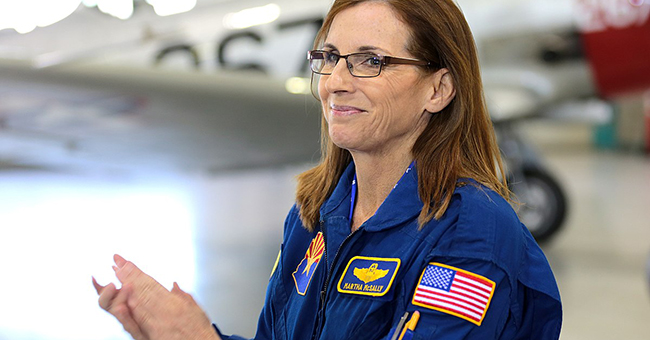
    Senator Martha McSally

    Senator Martha McSally. Photo credit: Gage Skidmore

    Last week, Senator Martha McSally made headlines by publicly speaking out about having been raped while she served in the Air Force. Her testimony during the Senate Armed Services Subcommittee hearing on military sexual assault shocked many. In 1991, McSally became the first American woman to fly in combat, and later the first woman to command an Air Force fighter squadron.

    “I blamed myself. I was ashamed and confused. I thought I was strong but felt powerless,” McSally said during the hearing.

    Every time a survivor tells their story—whether they are a successful combat aviator or not—it is a step forward for the movement. We are working to erase decades of shame placed on survivors and the expectation that we heal in secrecy. The more we encourage others to also be vocal, the faster this culture within the military will change. I applaud McSally for sharing her story and helping to end the stigma. I thank her for articulating what thousands of us have felt. Yet, I worry about headlines which speculate that this is a turning point for the movement.

    McSally does not currently support the Military Justice Improvement Act (MJIA), a proposal put forth by Senator Gillibrand, which would take legal decision-making power in criminal cases away from commanders and place it with appropriately trained military attorneys. This legislation is critical. Far too often, investigators recommend sending a case to a court martial and commanders do not. Or perpetrators are found guilty and commanders give them the most lenient sentences they can. Protect Our Defenders writes, “Despite decades of promising ‘zero tolerance,’ assailants are not being prosecuted. In 2013, 39% of cases sent to commanders for action resulted in charges being initiated; however, the percentage dropped sharply to 22% in 2017.” Per a recent Pentagon report, of the cases last year in which a survivor made an official (what they call “unrestricted”) report, 3.2% resulted in a criminal conviction.

    The military has been grappling with the problem of sexual violence for nearly two decades, and yet they are still failing to hold perpetrators criminally responsible. Bias within command structure remains an obstacle.

    I ask myself why Senator McSally’s disclosure has sparked so much dialogue and optimism. Is it because we find her story coming from a decorated veteran more credible or somehow more powerful than coming from someone who did not serve with such distinction? I’m afraid this is partly the case. In an email exchange, a leader within this movement wrote to me, “If McSally can be raped, anyone can be.” Yes, that’s the whole point. The fact that we need McSally’s disclosure illustrates perfectly why so many respond to sexual violence with shame, and in turn, silence. The truth is anyone can be raped, whether he or she is a praised warrior or not. If ours was less of a rape culture, we wouldn’t privilege one disclosure over another’s; we would be equally troubled and moved to action.

    It also gives me pause that the reason Senator McSally’s personal testimony has led to so much hope is because she is a senator, in a position to offer guidance and lead change. I wonder what aspect of her résumé gives her the authority to weigh in on legislation like the MJIA with more credibility than another senator. Is it, again, her combat history? Her command experiences? Or is it because we now know she is a survivor herself? I caution against giving her opinion more weight because of the latter.

    In the days before the Senate Armed Services Subcommittee hearing, a handful of veteran-survivors met with McSally to discuss MJIA. These survivors have decades of experience working with fellow veterans and lobbying on Capitol Hill, and they have a wealth of insight to offer above and beyond their own stories. I applaud McSally for extending an invitation to these leaders, but I question if she truly heard them.

    In a CBS interview with Norah O’Donnell the morning following the hearing, McSally gave the following advice to survivors within the military: “Don’t let your assaulter rob you of your future. Don’t do it.” This comment alone tells me that McSally has more listening to do and how naïve she may be about what is happening to those who report. Nearly two-thirds of survivors who report sexual assault experience retaliation. One-third of survivors who report are discharged, typically within seven months. These survivors are losing their careers against their wills while their perpetrators are more often than not retaining theirs.

    Because McSally didn’t speak up about her rape, she went on to have what is considered to be one of the most successful careers a woman has ever had in the Air Force. She doesn’t see that her silence allowed for her success, and those of us who followed after her paid the price. She doesn’t see that her reluctance to support the MJIA or to stand up to those Republics in politics who uphold rape culture is a failure of survivors everywhere.

    The problem with using our own personal histories to form opinion about public policy is that we often fail to see how others’ experiences differ from our own. For all of us who have used our stories to spring board into activism—whether within the military or in the larger #MeToo movement as a whole—we must take care to understand how our own experiences either reflect or differ from the wider trends. It takes work to move from the personal to the political, to go from survivor to activist, or survivor to leader. We must do our own healing, and then we must engage with the issue adequately to better understand beyond a personal myopic perspective. Otherwise it’s possible for victims of a system of oppression to later become complicit in that same system.

    If McSally had done that work during her time as a commander or now in public service, she would understand that survivors are not choosing to let their perpetrators rob them of their futures. She would understand that command bias, malfeasance, and misfeasance are ongoing problems which must corrected through legislation like the MJIA.

    Senator McSally has a responsibility to offer more than her personal story. Her authority on military sexual assault cannot merely come from her status as a survivor. It isn’t acceptable for her to reject the MJIA while offering no other plan. I hope she invites many more of us to her office to discuss military sexual assault, that she listens with an open mind despite political differences, and that together we can find a pathway forward on what ought to be a bi-partisan issue.


    About the Author 

    Lynn K. Hall is the author of Caged Eyes: An Air Force Cadet’s Story of Rape and Resilience. She lives in Leadville, Colorado. Follow her on Twitter at @LynnKHall and visit her website.

  • By Imani Perry

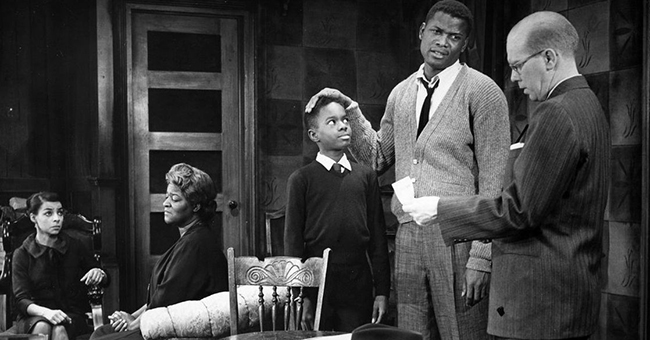
    A scene from the 1959 production of “A Raisin in the Sun.” From left: Ruby Dee (Ruth Younger), Lena Younger (Claudia McNeil), Glynn Turman (Travis Younger), Sidney Poitier (Walter Younger), and John Fielder (Karl Lindner).

    A scene from the 1959 production of “A Raisin in the Sun.” From left: Ruby Dee (Ruth Younger), Lena Younger (Claudia McNeil), Glynn Turman (Travis Younger), Sidney Poitier (Walter Younger), and John Fielder (Karl Lindner).

    The first play by a Black woman ever performed on Broadway, Lorraine Hansberry’s A Raisin in the Sun is a classic of Black and American literature. But not everyone in the theater establishment understood it when it had its premiere sixty years ago on March 11, 1959. Nor did everyone understand Hansberry’s intellectual basis for the play. In this selection from the PEN/America Award-winning biography Looking for Lorraine: The Radiant and Radical Life of Lorraine Hansberry, author Imani Perry shows us how she responded to her critics. Hansberry had some choice words for her craft, too.

    ***

    Lorraine was frustrated by some critical evaluations of the play, even as she understood them. She was particularly frustrated that Walter Lee’s “ends” were read without complication. They were deliberate and clearly shaped by Irish playwright Sean O’Casey, the WPA Negro in Illinois project’s publication Black Metropolis, and Thorstein Veblen’s Theory of the Leisure Class, which she considered an essential companion to the writings of Karl Marx. Walter Lee’s yearnings were a manifestation of Veblen’s theory of desire in a capitalist society, one that cut across class and caste. Her mastery of full characters, her sensitivity to speech and personality so that the characters never read as types, made the politics invisible to so many. But Lorraine intended to correct that.

    In May of 1959 she wrote a letter to Bobby about a lecture she delivered at Roosevelt University. In it, she compared Arthur Miller’s classic character from Death of a Salesman, Willy Loman, and her Walter Lee Younger and argued that Walter Lee had more heroic potential. The audience responded with a standing ovation. In an essay from the New York Times based on that talk, “Willie Loman, Walter Younger, and He Who Must Live,” Lorraine argued that Loman, that iconic figure of American drama, was a sign of the crisis provoked by the closing of frontier. He is “left with nothing but some left over values which had forgotten how to prize industriousness over cunning; usefulness over mere acquisition, and above all humanism over success.” Walter Younger, though wholly American, according to Lorraine, possessed a typicality that was different because he is Black and at every turn denied. His actions might affirm life rather than be caught in the death cycle of manifest destiny and consumerism.

    This was in the tradition of Black Americans, according to Lorraine, a people who she says “have dismissed the ostrich and still sing ‘Went to the rock to hide my face, but the rock cried out: No hidin’ place down here!’” quoting the traditional Negro spiritual “Sinnerman,” which her dear friend Nina Simone would record six years later. Walter Lee’s assertion that they will move into the house despite the resistance of the white neighbors does not change the basic social order, according to Lorraine. It is not revolutionary. But it nevertheless matters a great deal, because it puts him at cross-purposes with “at least certain of his culture’s values” and he draws “on the strength of an incredible people who historically have simply refused to give up.” He has “finally reached out in his tiny moment and caught that sweet essence which is human dignity, and it shines like the old star-touched dream that is in his eyes.”

    Even while defending her play, she accepted that in some quarters any critical judgment of it was attacked as racist, and she found that amusing. And yet “the ultra sophisticates have hardly acquitted themselves less ludicrously, gazing coolly down their noses at those who are moved by the play and going on at length about ‘melodrama’ and/or ‘soap opera.’”

    Though she said some critics got the play terribly wrong, Lorraine admitted her own failures. The problem was just that Raisin’s critics had failed to actually ascertain what was wrong with it. She instructed them that the real problem with Raisin was it lacked a central character who anchored the play. She said that while some saw that as an inventive choice, it was a consequence of her indecisiveness and the limits of her skill. I am not sure Lorraine was correct. Mastery of the ensemble form was perhaps her greatest gift. But regardless of whether one takes her position or mine, her confident reading of her own work is unusual in its sharp assessment. It often amounted to quite brilliant ways of saying “they have no idea what they’re talking about.” In particular, and this became a recurring point of hers, she was highly critical of those who believed obscurity, total uniqueness, and inscrutability were markers of artistic sophistication. They attacked her play’s simplicity and use of convention or what she called “old bones,” but she believed more meaningful discussion tended to “delve into the flesh which hangs from those bones and its implications in mid-century American drama and life.”

    Then she commented that though people made comparisons between her work and that of O’Casey and Chekhov, only one critic had noticed the connection between Raisin and Arthur Miller’s Death of a Salesman. (She noted this is partly because the ensemble overwhelms Walter Lee so he doesn’t stand out the way Willy Loman or Hamlet do.) But she also thought people failed to see Walter as like Willy because they couldn’t help but see Walter as an exotic character of the sort previously imagined in American drama in “‘Emperor Jones’ or ‘Porgy,’ . . . the image of the simply lovable and glandular ‘Negro.’” That figure of emotional abandonment and joyfully tolerated poverty, according to Lorraine, acquitted white viewers of their haunting guilt about American racism.

    These observations were all part of Lorraine’s effort to show why so many people couldn’t really understand Walter Lee, and his motivations, as distinctly American. She ended that section of the article with a joke about a critic who remarked “of his pleasure at seeking how ‘our dusky brethren’ could ‘come up with a song and hum their troubles away.’ It did not disturb the writer that there is no such implication in the entire three acts. He did not need it in the play, he had it in his head.” This is funny, but it is no laughing matter. Lorraine identified a problem that persistently dogs Black artists. How does one navigate racial perceptions that overlay everything, that obscure and cast such that they effectively become part of the production no matter what the artist does? For Lorraine the answer was to become a critic.

    It was unusual for a playwright to function as a critic. And in her critical assessments Lorraine eviscerated many of those who diminished her characters. That was even more unusual. Shortly after the publication of the Willy Loman essay, Lorraine ran into Brooks Atkinson, who had refused to publish it in the New York Times precisely because it was so strange for a playwright to write her own criticism. Years later, Philip Rose recounted this meeting. It took place in a theater, shortly after Atkinson announced his retirement from the New York Times after thirty-five years. At the intermission Lorraine walked directly up to him and introduced herself: “‘Mr. Atkinson, my name is Lorraine Hansberry.’ She reached out and held his hand as she continued to speak. ‘I have just read and been saddened by your announced retirement. I have admired and respected for years your contribution and love for the theatre and its playwrights. Your leaving will be a tremendous loss for all of us.’” Rose believed this encounter had quite an effect on Atkinson, because a few days later he sent a note of apology to Lorraine, explaining he had been suffering from personal problems when he declined her essay.

    She was just so unusual. Lorraine was not a typical figure of the New York theater establishment because of her gender, race, and politics but also because of her relation to art as an intellectual. She pushed against all sorts of barriers and seemed to often captivate people despite their disinclinations.


    About the Author 

    Imani Perry is the Hughes-Rogers Professor of African American Studies at Princeton University, where she also teaches in the Programs in Law and Public Affairs, and in Gender and Sexuality Studies. She is a native of Birmingham, Alabama, and spent much of her youth in Cambridge, Massachusetts, and Chicago. She is the author of several books, including Looking for Lorraine: The Radiant and Radical Life of Lorraine Hansberry. Visit her website and follow her on Twitter at @imaniperry.

  • Beth Collins at the Fiction Beer Company in Denver, CO.

    Beth Collins at the Fiction Beer Company in Denver, CO.

    In these times when readers are responding to our books “more than ever,” when our authors—including Cornel West, Anita Hill, Robin DiAngelo, Charlene Carruthers, Howard Bryant, and Christopher Emdin—are appearing in the media, their ideas going viral on social media, their voices being heard on so many platforms, we thought it might be good to take a break to focus on some of the staff who work hard to find, shape, edit, produce, and promote those works. Our blog series “Beacon Behind the Books” introduces to you a member of our staff and gives you a behind-the-scenes look, department by department, at what goes on at our office.

    For the month of March, we introduce you to our production manager, Beth Collins!  

    What drew you to publishing, Beth? How did you find your way to Beacon?

    It was a really long process for me! I was an English major in college. I loved reading and doing research, but I didn’t like sitting down and writing so I didn't consider a career in publishing. I went on to work in documentary production, but I found it too hard to make a living as a freelancer. I seriously considered becoming a librarian, but I realized that I wanted to be involved in some way with making books. So, I enrolled in the publishing certificate program at Emerson. For our final project, we had to produce a book and I found that process to be extremely satisfying—gathering up the content, collaborating with the contributors, designing the layout, and working with the printers. Soon after that, I started working at Beacon as a production assistant. 

    What’s your advice to someone interested in entering the publishing field?

    First of all, I would say don’t be like me! When you’re just starting out, keep an open mind about what area of publishing might be a good fit for you. Because I didn’t like writing, I thought publishing wasn’t for me, but I should have done more exploring. We’ve had a couple of interns who have said they were surprised by how much they like working in production. (I’m sort of biased, though.) So don’t be afraid to cast a wide net: it could lead to a lot of opportunities that you don’t know were out there.

    What helps you focus when you’re at work?

    When I need to focus at work, I find that listening to any kind of music is too distracting. I think I’m the only person in the office who never uses headphones! But I really do like a little bit of background noise, a little bit of buzz. When I have to review proofs, I go to the Tom Hallock Contemplation Area in our office, spread my pages out over the table, and get to work. Having people walking by and talking helps me to focus. It’s weird, but it works for me. 

    Favorite Beacon Books?

    I’m a big fan of our memoirs, here’s a short list of some of my favorites:

    Favorite thing about Boston?

    My favorite thing about Boston is the harbor. I love visiting the Boston Harbor Islands, going on whale watches, or just watching the water. Since Beacon is a few blocks away, I have spent many a lunch hour watching boats move through the harbor. The only drawback is that I have to keep my guard up around the seagulls so they don’t steal my food. It hasn’t happened yet, but I know it’s just a matter of time before I lose a sandwich.

    What are you reading right now?

    I’ve been in a book club for nineteen years with six librarians and one high school English teacher. We just finished up Bad Blood: Secrets and Lies in a Silicon Valley Startup by John Carreyrou. I don’t want to give away too much away, but I will say that it’s a fascinating and infuriating book. 

    What’s your commute like? What do you do to pass the time on your way into the office?

    I take the subway into work, so you really do not want to know what that is like, but I will say all the breakdowns and delays give me plenty of time to read books and fantasize about commuting by ferry. 


    About Beth Collins 

    Beth Collins joined Beacon Press in 2008. When she’s not making books, Beth enjoys biking, skiing, and discovering new candy from around the globe. She is a graduate of Mount Holyoke College.

  • Meals from If I Can Cook You Know God Can

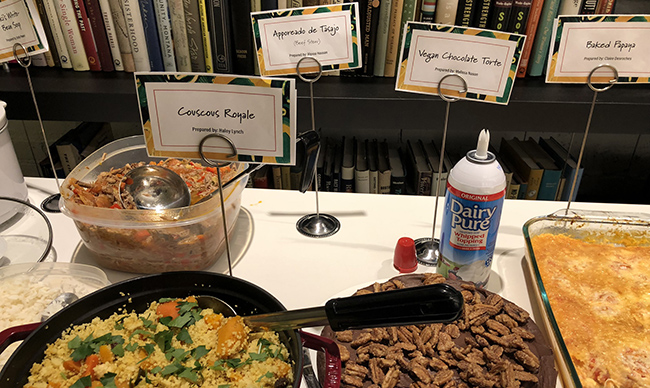
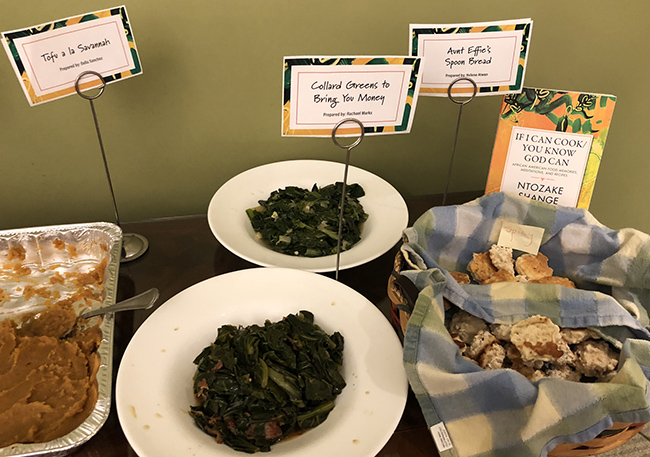
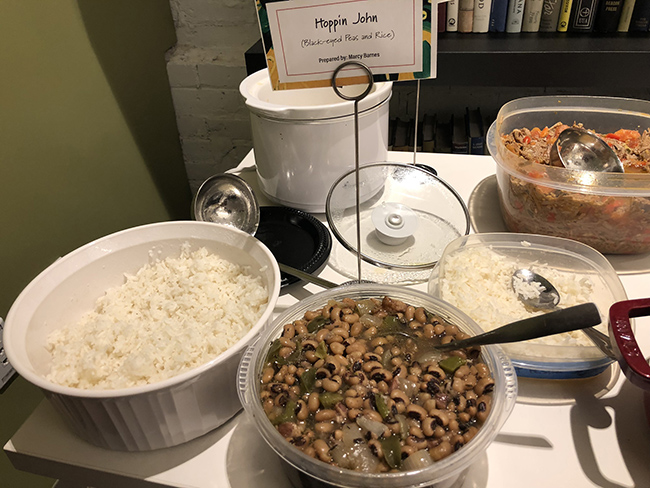
    There’s nothing like cooking a good meal to bring people together. What better way than with the recipes in the late Ntozake Shange’s If I Can Cook/You Know God Can? Shange’s eclectic tribute to Black cuisine and culture is one of the first two books in our new Celebrating Black Women Writers series. This season, we launched this series to reissue and repackage timeless titles “to share essential voices with a new generation of readers in a celebration of Blackness, Black womanhood, Black women, and all the contributions they bring to the page,” as our editorial assistant Maya Fernandez said. Eleven of us got together to prepare some of the meals for a potluck lunch at the office. And reader, let me tell you: It was delicious! Here are comments from some of our staff about their experiences with Shange’s recipes.


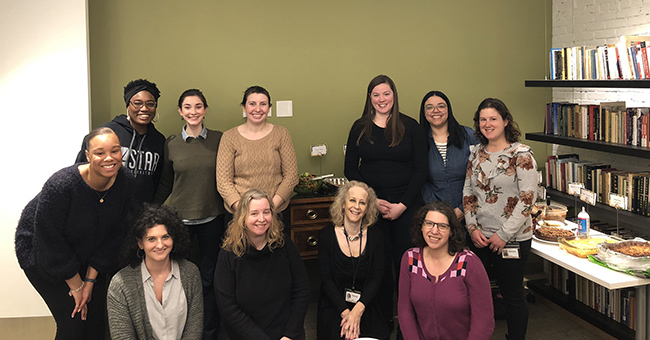
    Group shot of the Ntozake Shange Cookbook Book Club

    Thank you to everyone who cooked! Back row: Perpetua Charles, Haley Lynch, Emily Powers, Claire Desroches, Jennifer Canela, Melissa Nasson. Front row: Maya Fernandez, Rachael Marks, Marcy Barnes, Helene Atwan, Alyssa Hassan.


    “I recognized Southern cooking, especially in the collard greens, of course, but also in the buttermilk biscuits I made. It reminded me of the years I’ve lived in Atlanta, South Carolina, even Virginia. And almost all the dishes blended well with each other, so you could let them melt into each other. And maybe that’s part of the cultural message.”
    —Helene Atwan, Director

    Meals from If I Can Cook You Know God Can_4

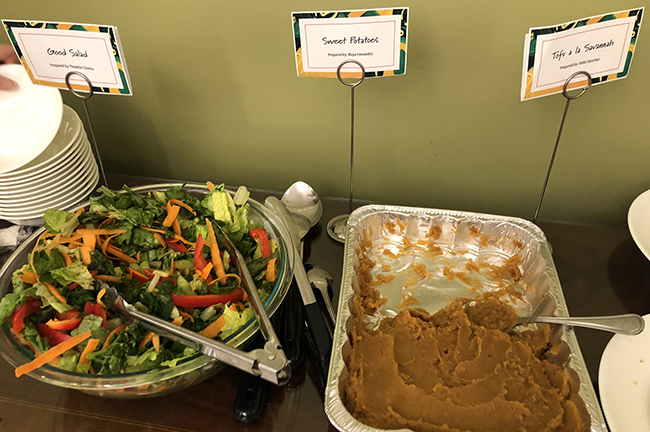
    “Even with the simple recipe I chose—Good Salad—making it reminded me of my mom’s imperative to prepare a salad as part of a spread when we had company over or were making Sunday dinner. The salad had a lot of the same veggies in it. What it calls to the front of my mind is that the African diaspora is more than immigrants from the continent but also Caribbean immigrants who can also trace their roots back to the continent their ancestors were taken from. I feel a connection to diaspora communities most closely when I make and eat traditionally Black dishes.

    Most of the dishes called for spices that made the food smell and taste very fragrant, which is another very familiar aspect for me with the food I ate growing up and still make today.

    I know historically slaves were given scraps and leftovers to eat, and they were able to take what was considered unappetizing and turn it into something delicious and comforting. The colors and smells of the food were warm and inviting, something that I think is indicative of various Black cultures. We tend to welcome with food before we welcome with anything else. Everyone has a belly and everyone needs to eat.”
    —Perpetua Charles, Associate Publicist

    Meals from If I Can Cook You Know God Can_3

    “For the potluck, I chose to cook Ntozake’s recipe for sweet potatoes. One of my favorite aspects of the book is how Ntozake weaves narrative into the instructions. Starting with tips for growing and cultivating sweet potatoes, Ntozake then gives the reader a basic understanding of how to easily cook them. But the best part of the recipe is her anecdote at the end that reveals how she once went on a movie date she where her mate swapped popcorn for sweet potatoes.

    As I attempted her recipe, I decided to incorporate my own knowledge of cooking sweet potatoes and utilized a recipe that was passed down to me from the women in my family. I mashed the sweet potatoes into a cinnamony brown sugar treat whose origins can be traced to the antebellum south, then escaping to Canada, before travelling back down to Boston, Massachusetts, and finally finding its way to a conference room in an independent publishing house. Simply smelling the finished product reminded me of Thanksgiving and Christmas celebrations at my mother’s house surrounded by boisterous conversation, laughter, and squealing kids.

    The beauty of If I Can Cook/You Know God Can is that Ntozake welcomes the reader into her kitchen and encourages them to embrace the flavors of the Black diaspora. And with her guidance, I brought my own familial traditions to the plate. The combination allowed me to connect to Ntozake’s personal celebration, and I enjoyed sharing my take on her recipe with my coworkers.”
    —Maya Fernandez, Editorial Assistant

    Meals from If I Can Cook You Know God Can_2

    “Ntozake’s book reminded me that food is more than just food. There’s history and celebration and connection with others. It’s helped me understand more the significance of different foods in Black cuisine. I really enjoyed her conversational style, especially in the way she described the recipes. It brought me back to when I would sit at each of my grandmothers’ kitchen tables helping them make food—with one side of my family of Eastern European descent and the other Palestinian and Italian. It’s made me remember the food traditions we had and how I want to revive them, learn more about them, and pass them on as a way for my son to connect to his history. And having the book in my house and next to cookbooks in the kitchen, I’ll be reminded that when I make food from other cultures, I can take some time to learn about some of its significance and pass that on to my son as well.”
    —Alyssa Hassan, Associate Director of Marketing 

  • By David Bacon

    Teachers and students carry a banner from their school, Oakland Technical High School.

    Teachers and students carry a banner from their school, Oakland Technical High School. All photo credits © David Bacon.

    This photo essay appeared originally on David Bacon’s blog The Reality Check.

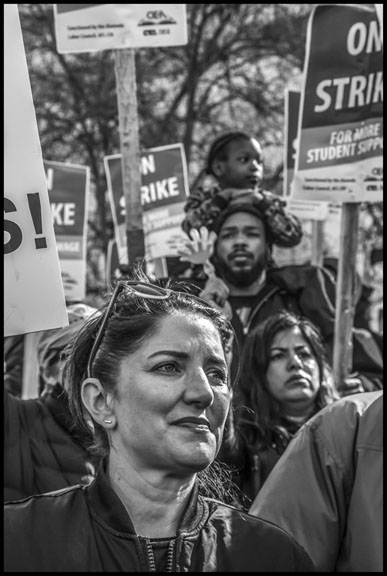
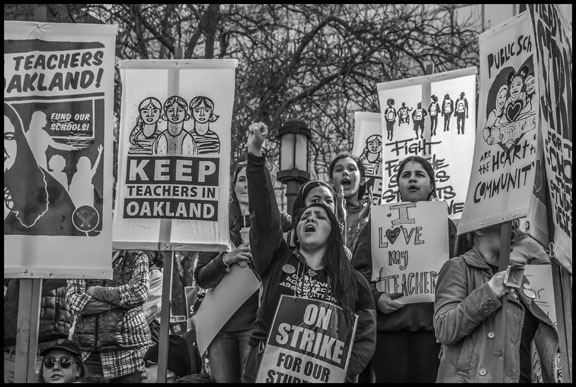
    Students and parents have come out en masse to join the marches and picket lines of the ongoing teachers strike in Oakland, California. All say that they are trying to save the city’s public school system.

    “This is a strike to save our district,” said Heath Madom, who’s taught tenth grade English for three years at Oakland Technical High School, which is referred to as “Tech” by educators and pupils. “Our Tech community is committed to saving public education. Twenty-four schools are on the chopping block. We could become like New Orleans, with no public schools and all charters, if this keeps going.”

    Like other teacher strikes around the country, the Oakland conflict is fueled both by a determination to protect the public school system itself and by the crisis in funding that has led to huge classes and deteriorating conditions in the schools themselves. According to Madom and the Oakland Education Association, only five percent of the district’s 37,000 students have passed through their schools’ doors over the last three days—evidence of vehement parent and community support. 

    Parents, students, and teachers all condemn the rise in class sizes. “My class is a catch-all, because all students have to take it, so class size is a huge issue,” said Rho Seidelman, who’s taught ethnic studies at Tech for three years. “There’s no tracking, which is great, because we have students from all backgrounds and previous schools. But it’s hard to build community among the students when there are so many. The contract says thirty-two is the limit, and I routinely have at least thirty-three. Research shows that the best learning environment is in a class of eighteen, where students can really learn and build community. When students are absent and my class size goes down to twenty-eight or twenty-six, I’m really happy.”

    Madom says most classes at Tech have thirty-five to forty students, and the school, built for 1,800, has a student body of 2,000. “We only have two part-time nurses for 2,000 students, and they don’t have the time or resources to deal with all their medical problems. We have a beautiful library but haven’t had a librarian for years. Our counselors have a caseload of 500 students apiece. If they saw every student, they would only be able to spend a few minutes with each,” Madom said. The hiring of more nurses, librarians, and counselors is part of the strike demands of the union, the Oakland Education Association, which is affiliated with the National Education Association (NEA).

    Teachers’ pay is also part of the strike demands. The union wants a twelve percent raise over three years, and the district is stuck at seven percent with a bonus. “The only reason I can live in Oakland is because I live with a partner who has a good income,” Seidelman said. “What I make is not enough to live here. I’m still paying off my school loans, and rent takes up almost half my income. My job would clearly be improved if we won the demands of our strike, and I, and other teachers too, would be more likely to stay.”

    “People here are struggling,” Madom added. “Some teachers are commuting long distances to get here. We had seven excellent teachers leave this year, including two English teachers with more than five years [of] experience.”

    Prior to the strike, a state fact-finder’s report found that the teacher retention crisis in Oakland is worse than most other districts in the state, which the state attributes to substandard pay, the lowest among the Bay Area’s districts. The fact-finder also mandated reducing class sizes, especially for special education classes, and concluded that school privatization was hurting students.

    Slating twenty-four schools for closure is part of the privatization regime, Madom argued, adding that the closures are hitting communities that have been historically underserved the hardest. “At the same time, the district has allowed charter schools to proliferate, which is a direct reason why enrollment has declined in public schools they now want to close,” Madom added. “Yet there’s no discussion of closing any of the charters.” Those charter schools already enroll 13,000 students in Oakland.

    Seidelman said these priorities are part of a culture in Oakland that favors development to benefit the affluent. “If it was up to a popular vote, our community would support the strike’s demands overwhelmingly. But our community is not in control of the basic decisions in the city. The strike has exposed the political corruption in Oakland city politics. The terrible condition of our schools is a consequence of the policies imposed by business interests. The resources of the city go to gentrification, which benefits them, but not our communities. It’s true all over the country, which is why there are strikes now in so many places. It’s not just a problem of Oakland.”

    But the national teachers’ strike wave is challenging those priorities. “It’s shifting the narrative on public education,” Madom said. “The charter industry has claimed that poor students don’t get the education they deserve because of poor teachers. Public school teachers haven’t been heard until now. We do need great teachers, but the problems of our schools aren’t due to individual teachers. The district for years hasn’t funded classrooms adequately, but the state also has grossly underfunded education. California has a massive amount of wealth. I can’t believe we’re living in one of the richest states in the country, and yet there’s no money for education. We’re tired of putting up with austerity. The strike wave is happening because teachers are standing up and saying, ‘Enough is enough.’” 

    After talks broke down on February 24, sending the strike into its third day, Keith Brown, president of the Oakland Education Association, told reporters that the district had “returned to the table without a proposal that would begin to meet our core bargaining demands [which include an obligation to] fully fund our schools and provide a living wage to keep teachers in Oakland.”

    Novelist Alice Walker was among many celebrities and political figures to rally behind the teachers. “You should be given, really, anything you ask for,” she said in a letter. “It is criminal that you are not. Especially when we see it is the war effort, more often than not, that is supported lavishly. An effort that often cuts short the very lives you have lovingly prepared to live with understanding and intelligence in this world. Know that you have sisters and brothers who stand with you, heart to heart.” 

    The majority of the following photographs were taken on the strike’s first day, February 21, when teachers, parents and students rallied in front of the Oakland City Hall, and then marched through downtown streets to the offices of the Oakland Unified School District. All photos (c) David Bacon.


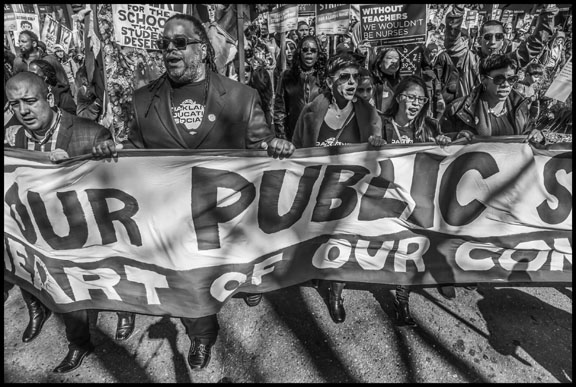
    Keith Brown, president of the Oakland Education Association, and other teachers lead a march through downtown Oakland.

    Keith Brown, president of the Oakland Education Association, and other teachers lead a march through downtown Oakland.


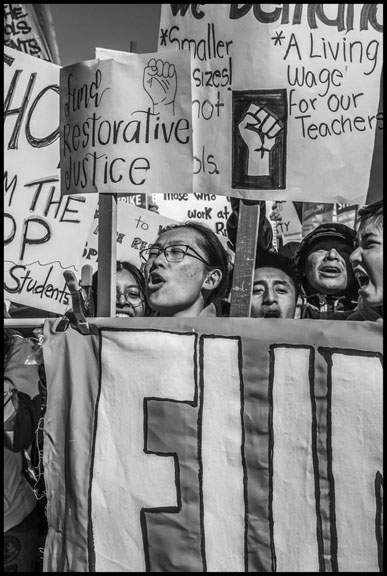
    Teachers and community members support one of the strike's demands—funding the district's restorative justice program, an alternative to traditional school discipline.

    Teachers and community members support one of the strike's demands—funding the district's restorative justice program, an alternative to traditional school discipline.


    Students, parents, and teachers demonstrate support for the strike.

    Students, parents, and teachers demonstrate support for the strike.
    The strikers march behind their banner down Broadway, in downtown Oakland.

    The strikers march behind their banner down Broadway, in downtown Oakland.


    Teachers on strike during the march.
    Teachers on strike during the march.


    Teachers and community members march behind a banner opposing the closure of 24 schools, which targets schools in the Oakland flatlands, predominantly low-income communities of color.
    Teachers and community members march behind a banner opposing the closure of 24 schools, which targets schools in the Oakland flatlands, predominantly low-income communities of color.


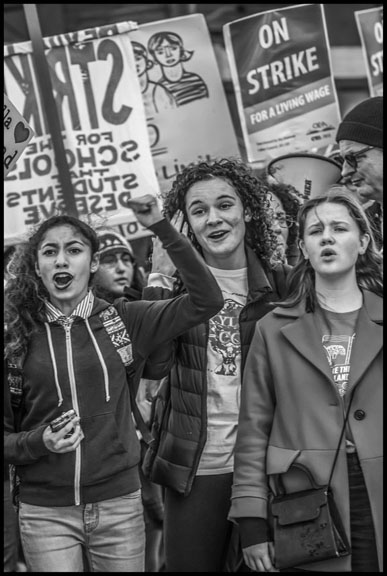
    A student shows her support for raising teachers’ salaries.
    A student shows her support for raising teachers’ salaries.


    Students and parents sing “Which Side Are You On?”

    Students and parents sing “Which Side Are You On?”
    Teachers and community activists in a rally before the march.

    Teachers and community activists in a rally before the march.
    Teachers with the basic demand of the strike—funding public schools.
    Teachers with the basic demand of the strike—funding public schools.


    Students and parents at the rally in front of Oakland City Hall.

    Students and parents at the rally in front of Oakland City Hall.
    Heath Madom talks with other teachers at a meeting in front of Oakland Technical High School.

    Heath Madom talks with other teachers at a meeting in front of Oakland Technical High School.


    About the Author 

    Award-winning photojournalist, author, and immigrant rights activist David Bacon spent over twenty years as a labor organizer and is the author most recently of The Right to Stay Home: How US Policy Drives Mexican Migration. Bacon’s previous books include The Children of NAFTA, Communities without Borders, and Illegal People (Beacon, 2008). He is an associate editor at Pacific News Service and writes for the Nation, American Prospect, Progressive, and San Francisco Chronicle, among other publications. Follow him on Twitter at @photos4justice.

  • By Deborah L. Plummer

    Green Book

    Viggo Mortensen and Mahershala Ali in “Green Book”

    The critically acclaimed film and Best Picture Academy Award winner, Green Book, tells the story of a real-life tour of the Deep South in the 1960s by Jamaican-American classical pianist Don Shirley and New York bouncer Tony Lip, who served as Shirley's driver and security. Set in 1962, they use The Negro Motorist Green Book to guide them to establishments safe for Blacks as they travel through the Deep South. It is a feel-good movie that touts the power of friendship in closing the racial divide and leaves its viewers with the assumptions that these challenges do not persist today for establishing cross-racial friendships.

    Having cross-racial friends is far more complicated than most people imagine. As with the friendship of Don and Tony, friendships across racial lines take work to secure, are challenging to nurture, and are difficult to maintain in a self-segregated society. 

    “In all things purely social, we can be as separate as fingers,” Booker T. Washington proposed to his mixed-race audience during the 1895 Atlanta Compromise Address, “yet one as the hand essential to mutual progress.” Being “separate as fingers” socially and only coming together when we need to, particularly for economic advantage, has persisted as a friendship model across the racial divide since 1895. Many people still hold the belief that the only reason to socialize across races is because of its economic benefits. Socializing with whites provides racial minorities with the right connections that help to advance their careers. They learn inside-baseball tips for improving job performance to get promotions and often get buy-in from senior leaders for sponsorship of ideas and projects. Most importantly, socializing allows them to collect information, and, as a result, gain greater understanding of the attitudes and behaviors of whites which in turn helps them to alter and monitor their behavior in the professional world.  Like Booker T. Washington, the agenda is clear regarding economic freedom. Socializing with whites is a business necessity, being friends with them is not.

    For whites, the benefit of socializing with people of color is conceptualized as a learning experience, one that is nice-to-have but not considered a necessity. It is a form of cognitive cross-training that provides greater ease in multicultural living or helps you to be more of an expert, similar to seasoned traveler.

    These contrasting positions by people of color and whites highlight that whites often view cross-racial friends as a life bonus and people of color experience white friends as a life necessity. Such is the case with the friendship forged in the Green Book. A white man, harboring racist beliefs, draws his financial livelihood from a Black man who exemplifies exceptionality by any racial standards; yet he is the one in need of protection. It’s the basis of the rationale for why so many Blacks experienced the film as yet just another white savior movie where race is showcased through a white lens and racism is spoon-fed to whites. 

    Adding to his identity resolution, Shirley’s sexual orientation as a gay man is revealed in one scene in the movie were Vallelonga rescues Shirley from a cop who had handcuffed Shirley to the shower at the YMCA after he caught him having sex with a white man. Surprisingly, there is no expressed homophobia but just a reprimand by Vallelonga to Shirley to be more careful and more transparent about his whereabouts. Vallelonga ends the discussion by telling Shirley that it is a complicated world. Indeed, it is.

    As depicted in the film, it is not being gay, but the complicated nature of cross-racial friendships that is most prominent in how whites and people of color achieve racial identity resolution. Tony Lip enjoys the luxury of a stable, consistent racial identity as a white man at work, with his family and in social settings. Whiteness is fixed, privileged social status. However, in protecting Don, he must deconstruct that white identity. 

    Don Shirley, despite his professional achievements, deeply struggles with not being Black enough in a racially-conscious, discriminatory society. This struggle still rings true for many Black Americans who have achieved professional success. During my predominately white high school and college years, I was perceived as too Black for my white friends and too white for my black friends. In my search for an academic position, a department chair once told me that although I was indeed the best candidate for the position and had interviewed extremely well, the department members were “hoping to get a true diversity candidate and did not feel that I was Black enough since I came from a such a charmed background.” Apparently, a stable family background was not associated with being Black.

    Improving US race relations requires more than a feel-good movie or a financial solution or leveling the playing field toward job creation, better educational systems for those who are disadvantaged, health equity, and prison reform. The root causes of bias, prejudice, and discrimination can still thrive even despite these advancements. Real progress will be made when we own and manage our biases and are accountable for our learned tendencies. That is the truth I take away from this movie. Tony became more human as a result of knowing Don. Don, through his friendship with Tony, found a little more grounding in the complex intersection of his identity that made him unique, yet like other people. In this depiction, Green Book, despite its many controversies, demonstrates that cross-racial friendships, however daunting their challenges, can provide us with a laboratory for creating a better path toward becoming “one as the hand” and making progress toward a fuller democracy.


    About the Author 

    Deborah L. Plummer, PhD, is a practicing psychologist, university professor, chief diversity officer, and speaker on topics central to racial equality, inclusion, and mutual respect. She currently serves as vice chancellor and chief diversity officer at UMass Medical School and UMass Memorial Health Care, and she has written for Diversity Executive and the Boston Globe Magazine. Her books include Handbook of Diversity Management, Racing Across the Lines: Changing Race Relations Through Friendships, and Some of My Friends Are. . .: The Daunting Challenges and Untapped Benefits of Cross-Racial Friendships. Follow her on Twitter at @DebbiePlummer and visit her website.

  • Robin DiAngelo and White Fragility

    Author photo: Gabriel Solis

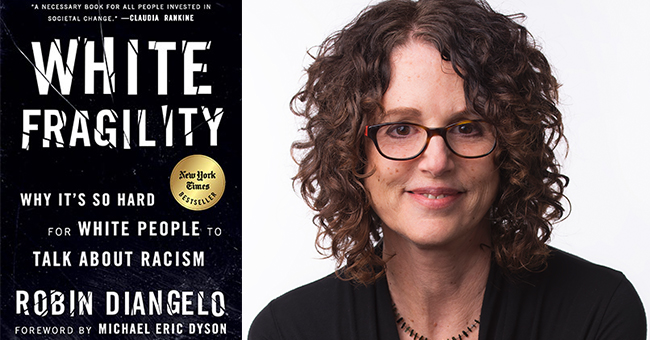
    We’ve reached another milestone with Robin DiAngelo’s White Fragility: Why It’s So Hard for White People to Talk About Racism, celebrating thirty-three weeks on the New York Times Best Seller List! It’s climbed as high as number two in the listing. And now, we’re excited to announce that we’re signing a second book with DiAngelo that will build on the conversation that started with White Fragility. The follow-up book will explore the need for white people to break with white solidarity in order to better support efforts toward racial equality. It is tentatively scheduled for release in late fall 2020 or spring 2021.

    “We did not imagine that this book would become the fastest selling book in Beacon’s history,” our director Helene Atwan said. “It says so much about this moment in our nation, where we’ve heard repeatedly about a surge in white supremacist movements, that a book like Robin’s can serve as such a powerful counter to those ideologies and make such an impact. It gives me renewed hope that the arch of history is bending toward justice, no matter what we’ve witnessed in the last two years.”

    DiAngelo has worked in the field of racial justice as an associate professor, sociologist, and educator for more than two decades. After coining the term “White Fragility” in 2011, she has become one of the most sought-after voices in the public conversation about whiteness and white reactions to the topic of race. Editor Rachael Marks notes that the book’s success makes clear that readers connected with the idea that white people need to start taking responsibility for their role in systemic racism, despite how difficult the task may seem. “The response has been incredible and heartening, because this isn’t an easy book, especially for white progressives,” she said. “Robin doesn’t peddle in white guilt or shame, but at the same time she doesn’t hold back any punches. It’s been incredible to see white readers acknowledge discomforting truths about the damage we often unintentionally inflict on people of color. Many report that they put down this book more prepared to upset the status quo, to come out of our racial comfort zones and do the hard work of looking in the mirror and begin chipping away at white supremacy.”

    While on tour discussing her life’s work, DiAngelo draws in tens of thousands of people to events across the country, and more recently, across the globe. Having recently returned from a series of successful events in Australia earlier this winter, and with forthcoming stops planned in Canada and the UK, the message of White Fragility continues to inspire readers to reassess their role in their communities, workplaces, and society as a whole. Resources that will help readers understand and utilize the book more fully are also available. You can download our discussion guide and also one developed specifically for Unitarian Universalist communities. A guide for K-12 educators is also in development.

    Despite the overwhelmingly positive response, there is still much work to be done. Not everyone has been open to the challenging message about learning to understand and overcome one’s own inherent racism. Negative reviews and hate mail continue to come through from readers who are offended by the book’s content. Meanwhile, our bus ads promoting the book were rejected by the Massachusetts Bay Transportation Authority (whose people in charge of approving ads may not have liked the cover and title—an example of peak white fragility if you ask us!) and by the Washington (DC) Metropolitan Area Transit Authority. But we did get to see them in Atlanta buses!

    What is there to do until DiAngelo comes out with her next book? If you’re white and reading this post, continue to confront and challenge your white fragility. As she writes in her op-ed in the Guardian, that entails “acknowledging ourselves as racial beings with a particular and limited perspective on race.” This demands courage and constant work, and our discussion guide provides the structure for these difficult yet necessary conversations. If you’re looking for additional resources, DiAngelo has a selection listed on her website. Dismantling white supremacy starts here.

  • A Q&A with Pamela D. Toler

    Based on a woodblock print of Tomoe Gozen

    Image credit: Jo Anne Davies for Artful Doodlers, based on woodblock print of Tomoe Gozen by Toyohara Chikanobu

    If you’ve been keeping up with the movies, you’ve seen strong warrior women kick ass on screen. Look no further than Wonder Woman, Wakanda’s Dora Milaje in Black Panther. We love seeing their stories become more mainstream in the public imagination, but where are the stories of the warrior women in real life? We know about Joan of Arc, but weren’t there more? Yes, scores more from around the globe who were just as fierce! Now you can read all about them in Pamela D. Toler’s Women Warriors: An Unexpected History. Our blog editor Christian Coleman caught up with Toler to ask her about the inspiration behind the book, why women warriors are often pushed to the historical shadows, and what she hopes readers take away from her book.

    Christian Coleman: What was the inspiration behind writing Women Warriors?

    Pamela D. Toler: I’ve been fascinated by the concept of women warriors ever since I was a nerdy kid who read every biography of famous women I could get my hands on and who regularly blew her allowance on comic books with female superheroes. But the real trigger for me came in 1988, when Antonia Fraser published Warrior Queens. Fraser’s book not only introduced me to women I’d never heard of before, but also to a new idea: that women “fought, literally fought, as a normal part of the army in far more epochs and far more civilizations than is generally appreciated.” Once I was aware that women warriors had existed in many times and places, it seemed like I ran across references to them everywhere. I began collecting their stories with no particular purpose in mind. After a couple of decades, that file was pretty fat, and I decided it was time to share. 

    CC: Tell us about your lifelong interest in the topic. Where does it come from?

    PDT: Like a lot of young girls, I was hungry for historical role models that told me it was okay to be smart, mouthy, opinionated, or different. Looking at women warriors as role models, whether they are historical or fictional, takes that one step further. They’re not just smart; they’re strong. They’re not just opinionated; they’re brave.

    I think one reason so many girls are fascinated by Joan of Arc is that she was a teenage girl who made powerful people listen to her. That’s heady stuff if you feel like you can’t make yourself heard.

    CC: What kind of research and primary source material did you have to mine in order to write about the women you profile in the book?

    PDT: The research for a global history is fundamentally different than the research for a deep dive into a single life or a single event. The historian who chooses to grapple with a topic across the artificial boundaries of academic fields inevitably finds herself dependent on secondary sources and translations of primary sources from languages she can’t read. (And frustrated by hints about the stuff that has not been translated.)

    That problem was magnified by the fact that with the exception of a few well-known figures, the history of women at war is not well documented. Some women’s stories are told only as historical footnotes to the careers of important men. Others are offered as good examples or horrible warnings. Sometimes they are left out of the official history for political reasons. Many sources exist only in fragments. Or take the form of material evidence. Or were written a hundred years or more after the fact. And, as with all historical evidence, what we have is filtered through the assumptions of the (almost always) men who wrote them. Character assassination, salacious speculation, and hagiography are all part of the historical record where women warriors are concerned—and occasionally warranted. (Forgotten woman does not necessarily mean heroic or even nice.)

    CC: What are some of the main reasons that women warriors have been pushed into the historical shadows? Apart from Joan of Arc, why don’t we hear about more women who’ve gone to war?

    PDT: The reality is that women in general have been left out of the historical narrative, or at least shoved to the side. That has happened for a lot of reasons, both social and historiographic. Women’s contributions in science, literature, politics, and economics are also routinely minimized, dismissed, or forgotten. Look at almost any subject and you’ll discover another example, whether it’s classicist Alice Kober’s critical role in the decipherment of Linear B or the existence of all-female volunteer fire brigades in the early twentieth century. The disappearance of women warriors is part of our larger tendency to write history as “his story.” As military historian David Hay points out in his study of Matilda of Tuscany, “The assumption that war is something essentially male—be it the apotheosis of masculinity or the incarnation of patriarchy—has banned the study of the female combatant to academic purgatory.”

    In the case of women warriors, the tendency to erase women’s roles in history is complicated by the fact that our shared cultural narrative tells us that women should not fight and have not fought. As a result, both contemporary witnesses and later historians often overlook the presence of women on the battlefield or indulge in some twisty thinking to explain it away. Over and over as I worked on this book, I found historians arguing that a specific woman didn’t really fight or didn’t even exist. If you look at individual women in isolation, any one of those arguments seems reasonable. But when you look at examples of women warriors across time and geographical boundaries and see the same arguments being made repeatedly about women in very different times and places, they carry less weight.

    CC: Who are some of your favorite women warriors in popular culture?

    PDT: As far as popular culture goes, I’ve been a Wonder Woman fan from the day after I learned to read. (Some loves go so deep you can’t say why.) I’m fascinated by Black Widow’s past as a dancer and her general angst. I also love the women warriors in Tamora Pierce’s young adult fantasy novels. They are smart and strong and brave and heroic, but they are also human. I love the fact that they struggle to be accepted for who they are by their peers.

    CC: What would you like readers to take away from the book?

    PDT: It’s pretty simple. Women have always gone to war, and they’ve gone for the same reasons as their male counterparts. They have fought to avenge their families, to defend their homes (or cities or nations), to win independence from a foreign power, to expand their kingdom’s boundaries, or to satisfy their ambition. They weren’t always heroic, but they were there.


    About Pamela D. Toler 

    Pamela D. Toler goes beyond the familiar boundaries of American history to tell stories from other parts of the world, as well as history from the other side of the battlefield, the gender line, or the color bar. She is author of The Heroines of Mercy Street: The Real Nurses of the Civil War and Women Warriors: An Unexpected History, among other books. Her work has appeared in Aramco World, Calliope, History Channel Magazine, MHQ: The Quarterly Journal of Military History, and on Time.com. Visit her website and follow her on Twitter at @pdtoler.

  • By Feminista Jones

    Feminista Jones

    This essay appeared originally on Powells.com.

    Twenty years after I first began writing publicly about Black Americans’ experiences with oppression, I didn’t think I’d still be at it. I didn’t think I’d still be writing about our collective struggle, the restoration of our full humanity, and respect for our autonomous citizenship. At least not with the same ferocity or the same lamenting heart. Yet here I am. We have so much more work to do to achieve equal rights for all. But at the heart and forefront of modern movements for social justice is one group who I believe will lead Black communities to the personal freedom and collective liberation we’ve been fighting for. We will be led by Black women.

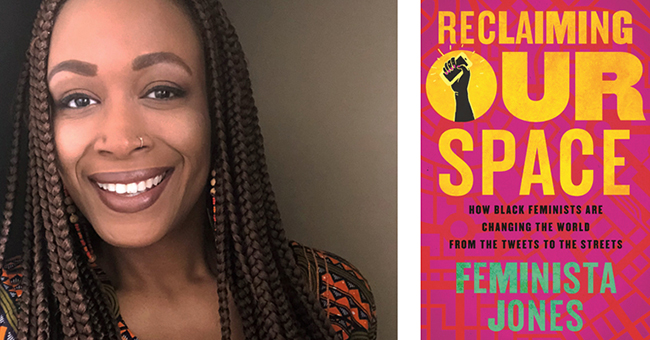
    Centering the ways Black women—and in particular, Black feminist women—are fighting for Black liberation is the focus of my new book, Reclaiming Our Space: How Black Feminists Are Changing the World From the Tweets to the Streets. In fact, when it comes to the movement-building campaigns of today, one would be hard-pressed not to see a Black woman’s intellectual, emotional, and physical labor at the core. Reclaiming Our Space explores this phenomenon.

    Surprisingly, social media has become the most popular tool for elevating consciousness about Black feminism and for connecting the heady academia of black feminist theory to the practical, everyday lives of women all around the world. From the United States to South Africa to Great Britain and beyond, we are taking the reins and leading international movements. Black feminists have been noisy in activist circles for decades, but finally more people are listening.

    This impact is not limited to political and social justice activism. Huge cultural shifts have emerged from how Black women simply navigate life. From live-tweeting television shows to demanding more diverse representation in mainstream entertainment, we have become a powerful, influential demographic. Our efforts have long challenged historical narratives that exclude women’s contributions to freedom fights. More recently, though, we are creating, organizing, and amplifying our messages through Twitter, Facebook, Instagram, and the like. These platforms have become powerful tools in anti-oppression work, specifically around police brutality, sexual assault, and mass incarceration. They have provided an easy, fast, and direct way for activists to spread information to the communities and people for whom they’re advocating. For the following three movements, the effect has been remarkable.

    #BlackLivesMatter
    Patrisse Cullors, Opal Tometi, and Alicia Garza brought their respective experiences in activism together in 2012 to demand justice for Black people who have fallen victim to police violence and racist policing. The #BlackLivesMatter hashtag took off and functioned as a rallying cry that called for accepting Black peoples’ lives as meaningful because we are human beings who matter. Though not the first to use the hashtag, these women popularized it in a cohesive, organized way that took the world by storm. Across the United States and in several international cities, local groups formed their own BLM chapters, and people who had never engaged in any formal activism became fully engulfed in liberation work. Cullors, Tometi, and Garza have disbanded as leadership heads, yet BLM continues and the spirit continues to inspire activism around the world. The impact cannot be denied. According to Pew Research Center, from July 2013 to March 2016, the #BlackLivesMatter hashtag had been used 11.8 million times. When we consider how many impressions were made by people being exposed to those millions of tweets, it’s clear that Black women made an undeniable statement in affirmation of the value of Black lives.

    #MeToo
    When Tarana Burke began using the phrase “Me Too” over a decade ago, I don’t think she could have imagined that it would transform into a movement that is now not only getting the respect it has long deserved, but that it would be embraced globally and bring about massive, tangible change for survivors of sexual harassment and assault. Burke has long been an activist and advocate for women and girls, so seeing the fruits of her life’s work enter mainstream conversations in 2017 with the Harvey Weinstein sexual harassment scandal has been incredibly refreshing.

    A ripple effect has led to women all around the world bravely coming forward with their own stories of sexual harassment at work, sexual assault in college, sexual violence in childhood, and more. Since then, the hashtag has sparked conversations and legislation, and companies everywhere are changing policies, while Weinstein has been indicted and others will soon find their days in court. Even more powerful is that the movement has gone global despite the fact that Black women are still less likely to be believed than White women when they say they have been victims of sexual violence and still face misogynoir in many movements that claim to be feminist in nature.

    #BlackGirlsAreMagic/#BlackGirlMagic
    There are few hashtag campaigns that have had more influence in popular culture than #BlackGirlMagic, a shortened version of #BlackGirlsAreMagic. Popularized in 2013 by CaShawn Thompson, the phrase “Black Girl Magic” can be heard in films, primetime television shows, and even the evening news. It is routinely used to describe everything from the spectacular achievements of Black girls and women in politics, entertainment, and sports to the ingenuity and culture-influencing creativity of the everyday Black woman. Thompson intended for the concept to be empowering and accessible; no Black girl or woman would be left out.

    Over time, “Black Girl Magic” and “Black Girls Are Magic” started popping up on merchandise. Celebrities like Willow Smith and Amandla Stenberg wore the T-shirts. Fox’s hit primetime drama Empire had its lead actress, played by Taraji P. Henson, use the phrase in her dialogue. Black women celebrities, especially, have taken to using the hashtag when posting on Instagram and celebrating their own and each other’s beauty and achievements. Now, with the words “Black Girl Magic” making magazine covers and movie trailers, it has entered the lexicon as part affirmation, part rallying cry. 

    Black women have not only contributed to Black people’s progress, but also to women’s progress as a whole. It was Black women who marched alongside suffragettes while simultaneously fighting lynching. In the 1960s and 1970s, it was Black women who were fighting for reproductive justice while also fighting against racial injustice. Black women aren’t simply playing supportive roles in liberation movements for Black people or for women. We are at the forefront of both, functioning as architects and the most vocal mouthpieces. More of our voices are being heard and people are learning the undeniable truths about Black women. We know we aren’t literally magic. But it sure can seem like it.


    About the Author 

    Feminista Jones is a Philadelphia-based social worker, feminist writer, public speaker, and community activist. She is an award-winning blogger and the author of the novel Push the Button and the poetry collection The Secret of Sugar Water. She was named one of the 100 Most Influential People in Philadelphia and one of the Top 100 Black Social Influencers by The Root. Her writing has been featured in the New York Times, Washington Post, and Time, Essence, and Ebony magazines. Follow her on Twitter at @FeministaJones and visit her website.