• By Premilla Nadasen

    The Montgomery Bus Boycott Turns 60

    Welcome to the third entry in our Montgomery Bus Boycott Turns 60 Series. Domestic worker Georgia Gilmore was one of the little-known organizers and activists in the boycott, which is why, during Women’s History Month, we are putting the spotlight on her. Gilmore raised money for the boycott and founded the organization Club from Nowhere so that black donators could give money to the cause anonymously without drawing unwanted attention from their white employers and losing their jobs. She cooked out of her own home for people involved in the boycott after she was fired from her own job because of her activism. As this excerpt from Premilla Nadasen's Household Workers Unite shows, Dr. King would not have become the leading civil rights leader he was without the behind-the-scenes work of people like Gilmore who kept the cause afloat.

    ***

    Georgia Gilmore had no intention of riding the buses. She was fed up, and welcomed the opportunity to engage in collective protest. She explained: “Sometime I walked by myself and sometime I walked with different people, and I began to enjoy walking, because for so long I guess I had this convenient ride until I had forgot about how well it would be to walk. I walked a mile, maybe two miles, some days. Going to and from. A lot of times, some of the young whites would come along and they would say, ‘Nigger, don’t you know it’s better to ride the bus than it is to walk?’ And we would say, ‘No, cracker, no. We rather walk.’ I was the kind of person who would be fiery. I didn’t mind fighting with you.”

    As became clear early on, the boycott was expensive to run and maintain. Coordination was a massive undertaking and included fundraising, publicity, legal representation, security patrols, as well as the providing of alternative transportation in the form of an organized carpool for protesters. The Montgomery Improvement Association needed money to operate the carpool and assist people who had been arrested, fined, or fired for participation in the protest. The carpool was an extensive citywide network with three hundred vehicles and forty-two pickup and drop-off points. Coordinators rented or borrowed vehicles, hired drivers, and paid for gas and insurance.

    Gilmore looked for a way that she could best help out. According to Johnnie Carr, a member of the Women’s Political Council and longtime friend of Rosa Parks: “Georgia just got it into her mind that she was going to raise money for the Movement. And if Georgia was raising money, she was doing it through food.” Gilmore recounted: “We collected $14 from amongst ourselves and bought some chickens, bread and lettuce, started cooking and made up a bundle of sandwiches for the big rally. We had a lot of our club members who were hard-pressed and couldn’t give more than a quarter or half-dollar, but all knew how to raise money. We started selling sandwiches and went from there to selling full dinners in our neighborhoods and we’d bake pies and cakes for people.”

    Gilmore founded the Club from Nowhere, an organization of maids, service workers, and cooks seeking to aid the boycott. The name was an attempt to shield members from the consequences of openly supporting the boycott. “Some colored folks or Negroes could afford to stick out their necks more than others because they had independent incomes,” Gilmore explained, “but some just couldn’t afford to be called ‘ring leaders’ and have the white folks fire them. So when we made our financial reports to the MIA officers we had them record us as the money coming from nowhere. ‘The Club from Nowhere.’” Only Gilmore knew who made and bought the food and who donated money. The underground network of cooks went door-to-door selling sandwiches, pies, and cakes, and collecting donations. The proceeds were then turned over to boycott leaders. Donations came from whites as well as blacks. That “was very nice of the people because so many of the people who didn’t attend the mass meetings would give the donation to help keep the carpool going.”

    When Gilmore’s boss at the National Lunch Company learned of her activism, she was fired and blacklisted. Unfortunately, retaliation was not uncommon during the boycott; both E. D. Nixon and Martin Luther King had their homes bombed, and Rosa Parks lost her job at the department store where she worked as a seamstress. Gilmore had little choice but to turn these impediments into opportunities.

    Martin Luther King encouraged her to cook out of her own home and even helped her financially. When the city tried to shut her down, King helped her remodel her kitchen to meet city standards. Gilmore awoke at four o’clock in the morning and, in her small kitchen, began preparations to make stuffed pork chops, meat loaf, barbecued ribs, fried fish, spaghetti in meat sauce, collard greens and black-eyed peas, stuffed bell peppers, corn muffins, bread pudding, and sweet potato pies. She cooked lunch daily out of her kitchen for people involved in the boycott, including King. Although she had no restaurant seating, people showed up at her house to eat, squeezing around the dining room table or sitting and eating on the couch.

    King, who called her Tiny, frequented her house, often bringing guests or holding clandestine meetings at her home. According to Reverend Al Dixon: “Dr. King needed a place where he could go. You know, he couldn’t go just anywhere and eat. He needed someplace where he could not only trust the people around him but also trust the food. And that was Georgia’s.” Gilmore’s dining room table became a meeting space connecting blacks and whites, working class and middle class in the civil rights movement: professors, politicians, lawyers, clerical workers, police officers. She served such well-known figures as Morris Dees of the Southern Poverty Law Center, Lyndon Johnson, and John Kennedy. In this context, cooking became a conduit for political connections.

    Reverend Thomas E. Jordan, pastor of Lilly Baptist Church, reflected on Gilmore’s role in the boycott: “I think Georgia Teresa Gilmore was one of the unsung heroines of the Civil Rights Movement. She was not a formally educated woman, but she had that mother wit. She had a tough mind but a tender heart. You know, Martin Luther King often talked about the ground crew, the unknown people who work to keep the plane in the air. She was not really recognized for who she was, but had it not been for people like Georgia Gilmore, Martin Luther King Jr. would not have been who he was.”

    Like other domestic workers, Gilmore was less constrained by social niceties than movement leaders. As Alabama State professor Benjamin Simms, who served as head of the MIA’s transportation committee, commented: “She’s a sweet woman, but don’t rub her the wrong way. Would you believe that this charming woman once beat up a white man who had mistreated one of her children. He owned a grocery store, and Mrs. Gilmore marched into his place and wrung him out.”

    Black domestic workers like Gilmore were service workers with a particular set of skills that could be utilized for political mobilization. Their struggle, however, was not for class overthrow, as the black radical feminists of the 1930s and 1940s predicted, but transformation of the power structure, on city buses and in their workplaces. They sought to build cross-class alliances and carve out spaces of autonomy and mutual respect for the South’s working-class black women. Household workers were the quintessential “outsiders within,” to use Patricia Hill Collins’s term—privy to the most intimate details of white family life yet not a part of that family. Their social status and proximity to the white domestic sphere enabled them to wield a different kind of power in engaging in community action. Their intimate relationship with white households granted them access and knowledge unavailable to others. 

    During the Montgomery bus boycott, maids surreptitiously gathered information from the white community. Bernice Barnett argues: “The maids, cooks, and service workers of the [Club from Nowhere] also had access to information in the homes of their White employers. As they went invisibly about their domestic work, the [members of the Club] were alert to news about the strategies and tactics of the White opposition.” Domestic workers used the very elements of domestic work—their marginalization, their insider status, their access to the white domestic sphere, their culinary skills—as a basis for subversive activity. They were instrumental in unsettling the white community and pushing for more egalitarian race relations. They made clear that the boycott was not only about equal rights, but about respect. Their claim for respect and political engagement posed a fundamental challenge to the long-standing “mammy” stereotype. Even though they had few labor rights, black domestic workers possessed power within their workplace that enabled them to exercise leverage over their employers.

    Stay tuned for our next entry in our series. Click here to read the first entry, and here to read the second.


    About the Author 

    Premilla Nadasen is an associate professor of history at Barnard College, Columbia University, and is the author of several books, including Household Workers Unite: The Untold Story of African American Women Who Built a Movement and the award-winning Welfare Warriors: The Welfare Rights Movement in the United States. A longtime scholar-activist, Nadasen works closely with domestic workers’ rights organizations, for which she has written policy briefs and served as an expert academic witness. She also writes about household labor, social movements, and women’s history for Ms., the Progressive Media Project, and other media outlets. Follow her on Twitter at @premillanadasen. 

  • By Carole Joffe

    Bernie Sanders, Hillary Clinton

    Photo credit: ABC/Ida Mae Astute

    This piece appeared originally in Dissent.

    When it comes to reproductive matters this campaign season, Democrats and Republicans are operating in parallel universes. For Republican presidential candidates, Planned Parenthood (PP) is the Great Satan that sells baby parts (though Donald Trump is partly off the reservation about PP’s non-abortion activities); abortion is an abomination, and the only policy disagreement among the candidates is whether there should be exceptions for women seeking abortion as a result of rape or incest. The two Democratic candidates, Hillary Clinton and Bernie Sanders, on the other hand, staunchly support legal abortion and both have defended Planned Parenthood against the inflammatory charges made in a series of highly edited videos about its fetal donation policies and the witch hunt led by Republicans in Congress and many red states.

    In the seven Democratic debates held so far, neither candidate has been asked a question about abortion, something that has frustrated pro-choice forces (and led to the hashtag #askaboutabortion). That changed recently, when Fox News, somewhat surprisingly, managed to get the two Democrats to agree to a Town Hall and both were asked direct questions on this subject.

    (more…)

  • By Mark Tushnet

    Justice Antonin Scalia

    Photo credit: Decay Today

    Several weeks have passed, and with the President having nominated Merrick Garland as Justice Scalia’s replacement, it might be easier to offer a somewhat more detached view of Justice Scalia’s likely place in Supreme Court history than was possible immediately after his unexpected death.

    Comments from his colleagues make it clear that, on the level of personal interaction, Justice Scalia was a genial man, easy to get along with (although the documentary record does show that he and retired Justice O’Connor set each other’s teeth on edge on a regular basis). From the point of view of those of us outside the Court (I should mention that I met Justice Scalia only once, so far as I can recall, and even then had quite limited contact with him), this raises questions about how we should think about the relation between personal qualities and contributions to the law and to the institution of the Supreme Court.

    (more…)

  • By Philip Warburg

    Bullitt Center, Seattle, Washington.

    Bullitt Center, Seattle, Washington. Photo credit: Philip Warburg

    Since Beacon’s publication of Harness the Sun last Fall, I’ve spent a lot of time in university classrooms and on radio shows talking up solar power’s potential as a clean energy resource. These discussions have largely focused on the supply side of renewable energy, but there’s a broader and equally exciting story to tell about the rapid transformation of our built environment. It’s a story that is as much about what we can do to reduce our buildings’ energy demand as it is about what we can do to produce the power we need to comfortably use those buildings.

    A West Coast tour of super-green buildings and communities in February opened my eyes to many of the possibilities in this quickly evolving realm. I was the tag-along on a trip that my wife Tamar, an architect at Studio G Architects here in Boston, arranged to gather grist for her stint as a guest lecturer on sustainable building design at Tel Aviv University.

    (more…)

  • By Caitlin Meyer

    Lands’ End recently did something wonderful and bold. Their newish CEO, Federica Marchionni, launched a feature in their spring catalog called “Legends,” which aimed to highlight a broad range of individuals who have made a difference in the world. Their first pick, Gloria Steinem, was beautifully photographed and interviewed by Marchionni about issues including gender equality and challenges faced by women in the workplace. Steinem posed with an embroidered tote bag, and part of the proceeds from its sale would go toward the Fund for Women’s Equality, a backing campaign that supports the passing of the Equal Rights Amendment. What a lovely and unexpected move by a clothing company! Except soon after, they did something sort of terrible. They removed the interview from their website, apologized for it, and as a result, withdrew their commitment to the Fund for Women’s Equality.

    What happened?

    (more…)

  • By Frederick S. Lane

    Big Brother is Watching You. From the film 1984.

    On January 24th, Apple Computer will introduce Macintosh. And you’ll see why 1984 won’t be like “1984.”

    Those were the closing lines of Apple Computer’s groundbreaking (and screen-shattering) advertisement during the 1984 Super Bowl for its new computer, the Macintosh. The allusion, of course, was to George Orwell's equally groundbreaking dystopian novel Nineteen Eighty-Four, a book of such disturbing but credible forecast that it turned the author’s name into a veritable synonym for pervasive surveillance.

    Apple was not aiming its sledgehammer of an ad at the Big Brother of government but instead at what it perceived to be the mindless lockstep adoption of the IBM PC and its clones (it was no accident that the ad’s “Big Brother” bore at least a vague resemblance to Microsoft’s then-president, Bill Gates). For Apple, the great battle in 1984 was against the forces of grinding conformity rather than the threat of excessive or invasive governmental searches.

    (more…)

  • A Q&A with Alfie Kohn

    ParentingThere’s an epidemic of helicopter parenting. Young people today are narcissistic and suffer from inflated self-esteem. Kids need more experience with failure so they can learn to cope with the real world. Children need more self-discipline and “grit.” These are some of the conventional assumptions about children and parenting that have been uncritically accepted in our culture. In The Myth of the Spoiled Child: Coddled Kids, Helicopter Parents, and Other Phony Crises, now available in paperback, esteemed critic and lecturer Alfie Kohn debunks these beliefs and challenges us to reexamine this conservative ideology adopted often by liberal parents. We caught up Kohn to discuss these myths and how harmful they are to healthy child development.

    Spoiled children are a myth? Really?

    Well, of course some children fit the profile of “spoiled.” For that matter, we probably know kids who could be described by just about any adjective. But the claim that a lot of children are spoiled, or that this is truer today than in years past, is really not supported by good evidence. Sweeping statements about how kids or young adults are spoiled—or self-centered, entitled, narcissistic, selfish, what have you—are revealing mostly for what they tell us about the people who make these claims. And by the way, complaints about how “kids today” are the worst ever have been heard in every generation going back decades, if not centuries.

    (more…)

  • By Amy Seidl

    Global Warming in USA

    Image credit: Flickr user Andrea della Adriano

    Scientists have confirmed that sea levels are likely rising at a faster rate than at any point in twenty-eight centuries because of greenhouse gas emissions from human activity. In the coming decades, American coastal cities will be at risk of continual tidal flooding. If emissions keep up, many coastal cities could be abandoned by the twenty-second century. What does this mean for human migration when land grows scarce? In this excerpt from Finding Higher Ground: Adaptation in the Age of Warming, ecologist Amy Seidl takes a look at the impacts of rising sea levels on human populations in the last century to project the future of our increasingly complicated migration patterns. 

    ***

    Sixty percent of the world’s population lives along a coast. The people in Bangladesh’s deltas, on Florida’s developed coastlines, and on islands everywhere are at tremendous risk as sea levels rise. For instance, the Intergovernmental Panel on Climate Change predicts up to half a meter (18-59 cm) average sea-level rise by 2095, but others have found these projections conservative. The revised models that account for more rapid input from glaciers in Greenland and Antarctica blow away the IPCC estimates and calculate up to a two-meter rise. To put these figures in a relevant context, when Hurricane Gustav hit New Orleans in 2008, the accompanying storm surge came within one-third of a meter of the top of the levees. By the end of the century it is very possible that similarly strong storms hitting the Gulf of Louisiana would crest the levees, given the one to two meter higher seas.

    (more…)

  • By Kay Whitlock

    Day After Tomorrow“Pessimism becomes a self-fulfilling prophecy; it reproduces itself by crippling our willingness to act. Revolutionary change does not come as one cataclysmic moment (beware of such moments!) but as an endless succession of surprises, moving zigzag toward a more decent society.”

    —Howard Zinn, “The Optimism of Uncertainty”


    Have you, like me, noticed how, in this bizarre and unsettling presidential primary season, everybody is getting on everyone else’s last nerve?

    Many of us are worried about Donald Trump as political arsonist. We don’t have to tear each other apart over whether he, his campaign, his devotees, and his tactics do or don’t mesh with various academic understandings of fascism. Most of us know damn well that the growing wave of virulent and violent racism, white nativist populism, economic rage, authoritarianism, and American exceptionalism he’s riding is not only volatile but flat out dangerous.

    It’s also partly the Bernie/Hillary factor. Divisions are so charged that some friendships and family relationships (mine with a particular relative, for instance) are held together only by the slenderest threads or already fatally frayed.

    (more…)

  • By Ann Neumann 

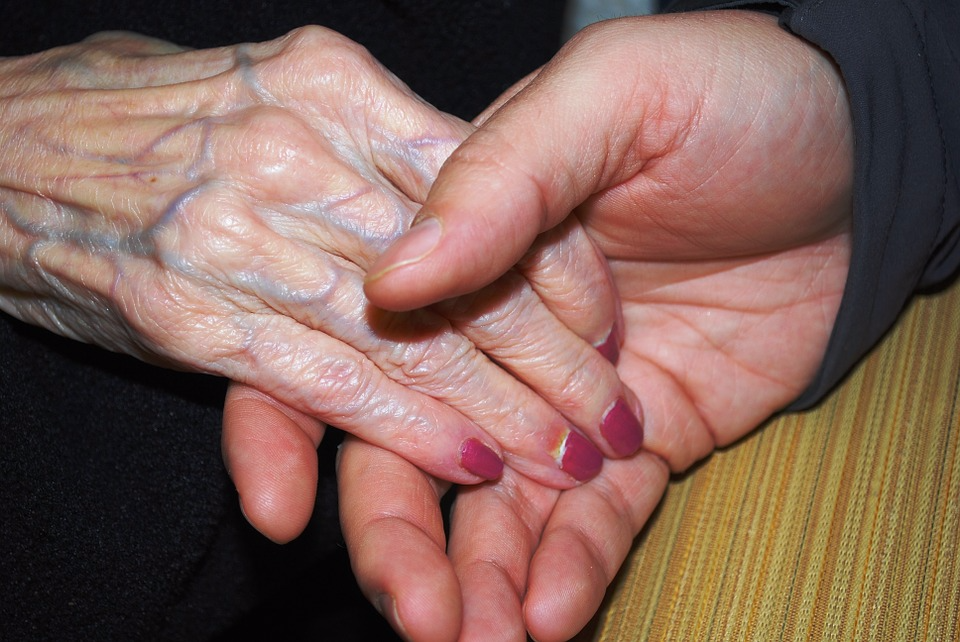
    Helping handsSusie Cushner studied to be a death doula three years ago, after a series of personal tragedies precipitated a move across the country. The training started her on a path of self discovery she desperately needed, she told me last week in a cafe in Brooklyn, New York. A photographer by training, she recently founded the Palliative Care Education Initiative to raise awareness of palliative services, a medical specialty that grew out of hospice more than a decade ago and aims to treat suffering patients who may not yet qualify for hospice.

    Although the term “doula” has been around for centuries, and is most often applied to those who aid women in childbirth, a new interest in death and dying—in response to the institutionalization of the dying process and a growing population of elders—has resulted in death doula training programs sprouting up across the country, including at universities like Baylor in Texas. I first encountered death doulas while doing research for my book, The Good Death: An Exploration of Dying in America, and was struck by how the programs evolved, alongside the hospice movement and the proliferation of palliative care. As a hospice volunteer, it seemed to me that those who wanted to assist the dying already had a path forward—hospice; and that instead of improving the quality of care that hospice programs provide (which is covered by Medicare), they chose to create a new area of end-of-life care.

    (more…)