• By Dina Gilio-Whitaker

    New Zealanders celebrate their country's endorsement of the United Nations Declaration on the Rights of Indigenous Peoples in 2010.

    New Zealanders celebrate their country's endorsement of the United Nations Declaration on the Rights of Indigenous Peoples in 2010. Photo credit: Broddi Sigurðarson

    Indigenous peoples have long fought for meaningful inclusion in international political fora, beginning at least as far back as 1923 with the League of Nations, the United Nations’ precursor. Despite the fact that Indigenous peoples (IPs) have always practiced the art of international diplomacy with each other and outsiders who invaded their territories—and the fact that their existences as nations typically far predate today’s modern states—they have been largely shut out from the contemporary world’s political processes.

    With the passage of the United Nations Declaration on the Rights of Indigenous Peoples in 2007 a new level of recognition was achieved. The UNDRIP was the first international instrument to explicitly support Indigenous rights to self-determination and to freely choose their own political status. But it is precisely these rights that have been so contentious for many states who perceive Indigenous self-determination as threatening to the “territorial integrity” and authority of the state.

    (more…)

  • A Q&A with José Orduña

    José Orduña

    Photo credit: Laurel Fantauzzo

    Happy Publication day to José Orduña and his memoir, The Weight of Shadows: A Memoir of Immigration and Displacement! The Weight of Shadows chronicles the process of becoming a North American citizen in a post-9/11 United States. It is a searing meditation on the nature of political, linguistic, and cultural borders, and the meaning of “America.” Our executive editor Gayatri Patnaik spoke with Orduña to discuss James Baldwin’s influence, Orduña’s hopes for the book, and how he crafted the narrative. 

    GP: I was thinking back to when I first received your project in February 2014 and, as a naturalized US citizen myself, was compelled that your book was the antithesis of the ‘good immigrant’ assimilationist narrative. Do you suspect that the range of emotions you share—especially anger and ambivalence—are shared by many immigrants who are working to or have become US citizens? 

    JO: Most of the immigrants I know share in some form of ambivalence or anger toward the notion of becoming a US citizen, and toward the United States in general because the people I know never wanted to come here, they had to come here because their lives were made unlivable at home. I don’t think people should have to perform goodness in order to be treated justly. This is one of the major problems I see with some of the immigration activism that is getting the most media attention. Why should someone whose home country was devastated by military violence and/or economic opportunism need to receive a college degree from a US college or university or serve in the US military in order to be granted a sliver of justice?

    (more…)

  • A Q&A with Andrea Ritchie

    Black Women's Lives Matter

    Public awareness of police brutality is growing, spurred by stories about individual Black men who have been murdered by police across the country. But Black women and women of color have been rendered largely invisible in discussions about state-sanctioned violence, even though they too are targeted and killed by police officers. What can we learn from their experiences of injustice, and from their resistance and activism? Black lesbian police misconduct attorney and organizer Andrea Ritchie, co-author of Say Her Name: Resisting Police Violence Against Black Women and Queer (In)Justice: The Criminalization of LGBT People in the United States, takes on these issues in her forthcoming book, Invisible No More, due out next spring. With Women’s History Month still fresh in our mind, Beacon Broadside editor Christian Coleman caught up with Ritchie to ask what to expect in her eye-opening account. 

    Christian Coleman: Describe for us what your new book is about. 

    Andrea Ritchie: Invisible No More is the first book to comprehensively tackle women’s experiences of racial profiling, police brutality, and gender-based forms of police violence, such as sexual assault.

    It puts the cases of police violence against Black women that exploded into the national consciousness within the past year—Sandra Bland, McKinney, the assault at Spring Valley High, and the rapes of more than a dozen Black women that led to the conviction of Oklahoma City police officer Daniel Holtzclaw—into a much broader context. Invisible No More will provide readers with context around the historic and present-day patterns and paradigms of policing and punishment that produced these encounters—they’re neither isolated, nor rare.

    Invisible No More centers Black women’s experiences—straight and queer, trans and not trans, both because that is the community I am from and as a contribution to the Black Lives Matter movement—and extends beyond them to those of Indigenous, Latinx, Asian, Arab and Middle Eastern women, identifying shared and distinct experiences informed by unique historical and current relations of power.

    The working title, Invisible No More: Racial Profiling and Police Brutality Against Women of Color, operates on several levels. The book renders visible women’s experiences of racial profiling and police violence, as well as forms, patterns and contexts of policing women experience that are rarely discussed. It also uncovers the decades of research, activism, and organizing by Black women and trans people, Indigenous women and Two Spirit people, and women and trans people of color that have helped to bring us to this present moment of unprecedented attention. Last, but not least, it highlights the currently invisible ways that bringing women’s experiences of policing from the margins to the center of movements against police brutality and gender-based violence can and should expand our analysis, organizing strategies, and visions for change.

    CC: How did the idea of writing this book come together? 

    AR: It’s been in the works more than a decade. When I wrote Law Enforcement Violence Against Women of Color, an essay which appeared in The Color of Violence: The INCITE Anthology, first published by South End Press in 2006 and scheduled to be reissued by Duke this summer, I realized I had so much more material than could fit in a single chapter. Members of the South End editorial collective, including the anthology editor, Jill Petty, who is now a Senior Editor at Beacon, immediately saw the potential and necessity of expanding the article into a full-length book. We signed a contract and then…life happened.

    I got pulled into organizing and advocacy around women’s experiences of policing on the ground, and at the national and international levels. I worked to resource local efforts to document and highlight women’s experiences of policing by compiling the INCITE! Organizer’s Toolkit on Law Enforcement Violence Against Women and Transgender People of Color. I spent a significant part of the past decade documenting, litigating and advocating around the experiences of women and LGBTQ youth of color and people involved in the sex trades, where a great deal of gender- and sexuality-based policing and police violence takes place. I served as Director of the Sex Workers Project at the Urban Justice Center, then founded and coordinated Streetwise and Safe from 2009-2014. I brought impact litigation successfully challenging the New York City Police Department’s practices with respect to treatment of trans and gender nonconforming people, partnered with Women With a Vision and the Center for Constitutional Rights to successfully challenge the sex offender registration requirement imposed by the State of Louisiana’s crimes against nature by solicitation law, and sued the New York City police department on behalf of over a dozen women and trans people whose rights had been violated. I also embarked on a number of writing projects, including co-authoring Queer (In)Justice: The Criminalization of LGBT People in the United States, A Roadmap for Change: Federal Policy Recommendations to Address the Criminalization of LGBT People and People Living With HIV, and Say Her Name: Resisting Police Brutality Against Black Women.

    Sadly, in the interim, all of us suffered a tremendous loss when South End closed its doors in 2013. But movements are as much about relationships as they are about institutions. I was lucky when, as I was looking for a new publisher, Jill reached out to see if I was interested in bringing the book to Beacon. I am so incredibly grateful to be working with her again to bring the book to life.

    There have been many times over the past eighteen months, as the national movement and conversations around racial profiling, police violence, and mass incarceration have swelled, when I wished that the book was already out, to provide background to the women’s cases that are finally gaining national attention, to serve as a resource to the movement, and to share examples of how centering women’s experiences changes the conversation and organizing strategies. But ultimately, it will be a better book for having marinated this long!

    CC: You collaborated with Kay Whitlock and Joey Mogul on Queer (In)Justice. Does your new book dialogue in any way with Queer (In)Justice, and if so, how? 

    AR: I had a similar experience working with Kay and Joey on the policing chapter of Queer (In)Justice as with the essay for the Color of Violence: I had way more material than could fit. So this will be an opportunity to engage more deeply in discussions around racialized policing of gender and sexuality. It’s also a chance to extend the conversation from Queer (In)Justice to include non-queer and non-trans women, while highlighting the ways experiences are linked and distinct across gender identities and sexualities within a broader spectrum. I’m also looking forward to expanding Queer (In)Justice’s discussion of the archetypal, criminalizing controlling narratives that inform women’s interactions with police.

    CC: This will be the first book to cover police violence against women of color. How much previously existing literature on this topic is there? 
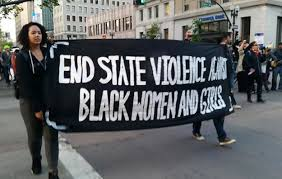
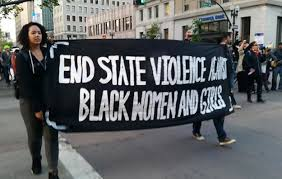
    End State Violence Against Black Women and GirlsAR: You would be surprised both at how little and how much material there is. Over the past eighteen months, I’ve been deeply inspired by—and grateful for—the explosion of conversation by and for Black women in the blogosphere around Black women’s experiences of policing. There are many more activists, academics and journalists writing about this issue now than ever before.

    There’s also a fair amount of historical material, and some earlier academic research scattered throughout a number of different sources and disciplines.

    Annanya Bhattacharjee wrote a seminal report in 2001 called Whose Safety: Women of Color and the Violence of Law Enforcement, later republished as an essay in her anthology Policing the National Body. There was also an article in Zero Tolerance: Quality of Life and the New Policing transcribing a conversation among folks at the Audre Lorde Project in the late 1990s that was really instrumental to my own evolving understanding of the issue. And of course, there’s my essay, the INCITE! Toolkit and the Say Her Name report. These are some of the most comprehensive treatments of the issues to date. Much of the research and writing that was done before 2014 has largely been invisible in the current conversations, so part of the work of this book will be to bring this material forward into the current conversation.

    At the same time, relatively little has been written about women’s experiences within the broader literature on racial profiling, policing, and mass incarceration. The bulk of the reports, articles, and books still focus almost exclusively on the experiences of Black men and men of color, or on generic “Black communities” or “communities of color.” These approaches don’t pay particular attention to or even incorporate women’s experiences, and still frame the issue in male or generic terms.

    So the process of writing this book involves drawing on my own research, organizing and litigation experience over the past twenty-five years, doing some investigative journalism and a bit of detective work, combing through social science literature, law review articles, books and reports on the subject—as well as YouTube videos, websites, Twitter—to find the stories, research and analysis that is out there, to pull all the pieces together into a comprehensive picture that will spark and support proliferation of broader and deeper conversations.

    CC: Why hasn’t there been much written at this length on police violence against women of color before? 

    AR: That’s the million-dollar question. I have always been struck by the fact that I was, until recently, one of a relatively small group of Black women and women of color writing, speaking and agitating around women’s experiences of policing on a regular basis. I often describe the experience as feeling like speaking underwater, whether in meetings, to the media, at conferences—it would be like I'm talking, but nothing is registering. And if I wasn't at the next meeting, or in the next conversation, or at the next conference, women’s experiences of policing would fall off the agenda—literally and figuratively—and any gender-specific or inclusive analysis or recommendations would immediately disappear or be deprioritized. Now it feels like I am at least talking above water. While some folks still aren't listening, and are continuing to have the conversation in the ways they’ve been having it, there are more and more voices lifting up women’s experiences of policing, and more and more receptivity to arguments that they need to drive the conversation and solutions. It doesn’t mean that we are all the way there, but we’ve come a long way.

    I think people want simple understandings of issues. Police violence is most simply understood when framed along one axis—race—with one prime subject, and state violence in the U.S. has primarily been understood through a male lens. Conversely, violence against women is usually framed as private violence against non-trans, non-queer predominantly white women. It’s long past time to complicate those conversations.

    I also think that placing women of color at the center of the conversation produces discomfort. Confronting police violence against women requires us to confront our complicity in similar forms of violence perpetrated within our communities, whether it’s domestic or sexual violence or homophobic and transphobic violence. I think it also calls into question our investment in law enforcement as the solution to violence, which explains notable silences among mainstream women’s organizations around police violence against women.

    But, we’re going to have to get uncomfortable in order to get free. And that’s ultimately the conversation this book seeks to contribute to.


    About the Author 

    Andrea Ritchie is a Senior Soros Justice Fellow, and co-author of Say Her Name: Resisting Police Violence Against Black Women, Roadmap for Change: Federal Policy Recommendations for Addressing the Criminalization of LGBT People and PLWH, and Queer (In)Justice: The Criminalization of LGBT People in the United States. She provided expert testimony before the President’s Task Force on 21st Century Policing, the Prison Rape Elimination Commission, and United Nations treaty bodies, and is a nationally recognized expert on policing issues. She is currently at work on Invisible No More: Racial Profiling and Police Brutality Against Women of Color, scheduled for release in 2017.

  • By Kay Whitlock

    The Incredible Shrinking Public

    Image modified by Louis Roe

    I admit it. I love pulp fiction, old school sci-fi, B-movies, and the dreadful dilemmas their protagonists face. From a safe viewing/reading distance, that is. When it’s happening to somebody else who doesn’t really exist.

    I especially love that Jack Arnold’s 1957 classic The Incredible Shrinking Man (novel and screenplay by renowned sci-fi/horror writer Richard Matheson).

    The story follows likeable Scott Carey who, while on a yacht off the California coast, encounters a strange miasma. It touches him, but his wife, Louise, below deck as it passes, is not affected. In time, he notices that he’s losing weight and even becoming smaller. His clothing increasingly is too loose, too long.

    (more…)

  • By Bill Fletcher, Jr.

    I was driving to a meeting listening to the news this morning and a special segment was announced. It was described as a discussion on the Supreme Court’s decision on “union dues.” The second time that I heard this promo I stopped my car and called the station. Though I did not reach a human being, I left a pointed message to the effect that this case—Friedrichs v California Teachers Association—was NOT about union dues. So, if it was not about union dues, what was it about and why would the news station make such a basic error?

    (more…)

  • A Q&A with Jay Wexler

    Giant Ganesha statues hit the beach in Mumbai, heading into the sea

    Giant Ganesha statues hit the beach in Mumbai, heading into the sea. Photo credit: Jay Wexler

    In Mumbai, Hindus carry twenty-foot-tall plaster of Paris idols of the elephant god Ganesh into the sea and leave them on the ocean floor to symbolize the impermanence of life, further polluting the scarce water resources of western India. In Hong Kong and Singapore, Taoists burn paper money to appease “hungry ghosts,” filling the air with smoke and dangerous toxins. These are some of the instances of religious practice colliding with environmentalism that humorist and law professor Jay Wexler investigated for his new book that came out this month, When God Isn’t Green. Over two years, he made a round-the-world trip to understand the complexity of these problems and learn how society can best address them. Our blog editor Christian Coleman caught up with Wexler to ask him about his journey and how we can work toward ecofriendly rituals.

    Christian Coleman: Tell us what sparked your interest in writing about the intersection of religious practices and the environment. 

    Jay Wexler: I’ve been teaching courses in environmental law and church/state law for at least a dozen years now, and so whenever I’ve been teaching an environmental law class and something about religion came up, I’d note it in my head, and vice-versa. I always thought I’d write something about the question of how the legal system should deal with religious practices that harm the environment, but I didn’t know it would be a book until I tried selling a book idea about bald eagles (many Native Americans use bald and golden eagle feathers for their religious rituals, but possession of these feathers is illegal under federal law) and nobody was interested. So with the help of Helene Atwan, the Director of Beacon Press and maybe the best editor in the business, we broadened the topic out to cover religious practices around the world that harm the environment.

    CC: So, in the big scheme of things, how much pollution and environmental harm are we talking about?

    JW: On the whole, the amount of pollution is modest. Nowhere near the amount of pollution, for instance, that comes from manufacturing or transportation. Still, though, in certain places at certain times, the pollution can be quite significant and can have a real impact on the environment and public health. But the total amount of pollution is not really the point. The point is that we will inevitably see conflicts between religious freedom on the one hand and environmental protection on the other, and we have to figure out how to balance those important values when they clash.

    CC: The issue of big business comes up in the production of Ganesh idols for Ganesh Chaturthi celebrations in India, Buddhist ‘mercy releases’ of captured animals in Taiwan, and harvesting palm fronds in Guatemala and Mexico for use in Palm Sunday celebrations in the US. What role does this venture play in environmental harm? 

    JW: Big business is definitely involved with some of these practices, and its involvement makes it that much harder to deal with these problems. Once someone is making money off a practice, like the sculptors in Mumbai or the trappers of small animals in Taipei, it’s a lot easier for a practice to become entrenched and gain momentum. At this point, it often becomes more important for law to take an active role in breaking the hold of big business and give the environment a chance.

    CC: When you were in India, one of your guides said the tradition of taking Ganesh idols to the Ganges has ruined Mumbai’s beaches. On the other hand, the sculptor of Ganesh dolls you met with said the pollution is minor. How is a healthy compromise between religious practice and environmentalism possible with these differing viewpoints? 

    JW: This is where scientific research can play a crucial role. We need more studies of the effects of religious practices that harm the environment—the effects of burning ghost money on air pollution, the effects of plaster of Paris idol immersion on water quality, the effects of mercy releases on ecosystems, etc.—so that we can have some objective understanding of just how problematic these practices are. The more we know about the actual effects of the practices, the more we’ll know about the best ways to deal with them.

    CC: As important as it is for religious practices to be ecofriendly, you point out that government regulations can take away the vitality and vibrancy of the practices. How so? 

    JW: My worry is that if the government is not sensitive to the nature of religious ritual and the needs of religious believers to practice in traditional ways, it may over-regulate religion and reduce it to a bland and lifeless version of its former self. For example, in India, the state has set up these temporary pools for people to come and immerse their idols in so that the idols don’t pollute the actual water bodies. The idea is great, and for right now it’s voluntary. But when I visited these pools, nobody was using them, even while just around the corner at the beach there were thousands of people actively worshipping and chanting and dancing and immersing their idols in the sea. I worry that if all of a sudden the government were to, for example, require the use of these pools, we would lose all of that vital religious activity that I saw at the beach.

    CC: So how much should governments regulate religious practices without interfering too much?

    JW: I think governments should tread lightly when it comes to regulating religious practices that harm the environment. Of course the government has an interest in protecting the environment, and it should take the steps necessary to prevent excessive harm. But it should also recognize that religious practices are incredibly important to believers, and so it shouldn’t simply shut down these practices. Rather, the government should attempt to find a balance between environmental protection and religious freedom.

    CC: In your travels and research for this book, which of the strategies that you saw were most effective for balancing religious practice with environmental protection? 

    JW: I think softer approaches, such as education, collaboration, and urging believers to employ best practices can go a long way toward helping the environment without being overly intrusive. For example, in Singapore there are signs up all over the place talking about the danger of burning joss paper on air quality, and in India, the government has urged idol-makers to keep their idols under a certain height and painted with non-toxic paints, and I think these modest steps have had a positive impact.

    CC: You traveled to Guatemala, Mexico, India, Taiwan, Singapore, and Alaska. Which one was your favorite location? Do you have a favorite? 

    JW: My favorite trip was definitely India—I’ve never been any place like it, and I can’t wait to go back. Indeed, one could write a whole book about religious practices and the environment in India. My trip to Barrow, Alaska to investigate the whaling festival there was also a highlight. Barrow is the northern-most town in the United States. I spent six night-less days there in June, and I’ll never forget the other-worldliness of that place. Taking a selfie by the Arctic Sea at two in the morning is not an experience I’m likely to replicate anytime soon.


    About Jay Wexler 

    Jay Wexler is a professor at the Boston University School of Law, where he has taught environmental law and church-state law since 2001. He is the author of three previous books, including Holy Hullabaloos and The Odd Clauses. Follow him on Twitter at @SCOTUSHUMOR and visit his website. 

  • By Laura A. Jacobs

    Pictogram for an all gender restroom

    Photo credit: Axel Boldt

    To pee or not to pee: That is the question facing transgender and gender nonconforming people in North Carolina.

    I first wrote on this a year ago when only a few states were considering anti-transgender bathroom statutes which seemed unlikely to pass. In hindsight, that time seems almost quaint. 

    Now North Carolina and other states are enacting legislation that criminalize transgender and gender nonconforming people for using the bathroom aligned with their identity and/or expression. Behind the rationalizations are two main goals: to scapegoat us for political power, and to punish our community’s nonconformity by creating an environment in which it is impossible—or at least extremely challenging—for transgender and gender nonconforming people to survive.

    (more…)

  • By Fred Pearce

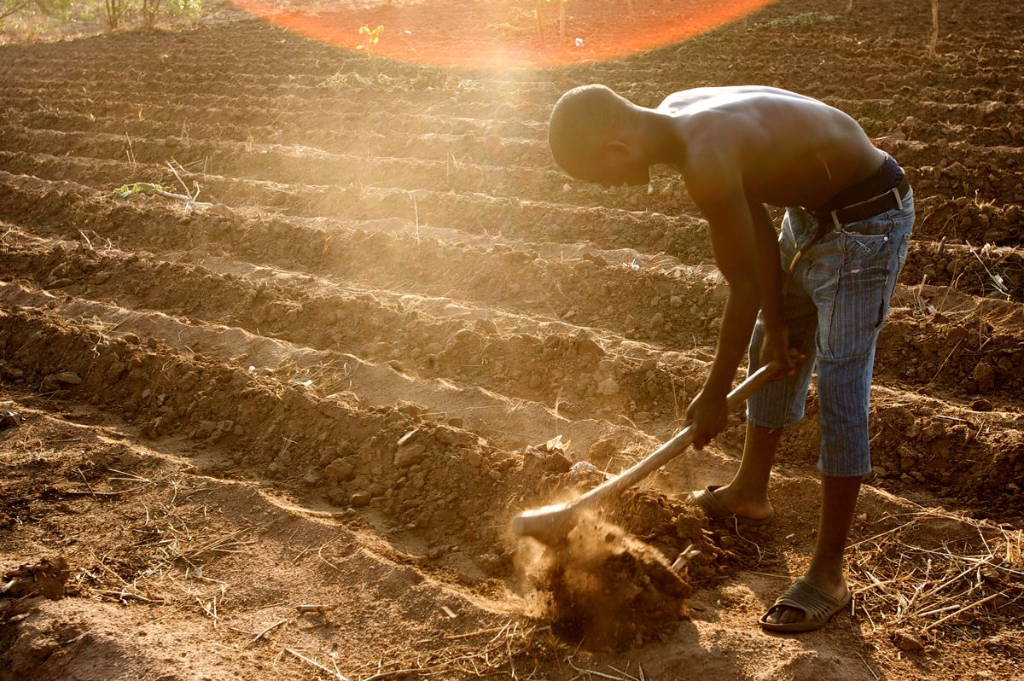
    A farmer on the outskirts of Lilongwe (Malawi) prepares a field for planting.

    A farmer on the outskirts of Lilongwe (Malawi) prepares a field for planting. Photo credit: Stephen Morrison/AusAID

    The World Health Organization has estimated that El Niño-related weather across the globe is putting sixty million people at increased risk of malnutrition. On track to being the strongest event since 1997-98, El Niño has caused droughts in countries such as India and South Africa that have staggered farming considerably. How will we manage to feed the world when the effects of climate change continue to encroach on our food sources? In this excerpt from The Land Grabbers: The New Fight over Who Owns the Earth, environmental journalist Fred Pearce argues that small-scale farming, not agribusiness, is the better solution to combat the food crisis.

    ***

    The specter of Malthusian famines has returned to haunt the world. The British government’s chief scientist, John Beddington, forecasts a “perfect storm”—a combination of climate change, rising world population, disintegrating ecosystems, and land and water shortages. The storm will trigger a global food crisis that could see hundreds of millions starve. “We are at a unique moment in history,” he says. “We have twenty years to deliver forty percent more food…this is really urgent.”

    (more…)

  • Women's History Month

    What sacrifices does a Pakistani wife have to make while living under a military dictatorship? Why are there still so few women working in the hard sciences? Which historically misunderstood workforce forged alliances with activists in the women’s rights and black freedom movements? The answers lie in the books we are featuring this year during Women’s History Month, which explore and applaud the contributions women have made—through survival, activism, trailblazing—to history. Ranging from the individual voice of memoir to the joint voices of the collective biography, their narratives ring out with equal intensity.


    The Upstairs WifeRafia Zakaria’s The Upstairs Wife

    In the 1960s, Rafia Zakaria’s Muslim-Indian family immigrated from Mumbai to Pakistan, where they prospered for some time. In the 1980s, Pakistan’s military dictators rolled out an Islamization campaign that affected women’s freedom and safety. The political became personal when Zakaria’s aunt’s husband took a second wife, which was permitted under the country’s dictatorship. Zakaria grew up in the shadow of her aunt’s shame and fury as the world of post-Partition Pakistan turned ever more violent and chaotic. A memoir of Karachi as seen through the eyes of its women, Zakaria’s The Upstairs Wife weaves together the parallel stories of her aunt’s polygamous marriage and Pakistan’s hopes and complicated realities.

    (more…)

  • By Theresa Perry

    Christopher Emdin

    Photo credit: TEDx Talks

    Happy publication day to scholar and professor Christopher Emdin and his new book For White Folks Who Teach in the Hood…and the Rest of Y’all Too! In For White Folks, Emdin offers his theory of Reality Pedagogy, a new approach to the outdated modes of thinking about teaching and learning in urban schools. Reality Pedagogy provides practical tools to unleash the brilliance and eagerness of youth and educators alike. Merging real stories with theory, research, and practice, Emdin demonstrates the importance of creating a family structure and building communities within the classroom, using culturally relevant strategies such as hip-hop music and call-and-response, and connecting the experiences of urban youth to indigenous populations globally.

    For White Folks is also part of the Simmons College-Beacon Press Race, Education, and Democracy Series. Series editor Theresa Perry wrote the following note for the book, describing how Emdin is revolutionizing pedagogy in urban schools.

    (more…)