• Teal ribbon for Sexual Assault AwarenessAccording to the Center for Disease Control and RAINN (Rape, Abuse, & Incest National Network), one in five women have experienced completed or attempted rape, and about three percent of American men—or one in thirty-three—have experienced an attempted or completed rape in their lifetime. Most victims first experienced sexual violence before age twenty-five. Statistics, however, only paint part of the picture, as most victims do not share or report these crimes to their family, friends, or the police.

    April is Sexual Assault Awareness Month, an annual nationwide campaign started by the National Sexual Violence Resource Center that advocates public awareness of sexual assault and prevention. We at Beacon Press publish books about survivors of rape and sexual violence who have been shaped, but refuse to be defined, by their histories of violence. These very books also provide resources for survivors to get help, get engaged, and get creative in the fight to end sexual violence.


    On Being RapedRaymond Douglas’s On Being Raped

    When Raymond M. Douglas was an eighteen-year-old living in Europe, he was brutally raped by a Catholic priest. In On Being Raped, Douglas recounts this painful event and opens an important dialogue about male rape and what needs to be done to provide adequate services and support for victims.

    Pandora’s Aquarium

    MaleSurvivor.org

    1in16.org

    RAINN.org


    Lived Through ThisAnne K. Ream’s Lived Through This

    Part personal history of Anne Ream’s own experience rebuilding her life after violence, part memoir of a multi-country, multi-year journey spent listening to survivors, Lived Through This is a collection of essays and stories by a community of courageous, outspoken, and hopeful women across the Americas who give us firsthand accounts of a world where sexual violence is more commonplace than most of us imagine.

    The Voices and Faces Project

    End Violence Against Women International

    Know Your IX

    Break the Cycle

    Faith Trust Institute


    The Lonely SoldierHelen Benedict’s The Lonely Soldier

    Helen Benedict tells the stories of five women who fought in Iraq between 2003 and 2006. She follows them from their childhoods to their enlistments, then takes them through their training, to war and home again. Benedict shows how these women came to face the truth of war and offers suggestions for how the military can improve conditions for female soldiers—including distributing women more evenly throughout units and rejecting male recruits with records of violence against women.

    W.O.W., Women Organizing Women

    S.W.A.N., Service Women’s Action Network

    National Sexual Assault Hotline: 800-656-HOPE


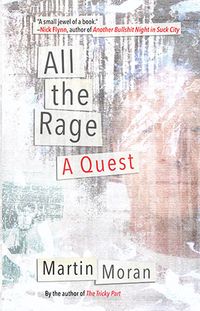
    All the RageMartin Moran’s All the Rage 

    Haunted by the question of why he wasn’t angry with the man who sexually abused him as a boy, Martin Moran went on quest to understand the role of rage in our lives. Moran shows us the complexities of the human heart with each of his encounters. All the Rage, which draws from his eighty-minute solo theater piece of the same name, is a moving and a surprisingly funny memoir about finding the right balance between anger and compassion.

    1in16.org


    Caged EyesLynn Hall’s Caged Eyes

    Lynn Hall’s memoir is the first of its kind: the story of an Air Force Academy cadet’s story of rape and the shame culture in the military. For Hall, the military offered an escape from her chaotic home—her erratic mother, absent biological father, and a man who she called “dad” who sexually abused her. She was dismissed from the Academy when, after being raped by a classmate and contracting herpes, she was diagnosed with meningitis and left with chronic pain. Caged Eyes is a moving account of Hall’s brave struggle to advocate for herself and recognize her own strength. To learn more about Lynn Hall, visit her website.

    Military Rape Crisis Center

    S.A.P.R.O., Sexual Assault Prevention and Response Office

    Colorado Coalition Against Sexual Assault


    SexualAssaultAwarenessRibbon

  • By Jay Parini

    Alastair Reid

    Alastair Reid

    This piece appeared originally on the Best American Poetry blog as part of Jay Parini’s guest blog series for National Poetry Month from April 18-22.


    My old mentor Alastair Reid died only two years ago at eighty-eight. He was a Scottish poet and translator, and we met in 1970 in Scotland, where I lived for seven years. He was an astonishing fellow: wry, witty, learned, and lavishly gifted as a poet and critic. My sense of what a poem should “sound like” came from reading him carefully. There was a deep musicality in his work, an accessibility as well, that struck me then and has remained with me throughout my life.

    I met Alastair in a pub, having been introduced by a mutual friend. He invited me to bring him poems to read, and I accepted this offer gratefully. I would pedal out to his cottage by the sea in the afternoons, at tea time. We sat in his kitchen, drinking mugs of tea, eating toast and biscuits. He would hunch beside me and silently “correct” my poems, as he put it. He circled words, crossed out lines, rearranged stanzas. Sometimes he would just draw a thick line through the whole poem and push it back to me. I knew exactly what that meant!

    Alastair directed my reading as well. (I was not enrolled in any course with him. Indeed, he had nothing to do with the university, where I was a graduate student when I met him, in the midst of writing a thesis on Gerard Manley Hopkins and the influence of St. Ignatius Loyola on his poetry.) I had never before heard of Borges or Neruda, but Alastair turned me in the direction of their work, which he was translating. Indeed, he introduced me to both Borges and Neruda. The former came from Argentina to visit Alastair in Scotland. The latter, Neruda, came to London at one point from Paris, and we went to dinner together—a vivid evening for me.

    Learning to write was, for me, also learning to read. I remember reading “Among School Children” by Yeats and complaining to Alastair that it was beyond understanding. So he led me stanza by stanza through this complicated poem and its stream-of-conscious movement toward a blazing final stanza where the whole poem focused in the symbol of the chestnut tree, which cannot be separated into leaf, blossom, and bole.

    Often I can hear Alastair’s voice in my own as I write and read. His accent—a mild Scottish lilt—seems vaguely to undergird my own way of speaking, although only I can notice this. His impeccable ear for the sound of poetry certainly taught me how to listen to a line of verse.

    New and Collected Poems: 1975-2015Frost once said that a poem has to carry a tune. I still believe that, and I listen for the tune in any poem. I want to believe its music. I want it to play freshly on my ear. I’m always looking for what Frost famously called “the sound of sense.”

    In Scotland at that time, there was a kind of poem afoot that Alastair wrote and, perhaps even more sharply, could be found in the work of Norman MacCaig. I met MacCaig through Alastair, and he also became an important figure for me—someone whose work I really cared about, learned from, imitated. In a new poem that’s in my New and Collected Poems, I have a poem in the manner of MacCaig, although Alastair is there too:

       I take some comfort from old frogs

        who squat around the pond

        like Bodhisatvas, contemplating

        nothing but their own exclusion

        from the world beyond them, falling

        deeper into selfless

        silence and the dereliction

        of all duty but to sit like this,

        apart from offspring

        leaping in the air or falling

        through their parachutes of flesh

        or dying on the road like Jesus,

        with their arms outstretched.

        Articulate composure

        is their mode, as unheroic as

        the rocks around them,

        clumped and cooling as the night comes on.

    I can only read this poem to myself in the voice of MacCaig, who had a marvelously whimsical manner. Alastair used to call it “a whim of iron,” and that pretty much summed up the case.

    As I get older now, moving into my seventh decade, these looming presences from my youth become more important. They played such a role in helping me to shape an image of what poets did, how they did it, and what their poems could do on the page. I think I’ve spent the past four or more decades working my way toward what I saw then, trying to find and reframe it. In a few poems, I think I’ve actually got to that point—a kind of arrival that is satisfying. As Eliot wrote so wonderfully in the fifth section of “Little Gidding”:  “What we call the beginning is often the end / And to make an end is to make a beginning.”


    Read the other essays in Parini’s guest blog series on the Best American Poetry blog: “In Conversation with Older Poets”; “Thinking of Frost”; “Poetry”; “Red Warren”.


    About the Author

    Jay PariniJay Parini is a poet, novelist, biographer, and critic. His five books of poetry include Anthracite Country and House of Days. He has written eight novels, including Benjamin’s Crossing, The Apprentice Lover, The Passages of H.M., and The Last Station—the last was made into an Academy Award-nominated film starring Helen Mirren and Christopher Plummer. Parini has written biographies of John Steinbeck, Robert Frost, William Faulkner, and, most recently, Gore Vidal. His nonfiction works include Jesus: The Human Face of God, Why Poetry Matters, and Promised Land: Thirteen Books That Changed America. Visit his website.  

  • A Q&A with Erika Janik

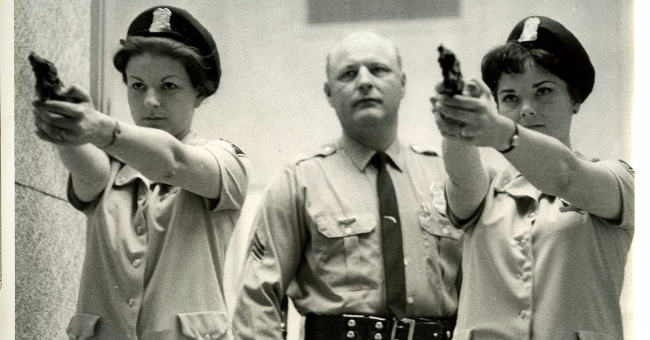
    Indianapolis officers Elizabeth Robinson and Betty Blankenship at the shooting range. They were the nation’s first women assigned to car patrol.

    Indianapolis officers Elizabeth Robinson and Betty Blankenship at the shooting range. They were the nation’s first women assigned to car patrol. Photo credit: National Law Enforcement Museum

    Happy publication day to Erika Janik and her new book Pistols and Petticoats: 175 Years of Lady Detectives in Fact and Fiction! Pistols and Petticoats is a lively exploration of the struggles women have faced in law enforcement and in mystery fiction since the late nineteenth century. Working in a profession considered to be strictly a man’s domain, investigating women were nearly always at odds with society. These sleuths and detectives refused to let that stop them, and paved the way to a modern professional life for women on the force and in popular culture. We caught up with Janik to ask her about the social implications of women joining the police force, “murder as entertainment,” and how the reality of policewomen compares with the stories told in the crime genre.

    What made you decide to write a book on women detectives and the mystery genre?

    Something that always grabs my interest is what I sometimes refer to as “women in unexpected places.” I ran across a woman in Chicago who ran her own private detection agency around the turn-of-the-twentieth century and immediately wanted to know more. That led me deep into reading about real women in law enforcement—there are some real characters in the early years!—and thinking about how that reality compared with the fictional worlds I knew from a lifetime of books, television, and movies.

    In the late nineteenth and early twentieth centuries, how did the role of women in detective stories differ from women’s perceived role in society? How does it differ today, if at all?

    Fictional female detectives were definitely on the fringes of acceptable female behavior of the time. Women were thought to be emotional—not logical—and rational beings capable of putting the pieces of a mystery together. Women were also expected to be in the home, not out on the street tailing suspects or inspecting crime scenes for clues. At the same time, though, most of these fictional detectives were either young women or spinsters, two stages of life during which women had a bit more latitude because they didn’t have husbands or children.

    Fictional detectives today are much closer to real women in that it’s not unusual for a woman to work or to be out in the city at night on her own. Fictional detectives today also tend to have more complicated personal lives. They may be divorced or from a troubled home. One thing that hasn’t changed is that fictional detectives still tend not to be married.

    Pistols and PetticoatsIndustrialization and greater education opportunities in the nineteenth century gave women more time to volunteer and to work in social reform. One role borne of this charitable work was the prison matron, a role that paved the way for women on the force. How did the introduction of prison matrons in women’s correctional facilities impact the lives of female inmates and the view of women in policing?

    Reformers lobbied hard for the introduction of prison matrons to help protect female inmates from abuse in prisons run by and designed for men. In some prisons, female and male inmates were housed in the same cell, while in others, women were packed together in a single room and largely ignored. Prison matrons did bring more attention to female inmates and had a better understanding of their charges. It also helped to change perceptions of female inmates among the matrons and other reformers. Where before, a woman in prison would be considered “fallen” and beyond redemption, through their work, matrons began to sympathize and understand the circumstances that often drove women to crime. They actually began to point to men as the problem and cause of women’s downfall.

    Prison matrons helped ease the path for women in policing because they demonstrated that women could successfully work in a law enforcement capacity.

    When women first entered the world of policing, the typical lady detective was young and unmarried or an older “spinster” to allow more time to focus on the job, as all other women were expected to be married and tending to their families. What were the societal implications when married women and mothers began to enter the police force?

    Married women entering the police force faced many of the same obstacles and pressures as any married, working mother took on, though law enforcement definitely had the added potential of bodily harm or even death on the job. Fictional female detectives today still tend to be young or unmarried “spinsters,” widows, or divorcees today—that hasn’t changed. This is one area where reality strongly diverges from fiction because many real female officers had partners and children from the very beginning. For instance, Chicago detective Alice Clement was married with a daughter and still made headlines for her adventures in the 1910s.

    Why do you believe “murder as entertainment” as depicted in crime fiction and news reporting was such a satisfying genre for audiences in the nineteenth century? How do audiences view the genre today, and how does that affect the way we view current policewomen and female detectives?

    I think that murder becomes satisfying entertainment as it becomes less common and as societies become more ordered. When you aren’t living in fear for your life every day, crime can be thrilling and fun as well as a way to play out our fears within a safe space. We also love a good story, even better if it has clear good and bad guys to cheer for and root against. I don’t think that has changed. Scandinavia is one of the safest places in the world today and yet their top literary genre is crime.

    There are far more women in fictional detective settings than in real life. I think these fictional depictions of policewomen on television, in particular, have made it easier for our culture to imagine and accept a woman in that role. Unfortunately, that hasn’t necessarily translated to parity on our nation’s police forces.


    About the Author 

    Erika JanikErika Janik is an award-winning writer, historian, and the executive producer of Wisconsin Life on Wisconsin Public Radio. She’s the author of five previous books, including Marketplace of the Marvelous: The Strange Origins of Modern Medicine. She lives in Madison, Wisconsin. Follow her on Twitter at @Erika_Janik and visit her website.


  • By Alondra Nelson

    DNA

    Tracing genealogy is now the second-most popular hobby amongst Americans. The tsunami of interest in genetic ancestry tracing from the African-American community has been especially overwhelming. It’s also the subject of professor of sociology Alondra Nelson’s The Social Life of DNA, in which she takes us on an unprecedented journey into how the double helix has wound its way into the heart of the most urgent contemporary social issues around race. In celebration of National DNA Day, we’re sharing this excerpt in which Nelson looks at the indubitable influence of Alex Haley’s Roots and the three broad classes of genetic ancestry services that have been developed since the start of this century.

    ***

    Genetic genealogy testing aligns with an enduring human desire: the search for roots and identity.

    The appeal of genetic ancestry testing cannot be understood without also understanding the backdrop of the specific example author Alex Haley provided about how this should be accomplished and what effects it might produce. Roots, for which Haley received a Pulitzer Prize, tells the story of Haley’s colorful family genealogy, which he traces back to The Gambia. The story is framed as the author’s “epic quest”: his prodigious efforts across years and continents to uncover his family’s past. In 1977, when Haley’s work was transformed into a television miniseries, the story of his ancestors’ trials, tribulations, and resilience held the country in rapt attention for eight days.

    Haley’s story came under scrutiny soon after it began to circulate, and was criticized for historical inaccuracies. He was accused of plagiarism on several occasions; one case would result in a settlement amount so large that it was effectively an admission of guilt. But these accusations did not present an obstacle to the story’s power, and the narrative remains a commanding cultural symbol, national script, and racial allegory.

    Despite Haley’s heroic, if flawed, example, few African Americans are able to fill in the contours of their past as he did, owing to the decimation of families that was a hallmark of the era of racial slavery and the dearth of records from this period. As a consequence, genetic genealogy testing, which is now broadly available and also less taxing—and, owing to the social power of DNA, seemingly more authoritative—than conventional Haley-esque genealogical research, holds considerable appeal for many root-seekers.

    Genetic genealogy testing emerged from techniques developed in molecular biology, human population genetics, and biological anthropology. Direct-to-consumer genetic testing was first available in the United States in 2000 from Family Tree DNA, a pioneer in this field that remains an industry leader. When African Ancestry was launched just a few years later, the company was as notable for joining the cutting edge of a new social and technical practice as it was for its niche mission and customer base. By 2004, five other American companies had joined the ranks of African Ancestry and Family Tree DNA. By 2010, thirty-eight companies worldwide offered an array of genetic-ancestry-testing services, with twenty-eight of these based in the United States.

    The companies that sell DNA analysis for genealogical purposes offer three principal forms of analysis for which they create brand names, such as African Ancestry’s MatriClan and PatriClan. Rather than provide companies’ brand descriptions and for the sake of analytic clarity, here the tests will be classified by what information they provide as an end result to the consumer, because the forms of social orientation that the test results suggest are of primary importance to root-seekers. The genealogists I have spoken with purchased particular genetic tests in order to fulfill distinctive genealogical aspirations, such as corroboration of a multicultural background or association with an ethnic community. The three broad classes of DTC genetic ancestry services can be categorized as spatiotemporal analysis, racial-composite analysis, and ethnic-lineage analysis.

    With spatiotemporal testing, a consumer’s DNA sample is classified into a haplogroup (sets of single nucleotide polymorphisms [SNPs] or gene-sequence variants that are inherited together) from which ancestral and geographical origins at some point in the distant past can be inferred. The result orients a consumer in space and time but does not provide identity per se. This form of analysis was made possible by the ambitious Y-DNA and mtDNA mapping research that resulted in theories about the times and places at which various human populations arose. Y-DNA and mtDNA have distinctive sequence combinations; similar sequences can be classified into broad groups, called haplogroups. Human population geneticists have devised a system of letters and numbers to identify the region of one’s ancestors, and also the time in history (hundreds of thousands of years ago) during which they would have migrated from Africa. Family Tree DNA, a forerunner in American genetic ancestry testing, supplies customers with haplogroup information, as does National Geographic’s Genographic Project. An inferred match with the mtDNA-derived L2a haplogroup—a designation shared by some of Venture Smith’s descendants—suggests that one’s ancestors lived in Africa approximately sixty thousand to eighty thousand years ago. In short, spatiotemporal analysis offers “deep” ancestry results that open a window onto the geographic past of ancestors who may have dwelled in a time and place far removed from where root-seekers presently abide.

    Among the more spectacular claims of genetic ancestry testing is the ability to infer not merely where we come from but what we are, in the most essentialist sense. These tests, which I classify as racial-composite analysis, claim to ascertain the percentage of three of four supposedly “pure” racial groups. In contrast to spatiotemporal and ethnic-lineage analyses, which rely on mtDNA and Y-DNA, this genomics testing involves the analysis of nuclear or autosomal DNA, which is unique to each person (identical twins excepted, although this is now being debated) and consists of the full complement of genetic information inherited from parents. A DNA sample is compared with panels of proprietary SNPs that are deemed to be “informative” of ancestry. Algorithms and computational mathematics are used to analyze the samples and infer the individual’s “admixture” of three of four statistically constituted racial categories—African, Native American, East Asian, and European—according to the presence and frequency of specific genetic markers said to be predominate among but, importantly, not distinctive to, each of the “original” or “pure” populations.

    This form of analysis was first developed by the DNA division of DNAPrint Genomics. When this Florida-based company launched in 2002, it offered the “first genomic ancestry test”; that is, a test based on complete autosomal DNA. A subject of this racial composite testing might learn he is estimated to be 80 percent African, 12 percent European, and 8 percent Native American. DNAPrint Genomics went out of business in 2009, but other companies offer similar services, including African Ancestry’s myDNAmix and 23andMe’s Ancestry Painting. This type of analysis proves useful to those who think that what we understand as racial groups are self-contained and, therefore, that mixture can be ascertained. However, it offers little guidance about one’s geographic or ethnic origins other than in the broadest sense. As African Ancestry cautions its customers on its website, “YOU WILL NOT LEARN COUNTRIES OR ETHNIC GROUPS.”

    With ethnic-lineage testing, an individual’s DNA is searched against a genetic-ancestry-testing company’s reference database, which is in most cases proprietary, thus the claims made using it cannot be independently verified. (This is also true of the other types of analysis; DTC genetic testing companies hold data and algorithms as trade secrets.) A match between the sample and the reference DNA or shared haplotypes suggest a shared, distant maternal or paternal ancestor. Most companies offer this type of testing. A typical ethnic-lineage result may inform a test-taker that her mtDNA traced to the Mende people of contemporary southern Sierra Leone. Or a male customer could be inferred to be ancestrally linked to a group of male genealogists who share his surname and Y-DNA profile. African Ancestry’s analyses might thus be regarded as ethnic-lineage instruments through which an undifferentiated racial identity is translated into African ethnicity and kinship. By linking blacks to inferred ethnic communities and nation-states of Africa, African Ancestry’s service offers root-seekers the possibility of constituting new forms of identification and affiliation.

    Each of these three types of tests thus offers a different window onto the past and, as Halbwachs would remind us, also a distinct vantage on the present. Root-seekers demonstrate their preferences for genetic information in the form of the testing they select and purchase. The usefulness of test results depends on the perspective of the root-seeker and the particular questions he or she seeks to answer through genetic genealogy analysis. In my encounters with genetic genealogists, one of the more important insights I gained is that root-seekers’ preferences are shaped by the problems to which they are applied. It should also be noted, however, that many of the test-takers I met used more than one type of genetic genealogy analysis, typically to compare results received from different companies or obtain new information from a company from which services were purchased previously (for example, when a company releases a more robust form of test that employs more markers or has added a significantly larger number of samples to its reference database).


    About the Author 

    Alondra Nelson is Dean of Social Science and professor of sociology and gender studies at Columbia University. She is author of the award-winning book Body and Soul: The Black Panther Party and the Fight Against Medical Discrimination and her writing has appeared in the New York Times, Washington Post, Science, Boston Globe, and the Guardian. She lives in New York City. Follow her on Twitter at @sociallifeofdna and visit her website. 

  • By Stephen Kendrick

    Trees at Mount Auburn Cemetery

    Trees at Mount Auburn Cemetery. Photo credit: Perpetua Charles

    Founded in 1831, Mount Auburn Cemetery is one of the Boston area’s most famous attractions. This urban wildlife habitat and nationally recognized hotspot for migratory birds continues to connect visitors with nature and serves as a model for sustainable landscape practices and conservation. Author and Unitarian minister Stephen Kendrick takes us on a tour of the cemetery in his book The Lively Place: Mount Auburn, America’s First Garden Cemetery, and Its Revolutionary and Literary Residents, which was released earlier this month. In this selection from the book, Kendrick writes about how he learned—thanks to novelist John Fowles—to appreciate the cemetery’s trees as social creatures putting together a complex environment.

    ***

    While the staff of Mount Auburn was kindly attempting to orient me and make me comfortable, I had so massively far to go. I was starting from innocent, if not ignorant, eyes for all flora. Since I am a bookish person, nothing has surprised or enlightened me more than encountering the novelist John Fowles’s eponymous essay in his book The Tree (with photographer Frank Horvat’s haunting photos) and discovering how it has affected the way I see and experience Mount Auburn. To trail behind Barnett or Collins or Walker on the grounds is to quickly know all you don’t know—not just Latin names, but any name, any label. My eyes blur, my ignorance inwardly shored up by a self-righteous defense that I happen to see the whole, the gestalt of the ground, and that I’m not the kind of person to get lost in the particulars.

    The more I learn to love Mount Auburn, the more I realize how shaky and forlorn that reassurance is, but Fowles helps me justify it to some limited extent. He writes how the early Victorian mania for classification and rigor was not an unalloyed positive. He focuses first on the way in which human beings, in a scientific mode or not, tend to center on the individual, the singular, the one tree. He prefers to focus on “the complex internal landscapes they form when left to themselves,” and “the canopy and exterior wall of leaves, and beyond the individual.”

    In other words, we like to look at a tree, but trees are in fact not singular beings. They are copses, forests, terrains: “We feel, or think we feel, nearest to a tree’s ‘essence’ (or that of its species) when it chances to stand like us, in isolation. . . . Far more than ourselves they are social creatures, and no more natural as isolated specimens than man is as a marooned sailor or hermit.” In turn, trees in “social” gathering form a complex environment with birds, animals, insects, and the smallest of organisms—the “whole experience of the wood.”

    Second, wrote Fowles, to name and label a plant is to think we understand it and have solidly placed it in the scope of the natural world, but perhaps all we have done is focus so sharply that we cease to see at all. Fowles thinks back to his youthful enthusiasms as an amateur naturalist and wonders if all he was doing was treating nature “as some sort of intellectual puzzle, or game, in which being able to name names and explain behaviorisms—to identify and to understand machinery—constituted all the pleasures and the prizes.”

    Yet it is hard, in truth, to justify the sense that swimming in ignorance is an elevated way to go; that Barnett’s evident love and intimate knowledge is some kind of scientific distancing and intellectual game. Thoreau knew the name of everything he viewed and touched, and you can’t read him out of the Transcendentalist fold—in fact, he demonstrates that keen apprehension and appreciation is the way to sense the divinity in all things. It is in the particular that the whole may be revealed.

    I am a very amateur painter, and I suspect my blobby green trees would look transformed, perhaps transfigured, if I in fact knew the structure of the very leaves I was painting, the way nature instructs branches to lift off the trunk, the way roots grasp and claw the ground. Yes, I have to learn to see not one, but the many—though one particular tree might be my access point to the whole. And if I learn that the Japanese Stewartia is known for its ornate palette of thin brown striping in crazed vertical quilt patterns, which Barnett pointed out to me as a great bark among barks, then I am actually seeing it sharpen out of my previous blur.

    Whether I know the names of the trees or not, Fowles helps me see why Mount Auburn is a haunted, holy site. For decades, I had assumed that the monuments themselves created this sense in me. Now that I have prowled the grounds in all seasons, I am at the beginning of a new apprehension—that yes, it may be the gestalt, the totality of the landscape that is affecting me, but also, and late in the game, I was simply not understanding the effect of the massive stands of trees gathered here. I was experiencing something powerful—an evocation of divinity—but not fully understanding what I was in fact responding to.

    Trees are driven by more than sap—they are engines of massive power and towering, mysterious life that far outlasts our limited spans. Fowles writes,

    Even the smallest woods have their secrets and secret places, their unmarked precincts, and I am certain all sacred buildings, from the greatest cathedral to the smallest chapel, and in all religions, derive from the natural aura of certain woodland or forest settings. In them we stand among older, larger and infinitely other beings, remoter from us than the most bizarre other non-human forms of life, blind, immobile, speechless.

    In other words, I had thought the signs of mortality were what gave resonance to the landscape at Mount Auburn. It turns out, I may have had it all backwards: perhaps the woodlands framed the graves with this religious aura, and learning these trees—the way they stand among one another, the way they rise up, live, and die—is a path to an experience of the holy I never expected, desperately needed, and yet had somehow always had access to, as we all do.


    About the Author

    Stephen Kendrick is senior minister at the First Church in Boston, Unitarian Universalist. He is the author or coauthor of Holy Clues: The Gospel According to Sherlock Holmes, Sarah’s Long Walk: The Free Blacks of Boston and How Their Struggle for Equality Changed America, Douglass and Lincoln, and the novel Night Watch. Follow him Twitter at @RevSKendrick.


  • By Carole Joffe

    Marsha Blackburn

    Marsha Blackburn. Photo credit: Gage Skidmore

    This piece appeared originally in Rewire.

    In a story that has remarkable relevance for today’s reproductive wars, on March 22, 1929, the New York City Police Department sent an undercover female detective to a birth control clinic run by Margaret Sanger. Detective Anna McNamara received an examination and and was told by the examining physician of several pelvic disorders. Strikingly, even though she had obtained the necessary evidence that the clinic was providing then-illegal birth control services, McNamara returned to the clinic several times for follow-up visits.

    Her visits preceded the April 15 police raid that temporarily closed the clinic and resulted in its physicians’ arrests. At her last follow-up visit, McNamara received a contraceptive device from one of the doctors who would soon be arrested.

    This story embodies beautifully the contradictions—or more accurately hypocrisies—we have seen over and over again in U.S. society as figures associated with the right try to control women’s sexuality and reproductive behavior. Such hypocrisy has most recently emerged in political scandals and the conservative campaign against fetal tissue research, from which lawmakers themselves have directly or indirectly benefited.

    These zealots have historically allowed themselves the behaviors and health-care services they work so hard to deny to others. Alabama Gov. Robert Bentley (R), now implicated in a potential affair (which he not very convincingly denies), is only the latest in a seemingly endless list of “family values” politicians discovered to have committed adultery. The numerous instances of anti-choice women who themselves get abortions, often arguing, as clinic workers have reported to me, that “their case is different” (and more deserving) than other abortion patients, are more examples of right-wing hypocrisy. Or take those politicians who ferociously attack Planned Parenthood at every opportunity and consistently vote against funding for family planning programs while diverting funds to crisis pregnancy centers, which do not offer contraception. Yet many, if not most, of these elected officials appear to have average family sizes, strongly suggesting the use of contraception.

    As the recent video sting-inspired campaign against Planned Parenthood escalates into a full-blown witch hunt against fetal tissue researchers, the right-wing zealots’ hypocrisy is exposed once again. Consider the case of Rep. Marsha Blackburn (R-TN), chair of the infamous “Select Investigative Panel on Infant Lives.” Blackburn is leading a campaign of McCarthyite proportions to intimidate fetal tissue researchers, subpoenaing the names not only of researchers in various universities, but of everyone who worked in their labs, including technicians and graduate students. (The unprecedented scope of the committee’s demand for names represents yet another eerie parallel to the 1929 police raid on Sanger’s clinics, in which the police seized patient records.)

    It is highly likely that Blackburn’s family and loved ones received the polio vaccine as infants: a vaccine derived thanks to fetal tissue research. The first polio vaccine was introduced in 1955—as Blackburn was born in 1952, it is possible she herself received it as a toddler.

    Together, the discovery of the polio vaccine and the subsequent near-eradication of polio globally stand as one of the greatest public health triumphs of modern times. But today research using fetal tissue is imperiled by Blackburn’s committee’s frightening tactics and by conservative state legislators’ election-year rush to ban tissue donation. Even more disturbingly, six states have banned the conducting of this research altogether.

    Ever since the notorious Center for Medical Progress videos were released last summer, this atmosphere of intimidation surrounding fetal tissue research has had an understandably chilling effect on researchers, making them hesitant to publicly defend their work due to fears of violence. Potentially groundbreaking work—on the Zika virus, on diabetes, and Parkinson’s disease—is in jeopardy because the tissue supply is drying up, which can be logically be attributed to the current volatile climate.

    There is a direct connection between Anna McNamara and Rep. Blackburn. The detective both sought medical advice from a birth control clinic and helped shut it down. The congresswoman has both benefited from fetal tissue research—from the vaccines her loved ones very likely received—and is now trying to destroy it. (Even if her family members were not vaccinated, they benefited from the protective effect of others’ vaccines, known as “herd immunity”).

    Both cases show the conflicts that can arise between individuals’ personal lives and their public ones. We can speculate that Anna McNamara felt she had no choice but to cooperate with her police superiors, given the need to support her family as the Depression approached. Obviously, Blackburn and her Republican colleagues do not need to be pursuing this witch hunt out of economic necessity. Tragically, one can only conclude they perceive their attack on fetal tissue research as political necessity at a time of ever-increasing demands from their right-wing base.


    About the Author 

    image from www.beaconbroadside.comCarole Joffe is a professor in the Advancing New Standards in Reproductive Health (ANSIRH) Department of Obstetrics, Gynecology & Reproductive Sciences at the University of California-San Francisco and a professor emerita of sociology at the University of California-Davis. She is the author of several other books, including Doctors of Conscience and Dispatches from the Abortion Wars. Follow her on Twitter at @carolejoffe.

  • By Marilyn Sewell

    Melting glaciers

    Photo credit: WWF Climate Change Program

    This piece appeared originally on HuffPost Religion.

    My husband and I went on a long-planned trip to lovely Charleston, South Carolina, last October—as it turned out, just as the city’s most recent flood was subsiding. The local paper (The Post and Courier) reported one of highest tides on record, swamping cars, creeping into homes, and tangling traffic. Hundreds of people who live near the edge of the water in this tourist area couldn’t get to work. I chatted with the wait staff in restaurants as I sought out the shrimp po-boys, the collard greens, the fried chicken I love: Are you concerned about global warming? Typically, the answer was “No, flooding is a regular occurrence, we are used to it.”

    Day after day comes the influx of bad news about climate. Since the Paris agreement of last December (COP21), climate scientists have told us (1) 2015 was the warmest year ever, by far, (2) tidal flooding is increasing problematic in coastline cities, (3) if current carbon emissions continue, the West Antarctic ice sheet could begin to fragment, causing a rise of five to six feet in sea level by the end of this century, and (4) these shifts could be abrupt, giving us little time to prepare. Scientists are not talking about two hundred years from now—all this could happen within the lifetime of children born today. As I write, my fear ratchets up, my breath grows light. I recall the words of poet friend when I asked her if she thought we could avoid climate catastrophe: “Humans are a very flawed species.”

    Even the most balanced writers cannot be optimistic. William Nordhaus (The Climate Casino: Risk, Uncertainty, and Economics for a Warming World), one of the world’s leading economic thinkers on climate change, believes it is possible to keep the worst from happening, with relatively small economic cost—but fears that the political will is not there. Environmental ethicist Dale Jamieson (Reason in a Dark Time: Why the Struggle Against Climate Change Failed—and What It Means for Our Future) writes, “Sadly, it is not entirely clear that democracy is up to the challenge of climate change,” arguing that powerful economic and political interests benefit from the activities that cause climate change, while the costs are borne by others.

    Holding the rise in the earth’s temperature to 2 degrees Celsius will not prevent the damage already done, damage that will continue to affect our earth for thousands of years. We have already seen the punishing heat waves, the melting of the glaciers, the fierce storms, the rising flood waters. If we exceed the Paris target and coastlines go under water, we will see food and water shortages that will make the current emigrant crisis seem simple to address. We will see the increase of tribalism and armed conflict as suffering and frightened people vie for control of resources. Why have so many books and films of late portrayed the apocalypse? Because art is prophetic of what is to come.

    I am a minister, and hopeful by nature. However, I am also a realist, and I’m guessing that we’re in for a pile of trouble. Emissions in China and India and other developing countries are rising. Population growth is expected to peak at about 9.5 billion by 2050, from the present 7 billion, straining the planet’s resources further. The World Economic Forum recently put climate change at the top of its risk list. Cecilia Reyes, who helped develop the report, said, “Climate change is exacerbating more risks than ever before in terms of water crises, food shortages, constrained economic growth, weaker social cohesion and increased security risks.”

    Given the nature of the beast, then, how are people of faith called to respond? What are the theological implications?

    This would not be the first time that theological revisioning has been called for: throughout history, seismic shifts in political and economic realms have called into question theological beliefs which previously brought people some modicum of comfort and certainty. Consider the Enlightenment, which took God out of the center and placed the human there; the American and French revolutions and the rise of democracy; World War II, with the creation of the atomic bomb and the unthinkable evil of the holocaust. The technological transformations of our own post-industrial age push forward relentlessly, asking not why, but only how and when: machines take the place of workers; globalization rewards and punishes, creating vast economic disparity; new media bring the suffering of others around the world into our homes; knowledge is exploding, while wisdom lags way behind.

    At such times of transition, our faith is shaken, even shattered. We drift aimlessly, wondering how to bring our given beliefs in line with the reality of our existential experience. Of all the changes we currently face, that of a warming planet is the most unnerving: the twenty-first century is the first time in the history of the world that one generation has been given the task of keeping our planet viable, not just for ourselves, but for generations to come. We are being called upon, once again, to reimagine our theology, to question what we hold sacred, for these beliefs determine our working definition of morality and dictate how we actually behave.

    I suggest the following considerations. Our theology must become:

    Radically relational. Because global warming is a phenomenon shared by all peoples in all places, we no longer can think of ourselves as independent agents, or in fact “exceptional,” either as individuals or as countries. What touches one, touches all. In a country in which individual striving is paramount, we need to reconsider the whole concept of salvation. What does it mean to be “saved”? We can no longer conceive of ourselves as being saved alone—our connectedness is radical and undeniable. The coal we burn today turns into somebody’s else’s storm thousands of miles away. We continue to drive gasoline-powered cars, and island countries disappear. The coastline of Florida may very well go underwater in fifty years—or much sooner. A hundred years from now? Our world becomes unthinkable.

    Respectful of the natural world. Christians have too long interpreted the book of Genesis as giving humans dominion over all of nature, to use as we please. Nature, we are beginning to understand, includes ourselves. We are part of a profoundly interdependent creation, and we interact intrinsically with all other forms of life, in both space and time. When we relate to the earth as utilitarian, as a means to an end, the earth becomes “other” and subject to all kinds of abuse. We would do well to learn what indigenous people have been trying to tell us since we began to exploit the earth they hold sacred. Greed is not good, contrary to what the fictional Gordon Gekko and his counterparts on Wall Street believe. Conquering and taking must give way to a theology of humility and repentance.

    Informed by the sensory world and the arts, not just the world of weights and measurements. Scientific positivism has brought its gifts, its amazing productivity, but this is merely one dimension to consider, one measure of the good life. On the other hand, poets, visual artists, filmmakers wake us up to the magnificence of our earth and its sacredness. When our interactions with nature are sensory—when our hand touches the bark of an old-growth tree, when we step with bare feet into a stream, when we see a sunrise streaking the sky with red and pink and orange—we understand nature as a primal force which brings both great joy and great responsibility.

    Inclusive of civic life, a perspective that encourages and empowers us as citizens, not just of our city or state or country, but citizens of the world. More than ever before, we are called to take responsibility for the “commons,” a term which is derived from the Latin communis, originally meaning “sharing common duties.” In an era in which vast amounts of public wealth have been transferred into private hands, a time in which money rules politics so completely, we must hold sacred the right of all people to participate in the life of the state. Our morality must not be constrained by skin color, religious persuasion, language, gender, ethnic or class background. It’s not enough to say “my children,” “my neighborhood,” “my town,” rather recognizing that when any child lacks food or a safe place to live or a decent education, then the body politic suffers, and we all are diminished. Our connectedness to all living things will become more and more apparent, as will our dependency upon one another. A civic theology will ask us to enlarge our sense of the commons, to make our caring universal rather than exclusive.

    Conscious of generational justice, considering not just the suffering of those alive now, but the needs of many generations to come. Evolution has produced human beings who are hard-wired to fear the moment, to act in our own immediate self-interest, as a survival instinct. We can hardly conceive of next week, much less fifty or one hundred or two hundred years from now. But there is no doubt that the decisions we make today will determine the kind of existence possible for many, many generations to come.

    I remember being moved by Robert Flaherty’s Nanook of the North, a film that is often referred to as the first documentary. The protagonist, Nanook, moves through the wilderness of Northern Canada, hunting, fishing, building an igloo. This Inuit considers the next hunter or fisherman who may happen by, and leaves each shelter or site more hospitable than when he found it. He sees himself as responsible for those unknown ones who will come. Our ethic of stewardship must extend to those nameless ones who will follow, those who will be born and live and love and die largely dependent upon our care for the earth they happen into. For those we don’t know and will never know, we must be ever vigilant, fiercely protective.

    Foolishly, irrationally hopeful, because we do not have the luxury of despair. What is the source of this imprudent hope? It is grounded in the life force itself, and in the faith that is called forth when we face impossible odds, odds that would make any halfway reasonable person admit defeat. It is the hope of the children of Israel wandering lost, forsaken, in a barren land. It is the hope of the shepherd boy David as he chooses a stone for his sling and trembling, looks up at Goliath. It is the preposterous hope of Jesus, as he prays in the garden of Gethsemane. We are called simply to be faithful. We cannot count on the fruits of our labor. We do what is right solely because it is right. Our faith stands in contrast to all that which takes, devours, destroys. It is sustained by love, for the earth and all living things. It is larger than self.

    Someone has said that this is a good time in history to be alive. I think I understand that sentiment. The climate crisis has given our generation a great deal of clarity about moral purpose. We have challenges that can bring out the best in us, engendering a great storm of creativity and compassion. We are facing a behemoth of destruction, almost beyond imagination, that demands a kind of faithfulness like no other we have known. We are called forth, to be bigger than we are. Yes, it is a good time to be alive.

    Our situation reminds me of when I was a young woman, and so joyfully pregnant. I had no question about the meaning of my life. I gave myself away to purposes larger than my own pleasure, my own safety, even. I knew I was a container of life. I still am. So are all of us.

     

    image from www.beaconbroadside.comMarilyn Sewell is the editor of Claiming the Spirit Within, Cries of the Spirit, Resurrecting Grace and Breaking Free. She is minister emerita at the First Unitarian Church in Portland, Oregon. Follow her on Twitter at @marilynsewell.

  • By Molly Altizer

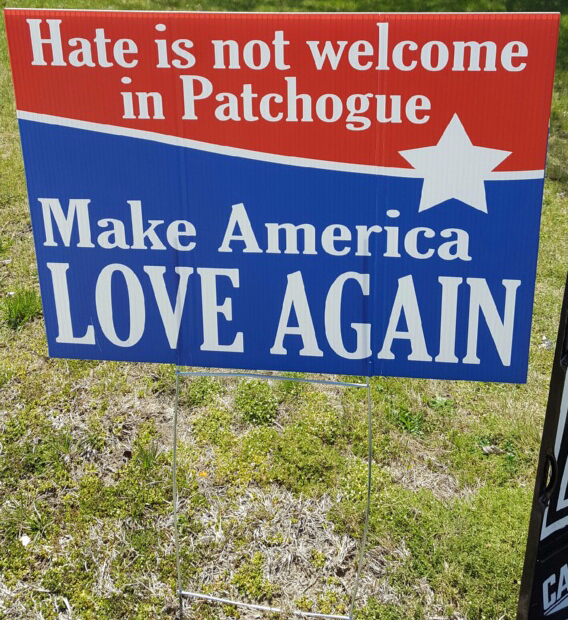
    Make America Love Again

    Photo credit: Anita Phoenix

    Presidential candidate Donald Trump demonstrated his brand of blatant racism when he accepted an invitation by local Republicans to speak in the town of Patchogue, NY, last week at a Republican fundraiser just blocks from where Ecuadorian immigrant Marcelo Lucero was murdered in 2008.

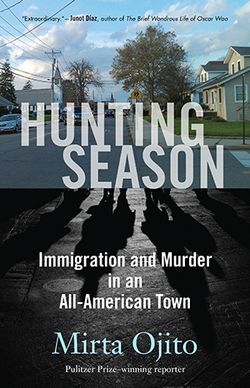
    The story of Lucero’s murder was highlighted in 2010 in Hunting Season: Immigration and Murder in an All American Town by former NY Times Reporter and Pulitzer Prize Winner Mirta Ojito. Lucero was walking home at night when a group of teenage boys jumped him in a game they called “beaner-hopping.” They had been prowling the streets of Patchogue for weeks looking for Hispanic males to beat and rob.  

    Trump’s racist rhetoric mirrors the rhetoric used by local politicians who were in office in Suffolk County at the time of Lucero’s murder. As the book illustrates, the boys felt empowered to attack voiceless Hispanics after hearing anti-immigrant talk in local politics and witnessing the dismissal of immigrant fears by the Suffolk County Police Department, which was under investigation by the Justice Department at the time the book was being written.

    As Ojito noted in her book, the teenagers, who were tried under newly implemented federal hate crime laws, were acting in ways they thought to be acceptable because of examples set by local political leaders, namely then Suffolk County Executive Steve Levy, who refused to consider a hiring hall to meet employment concerns for newly arriving Hispanic immigrants in the communities of Suffolk County.

    When the abduction and beating of two immigrants, and later a fire bombing of an immigrant family’s home in nearby Farmingville occurred, Levy was quick to blame the feds for failure to manage the immigrant “problem.” Rather than working with immigrant supporters to find a way forward, Levy and Republican politicians further belittled immigrants and blamed the federal government, thus illustrating to their supporters that racism was an acceptable means of reaction to immigrant issues.

    Hunting SeasonDespite Presidential Candidate Trump’s targeting of Hispanics and despite immigrant sensitivity issues in Patchogue, Suffolk County Republican Party Chair John Jay LaValle, a onetime supporter of Levy, endorsed Trump for President, and invited him to Patchogue for a fundraising event which, intentionally or not, has further divided the community.

    While some might call this an insensitive and thoughtless move on the part of LaValle and his party, it is obvious that Trump has sought any kind of news coverage he can get—positive or negative. Holding the event at a location within walking distance from the sight of Lucero’s murder was clearly no accident, although LaValle has stated the decision was innocent. Indeed, the decision garnered much media coverage for Trump and the Suffolk County Republican Party for three days before the event, and the day after the event. Newsday and National Public Radio each had multiple segments about Trump’s visit.

    The NY Times offered an editorial blasting the decision for Trump to attend the fundraiser, and employed a quote from Lucero’s brother Joselo Lucero, who said in 2010 at the time the book was being written that it was time to “end hunting season.” That quote from Joselo was the impetus for the book’s title.

    It is shocking and disappointing that eight years have passed since the Lucero murder, and anti-immigrant rhetoric has been ratcheted up even further thanks to Trump, who seeks to add to the Republican agenda his racist voice by calling Mexican immigrants “criminals, rapists and killers.” Trump’s hate speech has done nothing to move the country in a direction of resolving the problems faced by immigration. He has stirred anger and incited even more racist behavior on the part of people who support a presidential candidate who encourages them to target specific groups based on race and ethnicity (namely Hispanics) and religion (namely Muslims).

    Trump and others who are angry about immigration issues and are targeting immigrant groups should delve more deeply into the root causes of immigration. They should work to gain an understanding of the reasons immigrants seek refuge in the United States. They should attempt to better understand the economic issues facing our communities and how immigrants can fill job roles that citizens aren’t filling. They should learn of the great part Hispanic immigrants have played in the building of this country. Finally, and most importantly, these vitriol-spewing haters should learn to talk about immigration in meaningful and helpful ways rather than taking the easy way out by blaming immigrants and targeting them with hate speech.


    About the Author 

    Molly AltizerMolly Altizer is an associate professor of English and journalism at Suffolk County Community College. She holds a Gold Key from Columbia Scholastic Press Association for excellence in journalism education, and has worked as a general assignments reporter for the Long Island Advance. Her former students have held positions at the Washington Post, the New York Times, Univision, and People Magazine. She has served as a judge for news writing competitions for the New York Times, The Women’s Press Federation, the Birmingham News, the Alabama Scholastic Press Association, and The University Interscholastic League of Texas.


  • By Gail Forsyth-Vail

    Child at play

    This post appeared originally on the UUA Call and Response Blog.

    When one of my children was five years old, they entered kindergarten. The child we entrusted to the school was a high energy, affectionate, interesting kid. A kid who “bounced,” just like A. A. Milne’s Tigger in the Winnie-the-Pooh stories. A kid not always aware of their hyperactivity, nor of others’ reactions to it.

    Only a few weeks later, the principal took me aside: “Gail, when are you going to get that kid on meds?” And thus began a long journey with a diagnosis, a label, which made my child a problem, not just in school, but at church, in sports, and just about everywhere else. And a long journey with a caring physician who, thank goodness, was always willing to put at the center of decisions my child’s own assessment of the way they felt, both on and off medicine. Although those years are past and my child is now grown, memories of that time still evoke pain, sadness, and outrage.

    I recently read Back to Normal, by Enrico Gnaulati, a clinical psychologist specializing in childhood issues. He asserts that we are giving diagnostic labels and psychiatric medications to children who may just be delayed in social, emotional, or linguistic development, or who may have temperaments that make it difficult to respond to the expectations of family, school, and culture. He observes that a diagnosis is often the key to medical insurance coverage and educational supports for a child who is having difficulty. Yet, diagnosis is often made quickly, without long-term observation of the child, and without exploring potentially complex explanations for hard-to-manage behaviors. Certainly there are children who have an autism spectrum disorder, bipolar disorder, or ADHD and for whom medication is an important help. However, he suggests that many children are given diagnostic labels that turn out to be inaccurate and unnecessary.

    (more…)

  • By Jonathan Rosenblum

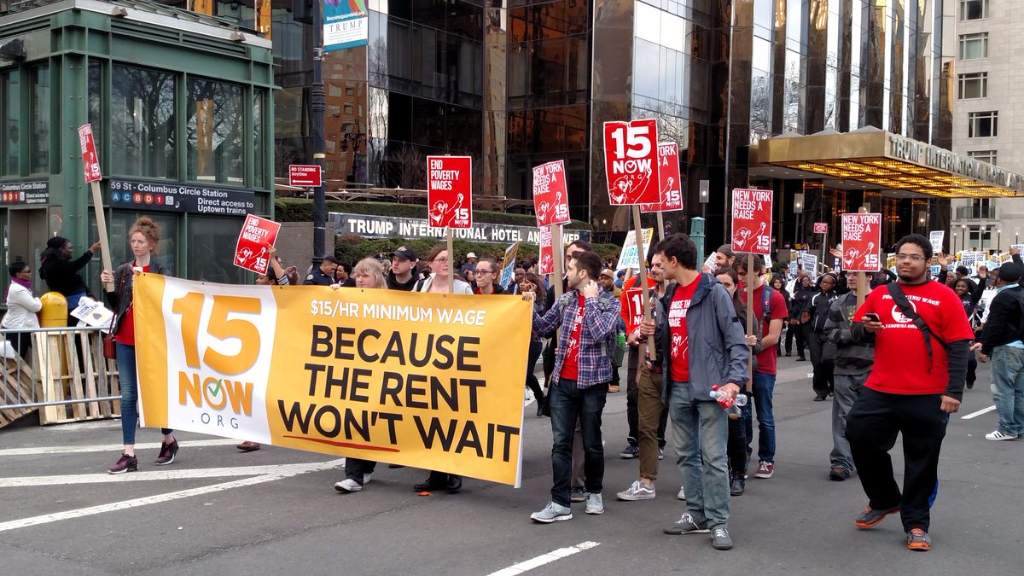
    NYC Rally and March to raise the minimum wage in America.

    NYC Rally and March to raise the minimum wage in America. Photo credit: Flickr user All-Night Images

    This piece appeared originally in AlterNet.

    Millions of workers across the country have won wage hikes under the banner of $15, and this week many more in California stand poised to join the parade. But three and a half years after the first picket sign was hoisted demanding $15/hour and union recognition, very few minimum wage workers are actually getting paid that much. That’s because among those crafting wage legislation, it’s become an axiom that increases must be phased in over time for the sake of business and economic stability. California Congresswoman Loretta Sanchez reflects a prevailing establishment view that what’s needed is “a reasonable, measured approach that would prevent sticker shock for businesses.”

    Newly adopted $15 minimum wage laws have been unveiled with great fanfare and media coverage. But lost in the headlines is the reality that because of phase-in schedules, workers won’t actually see $15/hour in their pay for three, five or even seven years—at which point the buying power will have been eroded by rent hikes and the rising cost of living.

    (more…)