• By Jeanne Theoharis

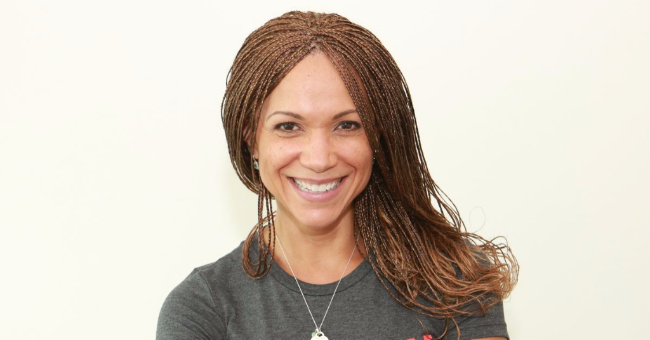
    Melissa Harris-Perry

    Photo credit: Antoine Braxton, Tell-A-Vision Films

    On Friday, the news broke of MSNBC’s silencing of Melissa Harris-Perry’s show and the dismantling of her editorial control. In her courageous letter to staff, she wrote why she was not willing to read the news and “provide cover” for MSNBC this weekend: “Our show was taken—without comment or discussion or notice—in the midst of an election season…I am not a token, mammy, or little brown bobble head…I love our show. I want it back.” MSNBC executives later in the weekend called Harris-Perry “brilliant, intelligent, but challenging and unpredictable” and confirmed they were “parting ways.”

    Since the news began to break, social media has filled with outrage and tributes from an incredibly wide cast of people on how unusual and important the show was—and how Harris-Perry was the first (and in many cases) their only national exposure to a broad range of issues. Damon Young’s moving piece, “Why You Need to Care About What’s Happening to Melissa Harris-Perry,” captured what it meant on a personal level that she lifted up so many of us and our work into public light and what a deep public loss the end of her show is for those of us who prefer a smart, informed, diverse conversation over punditry.

    (more…)

  • By Adele Barker

    Rawal Lake Park

    Rawal Lake Park. Photo credits: Adele Barker

    It was time to go home. I left Pakistan on February 5 only hours before my visa had expired and winged my way to Paris to see friends for five days before heading back to the U.S. I had mixed feelings about leaving. The pull of family, friends, and the deeply familiar drew me home. But I was leaving a country that has, on an almost daily basis, never failed over the past year to astonish me.

    Looking back on the past five months, I think I can reasonably claim two victories: one, I managed to cross the streets around here every day without getting run over; and two, I managed to escape the literally hundreds of hawks that circled the hostel where I lived, suspiciously eyeing me every evening as possible carrion.

    Those things I can count as victories. Other things I am less sure of.

    (more…)

  • By Rashod Ollison

    Rashod Ollison at Pyramid in Little Rock, AR.

    Rashod Ollison at Pyramid in Little Rock, AR.

    Out of the thirteen events on my eleven-city tour in support of Soul Serenade: Rhythm, Blues & Coming of Age Through Vinyl, I was most nervous about the one that would take me back to where it all started.

    On Febuary 9, I returned to Little Rock, Arkansas, where I grew up, and to Pyramid Art, Books & Custom Framing, among the first places where I performed spoken word poetry as a teenager. Back then, in the early ’90s, the old location was downtown on Main Street. The new one, a sleeker, brighter and more expansive place, is over on Wright Avenue, in the heart of a historically black section of the city.

    Many of the nearly sixty or so people in the audience that night make cameos in the book—old neighbors, teachers and church members who were like surrogate aunts, uncles and cousins. But the face that brought me to tears and sent me scurrying to the restroom to collect myself belonged to Edith Lambert, the fourth grade teacher who first convinced me that I was talented. She oversaw the program for gifted children at Fair Park Elementary. Mrs. Lambert passed on to me collections of poems she thought I’d like. These books—the collected poetry of Langston Hughes and Maya Angelou and Honey, I Love, the classic by Eloise Greenfield—affirmed something in me and blew open a door inside. Mrs. Lambert looked as though she hadn’t aged a day since the last time I saw her, which was about twenty-five years ago. Her close-mouthed smile, so warm and knowing, transported me back for a moment to when I was that insecure boy who felt alone and unloved.

    Now I’m a thirty-eight-year-old evolved man, an accomplished culture journalist and author, who returned to the village, as it were, with a gift in the form of a book. Soul Serenade not only tells the story of my difficult childhood with soul music as a connective thread, but it shows the resilience of that village, the people who invested in me early on. My mama, Dianne Ollison, sat up front between her childhood friend, Patricia Griffen, one of the city’s most respected clinical psychologists, and Mary Smith, a retired educator and something of a walking institution.

    It was an emotional reading as I stood there, bold, striking paintings behind me, and the people who were so pivotal in my life in front of me. These folks encouraged and lovingly corrected my posture as a boy, back when I had a tendency to stoop and not make eye contact. Rev. Wendell Griffen, Patricia’s husband, the former pastor of my old church, Emmanuel Baptist, and one of the city’s few black judges, crisscrossed the room snapping pictures. He was the closest thing to a father figure I had when my family and I joined his church when I was twelve years old. He taught me how to address a man, how to firmly shake his hand while looking him in the eye. “Let them know who you are,” he told me, words that still ring in my head.

    Before the reading, Pyramid felt almost like a family reunion, with people hugging and taking pictures. Some had tears in their eyes. I returned to the village that raised me, to the people who believed in me when I didn’t know to believe in myself; people who taught me elocution, how to enter a room, how to stand before an audience with grace, how to be a man. I signed books until my hand ached. Some folks bought five or six copies. I was constantly rising from my chair behind the table where I signed books to take pictures with this person and that one. The love I felt was almost overwhelming.

    On my way back to the hotel after dinner with Mama, the Griffens and Carrie, an old family friend, I cried in the car, overjoyed by the reception at Pyramid and so happy to be alive and well and open to receiving so much love and support. But it has always been there in a word, a hug, a phone call. I had to reach this point in my evolution to embrace it.

    I’ve come full circle, anchored in love. I’m never alone in this world. Someone has always prayed for me. Someone has always believed in me. And I returned with a book, a gift, honoring the resilience of that village, the people who loved me before I knew to love myself.


    About the Author 

    Rashod Ollison is an award-winning pop music critic and culture journalist. He has been a staff critic and feature writer for the Dallas Morning News, Philadelphia Inquirer, Journal News (Westchester, New York), Baltimore Sun, and Virginian-Pilot. He also wrote a music column for Jet magazine. A native of Little Rock, Arkansas, Ollison lives in Virginia Beach. Follow him on Twitter at @rashodollison and visit his website.

  • By Christian Coleman

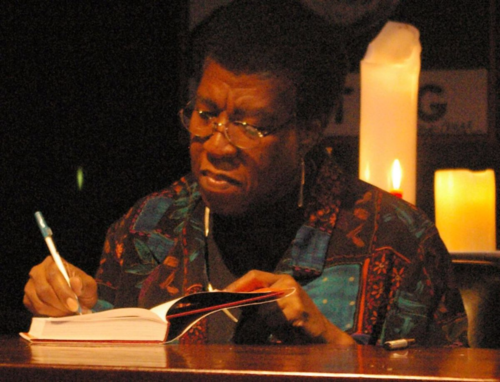
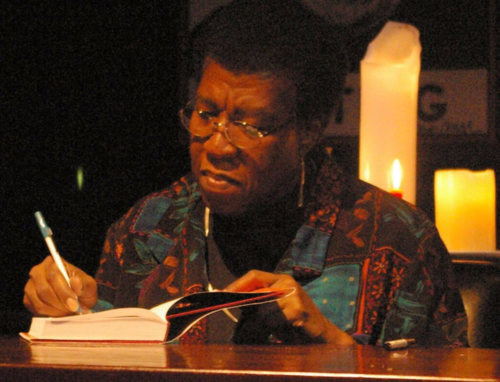
    Octavia E. Butler signing a copy of Fledgling, 2005.

    Photo credit: Nikolas Coukouma

    Renowned author and MacArthur fellow Octavia E. Butler would have been sixty-nine this year, and maybe two or three books deep into writing a new series. Ten years have passed since her death, and in that time, the Huntington Library became the resting place for her archives. Her archives contain, among many things, drafts of an abandoned third entry in her Parables epic and the sketch of a sequel to Fledgling, the story of a genetically engineered vampire. Poring over the notes for novels that could have been, and rereading her bio, in which she wrote that she remembers being “a ten-year-old writer who expects someday to be an eighty-year-old writer,” I feel the ten years she has been gone.

    I never got to meet her. My acquaintance with her, if you will, is based on her words and interviews. If I had the chance, I don’t know if I would have said anything more intelligent or intelligible than the babblings of an awestruck fanboy. But I would have managed to thank her for steering me toward my own writing career.

    My introduction to Butler was her fifth novel, Wild Seed, which I read at age ten. Set in the seventeenth century, Wild Seed follows the struggle between two immortal Africans who give rise to a psionic superhuman race: Anyanwu, a 300-year-old healer and shapeshifter, and Doro, a 4,000-year-old body-snatching mind force who takes Anyanwu from her home in Africa to the New World to become part of his selective breeding program. Being the only immortals they know, Anyanwu and Doro, in spite of and because of their differences, grow to need each other.

    This novel galvanized my imagination. I’ve read it four more times since then, each reading pinpointing over the years the facets—and recurring motifs in her other novels—of her vision that made me such a fan: The symbiotic relationship between the subjugator and the subjugated. Butler’s willingness to take you to the darkest places, where body horror and human cruelty are integral to the story. Characters, female and male, who play freely outside the binary conventions of gender. The centrality of people of color in a speculative narrative. The biological imperative of multiculturalism. These last two were especially important to me as a young reader and aspiring writer of color who, growing up in racially mixed neighborhoods, saw his everyday reality reflected and validated in her fiction.

    This was wondrous stuff I wasn’t finding in most of the science fiction and fantasy I was reading at the time. (Before discovering Butler, I was a Ray Bradbury fanatic.) So, of course, I sought and devoured every single last thing she had written. By age eleven, I had read the novel she is best known for, Kindred.

    I loved how she challenged notions of race and gender, making social commentary in a heightened sense of reality where telepaths vie for control of their psionic network in her Patternist series, tentacled aliens co-opt humankind into gene trading for the sake of evolution in her Xenogenesis trilogy, and a young woman creates a new, godless religion to make a post-apocalyptic future America survivable. I was already writing my own science-fiction stories, but Butler’s magnitude of thought and expanse of scope showed me how complex and far-reaching the genre could be. I knew I wanted to write like this. It wasn’t until nearly two decades later, and after learning of her untimely death during my last year of undergrad at Boston College, that I decided to learn to write for publication.

    As a novice writer with high aspirations and no knowledge of the publishing industry, I wondered: How do I become that good of a writer? How do I get started? Butler, in her signature spare and straightforward prose, had laid out the steps in her essay “Furor Scribendi.” She emphasized the importance of workshops where you have an audience that will tell you if you are communicating what you mean and conveying it in a compelling way. Writing, after all, is communication. In interviews, she mentioned having attended the Clarion Science Fiction & Fantasy Writers’ Workshop in 1970, where she got her start. I thought: Why not aim high and get the same start and professional foundation she did? So I applied to Clarion.

    I wasn’t accepted the first time. Nor the second time. Out of hundreds of applicants, Clarion accepts only eighteen each summer. In the meantime, to sharpen my fiction-writing skills I attended a local workshop in Boston, Grub Street. It paid off. After applying a third time, in 2013, an e-mail from the Clarion Foundation showed up in my inbox, telling me I had been accepted.
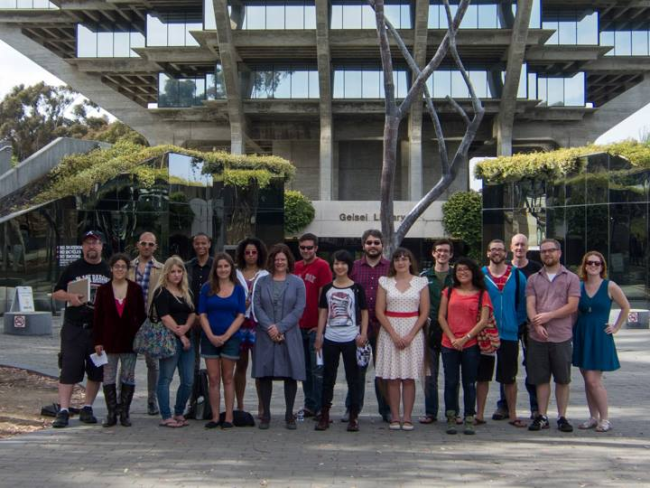
    My Clarion class and I, UCSD, 2013

    My Clarion class and I (back row, third from the left) with first week instructor Andy Duncan (back row, left) on day of arrival at the University of California-San Diego. Photo credit: Angus McIntyre

    Founded in 1968, Clarion isn’t known as a writer’s boot camp for nothing. It lasts six weeks, each one taught by a different instructor: a writer (often a Clarion graduate), editor, or another professional in the field. Monday through Friday, workshop started at nine in the morning and ended at one in the afternoon. After lunch, unless an instructor had planned a lecture or brought in another author as a guest speaker, I read and analyzed four to five stories a night for the next day, all written by classmates, as well as drafting a new manuscript each week. I could only imagine what it was like for Butler to work to a litany of typewriters rat-tat-tatting late into the night.

    Toward the end of the course, my classmates and I visited the Clarion archive and saw the manuscripts previous students had written. Four of our instructors—Nalo Hopkinson, Robert Crais, Cory Doctorow, and Kelly Link—were graduates and had manuscripts in that archive. And so did Butler. There we were, face to face with the beginning of the career she forged boldly, during a time when science fiction was still white male–dominant, as the first successful black woman in the genre. It was humbling to see her manuscripts and realizing that my own work (yikes!) would be preserved in the same archive.

    Like many Clarion graduates, Butler became an instructor for the program. In my last week, instructor Karen Joy Fowler, author of We Are All Completely Beside Ourselves and president of the Clarion Foundation, told my class that whenever Butler taught there, she never took her instructor payments. She returned them to the foundation because she believed in giving back to the community. This is a grand gesture from an author who, in the rough beginning of her career, pawned her typewriters and subsisted on beans and potatoes to stretch a dollar while she wasn’t making a lot of money from writing.

    She gave back in another way, too. Earlier this month, a letter Butler had written to herself, catalogued at the Huntington Library, made the rounds on social media. In it, she wrote out the trajectory of the career she wanted for herself. Toward the bottom, she also wrote that she would send poor black youngsters to Clarion or other writers’ workshops. In a way, posthumously, she has. The Octavia E. Butler Memorial Scholarship, administered by the Carl Brandon Society, pays the tuition for a writer of color to attend so he or she can have a chance at the same start Butler had. The first scholarship was awarded in 2007, a year after her death.

    Finally, Butler gave me the courage to pursue writing in a genre that’s growing, awkwardly yet surely, into a more inclusive community representative of voices from around the globe. She gave me permission to write myself in, to write about what matters to me as seen through the lens of science fiction. She gave me Clarion. My classmates and I grew close during those demanding six weeks and are still in touch. We are a source of support for each other as much as we are colleagues to each other as we navigate our writing careers. I owe her so much and can’t thank her enough.


    About the Author

    Christian Coleman is the digital marketing associate at Beacon Press and editor of Beacon Broadside. Follow him on Twitter at @coleman_II.

    OEB

  • By Gayle F. Wald

    This post appeared originally in Zócalo Public Square.

    More than forty years after her burial in an unmarked Philadelphia grave, Sister Rosetta Tharpe, gospel’s first superstar and its most celebrated crossover figure, is enjoying a burst of Internet celebrity. A video of her playing one of her signature tunes, “Didn’t It Rain,” from a 1964 TV special filmed for British television has been racking up more than ten million views on YouTube and Facebook. Old and new fans the world over, dazzled by Tharpe’s powerful singing and wildly charismatic guitar playing—all while wearing a proper church lady coat—are proclaiming Tharpe the “godmother” of rock and grumbling over her absence from rock canons like as the Rock and Roll Hall of Fame.

    (more…)

  • By Carole Joffe

    Mosquito Aedes aegypti

    Photo credit: James Gathany

    The Zika virus crisis, which is believed to have already caused the birth of thousands of newborns with microcephaly (which causes unusually small heads and underdeveloped brains), has created an acutely distressing situation for millions of women. Most of the affected countries, particularly in Latin America, have extremely strict policies about abortion and very inadequate provision of birth control. Most notably, in El Salvador, where the Minister of Health recently suggested that women delay pregnancy for two years because of the Zika virus, abortion is absolutely forbidden, even in cases where the pregnant women’s life is at risk. Women suspected of abortion, or even in some cases, miscarriages, now languish in El Salvador’s jails. (Other Zika-infected countries which have a similar absolute ban on abortion are Nicaragua and the Dominican Republic). But being pregnant while infected with the Zika virus is not life threatening—so even in Latin American countries which would permit abortion in such cases would not do so, under current law, because of the possibility of the serious birth defects of microcephaly.

    (more…)

  • By David R. Dow

    Justice Antonin Scalia

    Photo credit: Flickr user United States Mission Geneva

    Before the rumors of Justice Antonin Scalia’s death were even confirmed, he was already being lauded as a transformational figure, eulogized as a jurist who made originalism a respectable mode of constitutional interpretation. This view cut across ideological and professional categories, with a broad diversity of journalists, academics, practicing lawyers, and politicians—including Jeff Toobin at the New Yorker, Dahlia Lithwick and Mark Stern at Slate, Geoffrey Stone at the Daily Beast, Bruce Miller on the New York Times Op-ed page, and, with perhaps a single exception, nineteen legal academicians polled by Politico—all quick to say that whether one agreed with Scalia’s view or not, he had accomplished something significant. Adam Liptak’s reflection for The New York Times, the day following Scalia’s death, quoted the estimable Richard Posner’s observation that Scalia has been the most consequential justice of the past quarter century.

    Consider this, therefore, a dissenting opinion.

    (more…)

  • By Christopher Emdin

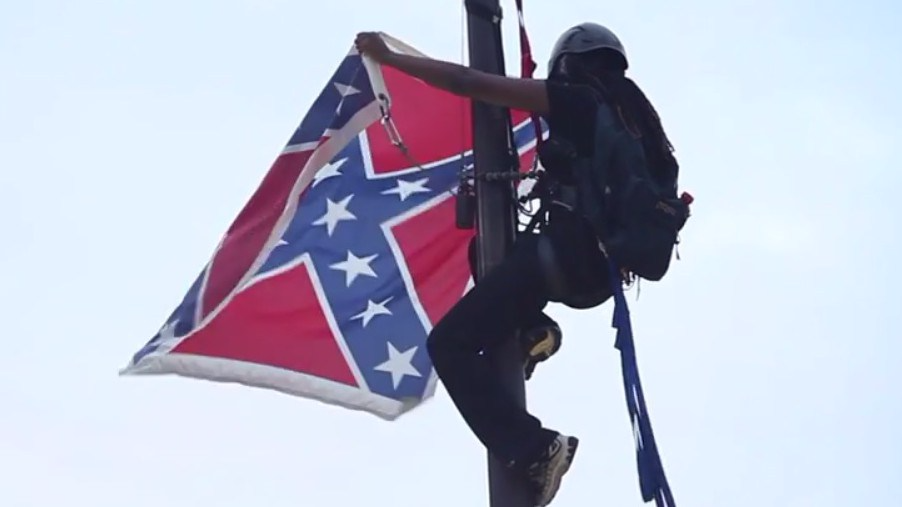
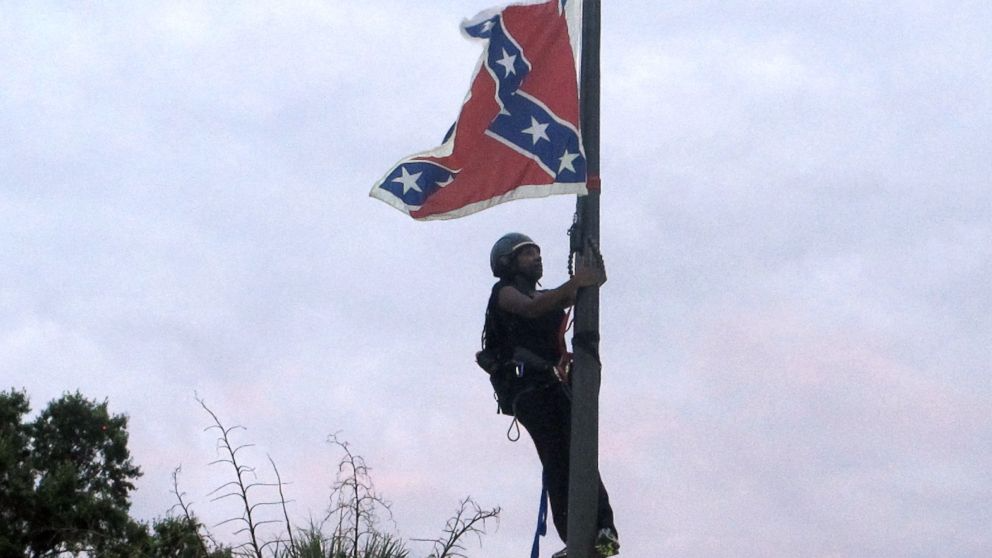
    Bree Newsome scaling the flagpole

    Bree Newsome scaling the flagpole. Photo credit: The Tribe/YouTube

    One of the most brazen statements related to Black History Month in recent years came from rapper Kanye West about ten years ago when he said “…I make Black History everyday, I don’t need a month.” Since then, this phrase has found it way across the lips, Twitter timelines, and Facebook statuses of a new generation of Black folks every February. Like many of Kanye West’s statements, the words seem to revolve around a need to affirm oneself. However, reflecting deeply on the essence of the quote, and considering its decade long permanence as a manta of sorts for the hip-hop generation, West’s declaration signals the tensions between Black History Month and the youth to whom it should mean the most.

    In my interactions with young people over the last two weeks as I have drifted in and out of Black History Month events as a speaker, teacher, or fly on the wall, I have seen Black and Brown faces from various ethnicities disengaged in the mandatory Black History Month classroom lessons, and purposefully skipping the voluntary Black History Month celebrations. When I asked them why, I received a number of responses that indicate that they acknowledge the month and its historical significance, but somehow don’t feel connected to it. For a new generation, Black History Month has become an appreciated but seldom used relic. An expensive outfit purchased by their grandparents tucked in the back of the closet, but rarely, if ever worn.

    The phenomenon I describe above doesn’t mean that a new generation doesn’t recognize the importance of Black History Month. They see the need to celebrate Black history and to highlight the contributions of Black people across the diaspora. They understand its significance given the metaphorical and literal white washing of Black history from school curriculum. They will even fight feeble and intellectually simple justifications for getting rid of Black History Month (see Stacey Dash). Yet, they are not fully connected to it. Despite their cerebral connections to the month, it remains in the back closet of their collective consciousness; recognized but rarely truly valued or celebrated.

    What is most fascinating about the relationship between Black youth and Black History Month is how connected this generation is to the activism that the month was intended to spark and fuel. They are socio-politically awake, deeply aware of their Blackness, and actively engaged in the work of championing for the rights of Black folks. They are stretching the discourse on Blackness and how it has been fashioned to be an ever-present threat to America, they are interested in running for political office, and jumping into the discourse around the upcoming presidential election. Any assessment of their engagement in the current landscape of civil rights indicates that they are intellectually and socio-politically rigorous. Yet still, Black History Month remains tucked in the metaphorical closet as a thing that they don’t necessarily want to engage with.

    In response, I suggest that a deliberate effort be made to understand this generation’s disconnect with Black History Month. Based on what I’ve observed in this month, I can offer a simple step forward.

    Firstly, it is important that we connect Black History Month to the young people making history today. I suggest that we should do this before we connect to the heroes like Martin Luther King Jr, Thurgood Marshall, and Harriet Tubman that we too often lead with. This is not to devalue their legacies or diminish their significance, but to highlight the fact that in the telling and retelling of their stories in ways that have a beginning and an ending removed from the present generation, they have been stripped of their true value in connecting to youth. Beyond telling the stories of our ancestors, we must highlight the work of young people who are actively fighting for civil rights and equality everyday. People like Bree Newsome who climbed a flag pole to remove a Confederate flag at a monument at the Statehouse in Columbia, South Carolina, and Jonathan Butler who went on a hunger strike in protest of racist incidents at the University of Missouri have engaged in powerful recent work that youth can connect to in ways that are unimaginable.

    In my work, I find that young people do not want to know about flawless heroes who lived perfect lives and then died long before they were born. They honor these heroes, but they do not feel a connection to them. Today’s youth do connect to those whose missions are still unfulfilled and who need them to carry on tradition.

    Each celebration and classroom lesson I have witnessed this month is formulaic and repetitive. Too many tell the same stories about the same heroes the same way at the same time each year. The notion of history is taken too literally and the concept of recent and local history is lost in the interest of maintaining tradition and celebrating the ancestors. Of course, this isn’t to say that we shouldn’t celebrate important figures in Black history. We should. However, we must recognize that their stories don’t end at their death, tightly wrapped in pretty bows; not if we expect youth to continue to celebrate this month. Furthermore, the stories we tell cannot be so glorified and sanitized that youth are unable to relate to them. I believe that our heroes die twice when we stop them from living in the hearts and souls of the next generation. Connections that need to be made between the ancestors and the present generation cannot be made when history is told without context. If the stories of past battles are told like they are over or conquered, Black History Month remains as it currently stands…not as meaningful to those who can carry on its traditions as it needs to be.


    About the Author 

    Christopher Emdin is an associate professor in the Department of Mathematics, Science, and Technology at Teachers College, Columbia University, where he also serves as associate director of the Institute for Urban and Minority Education. The creator of the #HipHopEd social media movement and Science Genius B.A.T.T.L.E.S., Emdin was named the 2015 Multicultural Educator of the Year by the National Association of Multicultural Educators and has been honored as a STEM Access Champion of Change by the White House. In addition to teaching, he serves as a Minorities in Energy Ambassador for the US Department of Energy. He is the author of For White Folks Who Teach in the Hood…and the Rest of Y’all Too. Follow him on Twitter at @chrisemdin. Visit his website: chrisemdin.com.

  • By Lennard Davis

    2016 GOP Candidates

    Photo credit: Trevor Millhouse

    It is a very tight Republican primary and the front-runners are winning in some states and losing in others. In the general election, it will be even tighter with the fate of the nation hanging in the balance. The election might come down to a single demographic casting the deciding vote.

    No, it’s not 2010, it is 1988. George Herbert Walker Bush is the candidate who wins narrowly, and the group that makes the difference was very likely—the disabled. Bush had courted voters with disabilities during his primary battle and later in the race against Michael Dukakis, who neglected that constituency. C. Boyden Gray, Bush’s advisor and later White House counsel, recollected that “the most important thing that I did personally” was to make disability “a campaign issue…All of us thought that was an important thing to do.” And it was since Bush won the election by a mere seven million votes. Lee Atwater, Bush’s notorious campaign advisor, told Gray that he thought the disability vote was “a very important part of the election outcome.”

    (more…)

  • By Rev. Dr. William J. Barber II with Jonathan Wilson-Hartgrove

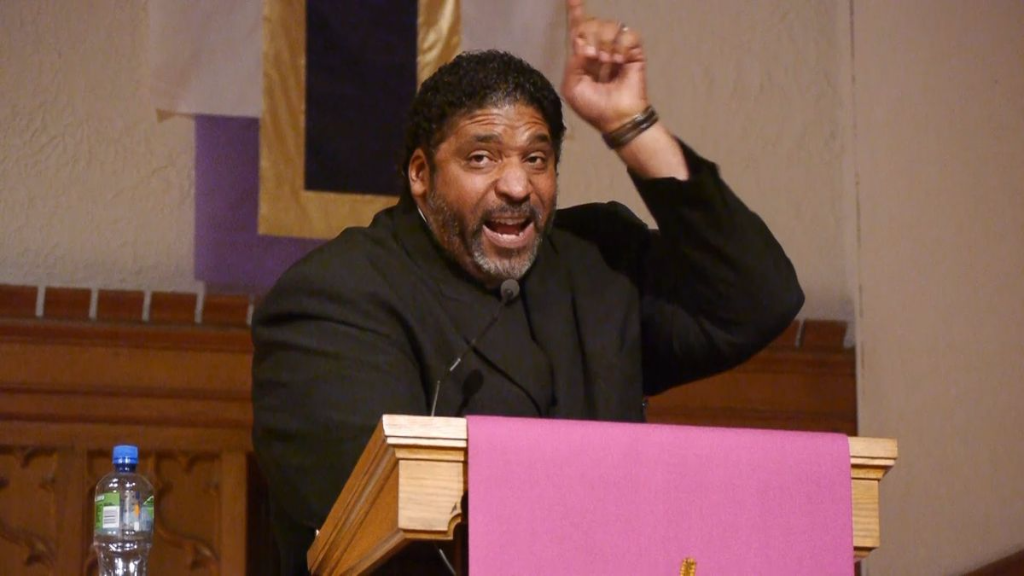
    Rev. Dr. William J. Barber

    Photo credit: Bryan Bliss

    This post appeared originally on The News & Observer.

    In a surprise turn of events, the exit polls at the Iowa caucuses showed a victory of 2016 presidential candidate Ted Cruz over Donald Trump. Pundits credit the turnout to Cruz’s advantages over Trump and the other Republican candidates—superior fund-raising and a strong campaign operation—as well as his success with Iowa’s majority voters, self-described “very conservative” evangelicals.

    But “evangelical” is a label that has been hijacked and manipulated by the political establishment in America. When pundits refer again and again to the “evangelical vote,” they are leaning on the Cliff Notes of the so called “far right”—the extreme religionists who use a perverted interpretation of faith to endorse an extreme agenda.

    (more…)