• By Aviva Chomsky

    NewspapersThis post appeared originally on TomDispatch.com.

    In our post-modern (or post-post-modern?) age, we are supposedly transcending the material certainties of the past. The virtual world of the Internet is replacing the “real,” material world, as theory asks us to question the very notion of reality. Yet that virtual world turns out to rely heavily on some distinctly old systems and realities, including the physical labor of those who produce, care for, and provide the goods and services for the post-industrial information economy.

    As it happens, this increasingly invisible, underground economy of muscles and sweat, blood and effort intersects in the most intimate ways with those who enjoy the benefits of the virtual world. Of course, our connection to that virtual world comes through physical devices, and each of them follows a commodity chain that begins with the mining of rare earth elements and ends at a toxic disposal or recycling site, usually somewhere in the Third World. 

    (more…)

  • By Christine Byl

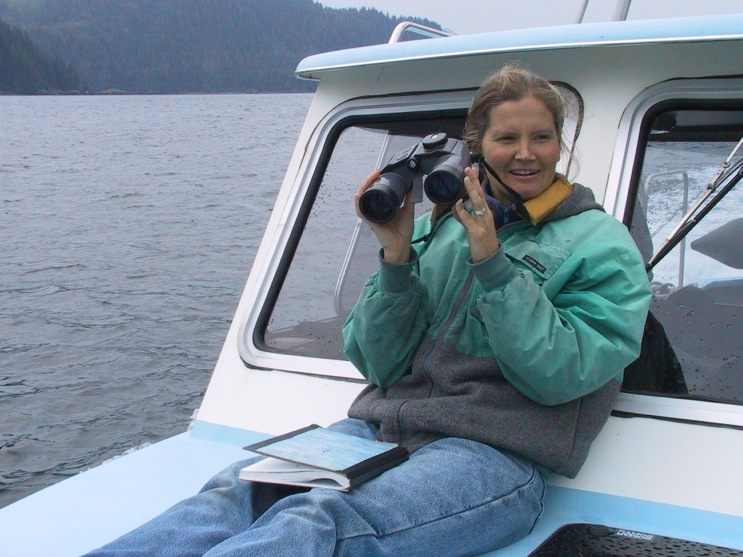
    Eva scanning and writing

    Eva Saulitis scanning and writing. Source: Family collection

    “Death is nature. Nature is far from over. In the end, the gore at the [salmon stream] comforts more than it appalls. In the end—I must believe it—just like a salmon, I will know how to die, and though I die, though I lose my life, nature wins. Nature endures. It is strange, and it is hard, but it’s comfort, and I’ll take it.”

    —Eva Saulitis, “Wild Darkness” 

    Eva Saulitis was a writer of uncommon insight. She was a field biologist, a soulful mentor and teacher, a passionate advocate for the natural world and its creatures, and a remarkable friend to me and to many others. Eva was also a Beacon author, which is why I write of her here. She died at age fifty-two on January 16, 2016, in Homer, Alaska, of the metastatic breast cancer that she journeyed with so mindfully for two and a half years. Surrounded by her treasured family and held up by a community that spans continents, Eva piloted the end of her life like one of the small boats on which she spent years doing field work—nimbly, with curiosity and stamina amidst difficult conditions, an ear cocked toward the engine, alert to the beauty and the losses that pepper the world. In her passing she leaves a wake of influence that belies a life ended much too early.

    (more…)

  • Black History MonthBlack History Month is as much about rediscovery as it is about celebration and commemoration. At Beacon Press, the books we publish that cover black history reintroduce us to long-forgotten or hidden historical figures, unearth information previously unknown about prominent black leaders, bring us closer to the struggles and triumphs of African ancestors. In the current age of #BlackLivesMatter and other movements that compel us to evaluate our country’s progress in racial justice, it’s important to get reacquainted with the steps black forerunners have taken—and their history—so we can see how to step forward. For this year's Black History Month, we're recommending a list of new and older titles offering biographies, histories, memoir, and more.


    The Long Walk to FreedomThe Long Walk to Freedom: edited by Devon W. Carbado and Donald Weise

    Editors Devon W. Carbado and Donald Weise collected twelve first-person narratives spanning eight decades, all told in the voices of the runaway slaves themselves, that reveal the extraordinary and innovative ways these men and women sought freedom and demanded citizenship. More than half of the inspiring narratives in this collection, the first book about the runaway slave phenomenon, had been long out of print. The Long Walk to Freedom also includes an essay by history professor Brenda Stevenson that gives a context for these narratives, a comprehensive brief history of slavery, and a look into the daily life of a slave.

    (more…)

  • By Rev. Dr. William J. Barber II with Jonathan Wilson-Hartgrove

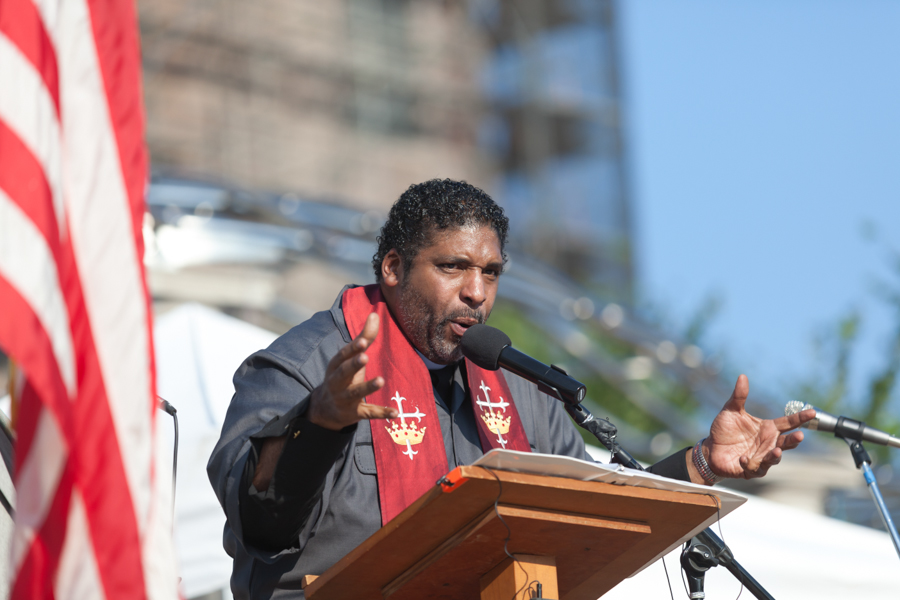
    Rev. Dr. William J. Barber, Moral Monday

    Photo credit: Flickr user Will Thomas

    Just before becoming the pastor of Greenleaf Christian Church in Goldsboro, North Carolina, Reverend Dr. William J. Barber developed ankylosing spondylitis, an extreme and very painful form of arthritis. In this excerpt from The Third Reconstruction, he recounts the three months he spent in the hospital, when, having reached the depths of despair, he received an inspiring visit from an “amputee angel,” and eventually learned firsthand the incredible power of people standing together.

    ***

    I learned a great deal in Martinsville about moral leadership—more than I realized at the time. But I did not know what was next for me when our family moved back to North Carolina in 1991. Preaching had helped me find a voice of moral dissent, but my father had shown me long before that you don’t have to pastor a church to preach. I was at the core of my being a preacher, but I knew that preaching did not have to be my job. In fact, I had begun to think I might be more effective if it weren’t. The pastoral work of managing a tight-knit community was not without its challenges and frustrations, which inevitably took time and energy away from public justice work. One of my aunts kept telling me I needed to stop trying to be a lawyer. I wasn’t sure what I was trying to become, but I knew I wasn’t in a hurry to find another church.

    (more…)

  • By Laurie Essig

    Barbies

    This post appeared originally on Psychology Today.

    The problem with presidential elections is that they stop us from seeing what’s really going on in our culture. Obsessed with the latest wins and losses, the latest political punditry, we stop keeping our eye on the ball and get distracted by the spectacle of corporate-funded rituals of “democracy.” So while most of us were glued to the Iowa caucuses, real change was happening in the world.

    Yes, I mean the new Barbies. Not Barbie singular, but Barbies as in different shapes and sizes and skin hues and hair textures. If you haven’t seen Mattel’s Fashionistas line, check it out here. Of course the real revolution is both racial (e.g. Black Barbie used to have white hair), but also bodily. In addition to impossibly thin and busty regular Barbie, there are now curvy, petite and tall Barbies.

    (more…)

  • By Mary Frances Berry

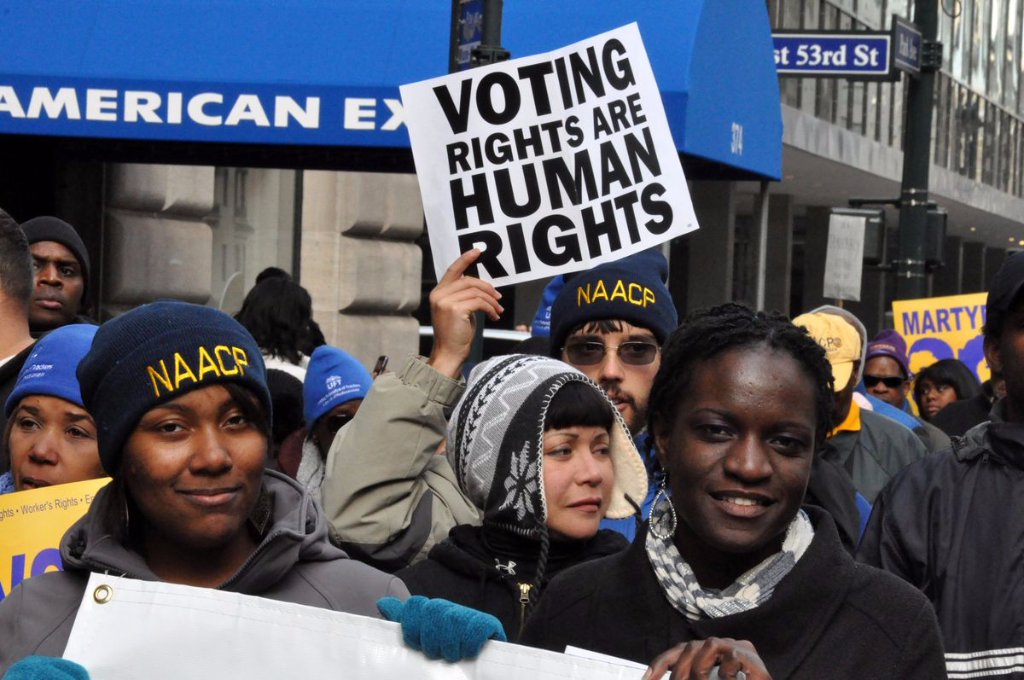
    Voting rights are human rights

    Photo credit: Michael Fleshman

    Since the Supreme Court in 2013 effectively lifted preclearance requirements for states and counties with a history of race discrimination, states have passed a raft of new voter ID laws and taken other steps which they claim will prevent voter fraud. The challenge to North Carolina’s voter Identification law underway in federal court may be ground zero for this issue.

    North Carolina's identification law requires voters to produce one of six accepted credentials including a driver’s license or passport. Facing immediate criticism from civil rights advocates, the legislature added language permitting the submission of a provisional ballot if the prospective voter submitted a “reasonable impediment declaration” explaining why they lacked identification.

    (more…)

  • By Martin Luther King, Jr. and Jeanne Theoharis
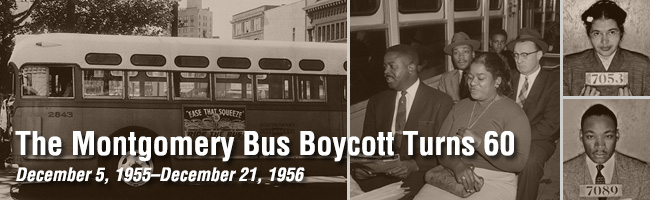
    MontgomeryBlogHeader

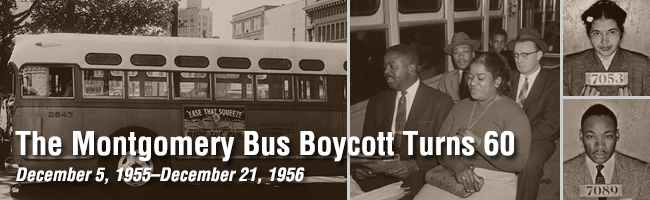
    This is the second entry of our Montgomery Bus Boycott Turns 60 Series. About two months into the Montgomery Bus Boycott, times start to become dangerous for Martin Luther King, Jr. and his family. Death threats over the phone are coming in daily to King’s home, most of which Coretta Scott King answers. Aware of his role as a leader, Dr. King turns to his faith for strength and resolve in the face of danger. Sixty years ago today, the danger arrives on his porch in the form of a bomb. This excerpt from Stride Toward Freedom brings us close to the reality of fear Dr. King lived with, and the resilience of the King family. 

    ***

    One night toward the end of January I settled into bed late, after a strenuous day. Coretta had already fallen asleep and just as I was about to doze off the telephone rang. An angry voice said, “Listen, nigger, we’ve taken all we want from you; before next week you’ll be sorry you ever came to Montgomery.” I hung up, but I couldn’t sleep. It seemed that all of my fears had come down on me at once. I had reached the saturation point.

    I got out of bed and began to walk the floor. Finally I went to the kitchen and heated a pot of coffee. I was ready to give up. With my cup of coffee sitting untouched before me I tried to think of a way to move out of the picture without appearing a coward. In this state of exhaustion, when my courage had all but gone, I decided to take my problem to God. With my head in my hands, I bowed over the kitchen table and prayed aloud. The words I spoke to God that midnight are still vivid in my memory. “I am here taking a stand for what I believe is right. But now I am afraid. The people are looking to me for leadership, and if I stand before them without strength and courage, they too will falter. I am at the end of my powers. I have nothing left. I’ve come to the point where I can’t face it alone.”

    At that moment I experienced the presence of the Divine as I had never experienced Him before. It seemed as though I could hear the quiet assurance of an inner voice saying: “Stand up for righteousness, stand up for truth; and God will be at your side forever.” Almost at once my fears began to go. My uncertainty disappeared. I was ready to face anything.

    Three nights later, on January 30, I left home a little before seven to attend our Monday evening mass meeting at the First Baptist Church. A member of my congregation, Mrs. Mary Lucy Williams, had come to the parsonage to keep my wife company in my absence. After putting the baby to bed, Coretta and Mrs. Williams went to the living room to look at television. About nine-thirty they heard a noise in front that sounded as though someone had thrown a brick. In a matter of seconds an explosion rocked the house. A bomb had gone off on the porch.

    The sound was heard many blocks away, and word of the bombing reached the mass meeting almost instantly. Toward the close of the meeting, as I stood on the platform helping to take the collection, I noticed an usher rushing to give Ralph Abernathy a message. Abernathy turned and ran downstairs, soon to reappear with a worried look on his face. Several others rushed in and out of the church. People looked at me and then away; one or two seemed about to approach me and then changed their minds. An usher called me to the side of the platform, presumably to give me a message, but before I could get there S. S. Seay had sent him away. By now I was convinced that whatever had happened affected me. I called Ralph Abernathy, S. S. Seay, and E. N. French and asked them to tell me what was wrong. Ralph looked at Seay and French and then turned to me and said hesitantly:

    “Your house has been bombed.”

    I asked if my wife and baby were all right.

    They said, “We are checking on that now.”

    Strangely enough, I accepted the word of the bombing calmly. My religious experience a few nights before had given me the strength to face it. I interrupted the collection and asked all present to give me their undivided attention. After telling them why I had to leave, I urged each person to go straight home after the meeting and adhere strictly to our philosophy of nonviolence. I admonished them not to become panicky and lose their heads. “Let us keep moving,” I urged them, “with the faith that what we are doing is right, and worth the even greater faith that God is with us in the struggle.”

    I was immediately driven home. As we neared the scene I noticed hundreds of people with angry faces in front of the house. The policemen were trying, in their usual rough manner, to clear the streets, but they were ignored by the crowd. One Negro was saying to a policeman, who was attempting to push him aside: “I ain’t gonna move nowhere. That’s the trouble now; you white folks is always pushin’ us around. Now you got your .38 and I got mine; so let’s battle it out.” As I walked toward the front porch I realized that many people were armed. Nonviolent resistance was on the verge of being transformed into violence.

    I rushed into the house to see if Coretta and “Yoki” were safe. When I walked into the bedroom and saw my wife and daughter uninjured, I drew my first full breath in many minutes. I learned that fortunately when Coretta and Mrs. Williams had heard the sound of something falling on the front porch, they had jumped up and run to the back of the house. If instead they had gone to the porch to investigate, the outcome might have been fatal. Coretta was neither bitter nor panicky. She had accepted the whole thing with unbelievable composure. As I noticed her calmness I became even more calm myself.

    Excerpted from Stride Toward Freedom: The Montgomery Story, published by Beacon Press, 2010. Copyright © 1958 by Martin Luther King, Jr. Copyright © renewed 1986 by Coretta Scott King, Dexter King, Martin Luther King III, Yolanda King, Bernice King. All rights reserved.


    This period is also a precarious time for Rosa Parks and her loved ones. Shortly after her arrest, Parks loses her job. Raymond, her husband, loses his job as well. And when the phone starts ringing off the hook at the Parks home, death threats are on the other line. Similar to Dr. King, Parks finds peace in her faith. In spite of all the hardship, as this excerpt from Jeanne Theoharis’s
    The Rebellious Life of Mrs. Rosa Parks shows, Parks and her family refuse to back down from the cause.

    ***

    The phone rang constantly with death threats and coarse insults. “There were people who called to say that I should be beaten or be killed,” Parks recalled, “because I was causing so much trouble. And then there were some who called to inquire whether I had lost the job and…finally when I was dismissed from the job, I remember one person calling and saying she was sorry and then laughing at the end of the conversation before hanging up.” Most of the time she didn’t talk with these people. “When I discovered that they were this type, divisive or abusive, I would just hang up immediately.” Her mother and husband ended up answering most of the calls since they were home more than she was. Parks particularly hated it when her mother answered these calls.

    According to Detroit friend Mary Hays Carter, Rosa reached a point of relative peace around her own possible targeting. She quoted Parks as saying, “Well you have to die sometime. I never set out to plan to hurt anyone and if this boycott happened to be attributed to me and my activity, then if they could kill me, I would just be dead,” and laughed it off. Partly, Parks was able to get to this place of inner peace because of her faith. In late January, praying at St. Paul’s, Parks experienced a wash of religious conviction and a sense that all of what was happening—her arrest, the boycott—was God’s plan. All she needed to do was to “keep the faith.” An intense calm swept over her.

    Raymond, however, found this a difficult time and began drinking a lot. “He was very shaken and very upset…because we had lived under this tension for so long.” This period may have been harder on Raymond Parks and Leona McCauley [Rosa Parks’s mother] than on Rosa Parks because it was they who were home answering more of the incessant hate calls and death threats. Rosa was away from home making appearances for the MIA around the country, so she escaped some of the daily vitriol that her husband and mother endured. For Rosa, the period of the boycott was also easier than her previous activism because “the public knew about it,” as opposed to the previous decades, when she was “without any mass cooperation or any support from either black or whites.”

    But the suffering of her husband took its toll on Rosa, too; as he grew more depressed, she worried. Yet, while scholars have begun to foreground the crucial support that wives of civil rights leaders made, in a troubling gender omission, there has been almost no discussion of the role of husbands. Raymond’s support in helping Rosa achieve what she did that year and beyond and the impact their fearsome situation had on him rarely figure into the story. Too often, when Raymond does make a brief cameo in the popular narrative, he is viewed as not sufficiently admirable because he stayed behind the scenes. Rosa considered Raymond a partner and felt he facilitated her activism during the boycott and in the following decades when she continued her public role. The respect he had for her and her work sustained her. While worrying about her safety, he was willing to prioritize her political work—a shift from the early years of their marriage when he was the more prominent activist…Raymond’s love and support was foundational. In many ways, what Raymond did behind the scenes for her over the next decades—backing her up, helping her make travel arrangements, keeping their household functioning, sharing her political outrage—kept her going and enabled her political activities.


    Stay tuned for the next installment in our Montgomery Bus Boycott Turns 60 Series. Click here to read the first entry. 


    About the Authors 

    Dr. Martin Luther King, Jr. (1929–1968), Nobel Peace Prize laureate and architect of the nonviolent civil rights movement, was among the twentieth century’s most influential figures. One of the greatest orators in US history, King also authored several books, including Stride Toward Freedom: The Montgomery Story, Where Do We Go from Here: Chaos or Community?, and Why We Can’t Wait. His speeches, sermons, and writings are inspirational and timeless. King was assassinated in Memphis, Tennessee, on April 4, 1968. 

    Jeanne Theoharis is Distinguished Professor of Political Science at Brooklyn College of the City University of New York. She received an A.B. in Afro-American studies from Harvard College and a Ph.D. in American Culture from the University of Michigan. She is the author of The Rebellious Life of Mrs. Rosa Parks and author or coauthor of six books an numerous articles on the black freedom struggle and the contemporary politics of race in the United States. Follow her on Twitter at @JeanneTheoharis.

  • By Lydia Denworth

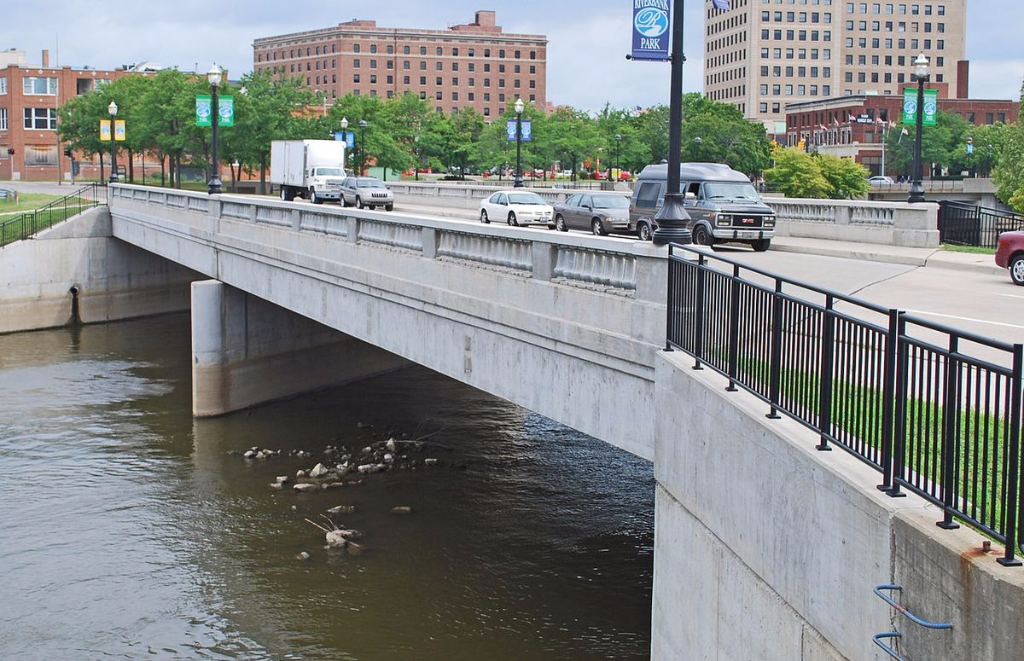
    Flint River Bridge, Flint, Michigan

    Flint River Bridge, Flint, MI. Photo credit: Andrew Jameson

    In the tragedy of Flint, Michigan’s lead poisoning crisis, Dr. Mona Hanna-Attisha is one of the heroes. Last September, Hanna-Attisha, director of pediatric residency at Flint’s Hurley Children’s Hospital, stood up at a press conference and presented research suggesting that the city’s water supply was poisoning its children. The number of kids with elevated blood lead levels—five micrograms per deciliter or more—had doubled, she said, and in some neighborhoods, it had tripled.

    (more…)

  • By Jonathan Rosenblum

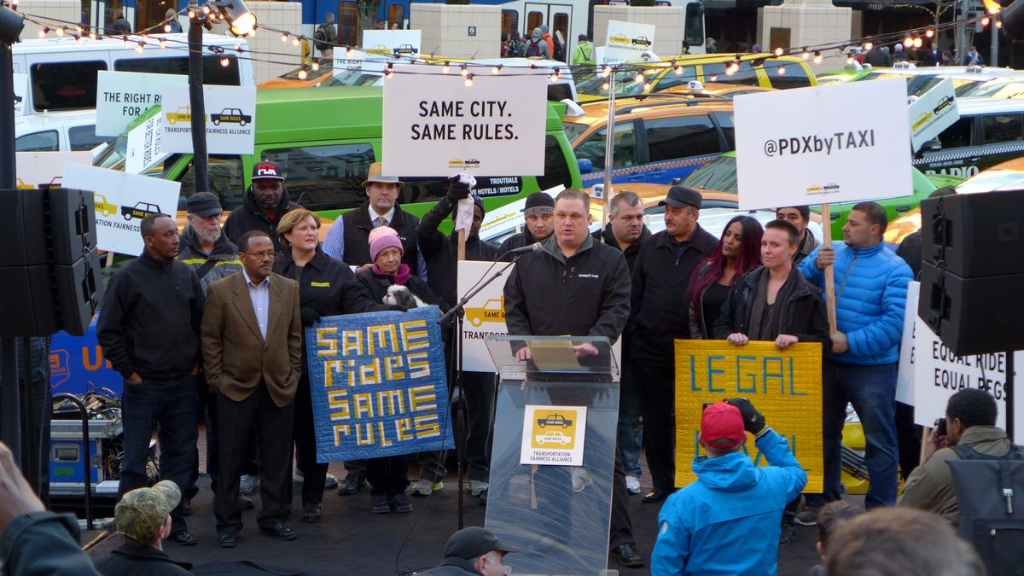
    A protest against Uber in Portland, Oregon, January 2015

    A protest against Uber in Portland, Oregon, January 2015. Photo credit: Aaron Parecki

    This article appeared originally on In These Times.

    What are US workers to do about the problems presented by the gig economy?

    The past year saw a number of prominent liberals offer policy ideas to mitigate the worst elements of precarious employment. Former U.S. Labor Secretary Robert Reich proposed that companies pay into a common benefit fund for the gig workers they employ. Left-leaning think-tank executives, academics and even a few union leaders signed on to a manifesto declaring that portable benefits were the solution to easing the lives of precarious workers.

    They’re off the mark. A lasting solution can’t simply address the obvious lack of benefits—it must tackle the real problem: the power differential between gig economy workers and the big businesses that control their labor.

    (more…)

  • A Q&A with Rashod Ollison

    Vinyl

    Happy Publication Day to pop music critic and culture journalist Rashod Ollison and his memoir Soul Serenade: Rhythm, Blues & Coming of Age Through Vinyl! In Soul Serenade, Ollison tells his story of growing up gay in central Arkansas, searching for himself and his distant father, and how the consoling power of soul music guided him through the tough times. Our blog editor Christian Coleman caught up with Ollison before he geared up for his book tour, beginning today in Virginia Beach, VA, to ask him what writing the book meant for him and the inspiration that went into it. Check his event calendar to see his tour dates. And once you settle down with his book in your hands, put on his playlist featuring the songs that brought his memoir to life.

    Christian Coleman: Soul Serenade is such a raw outpouring of your childhood. What was the inspiration for writing it? How did the writing process start? 

    Rashod Ollison: I had just moved to Virginia Beach for my position at The Virginian-Pilot as a music critic and feature writer. After having lived in Philly, NYC and Baltimore, I was very much a city rat. I wasn’t used to the slow and monotonous life of suburbia. (I’m still not.) So I was lonely, met a guy about a month after the move, and fell in love. And that’s exactly what happened: I fell into a hole. That ended after about a year and stirred some unresolved abandonment issues.

    Tired of being depressed, I started a program I called “Operation: Re-invent Rashod.” I was a size 48 waist and about 280 pounds. (In about a year and a half, I lost more than fifty pounds, gained some muscle and dropped ten pant sizes.) I joined a gym and hired a fitness trainer, hired a therapist and started working on what became Soul Serenade as a way to challenge myself creatively and to exorcise the burdens of grief, pain and sorrow.

    The idea for the book had been rolling around in my head for about ten years, but I thought I would appropriate parts of my childhood for a novel. Instead, it became a memoir written like a novel, with dialogue, fully rendered characters, etc. It was all very organic. I’d write in the mornings before going to the office, edit parts in between deadlines and write on the weekends. It’s some of the most honest writing I’ve done so far and very different from my role as a journalist and critic. I leaned more on my creative writing background—showing as opposed to telling.

    CC: What’s striking about your memoir is your use of literary devices normally seen in fiction. You write your father as a ghost character after he leaves and the italicized passages about your favorite singers have a fantastical character. Tell us about how you decided to structure your story around these devices. 

    RO: All of those ideas came as I was writing the book. I was inspired by Toni Morrison’s The Bluest Eye and Gabriel García Márquez’s One Hundred Years of Solitude. I lived in my head when I was a boy, and music always urged fantastic voyages. I thought I’d take readers on those trips with me, to give them a brief reprieve from the narrative. But those passages also push the narrative along.

    As for my father becoming a ghost, I thought using magical realism would give the reader a vivid sense of how much I missed him. After he left home for good, I thought I saw him everywhere.

    CC: Your memoir covers a broad readership: coming-of-age/literary memoir/music/black studies/LGBTQ studies. Did you have a particular audience in mind for it? 

    RO: I didn’t have an audience in mind. In fact, I didn’t think anyone would want to read it, because nothing about the book fits into the stereotypical narrative arc of so many memoirs written by Black men. I wasn’t beaten, molested or addicted to drugs. I have never been to jail or prison. I’ve never had any racial self-loathing issues. I was never confused about being homosexual. But I still wanted to read a book about the kind of boy I was and what life was like among gloriously funky Black folks in central Arkansas in the 1980s. So, in essence, I wrote the book I wanted to read.

    CC: You reference several major writers in the second half of your memoir: Toni Morrison, Alice Walker, Gloria Naylor, Maya Angelou (whom you got to meet!). What influence did they have on your writing? 

    RO: Toni Morrison’s work gave me permission to write. When I read The Bluest Eye in the eighth grade, I engaged it right away. I’ve read it at least ten times since then, with each reading revealing something new. And, of course, I’ve read all of her other novels—well, more like devoured them. In The Bluest Eye, I love how she captures the humanity of that traumatized community in language that was so raw but elegant and stunningly lyrical. She didn’t write for white folks and she didn’t explain anything. She assumed the centrality of being Black and steeped the narrative in all these cultural nuances that were very familiar to me, which enriched the humanity of the characters. I knew I wanted to write like that.

    With Alice Walker, I always admired the passion of her writing and the deceptively simple but always affecting way she describes very intense scenes. Gloria Naylor is so underrated. Bailey’s Café is one of my all-time favorite books. Like Morrison, there’s so much music and beautiful funkiness in her books. As for Maya Angelou, I always preferred her poetry over her prose. Her poetry, especially her early volumes, was so richly musical and bluesy.

    CC: The end of Soul Serenade suggests the continuation of your story in another book. Do you have any future writing projects lined up? 

    RO: I’m not sure that I want to write another volume of memoir just yet. It took me thirty years to get a handle on my childhood. It may take another thirty for me to understand my life as a grown man. Besides, I’m not really interested in writing about myself again at this point. I’m thinking maybe a book of essays or maybe a novel. I have a germ of one trying to grow. But I don’t know. We will see.


    To read more about Rashod Ollison, check out his other interviews with Next Magazine, The Virginian-Pilot, and Guernica Magazine (this one with an excerpt from Soul Serenade). You can also read an excerpt from his book on The Advocate. 


    About Rashod Ollison

    Rashod Ollison is an award-winning pop music critic and culture journalist. He has been a staff critic and feature writer for the Dallas Morning News, Philadelphia Inquirer, Journal News (Westchester, New York), Baltimore Sun, and Virginian-Pilot. He also wrote a music column for Jet magazine. A native of Little Rock, Arkansas, Ollison lives in Virginia Beach. Follow him on Twitter at @rashodollison and visit his website.