• By Fran Hawthorne

    image from assets.entrepreneur.com

    Image credit: Steve Rhodes | Flickr

    Organic ingredients can cost nearly twice as much as processed ones. The price of solar and wind energy has dropped but still remains far above coal, oil, and natural gas in most of the U.S. Small business owners are among the most vocal opponents of raising the minimum wage.

    Maybe a $16.45 billion behemoth like Starbucks has the spare cash to spend on good deeds like health insurance for its baristas or water-purification in developing countries, but how can a small, struggling startup possibly afford solar energy, organic ingredients, paid family leave, donations to local museums or any of the similar steps that typically define a socially responsible (CSR) business?

    Actually, being socially responsible is often easier for small businesses, said Susan Salgado, a co-founder and co-chair of the New York City chapter of Conscious Capitalism, which is a nonprofit that promotes a broad agenda of sustainability, social entrepreneurialism, social responsibility and stakeholder values.

    “Small companies are more nimble, so it’s easy to stay more closely attached to your purpose and values,” Salgado said.

    Even from a strict dollars-and-cents viewpoint, she added, “there are a lot of small businesses that are actually doing it—even in the restaurant industry where I come from, where margins are incredibly small.”

    For starters, there’s a lot of truth to the cliché about “doing well by doing good.” Being socially responsible can also be profitable.

    (more…)

  • Today Beacon Press takes part in the international conversation highlighting stories of people with disabilities. In honor of the twenty-fifth anniversary of the ADA, we present two disability stories: one from Terry Galloway, the other from Suzanne Kamata.

    ***

    Hearing's a Hoot

    by Terry Galloway


    image from farm1.staticflickr.com

    Image by Andreas Matern

    When I was deaf as a doornail, I suffered severe cell phone envy, which is far worse than penis envy because everyone’s got a cell phone.

    Now I have a Bluetooth-enabled cochlear device that makes it seem as if the caller is speaking right inside my head.

    It’s a little spooky because, growing up, I actually did hear voices speaking inside my head. 

    When I was nine, thank god, I was finally diagnosed as having—and I quote—“a chemical imbalance caused by the introduction of drugs to the fetal nervous system.” It was the aftereffects of those drugs that had set the nonexistent voices chattering and left my ears kaput.

    (more…)

  • By Nancy Merrick

    Merrick

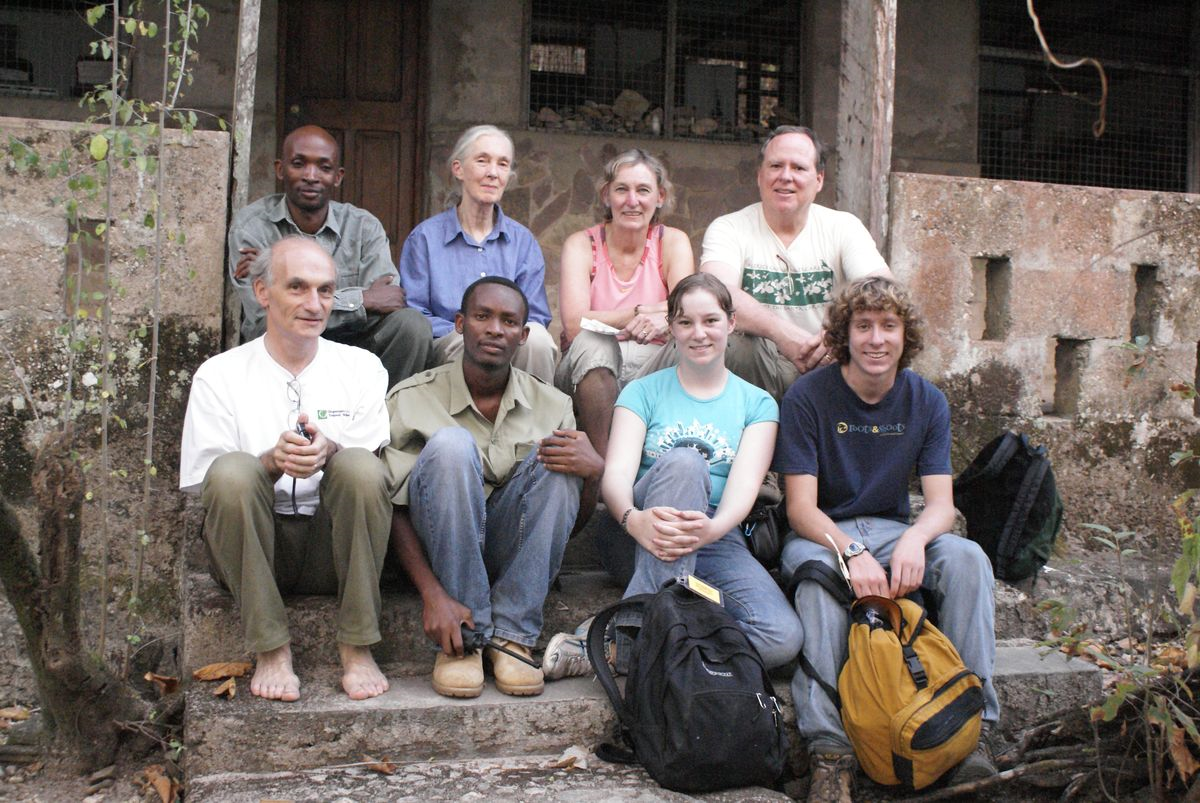
    On the steps of Gombe, 2008. Merrick is seated next to Goodall in the company of family and others.

    Fifty-five years ago today, young Jane Goodall arrived on the shores of Lake Tanganyika to begin the study of our closest relative, the chimpanzee. Accompanied by her mother, she arrived at a time when it was unthinkable for a young woman to “risk” the African jungle alone. It was also an era when humans were viewed as the sole makers of tools and the only beings capable of intelligent thought and complex emotion. How wrong we were.

    Dr. Jane arrived, little suspecting the significance of that day—or of how she was about to rock a number of the world’s fundamental concepts. A former secretary without college education, could she have imagined she would earn a doctorate from Cambridge University, become one of today’s most influential people, and reorder the world’s thinking? 

    I was seven years old at the time, and unaware that a young British woman was beginning a mission that would one day so enrich my life. Twelve years later, I would arrive on those same Lake Tanganyika beaches to become Dr. Jane’s research assistant—and life-long friend. It has been a privileged journey, witnessing firsthand so many seasons of the remarkable Dr. Jane Goodall.

    (more…)

  • By Karl Giberson

    image from upload.wikimedia.org

    Photo credit: Dave Bullock

    This blog appeared originally on Huffington Post Religion.

    The tragic shooting in South Carolina offers another painful reminder of American Christianity's troubled relationship with race and segregation. While it is true that most of the great abolitionists were inspired by their Christian faith, it is also true that their opponents were inspired by their Christian faith. As a result, much contemporary racism is rooted in Christianity.

    Unfortunately, the Bible is not very helpful when it comes to race issues. Many have found within its pages justifications for slavery, abuse of African-Americans and segregation. Unfortunately, the divisions between the races are exacerbated, not diminished, by Christianity.

    (more…)

  • By Sharon Leslie Morgan

    Fannie Lou Hamer 2In 1964, Fannie Lou Hamer “testified” before the Democratic National Convention in Atlantic City, New Jersey. The highlight of her remarks was when she exclaimed “I am sick and tired of being sick and tired!” In so doing, the impoverished Mississippi Delta sharecropper secured her place as a leading light in the Civil Rights movement. Describing her home state as the antithesis of “the land of the free and the home of the brave,” she rebelled against that definition by calling it out as “the land of the tree and the home of the grave.”

    So, here we are in 2015. As yet another round of racial animus erupts and national political conventions loom, I am compelled to echo Mrs. Hamer’s lament. I cannot even begin to tell you how sick and tired I am. It’s the same shit, albeit a different century.

    On June 17, a white man named Dylan Roof invaded Emanuel African Methodist Episcopal Church in Charleston, South Carolina and massacred nine people engaged in studying the bible. Roof’s online manifesto “criticized blacks as being inferior while lamenting the cowardice of white flight.” It was illustrated with photographs, many of them showcasing him with a Confederate flag. I don’t know what chapter and verse the bible study group was concentrating on when Roof opened fire, but he obviously did not heed the sixth commandment that exhorts the moral imperative of “thou shall not kill.” 

    (more…)

  • By Robert Oswald and Michelle Bamberger

    image from upload.wikimedia.org

    Photo credit: Joshua Doubek

    The EPA recently released a review draft of its long awaited study of hydraulic fracturing in the United States entitled “Assessment of the Potential Impacts of Hydraulic Fracturing for Oil and Gas on Drinking Water Resources.” This report, which totaled almost one thousand pages, was undoubtedly read by very few people, but the news coverage was astounding. Oklahoma’s senator Jim Inhofe stated in a press release: “EPA’s report on hydraulic fracturing confirms what we have known for over sixty years when the process began in Duncan, Oklahoma—hydraulic fracturing is safe…” Erik Milito of the American Petroleum Institute said, “After more than five years and millions of dollars, the evidence gathered by EPA confirms what the agency has already acknowledged and what the oil and gas industry has known: hydraulic fracturing is being done safely under the strong environmental stewardship of state regulators and industry-best practices…” But is that the message from the document itself? Tom Burke, the deputy assistant administrator of the EPA’s office of research, explained the impact of the document: “It’s not a question of safe or unsafe” but rather “how do we best reduce vulnerabilities so we can best protect our water and water resources?”

    If we accept Tom Burke’s explanation, how did so many news outlets get the story so wrong? The document itself states: “We did not find evidence that these mechanisms have led to widespread, systematic impacts on drinking water resources in the United States.” This was the quote that was taken out of context and drove the breathless news coverage. A very different picture emerges if one actually takes the time to read the document. 

    (more…)

  • By Fran Hawthorne

    image from farm4.staticflickr.com

    Image from Flickr user Mr. TinDC

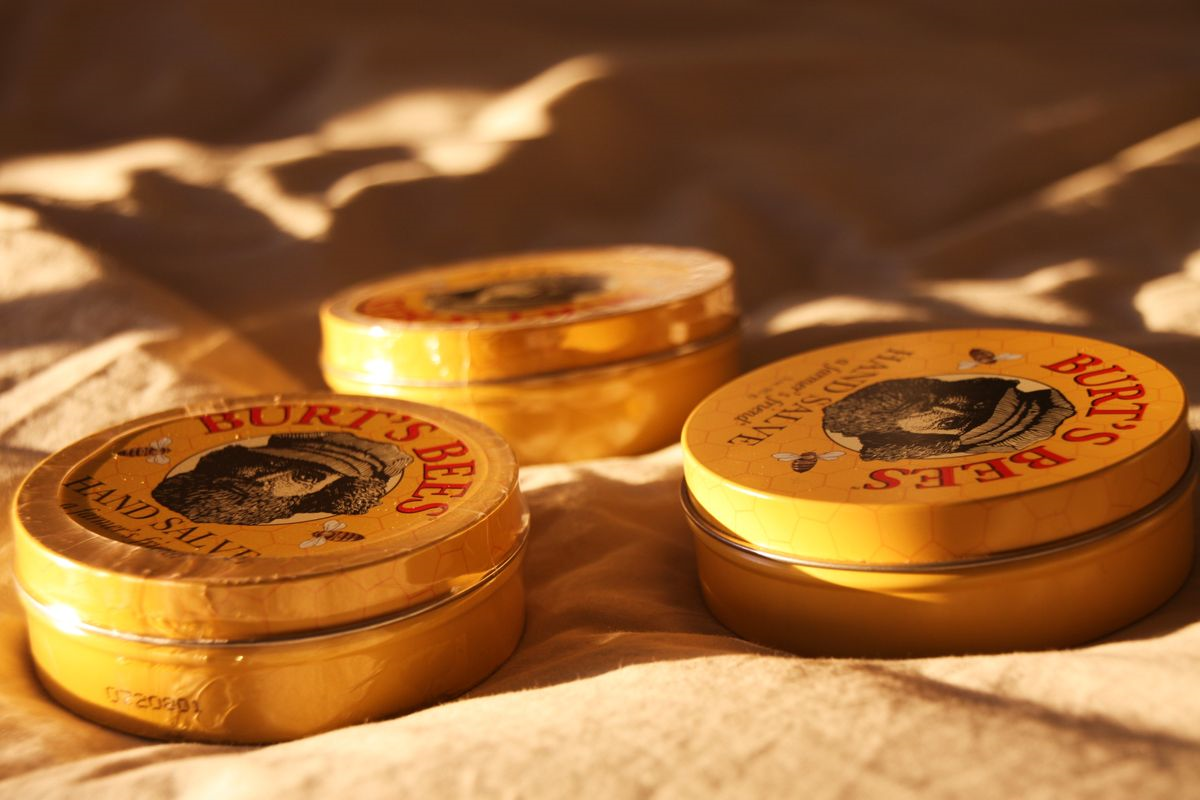
    Ben. Jerry. Tom. Burt. They are icons of the ethical-shopping world, the patriarchs (there are no famous matriarchs) of the small crop of natural products that made the leap from the health food niche to supermarkets and chain drugstores in the last couple of decades: Ben & Jerry’s Homemade ice cream; Tom’s of Maine toothpaste; Burt’s Bees lip balm and other personal-care products.

    Burt Shavitz, the reclusive Maine beekeeper who co-founded his eponymous business thirty-one years ago, died on July 5 at age eighty, apparently living until the end in his famous turkey coop (albeit a 400-foot coop with a radio and a refrigerator).

    Consumers who try to avoid unpronounceable artificial ingredients rightly love these little companies and their products. The original Burt’s lip balm, for instance, contains beeswax, vitamin E, and a smidgeon of peppermint oil. The night cream—conflict-of-interest alert: I use it!—is made of bee pollen, shea butter, and royal jelly, a honey-bee secretion.

    Yet the reason we know about Ben, Jerry, Tom, and Burt is less because their names are on their companies’ logos, than because they sold those companies to huge multinationals in recent years. Unilever, maker of the chemical-laden Knorr soup mixes, acquired Ben & Jerry’s in 2000. Colgate-Palmolive bought Tom’s in 2006. And in 2007, the Clorox Company, whose chlorine bleach is despised by environmental activists for damaging sewers and aquatic life, took over Burt’s beehives.

    (more…)

  • By Ruth Behar

    image from bridgestocuba.com

    This blog appeared originally on Bridges to/from Cuba.

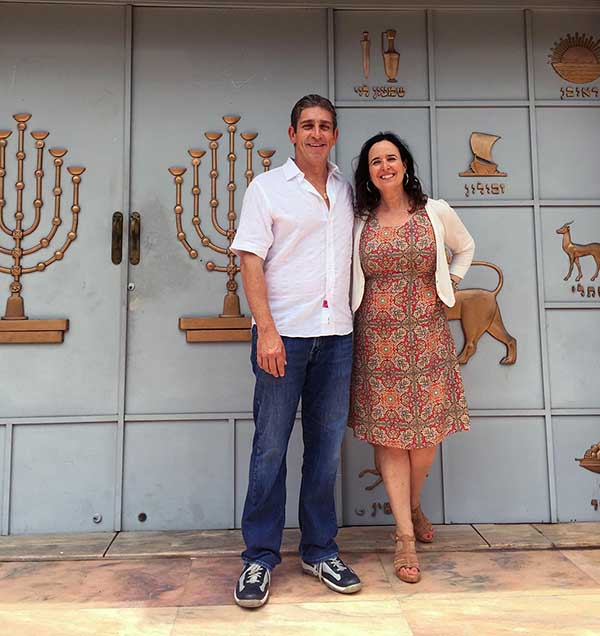
    For years Richard Blanco and I had talked about traveling to Cuba together. Finally the time seemed right. On June 13th, we met up at the airport in Miami. We were told to arrive five hours before our departure time. That turned out to be good advice. Several flights were leaving for Havana at the same time, and after we checked in, the lines got so long they snaked all the way down to the front door of the airport. In May, we would have seen Art Biennial types flocking to make the journey to Havana. But mid-June is the start of the low tourist season in Cuba. It starts to get much too hot on the island for foreigners. Our flight was filled only with Cubans bringing gifts for their families, plus the two of us, eager to share each other’s Cuba.

    Richard had traveled to Cuba in the past with his mother, while I had mostly traveled on my own, going a couple of times with my husband and son, but never with my parents, who still haven’t wanted to return. We knew it was going to be emotional going together. If you’ve been to Cuba, you know that one day in Cuba is equivalent to about ten days anywhere else in the world. Life is lived with a unique intensity on the island that is indescribable.

    In Havana, we stayed in a rental apartment in the building where I lived as a child, which is half a block away from the Patronato Synagogue. The apartment is managed by our former neighbors, who proudly pointed out that our shower had automatic hot and cold running water and so we wouldn’t have to warm up water on the stove and take bucket showers, as most people do in Cuba. As soon as we got settled in, we took a long walk around Vedado, ablaze with bright orange flamboyanes at this time of year. I showed Richard the park where I played as a child, which has a gazebo that has remained unchanged over the years.

    (more…)

  • BROWNE-OneRighteousMan-FINAL

    This weekend will see the flourish of red, white, and blue return as Independence Day festivities fill the streets. No other symbol has been more emblematic of our country’s independence than the American flag. Unfurled and waving in the breeze, the primary colors usually invoke national pride and liberation. The American flag had an altogether different meaning for Samuel Battle, the New York Police Department’s first black cop, during the beginning of his career as in 1911. In a working environment where his fellow white officers wanted him gone, it meant isolation, as Arthur Browne shows in his biography, One Righteous Man: Samuel Battle and the Shattering of the Color Line in New York:

     ***


    Battle’s work chart scheduled his first reserve duty for midnight to 8 a.m. on the Thursday after he started patrol. Finishing a four-to-twelve night shift, he was to sleep in the stationhouse with a platoon on call in the event of an emergency. A dormitory was outfitted with a couple dozen bunks and was draped in the odors of overworked men, discarded shoes, soiled linens, and tobacco smoke.

    Fetid air and all, the officers of the Sixty-Eighth Street stationhouse resolved that this was a whites-only domain. Cops carried a cot upstairs to a room on the second floor, where the precinct stored the American flag, and left the mattress and springs under Old Glory as the black man’s accommodations.

    (more…)

  • By Kay Whitlock and Michael Bronski

    image from www.motherjones.com

    The Tribe/YouTube

    “What if sensational acts of hate violence, which media accounts often represent as aberrant, actually reflect existing community norms?”

    —Considering Hate: Violence, Goodness, and Justice in American Culture and Politics

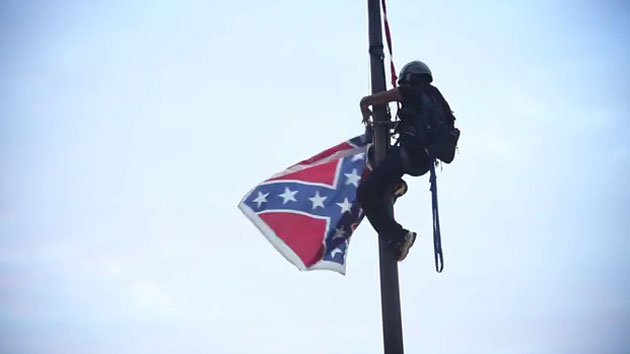
    Early in the morning on Saturday, June 27, 2015, ten days following a mass killing in a historic Black church in Charleston, South Carolina, Bree Newsome, a young Black artist and activist, refused demands from law enforcement authorities to come down from the flagpole she was climbing near the memorial to Confederate soldiers on the grounds of South Carolina’s capitol.

    Instead, she continued to the top of the pole to take down the "Stars and Bars" or "Southern Cross," a potent symbol of the Confederacy carried as a battle flag by Robert E. Lee. It was the only way to take down the flag at this particular site; it cannot be raised or lowered by the usual cord and pulley mechanism. The flag flies until two-thirds of the predominantly white state legislature votes otherwise.

    Once Newsome was down, arrested, and charged (not ironically) with defacing a public monument, lawmakers from both sides of the aisle publicly expressed concern that she was making it harder for them to remove the flag. “Citizens please engage legally, or we lose!” a Charleston Democratic state representative tweeted.

    But Newsome’s carefully planned direct action captivated the public imagination. 

    The media characterized her action as a protest against “hate.” Newsome herself was precise: her act of civil disobedience signaled the urgent, imperative need to dismantle white supremacy.

    Hate. White supremacy. Is there really any difference? Does it matter what we call it?

    Yes. If #BlackLivesMatter, and they must, it matters profoundly.

    (more…)