• By Mark Winne

    Daily Table 2015-06-29 18.53.20

    Daily Table photos: Christian Coleman

    There’s a new kid in town, who, like the new kid before him and the kid before her, is stirring things up. He’s saying things differently than those who preceded him, and his new ideas are making some people feel a little uncomfortable. In the parlance of the much-admired entrepreneurial class, he’s a “disruptor.”

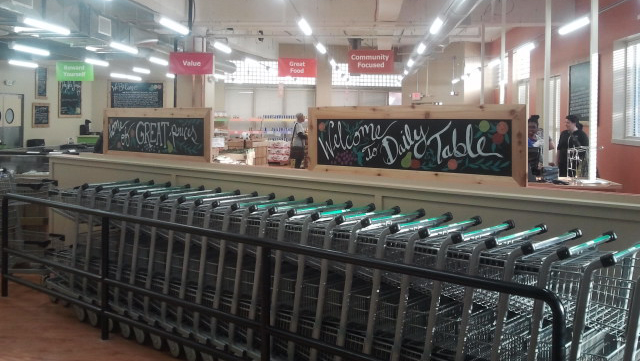
    The new kid is Dave Rauch, the former president of the beloved Trader Joe’s. His new idea is the Daily Table, a non-profit grocery store that opened in Dorchester, Massachusetts in early June. The Daily Table is located in a low-to-middle income area which has not enjoyed much success attracting conventional supermarkets. Relying largely on the donation of “seconds”—food that is edible and safe, but just beyond its expiration date or a few days shy of the compost pile—Daily Table is, according to CBS News, “on a mission to solve two problems: preventing tons of food from going to waste and offering healthy alternatives to families who may not be able to afford traditional stores.”

    The food, befitting its less than top-quality condition, is sold—packaged and fresh, as well as in the form of prepared meals—at prices that are often one-third of those found at conventional retail food outlets. Daily Table sources its merchandise from places as diverse as The Food Project, a nearby non-profit community farm, Whole Foods, and the Greater Boston Area Food Bank. When food isn’t available pro bono, Daily Table will occasionally resort to making cash purchases. And based on the comments of the people I talked to for this story, consumer response has been over the top, leaving Daily Table’s shelves virtually bare at the end of its first opening days.

    Some sustainability and waste-reduction advocates are ecstatic, drooling over all that methane-churning matter that might not find its way into metro-Boston landfills. Rauch, who likes to use social math to describe the gulf he’s trying to bridge, says that the U.S. food system is wasting enough food every day to fill the Rose Bowl. The USDA, which favors the old math, reports that about thirty-one percent of all food produced in the U.S. is wasted. This amounts to about 133 billion pounds per year. With respect to what that might mean for the nation’s food-insecure households, Ben Simon of the Food Recovery Network estimates that we could cut hunger in half with just fifteen percent of our food waste. 

    I have to say that I’ve always been more than a little perplexed by our penchant to link waste reduction to food security. Though I’m an ardent composter—I’ll carry a small handful of overlooked vegetable scraps outdoors on a cold winter’s night to the compost pile rather than drop them in the kitchen waste can—the waste diversion fervor associated with feeding the hungry seems at times like a sanctimonious distraction from the more critical task of a moral society: ending hunger.

    (more…)

  • By Nura Maznavi

    image from upload.wikimedia.org

    Image by Subcommandante

    According to family legend, I first fasted—for a day—at the age of four.

    I have no clear memory of this fast, although I do have the vague recollection of walking into the kitchen while my mom prepared iftar and her asking, "If you're fasting, why are you sucking on a lollipop?"

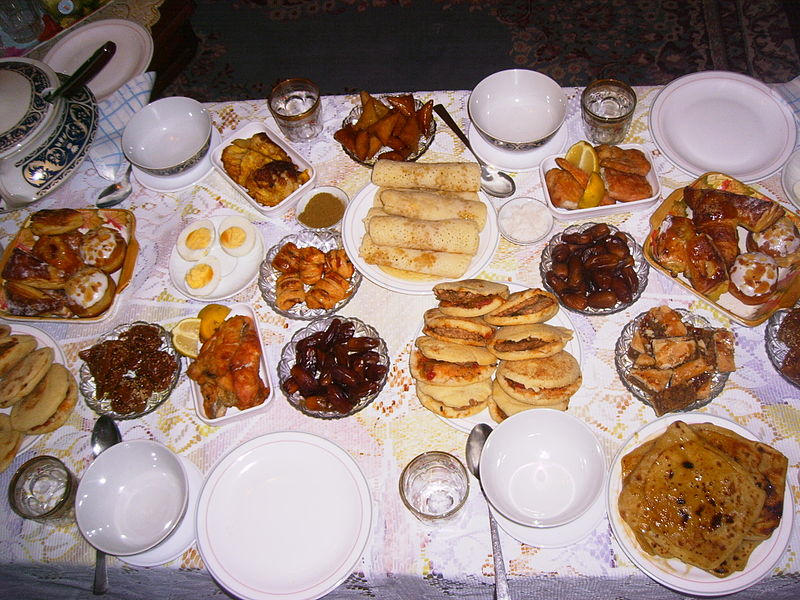
    Ramadan in our house was a big deal. Ramadan meant we could—at least for a month—pretend we were adults. I insisted on fasting the entire month starting at the age of seven.  My parents agreed, but with three stipulations: I had to wake up for suhoor, eat whatever was served during suhoor (generally, a huge meal including rice, chicken curry, and daal) and take an afternoon nap. I can’t remember ever agreeing to family rules so readily and without complaint.

    On the nights we didn’t go to the mosque or visit friends for iftar, my brothers and I would break fast with a collection of random food items we'd collected throughout the day—cold pizza from a pizza party our class won for selling the most magazine subscriptions, cookies from someone's birthday party, a stale piece of cake. As teenagers, we’d break fast with friends, then pray side by side with them at our youth group’s all night qiyam. We’d eat suhoor at Denny’s or IHOP, and sleep in the next day, only to be awoken by our mom yelling, “What good is praying all night if you sleep through the day and miss the required prayers?

    Ramadan became more challenging as the years went on. It meant not drinking water during high school basketball practice and games, taking college and law school finals while dehydrated and sleep deprived, and eating by myself at work during long nights at the office.

    (more…)

  • What a momentous day! America couldn't be more proud to have the Supreme Court legalize gay marriage nationwide. This year's Pride celebrations will reach fever pitch with our country's step towards "making our union a little more perfect," as President Obama said in his address. The fight for LGBT rights has been a long and arduous one—and it isn't over yet. For Pride month, we have a short list of recommended readings to sink your eyes into, a list that outlines some of the complex issues at large in the LGBT community throughout the twentieth and twenty-first centuries. We thank Ann Pellegrini for suggesting this eclectic mix of classics and brand-spanking new titles.


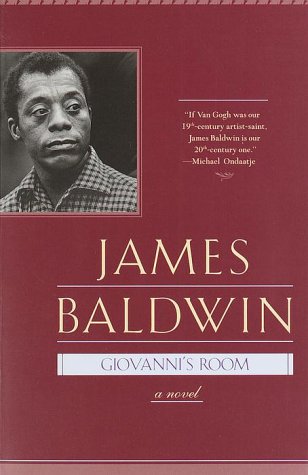
    image from thejkreview.files.wordpress.comJames Baldwin’s Giovanni’s Room

    Before it was published in 1956, Baldwin’s publisher told him to “burn” the novel. Its theme of homosexuality would purportedly alienate him from his black readers. We’re thankful that Baldwin did not heed these words. The story of an American expatriate whose life changes dramatically after he begins an affair with an Italian bartender speaks to the broader issues of social alienation—Baldwin had recently emigrated to Europe—as well as homosexuality and bisexuality. 


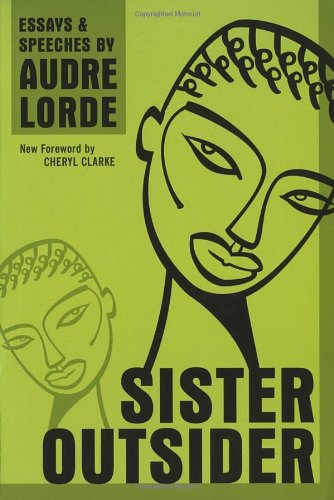
    image from ecx.images-amazon.comAudre Lorde’s Sister Outsider: Essays and Speeches

    Lorde’s collection of fifteen essays and speeches takes on racism, sexism, ageism, homophobia, and class disparity from her unique black lesbian feminist perspective. In her unflinching, lyrical, and trenchant prose, Lorde proposes social difference as the mechanism for action and change. Her messages of struggle and hope are still relevant more than twenty years after they were first published.


    image from angeldanielmatos.files.wordpress.comEve Kosofsky Sedgwick
    ’s The Epistemology of the Closet

    Sedgwick argues that our standard gender binary, limiting sexuality to homosexuality and heterosexuality, limits freedom and understanding. It is also just too simplistic. Focusing largely on language’s impact on sexuality, her book propounds queer sexuality, the “third sex”, to attack the binary system set up by society. This is one of the inaugurating texts in what is now LGBT studies. Especially wonderful is her introductory chapter “Axiomatic,” where she provides a deceptively simple list of axioms for thinking about sex and sexuality, beginning with Axiom 1: “People are different from each other.” 


    image from global.oup.comAnthony M. Petro’s After the Wrath of God: AIDS, Sexuality, and American Religion

    Hot off the presses, Petro’s book is the first to chart the history of religion and the AIDS crisis in the United States. He draws from a broad gamut of religious people, not just the religious right, to reveal the origins of the rhetoric, both secular and religious, that fuels the debates over public health, birth control, and gay marriage. 


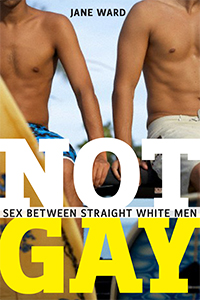
    image from nyuconnexus.seisan.comJane Ward’s Not Gay: Sex Between Straight White Men

    Can straight white men be just as sexually fluid as straight white women? Ward explores the social spaces—fraternity and military hazing rituals, online personals ads—where heterosexual man-on-man action isn’t indicative of going gay, but rather it reasserts their racial and gender identity. Indeed, as time goes on, notions of heterosexuality become increasingly complex. This hotter than hot book will be published on July 10.

  • image from www.beacon.orgA true mark of today’s paradigm shift is seeing how quickly the media and American society at large learned to address Caitlyn Jenner and Laverne Cox by their new gender identities. The widespread visibility of diverse LGBT identities continues to expand. This is the kind of progress that’s important to see, especially for children who are gay, trans, or nonconforming to binary gender.

    Growing up is hard enough as it is; children growing into their sexuality and gender identity need all the role models and support they deserve. That support begins, of course, with the parents. In “You Can Tell Just By Looking” And 20 Other Myths about LGBT Life and People, Michael Bronski, Ann Pellegrini, and Michael Amico explain that it isn’t always easy for parents to accept their children’s sexual and gender identities because of the long-held myth that “there’s no such thing as a gay or trans child.” They tackle this myth and address the internal issues these children face.

    ***

    Myth 16: There's No Such Thing as a Gay or Trans Child

    Over the past two decades, more and more young people have been declaring, and at younger and younger ages, that they are gay or trans. But these gay and trans youth are consistently told that their feelings are not real and will just go away. Some parents fear that if mainstream culture accepts same-sex desire and gender noncomformity as normal, healthy, and positive, their children may be encouraged to engage in it. They are correct. Different models of sexual behavior and gender, especially the widespread visibility of LGBT identities, do offer new ways for people of all ages to behave and identify themselves. The increase in children actively identifying as trans is a direct result of the greater cultural visibility of transgender adults since the mid-1990s.

    This is more than a question of identity, and adults know it. Think about all the work parents and educators put into teaching children how to be proper young men and women and shielding them from sexually explicit material. This considerable labor reveals the fear that underlies the myth that there are no gay and trans children: a child, especially your own, might somehow become gay or trans. Given this cultural tension, it is no surprising that when young people assert that they are gay or trans, many adults become very nervous and upset. Clearly, these young people not only know too much about sex and gender, but they know far too much about the wrong forms of sex and gender—and are willing to say so publicly. 

    The best way to silence to voices of children and ensure they grow up the "right way" is to create a special social category around them that adults control. This may sound odd to us now, but it is exactly what has happened. In the not-so-distant past, adults created this category. It is called childhood. Conceiving of childhood as a separate phase of life is a distinctly modern way of defining an individual by age. In his 1962 landmark book Centuries of Childhood, Philippe Ariès dates the invention of the child to the eighteenth and nineteenth centuries.

    (more…)

  • By Karl Giberson

    This blog appeared originally in The Huffington Post.

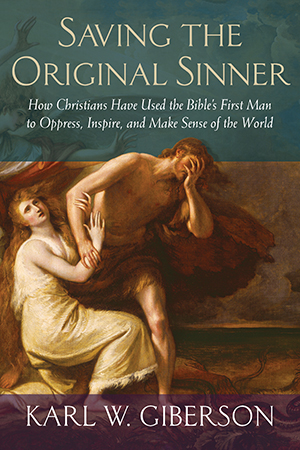
    image from www.beacon.orgEquating science with atheism is one of the most dangerous byproducts of America's culture wars. This strange polarization portends disaster, as the country divides into factions that cannot find common ground on the way the world operates. And it goes without saying that there will be no agreement on what should be done when scientifically significant issues need political action.

    I was reminded of this a few days ago when Beacon Press released my book, Saving the Original Sinner: How Christians Have Used the Bible's First Man to Oppress, Inspire, and Make Sense of the World. The book was inspired by the controversy raging in evangelical Christianity about whether Adam and Eve were actual historical figures. Recent advances in genetics have made it quite clear that the human race never consisted of just two individuals and Christian geneticists have been working overtime trying to convince their respective faith communities they need to pay attention. Most of them are not.

    In the book I show how Adam evolved from an obscure character in Jewish literature to the "Central Myth of the West," and now stands as an almost impenetrable barrier to millions of Christians accepting modern science.

    Many Christians, unfortunately, believe their faith requires a "first man" who sinned and brought trouble on the world (feminists can thank two millennia of patriarchy for getting the "first woman" off the hook). The central Christian theme is "Creation-Fall-Redemption": God creates a perfect world; Adam "falls" by sinning, wrecks everything, and God curses the creation with death and suffering; and Christ redeems the world. In this picture Adam and Christ function as symmetrical "bookends": Adam breaks everything and Christ fixes it.

    (more…)

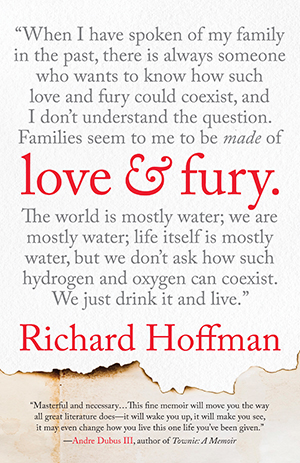
  • At the start of Love & Fury, Richard Hoffman's father tells him that his will is pretty simple. The same could not be said about their relationship. In his memoir, Hoffman writes elegiacally of his upbringing in a working-class Pennsylvania family where he would inherit the abuse, racism, sexism, and other toxic values he would come to terms with. Juxtaposed with these toxic values was his father’s tenderness, making him all the more mysterious. Hoffman was, in his own words, “a boy made of coal and steel and violence and trucks and shame,” filled with a yearning to escape but also a longing to connect with and understand his enigmatic, difficult father. A father who, as he would come to understand later, carried a different kind of class shame. With this opening passage, Hoffman brings all the nuance of his complex relationship with his father to life.

    ***

    We’re sitting in the kitchen, at the scarred Formica table, my father and my brother Joe and I, having just finished the kind of meal we have had innumerable times in the twenty-three years since my mother died: take-out hot dogs from “Yocco, the Hot Dog King” with a side of deep-fried pierogies, or maybe it was microwaved Lloyd’s Roast Beef Barbecue from a plastic container in the fridge, or strip steaks on the George Foreman Grill, with a side of microwaved instant mashed potatoes. I can’t recall for certain what we ate that night, maybe because my father has asked us to meet with him after supper to go over his will, and the two steel boxes have been there on the table next to the tall plastic bottle of orange soda throughout the meal, keeping their secrets to themselves. I know what’s in at least one of them, though: birth certificates, death certificates, account numbers, records, directions, the deeds to graves. It’s two weeks since he’s been diagnosed with MDS, myelodysplastic syndrome, a condition that, at his age, eighty one, almost always becomes leukemia. He has everything in order, he says. It’s all right here in the boxes.

    “Now the will’s pretty simple,” he tells us, “everything’s split down the middle so there’s nothing for the two of you to fight about.” He has told each of us the same thing in the  past two weeks, and Joe and I have talked about it on the phone. “You want the toaster oven or the Foreman grill?” my brother joked. It’s true that there wasn’t much to split up.
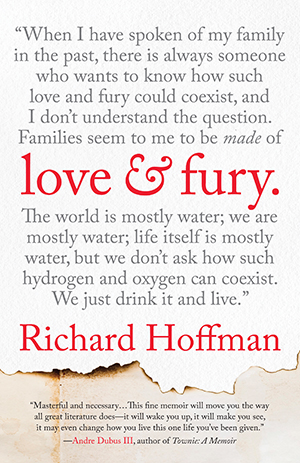
    image from www.beacon.orgMy father had a story he liked to tell about sitting down with my mother at the kitchen table once each month to pay bills and putting all the bills in my mother’s stockpot and drawing them out one by one, writing checks till the money was gone. “And that was that,” he’d say. “If we ran out of money before we got to you, well then you went back in the pot next month.”

    Once when I was young and knew, according to my father, neither the difference between shit and shine-ola, nor my ass from my elbow, on a holiday visit home from college, I chimed in with a lame coda to my father’s anecdote, trying to augment the good humor of it, give it a little extra spin. As my father drew the story to its canonical close, “well then you went back in the pot next month,” I wisecracked that I finally understood why we never had a pot to piss in, another expression of my father’s. “You guys were using it as the Accounts Payable Department!”

    My father looked at me blankly as if he didn’t get it. Then, before I could compound my mistake by trying to explain it, he rose from his chair.

    “You little punk,” he muttered as he left the room.

    I had tripped a switch and plunged my father from the safety of his lyric, humorous, emblematic scene into deep shame and remembered desperation, the very emotions that his ritual telling, with its shrug and goofball smile, its cavalier “fuck ’em” attitude, was meant to exorcise. I was of course the one who didn’t get it, sitting there on my elbow with a shine-ola-eating grin on my face. I was not the one who had stood against a wall at six in the morning for the shape-up, hoping to get picked to work like a donkey for the next twelve hours. I was not the one who’d had to go down to the PP&L office with money made from cleaning out somebody’s suburban garage just to get the lights turned back on. I was not the one who felt humiliated the year our Christmas presents came from the Salvation Army, complete with tags that said, Boy, 6–8 years old. My father had taken all those years and all that shame and locked them in a little box of a story, and just when he was clicking it shut again, as he had so many times before, I propped the lid open a moment longer with my fatuous cleverness, and a monstrous cloud, a genie of shame, escaped.

    Everyone in my family considered themselves middle-class, all my aunts and uncles, each and every household, whether anyone had a job or not, regardless of what kind of work they did when there was work, regardless of whether or not they had “a pot to piss in.”

    We never used the word “class.” My father called us working people. He always said we were working people, and he wanted me to be proud of it. I was a good student. School came easily to me, and I couldn’t wait to be the first in my family to go to college. And my father, conflicted in ways that he showed by barking, shouting, kicking things, and occasionally knocking me down, let me know that he was scared for me, jealous, proud of me, and betrayed.


    About the Author

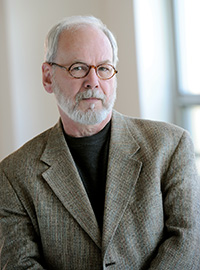
    image from www.beacon.orgRichard Hoffman is the author of Love & Fury: A Memoir, Half the House: A Memoir; the poetry collections Without Paradise, Emblem, and Gold Star Road, winner of both the 2006 Barrow Street Press Poetry Prize and the 2008 Sheila Motton Award from the New England Poetry Club; and the short story collection Interference and Other Stories. He is senior writer-in-residence at Emerson College and lives in Cambridge, Massachusetts.
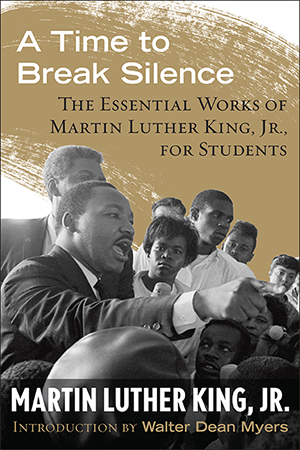
  • Toward the end of his remarks on the shooting at Charleston’s Emanuel A.M.E. Church, President Obama quotes from Martin Luther King, Jr.’s “Eulogy for the Martyred Children”, written in memory of the four little girls who were killed in a bombing at a black church in Birmingham, AL. Indeed, Mother Emanuel's nine victims died as nobly as those little girls. King’s words ring true more than ever today as they did half a century ago. Although he wrote specifically about Birmingham, he could have been writing about Charleston fifty years into the future. The passage from which Obama quotes speaks not only to the martyrdom of the victims, but also the bigger picture of the system that needs to change. And, as always, King calls for peace and hope.

    ***

    These children—unoffending, innocent and beautiful—were the victims of one of the most vicious, heinous crimes ever perpetrated against humanity.

    image from www.beacon.orgYet they died nobly. They are the martyred heroines of a holy crusade for freedom and human dignity. So they have something to say to us in their death. They have something to say to every minister of the gospel who has remained silent behind the safe security of stained-glass windows. They have something to say to every politician who has fed his constituents the stale bread of hatred and the spoiled meat of racism. They have something to say to a federal government that has compromised with the undemocratic practices of southern dixiecrats and the blatant hypocrisy of right-wing northern Republicans. They have something to say to every Negro who passively accepts the evil system of segregation, and stands on the sidelines in the midst of a mighty struggle for justice. They say to each of us, black and white alike, that we must substitute courage for caution. They say to us that we must be concerned not merely about WHO murdered them, but about the system, the way of life and the philosophy which PRODUCED the murderers. Their death says to us that we must work passionately and unrelentingly to make the American dream a reality.

    So they did not die in vain. God still has a way of wringing good out of evil. History has proven over and over again that unmerited suffering is redemptive. The innocent blood of these little girls may well serve as the redemptive force that will bring new light to this dark city. The Holy Scripture says, “A little child shall lead them.” The death of these little children may lead our whole Southland from the low road of man’s inhumanity to man to the high road of peace and brotherhood. These tragic deaths may lead our nation to substitute an aristocracy of character for an aristocracy of color. The spilt blood of these innocent girls may cause the whole citizenry of Birmingham to transform the negative extremes of a dark past into the positive extremes of a bright future. Indeed, this tragic event may cause the white South to come to terms with its conscience.

    So in spite of the darkness of this hour we must not despair. We must not become bitter; nor must we harbor the desire to retaliate with violence. We must not lose faith in our white brothers. Somehow we must believe that the most misguided among them can learn to respect the dignity and worth of all human personality.

    From A TIME TO BREAK SILENCE. All material copyright © Martin Luther King, Jr., and the Estate of Martin Luther King, Jr.; all material copyright renewed © Coretta Scott King and the Estate of Martin Luther King, Jr.

  • Our thoughts are with the nine victims of Charleston's Emanuel African Methodist Episcopal Church shooting: The Reverend Clementa Pinckney, The Reverend Sharonda Coleman-Singleton, Cynthia Hurd, Tywanza Sanders, Myra Thompson, Ethel Lee Lance, The Reverend Daniel L. Simmons, Sr., The Reverend DePayne Middleton-Doctor, and Susie Jackson. We offer our deepest condolences to the family members of the victims. In the wake of the tragedy, we would like to share a few prayers by Martin Luther King, Jr. in their time of need.

    ***

    "All God's Children, Black, White, Red, and Yellow"

    O God, our Heavenly Father, we thank thee for this golden privilege to worship thee, the only true God of the universe. We come to thee today, grateful that thou hast kept us through the long night of the past and ushered us into the challenge of the present and the bright hope of the future. We are mindful, O God, that man cannot save himself, for man is not the measure of things and humanity is not God. Bound by our chains of sin and finiteness, we know we need a Savior. We thank thee, O God, for the spiritual nature of man. We are in nature but live above nature. Help us never to let anyone or any condition pull us so low as to cause us to hate. Give us the strength to love our enemies and to do good to those who despitefully use us and persecute us. We thank thee for thy Church, founded upon thy Word, that challenges us to do more than sing and pray, but go out and work as tough the very answer to our prayers depended on us and not upon thee. Then, finally, help us to realize that man was created to shine like stars and live on through all eternity. Keep us, we pray, in perfect peace, help us to walk together, pray together, sing together, and live together until that day when all God's children, Black, White, Red, and Yellow will rejoice in one common band of humanity in the kingdom of our Lord and of our God, we pray. Amen.

    ***

    "We Are Made to Live Together"

    O God, our gracious Heavenly Father, help us to see the insights that come from this new nation. Help us to follow Thee and all of Thy creative works in this world. And that somehow we will discover that we are made to live together as brothers. And that it will come in this generation; the day when all men will recognize the fatherhood of God and the brotherhood of man. Amen. 

    ***

    "Free at Last! Free at Last!"

    God grant that right here in America and all over this world, we will choose the high way; a way in which men will live together as brothers. A way in which the nations of the world will beat their swords into plowshares, and their spears into pruning hooks. A way in which every man will respect the dignity and worth of all human personality. A way in which every nation will allow justice to run down like waters, and righteousness like a mighty stream. A way in which men will do justly, love mercy, and walk humbly with God. A way in which men will be able to stand up, and in the midst of oppression, in the midst of darkness and agony, they will be able to stand there and love their enemies, bless those persons that curse them, pray for those individuals that despitefully use them. And this is the way that will bring us once more into that society which we think of as the brotherhood of man. This will be that day when white people, colored people, whether they are brown or whether they are yellow or whether they are black, will join together and stretch out with their arms and be able to cry out: "Free at last! Free at last! Great God Almighty, we are free at last!"

    "THOU, DEAR GOD" copyright © 2012 by the Estate of Martin Luther King, Jr. Introduction and supplemental material copyright © 2012 by Lewis V. Baldwin. Foreword copyright © 2012 by Julius R. Scruggs.

  • By Barron H. Lerner

    image from www.beacon.orgIn his interview with Terri Gross on NPR's Fresh Air, Barron H. Lerner, author of The Good Doctor, discusses the paternalistic approach his father, a physician, would take with some of his patients. His father would withhold information from them if he felt it was in their best interest. As a bioethicist, Lerner began to question his father's practices. Some patients, for example, would not know their cancer was terminal. But his father's practices were a product of his time, the 60s. In the end, he was still the caring and gifted physician Lerner respected as loved as a father. As the countdown to Father's Day goes on, we share with you an excerpt from Lerner's book. In the first chapter, he writes about why his father chose to become a physician.

    ***

    My father's decision to become a physician stemmed from his upbringing in a close-knit, working-class Jewish community during World War II. Although he was largely unaware of the mass murder of Jews as it was occurring, what he learned later would affect many aspects of his medical world. His career trajectory was also greatly influenced by his attending a medical school that was in the forefront of efforts to train humanistic physicians. And he had an inspiring mentor who practiced a particular type of patient-centered, case-based medicine that hearkened back to the practices of some of America's greatest early doctors and reached its apogee in the mid-twentieth century.

    As a historian, I was not surprised by what I read in my father's journals. After all, everyone is, to some degree, a product of his or her times. Yet as a doctor, I was amazed by much of what I read. Indeed, my dad's medical school training and early career would probably be unrecognizable to most modern physicians.

    (more…)

  • Leap Blog Header Image


    CII_logotype_clr_ctrFounded in 1906, Children’s Institute, Inc. (CII) is one of the oldest and largest children’s service organizations in L.A. County, serving more than 24,000 children and families each year. CII serves Los Angeles’s most vulnerable children—those harmed by family and community violence, abuse, or coping with the challenges of poverty. At the core of CII’s work is the agency’s comprehensive service model, which addresses the evolving needs of the whole child and entire family. Out of that innovative approach grew Project Fatherhood,SM  a program created in 1996 by the late Dr. Hershel Swinger, the agency’s former Senior Vice President of Programs, to address the problem of absentee fathers. 

    Dr. Swinger had long observed that fathers were most often left out of programs designed to strengthen low-income urban families, and prevent child abuse and neglect. He envisioned a way to increase their involvement in the lives and upbringing of their children, especially those involved in the child welfare system. Through clinical, family support, and child enrichment services, the program gives fathers the tools to become actively engaged parents. 

    Over the past 20 years, Project Fatherhood has reached more than 9,000 fathers and 12,000 children across Los Angeles County. Fifty area organizations have been trained to deliver the program model and CII continues to operate numerous fatherhood groups. Project FatherhoodSM continues to exemplify Children’s Institute’s commitment to developing leading-edge programs that deliver lasting impact to the children and families the organization serves.

    CII provides services throughout central and south Los Angeles County, including three comprehensive campuses: the Otis Booth Campus—just west of downtown Los Angeles; the Mid-Wilshire Campus in Koreatown; and the Burton E. Green Campus in Torrance. Additional service sites are located in Watts and Long Beach, as well as 32 early childhood centers and 60 family child care homes throughout the County.

    (more…)