Between 2009 and 2011, journalist Philip Winslow offered us a dozen of his insightful “Observation Posts,” pieces which opened our eyes to international issues with original reporting. Over a career that has spanned more than thirty years, Winslow has reported on world events for the Christian Science Monitor, the Toronto Star, Maclean’s magazine, ABC radio news, CTV News, and CBC radio. He also served in two United Nations peacekeeping missions and worked for the UN in the West Bank for nearly three years. He is the author of two of our books: Victory For Us Is to See You Suffer: In the West Bank with the Palestinians and the Israelis and Sowing the Dragon’s Teeth: Land Mines and the Global Legacy of War. He has been living and working in Asia for several years. I’m delighted to welcome him back to Beacon Broadside with this remarkable remembrance of one of the most significant events of the past decades.
Reporters will recall few “news conferences” during their careers that yielded anything like exciting news. The ritualistic event commonly is staged to drum up publicity for one of these: a revelation everyone already knows (the latest iPhone); denial of wrongdoing (desperate celeb); confession of wrongdoing with weepy apology (ditto); or imminent government crackdown on something or other.
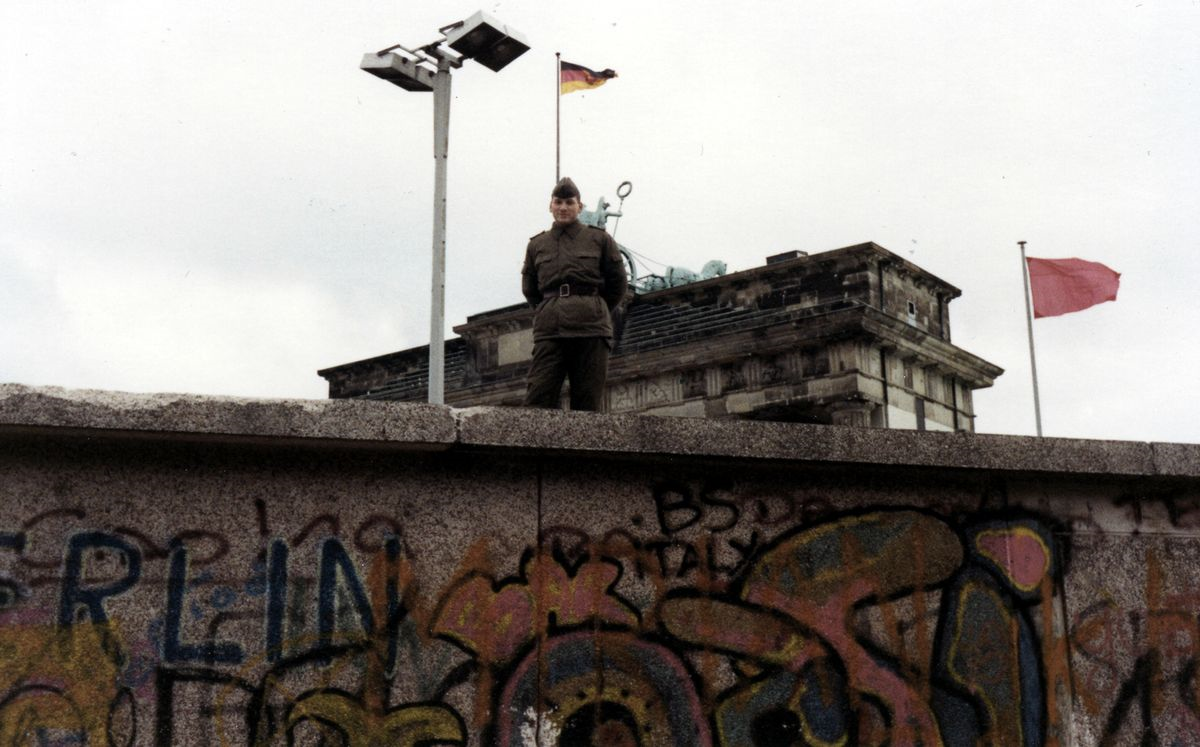
The short-notice summons to reporters by the rump government of the German Democratic Republic on the evening of November 9, 1989 was not mistaken for one of those. As dull as GDR routine news conferences could be, no Berlin-based correspondent was going to skip this one. But no one I knew predicted the drama that was about to unfold.