• By Rob Arnold


    FERGUSON, MO – OCTOBER 13: Author and activist Cornel West protests outside the Ferguson police station on October 13, 2014 in Ferguson, Missouri.

    Sometime in the afternoon of Monday, October 13—Columbus Day or Indigenous Peoples’ Day depending on who you ask—the culmination of a weekend of organized protests in Ferguson, Missouri, news started trickling through Twitter and other media platforms that Cornel West and several other clergy members and activists had been arrested while trying to peacefully enter the Ferguson Police Station and request a meeting with Ferguson Police Chief Thomas Jackson. Photos from the moment are striking, instantly iconic: Dr. West knocked off his feet, grimacing mid-fall, his rain-streaked glasses reflecting the neon green riot jackets of the officers lined in front.

    (more…)

  • By Carole Joffe


    WASHINGTON, DC – JANUARY 22: Pro-choice activists hold signs as marchers of the annual March for Life arrive in front of the U.S. Supreme Court.

    “You walk into our surgery center and it’s so cold and scary. There’s no art. The lights are bright, the recovery rooms smell like bleach. All the staff are wearing gowns and head and foot covers and the patients have to wear the same thing … and there’s nothing comforting about it. The warmth is gone.”

    As recent events in Texas have made clear, when it comes to abortion care, the worst outcome of the current onslaught of state-imposed targeted regulations of abortion providers (TRAP laws) is the forced closing of clinics. But even clinics in affected states that manage to stay open suffer costs. The words above were spoken to me by an administrator of an abortion clinic in Pennsylvania, one of 23 states that have passed legislation stipulating that abortion clinics must conform to the requirements of an ambulatory surgical center (ASC). ASC legislation, in essence, demands that clinics conform to the physical standards of hospitals, with regulations about such matters as hallway widths, heating and ventilation equipment, and janitor storage space. Moreover, as part of the ASC regime, clinics must adopt certain hospital-like policies, such as sterile environments, that are more stringent than those pertaining to other outpatient facilities. Although the Supreme Court temporarily blocked Texas from enforcing these ASC provisions, many of the state’s clinics have been facing the prospect of shuttering under the extreme financial burden of physically enacting the required changes.

    (more…)

  •  

    SEATTLE, WA – OCTOBER 13: People cheer during Indigenous Peoples' Day celebrations at the Daybreak Star Cultural Center. Earlier that afternoon, Seattle Mayor Ed Murray signed a resolution designating the second Monday in October to be Indigenous Peoples' Day instead of Columbus Day.

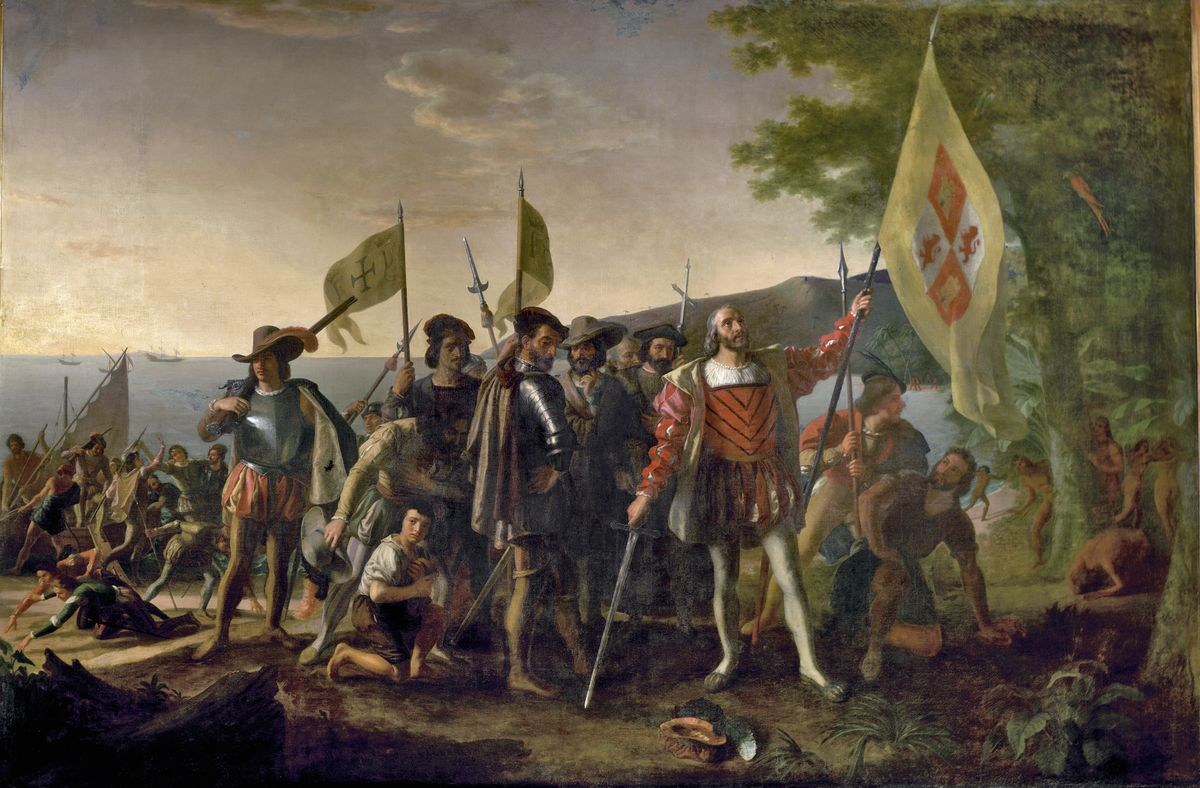
    Last week after Native American activists successfully lobbied the city of Seattle to change Columbus Day to Indigenous Peoples’ Day, historian Roxanne Dunbar-Ortiz wrote an open letter to President Obama urging him to put an end to the federal holiday honoring Christopher Columbus—a man linked to the enslavement, mutilation, and genocide of the Indigenous people he encountered on his exploration and subsequent conquest of the “New World.” A corresponding WhiteHouse.gov petition has generated tremendous response, confirming that support for the idea of honoring Indigenous people over Columbus Day’s “metaphor and painful symbol of [a] traumatic past,” as Dunbar-Ortiz describes in the letter, has spread throughout the general public. Dunbar-Ortiz, whose An Indigenous Peoples’ History of the United States was published last month, spoke with us recently about the book and about how Indigenous people remain a dynamic, diverse, and necessary force in the world today.

    Beacon Broadside: What are a couple the most enduring myths about Indigenous history?

    Roxanne Dunbar-Ortiz: I think the myth of disappearance­—the myth of not being here now, of being people of the past. That’s a kind of unspoken, unconscious genocide that takes place over and over and over again, not just in the past. But of course, genocide doesn’t mean the total elimination of a people. It can mean that but in world history it’s not meant that. There are still Jews in the world. There are still Armenians. There are still Cambodians. Even though we call each of those cases genocide. But with Native peoples it’s different. So I think that’s the main myth, this idea of eliminationism, to do away with the Indians. And it’s sort of confusing and painful for people who don’t know US history, or know only a version of it—that is the settler colonial narrative—don’t know what to do with the fact that there are still Indians because the narrative really does away with Native people.

    (more…)

  • Historian and activist Roxanne Dunbar-Ortiz wrote a letter to President Obama requesting that the US end its celebration of Christopher Columbus, a symbol of colonization and genocide for Native American nations and communities. Tell the world that we should honor the many contributions of Indigenous People instead of the conquest of one man. Sign the petition on WhiteHouse.gov to add your voice!

    SIGN NOW

  • ADD YOUR VOICE: Sign the official petition on WhiteHouse.gov, and be sure to share this letter far and wide. Tell the world that the United States should honor Native American nations and communities.

    By Roxanne Dunbar-Ortiz

    Landing of Columbus (1842-47) by John Vanderlyn (via Wikimedia Commons)

    “Our nation was born in genocide. . . . We are perhaps the only nation which tried as a matter of national policy to wipe out its indigenous population. Moreover, we elevated that tragic experience into a noble crusade. . .” —Martin Luther King, Jr.

    Dear President Obama:

    “Columbus Day” was made a federal holiday in 1934, when Native American nations and communities had little voice to protest the celebration of the onset of colonization and genocide in the Western Hemisphere. In the era of global decolonization of the second half of the 20th century, Native Americans remained colonized. Columbus Day is a metaphor and painful symbol of that traumatic past, although the United States did not become an independent republic until nearly three centuries after Columbus’s first voyage. None of Columbus’s voyages touched the continental territory now claimed by the US. Yet, the United States soon affirmed that a 15th century Papal Bull, known as the “Doctrine of Discovery,” applied to the Indigenous nations of North America. This remains US law in claiming that Native nations are “domestic, dependent nations” with no inherent rights to the land.

    (more…)

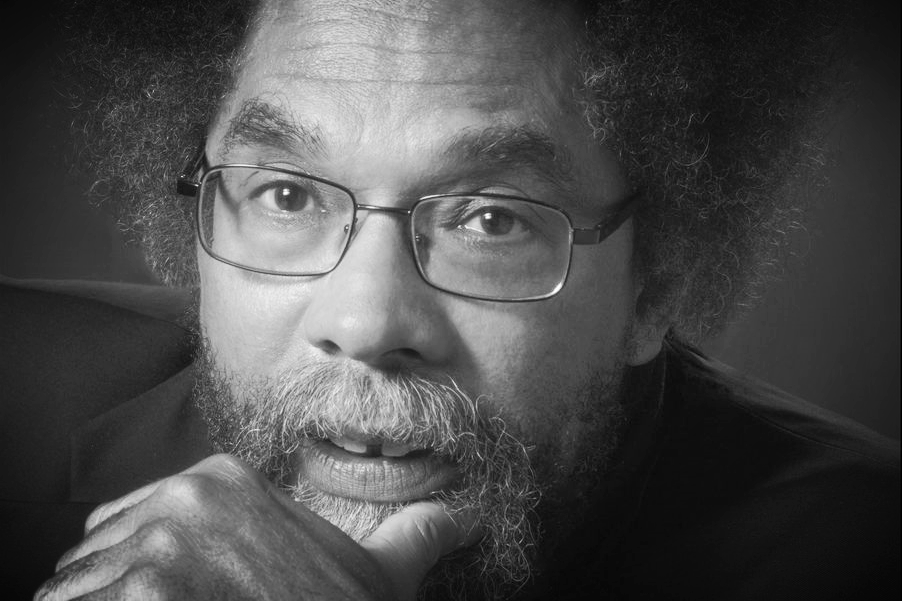
  • Cornel West by Sigrid Estrada

    Cornel West’s Black Prophetic Fire is both a new look at six revolutionary African American leaders and a rousing call for more “fire” in what West calls the Black prophetic tradition, a reframing of the social order in terms of radical justice. As Dr. West writes in the introduction,

    The deep hope shot through this dialogue is that Black prophetic fire never dies, that the Black prophetic tradition forever flourishes, and that a new wave of young brothers and sisters of all colors see and feel that it is a beautiful thing to be on fire for justice and that there is no greater joy than inspiring and empowering others—especially the least of these, the precious and priceless wretched of the earth!

    (more…)

  • By Susan Katz Miller

    Yom Kippur starts tonight

    Note: An earlier version of this piece ran in the Huffington Post.

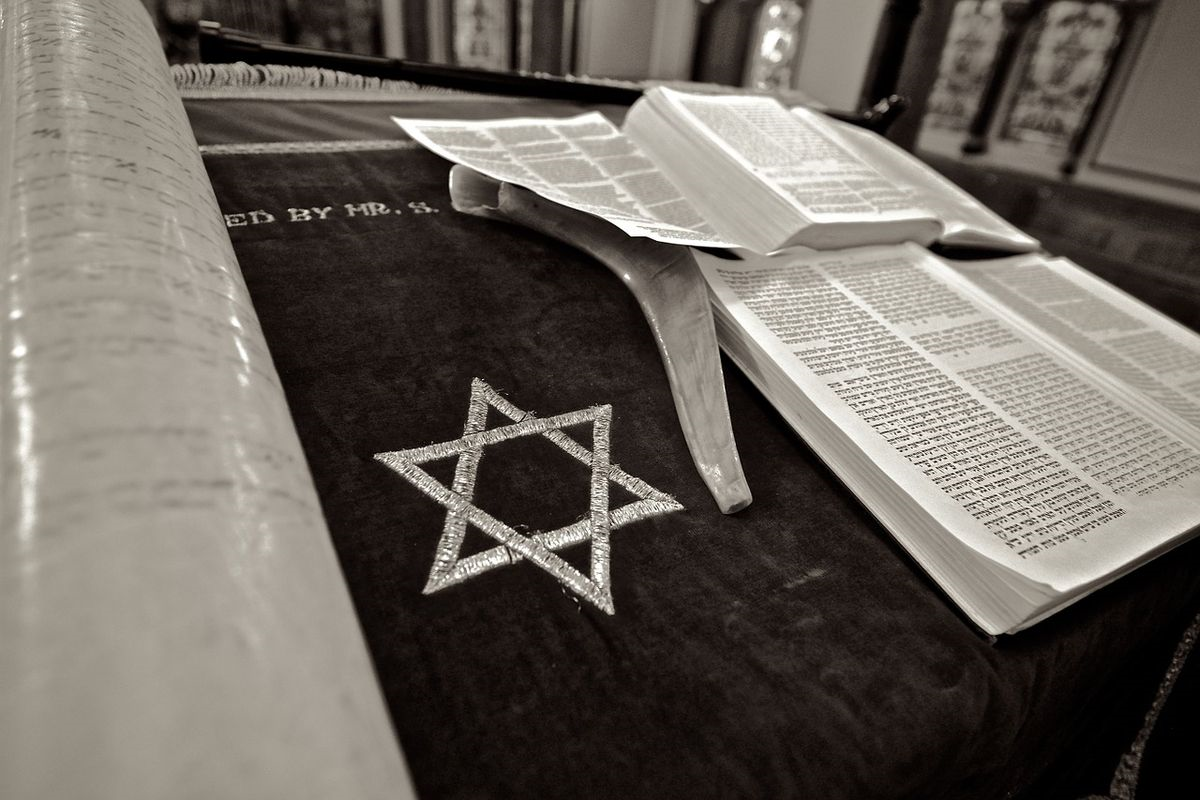
    Yom Kippur starts tonight, with the moving and mournful Kol Nidre service, and I am grateful to belong to a radically inclusive community of interfaith families, families that will mark this High Holy Day together. As it happens, Chelsea Clinton and Marc Mezvinsky welcomed a baby girl to their interfaith family, just a week ago today. As interfaith parents, they now face decisions about the religious affiliation and education of their interfaith child. Baby Charlotte arrived just after the autumnal equinox, when the nip in the air reminds us of the passage of time, and many interfaith families are making the annual decision about whether to affiliate with a church, a synagogue, or neither. Or both.

    (more…)

  • By Quinton Dixie and Peter Eisenstadt
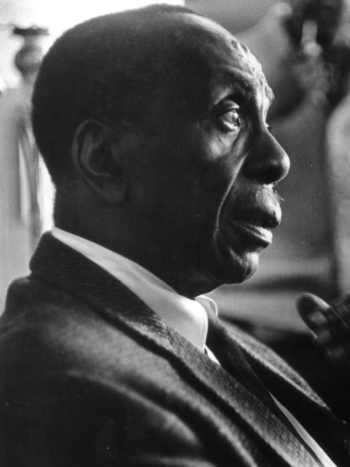
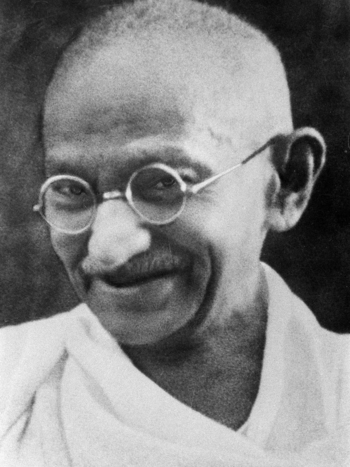
    Howard Thurman  Portrait_Gandhi

    In 1935, Howard Thurman, one of the most influential African American religious thinkers of the twentieth century, took a pivotal “Pilgrimage of Friendship” to India that would forever change him—and that would ultimately shape the course of the civil rights movement in the United States. When Thurman became the first African American to meet with Mahatma Gandhi, he found himself called upon to create a new version of American Christianity, one that eschewed self-imposed racial and religious boundaries, and equipped itself to confront the enormous social injustices that plagued the United States during this period. Gandhi’s philosophy and practice of satyagraha, or “soul force,” would have a momentous impact on Thurman, showing him the effectiveness of nonviolent resistance. After the journey to India, Thurman’s distinctly American translation of satyagraha into a Black Christian context became one of the key inspirations for the civil rights movement, fulfilling Gandhi’s prescient words that “it may be through the Negroes that the unadulterated message of nonviolence will be delivered to the world.”

    Today, on the 145th anniversary of Mahatma Gandhi’s birth, we look back to that meeting in 1935, when the idea of nonviolent civil disobedience passed from India’s spiritual leader to the man who would deeply influence an entire generation of black ministers and civil rights leaders—among them Martin Luther King Jr.

    Excerpted from Visions of a Better World: Howard Thurman's Pilgrimage to India and the Origins of African American Nonviolence, available soon in paperback.

    The conversation then turned, in the words of Desai, to “the main thing that had drawn the distinguished members to Gandhiji,” his philosophy of ahimsa (nonviolence) and satyagraha (civil disobedience campaigns). “Is non-violence from your point of view a form of direct action?” Thurman asked. “It is not one form,” Gandhi replied, “it is the only form.” Nonviolence, Gandhi said, does not exist without an active expression of it, and indeed, “one cannot be passively nonviolent.” Gandhi went on to lament that the term had been widely misunderstood. Ahimsa was a Sanskrit word with deep resonance in all of South Asia’s ancient karmic religions, Buddhism, Hinduism, and (especially) Jainism, in which ahimsa stood for a commitment to refrain from harming living things. He felt there was no good English language equivalent for ahimsa, so he created the term nonviolence (the earliest usage in the Oxford English Dictionary, citing Gandhi, is from 1920), but told Thurman that he regretted the fact that his coinage started with the “negative particle ‘non.’ ” On the contrary, Gandhi insisted nonviolence was “a force which is more positive than electricity” and subtler and more pervasive than the ether.

    (more…)
  • By Ann Pellegrini

    Center City gay-bashing suspects (courtesy Philadelphia Police)

    Center City gay-bashing suspects (courtesy Philadelphia Police)

    On September 11, 2014, around 11pm, a gay male couple walking home through Philadelphia’s fashionable Center City was accosted and badly beaten by a group of 12 well-dressed white 20-somethings, both men and women, who shouted anti-gay epithets before and during the attack. Both victims ended up in the hospital, one of them beaten so badly he suffered broken bones in his face and had to have his jaw wired shut. The case has attracted a lot of attention both because the alleged perpetrators were so clean-cut and apparently well-to-do and included women and men—not the stereotype of who commits “hate crimes”—and for the way it was solved: via social media. After the police released street-side surveillance video showing a group of young people walking away from the crime scene, citizens of the twitter universe began circulating the videos, matching faces to Facebook updates, and eventually pointing the police to suspects. Three arrests have since been made of two men and one woman, Philip Williams, Kevin Harrigan, and Kathryn Knott, each of whom has been charged with two counts of Aggravated Assault, two counts of Simple Assault, two counts of Recklessly Endangering Another Person, and one count of Criminal Conspiracy.

    (more…)

  • Photo by Tom Hallock

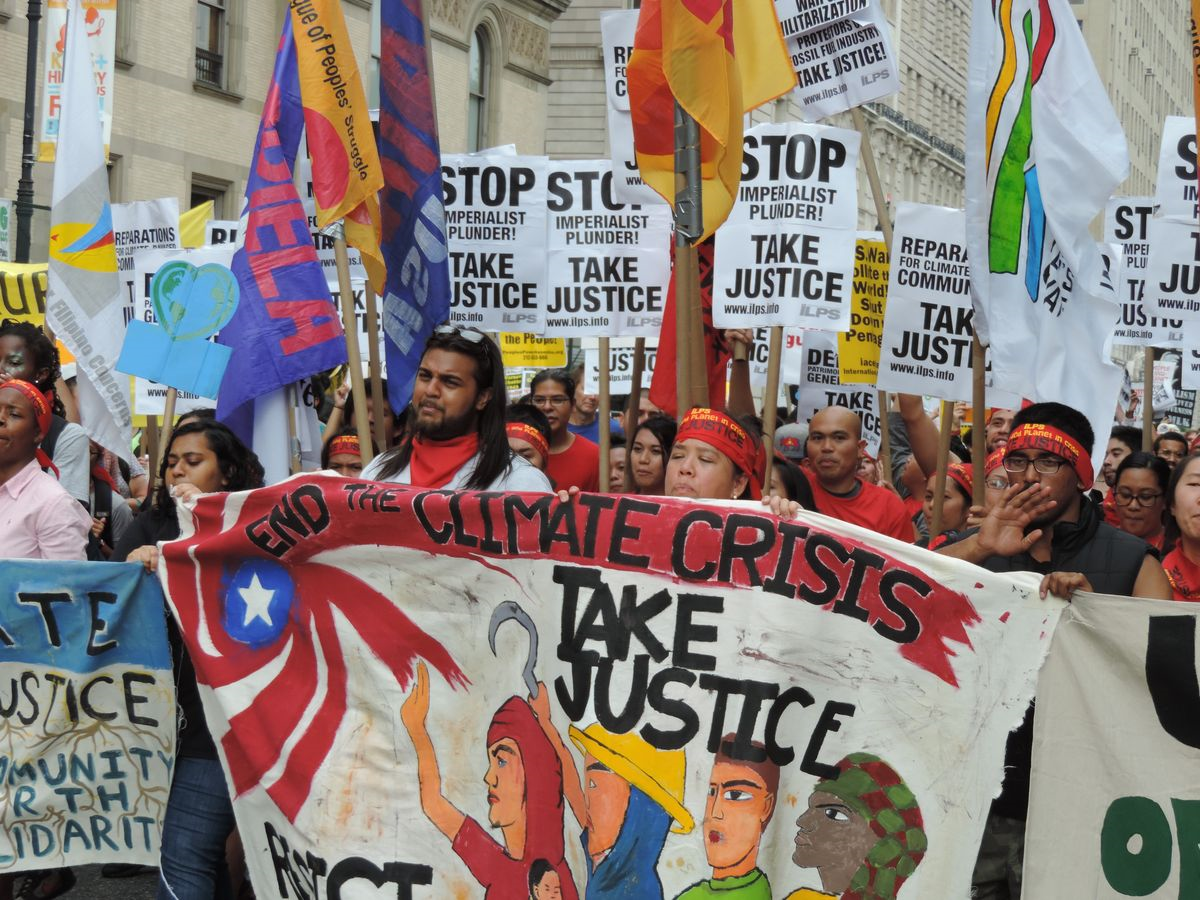
    Protesters at the People’s Climate March, photo by Tom Hallock

    Climate change is happening, and faster than scientists expected. Polar ice caps are melting faster, island nations are going underwater, the ocean is acidifying and warming. In the US, we are suffering catastrophic droughts from California to Texas, along with severe flooding in the East. The answer is to stop burning fossil fuels, but the World Meteorological Organization says that, in 2013, CO2 rates in the atmosphere were rising faster than ever. So what can we do? On Sunday, September 21st, hundreds of thousands of people from around the globe converged in Manhattan to show the world exactly how critical the issue of climate change is to them, and to demand action. Beacon’s Senior Editor Alexis Rizzuto and Associate Publisher Tom Hallock were there to bear witness. We recently spoke with them about their experiences at the march and why climate change is fast becoming one of the most important issues of our time.

    (more…)