• By Bill Ayers

    Labeled a “domestic terrorist” by the McCain campaign in 2008 and used by the radical right in an attempt to castigate Obama for “pallin’ around with terrorists,” Bill Ayers is in fact a dedicated teacher, father, and social justice advocate with a sharp memory and even sharper wit. Public Enemy, now available in paperback, tells his story from the moment Ayers and his wife, Bernardine Dohrn, emerged from years on the run and rebuilt their lives as public figures, often celebrated for their community work and much hated by the radical right. In the following excerpt from the book’s prologue, Ayers tells the story of how he came to play an unlikely yet prominent role in the 2008 presidential election.

    Spring 2008, Chicago

    It was a mid-April evening, the sweet smells of springtime upon us and the last light reluctantly giving way outside the front window, when my graduate seminar ended and everyone pitched in to clean up. A dozen of my students were spread out in our living room, cups and dishes scattered everywhere, small piles of books and papers marking specific territory. Until a moment before, all of us had focused intensely on the work at hand: thesis development, the art of the personal essay, and the formal demands of oral history research. As a professor for two decades, my favorite teaching moments often popped up during these customary potluck seminars at our home—something about sharing food in a more intimate personal setting, perhaps, or disrupting the assumed hierarchy of teacher authority, or simply being freed from the windowless, fluorescent-lit concrete bunkers that passed for classrooms at my university. But the seminar was done for this evening, and as students began to gather their things, a self-described “political junkie” clicked on the TV and flipped to the presidential primary debate, well under way by now, between Hillary Clinton and the young upstart from Chicago, Barack Obama.

    (more…)

  • It’s that time of the year again, a time when readers, writers, and publishers everywhere are reminded of the fragility of free speech, even within a country that purportedly protects it. Though this will be the 32nd year of the annual freedom to read celebration, the reality is that book banning is still distressingly common. “It takes guts to take a stand against censorship,” free speech activist Chris Finan recently remarked in response to the banning of Emily M. Danforth’s teen novel The Miseducation of Cameron Post. Finan is president of the American Booksellers Foundation for Free Expression and author of From the Palmer Raids to the Patriot Act: A History of the Fight for Free Speech in America, the first comprehensive history of free speech in America for general readers, and a book that should be required reading for Banned Books Week.

    (more…)

  •     

    This Sunday, September 21st, concerned citizens from across the globe are convening in New York City for what’s being called the largest climate march in history. Over 100,000 participants will march two miles through the streets of Manhattan “to demand bold action on climate change.” For those who are planning to march, or for those who wish to take action from afar, we’ve compiled a list of essential titles that raise awareness about impending climate change—the most pivotal environmental crisis humankind has yet to face:

    (more…)

  • By Roxanne Dunbar-Ortiz


    Senator Maria Cantwell’s proposed bill to strip the NFL of their nonprofit status is the latest strike in the ongoing effort to pressure the Washington Redskins to change their mascot. Canwtell joins a growing chorus of opponents to the disparaging name. Back in January, the National Congress of American Indians created a powerful PSA that outlined the issue in just a few words: “Native Americans call themselves many things. The one thing they don’t…” The ad ends with a close-up image of the Washington Redskins logo. The implication is clear.

    In the following excerpt adapted from her new book An Indigenous Peoples’ History of the United States, the latest in Beacon’s ReVisioning American History series, historian and activist Roxanne Dunbar-Ortiz discusses the violent origins of the term “redskins,” and the history of warfare and genocide it recalls.

    During the late seventeenth century, Anglo settlers in New England began the routine practice of scalp hunting and what military historian John Grenier identifies as “ranging”—the use of settler-ranger forces. By that time, the non-Indigenous population of the English colony in North America had increased sixfold, to more than 150,000, which meant that settlers were intruding on more of the Indigenous homelands.

    (more…)

  • By Frederick Lane


    It’s been an interesting summer for those of us who study the legal and cultural developments surrounding mobile devices. At the end of June, the US Supreme Court unanimously(!) ruled that law enforcement officials must get a search warrant before reviewing the contents of of a cellphone seized during an arrest. [See Riley v. California, 573 U.S. ___ (2014)]. This may well have been the most important pro-privacy decision in the past 45 years, and it deserved far more attention and celebration than it received.

    The discussion of the Court’s cellphone decision, however inadequate, was utterly swamped by the media monsoon following the news that nude photos of numerous celebrities (perhaps more than 100, including such cultural icons such Jennifer Lawrence, Kate Upton, Mary E. Winstead, and Kirsten Dunst) had been hacked from their Apple iCloud accounts. Wholly apart from sucking the oxygen out of the global news cycle for the better part of a week, the massive celebrity hack made it clear that when it comes to privacy, nothing sells like sex.

    (more…)

  • By Michael Patrick MacDonald


    Anti-busing protestors line a street to demonstrate against forced busing of students into formerly all-white South Boston schools on September 12, 1974. 

    Forty years ago today, on September 12, 1974, desegregation busing officially began in Boston, sparking a racial crisis in the city that would last more than a decade. South Boston native Michael Patrick MacDonald was a young boy on that day, and in the following excerpt from his acclaimed memoir All Souls: A Family Story from Southie, MacDonald writes about the climate of outrage that infused Southie during that period, and what it was like to come of age in that fiercely insular enclave with “the highest concentration of poor whites in America” during a time of radical disruption for the whole city.

    That September, Ma let us skip the first week of school. The whole neighborhood was boycotting school. City Councilor Louise Day Hicks and her bodyguard with the bullhorn, Jimmy Kelly, were telling people to keep their kids home. It was supposed to be just the high school kids boycotting, but we all wanted to show our loyalty to the neighborhood. I was meant to be starting the third grade at St. Augustine’s School. Ma had enrolled Kevin and Kathy in the sixth and seventh grades there as well. Frankie was going to Southie High, and Mary and Joe were being sent to mostly black Roxbury, so they really had something to boycott. But on the first day, Kevin and Kathy begged Ma not to send them. “C’mon Ma, please?” I piped in. It was still warm outside and we wanted to join the crowds that were just then lining the streets to watch the busloads of black kids come into Southie. The excitement built as police helicopters hovered just above our third-floor windows, police in riot gear stood guard on the rooftops of Old Colony, and the national news camped out on every corner. Ma said okay, and we ran up to Darius Court, along the busing route, where in simpler times we’d watched the neighborhood St. Paddy’s Day parade.

    (more…)

  • By Michelle Bamberger and Robert Oswald


    New York Governor Andrew Cuomo meets with supporters at the Hotel Trade Council during a reelection campaign event on September 8, 2014 in New York City.

    The September 9th gubernatorial primary in New York State was, in essence, a referendum on the record of Governor Andrew Cuomo, a conservative Democrat. Although the result was never in doubt, the margin of victory has been taken as a measure of satisfaction with his policies and his prospects for higher office. His opponent was a little known and underfunded progressive Democrat in the mold of Elizabeth Warren: Professor Zephyr Teachout, a law professor from Fordham University. Prof. Teachout, while losing the election, scored an important victory by taking 34.3% of the vote to Mr. Cuomo’s 62.2% (Randy Credico took 3.6% of the vote).

    This was the strongest challenge to an incumbent governor since primaries were instituted in New York State (1970). Although Cuomo scored victories in the most populated counties, Teachout won half of New York’s 62 counties. The Teachout vote seemed to be motivated by at least two important issues: the perceived corruption of the Cuomo administration and the issue of permitting hydraulic fracturing in New York. Teachout is the author of the recently released Corruption in America: From Benjamin Franklin’s Snuff Box to Citizens United (Harvard University Press, 2014) and is considered a strong opponent of corruption in government. She also is an outspoken opponent of unconventional oil and gas extraction, and favors banning the practice in New York State.

    (more…)

  • By Enrico Gnaulati


    As we step into the new school year, parents and teachers need a hearty reminder that all the quirky, alarming, troubling, and troublesome behaviors manifested by children, though concerning, are not evidence of a mental disorder. As a society we seem to have lost the ability to step back and use good common sense and developmentally-informed thinking to understand kids’ difficult behavior. Instead, we seem enamored with diagnoses, assuming it smacks of sophistication to conclude that forgetfulness and distractibility in a child must indicate ADHD, or that poor eye contact and a business-like tone equals autism spectrum disorder, or that explosive emotional outbursts and impulsivity in a teen are clear-cut evidence of bi-polar disorder.

    (more…)

  • image from http://s3.amazonaws.com/hires.aviary.com/k/mr6i2hifk4wxt1dp/14090914/b63b0f10-390c-438a-9104-0cccd426d19c.png

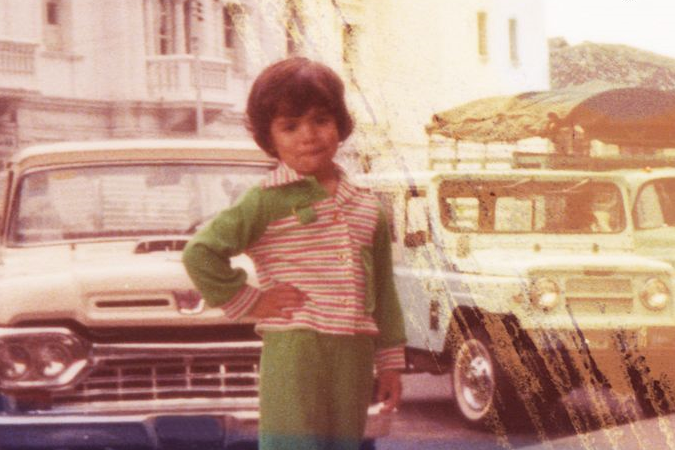
    In her lyrical, coming-of-age memoir A Cup of Water Under My Bed—a heartfelt exploration of family, identity, and language now available from Beacon Press—Daisy Hernández chronicles what the women in her Cuban-Colombian family taught her about love, money, and race. Nicholas DiSabatino, publicity assistant at Beacon, recently spoke with Hernández about her new book, her literary and cultural influences, and the process of finding herself, both within her immigrant community and within the new, queer life she created for herself.

    (more…)

  • By Aldo Gonzalez

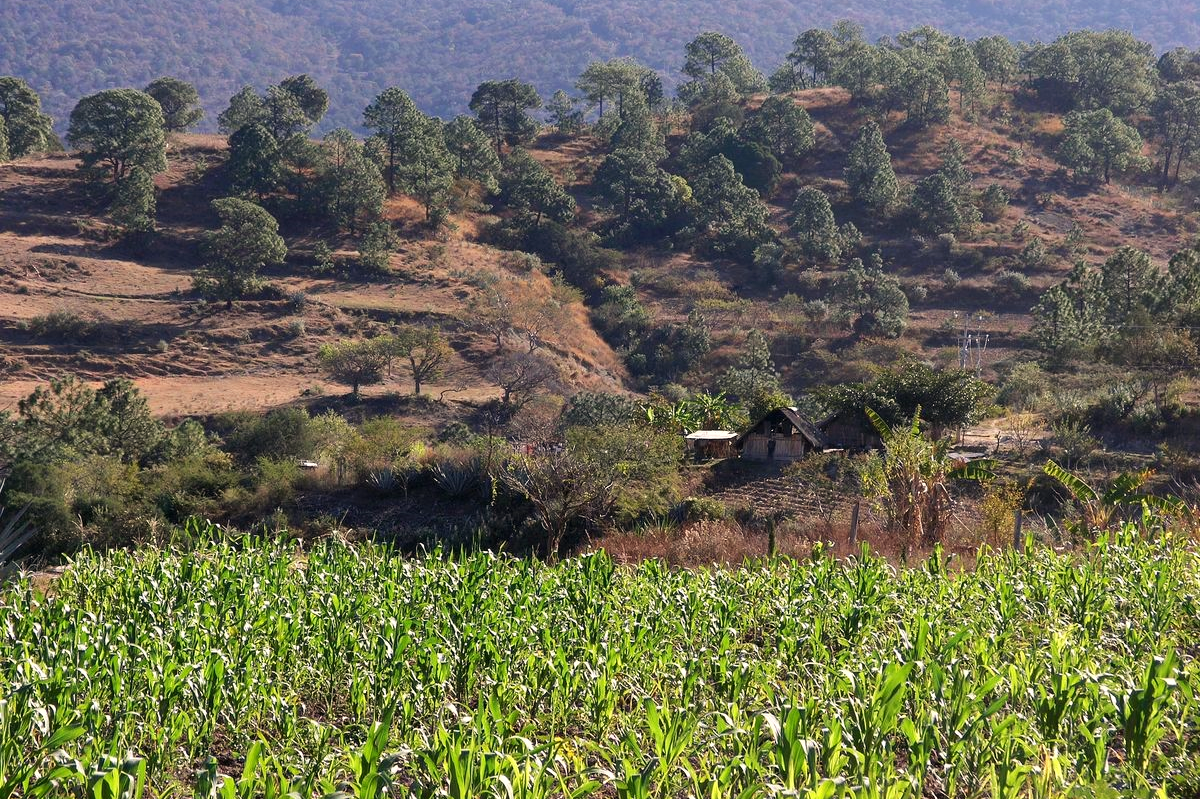
    Home and corn field, Oaxaca, Mexico by Flickr user Lon&Queta

    This piece originally appeared in David Bacon’s The Right to Stay Home, which combines incisive reporting on the resistance of Mexican communities to the economic policies that drive migration with the voices of activists themselves as they reflect on their experiences, analyze the complexities of their realities, and affirm their vision for a better world. The Right to Stay Home is now available in paperback.

    In Guelatao, the town in the Sierra Juarez where I live, our main crop is corn. It’s a very healthy life. We get up early and have coffee to get ready to work. Your machete has to be sharpened, and then you walk to your field. It can be twenty minutes or two hours away. There’s no machinery for our farms, and the hillsides are very steep. When we need help, we ask for it from our neighbors, and when they need it, we give it to them. When we finish work in the field, we gather wood on the way home for cooking.

    Our main problem is that the prices of agricultural products have fallen dramatically. The price for corn doesn’t cover the costs of growing it anymore, so many people have chosen to leave to get the money they need to buy food. The prices for coffee have also fallen, and people have migrated for that reason too. [In May of 2011 coffee sold for about $2.90 per pound, and a year later, in June 2012, it had dropped to $1.55 per pound—almost in half.]

    (more…)