• Martin Luther King, Jr. at the 1963 March on Washington

    Martin Luther King, Jr. at the 1963 March on Washington

    Fifty years ago today, President Lyndon B. Johnson signed the 1964 Civil Rights Act into law. It was a culminating moment in the civil rights movement, a movement that, as author and legal scholar Sheryll Cashin noted in her recent New York Times editorial, far from being isolated to southern black activists, involved an extensive and well-coordinated “grass-roots mobilization [that] was multiracial, from the integrated legion of Freedom Riders, to the young activists in the Freedom Summer in Mississippi, to the more than 250,000 demonstrators in the March on Washington, a quarter of whom were white.” The story of the act’s eventual success is the story of our nation passing through a moral gauntlet. That, fifty years later, we remain uncertain about how best to address the legacy of those racial divisions that first sparked the movement is a testament to how deep the fissures ran. And how brave and dedicated the movement’s heroes were—Martin Luther King, Jr., Rosa Parks, Bob Moses, and others—men and women whose names have entered the lingua franca of American history, synonymous with freedom, righteousness, and moral certitude. As Dr. King says in his classic narrative Why We Can’t Wait, “Human progress never rolls in on wheels of inevitability; it comes through the tireless efforts of men willing to work to be co-workers with God.” To celebrate their struggles, and the efforts of all those “co-workers with God” who sacrificed so much to lay the groundwork for the passing of the Civil Rights Act, we’ve put together a list of essential books that we hope will empower the next generation for another fifty years and beyond.
    (more…)

  • By John Austin

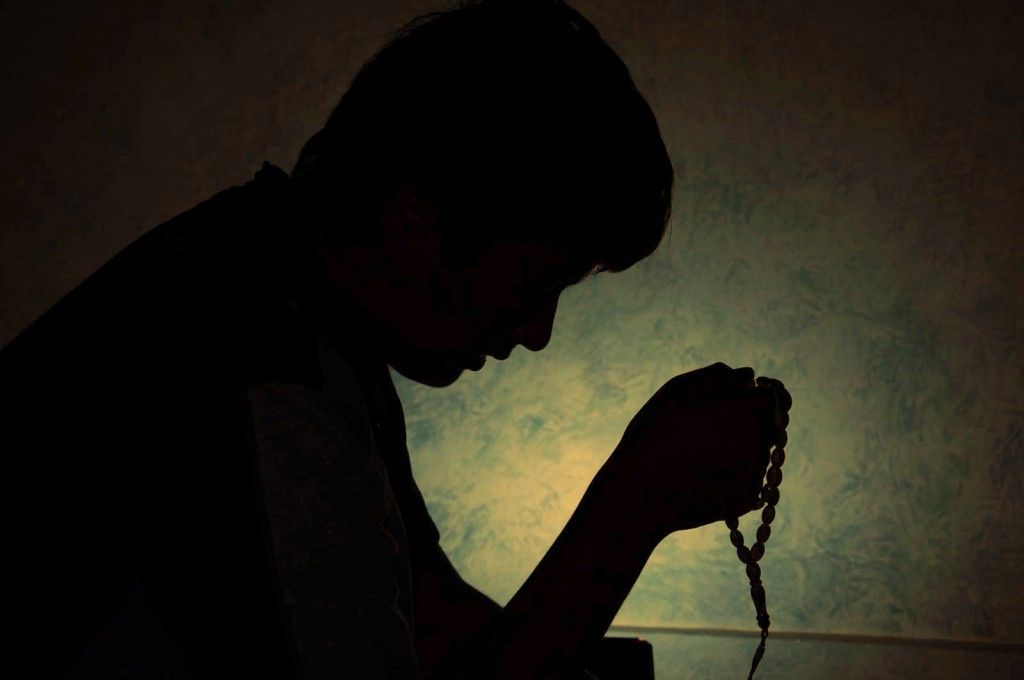
    Muslim prayer

    When I discovered that I wanted to be a Muslim I don’t think I really knew what was involved. This was not for lack of knowledge about the religion but perhaps a lack of knowledge about myself, and a lack of knowledge generally. I knew that I would be required to kneel in submission to God five times a day, abstain from alcohol, along with a host of other minor ascetic measures. But when one actually finds himself in the throes of post-Shahada conversion, it becomes a different matter altogether.

    I converted to Islam the previous spring, and spent the subsequent months in a frenzy of learning how to be a Muslim. So ensconced was I in the honeymooning phase with my new religion that one of the greatest obligations I have as a Muslim had crept up on me.

    I was completely unprepared for Ramadan that first year. I had not prepared myself, physically or mentally, for the rigors of a month long fast. I was, in fact, still largely oblivious to what that entailed.

    (more…)

  •  

    Michael Bronski, Ann Pellegrini, and Michael Amico came to Boston last fall to read from their new book, “You Can Tell Just by Looking”: And 20 Other Myths about LGBT Life and People. The book confronts some of the most common myths and misunderstandings about LGBT life and people. Myths, such as “All Religions Condemn Homosexuality” and “Transgender People Are Mentally Ill,” have been used to justify discrimination and oppression of LGBT people. Others, such as “Homosexuals Are Born That Way,” have been embraced by LGBT communities and their allies. In discussing and dispelling these myths—including gay-positive ones—the authors challenge readers to question their own beliefs and to grapple with the complexities of what it means to be queer in the broadest social, political, and cultural sense.

    While waiting for the event to start, we had the opportunity to ask the authors about some key myths affecting the cultural landscape of LGBT people, and about LGBT parents in particular, a demographic sure to rise given marriage equality’s gaining acceptance. As the authors say in the book, “The often bitter debate that swirls around LGBT families cloaks the larger discussion: how do we all create a culture that nurtures all children, in all kinds of families, to grow into happy, loving, successful adults?…Until we create new ways for parents and children to live healthily together, neither will grow and thrive, especially as families.” 

    (more…)

  • By Helene Atwan

    Detail from "Setting Sun #2," by Lillian B. Rubin, Acrylic 16" x 20"

    Detail from "Setting Sun #2," by Lillian B. Rubin, Acrylic 16" x 20"

    We mourn the loss of a good friend and wonderful author, Lillian B. Rubin, who died on June 17 having lived 90 very full and active years. Lillian wrote many important books, beginning with her classic, still in print and used in classrooms, Worlds of Pain: Life in the Working-Class Family. She went on to mix scholarship with her skills and insights as a psychologist, producing best-selling books like Women of a Certain Age, Intimate Strangers, Just Friends, and Erotic Wars.

    I had the honor (and great pleasure) of working with her at Farrar, Straus and Giroux on her gutsy book about Bernie Goetz, Quiet Rage. She was uncompromising in her support of the disadvantaged, always, and so had no tolerance for fools like Goetz. Out on tour to promote the book, she walked into the studio of a right wing talk jock who was so enraged by her thoughtful and utter rejection of vigilantism that he chased her down the studio hall yelling. She found that story, typically, far more amusing than frightening.

    (more…)

  • By Nicholas DiSabatino

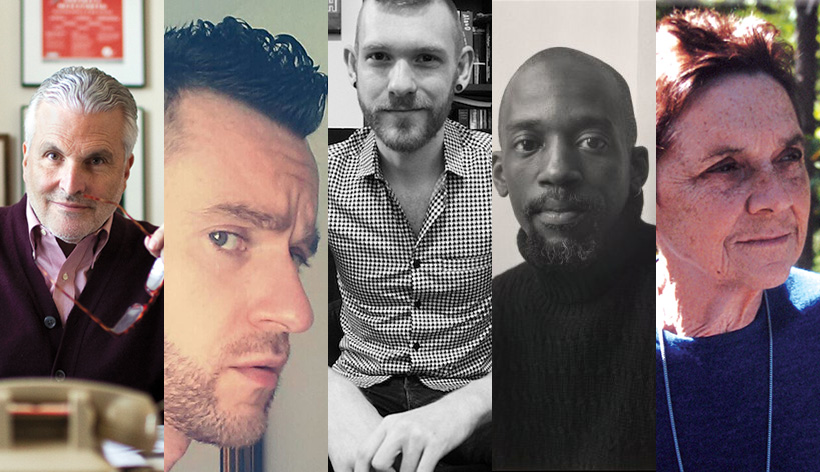
    J.D. McClatchy, Ben Klein, Stephen S. Mills, Essex Hemphill, and Adrienne Rich

    J. D. McClatchy, Ben Klein, Stephen S. Mills, Essex Hemphill, and Adrienne Rich

    I often feel that poetry gets the short end of the stick when celebrating LGBT literature. There are so many rich options that it can often be overwhelming to know where to begin. My first real brush with LGBT poetry was the Everyman’s Library Pocket Series anthology Love Speaks Its Name: Gay and Lesbian Love Poems, which gave me an introductory and historical look at the challenges and loves of LGBT poets within the last century. While thinking about books to recommend in honor of Pride this June, I wanted to offer some classic choices alongside brand new ones that might someday be part of the canon of celebrated LGBT poetry. These collections offer everything from lusty hookups to images of domestic bliss with a long-term partner to frustrations over the current state of LGBT rights. There’s even an image of gay icon “Little” Edie Beale of Grey Gardens. I hope you enjoy.

    (more…)

  • By Tom Hallock


    I first became manager of Coolidge Corner’s Paperback Booksmith (now the Brookline Booksmith) back in 1978, just four years after Judge W. Arthur Garrity’s historic decision to integrate the Boston School District through the “forced busing” of students, as it later became known. It was a time when the fallout over that decision was still shaking the communities of Boston, and a time I revisited when Beacon first published Michael Patrick MacDonald’s All Souls, a powerful account of what it was like to be a young man growing up in Southie during the time when busing came to that neighborhood.

    One of my first acts as a new manager was to clean out the store, and I remember coming across several boxes of pamphlets of the Garrity Decision that the store’s owner Marshall Smith had evidently published. I was always intrigued that his idea of being a bookseller was broad enough to include such an activity. Marshall is an entrepreneur to the core, a legend in the bookselling business. The Paperback Booksmith chain that he founded grew to cover the entire New England region, and Marshall went on to found several other local business ventures, all while staying closely involved in the operations of his Brookline flagship store. As the 40th anniversary of the Garrity Decision approached, I decided to give Marshall a call and finally get the backstory on why he felt it necessary to publish the decision on his own.

    I spoke to Marshall a few days before the anniversary, as Boston was once more revisiting the complicated, troubled legacy of Tallulah Morgan et al. v. James Hennigan, otherwise known as the Garrity Decision.

    (more…)

  • By Fran Hawthorne

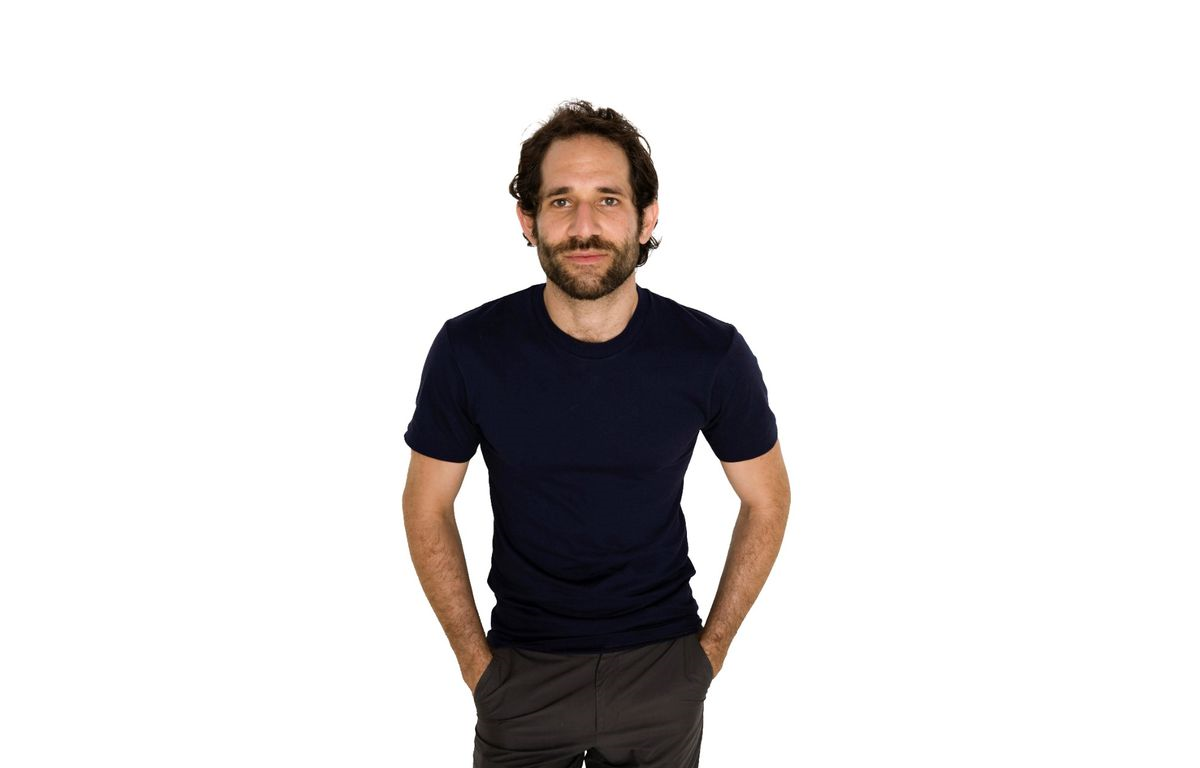
    Dov Charney

    Dov Charney, founder and CEO of American Apparel, was ousted last week for “alleged misconduct.”

    Long before the board of American Apparel decided to fire founder and CEO Dov Charney for ethical misconduct (involving nude photos, no less), Fran Hawthorne had come to the same conclusion, saying that Charney’s “cavalier (or worse) personal attitudes toward sex and women have set the tone of the workplace” and that “To earn a social-responsibility badge, American Apparel would have to take a major step: dump Charney.” In the following excerpt from her award-winning book Ethical Chic: The Inside Story of the Companies We Think We Love, Hawthorne profiles the problematic former head of American Apparel, and the long history of ethical lapses that provided the framework for his latest fall.

    The tales have been repeated in news articles and lawsuits for years and to some degree even confirmed by Dov Charney. Allegedly, he walks around nearly nude in the office and has held business meetings in a similar state of undress, calls employees “sluts” and “whores,” favors staffers who sleep with him, hires young women on the basis of their looks, screams at employees, grabs their hair, describes graphic sex to them, and more. [A] Portfolio article talked about a half dozen male employees in their twenties who lived with Charney in his mansion, including one “loud, pear-shaped” PR apprentice who called the boss “Daddy.” New York Times Magazine consumer columnist Rob Walker wrote in his book that he was in the CEO’s office with one male and two female staffers while “Dov Charney was naked from the waist down”—but the punch line is that Charney was trying on prototypes of a new line of men’s underwear. He has certainly dated female staffers, at least three of them seriously. Most notoriously, writer Claudine Ko, in the June–July 2004 issue of Jane magazine, described a female employee presumably performing oral sex on Charney in a hotel room in front of Ko. A week afterward, the article continued, Ko was in a corporate apartment with Charney while the CEO masturbated and “we casually carry on our interview, discussing things like business models, hiring practices and the stupidity of focus groups.”

    Nine female employees or ex-employees have filed lawsuits or legal complaints officially asserting sexual harassment. One was dropped, one was settled, and the rest were pending at the time of this book’s publication, one of them for years.

    (more…)

  • By Michael Shelton

    'Family Pride' by Michael Shelton

    LGBT families face hostility in various settings—professional, recreational, and social. Michael Shelton wrote Family Pride: What LGBT Families Should Know about Navigating Home, School, and Safety in Their Neighborhoods as a resource for queer parents, their families, and allies that emphasizes community safety. Drawing on his years as a dedicated community activist and on the experiences of LGBT parents, Shelton put together a few concrete strategies culled from his book that LGBT families can use to intervene in and resolve difficult community issues, teach their children resiliency skills, and find safe and respectful programs for them.

    (more…)

  • By Michael Patrick MacDonald

    Buses arrive at South Boston High School, Jan. 8, 1975, as classes resume at the racially troubled institution. Police were on hand to provide protection as black students arrived. (AP)

    Buses arrive at South Boston High School, Jan. 8, 1975, as classes resume at the racially troubled institution. Police were on hand to provide protection as black students arrived. (AP)

    On June 21, 1974, US District Court Judge W. Arthur Garrity, Jr. found Boston’s schools to be unconstitutionally segregated, instituting a plan of forced busing between some of the city’s poorest (and most racially divided) schools. Far from correcting the racial imbalance in the Boston city schools, Garrity’s decision instead sparked wide protest, racial conflict, and riots throughout the city. Michael Patrick MacDonald was a young boy in South Boston—targeted as one of the first schools to be integrated—when news of the decision swept through this troubled, fiercly insular, mostly white and poor working-class enclave. In an excerpt from his powerful memoir All Souls: A Family Story from Southie, MacDonald writes about the firestorm of racial tension that spread throughout the neighborhood in the wake of Garrity’s decision, leading up to the tempestuous autumn when Garrity’s plan was set to begin.

    It was on one of those days at the intersection in the spring of 1974 that we saw the headlights blinking and heard the honking and loudspeakers screaming something about the communists trying to take over South Boston. Everyone came running out of the project to line the streets. At first it was scary, like the end of the world was being announced. But then it seemed more like a parade. It was even along the same route as the St. Paddy’s Day parade. One neighbor said it was what they called a motorcade. The cars in the motorcade never seemed to stop coming. It went on for a good half hour. Irish flags waved out of car windows and one sign on a car read WELCOME TO MOSCOW AMERICA. Many more had RESIST or NEVER written on them. My favorite one was HELL NO SOUTHIE WON’T GO. That was a good one, I said. I started clapping with everyone else. But then I had to ask someone, “Where are we not going?” One of the mothers said, “They’re trying to send you to Roxbury with the niggers. To get a beatin’,” she added. Someone else told her not to say that word to the kids, that they were blacks, not niggers. “Well it’s no time to fight over that one,” someone else said. “It’s time now to stick together.” When I asked who was trying to send us, someone told me about Judge Garrity; that a bunch of rich people from the suburbs wanted to tell us where we had to send our kids to school; that they wanted us to mix with the blacks, but that their own kids wouldn’t have to mix with no one, because there were no blacks in the suburbs.

    (more…)

  • Sylvester and Keeta crossing the main road in Bulindi, Uganda

    “Bulindi survivors” Sylvester and Keeta crossing the main road in Bulindi, Uganda

    Nancy J. Merrick came to Boston recently to talk about her new book Among Chimpanzees: Field Notes from the Race to Save Our Endangered Relatives. Over lunch, she passed around a series of photographs taken by chimpanzee researcher Matthew McLennan. The photos were compelling, showing key members of a chimpanzee group in Bulindi, Uganda. In them, one could see all the intelligence, emotion, and wild beauty that first captivated a young Merrick in 1972, when she was a student of Jane Goodall’s at the famed Gombe Stream camp in Tanzania. Chimpanzees—as Goodall and the rest of the world would discover—can fashion tools, solve problems, and have complex societies and relationships. And they share 98% of our DNA, making chimps our closest relatives. The chimpanzees in the photographs seemed to have enough charisma to ignite the imaginations of anybody they encountered. But the photographs also showed a darker side: chimpanzees sharing a road with local villagers while the humans looked on, wary but not surprised.

    (more…)