• By Michael Patrick MacDonald

    Michael Patrick MacDonald recently spoke out on the need for a new gun buyback program in Boston. Raised in the crime-ridden Old Colony projects of South Boston during the Whitey Bulger era, MacDonald is no stranger to the toll gun violence can take on a neighborhood, or a family: his older brother, Frank, was fatally shot in a botched robbery, and his younger brother, Steven, was wrongly convicted of murder for the death of Tommy Viens, a friend who accidentally shot himself while playing with a gun. In the following excerpt adapted from All Souls: A Family Story from Southie, MacDonald revisits the beginnings and overwhelming success of the gun buyback program he helped organize in the wake of his family's personal tragedy, and the need for more like it in poor, inner-city neighborhoods like the Southie of his youth.

    After I’d left Old Colony, I rested a few hours a night on friends’ couches around Boston, secretly eating at soup kitchens, and spending my days and nights investigating for Steven’s appeal and getting involved in efforts against violence and police abuse, especially in Roxbury, where things had only gotten worse since the Stuart case. At the same time I was trying to finish my studies at UMass, and taking extra courses in juvenile justice. I’d found Citizens for Safety only after many liberal organizations in Boston had shut the door in my face, since my story didn’t fit with their upper-middle-class white plans to organize around civil rights issues. While Steven was locked up in the Department of Youth Services, I called every organization in town that talked about violence and the police department’s reactionary ways in the black and Latino neighborhoods. One guy listened for fifteen minutes while I told him about the abuses in Steven’s case, until I said “South Boston.” Then he asked me if Steven was, by chance, a minority who’d moved into South Boston. “Nope.” “Well, unless he’s a minority or gay, I’m afraid there’s not much we can do.” That was the end of that conversation.

    I finally decided to call just one last place to volunteer. I didn’t like the name Citizens for Safety. It sounded wimpy and suburban, and I was looking for a revolution to put all my rage into. But Kathie and Muadi were cool, and I soon figured out the name was a front; they were ready for battle.


    (more…)

  • By Carole Joffe


    By now, many in the abortion rights community have heard about the horrific vandalism that recently took place at All Families Healthcare in Kalispell, Montana, the family medicine practice of Susan Cahill, a physician assistant (PA). Cahill includes abortions as one of numerous services offered to her patients and this clearly was the reason for the attack. As reported at RH Reality Check and elsewhere, Cahill’s clinic was completely destroyed and remains closed as of this writing. Less well known, however, is Cahill’s important role, more than 20 years ago, in a consequential event in U.S. abortion care history—an event that continues to resonate today.

    (more…)

  • By Nicholas DiSabatino

    Baldwinblog

    When I was finishing up with Emerson College's Publishing and Writing program, I took a novel writing workshop by the novelist Kim McLarin. We were assigned to read several first novels of notable authors, but the one that stood out for me was James Baldwin’s Go Tell It on the Mountain. My only previous experience with Baldwin had been with Giovanni’s Room, which moved me deeply, but for some reason I had not pursued his other works. After we discussed Baldwin’s work, we watched part of the PBS documentary James Baldwin: The Price of the Ticket. I had never heard Baldwin speak before, but when I did, I knew that this eloquent voice not only unabashedly spoke the truth, but demanded you listen as well. 

    (more…)

  • By David Chura 

    Photo courtesy of Tim Pierce via Flickr

    Photo credit: Flickr user Tim Pierce.

    Most teachers are curious about what school is like for a student. Meet a kindergarten tyke encountering the classroom for the first time; a middle schooler trying to balance body chemistry, a developing mind, and new ways of learning; a high school teenager looking beyond the classroom into the world and most teachers want to hear how he or she is experiencing one of the most important parts of their lives.

    So when I saw my 11 year old niece recently, I asked her how school was going. I was prepared for the standard kid response—“fine.” What I wasn’t prepared for was the sudden sound of defeat in her answer.

    (more…)

  • By Kim E. Nielsen

      Man sitting at MLK Jr. Memorial Library, courtesy of Alexander Barth via Wikimedia Commons

    “Do you know God’s real name?” asked the man. By appearances I judged him to be homeless; by the smell of his breath I judged him to be drunk. He stood next to me at the row of public library computer terminals. He’d started by telling me that it was his birthday, and that he was having a bad day. I like to think of myself as a compassionate person, and I’ve had bad days… So I wished him a happy birthday and expressed hope that his day would improve. My day was not going that great either. My presence at the library was due to a desire for a palliative in the form of a murder mystery (and in hope of avoiding less healthy alternatives).

    Then the man asked me about God’s real name. He politely and sincerely told me that he also knew the real name of Jesus. He proceeded with a long narrative explanation about which I have no memory. I didn’t listen.

    I wanted out of the conversation. I quickly ran through my internal catalogue of semi-graceful ways to do so. Nothing came to mind. There was no internal index card for what to do in this situation.

    (more…)

  • By Stephanie Mann

    Millennials-aspecst

    The Go-Nowhere Generation. Trophy Kids. The Peter Pan Generation. For a group that’s over 80 million strong, Millennials sure do take a lot of flak sitting down.

    Or at least they used to. Today, Millennials—the generation born in the 80s and 90s—are increasingly standing up against the mass media bully pulpit. More Gen Yers are stepping forward to pen op-eds, articles, and blog posts to defend themselves against their prolific, powerful critics.

    If the media won’t quit taking jabs at Millennials, it seems Millennials are going to start fighting back.

    (more…)

  • Dr. Chris Emdin

    In the spring of 2006, Beacon Press and Simmons College inaugurated a lecture and book series that we hoped would reinvigorate a crucial national public conversation on Race, Education, and Democracy. Each year, the series brings to Boston prominent public figures to deliver a series of lectures that will become the basis of a new trade book published by Beacon. Other titles in the series include On the Same Track: How Schools Can Join the Twenty-First-Century Struggle against Resegregation by Carol Corbett Burris, Another Kind of Public Education: Race, Schools, the Media, and Democratic Possibilities by Patricia Hill Collins, and Can We Talk about Race?: And Other Conversations in an Era of School Resegregation by Beverly Daniel Tatum.

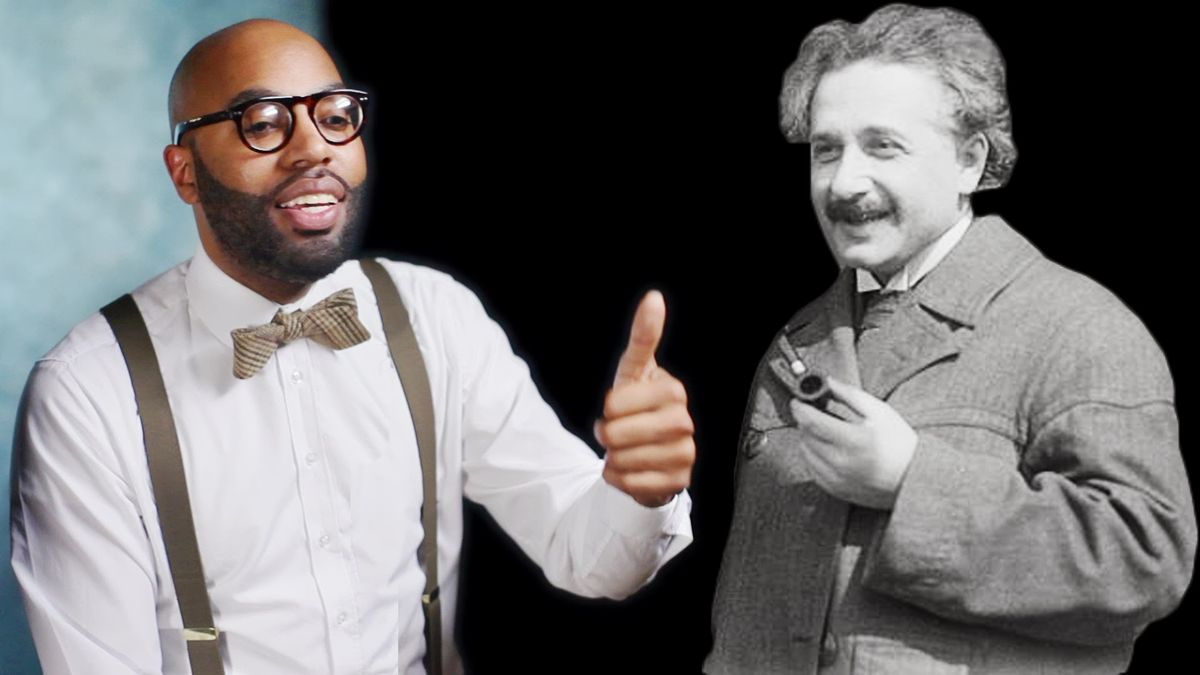
    Few educators embody that mission more than this year's lecturer, Dr. Chris Emdin, recently honored by the White House as an African American STEM Champion of Change. Dr. Emdin's research focuses on issues of race, class, and diversity in urban science classrooms, and the use of new theoretical frameworks to transform education and urban school reform. A self-proclaimed member of the hip-hop generation, Emdin seeks to popularize the notion that the genius of hip-hop is compatible with science genius. In partnership with GZA (Gary Grice), a member of the Wu-Tang Clan whose love of science is well known, he developed the Science Genius B.A.T.T.L.E.S. In a pilot project, students wrote rap songs that captured the complexity of the science and lyricism of hip-hop, and, in a final competition at Columbia University, students’ performances of these rap songs were judged by a panel of scientists and hip hop artists. 

    (more…)

  • By James W. Russell

    Two days after President Barack Obama announced the establishment of MyRA accounts to help Americans without workplace retirement plans other than Social Security save for retirement, Senator Tom Harkin (D-Iowa) introduced Senate Bill 1979, to establish more ambitious USA Retirement Accounts for the same purpose.

    Harkin’s USA Retirement Accounts received endorsement from several liberal retirement reform and labor groups. It faces an uncertain legislative fate.

    The problem it seeks to address is real: the Bureau of Labor Statistics reports that 46 percent of Americans are not covered by workplace retirement plans other than Social Security, which was never intended to provide full retirement income.

    (more…)

  • By Erika Janik

    Hildegard of Bingen, a Medieval German abbess who wrote Causae et Curae, a medical text. (Wikipedia)

    “Every woman is born a doctor… [while] men have to study to become one,” declared American educator Ella Flagg Young in the mid-19th century. Looking around much of the country, it certainly must have seemed that way.

    Long before marketers invented “Dr. Mom,” women had served as nurse, doctor, and pharmacist to their family and friends. Doctoring a family required a great deal of knowledge and skill, which often passed down, woman to woman, through families for generations. Even so, mainstream medicine generally barred women from pursuing medical careers until the late 19th and early 20th centuries. 

    Those women that did see doctors rarely received adequate treatment. Many doctors refused to physically examine women for fear of offending their modesty. Others dismissed women’s illnesses, contending that reproduction made women irrational and emotional. As a result, women often found themselves suffering from a dangerous or inappropriate remedy—or no treatment at all—without the benefit of a thorough analysis.

    (more…)

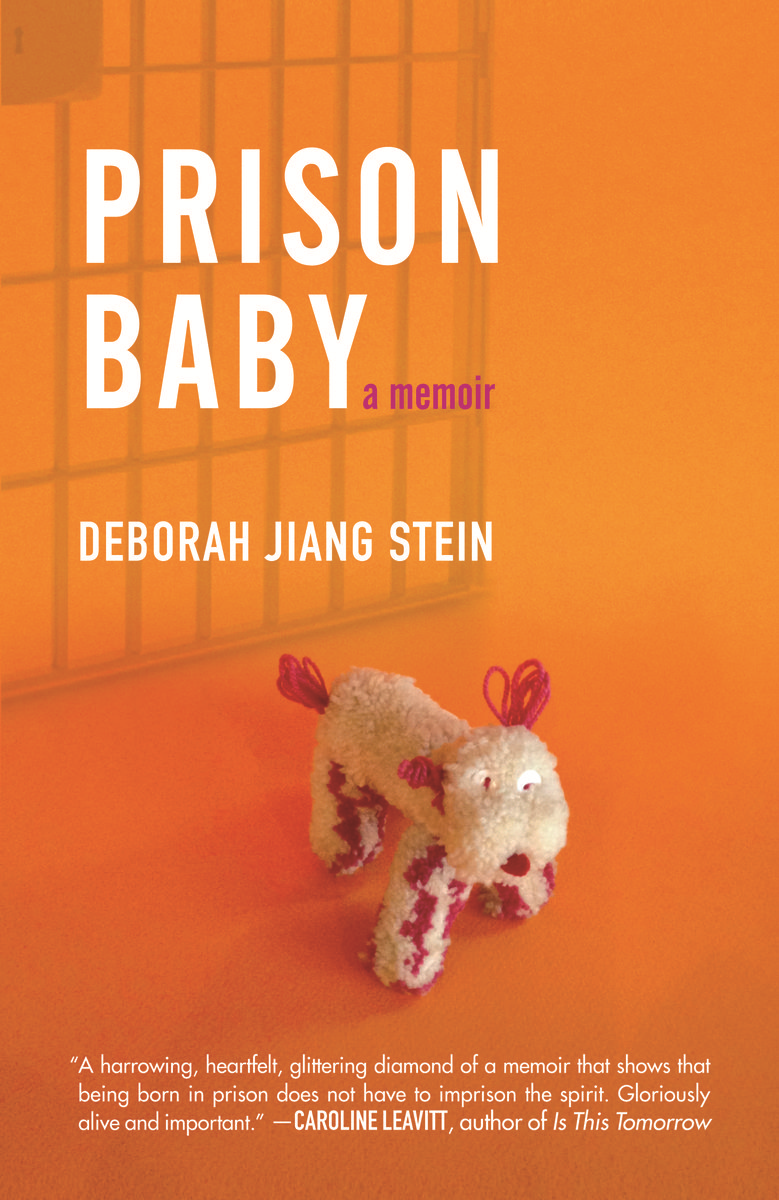
  • PRISON BABY, a memoir by Deborah Jiang SteinIn her memoir Prison Baby, now available from Beacon Press, author Deborah Jiang Stein describes the pain and confusion she experiences upon finding out at the age of twelve that she was not only adopted, but had in fact been born in prison to a heroin addict, spending the first year of her life there. The shock, Stein writes, “sends me into a deep dive, an emotional lockdown behind a wall that imprisons me for nearly twenty years.” The rest of the book details Stein’s harrowing descent into depression, violence, drugs, and crime, and her torturous climb back out of that emotional “imprisonment” to a place of eventual redemption. 

    To help herself heal from the stigma of being born a heroin-addicted “prison baby,” Stein founded the unPrison Project, a nonprofit whose mission is to “empower, inspire, and cultivate critical thinking, life skills, self-reflection, and peer mentoring for women and girls in prison” while calling attention to the needs of women and children in prison.

    (more…)