• BEACON_PRESS-LOGO_2014-large

    Tomorrow, Beacon Press will publish Prison Baby, Deborah Jiang Stein's tumultuous memoir of adoption, drug addiction, self-discovery, and redemption. Its release will continue a tradition of thought-provoking independent publishing that stretches back more than a century and a half. Ten years ago, Beacon's director Helene Atwan called the occasion of our 150th anniversary “a milestone a mere handful of active houses can claim.” Now, to mark our 160th anniversary, we’re unveiling a new logo that we hope will visualize our abiding mission to publish the most groundbreaking works of our time.

    (more…)

  • image from http://aviary.blob.core.windows.net/k-mr6i2hifk4wxt1dp-14022822/d97760dd-6364-4e96-bee8-ed97ba3492f5.png

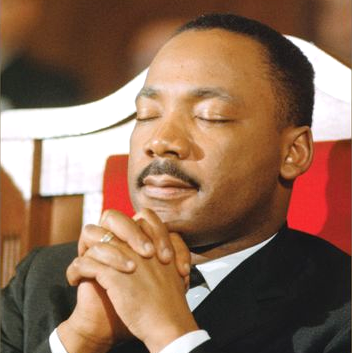
    We close out this year's Black History Month with two prayers from the Reverend Dr. Martin Luther King, Jr. Collected in “Thou, Dear God”: Prayers That Open Hearts and Spirits, the first and only compilation of its kind, we hear in Dr. King's prayers what editor Lewis V. Baldwin describes as “the soul of a man who realized that the whole of life is lived in a God-centered universe, and that God is able to work wonders and even miracles in nature and in history.”

    In the first prayer, “In the Moment of Difficult Decision,” most likely delivered in 1949, we hear Dr. King's early concern for issues of race and equality. In the next, Dr. King, uses Jesus's prayer from the cross as his “sermonic text and point of departure” to draw parallells between forgivness and salvation, suffering and love.

    The cumulative effect of the volume is humbling and inspiring at once, as these two prayers reveal. “Undoubtedly,” writes Baldwin, “they show that powerful words can outlive powerful individuals.”

    (more…)

  • by Sheryll Cashin

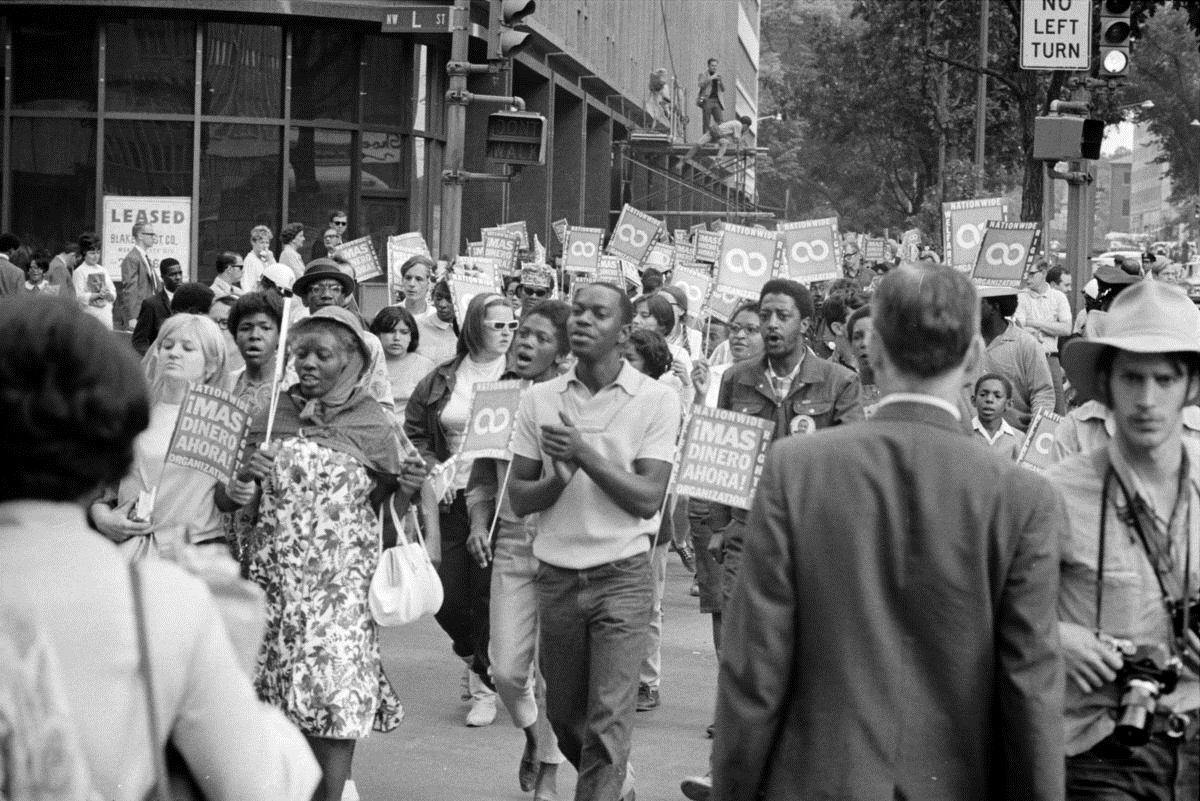
    Poor People's March at Lafayette Park
     

    Note: This is the second part of a two-part post. Read the first part here.

    In 1968 Dr. Martin Luther King, Jr. tackled the difficult work of building multiracial community directly in his conception of the Poor People’s Campaign. Dr. King saw in the Freedom Riders and his increasingly multiracial band of civil rights soldiers an early example of the beloved community he envisioned for the whole of America. One expression of his love for community was seeing the mutuality in all types of human suffering. As Dr. King famously said, “Injustice anywhere is a threat to justice everywhere.” In the end, he did not turn away from the hardest part of community building. In The Trumpet of Conscience, he wrote, “Our loyalties must transcend our race, our tribe, our class, and our nation.”

    That idea of transcendence was critical to my thinking when writing my new book, Place, Not Race. In it, I attempt to apply the lessons from Dr. King’s theory of mutuality to the debate about affirmative action. I conclude that race-based affirmative action buys some diversity for a relative few, but not serious inclusion. It doesn’t help to build a movement to attack underlying systems of inequality that are eating away at the soul of our nation.

    (more…)

  • By Sheryll Cashin

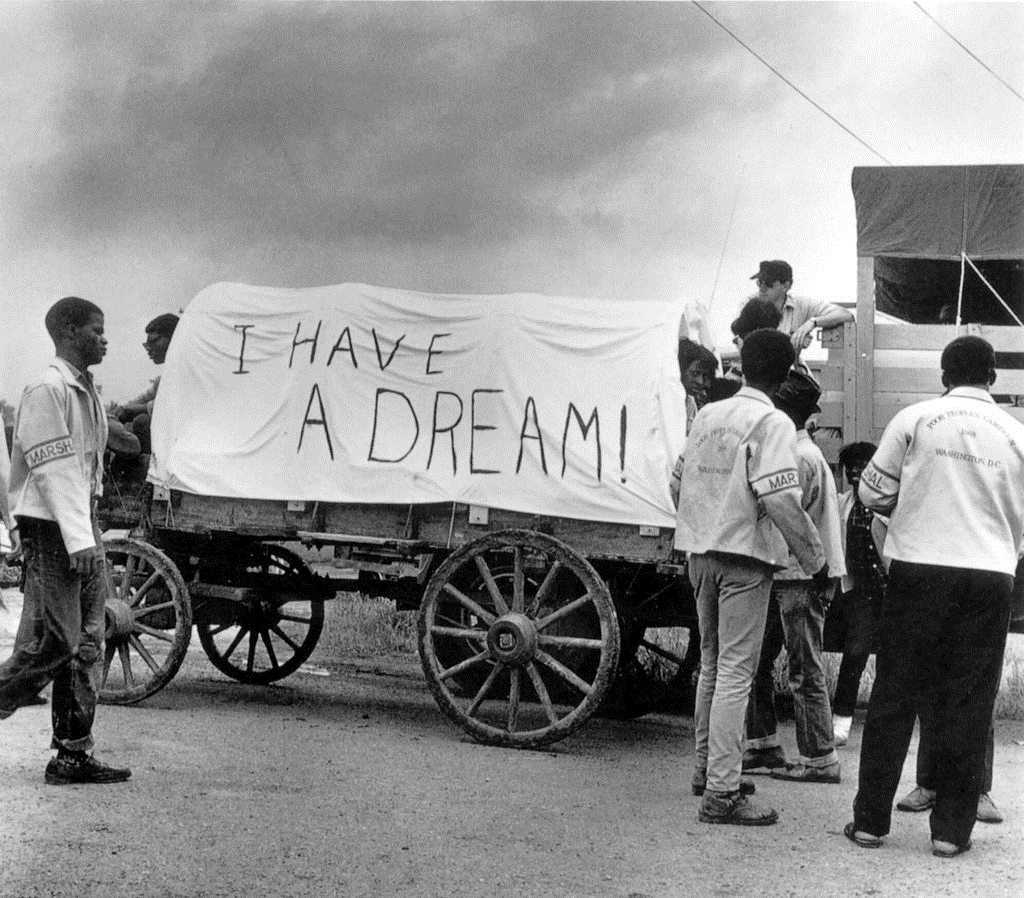
    A mule train leaves for Washington during the May 1968 Poor People's March in this photograph by Ernest Withers.

    Note: This is the first part of a two-part post. Read the second part here.

    In this year of anniversaries—fifty years since the passage of the Civil Rights Act of 1964, the fifty-year war on poverty—I think it is particularly appropriate to focus on the anti-poverty aspect of Dr. Martin Luther King, Jr.’s agenda. Recently President Obama, a black man who has been elected not once but twice, talked during the State of the Union speech about inequality as a signature issue of our time. In this context, I want to reflect on and honor a lesser known March on Washington that Dr. King planned and what it suggests about his mission for how we might build one nation that brings all people along.

    In 1967, Dr. King was keenly aware of the importance of broadening the focus of the Civil Rights Movement. The Civil Rights Act of 1964 desegregated public accommodation. The Voting Rights Act of 1965 attempted to reintegrate politics. After those important watershed victories, Dr. King saw poverty as the next key issue for the movement, and he knew that arousing the nation’s conscience about poverty required a new approach encompassing all of America’s poor. A young African-American attorney named Marian Wright (later Edelman) was director of the Mississippi office of the NAACP Legal Defense and Education Fund (LDF). She urged Dr. King and the Southern Christian Leadership Conference (SCLC) to focus on employment and job training as a means of alleviating poverty. She recommended that SCLC stage a series of demonstrations in Washington, DC, to bring national attention to this new direction of the movement.

    The Rev. Ralph Abernathy often told a story of going to Marks, Mississippi—the poorest hamlet of the poorest county in the nation—with Dr. King as they planned what became known as the Poor People’s Campaign. They visited a daycare center at lunchtime. “There was one apple,” Dr. Abernathy said. “And they took this apple and cut it into four pieces for four hungry waiting students. And when Dr. King realized that that was all they had for lunch, he began to cry. The tears came streaming down his cheek. And he had to leave the room.”

    (more…)

  • By Paul Ortiz

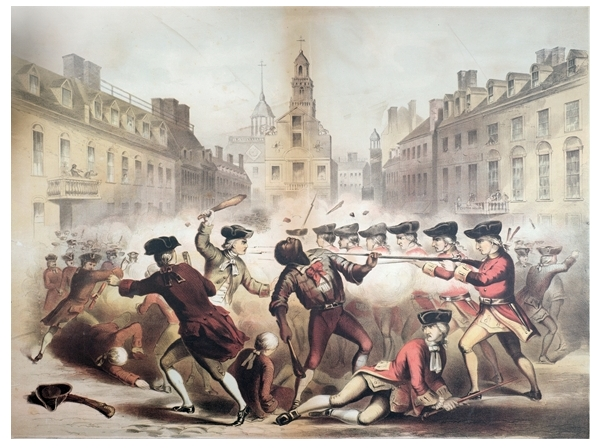
    Death of Crispus Attucks at the Boston Massacre, by James Wells Champney

    Black History Month is more important than ever. To understand how this nation traveled from colonialism to independence, slavery to freedom, and segregation to civil rights, we must place the lives, aspirations, and thoughts of African Americans at the center of US history. The first martyr of the American Revolution was Crispus Attucks, a sailor of African and Native American heritage who fell in the Boston Massacre. John Hancock honored Attuck’s memory by observing, “Who taught the British soldier that he might be defeated? Who dared look into his eyes? I place, therefore, this Crispus Attucks in the foremost rank of the men that dared.” By the end of the Revolution black troops composed approximately one out of every five soldiers in George Washington’s Continental Army.

    Abraham Lincoln credited African American labor power as well as courage on the battlefield with turning the tide of the Civil War. In an interview with John T. Mills, President Lincoln asserted “Abandon all the posts now garrisoned by black men, take one hundred and fifty thousand men from our side and put them in the battle-field or corn-field against us, and we would be compelled to abandon the war in three weeks.”

    Beyond these powerful narratives, John Brown Childs has argued in his essay, “Crossroads: Towards a Transcommunal Black History Month in the Multicultural United States of the 21st Century,” that we need to broaden the scope and scale of Black History Month beyond the borders of the United States and to think of the ways that Latinos, Native Americans, and others have played critical roles in African American history. Historically speaking, African Americans have often connected questions of self-determination and equality at home with the fates of oppressed people in Latin America, Africa, and the Global South generally. In 1825, free African Americans in Baltimore gathered to celebrate the 21st anniversary of Haitian Independence and offered a public tribute to “Washington, Toussaint, and Bolívar—Unequalled in fame—the friends of mankind—the glorious advocates of Liberty.” By this gesture, African Americans joined their own aspirations for freedom with the emancipation of their brothers and sisters in Latin America and the Caribbean. The commemoration promoted an understanding of the intimate connections between movements for liberty throughout the Americas.

    (more…)

  • By Ginny Gilder

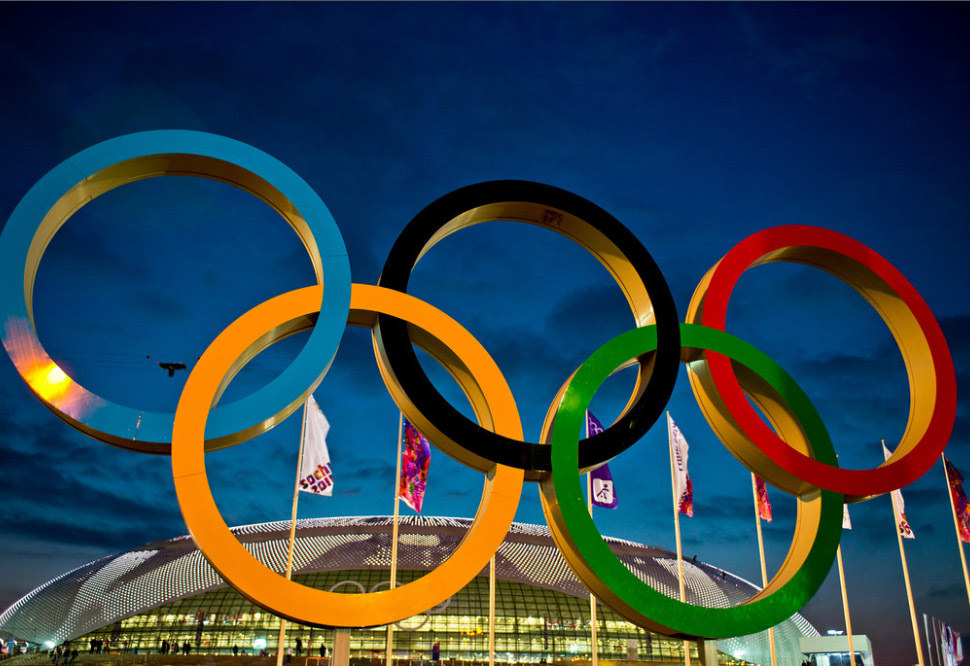
    Sochi-Rings

    On February 20th of 1980, I was pushing through the most gruesome of training sessions, running—really racing—stairs (nine flights per set, six to ten sets per session) in hot pursuit of my dream: a berth on the U.S. Rowing team scheduled to compete in at the Moscow Olympics in five months. As I reached the top landing, gasping for breath, I huffed to my workout companion, Sally Fisher, “Why are we doing this? Today is Carter’s deadline: the boycott’s official.” Sally shrugged, “I know. But we have two more sets,” and started back down the stairs. Of course I had to keep up. Politics or not, I had a workout to finish.

    Those stairs made me strong, and my dream came true, committed beyond reason as I was to that outcome, driven by my passion for rowing—the feel of a fast boat skimming across water, the belief that I could move a slender racing shell faster than anyone else, and the longing to represent my country honorably at the incomparable global celebration of human achievement known as the Olympic Games.

    I was no different from today’s Olympians, those who have spent the past two weeks at Sochi, pursuing their dreams of Olympic hardware, driven by similar compulsions. But the ending of their story is a happy one, whether they come home with medals to savor or memories to share, whereas mine was not. They got to compete, but I had to stay home.

    (more…)

  • By John Austin

    Islam-dictionary

    When I was eighteen, I stood in the quad at my university listening to another student emphatically protesting my atheism. I rolled my eyes dismissively as he, almost comically, pointed at a tree and explained how such a thing would not be possible without Allah. I listened, and watched, half interested for the next fifteen minutes as he repeated this exercise with everything in sight.

    Much to my own surprise, less than five years later, I found myself in a masjid, reciting the Shahadah in front of an Imam.

    (more…)

  • By Erika Janik

    RegularMedicine_BurnsArchive

    (Source: The Burns Archive, New York) 

    Sickness was a major part of early American life. Many people suffered from poor health their whole lives.

    But scientifically valid medical knowledge was limited. The world in 1820 was not a much more comfortable place to fall ill than it had been two hundred years earlier. No one knew about germs or the significance of human contact or insects in spreading disease. Medical theory of the time held that sickness resulted from a body out of balance. It was an idea that went back hundreds of years to Roman physician Galen in the 2nd century. To restore balance, mainstream doctors bled, blistered, and sweated patients to large and often painful degrees. They administered large doses of drugs like calomel, a form of mercury, to purge patients. Doctors chose treatments that caused quick and drastic changes in a patient’s condition, which could be interpreted as progress. Though well-intentioned, these mainstream treatments also caused as much, if not more, pain than the sickness itself. As a result, doctors could rarely offer sick Americans a medical means of getting better.

    (more…)

  • Taking inspiration from the 30 Days of Love campaign that we wrote about earlier this week, we're redefining love this year to mean something larger, more humanitarian, something that can encompass fellowship, art, justice, and beauty.

    Sonia Sanchez has done just that in her collection Morning Haiku, a collection pulsing with life and music and raw humanity. And it is full of the simple wonderment of poetry, as she describes in the book's preface, meditating on the power of the haiku, “It's something to find yourself in a poem—to discover the beauty that i knew resided somewhere….” It might be tempting to focus on the aural similarity of “morning” to “mourning” in the title, and indeed several of the poems are tributes to departed friends, artists, and musicians. But Sanchez knows that real beauty is complex, deep enough to contain both loss and renewal, and that duality is where life, hence love, resides.

    (more…)

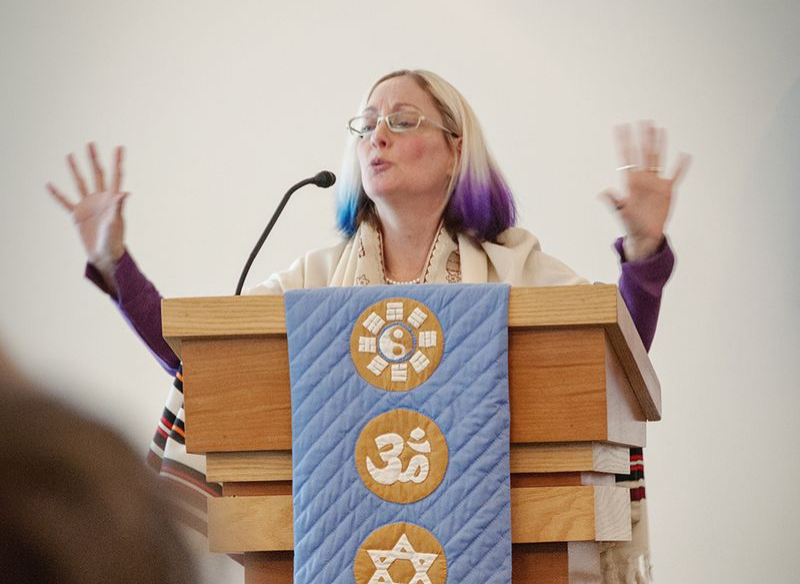
  • Susan Katz Miller interviews Rabbi Chava Bahle

    Note: A version of this Q&A also appeared on The Huffington Post.

    Rabbi_Chava_Bahle

    Rabbi Chava Bahle (photo by Beryl Striewski)

    Recently, a Unitarian Universalist (UU) congregation in northern Michigan selected Rabbi Chava Bahle to serve as their new leader. While other rabbis have worked in UU congregations before, this is apparently the first time a rabbi will lead a UU community. I knew that Rabbi Chava has been on the forefront of clergy working with interfaith families. And as the Jewish author of a book from a UU publisher, I was particularly interested in hearing about Rabbi Chava’s journey so far, and her thoughts on leading a UU community.

    Susan Katz Miller: I know your selection did not come out of the blue. Tell us about your history with this particular UU congregation.

    Rabbi Chava Bahle: For both the Unitarian Universalist Congregation of Grand Traverse (UUCGT) and for me, this was a relationship-based process. They were not seeking a rabbi “in general.” I have lived in northern Michigan for just over 20 years. Rev. Emmy Lou Belcher, the UUCGT’s first minister, is my dear friend. I got to know her community and its deep commitment to social justice and interfaith welcoming. I would often “guest preach” when Rev. Belcher and her successors were away or on vacation. The local Jewish congregation I founded and the UUCGT often worked side by side on issues of social justice. Over the 20 years of guest preaching and partnering in social justice work, the UUCGT and I formed an ongoing bond with each other.

    (more…)