• By Aviva Chomsky

    In my
    work on immigration issues, I have come to know many undocumented immigrants. My
    relationships with them prompted me to write my new book Undocumented: How Immigration Became Illegal (due out from Beacon
    in May 2014). In it, I show how “illegality” and “undocumentedness” are concepts that
    were created to exclude and exploit. I probe how and why people, especially
    Mexican and Central Americans, have been assigned this status—and to what ends.
    The more I wrote,
    the more struck I was with how utterly arbitrary our immigration system is. But
    writing about it is one thing, and living it is another. Last week the
    arbitrariness hit home—literally—when my close friend and housemate was flagged
    by US Immigration and Customs Enforcement (ICE) and is now threatened with
    deportation
    , after a routine traffic stop near our house.

    Mariola and her son Ernesto

    Mariola and her son Ernesto

    Mariola appeared in
    my life shortly after arriving in the United States from Guatemala, terrified, traumatized,
    homeless, and seven months pregnant. She fled after many years of abuse and mistreatment. I told her that she could stay temporarily
    in my extra bedroom while she figured out her next steps. That “temporarily”
    evolved into a long-term house-sharing arrangement. Her son, Ernesto, was born
    in May 2010 at Salem Hospital and came home to my house, where he has lived
    ever since. Both of my own children were away at college and took a bemused
    fascination with my new household configuration. Mariola and Ernesto have
    become integral and beloved parts of all of our lives.

    (more…)

  • By Amy Caldwell

    Dark Tide: The Great Boston Molasses Flood of 1919 by Stephn PuleoThe first thing that hooked me on the manuscript of Steve Puleo’s Dark Tide: The Great Boston Molasses Flood of 1919 (published 10 years ago this month) was the molasses. How could it not? I’d heard a bit about the molasses flood before, which is to say that I knew there had been a deadly wave of molasses, and that it had taken place in the North End. But I’m not a native Bostonian. I was surprised, then, to discover that no one had ever written a full-length account of the disaster. It’s such a dramatic and quirky bit of history; it’s irresistible.

    What surprised me even more, however, was the full story Steve uncovered. The flood itself was a terrible tragedy, and Steve has a great sense of drama; he knows how to build narrative tension. Dark Tide dives deep into the specifics of why the molasses flood was so fast and so powerful, bringing to life the many people and animals who died terribly when the tank burst. (The death of fireman George Layhe, pinned beneath the collapsed firehouse, until he finally ran out of the strength to keep his head above the molasses and drowned, stays with me still.)

    (more…)

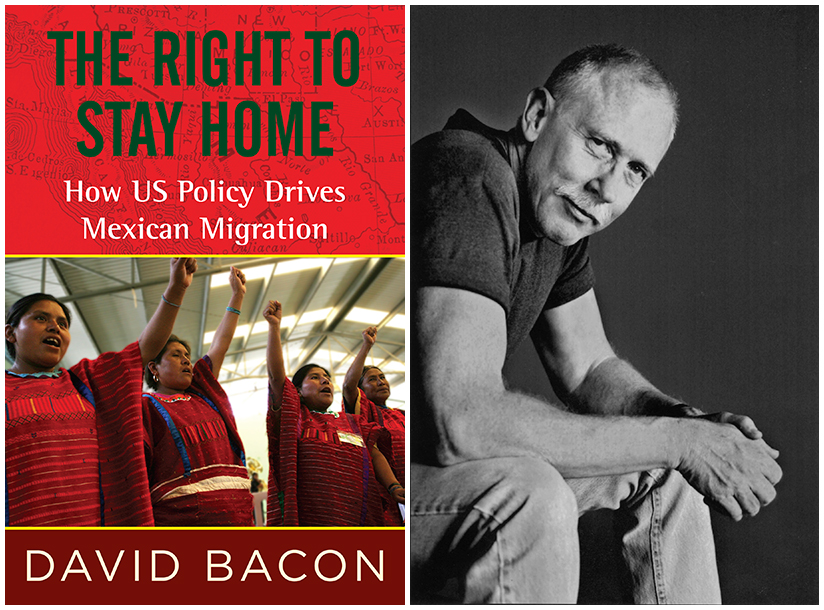
  • Today, we'd like to tell you about a new book, The Right to Stay Home: How US Policy Drives Mexican Migration by activist David Bacon, that brings a fresh perspective to the current immigration debate.


    The Right to Stay Home by David Bacon

    While 11 percent of the population of Mexico lives north of
    the US border, the decision to migrate is rarely voluntary. Free trade
    agreements
    and economic policies that exacerbate and reinforce wealth disparity
    make it impossible for Mexicans to make a living at home. And yet when they
    migrate to the United States, they must grapple with criminalization, low
    wages, and exploitation. In The Right to Stay Home, David
    shows how these immigrant communities are fighting back—envisioning a world in which migration isn't forced and people are guaranteed the "right to stay
    home." 

    (more…)

  • By Aretha Bright and Willow Pennell. This post originally appeared on the Bright List.


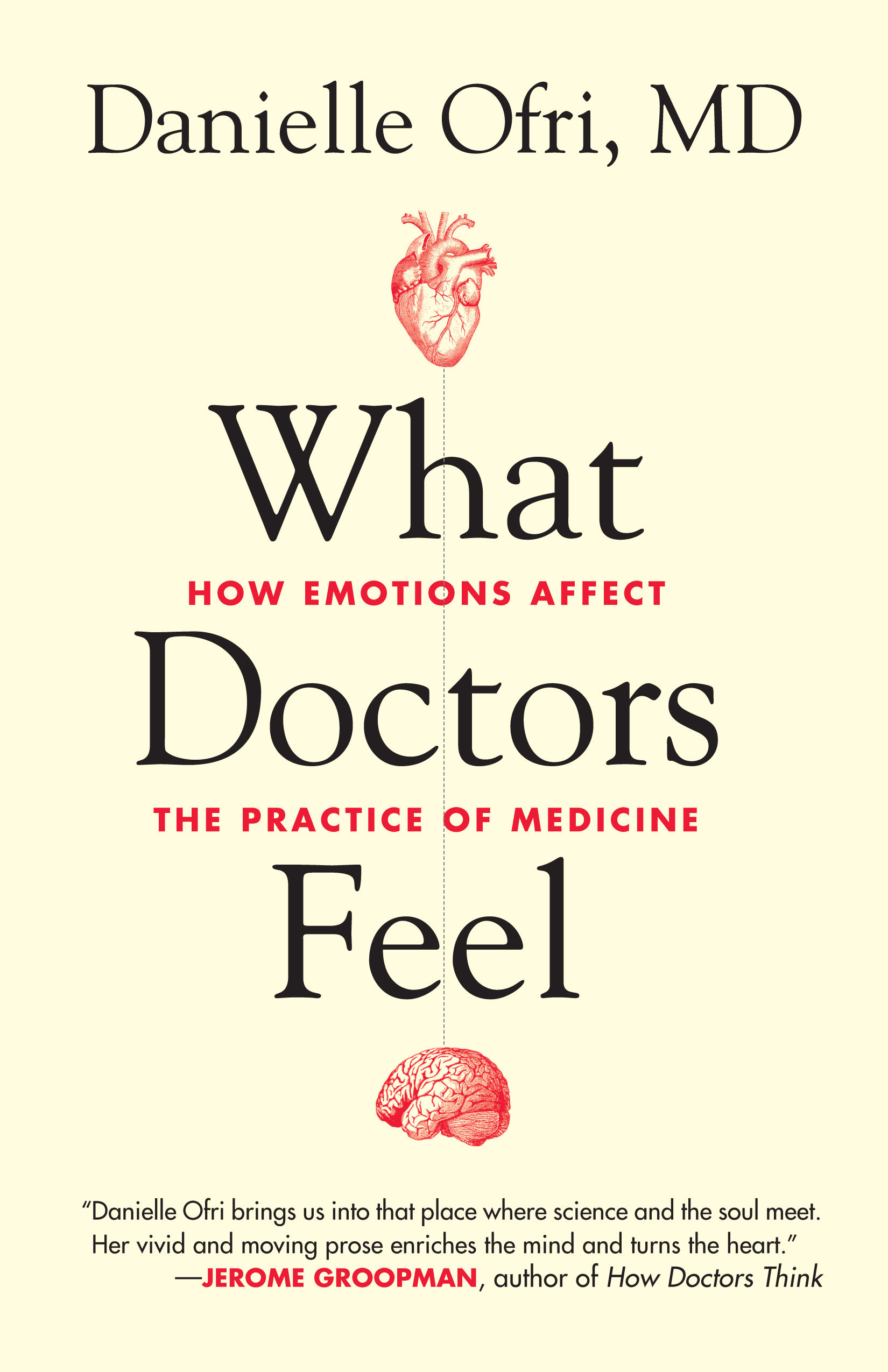
    What Doctors Feel by Danielle Ofri
    What Doctors Feel is Danielle Ofri’s doctors’-eye view of patient treatment.

    You'll get a behind the scenes look at medical practices and hospitals, biases doctors have, how their tribulations affect their interactions with patients in bad–and good ways, and what can be done to improve things.

    Grey’s Anatomy was not that far off.

    Ofri confirms that all those mean jokes they made at the expense of obese patients and drug addicts are du jour in hospitals. 

    She also talks candidly about politically incorrect stereotypes doctors hold about patients, Asians are stoic, Hispanics: hystrionic.

    At the same time, Ofri offers cases where doctors go out of their way to help patients whom they care for. One of Ofri’s patients in the book needs a new heart, but can’t get one because she’s undocumented. Ofri cares for her for eight years trying to make her life as comfortable as possible.

    (more…)

  • By Helene Atwan, director of Beacon Press

    Although Beacon has not primarily been known to publish poetry, we have always had a select list of exceptional poets who reflect the values at the core of our mission, including, for many years, the premier poet of the natural world, Mary Oliver, and, of course, the inimitable Sonia Sanchez, who represents a vibrant tradition of oral interpretation that blends and bends the lines between verse and music. Sonia has famously performed with rap artists and memorably with Sweet Honey in the Rock and other artists, including Diana Ross. Sonia has been on a mission for decades of using poetry in public schools and she makes it a rule that wherever she’s invited to read for an adult audience, she also tries to visit a local school and read to and engage with the students. We are enormously proud of her work.

    We are also proud to have on our backlist several books of Spanish-language poets in bilingual editions, including a wonderful volume of Lorca and Jimenez, and one of Neruda and Vallejo, both translated by Robert Bly.

    Jimmy's Blues, Gypsy, and New edition of Jimmy's Blues and Other Poems by James Baldwin

    On the left, previous editions of James Baldwin's Jimmy's Blues and Gypsy. On the right, Beacon's forthcoming edition of Jimmy's Blues and Other Poems

    (more…)

  • By Susan Katz Miller. This post originally appeared at her blog, On Being Both.

    Being Both: Embracing Two Religions in One Interfaith Family by Susan Katz MillerWhen we experience the religious rituals of the “other,” we usually cannot help but respond with an internal running commentary, seeking connections to our own past. I know that whenever I heard the blast of a conch shell at an Afro-Brazilian rite during my years in Brazil, my mind would skip back to the sound of the shofar in my childhood temple.

    On Rosh Hashanah and Yom Kippur, many Christians (and Muslims, Hindus, Buddhists, atheists) find themselves attending services with Jewish partners, or parents, or other family members. These services, while tremendously important to Jews, can be difficult for those without Jewish education to access, due to length, solemnity, and the density of Hebrew.  Nevertheless, I always strongly recommend that those of other religions accompany their Jewish partners or parents to synagogue services, both to keep them from feeling lonely, and to learn and reflect.

    (more…)

  • By Philip Warburg. This post originally appeared on his blog.

    Senator Rob Hogg, America's Climate Change

    Iowa State Senator Rob Hogg

    Iowa State Senator Rob Hogg decided to combine errands this past week. Along with dropping his son off at Harvard, he decided to deliver an important message to New England—about climate change. With son Robert and daughter Isabel in tow, he made his pitch across four states. No venue was too small or too modest: a nature center here, an ice cream parlor there, small-town bookstores here and there, and places of worship of various stripes.

    I heard Rob speak last Monday at a synagogue in Brookline, MA. Though only a dozen people gathered to meet him on that balmy summer evening, he delivered his message with passion and determination—qualities that run through the brief, persuasive book he has written: America's Climate Century. Every person in the room was a climate change activist in the making, in his view. This is not an issue that we can afford to be passively concerned about; it demands broad public engagement. Nothing less, he feels, will stir a polarized Congress out of its short-sighted paralysis.

    (more…)

  • The March on Washington for Jobs and Freedom, best known for Martin Luther King, Jr.'s iconic "I Have a Dream Speech," took place on August 28, 1963. On that day, over a quarter-million people rallied in the first-ever nationally televised demonstration. The March brought together all factions of the civil rights movement at a time of growing tension. In the weeks after the pivotal Birmingham campaign, some 2,000 demonstrations took place across the country. Not only did the movement attack the southern bastions of segregation, it also moved north to New York, Philadelphia, Chicago, and other cities. Coming just two months after President John F. Kennedy’s landmark address and legislation on civil rights, the March gave America its first comprehensive view of the movement.

    In honor of the Great Day, we're sharing some intimate glimpses of the March—from civil rights activists and leaders to ordinary citizens who helped shape the greatest civil rights demonstration ever.

    “They came every way—flatbed trucks with the wood floor that they used to carry tobacco, pickup trucks that were all dinged up, charter buses, school buses, station wagons, cars, motorcycles, bicycles, tricycles, and I could see people still coming in groups… Children of every size, pregnant women, elderly people who seemed tired but happy to be there, clothing that made me know that they struggled to make it day to day, made me know they worked on farms or offices or even nearby for the government.” —Erica Jenkins, a fifteen-year-old who attended the March on Washington.

    (more…)

  • 0059

    The March on Washington for Jobs and Freedom happened fifty years ago this week. Most people don't know much about the day beyond a few snippets of one historic speech. But the full story is dramatic, compelling, and central to our understanding of how the civil rights movement shaped our history. 

    On August 28, 1963, over a quarter-million people—two-thirds black and one-third white—held the greatest civil rights demonstration ever. In this major reinterpretation of the Great Day—the peak of the movement—Charles Euchner brings back the tension and promise of the march. Building on countless interviews, archives, FBI files, and private recordings, this hour-by-hour account offers intimate glimpses into the lives of those key players and ordinary people who converged on the National Mall to fight for civil rights in the March on Washington.

    Listen to Charles Euchner talk about his book on Weekend All Things Considered.


    (more…)

  • With a new school year just around the corner, students are stocking up on supplies and teachers are polishing their curriculum plans. To help the latter, Beacon offers guides to help in teaching many of our most popular titles. Find these and other teachers guides at our Scribd page and at Beacon.org.

    Psst: if you're not a teacher, these guides can still be great tools for reading and comprehending some great books!


    4461 (1)Geoffrey Canada 
    Teachers' Guide: Fist Stick Knife Gun

    Teacher Patricia Rigley shares ideas for lesson plans, discussion questions, and sample assignments. 

    Long before the avalanche of praise for his work—from Oprah Winfrey, from President Bill Clinton, from President Barack Obama—long before he became known for his talk show appearances, Members Project spots, and documentaries like Waiting for "Superman", Geoffrey Canada was a small boy growing up scared on the mean streets of the South Bronx. His childhood world was one where "sidewalk boys" learned the codes of the block and were ranked through the rituals of fist, stick, and knife. Then the streets changed, and the stakes got even higher. In his candid and riveting memoir, Canada relives a childhood in which violence stalked every street corner.


    (more…)