• Susie Bright, in addition to being a best-selling author, activist, and podcast host, is editor at large for Audible. Susie's blog, The Bright List, keeps readers and listeners apprised of new audiobooks.

    Today's post is a cross-post from a post by Willow Pennell on the Bright List.


    6a00d8341c5e4053ef0192ac231a28970d-500wiMy Mother’s Wars by Lillian Faderman

    "Lillian Faderman is an extraordinary storyteller, one of the few who can tell a painful story, with a complex ending—and imbue it with humor, sensuality and earthy grace, in every sentence."—Amy Bloom, author of Away

    Lillian Faderman’s mother was an immigrant, a garment worker, a woman in love with a man who would never marry her, a single mother, and a jew desperately trying to bring her family to America during the Holocaust. 

    Regret infused her life and Faderman swore she’d never live a life like her mother’s, but as she writes in the introduction, “though I’d known all her secrets, I hadn’t known her.”

    Faderman wrote this book to try to understand her mother. It's a tale of making it on one’s own in a time when an unmarried mother was a pariah, and an examination of forgiving one’s family the turns they made.

    My Mother's Wars has the sweep of early twentieth century history, but unlike most books and biographies about the period, there is no triumphant overcoming of hardship, only a puzzled making do. The story of a real life.

    Narrated by Suzanne Toren who narrated the excellent Team of Rivals: The Political Genius of Abraham Lincoln.


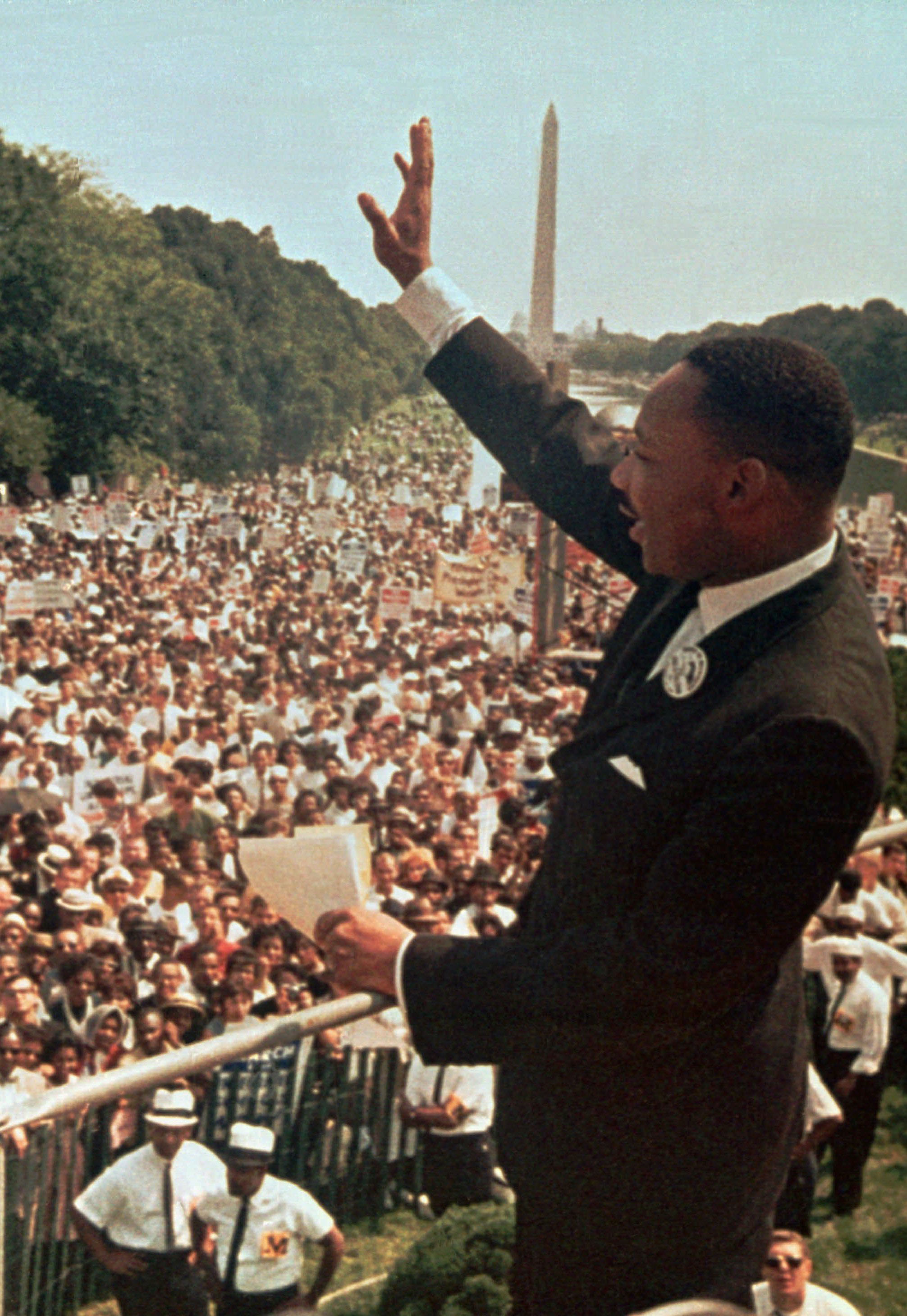
  • Martin Luther King, Jr., at the March on Washington

    Dr. Martin Luther King, Jr,. acknowledges the crowd at the Lincoln Memorial for his "I Have a Dream" speech. (AP/Wide World Photos)

    August 28, 2013, marks the 50th
    anniversary of the March on Washington for Jobs and Freedom, one of the largest
    rallies for civil rights in United States history where the Reverend Dr. Martin
    Luther King, Jr., delivered his famous “I Have a Dream” speech. Citizens from
    across the country will converge upon our nation’s capital to commemorate and
    celebrate the historic event. To coincide with the anniversary, Beacon
    Press is releasing a new e-book The
    Essential Martin Luther King, Jr.: “I Have a Dream” and Other Great Writings
    , featuring some of Dr.
    King’s most famous speeches, as part of the King Legacy series.

    On August 28, 1963, over 200,000
    demonstrators gathered at the National Mall for the March on Washington for
    Jobs and Freedom seeking to advocate for social and economic justice. Before
    the march, the leaders of the civil rights movement known as the Big Six, alerted
    President John F. Kennedy of their intentions, including the advancement of
    voter rights, school desegregation, and passage of a comprehensive civil rights
    bill. The speakers included such notables as Bayard Rustin, Roy Wilkins, John
    Lewis
    , and finally Dr. Martin Luther King, Jr. Toward the end of the event, Dr.
    King moved the audience with his now iconic
    “I Have a Dream” speech.

    (more…)

  • Tom Hallock is Associate Publisher at Beacon Press.

    Photo

    Today is Jessie Bennett’s last day at Beacon Press, and I want to take the opportunity to thank her in the space she created. Jessie came to Beacon six years ago, answering the call for someone to fill “a temporary, grant-funded position” to create a blog for the press. In my new hire letter I wrote, “There is a possibility that the position will be funded for a second year.” Thanks to her work, it was funded for a second and then a third, by which time we had come to feel that both the blog and its editor were essential to the work of the press.

    We launched Beacon Broadside because we wanted to amplify the voices of our authors, and to provide them with a way to connect their work to the events of the day. Beacon Broadside required that we develop a “new mind”, as we explored a different way for Beacon to fulfill its mission and engage with readers, investing in something whose return would not be financial. Jessie was the perfect midwife, creating a lively, timely and thoughtful blog that has done all these things.

    (more…)

  • The Most Expensive Game in TownThe Chicago Tribune spoke with Mark Hyman for advice on how to avoid going broke while supporting your kids' love of sports: 

    When Mark Hyman interviewed parents of young athletes for his book on the rising cost of youth sports, he found tales of love, dedication and massive expenditures.

    "One parent told me, 'I'm spending more money on my younger son's ice hockey than I am on my older son's college tuition,'" Hyman said.

    One dad, Fran Dicari, calculated that he spent $11,704 in 2011 on soccer and baseball trips, golf clubs, physical therapy, gas for getting to games and all manner of fees, uniforms and equipment for two kids.

    (more…)

  • John Hanson Mitchell is the author of The Paradise of All These Parts: A Natural History of Boston. He is the author of numerous books and editor of the award-winning magazine Sanctuary, published by the Massachusetts Audubon Society.

    Illustration by Rick Sardinha, originally appeared in Sanctuary Magazine

    Illustration by Rick Sardinha, with thanks to Sanctuary Magazine.

    As soon as John Winthrop and his gang of Puritans landed on the little temporary island known to the locals as Shawmut, they started digging and delving and filling marshes and swamps and inlets to build more land. Nothing new in all that, it seems to be a habit of Western culture; Rome was constructed around the Pontine Marshes, the Dutch put up massive dikes to keep the North Sea at bay, and Venice was built on pilings set in the marshy Venice Lagoon.

    Boston, as the Shawmut came to be called, was separated from the mainland by a narrow little strip of land (now, basically, Washington Street) that flooded in spring tides, creating a tight little island. By the 1650s, more tidal streams were channeled, more marshes were filled, and more land was created over the centuries—including the massive filling of the banks of the Charles to create the famous Back Bay.

    But coastlines are a fickle things, always coming and going. There was at time, not that long ago as geologic time is measured, when Boston sat under a mile of ice. And there was also a time when you could have hiked out to Georges Bank. Now according to a new study by the National Academy of Sciences, Boston could once more be under water (literally, not financially). The town is one of many coastal cities, including New York and Miami, that could see high tides flooding commonly used streets and neighborhoods in the next decades or so as a result of rising sea levels created by global climate change. And more high water to come in the next fifty years.

    The last time Boston flooded entirely was about 11,000 years ago, as a result of the melting of the glacier.

    This time around, it will happen from the same reason—melting ice—only this time it will be the polar ice cap and the 600,000 square mile Greenland ice sheet. And this time around, it will be our own fault.


    Related articles

    Boston underwater: How the rising sea levels will affect the city
    Beacon Books at Audible: All Souls: A Family Story from Southie
    Paul "Pole Cat" Moore in the Ring, at the Rat, and Dealing Coke for Whitey Bulger
  • Dr. Jay Michaelson is vice president of the Arcus Foundation and the author of five books and two hundred articles on religion, sexuality, ethics, and contemplative practice. His most recent book, God vs. Gay? The Religious Case for Equality, was a Lambda Literary Award finalist. 

    Jay is a contributing editor to the Forward newspaper and associate editor of Religion Dispatches magazine, and his articles appear in The Daily Beast, Salon, The Huffington Post, and other publications. Other books include Everything is God: The Radical Path of Nondual Judaism and Another Word for Sky: Poems.

    This post originally appeared at Huffington Post.


    2913670981_58609d16f5_zRussia's new anti-gay law has a loophole: The law, which has led to numerous arrests, beatings, and bans against LGBT people, specifically prohibits the "propaganda of non-traditional sexual relations," but homosexuality is as traditionally Russian as vodka and caviar.

    Where does one begin the list of prominent LGBT Russians? Peter Tchaikovsky, one of Russia's foremost composers; Nikolai Gogol, one of its leading writers; from the world of dance, Diaghilev, Nijinsky, Nureyev; not to mention members of Russia's ruling classes, including Grand Duke Sergei Romanov, brother to the czar and mayor of Moscow from 1891 to 1905.

    What could be more "traditional" than this list? Indeed, so "traditional" was Russian homosexuality that it was even seen as a distinctive symptom of Russian decadence by some revolutionaries. Indeed, none other than Ivan the Terrible (1538-1584) and Dmitry 'the Pretender (unk.-1606) were known to be homosexual, or at least to have had male lovers.

    In fact, what is nontraditional is the suppression of sexual diversity, not its expression. Following the Russian Revolution, the regime under Lenin formally legalized homosexual acts (along with divorce and abortion), but Stalin criminalized them in 1933. So they would remain until 1993: officially illegal, yet tolerated on and off, depending on those in power. Which of these legal regimes is "traditional" and which is "nontraditional"? Is Stalin more traditional than Lenin?

    The reality is that, as everywhere, sexual diversity in Russia is entirely traditional and entirely natural. Of course, contemporary labels — "gay," "lesbian," "bisexual," "transgender" — are culturally specific and of relatively late vintage. But the existence of same-sex relationships goes back as far as Russian history itself. Indeed, a few years ago, a 600-page volume containing 69 biographies of famous Russian lesbians and gays was compiled by Vladimir Kirsanov, editor of the gay magazine Kvir.

    Now we all know that Vitaly Milonov, the most vocal of the anti-gay bill's sponsors, had homosexuality in mind when he introduced the bill. But a literal reading of the bill's actual language, coupled with even a passing glance at Russian history, does not agree.

    0147Of course, it's unlikely that a Russian jurist will really read the law so cleverly — although doing so would provide an "out" for moderates seeking to control the damage it has caused, which now extends to calls to boycott the 2012 Winter Olympics, Russian vodka, and Russian performance venues.

    Yet even if such a literal reading never finds its way into a judicial decision, it serves as an important reminder that although homosexuality goes by different names in different places and at different times, it is a traditional part of every culture that the human race has ever created. Sexual diversity is, like other forms of diversity, an intrinsic, natural part of the human experience. Alas, so are efforts, like Russia's, to deny it.

    Photo by thisisbossi on Flickr. Used under Creative Commons.

  • David Chura is the author of I Don’t Wish Nobody to Have a Life Like Mine: Tales of Kids in Adult Lockup. He has worked with at-risk teenagers for the past 40 years. For 26 of those years, he taught English and creative writing in community based alternative schools and in a county penitentiary. His writings have appeared in the New York Times as well as other scholarly and literary journals. He blogs at kidsinthesystem.wordpress.com. This post originally appeared at Huffington Post. 

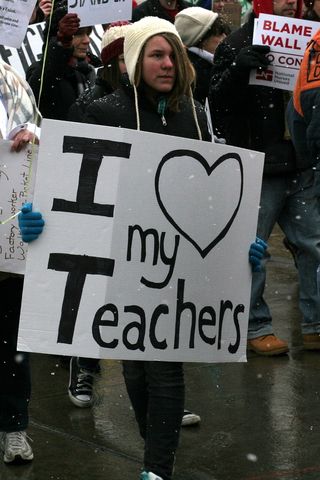
    5510855085_4d7c74d3c8_bThis isn’t about teachers being afraid that they’ll be knifed in class or have their cars stolen in the bad neighborhoods where they teach. Nor are they worried that a disruptive student will threaten them, or that a disturbed gunman will invade their school. It’s not about being berated by an angry parent, or accused of being unfair—or something far worse—by a student.

    It’s a different kind of fear. I only began to understand this fear after I started the series “Teachers in Their Own Words” that I’ve been running on my blog Kids in The System.

    I follow the education reform debate closely. Over time I realized that most of the voices raised in this debate were those of people who had nothing to do with the classroom. The obvious question was, “What do politicians, business executives, clergy, academic researchers know about teaching?” The people who would know best—teachers—were rarely heard. Yet the ones I knew and came in contact with were eager to talk about what they did. It was a decidedly different conversation from the ones the pundits and critics were having. Yes, most teachers lamented mandated testing, the loss of classroom autonomy and a one-size-fits-all curriculum shaped by test results. But most were happiest talking about what teaching has always been about: students and the amazing things they do (or don’t do, given the day).

    So I decided to invite teachers from a variety of educational settings to share their experiences, to talk about why they teach and who they teach, and to tell the stories that keep them in the classroom.

    Over the nine months that the series ran, I learned a lot. About what it was like teaching high school on a New Mexico reservation. About the challenges of teaching young offenders either still in prison or in a release program. The Monday after the Sandy Hook shootings, a kindergarten teacher shared the joy she felt talking and singing and having an ordinary day with her very much alive little people.  Another teacher wrote about the difficulties of teaching English Language Learners and the burden that Common Core put on her and her students. I heard about the importance of community college as a stepping stone to success for new citizens, older learners and younger students making their way. One teacher told readers why she planned on spending a weekend in Washington, DC, for an “Occupy Education” event, while another explored the weaknesses of the Common Core curriculum and its far-reaching impact. There was the poignant “resignation letter” from a young teacher who had “had enough,” deciding to leave public education for a private school because she felt disloyal to all she believed teaching should be. And then there was the teacher who felt that the only way she could stay in education was to leave it, immersing herself in a student self-directed learning program.

    In approaching teachers to write for the series I was surprised how many at first hesitated. It wasn’t because they were too busy or didn’t have anything to say. Some had even written drafts and then gotten cold feet about going public. None of the articles were vindictive or critical of their school administrations. None were personal attacks or a fault finding feast. If anything the pieces were warmhearted, funny, and insightful. What criticism there was was directed toward our national education policy and its harmful effect on students. Still, in the end, a few teachers backed out altogether while others asked that their full name not be used or that their schools’ location be purposely vague.

    And there’s the fear. Teachers were worried that somehow they would get in trouble with their school administrators. From what many teachers report there’s a strong message being given to teaching staffs: Don’t rock the boat. Don’t ask questions. Don’t bring up the inconvenient truth, say, of a school policy implemented to meet a national mandate that contradicts current research or best practices. In such an atmosphere of distrust, powerlessness, and alienation from what should be a culture of collegiality and collaboration what choices do teachers have but to hunker down and try to survive? After all, these days, teacher evaluations have become just as high stakes as student testing.

    According to a MetLife Survey of the American Teacher, teacher satisfaction has slipped from 65% in 2008 to only 39% in 2012. Perhaps this fear of speaking out is contributing to that dissatisfaction. The sample of teachers that I encountered may seem small and therefore inconclusive. And maybe it’s just a coincidence that teachers from different schools and different parts of the country felt this fear, this need for caution. But it’s enough to make me wonder what is going on in our schools when teachers are afraid to engage in sincere democratic discourse, a process that we have always valued and that we teach our students is an essential ingredient of a healthy country.

    Photo by Sue Peacock on Flickr. Used under Creative Commons.

    Related articles

    Robert Moses and the Algebra Project
    Pride on the Prairie and in the City
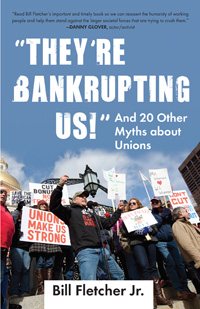
  • 0332From Wisconsin to Washington, DC, the claims are made: unions are responsible for budget deficits, and their members are overpaid and enjoy cushy benefits. The only way to save the American economy, pundits claim, is to weaken the labor movement, strip workers of collective bargaining rights, and champion private industry. In "They're Bankrupting Us!": And 20 Other Myths about Unions, labor leader Bill Fletcher Jr. makes sense of this debate as he unpacks the twenty-one myths most often cited by anti-union propagandists. Drawing on his experiences as a longtime labor activist and organizer, Fletcher traces the historical roots of these myths and provides an honest assessment of the missteps of the labor movement. He reveals many of labor's significant contributions, such as establishing the forty-hour work week and minimum wage, guaranteeing safe workplaces, and fighting for equity within the workforce. This timely, accessible, "warts and all" book argues, ultimately, that unions are necessary for democracy and ensure economic and social justice for all people.

    Listen to Bill Fletcher, Jr. on Making Contact discussing how working Americans and unions have lost touch with each other, and what might be done to turn that around.


    http://radioproject.org/embed.php?show=11850

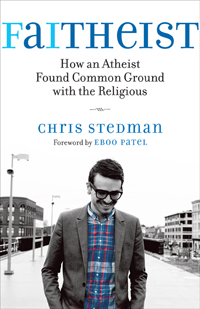
  • Chris Stedman is the Assistant Humanist Chaplain at Harvard University and author of Faitheist: How an Atheist Found Common Ground with the Religious. He tweets at @ChrisDStedman.

    This post originally appeared at Religion Dispatches.

    The debate over Humanist chaplains in the military continues this week with Family Research Council president Tony Perkins offering several of the most common sentiments held by those who oppose the effort to create this resource for nonreligious members of the military.  

    Perkins suggests that nonreligious chaplains are a “bizarre” idea, adding that “by definition, a chaplain’s duties are to offer prayer, spiritual counseling, and religious instruction.” The confusion surrounding chaplains for the nonreligious isn’t new—or especially surprising. The popular connotations of the word chaplain are clearly religious; more often than not, they are explicitly Christian. 

    But if you look, for example, at Harvard University—where I work as one of two Humanist chaplains alongside Greg Epstein—you will find nearly 40 chaplains representing a plethora of religious and philosophical communities, from atheism/Humanism to Zoroastrianism. For many of the traditions represented in this diverse group, the title of chaplain has little to no historical precedent, but as a group we collaboratively work to expand the definition of the word to meet the needs of Harvard’s religiously diverse community.

    There was a time when only Christians were permitted to be military chaplains:

    At the outbreak of the Civil War, Jews could not serve as chaplains in the U.S. armed forces. When the war commenced in 1861, Jews enlisted in both the Union and Confederate armies. The Northern Congress adopted a bill in July of 1861 that permitted each regiment's commander, on a vote of his field officers, to appoint a regimental chaplain so long as he was "a regularly ordained minister of some Christian denomination."

    1439

    Although Jews were permitted just a year later, it would be another 132 years before the U.S. armed forces saw its first Muslim chaplain. Definitions change, in other words. 

    Lt. Cmdr. Nate Christensen, a Department of Defense spokesman, has defended the military’s lack of nonreligious chaplains by saying: “The department does not endorse religion or any one religion or religious organization, and provides to the maximum extent possible for the free exercise of religion by all members of the military services who choose to do so.” The implication is that explicitly nonreligious servicemen and servicewomen are free to consult with a religious chaplain. But for the same reason that a Christian may prefer a Christian chaplain over a Muslim or Jewish chaplain, nonreligious people should be free to seek out assistance from a member of their own community.

    As a Humanist chaplain, I frequently hear a version of Perkins' argument (For more on what exactly I do as a chaplain, check out a short piece I wrote last year): “[Advocates] argue that nonbelievers suffer the same fear and pain that affects every service member. But isn’t that why the military has psychologists?” (A serious question: does he mean to imply that religious people don’t visit both chaplains and psychologists?) 

    Some students and members of our local community visit psychologists, but they come to me and my colleague Greg for different reasons. Psychologists are medical professionals who diagnose and treat behavior and mental processes; chaplains are not. Psychologists provide an important but altogether different set of services than we do. We are available to talk with members of our community about how their nonreligious values inform their actions, and how their worldview helps them respond to and process tragedy. We are there to listen, but we can also share some of our thoughts and share from our experiences—something that most psychologists do not do. We can also go to members of our community, rather than wait for them to come to us, to connect them to a community of their peers—another role a psychologist alone can’t play. Finally, and significantly: going to a psychologist is non-confidential in the military, so chaplains play an important role in that context.

    So what about the debate surrounding the use of the word chaplain? Personally, I don’t feel particularly attached to it. But when it is the standard used for other community care practitioners, as it is at Harvard and in the military, then it should be applied across the board. I feel similarly about the debate over whether to call legally-recognized same-sex partnerships “marriages” or “civil unions;” when one term is normative and certain groups of people—minority groups that have historically been marginalized—are excluded from using it, then the distinction is problematic.

    “Atheist chaplains are like vegetarian carnivores. They don’t exist!” Perkins writes. He’s likely just trying to be clever, but allow me to clarify: we do in fact exist, Tony, and we’re here if you’d like to talk. Hopefully that will soon be the case for members of the military, too.

    For more information on Humanist chaplains in the military, click here.

    Related articles

    A Queer Atheist In the Heart of Mormon Country
    Queer History: The "Persecuting Society"
    Tony Perkins: Atheists Can't Be Chaplains
  • “He spoke quietly, he didn't give big sermons like Martin Luther King. He didn't seek out dramatic confrontations like the Freedom Riders and the sit-ins, but he did inspire a broad range of grass-roots leadership… To this day he is a startling paradox. I think his influence is almost on par with Martin Luther King, and yet he's almost totally unknown.” Civil rights historian Taylor Branch on Robert Moses.

    NPR's excellent profile of Robert Moses provides a much-deserved spotlight on the work of a man who has devoted his life to civil rights and universal access to quality education. As a young adult, Moses was an organizer for the Student Non-Violent Coordinating Committee (SNCC), and was director of SNCC’s Mississippi Project. A MacArthur Foundation Fellow from 1982-87, Dr. Moses used his fellowship to develop the concept for the Algebra Project, an organization whose work is dedicated to transforming math education in disadvantaged schools.

    “Education is still basically Jim Crow as far as the kids who are in the bottom economic strata of the country,” Moses says. “No one knows about them, no one cares about them.”

    It's exactly this inequality in the education system — based more on class than race — that makes this work as important as the work he did 50 years ago, he says. [Listen to the story here.]

    A few years ago, Robert Moses invited one hundred prominent African American and Latino intellectuals and activists to meet to discuss a proposal for a campaign to guarantee a quality education for all children as a constitutional right. Quality Education as a Constitutional Right: Creating a Grassroots Movement to Transform Public Schools emerged from that effort; the book includes essays that illuminate a vision for a new civil rights movement centered on schools. Read the introduction at Scribd.

    Radical Equations: Civil Rights from Mississippi to the Algebra Project is a blueprint of Robert Moses' vision of justice in education. To provide more context for the NPR story, here is an excerpt from Radical Equations that clearly maps the connections between Moses' civil rights work and the Algebra Project.


    3127The concept of “one person one vote” provided Mississippi
    sharecroppers and their allies with a minimum
    of common conceptual cohesion
    . That is, “one person one vote” was a shared
    goal. It was an organizing slogan; but more than that, it reflected an ideal that
    tapped deep traditions in American democracy and that allowed at the time a
    consensus to develop around it. The daily grind of living in Mississippi in
    1961 (“if they don’t get you in the wash, they get you in the rinse”) gave rise
    to grassroots demands for political access that in turn gave rise to demands
    for unity that could use “one person one vote” as an organizing tool.

    Organizing, in turn, required space to develop. The “crawl
    space,” as I call it, in which we actually carried out such organizing was the
    1957 civil rights bill creating the Civil Rights Division of the Department of
    Justice. The existence of that new department meant, among other things, that John
    Doar and his federal lawyers could investigate beatings of potential voters
    walking up to the courthouse in vicious towns like Liberty, Mississippi, and return
    an opinion at odds with that of the FBI and local police authorities: that is,
    that people other than the “usual suspects” anxious to protect local custom
    were watching; Mississippi could not simply lock up voter registration workers
    and throw away the keys. This federal involvement—tiny though it was—was
    important because it was what provided the little crawl space that enabled us
    to begin working.

    Both things were important: the consensus around a minimum
    of common conceptual cohesion and the crawl space that allowed it to become
    effective.

    The concept that provides minimum common conceptual cohesion
    for the work of the Algebra Project takes the form of an “if, then” sentence:

    If we can do it, then we should.

    The “we refers to a complex configuration of individuals;
    educational institutions of various kinds; local, regional, and national
    associations and organizations (both governmental and nongovernmental); actual
    state governments  as well as the
    national political parties; and the executive, legislative, and judicial
    branches of the national government. The “it”—the goal of educating all our
    children well—rests on a complex conceptual consensus that is woven into the
    cultural fabric of this country: the idea that young people who grow up in the
    United States are entitled to free public education, from kindergarten through
    twelfth grade. But there is emerging in U.S. culture something more specific
    and powerful than that. In recent years a real national consensus, on the
    political left and on the political right, has begun emerging that all children
    can learn, and that all children deserve the best education they can get. And
    that such an education is absolutely necessary. This is actually a new
    consensus; it did not exist fifty years ago, when, schools were segregated
    North and South and not finishing high school was much more widely accepted
    because lacking a high school diploma was not the handicap to putting food on
    the table that it is today. Of course, this expressed belief in the capacity of
    all children to learn, and commitment to making the effort to provide them the
    opportunity, is an ideal that’s often given lip service more than real action.
    And it drives wrongheaded as well as constructive “school reform” efforts. But
    it is a widespread public viewpoint. Compare the national consensus in favor of
    educating all children well with the absence of such a consensus on health
    care. It is clearly not true that Americans as a whole believe (yet) that
    "if we can provide universal access to quality health care, we should.”
    They do believe it about education.

    Obviously, the work of the Algebra Project has to do with
    math in particular. The consensus on education—like the “one person one vote”
    consensus forty years ago—provides the necessary foundation for a more specific
    agenda, in this case the concept that every student will complete a college
    preparatory mathematics curriculum in high school. (It is clearly not
    sufficient since only 11 percent of students in the United States do so now.)
    The work of the Algebra Project is to help close the gap between universal free
    public education and universal completion of a college preparatory math
    sequence in high school. Specifically, our work is to build a consensus—and organize
    a movement—around another hypothetical that gives the required minimum
    conceptual cohesion:

    If we can teach students algebra in the
    middle school years, then we should
    do it.

    Like the effort to bridge the gap between the ideal of “one
    person, one vote” and the reality of registering every Black voter in
    Mississippi, this work of the Algebra Project is ambitious and can be realized.
    Like our work in the 1960s, it requires organizing, and organizing requires
    some crawl space.

    What, then, is our
    crawl space? Like the crawl space created by the 1957 Civil Rights Act, it is a
    space created in the larger political and social world that we can use to our
    advantage. The space for algebra as a civil rights issue is created by nations
    and institutions now making a global transition from reliance upon technology
    that primarily organizes physical labor to technologies that directly organize
    mental labor. I see history’s broom sweeping us all along a common corridor as
    a crawl space toward liberation.