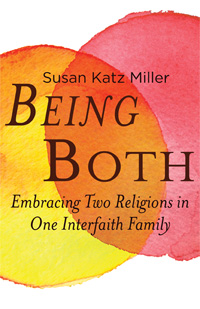
• Susan Katz Miller is both an interfaith child and an interfaith parent. She is the author of Being Both: Embracing Two Religions in One Interfaith Family, which will be published by Beacon Press in September.

    This post originally appeared at her blog, On Being Both.

    ZealotReza Aslan’s newest book, Zealot: The Life and Times of Jesus of Nazareth, had already reached the bestseller list when a video clip of the author went viral this week. The religion scholar appeared on Fox news to explain his latest work, but the host repeatedly and outrageously questioned why a Muslim would be writing a book about Jesus.

    Aslan–the acclaimed author of No god but God: The Origins, Evolution and Future of Islam–demonstrated extraordinary grace and patience on the show, explaining over and over that religion scholars write as academics, not as adherents. Buzzfeed asked if this was “The Most Embarrassing Interview that Fox News Has Ever Done?” Meanwhile, in the course of the interview, Aslan mentioned that his wife and mother are both Christians.

    As it happens, I tell the story of this high-profile interfaith family in my book Being Both: Embracing Two Religions in One Interfaith Family. About a year ago, Aslan tweeted: “I’m in a blissful interfaith marriage with my Christian wife. We are raising our children to respect all faiths and choose 1 for themselves.” When I read that tweet, I contacted him, and he and his wife agreed to be interviewed for my book chapter entitled “Muslims, Hindus, Buddhists: The Next Interfaith Wave.”

    Aslan’s wife Jessica Jackley is prominent in her own field, as the co-founder of Kiva, the pioneering microfinance non-profit. But Aslan’s engagement with Christianity did not begin with marriage. In Being Both, he describes his own journey as the child of a family of Iranian refugees who were “cultural Muslims,” to a period of evangelical Christian zeal beginning in high school (during which he converted his own mother to Christianity), to rediscovery of Islam while a student of religions.

    1319One of my themes is how being part of an interfaith family can inspire deeper understanding of one’s own religion(s), in the religion of a partner, and ultimately in the religions of the world. In describing their courtship and marriage, Jackley, who comes from an evangelical Christian family, told me, “He knows the Bible better than I do. He’s writing a book right now on Jesus. He understood my life better than most Christians.” That book eventually became Zealot.

    Aslan and Jackley are now raising their twin sons with the values shared by both family religions, and with stories from diverse traditions. “What we’re going to teach our kids is the values, the beliefs, the activism, the worldview,” Aslan told me. “And when it comes to the stories, we’ll give them all of them.”

    Being Both includes more on the marriage of Aslan and Jackley, the reaction of their interfaith families, and how they are raising their sons. They are two, perhaps the most prominent two, out of the hundreds of people who entrusted me with their interfaith family stories. Aslan, who received an advanced copy, calls the book, “A gorgeous and inspiring testament to the power of love to not only transcend the divides of faith and tradition, but to bring faiths together and create wholly new traditions.”

  • An environmental attorney, Philip Warburg served as president of the Conservation Law Foundation from 2003 to 2009. He is the author of Harvest the Wind: America’s Journey to Jobs, Energy Independence, and Climate Stability. Visit his website at www.philipwarburg.com.  

    0107 (1)Last week I participated in a lively workshop at Iowa State University, looking at ways to make our energy, transportation, and water infrastructure more resilient and sustainable.  Clean-energy options for generating electricity and fueling our cars, trucks, and buses were among the topics examined.  Mechanisms for integrating ever-greater amounts of solar and wind power into our electric grid were creatively explored.  Yet, on a hot midsummer day, we all sat in a conference hall so frigid that those smart enough to bring sweaters were soon wearing them.

    I hadn't been so smart.  As I shivered through the workshop's morning sessions, I struggled to keep my mind from wandering to that longed-for sweater, still neatly folded in a suitcase back in my hotel room.  Finally I made a run for it.  (To be honest, I made a drive for it.)  Twenty minutes later, I was back at ISU's Memorial Union, finally able to focus on things weightier than my body's battle against the mechanical chill.

    A few weeks earlier, on a trip to scout out solar installations in New Jersey, I checked in to New Brunswick's Hyatt Regency Hotel, now the proud operator of a 421-kilowatt photovoltaic power system that the hotel's management expects will spare us 10,000 tons of carbon emissions over the next 30 years.  As I rode the glass-enclosed elevator up to my room, I peered down admiringly at the 1800-plus panels elegantly arrayed across the garage's expansive roof.

    There, too, arctic summer struck despite the searing outdoor heat.  The hotel's lobby was uncomfortably cold, and its super-sleek restaurant was bone-chilling — surely no more than a few degrees above 60.  Fleeing to my room to grab a jacket, I couldn't help wondering how many thousands of tons of CO2 Hyatt could save simply by setting its A/C to a bearable 75 to 78 degrees.

    In the Boston Globe this past Sunday, Leon Neyfakh argues for jettisoning what UC Berkeley architecture professor Gail Brager calls the "thermal monotony" of our air-conditioned lives.  It's well worth the read, if only to remind us how thermally resilient we all used to be.

  • After six rewarding years here at Beacon Press, I am departing as Blog Editor and Digital Content Developer as of mid-August. When I arrived here in 2007, I had answered an ad looking for a part-time editor for a new blog at Beacon Press, one that would be less about flogging books and more about expanding Beacon's mission in the online world. At the time, Beacon had a website, email newsletters, and a MySpace page. Now, Beacon has accounts at Facebook, Twitter, Tumblr, YouTube, Scribd, Pinterest, GoodReads, and LinkedIn, and our web team always has a keen eye on trends in the digital world. It's been gratifying to be here during this time of growth, to have spearheaded the use of video at Beacon, to have helped grow our following on Twitter, and, especially, to have worked with a group of authors I believe are truly the best of the best. 

    I'm departing in order to concentrate on a couple of creative projects of my own as well as to grab a bigger chunk of time with my family. As I prepare to leave, I am excited for the work ahead at Beacon: our marketing department will continue to grow and adapt, always within Beacon's overall mission to build a better world through good books. 

    If you read all of this and thought, "Wow. I want to work there," click through and check out two great positions available in our marketing department. 

    All my best, 

    Jessie Bennett, Blog Editor
    @jessiebennett

    JOB OPENINGS AT BEACON PRESS 

  • Mark Winne is the author of Closing the Food Gap: Resetting the Table in the Land of Plenty and Food Rebels, Guerilla Gardeners, and Smart Cookin’ Mamas: Fighting Back in an Age of Industrial Agriculture. From 1979 to 2003, Winne was the Executive Director of the Hartford Food System, a private non-profit agency that works on food and hunger issues in the Hartford, Connecticut area. He currently writes, speaks, and consults extensively on community food system topics including hunger and food insecurity, local and regional agriculture, community food assessment, and food policy. He also does policy communication and food policy council work for the Community Food Security Coalition. Visit his website at markwinne.com. 

    Ch6big6At the risk of being labeled a Tea Party toady or
    right-leaning deviationist, I have to ask if the severing of the Supplemental
    Nutrition Assistance Program
    (SNAP, formerly known as food stamps) from the
    Farm Bill by the Republican House Majority isn’t an opportunity worth taking
    advantage of. And in the same breath, I have to ask if the lockstep resistance
    to that move and piling on of liberal vituperation isn’t yet more evidence that
    the left-leaning social policy machine is running on empty.

    Federal spending on the food stamp program has been pushing
    north of $70 billion a year. It has been justifiably credited with keeping many
    people’s heads above water during the Great Recession while modestly
    stimulating local economies. Representing some 70 percent of the current Farm
    Bill– the rest being divvied up between the much reviled agricultural commodity
    programs and the much beloved conservation and sustainable farming programs– food
    stamp support has allegedly relied on an unholy alliance of sorts between Big
    Agriculture and anti-hunger advocates. “I’ll support billions in agricultural
    subsidies if you support tens of billions in SNAP benefits. That way we can eat
    our food stamps and high fructose corn syrup too!”

    By tearing asunder that which unlikely partners hath joined
    together, House Majority Leader Eric Cantor put a lot of federal spending in
    play for the government downsizing Neanderthals. As Emerson once noted, “There
    is always a certain meanness in the argument of conservatives,” and what can be
    meaner than taking food away from hungry children? Though doing marginally
    little to pull the current 50 million food stamp recipients out of poverty, the
    program is one of the few tools that government has to mitigate it worst effects.

    That being said, one can’t help but ask if we didn’t see
    this dramatic House action coming. After all, food stamps have been under siege
    for years, even before their association with President Reagan’s nefarious
    welfare queen remark. Getting their start in a somewhat different form during
    the Great Depression (not Recession),
    and codified in its present form as the first executive order of President
    Kennedy, food stamps and the food benefits they bestow reflect two sides of the
    American character. Being as compassionate as any people, we simply don’t have
    the heart to let anyone starve to death. But being up-by-the-bootstraps
    individualists, Americans generally blame the poor for being poor and don’t
    trust them to spend the taxpayer’s largesse wisely. Hence food stamps can only
    be spent on food, and not any other of life’s necessities.

    WINNE_FoodRebelsBut even then the hapless food stamp user must run a
    gauntlet of consumer scorn. The smug conservative shopper will ask aloud why
    “those people” are buying filet mignon with their food stamps, while righteous
    foodies ask why “they” are allowed to buy Coca-Cola, Twinkies, and host of
    other highly disparaged processed food products.

    Being a food stamp recipient isn’t for sissies. Not only do you
    wear a bull’s eye on your back for every cost-cutting politician to take aim
    at, your purchases are relentlessly scrutinized and the subject of a never
    ending public critique. You endure derision from every quarter all for the
    princely sum of about $5 a day.

    Whether we have more food stamp spending or less begs the
    question of why such a major act of social policy that nobody, including the
    recipients, seems to like, continues unreformed and unevaluated.  With a national poverty rate locked at 15
    percent and a near-poverty rate bringing the combined numbers to well over 30
    percent, food stamps provide some relief but no solutions. With overweight and
    obesity affecting 65 percent of the population and eclipsing hunger as
    America’s number one diet-related health problem, food stamps do little to
    encourage healthy eating and less to discourage unhealthy eating. And with high
    unemployment, low wage jobs, and few prospects for growth— other than big box
    stores and casinos— leaving the economy stuck in neutral, the $70 billion in
    federally generated buying power helps Kraft Foods (food stamps are 1/6 of its
    sales), but nearly nothing to infuse local economies with new energy.

    But the anti-hunger orthodoxy that SNAP is a vital part of
    the nation’s safety net and must never be altered goes unchallenged. Whenever
    an innovation is proposed, e.g. Mayor Bloomberg’s request to prohibit the use
    of food stamps to purchase sugary soft drinks, the program’s pit bull defenders
    bare their teeth threatening to rip the limbs off heretics who might modify even
    one of SNAP’s holy sacraments. It may be that they are in bed with Wal-Mart and
    others who have tragically dumbed-down American wages and whose workers are
    subsidized by the food stamp program, or it may be that they are riveted to the
    notion that they are all that stand between a modicum of food sufficiency and
    mass starvation. Either way, the tenaciousness of their enterprise, which
    opposes food stamp change at any cost, is only matched by an equally fervent
    brand of conservatism embodied by the Tea Party. The result: A program now more
    than 50 years old remains largely unchanged even though the nation that it
    helps feed has changed in myriad ways.

    Imagine a corporation or major private institution that did
    not conduct research and development, kept the same product line for
    generations, and never engaged in strategic thinking. That enterprise would be
    out of business (or subsidized by the federal government). While a nation’s
    social policy is albeit more complicated and subject to a host of conflicting winds,
    it cannot go unexamined by those who genuinely care about people and their
    communities. Anti-hunger advocates will say that any meaningful examination of
    the food stamp program opens a Pandora’s Box that allows Tea Party-ites to
    wield their machetes, but that process is underway already; better to get out
    front with new ideas and positive energy.

    Both history and biology amply demonstrate that change is
    inevitable, and that those who resist the need to adapt and reinvent in the
    face of new exigencies are eventually subject to denigration, decay, and
    decomposition. While we cannot realistically count on the Republicans (though I
    think exceptions do exist) to enthusiastically embrace a food stamp reformation
    that places poverty reduction, nutritional health, and sustainable agriculture
    above basic caloric intake, we might expect more from food stamps’ stalwart
    defenders as well as progressive forces within the food movement.

    The time to re-think food stamps is upon us. If the best and
    most compassionate don’t do it, if we don’t find a way to build a model 21st
    century social program around the bones of an aging 20th century
    program, food stamps will become nothing more than carrion for circling vultures.

    Image from the Collection of the National Agricultural Library. 

  • Susie Bright, in addition to being a best-selling author, activist, and podcast host, is editor at large for Audible. Susie's blog, The Bright List, keeps readers and listeners apprised of new audiobooks.

    Today's post is a cross-post from a post by Willow Pennell on the Bright List.


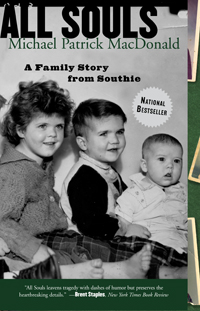
    7213All Souls: A Family Story from Southie
     by Michael Patrick MacDonald

    "An incendiary, moving book that startles on nearly every page . . .

    "MacDonald's nimble prose and detailed recall of grim times long past make for luminous reading; his hard-won conception of how ghettoized poverty spawns localized violence, and the dignity he brings to lives snuffed out in chaos, gives All Souls a moral urgency usually lacking in current memoir or crime prose.

    "A remarkable work." 

    —Kirkus Reviews

    Michael Patrick MacDonald grew up believing his mother and the politicians who said Boston's Southie neighborhood was the “best place in the world.”

    But the tight-knit, community was also insular and hostile to outsiders. Violence on the street was ignored even as it affected nearly every family there. Politicians like William "Billy" Bulger and gangsters like Whitey Bulger cooperated to keep crime and punishment in the neighborhood and out of sight.

    This insider’s tale is revelatory and heartbreaking. MacDonald's writing: evocative and sharp. It’s easy to see why, even as he describes the murders and overdoses of friends and family, he loves  his neighborhood.   

    Rather than join in the cycle of violence all around him, Michael Patrick MacDonald used his sorrow and his outrage as an anti-violence activist helping to start a gun buyback program and the South Boston Vigil Group which helped the community acknowledge and bring to light the violence around them.

    Winner of the American Book Award.

    Narrated by the author.

    Related articles

    Paul "Pole Cat" Moore in the Ring, at the Rat, and Dealing Coke for Whitey Bulger
    Personal Reaction To Dramatic Testimony At Bulger Trial
    'Whitey' And The Southie Drug Trade

  • Prairie chicken
    Photo by Teo on Flickr. Used under Creative Commons.

    An environmental attorney, Philip Warburg served as president of the Conservation Law Foundation from 2003 to 2009. He is the author of Harvest the Wind: America’s Journey to Jobs, Energy Independence, and Climate Stability. Visit his website at www.philipwarburg.com.  

    A 7-year study just released by Kansas State University has found that wind turbines have no serious impacts on greater prairie chickens or their reproduction.  This discovery is monumental.

    In Harvest the Wind, I explore the concerns raised by some biologists that wind turbines could disrupt prairie chicken mating and nesting.  It was thought that turbines, standing tall on the landscape, might be mistaken for trees on which predatory fowl could perch looking for food.  Similar concerns have been raised about wind power's impact on sage grouse habitats in states like Wyoming.

    While KSU's Brett Sandercock has reported that there may be some avoidance of turbines by female prairie chickens, data collected from nearly a thousand tagged birds has revealed an increase in female survival rates where turbines have been installed.  One possible explanation – not studied in this survey – is that the predators themselves may be avoiding the turbines.

    The KSU study may help shift the focus of biologists and wildlife managers to a more obvious and unequivocal threat to grassland fowl: the annual springtime conflagration that sweeps across much of the Kansas prairie, including 1.7 million acres in the Flint Hills.  These fires are intentionally set by cattle ranchers, eager to promote the growth of grasses favorable to cattle grazing.  On the downside, the torch-bearing ranchers who engage in "controlled burning" leave vast stretches of scorched, naked ground in their wake as they cruise the grasslands in their ATVs.  After the spring burn, prairie chickens and other grassland fowl have too little thatch to make their nests and too little cover from soaring raptors.

    A few years ago, EDP Renewables (then known as "Horizon Wind") collaborated with the Ranchland Trust of Kansas in creating conservation easements covering more than 25,000 acres of mixed and tallgrass prairie in the Smoky Hills.  That important boon to grassland ecology was triggered, in part, by concern that the 67 turbines of EDPR's Meridian Way Wind Farm, located a short distance away in Cloud County, might end up harming prairie chicken nesting and mating.  The company's concerns appear not to have been borne out in this particular case, yet conservation easements by responsible wind developers can go a long way toward creating goodwill while mitigating the environmental impacts of large-scale wind projects.


  • Today's post is from Carole Joffe, author of Dispatches from the Abortion Wars: The Costs of Fanaticism to Doctors, Patients, and the Rest of Us. Joffe is a professor in the Bixby Center for Global Reproductive Health at the University of California, San Francisco (however, the views and opinions expressed here do not necessarily state or reflect those of the Regents of the University of California, UCSF, or the UCSF Medical Center). This post originally appeared at RHRealityCheck.

    No school district, employee or agent thereof, or educational service provider contracting with such school district shall provide abortion services. No school district shall permit any person or entity to offer, sponsor or otherwise furnish in any manner any course materials or instruction relating to human sexuality or sexually transmitted diseases if such person or entity is an abortion services provider, or an employee, agent or volunteer of an abortion services provider.

    0128The above provision is contained in a nearly 50-page bill that recently went into effect in Kansas. (A judge temporarily blocked two other provisions of the law, but allowed this one to remain.)

    To be sure, the relentless assault on abortion that we are currently seeing in other state legislatures—Texas, Ohio, and North Carolina, among others—are far more consequential in the short run. Ambulatory surgical center (ASC) and hospital admitting privilege requirements really do have the capacity to shut down clinics. Should the Texas bill currently being considered become law—as is likely, despite the heroic efforts of the thousands of orange-shirters gathered at the capitol—the number of Texas abortion facilities would go from 47 to five in that huge state. Already, due to a similar ASC requirement, earlier rammed through the Pennsylvania legislature as a cynical response to the Gosnell scandal, a number of clinics in Pennsylvania have closed. And the bans on abortions after 20 weeks, adopted by a number of states, will affect a relatively small number of women, but typically those in desperate medical and/or social condition.

    But other provisions of abortion legislation, of which the Kansas one cited above is a prime example, do a different kind of damage. They further the stigmatization and marginalization of abortion providers by making clear that these individuals are not welcome in that most central of community institutions: the schools. It is not just participation in sex education from which Kansas providers are barred. As Stephanie Toti, senior attorney at the Center for Reproductive Rights, which is challenging this law, told me, “This is unprecedented discrimination against abortion providers. … The prohibition on providers serving as ‘agents’ of a school district has the effect of barring them from serving as chaperones on field trips and engaging in most other volunteer activities.”

    So abortion providers are at this moment banned from Kansas schools—and supposedly this will promote the safety of adult women getting abortions, as is the typical sanctimonious rationalization of the various laws we are seeing.

    I asked several lawyer colleagues if they knew of other instances in which a whole occupational category was banned by law from volunteering in schools. They did not. Indeed, as far as I can tell, only sex offenders as a class are de facto banned from school grounds.

    This shocking ban on abortion providers’ involvement in the schools leads me to recollect other instances I have encountered of attempts to isolate this group and keep them from community involvement. I think of a provider I’ve written about who I call Bill Swinton (not his real name), a family medicine doctor in a small town in the Pacific Northwest. He was deeply involved in both his church and his community, and served for three terms on the local school board. But he was defeated for a fourth term in the late 1980s, as the abortion wars intensified; needless to say, his status as a provider was the key factor in his defeat. I think as well of another doctor I’ve written about named Susan Golden (also not her real name), in a town in the Midwest, who integrated abortion provision into her family medicine practice. When she and her partner planned to take part in a community health fair, presenting on the care of newborns, the entire event was abruptly cancelled by the anti-abortion owner of the facility where the fair had been scheduled to take place.

    As disturbing as these incidents were, they did not have the force, or the legitimization, of law. The Kansas provision does—and as such, takes the stigmatization of abortion providers to a new level.

    Assuming the Kansas law, including this provision, is not overturned, we can only speculate as to what effects it might have. Speaking personally, I remember as a child the enormous pride I felt when my father, a cardiologist, came to my elementary school with his microscope and showed the class wondrous things. As a working mother, I recall how much I valued occasional volunteer stints in my daughters’ schools, getting to know both their classmates and other parents. It is very disturbing to contemplate that providers and their children will be deprived of these experiences. And it is equally disturbing to contemplate the messages that others in the community will receive from such a ban.

    This provision truly is stigma on steroids.


    Related articles

    Wrapped in the Flag: A Personal History of America's Radical Right
    The Ethics of Historical Outing
  • Dr. Jay Michaelson is vice president of the Arcus Foundation and the author of five books and two hundred articles on religion, sexuality, ethics, and contemplative practice. His most recent book, God vs. Gay? The Religious Case for Equality, was a Lambda Literary Award finalist. 

    Jay is a contributing editor to the Forward newspaper and associate editor of Religion Dispatches magazine, and his articles appear in The Daily Beast, Salon, The Huffington Post, and other publications. Other books include Everything is God: The Radical Path of Nondual Judaism and Another Word for Sky: Poems.

    This post originally appeared at Huffington Post.

    Antonin_Scalia_2010The "Scalia Dissent" has been a particular subgenre of legal discourse for two decades now, amply studied in the academic and popular literature. Vitriolic, hyperbolic, littered with witty bon mots and invective against faulty reasoning (i.e. any reasoning with which Justice Scalia does not agree), it is something one now comes to expect in any high-profile Supreme Court case decided in a more liberal direction.

    But Justice Scalia's dissent in U.S. v. Windsor, the Defense of Marriage Act case, feels different. Scalia pulled out the same rhetorical flourishes as ever, but he seems remarkably oblivious to context: the lives of millions of Americans. Windsor was not another case about crèches in the public square (the occasion of some of the earliest Scalia rants) or obscure administrative procedures. It was the case that decided the fates of tens of thousands of families, and, more broadly, established that discrimination on the basis of sexual orientation is wrong, regardless of one's personal views on the subject. Agree or disagree that same-sex families are marriages or not — they certainly are families, and certainly are made up of human beings. Justice Scalia's contemptuous dissent is contemptuous of these millions of Americans' humanity.

    The majority's opinion in Windsor was clear enough, and exactly what most legal experts had expected. After dispensing with the issue of standing, the majority noted that marriage is a matter of state, not federal, regulation. Thus a couple married in New York is duly married, whether same-sex or opposite-sex. To discriminate against a married couple requires a secular interest which was lacking in the Defense of Marriage Act — on the contrary, the legislative record showed evidence of bias. Thus, such discrimination violates the Constitution's guarantee of equal protection of the laws.

    This reasoning is what Justice Scalia termed "legalistic argle-bargle."

    Really? Argle-bargle? The term doesn't appear in my dictionary, but I take it to mean an incoherent ramble, the equivalent of gibberish. And to apply it to the legal arguments that a generation of lawyers and legal scholars have debated for years is, itself, offensive. It is offensive to those lawyers, of course, but even more so to people like Edie Windsor, the 84-year-old plaintiff in the case, suing to not be penalized that her legal spouse was a woman and not a man. It is offensive to my friend who can now apply for a Green Card, finally, after living apart from his husband for a year. Context matters, a Scalia Rant in this context is deeply offensive.

    Of course, no one expected Justice Scalia to strike down DOMA. Yet ironically, the reason we all knew this is that, over the years, Justice Scalia has shown himself to be a duplicitous legal reasoner when his legal ideology meets his political or religious ones. That is, he argle-bargles. For example, for years Scalia waved the banner of state's rights — until Bush v. Gore, in which he suddenly voted to overturn a state supreme court's interpretation of its own constitution. Indeed, just one day before Scalia's impassioned defense of deference to Congress in Windsor, he voted to overrule Congress in Shelby County, the Voting Rights Act case. So what is the principle here? We defer to Congress when it discriminates, but not when it bars discrimination? Is there a principle? Or is there, rather, just argle-bargle?

    0147We also know Scalia is bargling in Windsor because of his many extra-judicial comments about what was at issue in the case. Shockingly defiant of the principle that justices not comment on cases before the Court, Scalia said only a few days before the decision was handed down that the case, like Lawrence v. Texas, was about "consensual sodomy." Sodomy – an act. Not sexual orientation, not what millions of people are telling us about their lives; not friends and neighbors and family members – but a sexual act. As if opposite-sex marriage is about cunnilingus.

    Ironically, this clear contempt for and ignorance of LGBT lives is precisely the sort of animus Justice Scalia says we should not impute to DOMA's backers. In the same words with which he complains of being called a bigot, he writes like a bigot.

    The ignorance of the lives of gay and lesbian people is not unique to Justice Scalia, of course. Others, too, cover up their ears when they hear about lesbian ministers, or gay boy scouts. No, they insist, there are no gay people — only gay acts, only sodomy, only a "lifestyle."

    But this is ignorance of the facts. The facts are that gay people exist, that many (though not all) say they were 'born that way,' that same-sex families are families. And while such ignorance may be expected among the extremist rabble, it ought to have no place in the Supreme Court.

    Indeed, even if Justice Scalia still denies the humanity of gay people, one might've hoped that he would have recognized the gravity of the moment and of his role as a Supreme Court justice, and held back from ranting, just this once. But instead, by demeaning the people whose lives were at stake, by dismissing with an invented slur the articulation of their hopes and aspirations, their very sense of what it means to be an American, Justice Scalia has demeaned the institution he is meant to serve.

    As for the LGBT community, we will not be brought down to his low state. At a rally in New York's Tompkins Square Park, a beloved artist and performer named Donald Gallagher — a man who was present at Stonewall, who recently lost his partner of 40 years to cancer, and who once laboriously painted the entire ceiling of his church in Jersey City — proclaimed that, in the secret language of the ancient gay elders, "Argle Bargle" really means "Joy to All." Argle Bargle! the crowd shouted. Argle Bargle!

    I couldn't agree more.

    Related articles

    The DOMA Ruling and Children
    Mission Not Accomplished: Homophobic violence a sign of the ongoing battle for safety and equality
    Jay Michaelson: Argle-Bargle: What Justice Scalia Still Doesn't Get About Marriage
  • The trial of Whitey Bulger continues at the Federal Courthouse in Boston. One of the witnesses "on deck" for the prosecution is Paul "Pole Cat" Moore, so here's a timely excerpt from All Souls: A Family Story from Southie by Michael Patrick MacDonald. All Souls is, among other things, an excellent guide to Southie under Whitey Bulger's criminal empire. In this excerpt, MacDonald describes Pole Cat's connections to the local boxing world, the popular rock club the Rathskeller (or "The Rat") and Bulger's drug-dealing operations. 

    You can listen to Michael Patrick MacDonald's reaction to yesterday's dramatic testimony on Radio Boston.

    UNDEFEATED FRANK MACDONALD

    Hard hitting Frank MacDonald of South Boston met and defeated a very comparable Jose Miguel from Cranston, Rhode Island. Frank totally devastated his opponent with a series of crippling punches to the body which succeeded in incapacitating Miguel, who was of great courage but unable to fathom Frank’s awesome body attack—congratulations Frank, and corner men Paul "Pole Cat" Moore and Tommy "Stove Man" Cronin.

    —South Boston Tribune

    Frankie was one of the few young people in the neighborhood not being dragged down by drugs and crime in 1980. His boxing career was one of the only things that brought good news to the streets of Old Colony in those days. Frankie was fast becoming a neighborhood hero, not only in Old Colony, but all over Southie. Everyone knew who he was, and he had a nickname now, "Frank the Tank," for his "hard hitting" style that was bringing him championship titles, from Junior Olympics bouts at Freeport Hall in Dorchester to the New England Golden Gloves tournament in Lowell.

    Mary and Kathy said all their girlfriends talked about Frankie’s looks, and the guys who hadn’t yet got caught up in the world of drugs talked about getting a ripped body like Frank’s. He was working out seven days a week, running from Old Colony, through the Point, around Castle Island, and back to the project, always in his combat boots from his days in the Marines—and sometimes he ran backwards. Frank was welcome all over Southie. The little kids in the neighborhood would run after him, asking him questions about his bouts and begging him to show how he knocked out his opponents. That’s why Frankie was so intent on being what they called "a stand-up guy" in Southie. That’s what they called anyone who would never snitch, even if it meant doing a life bid because of it. But in Frankie’s case, it just meant he was clean-cut. Sure, he knew all the top gangsters in the neighborhood; anyone with Frankie’s status in the Southie boxing world would. But he never got involved in their rackets, stayed away from the dust and coke they were pumping into the streets, and refused to work for Whitey, telling Ma that he never wanted to be "owned."

    But still Frankie had "the boys," as we called Whitey’s troops, working in his corner as he fought his way through four years of New England Golden Gloves championships, starting out as a two-time middleweight champ in the novice class, and ending up a light heavyweight champ for the whole region in 1982 and 1983. South Boston Tribune articles always pointed out the sound advice and leadership "the boys" were giving Frank in the ring:

    Following closely the instructions of trainer Paul "Pole Cat" Moore and manager Tommy Cronin, Frank pursued his opponent most aggressively with a savage body attack which . . . wore down O’Han to the point of becoming a bit careless and somewhat frustrated . . . at being unable to figure out MacDonald’s technique. Frank, once again following the instructions for his corner, succeeded in landing a barrage of lefts and rights to the jaw and head of his adversary. This will prove to have been a most excellent victory for Frankie in the upcoming bouts he is to have.

    In Southie having the gangsters in your corner, in the ring or on the streets, meant that you had the ultimate protection and power. Grandpa didn’t believe that, though. He had warnings for all of us, from his own days as a longshoreman on the Southie docks, where he said he’d worked alongside some men who ended up in the Brinks robbery of 1950, "the big one." Grandpa always told us how the rule on the docks was to keep your mouth shut about the rackets you saw. He said many a time the longshoremen were lined up by the cops and asked to step forward and speak about crimes. That’s how a waitress from the local diner got killed, after she stepped forward among the silent longshoremen. She was found murdered the next day, her blood scrawled into the letters snitch all over her cold-water flat. Grandpa had another rule of his own for the underworld: "Watch out whose hand you shake," he told us. He said there was no such thing as a gangster giving something without wanting more in return. "They’ll give you a quarter for a dollar any day," he said. Grandpa had been trying to get closer to us since Kathy’s coma and had even bought a condo in City Point. He got a closer look at the neighborhood, and he kept coming around the house cursing "that fuckin’ Whitey Bulger, a no-good bum if there ever was one," and wondering if the Bulgers were even Irish at all, with Senate President Billy Bulger’s insulting Irish brogue imitations at drunken St. Paddy’s Day festivities. "They’re a shame to the Irish altogether," he said, "and what respectable Irish person would name their kid William?" he asked. "That would be like a Jew naming a kid Adolf."

    […]

    TheRatInWinterKevin started to go to the Rathskeller downtown, where Frankie along with some of the other boxers and some of the boys were working as bouncers. They were big and tough looking, and good for keeping the college students and punk rock types in line. Frank’s corner man, Pole Cat Moore, worked at the Rat, and introduced Frankie to Ricky Marino, an ex–state trooper, who became Frankie’s best friend. Then there was Kevin "Andre the Giant" McDonald, not to be confused with my brother Kevin "Mini Mac" MacDonald. He was a Southie champion too. Ricky and Paul Moore were pretty high up in what the papers in later years would call the "Southie underworld." But Frankie knew his little brother wasn’t going to get involved in their plans, no matter how much he wanted to. They were too high up to be bothered with Kevin, who despite his involvement in some of the big stuff was still just a kid to guys like these. They also had a position to maintain, and weren’t about to bring someone with Kevin’s potential into their rackets.

    My brother Joe would go to the Rat too, whenever he was on leave from the Air Force. Joe told Ma it was weird how Frankie’s friends pulled each other aside when they were "talking business." We all knew Joe was the tattletale in our family—he told Ma everything—and the boys must have sensed this too. But one night at the Rat, he did overhear Pole Cat Moore telling Ricky that he’d be getting his cocaine directly through Whitey’s Colombian connections, rather than going through Ricky. Pole Cat had a job with the Boston Housing Authority, and an apartment with his brother, right next to ours on 8 Patterson Way. Pole Cat never touched the stuff. He was too into his body, coming and going from our building with a gym bag and a clean white towel around his neck. But he was starting to make a killing on the coke, by the looks of the number of kids knocking on his door day and night. Joe said he would know if Frankie was into that stuff, though, and that Frankie had never been involved in Pole Cat’s huddled conversations with Ricky at the Rat.

    Then I started showing up at the back door of the Rat most nights. Ever since I was fifteen I’d gone there to see bands. Frankie’s friends knew who I was, and snuck me downstairs through the piss-puddled hallways, to where the bands played. Frankie snuck me in too, but he didn’t know I was there on weeknights, and I told his friends to keep it quiet. I hadn’t returned to Latin School since Kathy’s coma. They’d tried to make a deal with me that I could be promoted, despite all my absences, if I left Latin and went to Madison Park High School in Roxbury. "Yeah, right," I said, "and be the only white kid in the class."

    Latin had been my only escape from the busing, and now I felt guilty for messing it up. I couldn’t believe I was a high school dropout. I’d always been the straight-A student Ma bragged about, along with Johnnie, and Davey. For a while I was still pretending to go to school, even after Kathy was out of the coma. I’d wander around Boston all day, freezing at bus stops when I didn’t have money for the three-hour-long coffee refills at Mug and Muffn, trying to stay awake after a night at the Rat. Ma eventually found a letter I’d written to myself about my guilt for being a dropout, and she was bullshit that I had pulled one over on her. She confronted me about it and said I’d have to go right to work the next day. She too knew high school in Roxbury wasn’t an option. That’s when I switched from pretending to go out to school every day to pretending to go out looking for a job. I was still freezing at bus stops, or getting warm at Mug and Muffn; and I still snuck out of the house at night to go to the Rat.
    7213I had my own group of friends at the Rat. While Frankie, Pole Cat, Andre the Giant, and the rest of the gang hung out upstairs, I was down in the basement with misfits from all walks of life. Some were working-class kids, others were suburban white-picket-fence types, and others were rich. "What’s a trust fund?" I remember asking. "Ah, man, it’s nothing—just ’cause my dad’s rich doesn’t mean I am. I gotta wait on it. Got a dollar for a beer, dude?" But wherever these people came from, they didn’t like it. I’d always preferred black music—soul, then disco, and now hip-hop and rap. The words made more sense to me. But I also liked the energy and rage of punk rock; I just couldn’t relate to the lyrics about life in the suburbs, and having strict parents. Then I discovered the original version of punk, from England. I’d never thought about the fact that there were poor and working-class English people who hated the Queen, and her mother, and the whole British establishment. I could get into that. This was a movement of people who didn’t fit in where they came from, and they’d made that cool. I could get into that too.

    Punk music became an escape for me, but I still had to come back to Old Colony every night. I often hitched a ride with Frankie’s friends, the whole way home not knowing what to say to men as powerful as "the boys." Other times I had punk rockers drop me off on the outskirts of Southie, so they wouldn’t see that I lived in the project, or accuse me of being a racist for living in my neighborhood. But I was protecting them too; I didn’t want them to get bottles thrown at them for being different in Southie. 

    "The Rat in Winter" photo by Wayne Valdez.


    Related articles

    Personal Reaction To Dramatic Testimony At Bulger Trial
    Eboo Patel on James Baldwin's "Autobiographical Notes"
    Queer History: The "Persecuting Society"