• Martin Moran is an accomplished actor and a gifted storyteller. His memoir, The Tricky Part: One Boy's Fall from Trespass into Grace, addresses the difficult subject of sexual abuse with candor, sensitivity, and stunning clarity. The book and the play of the same name (which received an Obie award and two Drama Desk nominations) recount his relationship, between the ages of twelve and fifteen, with a much older man. 

    This year, The Tricky Part was released on audio for the first time, with Moran providing the narration. And in February, he premiered his new one-man show, All the Rage, to acclaim from the New York Times and the New Yorker, among others. In May, the play received the Lucille Lortel Award for Outstanding Solo Show. We spoke with Moran via Skype about the enduring life of The Tricky Part (in all its forms) and his new work.  


    Martin-MoranYou wrote and performed The Tricky Part as a one-person play, and you've said it took you ten years to write the book. It's a story that deals with uncomfortable and sometimes painful subjects—coming to terms with sexual abuse, growing up Catholic and coming out—but sharing it has been a big part of your professional career. Has the experience of telling and re-telling it changed over time?

    This question brings up so many aspects of the endeavor of making a piece of art: the incredible mystery, the endeavor of taking something so personal, which, yes, was difficult to excavate, deeply frightening at first to grapple with. But the act of crafting a book or a play with the intention of offering something to fellow human beings and wanting it to be beautiful, wanting it to be a piece of art—the very act of doing that is transformative. And that transformation continues over time. The work takes on its own agency. It moves in the world with its own separate chakti, it's own separate energy. The sense of personal "ownership" lessens over time. The sense of it being simply human and not "Martin" grows. The paradox is: the more incisively personal you strive to be, the more simply human the work is. It becomes not a personal question but simply a human question. And over time I've moved on; there are other questions that are obsessing me now.

    The attempt through The Tricky Part to understand my boyhood and of having been violated and trying to find the path to authentic forgiveness—all of that was arduous and painful in the making of it—at moments a joy as well, but the distance is welcome. It is all less gripping now. Which is probably why we do the work of art in the fist place: to move toward freedom of some sort. This urge to move toward liberation, to not have the past be around our throats, but to release the past and wake up to the present. To be present is to be free, for the most part.

    How is performing your story different from the act of writing it?

    There are little overlaps, particularly there's a chunk of the play where I say, "Let me read from what I wrote." So there's about a fifteen minute chunk of the play where I read, and that's identical to what's in the book. But I must say the recording of the book  was fascinating. Being in a booth with a little microphone, as opposed to an audience of five hundred. But there was a guy, an engineer named Allen. He was such a nice guy—a sweet Jewish dad from Long Island with two kids, who didn't know from Catholicism, didn't know from being abused as a kid. I was very, very conscious of Allen listening. I didn't tell him that, but he became in a sense my audience. So there is always that essential act of communication in the moment with a listener. That act of connection.

    I must say I was surprised to come back to my memoir. It came out in 2005) and I recorded this past fall, so that's seven years. This was the first time I was reading it in seven years. Two or three times, I absolutely lost it. Stuff I hadn't really thought about or remembered—there I was just saying I've gained all this distance on it, but it snuck up and just choked me up.

    Allen was so great. He'd say, "That's cool man, let's take a minute."

    This process of writing and performing for the stage, and writing for the page, is something I've been grappling with all along. I'm in the midst of doing it again. My play All the Rage just closed, and I'm attempting to write a book about the same terrain. The energy of what's written for the page as opposed to the language that's crafted for the stage—it's just different, and it's almost as though I have to take time to tune my ear for the different forms.

    It's much more intimate reading a book. It's as though while writing I am thinking of an audience of one. On the stage, there's a responsibility to perform in a way that's extremely clear and animated and in my case a kind of sleight if hand—that sense of the language being made up on the spot. A theatrical event. Your body takes over. You're facing a big room. Sitting and reading the book was more like being in an armchair curled up next to somebody. The recording of it in the booth was this quiet act of intimacy, of sitting down and reading a bedtime story to a loved one. Of offering it up simply and sensing that they perhaps are following along with the pages. It's calibrated much more quietly.

    How long did it take to record the audio? 

    I was doing a play at the time that was so rigorous, down at the Public Theater, and I found that I could do only about five hours max in a day. My voice and my brain were ditzing out—and I'd just gotten over pneumonia. So I was struggling a bit, vocally. But it took, all told, including pickup sessions to fix things, five days on and off in the booth, for about five hours a day. (The completed audio is 9 hours 25 minutes.)

    How are you feeling about the reception for All the Rage?

    I feel tremendously gratified. I always knew it was very different structurally and energetically from The Tricky Part, because The Tricky Part has a built-in narrative structure that is suspenseful, dramatic. All the Rage is a very fractured piece that tries to parse anger from many different angles, and I never even knew until the moment I was opening in New York City if this would really land or just fall flat. So I'm enormously gratified and relieved that the play was thoughtfully reviewed, particularly by the New York Times and the New Yorker, and then it was embraced by the theatrical community with the Outer Critics Circle nomination and the Lucille Lortel award. As with The Tricky Part getting the Obie, the Lortel is the other big off-Broadway kudo, so I'm really grateful.

    In All the Rage, you quote from a review of The Tricky Part that expressed shock at the fact that you didn't "blame or despise" your molester. How does the play address your anger or perceived lack of it?

    I find that I'm assailed with a sense of hopelessness when trying to discuss something as bottomless and complicated as anger. Both as a cultural emotion, social emotion, and my personal relationship to anger. It began very personally: Did I miss something? Did I skip a whole gamut of exploring my story? Am I not finished? Damn, after a three hundred page book and a play? Then there was a whole cultural male thing, of what I heard in that review, and of people asking me, "Where is your anger?" What I heard is, "Moran, grow a couple. Where's your testosterone? C'mon, just strangle the motherfucker." I didn't use his real name in the book. I was focused on compassion and forgiveness. And then I thought, "Are you being totally honest? Don't you really just want to strangle the guy who harmed you?"  Sometimes I do. So in the piece, there's no one answer. It's like living in the question of anger, and never really quite landing on an answer. The play reaches a place of trying to provoke the dance of human "oneness." That essential reality that we glimpse sometimes? That we are, in fact, one. We are these dancing molecules of consciousness. Is anger an act of living out our separateness? "You have hurt me, and I must hurt you." Is that part of the experience of anger? Revenge? But perhaps the very act of dancing through the agony of separateness brings us once again back to the amazing realization of oneness. At the end of All the Rage I talk about this dream where my 'enemy' says to me, "What we're doing here is rehearsing consciousness."

    Martin Moran will be performing both The Tricky Part and All the Rage at the Two River Theater Company this fall.
  • Chris Stedman is the Assistant Humanist Chaplain at Harvard University and author of Faitheist: How an Atheist Found Common Ground with the Religious. He tweets at @ChrisDStedman.

    This post originally appeared at Religion Dispatches.

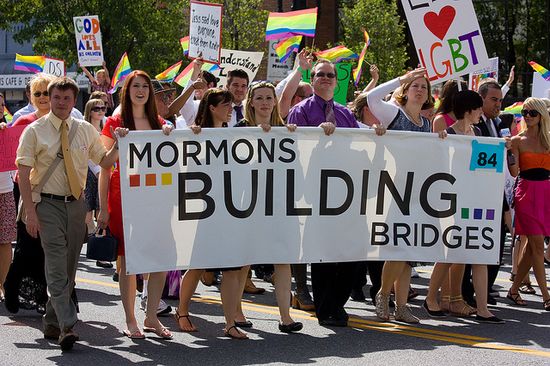
    7330970176_734f264cd3_z
    Photo by Jay Jacobsen on Flickr. Used under Creative Commons.

    Last weekend a group of around 400 Mormons marched in the Utah Pride Parade. Calling themselves “Mormons Building Bridges,” they were met with enthusiastic applause. Carrying signs with messages like “Love 1 Another” and “LDS heart LGBT,” they were there to show their support for the LGBTQ (lesbian, gay, bisexual, transgender, and queer) community and celebrate recent advancements in issues relating to LGBTQ people and Mormons, such as Bishops no longer excommunicating members who come out and the Boy Scouts of America voting to allow openly gay scouts to participate. (LGBTQ adults and atheists still cannot do so openly.)

    As I read about Utah Pride in preparation for my remarks this upcoming weekend as the 2013 Boston Pride interfaith speaker, I couldn’t help but reflect on what I learned during a recent visit to Utah.

    It was late in the evening when I arrived, and I knew I would be there for only 24 hours. I was met by Alasdair Ekpenyong, a college sophomore who stands at the crossroads of intersecting identities and convictions: black, LGBTQ-affirming, feminist, progressive, a lover of bowties—and deeply Mormon.

    Two weeks later, he would speak calmly and decisively at an anti-discrimination rally. But in the car that evening he spoke quickly and excitedly, stumbling over his words a bit but still impressively knowledge and articulate, referencing countless texts and ideas I’d never even heard of. I asked if we could stop to pick up some food and, with french fries in our laps, he gave me a quick tour of Salt Lake City, demonstrating an intimate knowledge of the area and the people who call it home.

    Alasdair, a student at Brigham Young University (a private university owned and operated by The Church of Jesus Christ of Latter-day Saints, originally established in 1875), was the student organizer of “Intersecting Convictions,” the interfaith conference for which I had come to speak. The conference was held in early March at Utah Valley University, a publicly funded university in Orem, Utah, about one hour south of Salt Lake City. Audience participants and sponsors from both BYU and UVU helped bring the event into being.

    During our conversation in the car en route to Orem, I confessed to Alasdair that I wasn’t sure how the event would go.

    The student body at BYU is 98.5% Mormon, and UVU is 86% Mormon—the highest single-religion percentage at any public university campus in the United States of America. Atheists are already in the minority in most parts of the country, constituting a small fraction of the religiously unaffiliated in the U.S., but it seemed I was to be an especially odd one out at this event. Or, as my mother once said with a laugh when I was off to speak in Mobile, Al.: “It’s kind of hip to be a gay atheist [in Cambridge, Massachussetts]. Not so much most everywhere else.”

    I was scheduled to speak in an extended dialogue with the evangelical Christian presenter—as an atheist who is also a former evangelical Christian. Additionally, I was to engage other panelists and audience members, most of whom would be religious. As a queer person and atheist, what could I—and what should I—say to people who are members of communities that, both historically and contemporarily, have played a sizable role in not only demonizing atheists and supporting anti-gay ideas, but actively working to prevent LGBTQ (lesbian, gay, bisexual, transgender, and queer) equality and civil rights?

    Alasdair responded by reminding me that this event was not intended to be a collection of like-minded, progressive people. He told me that he personally holds a liberal mindset alongside an abiding respect for traditional institutions, and that it was important to him to bring an ideologically diverse crowd of liberal and conservative people together for this event.

    “I like what Eboo Patel has said about making sure that interfaith work includes conservative subcultures, too, and does not merely become a festival of shared liberalism,” he told me.

    And sure enough, as it turned out, we had a lot of different perspectives in the room—and a lot to say to one another. I was there as a liberal queer atheist, but I was just one of four keynote speakers, the others representing Jewish, Mormon, and evangelical Christian perspectives. We offered individual remarks and engaged in an honest public dialogue with one another. Questions of difference loomed that day, and much of the discussion centered around the idea that not only do we have, surprisingly, a lot in common—an important point worth remembering and repeating in a culture that frequently lifts up conflict while ignoring harmony—but that we also carry profoundly important and seemingly irreconcilable differences.

    In that sense, the conference left me (and I suspect many others) with as many questions as answers. But these questions are vital—and the idea that we can consider them together, without sacrificing our relationships or the civility that undergirds them, is radical. I certainly don’t believe that the idea of “celebrating different beliefs” should be extended to beliefs that are used to marginalize others—but that tension should be explored, not suppressed for the sake of “getting along.” And calm, compassionate interfaith dialogue can create space to unpack them constructively in a way that shouting matches ultimately cannot.

    These differences, of course, exist not only between communities but also within them. The conference served as a reminder that no community is a monolith, and that those of us who wish to see a pluralistic society will need to work with people in many different communities in order to see it realized. There are certainly Mormon people and institutions that have worked against LGBTQ equality, and many continue to. But as was evident at this year’s Utah Pride, there is also a fast-growing number of Mormons who are working for change. They may be less visible—after all our society, and the media in particular, privilege polarizing perspectives—but these Mormons are there, doing difficult but important work.

    Among them is Joanna Brooks, who served as the Mormon panelist at the conference. She has been an advocate for LGBTQ equality and acceptance among Mormons and more broadly (in fact, she was featured earlier this year in The Advocate’s list of “10 Pro-LGBTQ Religious Women You Should Know”), and I am glad for her work. We may not agree on certain issues, including whether or not there is a God, but she has my support. Her activism, her ideas, and her voice reach Mormons that I, as a queer atheist, might not be able to. She speaks to Mormon identity, culture, tradition, and values in ways that I do not understand, and she is a powerful force for change in a community that she is invested in. Her work is just one reason why I am not willing to write off Mormons, or any other group of people, just because some vocal members of their community paint an exclusionary picture of what it means to be a member—and why I despair when members of my own communities dismiss them as possible allies. 

    And in the case of people who aren’t yet LGTBQ and interfaith allies like Brooks, I cannot help but hope that the act of encounter with someone who is unfamiliar will bring new ways of thinking to light. After all, support for marriage equality more than doubles among people who know a gay person. The Pew Research Center reports that of the 14% of Americans who went from opposing to supporting gay marriage in the last decade, 37% (the largest category) did so because of “friends/family/acquaintances who are gay/lesbian.” The second largest category, at 25%, said they learned more and became more aware. Only two percent said that they changed their minds because they came to believe that gay people are “born that way.” Visibility and education matter, but positive relationships across lines of difference seem to matter even more.

    Whether we are in agreement or not, conversation is greatly needed. The kind of tribalism that causes people to be suspicious of those they think are not like them will be overcome through relationship-building, not through shouting matches on cable news or in online comment threads. Today I strive to build a relationship whenever I can—even with people who think that who I am is innately wrong—because if I refuse to engage, how can I hope for change?

    I’m glad I had the opportunity to not only interact with nontraditional Mormons, but also with more conservative individuals and with traditional institutions like the Orem Utah LDS Institute of Religion—to not only build relationships with people and organizations that may not interact with LGBTQ individuals and atheists all that often, but to do so in a way that put my queer and atheist identities at the forefront of our encounters.

    My queer identity is one of the reasons I’m passionate about religious pluralism, and advancing it through interfaith dialogue. A pluralistic society embraces all of its members. As a queer person, I reject heteronormativity. As an atheist, I reject theonormativity. But the eradication of heterosexuality or the eradication of religion are not my goals. Instead, I am concerned about privilege, and about fear of the other. Interfaith work can challenge both; it humanizes difference, allowing people to see that there are many ways of being and believing, and recognize that a just society makes space for all people.

    I understand that some of this sounds a bit simple and idealistic—I know that appeals for pluralism and tolerance occasionally sound like the musings of a disconnected optimist. I don’t pretend that this work isn’t difficult, or that it will always work. But isn’t it worth trying?

    There is a part of me that strongly resists sitting down with members of a community that has actively worked against my freedom. But whenever I can summon the patience to do so, I am glad that I did. This conference wasn’t the first time I have found myself in such a position; I have also spoken at several evangelical Christian colleges that require students to sign agreements that prohibit “homosexual activity” and disbelief in God. These are instituions that would likely expel me were I a student. Agreeing to visit these campuses isn’t easy, but they are communities that perhaps need open conversations about faith and diversity more than many others. Though getting there requires me to deal with my own discomfort, I have never regretted accepting an opportunity to enter into dialogue with members of communities that are discerning how to grapple with internal diversity and with how to engage the world beyond their community. Participating in these discussions may require some compromises on my part—having to part with my desire to say every single thing I might want to, or having to look people in the eye who would vote against my freedom—but it is worth it when I see the conversations that unfold, and realize that I have a chance to build a relationship with someone that could prove to be transformative.

    Every day I try to challenge myself to think harder, to listen to others more deeply, to be more loving and patient. Needless to say, I frequently fail. But as an atheist, I don’t think any non-human force is going to intervene and solve our problems for us. Thus, it is up to us to make our world better. As much as I can, I want to leave a space at my table for just about anyone; to see every person as someone who is worth trying to understand, and to try to help others understand me—even when that feels impossible.

    But sitting at my table means being willing to share. Some will take more than others, but there must be some give on all sides. In that respect, I am grateful for how much I was given by the people I met and learned from at the conference in Utah, and excited about the possibility for a more constructive and compassionate dialogue between people of all faiths and the nonreligious about how to build a world in which all people, including LGBTQ people, are respected and have equal rights. Though the road to a truly pluralistic society will be long, I learned in Utah that you can in fact build some significant bridges—even when you have less than 24 hours to do so—and I am glad to see that there are more and more Mormons building bridges at Utah Pride and elsewhere.

    As I prepared to leave Utah, less than 24 hours after arriving, Alasdair gave me a hug and said: “I hope you’ll come back soon!”

    Without hesitation and with the utmost sincerity, I agreed.

    Related articles

  • 7332What
    Doctors Feel: How Emotions Affect the Practice of Medicine
    by Danielle Ofri

    A Boston Globe review offers high praise

    Ofri adroitly balances presentation of her own experiences and those of others, with research into the emotional aspects of medical practice. The result is a fascinating journey into the heart and mind of a physician struggling to do the best for her patients while navigating an imperfect health care system that often seems to value “efficiency,” measured in dollars and minutes, more than the emotional well-being of either physician or patient.

    Danielle Ofri confronts the lack medical empathy in Slate Magazine

    Students are not just learning medicine during the third year of medical school; they are learning how to be doctors. Despite the carefully crafted official medical curriculum, it is the “hidden curriculum” that drives the take-home messages. The students astutely note how their superiors comport themselves, how they interact with patients, how they treat other staff members. The students are keen observers of how their supervisors dress—and how they may dress down those around them. They figure out which groups of patients can be the object of sarcasm or humor, and which cannot.

    Health magazine; May issue Q&A with Ofri offers insight into doctor-patient relationships

    Whenever a patient shares a story with a doctor, both of you become entwined in a relationship. Relationships may ebb and flow, but a good one is there for the long haul. Your medical needs will likely vary over time, and a good doctor-patient bond can adapt to this.  


    2199Overdiagnosed: Making People Sick in the Pursuit of Health
    by Dr. H. Gilbert Welch, Dr. Lisa M. Schwartz, Dr. Steven Woloshin

    In "The $2.7 Trillion Medical Bill: Colonoscopies Explain Why U.S. Leads the World in Health Expenditures," (New York Times) Elisabeth Rosenthal quotes Dr. H. Gilbert Welch on the overuse of colonoscopies:

    While several cheaper and less invasive tests to screen for colon cancer are recommended as equally effective by the federal government’s expert panel on preventive care — and are commonly used in other countries — colonoscopy has become the go-to procedure in the United States. “We’ve defaulted to by far the most expensive option, without much if any data to support it,” said Dr. H. Gilbert Welch, a professor of medicine at the Dartmouth Institute for Health Policy and Clinical Practice.


    0329

    Opportunity,
    Montana: Big Copper, Bad Water, and
    the Burial of an American Landscape
    by Brad Tyer

    The website Reports from Dark Acres thoroughly reviewed Opportunity,
    Montana
    :

    Combining
    sometimes very personal revelations with hard-nosed journalism, some
    wonderfully serendipitous discoveries, and what the English departments call
    “creative non-fiction,” Tyer has written a compelling and enlightening
    account of this rather amazing story,
    which is a win for everyone. Everyone,
    of course, except the people of Opportunity.


    Related articles

    What Doctors Feel: How Emotions Affect the Practice of Medicine
    Beacon Buzz: How "Snob Zones" keep out affordable housing
    Beacon Buzz: Near Misses and Revolutionary Brides
    How Gotcha Politics in the Doctor's Office Can Harm Patient Care
    Beacon Books at Audible: Faitheist
  • This is the sixth episode in a series of interviews with Michael Bronski about A Queer History of the United States, a 2012 Lambda Literary Award winner for LGBT Nonfiction. The interviews were conducted by Richard Voos. 

    Get A Queer History of the United States or any of Beacon's other LGBT titles for 25% off the list price during the month of June, a.k.a. PRIDE MONTH. Use the code PRIDE at checkout. Read more at Beacon.org.

    405px-Victoria_Woodhull
    Portrait of Victoria Woodhull by Matthew Brady

    “Yes, I am a Free Lover. I have an inalienable,
    constitutional and natural right to love whom I may, to love as long or as
    short a period as I can; to change that love every day if I please, and with
    that right neither you nor any law you can frame have any right to interfere.
    And I have the further right to demand a free and unrestricted exercise of that
    right, and it is your duty not only to accord it, but as a community, to see I
    am protected in it. I trust that I am fully understood, for I mean just that,
    and nothing else.”
    Victoria Woodhull, "And the truth shall make you
    free," a speech on the principles of social freedom, 1871

    “I think we have wronged the South, though we did not mean
    to do so. The reason was, in part, that we had irreparably wronged ourselves by
    putting no safeguard on the ballot-box at the North that would sift out alien
    illiterates. They rule our cities today; the saloon is their palace, and the
    toddy stick their sceptre. It is not fair that they should vote, nor is it fair
    that a plantation negro, who can neither read nor write, whose ideas are
    bounded by the fence of his own field and the price of his own mule, should be
    entrusted with the ballot. . . . The Anglo-Saxon race will never submit to be
    dominated by the negro so long as his altitude reaches no higher than the personal
    liberty of the saloon.”
    Frances Willard, the New
    York Voice
    , October 23, 1890 


    Listen to A Queer History of the United States: The Persecuting Society with Michael Bronski


    Richard Voos: One
    of the themes of Queer History is the
    conflict between two political and cultural movements throughout America's
    history. On the one hand what you describe in different periods of American
    history as the “persecuting society”—the social purity movement—in the civil
    rights movements, in contrast to advocates for religious freedom, labor, and
    women's rights organizers and the gay liberation movement. Let's start with the
    idea of the “persecuting society,” Michael. What is that?

    Michael Bronski:
    This is a phrase that, as far as I can tell, was invented by a British scholar,
    R. I. Moore. He wrote a
    great book about the persecuting society
    in which he speculates that in the
    Late Middle Ages, European culture was diverse enough and falling apart enough
    that, as a mechanism to maintain social stability, those people in power—the
    clergy and the aristocracy—began to single out distinct groups of people to be persecuted. So by persecuting these
    distinct groups of people, and I'll name them in a second, the society actually
    became more stable. By the exclusion of some people, more specifically some groups of people, what we might call “the
    mainstream society” became much more solid.

    4465The first groups that were targeted for persecution were
    lepers, heretics, witches, and sodomites. So these are four very distinct
    groups, often related to appearance or behavior: Lepers obviously had leprosy;
    sodomites were accused of committing sexual sins. It’s interesting to note that
    at that point “sodomy” did not just mean, as we think of it today, same-sex
    behavior but a whole range of sexual misbehaviors under Canon Law. And “witches”
    singled out almost entirely women and heretics who were going against some
    Church doctrine. So the connections here are actually quite clear: lepers
    probably—we know today this is not true—probably had leprosy because they had
    committed some “sin.” Under Canon Law witchcraft was a sin, as was heresy, as
    was sodomy. So there is a clear theological bent with all of this here. As
    Western societies and Western civilizations progressed, these groups were
    modified; we now have a much better attitude about people with leprosy,
    although I must say it’s only in the last hundred years that we stopped putting
    people in leper colonies. But the notion that you create and maintain a general
    society by the exclusion of other people is still with us today. 

    RV: You cite an
    example, Michael, early on in American history and it's one of the mythologies
    of American history, when the Puritans expel Anne Hutchinson. Some of the
    accusations made against her and her followers are sexual. Not only are they
    religious heretics; they're accused of sexual behavior that contravenes the Puritan ideal. 

    MB: We see that
    with Anne Hutchinson, we see it with the Quakers. And the Puritans, the Quakers—actually
    there were nine Quakers that were executed on Boston Common. The Quakers are an
    interesting case because Quakerism at its core not only attacked the theology
    of the Anglican Church but also the social mores and the gender mores of the
    time. Quaker men were forbidden to carry guns, a clear sign of manliness in
    that society. Quaker women were allowed to speak during meetings, a clear
    deviation from “women should be silent within Church.” So from the very
    beginnings (in England), Quakerism—the Society of Friends—violated not only
    theology but gender norms as well. When the Quakers were in America, the same
    charges were also used against them there, too.

    RV: We see at the
    end of the nineteenth century, with the social purity movement, actual,
    explicit—and as we heard earlier with the reading from Frances Willard—an
    extremely explicit connection between social control and stability, and the
    sexual and the racial.

    MB: I think that
    the tension here goes back to R.I. Moore's notion of the persecuting society,
    which he admits changes over time. But the tension here is really between those
    who want to control society—who want to shape society to fit their own
    theological, moral, social norms—and another group of people. Emma Goldman is a
    good example, being an anarchist who would like to have less state control,
    less mainstream cultural control over what’s going on. So when we get to the mid-
    to late-nineteenth century and the social purity movements we find a terrific
    reformer like Frances Willard—who is for suffrage, who is for lots of
    educational change, who is actually for lots of reform within the workplace—being
    pretty explicit in her racism, and called on it by Ida B. Wells. So that even in
    a progressive movement we have someone like Frances Willard who needs to use
    the very concept of a persecuting society to reaffirm what we would all agree
    would be generally pretty good ideas, except she's actually using
    African-Americans as her foil.

    RV: Some of the
    ways that that conflict and contrast plays out at the end of the last century
    are almost bewildering to us today, or laughable, and I'm thinking about Graham
    Crackers, for example. Describe for us the invention of Graham Crackers and the
    purpose, and a little bit more about Kellogg and Post. When we think of
    breakfast cereal… they were thinking of something very different.


    322px-BlotterKelloggsCornFlakesAdvertizement1910sMB:
    They were
    certainly thinking of something very different. When we look at the social
    reform movements of the mid- to late-nineteenth century we're looking at people
    who are concerned about a variety of social ills: the “uneducation” of people,
    factory work, people starving to death. One of the main themes that connects
    all of these together, and one of the main places where they place the blame
    for this, is on what they would consider a dangerous and renegade male
    sexuality. So it’s male sexuality that causes alcoholism, it’s male sexuality
    that causes the abuse of women, it’s male sexuality that causes most of the
    social ills. So one of the themes within these reform movements was to control
    male sexuality. And the focus of this to a large degree—and we see this going
    back to European culture as well although not as strongly as we see it in
    American culture—is on stopping masturbation which was seen as a degenerative
    act that could cause madness, blindness, and would lead to further acts of
    sexual perdition. Some of the diet reformers, people who wanted to reform the
    food industry and also how Americans thought about food, people whose names we
    see in the supermarket everyday—Mr. Kellogg, Mr. Post, Mr. Graham—began to
    invent cereals based on the notion that eating whole grains, unprocessed foods,
    unprocessed flour, would be not only healthier but would curb masturbation. So the
    origin of Corn Flakes and for Graham crackers, while they were healthier for
    you in general, were seen as ways to stop—and we're speaking specifically about
    men here because good women would not think about masturbating—were ways of
    stopping male masturbation.

    I think if you look at American history, and again this is
    mirrored, to some degree in European history as well at the same time, one of
    the clearest ways of seeing this divide—and its a divide that's highlighted by
    the social purity movement—is to look at the divide between the American
    anarchist movement and even homegrown freethinkers and atheists such as
    Victoria Woodhull as well. People who are advocating a complete absence or at
    least the diminishment, the great diminishment, of state control over people's
    lives. So these people, let’s look at Goldman and at Woodhull, are looking to
    reform people's lives, to make people's lives better to, make people more free,
    and they're doing this by essentially eliminating state control over people's
    activities. At the same time we have the social purity movement, people who
    firmly believe they want to make a better society and who in many ways make
    considerable and very significant changes within society that makes it better
    for people. And their way of doing this is to actually reform society, making
    society a better place for people but also by controlling people's behaviors as
    well.

    Part of the social purity movement was the temperance
    movement, which was to get people to stop drinking and then to ban liquor. We
    see this same tension as time goes on between, let's say the African-American
    civil rights movement—a movement that’s done spectacularly fine things to make
    American society better—but through reforming
    rather than through eliminating state
    control. If we want to compare, this is not an exact comparison, but we could
    compare Victoria Woodhull to Frances Willard and later on we might compare
    Malcolm X, who is looking for complete freedom from white society, essentially
    eliminating white society in his life, to Dr. Martin Luther King, who wants to
    reform mainstream white society, to make it better for everyone. This is a
    Queer History of America and I think this tension is quite a queer tension in
    terms of freedom versus control. We see the gay liberation movement in 1969
    quickly evolving into the gay rights movement. So the gay liberation movement,
    in the tradition of Goldman and to some degree Malcom X, wanting to have
    complete freedom from the state and from social controls, versus the gay rights
    movement, which actually wants to reform society, to make it better for
    lesbians and for gay men.

    RV: It seems to
    me this plays out in the culture wars of the last 20 years also, some of the
    same tensions but in different ways.

    MB: I think that
    when we look at the culture wars—and I think its useful to see the culture wars
    as coming in waves that are slightly different than each other as time goes
    on—we see certain ironies. I think one irony of the culture wars of the 70's
    and 80's involving the federal funding of gay and lesbian material through the
    arts, we see a predicament in which a reformist movement, the gay rights
    movement, which has granted the state with quite a bit of authority, is now
    faced with the fact that the state has so much authority that they're actually
    willing to try to wipe out even the gay rights movement and any representations
    of lesbians and gay men. I think our more current cultural crises—cultural wars—involve,
    lets say the fights about same-sex marriage in which we have a very clear
    notion of the gay rights movement as a reformist movement wanting to support
    the state in the broadest way possible, to acknowledge gay and lesbian
    relationships. This seemed very radical, and is indeed radical, in our current
    political setting but goes back to the early reform movements where monogamous
    marriage was praised above everything else, and is quite at odds with the
    sentiments of Emma Goldman or Victoria Woodhull.


    Related articles

    Mission Not Accomplished: Homophobic violence a sign of the ongoing battle for safety and equality
    Beacon Authors on the Boston Marathon Bombings and Aftermath
    The Ethics of Historical Outing
  • STREITMATTER-coverimage

    By Rodger Streitmatter

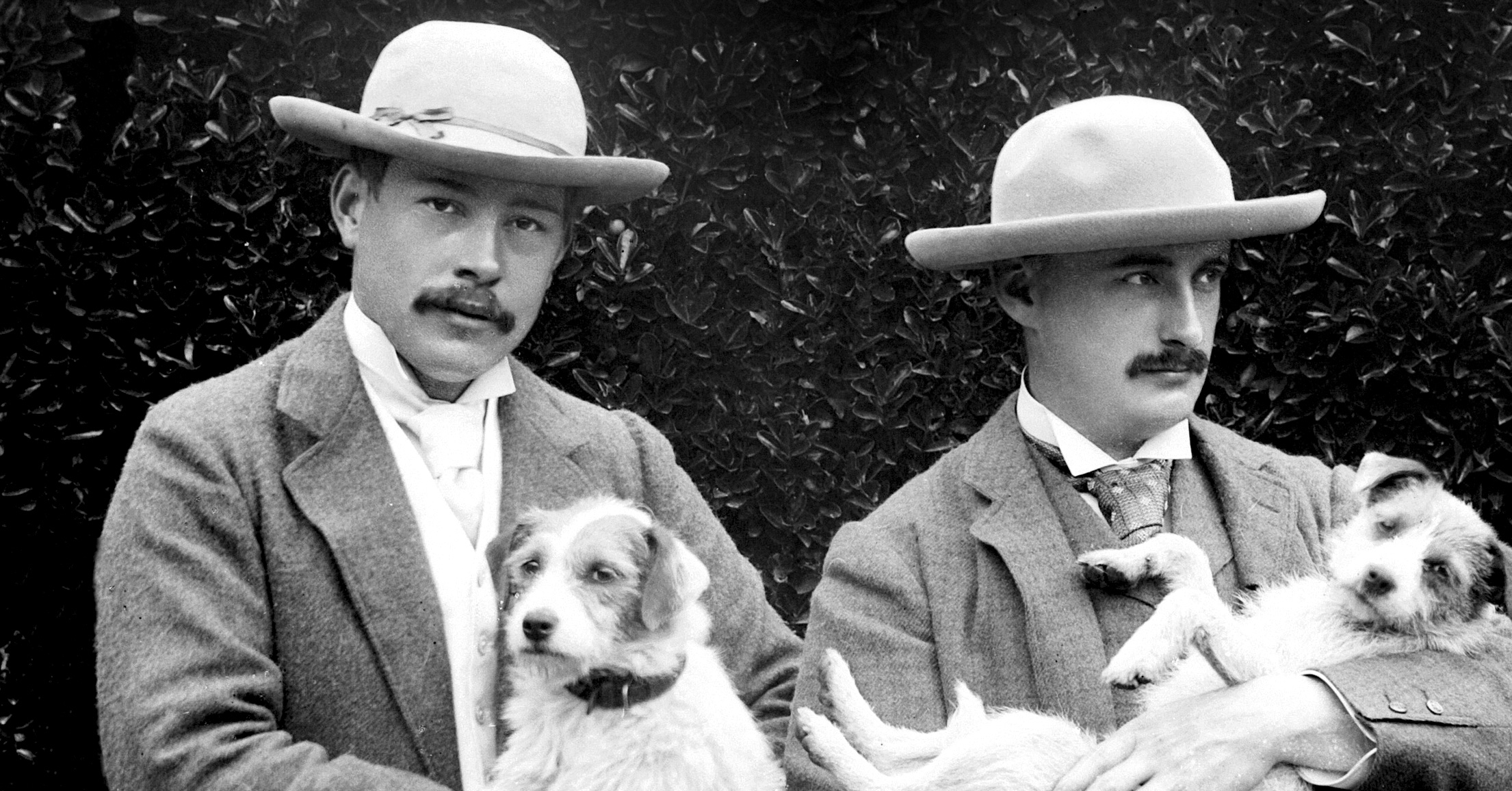
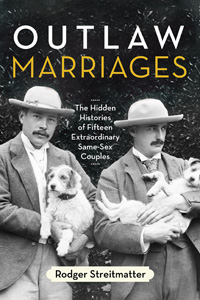
    For the last few months, I’ve been spending a good deal of my time and energy promoting my book, which was released in May 2012, titled Outlaw Marriages: The Hidden Histories of Fifteen Extraordinary Same-Sex Couples. In the book, I provide mini-biographies of selected high-profile couples from the past. I call the relationships that these couples created “outlaw marriages” because they existed long before same-sex couples in this country were legally allowed to marry.

    Book cover for Outlaw Marriages by Rodger StreitmatterI’ve given any number of interviews and also have talked about the book during several events at bookstores and book fairs. One question that several interviewers and people at the readings have asked is a variation of: “Isn’t it unethical for you to expose these people as being gay when many of them concealed their sexuality and their relationship when they were alive?”

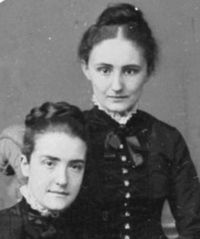
    It’s a valid question, as well as one that I’ve thought quite a bit about. As an example of such a couple who hid their relationship, I’ll point to Martha Carey Thomas and Mamie Gwinn.

    Thomas is well known among education historians because, in 1885, she created the first graduate program in this country that accepted female students. She took that highly progressive step, for the time, while she was serving as dean of the faculty at the newly created Bryn Mawr College.

    In Outlaw Marriages, I describe how Thomas pulled off that feat, but most of the chapter documents her and Gwinn’s 26-year personal relationship. The two women first lived together in Germany, where Thomas earned her doctorate. And then they continued their outlaw marriage for another 22 years while living in an on-campus residence provided for Thomas while she was dean of the faculty and then president at Bryn Mawr.

    Neither Thomas nor Gwinn, during her lifetime, ever spoke publicly about being a lesbian. And so, the question could be asked: Was it ethically justified for me to “out” them?

    Yes, I think it was.

    (Before I continue, I need to say that I don’t deserve all the credit for conducting the research that revealed Thomas and Gwinn’s lengthy relationship. One person who did much of the heavy lifting in that effort was a scholar named Helen Lefkowitz Horowitz. In 1994, she published a book titled The Power and Passion of M. Carey Thomas, released by the University of Illinois Press, that unambiguously stated that the subject of the biography was a lesbian.)

    Thomas_gwinnAs to why I was on solid ethical ground in discussing Thomas and Gwinn’s sexuality, even though both women kept the details to themselves while they were alive, I see two reasons.

    First, American society is in a very different place regarding homosexuality today than it was when Thomas and Gwinn were alive. At that time, it was against the law for two women or two men to engage in sexual activity, and they likely would have been imprisoned if their relationship had become public.

    What’s more, if their outlaw marriage had become widely known, that would have done serious damage to both women’s careers. Members of the Bryn Mawr College Board of Trustees wouldn’t have appointed Thomas dean of the faculty or, later, president if they’d known she was a lesbian. Nor would they have allowed Gwinn to serve on the faculty of the English Department, which she did.

    But that’s simply not the case today. Openly gay or lesbian educators are presidents of American colleges and universities, while others serve in the U.S. Congress, plus any number of celebrities who have come out as either lesbian or gay—people such as Ellen DeGeneres and Wanda Sykes, Neil Patrick Harris and Anderson Cooper—are enjoying highly successful careers.

    So I believe a strong case can be made that if Martha Carey Thomas and Mamie Gwinn were alive today, they’d both be open about their sexuality. These women obviously were progressive in their thinking, as they pursued professional careers when the vast majority of American women were limiting their lives to the four walls of the home. 

    Based on statements that I found in letters that Thomas wrote to her mother, I also believe she would have been more than happy to tell the world about her intimate relationship with Gwinn. In 1880, Thomas told her mother, in a letter the young woman wrote from Germany, “If it were only possible for women to elect women as well as men for a ‘life’s love,’ I would do so with Mamie in a minute.” Thomas repeated the same thought two years later, this time writing that her “fondest dream” was that “Mamie and I could go through the marriage ceremony together.” Likewise, Gwinn often referred to herself, in letters she wrote, as being Thomas’s “wife.”

    The second of the two reasons why I believe I’m fully justified in publishing a book that discusses the sexuality of gay men and lesbians from the past has to do with my readers.

    Casting all modesty aside, I believe my book and other works about high-achieving gay people have enormous benefit for members of today’s LGBT community. People who are stigmatized because of their sexuality—and, yes, despite the advances that have been made, gay people still carry a stigma in the minds of many people—are looking for examples of widely respected individuals who share their sexual orientation.

    Young gay or questioning teenagers, in particular, are eager to learn about successful members of the LGBT community.

    Indeed, the couples who come to life in Outlaw Marriages, I believe, are particularly attractive subjects for lesbian and gay youths to read about because they’re what I might call “two-fers.” That is, the individuals in the book not only made major contributions in their individual fields—such as Jane Addams in social reform, Elsie de Wolfe in interior design, and Ismail Merchant and James Ivory in filmmaking—but also triumphed by sharing their lives with another lesbian or gay man for many years—Addams and Mary Rozet Smith were together for 43 years, de Wolfe and Bessie Marbury were a couple for 41 years, and Merchant and Ivory were together for 44 years.

    Successful careers + successful outlaw marriages = stellar LGBT role models.

    About the Author

    Rodger Streitmatter, a former newspaper reporter, is a member of the School of Communication faculty at American University. He lives in Washington, D.C., with his husband, Tom Grooms. He is the author of Outlaw Marriages: The Hidden Histories of Fifteen Extraordinary Same-Sex Couples.


  • OFRI-WhatDoctorsFeel-FINALA look at the emotional side of medicine–the shame, fear, anger, anxiety, empathy, and even love that affect patient care
     

    Physicians are assumed to be objective, rational beings, easily able to detach as they guide patients and families through some of life's most challenging moments. But doctors' emotional responses to the life-and-death dramas of everyday practice have a profound impact on medical care. And while much has been written about the minds and methods of the medical professionals who save our lives, precious little has been said about their emotions. In What Doctors Feel, Dr. Danielle Ofri has taken on the task of dissecting the hidden emotional responses of doctors, and how these directly influence patients. 

    How do the stresses of medical life-from paperwork to grueling hours to lawsuits to facing death-affect the medical care that doctors can offer their patients? Digging deep into the lives of doctors, Ofri examines the daunting range of emotions-shame, anger, empathy, frustration, hope, pride, occasionally despair, and sometimes even love-that permeate the contemporary doctor-patient connection. Drawing on scientific studies, including some surprising research, Dr. Danielle Ofri offers up an unflinching look at the impact of emotions on health care.

    With her renowned eye for dramatic detail, Dr. Ofri takes us into the swirling heart of patient care, telling stories of caregivers caught up and occasionally torn down by the whirlwind life of doctoring. She admits to the humiliation of an error that nearly killed one of her patients and her forever fear of making another. She mourns when a beloved patient is denied a heart transplant. She tells the riveting stories of an intern traumatized when she is forced to let a newborn die in her arms, and of a doctor whose daily glass of wine to handle the frustrations of the ER escalates into a destructive addiction. But doctors don't only feel fear, grief, and frustration. Ofri also reveals that doctors tell bad jokes about "toxic sock syndrome," cope through gallows humor, find hope in impossible situations, and surrender to ecstatic happiness when they triumph over illness. The stories here reveal the undeniable truth that emotions have a distinct effect on how doctors care for their patients. For both clinicians and patients, understanding what doctors feel can make all the difference in giving and getting the best medical care. 

    About the Author

    Danielle Ofri, MD, PhD is an associate professor of medicine at New York University School of Medicine and has cared for patients at Bellevue Hospital for over two decades. She is the author of Singular Intimacies: Becoming a Doctor at Bellevue, Incidental Findings: Lessons from my Patients in the Art of Medicine, and Medicine in Translation: Journeys With My Patients. Ofri is a regular contributor to the New York Times' Well blog as well as the New York Times' "Science Times" section.

    Follow @DanielleOfri on Twitter. Like her on Facebook. Visit her website.


    Read the Boston Globe review of What Doctors Feel:

    Ofri adroitly balances presentation of her own experiences and those of others, with research into the emotional aspects of medical practice. The result is a fascinating journey into the heart and mind of a physician struggling to do the best for her patients while navigating an imperfect health care system that often seems to value “efficiency,” measured in dollars and minutes, more than the emotional well-being of either physician or patient. 

    Read Danielle Ofri on the "The Darkest Year of Medical School" at Slate:

    Students are not just learning medicine during the third year of medical school; they are learning how to be doctors. Despite the carefully crafted official medical curriculum, it is the “hidden curriculum” that drives the take-home messages. The students astutely note how their superiors comport themselves, how they interact with patients, how they treat other staff members. The students are keen observers of how their supervisors dress—and how they may dress down those around them. They figure out which groups of patients can be the object of sarcasm or humor, and which cannot.

    On a daily basis, the students witness fear, anger, grief, humiliation—in patients and doctors alike—all of which are largely unacknowledged. They see egos rubbing up against each other, hierarchies at play, bureaucracies in action. They observe that many of the niceties of patient care fall prey to the demands of efficiency and high patient turnover. Much of what they learned about doctor-patient communication, bedside manner, and empathy turns out to be mere lip service when it comes to the actualities of patient care.

    Read "My Near Miss" by Danielle Ofri at the New York Times:

    I never told anyone about my lapse — not my intern, not my attending physician, certainly not the patient’s family. I tried to rationalize it: the radiologist had caught the bleeding, and no additional harm had come to the patient.

    But what if I had discharged the patient? What if I had started her on a medication like aspirin that could have worsened the bleeding? My error could easily have led to a fatal outcome. The patient was simply lucky.


    Related articles

    How Gotcha Politics in the Doctor's Office Can Harm Patient Care
    Beacon Buzz: Near Misses and Revolutionary Brides
    The Darkest Year of Medical School

  • 7332What Doctors Feel: How Emotions Affect the Practice of
    Medicine
     
    by Danielle
    Ofri
     

    One of the NYTimes most emailed stories this week is from
    Danielle Ofri, MD:

    I never told anyone about my lapse — not my intern, not my
    attending physician, certainly not the patient’s family. I tried to rationalize
    it: the radiologist had caught the bleeding, and no additional harm had come to
    the patient.

    But what if I had discharged the patient? What if I had
    started her on a medication like aspirin that could have worsened the bleeding?
    My error could easily have led to a fatal outcome. The patient was simply
    lucky.

    In hospital lingo, this was a “near miss.” But a near miss
    is still an error, just one in which backup systems, oversight or sheer luck
    prevent harm. [Read
    the rest here
    ]


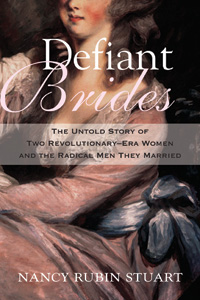
    0117 (1)Defiant Brides: The Untold Story of Two Revolutionary-Era Women and the Radical Men They Married 
    by Nancy Rubin Stuart

    C-SPAN2’s Book TV aired Nancy Rubin Stuart’s reading at the Fraunces Tavern in New York.

    Barnes & Nobles’s book blog spoke with Nancy Rubin Stuart about the book and its jacket art:

    “As I completed research and began writing the manuscript, I realized that there were several historical images of the treacherous Peggy Shippen Arnold but only one of Lucy Knox. Worst of all it was only a silhouette! Initially I thought the cover might depict the faces of those two women combined with several historical images of the American Revolution. Ruefully I mentioned my disappointment about the lack of portrait for Lucy Flucker Knox to my editor, Gayatri Patnaik, at Beacon Press, who assured me that we’d find a different solution. Bob Kosturko, the designer who created a stunning cover for The Muse of the Revolution, she explained, would be creating the cover for Defiant Brides.

    “Gayatri was right. Some months later, Beacon Press sent me a draft of Bob’s cover design. I was thrilled. He had cleverly used the bottom half of a lavish portrait of Peggy Shippen Arnold but had eliminated her face. Simultaneously that solved the problem of Lucy’s missing face and hinted at the unpredictable course of the marriages that both teenagers embarked upon in the first flush of passion during the turbulence of the birth of the United States.” [Read the rest here]


    Light Without Fire: The Making of America's First
    Muslim College
    by Scott Korb

    Rollo Romig's wrote about the book and Zaytuna College on The
    New Yorker's book blog
    :

    In his new book, “Light Without Fire,” the religion writer
    Scott Korb followed Zaytuna’s inaugural class of fifteen students through their
    first year, and his reporting reveals one of the most intriguing recent
    American experiments in providing a religious education. [Read the rest here]


    Brokers of Deceit: How the U.S. Has Undermined
    Peace in the Middle East
    by Rashid Khalidi

    Daily
    Beast
    write-up by
    Peter Beinart of "Open Zion”:

    Here Khalidi is not faulting the
    Israelis; they are a sovereign state acting in what they determine is their
    best interest, even if one views it as unjust, immoral, and at the expense of
    legitimate Palestinian rights. More importantly, Israel is only able to act
    with such impunity because they understand the power of the “no light” dogma.
    The U.S. accepts the perpetual “existential crisis” of Israel that makes the
    occupier the victim and gives them a free pass to act as they wish.


    White Coat, Black Hat: Adventures on the Dark Side of Medicine by Carl Elliott

    On CNN.com's Opinion Page, Carl Elliott examines how misdeeds are covered up in medical bureaucracies:

    The problem is in how success is measured, which is not in the soft currency of ethics or trust, but in how much money the strategy saves for the institution. If it pays for everyone to keep quiet, that's what the bureaucrats will advise. [Read the rest here]


    Mr. Hornaday’s War: How a Peculiar Victorian
    Zookeeper Waged a Lonely Crusade for Wildlife That Changed the World
    by Stefan
    Bechtel

    Review of Mr. Hornaday's War in the Idaho
    Statesman

    In "Mr. Hornaday's War: How a Peculiar Victorian
    Zookeeper Waged a Lonely Crusade for Wildlife that Changed the World,"
    author Stefan Bechtel introduces us to a character seemingly filled with
    contradiction. Hornaday is fearless in his life's pursuits but overcome with
    fear at the rapid destruction of animal populations. He is a trophy hunter who
    travels to the far reaches of unsettled lands in Africa and India to take down
    a Bengal tiger or a wildebeest but carries guilt for the taking of 22 buffalo
    during his hunt out West. He is an avid hunter who is vehemently opposed to the
    new rapid-fire shotgun of his time because of its ability to strike so deftly.
    He is perpetually at odds with nearly every leader of his day but develops a
    unique kinship with Teddy Roosevelt that lasts a lifetime. [Read
    the rest here
    ]


    My Mother’s Wars by Lillian Faderman

    The Gay &
    Lesbian Review 
    full-page review in the May/June issue. Calling the
    book “a remarkable work of reconstruction” and noting its “voluminous list of
    resources,” the review concludes, “As usual, Faderman’s seemingly effortless
    prose is the result of years of patient research. As far as possible, she has
    made sure that the past will be accurately remembered.”


    Dirt Work: An Education in the Woods by Christine Byl

    Women’s
    Adventure Magazine
     
    online review: “While Byl does not romanticize
    nature or her work, she skillfully uses poetic language, daring the reader to
    feel the grit, grim, and sore muscles of working ten hour shifts digging,
    chopping, clearing, and creating trails…Dirt Work is highly recommended for
    readers who love the outdoors, and especially those who have hiked in a
    national park or forest, and benefited from the hard work of trail crews.”

    Related articles

    Light Without Fire: The Making of America's First Muslim College
    Beacon Press Book Expo Preview
    Defiant Brides: The Untold Story of Two Revolutionary-Era Women and the Radical Men They Married
    Beacon Authors on the Boston Marathon Bombings and Aftermath
    Beacon Buzz: How "Snob Zones" keep out affordable housing
  • Logo-BEA-2013Are you in New York for BookExpo America? Here's the low-down on how to connect with Beacon Press to meet our authors, get your hands on some galleys of upcoming books, and chat with Beacon publicists, editors, and other cool folks.

    See below for more info on some of the authors and books we'll be featuring in Booth #2742. 

    For the second year, BookExpo America will open to the public for Power Reader Hours, Saturday, June 1st from 9am-1pm. Power Readers will have the chance to pick up copies of books at Beacon Presss booth #2742 that examine social issues such as interfaith cooperation, immigration reform, reproductive rights, and marriage equality. Come visit us and Read for Change!

    Join us tonight (Wednesday, May 29th) for the Indie Presses Celebrate Indie Booksellers Reception

    9:00 pm – 12:00 am
    Grand Hyatt at Grand Central, 109 East 42nd Street (official ABA hotel)
    Open to all American Booksellers Association members

    Join us for a celebration of independent bookstores and sellers! Mingle with independent presses and their authors. Beacon authors in attendance include Mirta Ojito (Hunting Season, on sale 10/29/13), Scott Korb (Light without Fire), and Danielle Ofri, MD (What Doctors Feel). RSVP. Open bar until 11:00 pm.

    Hosted by @BeaconPressBks @ABAbook @otherpress @Milkweed_Books @BDLPub @blueapplebooks @lonelyplanet @quirkbooks @7storiespress


    Books we'll be featuring at Booth #2742:

    0181Hunting Season: Immigration and Murder in an All-American Town by Mirta Ojito
    Featured Galley Giveaway at Beacon Press booth 2742
    Thursday, May 30th, 9:00 am – 12:00 pm

    Mirta will be at the booth signing copies of Hunting Season starting at 10:30 am.

    "An account that is as unflinching as it is important. Both an incisive reconstruction of a heartbreaking murder and an unsparing diagnosis of a national malady . . . with HUNTING SEASON Ojito has done truth an invaluable service. Extraordinary." —Junot Díaz, Pulitzer Prize winning author of The Brief Wondrous Life of Oscar Wao


    3276Public Enemy: Confessions of an American Dissident by Bill Ayers
    Featured Galley Giveaway at Beacon Press booth 2742
    Thursday May 30th, 9:00 am – 5:00 pm

    Labeled a "domestic terrorist" by the McCain campaign in 2008 and used by the radical right in an attempt to castigate Obama for "pallin' around with terrorists," Bill Ayers is in fact a dedicated teacher, father, and social justice advocate with a sharp memory and even sharper wit. Public Enemy tells his story from the moment he and his wife, Bernardine Dohrn, emerged from years on the run and rebuilt their lives as public figures, often celebrated for their community work and much hated by the radical right. In the face of defamation by conservative media, including a multimillion-dollar campaign aimed solely at demonizing Ayers, and in spite of frequent death threats, Bill and Bernardine stay true to their core beliefs in the power of protest, demonstration, and deep commitment. Ayers reveals how he has navigated the challenges and triumphs of this public life with steadfastness and a dash of good humor—from the red carpet at the Oscars, to prison vigils and airports (where he is often detained and where he finally "confesses" that he did write Dreams from My Father), and ultimately on the ground at Grant Park in 2008 and again in 2012.

    0173Playing House: Notes of a Reluctant Mother by Lauren Slater
    Featured Galley Giveaway at Beacon Press booth 2742
    Friday May 31st, 9:00 am – 12:00 pm

    Lauren Slater’s rocky childhood left her cold to the idea of ever creating a family of her own, but a husband, two dogs, two children, and three houses later, she came around to the challenges, trials, and unexpected rewards of playing house. Boldly honest, these biographical pieces reveal Slater at her wittiest and most deeply personal. She describes her journey from fiercely independent young woman to wife and mother, all while coping with mental illness. She tells of a chemical fire that rekindled the flame in her ailing relationship with her husband; she reflects on her decision to have an abortion, and then later to have children despite suffering from severe depression; she examines sex, love, mastectomies, and how nannies can be intrusive while dogs become family. Beautifully written, often humorous, and always revealing, these stories scrutinize the complex questions surrounding family life, offering up sometimes uncomfortable truths.


    See our website for an overview of our BEA 2013 schedule. 

    Follow @BeaconPressBks for updates and info.

    Peruse our Fall Catalog and stop by to tell us what you're excited about.


  • Dr. Jay Michaelson is vice president of the Arcus Foundation and the author of five books and two hundred articles on religion, sexuality, ethics, and contemplative practice. His most recent book, God vs. Gay? The Religious Case for Equality, was a Lambda Literary Award finalist

    Jay is a contributing editor to the Forward newspaper and associate editor of Religion Dispatches magazine, and his articles appear in The Daily Beast, Salon, The Huffington Post, and other publications. Other books include Everything is God: The Radical Path of Nondual Judaism and Another Word for Sky: Poems.

    Yesterday, Jay contributed to a discussion on Huffington Post Live about recent hate crimes directing against LGBT people. We've included the video below along with a companion piece originally posted on Huffington Post.

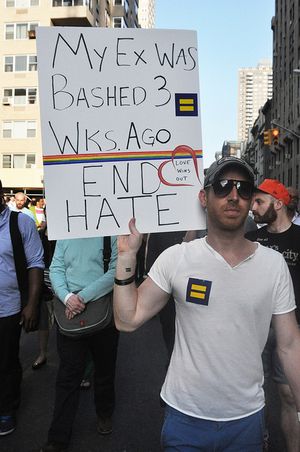
    The murder of Mark Carson, targeted for being gay, is the third, and most serious, in a recent string of attacks against gay men in New York City. The horrific act, under investigation as a hate crime, has brought appropriate condemnations from all quarters.

    But what it should not have brought is surprise. On the contrary — Carson's murder highlights the shortcomings of a rights-based, marriage-based approach to LGBT equality, and cries out for deeper, and more difficult, forms of engagement.

    With states falling like dominos into the marriage-equality camp, many have expressed shock that homophobic hatred and violence is "still" possible. But why is this shocking? The advent of civil rights for African Americans did not end racial violence, still widespread nearly 50 years after the Civil Rights Act. Feminism has not ended violence against women. Indeed, from Seneca Falls to Selma to Stonewall, to echo President Obama's historic turn of phrase, legal inequality is only the tip of the iceberg. Submerged beneath it are deep-seated patterns of injustice, privilege, prejudice and fear.

    In an astonishingly short period of time, homophobia has gone from commonplace to contemptible. To take but one example, star athletes are today punished for saying a word – "faggot" — that was one of the most common slurs of 'trash talk' just five years ago. Indeed, in coverage of Carson's murder, the word, like the 'n-word,' was referred to only euphemistically, as an "antigay slur."

    8776739378_fe6acdb3fc_z
    Photo by Michael Fleshman, used by permission.

    This change is welcome, but it is also so rapid as to induce whiplash. And banning language from polite speech does not remove it from consciousness. On the contrary: the tamping down of hatred only increases its intensity, leading to tragic bursts of rage.

    So too the advances in same-sex marriage, the cultural acceptance of LGBT people, and other hard-earned markers of the normalization of sexual diversity. All of these are crucial signposts on the path to equality, and they did not come about overnight; they were, in fact, the culmination of decades of struggle. But none of them, nor all of them altogether, can uproot the roots of homophobia, which lie (among other places) within religion, culture and psychology.

    In social struggles, legal equality is not the beginning of the end, but the end of the beginning. Yes, the state's imprimatur upon animus is now being, gradually, removed. But the animus itself remains. Carson's murder; the other acts of violence against LGBT people in New York; and, further from the camera's lights but more tragic and more prevalent, the spree of violence against transgender people — particularly transgender women of color, some of the most vulnerable members of the LGBT community — are not vestiges of bygone days we thought we'd left behind. Rather, they are a reminder that most of the work still lies ahead.

    The work to come is different from what's come before. To be sure, legal inequality still persists in most states; in my home state of Florida, for example, I can be fired from a job simply for being gay, and my husband and I cannot adopt a child. But the real debates take place not in legislatures but in living rooms, locker rooms, and, yes, churches as well. For example, religious leaders cannot stand on the sidelines, or equivocate between 'sin' and 'sinner.' You're either opening hearts or closing them, fighting hatred or abetting it. Unfortunately, neutrality is not an option.

    Nor is blissful ignorance. It's fun to live in "gay ghettos," or closed bubbles of like-minded friends. But these spaces are permeable. They are not as safe as they seem. And if we want to fight the causes of violence, LGBT folks and our allies need to venture out of them, and have more difficult conversations with those who aren't yet allies. This is more difficult than winning lawsuits; it takes time, and requires vulnerability, dialogue, and persistence. It is the responsibility of all of us, not just a few lobbyists and lawmakers. But personal relationships, personal stories, and personal experiences are the water that will erode the stone of the hardened heart. Nothing else will.

    Nor can we imagine that because some of us are secure, all of us are secure. Progress has been uneven. It has not reached LGBT people in red states, in conservative religious families, in many communities of color, or in economically disadvantaged communities. It has not encompassed those whose gender presentation is different from the norm, or who do not "pass," or who are not "just like everyone else." These are people who live in constant threat of violence and marginalization, often intersecting with other forms of oppression.

    Carson's murder reminds us that violence can strike anyone, anywhere. But it should also remind us that some people live with this fear every day.

    Some privileged pundits have recently opined that the gay mission has been accomplished, that gay organizations should shut their doors, that victory may now be declared. To them, I suppose, Carson's murder is just an anomaly — and those of more marginalized people, like Ce Ce Acoff, the most recent transgender woman of color victimized by hate, are simply invisible.

    But this violence is neither anomalous nor invisible. It should not even be surprising. Rather, it is a reminder that hate doesn't disappear when discriminatory laws are taken off the books. For those of us who need reminding.

    Related articles

    Geoffrey Canada: Our failing schools. Enough is enough!
    Beacon Books at Audible: Faitheist
    Jay Michaelson: Mission Not Accomplished: The Anti-Gay Murder of Mark Carson Should Be a Wake-Up Call
    Jewish Lessons of Murder in Greenwich Village
  • Susan Katz Miller is a former Newsweek reporter and former US correspondent for New Scientist. She blogs on interfaith families for the Huffington Post and OnBeingBoth.com. She lives in the Washington, DC area with her husband and two interfaith teenagers. Her book, Being Both: Embracing Two Religions in One Interfaith Family, will be published by Beacon Press in October. This post originally appeared at her OnBeingBoth blog.

    In a regular feature titled “Ask Interfaith Mom,” I plan to tackle your questions about raising interfaith kids. Here’s a great question from a comment on a recent post about interfaith grandparents:


    KATZ-MILLER-BeingBothQuestion: In raising my son both, I realize his grandparents will not always like or support how we are bringing the two traditions together and I am interested in ways to present to them that they should always feel free to opt out of saying anything or doing anything they don’t really believe. Thanks for any guidance you have!

    One of the most liberating aspects of choosing both family religions is that you give yourself permission to pass on to your children that which is meaningful to you, rather than a required system of beliefs and practices. And in making your own choices, you set a precedent that your children will have the right to opt into or out of any of these beliefs or practices.

    Discussing this freedom with your parents (the grandparents) will help them to feel comfortable making their own choices about whether or not to participate in any ritual or prayer they might encounter when celebrating with your interfaith family. Ideally then, the idea that they have permission to participate, or not, would be integral and natural, and would not need to be announced in a formal manner.

    But of course, it may take time for extended family members to reach this state of appreciation. Grandparents who have spent a lifetime in a “monofaith” environment, and who may still feel sadness over the fact that their grandchildren will not be raised exclusively in their own religion, cannot always be expected to jump into interfaith practice with enthusiasm. What I can tell you is that many who have started out reluctant or even upset over the idea of an interfaith upbringing, over time have come to appreciate the way extended interfaith families are able to share spiritual inspiration, religious history, and cultures.

    However, everyone in an interfaith family (or for that matter, living in our religiously pluralistic society) is going to have moments, often when visiting a more traditional place of worship, when they may want to opt out of participating in a prayer or ritual. Let’s get to some challenging specifics: for instance, taking communion at church. In some churches, the ritual of taking communion becomes a public declaration around who has the right to participate. In such a setting, it would be important to reassure interfaith family members in advance (whether a grandparent, spouse, or interfaith child) that it is fine to remain seated in the pew, and not go up to take communion. Explain that even some Christians abstain from communion at certain times or in certain places, for their own personal reasons, or because not every Christian denomination invites all Christians from other denominations to participate. While those who choose not to take communion may feel like they are sticking out by staying seated, in theory no one should ask them why they remained in the pew.

    When you design an interfaith family celebration, this is your opportunity to make the rituals and prayers as inclusive as possible. Ideally, such a celebration would be so welcoming that no one would feel the need to abstain. Sometimes, this means recasting a prayer or ritual to be more radically inclusive, and explicitly inviting all to participate. Personally, I have seen Jewish people (and even a rabbi) take communion at a super-progressive Christian service in which the communion ritual was presented as a metaphorical table where all share food and drink together, based on the Jewish rituals of blessing over bread and wine, regardless of religious institutional membership or beliefs.

    To take another example from the other side of the aisle, the bris, or Jewish ritual circumcision for baby boys, can be difficult for non-Jewish family members. Honestly, it is difficult for many Jewish people too, some of whom now oppose circumcision and have designed baby-welcoming ceremonies that do not involve cutting. It’s important to share all the different viewpoints on this ritual with non-Jewish family. I do understand why some interfaith families choose to have a bris, and the deep meaning it has for some Jewish family members. But I don’t think anyone (Jewish or otherwise) should feel required to attend the ceremony. And it would be important to communicate this permission to participate, or not, to everyone in the extended family as early as possible to avoid misunderstandings. Both the new grandparents and their intermarried children must make an extra effort to empathize with each other at this vulnerable moment around birth: the new parents must try hard to accept and not resent family members who choose not to participate, and family must try hard to accept and not resent the choice of the new parents to honor (or conversely, to move away from) such an ancient ritual.

    Sometimes, grandparents may surprise you with their willingness to participate, and cross theological boundaries. For instance, I was worried about how my Jewish father would react to hearing his interfaith grandchildren say a traditional Christian prayer such as the Lord’s Prayer in our interfaith community Gathering. To my surprise, I saw my father reciting the prayer along with his grandchildren, and discovered that he said this prayer in his public school classroom everyday, growing up in the 1930s. Since the prayer does not mention Jesus, my father did not even realize until much later that this is officially a Christian prayer. As an adult interfaith child who was raised Jewish, my own appreciation of the Lord’s Prayer is heightened by the knowledge that many scholars have pointed out the parallels between the language in the Lord’s Prayer and the Kaddish and other central Jewish prayers. So a moment I had anticipated as possibly problematic became an opportunity for interesting theological discussion with my parents.

    What experiences have you had in including interfaith grandparents? Or, what is your perspective as an interfaith grandparent? And what questions do you have for “Ask Interfaith Mom”?


    Related articles

    Light Without Fire: The Making of America's First Muslim College
    Remembering the Holocaust and One of Its Most Fervent Deniers
    Beacon Authors on the Boston Marathon Bombings and Aftermath