• Carl Elliott is a Hastings Center Fellow and a professor at the Center for Bioethics at the University of Minnesota. His
    most recent book is White Coat, Black Hat: Adventures on the Dark Side of
    Medicine
    .

    This post originally appeared at the Hastings Center's Bioethics Forum. 

    MarkingsonOver the past month, a petition asking the governor of
    Minnesota to investigate a research scandal at the University of Minnesota has
    been steadily gathering momentum. The scandal in question originated in 2004
    with the suicide of Dan Markingson in an AstraZeneca-funded study of
    antipsychotics. The petition to investigate the scandal is backed by a number
    of high-profile supporters, among them Lancet editor Richard Horton,
    former BMJ editor Richard Smith, three former editors of the New
    England Journal of Medicine
    (Marcia Angell, Arnold Relman, and Jerome
    Kassirer), Wellesley College historian Susan Reverby, who uncovered the
    Guatemala syphilis studies, Hastings Center co-founder Daniel Callahan, and
    over 200 scholars in bioethics, clinical research,
    medical humanities, and related disciplines.

    The petition also has a noticeable gap. Very few signers come from
    the University of Minnesota. In fact, only two people from the Center for
    Bioethics have signed: Leigh Turner and me. This is not because any faculty
    member outside the Department of Psychiatry actually defends the ethics of the
    study, at least as far as I can tell. What seems to bother people here is
    speaking out about it. Very few faculty members are willing to register their
    objections publicly.

    Why not? Well, there are the obvious possibilities—fear, apathy,
    self-interest, and so on. At least one person has told me she is unwilling to
    sign because she doesn’t think the petition will succeed. But there may be a
    more interesting explanation that I’d like to explore. For those who are
    unfamiliar with the scandal, however, let me backtrack briefly and explain the
    events in question. (You can read the longer version in Mother Jones magazine
    and additional background in a Bioethics Forum post.)

    In late 2003, Dr. Stephen Olson, the head of the schizophrenia
    program at the University of Minnesota, recruited an acutely psychotic young
    man named Dan Markingson into an AstraZeneca-funded research study of
    antipsychotic drugs. Olson enrolled Dan despite the fact that he had been
    repeatedly judged incapable of giving informed consent, despite the fact that
    his mother objected to his participation, and despite the fact that Dan had
    been placed under an involuntary commitment order that legally compelled him to
    obey Olson’s recommendations. For months, Mary Weiss, Dan’s mother, tried
    desperately to get her son out of the study, warning that his condition was
    worsening and that he was in danger of committing suicide. Her warnings were
    ignored. In May 2004 Dan stabbed himself to death with a box cutter so violently
    that he nearly decapitated himself.

    The research study itself was plagued by ethical problems: financial
    incentives to keep subjects in the study as long as possible, conflicts of
    interest for the investigators, an inexplicable gap in the exclusion criteria,
    and a questionable scientific rationale. AstraZeneca was eventually forced to
    pay $520 million in fraud penalties, and some of its misconduct was traced back to the University of Minnesota.

    You might think that events this alarming would prompt a
    university investigation. That is not what happened. Instead, the university blocked Mary’s efforts to get Dan’s medical
    records, and when her lawsuit against the university was dismissed on grounds
    of sovereign immunity, it filed a legal action against her, demanding $57,000
    in legal costs. Even as evidence has accumulated suggesting a much larger
    problem involving more psychiatric studies and more mistreated
    subjects, the university has stonewalled every effort to get to the truth.

    Why would faculty members remain silent about such an alarming
    sequence of events? One possible reason is simply because they do not feel as
    if the wrongdoing has anything to do with them. The University of Minnesota is
    a vast institution; the scandal took place in a single department; if anyone is
    to be blamed, it is the psychiatrists and the university administrators, not
    them. Simply being a faculty member at the university does not implicate them
    in the wrongdoing or give them any special obligation to fix it. In a phrase:
    no guilt, hence no responsibility.

    My view is somewhat different. These events have made me deeply
    ashamed to be a part of the University of Minnesota, in the same way that I
    feel ashamed to be a Southerner when I see video clips of Strom Thurmond’s
    race-baiting speeches or photos of Alabama police dogs snapping at black civil
    rights marchers. I think that what our psychiatrists did to Dan Markingson was
    wrong in the deepest sense. It was exploitative, cruel, and corrupt. Almost as
    disgraceful are the actions university officials have taken to cover it up and
    protect the reputation of the university. The shame I feel comes from the fact
    that I have worked at the University of Minnesota for 15 years. I have even
    been a member of the IRB. For better or worse, my identity is bound up with the
    institution.

    These two different reactions—shame versus guilt—differ in important
    ways. Shame is linked with honor; it is about losing the respect of others, and
    by virtue of that, losing your self-respect. And honor often involves
    collective identity. While we don’t usually feel guilty about the actions of
    other people, we often do feel ashamed if those actions reflect on our own
    identities. So, for example, you can feel ashamed at the actions of your
    parents, your fellow Lutherans, or your physician colleagues—even if you feel
    as if it would be unfair for anyone to blame you personally for their actions.

    Shame, unlike guilt, involves the imagined gaze of other people.
    As Ruth Benedict writes: "Shame is a reaction to other people’s criticism.
    A man is shamed either by being openly ridiculed or by fantasying to himself
    that he has been made ridiculous. In either case it is a potent sanction. But
    it requires an audience or at least a man’s fantasy of an audience. Guilt does
    not.”

    In scandals, this imagined audience can produce very different,
    even opposite, reactions. On the one hand, it is what leads many people to try
    so hard to keep scandals secret. This impulse to cover up wrongdoing can be
    toxic, as the Catholic Church has discovered. But it is also what leads
    insiders to speak out publicly against a scandal. By speaking out, you show
    that you are separating yourself from the wrongdoing in order to maintain your
    honor and self-respect. You are saying to the world, “Do not think that I am a
    part of this.”

    Shame and honor may seem like old-fashioned ideas, but if you read
    the comments left on the petition by University of Minnesota alumni, you cannot
    help but be struck by their language. “How shameful for UMN, my alma mater.” “I
    am a graduate of the University of Minnesota and want to be proud of my school,
    but following this case has made me deeply ashamed.” “I am a University of
    Minnesota alum, and I am ashamed of my alma mater right now.” “To call this
    merely shameful would be wholly inadequate.” “Attended U of MN Medical School
    and then U of MN Psychiatry residency – ashamed of the Psychiatry Department.” “I
    am a graduate (CLA, 1981) and ashamed of the way the University continues to
    handle this tragic case.” “The University's legal team should also be ashamed
    of their behavior in further victimizing this family.”

    Obviously, this shame is something I understand, or else I would
    not be working so hard to raise awareness of the petition and convince others
    to sign on. (You can sign the petition here.) I also believe that the
    truth will eventually come out, and when that happens, there will be more than
    enough shame to go around. The refusal to investigate will only make things
    worse. As Jesse Ballenger writes on the petition, “As a faculty member at a
    university (Penn State) now notorious for failing to investigate abuses, I find
    the refusal of the University of Minnesota to confront this scandal sadly
    familiar.”

    Editor’s Note: Beacon Broadside’s editor, Jessie Bennett, is
    one of the University of Minnesota alumni quoted above.

    Read an Excerpt or the Reader's Guide from White Coat, Black Hat.


    Related articles

    "They need to be held accountable": Mary Weiss and the call to investigate the University of Minnesota
    Out Now: My Mother's Wars by Lillian Faderman
    The Need to Cheat
    No more Dan Markingsons [Pharyngula]
    The Worst of All Possible IRB Worlds
    The Deadly Corruption of Clinical Trials

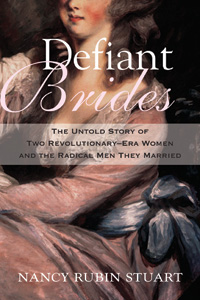
  • 0117The story of two Revolutionary-era teenagers who defy their Loyalist families to marry radical patriots, Henry Knox and Benedict Arnold, and are forever changed

    When Peggy Shippen, the celebrated blonde belle of Philadelphia, married American military hero Benedict Arnold in 1779, she anticipated a life of fame and fortune, but financial debts and political intrigues prompted her to conspire with her treasonous husband against George Washington and the American Revolution. In spite of her commendable efforts to rehabilitate her husband's name, Peggy Shippen continues to be remembered as a traitor bride.

    Peggy's patriotic counterpart was Lucy Flucker, the spirited and voluptuous brunette, who in 1774 defied her wealthy Tory parents by marrying a poor Boston bookbinder simply for love. When her husband, Henry Knox, later became a famous general in the American Revolutionary War, Lucy faithfully followed him through Washington's army camps where she birthed and lost babies, befriended Martha Washington, was praised for her social skills, and secured her legacy as an admired patriot wife.

    And yet, as esteemed biographer Nancy Rubin Stuart reveals, a closer look at the lives of both spirited women reveals that neither was simply a "traitor" or "patriot." In Defiant Brides, the first dual biography of both Peggy Shippen Arnold and Lucy Flucker Knox, Stuart has crafted a rich portrait of two rebellious women who defied expectations and struggled-publicly and privately-in a volatile political moment in early America.

    Drawing from never-before-published correspondence, Stuart traces the evolution of these women from passionate teenage brides to mature matrons, bringing both women from the sidelines of history to its vital center. Readers will be enthralled by Stuart's dramatic account of the epic lives of these defiant brides, which begin with romance, are complicated by politics, and involve spies, disappointments, heroic deeds, tragedies, and personal triumphs.

    Shelf
    Awareness starred review
    :
    “An
    effortless read and a fresh perspective on the American Revolution.” 

    Kirkus Reviews: “Stuart… draws on her long experience writing about
    women and social history to show that strong women have always driven their
    husbands to perform prominent actions, both good and bad.”

    Booklist: “With the seemingly endless parade of books devoted to both
    founding fathers and revolutionary rascals, it’s nice to see some attention
    paid to the fervor with which some remarkable women navigated the romantic,
    political, and wartime challenges of the era.”

    Read more and buy at Beacon.org.

    Like author Nancy Rubin Stuart on Facebook.

    “An ingenious means of bringing new life to the oldest story in our nation’s past: the American Revolution from the perspective of the young and clear-sighted wives of generals Benedict Arnold and Henry Knox. Tracing the parallel lives of two couples with conflicting loyalties, Nancy Rubin Stuart achieves a you-are-there verisimilitude in Defiant Brides that is rare and not to be missed.” —Megan Marshall, author of The Peabody Sisters: Three Women Who Ignited American Romanticism

    "In this lively double-biography, Nancy Rubin Stuart reveals the resilient lives of a leading Patriot and a notorious Loyalist: both of them women. Lucy Flucker Knox and Peggy Shippen Arnold deftly performed the parlor politics that helped to shape the American Revolution in surprising ways." —Alan Taylor, author of The Civil War of 1812: American Citizens, British Subjects, Irish Rebels, & Indian Allies

    "Written with verve and compassion, Nancy Rubin Stuart's portrait of two extraordinary marriages of the American Revolution offers a valuable and moving reminder that, even in the most dramatic of public events, private passions prevailed and participants remained, first and foremost, husbands and wives." —Marla Miller, author of Betsy Ross and the Making of America

    "A captivating look at two marriages, marked by bold rebellion and fierce loyalty. The wives of traitor Benedict Arnold and Revolutionary hero Henry Knox never met, and died an ocean apart, but Stuart’s story of their marriages, full of love, passion, betrayal and disappointments, reads like a Hollywood script." —Betty Boyd Caroli, author of First Ladies From Martha Washington to Michelle Obama

    Related articles

    Further Reading on Marriage Equality
    Books to Read for Holocaust Remembrance Week
    Pre-Release Review: Defiant Brides, The Untold Story of Two Revolutionary-Era Women and the Radical Men They Married by Nancy Rubin Stuart
    Disability History and Women's History
    Defiant Brides: The Untold Story of Two Revolutionary-Era Women and the Radical Men They Married by Nancy Rubin Stuart
  • David Chura is the author of I Don’t Wish Nobody to Have a Life Like Mine: Tales of Kids in Adult Lockup. He has worked with at-risk teenagers for the past 40 years. For 26 of those years, he taught English and creative writing in community based alternative schools and in a county penitentiary. His writings have appeared in the New York Times as well as other scholarly and literary journals. He blogs at kidsinthesystem.wordpress.com. This post originally appeared at Huffington Post. 

    1984_by_George_OrwellIt’s hard reading about the lockstep curriculum
    set out by Common Core with its emphasis on “informational readings,” and
    seeing all the hoops students and teachers have to jump through to meet its
    standards. Quite frankly, it makes me sad.

    “Why sad?” you might wonder. Frustrated, maybe, or for that
    matter, mad. But sad? Usually when the topic is education reform frustrated and
    mad come easily to me. But this is different. I’m a romantic (as I think many
    English teachers are) and I see literature—poetry, drama, fiction—and its power
    to change people’s lives as the heart of an English teacher’s job.

    But the designers of Common Core don’t see it that way. They assert that
    students have been raised on an easy-read curriculum and because of this they
    are unable to analyze complex reports, studies and government documents. The
    administration’s solution is to have informational texts make up 50 percent of
    elementary school readings and 70 percent of 12th grade readings by 2014.
    Unfortunately, the burden of this solution will fall mostly on English
    teachers, leaving them little time to teach real literature. Instead they will
    somehow have to figure out ways to get kids interested in such texts as “Fed Views” by
    the Federal Reserve Bank of San Francisco (2009) or “Executive Order 13423:
    Strengthening Federal Environmental Energy, and Transportation Management”
    published by the General Services Administration. 

    So yes, it makes me sad to see the education of the heart—the real core of any
    worthwhile English curriculum—gutted for the sake of global competition, and to
    see teachers once again take the hit for “dummied down” education.

    But I feel saddest for the kids who must struggle their way
    through this type of literal—not literary—education, especially those kids
    for whom school is already a difficult and alienating place.

    I’ve worked with those students in both
    alternative high schools and a county prison, young men and women who have
    already had the heart taken out of their lives by poverty, racism, abandonment
    and neglect. They have very little interest in school because the traditional
    school setting has had very little interest in them. And now this latest
    roadblock makes success even harder to attain: a reading curriculum that has
    less to do with real life, their real life, and more to do with corporate
    America.

    As an English teacher it’s never easy to get
    disaffected kids to pick up a book and read. I was constantly justifying my
    choices, answering the question every literature teacher (and author) is
    confronted with in one way or another, “What’s this got to do with me?” But
    once we got past those hurdles and students gave a particular reading a chance,
    I have seen books—novels, plays, poetry, biography, memoir—save at-risk kids’
    lives, if only for the time that they are reading them.

    I’m pretty certain that one of the Federalist Papers, a Common
    Core selection, wouldn’t have kept 15-year-old Warren out of trouble on the
    cell block and coming to my jailhouse classroom. But Manchild in the Promised Land did. As Warren put
    it, “I’ve never ever read a whole book before,” but once he got his hands on
    Claude Brown’s memoir that changed. Slowly, he got lost in a book that not only
    reflected Warren’s own troubled life but also did something else—showed him a
    young man much like himself deciding that life on the streets was no life at
    all. That book helped keep Warren out of trouble and coming to school long
    after he’d read the last page.

    ChuraThe way poetry did for ‘Nor, a 17-year-old
    single mom who worked the 3-11 shift at Sears. ‘Nor never missed a day of
    school because of the poets she read in class like Nikki Giovanni, Langston
    Hughes
    , Rilke, Luis Rodriguez, and her favorite, the enigmatic Emily Dickinson.
    She didn’t always understand what she read but those words helped her survive
    life in the projects where too often words had nothing to do with poetry.

    And it’s hard to imagine that George Orwell’s “Politics and the
    English Language” would have had Tanya, a real cut-up with a long suspension
    record from her home school, jumping off the school bus and running towards me
    yelling, “Mr. C., Mr. C, I finished 1984! I can’t
    believe what they did to Winston!”

    Given the way this country is going, haunted by
    one tragedy after another, maybe it’s time to re-examine what we want our true
    Common Core to be. Maybe it’s time to worry more about the heart of America,
    and about all America’s children and less about the bankrolls of corporate
    America. Let’s design a reading curriculum that keeps kids connected to their
    schools, to their communities and to their best selves.


    Related articles

    Teachers – and Activists – In Their Own Words
    Poetry You Can Watch for Poetry Month
    Common Core: Are Schools Ready?
  • Bigstock-Boston-In-The-Spring-2379424

    Beacon Press calls Boston home. While we are all back at work this week, we mourn the lives lost in the bombings and the pursuit of the suspects, and our thoughts are with their loved ones and the victims still recovering from their injuries in our area’s hospitals. Massachusetts Governor Deval Patrick and Boston Mayor Thomas Menino have set up a fund to help those most affected by the bombings: One Fund Boston. 

    We have found words of comfort and valuable analysis from our authors in the days since the Marathon bombings. 


    Scott Korb (Light Without Fire) and Suhaib Webb (Imam of the Islamic Society of Boston Cultural Center) co-wrote this piece for the New York Times answering attacks against American Islamic communities by Rep. Peter King and others: 

    Mr. King’s hypothesis, and the widespread surveillance policies already in effect since 9/11, assume that the threat of radicalization has become a matter of local geography, that American Muslims are creating extremists in our mosques and community centers.

    But what we’re learning of the suspects, the brothers Tamerlan and Dzhokhar Tsarnaev, suggests a different story, and one that has itself become familiar: radicalization does not happen to young people with a strong grounding in the American Muslim mainstream; increasingly, it happens online, and sometimes abroad, among the isolated and disaffected.

    [Read the rest at NYTimes]


    For those looking for assistance speaking with their kids about violence and tragedy, we encourage you to read this excerpt from Children Who See Too Much on Scribd. The book’s author and founder of the Child Witness to Violence Project, Betsy McAlister Groves, spoke with the Harvard Gazette about how to talk to kids about the bombings:

    “Children take cues from their parents about how to make sense of all kinds of events in the world,” said Groves. She urged parents to assess their own feelings, and then determine what they will say and how they will say it before having a conversation with their kids. “I think that parents need to just give themselves permission to collect their own thoughts.”

    Honesty is critical, she added, noting that opening a dialogue with children signals that it’s OK to discuss a difficult subject. “If parents take the initiative to bring it up, it makes the topic less scary to start with.’”

    [Read the rest at Harvard Gazette]


    At Guernica, Rafia Zakaria (whose book The Upstairs Wife: An Intimate History of Pakistan is forthcoming from Beacon Press next year) wrote why attacks in America are “far more indelible in the world’s memory” than bombings in other places where they happen more frequently:

    There may be fewer victims and less blood, but American tragedies somehow seem to occur in a more poignant version of reality, in a way that evokes a more sympathetic response. Within minutes American victims are lifted from the nameless to the remembered; their individual tragedies and the ugly unfairness of their ends are presented in a way that cannot but cause the watching world to cry, to consider them intimates, and to stand in their bloody shoes. Death is always unexpected in America and death by a terrorist attack more so than in any other place.

    It is this greater poignancy of attacks in America that begs the question of whether the world’s allocations of sympathy are determined not by the magnitude of a tragedy—the numbers dead and injured—but by the contrast between a society’s normal and the cruel aftermath of a terrorist event. It is in America that the difference between the two is the greatest; the American normal is one of a near-perfect security that is unimaginable in many places, especially in countries at war. The very popularity of the Boston Marathon could be considered an expression of just this. America is so secure and free from suffering that people have the luxury of indulging in deliberate suffering in the form of excruciating physical exertion; this suffering in turn produces well-earned exhilaration, a singular sense of physical achievement and mental fortitude. The act of running a marathon is supposed to be simple, individual—a victory of the will over the body, celebrated by all and untouched by the complicated questions of who in the world can choose to suffer and who only bears suffering.

    [Read the rest at Guernica]


    Eboo Patel (Sacred Ground) asserts in the Huffington Post that, in the wake of bombings, interfaith action matters more than ever:

    In America, just about everyone is some sort of hyphenated hybrid of race, religion and ethnicity/nationality. Irish-Catholic-American, African-American Pentecostal, Jewish-American secular Humanist, and so on. As Walt Whitman said, “I am large / I contain multitudes.”

    When interfaith cooperation is done well, it not only helps people from different faith and philosophical backgrounds get along, it creates space for the diverse identities within each of us to become mutually enriching rather than mutually exclusive. When interfaith events raise the question, what do I have in common with people of different religious and national identities, the natural internal dialogue that ensues is: What do my own diverse identities have in common with each other?

    Religious extremists try to separate people’s various identities and pit them against each other. The extremists that got to the young London 7/7 bombers somehow convinced them that their Muslim identity was at war with their British identity, and the former had to destroy the latter. While the facts are still coming in, this may also have been the case for the Tsarnaev brothers. It was a clash civilizations in their souls.

    In a nation of hybrids, it’s important to have loyalty to both sides of the hyphen. What if the Tsarnaev brothers were involved in discussions with people from other backgrounds about how their faith identity was mutually enriching with their nationality and citizenship? Perhaps they would have been less susceptible to the divide-and-destroy tactics of extremists.

    [Read the rest at Huffington Post]


    At her Being Both blog, Susan Katz Miller (Being Both: Embracing Two Religions in One Interfaith Family, forthcoming Fall 2013) speaks about her Boston ties and the ways that interfaith communities and families can offer solace: 

    We do not need to share a conception of God in order to comfort each other. No matter our religious beliefs or lack thereof, we can still pause to sing together, meditate together, hug each other.

    I write as someone who chooses to live fulltime in this “interfaith space.” Interfaith families raising children with dual-faith education experience the benefits of interfaith celebration and contemplation and mourning–the synergy, the joy, the healing of reflecting together as an interfaith community–week in and week out. And as we model interfaith love, and radical inclusivity, we hope to play some small part in preventing intolerance, alienation and violence in the world.

    [Read the rest at Being Both]


    At Huffington Post, Rabbi Marc Schneier (co-author of Sons of Abraham: A Candid Conversation about the Issues That Divide and Unite Jews and Muslims, forthcoming Fall 2013) speaks out against the tainting of American Muslims with the actions of the Tsarnaev brothers:

    Since Friday (April 19), when the news broke that the likely perpetrators of the bombings, Tamerlan and Dzhokhar Tsarnaev, were Muslim, many of the top American Muslim spiritual and organizational leaders have unequivocally denounced the Boston Marathon bombings as morally repellent and antithetical to the basic values of Islam. Their passionate comments on this issue; following the hundreds of pronouncements by Muslim leaders in the years since Sept. 11, 2001 denouncing terrorism and violence need to be heard and acknowledged; especially by those who knowingly or unknowingly continue to peddle the canard that American Muslim leaders turn a blind eye to — or even approve of — terrorist acts committed by fellow Muslims.

    [Read the rest at Huffington Post]


    Wendy Kaminer (Worst Instincts: Cowardice, Conformity, and the ACLU) looked at civil liberties issues in this piece for the Atlantic:

    Some of the stories we tell about the nation are delusions that cloak weaknesses and wrongs, which fester unacknowledged. David Ortiz brags that “nobody is going to dictate our freedom,” and I assume he hasn’t heard of the Patriot Act or warrantless wiretaps, much less the Cyber Intelligence Sharing and Protection Act. Dennis Lehane can be excused for declaring that “they messed with the wrong city,” but don’t take seriously his confidence that not much will change: “Trust me,” he adds implausibly, “we won’t be giving up any civil liberties to keep ourselves safe because of this.”

    Of course we will. We’ve been surrendering liberty in the hope of keeping ourselves safe for the past decade. The marathon bombings will hasten our surrender of freedom from the watchful eye of law enforcement. The Boston Globe is already clamoring for additional surveillance cameras, which are sure to be installed to the applause of a great many Bostonians. You can rationalize increased surveillance as a necessary or reasonable intrusion on liberty, but you can’t deny its intrusiveness, or inevitable abuses.

    [Read the rest at the Atlantic] 


    On Radio Boston yesterday, Judge Nancy Gertner (In Defense of Women) and Alan Dershowitz spoke about the legal issues surrounding the Tsarnaev case: venue changes, death penalty charges, the definition of weapons of mass destruction, Miranda warnings, and more. Listen here.


    On her Facebook page, Kate Whouley (Remembering the Music, Forgetting the Words), reflected on the “impulse to assist, the willingness to extend oneself in the service of others who need us,” exhibited by the brave heroes who helped the victims.


    And from our blog archives, as a way of celebrating our hometown, we invite you to read “Beacon Authors talk about their favorite places in the Hub.”


    Related articles

    MLK Was an Interfaith Visionary
    Light Without Fire: The Making of America’s First Muslim College

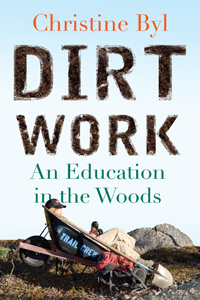
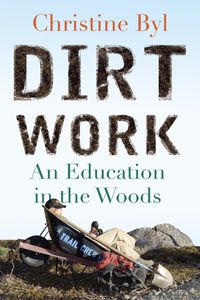
  • DirtworkA lively and lyrical account of one woman's unlikely apprenticeship on a national-park trail crew and what she discovers about nature, gender, and the value of hard work

    Christine Byl first encountered the national parks the way most of us do: on vacation. But after she graduated from college, broke and ready for a new challenge, she joined a Glacier National Park trail crew as a seasonal "traildog" maintaining mountain trails for the millions of visitors Glacier draws every year. Byl first thought of the job as a paycheck, a summer diversion, a welcome break from "the real world" before going on to graduate school. She came to find out that work in the woods on a trail crew was more demanding, more rewarding-more real-than she ever imagined. 

    During her first season, Byl embraces the backbreaking difficulty of the work, learning how to clear trees, move boulders, and build stairs in the backcountry. Her first mentors are the colorful characters with whom she works-the packers, sawyers, and traildogs from all walks of life-along with the tools in her hands: axe, shovel, chainsaw, rock bar. As she invests herself deeply in new work, the mountains, rivers, animals, and weather become teachers as well. While Byl expected that her tenure at the parks would be temporary, she ends up turning this summer gig into a decades-long job, moving from Montana to Alaska, breaking expectations-including her own-that she would follow a "professional" career path. 

    Returning season after season, she eventually leads her own crews, mentoring other trail dogs along the way. In Dirt Work, Byl probes common assumptions about the division between mental and physical labor, "women's work" and "men's work," white collars and blue collars. The supposedly simple work of digging holes, dropping trees, and blasting snowdrifts in fact offers her an education of the hands and the head, as well as membership in an utterly unique subculture. Dirt Work is a contemplative but unsentimental look at the pleasures of labor, the challenges of apprenticeship, and the way a place becomes a home.

    Read the Introduction at Scribd.


    Check out the Get Your Hands Dirty blog tour:


    ByltourTales of a Mountain Family

    Monday, April 22

    Hike, Bike, Travel
    Tuesday, April 23

    The Cleanest Line
    Wednesday, April 24

    The Campsite
    Thursday, April 25

    Half Past Done
    Friday, April 26

    Hiker to Hiker
    Saturday, April 27


    About the Author


    BylChristine Byl
     lives on a few acres of tundra north of Denali National Park outside the town of Healy, Alaska, with her husband and an old sled dog. She received her MFA in fiction from the University of Alaska-Anchorage, and her stories and essays have appeared in magazines, journals, and anthologies. She owns and operates a small trail design and construction business.


    Related articles

    Connecting With Nature on Earth Day and Every Day
    Teachers – and Activists – In Their Own Words
    Ready, set, hike
    Trail makeover
  • In honor of Earth Day, we asked a handful of our nature writers: "What
    is one thing that people should do to connect with nature?
    Why
    is it important?"
    Here are their responses. Read, enjoy, and GET OUTSIDE!

    Dirt Work by Christine Byl book coverOpportunity Montana by Brad Tyer book cover Into Great Silence by Eva Saulitis book cover Before They're Gone by Michael Lanza book cover


    CHRISTINE BYL, author of Dirt Work: An Education in the Woods

    Go outside. Be outside. It sounds obvious, I
    know, but it's amazing how easy it is to forget this. In the noble but often
    all-consuming quest to make sustainable choices and fight big environmental
    battles and visit spectacular places, daily time spent present in the outdoors—skiing,
    walking the dog, splitting wood, just watching—is the most grounding thing I
    know of. It not only hitches me to the details and inhabitants of my own place,
    it reminds me that I am nature. Not separate from it. As reliant on my
    ecosystem—no matter how fragile or fractured—as a chickadee, a birch tree, a
    moose. For me, this realization is the most important thing: the world is my
    home.


    BRAD TYER, author of Opportunity, Montana: Big Copper, Bad Water, and the Burial of an American Landscape

    The best way I know to connect with nature,
    sullied and otherwise, is to spend a week descending a river in a canoe. Why a
    river? Because water is the root of all biology, and gravity is its only motor.
    Why a week? Experienced paddlers agree that it takes at least three days to
    leave day-to-day time-clocked headspace behind and enter "river
    time," leaving at least three days of circadian gravy. Why is it
    important? You can tell me when you get back.


    EVA SAULITIS, author of Into Great Silence: A Memoir of Discovery and Loss among Vanishing Orcas

    So many things come to mind
    with this question, the biggest one being: Go outside. Alone. Spend time alone in nature. But something even more important, I think,
    is to come to know well one wild creature that lives where you do. Today,
    after cleaning my teeth, the dental hygienist showed me a photo she'd taken and
    posted on her Facebook page. It was a photo of a coyote with a dead
    snowshoe hare in its jaws that she took near her house. The big white
    feet of the hare looked longer than the coyote's face. The coyote's coat
    was thick and luxurious. She told me she'd seen lots of showshoe hare
    tracks in the snow on her walks, but that was the first hare she'd seen in a while.
    She told me she'd dreamed once of being a wildlife biologist. But in a
    way, she is. She is a citizen biologist. Because she knows these
    creatures intimately, knows their habits, she couldn't stand by if something
    threatened them. I believe she'd act. So my advice for Earth
    Day is to come to know a species of wild creature that shares your habitat,
    even if it's just a house sparrow.
    Or a flock of crows. Or a family of raccoons. Or monarch
    butterflies. Or a spider. Consider it a neighbor, not just another
    animal. When you encounter this animal on your walks outside (alone as
    often as you can) say hello, even if it's just a whisper, or a voice in your
    head.


    MICHAEL LANZA, author of Before They're Gone: A Family's Year-Long Quest to Explore America's Most Endangered National Parks

    It may be a sad and telling measure of our disconnection
    from nature that we even feel the need to contemplate the question, “What is one thing that people should do to
    connect with nature, and why is it important?” It implies that the
    objective is difficult to achieve, requires time and effort, and one can only
    attain this level of connectedness through methodical planning and perhaps a
    good self-help book. It’s not, it doesn’t, and you don’t really need anything
    more than a doorway to a natural environment.

    A regular fix of nature doesn’t have to be complicated or
    time-consuming. One deep irony being an outdoor writer who works at home is
    that I can go an entire day literally without stepping outside once. It’s
    easy, in fact, to get lost in what I’m working on and suddenly realize, at the
    end of the day, that I have no idea whether it’s warm or cold outside, sunny,
    windy, or snowing. Then I know what I have to do: walk out into my back yard.

    I take nothing—especially not my phone. I have two trees and
    a garden and it’s mostly quiet back there except for the birds flitting between
    my trees. I see the colors of flowers and drink in a big visual gulp of green.
    In an adequate dose, green can solve any problem; I’m convinced of that. And I
    just stand out there, doing nothing except listening and watching—feeling the
    sun’s warmth, the breeze on my arms. My blood pressure takes a nice, healthful
    dip and levels off. I’m pretty sure it does, anyway, based on the instantaneous
    sense of relaxation I gain just by stepping out there.

    Often, I only spend ten minutes in my yard—not a very deep
    commitment to connecting with nature on a given day, I admit. But there’s a
    huge ROI in psychological and emotional gains for the insignificant time and effort
    invested. I’m no health professional or psychologist, but I will confidently
    predict that if you carve out ten minutes in every workday to stand under trees
    and listen to birds singing, you will live longer, raise smarter children,
    develop amazing abs, enjoy a more vigorous sex life, and smile more often. Or
    at least the last thing.

    I need and regularly get more than ten minutes a day outside
    (in a good week, all day, every day). You should, too. Leave home for a day or
    a week and go someplace off the grid. Hike a mountain, paddle a river, climb a
    cliff, sit by a lake, fish a stream. We evolved to live in the natural world
    and we starve ourselves physically and emotionally when we divorce ourselves
    from it.

    But in the interim, those ten minutes under a tree—now
    that’s the ticket.


    Watch our YouTube playlist of videos for Earth Day


    Related articles

    Opportunity, Montana: Big Copper, Bad Water, and the Burial of an American Landscape
    Recommended Reading for World Water Day

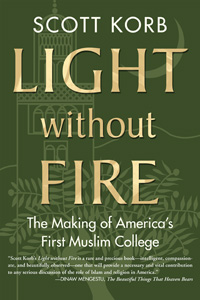
  • 0163The first extended look into the nation's first Muslim institution of higher education, Zaytuna College
     

    Light without Fire closely follows the inaugural class of Zaytuna College, the nation's first four-year Muslim college, whose mission is to establish a thoroughly American, academically rigorous, and traditional indigenous Islam. Korb offers portraits of the school's founders, Shaykh Hamza Yusuf and Imam Zaid Shakir, arguably the two most influential leaders in American Islam. Along the way, Korb introduces us to Zaytuna's students, young American Muslims of all stripes, who love their teachers in ways college students typically don't and whose stories, told here for the first time, signal the future of Islam in this country. It's no exaggeration to say that here, at Zaytuna, are tomorrow's Muslim leaders. 

    Read chapter 1 at Scribd

    "Will Islam become an American religion or remain permanently estranged? Will Muslims in America develop an identity that contributes to their country or one that emphasizes isolation and opposition? Scott Korb knows just how crucial these questions are, and in Light Without Fire tells the story of the leaders and animating ideas behind America's first Muslim liberal arts college-an institution seeking to build an American Islam-in all its fits and starts, and in prose that is both clear and compelling. I for one could not put it down-it is essential and riveting reading." —Eboo Patel, Founder and President, Interfaith Youth Core, author of Sacred Ground: Pluralism, Prejudice and the Promise of America 

    "This is an important book, and one as original as its fascinating subject. Like Roy Mottahedeh's classic Mantle of the Prophet, Light without Fire is about education in both the broadest and deepest senses and about Islam in a particular place and time. Only here that place is America, now, a country desperately in need of stories about its own Islam. We are lucky to have a writer as erudite and engaged as Scott Korb to bring us this one." —Jeff Sharlet, New York Times bestselling author of The Family and Sweet Heaven When I Die 

    "With the warm generosity of an attentive host, and the critical yet respectful eye of a keen journalist, Scott Korb has given us an entertaining and illuminating look into the nation's first Muslim college." —Wajahat Ali, author of The Domestic Crusaders and lead author of the investigative report "Fear, Inc.: The Roots of the Islamophobia Network in America" 

    "A moving portrait of a little known but hugely significant coordinate in America's spiritual geography. For this journey into the heart of 21st-century Islam, Scott Korb is the perfect companion—not just a tour guide with ready answers to any question, but a fellow pilgrim leading the way to deeper understanding. Light without Fire is at once a fascinating account of Muslims living their faith in the US, and a universal story of the call to make tradition new." —Peter Manseau, author of Songs for the Butcher's Daughter 

    "How many stories in American religious experience are truly new? Not so many, and Scott Korb's story of Zaytuna College is one of them, expertly and presciently told."—Paul Elie, author of The Life You Save May Be Your Own 

    "Scott Korb's Light without Fire is a rare and precious book-intelligent, compassionate, and beautifully observed-one that will provide a necessary and vital contribution to any serious discussion of the role of Islam and religion in America." —Dinaw Mengestu, author of The Beautiful Things that Heaven Bears


    Scott_korbAbout the Author

    Scott Korb is the author of Life in Year One: What the World Was Like in First-Century Palestine and coauthor of The Faith Between Us. He teaches at the New School and at New York University and lives with his family in New York City. (Photo: M. Ryan Purdy)


    Related articles
    Light Without Fire: The Making of America's First Muslim College
    Remembering the Holocaust and One of Its Most Fervent Deniers
    MLK Was an Interfaith Visionary
    Islam, Essential to America?
    Disability History and Women's History
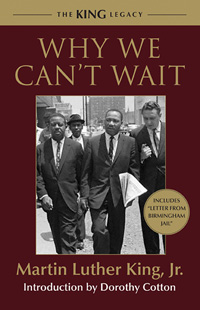
  • In honor of the 50th anniversary of “Letter from Birmingham Jail,” Beacon Press is lowering the price of the eBook edition of Why We Can’t Wait to $1.99 on April 16th for one day.

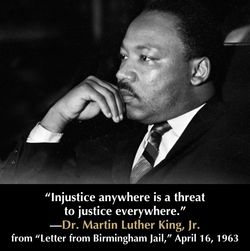
    April 16th marks the 50th anniversary of the Reverend Dr. Martin Luther King Jr.’s “Letter from Birmingham Jail,” a passionate response by Dr. King to eight white clergymen who argued that racial segregation should be fought in the courts and not by protest in the streets. The letter is Dr. King’s answer to claims that he was an outside agitator when he was, in reality, a peaceful protester, saying, “Injustice anywhere is a threat to justice everywhere.”

    cover for Why We Can't Wait“Letter from Birmingham Jail” served as the catalyst for the publication of Why We Can’t Wait, which Dr. King began writing in the fall of 1963. The book attempted to explain the “Negro Revolution” by drawing on the history of black oppression in the United States and the growing frustration among African Americans of the neglect of civil rights issues by both political parties. Originally published in 1964 by Harper & Row, Why We Can’t Wait received glowing reviews and further reflects the importance of Dr. King’s letter and his commitment to nonviolent, peaceful protest. It was reissued in 2011 as part of The King Legacy series from Beacon Press.

    In 1963, Birmingham was often called the most segregated city in America. After accepting an invitation to engage in a non-violent direct-action program sponsored by the Southern Christian Leadership Conference’s affiliate, Dr. King was forced to choose between helping to raise bail money for hundreds who were already incarcerated for peaceful protest in a massive direct action campaign attacking the city’s segregation system among Birmingham’s merchants, or go to jail himself. According to Dorothy Cotton, who wrote the introduction to the 2010 edition of the book, Dr. King “came face to face with himself as a leader.” He had encouraged others to accept suffering and to accept jail time, and now there was no other alternative.

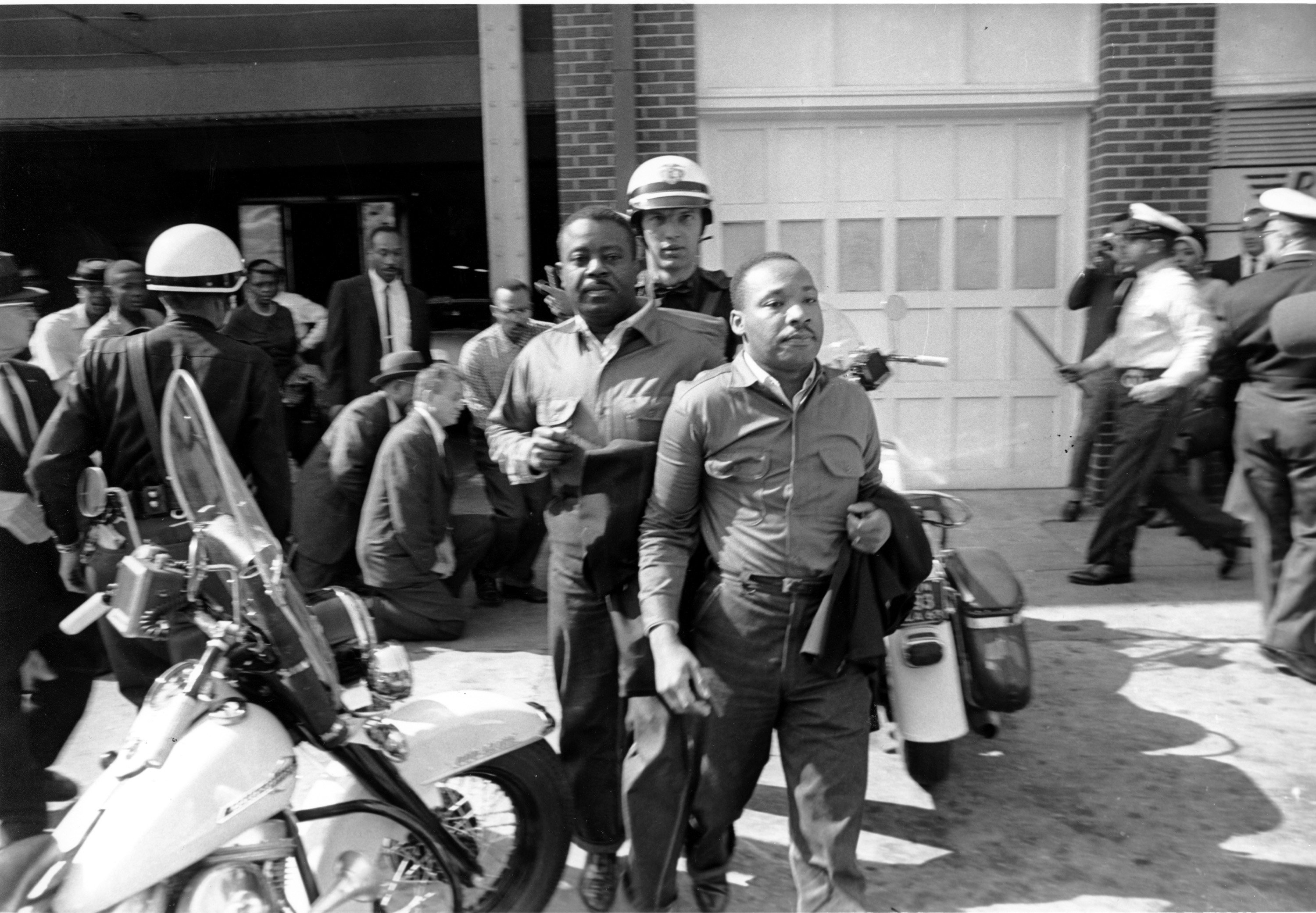
    Ralph Abernathy and Martin Luther King arrested

    Ralph Abernathy, left, and Dr. King, are taken by a policeman after they led a line of demonstrators into the business section of Birmingham. (AP/Wide World)

    After being jailed on April 12th under the pretense of parading without a permit, Dr. King writes his letter to express disappointment with the “white moderate” community that makes up the white churches, who he believes are more concerned with order than with justice. Dr. King urges for the use of nonviolent direct action, which creates and fosters a tension in a community which has constantly refused to negotiate and is finally forced to confront the issue of segregation. For him, this kind of constructive, nonviolent tension is necessary for growth.

    Throughout the letter he outlined the four basic steps to nonviolent campaigns: 1) collection of the facts to determine whether or not injustices exist, 2) negotiation, 3) self-purification, and 4) direct action.

    He underlines the definitions of the two kinds of laws: just and unjust. A just law is a man-made code that squares with the moral law or the law of God, while an unjust law is one that is out of harmony with the moral code. For Dr. King, segregation is not only politically, socially, and economically unsound, but also morally wrong and sinful—the highest kind of unjust law and for him, “one who breaks an unjust law must do so openly, lovingly, and with a willingness to accept the penalty.” Underlining the pent up frustrations of the African American community, Dr. King reminds the eight clergymen that to sit around and wait for acceptance and desegregation is impossible. Because freedom must be demanded by the oppressed, Dr. King argues that the best way is to march, and that it is a historical fact that privileged groups seldom give up their privileges voluntarily. Dr. King was eventually released from jail on April 20th.

    Quote from Martin Luther King's Letter from Birmingham JailThe letter began on the margins of scraps of newspaper while Dr. King was isolated in jail. He eventually finished it on a pad his attorneys were permitted to leave with him. Dr. King’s letter circulated and was published in a variety of formats: first as a pamphlet distributed by the American Friends Service Committee, and then as an article in the Christian Century, the New York Post, Ebony, and Christianity and Crisis. The first half of the letter was published in the Congressional Record after being introduced into testimony before Congress by Representative William Fitts Ryan (D-NY). In July of 1963, Dr. King published an excerpt from the letter in the Financial Post, retitled “Why the Negro Won’t Wait.” It appeared in its entirety in Why We Can’t Wait. On the 50th anniversary of its publication, Dr. King’s “Letter from Birmingham Jail” reminds the world why we can’t wait, and why we must continue to struggle toward a nation of peace and social justice.

    Read an excerpt from Why We Can't Wait

    Related articles

    MLK Was an Interfaith Visionary
    'Letter from Birmingham Jail' regarded as jewel of literature, passionate defense of nonviolence, indictment of moderates (photos)
    Join the Celebration: Dr. King's Letter from Birmingham Jail
    On the Anniversary of his Death, What Can Dr. King Teach Us About Gun Violence?
    Martin Luther King's 'Letter From Birmingham Jail'
  • Yom HaShoah began this past Sunday at sundown, beginning Holocaust Remembrance Week. The following books explore the Holocaust and its impact through different perspectives: from inside the camps to the Jewish neighborhoods in New York City, recounting personal history and contemplating how to move forward from tragedy. 


    FADERMAN-MyMother'sWarsMy Mother's Wars

    by Lillian Faderman

    A story of love, war, and life as a Jewish immigrant in the squalid factories and lively dance halls of New York's Garment District in the 1930s, My Mother's Wars is the memoir Lillian Faderman's mother was never able to write. The daughter delves into her mother's past to tell the story of a Latvian girl who left her village for America with dreams of a life on the stage and encountered the realities of her new world: the battles she was forced to fight as a woman, an immigrant worker, and a Jew with family left behind in Hitler's deadly path. 

    The story begins in 1914: Mary, the girl who will become Lillian Faderman's mother, just seventeen and swept up with vague ambitions to be a dancer, travels alone to America, where her half-sister in Brooklyn takes her in. She finds a job in the garment industry and a shop friend who teaches her the thrills of dance halls and the cheap amusements open to working-class girls. This dazzling life leaves Mary distracted and her half-sister and brother-in-law scandalized that she has become a "good-time gal." They kick her out of their home, an event with consequences Mary will regret for the rest of her life. 

    Eighteen years later, still barely scraping by as a garment worker and unmarried at thirty-five, Mary falls madly in love and has a torrid romance with a man who will never marry her, but who will father Lillian Faderman before he disappears from their lives. America is in the midst of the Depression, Hitler is coming to power in Europe, and New York's garment workers are just beginning to unionize. Mary makes tentative steps to join, despite her lover's angry opposition. As National Socialism engulfs Europe, Mary realizes she must find a way to get her family out of Latvia, and she spends frenetic months chasing vague promises and false rumors of hope. Pregnant again, after having submitted to two wrenching back-room abortions, and still unmarried, Mary faces both single motherhood and the devastating possibility of losing her entire Eastern European family. 

    Drawing on family stories and documents, as well as her own tireless research, Lillian Faderman has reconstructed an engrossing and essential chapter in the history of women, of workers, of Jews, and of the Holocaust as immigrants experienced it from American shores. 

    Buy from Beacon Press | Amazon | Barnes and Noble | Indiebound

    Watch Lillian Faderman read about her mother's attempts to rescue her family from the Holocaust


    1427 (1)Man's Search for Meaning

    by Viktor Frankl

    Psychiatrist Viktor Frankl's memoir has riveted generations of readers with its descriptions of life in Nazi death camps and its lessons for spiritual survival. Between 1942 and 1945 Frankl labored in four different camps, including Auschwitz, while his parents, brother, and pregnant wife perished. Based on his own experience and the experiences of others he treated later in his practice, Frankl argues that we cannot avoid suffering but we can choose how to cope with it, find meaning in it, and move forward with renewed purpose. Frankl's theory-known as logotherapy, from the Greek word logos ("meaning")-holds that our primary drive in life is not pleasure, as Freud maintained, but the discovery and pursuit of what we personally find meaningful.

    At the time of Frankl's death in 1997, Man's Search for Meaning had sold more than 10 million copies in twenty-four languages. A 1991 reader survey for the Library of Congress that asked readers to name a "book that made a difference in your life" found Man's Search for Meaning among the ten most influential books in America. 

    Read the Teachers' Guide for Man's Search for Meaning

    Buy from Beacon Press | Amazon | Barnes and Noble | Indiebound


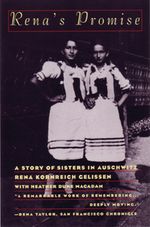
    7071Rena's Promise

    by Rena Kornreich Gelissen and Heather Dune Macadam

    Sent to Auschwitz on the first Jewish transport, Rena Kornreich survived the Nazi death camps for over three years. While there she was reunited with her sister Danka. Each day became a struggle to fulfill the promise Rena made to her mother when the family was forced to split apart–a promise to take care of her sister. 

    One of the few Holocaust memoirs about the lives of women in the camps, Rena's Promise is a compelling story of the fleeting human connections that fostered determination and made survival a possibility. From the bonds between mothers, daughters, and sisters, to the links between prisoners, and even prisoners and guards, Rena's Promise reminds us of the humanity and hope that survives inordinate inhumanity.

    Buy from Beacon Press | Amazon | Barnes and Noble | Indiebound

    Visit the Rena's Promise website.

    Visit the Rena's Promise Facebook page.

    Follow Heather Dune Macadam on Twitter.


    7095Burned Child Seeks the Fire 

    by Cordelia Edvardson (translated by Joel Agee)

    This unusual memoir is the story of a self-described "dark, pudgy, mean, defiant little brat," born in Berlin in 1929 of a half-Jewish mother and a Catholic father and sent to a concentration camp almost, it seems, as a bureaucratic formality. Raised Catholic, Cordelia Edvardson had little in common with her fellow inmates, some of whom despised her as a "German swine." Singled out for punishment, she was selected to act as a secretary for the monstrous "angel of Auschwitz," Josef Mengele. Impressionistic and naïve, Edvardson's third-person memoir retains a highly effective childlike quality ("she had learned that anything can happen, no matter what and no matter when, and for inexplicable reasons") that holds even in the most horrifying episodes. After World War II ended, Edvardson moved to Sweden, where this book was first published. She then converted to Judaism and moved to Israel.

    Read Cordelia Edvardson's obituary at the Jerusalem Post.

    Buy from Beacon Press | Amazon | Barnes and Noble | Indiebound


    Related articles

    Beacon Classics: Gyn/Ecology by Mary Daly
    MLK Was an Interfaith Visionary
    Lillian Faderman reading from My Mother's Wars
    Remembering the Holocaust and One of Its Most Fervent Deniers
    Beacon Buzz: Claudette Colvin and Rosa Parks
  • William Ayers is Distinguished Professor of Education and Senior University Scholar at the University of Illinois at Chicago. He is the founder of the Small Schools Workshop and the Center for Youth and Society, and he is the author of many books on education, including Teaching Toward Freedom: Moral Commitment and Ethical Action in the Classroom, On the Side of the Child, and A Kind and Just Parent. His new memoir will be published by Beacon Press in Fall 2013. 

    This post originally appeared at In These Times.

    3269The road to the massive cheating scandal in Atlanta runs right through the White House.

    The former superintendent, Dr. Beverly L. Hall, and her 34 obedient subordinates now face criminal charges, but the central role played by a group of un-indicted and largely unacknowledged co-conspirators, her powerful enablers, is barely noted.

    Beyond her “strong relationship with the business elite” who reportedly made her “untouchable” in Atlanta, she was a national super-star for more than a decade because her work embodied the shared educational policies of the Bush and Obama administrations. In the testing frenzy that characterized both No Child Left Behind and Race to the Top Dr. Hall was a winner, consistently praised over many years by Secretary of Education Arne Duncan for raising test scores, hosted at the White House in 2009 as superintendent of the year, and appointed in 2010 by President Obama to the National Board for Education Sciences. When the Atlanta scandal broke in 2011 Secretary Duncan rushed to assure the public that it was “very isolated” and “an easy one to fix.”

    That’s not true. According to a recently released study by the independent monitoring group FairTest, cheating is “widespread” and fully documented in 37 states and Washington D.C.

    The deeper problem is reducing education to a single narrow metric that claims to recognize an educated person through a test score. Teaching toward a simple standardized measure and relentlessly applying state-administered (but privately developed and quite profitable) tests to determine the “outcomes” both incentivizes cheating and is a worthless proxy for learning.

    I recently interviewed leaders at the University of Chicago Laboratory Schools—the school Arne Duncan attended for 12 years and the school where the Obamas, the Duncans, and the Emanuels sent their children—and asked what role test scores played in teacher evaluations there. The answer was none. I pressed the point and was told that in their view test scores have no value in helping to understand or identify good teaching. None.

    Related articles

    Teachers – and Activists – In Their Own Words
    Disability History and Women's History
    The Big Swindle
    The Need to Cheat
    Lessons from the Atlanta testing scandal