• Fifty-Five Years Ago Today…


    BALDWIN-NotesNativeSonNotes of a Native Son
     by James Baldwin

    Yes, this publicity hit is from February 26, 1958, but we didn't have a blog (much less the not-to-be-missed Beacon Buzz report) back then … The New York Times published this review of James Baldwin's Notes of a Native Son, written by Langston Hughes.

    James Baldwin writes down to nobody, and he is trying very hard to write up to himself. As an essayist he is thought-provoking, tantalizing, irritating, abusing and amusing. And he uses words as the sea uses waves, to flow and beat, advance and retreat, rise and take a bow in disappearing. 

    Read Edward P. Jones' introduction to our new edition of Notes of a Native Son on Scribd.

    You can get a copy of our new edition of Notes of a Native Son (or any other African American Studies title) for 20% off and free shipping if you order with code FEB2013. Check out the details of our Black History Month Sale at Beacon.org.


    Recent Notable Mentions


    SAULITIS-IntoGreatSilenceInto Great Silence: A
    Memoir of Discovery and Loss among Vanishing Orcas
    by Eva Saulitis

    OnEarth magazine’s profile of Eva
    Saulitis
    , titled, “The Woman Who Loves Orcas” made the cover of their
    Spring 13 issue.

    She had heard killer whales
    before, but this was "something other." Communicating across great
    distances, they would caterwaul in long, siren-like cries, turned up at the end
    as if they were questions. "This was a voice at once strident and
    mournful," she writes in her memoir, "a strange hybrid instrument,
    part trumpet, part oboe, part elephant, part foghorn. And loud." But when
    the lone scouts were joined by more members of their group, the calls changed
    to "upswept squawks punctuated by silence; bangs and cracks, like axe
    blows against one-by planks, some we could attribute to fluke slaps, and some
    not. Now and then a syncopated blast of echolocation, like automatic
    gunfire." [Read More]


    Faitheist: How an Atheist Found Common
    Ground with the Religious
    by Chris Stedman

    Q&A
    with Chris Stedman on BuzzFeed
    .


    Divided we Fail: The Story of an African
    American Community that Ended the Era of School Desegregation
    by Sarah
    Garland

    C-SPAN/Book
    TV aired their “After Words” episode with Sarah Garland interviewed by Marc
    Lamont.


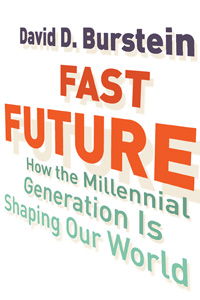
    Fast Future: How the Millennial Generation
    Is Shaping Our World
    by David D. Burstein

    Write-up of Burstein’s Politics
    and Prose event
    .

    “Sick of getting a bum rap? Millenials fight back.” David Burstein
    on MSNBC’s The Cycle
    .

    Interview on The
    Diane Rehm Show
    in a panel discussion titled “What It Means to be a
    Millennial.”

    Excerpt, “Millenials Will Save Us,” on Salon.com. 

    “A Very Fast Future,” online at Forbes:

    “FAST FUTURE is a fantastic read for anyone who is
    curious about the mindset and perspective that the Millennial generation is
    bringing to their businesses, their politics, and their personal lives.
    Millennials will continue to shape that world as their ranks elevate to higher
    levels in corporations and governments and, if FAST FUTURE is any indication,
    they’ll not be shy about letting you know that they’ve arrived.” [Read
    More
    ]


    Shout, Sister, Shout!:
    The Untold Story of Rock-and-Roll Trailblazer Sister Rosetta Tharpe
    by
    Gayle Wald

    Watch author Gayle Wald and be amazed by the
    extraordinary guitar playing of “Sister Rosetta Tharpe, the Godmother of Rock
    & Roll” on the PBS
    American Masters website
    .

    Excerpt
    from Shout, Sister, Shout!
    featured
    on Scribd’s homepage in their “Best of the Day” section.

    Enter
    to win a copy of Shout, Sister, Shout!
    on Beacon.org


    “In a Single Garment of Destiny”: A Global
    Vision of Justice
    by Martin Luther King, Jr.

    An excerpt, “Racism
    and the World House” is now online at Yes!
    Magazine
    .  


    Soul Repair: Recovering from Moral Injury
    after War
    by Rita Nakashima Brock and Gabriella Lettini

    Featured in a Chicago Tribune column by Robert Koehler:

    This remarkable book, published in 2012, takes a long,
    hard look at the dehumanizing effects of war, through the experiences of a
    number of vets from various wars (Vietnam, Iraq, Afghanistan) who share their
    suffering — and bare their souls — to the authors.

    "Soul Repair" is an assault on the mythology and public relations of
    war, on the default setting of nationhood, that: "We sleep comfortably in
    our beds at night because violent men do violence on our behalf." No
    matter how many lies are at the foundation of a given war, no matter how
    disastrously unnecessary and destructive it turns out to be in retrospect —
    oops — the myth of war is ever-unsullied: This time the danger is really
    there. This time it's crucial that we carpet bomb civilians, then send in our
    boys and girls to clean out the enemy insurgents. This time it's really for
    democracy and the American Dream and a good night's sleep.


    Fist Stick Knife Gun: A Personal History of
    Violence
    by Geoffrey Canada

    On the Freakonomics
    podcast
    , Steve Levitt calls Fist Stick Knife Gun: “one of the best books
    I’ve ever read in my life. I urge people to go and find it. It’s fantastically
    insightful.”


    Coming Soon

    Dirt Work: An Education in the Woods by
    Christine Byl

    Library Journal review: “This is no Walden: each chapter
    begins with a meditation on a tool, including an axe, rock bar, chainsaw, and
    skid steer… Byl’s writing is superb and doesn’t romanticize her dirty work.”


    What Doctors Feel: How Emotions Affect the
    Practice of Medicine
    by Danielle Ofri

    “Here is a book that is at once sad and joyful,
    frightening and thought-provoking.  In her lucid and passionate
    explanations of the important role that emotions play in the practice of
    medicine and in healing and health, Danielle Ofri tells stories of great
    importance to both doctors and patients.” Perri Klass, author of Treatment Kind and Fair: Letters to a Young
    Doctor

    Related articles

    Black History Month: Select books 20% off, plus free gift with purchase
    Beacon Books at Audible: Outlaw Marriages by Rodger Streitmatter
    Beacon Buzz: Gather at the Table, Faitheist, and more!
    Celebrating Black History Month Three Right Ways
    Beacon Buzz: Prairie Silence, women in the military, and more!
  • 6716_491486667574904_2059376748_nLong before "women in rock" became a media catchphrase, African American guitar virtuoso Rosetta Tharpe proved in spectacular fashion that women could rock. Born in Cotton Plant, Arkansas, in 1915, Tharpe was gospel's first superstar and the preeminent crossover figure of its golden age.

    Sister Rosetta is at long last getting the attention she deserves with "The Godmother of Rock & Roll," a documentary that aired last weekend on PBS, and a related campaign to get her inducted into the Rock & Roll Hall of Fame. 

    To celebrate the premiere of the documentary "Sister Rosetta Tharpe: The Godmother of Rock & Roll," on PBS's American Masters series, Beacon Press is giving away copies of Shout, Sister, Shout!: The Untold Story of Rock-and-Roll Trailblazer Sister Rosetta Tharpe by Gayle F. Wald. Enter now for your chance to win!

    This month is also a great time to buy a copy of Shout, Sister, Shout! During our Black History Month Sale, buy any African American Studies title using promo code FEB2013 by February 28th and receive 20% off and free shipping. Buy two titles and receive a free King Legacy tote bag. Plus, Beacon Press will donate 15% of all sales using promo code FEB2013 to the Young People's Project. More info here. 

    Loading…Related articles

    Little Known Black History Fact: Rosetta Tharpe
    The Essence of Rock 'n' Roll: 'American Masters: Sister Rosetta Tharpe' (Review)
    The gospel roots of the 'Godmother of rock 'n' roll'
    Sister Rosetta Tharpe: The Godmother of Rock & Roll
    Reclaiming MLK as a "Citizen of the World"
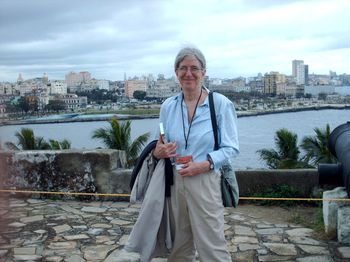
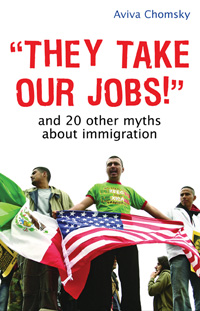
  • Aviva Chomsky is Professor of history and Coordinator of Latin American Studies at Salem State University in Massachusetts. Her many books include They Take Our Jobs! And 20 Other Myths about Immigration, and A History of the Cuban Revolution. A new book on immigration, Undocumented, is forthcoming in Spring 2014 from Beacon Press. 

    I’ve been traveling to Cuba
    regularly since 1995, for research, to attend conferences, and to take students
    on short-term study abroad trips, when those have been allowed under the
    Clinton and Obama Administrations. (Such trips were prohibited under the Bush
    Administrations.) I’ve published several articles in Cuban journals, mostly
    about Cuba-related themes.

    Last weekend, I was in Havana to
    present the new Cuban edition of ¡Nos
    quitan nuestros empleos!
    (the Spanish translation of my book They Take Our Jobs!, which was published by Beacon
    in 2007) at the International Book Fair in Havana.

    Shortly after They Take Our Jobs! came out in English, friends in
    immigrants-rights organizations told me that we needed a Spanish-language
    version. It took a while to find a publisher (Haymarket Press) and even longer
    to finish the translation. My Cuban friend who helped with the final editing of
    the Spanish version, Alfredo Prieto, offered to help me find a publisher in
    Cuba as well. He put me in touch with Fernando García of Editorial Nuevo
    Milenio, who ended up bringing out the beautiful Cuban edition. I am thrilled
    to have the project come to this fruition, and that I was able to be Havana for
    its release.

    Most often, my trips to Cuba begin
    in Miami, a strange, liminal place that always seems like a good way to
    transition from the United States to Latin America or vice versa. The driver of
    my hotel shuttle asks me where I’m going. “Cuba,” I tell him. “You are going to
    my country,” he replies. I switch to Spanish and ask him how long he’s been in
    the United States. Since 1998, he tells me. “Here you work very, very, hard,”
    he goes on. “I’ve lived well here, don’t get me wrong. But Cuba is my country,
    and that’s where I want to live. Cuba is wonderful. It’s just the government
    that’s bad, that’s ruined everything.”

    Even though my flight doesn’t leave
    till 9, I have to check in at 6. This is an improvement over the last time I
    went, using the same charter company, Marazul Tours. Last March I was told to
    arrive at the airport four hours ahead of the flight and look for an agent
    wearing a blue t-shirt in Terminal G. Needless to say, there was no
    blue-shirted agent anywhere to be found, and nobody answered the phone at the
    several numbers I had for Marazul. Nor were there any counters that seemed
    connected to our charter flight, which didn’t appear on any of the “departure”
    screens. Finally a rumor reached our ears—other passengers looking for the same
    blue t-shirt thought we should try Terminal D. With little else to go on, I and
    my 13 students trudged over to Terminal D. Still no blue shirt, and no flight
    listed on any screen, but the rumors grew thicker, and, finally, we found
    ourselves at an anonymous-looking counter checking in. It was like being in
    Cuba before we even left Miami—somehow you just have to figure out how to do
    things that seem impossible—resolver,
    as the Cubans say.

    4156This time, though, I arrive as
    instructed with only three hours to spare. Terminal G is teeming with
    blue-shirted representatives, and multiple flights to Havana are listed on
    every screen. There are only two people ahead of me in line, and I am quickly
    checked in. The only sign that this is not a normal flight is when I try to use
    my credit card to pay the $20 to check my bag. “Sorry, we only take cash,” I am
    told. The blue-shirted representative says he’ll wait for me while I run to the
    ATM.

    I usually try not to check my bag,
    but this time I’m carrying many bottles of medicines and hand sanitizer that my
    Cuban friends have requested. I’m also carrying a half pound of baker’s
    chocolate—they want me to bake brownies while I’m there.

    A grey-haired gentleman going
    through the same lines asks if I’m with a group. No, I say, and you? “Yes, we
    are a gentle group,” I hear him reply. I look around—his companions look gentle
    enough, but I’m still confused—are they Quakers, or something? Then he starts
    to tell me about the activities they’ll be doing in Cuba, and I realize that
    they are dentists—a dental group.

    By 7 I’m at the gate. I order a
    cafe con leche from a nearby stand before I sit down. “Ya está dulce,” the
    server tells me kindly as she hands it to me. We’re almost in Cuba—the coffee
    automatically comes sweet, and in Spanish.

    My seatmate on the first leg of my
    journey—from Ontario, California, where I am teaching at Pomona College, to
    Dallas—was a graduate student in Spanish returning home from a job interview.
    I’m reading a book called Dangerous
    Trade: Histories of Industrial Hazard across a Globalizing World
    . The third
    chapter is about a mercury mine in Almadén, Spain. “That’s where my father
    worked—he was a mining engineer,” she offers. When the mine closed, the town
    died—now there is hardly anyone left. She came to the United States to study,
    and will probably stay. Migrations and global connections are everywhere.

    My seat partner on the plane to
    Havana tells me that she is going back to Cuba for the first time since she
    left, in 1968, at age 13. “Look, I’m trembling,” she tells me as the plane
    touches down. Her grandmother left Spain for Cuba in her 30s, and returned for
    the first time when she was 80. “I’m almost as bad,” she says. I’m embarrassed
    to tell her that I’m going to Cuba for the publication of my book on
    immigration.

    If the Miami airport experience has
    improved, the Havana experience has not. The line through immigration takes
    over an hour, and the bags have still not appeared when I finally get through. Nobody
    seems to know which of the two baggage claim areas our bags will be on. It’s
    hot, noisy, and crowded, and it’s not clear where there are lines to stand in
    and where we are supposed to go. Somehow, though, my suitcase appears and I
    manage to pass through the required lines and exit the terminal. As always,
    there is a huge crowd of excited friends and relatives waiting for people from
    the Miami flights.

    Every time I travel to Latin
    America, I’m reminded how important, and how complicated, water is. At home, we
    expect clean water to flow reliably from every pipe whenever we turn a faucet
    or push a handle. Kitchen sink, bathroom sink, shower, toilets—there are so
    many places where something can go wrong—assuming that there is water at all,
    and that it’s not contaminated. The TV screen in the airport welcoming
    travelers to Cuba flashes health warnings, one of which is (in Spanish) to
    always boil your water before you drink it. This time, my friends advise me to
    use boiled water to brush my teeth and to rinse dishes and vegetables in boiled
    water after washing them.

    Sometimes you can avoid the
    foreign-tourist-in-Cuba experience of being “hustled” by staying away from
    hotels and tourist sites. This time, though, I’m approached while waiting on a
    busy street in Centro Habana outside my friends’ apartment. It’s 96 steps up,
    and someone has to come down to unlock the street door for me. “Are you
    visiting Cuba for the first time?” a young man asks me from inside a
    neighboring storefront offering “economist/accounting services.” “What are you
    doing here?” I’m a professor, attending the book fair, I tell him. “Oh, a
    professor, what do you teach? Are you interested in economic issues?” Yes, I
    say. “My friend just wrote a book on cuentapropismo,
    he reveals. “I have a dozen copies at my place down the street. Do you want
    one?” Maybe, I say guardedly, but I don’t have much room in my luggage. “Are
    you married?” he continues without missing a beat. “I really like you. (Me caes muy bien.)” “Yes, I’m married” I
    lie. “It doesn’t matter!” he exclaims. “It can be our secret dream! Nobody has
    to know!”

    The book fair is amazing. The main
    installation is at the El Morro fort just outside the city. The parking lot is
    filled with buses and cars, and walkers are flowing in as well. The many
    streets inside are packed with people. Publishers’ displays are interspersed
    with food stalls, children’s activity stations, and performances. There is no
    security visible, and the crowds are relaxed and jovial. The only thing I can
    compare it to is First Night in Boston. But here everyone has come to look at
    books!

    A young man approaches me after a
    presentation by the sister of one of the Cuban 5, national heroes, imprisoned
    in the United States on charges of espionage. They were spying on right-wing
    Cuban American organizations that had planned and carried out armed attacks
    against Cuba. “You probably don’t recognize me,” he says shyly. “You were
    friends with my mother in 1995, when you were in Cuba with your kids. I was a
    baby then, but when you left, you gave my mom the child seat from your bicycle.
    I rode around in it for years.” He’s the same age as my son, in his third year
    at the university.

    There are multiple rooms with
    concurrent book presentations going on all day, every day. Mine is at 3:00
    Saturday afternoon. About 30 people fill the room. Two commentators precede me:
    one describes my book in detail, and the second one gives my biography. I hope
    he is around to write my obituary, because he gets it all so right: my
    intellectual trajectory, my activism, my work life. It’s exactly how I want to
    be remembered.

    I decide to tell the audience about
    four life experiences that brought me to write They Take Our Jobs!. They were experiences that opened my eyes to
    the myths I had been living with, and together made me want to write a book
    that would do the same for others. There’s a great word for it in Spanish: concientización. There’s no perfect
    translation in English, but it’s something like consciousness-raising, or
    political awakening.

    The first experience was when I
    left college after my first year, in 1976, to work for the United Farm Workers
    in California. I was looking for something different to do, but I had no idea
    what I was getting myself into. I had, of course, been eating fruits and
    vegetables all my life, but as far as I knew, they came from the supermarket. It
    had never occurred to me that everything I bought at the store had a history,
    and that someone had to plant, care for, and harvest all of that produce. With
    the farmworkers I was thrown right into the middle of a world I had no idea
    existed: a world where almost everyone was Spanish-speaking and Mexican, and
    where they worked long hours under harsh conditions to harvest the food we
    blithely purchased in Massachusetts.

    The second experience I recounted
    was at UC Berkeley, where I was exposed to Chicano Studies and had the chance
    to study with, and then teach for, one of the discipline’s founders, Carlos
    Muñoz. The whole premise behind the Chicano Studies movement—like those that
    pressed for the creation of African American and Native American studies
    programs during that same tumultuous decade of the 1970s—was that existing
    curriculums were basically the study of white people, and had left out the
    experiences of people of color in the United States. Once again, this was an
    eye-opener. All that history I had been learning all of those years, that was
    an exclusive, politicized, history? There were whole histories that it had left
    out? I decided to become a historian.

    The third experience was when I got
    to Bates College in 1990, fresh PhD in Latin American history in hand. Being in
    Maine, one of the coldest and whitest states in the country, Bates had been
    very slow to diversify, and its Latino student population was extremely small
    and extremely new. Both students and faculty urged me to create a course on
    Latino history, and I was eager to do so. A lot had changed since my Chicano
    Studies days, though. Latin American immigration had skyrocketed, and it had
    diversified both in its origins—including far more Caribbean, Central American,
    and South American immigrants—and in its destinations, moving out of its
    traditional centers in California and the Southwest. The new discipline of
    Latino—rather than Chicano, or Boricua (Puerto Rican) studies—was developing. I
    jumped on the bandwagon and decided I needed to become part of this new wave of
    Latino history.

    Finally, the experience that led
    directly to They Take Our Jobs! came
    in May of 2006, with the massive immigrants rights demonstrations. I
    participated in a small part of the nation-wide movement, in Salem, where
    immigrant-owned businesses closed and children stayed home from school on May
    1, the national “day without an immigrant.”

    The next day, I was in my
    department office conversing with an African American colleague. Nearby, some
    white students were complaining about the demonstrations. “I don’t have anything
    against immigrants, only illegal immigrants. My ancestors came here legally! These
    immigrants should do it the right way, following the law, like my ancestors
    did.”  This was a discussion I had
    engaged in a million times already, and I had my response ready: Your ancestors
    came here legally because they were European, and there were no legal
    restrictions on European immigration at the time. But somehow, looking at my
    colleague, it struck me for the first time: Only white people say that! Of
    course the ancestors of most African Americans came here “legally” too—because
    their enslavement was perfectly legal. But white people who are so proud that
    their ancestors came legally are basically saying that they are proud to have
    benefitted from white privilege.

    I decided not to get into an
    argument at that moment, but when I got home and opened the local newspaper,
    the front-page article about the demonstrations quoted a white observer making
    the same comment. It seemed more useful to compose a letter to the editor
    explaining my thoughts, so I did; it was published the next day. And a few days
    later an editor from Beacon Press called me saying that she had seen my letter,
    and wondered whether I’d be interested in expanding it into a book. That was
    the seed of They Take Our Jobs!.

    The eminent Cuban historian Jorge
    Ibarra attends my talk. “Whatever happened to your book on Haitian migrant
    workers in Cuba?” he demands. On my first visit to the island, he had provided
    invaluable help orienting me to the historiography, and the archives, relevant
    to my research. “I never wrote the book,” I confess. “I published the research
    I did here as an article in the Hispanic
    American Historical Review
    , but then my work ended up moving in different
    directions.” “I still have the original, typed manuscript of that article!” he
    tells me proudly. “You gave it to me when you came back the next year, when you
    were working on it.”

    As I get ready to leave the fair,
    I’m asked to sign a statement, a letter to Comandante Presidente Hugo Chávez
    Frías. “The undersigned intellectuals, artists, writers, and guests who are
    participating in the Twenty-second International Book Fair in Havana, from the
    San Carlos Fort in La Cabaña, wish to send the President of Venezuela, Hugo
    Chávez Frías, our solidarity and our commitment to accompany him day by day in
    these moments of his recovery, because we know that he is carrying out a battle
    and his spirit of struggles continues intact in these difficult but hopeful
    moments he is living through,” the letter begins, in somewhat typical flowery
    Spanish-language style. “You have succeeded in extending ties of unity to other
    continents and countries besieged at this time by the twenty-first century wars
    of recolonization, and you have always accompanied them with your solidarity. Dear
    Comandante, you have succeeded, along with other compañeros, in achieving the uncompleted dream of Simón Bolívar,
    José de San Martín, and other heroes of our independence, frustrated by another
    imperial expansion that framed our dependence since the end of the nineteenth
    century… You are at the forefront of this battle with your strength, courage,
    and love. Adelante, Comandante, our
    peoples are waiting for you.”

    It sounds a lot like a song I
    played for my students at Pomona last week, “Simón Bolívar,” written in the
    early 1970s by the Chilean group Inti Illimani.

    Simón Bolívar, Simón,
    revivido en las memorias
    que abrió otro tiempo la historia,
    te espera el tiempo Simón.
    Simón Bolívar, razón,
    razón del pueblo profunda,
    antes que todo se hunda
    vamos de nuevo Simón.

    You still live in our memories,
    Simón
    History has opened another era
    Time is waiting for you, Simón…
    Before everything is lost
    Let’s try again, Simón.

    The letter is not written exactly
    with the words I would have used, but I don’t care, it’s basically a get-well
    card, and I sign it, imagining that one day David Horowitz will discover it or
    the National Enquirer will splash a
    headline, “Aviva Chomsky claims Hugo Chávez at ‘forefront of battle’ and calls
    for him to forge ahead!” But I doubt I’m important enough for it to merit any
    notice at all. And it feels like the least I can do.

    Related articles

    Beacon Buzz: Our Books Feel the Love
    Let's Stop Making Migration a Crime
    Havana book fair feeds Cuba's hunger for literature
    Cuban dissident blogger met by small protests in Brazil
    Russia leases planes to Cuba, writes off Soviet debt
  • David Bacon is a writer and photographer. He is the author of Illegal People: How Globalization Creates Migration and Criminalizes Immigrants and the forthcoming The Right to Stay Home: Ending Forced Migration and the Criminalization of Immigrants. His photographs and stories can be found at http://dbacon.igc.org.

    This post originally appeared at TruthOut.
    021513-1

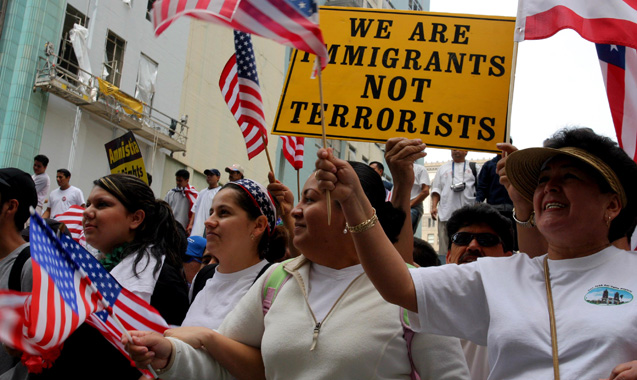
    A scene from the million-person march in Los Angeles in 2006. (Photo: David Bacon)

    We
    need an immigration policy based on human, civil and labor rights, which looks
    at the reasons why people come to the U.S., and how we can end the
    criminalization of their status and work. While proposals from Congress and the
    administration have started the debate over the need for change in our
    immigration policy, they are not only too limited and ignore the global nature
    of migration, but they will actually make the problem of criminalization much
    worse. We need a better alternative.

    This
    alternative should start by looking at the roots of migration – the reasons why
    people come to the U.S. in the first place. Movement and migration is a human
    right. But we live in a world in which a lot of migration isn’t voluntary, but
    is forced by poverty and so-called economic reforms.

    Our trade policy, and the economic
    measures we impose on countries like Mexico, El Salvador or the Philippines
    make poverty worse. When people get poorer and their wages go down, it creates
    opportunities for U.S. corporate investment. This is what drives our trade
    policy. But the human cost is very high.

    In El Salvador today, the U.S. Embassy
    is telling the government to sell off its water, hospitals, schools and
    highways to give U.S. investors a chance to make money. This policy is enabled
    by the Central American Free Trade Agreement, whose purpose was increasing
    opportunities in El Salvador for U.S. investors. It was imposed on the people
    of that country in the face of fierce popular opposition.

    Alex Gomez, a leader of Salvadoran
    public sector unions, came to San Francisco in February to explain what the
    consequences of this latest free trade initiative will be. He says if these
    public resources are privatized, tens of thousands of workers will lose their
    jobs, and their unions will be destroyed. They will then have to leave the
    country to survive. 

    According to Gomez, four million have
    already left El Salvador. Two million have come to the US, not because they
    love it here, but because they can’t survive any longer at home. These migrants
    come without papers, because there are no visas for two million people from
    this small country.

    The North American Free Trade Agreement
    did even more damage than CAFTA. It let U.S. corporations dump corn in Mexico,
    to take over the market there with imports from the U.S. Today one company,
    Smithfield Foods, sells almost a third of all the pork consumed by Mexicans. Because
    of this dumping and the market takeover, prices dropped so low that millions of
    Mexican farmers couldn’t survive. They too had to leave home.

    Mexico used to be self-sufficient in
    corn and meat production. Corn cultivation started there in Oaxaca many
    centuries ago. Now Mexico is a net corn and meat importer from the U.S.

    During the years NAFTA has been in
    effect, the number of people in the U.S. born in Mexico went from 4.5 million
    to 12.67 million. Today about 11% of all Mexicans live in the U.S. About 5.7
    million of those who came were able to get some kind of visa, but another 7
    million couldn’t. There just aren’t that many visas. But they came anyway
    because they had very little choice, if they wanted to survive or their
    families to prosper.

    Our immigration laws turn these people
    into criminals. They say that if migrants without papers work here it’s a
    crime. But how can people survive here if they don’t work? We need a different
    kind of immigration policy – that stops putting such pressure on people to
    leave, and that doesn’t treat them as criminals if they do.

    What would it look like?

    First, we should tell the truth, as the
    labor-supported TRADE Act would have us do, which was introduced into Congress
    by Mike Michaud from Maine. We should hold hearings as the bill says, about the
    effects of NAFTA and CAFTA, and collect evidence about the way those agreements
    have displaced people in the U.S. and other countries as well.

    Then we need to renegotiate those
    existing agreements to eliminate the causes of displacement. If we provide
    compensation to communities that have suffered the effects of free trade and
    corporate economic reforms, that were intended to benefit U.S. investors, it
    would be more than simple justice. It might give people more resources and more
    of a future at home.

    It makes no sense to negotiate new
    trade agreements that displace even more people or lower living standards. This
    administration has negotiated three so far, with Peru, Panama and South Korea. It
    is now negotiating a new one — the Trans Pacific Partnership. These are all
    pro-corporate, people-displacing agreements. We should prohibit these and any
    new ones like them. Instead, we need to make sure all future trade treaties
    require adequate farm prices and income in farming communities, promote unions
    and high wages, and don’t require the privatization of public services. 

    Increasingly these international
    agreements, like Mode 4 of the World Trade Organization, treat displaced
    migrants as a cheap and vulnerable labor force. Our trade negotiators call for
    regulating their flow with guest worker programs. This is exactly the wrong
    direction. We should ban the inclusion of guest workers in any future trade agreement
    or treaty instead.

    When diplomacy doesn’t work, U.S.
    military intervention and aid programs are to support trade agreements,
    structural adjustment policies or market economic reforms. This has been U.S.
    policy in Honduras and Haiti, for instance. This also must stop. If the U.S.
    Embassy is putting pressure on countries like El Salvador to adopt measures
    that benefit corporate investors at the expense of workers and farmers, the
    Ambassador should be recalled and the interference halted.

    Finally, we should ratify the UN
    Convention on the Rights of Migrant Workers and Their Families. This
    international agreement would give us an alternative framework for recognizing
    the rights of displaced migrants, and the responsibility of both sending and receiving
    countries for their protection.

    The failure of successive U.S.
    administrations to even present this agreement to Congress for ratification
    highlights the unpleasant truth about the real effect of our immigration
    policy. When millions of migrants arrive here, they are criminalized because
    they lack immigration status, especially when they go to work.

    Labor and civil rights advocates often
    fondly remember the 1986 Immigration Reform and Control Act because of it had
    an amnesty, signed by President Ronald Reagan, which gave legal status
    relatively quickly to almost four million people. But the law also contained
    employer sanctions for the first time, which we often forget. That provision
    says that employers will be fined and punished if they hire undocumented
    workers.

    This provision was promoted by those
    who said that if work became illegal, then undocumented migration would end. This
    clearly failed, since the number increased many-fold in the years that
    followed. Compared to the pressure to leave home, criminalizing work was not a
    deterrent to those who sought work here so that their families at home would
    survive.

    This provision sounded like a law
    against employers, but it was not. It became an anti-worker law. No boss ever
    went to jail for violating it. The fines were not great. When the government
    agents seek to enforce it, employers who cooperate with them are forgiven. But
    over the last four years alone, tens of thousands of workers have been fired
    for not having papers. The true objects of punishment under this law have
    always been workers, not employers.

    Now Congress is talking about a new
    reform, and we have to use this opportunity to push to repeal this law. Some
    think that since a new legalization will hopefully give many undocumented
    workers legal status, sanction won’t really affect anyone anymore. 

    But even the most positive predictions
    about a new legalization still assume that millions of people will not quality
    because of stringent qualifications, high fees and decades-long waiting
    periods. Those people will still be subject to the sanctions law. And the day
    after a new reform passes millions more people will come to the U.S. because of
    the same pressures that caused past waves of migration. This is especially true
    if a new immigration reform ignores the need to renegotiate trade agreements
    and eliminate the huge displacement of people.

    These future migrants are not
    strangers. They are the husbands and wives, parents, and cousins of people
    already here – people who are already part of our communities. They come from
    the same towns, and are linked to neighborhoods here in the U.S. by the ties
    that have been created by migration, work and family. They will work in our
    workplaces, participate in our organizing drives, and belong to our unions. We
    need to keep the sanctions law from being applied to them, making it a crime
    for them to work. Unfortunately, however, Congress members aren’t talking about
    getting rid of sanctions. In fact, they and the administration want to make the
    current application even worse.

    So let’s do a reality check. Let’s tell
    the truth about how has this law been used. 

    One method for enforcing sanctions
    happens when an employer uses it to screen people it is going to hire, using an
    error-filled government database called E-verify. Congress and the
    administration are calling for making it mandatory for all employers to use
    this database, and refuse to hire anyone who it flags as undocumented. 

    For people who are currently working
    now and have no papers, what it means is that if they lose their jobs, it will
    be much hard to find others. That will make people fear taking any action that
    offends their boss, like joining a union or complaining about illegal
    conditions. That’s good for the boss, but bad for the workers.

    Employers today not only use this
    database to screen new hires – they also use it to reverify the immigration
    status of people who are already working. This is a violation of the law. Once
    it accepts the form filled out by a job seeker (called the I-9), along with
    their ID, the employer can’t reverify it all over again at some point in the
    future. But they do. Sometimes it’s convenient to get rid of workers who have
    accumulated benefits and raises over years of service, and replace them with
    new hires at lower wages. 

    Reverification just happened, for
    instance, to three workers who belong to the International Longshore and
    Warehouse Union at Waste Management, Inc. in San Leandro, California. The union
    has gone to the Oakland City Council to protest these illegal firings, because
    WMI operates under a city garbage contract.

    Employers sometimes announce they
    intend to begin using the E-Verify database when their workers start to
    organize. That’s what managers announced at the Mi Pueblo supermarkets in
    northern California. There E-Verify checks are being used to terrorize workers
    to keep them from supporting a union, Local 5 of the United Food and Commercial
    Workers.

    Another method for enforcing sanctions
    against workers is even more widespread. Immigration agents, working for the
    Immigration and Customs Enforcement (ICE), go into the personnel records of an
    employer. They then compare the information given by workers on the I-9 form to
    the E-Verify database, looking for workers who don’t have legal immigration
    status. ICE then makes a list of those workers and sends it to the company,
    telling the employer to fire them.

    This is what happened at Pacific Steel
    Castings in Berkeley, California, last year. Two hundred and fourteen workers
    were fired as a result. Some had worked in the foundry for over 20 years. Many
    lost their homes, and their children’s dreams of going to college were
    destroyed. 

    Over last four years, hundreds of
    thousands of workers have lost their jobs in these enforcement actions, called
    I-9 audits. Almost five hundred janitors in San Francisco, and over a thousand
    in Minneapolis. Thousands of workers doing some of the hardest work imaginable
    in meatpacking plants around the country. Farm workers. Construction workers. But
    the employers all given reduced fines, and many immunity from punishment
    entirely, if they cooperated in firing their own workers.

    If unions and communities mount a fight
    that exposes the terrible human cost of these firings, it is possible to stop
    them. The young Dreamers showed that this is possible. These courageous young
    people convinced the administration to stop deporting students brought to the
    U.S. without papers as children. They forced the administration to change the
    way it enforces immigration law. It can be done for workers too, if there’s a
    fight.

    But we must also change the sanctions
    law. Otherwise, our experience over the 25 years since it passed shows that
    immigration authorities will simply find another method for making working a
    crime for people who don’t have papers.

    The other unpleasant truth about
    sanctions is that they are linked to the growth of guest worker programs. One
    of the main purposes of making it a crime to work without papers is to force
    people to come to the U.S. with visas that tie them to their employers and
    recruiters. These workers are often more vulnerable than the undocumented,
    since they get deported if they lose their jobs or get fired. Guest worker
    programs have been called Close to Slavery by the Southern Poverty Law Center
    and others who have documented their extreme exploitation. The sanctions law
    functions as a way to pressure people into choosing that path to come to the
    U.S. to work.

    When employer sanctions are used to
    make workers vulnerable to pressure, to break unions or to force people into
    guest worker programs, their real effect is to force people into low wage jobs
    with no rights. This is a subsidy for employers, and brings down wages for
    everyone. The sanctions law makes it harder for all workers to organize to
    improve conditions. This doesn’t just affect the workers who have no papers
    themselves. When it becomes harder for one group to organize, other workers
    have a harder time organizing too.

    Some Washington lobbyists accept as a
    fact of life that the sanctions law will continue, or even worse, that E-Verify
    will become a mandatory national program for all employers. But for unions and
    workers who have had to deal with its effects , it would be much better to
    immediately repeal it, and dismantle the E-Verify database. 

    The use of the sanctions law against
    workers and unions is what led the California Labor Federation to call for its
    repeal as early as 1994, a position it continued to adopt in successive
    conventions. Other unions joined it including the garment unions and service
    employees. Finally labor councils in California and then around the country
    passed resolutions making the same call, and sent them to the historic AFL-CIO
    convention in Los Angeles in 1999. This led to an historic debate and the
    adoption of a new, pro-immigrant policy. Delegates at that convention believed
    that we have to stop enforcing immigration law in the workplace, because its
    real effect is to make workers vulnerable to employers, and to make it harder
    for all workers to organize to improve conditions.

    In addition to repealing the national
    sanctions law, we should also prohibit states from enacting copycat measures. These
    laws have passed not just in Arizona or Alabama or Mississippi. California
    passed a state employer sanctions law before the federal law took effect in
    1986.

    What would really help workers to raise
    wages and improve conditions is much stricter enforcement of worker protection
    and anti-discrimination laws, for everyone. Funding used for immigration
    enforcement on the job should be given instead to the Department of Labor, the
    Occupational Safety and Health Administration, the National Labor Relations
    Board and other labor law enforcement agencies. It will be a good day for all
    workers when ICE agents instead become wage and hour inspectors.

    Threats by employers who use
    immigration status to keep workers from organizing unions or protesting illegal
    conditions should be a crime. That makes it necessary to overturn two Supreme
    Court decisions, Hoffman and Sure-Tan. In these cases the court said that if
    workers are fired for union activity and have no papers, the boss doesn’t have
    to rehire them or pay them lost wages, because the sanctions law makes it
    illegal to employ them to begin with. But when there’s no punishment for
    violating labor rights, workers have no rights. This also hurts other workers
    in the same workplace who want to organize a union, since it makes the
    undocumented so vulnerable. Instead, we should increase workplace rights by
    prohibiting immigration enforcement during labor disputes or against workers
    who complain about illegal conditions.

    To ensure that in the workplace we all
    have the same rights we also have to eliminate the way undocumented people get
    ripped off by funds like Social Security and unemployment. All workers
    contribute to the Social Security fund, but because undocumented people are
    working under bad numbers, they pay in but can never collect the benefits. This
    will come back to haunt us when those workers need disability payments or get
    too old to work – something that happens to us all. This is the reason we set
    up the Social Security system to begin with – because we don’t want old people
    eating dog food, regardless of where they were born.

    Instead today the Social Security
    number has become much more a means to check immigration status, harming
    workers instead of providing them the benefits that were its original and true
    purpose. There is a simple solution to this problem as well. Social Security
    numbers should be made available for everyone, regardless of immigration
    status. Everyone should pay into the system and everyone has a right to the
    benefits those payments create. By the same token all workers should be able to
    receive unemployment benefits regardless of status, since they and their
    employers pay into the funds. 

    In the end, we need an immigration
    policy that brings people together, instead of pitting workers against each
    other, as our current system does. During a time of economic crisis especially
    we need to reduce job competition, rather than stoking fears. In 2005
    Congresswoman Sheila Jackson Lee of Houston made an innovative proposal that
    would have set up job creation and training programs for unemployed workers at
    the same time that it would have given legal status to workers without papers. This
    proposal put unemployed workers and immigrants on the same side, giving them
    both something to fight for whether they were out of work, or working without
    immigration status. 

    This proposal, and the others made
    here, are part of the Dignity Campaign, a plan for immigration reform based on
    human, civil and labor rights. In the last three years, local unions and labor
    councils in San Francisco, Silicon Valley and Alameda County adopted
    resolutions supporting the Dignity Campaign, arguing that trade policy is
    linked to the increasing vulnerability of immigrant workers because of the
    sanctions law and guest worker progrsms. The Labor Council for Latin American
    Advancement adopted a similar resolution.

    An immigration policy that benefits
    migrants, their home communities, and working people here in the U.S. has to
    have a long term perspective. Instead of just trying to please interest groups
    well-represented in Congress, we need to ask, where are we going? What will
    actually solve the problems that we experience on our jobs and in our homes
    with current laws and policies? 

    We need a system that produces
    security, not insecurity. We need a commitment to equality and equal status –
    getting rid of color and national lines instead of making them deeper. We need
    to make it easier for workers to organize, by getting rid of what makes people
    vulnerable — to end job competition we need full employment, and to gain
    organizing rights we need labor law enforcement together with eliminating
    sanctions and firings. It’s not likely that many corporations will support such
    a program, so the politicians who represent us have to choose whose side they’re
    on. 

    Working people in Mexico, El Salvador,
    the Philippines, the US and other countries need the same things. Secure jobs
    at a living wage. Rights in our workplaces and communities. The freedom to
    travel and seek a future for our families, and the ability to stay home and
    have a decent future there too. The borders between our countries, then, should
    be common grounds that unite us, not lines that divide us.


    Related articles
    The Dignity Campaign's Alternative Vision for Immigration Reform by David Bacon
    Prairie Silence
    Documented Failures: the Consequences of Immigration Policy on the U.S.-Mexico Border
    E-Book Suggestions: Our Most Popular of 2012
    Happy 100th Birthday to Rosa Parks
    What Gun Control Advocates Can Learn from the Anti-Choice Movement
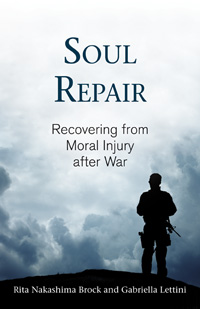
  • Rita Nakashima Brock, Ph. D. is Founding Co-Director of the Soul Repair Center at Brite Divinity School.(www.britesoulrepair.org). She was a professor for twenty years, directed the Fellowship Program at the Radcliffe Institute for Advanced Study, Harvard University, a prominent advanced research institute, and from 2001-2002, was a Fellow at the Harvard Divinity School Center for Values in Public Life. Her latest book is Soul Repair: Recovering from Moral Injury After War, co-authored with Gabriella Lettini.

    2907The killing of Iraq veteran and national figure Chris Kyle prompted media queries and questions for the three of us who run the Soul Repair Center at Brite Divinity School. Our Center is dedicated to recovery from moral injury in veterans. Rev. Dr. Coleman Baker, Chaplain (Col.) Herman Keizer, Jr. (ret.) and I spent a day reflecting together on what went wrong when Kyle tried to help a fellow vet. Here are some of our reflections.

    Chris Kyle, a well-decorated Navy SEAL sniper, completed four tours in Iraq with an extraordinary record of kills. Kyle's book about his experiences in the clandestine fraternity gained him much admiration. Then, a week ago on a firing range in Texas, Eric Routh, a Marine reservist who served in Iraq, killed him and his fellow veteran Chad Littlefield.

    Kyle was beloved by many because he tried to support his fellow vets in returning to civilian life, but it seems clear that Kyle himself never really left the military. He overcame his own struggles with alcohol and a fear of leaving his house by re-building a military cocoon as a means of therapy. Kyle's idea of what worked best for returning veterans was the military espirt de corps of an active unit. He used the tools of his military experience at his Fitco Care Foundation, designing treatments built on exercise, counseling and veteran camaraderie. And he kept a live-fire range open and invited others to shoot for therapy.

    He recreated the military world of heroism both at work and with other vets. He wanted veterans to be seen as strong and heroic, like soldiers who serve honorably and heroically and for the sake of others. His life was dedicated to still being part of the war. "Being able to do this makes me feel like I'm still a part of it and still giving back."

    In trying to treat Eric Routh by echoing his war experience, Kyle, who sought to stay in war, may have provoked a desperate Routh to seek escape from such "help." By not questioning whether military values can simply be relived in civilian life, Kyle failed to understand difficulties some returning vets might have with a "HOOHA" model of counseling and training, especially those with traumatic brain injuries, PTSD, and moral injury. For veterans who feel betrayed by the government, have serious trauma, or experience a collapse of moral meaning after war, more exposure to military life can compound the difficulty of adjusting to the civilian world.

    In a telling comment, however, about his first kill in Iraq, Kyle hints at the personal cost of leaving his cocoon: 

    It was hard trying to wrap my mind around "Well, how can I shoot another human being?" And even the first time I had to do it, they're yelling at me. "You have to do it! Take it! Take it!" And it's still trying to get over the fact that, well, I'm fixin' to have to kill someone.


    And then you do it, and you have to think of it differently. You're not killing a person, you're killing an enemy that if you don't do it, they're gonna kill your guys. … You have to de-humanize it, so you don't go crazy.

    In his civilian life, Kyle continued this strategy of de-humanizing his enemies. He referred to people in Iraq as "savages." He also dismissed civilians as shallow and selfish. 

    We think Kyle had a good point about civilian society. The care for each other unto death and the willingness to die in service to others bonds a combat unit in ways that are rare in civilian life. During the Iraq War, civilians were shielded from images of coffins returning home and were advised to shop, rather than make personal sacrifices to support the troops. The narcissism, personal ambitions, and self-obsessions with consumerism and celebrity culture have prompted some veterans to ask, "I fought for this?"

    Without a new social, emotional, spiritual system that can help veterans of war move from a military system to civilian life, we sentence many of them to military cocoons or lonely states of limbo from which transition is nigh impossible.

    Few institutions in our culture ask people to commit to each other over the whole life course, from birth to death. Few organizations welcome strangers and include them in a community of care; attend to those who need help, feel hurt or are troubled in their souls; and hold each other accountable for living into their best selves in circles of generosity and reciprocity. These commitments of lifelong weekly activities describe congregational life. Though no congregation does them perfectly, most try their best, and many do them well.

    We believe that congregations are one place that should be welcoming veterans home, but few have committed to this work. It should not be undertaken with just simple good intentions, though good intentions matter a great deal. To welcome veterans into a community's life, we need to understand how to assist the transition from the values of military life to religious life. We must advocate for better services for treating PTSD, and we must support veterans' families and all they go through to welcome veterans home.

    We mourn the deaths of Chris Kyle and Chad Littlefield. They are tragic, senseless killings that have left their families and friends with unimaginable loss. We may never know why they were killed. However, we hope their deaths can help us all better understand the complicated and difficult return to civilian life for combat veterans and see this as an important responsibility of us all.

    Without adequate ways for veterans to process their war experience, reflect on its moral and psychological impact, and restore them to civilian life, we fail as a society to bring them all the way home. Tragically, just before he died, Kyle hinted he might be ready to come home. He wanted to slow down and just take care of his family, saying he was tired: "I'm just trying to be the me that I am and not all of this other crap."

    Related articles

    Beacon Buzz: Prairie Silence, women in the military, and more!
    I'll Be Home for Christmas (Even Though I'm an Atheist)
    Kyle's military cocoon might have hurt, not helped
    Suspect in killing of former SEAL had been in psychiatric hospital
    Eddie Ray Routh, Iraq Veteran, Charged With Murdering Chris Kyle
  • Notable Mentions

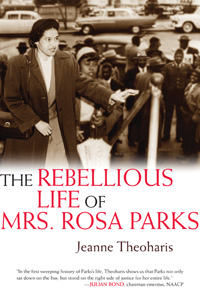
    5047The Rebellious Life of Mrs. Rosa Parks by Jeanne Theoharis

    This Valentine’s Day, people are expressing their love for Rosa Parks and this long-overdue biography of her surprisingly radical life.

    “Historian Theoharis offers a complex portrait of a forceful, determined woman who had long been active before the boycott she inspired and who had an even longer career in civil rights afterward.” Booklist

    “Even though her refusal to give up her bus seat sparked a revolution, Rosa Parks was no accidental heroine. She was born to it, and Theoharis ably shows us how and why.” Kirkus Reviews (Starred Review)

    “Theoharis succeeds here in doing what the best history books always do: challenging what we thought we knew, replacing fables with flesh and blood.” Kate Tuttle, The Boston Globe

    One of O Magazine‘s Must-Read books for February.

    The Detroit Free Press ran a substantial profile of Parks on her 100th birthday. Check out the piece for some amazing images of Parks and insights about her life, particularly the time she spent in Detroit.

    “The myth of the simple seamstress took on a life of its own,” Theoharis said. It became part of a kind of romanticizing of the civil rights movement, that has stifled it, she said. “If she is going to be used to tell the story of American history, we need to tell the whole story.”

    People need to know, Theoharis said, “how undaunted she was, and how fearless she was, and how she kept on keeping on.” [Read More]

    Interview with Gwen Ifill on PBS Newshour. Ifill’s blog post about the interview said of Theoharis: 

    But it is Jeanne Theoharis who has made the greatest contribution to our annual, ritual observance of Black History Month. She has revealed a story clouded by myth, conflict and fictional retellings. In the process, she has given us a valuable framework for understanding the present and the future.


    4469Fast Future: Millennial Generation Is Shaping Our World by David D. Burstein

    Burstein and Fast Future are featured in an article for the March issue of Glamour Magazine about young “deservers” in the workplace.

    Interview with The Fiscal Times: “Why Millennials Are Generational Game Changers.”

    Their values are shifting. It’s less about how we maximize profit and more about how we maximize happiness. Fewer millenials are homeowners, married and have children compared to our elders. People have an appreciation not for the institution of marriage, but for being with people they love. They’re finding a sense of belonging and adulthood not in home ownership but in community.

    Burstein spoke on HuffPost Live about the new study that says millenials are the most stressed out generation.

    “An inspiring look at what the millennial generation is doing in America.” Kirkus Reviews


    Dispatches from the Abortion Wars: The Costs of Fanaticism to Doctors, Patients, and the Rest of Us by Carole Joffe

    Carole Joffe has appeared on these pages many times. Read her in longer form in the newest issue of Dissent, which is devoted to the New Feminism. Her piece is titled, “Roe v. Wade and Beyond: Forty Years of Legal Abortion in the United States,” and in it she looks at the challenges and triumphs of the age of legal abortion.

    In the face of such hostility, one can ask, why does anyone keep doing this work? In simplest terms, the social movement opposing abortion has helped create a counter-movement of physicians (today, mainly women) who view their work as a “mission” and not just a medical subspecialty. Interviews I have conducted over many years with this community reveal how deeply meaningful many clinicians (and their office staff) find this work, the obvious drawbacks notwithstanding. Many have spoken of the satisfaction of being able to help a woman solve a crisis at a particularly vulnerable time in her life. As one physician said to me, “You ask how I can do this work? For me, the question is, how could I not?” [Read more]


    Coming Soon

    Wrapped in the Flag: A Personal History of America’s Radical Right by Claire Connor: Publishers Weekly selected Wrapped in the Flag one of its “Top 10: Politics” books in their spring announcements issue.

    Snob Zones: Fear, Prejudice, and Real Estate by Lisa Prevost: Kirkus Reviews on Mar 1: “Moves the argument well past simple “not in my backyard” sentiments… Makes the issue interesting on a number of levels, taking the argument beyond property values into the essential notion of what a community is and what might benefit it.”

    My Mother’s Wars by Lillian Faderman: Booklist review Mar 1 issue: “As Faderman vividly chronicles her mother’s intense personality and complex experiences, she also freshly illuminates the Jewish immigrant experience.”


    Watch This

    Jeanne Theoharis (The Rebellious Life of Mrs. Rosa Parks) on PBS NewsHour

    David D. Burstein (Fast Future) on HuffPo Live


    Related articles

    Beacon Buzz: Praise for Prairie Silence
    Fast Future: How the Millennial Generation is Shaping Our World
    The Rebellious Life of Mrs. Rosa Parks
    Happy 100th Birthday to Rosa Parks
    Gwen’s Take: Happy 100th Birthday, Rosa Parks
    Rosa Parks was about more than a bus, and a seat
  • By Lewis V. Baldwin

    KING-BALDWIN-InASingleGarment-revThe global Martin Luther King, Jr. has occupied my thinking for some two decades. I have often wondered how the man who, in his book The Trumpet of Conscience (1968), described himself as “a citizen of the world,” could be so ignored in terms of his international significance. Even King scholars have largely neglected King’s vision of what he variously termed “the world house,” “the new world order,” and “a new humanity.” Knowing that King’s birthday is recognized and/or celebrated in some one hundred countries, I set out to produce a volume of his writings and speeches on racism as a world problem, European colonialism, global poverty, war, the Middle East crisis, and religious bigotry and intolerance.  

    In a Single Garment of Destiny reclaims the global Martin Luther King, Jr. through the prism of his own words and activities on behalf of world peace and community. I have come to see that we cannot understand King if we limit him to a southern black preacher or an “American Gandhi.” We must view him as a leader who moved beyond the particularities of the African American and the American experiences to speak and act on behalf of a world fragmented by bigotry, injustice, intolerance, and war.

    “The dreamer” is the title by which Martin Luther King, Jr. is known around the world. While he spoke optimistically of the coming realization of the “American dream,” we must never forget his larger vision of “a world made new.” This is why King, in his last two books, Where Do We Go from Here: Chaos or Community? (1967) and The Trumpet of Conscience, focused so much on world problems, on racism, poverty, and war, and on the need for humans across the globe to move beyond a mere intellectual analysis of nonviolence to an experimentation with that method in every sphere of human conflict. 

    As a world figure, King transcends the past in terms of his meaning, authority, and inspiration.  He still has meaning for the contemporary world, especially as we deal with environmental protection concerns, post-Cold War ethnic cleansings, global terrorism, genocide, religiously-based violence, political assassinations, and the mounting cycles of violence, repression, and reprisal in the Middle East.  We need a new appreciation of King’s thought and legacy in the contemporary world.

    ABOUT THE AUTHOR

    Lewis V. Baldwin is professor of religious studies at Vanderbilt University and is the author of The Voice of Conscience: The Church in the Mind of Martin Luther King, Jr., There Is a Balm in Gilead: The Cultural Roots of Martin Luther King, Jr., and Never to Leave Us Alone: The Prayer Life of Martin Luther King, Jr. Baldwin is the editor of two books in The King Legacy series: “Thou, Dear God”: Prayers That Open Hearts and Spirits and “In a Single Garment of Destiny”: A Global Vision of Justice.


  • 4469A millennial examines how his generation is profoundly impacting politics, business, media, and activism
     

    They've been called trophy kids, entitled, narcissistic, the worst employees in history, and even the dumbest generation. But, argues David D. Burstein, the Millennial Generation's unique blend of civic idealism and savvy pragmatism, combined with their seamless ability to navigate the fast-paced twenty-first-century world, will enable them to overcome the short-term challenges of a deeply divided nation and begin to address our world's long-term challenges. 

    With 80 million Millennials (people who are today eighteen to thirty years old) coming of age and emerging as leaders, this is the largest generation in U.S. history, and by 2020, its members will represent one out of every three adults in the country. They are more ethnically and racially diverse than their elders, and they are the first generation to come of age in a truly global world and in the new digital era. Millennials have also begun their careers in the midst of a recession that has seen record youth unemployment levels, yet they remain optimistic about their future. Drawing on extensive interviews with his Millennial peers and on compelling new research, Burstein illustrates how his generation is simultaneously shaping and being shaped by a fast—changing world. Part oral history, part social documentary, Fast Futurereveals the impact and story of the Millennial Generation—in its own words. 

    About the Author

    David D. Burstein is the founder and executive director of Generation18 and director of the documentary 18 in '08. A frequent contributor to Fast Company, Burstein has appeared as a commentator on youth and politics for a range of publications and media outlets, including CNN, ABC, NPR, the New York Times, USA Today, the Boston Globe, and the Philadelphia Inquirer. He lives in New York City.

    Related articles

    What Gun Control Advocates Can Learn from the Anti-Choice Movement
    Huffington Post: Why the Millennial Generation Needs to Redefine Sustainability
    4 reasons to hire a millennial
    Millennials are the most stressed generation, survey finds
    Divided We Fail: The Story of an African American Community That Ended the Era of School Desegregation
  • Susie Bright, in addition to being a best-selling author, activist, and podcast host, is editor at large for Audible. Susie's blog, The Bright List, keeps readers and listeners apprised of new audiobooks.

    Today's post is a cross-post Aretha Bright's Bright List review of Mean Little Deaf Queer: A Memoir by Terry Galloway.

    MldqaudibleTerry grew up in the 1950s. Her mother had been given an experimental antibiotic while pregnant, which had adverse effects on her fetal nervous system. When Terry was nine, she began to lose her hearing.  But being deaf wasn't going to stop Terry from having her big personality! Even though she was named the "child freak" of her town and faced the worst kind of prejudice, she managed to get back at everyone by faking her own drowning at summer camp. Now that takes balls. 

    I listened to Terry's coming out, mental breakdowns, all the colorful characters in her life, and kept thinking, "What's next?" She never disappointed. 

    Narrated by Elizabeth Hess.

    Related articles

    Beacon Books at Audible: Without a Map by Meredith Hall
    Beacon Books at Audible: Outlaw Marriages by Rodger Streitmatter
    Beacon Books at Audible: Prairie Silence by Melanie Hoffert
    Beacon Books at Audible: Two books on kids and sports by Mark Hyman
    Beacon Books at Audible: Fugitive Days by Bill Ayers
    Books to read in honor of Human Rights Day
  • The Rebellious Life of Mrs. Rosa Parks

    Browse our African American titles: General Interest | African American History | Fiction and Poetry | Black Women Writers

    All month long, Beacon Press is offering 20% off and free shipping on all African American Studies titles purchased at Beacon.org. Use promo code FEB2013 at checkout. If you purchase two or more books, you'll also receive an attractive King Legacy Series tote bag. 

    In addition, Beacon will donate 15% of all purchases made through this promotion to the Young People's Project, an organization that uses Math Literacy Work to develop the abilities of elementary through high school students to succeed in school and in life.

    Browse books in the categories above, or check out these suggested recent titles. 


    5047

    The Rebellious Life of Mrs. Rosa Parks
    Jeanne Theoharis
    $27.95 / Hardcover
    $22.36 using code FEB2013 at www.beacon.org

    In The Rebellious Life of Mrs. Rosa Parks, Jeanne Theoharis masterfully details the political depth of a national heroine who dedicated her life to fighting inequality and, in the process, resurrects an inspiring civil rights movement radical who has been hidden in plain sight far too long.

    "In the first sweeping history of Parks's life, Theoharis shows us…[that] Parks not only sat down on the bus; she stood on the right side of justice for her entire life." —Julian Bond, chairman emeritus, NAACP

    "The Rebellious Life of Mrs. Rosa Parks will undoubtedly be hailed as one of the most important scholarly contributions to civil rights history ever written." —Melissa Harris-Perry, Host, MSNBC's Melissa Harris-Perry Show

    "A much-needed book on the woman who is, arguably, the most important person in the last half of the twentieth century." —Nikki Giovanni, poet

    "Jeanne Theoharis brings all of her talents as a political scientist and historian of the civil rights movement to bear on this illuminating biography of the great Rosa Parks." —Henry Louis Gates, Jr.

    Read the introduction to The Rebellious Life of Mrs. Rosa Parks.

    Q&A: The Rebellious Life of Mrs. Rosa Parks by Jeanne Theoharis

    The Rebellious Life of Mrs. Rosa Parks revisits the life of the civil rights icon and argues that the quiet, shy seamstress is a reductive stereotype. Biographile spoke with Jeanne Theoharis about the importance of changing the image of the tired lady on the bus.

    Watch author Jeanne Theoharis on the Melissa Harris-Perry Show on MSNBC

    http://www.msnbc.msn.com/id/32545640

    Visit NBCNews.com for breaking news, world news, and news about the economy


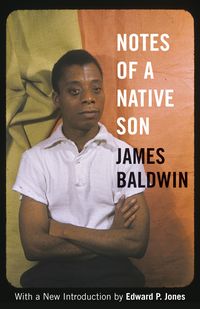
    BALDWIN-NotesNativeSonNotes of a Native Son by James Baldwin

    $15.00 / Paperback 
    $12.00 using code FEB2013 at www.beacon.org

    Written during the 1940s and early 1950s, when Baldwin was only in his twenties, the essays collected in Notes of a Native Son capture a view of black life and black thought at the dawn of the civil rights movement and as the movement slowly gained strength through the words of one of the most captivating essayists and foremost intellectuals of that era. Writing as an artist, activist, and social critic, Baldwin probes the complex condition of being black in America. With a keen eye, he examines everything from the significance of the protest novel to the motives and circumstances of the many black expatriates of the time, from his home in "The Harlem Ghetto" to a sobering "Journey to Atlanta." 

    Notes of a Native Son inaugurated Baldwin as one of the leading interpreters of the dramatic social changes erupting in the United States in the twentieth century, and many of his observations have proven almost prophetic. His criticism on topics such as the paternalism of white progressives or on his own friend Richard Wright's work is pointed and unabashed. He was also one of the few writing on race at the time who addressed the issue with a powerful mixture of outrage at the gross physical and political violence against black citizens and measured understanding of their oppressors, which helped awaken a white audience to the injustices under their noses. Naturally, this combination of brazen criticism and unconventional empathy for white readers won Baldwin as much condemnation as praise. 

    Notes is the book that established Baldwin's voice as a social critic, and it remains one of his most admired works. The essays collected here create a cohesive sketch of black America and reveal an intimate portrait of Baldwin's own search for identity as an artist, as a black man, and as an American. 

    Read the new introduction by Edward P. Jones for Baldwin's classic collection that creates a cohesive sketch of black America and reveals an intimate portrait of Baldwin's own search for identity as an artist, as a black man, and as an American.


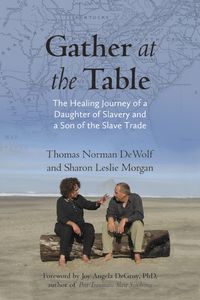
    DEWOLF-MORGAN-GatherAtTheTableGather at the Table: The Healing Journey of a Daughter of Slavery and a Son of the Slave Trade
     by Thomas Norman DeWolf and Sharon Leslie Morgan

    $25.95 / Hardcover
    $20.76 using code FEB2013 at www.beacon.org


    "We embarked on this journey because we believe America must overcome the racial barriers that divide us, the barriers that drive us to strike out at one another out of ignorance and fear. To do nothing is unacceptable."

    Sharon Leslie Morgan, a black woman from Chicago's South Side avoids white people; they scare her. Despite her trepidation, Morgan, a descendent of slaves on both sides of her family, began a journey toward racial reconciliation with Thomas Norman DeWolf, a white man from rural Oregon who descends from the largest slave-trading dynasty in US history. Over a three-year period, the pair traveled thousands of miles, both overseas and through twenty-seven states, visiting ancestral towns, courthouses, cemeteries, plantations, antebellum mansions, and historic sites. They spent time with one another's families and friends and engaged in deep conversations about how the lingering trauma of slavery shaped their lives. 

    Gather at the Table is the chronicle of DeWolf and Morgan's journey. Arduous and at times uncomfortable, it lays bare the unhealed wounds of slavery. As DeWolf and Morgan demonstrate, before we can overcome racism we must first acknowledge and understand the damage inherited from the past-which invariably involves confronting painful truths. The result is a revelatory testament to the possibilities that open up when people commit to truth, justice, and reconciliation. DeWolf and Morgan offer readers an inspiring vision and a powerful model for healing individuals and communities. 


    Read the introduction to Gather at the Table, and journey with two people—a black woman and a white man—as they confront the legacy of slavery and racism head-on.


    Related articles

    The Rebellious Life of Mrs. Rosa Parks
    Happy 100th Birthday to Rosa Parks
    On Rosa Parks' birthday, America still feels her worth
    Rosa Parks was about more than a bus, and a seat
    Beacon Buzz: Gather at the Table, Faitheist, and more!
    Jeanne Theoharis: 10 Things You Didn't Know About Rosa Parks