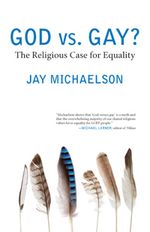
• Today's post is from Jay Michaelson, author of God vs. Gay? The Religious Case for Equality. Michaelson is a writer, scholar, and activist whose work addresses the intersections of religion, sexuality, spirituality, and law. 

    This post originally appeared at Huffington Post. 

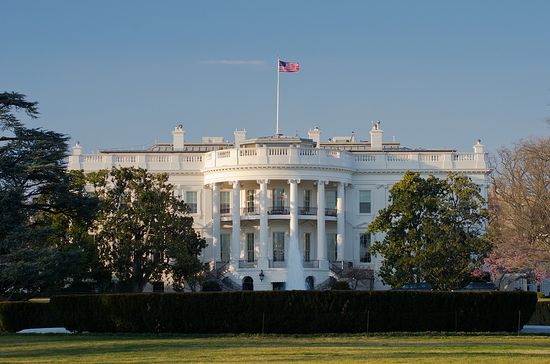
    Bigstock-White-House-Washington-DC-Uni-30731453

    I have to tell you that over the course of several years, as I have talked to friends and family and neighbors, when I think about members of my own staff who are in incredibly committed, monogamous relationships, same-sex relationships, who are raising kids together, when I think about those soldiers or airmen or marines or sailors who are out there fighting on my behalf and yet feel constrained, even now that "don't ask, don't tell" is gone, because they are not able to commit themselves in a marriage, at a certain point I've just concluded that for me, personally, it is important for me to go ahead and affirm that I think same-sex couples should be able to get married.

    Angry voices on the so-called "Christian right" are already screaming about President Obama's "war on religion," but today's announcement regarding same-sex marriage was actually an inspiring religious pronouncement. Why?

    0147First, because it came one day after one of the nastiest, meanest anti-gay votes in recent memory, North Carolina's "no families but mine" Amendment 1. It offers a studied contrast between humanity and dogmatism, inclusion and nastiness. Religious and non-religious people alike can now see two very different ways of approaching how we ought to live with one another, one welcoming and the other cruel, one open to the experience of others and the other with its hands over its ears, one focused on compassion and the other focused on exclusion. Who Would Jesus Discriminate against, anyway?

    Second, Obama's statement is a model of religious reasoning. Jesus said in the Sermon of the Mount, "By your fruits, you shall know them" (Matthew 7:16). This, not some obscure lines in Leviticus or Corinthians, is the real religious message regarding gays and lesbians, and it is the way Obama made up his mind on this issue. Over time, he said, he has come to understand the truth of same-sex couples, that they are as capable of commitment, love, and sanctity as opposite-sex couples, and that it is an injustice to deny the benefits of marriage to gay people.

    Those are religious values; they are exactly what the Sermon on the Mount preaches, as well. "A good tree cannot produce bad fruit, nor can a bad tree produce good fruit," Jesus said (Matthew 7:18). Well, let's apply that method to the question of same-sex marriage. Does it produce bad fruit or good fruit? Good fruit, as Obama himself has come to understand. Therefore, it, too, is good.

    This process is about the growth of individual conscience: I used to feel one way, but over time, in a careful and long process of discernment, I come to feel a different way. And look at the evidence Obama cited: People on his staff, friends, and family — these, not abstract principles — are what shifted his heart and mind. Thinking of his personal responsibility for the lives of soldiers serving our country — this, not some policy point — is the data that weighs into questions of right and wrong.

    Affirming the equality of LGBT people, including same-sex marriage, is not a choice between religion and some other values, between God and gay. It is, on the contrary, a direct consequence of taking religion seriously. It's easy to sit back comfortably with one's assumptions and prejudices. What's harder, and thus what really counts, religiously speaking, is to be open to what other people and their experiences have to teach us. That's how we can fulfill the injunction of Matthew 7:16, and it's exactly what the president showed us today.

    White House photo from Bigstock.

  • In the wake of President Obama's "evolution" on marriage equality, we're collecting reactions from our authors. 

    0334Rodger Streitmatter, author of Outlaw Marriages: The Hidden Histories of Fifteen Extraordinary Same-Sex Couples

    Obama’s announcement is absolutely huge. I think it will go down in history as an instance when a president had the courage to throw his weight behind an initiative that he believed in—that he wanted to be on the right side of—even if the political consequences were uncertain. It will definitely energize the LGBT community, as well as a lot of young people who are strong supporters of gay marriage. Lots of people are saying, “This is great. The guy I voted for in 2008 is back—somebody who’s committed to change and somebody I can believe in!”       

    I think it also will have impact on some people who are still on the fence on the gay marriage issue. Obama’s announcement will nudge them—people who respect him—to commit themselves to this issue.

    Read more about Outlaw Marriages.


    Karen-KahnPat-Gozemba

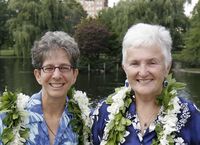
    Karen Kahn (pictured right with partner and co-author Pat Gozemba)
    co-author of Courting Equality: A Documentary History of America's First Legal Same-Sex Marriages 

    It is very gratifying to have the president of the United States recognize the full humanity of lesbian and gay Americans. I am not surprised. I am reminded of President Clinton being called “the first black president.” President Obama could be called the “first gay president.” He is slowly dismantling the institutions of discrimination at the federal level. After ending Don’t Ask, Don’t Tell and choosing not to defend DOMA, declaring  his support for full marriage equality seems like the next logical step. We should congratulate our movement—and the bravery of millions of gay and lesbian people who over the last thirty years have chosen to come out and fight for their rights. It is amazing that it has been not quite 20 years since the first court—in Hawaii—declared heterosexual marriage laws discriminatory. We still have a long way to go, as the North Carolina vote indicated on Tuesday. But I think we can all rest assured that when the President supports equality, we are moving toward justice for all. (Photo by Marilyn Humphries.)

    Read more about Courting Equality.


    //platform.twitter.com/widgets.js

  • //platform.twitter.com/widgets.js

    Jay Michaelson calls Obama's announcement an "inspiring religious pronouncement":

    First, because it came one day after one of the nastiest, meanest anti-gay votes in recent memory, North Carolina's "no families but mine" Amendment 1. It offers a studied contrast between humanity and dogmatism, inclusion and nastiness. Religious and non-religious people alike can now see two very different ways of approaching how we ought to live with one another, one welcoming and the other cruel, one open to the experience of others and the other with its hands over its ears, one focused on compassion and the other focused on exclusion. Who Would Jesus Discriminate against, anyway?

    Second, Obama's statement is a model of religious reasoning. Jesus said in the Sermon of the Mount, "By your fruits, you shall know them" (Matthew 7:16). This, not some obscure lines in Leviticus or Corinthians, is the real religious message regarding gays and lesbians, and it is the way Obama made up his mind on this issue. Over time, he said, he has come to understand the truth of same-sex couples, that they are as capable of commitment, love, and sanctity as opposite-sex couples, and that it is an injustice to deny the benefits of marriage to gay people. (Read the rest at Huffington Post)

    EJ Graff reflects back on a wedding she attended at the beginning of marriage equality in MA: 

    In 2004, I sat in a Unitarian pew while my friends Hillary and Julie Goodridge said their vows. I was absolutely fine with all the lead-up—they'd been together as long as I had been with my beloved partner, and I'd known them before that. Then came the phrase "By the power vested in me by the commonwealth of Massachusetts"—and I was sobbing harder than I knew was possible. So were the hardbitten LGBT activists around me, even those who weren't especially happy about the pursuit of marriage. As we all managed to sit up and dry our eyes, a little embarrassed at how raw the emotion was, one of the latter said, "I guess being ready for something intellectually isn't the same as being ready emotionally." 

    There's something very deep about having your government declare you a stranger to its laws, defining your love as outside all respectable recognition. For my president to stand up and say that I should belong fully to my nation, that my wife and I should be considered as fully married as my brother and his wife—well, it reopens and washes out some very deeply incised sense of exclusion, a scar inflicted when, at age 15, I first panicked at the realization that I might be queer. (Read the rest at the American Prospect)


  • In honor of Teacher Appreciation Week, Beacon Broadside is running a series of posts on educators and education.

    Today's post is by William Ayers and Rick Ayers. William Ayers is is Distinguished Professor of Education and Senior University Scholar at the University of Illinois at Chicago (retired). He is the founder of the Small Schools Workshop and the Center for Youth and Society. Rick Ayers is a Professor in Teacher Education at the University of San Francisco. He has worked as a Master Teacher for KQED Education Department, on the Teacher Advisory Board for Youth Speaks, and as a core team member of the Berkeley High School Diversity Project. 

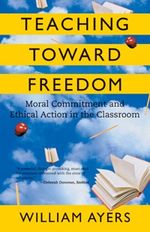
    They have co-written two books: Teaching the Taboo and Zero Tolerance: Resisting the Drive for Punishment, A Handbook for Parents, Students, Educators and Citizens. Separately, they have written numerous books on education, including Bill's Teaching Toward Freedom: Moral Commitment and Ethical Action in the Classroom and A Kind and Just Parent: The Children of Juvenile Court, and Rick's Great Books for High School Kids: A Teachers' Guide to Books That Can Change Teens' Lives (co-written with Amy Crawford) and Studs Terkel’s Working, a Teaching Guide.

    32553269Teaching involves engaging real students every day, nurturing and challenging the vast range of people who actually appear before us, solving problems, making connections, putting in 70 hour weeks and spending our own money on supplies; and it means listening to every two-bit politician, the bought media, and big money misrepresent what we do and attack us shamelessly every day.

    Want to appreciate teachers?

    Don't allow education to be defined as an endless Social Darwinist competition: nation against nations, state against state, school against school, classroom against classroom, and child against child. Education, like love, is one of the fundamentals–give it away generously and lose nothing–and school is where we work out the meaning and the texture of democracy-coming together to explore the creation of community, pursuing the hard and challenging questions, and imagining new ways to be in balance with the earth and in harmony with one another. Good teaching deals with the real–honor teachers for that.

    Reframe the debate: We are insistently encouraged to think of education as a product like a car or a refrigerator, a box of bolts or a screwdriver-something bought and sold in the marketplace like any other commodity. The controlling metaphor for the schoolhouse is a business run by a CEO, with teachers as workers and students as the raw material bumping along the assembly line while information is incrementally stuffed into their little up-turned heads; it's rather easy to think within this model that "downsizing" the least productive units, "outsourcing" and privatizing a space that was once public is a natural event; that teaching toward a simple standardized metric, and relentlessly applying state-administered (but privately-developed and quite profitable) tests to determine the "outcomes," is a rational proxy for learning; that centrally controlled "standards" for curriculum and teaching are commonsensical; that "zero tolerance" for student misbehavior as a stand-in for child development or justice is sane; and that "accountability," that is, a range of sanctions on students, teachers, and schools-but never on law-makers, foundations, corporations, or high officials-is logical and level-headed. This is in fact what a range of wealthy "reformers," noisy politicians, and their chattering pundits in the bought media call "school reform."

    Oppose the "reform" policies that will add up to the end of education in and for democracy: resist replacing the public schools with some sort of privately-controlled administration, sorting the winners relentlessly from the losers-test, test, TEST! (and then punish), and destroying teachers' ability to speak with any sustained and unified voice. The operative image for these moves has by now become quite familiar: education is an individual consumer good, not a public trust or a social good, and certainly not a fundamental human right. Management, inputs and outcomes, efficiency, cost controls, profit and loss-the dominant language of this kind of reform doesn't leave much room for doubt, or much space to breathe.

    Note that good working conditions are good teaching conditions, and that good teaching conditions are good learning conditions, and that teachers independent and collective voice is essential in determining these conditions.

    Fight for smaller class size, limited standardized tests, enhanced arts programs at all levels and in every area, equitable financing, and a strong teachers contract that encourages collegiality and collaboration.

    Throw in a note or a flower if you like.

  • In honor of Teacher Appreciation Week, Beacon Broadside is running a series of posts on educators and education.

    Award-winning educator Linda F. Nathan founded the Boston Arts Academy in 1998. She consults and speaks on educational issues nationally and internationally, and teaches a graduate course at Harvard on building democratic schools. Nathan is the author of The Hardest Questions Aren't on the Test: Lessons from an Innovative Urban School.

    0615Senior year is by far the most demanding at Boston Arts Academy. Students must truly demonstrate one of our shared values: passion with balance. Their final senior Humanities paper and group project is due. Opening nights for their final arts exhibitions and performances are just around the corner. Many must still scramble to pay for senior dues, prom, and yearbook.

    These demands can feel like too much, and adolescents often forget to react to stress with grace. How many adults know how to do this? So today, in our assembly, I reminded our seniors about the importance of showing teachers their appreciation.

    If each senior writes one note to one teacher, I would feel I had done my job. I want students to recognize the brilliance and selflessness of so many of their teachers. Sadly, the general public could benefit from this education as well.

    I recalled in assembly how each of my staff has done something terrific with kids and with one another as colleagues. In my “Celebrating Another Year Together” presentation each year, I name remarkable things that our faculty has accomplished. I remind us of the various ways teachers took on extra responsibilities, implemented a new curriculum, succeeded with a particular project or simply were present daily for students. If I could, I would reimburse every teacher for the thousands of dollars they have collectively spent on student supplies, taking students to lunch, driving students home, etc…

    And finally, if I could, I would put a huge stop sign at the door to prevent high-stakes testing from taking over the curriculum. I would let teachers know that I hold them accountable for high standards, that I trust them to do an excellent job, and that I will not tie their evaluations to test scores.

    Alas, it is the letter and my own writing that I know I can deliver. The rest is up to the students I encourage, and to a behavior of appreciation that the community can model for them.

  • In honor of Teacher Appreciation Week, Beacon Broadside is running a series of posts on educators and education. 

    Today's post comes from educator David Chura, author of I Don’t Wish Nobody to Have a Life Like Mine: Tales of Kids in Adult Lockup. He has worked with at-risk teenagers for the past 40 years. For 26 of those years, he taught English and creative writing in community based alternative schools and in a county penitentiary. His writings have appeared in the New York Times as well as other scholarly and literary journals. He blogs at http://kidsinthesystem.wordpress.com/. 

    ChuraLike most teachers I’ve gotten some praise from my high school students over my 26 years of teaching—a lesson “wasn’t bad,” or a particular class was “sorta interesting.” I’ve even been told that I was a “pretty good teacher.” High praise coming from teenagers.

    But the truth is I wasn’t a “good teacher.” I was a “failure,” at least according to America’s “education reformers”—that “odd coalition of corporate-friendly Democrats, right-wing Republicans, Tea Party governors, Wall Street executives, and major foundations” as Diane Ravitch aptly defines them—because the kids I taught consistently lagged behind their peers in every measure, performing well below grade level, failing state standardized tests.

    Given the present state of teacher evaluations, with a significant portion allotted to student performance on mandated tests, I’d be in big trouble if I hadn’t left teaching recently. I certainly wouldn’t get any bonus pay. If it were up to the Obama Administration I might not even have a job since I would be one of those teachers who, as the President noted in his 2012 State of the Union address, “just aren’t helping kids.” And if I still taught in New York I’d be facing the prospect of having my name and ratings published in newspapers and on the internet if the Legislature gets its way in what the New York State Union of Teachers called the “name/shame/blame game.”

    But I know that I wasn’t a “failure,” and more importantly, that the hundreds of kids I’ve taught weren’t either. My students were mostly young people of color, living in neighborhoods and families destroyed by poverty and substance abuse, racism and violence, physical and sexual abuse. Overall, life—shaped by their own mistakes and by conditions they couldn’t control—left them little time for, or interest in education. Frequently that lack of time and interest led to trouble which led to repeated suspensions, expulsions and in some cases, incarceration.  But sometimes trouble translated into being placed in a small community alternative high school or the jailhouse classroom in the county penitentiary, both places I taught in.

    By the time they made it to me, my students were pretty damaged. They hated school. They could barely read or do basic math. And forget about writing. “You expect me to write?” more than one teen squawked in horror at me. But eventually they did. They read, piling up grade levels like some Americans pile up debt. They calculated. They even learned the magic of connecting sentences that made sense.

    But by the state’s educational rubric, they didn’t cut it. As noteworthy as their successes were—both academically and behaviorally—they were still “failures” and I along with them: success was only validated by passing the standardized tests.

    One of the hardest things I had to do was send kids into those tests who weren’t ready. I tried hard beforehand to get them out of it. I’d explain, downright argue at times, with the school administration that although my students had made solid progress it wasn’t enough to tackle the exam and so they should wait and take it next time. It never worked. “It’s the law,” I was told.

    Every time I think about Tyler my palms sweat. He was a jailhouse student, lanky, 16, with an Afro picked out to an angel’s halo. But he was no angel, and he had the missing front teeth and two years at the county pen to prove it. When he first came to class he was reading on a second grade level. For some reason he was determined to improve this time round in school. He came every day, took work to his cell every night and returned it completed every morning. Slowly his reading level increased. He was pleased with himself. You could see it in the almost toothless smile he didn’t bother to hide anymore.

    But he wasn’t close to test-ready. When I petitioned to delay Tyler’s exam the administrator refused but offered me her idea of comfort, “Look, it’s okay if he fails. Then he’ll be eligible for remediation.” I couldn’t help shooting back, “Sure, send the kid in so he can get shot down one more time.” I prepared Tyler for that test as best as I could. He worked harder than ever. He was psyched. “I’m gonna ace it, Mr. C.”

    You know the end of the story. It’s the same for many damaged kids living in poverty and neglect, factors that the pundits say can be overcome by good, dedicated teachers. Once again Tyler “failed.” He never came back to class for remediation.

    If Tyler and kids like him are “failures” then I—and all the other teachers who teach in tough places—are too. But I don’t think we should take the rap alone. As long as our educational policies let down students like Tyler in the name of “reform” and “the law,” continuing the “name/shame/blame game” instead of addressing the social conditions that cripple these kids’ lives and learning, then we as a country are failures as well, in need of some serious remediation. 

  • May 6, 2012, marks the 150th anniversary of the death of Henry David Thoreau, the father of American nature writing. His influence on contemporary environmental writing is still very significant, and this weekend, we're highlighting that influence on our blog. Today, we hear from Michael Lanza and Elizabeth Gehrman.

    Michael Lanza is the creator of TheBigOutside.com and author of Before They’re Gone: A Family’s Year-Long Quest to Explore America’s Most Endangered National Parks, which traces his journey to show his kids iconic national parks that could be altered forever by climate change. 

    Pata1-356t_dientes_circuit__patagonia__2_I would be less than honest to claim that, when I read Thoreau’s classic Walden; or, Life in the Woods, years ago, I couldn’t put it down. To me, it seemed like the book begged to be put down. By modern literary standards, it is not the most accessible read. It probably wasn’t back when it was first published in 1854, either.

    I grew up not far from Walden Pond, where, beginning on July 4, 1845, Thoreau lived for two years, two months, and two days alone in a cabin “to front only the essential facts of life, and… suck out all the marrow of life.” That’s heady stuff. I’ve walked the trail around the pond—which can take an hour only if you dawdle—and visited the replica of his tiny cabin that stands there today. In reality, the second-growth forest (less dense than Thoreau’s prose) in which he dwelled just two miles from town probably felt little more isolated back then than it does today, within earshot of a busy highway.

    But the degree of Thoreau’s isolation is not what matters; and in an era when so much entertainment delivers an intellectual experience akin to eating apple sauce—no chewing necessary—perhaps we should celebrate writing that requires some brain effort to interpret. Thoreau’s real importance was introducing ideas about returning to nature that were ahead of his time and helped inspire the conservation movement, among other social trends to which he contributed (transcendentalism, abolition, and civil disobedience, to name-drop a few noteworthy examples). His words ring particularly prescient now, when we lament the myriad, tragic consequences of so many children spending so little time outdoors. Certainly, all of us who today write about personal experiences in nature stand on Thoreau’s shoulders.

    Before theyre goneAs no less an authority than the late John Updike once wrote: “A century and a half after its publication, Walden has become such a totem of the back-to-nature, preservationist, anti-business, civil-disobedience mindset, and Thoreau so vivid a protester, so perfect a crank and hermit saint, that the book risks being as revered and unread as the Bible.”

    Maybe Thoreau’s classic work should be required reading for all high-school students, or at least any who would aspire to join the long parade of writers walking rocky trails in his footsteps. Those who put in the time and effort might discover the meaning that has stirred so many people. And I doubt we’ll ever have an app for that.


    Elizabeth Gehrman is a frequent contributor to the Boston Globe Magazine and has written for the New York Times, Archaeology, More, and This Old House. Her new book, Rare Birds: The Extraordinary Tale of the Bermuda Petrel and the Man Who Brought It Back from Extinction, will be published by Beacon in October.

    GehrmanThough I dutifully recorded and often revisited quotes from it — so many I could never choose just one to cite here — what I remember most from my high school English reading of Walden is that it was a bit of a slog. I was no philosopher, and though I grew up on an island, my playgrounds the Niagara River and acres of untamed forest, nature had never really flipped my introspection switch. Maybe, as an only child, I had enough solitude; I was content simply to explore the woods and water without feeling the need to examine myself in the bargain. It wasn’t until college, when I got around to Cape Cod, that I really discovered Thoreau.

    GEHRMAN-RareBirdsWhere Walden turns inward, Cape Cod turns outward. Often described as Thoreau’s “happy” book, it is not so much about nature as about people in nature. It tells of those who are drawn to the sea — the oystermen and lighthouse keepers and industrious old women who come to it because of work or circumstance or its inexorable pull on the soul. “Cape Cod is but another name for human culture,” Thoreau writes early on. His initial tale of a horrific shipwreck never strays far from his mind as he recounts the power of the “vast and wild” Atlantic over the lives cast upon its shores with an eye for detail that any journalist would envy.

    And that, it seems to me, is more affecting than bean-planting any day.

  • May 6 marks the 150th anniversary of the death of Henry David Thoreau, the father of American nature writing. His influence on contemporary environmental writing is still very significant, and this weekend, we're highlighting that influence on our blog. Today, we hear from Christine Byl and Brad Tyer, two forthcoming Beacon authors. 

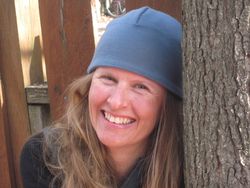
    Christine Byl is the author of Dirt Work, forthcoming from Beacon Press in 2013. She lives in a yurt outside of Healy, Alaska with her husband and retired sled dogs. Her fiction and essays have appeared in Crazyhorse, The Sun, Glimmer Train,Broadsided Press, Lumberyard, and others. She worked on trail crews on public lands for 15 years; with her husband she now runs a family business doing trail design and construction.

    Byl headshotI had not split firewood or hoed a row of beans when I first read Thoreau in high school English. I lived in urban Michigan, had no experience with subsistence tasks. Yet I loved Thoreau from the first page. Now I live in Interior Alaska, off-the-grid without running water, and daily chores take up much of my time (picking berries, hauling water, cutting wood). But the reasons I was drawn to Thoreau in high school remain consistent now: something about what centered him made sense to me—life connected to a place you lived, and what you did there. I liked how he was humble yet sure of himself. I liked that he admired squirrels.

    As a writer, I've respected other things. His cultural critique feels germane 150 years out. He's a dialectical thinker, finding fertile ground between assumed dichotomies. He summons a childlike wonder at the world. He reminds me to laugh, to take words and ideas seriously, but myself less so. Simply put, Thoreau writes with mind, heart and body fully engaged. Among the many writers who've influenced me, Thoreau may best embody Henry James’ famous quote: "A writer is someone on whom nothing is lost."

    The conventional way to write off Thoreau is on his so-called inconsistencies (Walden wasn't wild, it was a mile from Concord!), but Thoreau's wisdom is that he never claimed a deliberate life had to happen in the middle of nowhere. An authentic life isn't an escape: it has less to do with location than attentiveness to it.

    Despite the solitude he was best known for, I think Thoreau would make good company. (I feel so friendly toward him that I refer to him in my mind by the pet nickname, HDT.) I can imagine working in the woods with him, tossing 8-foot logs into the truckbed, making him blush at a bawdy joke. After, in the cool spring evening I'd pour us hot cocoa (mine with whiskey, his without.) I can see myself leaning on the axe near the splitting stump while HDT quotes himself from Walden, "Every man looks at his wood-pile with a kind of affection." Yep, HDT, and every woman, too.


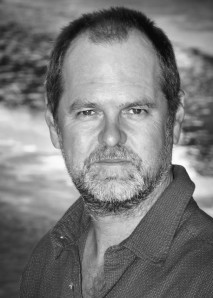
    Brad Tyer is the author of Opportunity Montana, forthcoming from Beacon Press in 2013. He is a journalist whose work has appeared in Outside magazine, High Country News, the Texas Observer, and many other newspapers and magazines.

    Brad_tyerI grew up the child of a first-generation middle-class family for whom a motorboat and a weekend place on a lake defined the lap of suburban luxury. My parents were just a generation removed from fishing for food and rural isolation as facts of life; to transform those memories of need into leisure marked their triumph over circumstance. They’d escaped. To prove it, they bought a place to escape to.

    I’d never heard of Thoreau, but it was our Walden. Like Henry’s cabin, adjusted for interstates and dams, it was just north of town (Houston) on a reservoir (Lake Conroe). Curb to gate, we could drive there from home on the other side of the city in about as long as it took HDT to walk into Concord and bum a beer from Emerson. We called our place Hard Times, with the reflexive self-deprecation of insecure East Texas arrivistes.

    At the other end of Lake Conroe was the only Walden I knew of: a lakefront development of condos clustered around a marina full of boats at the western end of what had once been the San Jacinto River. Walden had a golf course and tennis courts. Walden had a shop on a pier selling gasoline and life jackets and bait and polo shirts embroidered with the resort logo. Walden was the rich end of the lake.

    It was years before I read Thoreau’s Walden and understood the references and aspirations playing out at the rich end of the lake—and, acknowledged or not, at our end too.

    What I remember of Walden is the occasional diamond clarity of its sentences, and Thoreau’s constitutional contrariness. I don’t remember his celebrations of nature so much as his condemnations of so-called civilization. 

    To realize that developers were repackaging that contrary clarity as a hive of internal combustion, on a time-share basis no less, marked maybe my first real awareness, in retrospect, of the ways of the commercial world. They’d take a word that meant something—Walden—and turn it upside down. They’d try to fool you. They’d advertise one thing and sell you another. Your parents could do the same thing: Hard Times my ass…

    Words can serve truth, or they can serve their speakers. That’s an awareness—call it a bias; fair enough—that I’ve carried through 20 years of journalism aimed, when I could see, at clarifying that which has been obfuscated. It’s a bias that informs Opportunity, Montana pretty deeply. As influences go, it’s indirect, but that’s the note Thoreau sings for me.

  • May 6, 2012 is the 150th anniversary of Henry David Thoreau’s death. Thoreau is viewed by many as the father of American nature writing, and his significant influence continues. In the passage below Tom Montgomery Fate describes his own “cabin experience” in southwest Michigan and reflects on Thoreau’s continuing relevance.

    You can listen to Tom Montgomery Fate on this weekend's episode of PRI's To the Best of Our Knowledge.

    A More Deliberate Life

    (excerpted from the Introduction to Cabin Fever)

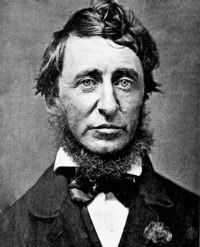
    486px-Henry_David_ThoreauOne sunny afternoon a few years ago I drove to southwest Michigan to build a cabin in the woods. It was spring break and I had just reread Walden, Henry David Thoreau’s nineteenth century account of his life in the woods at Walden Pond. The famous hermit-philosopher had again inspired me, but it was different from the first time I read it. I was not an idealistic 19-year-old college freshman, but a harried and married 46 year-old father of three in suburban Chicago. Different things mattered. The book called me with more urgency––from my distracted middle-class, middle-aged life into the wild solitude it conjured.

    That same morning, before leaving, I discussed the weekend with my wife, Carol, packed food and clothes, and then went to the garage to look for tools. When I pushed the remote, and the garage door hummed open, I abruptly recognized my life: a wild tangle of bicycles and strollers and grilling utensils and patio furniture and wet cardboard boxes full of moldy books and kids’ clothes. Amid the clutter I found an old spade, two saw horses, a metal tool box, and a post hole digger, all of which I tossed into the back of our minivan. On the two-hour drive to Michigan that day I recited Thoreau’s mantra–– Simplify, Simplify­­––as a kind of prayer, thinking it might offer me some guidance.

    It didn’t. We finished the cabin in two years, or at least stopped working on it. Cobbled together with the help of family and friends, and with more patience than expertise, we built it on a fifty acre plot of woods and meadow that we own and share with six other families, friends from our old church. They bought the land cheap thirty years ago––a farm abandoned after a fire. It has since been slowly restored: the stone farmhouse rebuilt, thousands of pines and oaks planted, a large garden dug. And we maintain a network of walking trails that wind throughout the property.

    Were he alive today, Thoreau might have little interest in our experiment in Michigan. But he might be a bit curious. He did, after all, anticipate those readers who would naively aspire to his ideals. In the first chapter of Walden he addresses the relevance of his stint in the woods for the interested novice: “I would not have anyone adopt my mode of living…but I would have each one be very careful to find out and pursuehis own way.”[i]

    CabinfeverEven when no one would buy his books, and long before there were Thoreau “wannabes,” he advised readers to listen for their own drummer, and find their own way through the forest. Walden’s continued appeal is partly due to a romantic longing to “get back to nature.” And while Henry himself is also deeply romanticized, his commitment to the environment, his material self-sufficiency, and his “less is more” economics could not be more relevant.

    Such ideas resonate in a high tech, high speed culture, which excels at making waste and war. We have bi-focal contacts and laser eye surgery but still struggle to see in the way Thoreau imagined––to find the essential balance of the I and eye, of self and world. This is why despite the vast distances of time and culture, I can’t help but read Thoreau’s artful interrogation of his life at Walden Pond as both a critique of my own and as an invitation to a new kind of vision, to the joy of enough in a culture of more, to a deliberate life.

    That’s what I’m seeking: a more deliberate life. But deliberate doesn’t just mean intentional or careful; it means balanced. The word is tied to libra––the two pan scale of justice—which is for weighing and balancing things—ideas, fears, love. Or maybe garlic: I saw such a scale once at a market in a tiny French village. The farmer put a 100 gram weight in one silver pan and a handful of garlic in the other. The standard, or known weight, was balanced against the unknown. In this case the garlic was too heavy so the pans didn’t level. But the vendor gave it to me anyway, balancing the scale with his generosity. Deliberation is a creative act, an art.

    My 7-year-old son, Bennett, sometimes tries to balance himself on the creaky iron fulcrum of a wooden teeter totter at the playground. He jumps up on the heavy plank and puts one foot on each side of the center. Then he shifts his weight, pushing one end of the plank down, causing the other end to rise. He tries to stay balanced and level but can’t for more than a few seconds. One side always starts to teeter up or totter down. He doesn’t stay centered, but neither does he ever fall off. This struggle for balance, the rising and falling between the earth and sky, gives him great joy. And he gives that joy to me, if I’m paying attention.

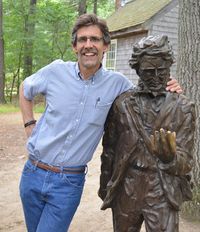
    Tomfate_HDTTo put it plainly, a deliberate life is a search for balance—in mind and body and spirit—amid our daily lives. And while some might like to do that searching all alone in the woods, few can. Other “natural” commitments conflict: children, a partner, a job or two. Most readers who admire Thoreau’s ideas don’t have the freedom or desire to live a solitary life in the woods. Still, what many of us do want, and what this book is about, is finding a deeper connection to Nature in our ordinary lives—by seeking relationship and refuge wherever we find ourselves––whether it be on a walk through a forest preserve, on a family camping trip, or catching grasshoppers in the backyard.

    “I have traveled a great deal in Concord,” Thoreau famously wrote. For him travel writing was nature writing, and it was local. His search for the Wild was on home ground: an outward physical journey and inward spiritual journey conducted not in pristine isolation, but on the humble Concord woodlot available to him.[ii]

    This is vital for those who seek a more deliberate life today. Because since Thoreau’s invention of the nature memoir 150 years ago, much of the natural environment itself has been destroyed. So the task is no longer to discover and record the rare, but to recover and nurture the ravaged—to try to restore some balance where we live. This is particularly true here, amid the Midwest’s decimated woodlands and farms and sprawling suburbs, where developers and nature often collide.

    Everyday I see these collisions––the imbalance––between humanity and the other animals who live here. Herons nest on our E.coli choked river. Coyotes hunt on the runways of O’Hare Internatonal airport while roaring jets are trying to land. A Canada goose gets trapped in the entryway of my office building. Rabbits nest in wood chips beneath a metal slide on a suburban playground. A wild cougar is gunned down in an alley by a Chicago policeman. Who belongs where? Who will take care of whom on this shrinking planet? How will we find the balance we seek?

    These are the kinds of questions that Thoreau is still opening for me, and that I continue to live in.

    Watch the book trailer for Cabin Fever on YouTube


    [i] Henry David Thoreau. Walden, A Fully Annotated Edition. Ed. Jeffrey Cramer. New Haven: Yale UP, 2004. P.86

    [ii] Ibid. p. 170. The land around Walden Pond was not “wilderness,” but a conventional woodlot when purchased by Ralph Waldo Emerson. Thoreau himself writes “The scenery of Walden is on a humble scale…”

  • Today's post is from Chris Stedman, author of the forthcoming book Faitheist: How an Atheist Found Common Ground with the Religious. He is the Interfaith and Community Service Fellow for the Humanist Chaplaincy at Harvard University, the emeritus managing director of State of Formation at the Journal of Inter-Religious Dialogue, and the founder of the first blog dedicated to exploring atheist-interfaith engagement, NonProphet Status. Stedman writes for the Huffington Post, the Washington Post's On Faith blog, and Religion Dispatches.

    STEDMAN-FaitheistSam Harris–I know you're a busy man, but I'd like to ask you out. Will you go to mosque with me?

    I'm not trying to convert you to Islam. Like you, I'm not a Muslim. Like you, I don't believe in any gods. I'm happily, openly atheist. A queer atheist, even. Like you, I have many significant concerns about Islamic beliefs and practices. But still, I want to visit a mosque with you.

    We don't have to go alone–we could go with Mustafa Abdullah, a young community organizer in Winston-Salem, North Carolina who is currently campaigning against the state's proposed anti-gay Amendment One. We could attend with Najeeba Syeed-Miller, a teacher and activist who has dedicated her life to peacebuilding initiatives. Or we could go with Eboo Patel, founder of the Interfaith Youth Core, who is committed to promoting pluralism and opposing bigotry, and who regularly speaks up for atheists as a religious minority in the United States.

    Why am I inviting you to visit a mosque with me and my friends? Since I'm asking you publicly (I couldn't find your phone number anywhere and I'm pretty sure this MySpace page isn't really you), I should probably give some context.

    A few weeks ago I saw you speak at the Global Atheist Convention in Melbourne, Australia. Before I go on, I need to confess: your remarks blew me away. In a weekend full of incredible intellects, your frank, contemplative, eloquent speech on death, grief, and mindfulness was easily my favorite. So I was not prepared for the crushing disappointment I felt when, just a few weeks later, you published a piece called "In Defense of Profiling" in which you unequivocally stated: "We should profile Muslims, or anyone who looks like he or she could conceivably be Muslim, and we should be honest about it."

    Never mind that your argument doesn't hold water–to quote my friend Hind Makki: "What does a Muslim look like? The 9/11 hijackers didn't have beards and 'dressed Western.' The shoe bomber wasn't Arab or South Asian. Sikhs wear turbans. The majority of American Muslim women don't wear hijab. The majority of Arab Americans are Christian–though they often share the same names as their Muslim counterparts. Perhaps Harris would support an initiative that required all Muslims to sew a crescent and star onto our clothes. It would make his airport security time a more pleasant experience. (Though, I suppose, it wouldn't have stopped McVeigh or Breivik.)" Though as a frequent traveler I share your frustrations with the TSA, profiling doesn't make sense as a solution to its problems.

    Instead, while we're en route to mosque, I'd like to talk to you about something else. As I read your piece, which (along with the clarifying addendum you tacked on a few days later) failed to explain how you would determine who "looks… Muslim," I thought back to another moment at the Global Atheist Convention a few weeks ago. As you were speaking, rumors began to fly that a group of extremist Muslims would be protesting the convention. Sure enough, a group of less than a dozen appeared just a short while later, holding signs that said "Atheists go to hell" and shouting horrible things. But to my dismay, their hate was mirrored by hundreds of conference attendees, some of whom shouted things like "go back to the middle east, you pedophiles," tweeting "maybe the Muslim protesters [are] gay so [they] don't have wives? … A lot are/were camel shaggers," and wearing shirts that said "Too stupid for science? Try religion." Watching the scene unfold, I was reminded of how much work there is to be done in combating prejudice between the religious and the nonreligious.

    I'm not sure you share my concerns about this divide. In fact, last year you wrote this about the 2011 attacks orchestrated by Anders Behring Breivik in Norway that resulted in the deaths of over 70 people:

    One can only hope that the horror and outrage provoked by Breivik's behavior will temper the growing enthusiasm for right-wing, racist nationalism in Europe. However, one now fears the swing of another pendulum: We are bound to hear a lot of deluded talk about the dangers of "Islamophobia" and about the need to address the threat of "terrorism" in purely generic terms.

    In the wake of an atrocity of unimaginable proportions–one perpetrated by an anti-Muslim terrorist who was influenced by anti-Muslim writers–I could not believe that you decided to write a blog suggesting that the real problem is the fight against Islamophobia. 

    Whether you think so or not, Sam, Islamophobia is quite real. The American Muslim community experiences disproportionately high rates of discrimination and violence, and Islamophobic rhetoric has a significant bearing on this. This from a detailed report on the network of Islamophobia in America: "According to former CIA officer and terrorism consultant Marc Sageman, just as religious extremism 'is the infrastructure from which Al Qaeda emerged,' the writings of these anti-Muslim misinformation experts are 'the infrastructure from which Breivik emerged.'"

    As a society, we need to acknowledge the reality of the consequences of Islamophobia. As one Norwegian Muslim recently said:

    "I think it is good and healthy that this comes out," he told AFP in a telephone interview, arguing that Breivik built his ideology largely on the basis of Islam-critical writings in the media and online and rumors he has heard about violent Muslims. "This should help show people that this kind of rhetoric can be very, very dangerous. It is a wake-up call, and I think many people will moderate the way they talk about these things."

    We desperately need to discuss these things. An argument I frequently hear from atheists is that if moderate Muslims really exist, they need to speak out more. The problem is that Muslims are speaking out against extremists who cite Islam as their inspiration. Need some examples? There. Are. So. Many. That.I. Can't. Link. To. Them. All. (But those eleven are a good start.)

    The real problem is the Islamophobic misinformation machine, supported by our conflict-driven media. Stories of Muslims engaging in peaceful faith-inspired endeavors don't sell nearly as well as stories of attempted Times Square bombings. Yet even coverage of violent stories is skewed against Muslims: for example, the mainstream media largely ignores violence against Muslims, such as when a mosque in Florida was bombed. (Just imagine the media frenzy if that had been a Muslim bombing a church.) The press also ignores stories of Muslim heroism, such as the fact that the man who stopped the Times Square bomber was himself a Muslim. Perhaps we perceive Islam as inherently violent, and imagine that an "Islam versus the West" clash of civilizations is inevitable, because our perspective is shaped by the warped way the media reports on Islam.

    The feeling that we need to profile "Muslims, or anyone who looks like he or she could conceivably be Muslim," as you wrote–that Muslim Americans are dangerous and should be viewed with suspicion–is an outgrowth of the Islamophobic misinformation that proliferates our culture. I'm proud to say that nontheist organizations like the Center for Inquiry, the American Humanist Association, and the Institute for Science and Human Values recognize this, which is why just last week they signed on to a letter (alongside many interfaith and religious organizations) decrying racial and religious profiling.

    The idea that we should single out Muslims is a misguided and damaging one, and it has serious ramifications for the Muslim community. After the thwarted "Christmas tree" bombing by a young Muslim in Portland, OR, Eboo Patel wrote:

    It would be perfectly understandable if, in this time of Muslim terrorism and Islamophobia, everyday Muslims tried to slink into the shadows, to hide in the mosque. But it would be a huge mistake. Now more than ever, we need Muslim community leaders to be loud and proud about Islam's glories, to inspire a new generation to follow in the footsteps of the Muslim heroes who bent the arc of the universe towards justice.

    As Muslims become more and more marginalized, that will be increasingly difficult. When I posted a link to Patel's column on my Facebook page, a friend commented on the FBI's involvement in the Portland incident, and a subsequent arson attack on a Portland-area mosque: "I'm starting to wonder how any of this makes our country more secure or keeps our citizens safe. It certainly made things more dangerous for Muslims in Corvallis."

    I look around and I see a country deeply divided over the place of Muslims in America's civic landscape–a nation roiling with fear and uncertainty, where hundreds of people will crowd outside of a benefit for a Muslim relief organization and scream things like "go home" and "terrorist" while waving American flags. That despicable display of anti-Muslim hate didn't really make the news either, by the way.

    Profiling feeds this fear and paranoia, and it plays right into the notion held by the tiny percentage of Muslims who are extremists that all Muslims are under attack and need to be defended. It is truly dangerous territory, and not just for Muslims–the recent congressional "Muslim radicalization" hearings in the U.S. echo the anti-gay "lavender scare" and the explicitly anti-atheist undertones of the "red scare" in the 1950s. As a gay atheist, I recognize that it could just as easily be me who is targeted.

    But I do have hope, Sam. I'm currently reading a wonderful book called The Young Atheist's Handbook by Alom Shaha–I could lend it to you after our mosque visit. In the book, Shaha writes about growing up Muslim and later becoming an atheist. In the fourth chapter of the book, he touches on the tragedy in Norway and delves into a lengthy, must-read exposition of the ugly reality of Islamophobia in the U.K., Australia, and the United States. In it, he points to the major role the media has played in guiding the narrative that says that Muslims are a monolithic, loathsome bloc–or as Shaha wrote, a perspective that "see[s] all Muslims as the same, and completely fail[s] to acknowledge the diversity and differences in values that are held by the millions of Muslims in the world." Shaha goes on to write:

    You may wonder why, if I no longer identify as Muslim, I care so deeply about this… Although I am an atheist, I nevertheless find it distressing that people can be contemptuous of all Muslims based on their own prejudices about what it means to be Muslim. Some atheists are guilty of this ideological categorization, too, and it bothers me that some of those who really should know better feel that Muslims and non-Muslims cannot, by definition, get along. I suspect this is a point on which I differ from more-hardline atheists, but perhaps my own experience of being judged for my skin colour has made me acutely sensitive to such judgments being exercised upon others.

    Shaha is definitely on to something. Over the last few years, I've watched with despair as an increasing, increasingly-less-subtle xenophobic anti-Muslim undercurrent has spread throughout the atheist movement, cloaked by intellectual arguments against Islam's metaphysical claims and practices and rallying cries in defense of free speech. Though it has been spreading throughout our broader culture, I'm especially disheartened to see it among my fellow atheists. At my first American Atheists conference, for example, I witnessed a crowd of people shout things like "show us some ankle" at three women wearing burkas for a satirical musical performance. It's one thing to critique Islam; but the glee I saw in some of their faces as people whistled and shouted "take it off" was something else. 

    Writing about an incident where an American Atheists State Director posted an Islamophobic rant to their official Facebook page, atheist blogger Hemant Mehta said:

    It's always a touchy subject when atheists go after Islam… because people have to be very careful that they don't stereotype all followers of Islam as if they're all extremists. Our society does a terrible job of this. Atheists, especially when they're 'leaders' among us, ought to know better than to fall into that trap.

    You ought to know better, Sam. Your insistence that Islamophobia isn't a problem and your willingness to play into the irrational anxieties of those who fear Muslims is irresponsible and dangerous. With your great reach, you have the opportunity to build bridges of understanding–instead, you have chosen to make the dividing lines that keep our communities apart that much thicker.

    My invitation to visit a mosque isn't an argument for "political correctness." Like you, I find efforts to wallpaper over our differences abhorrent; like you, I have considerable disagreements with many tenets of Islam. You may have visited a mosque before, but I invite you to join me for a different kind of conversation–to spend some time talking to Muslims about their experiences, and working alongside them in their efforts to promote pluralism and equality in their community and in ours.

    In a 2010 New York Times article about the Park51 (or "Ground Zero Mosque") controversy, one man said of the growing protests at mosques around the United States: "they have fear because they don't know [Muslims]." As someone who grew up gay in a fundamentalist Christian community, and as an atheist in a largely religious culture, I know how it feels to be reviled by people who don't understand me and who see our differences as irreconcilable. This is why I promote interfaith work–because giving people the opportunity to get to know others who belong to different communities erodes distrust and suspicion and builds cooperation and respect.

    Before I got to know some people who identify as Muslim, I was hugely suspicious of all Muslims. As a college student, I was an atheist and a religious studies major–I studied Islam in the classroom, but I knew very little about Muslims. It wasn't until I started to build relationships of trust and mutuality with members of the American Muslim community that I learned about their experiences and had a change of heart.

    What should happen when a Muslim walks into an airport? Your answer is extremely troubling, Sam. So I return to my original question: What could happen if two atheists were to walk into a mosque? What could we learn from one another? In what ways could we work alongside Muslims to build a world that values pluralism and compassion, critical thinking and cooperation? Let me know if you want to find out.