• KateBornstein
    Illustration by Gabi Anderson.

    Out now: A Queer and Pleasant Danger

    The true story of a nice Jewish boy who joins the Church of Scientology and leaves twelve years later to become the lovely lady she is today

    “I was born male and now I’ve got medical and government documents that say I’m female—but I don’t call myself a woman, and I know I’m not a man. . . .”

    AqueerandpleasantdangerScientologist, husband and father, tranny, sailor, slave, playwright, dyke, gender outlaw—these are just a few words which have defined Kate Bornstein during her extraordinary life. For the first time, it all comes together in A Queer and Pleasant Danger, Kate Bornstein’s stunningly original memoir that’s set to change lives and enrapture readers.

    Wickedly funny and disarmingly honest, this is Bornstein’s most intimate book yet. With wisdom, wit, and an unwavering resolution to tell the truth (“I must not tell lies”), Bornstein shares her story: from a nice Jewish boy growing up in New Jersey to a strappingly handsome lieutenant of the Church of Scientology’s Sea flagship vessel, and later to 1990s Seattle, where she becomes a rising star in the lesbian community. In between there are wives and lovers, heartbreak and triumph, bridges mended and broken, and a journey of self-discovery that will mesmerize readers.

    Read a 10 out of 10 review for A Queer and Plesant Danger at PopMatters

    "A Queer and Pleasant Danger is a brave, funny, edgy, and enlightening new memoir. I loved it and learned from it. Kate Bornstein shares her fascinating journey—through gender, Scientology, and more—and it was a thrill to tag along on the ride. This book is unbelievably powerful and affecting. If Kate Bornstein didn't exist, we would have to invent her. But luckily for queers, straights, gender outlaws, and general readers, Bornstein is out and out there." —Dan Savage, author, columnist, and architect of the "It Gets Better Project" 

    "To me, Kate Bornstein is like a mythological figure or a historical literary character such as Orlando or Candide who, by illustrating her struggles, shows the rest of us how to live. This book is destined to become a classic." —Mx Justin Vivian Bond, author of Tango: My Childhood, Backwards and in High Heels 

    "Kate Bornstein's journey from moon-eyed Scientologist to queer icon is harrowing, heartbreaking, and amazing. This narrative is surely not for the squeamish. And yet, in the story of a sea-dog named Al who became a trans goddess named Kate, we see the messy, unsettling, inspiring struggle of a lady trying—and at last succeeding—to let her own soul be known. Disturbing and wondrous." —Jennifer Finney Boylan, author of She's Not There and I'm Looking Through You 

    “I read A Queer and Pleasant Danger over four nights in a bathtub and bed and was totally transported to Kate Bornstein’s world. Kate boldly lets us look under the hood of her own transformations as Jew, Scientologist, boy, girl, Buddhist and parent, leaving us with a richer understanding of the true identity underneath: human. A Queer and Pleasant Danger is a page turner, making sweet love to the paradoxes we all face." —Amanda Palmer, musician and co-founder of The Dresden Dolls 

    "Bornstein is hilarious, honest, acerbic, and fearless in her writing…QAPD is at least three books in one, each of which is a page-turner."—Religion Dispatches

    "Breathless, passionate, and deeply honest, A Queer and Pleasant Danger is a wonderful book. Read it and learn."—Samuel R. Delany, author of Dhalgren

  • Lanza-blog-tourLast week's Before They're Gone Blog Tour made for great reading about our National Parks. Here's a quick roundup:

    Nature Moms Blog interviewed author Michael Lanza about signs of climate change in our National Parks and what motivated him to take his kids to see endangered places. 

    I was making an off-trail traverse of the Bailey Range in Olympic National Park one September several years ago and ran into a family (parents with their grown kids in their late teens and early 20s) going in the other direction—the only people we saw out there. As it happened, the father was one of the authors of the Olympic Mountains climbers guide; he knew the mountains very well from decades of hiking and climbing. He pointed to a north-facing mountainside above the lake where we were camped, a slope that had just a few small patches of snow and mostly bare ground, and told me with a tone of disbelief, “I’ve never seen that slope not entirely covered with snow in summer.”

    The Mother of All Trips gleaned some tips from Lanza on how to get your kids out in nature: 

    [D]on’t be too wedded to an agenda. Whether you’re hiking with kids or on a serious mountain climb, I think people get into trouble most often because they focus too much on the destination, overlooking that it’s really about the journey.

    In a guest post at Tales of a Mountain Family, Lanza contrasts the risks his children face in nature with what risks of staying indoors at home.

    People sometimes ask me whether I ever worry about my children’s safety when we go on wilderness adventures. My answer is, yes, of course. Worrying too much is the unavoidable curse upon every parent. But I worry much more that they will not spend enough time outdoors. 

    We’ve all heard and read about the growing epidemic of childhood obesity and statistics suggesting that the generation of children growing up today may be the first in U.S. history with a shorter life expectancy than their parents. The term “nature-deficit disorder,” coined by the writer Richard Louv in his seminal book Last Child In the Woods, has entered into our national lexicon. American children are suffering from inactivity and insufficient exposure to the outdoors, and if we let this trend continue, they and our society will be worse off for it.

    Adventure Tykes reviewed the book and asked Lanza questions about climate change and preparing his kids for adventure:

    Remember that kids look to their parents for a sense of how they should react to a potentially scary situation. Always show your kids that you are calm and in control. Show and tell them that you have faith in their ability to handle this challenge.

    Family Wilds wrapped up the week by talking to Lanza about teachable moments on family trips:

    During our trips, I would occasionally explain to my kids some climate-change nugget about the park we were in at that time—not often, though, because I didn’t want to force-feed them lessons. Sometimes they wouldn’t take the bait, and I’d drop it and wait for another opportunity. Sometimes they’d leap into a conversation about it with great interest. And sometimes they would bring up the topic of climate change unprompted by me, partly because they knew that was part of the inspiration for me wanting to bring them on all of these adventures.

    So in short, I let them determine the best times to try to introduce a learning element to our travels. I found that they were very curious and willing to learn when they were ready and it occurred at their pace.

    In other news… Are food deserts real? A recent NY Times story questions the extent of food deserts, but Mark Winne (Food Rebels, Guerrilla Gardeners, and Smart-Cookin’ Mamas) asserts that lack of access to good food is still a problem. He also describes the problem of "food swamps":

    A food swamp is this environment where it’s very easy to get every manner of fast food – high in fat, high in salt, high in sugar; convenience stores that offer mostly unhealthy foods and, you know, that I think is what the obesity story is at least in part about. It’s not so much about the loss of supermarkets, but the opposite, which is that we have very easy access to so much unhealthy food.

    Compare an urban area to a higher end, affluent, suburban area; you will not find the same quantity and the same density of unhealthy food outlets, such as fast food places.

    Listen to this weekend's Living on Earth for more on how access to good food, and the knowledge of how to make good choices, is a "justice and fairness" issue.

    At Salon, Jeremy Adam Smith (editor of Are We Born Racist?) explains what happens to our brains when we are fed a consistently whitewashed cultural diet, and calls for positive changes:

    The antidote to subconscious bias is not political correctness — shoehorning in a quirky, spunky black BFF for the girls will just annoy black viewers, instead of making the world a better place. Rather, the best cure for what ails shows like “Girls” is a dose of thoughtfulness, self-awareness and courageous originality. ("Your Brain on White People")

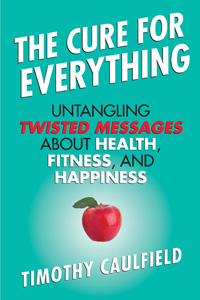
    Are M&Ms an important part of a healthy breakfast? Timothy Caulfield's love for the treat that melts in your mouth, not in your hands, is well-known to anyone who has read The Cure for Everything, so Beacon Press sent him a bag as a publication day gift. He generously shared them with his kids and their cousins. We're sure that everyone did a few extra high intensity intervals later that day…  For more from Tim Caulfield, read his debunking of health myths on Huffington Post, or watch this interview.

    Slide1


  • 6144A couple of years ago, Beacon Press published White Coat, Black Hat: Adventures on the Dark Side of Medicine, a book that Lauren Slater recommended as "required reading for anyone who has ever been a patient—in other words, for everyone." In WCBH, author Carl Elliott skewers drug-industry reps, exposes how Pharma companies ghost-write "scientific" research studies in support of their products, and introduces us to the world of human guinea pigging–a "career" path for those desperate enough to serve in drug study after drug study in exchange for mediocre pay and few benefits. 

    Carl sent me an email this week to tell me he had just returned from the Tribeca Film Festival, where he had attended screenings of Off Label, a new film "for which my writing is given credit as the inspiration." He put me in touch with filmmakers Michael Palmieri and Donal Mosher, and I spoke with them via Skype as they were getting ready to leave New York. If you're familiar with WCBH and Carl's other writing in The New Yorker, Mother Jones, The Chronicle's Brainstorm blog, and elsewhere (including Beacon Broadside), you will certainly recognize the themes and people in the film. If you haven't read the book yet, get to it! And keep an eye out for screenings of Off Label. —Jessie Bennett, Blog Editor

    Jessie Bennett: What is Off Label about?

    Michael Palmieri: It's a film that examines the medicated margins of American society, and it does that initially through human guinea pigs. But it's personal stories of these people, so we're interested in the personal ramifications of the pharmaceutical culture that we live in, and how we're all sort of implicated in that process. 
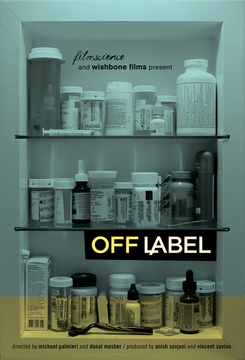
    Off_Label_Poster_1000x1468_no_hinges_featureJB: How did you come to make a film about human guinea pigging?

    MP: We were showing a rough cut of our first film, October Country, at a film festival in late 2008, and these two producers–Anish Savjani and Vincent Savino, who we ended up working with–they saw the film and they followed up with us and said, "Hey, would you guys be interested in making a film about human guinea pigs? " And we said, "Yeah, sure, maybe. It sounds interesting…"

    Donal Mosher: And they said they had money.

    MP: Yeah, they said they had money, and we said, "Okay, sure!" They actually did have a budget to make it, and it was an intriguing subject, but we didn't know if it could become a whole film. It seemed to us initially like a 60 Minutes-length, investigative reporting piece more than what we're interested in doing, which is a broader view of a subject or a viewing from sort of left field. But the first articles they showed us were Josh McHugh from Wired magazine ["Drug Test Cowboys: The Secret World of Pharmaceutical Trial Subjects"] as well as Carl's article called "Guinea-Pigging" [The New Yorker], which we really latched on to. We really liked the way he wrote the piece. So we ended up contacting him and discussing what we were doing, and he gave us more leads, more information. We eventually ended up meeting him. It kind of developed organically from there. "Guinea pigs" was the initial interest, but then we expanded the idea once we understood on a deeper level what was going on that was somewhat suspect in the guinea pigging world. If the testing is messed up, then what's messed up about the marketing? And what are the end results?

    DM: We also began to see how the issue didn't just lie in the zone of the issue itself, but it was pervasive. Every time we'd have a conversation with someone, they had a relative or they themselves were on pharmaceuticals. And the stories were multiplying in a way that made us think this is an issue that pervades many layers of culture far beyond medicine or taking medicine itself. So we wanted to start working those ideas into the film. 

    JB: Who were some of the subjects that you spoke with? I recognized a few of the characters from Carl's writing. 

    DM: Originally we spoke with Bob Helms [of Guinea Pig Zero]. A lot of the well-known names in the human guinea pig scene, the people who are testing the drugs. And then from there, we moved on to Mary Weiss, who is also in Carl's writing. 

    MP: Robert Helms was in the original article that Carl wrote for the New Yorker. So we contacted him and spent time with him, and while we were in Philadelphia, Donal had initiated contact with a writer who had written a book called Acres of Skin, which gave us Eddie Anthony's story. He was an inmate in a prison at Holmesburg when it was actually legal to conduct medical testing on prisoners. And it really screwed up his life because some rough tests occurred when he was in there. We had initiated contact with Paul Clough through his website [Just Another Lab Rat]. Paul is based in Austin, but he has a website very much like what Robert Helms has with his fan zine Guinea Pig Zero, set up for people in the guinea pigging community to speak with one another and share. "Oh, this test actually pays good money." "These people have terrible food." It's kind of amazing, because these people are doing this for a living. 

    JB: This is the thing that really shocked me about White Coat, Black Hat. "There's a human guinea pigging community?"

    MP: And beyond that, it's a community of people who have no… there's no health plan for them. They're doing this because they don't have any other option. But for us, we could clearly understand that the testing is somewhat dubious on certain levels. I mean, obviously we need tests, there's a lot of positive, real things that come out of that testing. But people are lying to get into studies, and it's not exactly as clean of a population study as you would think it is. So the results are going to be skewed. Once we saw, "Okay, skewed results," we started moving more towards marketing, and we were introduced to [former pharmaceutical representative] Michael Oldani, through Carl. Again. Which is why, in a certain sense… how did we say it now? Not dedicated…

    DM: "Inspired by."

    MP: The film is truly inspired by Carl's writing. It's not just the characters that he led us towards, of which I think he led us toward five of the eight characters. But it's the endless numbers of hours spent with him in Minneapolis. At a coffee shop, where we would meet to discuss something, and we'd look at our watches and eight hours had passed. It's the types of conversations you dream to have all the time. We just got to know each other really well, and his style of writing is so expansive, and it moves from one idea to the next idea. He's such a big brain on a stick, you know what I mean? We wanted to try to do something like that with this film, that followed a line of reasoning as opposed to a specific plot. As a means to take in all of the complications of the issue that we were examining. But rather than having it point a finger at pharma and say, "This is the bad guy, and this is the problem." Which is the "call to action" documentary. We wanted to make a film that was a call to reflection, which is what Carl's writing is like, or the feeling at least that we got from it. 

    JB: Mary Weiss, the mother of the test subject who died in Minnesota, who Carl writes about in WCBH, is featured in the film. Can you tell us about her story?

    DM: In short, she attempted to get her son into a mental hospital. And when she couldn't, she found him space at the University of Minnesota. At first, he was assessed that he couldn't make any rational judgment about his own medication–that he wasn't sane enough. And then, within twenty-four hours, that was reversed. The full details of the story are in an article that Carl wrote for Mother Jones, but essentially it was a doctor who placed his own psychiatric patient in a very lucrative testing study. Not a study testing the efficacy of the drug that was prescribed for this young man, but a comparison marketing study where the dosage was fluctuating. The result was an incredibly sad and grisly suicide. From that point on, his mother has been fighting to change Minnesota laws, and to make those changes nationally. 

    MP: And to clarify, this happened at the University of Minnesota, where Carl works. And the study that Dan Markingson was entered into was not only a marketing study, but it was a study that was conducted by the same doctor who was his attending physician. So the conflict of interest was so obvious in this case, but it was still legal. So Mary Weiss has helped pass the law to make that illegal. 

    JB: You just finished up at the Tribeca Film Festival. How did it go?

    MP: It went great. We showed the film four times. We finished yesterday, and the screenings were all pretty full. Carl was there for the first two screenings, with a couple of other people from the film. We are kind of thrilled with the response. It's gotten some fantastic reviews as well. So we're really happy. 

    JB: How was the audience reaction to the film in Tribeca?

    MP: I usually read it from the perspective of, "How many people left during the credits who didn't want to stick around for the Q&A?" An overwhelming number of people stuck around, which was a good sign to begin with, but the questions, they kept coming until they had to kick us out of the theater. So people are, I think, really engaged with the film. Everyone seems to be invested, so we're really happy. And if it causes people to pause and think about what medicine is going inside their bodies, I think we have succeeded, at least on that level, and it makes us very happy.

    JB: And where are you headed next? 

    MP: We're headed to HotDocs in Toronto, where the film is premiering internationally. The Toronto documentary crowd is insanity. We've already sold out most of our screenings, and they're gigantic places. We're looking forward to that. And we're hoping that there's a lot of European interest in screening the film.

    JB: Well, it's an international issue. 

    MP: But it's a very American film, so we're curious to how Europe responds.

    DM: We're really curious to see, when there's an international audience, what stories they give us about the situation in whatever country the film might land. 

    JB: And you have a screening in San Francisco as well?

    MP: Yes, at the San Francisco International Film Festival. And we'll be doing more screenings in Europe and the US later in the year.

    Find out more about the film at OffLabelFilm.com, follow them on Twitter, or like them on Facebook. 

  • On Late Night With Jimmy Fallon last night, the President joined Fallon and the Roots to slow jam on the need to keep rates from doubling on Stafford Loans this summer. POTUS got his groove on and the audience–many of whom are probably dealing with their own crippling student loan debts–went wild. The "Barackness Monster" (who paid off his own student loans only eight years ago) and Fallon aren't alone in their advocacy on this issue: an editorial in the New York Times points out that, "At a time when many graduates are desperate for jobs, the interest rate increase would add an average of $1,000 a year to their debt." The Occupy Movement has taken on student loan debt as a signature cause this spring. And even Mitt Romney, "voiced support for keeping federal student loan interest rates from going up – a position that puts him at odds with Republicans in Congress." (Politico)

    You've got to watch the Fallon video, and for further reading, see The Student Loan Scam: The Most Oppressive Debt in U.S. History—and How We Can Fight Back.

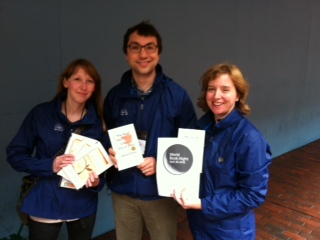
  • World Book Night 2012 logoIt was lunch time, and several members of the Beacon Press staff headed out in a chilly April drizzle to Boston's Downtown Crossing–not for a tasty sandwich from Falafel King, but to take part in World Book Night. Each staffer had signed up to hand out twenty free books to perfect strangers walking by on a busy street corner. Director Helene Atwan summed it up by saying, "Lots of different people going in and out of the subway were puzzled, skeptical, and finally, curious and grateful. A wonderful way to spend the lunch hour. We're all already looking forward to World Book Night 2013."

    We've loved hearing stories from other givers, and must admit that it gives us a particular thrill to hear about people giving away Kindred by Octavia Butler–Beacon's literary contribution to the project. 

    At the Silver Spring Metro station, Politics and Prose floor manager Susan Skirboll had a pretty straightforward strategy for her giveaway approach: “I’ll try to look respectable and not like a total freak.”

    Skirboll calls the story she selected — “Kindred,” by the late science-fiction writer Octavia Butler — a book “everyone should read.” Though it contains a little bit of science fiction and fantasy, “it’s done in a way that’s kind of believable,” Skirboll said. “It talks about the slavery experience in a way I had never read before.” —Washington Post

    And on Twitter…

    Have given out my 4th copy of Kindred by Octavia Butler for #wbnamerica & am excited that #4 is drinking her coffee and reading the book!!!! – @misscecil

    Learned during #wbnamerica: let them see what you're offering. know your book. saying "it's one of the best books i've ever read" helps. — @corpuslibris

    My best line for #wbnamerica? Here's a book to go with that pizza! Man carrying pie took! @wbnamerica @NYCHA @beaconpressbks – @arleneschulman

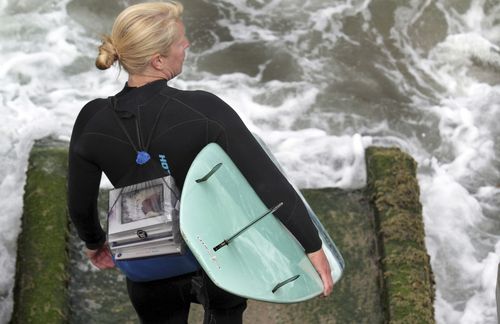
    Our favorite story, hands down, involves a very unconventional delivery vehicle. (Photos by Shmuel Thaler of the Santa Cruz Sentinel. Used by permission.)

    Handing out free books to surfers while paddling out in waters off Cowell Beach doesn't seem logical.

    But Hilary Bryant made it look easy, if not natural, Monday when the wet-suit clad vice mayor took several copies of the novel "Kindred" into the surf wrapped in Ziploc bags. Not green – she knows – but how else could she keep the books dry?

    "They were very appreciative," Bryant said of the effort, which was part of the World Book Night celebration in the U.S. and Europe. "It was easier to start the conversation on the water than on the cliff. You have a captive audience." — Santa Cruz Sentinel

    Photo by Shmuel Thaler of the Santa Cruz Sentinel of Vice Mayor Hilary Bryant delivering books to surfers

    Photo by Shmuel Thaler of the Santa Cruz Sentinel of Vice Mayor Hilary Bryant delivering books to surfers

    And now onto our staff and their experiences at Downtown Crossing in Boston.

    Tom_helenTom Hallock: Associate Publisher and Director of Sales and Marketing

    Pictured right: Helene Atwan, Director of Beacon Press, with Tom Hallock.

    So how did World Book Night, or World Book Lunchtime, go for you?

    It was great, just great. We went to Downtown Crossing, the historic heart of the Boston retail district. There were a lot of people there at lunch time. There used to be a lot of retail bookstores there: a Globe Corner Bookstore, a Lauriat’s, a Barnes and Noble and a Borders—none of them are there now. And we just thought it would be a place where we would find some people who are not exposed to books regularly, and we were right. 

    We had support from the Boston Downtown Business Improvement District. We were also assisted by a fruit vendor who is quite an enthusiastic reader and supporter of World Book Night, and who sent a number of people our way. We gave away copies of Dave Eggers' Zeitoun, Jhumpa Lahiri’s The Namesake and The Brief Wondrous Life of Oscar Wao by Junot Diaz.  

    People would come up with wary looks on their faces. I think maybe they thought we were handing out religious tracts or political propaganda or something, and we would assure them that they were really good books, and people got really excited about it.

    In a sense, you were espousing the religion of reading. 

    Exactly, and I think we got a lot of converts.The best thing was seeing the expression on people's faces change as you got into the conversation, and you could see them open up  to the idea that a stranger was about to hand them a book that they would really enjoy reading.

    How do you feel about Kindred by Octavia Butler being included in the giveaway? 

    We were really proud of that and so glad that Carl Lennertz and the people at World Book Night made it possible for Kindred to be part of the program. It's a great book that can be read by all ages, and it‘s been wonderful to hear stories from around the country about people introducing it to new readers.

    Kate_will_marcyMarcy Barnes, Production Manager

    Pictured right: Kate Noe, Will Myers, and Marcy Barnes.

    There were a couple of really enthusiastic people who came up to us, and a lot of people were really grateful. To choose people to give books to, I basically just chose anyone who wasn't wearing headphones. I wasn't thinking, "Is that a reader or not a reader?" I felt that it was more a celebration of reading and saving books, and a lot of people were really appreciative of the concept.

    Ryan Mita, Digital Marketing Assistant

    Here’s what went through my mind, and what happened while I was giving away World Book Night Books: 

    • I thought giving away books on a wet, windy day would be a difficult, but it wasn’t!
    • I gave a jeweler something to occupy his interest on his lunch break. 
    • I interested a groups of teenagers in picking up a book.
    • I felt really good sharing a great book with strangers and supporting an activity I love to do.

    Will Myers, Editorial Assistant

    It was nice to see people light up when they were given a free book. We had the World Book Night lanyard, so I think people thought we were from Oxfam or something along those lines. But once they knew we weren't asking for an email address, they were less suspicious.

    At the Lambert's outdoor fruit stand–they were big boosters of World Book Night, and they were cheering us on. They kept asking, "Do you have this book? Do you have this book?" That was cool. It was a great experience, and I would absolutely do it again. 

    Kate Noe, Production Assistant

    I got involved because my friend works for a counseling center for young mothers, and she was really excited for World Book Night because she was able to get free books for these young women who don't ever read. So she inspired me to reach out, too. 

    I would definitely do it again, but it was frustrating being rejected. Going up to strangers and having them ignore you… But those moments when people were curious and wanted to learn more, that was cool. 

    WbnaCrystal Paul, Assistant to the Director

    Pictured right: Helene Atwan, Ryan Mita, and Crystal Paul.

    I'm glad that we were handing out Junot Diaz and Zeitoun—multicultural literature that is applicable to everyone. I think it's great that there were such a wide variety of authors and types of books, because it encourages you to reach out to all kinds of people. And I was excited that Kindred was part of World Book Night. I love Octavia Butler. 

    I've always said that books sort of raised me. I grew up in a house where there wasn't a strong parental figure, so I turned to books not because I just wanted stories or escapism. But, literally, because I was looking for how I'm supposed to live life, the things I'm supposed to do. A lot of young adult literature in particular is about these orphan children, and then I started reading Sci-Fi. Octavia Butler was one of the first authors I read– Xenogenesis which is now called Lilith's Brood And it was about a black woman going out into the world and being abducted by aliens. Basically, just completely abandoned and on her own, and how she navigated this totally new world. 

  • 2205

    In this era of health-science research, rarely a day goes by without a public pronouncement of some exciting health-enhancing discovery: a new diet, a new fitness routine, a new drug or alternative therapy, the miracles achieved by genetic mapping. And we are told—by the media, health-care experts, even government—that we should use this information to live a healthier life. But what information can we trust? Are yoga and stretching the surefire path toward healthy aging? Can consuming enormous quantities of certain "natural" remedies ward off disease? Should we all eat nothing but carbs, or fats, or pineapples, and regularly cleanse our colons or have our meridians aligned? Should we all have our genome mapped to solve our health problems?

    In The Cure for Everything, health policy expert and fitness enthusiast Timothy Caulfield wades through the tides of health crazes, misleading data, and well-meaning gurus in a quest to sort out real, reliable health advice. He takes us along as he navigates the maze of facts, findings, and fears associated with emerging health technologies, drugs, and disease-prevention strategies and presents an impressively researched, accessible take on the production and spread of information in the health sciences.

    Seamlessly switching between his sweatsuit and his lab coat, Caulfield doesn't just pore over the research and interview the professionals; he gets his t-shirt sweaty and his meridians aligned, testing out the scientific validity of some of the health and fitness crazes of our day. Bravely using himself as a guinea pig, he goes on a strict diet, a rigorous exercise routine, swallows bottles of "natural" remedies, and has needles inserted all over his body. He illuminates some solid paths to better health, along with the dead-end detours.

    Science is everywhere, but what passes through most people's field of vision is often wrong, hyped, or twisted by an ideological or commercial agenda. And without good scientific data, bad decisions are made–by doctors and governments, by you and me. Caulfield demonstrates, alas, that there are no quick fixes or simple steps to flat abs; that you will never be able to eat all you want; that no "natural" supplements will lead to better health; that knowing your genetic map will not save you from almost anything. The Cure for Everything ends with five simple, scientifically sound—and, yet, difficult—steps to take in order to lead a longer, healthier life.

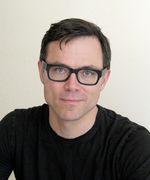
    Timothy_Caulfield_3_2011-Akiko_TaniguchiAs a researcher in health law and policy, Timothy Caulfield has spent almost two decades analyzing science issues and has been involved in science and health-policy decisions related to almost all the topics addressed in this book. He teaches biotechnology in the Faculty of Law and is the editor for the Health Law Journal and Health Law Review at the University of Alberta. He has published close to two hundred peer-reviewed articles in the world's top science journals, including Science, Cell, the Lancet, Nature, andBiotechnology, and in the popular press.

    Listen to Tim Caulfield on Minnesota Public Radio's The Daily Circuit.

    Read an interview with Tim Caulfield on Blisstree.com.

    Watch Tim Caulfield talking about the most effective way to get fit: hard exercise.

  • Lanza-blog-tourA longtime backpacker, climber, and skier, Michael Lanza knows our national parks like the back of his hand. As a father, he hopes to share these special places with his two young children. But he has seen firsthand the changes wrought by the warming climate and understands what lies ahead: a vastly changed landscape. So he and his wife take his nine-year-old son, Nate, and seven-year-old daughter, Alex, on an ambitious journey to see as many climate-threatened wild places as they can fit into a year: backpacking in the Grand Canyon, Glacier, the North Cascades, Mount Rainier, Rocky Mountain, and along the wild Olympic coast; sea kayaking in Alaska's Glacier Bay; hiking to Yosemite's waterfalls; rock climbing in Joshua Tree National Park; cross-country skiing in Yellowstone; and canoeing in the Everglades.

    Who better to help us celebrate National Park Week than this ambitious dad? The Before They're Gone Blog Tour begins today with an interview at Nature Moms Blog. Follow Lanza's travels throughout the week to The Mother of All Trips, Tales of a Mountain Family, Adventure Tykes and Family Wilds. We'll wrap things up on our blog with a round up at the end of the week. 

    Our closest National Park is of a more urban variety than the ones visited by Michael Lanza and his family. To look for a National Park near you, visit the National Parks website.

    Before you get out and explore, you can get some ideas from these great Before They're Gone videos. 

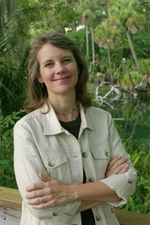
  • Cynthia Barnett is the author of Blue Revolution: Unmaking America’s Water Crisis. In honor of Earth Day, we asked her “What is today’s most pressing environmental issue?”  

    BarnettI’m beginning to believe it’s the deep social/political/religious divides that have us too angry at one another to roll up our sleeves and work on relatively small problems, much less biggies such as climate change and freshwater scarcity.

    I’ve been thinking a lot about this because I’m in the middle of writing the commencement address for Unity College. This is the wonderful environmental-themed college in Unity, Maine, where President Stephen Mulkey has elevated climate change as an ethical imperative for colleges and universities everywhere.

    I’m telling the graduates: “As the global atmosphere warms, as the Arctic ice thins, as Americans sweat in the warmest spring in recorded history, our political, cultural and business leaders, and our government and private institutions, remain frozen stiff. My generation’s paralysis, which extends from the geo-political to the local, is the single-greatest barrier to solving the climate crisis…”

    Part of the answer is that ethical imperative President Mulkey talks about. My latest book, Blue Revolution, is a call for a water ethic for America, in the same spirit that Aldo Leopold called for a land ethic sixty years ago. My favorite thing about the response so far is how the ethical framework transcends politics and other points of division. I am asked to speak at Vacation Bible Schools as well as universities, and make my way into the hook & bullet literature as well as the green.

    0317This is the beauty of water. Literally a chemical bond, water is also one of the deepest bonds among people. The initial impacts of our changing climate all involve water–- changing rainfall and storm patterns, more-extreme flooding, more-severe drought. These are happenings people love to talk about, even people who don’t want to talk about climate change.

    This is why I think water will be the issue around which the shouting match over climate change finally becomes a conversation. Ultimately, it will unite us.


    Watch Cynthia Barnett speaking at the Clinton School at the University of Arkansas

  • Michael Lanza is the author of Before They're Gone: A Family's Year-Long Quest to Explore America's Most Endangered National Parks. In honor of Earth Day, we asked him "What is today's most pressing environmental issue?"  

    LanzaIt's hard to argue that there's anything more urgent and potentially catastrophic than climate change. In reading countless journal articles and conducting numerous interviews for my book, Before They're Gone—A Family's Year-Long Quest to Explore America's Most Endangered National Parks, it was hard to maintain optimism in the face of forecasts that the steady diminishing of mountain snows means that Yosemite’s famous waterfalls will peter out earlier in the year; that every glacier in Glacier National Park is doomed to melt away; that Joshua Tree National Park will one day no longer support its namesake tree, and much of the Everglades is fated to sink beneath the sea. The issue became powerfully immediate to me in realizing that much of this fallout will occur within the lifetimes of my children.

    Many scientists now believe that a rise of 3 degrees Celsius (5.4 degrees Fahrenheit) in average temperatures worldwide is unavoidable in this century, which could erase 40 percent of all species on the planet. It was really disturbing to interview one leading scientist after another and hear every one of them express fear that we’re facing the greatest disaster in the history of human civilization.

    It's frightening to contemplate what this will mean for people all over the world. Many scientists I interviewed echoed the comments of USGS research ecologist Nathan Stephenson, who told me, “Sometimes people say, ‘If this has happened in the past, why should we be worried?’ The simple answer is: you would not have wanted to be alive then. Civilizations have fallen on slight changes in climate.”

    As I wrote in my book: Our conversation about climate has not achieved the degree of honesty we would use when talking with our own kids. We would not encourage them to make choices fraught with such a high degree of risk. Yet we as a people have embraced just that kind of choice time and again.

    BeforetheyregoneStill, I feel optimistic—partly because optimism offers the only hope for the world our kids will inherit. I think we’re at the brink of a tectonic shift in public perception and understanding of climate change, one that could, hopefully, drive public policy in the right direction. Record high temperatures are being constantly recorded all over the world. A recent poll showed a large majority of Americans believe that extreme weather events of recent years are connected to climate change. Major corporations are calculating the impacts of rising temperatures on their business. The Pentagon is preparing for a world growing more politically unstable as crop failures increase and societies grapple with simply feeding their people.

    We have to hope—especially for our children and grandchildren—this positive shift in public awareness and action will happen fast enough and isn’t coming too late. We have no reasonable option but to do much better than we are now.


    Watch a YouTube playlist of videos from Michael Lanza's family trips to America's most endangered National Parks.

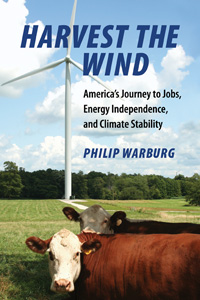
  • Philip Warburg is the author of Harvest the Wind: America's Journey to Jobs, Energy Independence, and Climate Stability. In honor of Earth Day, we asked him "What is today's most pressing environmental issue?" 

    Curbing global warming is the overarching environmental challenge we face. Wind and solar power offer promising ways to wean ourselves off precarious and outmoded energy resources.  With the right “smart grid” investments, these two renewable energy resources could meet well over half of America’s power needs by mid-century. During the past half-decade, wind has supplied 35 percent of all new U.S. electric-generating capacity. Will this continue?  Not if we succumb to the allure of “fracked” natural gas as the new American panacea. Cheap it is – at least until stepped-up global market demand drives up its price. Environmentally sustainable it’s not. Leaving aside the under-studied hazards of fracking, even the best of gas-fired turbines produce nearly half as much CO2 as conventional coal plants.

    Denmark is determined to rid itself entirely of fossil fuels by 2050. The Danish Commission on Climate Change Policy expects that shedding fossil fuels will reduce the country’s greenhouse gas emissions by 85 percent, at the same time that Denmark’s GDP is projected to double.  What America needs is a vision of similar magnitude. We have the resources to make it happen, but we need to summon the political will to internalize the crippling costs of our reliance on fossil fuels.

    Harvest_the_windWind power is not only an effective way to address our reliance on fossil fuels, it holds promise as a way to revive the economies of America's small towns, a topic Warburg explores in Harvest the Wind.

    Winds sweeping through the Great Plains once robbed the Farm Belt of its future, stripping away overworked topsoil and creating the dreaded Dust Bowl of the 1930s. Today, those winds are bringing new hope to the declining rural communities of the central United States. Nowhere is wind's promise more palpable than in Cloud County, Kansas, where the soaring turbines of the Meridian Way Wind Farm are boosting incomes and bringing green jobs to a community that has, for decades, watched its children drift away.

    In Harvest the Wind, Philip Warburg brings readers face-to-face with the people behind the green economy-powered resurgence in Cloud County and communities like it across the United States. This corner of Kansas is the first stop on an odyssey that introduces readers to farmers, factory workers, biologists, and high-tech entrepreneurs-all players in a transformative industry that is taking hold across America and around the globe.

    In this illuminating book, Warburg reveals both the remarkable growth of a breakthrough technology and the formidable challenges it faces. He visits epicenters of anti-wind opposition as well as communities that have embraced wind farms as neighbors. He guides readers through an Iowa turbine assembly plant that is struggling to compete in a global marketplace dominated by European and Chinese manufacturers. And he looks at the thousands of miles that wind-generated power will need to travel to reach American consumers.

    Harvest the Wind is an earthly antidote to loftier treatises on global warming and green energy. By showing us how practical solutions are being implemented at the local level, Warburg offers an inspirational look at how we can all pursue a saner and more sustainable energy future-while at the same time investing in the nation's infrastructure and jumpstarting its economy.

    Read an excerpt of Harvest the Wind on Scribd.

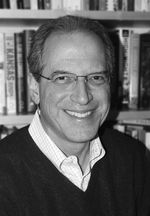
    Philip_WarburgPhilip Warburg was president of the Conservation Law Foundation, New England's leading environmental advocacy group, from 2003 to 2009. Earlier, he ran the Israel Union for Environmental Defense in Tel Aviv and was an attorney at the Environmental Law Institute in Washington, D.C. He has also worked with governments and citizen groups on anti-pollution initiatives in Egypt, Jordan, Palestine, and across Eastern Europe. Visit his website, PhilipWarburg.com.