• The most powerful stories are often those told by the people who lived them, so on the last day of Black History Month, we're highlighting personal histories written by African-Americans. These books do more than narrate the events of one life: they illuminate our shared histories and highlight how individuals are both affected by and alter the times in which they live. Read all of our Black History Month posts. 

    Today is the last day to enter our Black History Month Giveaway. Find out more at Beacon.org! 


    FskgFist Stick Knife Gun: A Personal History of Violence by Geoffrey Canada 

    Long before the avalanche of praise for his work—from Oprah Winfrey, from President Bill Clinton, from President Barack Obama—long before he became known for his talk show appearances, Members Project spots, and documentaries like Waiting for "Superman", Geoffrey Canada was a small boy growing up scared on the mean streets of the South Bronx. His childhood world was one where "sidewalk boys" learned the codes of the block and were ranked through the rituals of fist, stick, and knife. Then the streets changed, and the stakes got even higher. In his candid and riveting memoir, Canada relives a childhood in which violence stalked every street corner.

    Geoffrey Canada grew up in the South Bronx. He received a Bachelor of Arts Degree from Bowdoin College and a Master's Degree in Education from the Harvard School of Education. Since 1990, he has been the President and Chief Executive Officer for Harlem Children's Zone, an organization that offers a comprehensive range of services in a nearly 100 block area in Central Harlem and serves over 10,000 children. TheNew York Times Magazine called the Zone Project "… one of the most ambitious social experiments of our time. It combines educational, social and medical services. It starts at birth and follows children to college. It meshes those services into an interlocking web, and then it drops that web over an entire neighborhood … The objective is to create a safety net woven so tightly that children in the neighborhood just can't slip through." 

    The work of Mr. Canada and HCZ has become a national model and has been the subject of many profiles in the media. Their work has been featured on "The Oprah Winfrey Show," "60 Minutes," "The Today Show," "Good Morning America," "Nightline," "CBS This Morning," "The Charlie Rose Show," National Public Radio's "On Point," as well in articles in The New York Times, The New York Daily News, USA Today, and Newsday. 

    Mr. Canada was a recipient of the first Heinz Award in 1994. In 2004, he was given the Harold W. McGraw Jr. Prize in Education and Child Magazine's Children's Champion Award. In October 2005, Mr. Canada was named one of "America's Best Leaders" by U.S. News and World Report. A third-degree black belt, Mr. Canada continues to teach the principles of Tae Kwon Do to community youth along with anti-violence and conflict-resolution techniques. 

    Mr. Canada is also the East Coast Regional Coordinator for the Black Community Crusade for Children. The Crusade is a nationwide effort to make saving black children the top priority in the black community. This initiative is coordinated by Marian Wright Edelman and the Children's Defense Fund. 

    The National Book Award-winning author Jonathan Kozol called Mr. Canada, "One of the few authentic heroes of New York and one of the best friends children have, or ever will have, in our nation."

    Fist Stick Knife Gun is also available as a graphic novel adaptation by Jamar Nicholas.

    Watch a New York Times profile of Geoffrey Canada.

    Read chapter 20 from Fist Stick Knife Gun on Scribd.
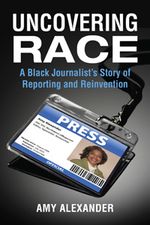

    UncoveringraceUncovering Race: A Black Journalist's Story of Reporting and Reinvention by Amy Alexander 

    From the Rodney King riots to the racial inequities of the new digital media, Amy Alexander has chronicled the biggest race and class stories of the modern era in American journalism. Beginning in the bare-knuckled newsrooms of 1980s San Francisco, her career spans a period of industry-wide economic collapse and tremendous national demographic changes.

    Despite reporting in some of the country's most diverse cities, including San Francisco, Boston, and Miami, Alexander consistently encountered a stubbornly white, male press corps and a surprising lack of news concerning the ethnic communities in these multicultural metropolises. Driven to shed light on the race and class struggles taking place in the United States, Alexander embarked on a rollercoaster career marked by cultural conflicts within newsrooms. Along the way, her identity as a black woman journalist changed dramatically, an evolution that coincided with sweeping changes in the media industry and the advent of the Internet.

    Armed with census data and news-industry demographic research, Alexander explains how the so-called New Media is reenacting Old Media's biases. She argues that the idea of newsroom diversity-at best an afterthought in good economic times-has all but fallen off the table as the industry fights for its economic life, a dynamic that will ultimately speed the demise of venerable news outlets. Moreover, for the shrinking number of journalists of color who currently work at big news organizations, the lingering ethos of having to be "twice as good" as their white counterparts continues; it is a reality that threatens to stifle another generation of practitioners from "non-traditional" backgrounds. 

    In this hard-hitting account, Alexander evaluates her own career in the context of the continually evolving story of America's growing ethnic populations and the homogenous newsrooms producing our nation's too often monochromatic coverage. This veteran journalist examines the major news stories that were entrenched in the great race debate of the past three decades, stories like those of Elián González, Janet Cooke, Jayson Blair, Tavis Smiley, the tragedy of Hurricane Katrina, and the election of Barack Obama. 

    Uncovering Race offers sharp analysis of how race, gender, and class come to bear on newsrooms, and takes aim at mainstream media's failure to successfully cover a browner, younger nation-a failure that Alexander argues is speeding news organizations' demise faster than the Internet. 

    Follow Amy Alexander on Twitter.

    Read a post featuring Amy Alexander's work on The Root.

    Listen to Amy Alexander on WNYC's The Leonard Lopate Show.


    Notes_of_a_native_sonNotes of a Native Son by James Baldwin

    Originally published in 1955, James Baldwin's first nonfiction book has become a classic. These searing essays on life in Harlem, the protest novel, movies, and Americans abroad remain as powerful today as when they were written.

    'He named for me the things you feel but couldn't utter. . . . Jimmy's essays articulated for the first time to white America what it meant to be American and a black American at the same time."
    -Henry Louis Gates, Jr.

    "A straight-from-the-shoulder writer, writing about the troubled problems of this troubled earth with an illuminating intensity."
    -Langston Hughes, The New York Times Book Review 

    Watch a video about James Baldwin on YouTube.

    Read Kai Wright on James Baldwin at Beacon Broadside.
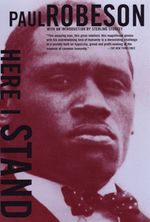

    Robeson_here_i_standHere I Stand by Paul Robeson 

    "This amazing man, this great intellect, this magnificent genius with his overwhelming love of humanity is a devastating challenge to a society built on hypocrisy, greed and profit-seeking at the expense of common humanity."
    -The New York Times

    "[Robeson's] nobility, his language, his encouragement and his praise put me forever in his debt because it inspired me fully . . . to be like him, and to use my life as he had used his, to put into it the commitment of the liberation of his people and all people."
    -Harry Belafonte in Restoring Hope

    Robeson's international achievements as a singer and actor in starring roles on stage and screen made him the most celebrated black American of his day, but his outspoken criticism of racism in the United States, his strong support of African independence, and his fascination with the Soviet Union placed him under the debilitating scrutiny of McCarthyism. Blacklisted, his famed voice silenced, Here I Stand offered a bold answer to his accusers. It remains today a defiant challenge to the prevailing fear and racism that continues to characterize American society.

    "Robeson's book is a perennial, first published in 1958, and now a voice from a different time. It anticipates for black persons the 'moral support of the American majority' with an intensity that now seems evangelical. It's full of a probably tragic hope. It should be read."
    -The Boston Globe

    Watch Paul Robeson sing for Australian workers.

    Read Paul Robeson's bio at American Masters.


  • Boomerang benefits: adult children return home "new and improved." Katherine Newman in Time Ideas. We hope so: about a fifth of men aged 25 to 34 are back at home! For more, listen to this interview on Marketplace Money.

    Anita Hill discussed housing and poverty with Melissa Harris-Perry on her new (and fantastic) MSNBC Sunday morning show. Also check out her turn as a Sunday morning pundit on a panel with Maria Teresa Kumar, Harry Smith and Michael Steele. And read our Storify collection of the best tweets about the show.

    http://www.msnbc.msn.com/id/32545640

    Visit msnbc.com for breaking news, world news, and news about the economy

    "What Would Great-Grandma Eat?"  Aaron Bobrow-Strain in the Chronicle Review. A tasty excerpt:

    For many foodies in contemporary America, of course, the past has no pitfalls. For them, yesteryear is a land where everyone grew up instinctively knowing the difference between "real" and "fake" food—wisdom we seem to have lost. Recently this attitude has crystallized in a popular axiom echoed from the pages of Pollan's Food Rules to the set of Oprah: If your great-grandmother wouldn't recognize it as food, don't eat it.

    It's a simple, homey rule with immediate nostalgic appeal. I can even look past its questionable cultural assumptions. (My great-grandmother wouldn't have recognized many of my favorite Ethiopian, Thai, and Mexican dishes as human food.) But, as I dug into the history of battles over bread, I realized that this whole nostalgic perspective had a bigger problem: What if Great-Grandmother was just as conflicted about food as we are?

    While researching my book, I discovered that my own great-grandmother's relation to her family's staple food was far less straightforward than I would have assumed. Her story suggests a lot about the contradictory mix of anxieties and aspirations tugging at the mind of early-20th-century eaters when they chose their bread.

    A review of Hanne Blank's Straight on Indian Country Today Media Network looks at how the book speaks to two-spirit people. 


  • May we pray. Eternal God, our Father, help us to love Thee with all our hearts, souls, and minds, and our neighbors as ourselves. And help us to realize that we have a moral responsibility to be good and conscientious but also to be intelligent. And grant that we will always reach out for that which is high, realizing that we are made for the stars, created for the everlasting, born for eternity. In the name and spirit of Jesus we pray. Amen. 

    Martin Luther King, Jr. From "Thou, Dear God": Prayers That Open Hearts and Spirits.

    Date-header-bg

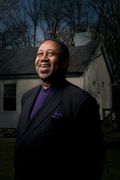
    Lewis Baldwin, credit to Daniel DuboisLewis V. Baldwin is professor of religious studies at Vanderbilt University and an ordained Baptist minister. An expert on black-church traditions, he is author of The Voice of Conscience: The Church in the Mind of Martin Luther King, Jr.; There Is a Balm in Gilead: The Cultural Roots of Martin Luther King, Jr.; and Never to Leave Us Alone: The Prayer Life of Martin Luther King, Jr. He is the editor of "Thou, Dear God": Prayers That Open Hearts and Spirits, the first and only collection of prayers by Martin Luther King, Jr. 

    8603

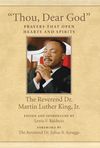
    "Thou, Dear God": Prayers that Open Hearts and Spirits represent the culmination of years of research and scholarship on the life, vision, and activities of Martin Luther King, Jr. I have authored five books on King, served as a co-author of two, and, recently, as the editor of the collection of King's prayers. All of these books take seriously the issue of King's cultural identity and legacy. My aim over the last two or more decades has been to capture as much as possible what constituted the essence of this phenomenal and often controversial figure. "Thou, Dear God" tell me that the answer ultimately lies in the core of King's spirituality, which includes, among other things, his prayers and his prayer life. These are a vital part of that cultural and spiritual bond which connects King to generations of his forebears and to that larger and broader history of Christian spirituality. They are also a part of that spiritual bond that links King to people of different faith claims and ideologies. Any perspective to the contrary misses the point of "Thou, Dear God."

    Photo of Lewis V. Baldwin by Daniel Dubois.

    Date-header-bg

    Read "Prayers for Social Justice" from "Thou, Dear God" on Scribd.

    Purchase in hardcover or ebook at Beacon | Independent Bookstore | Amazon | Barnes and Noble | Powells 

    Watch the book trailer on YouTube. 

  • Today's post is from Hanne Blank, author of Straight: The Surprisingly Short History of Heterosexuality. Blank is a writer, historian, and public speaker whose work has been featured everywhere from Out to Penthouse. An independent scholar, she is the author of Virgin: The Untouched History and seven other books that explore the intersections of sexuality, gender, the body, and culture. 

    This post originally appeared at Huffington Post. 

    BLANK-StraightSince I began to tell people that I was working on the project that ultimately became my new book, Straight: The Surprisingly Short History of Heterosexuality, I've been getting two major, fascinating reactions to it.

    One is straightforward disbelief. How on earth, I have been asked more than once, could I consider writing a history of something that has demonstrably always existed, world without end, "male and female created He them," amen? What sort of history could there possibly be to write?

    This is, conveniently, also a reasonably straightforward question to answer. Just asking someone to define "heterosexual" is usually enough to illuminate the fact that it's far from a simplistic matter of the fact that males and females exist in the world and are capable of reproducing sexually. All the other things that come up, from love and sexual desire to religion, marriage, and even ticking off the "married, filing jointly" box on one's tax form make it pretty clear that there are definitely parts of what "heterosexual" is that must have some kind of background, some kind of story, some sort of connection to history. Too, people are usually ready to acknowledge that the word "heterosexual" had to come from somewhere, and that this also constitutes a bit of history.

    It seems to me that people come to acknowledge that heterosexuality can have a history in much the same way that they come to acknowledge that food can have a history. People have always, obviously, eaten food. But they haven't always eaten the same things in the same ways, or prepared them identically, or ascribed the same meanings to the food they eat. Heterosexuality — or at least relationships between men and women, which is not entirely the same thing — is not so different.

    The other reaction I get is more complicated, and harder to respond to. Many people, particularly among my queer and feminist friends, have expressed the view that working on the history of heterosexuality is redundant, and possibly a sort of Uncle Tom-ish betrayal. Haven't heterosexuals got enough of a share of our culture's bandwidth already? Does heterosexuality really deserve to have political progressives like me spending time and effort, energy and intellect, to boost its signal?

    On the surface, this seems like a very good question. And yet the history of heterosexuality itself reveals, at a stroke, the ways in which any honest history tends to undermine and complicate the structures of power and privilege.

    Heterosexuality does, yes, broadcast its priorities far and wide, in our culture, with top billing and extreme prejudice. But it is notoriously, even ludicrously, bad at self-reflection and self-analysis. I've noted many times that it isn't the straight people who've managed to actually get a purchase on the history of heterosexuality. It's the queers — Michel Foucault and Jonathan Ned Katz, to name the two most visible and important of the heterosexuality scholars who made it possible for me to even consider writing this book — who've taken on the task of revealing what makes heterosexuality tick.

    It's not a simple task, after all. All of us, queer and not queer, are born and bred, enculturated and explicitly educated to see heterosexuality as being not just normal, but Just The Way Things Are. It often seems to take a queer perspective, and queer outsiderness, to get any purchase on the idea that this might not be entirely true, and that perhaps, heterosexuality is instead One Of Many Ways That Things Might Be.

    The fact of the matter is that as much as we might want to believe that we ought not lend our attention to the enormous sociocultural juggernaut that is heterosexuality on the grounds that paying attention to it only gives it more energy with which to thrive, none of us live our lives outside of the heterosexual matrix. Even if we despise the heteronormative hegemony, even if we fight the heterosexism of the patriarchy we live in with every waking thought, the fact remains that the less we know about it, the less effective our resistance can be. As much as I dislike thinking of heterosexuality as "the enemy" — it's not, it's just an idea we use to think with — we still need to know our enemies. Just as we need to know our friends. Just as we need, quite frankly, to know ourselves.

    Each and every one of us, no matter what our own sexual orientation may be or how we may identify, has had to forge that sexual orientation or identity in the long shadow of heterosexuality. It influences every one of us, in every part of our lives. It shapes who we are and how we think. It influences how everyone we talk to thinks. And this ultimately is why it's a worthwhile project to know how it got that power, that reach, and that capacity to determine the shape of our culture and our lives.

    It's also why studying the history of heterosexuality is, inevitably, not a thing that lends force and credence to that huge cultural presence, but rather takes it apart, looks at the pieces, and pronounces many of them curiously arbitrary and rather strange. Just like looking at the history of food makes us ask questions about why, for instance, we eat rabbit but not rat, why we make associations between moral virtue and the green astringency of kale but not the sweet purity of sugar, looking at the history of heterosexuality makes us wonder similar things about our attitudes concerning who desires and loves and has sex with whom, and in what permutations of biological sex.

    I do understand the fear that having scholars and writers look too long and hard at the history of heterosexuality might seem to lend credence to its claims of superiority. Yet having been through the process of taking that long hard look — and written a book that will take anyone else who cares to join me on the same journey — I can only say that it is an experience that can only end up exposing both heterosexuality's forest and its trees.

    Beginning with the very foundations, merely in asserting that heterosexuality has a history and explaining how that's possible, a look at the history of heterosexuality confirms nothing so much as the radical notion that human experience is no monolith, and that even the most weighty and powerful of our cultural institutions is only as inevitable, and only as eternal, as any of its myriad individual parts.

  • We continue our Black History Month series with a look at books that address the problem of inequality and provide visions of a better future for people of all races. 

    Enter our giveaway at Beacon.org for a chance to win these or other great books on Black History. 


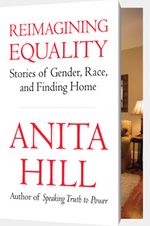
    Anita_hill_reimagining-equalityReimagining Equality: Stories of Gender, Race, and Finding Home by Anita Hill

    In 1991, Anita Hill's courageous testimony during the Clarence Thomas confirmation hearings sparked a national conversation on sexual harassment and women's equality in politics and the workplace. Today, she turns her attention to another potent and enduring symbol of economic success and equality-the home. Hill details how the current housing crisis, resulting in the devastation of so many families, so many communities, and even whole cities, imperils every American's ability to achieve the American Dream.

    Hill takes us on a journey that begins with her own family story and ends with the subprime mortgage meltdown. Along the way, she invites us into homes across America, rural and urban, and introduces us to some extraordinary African American women. As slavery ended, Mollie Elliott, Hill's ancestor, found herself with an infant son and no husband. Yet, she bravely set course to define for generations to come what it meant to be a free person of color. On the eve of the civil rights and women's rights movements, Lorraine Hansberry's childhood experience of her family's fight against racial restrictions in a Chicago neighborhood ended tragically for the Hansberry family. Yet, that episode shaped Lorraine's hopeful account of early suburban integration in her iconic American drama A Raisin in the Sun. Two decades later, Marla, a divorced mother, endeavors to keep her children safe from a growing gang presence in 1980s Los Angeles. Her story sheds light on the fears and anxiety countless parents faced during an era of growing neighborhood isolation, and that continue today. In the midst of the 2008 recession, hairdresser Anjanette Booker's dogged determination to keep her Baltimore home and her salon reflects a commitment to her own independence and to her community's economic and social viability. Finally, Hill shares her own journey to a place and a state of being at home that brought her from her roots in rural Oklahoma to suburban Boston, Massachusetts, and connects her own search for home with that of women and men set adrift during the foreclosure crisis.

    The ability to secure a place that provides access to every opportunity our country has to offer is central to the American Dream. To achieve that ideal, Hill argues, we and our leaders must engage in a new conversation about what it takes to be at home in America. Pointing out that the inclusive democracy our Constitution promises is bigger than the current debate about legal rights, she presents concrete proposals that encourage us to reimagine equality. Hill offers a twenty-first-century vision of America-not a vision of migration, but one of roots; not one simply of tolerance, but one of belonging; not just of rights, but also of community-a community of equals.

    Like Anita Hill on Facebook.

    Watch Anita Hill discussing Reimagining Equality on Andrea Mitchell Reports.


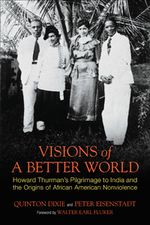
    VisionsVisions of a Better World: Howard Thurman's Pilgrimage to India and the Origins of African American Nonviolence by Quinton Dixie and Peter Eisenstadt

    In 1935, at the height of his powers, Howard Thurman, one of the most influential African American religious thinkers of the twentieth century, took a pivotal trip to India that would forever change him-and that would ultimately shape the course of the civil rights movement in the United States.

    When Thurman (1899-1981) became the first African American to meet with Mahatma Gandhi, he found himself called upon to create a new version of American Christianity, one that eschewed self-imposed racial and religious boundaries, and equipped itself to confront the enormous social injustices that plagued the United States during this period. Gandhi's philosophy and practice of satyagraha, or "soul force," would have a momentous impact on Thurman, showing him the effectiveness of nonviolent resistance.

    After the journey to India, Thurman's distinctly American translation of satyagraha into a Black Christian context became one of the key inspirations for the civil rights movement, fulfilling Gandhi's prescient words that "it may be through the Negroes that the unadulterated message of nonviolence will be delivered to the world." Thurman went on to found one of the first explicitly interracial congregations in the United States and to deeply influence an entire generation of black ministers-among them Martin Luther King Jr.

    Visions of a Better World depicts a visionary leader at a transformative moment in his life. Drawing from previously untapped archival material and obscurely published works, Quinton Dixie and Peter Eisenstadt explore, for the first time, Thurman's development into a towering theologian who would profoundly affect American Christianity-and American history.

    Read the introduction to Visions of a Better World on Scribd.


    Racematters

    Race Matters by Cornel West

    The fundamental litmus test for American democracy-its economy, government, criminal justice system, education, mass media, and culture-remains: how broad and intense are the arbitrary powers used and deployed against black people. In this sense, the problem of the twenty-first century remains the problem of the color line.

    First published in 1993 on the one-year anniversary of the L.A. riots, Race Matters was a national best-seller, and it has since become a groundbreaking classic on race in America. 

    Race Matters contains West's most powerful essays on the issues relevant to black Americans today: despair, black conservatism, black-Jewish relations, myths about black sexuality, the crisis in leadership in the black community, and the legacy of Malcolm X. And the insights that he brings to these complicated problems remain fresh, exciting, creative, and compassionate. Now more than ever, Race Matters is a book for all Americans, as it helps us to build a genuine multiracial democracy in the new millennium.

    Like Cornel West on Facebook.


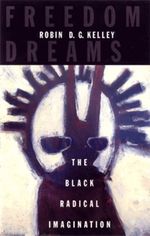
    FreedomdreamsFreedom Dreams: The Black Radical Imagination by Robin D. G. Kelly

    Kelley unearths freedom dreams in this exciting history of renegade intellectuals and artists of the African diaspora in the twentieth century. Focusing on the visions of activists from C. L. R. James to Aime Cesaire and Malcolm X, Kelley writes of the hope that Communism offered, the mindscapes of Surrealism, the transformative potential of radical feminism, and of the four-hundred-year-old dream of reparations for slavery and Jim Crow. From "the preeminent historian of black popular culture" (Cornel West), an inspiring work on the power of imagination to transform society.

    Listen to Robin D. G. Kelly discuss Freedom Dreams on the Forum network.

  • Today's post is from Carole Joffe, author of Dispatches from the Abortion Wars: The Costs of Fanaticism to Doctors, Patients, and the Rest of Us. Joffe is a professor in the Bixby Center for Global Reproductive Health at the University of California, San Francisco (however, the views and opinions expressed here do not necessarily state or reflect those of the Regents of the University of California, UCSF, or the UCSF Medical Center). This post originally appeared at RHRealityCheck.

    Issa_hearing
    The last ten days or so we have seen Republicans, and their religious allies, wage a war against contraception—and bungle it badly. With poll after poll showing that a majority of Americans support contraceptive coverage in health reform, and with the 98 percent figure (of American women who have ever used contraception in the context of heterosexual sex) endlessly repeated in the media, the Republicans nonetheless push ahead with this attack, providing a welcome gift to the Obama reelection campaign and much material to political artists and comics. I have lost count of the number of parodies that have been inspired by that now gone viral picture of five male clerics testifying at the Congressional hearing called by Rep. Darrell Issa (R-CA). A picture that of course immediately brings to mind another image of a similar tone deaf moment on the part of social conservatives, the nine men surrounding President George W. Bush as he became the first president to sign a ban on a particular technique of performing abortion, in the case of so-called “partial birth abortion.” It’s no wonder that the term “patriarchy” has made a comeback in the blogs!

    The well-publicized refusal of Issa to permit the testimony of a female witness put forward by the Democrats (Sandra Fluke, a Georgetown law student planning to speak to the health consequences of being denied contraception at Catholic universities) only added to the disastrous p.r. of that event. And the “aspirin between her knees” remark of Rick Santorum’s major funder later that day didn’t help either.

    But while the media is momentarily fixated on the second big story this month of a losing fight against family planning (remember the Susan G. Komen Fund fiasco?), less attention has been paid to a related war that is not going well at all. The assault on abortion that has resulted from the 2010 elections–the Republican takeover of Congress and many statehouses and governorships–has arguably produced the most serious threat to abortion access since the Roe decision in 1973. What we mainly have heard about this situation are the statistics, the unprecedented number of abortion restrictions introduced and eventually passed in state legislatures at a time when one might assume politicians’ focus would be on the economy.

    But there are real people behind the numbers and details of the restrictions. And the enormous toll that the abortion wars take on individual women seeking the procedure and the providers who try to help them are insufficiently appreciated by the general public. Consider the case of Jennie McCormick, a destitute Idaho woman, a single mother of three, who, facing an unwanted pregnancy and unable to travel several hours to the nearest abortion clinic, ordered abortion medication over the Internet, and is now facing criminal charges. She has also been stigmatized in her own community to a degree to which the fictional Hester Prynne of The Scarlet Letter fame could relate. Here is a description of her daily life, as described in a British newspaper:

    When Jennie Linn McCormack walks the streets of Pocatello, the town in southern Idaho where she was born, raised, and still lives, she attempts to disguise her face by covering it with a thick woollen scarf. It doesn't really work. In the supermarket, people stop and point. At fast-food outlets, they hiss "it's her"! In the local church, that supposed bastion of forgiveness, fire-and-brimstone preachers devote entire sermons to accusing her of mortal sin…."I feel like my life is over," Ms McCormack says. "I now stay home all the time. I have no friends. I can't work. I don't want to take my kids out in public. People can be really mean about what has happened."….

    Consider as well the case of Amy Hagstrom Miller, who directs a number of abortion clinics in Texas, under the name of Whole Woman’s Health. Being an abortion provider in red-state Texas is always challenging, but especially in the past year. Hagstrom Miller has had to contend with implementing the state’s new sonogram law, which requires that women come to an abortion clinic at least 24 hours before their scheduled abortion, and receive a sonogram from the same physician who will perform their abortion. Additionally, the physician must give the patient a detailed description of her fetus’ development. The state has made it very clear to abortion facilities that it will enforce the law through inspections and will revoke the licenses of those doctors not in compliance.

    It is not the fact of sonograms per se that is causing headaches for Hagstrom Miller. Rather it is the way the law is written. Patients at her facilities routinely receive sonograms. But the ultrasound used to be performed by a trained technician, the ultrasound was done abdominally and not through the more intrusive vaginal probe required by the law, and patients have not had to make two separate visits.

    So now Hagstrom Miller has to contend with the frustrations of many of her patients, who typically have to take additional time off work and pay for extra childcare. She also has to deal with the scheduling nightmare of making sure the same physician who performs the ultrasound is available to perform that patient’s abortion. Hagstrom Miller is convinced that this new rule achieves nothing more than putting more obstacles in the way of both provider and patient, and has not achieved its stated objective of changing women’s minds. “It’s had no effect whatsoever on our abortion census.”

    JoffeBut coping with the sonogram law is not the only thing that preoccupies Hagstrom Miller. For the past year, her clinics have been subject to an unrelenting campaign of harassment by the notorious anti-abortion group, Operation Rescue. To give just one example, her facilities have been subject to no less than 13 surprise investigations by various state agencies, including the state health department, the Texas Commission on Environmental Equality, the state Pharmacy Board, and seven of the physicians associated with Whole Woman’s Health were formally investigated. All these investigations were triggered by “citizen complaints” made to various bureaucracies. Among the “citizens” making such complaints is Cheryl Sullinger, the OR operative whose name was found in the car of Scott Roeder, who assassinated Dr. George Tiller in May 2009, and who herself has spent time in jail for her anti-abortion activity.

    To give a flavor of what Whole Woman’s Health has had to put up with as a result of Operation Rescue’s campaign, one of the complaints alleged that aborted fetuses were discarded in clinic dumpsters. So clinics’ staff and visitors were subjected to the bizarre sight of public health nurses in Hazmat suits pawing through dumpsters, routinely opening and photographing the content of every bag, on order of the state health department–and finding nothing incriminating.

    When I asked Hagstrom Miller to reflect on her dual difficulties with both the new state sonogram law and the actions of Operation Rescue, she responded:

    “This past year has been one of the most difficult of my career in abortion care. It is almost surreal to be constantly challenged for the very thing we have been recognized for doing well…The very state agencies that have licensed us have to take the word of people who have a stated goal of closing abortion facilities by any means necessary. Even when, time and time again, we are cleared of the accusations, they (opponents) are successful in that they have tied up our time, spirits, money and energy and distracted us from the good work we could be doing with women and families in our communities.”

    Unlike Jennie McCormick, the young Idaho women mentioned above, Hagstrom Miller is not isolated and without resources. Indeed, she is a cherished member of the closeknit national community of abortion providers, and operates daily in a world of loving family and friends. But the situation of both of them reveal one of the greatest challenges facing the reproductive freedom movement: how to connect for the public the two reproductive wars currently being waged—the contraceptive one that that thus far seems a slam dunk victory, and the abortion one that we are losing, and about which the public is no doubt weary.

    In the real world, these two issues of contraception and abortion exist on the same continuum. The use of both are affirmations of the belief in nonprocreative sex. At Whole Women’s Health, and at most other abortion providing facilities, patients are provided with birth control information and services. It is reasonable to assume that Ms. McCormick, only marginally employed, did not have access to reliable contraception. This connectedness of birth control and abortion is of course a major reason that social conservatives oppose the former. And it is a key reason why the 98 percent-ers should more vigorously support the latter.

  • God grant that we wage the struggle with dignity and discipline. May all who suffer oppression in this world reject the self-defeating method of retaliatory violence and choose the method that seeks to redeem.

    Martin Luther King, Jr. From "Thou, Dear God": Prayers That Open Hearts and Spirits.

    Date-header-bg

    Lewis Baldwin, credit to Daniel DuboisLewis V. Baldwin is professor of religious studies at Vanderbilt University and an ordained Baptist minister. An expert on black-church traditions, he is author of The Voice of Conscience: The Church in the Mind of Martin Luther King, Jr.; There Is a Balm in Gilead: The Cultural Roots of Martin Luther King, Jr.; and Never to Leave Us Alone: The Prayer Life of Martin Luther King, Jr. He is the editor of "Thou, Dear God": Prayers That Open Hearts and Spirits, the first and only collection of prayers by Martin Luther King, Jr. 

    8603

    Prayer and nonviolence interacted and influenced each other in King's personal life and in the context of the movement he led. In his "Letter from the Birmingham City Jail" (1963), King spoke of "self-purification" as one of the four steps in nonviolent direct action campaigns, the others being the collection of facts to determine if injustice exists, attempts at negotiation, and direct action. Self-purification actually means the practice of the disciplines of prayer, meditation, fasting, and nonviolence.   King's prayers in "Thou, Dear God" constitute a vital part of what he understood as the spiritual dimensions of nonviolence. This is most certainly important for social activists who see a connection between spirituality and their quests for social change and social transformation. Socially active individuals and communities of faith can benefit immensely from a sensitive and careful reading of the prayers in "Thou, Dear God."

    Photo of Lewis V. Baldwin by Daniel Dubois.

    Date-header-bg

    Read "Prayers for Social Justice" from "Thou, Dear God" on Scribd.

    Purchase in hardcover or ebook at Beacon | Independent Bookstore | Amazon | Barnes and Noble | Powells 

    Watch the book trailer on YouTube. 

  • Matt Kailey is a transsexual man and an award-winning author, blogger, and community leader, as well as a nationally recognized speaker and trainer on transgender issues. He is the author of Just Add Hormones: An Insider’s Guide to the Transsexual Experience (Beacon Press), a Lambda Literary Award finalist and Rocky Mountain News local bestseller, and his work has appeared in numerous publications, from anthologies to professional journals.

    7959I don’t care for the current labels that we have for sexual orientation. I think they are confusing and confining, and I don’t think they truly represent the broad range of sexual and romantic attractions that actually exist in the species.

    While labels such as gay, lesbian, bisexual, straight, and even pansexual, omnisexual, and queer can help with self-definition and the formation of communities, they can also result in shame, guilt, or concern when someone’s attractions happen to fall outside of the label that the person has adopted, or when someone is told that his, her, or hir attractions are wrong.

    Regardless, it appears that these labels are here to stay, at least for the foreseeable future, and I am willing to go along with both their intended meanings and the meanings that each individual ascribes to them as he, she, or ze defines his/her/hir own sexual identity. However, I simply can’t accept the notion that “ex-gay” is a sexual orientation.

    Parents and Friends of Ex-Gays and Gays (how original – could they not come up with something on their own without stealing from the marvelous organization PFLAG?) are calling for the reprimand of a Maryland school superintendent, saying that his statements broke the school district’s own nondiscrimination policy regarding sexual orientation.

    It seems that PFOX sent flyers home with students telling them that no one is “born gay,” and that gay and lesbian students can change their orientation if they want to. Apparently the superintendent criticized the flyers, and now PFOX is complaining that he violated the district’s nondiscrimination policy because ex-gay is a sexual orientation, too!

    Sorry, PFOX, I don’t buy it. If a gay or lesbian person can truly change his or her sexual orientation, then that person is no longer gay – right? That’s what “ex-gay” means – right? So if a person is “ex-gay,” then he or she is “straight” – right?

    And if an “ex-gay” person is not straight, then, given the dearth of labels that we currently have available to us, that means that he or she is gay – right? So there is no such thing as “ex-gay” – not really. Is that what you’re saying?

    Or maybe what you really mean is that we should expand our labels to account for all possible sexual identities and orientations. If that’s the case, then you would certainly support the labels “pansexual,” “omnisexual,” and “queer” – right?

    Or maybe what you mean is that we should just get rid of labels altogether and allow each individual to love whomever he, she, or ze happens to fall in love with – no questions asked, no judgments made, and no labels needed.

    If that last one is where you’re going with this, PFOX, then I would support it wholeheartedly. Unfortunately, I have a feeling that I’m a little off base.

    But I think you’re grasping at straws with your “ex-gay is a sexual orientation” argument. It’s not – not unless you are willing to move outside of the categories that we have now, and doing that is going to be dangerous for your side.

    Be careful what you let out of the box. You might not be able to get it back in.

  • We continue our Black History Month series by looking at Beacon's books covering the Civil Rights Era, in particular the work of Martin Luther King, Jr. 

    The King Legacy is the home of the writing of Martin Luther King, Jr. at Beacon Press. A partnership between the King Estate and Beacon, the series has brought out six books in the past two years: "All Labor Has Dignity," Why We Can't Wait, The Trumpet of Conscience, Stride Toward Freedom, Where Do We Go from Here, and "Thou, Dear God."  With the assistance of General Editorial Advisor Clayborne Carson, who currently serves as Director of the Martin Luther King, Jr., Research and Education Institute at Stanford University, Beacon Press is publishing both new editions of work published during King's lifetime as well as whole new collections of his writing.

    Like the King Legacy on Facebook to learn more about Martin Luther King, Jr.'s writing and life, and watch this interview with Beacon Press Executive Editor Gayatri Patnaik to learn more about the King Legacy. 

    KING-WhyWeCantWaitWhy We Can't Wait by Martin Luther King, Jr.

    Often applauded as Dr. Martin Luther King, Jr.’s most incisive and eloquent book, Why We Can’t Wait recounts the Birmingham campaign in vivid detail, while underscoring why 1963 was such a crucial year for the civil rights movement. During this time, Birmingham, Alabama, was perhaps the most racially segregated city in the United States, but the campaign launched by Fred Shuttlesworth, King, and others demonstrated to the world the power of nonviolent direct action. King examines the history of the civil rights struggle and the tasks that future generations must accomplish to bring about full equality. The book also includes the extraordinary “Letter from Birmingham Jail,” which King wrote in April of 1963.

    Read an excerpt from Why We Can't Wait on Scribd.

    View the teacher's guide: PDF or HTML. 

    Read about all of the books in the King Legacy series.


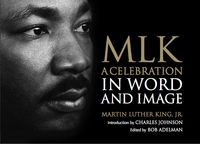
    CoverMLK: A Celebration in Word and Image by Martin Luther King, Jr., edited by Bob Adelman

    MLK: A Celebration in Word and Image is an unprecedented collection of black-and-white photographs combined with stirring quotations by Dr. Martin Luther King, Jr.

    This treasured collection includes images by legendary photographers such as Henri Cartier-Bresson, Bob Adelman, and Flip Schulke, and is an unparalleled photobiography that presents intimate moments from King's personal and public journey. We see King in all his manifestations-as a new father and doting husband, as a civil rights champion leading racial protests, and as a charismatic speaker preaching electrifying sermons. Triumphant events like King delivering his "I Have a Dream" speech and marching in Montgomery are beautifully captured, as are private moments of him reflecting on his Nobel Peace Prize or working in his study.

    Threaded together, these words and images chronicle how Dr. King was not only a driving force for change but also a continually evolving individual. A collection to savor and celebrate, these great photographs are an enduring testament to the life and legacy of an international icon.

    Watch the book trailer for MLK: A Celebration in Word and Image on YouTube.

    Watch an interview with Bob Adelman on CBS News.


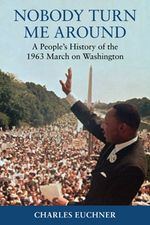
    0059Nobody Turn Me Around: A People's History of the March on Washington by Charles Euchner

    "The March on Washington was a demand to make the Constitution of the United States work for black people—to cash the blank check, as Dr. King put it that day …Euchner’s superb book brings it all back in vivid detail."
    -Roger Wilkins, author of Jefferson's Pillow

    On August 28, 1963, over a quarter-million people-two-thirds black and one-third white-held the greatest civil rights demonstration ever. In this major reinterpretation of the Great Day-the peak of the movement-Charles Euchner brings back the tension and promise of the march. Building on countless interviews, archives, FBI files, and private recordings, this hour-by-hour account offers intimate glimpses into the lives of those key players and ordinary people who converged on the National Mall to fight for civil rights in the March on Washington. 

    Watch a video about the book at YouTube.

    Listen to an All Things Considered story about the book at NPR.org.


  • Anita Hill is a professor of social policy, law, and women’s studies at Brandeis University. She is the author of Reimagining Equality: Stories of Gender, Race, and Finding Home. Hill is also the author of Speaking Truth to Power, in which she detailed her experience as a witness in Clarence Thomas’s Supreme Court confirmation hearings. She writes and lectures widely on issues of race and gender equality.

    Bigstock_FORECLOSED_HOUSE_5930025California Attorney General Kamala D. Harris's role in last week's $26 billion settlement with five of the nation's leading banks shows how critical it is for states and local governments take a stand on behalf of homeowners. Last September, according to a story that ran Monday in the New York Times, she walked away from negotiations in the multi-state process. Some of her peers accused her of grandstanding. She stood her ground and negotiated the largest share of the settlement that may rise above the amount announced last week. The money Harris negotiated is more than a mere chance to compensate people duped by the banks, it begins to restore a critical part of our national identity lost to individual and corporate greed that trumped moral and even sound economic judgment. 

    In Reimagining Equality, I outlined how the foreclosure epidemic threatened America's identity as a place where one comes to finds a home and builds from there a sense of belonging to a community and a nation.

    Recently, in a speech to a crowd gathered at a neighborhood community center, President Obama explained why the threat to home ownership wreaks more than economic havoc.

    Anita_hill_reimagining-equality"This housing crisis struck right at the heart of what it means to be middle class in America: our homes, the place where we invest our nest egg, place where we raise our family, the place where we plant roots in a community, the place where we build memories," Obama said.

    Since October, I've visited a over a dozen cities and spoken to countless individuals who hold on cautiously to their belief in homeownership as a tenet of the American Dream. In New Orleans, people who are still recovering from the ravages of Katrina sat beside people who struggle to pay mortgages that have escalated out of control. In Detroit, I visited neighborhoods smattered with boarded up houses that stand along side occupied residences. Yet a neighborhood school, lead by one exceptionally courageous and committed principal and her dedicated teachers, flourishes. The schools and the children that pour out of those homes remind me that a new generation of children will live surrounded by a "new normal" of devastation. Will the best and brightest of them have a reason to stay to raise their children in their old neighborhoods?

    Not everyone I met has a home that is underwater; some don't own homes at all. But they all have an investment in the idea that home is critical to them in finding a place in a thriving democracy.

    The multi-state settlement will go far in showing that their trust in a government that will protect their chance to "plant roots in a community" is not misplaced. Yet, the agreement reached by the Attorneys General should not preclude state and local governments from pursuing banks who fleeced consumers. Those entities know all too well the devastating impact of the housing crisis. They also know that it will take more than even the billions on the table today to restore communities so that they are once again places where people can raise their families.