• Today's post is from Hanne Blank, author of Straight: The Surprisingly Short History of Heterosexuality. Blank is a writer, historian, and public speaker whose work has been featured everywhere from Out to Penthouse. An independent scholar, she is the author of Virgin: The Untouched History and seven other books that explore the intersections of sexuality, gender, the body, and culture. 

    This post originally appeared at Huffington Post. 

    BLANK-StraightWhen I began work on my book Straight: The Surprisingly Short History of Heterosexuality, I often got teased by friends who wondered whether, in working on the history of something so commonplace, I was going to come across anything that wasn't already common knowledge. Surely, they thought, it would all be very straightforward, very vanilla, very Leave It to Beaver, and if there were anything in there they didn't already know about, they'd be surprised.

    As it turned out, this was far from true. The history of heterosexuality is actually a motherlode of remarkable and sometimes deeply strange stuff, from the broad-brush conceptual to the kinds of tidbits you add to your cocktail-party repertoire. Not only does the history of heterosexuality offer up surprises that make you rethink what "heterosexual" is and means, it also makes you realize how little we really know about this thing about which most of us assume we already know everything we need to. The following are 10 of my personal favorites.

    Homosexual
    1. May 6, 1868

    The words "heterosexual" and "homosexual" were coined on this day in a letter written by Austro-Hungarian journalist Karl-Maria Kertbeny to the German legal eagle and proto-gay rights crusader Karl Ulrichs.

    Technically speaking, before that fateful Wednesday, it was impossible for anyone in the world to be either a heterosexual or a homosexual, because the words didn't exist yet. [Image: First mention of the word "homosexual" and "heterosexual" (in a letter from the Austro-Hungarianwriter / from) Karl Maria Kertbeny in 1868 Photo: Hungarian National Library.]

    Bo-and-hope
    Not Kirchberg and Feenstra. [Photo: NBC Universal]

    2. Kirchberg vs Feenstra

    Married American women didn't gain full legal control over their own financial assets until after this landmark U.S. Supreme Court case in 1981. In overturning "head and master" laws that gave husbands a legal upper hand over financial decision making within marriages, this decision finally made it illegal for a husband like Louisianan Joan Feenstra's, awaiting trial for sexually molesting his daughter, to decide to do something classy like mortgage the house for which his wife had paid in order to pay his legal bills. (And no, that date's not a typo: 1981.)

    3. The "Science" of Mutual Heterosexual Orgasm

    The ideal that men and women should have mutually orgasmic sex developed during the same time period as the idea of "heterosexuality" did, in the late 1800s and early 1900s. This novel notion helped establish the new notion of distinctively "heterosexual" desire and pleasure as scientific and medically proper.

    By 1922, Dr. Walter Robie would write that married coitus had to be "mutually pleasurable and simultaneously climactic… if it is to be scientifically correct."

    4. Science Has Never Defined "Heterosexual"

    Never mind the question of whether there's such a thing as distinctively "gay genes" or "gay brains"; we don't even know if there's such a thing as straight ones. Physical and biomedical science have yet to define or even confirm the empirical existence of heterosexuality… no one's ever even tried.

    This means that scientific research being conducted on the question of what makes people gay is being done without a properly characterized control to compare with. That's bad science. 

    Bigstock_Survey_77066395. Survey Says… We Lie a Lot About Sex

    If you think you're better off trusting the statistics in sex surveys than what your friends say about their sex lives for an idea of what "normal heterosexuality" looks like, think again.

    Research done on the accuracy of self-reporting in sexuality surveys, including a 2009 study in the Journal of Sex Research, demonstrates that in sex research as in life, what people claim about their sex lives often doesn't match up to reality. A better bet is to consider sex research stats as a representation of what's possible, not what's typical. 

    6. Freud, Father of Foreplay

    Though men and women have engaged in various forms of non-intercourse sexual activity since time immemorial, the idea that there was a necessary opening act to sexual intercourse called "foreplay" is something we owe to Sigmund Freud and a handful of other psychologists and medical types around the turn of the 20th century.

    7. When Going Down Meant Going… Down

    Some late 19th-century authorities and physicians believed very sincerely that any woman who was interested in having a man perform oral sex on her was a sadist, and any man who complied was dangerously passive and submissive. Performing oral sex on women, they believed, was a "gateway drug" that led inevitably to ever more depraved acts of submission, and could possibly drag men all the way down to what they saw as the bottom of the heap, making them into the kind of men who provided oral sex to other men.
    6458656407_67103a6e39_z
    8. What's Love Got to Do With It

    For most of Western history, it was considered shameful to feel or display too much romantic emotion toward a spouse. Treating one's wife "as one would a mistress" was excessive and unseemly; as the Lady's Magazine lectured its English readership in 1774, "the intent of matrimony is not for man and his wife to be always taken up with each other, but jointly to discharge the duties of civil society, to govern their families with prudence, and educate their children with discretion." Love, shmove, marriage was a job — not an adventure. 

    9. Great-Great Grandma Used Birth Control

    A passionate commitment to contraception was a part of many male-female relationships long before the Pill or even commercial condoms came on the scene. Statistical research shows that men and women began to limit their fertility during the 19th century, with birthrates among American white women declining from an average of seven babies per woman in 1800 to only about three and a half in 1900… not the sort of drop that happens spontaneously.

    What were great-great grandma and grandpa using? Probably withdrawal.

    10. Heterosexual? Thank a Gay Rights Activist

    "Heterosexual" is not, and never was, a scientific term. Nor is "homosexual." Both were coined in the context of what we'd now call gay rights activism, during a campaign of pamphleteering and letter-writing in opposition to a mid-19th-century German sodomy law.

    The idea behind the words "heterosexual" and "homosexual" was to demonstrate through language that these were merely two ways in which human beings could be sexual, distinct and equal, with the implication that sodomy laws should apply equally to everyone… or else to no one at all. 

    Survey photo from Bigstock.

    Watch Hanne Blank talk about her new book, Straight: The Surprisingly Short History of Heterosexuality

  • Lord teach me to unselfishly serve humanity.    

    Martin Luther King, Jr. From "Thou, Dear God": Prayers That Open Hearts and Spirits.

    Date-header-bg

    Lewis Baldwin, credit to Daniel DuboisLewis V. Baldwin is professor of religious studies at Vanderbilt University and an ordained Baptist minister. An expert on black-church traditions, he is author of The Voice of Conscience: The Church in the Mind of Martin Luther King, Jr.; There Is a Balm in Gilead: The Cultural Roots of Martin Luther King, Jr.; and Never to Leave Us Alone: The Prayer Life of Martin Luther King, Jr. He is the editor of "Thou, Dear God": Prayers That Open Hearts and Spirits, the first and only collection of prayers by Martin Luther King, Jr. 

    8603

    Martin Luther King, Jr. was both a prayer leader and a prayer teacher. This is how he understood much of his responsibility in his capacity as preacher, pastor, and civil rights leader. The prayers found in "Thou, Dear God": Prayers that Open Hearts and Spirits support this claim. They are indeed quite instructive and useful for churches and other communities of faith that are seeking new avenues toward spiritual enlightenment and development. The prayers suggest spiritual approaches which could transform and uplift persons, while improving their own sense of what it means to function in positive, creative, and constructive ways in the world. In short, the prayers should be read for both their spiritual and educational value. Otherwise, an important dimension of what they offer gets lost.

    Photo of Lewis V. Baldwin by Daniel Dubois.

    Date-header-bg

    Read "Prayers for Social Justice" from "Thou, Dear God" on Scribd.

    Purchase in hardcover or ebook at Beacon | Independent Bookstore | Amazon | Barnes and Noble | Powells 

    Watch the book trailer on YouTube. 

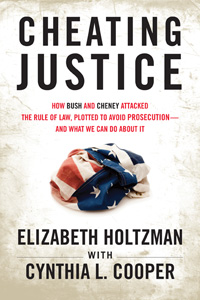
  • Elizabeth Holtzman is the youngest woman ever elected to Congress. She won national attention for her role on the House Judiciary Committee during Watergate and was subsequently elected district attorney of Kings County (Brooklyn). Holtzman is the author, with Cynthia Cooper, of Cheating Justice: How Bush and Cheney Attacked the Rule of Law, Plotted to Avoid Prosecution, and What We Can Do about It.

    This post originally appeared at the Huffington Post.

    0321In his State of the Union address, President Obama announced a new special unit to investigate abusive lending and packaging of mortgage risk that led to the housing and financial crisis. These abuses began years ago, under the Bush administration and possibly before. Yet since it's widely felt that impunity for banks and financial institutions hurts our economy and undermines our rule of law, the president's proposal was well received.

    In the same way, treating Bush administration officials with impunity for their criminal actions undermines the Constitution and the rule of law, which is why we need a special prosecutor to investigate them. Impunity for the powerful doesn't just breed cynicism and anger in the public; it helps ensure that misconduct, criminal or otherwise, will be repeated. It creates a dual system of justice, corroding democracy itself. The longer we wait, the greater the damage and the higher the price we pay.

    Take the Iraq War. The Bush team falsely told Congress that Iraqi weapons of mass destruction threatened us with a "mushroom cloud" and that Saddam Hussein and al Qaeda were in cahoots. They said a military effort would be a "cakewalk," lasting five months and costing $50 billion. In fact it lasted over eight years, cost more than $1 trillion, killed more than four thousand Americans and hundreds of thousands of Iraqis, and injured tens of thousands of our troops.

    If it seems as though there should be a law against this, there is; it just hasn't been enforced.

    Conspiracy to defraud Congress is a federal crime; a proper inquiry into whether the Bush administration violated the law is required. So is a comprehensive investigation into the origins of the war, whether or not criminal activity was involved. So far, the U.S. has refused to undertake a full-scale inquiry to ascertain "what the president knew and when he knew it."

    Doing so wouldn't be quixotic or backward-looking. Other democracies have acted. Britain and the Netherlands undertook investigations of their involvement in the Iraq War, so why can't we? Britain conducted extensive hearings, calling former Prime Minister Tony Blair, among others, to testify. While the British inquiry panel has not yet issued its conclusions, the Netherlands inquiry found Parliament was deceived and that the Iraq war was contrary to international law.

    Lying to Congress and the American people to sell a war is an especially dangerous thing to treat with impunity. Presidents need to know that they will suffer serious consequences if they try it — that they could realistically be found guilty of a federal crime, or, if the misconduct doesn't rise to that level, that official inquiries and disclosures could shame them forever, damaging their standing and legacy.

    Other misdeeds of President Bush and Vice President Cheney also require review: Torture and mistreatment of prisoners violate the anti-torture statue and possibly the watered-down War Crimes Act. Authorizing illegal wiretapping violates the federal anti-wiretapping law. Both would carry a criminal penalty and both must be investigated.

    Refusing to review possible criminal misconduct by the Bush administration also cripples American power. It makes it harder for the U.S. to condemn impunity abroad. How effectively can we argue for the rule of law in Syria or Iraq or anywhere else if we don't apply it fully here at home? 

    And it leaves Americans open to foreign prosecution. If we refuse to act, other countries will investigate and prosecute U.S. officials who may have violated criminal or international law. If their citizens were mistreated in Guantanamo, or torture took place on their soil, they can claim jurisdiction. Right now, Spain is launching an inquiry into top Bush administration lawyers who greenlighted torture.

    In the long run, no matter how much the U.S. tries to duck accountability, there will no impunity. Chilean dictator Augusto Pinochet was finally prosecuted for torture and murder, despite 27 years of evading it.

    In the U.S., there is no statute of limitations for certain cases of torture, including when death results. One day, there will be prosecutions for the misdeeds of the Bush administration. Then the whole story of torturing and mistreating detainees will be spread out on the table of history for all to see. The question is, how long will we have to live with impunity and how much more damage to American democracy and power will we suffer until that day comes?

  • Carl Elliott is the author of White Coat, Black Hat: Adventures on the Dark Side of Medicine. Elliott is a professor at the Center for Bioethics at the University of Minnesota. His work has appeared in The New Yorker, Atlantic Monthly, the Believer, Slate, the London Review of Books, and the American Prospect. His six previous books include Better Than Well, Prozac As a Way of Life, Rules of Insanity, and A Philosophical Disease.

    This post originally appeared at the Chronicle of Higher Education's Brainstorm blog. 

    Bigstock_Masked_wrestlers_and_referee_i_24830204A number of years ago, a university public-relations official approached me with an invitation. Her office was coordinating a series of columns called “Health Talk and You,” which were published in about 50 newspapers around the state. The columns were short, simple, and straightforward – about 500 words, she said. Would I be interested in taking part? Without giving the question much thought, I said yes.

    Then I read her email more carefully. I had initially thought I was being asked to write an article. In fact, however, I was being asked to lend my name to an article which the public relations office would ghostwrite, but which would be published under my byline. A reporter would interview me on the topic of my choice and write an article based on the interview. When I called the public relations officer back, I explained that it seemed deceptive to take credit for an article that I didn’t actually write. She bristled; the conversation turned chilly; and by the time we hung up, we had both agreed that I would make a very poor “author.”

    Given how badly that brief conversation went, it was probably best that I didn’t mention my other reservation about the article. What bothered me was not just the deception. I was also afraid someone might think I had actually written the kind of embarrassing propaganda and mindless fluff typically generated by a public-relations office. Seeing that column appear in a newspaper under my name would have been like watching myself recite the prepared text in a hostage video.

    Don’t get me wrong. I don’t have a problem with fakery, given the right circumstances. I can read a ghosted celebrity autobiography with the same pleasurable suspension of disbelief with which I watch professional wrestlers. It’s just that I never really thought of the university as the aesthetic equivalent of the World Wrestling Federation.

    6144Of course, it is possible that I overreacted. After all, the ghosted columns had been appearing for years, presumably under the names of other faculty members. Maybe my colleagues simply put the columns in the same category as the throwaway newsletters, promotional flyers, annual reports and spam email generated by administrative offices all over the university. Nobody even reads that material, much less worries about its provenance. Or maybe they thought the columns were like speeches delivered by university presidents or high-ranking deans, which most of us simply assume to be written by a ghostwriter. “Bureaucratic plagiarism” is the term used by Gavin Moodie to describe this kind of fuzziness around authorship, and as he points out, it raises an uncomfortable question. If we don’t allow university students to hire ghostwriters, why do we allow it for university administrators?

    When plagiarism lands an administrator in trouble, it is usually plagiarism of the more familiar variety. Last summer, for example, Philip Baker, the Dean of the Faculty of Medicine and Dentistry at the University of Alberta, delivered a convocation speech that was lifted — word for word, according to medical students following on their smartphones — from a Stanford University commencement address by Harvard surgeon and New Yorker staff writer, Atul Gawande. Baker was eventually forced to resign.

    Simply employing a ghostwriter, however, is often not seen as a problem — unless the ghostwriter is also a plagiarist. In 2007, for example, when several newspaper columns published by William Meehan, the president of Jacksonville State University, were found to contain material plagiarized from various websites, his excuse was that the columns had actually been ghosted by the director of the university news bureau. (Meehan was later accused, apparently with credible evidence, of having plagiarized parts of hisdoctoral dissertation.) Similarly, when the president of Wesley College, Scott D. Miller, was accused of plagiarizing sections of a speech written by the president of Connecticut College, he told reporters that he had “a number of people who do some drafting for me.” Miller said, “I don’t remember the specifics of who wrote it.”

    Of course, paying a ghost to write your speeches is not like paying a ghost to write your doctoral dissertation or your academic articles. Neither is rubber-stamping an administrative document produced by an assistant. As Brian Martin has pointed out, bureaucratic plagiarism (or what he calls “institutionalized plagiarism”) is standard practice in many large, hierarchical organizations, where well-paid, high-status leaders take credit for written material produced by others who rank below them on the organizational ladder. University administrators sometimes compare themselves to corporate executives, who are not generally criticized for having ghostwriters on staff. But administrators, of course, are not executives. Most of them are tenured members of the faculty. Should they be judged by the norms and standards of corporations? Or should they be judged by the standards usually applied to faculty and students?

    Of course, administrators could not really be expected to produce such a vast amount of written material without a small army of “communications professionals.” Yet, as Benjamin Ginsberg argues in his excellent book, The Fall of the Faculty: The Rise of the All-Administrative University, all this written material is subsidized by student tuition, which continues to rise dramatically. Wouldn’t the budget for university-subsidized ghostwriters be a good place to start cutting? Also, paying ghosts to write for senior administrators seems unfair to the rest of us. As Ginsberg says, “faculty members who plagiarize must do so at their own expense.”

    Read an excerpt from White Coat, Black Hat on Scribd.

    Read the White Coat, Black Hat reader's guide.

    Wrestler photo from BigStock.

  • At Beacon Press, we have published many books that examine the most troubling parts of our history and culture. In honor of Black History Month, here are a few of the titles we've brought out in recent years that look at slavery and its lasting impact on American society.

    KindredKindred by Octavia Butler

    "Octavia Butler is a writer who will be with us for a long, long time, and Kindred is that rare magical artifact . . . the novel one returns to, again and again."
    —Harlan Ellison

    A 2012 World Book Night USA selection

    While Kindred is a work of fiction, it is one of those books that vividly illuminates history through imaginative storytelling. We couldn't make a list of Beacon Press books on the legacy of slavery without including it. 

    Dana, a modern black woman, is celebrating her twenty-sixth birthday with her new husband when she is snatched abruptly from her home in California and transported to the antebellum South. Rufus, the white son of a plantation owner, is drowning, and Dana has been summoned to save him. Dana is drawn back repeatedly through time to the slave quarters, and each time the stay grows longer, more arduous, and more dangerous until it is uncertain whether or not Dana's life will end, long before it has a chance to begin.

    Read the first two chapters of Kindred on Scribd.

    View the reading group guide: HTML or PDF. 

    View the discussion guide for UU communities: HTML or PDF.


    InheritingthetradeInheriting the Trade: A Northern Family Confronts Its Legacy as the Largest Slave-Trading Dynasty in U.S. History by Thomas Norman DeWolf

    "I cannot recommend it highly enough. The book is terrific."
    —Harry Smith, anchor, The Early Show, CBS

    "DeWolf's intimate confrontation with white America's 'unearned privilege' sears the conscience." 
    —Kirkus Reviews

    In 2001, Thomas DeWolf discovered that he was related to the most successful slave-trading family in U.S. history, responsible for transporting at least ten thousand Africans. This is his memoir of the journey in which ten family members retraced their ancestors' steps through the notorious triangle trade route—from New England to West Africa to Cuba—and uncovered the hidden history of New England and the other northern states. 

    Listen to Thomas DeWolf on Uprising Radio. 

    Watch Thomas DeWolf discuss Inheriting the Trade. 


    SoundsofslaveryThe Sounds of Slavery by Shane White and Graham White

    "Shane White and Graham White's book is a joy."
    -Branford Marsalis

    The singing of slaves on plantations, while chopping weeds in cotton fields, or while working at a corn shucking; the sound of a slave preacher delivering a sermon or an elderly slave telling Brer Rabbit stories to children; newly freed blacks exchanging greetings or whistling on southern city streets–all these and many more made up the sounds of slavery.

    Shane White and Graham White break new ground and bring history vividly to life through an exploration of the varied and nuanced sounds of slavery. Moving through a complex soundscape, White and White use anecdotes and firsthand accounts to illuminate the depth of slave culture and history, where each sound played a critical role in defining the slave's world, expressing movments of joy, defiance, and pain. The authors also recover some of the surprise and shock these sounds evoked in white listeners–some dismissed them as primitive while others marveled at their skill and beauty. This book expands our historical ear from the 1700s through the 1850s and continues into the modern era, drawing connections between the rich aural history and such beloved American music as the blues. Allowing us to eavesdrop on the past, The Sounds of Slavery is the closest modern listeners will ever get to experiencing the diverse sounds that surrounded slave life. 

    Listen to 18 tracks of songs discussed in the book at Beacon.org.

    "Sometimes I Feel Like a Motherless Child" on YouTube.


    EpicjourneysEpic Journeys of Freedom: Runaway Slaves of the American Revolution and Their Global Quest for Liberty by Cassandra Pybus

    During the American Revolution, thousands of slaves fled from their masters to find freedom with the British. Having emancipated themselves–and with rhetoric about the inalienable rights of free men ringing in their ears–these men and women struggled tenaciously to make liberty a reality in their lives.

    This alternative narrative includes the stories of dozens of individuals–including Harry, one of George Washington's slaves–who left America and forged difficult new lives in far-flung corners of the British Empire. Written in the best tradition of history from the bottom up, this pathbreaking work will alter the way we think about the American Revolution.

    Read the first chapter (.pdf)

    Watch Cassandra Pybus discuss Epic Journeys of Freedom at Cambridge Forum.

  • Today's post is by Patricia Harman, a certified nurse midwife and author who lives and works near Morgantown, West Viriginia. Her first book, The Blue Cotton Gown, was called “luminescent, ruthlessly authentic, humane, and brilliantly written” by author Samuel Shem. Her second book, Arms Wide Open, was described by Tina Cassidy, author of Birth: The Surprising History of How We Are Born, as "A sparkling, vivid story of how a midwife is born-and survives." 

    ArmswideopenRecent events involving Susan G. Komen for the Cure, the nation’s leading breast cancer advocacy group, illustrate how vulnerable women’s health care options are. Last Tuesday the organization announced they were cutting their funding to Planned Parenthood, which amounted to about $680,000 in 2011. By Thursday, under tremendous pressure internally and externally, the charitable foundation reversed its decision.

    As a nurse-midwife and women’s health care provider, I see the issue from the front-line when my patients who don’t have insurance come to me with breast problems. Follow me into my exam room and you’ll see what I mean.

    Forty-five-year-old Gail Wilson lies on the table with her left breast exposed. I don’t even have to touch her to see there’s a mass. A lump the size of a quail’s egg shows in the upper right quadrant and I inwardly cringe.

    “It’s bad isn’t it?” Gail asks me.

    “Well, it’s not good, but not all lumps are cancer. How long have you had it?”

    “About a year.”

    “A year! Weren’t you worried?"

    “Not at first, but finally my husband insisted I get an exam. He was laid off at the shirt factory three years ago and we don’t have health insurance…” Her voice trails off apologetically. “There isn’t a Planned Parenthood in my area and it took a few months to find a provider that would see me.” I let out my air wondering how and where I will get this woman a mammogram. I can do her visit for free, but it’s $350, at the hospital, for the scan.

    It takes me four days and I’m getting worried, when I finally find a program through the health department that will fund Mrs. Wilson’s mammogram. Unfortunately the news isn’t good; the test shows breast cancer, stage 4, with metastasis into the lymph nodes. Gail waited too long. She won’t last the year.

    Approximately 1 in 8 U.S. women will develop breast cancer during their life time, that’s around 300,000 new cases each year and 20% of those women don’t have health insurance.

    In a nation as rich as the United States, it is a travesty that people like Gail and her family cannot get diagnostic tests when they need them, cannot get an examination when they’re ill, cannot get medication when it’s prescribed.

    The Susan Komen incident should be a wake up call. There are those on the religious right who are willing to sacrifice important health care services to the poor in order to advance their pro-life agenda. Until everyone has access to care, no matter what our personal beliefs about pregnancy termination, we must support Planned Parenthood and other women’s health organizations like it. That’s Pro-life too.

  • 1160

    Half a million babies are born prematurely in the United States every year. In this gripping medical narrative, Dr. Adam Wolfberg brings readers into the complex world of newborn intensive care, where brilliant but imperfect doctors do all they can to coax life into their tiny, injured patients. As a specialist in high-risk obstetrics and the father of a child born prematurely, Wolfberg explores the profound questions raised by such fragile beginnings, both from the front lines of the NICU and from his daughter’s bedside.

    His daughter Larissa was born weighing under two pounds, and he describes the precipitous birth at six months that left her tenuously hanging on to life in an incubator. Ultrasound had diagnosed a devastating hemorrhage in her brain that doctors reasoned would give her only a 50 percent chance of having a normal IQ. Through Larissa’s early hospital course, Wolfberg examines the limitations of newborn intensive care medicine, the science of “neuroplasticity,” and the dilemmas that surround decision making at the beginning of life.

    Wolfberg also takes us into the lab where researchers are working to improve the futures of children born too soon. He follows a young scientist, Jason Carmel, who was inspired to study how the brain adapts to injury when his twin brother was paralyzed in an accident. Through lucid medical reporting, Wolfberg details current scientific practices and discoveries, and explores the profound emotional and ethical issues raised by the advancing technology that allows us to save the lives of increasingly undeveloped preemies.

    As they make decisions about life-saving care in the first hours of a premature infant’s life, doctors and parents must grapple with profound moral and medical questions: How aggressively should doctors try to save the life of a premature baby, who will be severely neurologically and physically impaired? What might that child’s quality of life be like after millions of dollars are spent on her care? Wolfberg traces the fits and starts of the physicians, government policy makers, and lawyers who have struggled over the years to find the best way to make these wrenching decisions. Written from Adam Wolfberg’s unique experience as a reporter, as a medical specialist and researcher, and as the father of a prematurely born daughter, Fragile Beginnings lays bare the struggles, discoveries, and triumphs of the newborn intensive care unit.

    Read a review of Fragile Beginnings in the Boston Globe.

    Read Adam Wolfberg's blog at Huffington Post.

    Read Chapter 1 of Fragile Beginnings on Scribd.

    Watch the book trailer on YouTube.

  • “Here at last is a book for everyone who is outraged—or just bewildered—that Bush, Cheney and other top officials escaped prosecution for their many flagrant violations of the law. Will there really be no consequences for the men who lied us into war, compromised our civil liberties, and made "waterboarding" and "Guantanamo" household words? Passionately, clearly and concisely, Elizabeth Holtzman lays out how it happened, how the Bush Administration secretly sought to immunize itself from prosecution, and how we can still hold the perpetrators accountable.” —Katha Pollitt, author of Subject to Debate

    “This book makes a vital contribution to addressing the abuses of power of the Bush administration. Unfortunately today, nearly three years after the end of the George W. Bush administration, our nation still labors under the many excesses of that era. Holtzman’s book offers a cogent and elaborate account of that time period and important insights into how we can prevent those from recurring.”—John Conyers Jr., author of The Constitution in Crisis

    "Elizabeth Holtzman, who helped bring President Nixon to justice in the Watergate hearings, now takes on the bigger, deeper and even more crucial task of investigating—and exposing—exactly how President George W. Bush and Vice President Cheney started an illegal war, subverted civil liberties, human rights and the law itself, and then used the national trauma following 9/11 to cover it up. Start to read Cheating Justice, and you won't be able to put it down."— Gloria Steinem, co-founder Ms. Magazine, writer and feminist activist

    Despite the many misdeeds of and abuses of criminal law by the Bush administration, there has been no accountability. Former U.S. representative Elizabeth Holtzman pairs with lawyer and journalist Cynthia L. Cooper to explain why we can't "just move on." They lay bare how the Bush-Cheney administration broke a multitude of laws and betrayed American values, and exactly why and precisely how we, the people, must bring them to justice for their crimes, their cover-ups, and their deceit.

    Backed by strong evidence gleaned from "astounding" research, Holtzman and Cooper argue that the Bush administration not only violated various U.S. laws but also changed many laws to escape prosecution for their crimes later. The authors demonstrate how a failure to hold George W. Bush and Dick Cheney accountable would set a dangerous precedent for the future leadership of America.

    Bush and Cheney deceived Congress and the people to drive us into a war in Iraq; they claimed the right to wiretap illegally and to eavesdrop on citizens; and they authorized torture, upending laws and breaching international treaty obligations. Yet, both Bush and Cheney are boldly unabashed about their offenses. In his memoir, President Bush makes no apologies for his decision to start a war in Iraq, though no weapons of mass destruction, the ostensible reason for the war, were found there. And once out of office, Bush proudly said, "Damn right," about his approval of waterboarding, a clear violation of the Geneva Conventions and U.S. law. Recent revelations about the extent and depth of their crimes, catalogued in detail here, make the need for accountability imperative.

    As a member of Congress and part of the committee that investigated and held hearings on the conduct of President Richard Nixon in the Watergate scandal, Elizabeth Holtzman condemns Bush's adoption of Nixon's claim that he acted in the interest of national security. Using Watergate-era reforms as a model, Holtzman details the steps necessary to undo the damage that the Bush-Cheney administration inflicted and explains how we can establish new protections to block future presidents from similarly abusing the law. Cheating Justice is not only a call to empower the American people, and a firm insistence that the nation's leaders are not above the law; it is also a blueprint by one of America's top legal minds for bringing Bush to justice and protecting the future of our democracy. 

    Read the Introduction to Cheating Justice on Scribd.

  • BeaconOtherSBowlLosers

    Yes, the unthinkable happened on Sunday, and the New England Patriots lost (by a derrière) to the New York Giants. Our sadness at watching Tom Brady’s last second Hail Mary pass hit the turf was mitigated by our excitement at promoting two books for Other Press throughout the week. Our #pubbowl wager, which came with lots of good-natured trash-talking and humor, had the publisher whose home team lost (that would be us) on the hook to promote two of the other publisher’s titles for a week on the web, featuring the two titles on their web site and promoting the titles across social media platforms.

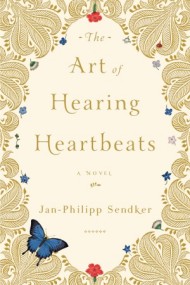
    The two books chosen for our promotion are The Art of Hearing Heartbeats by Jan-Philipp Sendker and How to Live: Or a Life of Montaigne in One Question and Twenty Attempts at an Answer by Sarah Bakewell

    In addition, the publisher whose team brought home the trophy (that would be Other Press) is giving away a selection of its books to a handful of winners selected from online entries. 

    Visit the Beacon Press website to find out more about these two books and to enter the giveaway. And visit the Other Press website to read about the other groundbreaking books they publish.

    HeartbeatsHowtolive
  • With the approaching 6:30pm kickoff of Super Bowl XLVI between the New England Patriots and the (soon to be weeping in their locker room) New York Giants, the publishing world celebrates another great matchup off the gridiron. Boston's Beacon Press and New York's Other Press are teaming up for a special web promotion: the publisher whose home team loses (Beacon's New England Patriots or, if the Patriots are abducted by aliens, Other's New York Giants) will promote two of the other publisher's titles for a week on the web, featuring the two titles on their web site and promoting the titles across social media platforms. In addition, the publisher whose team brings home the trophy will give away a selection of its books to a handful of winners selected from online entries, and both publishers will use their web presences to endorse the giveaway.

    The classic New York-Boston sports rivalry struck the publishers, both independent presses, as a ripe opportunity to engage in some fun, harmless, book-loving competition. (Also, it seemed to Beacon Press an easy way to let Tom Brady help earn it some free publicity.) Beacon Press is an independent publisher of serious non-fiction and fiction, emphasizing religion, history, current affairs, political science, gay/lesbian/gender studies, education, African-American studies, women's studies, child and family issues and nature and the environment (as well as a few sports books). Other Press is an independent publisher of novels, short stories, poetry, and essays from America and around the world-non-fiction and fiction-that explore how psychic, cultural, historical, and literary shifts inform our vision of the world and of each other. 

    Details of the giveaway will be posted online after the inevitable Pats victory (if you want to sign up early, click here! ). In the meantime, follow the conversation on Twitter (@beaconpressbks, @otherpress, #pubbowl) and Facebook (Beacon Press fan page, Other Press fan page).