• Today's post is from Sherrilyn A. Ifill, professor at the University of Maryland, Francis King Carey School of Law in Baltimore and the author of On the Courthouse Lawn: Confronting the Legacy of Lynching in the 21st Century. This post originally appeared at The Root.

    The Negro was unsexed and made to eat a portion of his anatomy which had been cut away. Another portion was sent by parcel post to Governor Dorsey, whom the people of this section hate bitterly.

    –lynching of "Negro" Williams, Moultrie, Ga., Washington Eagle, July 16, 1921

    Four young women from the crowd pushed their way through the outer rim of the circle and emptied rifles into the negro. They stood by while other men cut off fingers, toes and other parts of the body and passed them around as souvenirs.

    –lynching of Philip Gathers, Bulloch Gounty, Ga., Atlanta Journal, June 21, 1920

    A crowd of twenty men battered the door of Cooper's home and pounced upon him with knives and axes. He was killed as his wife looked on. The body was tied to a buggy and dragged to the church. Torches were applied to the house of worship, and when the flames were licking high into the air, Cooper's nude form was thrown into the blaze.

    –lynching of Eli Cooper, Eastman, Ga., Chicago Defender, Sept. 6, 1919
    CainThese shocking and gruesome accounts of lynching in 100 Years of Lynching are just three of the more than 500 recorded lynchings in Georgia from the 1880s until the mid-20th century. Less than a half century after the last recorded lynching in the state, Clarence Thomas, a son of the Peach State, claimed on national television to be the victim of what he called a "high-tech lynching" after credible allegations emerged that he had engaged in sexual harassment of a female employee while he was head of the Equal Employment Opportunity Commission. Thomas, then a sitting federal appellate court judge, was in line to serve on the highest court in the most powerful country in the world.

    With his white wife seated behind him, Thomas described his Supreme Court confirmation hearing as "a high-tech lynching for uppity blacks who in any way deign to think for themselves." The words and imagery were shocking and powerful, and reset the course of his confirmation hearings.

    Now the "high-tech lynching" claim has been invoked in a campaign ad on behalf of another son of Georgia, presidential candidate Herman Cain, in an attempt to fend off negative fallout from the revelation that Cain was accused of sexual harassment by several women in the 1990s during his time as president of the National Restaurant Association.

    Whatever one thinks of either Thomas or Cain, neither is the victim of a lynching, and their deliberate invocation of the most hideous and grotesque of racial crimes to shield their own conduct from scrutiny profoundly misrepresents the significance of lynching in the racial history of this country. In fact, it is an insult to the nearly 5,000 African-American men who were lynched  (and a few dozen African-American women as well) from the 1880s until the 1960s to continue trotting out this imagery as a convenient way of cowing critics — white and black — into ignoring claims of sexual harassment.

    The men who were lynched in nearly every state in this country suffered unimaginable terror and pain, and they suffered it alone. They were not millionaires, or former chairmen of Federal Reserve boards, like Cain. They had no public relations firms representing them, or well-funded political groups organized to plead their cases. Not even their families could help them. In fact, in the aftermath of a lynching, the families of victims were often so frightened they did not claim the remains of their loved ones, fearing that bloodthirsty lynch mob members would exact violence against the families as well.

    Thomas should have known better than to invoke lynching imagery to describe the Senate Judiciary Committee's decision to examine the claim that he had harassed Anita Hill. There is no record of a black man ever facing lynching for engaging in sexually inappropriate conduct with a black woman. As a Southerner, Thomas no doubt knew this.

    IfillIn fact, even the old saw that lynching was primarily utilized to punish black men for raping white women was debunked in the early 20th century in a study carefully prepared by anti-lynching activist and newspaper publisher Ida B. Wells-Barnett. Her study showed that lynchings were most often exacted in response to allegations that a black man had assaulted or killed a white man. Later records bore that out.

    The victims of lynching were not just the thousands of men who were tortured and stripped of their humanity, often before cheering crowds of housewives and children. Lynching was a community crime, designed to frighten entire black communities into submission. And it did.

    When civil rights workers tried to register voters in Sunflower County, Mississippi, in the 1950s, they found black sharecroppers still telling the story of one of the most grotesque lynchings ever recorded. Luther Holbert and his wife had chunks of their flesh taken from their bodies with screws, and their fingers and toes cut off before they were finally burned to death. Although this lynching had happened decades earlier, in the 1950s it still held the small black sharecropping community in Sunflower County in the grip of paralyzing fear.

    What does this history of lynching have to do with the fact that the National Restaurant Association decided to pay tens of thousands of dollars to women who accused Cain of sexual harassment in the 1990s, or that Thomas was alleged to have persistently made unwanted sexual remarks to a female subordinate while he headed up the federal government's employment discrimination agency? In a word, nothing.

    What Cain hopes to gain from describing himself as a lynching victim is precisely what Thomas received: the shame and fear of white liberals, who, in Thomas' case, failed to adequately investigate and expose the credible testimony of witnesses who by all accounts would have corroborated Hill's claims. Many have persuasively argued that had then-Senate Judiciary Committee Chairman Joe Biden (D-Del.) called other witnesses who were prepared to attest to Thomas' misconduct, the result of the 1991 hearings and the confirmation vote would likely have been quite different.

    And this is why it's important that we talk about what lynching is and isn't. The history of lynching in this country continues to hold enormous power in our imagination. Being accused of participating in a lynch mob is among the most incendiary charges one can make in this country.

    What W.E.B. Du Bois called "America's national crime" has been the subject of movies, songs, poems and plays. The very word invokes terror, shame and fear and is enough to make the media, Republican and Democratic opponents and perhaps even the alleged victims of Cain's misconduct just want it all to go away. Using the term "high-tech" to modify the charge does little to alleviate the power of the accusation or to lessen its ability to silence critics.

    The mere fact that you are a black man accused of sexual misconduct does not make you a lynching victim. Nor are you a lynching victim just because members of your own party think you are a poor choice to fill the newly empty U.S. Senate seat of the just-elected first black president, as Roland Burris was when State Sen. Bobby Rush (D-Ill.) begged the skeptical press not to "lynch" Burris in December 2008.

    If you are a black millionaire, running to hold the most powerful office in the world, or a black federal judge seeking a seat on the highest court in the country, and you are questioned about sexually inappropriate conduct toward women in your employ, you are not a lynching victim. You are the privileged descendant of a generation of blacks who endured the terror of lynching — of hanging and burning and dismemberment — and who lived lives of fear and discouragement that are unimaginable to us.

    Once and for all, besieged black Republicans — indeed, any public figure subjected to media scrutiny based on allegations of wrongdoing — should drop the manipulative and deeply insulting invocation of lynching, high-tech or otherwise, to try and disarm their detractors. Lynching victims were not metaphors. They were real people who suffered unimaginably. Using lynching as an expedient way to derail accusations of sexual harassment makes a mockery of those who died and the communities that lived in the grip of lynching's terror.

    Photo by Gage Skidmore. Used under Creative Commons.

  • Today's post is from Jay M. Feinman, Distinguised Professor of Law at Rutgers School of Law. He is an authority on contract law, tort law, and legal education, and is the author of Un-Making Law: The Conservative Campaign to Roll Back the Common Law.

    HotcoffeeIf most Americans know about any single piece of litigation, it is likely not to be Marbury v. Madison, which established the Supreme Court’s power of constitutional judicial review, or the civil rights landmark of Brown v. Board of Education. Instead, it involves the more ordinary circumstances of Stella Liebeck, the 79 year old victim of a coffee spill at a McDonald’s drive-thru. The story became a staple of attacks on the civil justice system as an example of frivolous litigation, runaway juries, and activist judges who were denying personal responsibility and threatening American business.

    As I describe in Un-Making Law: The Conservative Campaign to Roll Back the Common Law (Beacon, 2004), the facts are different than the legend. Liebeck suffered third-degree burns that required skin grafts and a week of hospitalization because McDonald’s served its coffee thirty degrees hotter than its competitors, too hot to drink but hot enough to burn. Prior to Liebeck’s case, McDonald’s had received over 700 complaints about the temperature. Even then, the jury reduced Liebeck’s compensatory damages by twenty percent because she was partly at fault, and the judge cut the jury’s punitive damage award from $2.7 million (the jury’s estimate of how much McDonald’s made from two days’ coffee sales) to $480,000.

    Liebeck’s story has been retold in a documentary film, Hot Coffee, that premiered at film festivals and on HBO this year and is now available on DVD. Susan Saladoff, a successful Oregon trial lawyer, gave up her law practice and devoted two years to making the film. Hot Coffee graphically portrays Liebeck’s story, showing her as an ordinary senior citizen, not a greedy plaintiff, and shows in grisly detail the effects of her burns.

    UnmakinglawThe film also gives a broader picture of corporate America’s attempt to transform the civil justice system. For example, it presents the story of Oliver Diaz, Mississippi Supreme Court Justice who was opposed by the U.S. Chamber of Commerce in a heavily financed smear campaign that was fictionalized in John Grisham’s novel The Appeal. It attacks mandatory arbitration clauses through which workers and consumers are denied access to the courts, using the story of Jamie Leigh Jones, a Halliburton employee in Iraq whose allegations of gang rape were blocked from litigation by her employment contract.

    Hot Coffee and Un-Making Law tell related versions of the same story. My book describes the conservative transformation of tort, contract, and property law in historical perspective and great detail. As a visual medium, the film is visceral. And both end with a call to action that is echoed in the Occupy Wall Street movement—it’s time to reclaim law as a progressive force for the benefit of ordinary people.

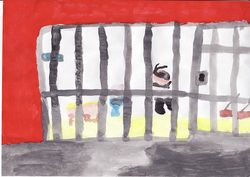
  • David Chura is the author of I Don’t Wish Nobody to Have a Life Like Mine: Tales of Kids in Adult Lockup. He has worked with at-risk teenagers for the past 40 years. For 26 of those years, he taught English and creative writing in community based alternative schools and in a county penitentiary. His writings have appeared in the New York Times as well as other scholarly and literary journals. He blogs at http://kidsinthesystem.wordpress.com/.

    JailThere’s been some good news in the media lately for anyone who cares about kids and justice. Federal statistics show that the number of juvenile offenders in jail has dropped by at least 25%. Along those same lines, the New York Times recently reported that New York Chief Judge Jonathan Lippman has called for moving most juvenile cases from criminal court to family court, where kids will get more help than punishment, thus adding his voice to the excellent work of the New York Center for Juvenile Justice. In the Boston Globe, criminologist James Alan Fox wrote that the Massachusetts law that requires all juveniles convicted of first-degree murder to be sentenced to life without parole “has not reduced juvenile murder”—and he has the numbers to prove it. And, supporting all these concerns, the Annie E. Casey Foundation’s No Place for Kids: The Case for Reducing Juvenile Incarceration hits hard at the waste of both taxpayer money and human potential when states lock up young offenders.

    Good news, right? So why with all this good news and media attention do I still get cranky about kids in adult jails? Because the 1962 New York State statue setting the age for criminal responsibility at 16 is still law. It is still law even though it was supposed to be a temporary measure until research was conducted (the research was, of course, never done). I'm still cranky because in Massachusetts 59 people are serving life sentences with no chance of ever getting out for crimes committed when they were too young to vote, some of them when they were too young to drive. Because a recent Gallup poll found that two-thirds of Americans think crime is worse than it was last year despite data showing the opposite. Because lawmakers respond more to the electorate’s fears than to commonsense and compassion.

    But I’ll give you an even better reason why I’m cranky. I’ve seen firsthand what happens to young people caught up in the criminal justice system. Meanwhile, studies are conducted (or not), reports are written, and statistics analyzed; pundits study the issues and experts testify before commissions.

    ChuraFor ten years I taught kids locked up in an adult county jail and watched how the penal system corrupted and eroded their humanity. That’s easy to do when you take away people’s identity. Give them a number instead of a name; call them “criminal,” “inmate,”  “thug,” and you take away their dignity—and their rights—the way we do when we label people “illegals.” Suddenly it’s okay to stop someone and demand their “papers,” to deny their families medical care, their children an education and the protections of the law.

    The locked-up kids I taught were forced to eat food banned in public schools years earlier. To go without eyeglasses they needed to read, to navigate safely in a perilous environment, eyeglasses they had when they were booked and somehow never got back to them.  Worse yet, many of these young people went without the psychotropic medications they had been on for such conditions as depression, bipolar disorder, attention deficit, and psychosis. When those untreated conditions made them hard to handle they were punished, thrown into solitary confinement, where, with no human interaction or mental health treatment, things only deteriorated.

    I had students come to class with jaws swollen, and not from some brawl on the block the way you might expect would happen when you lock up together 40 or so teenage boys. The swelling was because of an abscessed tooth, and there was no dentist to take care of it because he only came every other week, or because the sick call form I helped them fill out somehow “got lost.”

    Other medical treatment, when it was available, was often perfunctory and inadequate. One young man I worked with, Toro, a young Guatemalan who was always respectful to anyone in authority, received 30 day lockdown—23 hours alone in a cell with a half hour to clean up and a half hour to do PT—because he refused to take the unidentified pills the nurse was giving him. “All I wanted to know was what the pills were for,” he told me. “I didn’t know. I’d never taken them before and nobody would tell me.”

    None of us, no matter what conditions we’re forced to live in, easily gives up our humanity, and the young men and women I saw at the county penitentiary were no different. But their resources—family, education, community, health, spirituality—the kind of resources that help all of us hold firm to who we are, were meager even before they were incarcerated. Maintaining even a kernel of humanity in the face of such daily deprivation was near to impossible.

    If it all sounds bleak that’s because it is. But I say let the good news roll—the reports, the endorsements, the calls to action—but let’s do something about the harsh, demeaning, counterintuitive prison conditions we force young people to live in while insisting that they grow and change. Until then, whether it’s the 45,873 16- and 17-year olds arrested in New York last year or the 59 juvenile offenders serving life without parole in Massachusetts, or just one kid locked up somewhere in the country, I guarantee I’ll be cranky, very cranky. 

    Image from ABN2 on Flickr. Used under Creative Commons. 

  • Today's post is from Carole Joffe, author of Dispatches from the Abortion Wars: The Costs of Fanaticism to Doctors, Patients, and the Rest of Us. Joffe is a professor in the Bixby Center for Global Reproductive Health at the University of California, San Francisco. This post originally appeared at RHRealityCheck.

    Joffe“Such hypocrites! They don’t like getting unwanted calls at home!”  

    In an irony that he clearly relishes, Todd Stave, a Maryland entrepreneur, is telling me about the abortion opponents who contacted him and asked that he suspend the phone campaign he initiated against them.

    Stave is currently the subject of a certain amount of buzz in the abortion rights community, after his appearance on The Rachel Maddow Show. He came to Maddow’s attention  because of his innovative, some would say ingeniously simple, way of responding to harassment from anti-abortionists. Stave is the owner of the property in College Park, Maryland on which sits the clinic building rented by Dr. Leroy Carhart, a longtime Nebraska abortion provider and former associate of the late George Tiller. After Tiller’s assassination, Carhart became a leading target of antiabortion forces, especially so when he began recently began performing later abortions in Maryland. (His move was a result of Nebraska legislation, targeted specifically at him, that banned abortions after 20 weeks). Besides vociferous protests at the site of the clinic itself, abortion opponents showed up on Parents’ Night  at the middle school of Stave’s daughter. Brandishing signs with the usual mangled fetuses, as well as Stave’s name, photo and phone number, the protestors urged people to call him and ask that he “stop the child killing.”

    Stave was no stranger to anti- abortion activity. His father, the late Carl Stave, was himself an abortion provider in the same community in the period immediately following Roe and was the recipient of protests as well, including a firebombing of his clinic. His son took these earlier protests quietly. But showing up at his daughter’s school was too much for him. He noted the phone numbers of those who called him and organized a group of 20 friends to call the antis back. In a polite but firm way, Stave and his circle of volunteers told the abortion opponents that Stave would not back down from the agreement with Carhart.  Moreover, Stave asked his phone support team to notify their friends and associates about this activity and to contact him if they wished to be involved.

    As Stave told me, to his astonishment within several weeks some 3000 people contacted him–“from all the U.S., from Europe, from Japan, I couldn’t believe it”– asking to help with his campaign of call backs. Those who called or e-mailed him told how outraged they were by anti-abortion tactics and how happy they were to take action. Even more volunteers contacted him after his appearance on the Maddow show.

    In his most recent campaign, Stave on very short notice mobilized his network to call the leader of a Maryland anti-abortion group that was planning to protest a “Run for the Cure,” in Baltimore, sponsored by the breast cancer group, the Susan G. Komen Foundation. (The Foundation has recently been targeted by abortion opponents because of donations it gives to Planned Parenthood for breast cancer screenings). Stave, who had subscribed himself to an anti-abortion listserv under an assumed name, read of the planned action, and saw to his delight that the leader had posted several phone numbers. Plausibly, he gives his volunteers credit for the reports that the “the planned protest fizzled to nothing.”

    Stave has no illusion that campaigns of this nature will end all harassment from the opposition. “About 80 percent of people will stop the harassment after being contacted, 20%, the hard-core, won’t,” he speculates.  But there is no question that his campaign has struck a nerve–both among some abortion opponents who have experienced the unpleasantness of receiving unwanted phone calls, and  also among the large  mass of people who are  “pro-choice,” but one step removed from the abortion conflict—“civilians in the abortion wars” is how I have elsewhere referred to them. The response Stave has received thus far suggests the hunger among this group to find acceptable and feasible ways to counter the excesses of the anti-abortion movement. Stave has established an organization, Voice of Choice, which is currently operating with a small, mainly volunteer staff, and which continues to sign up volunteers willing to make phone calls on behalf of those who are harassed. As the organization’s website states, “Now it’s our turn.”

  • WEXLER-OddClausesIf the United States Constitution were a zoo, and the First, Fourth, and Fourteenth amendments were a lion, a giraffe, and a panda bear, respectively, then The Odd Clauses would be a special exhibit of shrews, wombats, and bat-eared foxes. Past the ever-popular monkey house and lion cages, Boston University law professor Jay Wexler leads us on a tour of the lesser-known clauses of the Constitution, the clauses that, like the yeti crab or platypus, rarely draw the big audiences but are worth a closer look. Just as ecologists remind us that even a weird little creature like a shrew can make all the difference between a healthy environment and an unhealthy one, understanding the odd clauses offers readers a healthier appreciation for our constitutional system. With Wexler as your expert guide through this jurisprudence jungle, you'll see the Constitution like you've never seen it before.

    Including its twenty-seven amendments, the Constitution contains about eight thousand words, but the well-known parts make up only a tiny percentage of the entire document. The rest is a hodgepodge of provisions, clauses, and rules, including some historically anachronistic, some absurdly detailed, and some crucially important but too subtle or complex to get popular attention. This book is about constitutional provisions like Section 2 of the Twenty-first Amendment, the letters of marque and reprisal clause, and the titles of nobility clauses-those that promote key democratic functions in very specific, and therefore seemingly quite odd, ways. Each of the book's ten chapters shines a much-deserved light on one of the Constitution's odd clauses-its history, its stories, its controversies, its possible future.

    The Odd Clauses puts these intriguing beasts on display and allows them to exhibit their relevance to our lives, our government's structure, and the integrity of our democracy.

    Buy at Beacon.org | Independent Bookstore | Amazon | Barnes and Noble | Powells | Apple iBookstore

    Listen to Steve Almond interview Jay Wexler on the Emily Rooney Show

    Read Chapter 6: The Twenty-First Amendment, here or at Scribd, to learn about how the Constitution regulates booze. 

  • Jay Wexler is the author of The Odd Clauses: Understanding the Constitution Through Ten of Its Most Curious Provisions. Wexler is a professor at the Boston University School of Law; prior to teaching he worked as a clerk to Justice Ruth Bader Ginsburg at the U.S. Supreme Court, and then as a lawyer in the Office of Legal Council at the Department of Justice. He has published nearly twenty academic articles, essays, and reviews, as well as nearly three dozen short stories and humor pieces, in places like The Boston Globe, Spy, Mental Floss and McSweeney's. This post originally appeared on his blog.

    WEXLER-OddClausesAs I discussed a while back on my Odd Clauses Watch blog, one of the reasons I wrote The Odd Clauses the way I did was to sort of take back the Constitution– the whole Constitution, not just bits and pieces like the 4th Amendment– for us liberals. For some reason, it seems that these days conservatives have claimed (and have gotten away with claiming) that the Constitution is mainly theirs. They are, after all, the ones who insisted on reading the whole thing on the House floor after the last election, and if you look around and see who is writing about the various odd clauses of the Constitution, it turns out that they are mostly conservatives. Maybe it has something to do with how conservatives like to read dusty texts in the basements of old libraries, or something, I don’t know. The Tea Party movement certainly has invoked the Constitution to support is radical views about limited government and taxation. But of course the Constitution belongs to all of us.

    About a week ago, Yale law bigwig and constitutional provocateur Jack Balkin wrote a post on his Balkinization blog arguing that the Occupy Wall Street movement, while not openly claiming any link to constitutional values, nonetheless does embody the key constitutional notion that our government is supposed to be responsive to all citizens, not just one small tiny itsy bitsy rich faction (and I use that word purposefully) of the population. He argues that in fact, this notion is encapsulated in the Guarantee Clause, which provides that “The United States shall guarantee to every State in this Union, a Republican Form of Government.” I mention this clause briefly in the introduction to my book (and even make the same joke he does about how the clause has nothing to do with the Republican party), but it’s not one of my main clauses. Other prominent blogs have reported on Balkin’s suggestion. William and Mary’s Timothy Zick has issued something of a retort to Balkin. Back at Balkinization, Jason Mazzone has raised questions about the meaning of the Guarantee Clause.

    I am sympathetic with Balkin’s suggestion. I do think there’s something constitutional going on with the OWS movement. I would add that indeed OWS is fighting back against what has become the newest manifestation of the framers’ biggest fear–-a concentration of power in a small faction of American citizens that threatens the goodwill of the citizenry as a whole. The framers were terrified of concentrated power. They fled a political system that featured just such a concentration, and they insisted when writing the Constitution on splitting up powers in all sorts of ways– state and federal, legislative and executive and judicial, House and Senate, church and state, etc.– to protect against the emergence of such concentrated power in the new Republic. To the extent that OWS is claiming the mantle of the 99% against the 1%, it is claiming that our constitutional system, shaped by questionable decisions like Citizens United, has failed to protect us against the concentrated power of an economic elite that has furthered its agenda at the expense of everyone else.

    So, yes, go and claim the mantle of the Constitution, OWS. The Guarantee Clause, Separation of Powers, the First Amendment, and all the rest of it.


  • Rita Nakashima Brock, PhD is Founding Director of Faith Voices for the Common Good (www.faithvoices.org). Her latest book, Saving Paradise, co-authored with Rebecca Parker, was chosen by Publishers Weekly as one of the best books of 2008.

    Wednesday, I hopped on a city bus and headed to Frank Ogawa Plaza at Oakland city hall for a liberation Bible Study led by the Seminary of the Street whose motto is "Meet Us at the Corner of Love and Justice!"

    I never made it to the Bible study. Instead, I got pulled into a heated conversation with the legal advisor for Mayor Jean Quan, Dan Siegel, who is a labor rights and sex discrimination attorney of 35 years. A young man showed Siegel a huge dark mottled bullseye-shaped bruise that covered his left midsection, caused by a rubber bullet. Siegel had been at the protests Tuesday night, witnessed the unwarranted police violence against demonstrators, and was tear-gassed himself. He did not defend the city's actions and made it clear his advice had been not to conduct the raid. He urged us to come back every evening and grow the movement.

    I think the 99% Movement may wind up being Obama's greatest legacy, partly because he has disappointed so many on issues such as health care, financial reform, and the wars. We are going to have to create change we can believe in.

    On election day in 2008, I worked in Oakland at a polling place near downtown. An enormous number of determined, hopeful young people cast their ballots that day. I remember thinking at the time that the Obama campaign had trained an entire generation of idealistic young people into a hard-core, boots-on-the-ground, community-organizing style of activism. Then, he had delivered to them the biggest success of their lives. Whatever happened in his presidency, they were never going to forget how it felt to succeed, and they were going to be a trained, effective generation of activists. They were going to understand how much intense work social change requires. They were going to have enough skills to negotiate complex differences, listen respectfully, and work really, really hard for months and months.

    The 99% Movement I have been seeing in Oakland has that bedrock of good will, determination, and complexity. Its processes of consensus, its liturgical style of discussion–the people's mic–that requires the crowd to listen carefully to the speaker and repeat their words out loud so they can be heard, and its surprising patience with process and decision-making make it a different kind of movement that is puzzling to pundits. It has no messianic leader but a lot of good thinkers and leaders, no single issue with a list of demands but a lot of things they want done, and no one lead organization but a vast coalition of groups.

    Anger there is, for sure, and it erupted Wednesday around a rush to take down the cyclone fence the police had erected around the site of the occupation. The conflict started near where I was standing. A back and forth physical struggle over the fence lasted a half-hour before it was dismantled and the parts were neatly stacked in piles. But the anger about the fence lacked a hard self-righteousness I've seen often among activists. Instead, the anger of those attacking the fence came from sorrow. The first few to attack the fence said they had been camping since the first day. They felt as if their home and neighborhood had been destroyed–it was a real community when I visited it on its fifth day, complete with a children's play tent, Sukkot Booth, and first aid station. Those opposing taking down the fence didn't want to provoke any more police violence. The argument about the fence at Occupy Oakland on Facebook (which doubled its members between Tuesday night and Thursday morning) did not dissolve into polemical posturing, but remained a debate with a lot of points of view and calls for respect.

    Ogawa Plaza was filled last night with so many fierce, determined young people. The younger men are not the kind of males I demonstrated with in my generation who tended to ignore or shove the females aside. And the women exhibit confidence–I saw quite a number of courageous women calling for nonviolence and standing up to angry men. At one point, when I wanted to ask Dan Siegel a question, I was too short to be seen and too far back to be heard, so I asked my question to a tall young white man standing next to me thinking he might ask it. Instead, he pressed politely several times saying "this lady has a good question; let her ask it." And I got my chance.

    At first the prohibition on amplified sound at Occupy Wall Street was seen as a handicap that led to the "people's mic" in which people have to speak in short phrases and everyone repeats their words. This ancient liturgical method has forced deeper listening and respect for speakers, and it has created a movement comfortable with complexity and patient with process. Without amplified sound, the 99% Movement has used, instead, the largest most effective microphone ever invented, the internet, and it's an international sound system.

    At the end of the General Assembly in Oakland last night, someone announced that a message of support and solidarity had come from organizers in Tahrir Square, who were planning a march for Oakland on Friday. A huge roar of joy and jubilation erupted, then people headed to the BART station to join the protesters in San Francisco, where police were gathered in force to evict the occupation. In response, the Oakland police closed all the nearby BART stations. An Occupy Oakland Facebook post Thursday morning said that the eviction was called off because there were too many protesters–including members of the city Board of Supervisors who sat with the protesters.

    As I was leaving downtown Oakland to catch a bus home, I saw an older man in a blue suit and tie, carrying a sign, "I am 65 and retired. I have 4 grandchildren and I'm with the 99%." Whatever happens in this election year, the new generation of activists I've seen in Oakland are my reason for hope, and there's room here for all ages. Together, we must create the changes we believe in.

    Photo used by permission of David Bacon, a writer and photojournalist based in Oakland and Berkeley, California. Bacon is the author of Illegal People: How Globalization Creates Migration and Criminalizes Immigrants.

  • Today's post is from Jay Michaelson, author of God vs. Gay? The Religious Case for Equality. Michaelson is a writer, scholar, and activist whose work addresses the intersections of religion, sexuality, spirituality, and law. 

    This post originally appeared at Religion Dispatches. 

    GodvsgayBefore I came out, I was sure that doing so would spell the end of my religious life. Raised in a Conservative Jewish household, I absorbed the message that being gay (let alone acting on homosexual impulses) was about the worst thing in the world. I thought it meant I could never have a family, and could not be gay and Jewish. Ironically—tragically—accepting and celebrating my sexuality was the beginning of my religious life, not the end of it. What we call in our popular culture “coming out” is an awesome spiritual experience, a gateway to the holiness of love. I was able to stop being dishonest, with myself—and with God.

    In spiritual communities, bearing witness is a sacred act. We testify to the truth of the gospel, we tell stories about the operation of grace in our lives—and what we say has meaning because it is our experience and it is true. So, let me bear witness to the reality of sexual orientation—not as a choice (though some people may experience it that way, I do not), and not as a deviant pathology, but as a fiber of the soul.

    My story is not everyone’s story; it’s a male story, it’s a Jewish one, and it’s by no means universal. But the truth of my experience, and that of millions of other people, is that homosexuality exists as a trait, and it can be, like heterosexuality, a gateway to holiness, or its opposite. This is our shared testimony, and it has provoked uncertainty and reflection among many sincere believers in different faith traditions, because it seems to contradict what some of our traditions say about sexuality. This is not because believers are bigoted or ignorant, but because, like the new roles of women in our society, this new information about human sexuality—not just science, but also personal testimony and witness—challenges some very old traditions. We do need to reexamine what we thought we knew, and reflect upon beliefs which seemed certain. Then again, isn’t that a consummate religious act as well?

    What some folks don’t understand about “the closet” is that it’s not just a set of walls around sexual behavior. It’s a net of lies that affects absolutely everything in one’s life: how you dress, who you befriend, how you walk, how you talk. And, more importantly, how you love. How can you build authentic relationships with anyone—friends, family—under such conditions? And if you’re religious, how can you be honest with yourself and your God if you maintain so many lies, so many walls running right through the center of your soul?

    When I was in the closet, I lied to myself, willing myself to believe that I was bisexual, or that I could master this evil inclination, as my religious tradition taught me. But I also lied to girlfriends, family members, friends, and teachers. I lied to employers, to students, and to casual acquaintances. I lied all the time, to everyone. Even on the rare occasions when I would sneak out of my life and into the seedy gay underworld of secrecy and sex, I would lie, making up fake names and backgrounds so no one could identify me later.

    Somehow, I believed that all this lying was in the service of God. From where I sit now, the very proposition is preposterous: this notion that to be faithful to God requires deceit, falsehood, and deception. “He that works deceit shall not dwell within My house: he that tells lies shall not tarry in my sight.” (Psalms 101:7-8) “Thou shalt not bear false witness.” Surely, the “seal of God is truth,” as the Jewish rabbinic saying has it. (Shir Hashirim Rabbah 1:9) “The truth will set you free.” (John 8:32) Yet from where I hid for a decade of my adult life, I thought telling the truth would end my religious life—when in fact it enabled it to grow.

    The weight of lies is so invisible and omnipresent that it eventually becomes unnoticeable, until at last it is shrugged off, out of despair, desperation, or even hope. I had no idea how much lighter life could be, or how the anxieties that I took for granted were unnecessary—and uncommon. I realized that not only were closeted people unaware of how miserable they were—but that straight people were too. People who have never had to hide the way I hid have no idea what it is like to carry around such a secret—a secret that one uncautious move can divulge. Catastrophe is always around the corner—as close as one unintentional flit of the hand or gaze of the eyes. Locker rooms, cocktail parties, football games, college dorms—all of these were places of terror for me, because, in their casual conversations and erotic temptations, all were traps that could undo years of careful self-presentation.

    Of course, as we know from formerly-closeted politicians, musicians, and clergy, the deception is never as perfect as one hopes it to be. My family and some of my friends were surprised when I came out to them—but not all of them. Some said they knew all along.

    But in my world of lies, I thought the deception was complete. I’ve already remarked at how tragic and offensive it is to hear homosexuality called a “lifestyle,” as if it’s like living in the country, or enjoying golf or tennis. But the closet, in my experience, is a death-style—a slow, painful draining-out and drying-up of all that makes life worthwhile—even for those of us fortunate enough to live in places where gay-bashing and state-sanctioned violence are comparatively rare. This is true even for those closeted people who seem to be happy and successful. In my work, I have met hundreds of them—mostly men, successful, often married, and with varying degrees of self-awareness. Many have children, careers, and lives that are filled with joy. Yet I almost always recognize in them the same tentative anxiety I once knew in myself—a certain illness-at-ease with life as presented, as if they are wearing clothing a size too small or too large.

    To suppose that such a life is what God wants of us is to be gravely mistaken either about the closet, or God, or both. Yet this is exactly what I used to believe, which is why I try not to rush to judgment of those who believe it still. It took a decade of self-hatred, and finally, as I described earlier, a near-fatal car accident and the ending of a long-term relationship, before I at last gave up on trying to be someone I was not.

    Finally, all of us can learn from these narratives—the “coming out” narrative may be familiar not just to many other gay people, of course, but also to anyone who has been “born again” or experienced religious conversion. The patterns are similar: the struggle, the surrender, the renewal; the move from one world to another. Perhaps it is for this reason that many LGBT theologians (Chris Glaser, Carter Heyward, Michael Clark among them) have described “coming out” as an important narrative frame that the gay experience provides for all of us, regardless of sexuality or gender. “Coming out is a personal epiphany, a revelation,” writes Olive Elaine Hannant. It is “a rite of vulnerability that reveals the sacred in our lives—our worth, our love, our lovemaking, our beloved, our community, our context of meaning, and our God,” writes Chris Glaser.

    Coming out, in the end, is honesty. And surely truthfulness is a cornerstone of any religion worthy of the name.

    Read the introduction to God vs. Gay? on Scribd.


  • GodvsgayThe myth that the Bible forbids homosexuality—the myth of “God versus Gay”—is behind some of the most divisive and painful conflicts of our day. In this provocative, passionately argued, and game-changing book, scholar and activist Jay Michaelson shows that not only does the Bible not prohibit same-sex intimacy, but the vast majority of its teachings support the full equality and dignity of gay and lesbian people, from the first flaw it finds in creation (“It is not good for a person to be alone”) to the way religious communities grow through reflection and conscience. In short, Michaelson observes, religious people should support equality for gays and lesbians—not despite their religion, but because of it.

    With close readings of the Hebrew Bible and New Testament, the latest data on the science of sexual orientation, and a sympathetic, accessible, and ecumenical approach to religious faith, Michaelson makes the case that sexual diversity is part of the beauty of nature and that the recognition of same-sex families will strengthen, not threaten, the values religious people hold dear. This is an important book for anyone who has wrestled with questions of religion and homosexuality: parents and pastors, believers and skeptics, advocates of “gay rights” and opponents of them. Whatever your views on religion and sexual diversity, God vs. Gay is a plea for a more compassionate, informed conversation—and a first step toward creating one. 

    Watch (and share!) the book trailer. 

  • Michael Lanza is a freelance photographer and writer. The creator ofTheBigOutside.com, Lanza dedicates his site to sharing personal hiking adventures and offering guidance to fellow wilderness enthusiasts. He is the Northwest Editor of Backpacker magazine, blogs for backpacker.com, and a former editor for AMC Outdoors magazine. Author of previously published hiking guides, Lanza's newest book, Before They're Gone (Beacon Press, spring 2012), examines climate change in national parks through the lens of family hiking excursions. 

    Lanza_gunsight1We’re just seconds beyond the sign at the start of the Gunsight Pass Trail that reads “Entering Grizzly Country” when Nate, who’s a month shy of his tenth birthday, begins aggressively making the case for why he should be armed.

    “Why can’t I carry a pepper spray?” he asks me—again and again.

    It’s an idyllic, late-summer afternoon in the Northern Rockies—the sun shining warmly, a gently cooling breeze rippling the air, not a white speck of moisture in the sky. We are heading out on a three-day family backpacking trip to Gunsight Pass in Montana’s Glacier National Park. One of the logistically easiest and shortest multi-day hikes in the park, the 20-mile traverse from Gunsight Pass Trailhead to Lake McDonald Lodge—both of which are on the Going-to-the-Sun Road and served by the park’s free shuttle bus—takes in some of Glacier’s most spectacular scenery, including views of one of its largest rivers of ice (all of which are steadily shrinking), scores of waterfalls, and a backcountry campsite at Lake Ellen Wilson that is one of the prettiest in the park.

    Unfortunately, I was not able to get a permit for the full traverse; it’s popular and backpacker numbers are restricted to avoid overuse and preserve a sense of solitude. So instead, we’ll spend two nights at Gunsight Lake, dayhike to Gunsight Pass, and then backtrack to the Gunsight Pass Trailhead on our last day.

    Having hiked the traverse before, I knew Nate and our seven-year-old daughter, Alex, easily have the stamina for the three six-mile days we’ll do. The much bigger concern for my wife, Penny, and me was the preoccupying idea of backpacking in grizzly-bear country with our young kids. In fact, a year ago, I had a close encounter with a sow griz and her two cubs on the Gunsight Pass Trail. Although we know that such encounters are rare, we’ll have to be diligent about making sure the kids don’t inadvertently bring a pocketful of Jolly Ranchers into the tent for the night.

    Lanza-gunsight2Thinking along similar lines, my hyper-focused son is consumed by the conviction that he should be armed with one of the pepper-spray canisters holstered to the hipbelts of Penny’s and my backpacks. When not distracted by throwing sticks into the raging creek at Deadwood Falls, or watching for moose in the boggy, partly forested flats of the St. Mary River, he persistently returns to his argument that he is just as capable as his mother or me of calmly deploying pepper spray at a charging grizzly. I try, in vain, to convince him that an adult is better able to react to that inconceivably frightful circumstance—although I’m not really sure I believe that.

    Glacier National Park covers a million acres straddling the Continental Divide hard against the Canadian border. More than a hundred peaks here in the northernmost U.S. Rockies rise above 8,000 feet, the highest over 10,000 feet. Meat-cleaver wedges of billion-year-old rock line up in rows stretching to far horizons, blades pointed upward. 

    The Blackfeet Indians called these mountains “the backbone of the world.” The description fits a place where the land vaults up so dramatically from the very edge of the Plains—and where Triple Divide Peak is one of only two North American mountains that funnel waters to three oceans: the Atlantic, Pacific, and Arctic. George Bird Grinnell, a writer who began lobbying to create a national park here in the 1880s, called these mountains “the Crown of the Continent.” The Great Northern Railway, hoping to bring paying tourists in, dubbed the area “Little Switzerland.”

    With just one road crossing the park—the Going-to-the-Sun Road, a 50-mile-long ribbon of pavement clinging to avalanche-prone mountainsides—Glacier is more than anything a backpacker’s park. More than 700 miles of trails crisscross it. While you can see quite a lot of world-class scenery on dayhikes, most of this vast, wild area is accessible only to people willing to carry on their backs everything they need to survive for days in the wilderness.

    The Gunsight Pass Trail is a great choice for first-time Glacier backpackers and anyone who wants a short backcountry trip with easy transportation logistics. It’s also not crowded with dayhikers like trails around Many Glacier and Logan Pass—all good reasons for making it my kids’ first multi-day hike in Glacier.

    Best of all, though, the views really are among the finest in the park.

    On our first afternoon, we walk past an overlook of the Blackfoot Glacier, one of the park’s largest, which sprawls across the cirque at the head of the St. Mary River. A little while later, we stroll into camp at Gunsight Lake, a long, blue-green gem embraced by an arc of rugged mountains, including Mt. Jackson, one of just a half-dozen in the park that rise above 10,000 feet.

    After Nate and Alex play by the lakeshore for a while, launching driftwood boats and bombing them with rocks, I accede to giving them a lesson in using the pepper spray—and letting Nate carry one canister, but only in camp, where there are at least 15 other backpackers spread among several sites under the pines, a substantial human presence to deter ursine visits. For the remainder of our time in this camp, tonight, tomorrow, and on our last morning, Nate will assume the role of the world’s smallest bodyguard, escorting Penny, Alex, and me around the campground with the canister hanging from a belt loop on his shorts, looking like a mortar shell against his skinny thigh.

    Alex glances over her shoulder at me with a look that says, “Soooo, what now?”

    On our second morning, the four of us have stopped high up the Gunsight Pass Trail. Cliffs rise steeply up to a small glacier on our left, and drop off precipitously on our right a thousand feet down to the clear, emerald waters of Gunsight Lake. We’re dayhiking from our campsite on the lake to Gunsight Pass. And the critter obstructing us brings authenticity to the phrase “goat path.”

    A young mountain goat, as white as fresh snow, with sharp, straight horns and coal-black eyes, stands in the trail, occasionally lifting its head from nibbling on plants to return Alex’s quizzical glance. I meet Alex’s look, smile, and shrug. We wait.

    When the goat finally relinquishes the trail to us, scrambling nimbly down the cliff below us, we peer over the brink to see where it went. Alex mutters in awe, “I can’t believe it went down there.”

    Continuing upward, we look out over a deep cirque carved out by ancient ice that has mostly disappeared. Waterfalls too numerous to count pour hundreds of feet down cliffs. Snowfields and a lobe of the Harrison Glacier dapple the mountainsides above us. 

    Some three hours after leaving our campsite, we reach wind-hammered Gunsight Pass, 6,900 feet above sea level and three miles and 2,000 feet above Gunsight Lake. We sit and eat lunch on big, flat-topped rocks, perched on the rim of a vast stone bathtub—the high basin embracing Lake Ellen Wilson, where more waterfalls plunge over cliffs and stream into the emerald lake.

    It was just a couple of miles beyond this lake, at Lincoln Pass, where a friend and I ran into a grizzly sow and her cubs less than a year ago. We won’t walk that far today, but those bears and others are wandering around out there somewhere, perhaps even within the considerable expanse of sub-alpine meadows, boulder fields, and scattered copses of conifer trees that we can see from here. After our lunch break, we turn around to retrace the trail back to our camp on Gunsight Lake. Once there, the kids play more at the edge of the lake, Penny holes up in the tent with her book, and I lay on the sun-warmed stones of the beach. 

    I wanted to bring Nate and Alex to this iconic park in part to see its glaciers before they all melt away completely, a fate that U.S. Geological Survey researchers here predict may occur by 2020—when my kids are barely young adults. It seems incomprehensible that climate change could so rapidly remove ice that has inhabited this landscape for at least 7,000 years. But scientists tell me with amazement how they have observed and recorded for two decades this park’s glaciers collapsing, retreating, shrinking ever faster. 

    With average temperatures climbing steadily higher, and the health of glacial ice so inextricably tied to temperature, there is no disagreement among scientists that this park will lose the very natural feature for which it was named. The far-reaching impacts of this transformation on streams, vegetation, and wildlife remain largely unpredictable.

    Of course, for our kids, other things will leave a more lasting impression than melting glaciers: playing on the shore of Gunsight Lake, seeing a mountain goat up close—and for Nate, feeling the cold power of a canister of Counter Assault pepper spray in his hands.

    But I think they will also take away some subtle but ultimately more valuable gifts from Glacier National Park.

    On our last morning, we pack up camp beneath battleship-gray skies. Just as we hit the trail to hike back to our car, the first raindrops start falling. We plod through four hours of steady rain that slowly soaks our boots and pants, giving my kids a valuable lesson in hardship that they endure with patience beyond their years. They even surprise me with how positive and unruffled they remain throughout our long, wet, raw walk—affirming my belief that, even at their age, they draw knowledge and self-confidence from our wilderness adventures that they will carry with them always.

    See more photos, a video, and info on how to plan this trip at thebigoutside.com/Glacier_s_Gunsight_Pass_4VU.html. For more stories and images of outdoor adventures, please visit TheBigOutside.com.